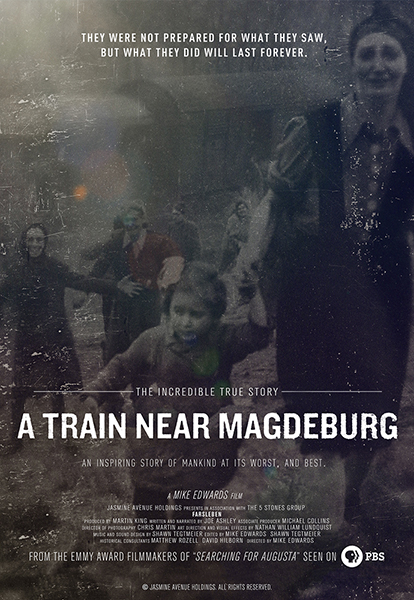
"for the sake of humanity"… A small town American high school history project changes lives worldwide. These are the observations of a veteran teacher- on the Power of Teaching, the importance of the study of History, and especially the lessons we must learn, and teach, on the Holocaust. Click on "Holocaust Survivors, Liberators Reunited" tab above to begin.
This newest trailer for our upcoming film, showing the uniting of a World War II medic and a Holocaust survivor for the first time, was filmed just one month ago near the 74th anniversary of the liberation of the Train Near Magdeburg.
Judah Samet (also a survivor of the Pittsburgh Tree of Life synagogue shooting last October) and his daughter traveled to Scranton, PA, to meet Walter Gantz, the medic who saved as many sick and emaciated people as he could from the train, though Judah’s father was one of the many who succumbed shortly after liberation. Walter’s daughters were present as well, and I was there as to pull things together. Mike Edwards and his film crew and I were fortunate to have been able to align all the moving parts, and here is the result. We did a group hug!
To complete the film, we have a letter of intent with the major distributor to PBS and now we need to get to Europe to finish filming at the Bergen-Belsen concentration camp and the liberation site, and interview more people, including German eyewitnesses, before it is too late. We want to have this film ready for the spring 2020 75th anniversary of the train liberation.
Walter is 94 and one of the few remaining soldiers left who had something to do with the liberation of this train of 2500 souls, the descendants of whom probably now number in the tens of thousands because of the actions of the American soldiers like Walter. And we would love to bring him over to Germany with us! We would love to introduce him to more survivors and their families, and also to German schoolchildren, at least one of whom he is exchanging letters with at a school near the liberation site, kids who now want to make a difference themselves in being part of memorializing and remembering what happened not far from their schoolhouse door.
Watch the moving trailer below. At 2:10 mark of embrace, you will notice a white wristband Walter has worn since 2011 when I sent it to him, a memento for students from our high school soldier-survivor reunions. It reads, “Repairing the World”.
WHAT YOU DO MATTERS. Seek to do good and repair the world– Tikkun Olam.
Thanks to all who have helped us thus far, and have shared this message of healing and hope! To become a part of our efforts to “Repair the World” to finish filming, or to learn more, head to the following link.
A girl smiles while recuperating from the concentration camp Bergen Belsen sometime following liberation in the spring of 1945.
A Holocaust survivor recounts how she got a message to her mother that she was still alive, a beautiful anecdote that can also be found in my book ‘A Train Near Magdeburg’. There are no coincidences.
It was a beautiful, balmy morning in April 1945, when I entered Major Adams’ makeshift office in Farsleben, a small town in Germany, to offer my services as an interpreter. It made me feel good that I could show, in a small way, the gratitude I felt for the 9th American Army, which had liberated us as we were being transported from Bergen-Belsen concentration camp.
Orders found by the Americans in the German officer’s car directed that the train was to be stopped on the bridge crossing the Elbe River at Magdeburg, then the bridge was to be blown up, also destroying the train and its cargo all at once. The deadline was noon, Friday the 13th, and at 11 A.M. we were liberated!
With the liberation had come the disquieting news that President Roosevelt had died, and while I was airing concern that the new President, Harry Truman, (a man unknown to us) could continue the war, a sergeant suddenly said, “Hey, you speak pretty good English. I am sure the major would like to have you serve as his interpreter.”
Major Adams had not been told of my coming, so he was startled when he saw me. No wonder! There stood a young woman as thin as a skeleton, dressed in a two-piece suit full of holes. The suit had been in the bottom of my rucksack for 20 months, saved for the day we might be liberated, but the rats in Bergen-Belsen must have been as hungry as we were and had found an earlier use for my suit. For nine days we had been on the train, and this was the only clean clothing I owned.
Major Adams quickly recovered from his initial shock and seemed delighted after I explained why I had come. He asked how his men had treated us, and I heaped glowing praise on the American soldiers who had shared their food so generously with the starving prisoners. Then he took me outside to meet the “notables” of the German population, and with glee I translated orders given to them by the American commander. The irony of the reversal of roles was not lost on me nor the recipients; I was now delivering orders to those who had been ordering me around for so long! The Germans were obsequious, profusely claiming they never wanted Hitler or agreed with his policies and hoped the war would soon be over.
When asked to come back the next day, I was delighted but hesitated, wondering if it would be appropriate to ask a favor. Major Adams picked up on my hesitation, so I asked him to help me contact my family in America. We had emigrated to the U.S. in 1939, but after six months I returned to Holland to join my fiancé who was in the Dutch army. My parents knew that eight months after we were married my husband was taken as a hostage and sent to Mauthausen concentration camp where he was killed in 1941, but they did not know if I was alive, not having heard from me in more than two years.
Major Adams gave me a kind glance, saying, “Give me a few handwritten lines, in English, and I will ask my parents to forward the letter to them.”
When he saw the address on the note he looked at me, his mouth open in total amazement, and then he started to laugh – his parents and my parents lived in the same apartment building in New York City!
And so it was on Mother’s Day that his mother brought to my mother my message:
“I am alive!”
Lisette Lamon was a Holocaust survivor liberated on the Train near Magdeburg on April 13, 1945, and later in life became a psychotherapist at White Plains Hospital outside of New York City, a pioneer in the treatment of trauma back in the days when the field was in its infancy.
There was another shooting at a synagogue on American soil. Sometimes I wonder if my efforts to teach about the Holocaust mean anything. Sometimes you just feel helpless. But I realize now that it is probably the most important job I have ever done, maybe now more than ever. Two weeks ago I introduced Pittsburgh survivor Judah Samet to the American soldier who had a lot to do with his liberation. On my newsletter list, less than a week later, I mentioned I would be talking at a college in New Jersey; the next day, the following encounter occurred. And I think it will stay with these kids for the rest of their lives, and probably those ripples will create new waves.
A few days ago I drove 5 hours to a tiny community college in a rural section of New Jersey to speak on the subject of the Holocaust. I got there early because just yesterday I learned that a ‘new’ Holocaust survivor of the train would be attending, one whom I have never met before. He wanted to attend because he was on the train, and he also did not want to miss the opportunity to meet the WWII medic, Walter Gantz, who also wanted to attend my lecture. Walter was a 20-year-old American soldier who spent seven weeks with the survivors.
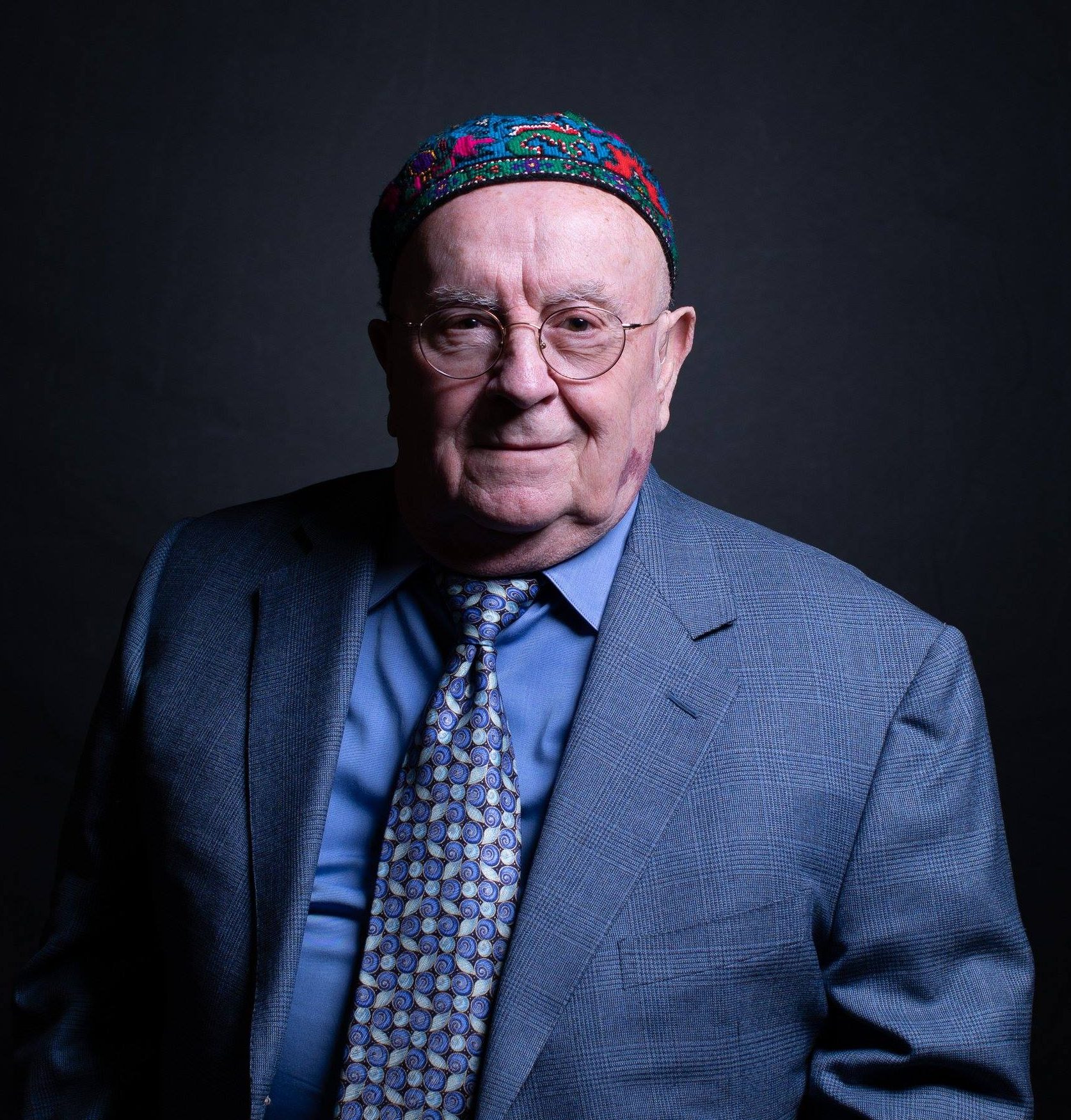
I was unloading my books and equipment when Walter and his son-in-law Kenny arrived, themselves coming from 2 hours away. Ken dropped Walter off at the entrance and went to park the car; I did likewise. Just as I got back into the truck, a saw a man wearing a kippah approaching Walter, hand extended, hailing him with ‘Mr. Gantz?’ I fumbled for my camera and took a shot of the first meeting of the two in 74 years.
Oscar S. was on the train with his family, many brothers and sisters who all survived the war, all resting and recuperating at the makeshift hospital and displaced persons camp that was Hillersleben, only a few miles from the train liberation site at Farsleben. Walter was there the entire time, remembering the children quite clearly, and profoundly moved by the appearance another person who had been one of those children.
A couple classes of college kids came in. They found seats, and more seats were arranged in the back as the word got out that this might be something special. I’m sure most of them didn’t know what to expect; I began my talk by asking how many of the young people actually knew an actual veteran of World War II who was still alive. No hands went up. I waited, and asked again—sometimes young adults are shy to volunteer—and there was no response. I didn’t expect a lot of hands, but I didn’t expect that NONE of the 18 to 21-year-olds in the room would respond. I immediately realized that we were in new territory.
I began the talk by explaining that the reason for my being there to speak to them was because I had asked the same question to a roomful of high school sophomores 25 years ago, and almost every kid raised not one hand but two. So I got curious, and made up a simple 2-page survey form—what branch were you in, what was your job, do you remember when you heard of Pearl Harbor, what things would you share with young people today—and I again was flooded with genuine, heartfelt responses. I invited veterans into the classroom to tell their stories, recorded them on videotape for posterity, and went off in search of more stories in the community. And that is how I got to sit down with one tank commander who shared a story and led me to another tank commander who wrote to me about the day their two tanks came across a train with nearly 2500 refugees, as it turned out, Jewish families who had been prisoners at Bergen-Belsen, shipped away by the Germans in the final days of the war to evade the advance of the Allied armies in the west. And these Americans who came across the train had even taken photographs of the dramatic rescue as it all unfolded. So I had a story to tell, about those final days of World War II and the Holocaust, and about what had happened since. That ten years after it all started, just when I thought I would not hear from any other soldiers associated with this train rescue story—I had met several others, but none more after the first four years had come and gone since that first reunion in 2007—the phone rang in my classroom, and the greeting that would become so familiar to me rang in my ear for the first time—“Matt Rozell, God bless you!” It was Walter Gantz, now 94, once the 20-year-old medic, now sitting in the midst of 20-year-olds who could not recall a living World War II veteran, and a former 7-year-old boy who he had a hand in saving.
We moved on to the subject of the Holocaust. I asked the kids: How many people were murdered in the Holocaust? What does that number look like? And just how did that happen?
So who was responsible for the biggest crime in the history of the world? Hitler alone?
How were the people freed on the train a ‘snapshot’ of European Jewry persecuted by the Nazis-and others?
How could I make people care, today, about what happened nearly 3 generations ago?
Why is it important to listen to those who were the first witnesses? What happens when these stories are no longer with us?
Once people have absorbed the stories, do they have a moral responsibility to act on the ‘lessons’? And then, for emphasis:
Is there such a thing as ‘being a witness’, when you yourself were not there?
I spoke for an hour. I didn’t notice any outright indifference at the start [a minor concern in the case of any event outside of regular classroom hours]; kids were very respectful and I think, curious, and I had their rapt attention at the end, though I waited for a few questions. None came, and Walter took that as his cue to stand up, because he had something to say. And he got right down to the point, with passion, a rising voice from a gentle soul. He motioned for Oscar to stand up and join him, and he embraced him with emotion.
“I spent seven weeks with these people. During my stay, there was about one hundred and twenty who passed away. Basically, it was from the typhus disease; most of them were over fifty; most of the young people survived. And there were a lot of young people, I mean, little children [motions with hand, palm down to his knee], infants, and it was living hell [shakes head incredulously].
After we set up our hospital in Hillersleben, a few days later, five or six of us went back to see the Bergen-Belsen concentration camp… and—you have to believe me when I say, the bodies were piled up like cordwood [raises his hand to over his head]! Everywhere you looked, I remember looking down a lane, probably a quarter of a mile, trees on each side, bodies, hundreds and hundreds of bodies laying around…
I had a strange experience. I’m Polish, and at the time, I could speak Polish very well—and I remember a gentleman at the Bergen-Belsen concentration camp, he kept saying, [speaks with emphasis, in Polish], which means, ‘Do you understand Polish?’ And I said, ‘Yes’ [begins to cry]…and he grabbed me, and he hugged me [hugs Oscar, the survivor he met today for the first time, both cry]… and I felt so helpless! I broke down…and the stench was terrible…We are living proof that there is such a thing as the Holocaust!”
Walter Gantz, WW2 medic, recounts his visit to Bergen-Belsen in 1945.[2:30]
There were muffled sobs throughout the room. No one spoke; one girl sitting in the second row was visibly emotional and profoundly moved.
Walter thanked God again for his good health and his mobility, at being able to come out and address the young people, noting that he once coached young people their age, and he closed his impromptu remarks by bringing laughter through the tears with his admission that though he could still move, he probably wouldn’t be able to keep up with the young women in the room.
So it was time to close. I went back to the beginning. It had turned out to be an almost religious experience for everyone in the room; I didn’t have to tell them that they had been graced with a once in their lifetime opportunity in what they had witnessed in the last few minutes. And I repeated the questions:
‘Once the survivors and liberators are gone, who is left to tell the stories? Once you have heard or read the testimony, are you the new witnesses? Do you carry a moral responsibility to act on what you have absorbed?’
And I hope it sank in, for the sake of humanity.
‘…And whoever saves one life saves the world entire’
The portal opened a crack this week and I stepped through it once more.
We pulled it off, in this time of reflection, Passover and the Easter season. Liberation. Resurrection. New Life. And a reunion of sorts, 74 years in the making, to commemorate it all.
Holocaust survivor Judah Samet and WWII medic Walter Gantz, 4-17-19.
There were a lot of moving parts, but we got a chance to orchestrate another survivor-soldier reunion—this time with WWII Army medic Walter Gantz and Holocaust survivor Judah Samet, in Walter’s hometown of Scranton, PA. We had a very short window of time, as we needed also to film the encounter for our upcoming PBS documentary, and my friend Mike Edwards and his crew of film and sound techs had to be available. Since Judah is 5 hours+ away in Pittsburgh—remember, he is also a survivor of the horrible shooting mass murder at his synagogue there last October—and he was coming east to visit for the Passover holiday. His daughter had to be available to drive him a couple more hours north, and then be back home later for family obligations. Walter was preparing for Holy Week and Easter. Mike was to be soon traveling to Africa on another filming expedition, so we picked Wed, April 17th, for the meeting at a hotel in Scranton.
I drove down from the North Country of upstate New York the evening before. Settling into the hotel, management called my room to tell me that Walter was in the lobby, so I hurried down. Mike had arrived with his crew, Joe and Danny; Mike the sound guy was coming in from Brooklyn later.
Now, though I have been conversing with Walter for eight years on the telephone, I had not met him ever before. He’d met other survivors, notably Micha Tomkiewicz and Elisabeth Seaman, and had been called by others like Ariela Rojek in Toronto. But it was the first time he would be meeting me, and he arrived an hour before the dinner we had scheduled with his family and loved ones.
Walter got emotional. At ninety-four years old, the old Coach grabbed my two hands with the grip of the 20-year-old he had been as a medic at Hillersleben, the captured German Luftwaffe base and weapons proving ground 74 years before. “Matt Rozell, God bless you!” Mike snapped a picture. “It’s a good thing I am as cool as a cucumber; otherwise I would be real nervous about all this!”
I don’t have many heroes. But I met one this week. 94-year-old combat medic, Walter Gantz–and he squeezed my hands so hard…
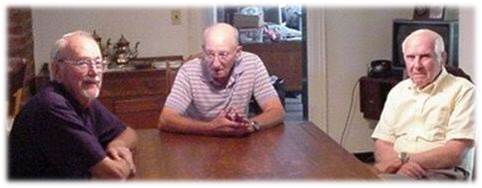
We talked for a while. He lives only three minutes away in the hills overlooking the city, the ‘Polish Alps’ as he calls it, where his parents had raised him, most of the community having emigrated from Poland in the early part of the previous century to work in the mines. He remembered attempts at conversations with the Polish survivors at Hillersleben, how he could pick up word and phrases, and he remembered Micha’s Polish mother distinctly, an educated woman who also had medical knowledge and training. He remembers Gina Rappaport, a survivor from the Krakow Ghetto who spoke seven languages and translated for the people on the train. And he was so sorry to have missed the reunions (11 in all) in the past, but I did not even know about him until he called my classroom in October 2011, shortly after our Sept. 2011 final school reunion… It was liberator Frank Towers who had given him my number, it turns out, and it was Frank who had also contacted Judah Samet in the years before Frank’s passing at 99 in 2016; I suppose then that Frank had a hand in organizing this mini-reunion.
Walter’s three daughters and sons-in-laws arrived for the dinner, taking pictures, getting me to sign copies of my book. The next morning at breakfast, Mike explained how he hoped the day’s filming would go, but we were both of the mind to have everything unfold as naturally as possible. Walter would be waiting in a private room, and I would walk Judah down after he arrived with his daughter.
Judah was right on time at 11 AM, and I got to meet him for the first time since speaking to him at length on the telephone in November. He hugged me, and was also so appreciate of my efforts; he said that my book brought a lot of the memories back for him; I suppose that is the highest honor I could hope for, things that he had previously long buried. I walked him down the hotel corridor to the corner room where Walter waited. At the door, I motioned for him to continue on to Walter, who stood up, hugged Judah, and softly began to cry, greeting Judah with “God bless you, God bless you!”
Holocaust survivor Judah Samet and WWII medic Walter Gantz, 4-17-19. CR: 5 Stones Group.
They sat down and began to speak like they had know each other all of their lives. I sat with them and nodded quietly as the cameras rolled and asked clarifying questions when I could help out. But they had it together, as I knew they would, Walter gripping Judah’s hand. We took it outside on the street for a mini-photoshoot, and Judah’s daughter got acquainted with Walter’s daughters, coming outside to join in. The local newspaper guys arrived, and got a good story for the hometown hero (Walter just called me tonight to say that he had even fielded a congratulatory phone call from California!).
What does it all mean? Well, I think of this season of freedom and new life, about how, 74 years almost exactly to the date of release from oppression (but certainly not hard times—Judah’s father and many others died after liberation as well) these two men, the 94-year-old and the 81-year-old (the former 20-year-old and 7-year-old) and their families had the chance to re-connect and embrace, to recall and to marvel at the wonders of the power of love eclipsing the barriers of time and space.
Thank you to all of the film donors who helped to bring this about; we look forward to sharing this footage with the world when the next anniversary of the liberation rolls around (though we still have to get to Germany, etc). The wires are tripping, and the cosmos are opening once again.
South Scranton WWII Medic Meets Survivor He Helped Rescue From Train…
‘THEY WERE LOOKING FOR A PLACE TO FINISH US’ Scranton Times-Tribune Publication date: 4/18/2019 By JON O’CONNELL
SCRANTON — The Army medics who helped rescue about 2,500 prisoners aboard the train from Bergen-Belsen struggled to insert intravenous feeding tubes into their skin-and-bone arms. The prisoners had departed the concentration camp six days earlier bound for [Theresienstadt in German-occupied Czechoslovakia]. They were starving and emaciated. They couldn’t eat, and their veins rolled under their skin. But Walter Gantz, a combat medic from South Scranton who was just 20 years old in the spring of 1945, had a knack for it. He was known as a “sharp shooter when it came to needles,” he said.
Judah Samet, 81, was aboard one of those train cars. On Wednesday, liberator and ex-prisoner met for the first time at the Hilton Scranton and Conference Center for a PBS documentary called “A Train Near Magdeburg.” It’s slated for release next year. Samet, who lives in Pittsburgh, gained national attention when he survived the Tree of Life Synagogue massacre in October, and attended the State of the Union address in February as a special guest of President Donald Trump. Back in 1945, Samet was only 7, but he remembers using a man’s corpse as a pillow and to block the April chill leaking through the slats of the car. He remembers feeling angry when Nazi soldiers eventually threw the body off the train. He recognized their murderous intent. “They were looking for a place to finish us,” Samet said.
Gantz, now 94, was part of an advance party sweeping through Nazi Germany in the final days of World War II that stumbled upon a train — cattle cars abandoned by Nazi soldiers who learned that their hold on Europe was about to break. “They were living skeletons really. Most of them only weighed half of their normal weight,” he said, describing the prisoners’ screams when medics inserted needles. “It was heart-wrenching really.”
Historian Matthew Rozell, a retired world history teacher who began interviewing World War II veterans with his students in Hudson Falls, New York, has become an expert on the April 13, 1945, liberation. His research, and a book he wrote about the liberation, laid a foundation for the documentary. He brought Samet and Gantz together for one of the last joint interviews between prisoners and soldiers for the documentary. Since first learning about the rescue in 2001, Rozell, [liberating soldier Frank Towers, now deceased, and survivor’s daughter Varda Weisskopf] have found nearly 300 survivors. They’ve held 11 reunions on three continents, he said. “Walter never went to any of the reunions [held at my high school] because I didn’t know Walter existed,” Rozell said, explaining how Gantz eventually learned about his work and tracked him down.
The 743rd Tank Battalion, which had been attached to the 30th Infantry Division, discovered the train in Farsleben, near Hillersleben where the 30th infantry had taken over a Luftwaffe air force base and research facility where top Nazi scientists developed secret weapons, Rozell said. The medic, who gave up his “sharp shooter” nickname and now introduces himself as “the coach,” spent seven weeks in Hillersleben tending the rescued prisoners, nursing back to health those who could be saved. Still, more than 100 died after the rescue, Gantz said.
Seated next to Gantz inside the hotel on Wednesday, Samet remembers the strength he drew from his mother, Rachel, a brilliant caregiver whom he says outsmarted the Nazis and kept them alive by rationing bits of hard black bread the size of olives throughout their 10½ month ordeal.
The train rescue at Farsleben gets little mention in history books, if any, Rozell said. He believes World War II has countless other untold accounts that were never written down and are waiting to be found again. “The more you think you know, the more you realize you don’t know,” he said. “Other stories like this absolutely are still out there.”
“Is this Matt Rozell, the history teacher? Yes? Well Matt Rozell, God bless you and your family!”
Tomorrow I am going to meet the man who called me on the telephone in my classroom in October 2011. To this day I’m not sure how he found me, or how he got my number at school. Though we have talked many, many times over the telephone, we have never actually met. I suppose I will ask him then.
The school district powers-that-be (probably my secretary friends, ha ha) had a telephone line to the outside world installed in my classroom shortly after our first reunions of Holocaust survivors and their liberators occurred at our school in 2007 and 2009. Now 2011, we were still fielding calls from all over the world, but following the last reunion at the high school in 2011, while we had many survivor inquiries into our story about the ‘Train Near Magdeburg’, I had not heard from any soldiers related to the historic liberation and aftermath for 4+ years. I thought they all must be gone.
[74 years ago today—April 15, 1945—elements of the British 11th Armored Division passed through the gates of Bergen-Belsen and were immediately confronted with 10,000 unburied corpses; 800 people died on the day they were liberated. Three train transports carrying 6700 sick and starving prisoners had left the week before, and this Train Near Magdeburg was liberated by the American 30th Infantry Division and 743rd Tank Battalion on April 13th. As one of the tank commanders arriving on the scene, Carrol Walsh, later remarked, “What are we going to do with all these people?”]
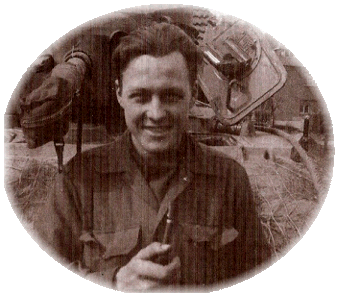
“To Mom and Dad, Babe” WW2 medic, Walter ‘Babe’ Gantz, left
And then the phone rang, and Walter Gantz entered my world, and introduced a whole new angle on the story. You see, he was a medic assigned to care for the victims liberated at the train site for the next six weeks after the soldiers went off to fight the final battles of World War II. Not only that, he knew of several other American soldiers who had been assigned with him. In the ensuing months and years we reached out and interviewed several of them.
At the recuperation site of Hillersleben, a German Luftwaffe base and top-secret proving ground, complete with barracks and hospital, it was a mix of relief and trauma for both Holocaust survivors and American soldiers. Walter grew attached to some in his care—one girl in particular who died on him, and he remembers carrying her body himself to the makeshift tent morgue—and as a young man after the war ended, he brought those memories home with him, along with the memories of treating the American wounded during the Battle of the Bulge and other horrors. He believes his youthful innocence and his spirituality helped to save him, but troubles were not always far away soon after returning home. “My parents couldn’t understand why I couldn’t sleep at times.” He told me also that while he enjoyed the reunions with his medical battalion as the years went on, one thing they never would bring up was the collective experience of the trauma they witnessed, and felt, at Hillersleben. From our interview with Walter:
“We talk about nightmares and flashbacks. I never had any nightmares where I would scream, but there are two so-called flashbacks I remember and they stayed with me for many, many years. [In the first] I could see myself climbing these stairs and all of a sudden, I’m inserting a needle into this elderly gentleman’s arm. Of course, you have to remember, they were skin and bones. The veins would roll and he was screaming, really screaming. That had to be very painful, because they were skin and bones—to try to find a vein; it was easy to overshoot a vein. It was heart wrenching to hear those people sobbing and actually screaming because a lot of them thought they were still at Bergen–Belsen, really.
[In the second] incident, I used to work a twelve-hour shift, from eight in the evening to eight in the morning. In the wee hours of the morning, this young girl died. For some reason, I wrapped her up in a blanket and I carried her down the stairs and I was crying.
We had a war tent that was used as a makeshift morgue. I placed her in there. I wonder why I would do that; I must have liked her for some reason. I didn’t have to do that, because we had a team that took care of those who died, and placed them in the morgue.
I spent seven weeks with these people. Most of us spent seven weeks and during our so-called watch, 106 people died… God, it was tough. [This girl] was actually fifteen years old. Her name was Eva and you might say, ‘How was it possible that he could carry her?’ She probably weighed 60 pounds, maybe. I thought about that many times, and I must have been attracted to her for some reason. That haunted me, really. It really haunted me.
I must admit I shed a lot of tears and I prayed. I prayed that they would pass on, that they would find peace and for those who survived, that their health would be restored—and dignity. Dignity is so important in life—dignity, that was the main thing. It was difficult.”
But now many of my survivor friends have reached out to him, called him on the phone at home, or even appeared with him on stage at symposiums in Scranton, Pennsylvania where he lives. I’m driving there tomorrow, and survivor Judah Samet and his daughter are driving up on Wednesday. [Judah’s father passed at Hillersleben shortly after liberation; Walter and Judah have also never met before.]
In 1945, Walter was 20. Judah was 7. Walter is now 94; Judah, 81.
George Gross passed on my son’s 10th birthday in 2009, before I could meet him. Carrol Walsh has passed, and his life was celebrated by his family and friends, including survivors, they day I had my fateful tour of Bergen-Belsen in Germany in 2013. Frank Towers died at age 99 as I began my advanced Holocaust studies in Jerusalem on July 4th, 2016. So I’m not going to miss meeting Walter, and my friend Mike Edwards is going to get it all on film for our documentary.
Time may be running out, but this project, powered by good, and love, has broken the barriers of time and space over and over. So God bless you, Walter. We’ll see you tomorrow night.
Today I traveled in a car with my wife to a high school in New Hampshire a couple of hours away to talk to high school students about the Holocaust, the power of remembering, and witnessing for others who can no longer be the witnesses. As we drove, my wife recalled fondly the many trips she and my mom had taken in years past, in the mountains and valleys of the Green Mountains, along these very roads.
We all have our great days, and not-so-great days. But then something happens to reminds us of what truly matters.
As it happened, I was speaking to several classes, the first time since my ‘retirement’ nearly 2 years ago.
As it happened, one of the classes contained my mom’s granddaughter, one who is studying Elie Weisel’s Night as a 9th grader, and has no real memory of my mom.
Oh, I hit it out of the park. (I still got it.) It was a great day. And it happened to be my mother Mary’s birthday in heaven. And so many things reminded me that my mom is still with me. So on her birthday, I’ll share this amazing story again, which begins in a more dark time. Mother Mary comes to me, someone once sang. Happy birthday, momma.
[Originally published in 2017.]
My second book, the one on the death train and my journey as a teacher in discovering and retracing the miracles in reuniting Holocaust survivors with their American soldier liberators, has had mostly positive reviews at Amazon. Then recently someone posted how he found himself “resenting” that I had clumsily inserted my own experiences into an otherwise tremendous story. (Fair enough—but ‘resentment’?) Part of it was how my parents, through their example to their children, help to set the trajectory of our lives, as they do for all of us. That, coupled with a resurgence of antisemitism and the other stuff in the public arena that bad dreams are woven of, sent a certain chill up this writer’s—this historian’s—spine.
Now if one really ‘got’ the point of my second book, it’s about miracles and goodness and common human decency and humanity; about a triumph of the power of good and love over evil, against crazy odds; about the lessons and the values which we should hold firm to in a world filled with pain and destruction, deception and deceit. I probe and I question: how was I to get on this path, of uncovering these mysteries, of connecting so many people all over the world, through time and across space? I can’t explain it, so I think back to the tangible people who cultivated this sense of wonder in me.
My mother and father.
Some days it is hard to see the good, and the world lately frankly leaves me feeling rather adrift; I wonder if it all is pointless.
And then, out of the blue, comes the quiet reminder…
Later this week I got an email from a new fan in Salt Lake City, Utah. We have never met or heard of each other until he bought my books at Amazon. He loved them, and then felt compelled to reach out to me (which I invite—it’s matthew@teachinghistorymatters.com). He wrote that as he neared the end of the book, he realized that his wife was from the area where I live and write about.
We went back and forth. Later on a whim he reached up on the bookshelf in his basement office and dusted off his wife’s high school yearbook. He opened it up, and sent me this:
IT’S MY MOM.
Vintage 1975, autographing his wife’s graduating yearbook… turns out my mom was the school nurse teacher at his wife’s school, now nearly a continent away. Kim was heading out west after graduation, and my mother was going to head there to visit her brother and his family in California that summer. Neither I nor my siblings have ever seen this photo before; I can tell by her expression that Mom is laughing with the photographer and is insisting that he get the shot over with!
So now, on a dark day, my mother, Mary Rozell, is speaking to me.
She was taken from us since just before the Holocaust survivors I write about found me in 2006 and entered my life and the lives of the soldiers who freed them in such a profound way.
My mother reaches out to remind me that there is still good in the world.
Maybe that reviewer could care less, but my mom will always be a part of the story—MY story. [Subtext: Write your own damn book, sir…]
I was contacted by a German teen who goes to school in the vicinity of the liberation site of the Train Near Magdeburg. She, her class, and her teacher are working with others to establish a memorial to the survivors to be dedicated in spring 2020 for the 75th anniversary of the liberation. They know of some elder Germans who were alive at the time of the liberation, one of whom struck up a friendship with a Greek survivor. When Johanna wrote to me about him, I immediately recognized him, as some years ago I wrote about him, and his interviewer, David Boder. He was interviewed immediately after the war in Paris.
Mimi Misrachi in Athens
Boder puts his name as Mene Mizrahi or Manis Mizrachi.
Here is Johanna’s appeal for information. Leave a comment below if you can help; you don’t have to add your email publicly, I will still be able to have her contact you directly if need be.
Last attempt to remember the life of Mimi Misrachi
My name is Johanna and I am a 17-year-old student from Wolmirstedt, Germany. Together with a few other students and my history teacher, Mrs. Karin Petersen, I am currently working on a project to remember the story of the “death train” stranded in Farsleben, which is a part of Wolmirstedt. In between many other events, our major goal is to obviously raise awareness to what happened on the 13th of April 1945, and to establish a memorial in Farsleben, so that nobody will ever forget this unique and extraordinary story.
Part of our project is the organization of a series of events to remember all kinds of different stories from different survivors who were on the train. With this in mind we already organized a reading at our local museum with texts out of the books by Hilde and Shmuel Thomas Huppert, and we would like to do such an event again, on April 13 this year, where we want to fill the inhabitants of Wolmirstedt and Farsleben with enthusiasm for another story from the train near Magdeburg.
We are planning on dedicating this day to Mimi Misrachi, one of the survivors who were on the train and developed a friendship with a woman called Gisela Miesch, who was 19 years old at that time. Mrs. Miesch is still alive today and remembers the events pretty well, but Mimi Misrachi left town shortly after the liberation and she never heard from him again. Although he wanted her to come with him, she did not want to leave her parents and stayed in Farsleben. When he left he gave her a small angel made of wax and a photo of himself with the words “You will always be in my heart” written on the back of it.
We would like to remember him and his story with this event; unfortunately there is not much we know about his life and his whereabouts today, if he is still alive, and it is very hard to find out anything.
So what we know about him is that he was born on January 17, 1922 in Thessaloniki, he is also known as Mimis, Manis Mizrachi or Nissim, his father was Oscar Misrachi (born on May 5, 1882 in Thessaloniki and died on April 19, 1945 in Farsleben), his mother was Sara Misrachi (born on April 5, 1892 in Adrinople and died on May 11, 1945 in Hillersleben) and his family was arrested on March 25, 1944 in Athens and deported to Bergen-Belsen on April 2, 1944. They were then liberated on April 13 in Farsleben and on July 10, 1945 Mimi Misrachi arrived in Paris. We also know about an interview between David P. Boder and him on August 12, 1946 in which he talks about his experience [see link above].
Our last information about him is that he probably still lived in Paris in the sixties, but we don’t know much about his life after the liberation, and that is where we need the help from all of you. If anybody has got any information about Mimi Misrachi or a family member who might still be alive today, we would be extremely grateful if you could contact us and help to remember his life and incredible story.
Thank you so much for your help and if you do have any information, then please comment below and we will be in touch!
*****
when the guardian angel disappears
01/15/2019 Volksstimme.de
Contemporary witness Gisela Miesch at the interview. Photo: Anette Pitz
Gisela Miesch is one of the contemporary witnesses who can report on the concentration camp train stranded at Farsleben. She never forgot an encounter.
When a train stopped in Farsleben on April 12, 1945, the world stood still briefly. Inside were 2,500 Jews who spent a day in fear until freed from the Americans. The Farslebener Gisela Misch could see the train from her home and helped with. In the process, she met a man who could not forget her time of her life. And she received a small gift, an angel that accompanied her for decades.
Her story told the today 92-year-old two members of the Wolmirstedter club “stranded train”. Anette Pilz, museum director in Wolmirstedt, and Karin Petersen, a teacher at Wolmirstedter Gymnasium, visited the contemporary witness in their present home town of Stade (Lower Saxony) and let them tell what happened over 70 years ago – and she remembers, as if the days of horror are just beginning been yesterday.
A talisman to say goodbye
When the concentration camp train that was traveling from the concentration camp Bergen-Belsen to Theresienstadt stopped at the end of the garden in Farsleben, Gisela Miesch lived with her parents and 13 people under one roof. They were refugees who were quartered with them. The train – Miesch speaks of “cattle cars” – was noticed, she went to look. In it sat emaciated people begging for food. But the armed patrol discouraged the 19-year-old.
It was only later that they learned who was on the train. On April 13, the Nazi patrol disappeared, the American troops liberated the people on the train. The rescued were distributed in the village. Gisela Miesch also took care of the Jews and helped in a kitchen.
She stood alone at the saucepan when she addressed a young man. The Greek Nissim Mizrachi, from her until today called “Mimi”, had lost his father during transport. He had died of typhus in Farsleben. He was to lose his mother a short time later in Hillersleben. He spoke German, English and French and had studied medicine in Greece for several semesters. Gisela Miesch made friends with the young Greek, “although one was a stranger,” as the eyewitness describes.
Memories of every little detail
After a few days, Mimi told her to pack her bags and come to the West. But the Farslebener [could not]: “I lost two brothers in the war, I could not leave my parents alone with house and yard.” Mimi gave her his talisman, an angel made of hard wax and a photo of himself in his hometown Athens was recorded. On the back is written: “Always in your heart”.
These are the two things that Gisela Miesch has saved over the years. Every year, the little angel was hanging by the Christmas tree. Each year, the worn wax reminded her of the days of April 1945. Every year the uncertainty of how Mimi spent his life.
Their paths never brought the two together again. She never did any research, never wrote, but never forgot him. And someday, a few years ago, the guardian angel left her. When she moved to the retirement home, he was lost and with him, the picture.
When the eyewitness talks about Mimi today, her face is painfully distorted. She remembers every detail, knows the times and addresses of those days. The memories have burned themselves into the memory of the then 19-year-olds. “History will not let me go. I’m carrying [it] with me all my life, “she says.
Exhibition is prepared
Nevertheless, life had to go on. Gisela Miesch married a civil engineer, had a daughter. In 1996, she and her husband moved to Stade, to [be with] their daughter and their family. The place changed, but the memories remained.
Others did not want to know about the concentration camp trains; the memories of the witnesses were too cruel. Several times Gisela Miesch has told her story for posterity. … The sound recordings and images of the contemporary witness are to be part of an exhibition to be created in the course of the 75th anniversary of the liberation in the coming year. There, people like Gisela Miesch are given a voice – so they will not be forgotten.
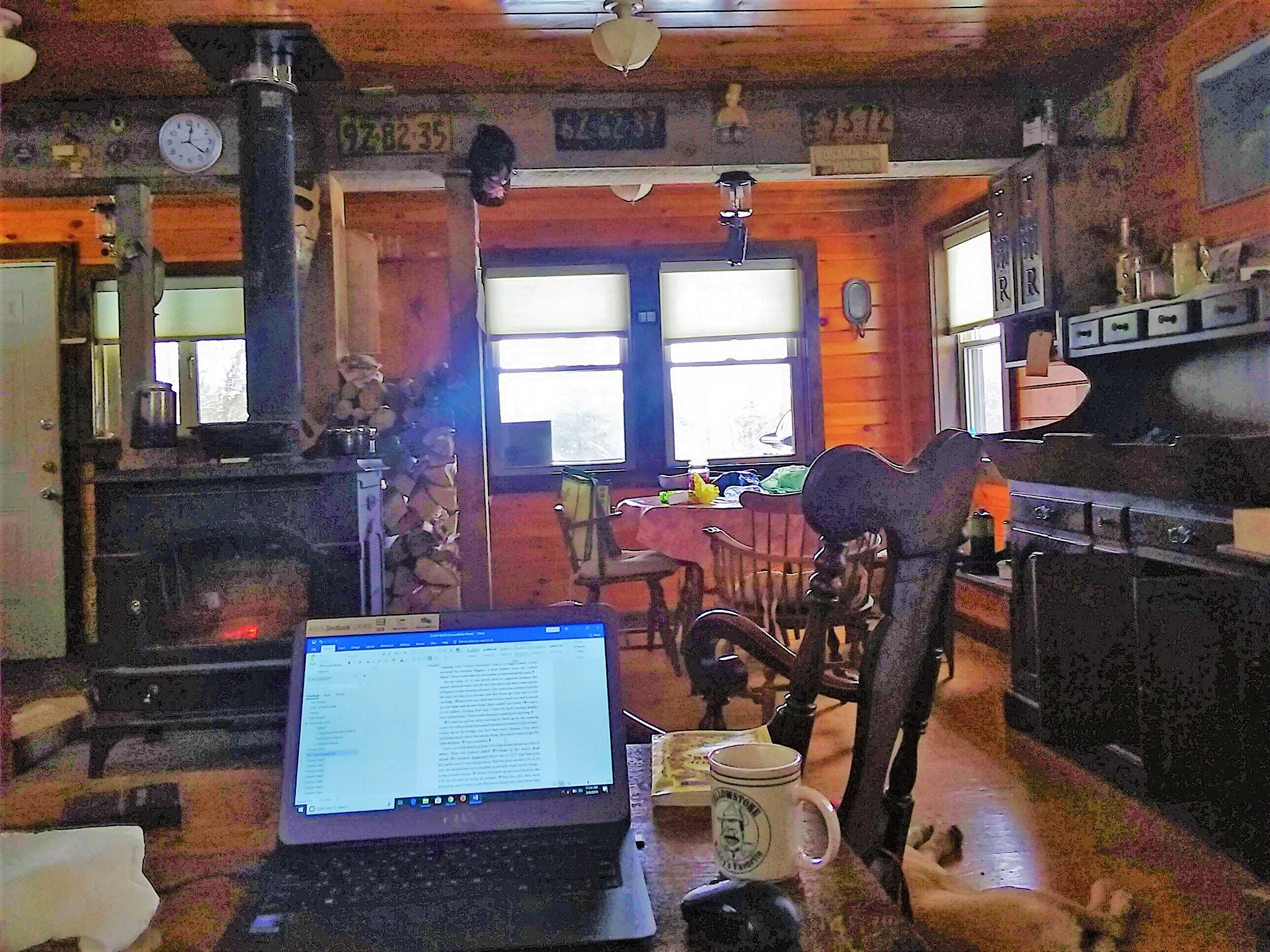
This week I was at our Adirondack camp somewhere in the mountains of northern New York working on the next book. The woodstove was ticking away as the flames rose, my dog was snoring at my feet, and a battery-operated clock ticked the seconds by quietly on the beam overhead, the only sounds to be heard. No electric here for the last 44 years, when Dad and his 14 year old son (me) began building his dream of a hunting shack in the woods. A good place to concentrate.
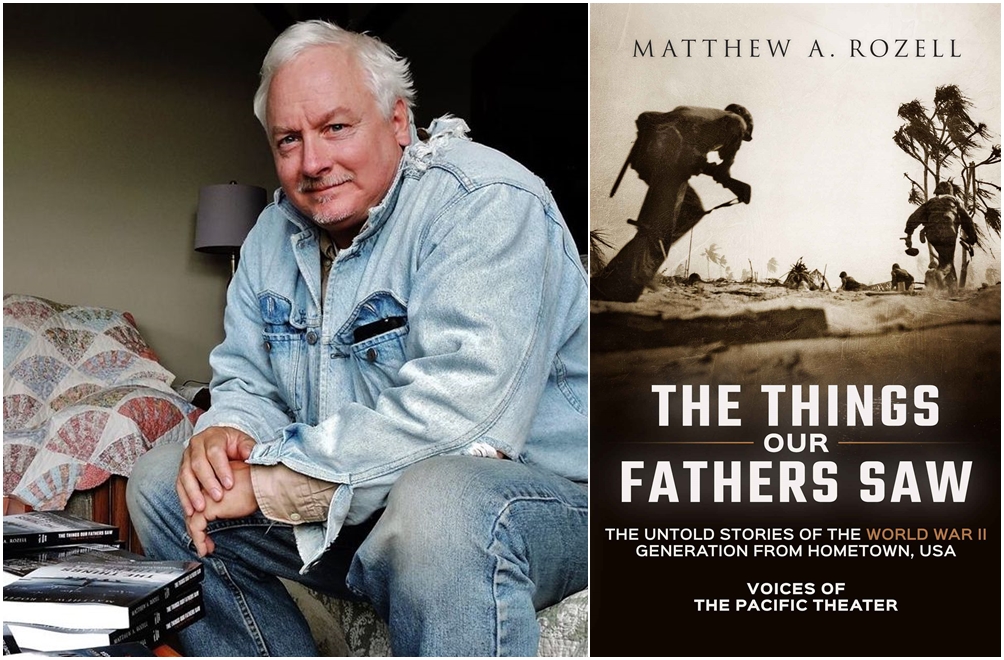
It was snowing again outside, but the plowing could wait. I wanted to get this chapter on a Coast Guardsman at the Normandy landings done for the next book, The Things Our Fathers Saw Volume 5, on D-Day and the Battle of Normandy. I hope to have it completed near the 75th anniversary in June. That means probably July!
A memory for the first book as I was writing it four years ago popped up today at home on social media:
I’m working on my [first book of the] World War II oral history series of people we have interviewed over the past 20 years. The “Pineapple Kid” Joe Fiore picks up his second Purple Heart on Saipan. But he still cries 60 years later remembering his mother’s reaction to the news. Dan Lawler crosses an airstrip on Peleliu in 110 degree heat with foul water in his canteen. Jack Murray finds a Japanese gunner chained to his machine gun. Over the intercom, Andy Doty hears that FDR has died as his B-29 bomber guides towards the targets in Japan. Jimmy Butterfield tells his girlfriend to go away as he deals with the fact that his two head wounds on Okinawa have cost him his eyesight. But she marries him instead, and brings him to my classroom six decades later.
These were all hard books to write. And I will also pass on that Vol. 1 is for sale on for the ebook at Amazon right now, but ending soon, as about 2 AM tomorrow. But not to worry; you probably already have it! If you do, please leave me a review at the link(s) below if you have read it or any of my books—reviews help to bring new readers into the fold of this history which I am trying to resurrect and keep alive.
All the books are now available in HARDCOVER as well, for you purists out there! You can get a whole autographed set here at a discount, or individually at the Amazon link below. Paperback too, of course, and I will post about the audio editions in the near future.
THINK YOU KNOW about WWII? VOL. 1 ON SALE for a few more hours JUST $1.99 “Mr. Rozell constructed the living memories of heroes of the Pacific War into a striking and amazing narrative.” https://www.amazon.com/gp/product/B07B4HL36P
I saw a friend on TV the other night. About 50 million other Americans did too; maybe you were one. Well, here is a backstory to all that.
After the Pittsburgh Tree of Life synagogue shooting in October, a couple of people familiar with the Train Near Magdeburg story reached out to me to ask if Judah Samet, a member of that community who had arrived four minutes late for his usual Saturday morning gathering the day of the assault, was liberated on the train in 1945. It turns out, he certainly was. I did some detective work and tracked down his daughter, who told me that liberator Frank Towers was one of his heroes. So I called Judah, and we spoke a few times on the phone at length. His story is amazing, which comes as no surprise—all of my survivor friends have them, and though they are all different, they all converge at the moment of liberation at the hands of the U.S. Army.
Judah and his family were Hungarians, part of the massive deportations that followed the German invasion of that country in 1944. By a miracle that I have also heard about from some of my other survivors, the transport they were on which was headed for Auschwitz was diverted instead to Austria, and then to Bergen-Belsen. He turned seven there, and remembers always looking for food, but staying always curious and resourceful. In early April 1945, with mountains of corpses everywhere, his mother and father and he and his brothers boarded the transport that was destined to be liberated by the Americans on 13 April 1945 at Farsleben. His father died a short time later at Hillersleben, the captured German base where survivors were hospitalized. He and his mother made it to Paris, and then to Palestine, which of course became Israel. He became an Israeli paratrooper and was at the Eichmann trial (Adolf Eichmann, the architect of the Holocaust in Hungary, captured by Israeli agents in 1960), he told me. He lost a brother in the 1956 Suez War.
After emigrating, he met his wife and they settled into her hometown of Pittsburgh. She passed a couple years ago, but before that, he decided that he would have to talk about his Holocaust experiences, long buried— not because he necessarily wanted to, but because older survivors were passing away, and he was troubled by the lack of knowledge and memory, and of course the ever-present deniers and haters. He also gave me extensive telephonic lessons on the history of the Jews in Hungary—’We came in with Attila the Hun’— antisemitism through the ages, with a long detour into the Middle Ages and the Crusades, all of which I am proud to say that I could follow, given my advanced training as a Holocaust educator. ‘In Debrecen (Hungary), we were 73,000.’ Almost all were murdered in the late spring and early summer of 1944. Just five hundred, he said, live there today (he went back with his family last May), almost all of them ‘transplants’. [By the time young men stormed the beaches of Normandy, most of Europe’s Jews were already dead, and it was far too late for the Jews of Hungary. And as I have stated many times here at this blog and in my book, the world stood back and let it happen.]
I sent him my book after our first conversation, and he called me up again after that, to say that it was well written and documented, and that much of what I wrote brought back memories he had suppressed. Some things he could recall; others, not so much. But he said he appreciated the fact that I used actual personal narratives which offered many points of view, not just the ‘Anne Frank’ version. ‘It speaks to my heart’, he told me. My friend Mike Edwards and his team went to interview him at home in December, and we hope to use some of that interview in our finished film.
The morning of the attack, he was pulling into the handicap parking spot at the synagogue when an officer in a black coat and windbreaker rapped on his window and told him to leave, but it was impossible, as the shooter was emerging from the building and firing rounds. ‘The guy was firing five rounds at a time. This I was sure of—as a paratrooper, we were trained to count rounds, to not waste ammunition.’ And ‘the old soldier in me wanted to take in everything, wanted to see the enemy’—’the killer was focused, the smoke was coming out of his muzzle’—but Judah said he was not frightened. He gave his witness statement, and soon enough, the news media was interviewing him. ‘I knew every one of the victims’, he said, but he also told me that he was not traumatized. As a former soldier, he remains vigilant, because, ‘it never ends’.
He is a passionate supporter of the President and the State of Israel. But in spite of the terrible divisiveness and the political differences in this country at this time, it was truly something to see the representatives of the United States of America get behind Judah, to sing to him in the moment, and I hope we can agree that the deeds of our young American soldiers so many years ago truly represented a moment in time that we can all be bursting with pride about. That is the main takeaway of the night which I will choose to keep close. Watch for yourself below at about 1:30:25. ‘If anything good came out of the Holocaust’, a survivor I once met said, ‘it was my liberators’.
And I’d like to think that we could come together on that.
Judah Samet, member of the Tree of Life Synagogue and Holocaust survivor. White House photo.
[Thanks to my friend Stacey Petito Nowack for inspiring the title of this post!]
George Gross, former tank commander in Company D of the 743rd Tank Battalion, died ten years ago today. In his declining years before he died, I was able to bring him much joy in introducing him to several of the children he saved. He sent me the photographs, and wanted me to tell his story. And I brought him together again with his old Army buddy, Red Walsh. So I am re-posting this today on the 10th anniversary of Dr. Gross’ death.
Where does the time go? He lived a good life, and at the end, got to see the results of his actions six decades before.
We are all traveling our own roads. Days like this, I like to stop and ponder what it all means. I’m glad that I had a small role to play in his life.
~George C. Gross, 1922-2009~
Yesterday my son turned 11. And at about 11 pm yesterday on the West Coast, Dr. Gross died at home with his family around him.
I just found out. More than anyone else, he is the one responsible for this website and the hundreds of lives changed because of it.
You see, he took the photo that you may not really notice in the heading above, along with 9 other photographs that forever imprint the evidence not only of man’s inhumanity to man, but of the affirmation, hope and promise of mankind. It was he who wrote the prose that led me to the survivors, and vice versa. And it was he who cultivated a deep friendship with me via his wonderful writings and telephone conversation. How amazed and happy he seemed to be to hear from all the survivors.
In the summer of 2001, I did an interview with his comrade in arms, army buddy Carrol Walsh. Judge Walsh put me in touch with Dr. Gross. If you go back through the archives you know the rest of the story. It has changed my life and the lives of my students in that we are now trying to rescue the evidence, the testimony of the Holocaust and the World War Two veterans, for the United States Holocaust Memorial Museum. And today I received in the mail a bulletin from this Museum, reaffirming the mission that Dr. Gross had everything to do with setting me on.
He came into my life during a dark time for me- we had just lost our father (who thankfully, like Dr. Gross, passed on from his own bed at home), and our mother was battling the final stages of Alzheimer’s disease, or dementia, or whatever that nightmare was called…. we began a conversation that has yielded so much fruit.
Lately, I knew he wasn’t well. I actually had looked into flights across the country before Christmas for my son and I to pay a visit, but we just couldn’t seem to swing it financially, with Christmas bills coming in and holiday fares going up. My back up plan, in my head, was to go out in February, when fares were half the cost… Well, February arrived yesterday and now it is too late, I never got to shake the hand of a man who helped reshape my own life, and the lives of so many others.
I know it is selfish to feel so bad about the fact that I was not able to literally reach out and touch him. I’m just so damned disappointed. Right now it’s another dark day for Matt, but I am comforted that he was surely welcomed by his beloved wife, parents, and maybe even my folks as well.
From his statement read at the occasion of the first reunion, September 14th, 2007.
Sincere greetings to all of you gathered at this celebration of the indomitable spirit of mankind!
Greetings first to all the admirable survivors of the train near Magdeburg, and our thanks to you for provingHitlerwrong. You did not vanish from the face of the earth as he and his evil followers planned, but rather your survived, and grew, and became successful and contributing members of free countries, and you are adding your share of free offspring to those free societies.
You have vowed that the world will never forget the horrors of the Holocaust, and you spread the message by giving interviews, visiting schools, writing memoirs, and publishing powerful books on the evil that infected Nazi Germany and threatens still to infect the world. I am enriched by the friendship of such courageous people who somehow have maintained a healthy sense of humor and a desire to serve through all the evils inflicted upon you.
Greetings also to the dedicated teacher whose efforts have brought us all together through the classes he has taught on World War 2 and the web site he maintains at the cost of hours of time not easily found in his duty as a high school teacher. I know that several of you found your quest for knowledge of your past rewarded by the interviews and pictures Matt Rozell and his classes have gathered and maintained. Selfishly, I am grateful to Mr. Rozell for leading several of you to me, bringing added joy to my retiring years.
Greetings also to all the faculty, staff, students, parents, and friends of the school at which this important gathering takes place. Thank you for your interest in the survivors of the Holocaust and their message.
And special greetings also to my old Army buddy, Judge Carrol Walsh, and his great family. Carrol fought many battles beside me, saved my life and sanity, and resuscitated my sense of humor often. We had just finished a grueling three weeks of fighting across Germany, moving twenty or more hours per day, rushing on to reach the Elbe River. Carrol and I were again side by side as we came up to the train with Major Benjamin, chased the remaining German guards away, and declared the train and its captives free members of society under the protection of the United States Army as represented by two light tanks.
Unfortunately, Carrol was soon ordered back to the column on its way to Magdeburg while, luckily for me, I was assigned to stay overnight with the train, to let any stray German soldiers know that it was part of the free world and not to be bothered again.
Carrol missed much heartbreaking and heartwarming experience as I met the people of the train. I was shocked to see the half-starved bodies of young children and their mothers and old men—all sent by the Nazis on their way to extermination.
I was honored to shake the hands of the large numbers who spontaneously lined up in orderly single file to introduce themselves and greet me in a ritual that seemed to satisfy their need to declare their return to honored membership in the free society of humanity.
I was heartbroken that I could do nothing to satisfy their need for food that night, but I was assured that other units were taking care of that and the problem of housing so many free people.
Sixty years later, I was pleased to hear that the Army did well in caring for their new colleagues in the battle for freedom. I saw many mothers protecting their little ones as best they could, and pushing them out, as proud mothers will, to be photographed. I was surprised and please by the smiles I saw on so many young faces.
Some of you have found yourselves among those pictured children, and you have proved that you still have those smiles. I was terribly upset at the proof of man’s inhumanity to man, but I was profoundly uplifted by the dignity and courage shown by you indomitable survivors. I have since been further rewarded to learn what successful, giving lives you have lived since April 13, 1945.
I wish I could be with you in person at this celebration, as I am with you in spirit. I hope you enjoy meeting each other and getting to know Matt Rozell and Carrol Walsh. I look forward to seeing again my friends whom I have met and to meeting the rest of you either in person or by E-mail. My experience at the train was rich and moving, and it has remained so, locked quietly in my heart until sixty years later, when the appearance of you survivors began to brighten up a sedate retirement.
You have blessed me, friends, and I thank you deeply. May your lives, in turn, bring you the great blessings you so richly deserve.