Feeds:
Posts
Comments

Archive for April, 2026

April 30 1945 Headlines. Hangs in my classroom.
April 30 1945 Headlines, on display in my classroom.

Eighty-one years ago today, American soldiers of the 42nd and 45th Infantry Divisions arrived at Dachau, in southern Germany. This is a post I have shared in the past. I think it is important.

Today, if the anniversary is brought up at all, some of us might respond with a vacant stare. More might shrug and turn away. I suppose that is to be expected. But you know me. I just think that as a nation, sometimes we allow things to slip from memory at our peril.

It was real, and it happened. And it was American GIs who overran this camp and many others in the closing days of World War II.

The men of the 42nd and 45th Infantry Division arrived independently of each other, here, in southern Germany, at Dachau, on this day. A concentration camp, they were told. Their noses gave them a hint of what they were about to uncover, miles before the camp appeared in sight.

Read the headlines, above. Note the subarticle:

Boxcars of Dead at Dachau. 32,000 captives freed.
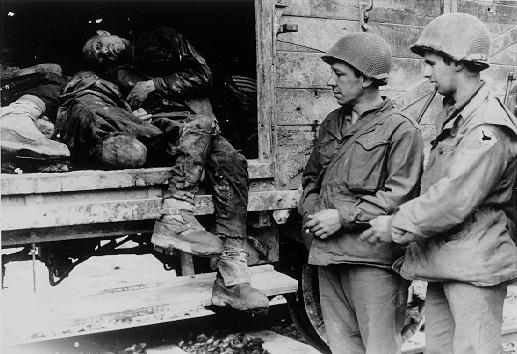
American soldiers view the bodies in one of the open railcars of the Dachau death train. USHMM

And so after some resistance, into the camp they entered. Life changing events were about to unfold for the American soldier.

***

For me, it’s not about hero worship, or glorifying the liberator or any World War II soldier by placing him on a pedestal. Our time with them is now limited, but many of the liberating soldiers I know push back at this, to the point of rejecting the term, “liberator”- “It all sounds so exalted, so glamorous” said one. But they will all accept the term, “eyewitness”.

Witnesses to the greatest crime in the history of the world.

So instead I think it is about honoring their experiences, their shock, the horror, the puking and the crying, the rage-and then, the American GIs recognizing that something had to be done. And they did suffer for it, for trying to do the right thing. Many tried to help by offering food to starving prisoners who just were not ready to handle it, only to see them drop dead. Or having to manhandle these emaciated victims who were tearing away at each other as food was being offered.

Some guys never got over it. How could you?

I have learned so much over the past few years from these guys, just through the way that they carried themselves and tried to cope with what they witnessed. In my World War II studies and Holocaust class, we discuss these issues at length. I’m so lucky to be able to teach it.

A few years back, I was privileged to teach a lesson to my high school seniors for NBC Learn, which was shared with other districts across the nation. Later, I stumbled upon this piece by the late author Tony Hays, who writes about his liberator father and his own encounter with the past. Thanks to the Get It Write folks; the original link is at the bottom.

***

Dachau Will Always Be With Us

by Tony Hays

This is not so much a post about writing as one about a writer’s education, about one of those experiences that molds us, shapes us into storytellers. I read yesterday the story of Joseph Corbsie, whose father, a World War II veteran, left him with a special legacy from the war, from the hideous Nazi concentration camp at Dachau. I feel a particular kinship with Mr. Corbsie.

My father, Robert Hays, was the son of an alcoholic tenant farmer in rural west Tennessee. If the appellation “dirt poor” fit anyone, it fit my grandfather’s family. Daddy served in the Civilian Conservation Corps during the 30s. He and my mother, who was in the woman’s equivalent of the CCC, working as a nurse’s aide at Western State Mental Hospital in Bolivar, Tennessee, met on a blind date in early 1940 and married in September of that year.

But just over a year later, Pearl Harbor happened. America was in the war. My father was among the first of those drafted in 1942. I won’t bore you with the details, but he participated in the North African, Salerno, Anzio, and southern France invasions, saved by the luck of the draw from Normandy. But they slogged through France and on to Germany. On April 29, 1945, Allied troops liberated the Dachau concentration camp. I don’t know whether he entered Dachau that day or the next, but that he was there within hours of the liberation is beyond dispute. A few months later, after more than three years overseas, he came home.

In later years, he would talk occasionally about the war, providing anecdotes that showed the chaos and random chance of battle. He spoke of driving through Kasserine Pass in North Africa just hours before the Germans killed thousands of Allied troops in a stunning attack. He spoke of a friend, defending his position from a foxhole, who was thought dead after an artillery shell landed right next to him. When the dust cleared, the friend was buried up to his neck in dirt, but did not have a scratch on him. He spoke often of Anzio, where he was wounded, and of the massive German air assaults on those soldiers clinging to that tiny sliver of beach along the Italian coast.

But he never spoke of Dachau.

The bodies of former prisoners are piled in the crematorium mortuary in the newly liberated Dachau concentration camp. Dachau, Germany, April 29, 1945.
The bodies of former prisoners are piled in the crematorium mortuary in the newly liberated Dachau concentration camp. Dachau, Germany, April 29, 1945. USHMM.

Ever.

When he died in 1981, we found a photo in his wallet. An old sepia-toned shot like others he had taken during the war, pictures that he kept in an old brown bag. But this one was different.

It showed a pile of naked bodies. Well, really more skeletons than not, with their skin stretched pitifully over their bones. On the back, as had been his habit, was typed simply “Dachau.”

I was confused. Why would he keep this one photo in his wallet all of those years? Especially a photo of a place and event that he never spoke about. It obviously had some deeper meaning for him than the other photographs. If it had been a shot of the building he was in when he was wounded (hit by an artillery shell), I could have seen that. A reminder of his closest brush with death. Yeah, I could buy that. But this macabre photo? That, I couldn’t see.

So, for the next fifteen years, I remained puzzled.

Until the fall of 1996. I was working in Poland, and I had some time off. I took an overnight bus from Katowice, Poland to Munich. It was an interesting trip all in itself. We sat in a line of buses at midnight on the Polish/German border, waiting for our turn to cross, next to a cemetery, as if in some Cold War spy movie. I remember passing Nuremburg and thinking that my father had been there at the end of the war. And then there was Munich.

I spent a day or two wandering through the streets, drinking beer in the Marienplatz. I’m a historical novelist, so the short trip out to Dachau was a no-brainer. Of course it was as much my father’s connection with it as anything else that spurred the visit. But I’m not sure that I was completely aware of that at the time.

Dachau literally sits just on the outskirts of the Munich metropolitan area. I looked at the sign on the train station with a sadness, wondering for how many people that had been one of the last things they saw. It was only later that I discovered there had been another depot for those passengers.

The Dachau Memorial is a place of deep emotion. In the camp proper, mostly all that are left are the foundations of the barracks. One has been reconstructed to give an idea of how horrible life must have been. The camp was originally intended to hold 6,000 inmates; when the Allies liberated Dachau in 1945, they found 30,000. The museum and exhibits are primarily in the old maintenance building. I looked with awe at life size photos of prisoners machine gunned, their hands torn to ribbons from the barbed wire they had tried to climb in a futile attempt at escape.

I followed the visitors (I can’t call them tourists) north to where you crossed over into the crematorium area. It was there that the full brunt of what had taken place at Dachau really hit me. A simple brick complex, it seemed so peaceful on the fall day that I stood before it. But as I read the plaques and consulted my guidebook, as I stepped through the door and actually saw the “shower” rooms where the prisoners were gassed, as I stared into the open doors of the ovens, I felt a rage unlike any I had ever known consume me.[i]

That night, I went to the famous Hofbrauhaus in Munich, to wash the images of the ovens away with some beer. I hadn’t been there long when an elderly American couple sat at the table. They were from Florida, a pleasant couple. He had been a young lieutenant in the American army on the push into Munich. In fact, it had been his pleasure to liberate the Hofbrauhaus from the Germans.

Of course, I asked the question. “Were you at Dachau?”

He didn’t answer for several seconds, tears glistening in the corners of his eyes as his wife’s hand covered his and squeezed. Finally, he nodded, reached into a back pocket and pulled out his wallet.

With a flick of his wrist, a photo, just as wrinkled, just as bent, as the one my father had carried landed on the table. It wasn’t the same scene, but one just like it.

Here was my chance, the opportunity to ask the question I had never been able to ask my father. I pulled the photo from my own wallet and lay it next to his. “Why? Why have you carried it so long? To remind you of the horror of Dachau, of what had been done here?”

His face carried the faintest of smiles as he shook his head. “No, son, to remind us of the horrors that we are capable of, to remind us not to go down that road again.”

The difference was subtle, but in that moment, I learned two lessons invaluable to a writer, subtle differences are important, and when you want to know the truth, go to the source.

As I sit here now and look at that same photograph, I realize that it was my father’s legacy to me, of Dachau. Joe Corbsie’s father left him something more tangible, a reminder of the same thing for the same reason, but more forcefully stated — a tiny box of human ash from the ovens.

Dachau is still with us, and I hope the legacy left by our fathers always will be.

The late Tony Hays.

[i] Where the prisoners were gassed- “In 1942, the crematorium area was constructed next to the main camp. It included the old crematorium and the new crematorium (Barrack X) with a gas chamber. There is no credible evidence that the gas chamber in Barrack X was used to murder human beings. Instead, prisoners underwent “selection”; those who were judged too sick or weak to continue working were sent to the Hartheim “euthanasia” killing center near Linz, Austria. Several thousand Dachau prisoners were murdered at Hartheim. Further, the SS used the firing range and the gallows in the crematoria area as killing sites for prisoners.” Source: United States Holocaust Memorial Museum. “Dachau” Holocaust Encyclopedia. https://encyclopedia.ushmm.org/content/en/article/dachau
Read Full Post »

She Was Told to Live and Tell the Story:

Aliza Vitis-Shomron and the Warsaw Ghetto Uprising


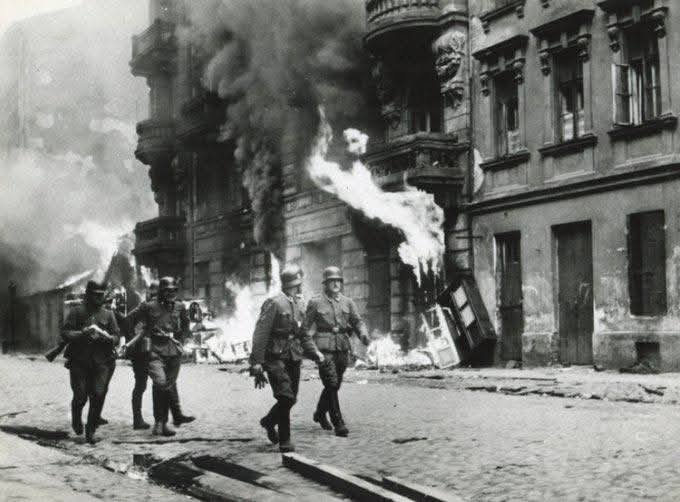
Eighty-three years ago this April, the Jews remaining in the Warsaw Ghetto did something the world needs to pause and note: they fought back. It was not at all what some term, ‘sheep to the slaughter’; no, not by a long shot. Resistance took many forms, and this ‘incident’ deserves more than a footnote in history.

Against tanks, artillery, and the full machinery of the SS, roughly 700 young men and women armed mostly with pistols and homemade grenades held the diabolical German death machine at bay for nearly a month. It was the largest Jewish uprising of World War II, and the first significant urban revolt against Nazi occupation anywhere in Europe. On April 19, 1943 — the eve of Passover — the Warsaw Ghetto Uprising began. By May 16, the ghetto had been reduced to rubble.

Most of the fighters died there. A small number escaped. Fewer still survived the war.

And then there is Aliza.


HISTORICAL BACKGROUND

The Warsaw Ghetto, established by the Germans in October 1940 and sealed that November, was the largest Jewish ghetto in German-occupied Europe, holding approximately 400,000 Jews in an area of only 1.3 square miles. From July 22 to September 21, 1942 — in what became known as the “Great Action” — German SS and police units deported roughly 265,000 Warsaw Jews to the Treblinka killing center, killing approximately 35,000 more inside the ghetto during the operation itself.

By early 1943, approximately 70,000 to 80,000 Jews remained. In response, the Jewish Combat Organization (ŻOB) was formed, eventually fielding roughly 500 fighters alongside a second force of about 250. Together they stunned German forces on the first day of fighting, forcing troops back outside the ghetto wall. At least 7,000 Jews died fighting or in hiding, and the SS deported approximately 42,000 survivors to forced-labor camps where most were murdered in November 1943.

(Source: United States Holocaust Memorial Museum, Holocaust Encyclopedia. encyclopedia.ushmm.org)


A GIRL FROM WARSAW

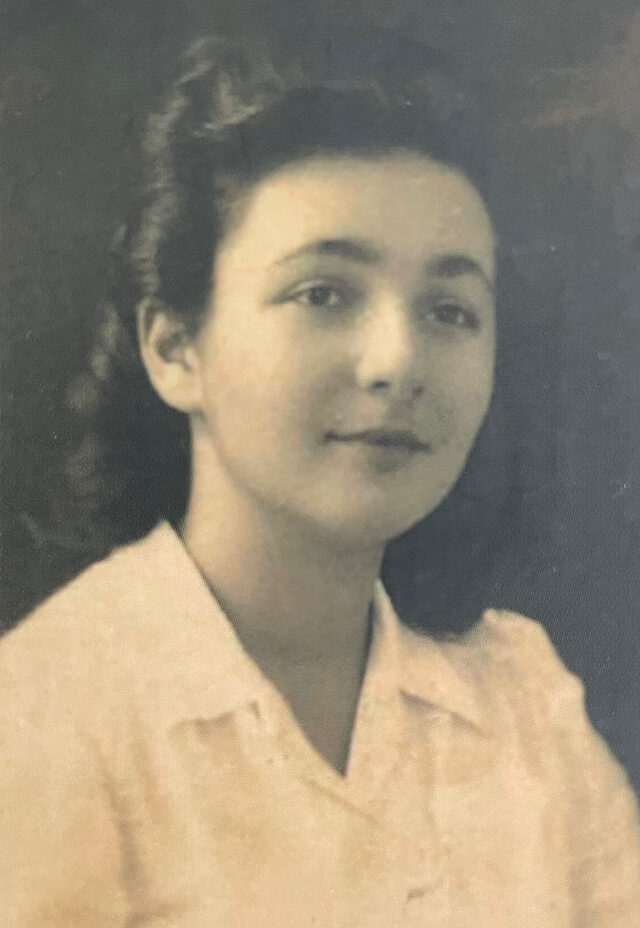
Aliza Melamed was born in Warsaw in 1928, the daughter of a prosperous family whose life was upended, like every Jewish life in the city, by the German invasion of September 1939. She was eleven years old when the bombs fell and the siege began, twelve when the ghetto was sealed and she was required to wear the white armband with its blue Star of David, and thirteen when she joined Hashomer Hatzair — the Zionist youth movement that would become the nucleus of the armed underground resistance.

In her memoir Youth in Flames — composed partly from a diary she kept at the time, partly from memory written down in Israel in the years immediately after the war — she described the ghetto with a teeming clarity that has never left me since I first read it:

“Will I be able to describe it, the largest ghetto in Europe? The overcrowding, the feeling of humiliation, the raging typhoid epidemic, the filthy gray sidewalks, and the houses crammed with masses of refugees from the country towns? Hundreds of thousands of people wanting to survive, running around like mice, trapped in a maze?”

Through the mass deportations of the summer of 1942, the teenager watched friends and neighbors disappear into the machinery of destruction. By winter she had become a courier for the resistance, moving secret messages and plans for the uprising through the ghetto’s streets and passages. She was just fourteen years old, and in risking her very life, no longer a child.


THE ORDER TO LIVE

As spring 1943 approached, it became clear to everyone remaining in the ghetto what the Germans were preparing. Aliza describes the atmosphere of those weeks with the terrible lucidity of someone who has spent decades processing a memory that never really recedes — the bunkers being dug in cellars, the false entrances hidden behind kitchen stoves, the engineers turning up with plans and tools, the growing certainty that this was the end. The young people in the ghetto were no longer preparing to survive; they were preparing to choose the manner of their own death.

Aliza’s family made the agonizing decision to split up in order to increase their chances. Her mother, whose appearance allowed her to pass as Aryan, took Aliza’s younger sister into hiding on the other side of the ghetto wall, relying on bribery, subterfuge, and nerves of steel. Her father volunteered to go to a work camp near Lublin. And Aliza — who wanted desperately to stay and fight alongside the resistance — was told by its leadership that at fourteen she was too young. They needed her to live, to escape to the Aryan side, and to carry the story out of the ghetto, no matter what happened to everyone else inside.

She wrote about the last moment with her father:

“We stood at the entrance of the house. Father was to leave me there and go off. He was pale and had a tormented look. He could not move. He hugged me, kissed me, and went off. He came back a moment later, and we embraced again. I did not cry. I clung to him. Again he left. No, I saw him come back to me once more… ‘Daddy, goodbye, see you again. You’d better go!’ One more hug, and he left. Left altogether.”

She never saw her father again, he was murdered at the Majdanek camp. Years later, when Aliza was leading a tour of Israeli high school students through that camp, she broke down on the very steps where the executions had been carried out — steps I would later walk myself on a teacher’s study trip to Poland, not knowing at the moment I stood there what connection they held. And upon encountering the pile of cremated remains the size of a small house, I too had my own encounter with being overwhelmed.

“The former Jewish Quarter in Warsaw is no more,”

The uprising began on April 19, 1943, and by the time the SS commander announced to Berlin that “The former Jewish Quarter in Warsaw is no more,” Aliza was already in hiding on the Aryan side of the city, passing as a Polish girl named something other than Aliza Melamed.


BERGEN-BELSEN, AND THE TRAIN

Survival on the Aryan side was its own sustained terror — a wrong glance, a neighbor’s suspicion, a stranger on the street who recognized something in her bearing or her eyes. Eventually Aliza and her family were caught up in one of the war’s cruelest deceptions: the Hotel Polski scheme, in which Jews were offered false foreign passports and the promise of safe passage to exchange camps, in exchange for everything they had. Many of those who took the offer were taken to a nearby prison and shot. Aliza, her mother, and her sister were taken to Bergen-Belsen, where the cold, the starvation, the lice, and the death were relentless.

And then, in April 1945, an evacuation order came.

“On April 6, an unexpected order came to prepare for evacuation. We heard the thunder of cannons in the distance; they said that the city of Hannover was in the hands of the Allied armies… Evacuation? To where? To the unknown.”

About 2500 prisoners were loaded onto a train that wandered for six days through the chaos of a collapsing Germany, the front lines moving on all sides, the guards increasingly uncertain what to do or where to go. On April 13, 1945, with soldiers of the American 30th Infantry Division and 743rd Tank Battalion closing in near the village of Farsleben, the guards abandoned the train and disappeared into the countryside.

Aliza was now seventeen years old. She had survived the Warsaw Ghetto Uprising, Bergen-Belsen, and six days on a train going nowhere. When the transport of broken down passenger carriages and cattle cars finally stopped in the middle of a ravine and people began climbing out into the April air, she wrote:

“What will happen now, to us? We were alone. Slowly, people started leaving the carriages; the train was standing in the middle of a field. I also got off, with my faithful friend Tusia. We saw a small pond not far away, and our people were catching little fish there. Those among them with initiative found a tin, made a fire, and cooked the fish. We joined in, glad to have something to eat.”


FINDING HER, NEARLY EIGHTY YEARS LATER

I first contacted Aliza Vitis-Shomron in 2016, when I was writing A Train Near Magdeburg, and she graciously gave me permission to use excerpts from Youth in Flames throughout the book. Her writing became one of the narrative spines of the entire project — a voice from inside the catastrophe that is young and precise and unflinching all at once, the diary of a girl who was told to survive so that she could testify, and who has spent every year since making good on that promise.

In April 2023, just days after CNN had featured her as part of their Holocaust Remembrance Day coverage, our film crew traveled to Kibbutz Givat Oz in northern Israel to interview her, on a quiet Saturday Shabbat morning. Her son Hanan meets us at the gate; he hops out of his car all smiles, beaming, greeting us so warmly, profuse in his thanks, and leads us up to his mother’s house, a corner of the kibbutz she had transformed over the years into a kind of garden, with plants and trees nurtured all around the house into something that just symbolized Israel, the biblical land, flowering in the desert.

She had just celebrated her 95th birthday, and she came out to meet us composed and ready, wearing a sweater, her white hair flowing, and as our crew set up the camera and lights she clipped a pin to her blouse, her 95-year-old fingers working carefully at the tiny clasp. When Lee Shackleford, our scriptwriter, asked what it signified, her translator smiled broadly: “Her special award for Valor Against Fascism — given to her by Israeli President Shimon Peres.” She is a national hero.

We were humbled to be in her presence, surrounded by the photos of her family that testified, “We triumphed, and flourished, despite Hitler and his minions.” She told us the story — the ghetto, her mother and sister, being sent out by the fighters with the instruction to live, Bergen-Belsen, the train, liberation — and at the memory of soldiers wanting the barely-alive seventeen-year-old to dance for them, she laughed with a warmth and humor that surprised everyone in the room. But she expressed to us, that it did not feel right to her—that underneath it was the grief that never entirely leaves: the depression, the guilt, the question that haunted her for years. Why did I live?


THE LAST SURVIVOR

Aliza Vitis-Shomron is now 97 years old and is widely recognized as the last living survivor of the Warsaw Ghetto Uprising — the last person alive who was inside the ghetto when the fighters rose, who carried messages for the resistance through those streets, who watched everything she had known burned to rubble and declared by the SS to be finished. She has spent the more than eight decades since fulfilling, with extraordinary commitment, the charge the resistance placed on her when she was fourteen: to live, and to tell the truth of what happened there.

She said it best herself, to CNN in 2023:

“It is important for me to tell the story, not so much my story, but how we fought bravely. If we don’t tell the world how we Jews fought, the world will only look at us as victims who went like lambs to the slaughter. But we did fight, and we did it in so many different ways. We need to tell people the truth.”

At the very end of our interview, she spoke of her fears for the future — the dwindling number of eyewitnesses, the weight of a story that will soon have no one left who lived it passing to those of us who only know it secondhand. “Who will keep my story alive?” she asked.

Our director, Mike Edwards, said quietly, but with a ready conviction: “We will.”

As we left Kibbutz Givat Oz that April morning, my wife Laura put her hands gently on Aliza’s cheek in farewell — a fleeting, wordless connection across eighty years of history, reaching all the way back to the fighters of the Warsaw Ghetto. We drove away through the quiet Israeli morning carrying something that is difficult to name: gratitude, grief, the particular weight of having sat in the presence of someone who has seen the worst of what human beings are capable of, and who has chosen, every day since, to answer it with testimony and with life.

The responsibility of that is not lost on any of us who were witnesses that morning. In the Hebrew scriptures, when the prophet Elijah’s time on earth was ending, he passed his cloak to his apprentice Elisha — a gesture that signified not merely succession, but the transfer of sacred purpose and spiritual power. We think of that image often, in this work. In our moments with her, something passed between the last survivor of the Warsaw Ghetto Uprising and the people who had come to make sure her story would not die with her. We have accepted that mantle, gladly and with humility.

The fighters at Mila 18, the bunker command post in the ghetto where Mordechai Anielewicz and many of the resistance fighters breathed their last, were right to send her out. They did not go quietly into the dark. Neither will their memory, not as long as there are people willing to carry it forward.

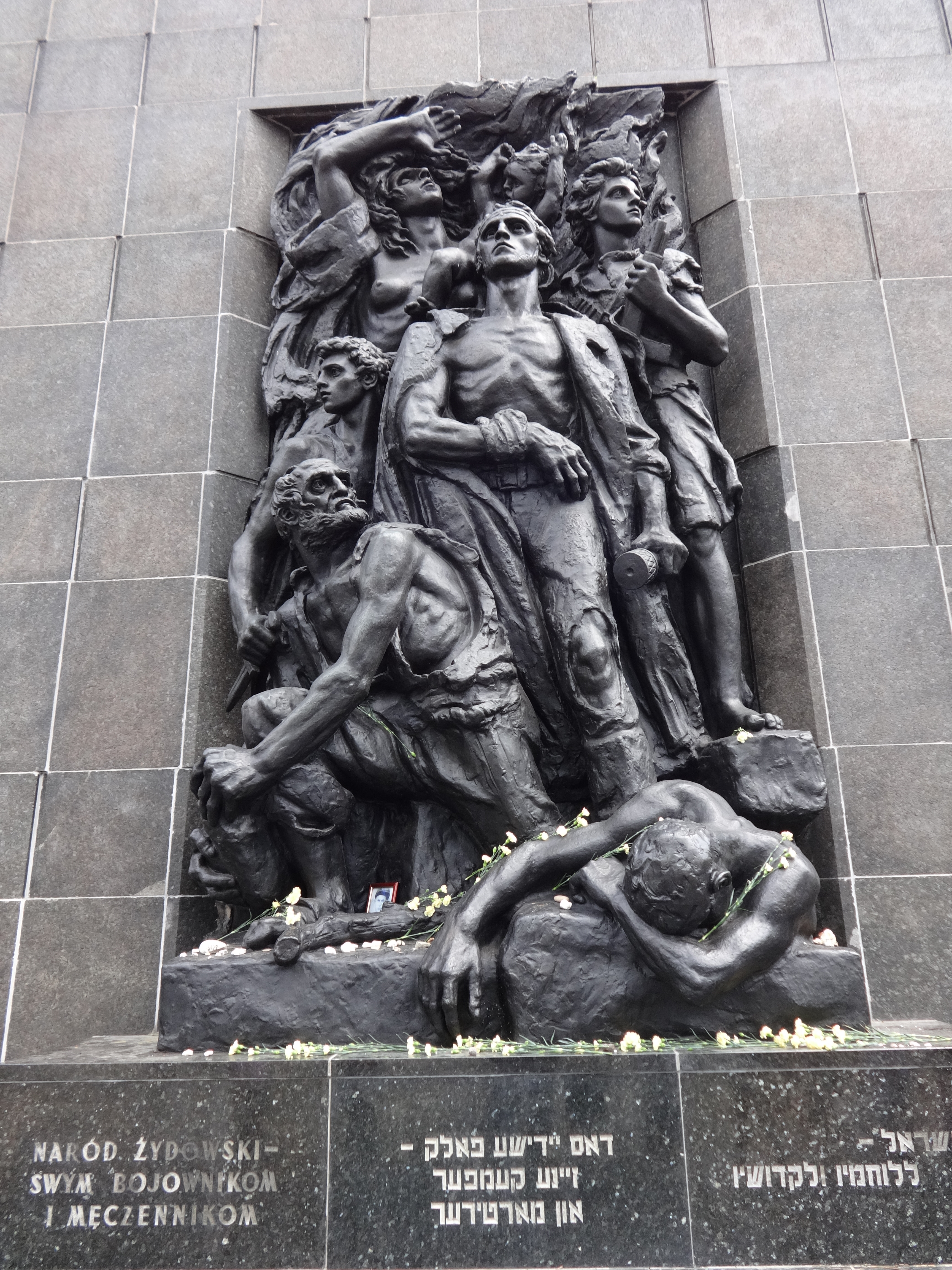
Memorial to Warsaw Uprising
Memorial to Warsaw Uprising. Matthew Rozell 2013.

Aliza kept her promise to the dead; what the Nazis tried to erase, Aliza spent a lifetime refusing to let the memory, the legacy of the Jews who fought back against the machine of death, die.

That legacy is now ours, an obligation to honor and carry forward.

— Matthew Rozell, April 19, 2026, the 83rd anniversary of the start of the Warsaw Ghetto Uprising.


Aliza Vitis-Shomron’s account appears throughout A Train Near Magdeburg, available at matthewrozellbooks.com. The feature film A Train Near Magdeburg is in production, coming 2027. To learn more about the progress of the film, visit MagdeburgTrain.com and to support, the Augusta Chiwy Foundation.

Read Full Post »

“I’ll Be in a Better Frame of Mind Tomorrow.”

April 17, 2026

Eighty-one years ago today, a young man sat down somewhere in central Germany and wrote a letter to his minister back home in Dayton, Ohio.

He had not written in months. He apologized for that. And then he described something that had happened four days earlier — something so shattering that he could not bring himself to write his mother about it, not yet, not that night.

“Today I saw a sight that’s impossible to describe, however I’ll try.”

He tried. And the letter that emerged from First Lieutenant Charles M. “Chuck” Kincaid — spare, honest, written in the plain language of a young man still working out what he had just witnessed — has become one of the most remarkable documents in the entire archive of the Train Near Magdeburg story. I want to share it again today, on its 81st anniversary. But this time, thanks to Chuck’s daughter Judi and her husband Mark, I can finally introduce you more fully to the man behind it. And what a man he was.

Chuck was born on June 20, 1918, in Dayton, Ohio. His father ran a garage and body shop, and as a boy Chuck made himself useful hanging around the mechanics, handing out wrenches, learning how things worked. When Chuck was about ten, his father expanded and took on the Essex car dealership to challenge Ford and Chevy. Three years later, the Great Depression arrived and the business went bankrupt.

And then — though Chuck would never speak of it, not once, not to his own children — something harder than the Depression happened that effected the whole family. His father left. And so Chuck, at twelve years old, became the man of the family.

Somehow his mother kept the house. She turned one of the bedrooms into a rental, taking in two college students from the University of Dayton at ten dollars a week — she made their breakfast and did their laundry. And Chuck, by age ten, had already gotten himself a paper route. By the time he was in junior high he had a morning route and an evening route. He tells it matter-of-factly in the brief autobiography he wrote in 1986: “I can remember at one point, around 1933, that the $3 to $4 that I earned weekly put food on the table.”

He graduated from high school in 1936, in the upper ten percent of his class, and got a job at National Cash Register for ten dollars a week. When that slumped, he found work at Standard Register, and saved over four hundred dollars in two years — which he describes, with characteristic understatement, as “no mean trick those days.” He enrolled at the University of Cincinnati in the fall of 1938 in an engineering co-op program. He worked jobs in between semesters to pay for the next — at a factory, at a restaurant, at a plating control plant making 35 cents an hour. When the co-op program fell apart as the country converted to wartime production and U of C raised tuition to $650 a year, he transferred to Ohio State, where the tuition was twenty dollars a quarter. He took ROTC because it paid twenty dollars a month and supplied a uniform — and he needed the uniform.

He entered the Army from OSU at the age of twenty-five. He was an older soldier. He had earned everything the hard way, one semester at a time, since the age of twelve.

By April 1945, Chuck had fought from Normandy across Europe with the 30th Infantry Division. He was no stranger to danger — he had earned an Air Medal at the Battle of Mortain the previous August by doing something extraordinary: climbing into a small Piper L-4 observation plane and flying it over four attacking Panzer divisions to call in artillery adjustments. He earned a Bronze Star at St. Lô. He was, by any measure, a brave and capable young officer. And he had seen things no human being should have to see:

On April 17, 1945, Chuck Kincaid came upon the train.

That evening, he wrote to his minister:

Not one of them, Chuck wrote, could walk a mile and survive. The army improvised what it could: watered-down C-rations served as soup, force used to keep people in line because they had, as Chuck put it, “no will power left, only the characteristics of beasts.” He believed that a few weeks of decent food would restore them to something resembling human dignity. He was right. But he also understood, with a clarity that comes through even in his plain soldier’s prose, that the scars on their minds would last the rest of their lives.

Chuck wrote: “No other single thing had convinced me as this experience has that Germany isn’t fit to survive as a nation. I’ll never forget today.”

He meant it. He had earned the right to mean it. But history, which rarely moves in straight lines, had something else in mind — something Chuck Kincaid could not possibly have foreseen from that ravine in April 1945. Today, it is young Germans, three kilometers from where he stood, who have become among the most devoted keepers of this memory. Johanna Mücke, who first wrote to me as a sixteen-year-old in 2018, went on to correspond with combat medic Walter Gantz in the last year of his life, and on the 75th anniversary of the liberation — alone, during a pandemic that had cancelled the planned ceremony — walked to the site at Farsleben and placed flowers on the bare concrete foundation of the unfinished monument. Her teacher, Karin Petersen, and community members like Daniel Keweloh have continued to build and sustain that memorial presence, ensuring that what Chuck witnessed is permanently marked in the landscape where it happened. What fanaticism and fascism had done to ordinary human beings — the devastation Chuck could barely find words for — these young people have chosen to carry forward not as shame to be hidden, but as a responsibility to be honored. Chuck couldn’t have imagined it. I find, whenever I think about it, that I am still moved by it.

And then, with a gentleness that reveals everything about who he was:

“I was going to write Mother tonight but thought better of it. I’ll be in a better frame of mind tomorrow.”

He protected her. After everything she had given — keeping the house, taking in the boarders, feeding her children through the Depression while her husband was gone — he didn’t want to add to her burden. He’d write something better for her when he could find the words for that, too.


I never met Chuck Kincaid. He had passed before I found his letter, which came to me in March of 2009, brought by his son-in-law Mark, who had connected that old family document — transcribed by Chuck’s sister Helen and passed around in copies — to the photographs of the liberation on our school website. I have since had the privilege of meeting Judi and Mark, and learning more about the man her father became after the war. He went to work for the American Can Company and spent thirty-five years there, much of that time with Anheuser-Busch improving the beer can and its handling equipment. His name is on the patent for the aluminum pop-top can that most of us have been opening our entire lives without ever thinking about who made it possible. He was, as Judi says simply, “a very brilliant man.” But also a man who had been the man of his family since age twelve, who worked his way through college a semester at a time, who flew over four Panzer divisions in a tiny observation plane, who stood beside a train in a German ravine and watered down C-rations for people who had been reduced to something barely alive, and who wrote to his minister about it because he didn’t want to upset his mother.

That is who these men were. That is the America that showed up at Farsleben on April 13, 1945.

Since I first shared Chuck’s letter on this blog, the story has continued to unfold in ways I could not have imagined. The young people of Wolmirstedt, Germany — a half-hour walk from where Chuck stood that April morning — have taken up this history with a commitment that moves me deeply every time I think of it, and the tenacious Ron Chaulet working from the Netherlands, alongside so many dedicated community members, have continued to build and sustain the memorial presence at the liberation site — ensuring that what Chuck Kincaid witnessed is permanently marked in the landscape where it happened.

And then there is the film footage.

In July 2023, US Army Signal Corps footage of the train at Farsleben — filmed on April 14, 1945, just around the time Chuck’s letter was written — surfaced from the National Archives after 78 years. A German museum associate in Wolmirstedt noticed just a few seconds of it in a documentary and wondered to me if it was our train. Our film team made the inquiry to the National Archives and within weeks the full reel arrived. James Bulgin, head of public history at the Imperial War Museum in London, told us that when he first saw it he stared in silence and played it over and over. He had known this story for years through photographs — but the film restored what photographs can never quite give: motion, life, the physical reality of those people in that ravine on that April morning. Holocaust scholar Michael Berenbaum, who helped build the United States Holocaust Memorial Museum, has described the arrival of the American soldiers as occurring at “11:59 and 59 seconds” in the lives of the prisoners. The film shows you what that means.

And in it, you can see the words chalked on the side of car number 16: THREE CHEERS FOR AMERICA. VIVE LES U.S.A.

Someone on that train wrote those words. Someone found a piece of chalk in the hours after liberation — and soon after Chuck was composing his thoughts to his minister — and scratched their gratitude onto the side of the shabby train car that had carried them to the edge of death. They had no idea anyone would see it 78 years later. Neither did Chuck, when he put pen to paper.

The letters we write, not knowing who will one day find them. The words chalked on a train car, not knowing they will be seen by the world. The boy who became the man of the family at twelve, who flew over Panzer divisions at twenty-five, who could not find adequate words for his mother but managed to find them for his minister — all of it now part of a story that refuses to end.

I am so grateful to Judi and Mark for trusting us with Chuck’s autobiography, and with the parts of his story that he himself, with characteristic modesty, left out.

soldier chuck kincaid in the netherlands with two Dutch children, likely 1944

He said he’d be in a better frame of mind tomorrow.

I think he was. I think he always was.

— Matthew Rozell, April 17, 2026

The full text of Chuck Kincaid’s letter is posted here. The US Army Signal Corps footage of the train liberation, recovered from the National Archives in July 2023, is viewable at my YouTube channel. The film A Train Near Magdeburg is in production and coming in 2027. To learn more about the progress of the film, visit MagdeburgTrain.com and to support, the Augusta Chiwy Foundation.


a letter from a soldier describing what he saw at the train. 4.17.45

April 17, 1945

Dear Chaplain;-

Haven’t written you in many months now, its funny how a few moments are so hard to find in which to write a letter way past due; it’s much easier to keep putting it off the way I’ve done. I’ll try to make up for it in this letter.

Today I saw a sight that’s impossible to describe, however I’ll try. Between 2400 and 3000 German refugees were overran by my division during our last operation; most of them were, or had been, inmates of concentration camps, their crimes the usual ones, – Jewish parentage, political differences with der Fuhrer, lack of sympathy for the SS, or just plain bad luck. Not one of these hundreds could walk one mile and survive; they had been packed on a train whose normal capacity was perhaps four or five hundred, and had been left there days without food.

Our division military government unit took charge of them, and immediately saw what a huge job it was going to be, so they sent out a call for help. Several of our officers went out to help them organize the camp they were setting up for them. The situation was extremely ticklish we soon learned; no one could smoke as it started a riot when the refugees saw the cigarette, and we couldn’t give the kiddies anything or they would have been trampled to death in the rush that would result when anything resembling food was displayed. The only nourishment they were capable of eating was soup; now the army doesn’t issue any of the Heinz’s 57 varieties, so we watered down C-ration[s] and it served quite well.  It was necessary to use force to make the people stay in line in order to serve them. They had no will power left, only the characteristics of beasts.

A few weeks of decent food will change them into a semblance of normal human beings; with God willing the plague of disease that was already underway, will be diverted; but I’m wondering what the affect of their ordeal they have been through, will be on their minds; most will carry scars for the rest of their days for the beatings that they were given. No other single thing had convinced me as this experience has that Germany isn’t fit to survive as a nation. I’ll never forget today.

I was going to write mother tonight but thought better of it. I’ll be in a better frame of mind tomorrow. I’m only a few dozen miles from Berlin right now, and its hard to realize the end is in sight. I’m always glad to receive your scandal sheet. You perhaps missed your calling, as your editorial abilities are quite plain.

As ever,

Charles.

Read Full Post »