Ron Parsons was a senior in my father’s history class in Glens Falls High in 1965. He and Billy Nemeyer decided to join the Marines after passing notes back and forth in Dad’s class. Ron’s dad was ill; Bill left first and Ron went to boot camp six months later with Jim Bates and Butch Barlow.
They met later in-country. They talked of home, about Jimmy Bates and the others who had been killed; they both knew that more than likely they would be killed too, that it was likely their last meeting, and no one would ever know how much they gave.
Ron introduced me to his fathers story, which I included in my first book on the War in the Pacific. Like many sons of World War II combat veterans, Ron was robbed of fatherly companionship due to the war; no fishing, no camping excursions for Ron.
I have heard from literally hundreds of children of combat veterans. The common refrain is, my dad did not speak of the war. Fact is, no one much wanted to hear about it when they came home. Compound that with the trauma, and guilt maybe, of having friends killed.
I found that the veterans of WWII began to open up to my students and others as they realized that if they did not share their stories, their friends would die with them, again and maybe forever. Now add to that combat veteran experience the despicable treatment our Vietnam veterans received when they came home. But like their fathers’ generation, they don’t want the Jimmy Bates they loved to just fade away, forgotten. When they speak, people will listen.
This article is by my friend Gretta Hochsprung, and appeared in the Glens Falls Post Star on May 29, 2022.
GLENS FALLS — Ronald A. Parsons hiked up his pant leg and rubbed his fingers over the bumps just under the skin.
“A lot of the scars,” he said, “they heal over.”
The Glens Falls native served in Vietnam, where he was twice injured and awarded two Purple Hearts. Parsons was born in 1946, 11 months after his father, John E. Parsons, returned from World War II, where his father was a Japanese prisoner of war and survived the Bataan Death March.
His father was considered a local hero when he returned to Glens Falls. In fact, every newspaper article about the son’s injuries and medals mentions his heroic father.
But life wasn’t all ticker-tape parades for the Parsons when the elder returned from World War II. He was injured and unable to work.
So the son started working at age 16 to help out the family. He took the dirty clothes to the laundromat. He shopped for groceries.
“That was my youth,” Parsons said. “Everybody says they went to the prom and they went to basketball games and football games and baseball games. Not me. I couldn’t. But you didn’t miss them, because you don’t miss what you don’t have.”

A father goes to war
John E. Parsons figured he was just signing up for a “year’s hitch” in Uncle Sam’s Army when he was drafted on March 24, 1941. That year turned into more than four years — three-and-a-half as a prisoner of war under the Imperial Japanese Army and being tortured in a Japanese prison camp, according to a 1946 article in The Post-Star.
He was sent to the Philippines in September 1941. He was at Clark Field in the Philippines, sitting on the steps of a barracks with fellow soldiers on Dec. 8, 1941, when 56 planes approached from above.
“In a few minutes, a thunderous crash of bombs began a nightmare of horror for Parsons, which was to run from Japanese barbarism in the ‘Death March,’ through prison camps in an itinerary through Formosa, the Japanese homeland, Korea and into Manchuria,” the article explains.
Soldiers evacuated Clark Field on Christmas Day in 1941 and focused on building two air strips in the retreat toward the tip of Bataan “in the blind hope that American planes would some day come,” the article says.
They ran out of rations by February, and eventually Bataan fell.
After the April 9, 1942, surrender of the Bataan Peninsula, approximately 75,000 Filipino and American troops on Bataan were forced to make a 65-mile march to prison camps. It became known as the Bataan Death March.
“It was not a continuous march, parade fashion, but rather continued over a period of about a week with groups of 500 being sent out each day,” according to The Post-Star article. “Parsons says they were forbidden to help anyone in any manner, even if they fell. To do so was to invite a rifle butt in the back. He saw three men bayoneted in the back at a rest period when they walked a few feet from their group and knelt over a puddle splashing water on their faces.”
The march ended at Camp O’Donnell, where their shoes were taken away — even the shoes of Gen. Jonathan Wainwright.
“Prisoners were put in groups of ten, a policy which was in effect from then on, and in the event any one man attempted to escape or made any move which might be construed as such, the other nine were to be put to death with him,” the article explains.
Parsons took a bayonet to his right arm when he tried to sneak some sweet potatoes back to camp.
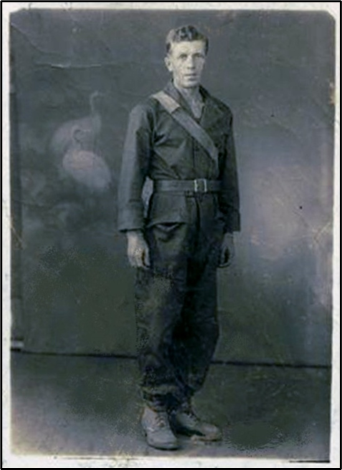
In early January of 1943, Parsons’ parents in Glens Falls received letters from around the country that their son’s voice was heard on the “Prisoner’s Hour” from a radio station in Tokyo and that he was being held prisoner by the Japanese, and that he was in “the best of health.”
The messages were the first word the parents had received of their son since war broke out, a Jan. 14, 1943 Post-Star article said.
The Japanese believed that Formosa would be invaded, so on Oct. 9, 1944, the group that Parsons was with was put aboard the Japanese passenger ship Oyruko Maru, which was bombed on Oct. 13, 14 and 15 by American planes.
“When the bombing raids came, the prisoners were locked in their compartment and timbers were wedged against the door, the hatches were all closed and ventilation was shut off,” the 1946 article explained.
The ship eventually reached the seaport of Moji, on Kyushu, southernmost of the Japanese home islands. The prisoners were quartered for a time in a hotel, where hot baths were available daily.
But the stay was short, and the prisoners were transferred to Korea, where they went by rail to a camp north of Mukden in Manchuria. Later they were moved back to Mukden, where they were when the war ended. The prisoners were liberated on Aug. 16 by the Russians.
Parsons held the rank of staff sergeant when he was discharged and earned the American Defense Service Medal, American Service Medal, Asiatic-Pacific Medal, Distinguished Unit Badge, with two clusters, Good Conduct Medal, Philippine Liberation Medal and the World War II Victory Medal.
He was discharged at Fort Dix in New Jersey in December 1945 after recovering at Rhoads General Hospital in Utica for a few weeks.
John Parsons died Oct. 4, 1965, after a long illness at the age of 53. He is buried in Glens Falls Cemetery.
A son goes to war
Ron Parsons was born during the baby boom that followed World War II. He graduated from Glens Falls High School just months before his father died.
“My marks from high school were so bad that even if I had the money, I couldn’t get in to any college,” said Parsons, who worked all throughout high school because his father couldn’t. “They laughed at me when I submitted my stuff.”
He was playing pool with his friend Jimmy Bates at the Olympia Billiard Lounge on Ridge Street in Glens Falls in 1966 when his mother called to tell him he had been drafted into the Army. Jimmy persuaded him to instead volunteer with him for the Marine Corps so they could go to boot camp on the buddy system.
Parsons enlisted in the Marines in February 1966. They were both sent to fight in Vietnam.
“Two weeks in Vietnam and I realized we were going to lose the war,” Parsons said.
There was no way to stop the North Vietnamese.
“It was like trying to stop the air,” he said.
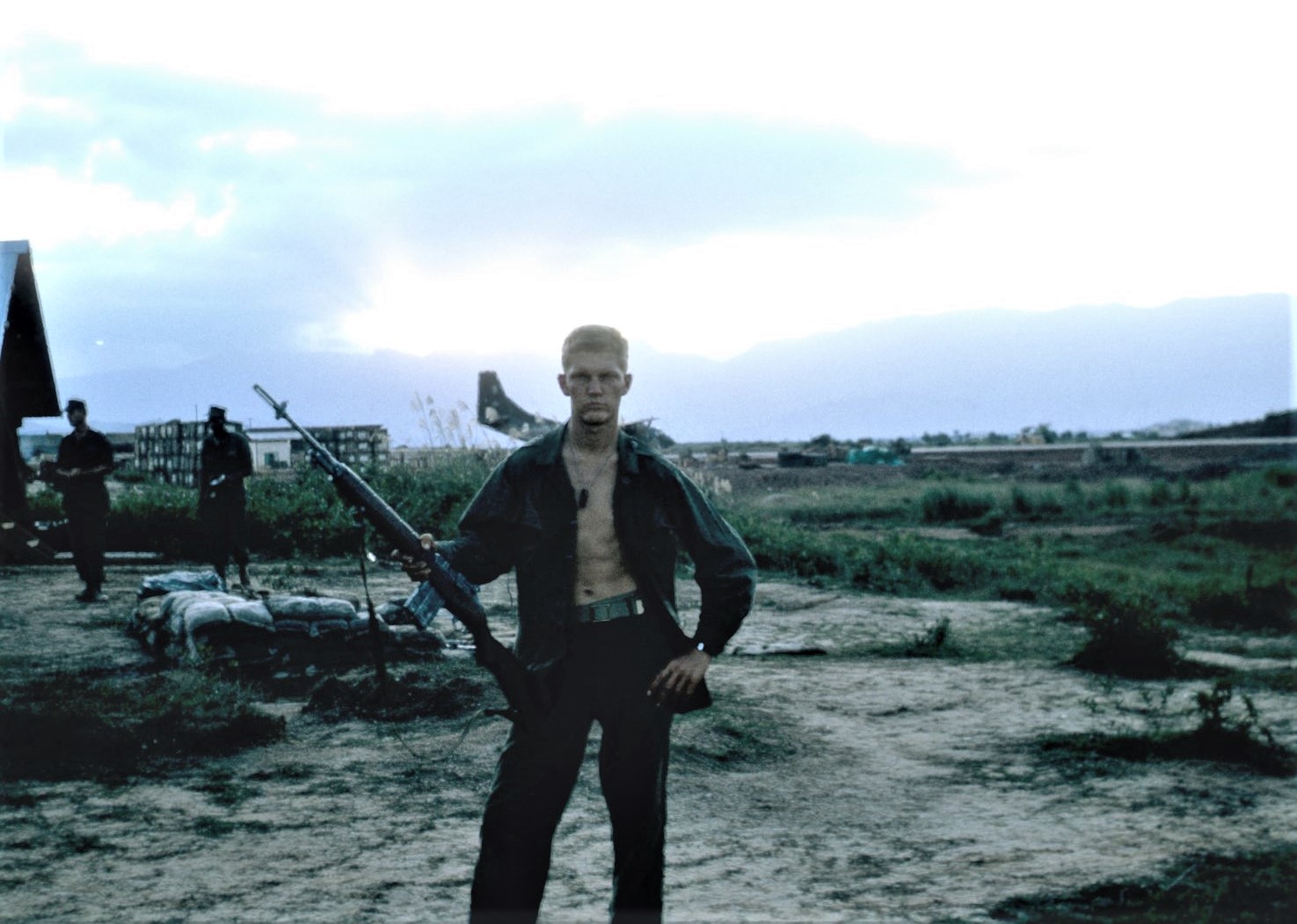
Parsons was injured the first time on Sept. 23, 1966, when grenade fragments punctured through his knee. Just a few months later in Okinawa, Jimmy Bates was injured.
“He had a bone sticking right through his skin,” Parsons recalled. “And I said to him, ‘How the hell can they send you back to Vietnam like that?’”
Bates was sent back but was promised convoy duty. Parsons tried to persuade him not to go.
“So he went to Vietnam and two months later, he got shot right in the heart while he was on convoy duty,” Parsons said. “Got shot right in the heart and killed.”
Cpl. James J. Bates, son of Mr. and Mrs. Henry Bates of 30 Baldwin Ave., Glens Falls, was awarded the Purple Heart while serving with K Company in Vietnam and was also selected as the outstanding recruit of Platoon 246. He was killed Sunday, March 19, 1967, while leading a squad on patrol in action against the hostile forces south of Da Nang, according to a Post-Star article.
Parsons’ second injury on May 26, 1967, was more severe.
Cpl. Parsons was on patrol with Marines from Company L, Third Battalion, 9th Marines. They were taking a hill 2 miles outside of Con Thien.
Another company was going through their base bragging that they were going to clear a path to make the DMZ safe for Parsons’ company.
“Three hours later, they hit the shit really bad and they were dragging their wounded and their dead through our position,” Parsons said.
The next morning, Parsons’ company was ordered to assault the hill. His best friend, Tommy Goodrich of Cortland, told him, “I’m going to die today.”
Strangely, Parsons awoke that day with a sense of peace. He felt like he was handed a ticket home.
“So I’m not really sure what happened, but the Chinese Communist Claymore mine detonated,” Parsons said. “It was about 20 pounds of TNT and it was probably about 20 feet from me. … The people on both sides were all killed and I was not.”
Parsons’ torso, arms, hands and legs, however, were pelleted with hundreds of pieces of shrapnel. His buddies on both sides of him died and 14 were wounded.
Parsons remembers being blown up in the air and coming down in a foxhole next to the corpse of a North Vietnamese soldier with a gunshot wound to the head. As he backed out of the hole, he was throwing his 10 grenades.
“I was just throwing the grenades all over because I was afraid one of them would cook off because the grenade is four-and-a-half seconds,” he said. “So I was kind of counting to myself as I was throwing the grenades into the hole.”
After 15 to 20 seconds, he started to assess his injuries and realized he was hurt.
“My left leg was open from the knee to the ankle, and you could see the bone, and the artery and things like that in there,” he said. “I had a lot of other open wounds all over. I have shrapnel through my fingers, through my hands, everyplace, through my chest. I got the biggest pieces in my left leg and the groin area.”
A circling helicopter loaded the injured, including Parsons and Tommy Goodrich.
“He died,” Parsons said. “He was right next to me.”
Parsons spent seven weeks at St. Albans Naval Hospital on Long Island. He wasn’t supposed to attend Tommy Goodrich’s funeral because he still had open wounds.
He put Vaseline and plastic over the wounds, wrapped them in bandages, loaded himself full of pain medication and was able to say goodbye to his friend.
While he was in Vietnam, he often dreamed about returning home to Glens Falls. He longed to spend his day fishing off the docks in the village of Lake George.
“That’s one of the problems that you have when you return home, because your dreams are all perfect,” he said. “The girl that you used to date, she’s just perfect, and your home is just perfect and everything is just perfect. But when you get home, they’re not perfect. And a lot of people are just so disappointed.”
When he got home he borrowed his mother’s car and hobbled on crutches up to the head of Lake George to fish. But his day was ruined when a man in a black BMW drove up and they started chatting.
The man’s father in Thailand owned the hotel Parsons stayed at when he was on R&R.
“So his family’s making a fortune off the war, while Americans are dying in the war,” said Parsons, who took his lines out of the lake and left.
For future generations
“When my dad came home, just like me, I just wanted to fit in,” Parsons said. “I didn’t want to be anything special. My dad felt his service was normal. His service was normal service. I kind of felt that way about my service too.”
Parsons never felt he needed to live up to his father’s legacy as a decorated war hero. His father didn’t talk much about his time in war, but he did raise his son to be prepared to fight.
“When I was born, I was left-handed,” he explained. “My dad switched me over because he said if you’re left-handed, when you’re inducted into the military, the rifle round when you shoot it will eject in your face, so you have to switch over to be right-handed. So I did, and it probably saved my life.”
His father shared wartime secrets with his son, like how to slip out if your hands are ever tied together or how to survive with no water.
“If you ever get into a place like that, you put a small pebble underneath your tongue and it will help salivate your mouth,” he said, “and it did.”
When Parsons’ father returned from World War II, he buried his story.
“We were in a survival mode, and I wish I had sat and talked with my father more about it. I really do, because a lot of people who did so wrote books about it.”
Parsons wants his children to have a news article to show future generations of his family. Vietnam veterans didn’t talk about their time in the controversial war when they returned.
“Nobody wanted to hear it,” Parsons said, “but we didn’t really want to tell it either.”
But when Marines go to reunions, the stories fly, because people who weren’t there, don’t understand.
“They shouldn’t understand it,” he said. “That’s one of the reasons why we don’t tell them, was because they would be much better off for it if they don’t know.”
In 2005, Parsons visited the Philippines and walked the last 2 kilometers of the Bataan Death March with survivors.

“Nobody talked,” he said. “It was quiet. Nobody talked. Nobody said anything. It was like walking in a graveyard.”
Parsons wanted to share his story and his father’s story with The Post-Star for Memorial Day. In fact, he purchased an advertisement in today’s Post-Star to reprint the Jan. 30, 1946, article in The Post-Star about his father’s time as a prisoner of war.
Parsons has been working on his family tree and realized the only way to find his family’s information was through obituaries and articles in The Post-Star.
“This is going to be a documentation,” he said. “My great-great-great-great-great-grandchildren are going to see this.”
***
Local author Matthew Rozell included the elder Parsons’ story in his first book on the War in the Pacific.
Coincidentally, Ron Parsons was in Rozell’s father’s history class at Glens Falls High School in 1965.
“I have heard from literally hundreds of children of combat veterans,” Rozell said. “The common refrain is, ‘My dad did not speak of the war.’ Fact is, no one much wanted to hear about it when they came home. Compound that with the trauma, and guilt maybe, of having friends killed.”
World War II veterans opened up to Rozell and his students when he started the Hudson Falls High School World War II Living History Project in the 1990s. The veterans realized if they did not share their stories, they would die with them, Rozell said.
“Now add to that combat veteran experience the despicable treatment our Vietnam veterans received when they came home,” Rozell said. “But like their fathers’ generation, they don’t want the Jimmy Bates they loved to just fade away, forgotten. When they speak, people will listen.”








 Teaching History Matters