This week, I hit upon a realization, so bear with me as I unpack A LOT in this post.
The realization that has been simmering for over a quarter-century is that my students and I were, for years, performing a form of unintentional psychotherapy for the “Greatest Generation”, and perhaps now their children.
This past Monday, I sat in a room at SUNY Oneonta surrounded by educators from across New York State. We were there for the central NY DCMO BOCES session titled “Growing Global Citizens,” focused on the new NYS Standard of “Portrait of a Graduate”, and guidance for Holocaust education. There is a resurgence of discussion in educational circles about Project-Based Learning (PBL) and “Inquiry-Based Learning”; in fact, in addition to human rights and the Holocaust, that is what today was all about, and why I was asked to present.
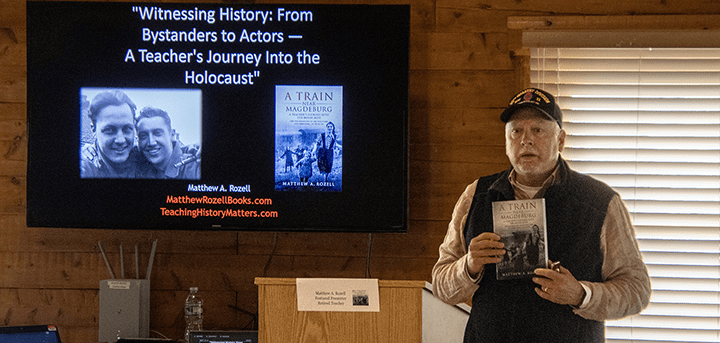
Looking back, I think I was a “Godfather” to these concepts before we even had a name for them. But what we did not realize at the time was that the “project” was never just about history; it was about healing.
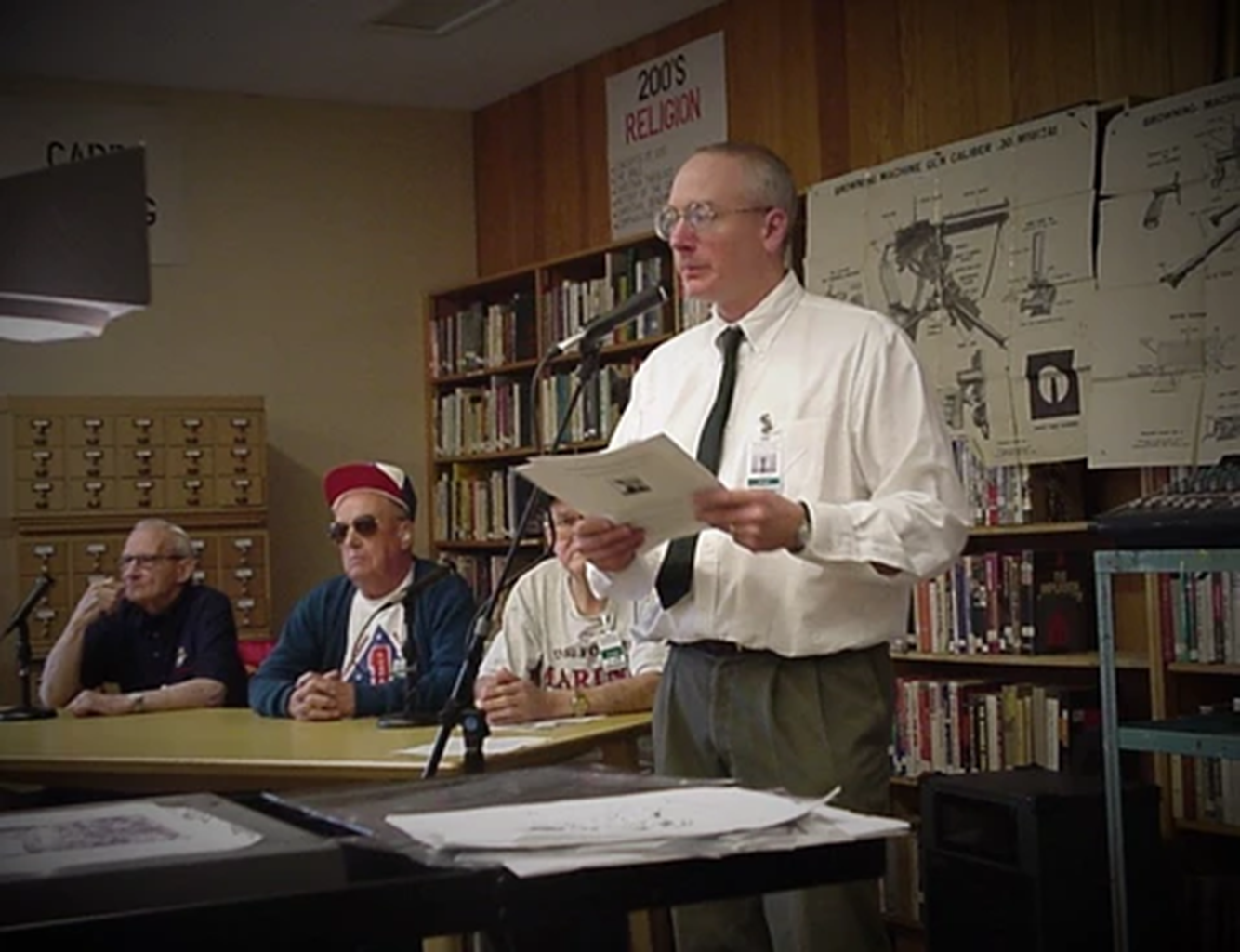
The Generation Gap and the Floodgates
For decades, an entire generation of veterans lived in a self-imposed silence. When they came home, they couldn’t speak of what they experienced with their parents or girlfriends or wives. Later, with their own children the veterans didn’t want to burden them with the weight of what they had seen. And the fact is when they came home, in many instances leaving friends behind overseas, no one wanted to hear about it. The war was over. It was “time to move on”. It took the passage of decades—and the curiosity of the grandchildren’s generation—to finally open the floodgates.
I see the evidence of this silence every day in my inbox, and in my social media posts on my Facebook page. I receive countless messages from the “Second Generation”—the children of these veterans—who come to me to finally learn about the father they never truly knew. They remember what they themselves experienced, growing up:
- The father who walked the halls at night, his muffled cries echoing through the bedroom walls.
- The father who needed his own space on a certain day of the year, retreating into the “frenzy” he left behind decades ago.
- The dad who you never touched or shook to wake up.
This is the true legacy of the World War II Living History Project. Beyond the history textbooks, it gave soldiers a final chance to “get it off their chests” before they passed. And I suppose I became an unintentional conduit, providing a modicum of peace by allowing them to share their truth with the youth of our country. That’s why they became books, for if I had left the interviews in the filing cabinet, they likely would have wound up in the dumpster the week after my retirement.
I remember a tough Marine, interviewed by a teenage girl in my class. She was assigned to interview him about his experiences in the Pacific in the island hopping campaigns. And she was so nervous that she would open a wound by asking her questions. Well, Joe Fiore picked up his second Purple Heart on Saipan. But he still cried 60 years later remembering his mother’s reaction to the news, though he recovered and finished the interview. She gave him the space to feel, to share these emotions before he died.
Jimmy Butterfield, a fellow Marine and Joe’s friend, recalled his own mother with emotion to a classful of teenagers who themselves were about to go out into the world. The telephone rang on the hospital floor in Hawaii, and they told him it was his mother on the line, the phone call he had been dreading. He’d lost part of his face to a Japanese sniper on Okinawa, and after many surgeries, the doctor had finally told him that at age 19, he would never see again. The pain and shock was one thing. But now he had to tell her, from 5000 miles away. ‘So I had a hard two months, I guess. I kept mostly to myself. I wouldn’t talk to people. I tried to figure out what the hell I was going to do when I got home. How was I going to tell my mother this? You know what I mean?’ [The Things Our Fathers Saw—The Untold Stories of the World War II Generation From Hometown, USA-Volume I: Voices of the Pacific Theater]
A soft-spoken man, James Castiglione was a Navy veteran, sharing his story from the heart, bringing to life once more the things he saw that he could never forget, and carried for so many years. “Right in the passageway [on the ship], there was a young lad there. All I could hear him say is, ‘Ma.’ He’d take a breath, and it’d be a whistle. ‘Ma.’ [cries softly] Oh, God.
I was looking down at him lying on the deck. He looked up at me. ‘Ma.’ Then I realized what was happening. When he was going, ‘Ma,’ he was taking a breath, and his lungs were filling up with air, and it was leaking out the back. He had a little hole in the top of his lung up here, but it came out and it ripped a couple of his ribs off, and knocked a couple of his vertebrae out of line. He had a hole in his back about that big [gestures with hands]. They couldn’t do nothing for him. All they did was, they padded him up with absorbent cotton and bandaged him up. They said, ‘Just wait for him to die.’
When I was there with him, I knelt by him. I held his hand. He felt I held his hand; [he gripped my] hand tight, very tight. I knew he was still alive. Those things, you can’t forget. You don’t forget. I thank God that I was able to help some of those boys. Whenever there was an operation going on in the sick bay, not only the sick bay, the state rooms had to be turned into operating rooms, doctors all over operating, taking arms off.” [D-Day and Beyond: The Things Our Fathers Saw—The Untold Stories of the World War II Generation-Volume V]
Walter Gantz couldn’t speak to his parents about what he saw, taking care of the death train survivors [A Train Near Magdeburg] in the aftermath of the Holocaust. A 15 year old girl in his care died one evening, and although he didn’t have to, he cradled her emaciated body down the stairs to the morgue tent, tears flowing. He parents asked him why he didn’t sleep at night. He never told them. He came to one of my talks, and you can see the trauma as he speaks to college students, and actually get to unburden himself to them, and to a survivor he just met who was on the train and also traveled to my talk.
The Weight of the Work
I’ll be honest: I was emotionally drained for two days after presenting that morning and afternoon. I hardly remember the drive back home.
Expounding on all this that day with thirty teachers, while reconnecting via Zoom with my friend Micha Tomkiewicz, topped off this day with the teachers. Micha, a retired professor and the second survivor from that train near Magdeburg to ever contact me, is turning 87 in two weeks. Seeing his face on that screen, watching him answer questions—and his ever present good humor intact!—from a new generation of teachers, reminds me of the stakes. He was a six year old boy rescued on the train with his mother, and there with me from the beginning of this odyssey—the only survivor to attend every single reunion, on four (!) continents—and in some respects just about the “last man standing”.
I have spent 40% of my life on this planet immersed in these stories. It never truly ends, and it never gets easier to recount. But I do it because I hope to inspire other teachers to embrace this realm of “project-based” learning—where the “project” at hand is our shared human history and how we choose to carry it.
And another legacy is illustrated in a Facebook post I made which unintentionally became a message board that illustrated that the trauma is real, and passed on.
A veteran of Vietnam wrote, “My dad served in the army and my uncle served in the air force. Both survived European Theater. Neither talked about war much, only occasionally to one another. My dad never slept without socks on, and you never touched him to wake him up. I never asked him why. When I got my draft notice, he knew I wanted to go to Nam, it was the first time in my life I saw him cry tears. And he was a tough man. Thanks dad. See you again someday.”
One woman wrote, to another on my thread, “Survivor’s guilt is such a painful thing. My mother finally explained after my dad passed away that he was stuck in a ravine in his tank until someone finally rescued him, and he missed the dinner being served for Christmas. When he got back to his unit he found out his buddies had been killed while standing in line for chow. If Dad hadn’t been in the ravine, he would have been in line with them. This finally explained the stress every Christmas that we couldn’t possibly understand as kids. As with your father, it wasn’t something to talk about. Both of our dads, as with countless others, came home feeling like they should be ‘man enough’ to put all those feelings aside. If only they’d realized they were all in the same boat, needed help, and it was nothing to be ashamed of! With all the comments coming in, it makes me realize that many in our generation were struggling to understand our fathers’ emotional issues, nightmares, and erratic behaviors. Thanks so much for reaching out!
Me, in reply: “You hit the nail on the head. This began as a post for my books… but it is touching something very, very deep. My books go there, and I think that some of these discussions in their own way are helping bring peace to you, the ‘second generation’ World War II survivors. Because that is exactly what you are. Trauma certainly is passed on, maybe to a lesser extent, even if we don’t realize it. I have done extensive work with Holocaust survivors and their kids too, and first recognized it there!”
Our work then, and my books now, heal.
A Message to My Fellow Educators
I closed my talk in Oneonta by asking those teachers to go even further, and think of that one student in their classroom who depends on them.
There is always a student who gets up and comes to school simply because you are their hope. They may be navigating their own trauma at home. You inspire, you challenge, and you look to your students as the future—but you must realize that you are the conduit to that future.
Most days, you won’t see the fruit of your labor. You’ll feel the exhaustion long before you feel the reward. But my hope is that someday, your actions will come back to you in spades. You will rest easy knowing you made a difference in the world—not just as a teacher of facts, but as a cultivator of global citizens.
It is an awesome, heavy responsibility. But you were born for it. And skillfully teaching this subject helps kids realize, they are not alone in this confusing, often traumatic experience called life. The great leaders, the teachers in history, fall back upon the past to look for guidance in troubled times. You do the same for your students.
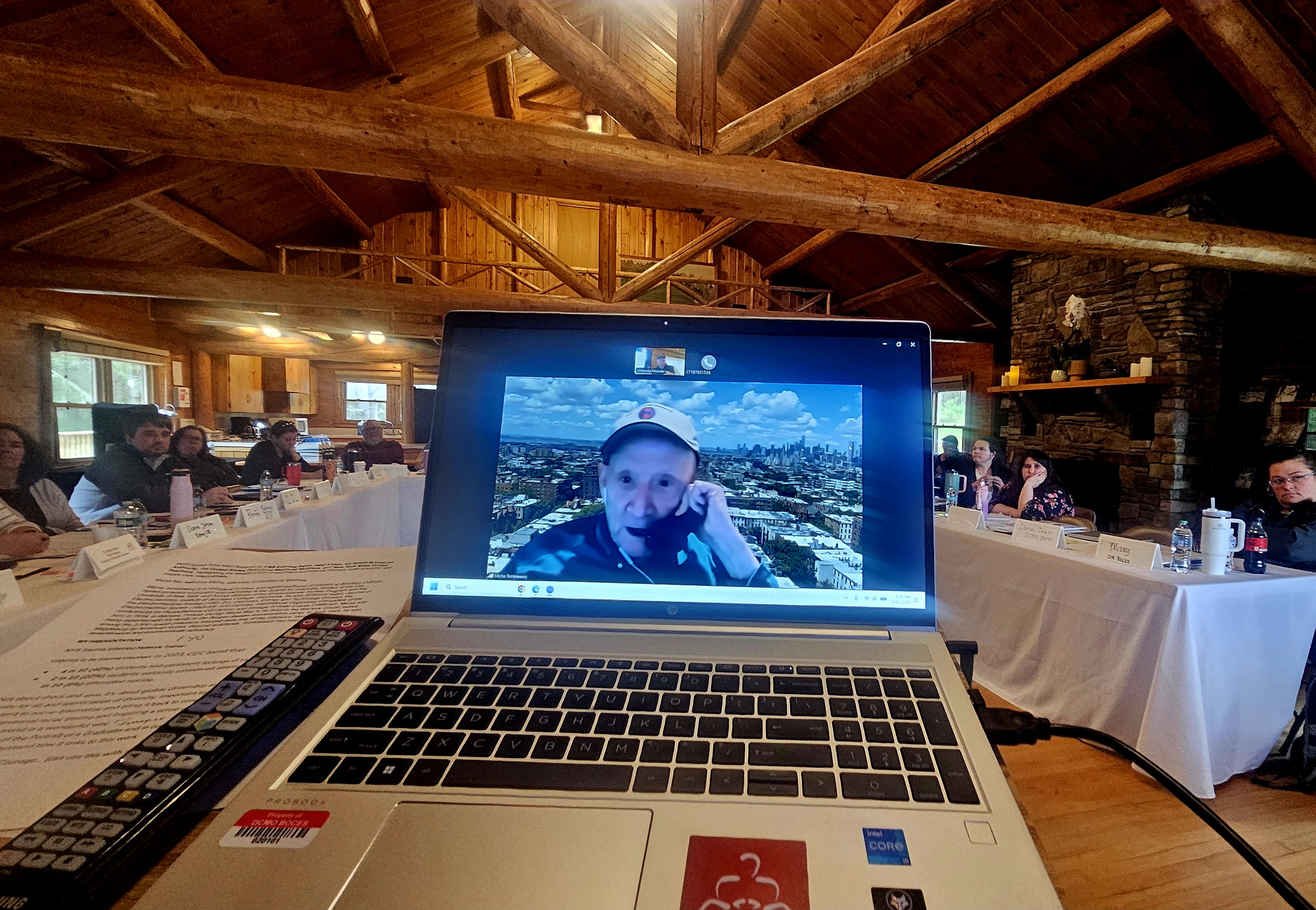
And Micha—you have saved me!
The DCMO BOCES “Growing Global Citizens” Event
Earlier this week, I had the honor of presenting alongside Dr. Doyle Stevick—a scholar and executive director of the Anne Frank Center at the University of South Carolina—speaking about the study of the Holocaust as a moral “call to action” against racism and prejudice, and a panel of dedicated educators. Our goal was to move beyond historical facts and address the moral implications of the Holocaust. To learn more about these professional learning opportunities, you can read an article here.
Matthew Rozell Author of The Things Our Fathers Saw series and A Train Near Magdeburg MatthewRozellBooks.com


 Teaching History Matters