Feeds:
Posts
Comments

Posts Tagged ‘World War II’

April 30 1945 Headlines. Hangs in my classroom.

April 30 1945 Headlines. Hangs in my classroom.

Today, April 29th, is the anniversary of the liberation of Dachau, 71 years on.

Today, if it is brought up at all, some of us might respond with a vacant stare. More might shrug and turn away. I suppose that is to be expected. But you know me. I just think that as a nation, sometimes we allow things to slip from memory at our peril.

It was real, and it happened. And it was American GIs who overran this camp and many others in the closing days of World War II.

The men of the 42nd and 45th Infantry Division arrived independently of each other, here, in southern Germany, at Dachau, on this day. A concentration camp, they were told. Their noses gave them a hint of what they were about to uncover, miles before the camp appeared in sight.

Read the headlines, above. Note the subarticle:

Boxcars of Dead at Dachau. 32,000 captives freed.

American soldiers view the bodies in one of the open railcars of the Dachau death train. USHMM

American soldiers view the bodies in one of the open railcars of the Dachau death train. USHMM

And so after some resistance, into the camp they entered. Life changing events were about to unfold for the American soldier.

***

For me, it’s not about hero worship, or glorifying the liberator or any World War II soldier by placing him on a pedestal. Our time with them is now limited, but many of the liberating soldiers I know push back at this, to the point of rejecting the term, “liberator”- “It all sounds so exalted, so glamorous” said one. But they will all accept the term, “eyewitness”.

Witnesses to the greatest crime in the history of the world.

So instead I think it is about honoring their experiences, their shock, the horror, the puking and the crying, the rage-and then, the American GIs recognizing that something had to be done. And they did suffer for it, for trying to do the right thing. Many tried to help by offering food to starving prisoners who just were not ready to handle it, only to see them drop dead. Or having to manhandle these emaciated victims who were tearing away at each other as food was being offered.

Some guys never got over it. How could you?

I have learned so much over the past few years from these guys, just through the way that they carried themselves and tried to cope with what they witnessed. In my World War II studies and Holocaust class, we discuss these issues at length. I’m so lucky to be able to teach it.

Last year, I was privileged to teach a lesson to my high school seniors for NBC Learn, which was shared with other districts across the nation. Later, I stumbled upon this piece by the late author Tony Hays, who writes about his liberator father and his own encounter with the past. Thanks to the Get It Write folks; the original link is at the bottom.

***

Dachau Will Always Be With Us

by Tony Hays

This is not so much a post about writing as one about a writer’s education, about one of those experiences that molds us, shapes us into storytellers. I read yesterday the story of Joseph Corbsie, whose father, a World War II veteran, left him with a special legacy from the war, from the hideous Nazi concentration camp at Dachau. I feel a particular kinship with Mr. Corbsie.

My father, Robert Hays, was the son of an alcoholic tenant farmer in rural west Tennessee. If the appellation “dirt poor” fit anyone, it fit my grandfather’s family. Daddy served in the Civilian Conservation Corps during the 30s. He and my mother, who was in the woman’s equivalent of the CCC, working as a nurse’s aide at Western State Mental Hospital in Bolivar, Tennessee, met on a blind date in early 1940 and married in September of that year.

But just over a year later, Pearl Harbor happened. America was in the war. My father was among the first of those drafted in 1942. I won’t bore you with the details, but he participated in the North African, Salerno, Anzio, and southern France invasions, saved by the luck of the draw from Normandy. But they slogged through France and on to Germany. On April 29, 1945, Allied troops liberated the Dachau concentration camp. I don’t know whether he entered Dachau that day or the next, but that he was there within hours of the liberation is beyond dispute. A few months later, after more than three years overseas, he came home.

In later years, he would talk occasionally about the war, providing anecdotes that showed the chaos and random chance of battle. He spoke of driving through Kasserine Pass in North Africa just hours before the Germans killed thousands of Allied troops in a stunning attack. He spoke of a friend, defending his position from a foxhole, who was thought dead after an artillery shell landed right next to him. When the dust cleared, the friend was buried up to his neck in dirt, but did not have a scratch on him. He spoke often of Anzio, where he was wounded, and of the massive German air assaults on those soldiers clinging to that tiny sliver of beach along the Italian coast.

But he never spoke of Dachau.

The bodies of former prisoners are piled in the crematorium mortuary in the newly liberated Dachau concentration camp. Dachau, Germany, April 29, 1945.

The bodies of former prisoners are piled in the crematorium mortuary in the newly liberated Dachau concentration camp. Dachau, Germany, April 29, 1945. USHMM.


Ever.

When he died in 1981, we found a photo in his wallet. An old sepia-toned shot like others he had taken during the war, pictures that he kept in an old brown bag. But this one was different.

It showed a pile of naked bodies. Well, really more skeletons than not, with their skin stretched pitifully over their bones. On the back, as had been his habit, was typed simply “Dachau.”

I was confused. Why would he keep this one photo in his wallet all of those years? Especially a photo of a place and event that he never spoke about. It obviously had some deeper meaning for him than the other photographs. If it had been a shot of the building he was in when he was wounded (hit by an artillery shell), I could have seen that. A reminder of his closest brush with death. Yeah, I could buy that. But this macabre photo? That, I couldn’t see.

So, for the next fifteen years, I remained puzzled.

Until the fall of 1996. I was working in Poland, and I had some time off. I took an overnight bus from Katowice, Poland to Munich. It was an interesting trip all in itself. We sat in a line of buses at midnight on the Polish/German border, waiting for our turn to cross, next to a cemetery, as if in some Cold War spy movie. I remember passing Nuremburg and thinking that my father had been there at the end of the war. And then there was Munich.

I spent a day or two wandering through the streets, drinking beer in the Marienplatz. I’m a historical novelist, so the short trip out to Dachau was a no-brainer. Of course it was as much my father’s connection with it as anything else that spurred the visit. But I’m not sure that I was completely aware of that at the time.

Dachau literally sits just on the outskirts of the Munich metropolitan area. I looked at the sign on the train station with a sadness, wondering for how many people that had been one of the last things they saw. It was only later that I discovered there had been another depot for those passengers.

The Dachau Memorial is a place of deep emotion. In the camp proper, mostly all that are left are the foundations of the barracks. One has been reconstructed to give an idea of how horrible life must have been. The camp was originally intended to hold 6,000 inmates; when the Allies liberated Dachau in 1945, they found 30,000. The museum and exhibits are primarily in the old maintenance building. I looked with awe at life size photos of prisoners machine gunned, their hands torn to ribbons from the barbed wire they had tried to climb in a futile attempt at escape.

I followed the visitors (I can’t call them tourists) north to where you crossed over into the crematorium area. It was there that the full brunt of what had taken place at Dachau really hit me. A simple brick complex, it seemed so peaceful on the fall day that I stood before it. But as I read the plaques and consulted my guidebook, as I stepped through the door and actually saw the “shower” rooms where the prisoners were gassed, as I stared into the open doors of the ovens, I felt a rage unlike any I had ever known consume me.
Covering my eyes, embarrassed at the tears, I slipped back outside. It took more than a few minutes to regain my composure. I thought then that I understood why my father kept that photo close to him for so long. It was a reminder of what one group of people had done to another group of fellow humans. The obscenity of it had overwhelmed him as it had me.

That night, I went to the famous Hofbrauhaus in Munich, to wash the images of the ovens away with some beer. I hadn’t been there long when an elderly American couple sat at the table. They were from Florida, a pleasant couple. He had been a young lieutenant in the American army on the push into Munich. In fact, it had been his pleasure to liberate the Hofbrauhaus from the Germans.

Of course, I asked the question. “Were you at Dachau?”

He didn’t answer for several seconds, tears glistening in the corners of his eyes as his wife’s hand covered his and squeezed. Finally, he nodded, reached into a back pocket and pulled out his wallet.

With a flick of his wrist, a photo, just as wrinkled, just as bent, as the one my father had carried landed on the table. It wasn’t the same scene, but one just like it.

Here was my chance, the opportunity to ask the question I had never been able to ask my father. I pulled the photo from my own wallet and lay it next to his. “Why? Why have you carried it so long? To remind you of the horror of Dachau, of what had been done here?”

His face carried the faintest of smiles as he shook his head. “No, son, to remind us of the horrors that we are capable of, to remind us not to go down that road again.”

The difference was subtle, but in that moment, I learned two lessons invaluable to a writer, subtle differences are important, and when you want to know the truth, go to the source.

As I sit here now and look at that same photograph, I realize that it was my father’s legacy to me, of Dachau. Joe Corbsie’s father left him something more tangible, a reminder of the same thing for the same reason, but more forcefully stated — a tiny box of human ash from the ovens.

Now, nearly 70 years after that day in 1945, Dachau is still with us, and I hope the legacy left by our fathers always will be.

The late Tony Hays.


Read Full Post »

A survivor writes to his fellow survivors today, on the anniversary of their liberation. An excerpt:

For the 13th of April 2016.
Hello again to all of you ‘my twins’ on our 71st birthday.
I hope my good wishes find all of you in good health, both physical and mental.
It is a blessing to be alive and being able to think back of that ‘special birthday’ of ours.
To think about those who fought to give back our lives, whom we call ‘our angels of life’.
Like the years before; there are no words enough to express our thanks for them.


[My new book on this will be out this July. You can put in a pre-order notice, above- GET THE BOOK HERE]

30th Infantry Division Veterans of World War II, Nashville Tennessee, April 2015, 70th anniversary of the end of WWII. Credit: Larry S Powell.

30th Infantry Division Veterans of World War II, Nashville Tennessee, April 2015, 70th anniversary of the end of WWII. Credit: Larry S Powell.

Here also is an anniversary poem.

The poet Yaakov Barzilai was on the ‘Train Near Magdeburg’. Originally composed in Hebrew, a  translation has been provided by fellow survivor Micha Tomkiewicz. He has agreed to share his poem on the 70th anniversary of the liberation. ’11:55′  refers to the author’s recollection of the time of the day of the liberation of the train transport; ‘five minutes before the bitter end’.

Dedicated to Frank Towers and 30th Infantry Division soldiers, US liberators of the death train from Bergen-Belsen on April 13, 1945


At Eleven fifty-five.

Return to the Place of Liberation, April 13, 1945                                                                                 

The train stopped under the hill, huffing and puffing, as though it reached the end of the road.

An old locomotive pulling deteriorating train cars that became obsolete long ago, not even fit for carrying horses.

To an approaching visitor, the experience was of a factory of awful smell – really stinking.

Two thousand four hundred stinking cattle heading for slaughter were shoved to the train cars.

The butterflies into the surrounding air were blinded by the poisonous stench.

The train moved for five days back and forth between Bergen-Belsen and nowhere.

On the sixth day, a new morning came to shine over our heads.

Suddenly the heavy car doors were opened.

Living and dead overflowed into the surrounding green meadow.

Was it a dream or a delayed awakening of God?

When we identified the symbols of the American army, we ran to the top of the hill as though bitten by an army of scorpions, to kiss the treads of the tanks and to hug the soldiers with overflowing love.

Somebody cried: “Don’t believe it, it is a dream”. When we pinched ourselves; we felt the pain – it was real.

Mama climbed to the top of the hill. She stood in the middle of the field of flowers and prayed an almost a silent prayer from the heart.

Only few words escaped to the blowing wind:

‘Soon…Now

From the chimneys of death, I gave new life, to my children….

And this day-my grandchildren were born,  to a good life.

Amen and Amen’.

-Yaakov Barzilai.

*

בְּאַחַת עֶשְׂרֵה חֲמִשִּׁים וְחָמֵשׁ 

שִׁיבָה לִמְקוֹם הַשִּׁחְרוּר בִּ 13 בְּאַפְּרִיל 1945

                     כַּעֲבֹר 65 שָׁנָה

הָרַכֶּבֶת עָצְרָה מִתַּחַת לַגִּבְעָה

נוֹשֶׁפֶת וְנוֹהֶמֶת

כְּמִי שֶׁהִגִּיעַ לְסוֹף דַּרְכּוֹ

קַטָּר זָקֵן גָּרַר קְרוֹנוֹת יְשָׁנִים

שֶׁאָבַד עֲלֵיהֶם כֶּלַח,

לֹא רְאוּיִים אֲפִלּוּ לִמְגוּרֵי סוּסִים.

מִי שֶׁהִזְדַּמֵּן לַסְּבִיבָה

הֶאֱמִין שֶׁנִּקְלַע לְבֵית חֲרֹשֶׁת לְסֵרָחוֹן

אַלְפַּיִם אַרְבַּע מֵאוֹת רָאשֵׁי בָּקָר מַסְרִיחִים

שֶׁנּוֹעֲדוּ לִשְׁחִיטָה

נִדְחְסוּ לַקְּרוֹנוֹת

כָּל הַפַּרְפַּרִים בַּסְּבִיבָה הִתְעַוְרוּ

מִסֵּרָחוֹן מַדְמִיעַ.

חֲמִשָּׁה יָמִים נָסְעָה הָרַכֶּבֶת הָלוֹךְ וַחֲזֹר

בֵּין בֶּרְגֶן-בֶּלְזֶן לְשׁוּם מָקוֹם

בַּיּוֹם הַשִּׁשִּׁי, בֹּקֶר חָדָשׁ זָרַח מֵעָלֵינוּ.

בְּבַת אַחַת נִפְתְחוּ הַדְּלָתוֹת הַכְּבֵדוֹת שֶׁל הַקְּרוֹנוֹת

חַיִּים וּמֵתִים נִשְׁפְּכוּ בְּיַחַד

אֶל הַיָּרֹק הַמִּשְׁתּוֹלֵל בַּשָּׂדוֹת.

הַאִם הָיָה זֶה חֲלוֹם

אוֹ הַצָּתָה מְאֻחֶרֶת שֶׁל אֱלֹהִים?

כְּשֶׁזִּהִינוּ אֶת סֵמֶל הַצָּבָא הַאָמֶרִיקָאִי,

כִּנְשׁוּכֵי עַקְרָב שָׁעֲטְנוּ בְּמַעֲלֵה הַגִּבְעָה

לְנַשֵּׁק אֶת שַׁרְשְׁרָאוֹת הַטַּנְקִים

וְלַחֲנֹק אֶת הַחַיָּלִים מֵרֹב אַהֲבָה.

מִישֶׁהוּ צָעַק: “אַל תַּאֲמִינוּ זֶה רַק חֲלוֹם”

וּכְשֶׁצָּבַטְנוּ אֶת עָצַמְנוּ

כָּאָב לָנוּ בֶּאֱמֶת.

גַּם אִמָּא טִפְּסָה אֶל גִּבְעַת הַנִּצָּחוֹן

הִיא עָמְדָה בְּתוֹךְ שָׂדֶה שֶׁל פְּרָחִים וְהִתְפַּלְּלָה

מִתּוֹךְ הַתְּפִלָּה הַחֲרִישִׁית שֶׁנֶּאֶמְרָה בַּלֵּב

רַק מִלִּים בּוֹדְדוֹת הִסְתַנְנוּ אֶל אֲוִיר הָעוֹלָם:

” וְכָאן… וְעַכְשָׁו… עַל פַּסֵי הָרַכֶּבֶת…

קָרוֹב… לַאֲרֻבּוֹת הַמָּוֶת…נָתַתִּי…

חַיִּים חֲדָשִׁים…לִילָדַי… וְהַיּוֹם הַזֶּה…

נוֹלְדוּ גַּם נְכָדַי… לְחַיִּים טוֹבִים…

אָמֵן… וְאָמֵן…                                                                     יעקב ברזילי

‘Yaakov Barzilai is an esteemed Israeli poet; he is also a survivor of The Shoah. Born in Hungary in 1933, the year Hitler came to power in Germany he shares, in poetry and prose, a child’s memories of the horrors that befell the Jewish people. He tells of acts of great humanity and others of exceptional, he recounts tales of transportation and eventual rescue. He speaks of losses – family, potential and describes the eventual triumph of man over inhumanity.’ [www.cduniverse.com/productinfo.asp?pid=8756081]

Read Full Post »

I just finished the first draft of Chapter One of my new book. It took several weeks but in my head I have been writing it for years.

The chapter is called ‘Hell on Earth’. It’s Bergen Belsen in the spring of 1945. If you don’t know a lot about the concentration camp system, this 40 plus page chapter will tell you, but for now it is where Anne Frank, her sister, and 70,000 others were murdered.

The chapter has been a ton of research and I think kind of draining, but you get through it. In order to show the tremendous highs, you kind of have to go and plumb the depths. Hard to get much lower than this. And for you teachers out there, remember to be judicious with the graphic imagery in the classroom. Answer the question first- why am I teaching this? It should be more than a cheap gimmick to grab a kid’s attention. In the chapter, I chose to use some troublesome material. Not for shock value, but to better serve humanity, in context–but I am not publishing that here right now because that context is missing.

DSCN3857.2

Some of my research material. Books presented to me by my friends at the 2009 reunion; the 20th anniversary commemoration of the liberation of Bergen Belsen book, and Volume 1 of the Book of Names, an attempt to compile the list of all those who suffered here.

I learned a lot. Sometimes you wonder how much you take for granted. And that is probably one of the main points of my book.

This excerpt from an eleven year old girl.

At the end of November it was very cold in Europe. Finally I was given some rags and one black ladies shoe with a high heel and one red girl’s shoe. Imagine the agony of a young girl having to walk unevenly like that for half a year.

In those shoes I marched into Bergen Belsen concentration camp on December 2nd, 1944. In those shoes my legs froze while I was enduring roll calls, which lasted between two to five hours.

When the mounds of dead bodies started to pile up nearby in a frightening manner, we, the children, made bets between us, as to who would die tomorrow and who would die the day after. Every one of them had his signs. I had become an old woman already, eleven and half years old.

During the breaks between roll calls, if it wasn’t too cold, I would stand by the fence and look at the naked dead bodies with their gaping mouths. I used to wonder what it was that they still wanted to shout out loud and couldn’t. I tried to determine who were men, and who were women. But they were only skin and bones. I tried to imagine how I could dress these dead bodies in clothes for dinner; their pale skin color did not always match the clothes.

Another eleven year old girl:

When told to prepare ourselves for the departure in the train I was already very weak and sick. Two weeks prior I had a very high fever. I was in Bergen Belsen with my aunt, my father’s sister, as by then I had lost my entire family.

The Germans let us know that all those who could not walk would have to stay behind. My aunt wanted to stay because she knew that I was already very weak; however, I insisted on going. I said to my aunt, “You know that they kill the weak and the sick. We will go with the healthy people.” Although I was only 11½ years old, my aunt listened to me. I probably had a very strong will to live.

Before we left, they gave each of us a raw potato, and somehow we managed to bake them over a wood fire. My aunt then said to me, “You know that now is the Passover holiday”—we barely remembered what day of the week it was, let alone the date. On Passover, according to the story, our forefather Moses took us out of Egypt. Maybe G–d is bringing us to freedom, and maybe we will live?

A seventeen year old girl:

Saturday, ‎April 7th, ‎ ‎1945. Our transport is stranded at the Bergen–Celle railway station. Our irresponsible captors no longer provide us with food. After suffering from constant starvation for six long months at the death factory of Bergen Belsen, the German SS leaves us now in total hunger and total thirst. We are too exhausted, dizzy and weak to grasp how grave our situation is.

What do the Nazis have in mind?

What do the Nazis have in mind, indeed. On to Chapter Two to find out. The book should be done this summer.

For updates, follow this blog. For advance notice, sign up at bit.ly/RozellNewBook.


Read Full Post »

Seventy one years ago, it began. Hitler’s last gamble would claim more American lives than any battle in U.S. History. Frank Curry was there, and on a cold winter day in December, saved five men and kille scores of Germans singlehandedly. Frank was in the 30th Infantry Division, which liberated the Train Near Magdeburg; he came to our school.

The morning of December 16, 1944. A lonely outpost on the Belgian frontier.

“Both the enemy and the weather could kill you, and the two of them together was a pretty deadly combination.” Bulge veteran Bart Hagerman. Photo: George Silk/Time & Life Pictures/Getty Images Dec 20, 1944

In subzero temperatures, the last German counteroffensive of World War II had begun. Nineteen thousand American lives would be lost in the Battle of the Bulge. “Hell came in like a freight train. I heard an explosion and went back to where my friend was. His legs were blown off-he bled to death in my arms.” The average age of the American “replacement” soldier? 19.

Of the sixteen million American men and women who served in WWII, four and a quarter hundred thousand died on the field of conflict. In 2015, on the downward bell curve slope, nearly 500 veterans of World War II quietly slip away every day. The national memory of the war that did more than any other event in the last century to shape the history of the American nation is dying with them. The Germans threw 250,000 well trained troops and tanks against a lightly defended line on the Ardennes frontier in Belgium and Luxembourg, which created a pocket or “bulge” in the Allied offensive line, the objective being to drive to the port of Antwerp to split the American and British advance and force a separate peace with the Western Allies. What ensued was the bloodiest battle in American history. It saddens me that it comes as a shock to many Americans today that the “Battle of the Bulge” didn’t originate as a weight-loss term.

On a personal note, I have had the privilege of interviewing many of the veterans of this battle. In the high school where I teach, I have been inviting veterans to my classroom to share their experiences with our students. As their numbers dwindled, I smartened up, bought a camera, and began to record their stories. And for the past decade, I have been sending kids out into the field to record the stories of World War II before this generation fades altogether. These men and women have helped to spark students’ interest in finding out more about our nation’s past and the role of the individual in shaping it. In our books we have worked to weave the stories of our community’s sacrifices into the fabric of our national history. And that, to me, is what teaching history should be all about. After all, if we allow ourselves to forget about the teenager who bled to death in his buddy’s arms, if we overlook the sacrifices it took to make this nation strong and proud, we may as well forget everything else. I shudder for this country when I see what we have all forgotten, so soon. But if you are taking the time to read this post I suppose I am preaching to the saved.

I will close with the account of a nineteen year old infantryman who in fact survived the battle and the war, and who I was able to introduce to many Hudson Falls students on more than one occasion. Sixty-nine years ago this December, a day began that would forever change his life.  Frank is now the only living Medal of Honor recipient from World War II left in New York State and New England.

In the winter of 1944, nineteen year old Private First Class Currey’s infantry squad was fighting the Germans in the Belgian town of Malmédy to help contain the German counteroffensive in the Battle of the Bulge. Before dawn on December 21, Currey’s unit was defending a strong point when a sudden German armored advance overran American antitank guns and caused a general withdrawal. Currey and five other soldiers—the oldest was twenty-one—were cut off and surrounded by several German tanks and a large number of infantrymen. They began a daylong effort to survive.

Francis Currey MOH and Ned Rozell March 2010-Ned is friends with the last WWII Medal of Honor recipient in NY and NE, Frances Currey. Yes, the special edition GI Joe he signed for Ned is 19 yr. old Frank!

Francis Currey MOH and Ned Rozell March 2010-Ned is friends with the last WWII Medal of Honor recipient in NY and NE, Frances Currey. Yes, the special edition GI Joe he signed for Ned is 19 yr. old Frank!

The six GIs withdrew into an abandoned factory, where they found a bazooka left behind by American troops. Currey knew how to operate one, thanks to his time in Officer Candidate School, but this one had no ammunition. From the window of the factory, he saw that an abandoned half-track across the street contained rockets. Under intense enemy fire, he ran to the half-track, loaded the bazooka, and fired at the nearest tank. By what he would later call a miracle, the rocket hit the exact spot where the turret joined the chassis and disabled the vehicle.

Moving to another position, Currey saw three Germans in the doorway of an enemy-held house and shot all of them with his Browning Automatic Rifle. He then picked up the bazooka again and advanced, alone, to within fifty yards of the house. He fired a shot that collapsed one of its walls, scattering the remaining German soldiers inside. From this forward position, he saw five more GIs who had been cut off during the American withdrawal and were now under fire from three nearby German tanks. With antitank grenades he’d collected from the half-track, he forced the crews to abandon the tanks. Next, finding a machine gun whose crew had been killed, he opened fire on the retreating Germans, allowing the five trapped Americans to escape.

Deprived of tanks and with heavy infantry casualties, the enemy was forced to withdraw. Through his extensive knowledge of weapons and by his heroic and repeated braving of murderous enemy fire, Currey was greatly responsible for inflicting heavy losses in men and material on the enemy, for rescuing 5 comrades, 2 of whom were wounded, and for stemming an attack which threatened to flank his battalion’s position.

At nightfall, as Currey and his squad, including the two seriously wounded men, tried to find their way back to the American lines, they came across an abandoned Army jeep fitted out with stretcher mounts. They loaded the wounded onto it, and Currey, perched on the jeep’s spare wheel with a Browning automatic rifle in his hand, rode shotgun back to the American lines.

After the war in Europe had officially ended, Major General Leland Hobbs made the presentation on July 27, 1945, at a division parade in France.

source material Medal of Honor: Portraits of Valor Beyond the Call of Duty by Peter Collier.


Frank signs autographs at our school.

Read Full Post »

Helen Sperling passed away last week. She was an incredible woman, a Holocaust survivor whose mantra was “Thou shalt not be a bystander.”

I spoke at the annual Yom Hashoah lecture that she sponsored for her community in Utica a few years back. She lived about 100 miles away, so her friend Marsha drove her to Saratoga Springs, the halfway point for us, so that she could meet me and vet me for herself before committing to my lecture. I passed the test. later, my friends at the USHMM found some of her liberation documents for me, which I sent to her. I even found one of the US soldiers who liberated her, in the town near me.

The article and post below is from a couple years ago. I love the photo. Godspeed, Helen. Rest assured that all those whom you touched, will keep the memory alive.

******

Helen is a friend of mine. She was liberated in April 1945 by a division of American soldiers that included our high school secretary’s uncle.

At her invitation I traveled to central NY to speak 2 years ago.

She is still going strong. I love her! Her central message to students-“The world needs saving. So, get to it!”

BY RACHEL MURPHY
Rome Observer Staff Writer

Staff Photo by RACHEL MURPHY--Curtis Thompson, an eighth grader at Strough hugs Helen Sperling, a 93-year-old who survived the Holocaust. Sperling shared her story with the eighth grade class on Wednesday, after she finished every student hugged her.

ROME, NY. — Holocaust survivor Helen Sperling, 93, recounted the darkest moment of her life before a crowd of more than 300 eighth-graders at Lyndon H. Strough Middle School on Wednesday.

Sperling spoke for two hours about her time in the concentration camps.

Sperling was born to a middle class family where she lived in Poland.

During a school vacation when she was 22 years old, the Germans invaded her home and took her family into a ghetto.

“For the first time in my life, I was completely and utterly helpless,” she said.

During her time in the ghetto, Sperling remembered being able to contact a close friend to wish her a happy birthday. But when Sperling called her friend, who was a Gentile, the friend responded with a racial slur.

“You did not realize who was your friend and who was your enemy,” she said.

She explained that like many other Jewish families, hers was eventually taken from the ghetto and separated into prison camps. She was first placed into Ravensbrück, where she was forced to perform demeaning tasks the Nazi’s used as a way to break her spirit.

But despite the torture, hunger and fear, Sperling managed to survive, along with her younger brother.

“Ninety-nine percent of our survival was sheer luck,” she said. “A little tiny bit of it was hanging on to dignity. Once you lost that, you didn’t have a chance.”

Sperling’s parents did not survive.

Her family was among the 6 million other Jews that were sent to death camps and were killed by the Nazis.

Sperling placed two family photographs on a table nearby as she spoke to the students.

“These are mine, and I miss them terribly,” she said of her family members.

However, she continues to share her story to hopefully inspire and educate others.

“I want them to know that they can do something. I don’t want them to be bystanders,” she said.

Sperling added that even though it is difficult to retell it’s worth it.

“As long as I can do and as many schools as I can cover I want to,” she said.

Assistant Principal Michael Stalteri explained that he hopes the students learn from Sperling’s life and positive outlook.

“Her story resonates with what goes on in their lives when they’re being persecuted, picked on, harassed, bullied or made to feel different,” he said. “Hearing Mrs. Sperling’s story of triumph and her message is exhilarating.”

After Sperling finished her story each student hugged her, and she gave them an anti-bullying bracelet.

http://romeobserver.com/articles/2013/03/15/news/doc5140d89a9dd53321768186.txt?viewmode=fullstory

Read Full Post »

the last generation

My 93 year old friend Alvin Peachman came into school on Friday. He was once a teacher at this same high school, and I was once his history student. Now he is in my first book, and it was one white haired old man interviewing another, before a polite and rapt audience of tenth and twelfth graders in my classroom. My friend Liza from the New York State United Teachers, who did a nice story on us for Veterans Day, also came up.


alvin 3

Alvin even brought in a fragment of the kamikaze plane that tried to do him in when it crashed into his ship, killing scores of his shipmates. As a radioman he would have been a target on the bridge of the ship, supporting the invasion of Okinawa, but he was not near that part of the ship when the suicide pilot struck that day.

Before the interview session began, I asked for a show of hands of the number of kids who knew of a World War II veteran, like Alvin, who was still alive. Two kids volunteered. Nearly thirty years ago, it was two hands in the air for every kid. And that is how this whole project got started.

Alvin was from a generation that knew firsthand of the Civil War veterans, and his father and his uncles were all veterans of the Western Front in World War I. He had a good day with the kids, and made them laugh on several occasions. But it got me to thinking. This is the last generation of kids to ever hear firsthand the stories of the most cataclysmic events in the history of the world, World War II and the Holocaust.

The students came up to Alvin after the lesson, some seeking his autograph, others just wanting to shake his hand and hang out a while longer with him. I think it made his day. I know it made theirs and it is not something they will soon forget- that they actually met a genuine World War II survivor and now have that tangible link to the past.

I hope it is not the last time, but they are certainly the last generation.

the last generation 4

Read Full Post »

Pearl Harbor survivor was quick to share memories

OCTOBER 04, 2015 2:00 PM • BILL TOSCANO

Editor’s note: Every life has a story. In this column, we pay tribute to people who have died recently.

I wrote about Mr. Ross and his passing a few weeks ago. This article appeared in the Post Star yesterday as he was being laid to rest. The reporter had contacted me for comment. And just so folks are aware, I asked him not to mention my recent book unless it was okay with Mr. Ross’ family. Rest easy, Barney. You made a lot of people happy in this life.
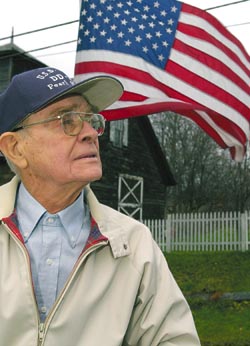
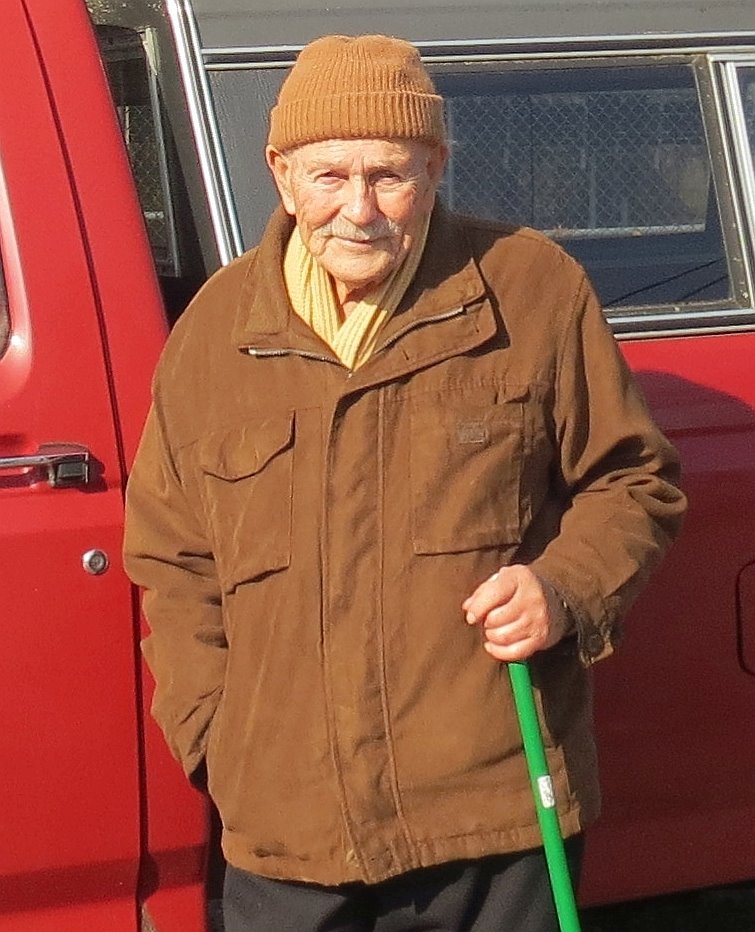
Barney Ross by Erin Coker, Courtesy Post-Star

Barney Ross by Erin Coker, Courtesy Post-Star

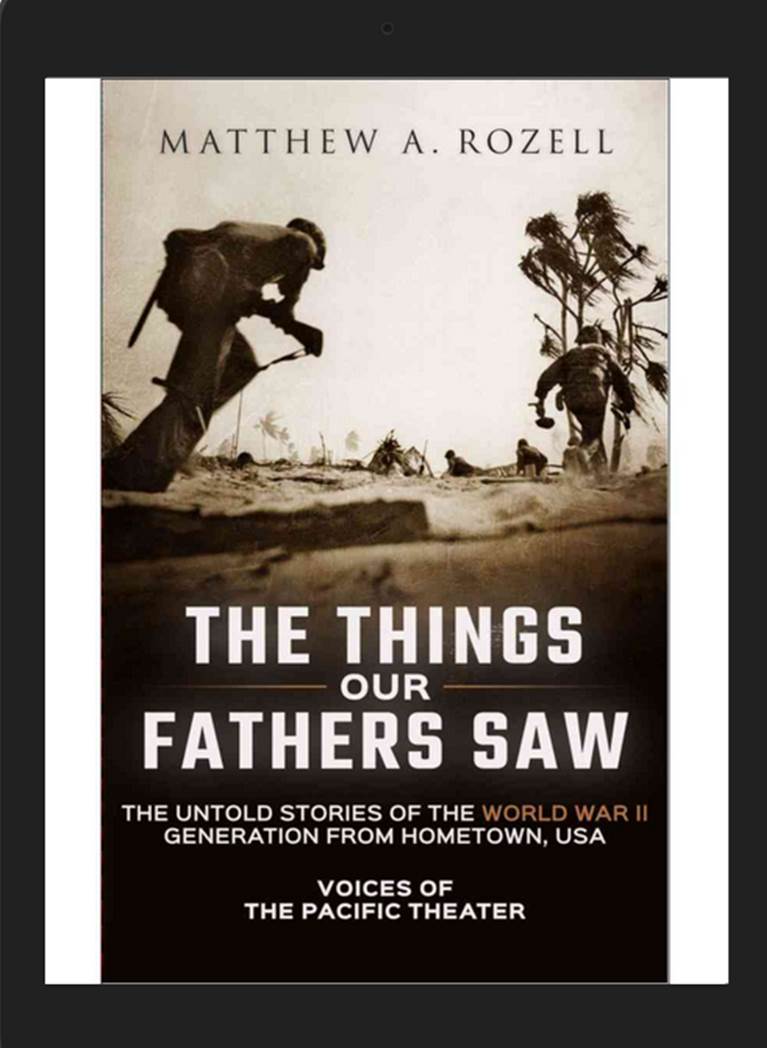
There’s a footnote at the bottom of Page 21 of Matthew Rozell’s recently published “The Things Our Fathers Saw” that sums up the late Barney Ross perfectly.
“In his remembrances, Mr. Ross’ voice began to break up recalling his friends who had passed before him. Barney brought smiles through the tears as he reminded my students that, ‘I may get emotional, but I’m still a tough guy.’ “
Rozell and his students at Hudson Falls High School were among many who heard Ross’ first-hand story of the attack on Pearl Harbor, the Pacific War and the signing of the surrender in Tokyo Bay.
Over the years, he had to think a little harder and sometimes needed prompting, but once the Whitehall native started telling his story, the memory and emotion took over.
Gerald A. “Barney” Ross, 94, died Thursday, Aug. 27, at Indian River Rehabilitation and Nursing Center in Granville, and with him died another memory of the attack that brought the U.S. into World War II. Ross, a lifelong resident of Whitehall, was one of an estimated 2,000 to 2,500 survivors remaining out of 60,000 who were at Pearl Harbor on that day of infamy.
Ross was a 1940 graduate of Whitehall High School and played on the 1939 unbeaten, untied, unscored-upon team. He was a hunter, fisherman and lifelong communicant of Our Lady of Angels Roman Catholic Church.
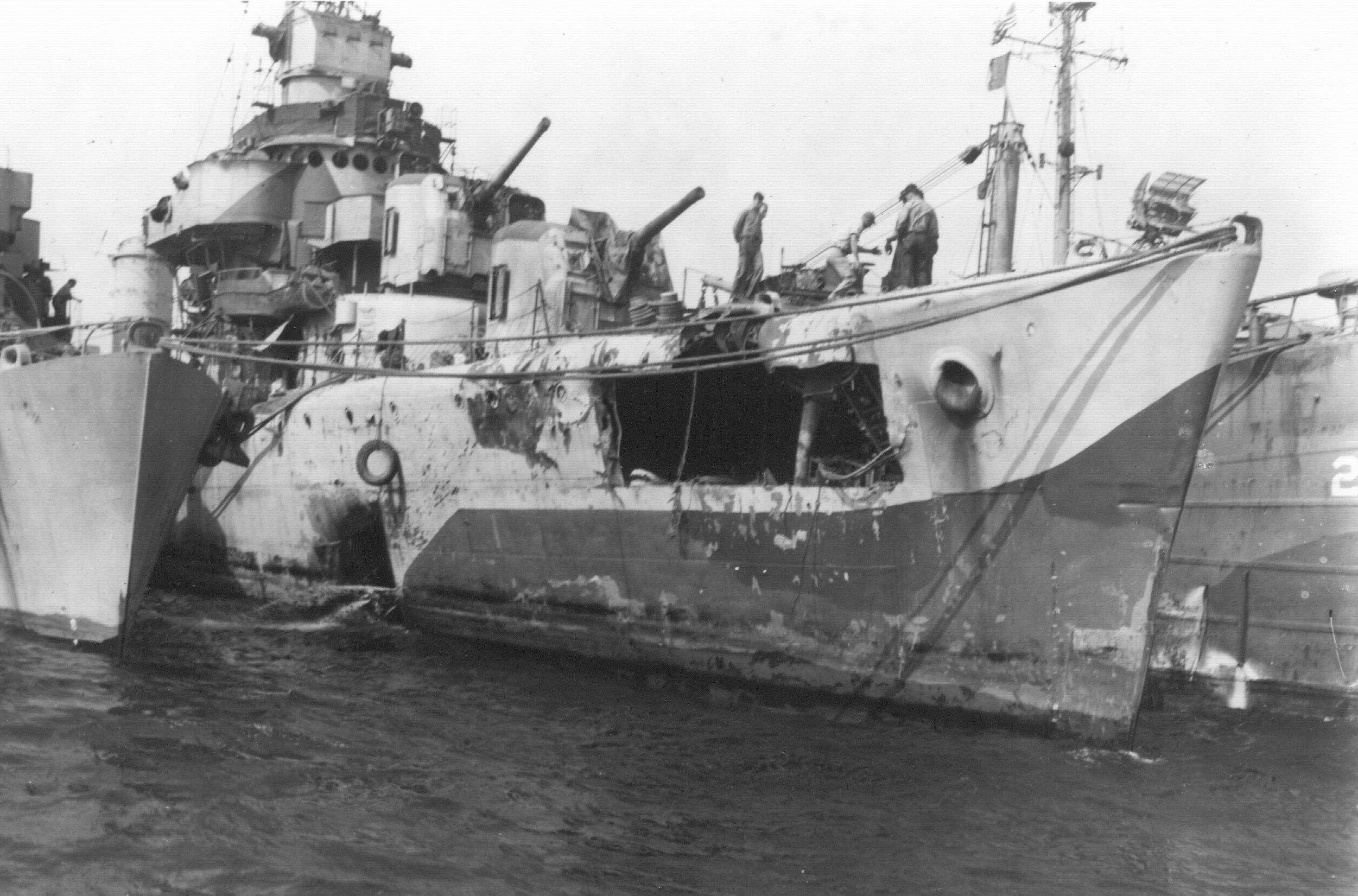
Following graduation, Ross enlisted in the U.S. Navy in August 1940. He served on the USS Blue during the Japanese attack on Pearl Harbor on Dec. 7, 1941.
Ross met Alice Marie Doyle at a USO dance in Philadelphia, and they were married in 1946. He operated Ross’s Restaurant in Whitehall and was later employed as a machine operator at Decora Industries in Fort Edward, retiring after many years of service.
Indelible memories
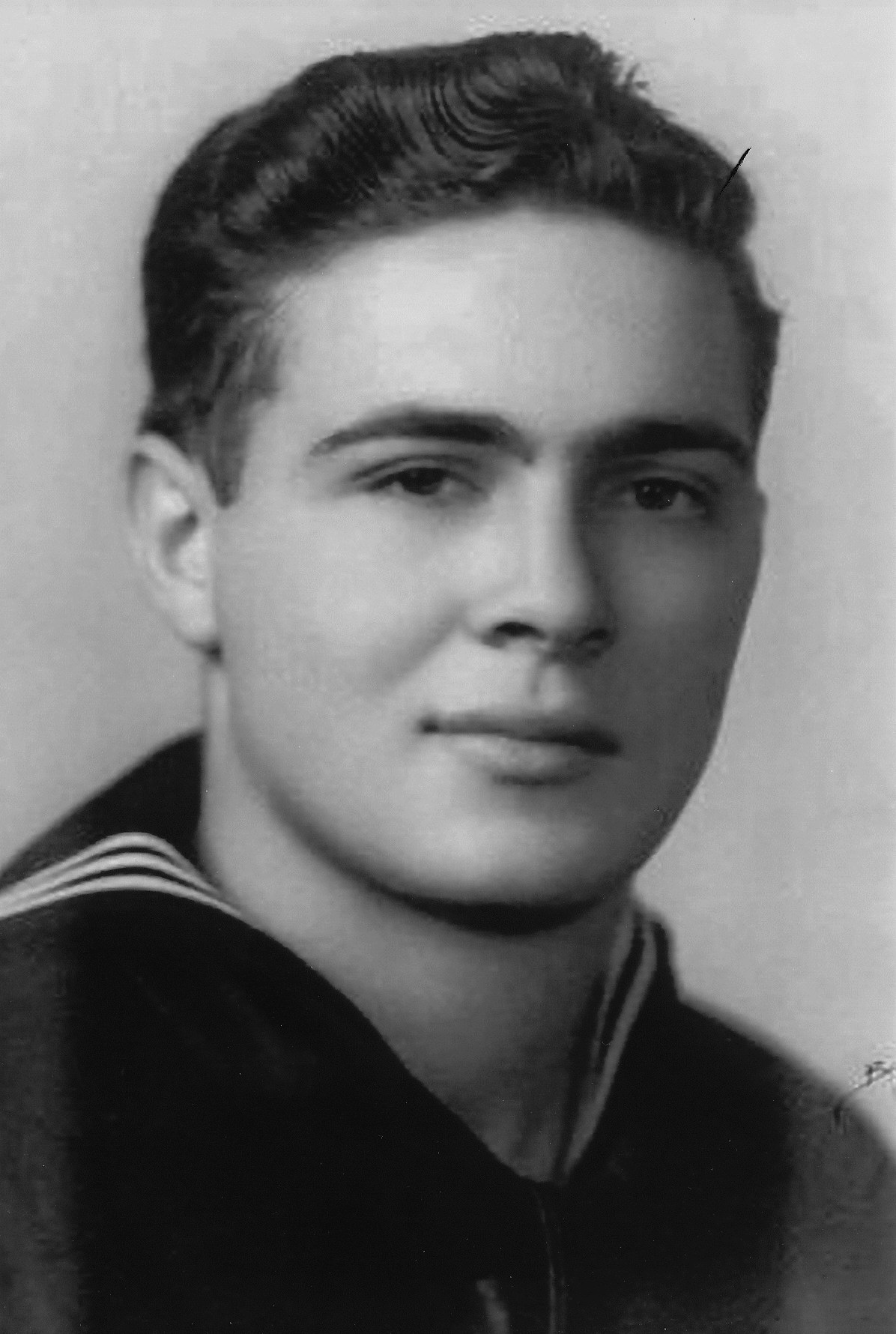
Gerald An electrician’s mate aboard the USS Blue, Ross found himself in the destroyer’s magazine during the battle, feeding ammunition to an anti-aircraft gun on the top deck.
“I’d get a shell, put that in the hoist,” Ross said in one of his many interviews. “And I’d get a powder and put that in the hoist. That way, I was feeding the gun. … I feel that we did our job.”
He had been in the harbor on the USS Blue when the Japanese planes dove out of the sky and dropped their bombs, and when the enemy submarines simultaneously sent torpedoes into American ships, in the surprise attack on America’s Pacific fleet.
“When the Japanese attacked, I was on the deck waiting for a boat to take me to a church service,” Ross said. “We saw a plane dive toward the USS Utah, then within minutes, it was the worst devastation you could ever imagine — the USS Arizona was blown up and the USS Oklahoma was turned over on its belly.”
Over the past seven weeks, at least five other survivors of the attack have died, including Joe Langdell, who at 100 was the oldest survivor of the USS Arizona. Eight men who served on the Arizona during the attack remain alive.
Ray Chavez, who at 103 years old is believed to be the oldest living survivor of the attack, recently threw out the first pitch at a San Diego Padres game.
In all, 2,000 to 2,500 of the 60,000 survivors are thought to still be alive, according to USS Arizona Memorial officials. More than 2,400 Americans died during the attack, including 68 civilians. Most — 1,177 — were killed when the Arizona exploded and caught fire.
‘A real nice man’
Rozell said he had not been in touch with Ross recently, but the man left a deep impression on him.
“He came across as a real nice man — down to earth, with a great warmth for the students he met in my classroom. A man who loved his town, his family and the entire region. But having survived the shock of Pearl Harbor, he always left us with a warning: ‘Be vigilant.’ That was in 1988 [1998].”

Ross was one of the first of many veterans to visit Rozell’s classroom. He is the first veteran quoted in “The Things Our Fathers Saw.”
“As a nation, we were sleeping; it is a terrible thing to say, but we just …” Ross is quoted as saying.
“I was just standing there waiting for a motor launch to take me to a bigger ship to go to Mass, to go to church! We had no inkling, no inkling whatsoever,” he added.
“We were sitting there like sitting ducks! Here are men, if you can visualize, men struggling to get out of the ships. A lot of them were sleeping in because they had the day off. It was a horrible thing! This fleet was coming to blow us off the face of the earth.”
Paying respects
Ross is survived by his wife and his three sons, Gerald F. Ross and his wife, Patricia, of Hartford, Dennis A. Ross and his wife, Angella Gibbons, of Marshfield, Vermont, and Christopher D. Ross of Whitehall.
Ross lived at Indian River Nursing Home in Granville for the past six years, and his wife still lives there.
A Mass of Christian burial was celebrated Saturday at St. Mary’s Roman Catholic Church in Granville.
Rite of Committal will be celebrated at 1 p.m. Monday at Gerald B. H. Solomon Saratoga National Cemetery in Schuylerville with full military honors.

http://poststar.com/lifestyles/columns/local/epitaph/pearl-harbor-survivor-was-quick-to-share-memories/article_f37b8284-0a58-5d8f-b5c5-8576e20dd2bc.html

Read Full Post »

It was six years ago this evening, we shared a meal on the eve of Shabbat, after watching ourselves on a national broadcast that reached millions. Why does it seem, so long ago?

Maybe because it all seems so unbelievable- that out of the darkness of the past, on a day when the sun dawned clearly and was warming the Earth in its mid-April morning ascent, a low rumble was heard by  hushed and huddled groupings of tormented humanity as they strained to hope for friends amidst their lurking murderers. As the metallic clanking grew louder, over the horizon broke the earthly angels, two Sherman light tanks and an American Jeep with the emblem of the white star. A cry broke out. They realized they were saved, and the American major snapped a photograph at the exact moment the overjoyed survivors realized it.

And out of the past on a warm September day, we brought them all together again. Who would have believed that 62 years later, a high school in a quiet, rural part of the world would  bring the soldier-liberators and the rescued survivors together from the US, Canada, Israel and elsewhere? All because I couldn’t let go of a good narrative history, and pursued the story behind the photographs that proved it really happened?

And think about the risk you run, inviting hundreds of octogenarians to come to a high school for half a week to mingle with thousands of high school and middle schoolers? Talk about sweating bullets. What if they are uncomfortable? Cranky? Complaining? What if the kids I can’t control are rude? And what if one of these “old” folks, who I don’t even know, dies on our watch? I would lie awake at night wondering if I was out of my mind.

But the miracle came to be-for the two dozen or so elders who could come, tears flowed, wine spilled, and our “new grandparents” danced with young teenagers who adored them, but only after the risk was accepted, with the enthusiastic help of Mary Murray, Tara Winchell-Sano, and Lisa Hogan, Rene Roberge and others. Have a look at the videos, and feel the love. We created ripples, and tripped the wires of the cosmos, and the reverberations are still echoing. To date, with Varda Weisskopf’s and Frank Towers’ help, the list is at 275 survivors whom we have found. And how many generations has it effected?

This is the subject of my second book, due out this next summer. In the meantime, I am working on a shorter work of what I have learned in teaching the lessons of the Holocaust. So take a look at the videos, and remember the words of the liberator:

“Here we are! We have arrived!”

Read Full Post »

Veterans book

History teacher and author Matt Rozell, right, talks with World War II veteran and former history teacher Alvin Peachman at a book signing Sept. 11 on LaBarge Street in Hudson Falls. Peachman is one of several veterans featured in ‘The Things Our Fathers Saw.’ Ashleigh Abreu photo.

YOU CAN ORDER THE BOOK HERE

September 22, 2015 7:00 am •  by RHONDA TRILLER

HUDSON FALLS | Matt Rozell remembers the moment he realized his life’s work.

It was 1984, and as the nation marked the 40th anniversary of the D-Day invasion, President Ronald Reagan spoke at Normandy.

“Let us show them by our actions that we understand what they died for,” he said of the Americans who fought in World War II, during an iconic speech.

That year, “The Good War: An Oral History of World War Two” by Studs Terkel was published. In it, Terkel looked at the war from a historical perspective, told through some 120 interviews with the men who fought, as well as nurses, entertainers and bureaucrats. Terkel was awarded the 1985 Pulitzer Prize in nonfiction for the work.

“It was the first historical piece on World War II entirely told by regular people,” Rozell said, recalling the 600-page book was “this thick,” holding his thumb and index finger inches apart.

The book raised an interesting question about war, Rozell said.

“The war was put on a pedestal — it should be, especially now that so few of the men are left — but is any war good?” he said. “It was a fascinating book.”

“That’s when I woke up and that’s when my teaching career began,” Rozell said. “I think that’s when it finally dawned on me how important World War II was in history and in the fabric of our own country here, let alone the world.”

Rozell did, in fact, become a teacher — history, of course — at his alma mater, Hudson Falls High School.

But as important, he has devoted his life since to telling the stories of World War II veterans.

This summer, Rozell independently published “The Things Our Fathers Saw: The Untold Stories of the World War II Generation from Hometown USA.”

“I’ve thought about it for 20 years,” he said. “I was at that point, I had to get it out of me.”

The book recounts the war in the Pacific Theater, told from interviews and, in some cases, journal entries, of men from the Glens Falls area.

“The Things Our Fathers Saw” works through the war, beginning with the bombing of Pearl Harbor, following some of the men from enlistment, through battles and being taken prisoners of war. He includes lectures from veterans visiting his classroom, photographs and maps.

“It’s a war that, outside of Pearl Harbor and the dropping of atomic bombs, very few people have an understanding of what happened in the Pacific Theater,” Rozell said.

At a recent book signing, Rozell sat next to Alvin Peachman, 93, one of the veterans featured in the book.

Peachman is a longtime Hudson Falls resident and retired history teacher, who had Rozell as a student.

His classes were much different than Rozell’s, though.

“I don’t remember any teachers talking about their own experiences,” Peachman said, adding that he didn’t talk much about his service until years later. “Everybody wanted to learn about Adolf Hitler.”

Rozell studied history at SUNY Geneseo, but didn’t realize how much of a gap in knowledge the American public suffered until he started interviewing veterans and chronicling their stories.

“My interest was what Al Peachman was talking about when I was in school — Adolf Hitler this and Adolf Hitler that,” Rozell said.

“When you call for World War II stories and these people are talking about things you don’t know a thing about, you realize you have so much more to learn,” he said. “It’s the experience of a lot of Americans, I think.”

Rozell now teaches a separate course at Hudson Falls High School focused on World War II. The class is so popular, some students can’t get in.

Vinny Murphy, a senior, is among the lucky ones this semester. He wanted to take the class after attending a Rozell-organized assembly as a middle-schooler.
“For him to be a teacher and have an interest and want to share that with the students is very refreshing,” Murphy said. “He wants to teach us and remember this stuff and really take it to heart and make sure stuff like this never happens again.”

Until Rozell, Peachman said, the men who served in the Pacific got little recognition.

“We always fell second to Europe, although we did almost all the fighting in the Pacific,” he said.

As World War II veterans age — two of the men featured in Rozell’s book died in the past few weeks — Rozell is feeling a sense of urgency.

“I really wanted to get it out while some of the guys are still alive,” he said.

The book is a culmination of efforts that began years ago, when Rozell started inviting World War II veterans into his classroom in the early 1990s.

“It was really a two-fold thing: I need to make history alive for my kids; it’s their grandparents, their aunts, their uncles, in some cases, their actual parents who were involved in the war; and take that person’s story and find out more how this person fits into the big picture of the war, the big overall standard history, but at the same time realize that you as the interviewer, or the person talking to the adult, you are actually creating a new piece of history, which is really exciting,” Rozell said.

Students’ interest grew even more when, in 2001, Rozell initiated a living history project, A Train Near Madgeburg, in which he and his students reunited Holocaust survivors and the American soldiers who liberated them from a death train in April 1945.

“I think for most teachers … that’s why you teach, to bring history alive and, boy, did that ever do it for them,” Rozell said.

Rozell and his students were named People of the Week in September 2009 by Diane Sawyer on “ABC World News” for their work on the project.

The liberation is the subject of Rozell’s next book, which is tentatively scheduled for release in the summer of 2016.

“My story is to make it known,” Rozell said. “It’s their story; it’s in their words.

“I need to do it before everybody is gone.”

http://poststar.com/news/local/rozell-recounts-war-through-veterans-eyes/article_2ce81fd2-6d9c-55f2-8087-74e85834f741.html

History teacher and author Matthew Rozell has several speaking engagements lined up throughout the area, including:

Sunday: 9 a.m. to 1 p.m., Sandy Hill Farmers Market, Juckett Park, Hudson Falls

Oct. 16: 7 a.m. to 3:30 p.m., 39th annual Civics & Law-Related Education Conference, Saratoga Springs Holiday Inn

Oct. 21: 7 p.m., book signing/reading, Chapman Historical Museum, 348 Glen St., Glens Falls

Nov. 8: 11 a.m. to 3 p.m., The Chronicle Autumn Leaves Book Fair, Queensbury Hotel, 88 Ridge St., Glens Falls

Nov. 15: 2 p.m., book signing and talk, The Hyde Collection, 161 Warren St., Glens Falls

Read Full Post »

Danny.

Dan Lawler in my classroom, 2011. Portrait by Robert H. Miller.

Daniel Lawler in my classroom, 2011. Portrait by Robert H. Miller.

I’m staring down a stack of papers I have to grade, and the pile keeps growing higher. I’m too busy teaching and planning lessons at school, so like most teachers I know, I bring them home. I’ve gone through a ‘first look’ once, and that’s  a start. But I can’t get into the rhythm until I write about my friend Dan Lawler, who passed away almost a week ago at the age of 90.

I’m ashamed to say I missed his wake today, and tomorrow I will miss his funeral. But I think he knows that I will be doing my best in school and elsewhere to keep the memory alive.

Dan Lawler was a Marine’s Marine, World War II edition. He was wounded at Peleliu, and then miraculously made it all the way through the Battle for Okinawa. Later he served in China to protect against communist insurgents; he had many stories to tell and I detailed many of them in my book. But what struck me the most about Danny was his devotion to his friend, Jimmy Butterfield, and Jim’s wife Mary.

They would come to my classroom and entertain and enthrall the kids, but it was always tempered with the realities of what they truly experienced. You see, Jimmy was blinded for life at Okinawa. But Danny always got him to come in to school, and together they told the stories that only brothers can share. They would rib each other, fun stuff to reel the kids in. And then the stories would flow. It was never an act. It was brothers being brothers and letting us in on the most intimate stories that would bubble forth, sharing with the teenagers in my room, who fell in love with them, and for the moment, becoming the teenagers who they once were themselves.

People I don’t really even know, who have read my book where both are profiled, have reached out to me to express their condolences at my loss. Of course, that is one of the downsides of getting close to the folks who fought and sacrificed in World War II. Eventually their time is up, and they have to leave us.

And of course, my sorrow is nothing compared to that of his family, but remember this- Danny, and all the survivors of World War II who managed to make it back, had stories to share. I thank God that I knew Daniel Lawler, and Jim Butterfield, who passed 2 years before him. But it’s not just a loss for those who had the honor of getting to know him- it’s the loss for humanity. I just hope, Danny,  I did my part in keeping your memory alive.

Rest easy, Marine.

Read Full Post »

« Newer Posts - Older Posts »