She Was Told to Live and Tell the Story:
Aliza Vitis-Shomron and the Warsaw Ghetto Uprising
Eighty-three years ago this April, the Jews remaining in the Warsaw Ghetto did something the world needs to pause and note: they fought back. It was not at all what some term, ‘sheep to the slaughter’; no, not by a long shot. Resistance took many forms, and this ‘incident’ deserves more than a footnote in history.
Against tanks, artillery, and the full machinery of the SS, roughly 700 young men and women armed mostly with pistols and homemade grenades held the diabolical German death machine at bay for nearly a month. It was the largest Jewish uprising of World War II, and the first significant urban revolt against Nazi occupation anywhere in Europe. On April 19, 1943 — the eve of Passover — the Warsaw Ghetto Uprising began. By May 16, the ghetto had been reduced to rubble.
Most of the fighters died there. A small number escaped. Fewer still survived the war.
And then there is Aliza.
HISTORICAL BACKGROUND
The Warsaw Ghetto, established by the Germans in October 1940 and sealed that November, was the largest Jewish ghetto in German-occupied Europe, holding approximately 400,000 Jews in an area of only 1.3 square miles. From July 22 to September 21, 1942 — in what became known as the “Great Action” — German SS and police units deported roughly 265,000 Warsaw Jews to the Treblinka killing center, killing approximately 35,000 more inside the ghetto during the operation itself.
By early 1943, approximately 70,000 to 80,000 Jews remained. In response, the Jewish Combat Organization (ŻOB) was formed, eventually fielding roughly 500 fighters alongside a second force of about 250. Together they stunned German forces on the first day of fighting, forcing troops back outside the ghetto wall. At least 7,000 Jews died fighting or in hiding, and the SS deported approximately 42,000 survivors to forced-labor camps where most were murdered in November 1943.
(Source: United States Holocaust Memorial Museum, Holocaust Encyclopedia. encyclopedia.ushmm.org)
A GIRL FROM WARSAW
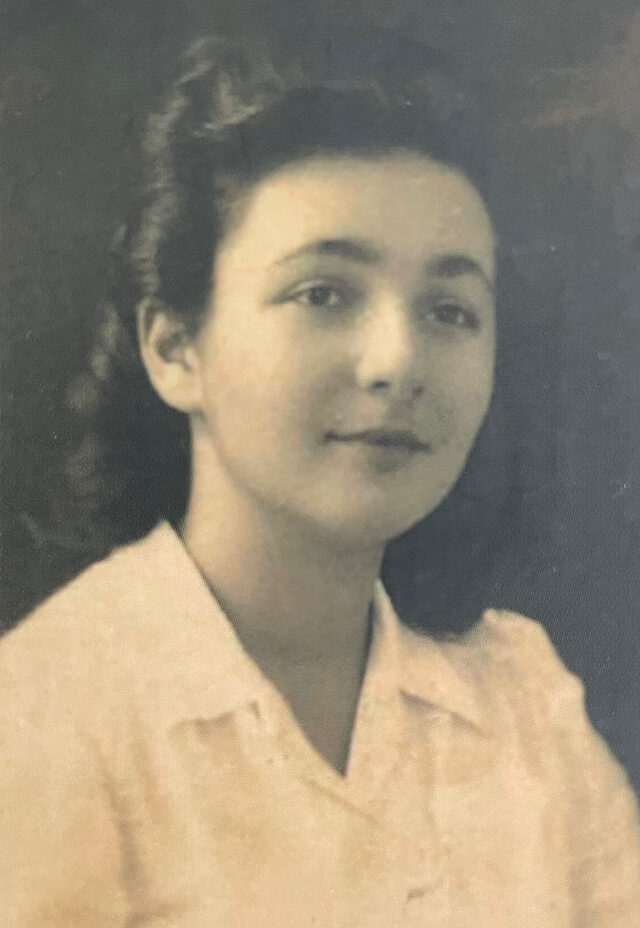
Aliza Melamed was born in Warsaw in 1928, the daughter of a prosperous family whose life was upended, like every Jewish life in the city, by the German invasion of September 1939. She was eleven years old when the bombs fell and the siege began, twelve when the ghetto was sealed and she was required to wear the white armband with its blue Star of David, and thirteen when she joined Hashomer Hatzair — the Zionist youth movement that would become the nucleus of the armed underground resistance.
In her memoir Youth in Flames — composed partly from a diary she kept at the time, partly from memory written down in Israel in the years immediately after the war — she described the ghetto with a teeming clarity that has never left me since I first read it:
“Will I be able to describe it, the largest ghetto in Europe? The overcrowding, the feeling of humiliation, the raging typhoid epidemic, the filthy gray sidewalks, and the houses crammed with masses of refugees from the country towns? Hundreds of thousands of people wanting to survive, running around like mice, trapped in a maze?”
Through the mass deportations of the summer of 1942, the teenager watched friends and neighbors disappear into the machinery of destruction. By winter she had become a courier for the resistance, moving secret messages and plans for the uprising through the ghetto’s streets and passages. She was just fourteen years old, and in risking her very life, no longer a child.
THE ORDER TO LIVE
As spring 1943 approached, it became clear to everyone remaining in the ghetto what the Germans were preparing. Aliza describes the atmosphere of those weeks with the terrible lucidity of someone who has spent decades processing a memory that never really recedes — the bunkers being dug in cellars, the false entrances hidden behind kitchen stoves, the engineers turning up with plans and tools, the growing certainty that this was the end. The young people in the ghetto were no longer preparing to survive; they were preparing to choose the manner of their own death.
Aliza’s family made the agonizing decision to split up in order to increase their chances. Her mother, whose appearance allowed her to pass as Aryan, took Aliza’s younger sister into hiding on the other side of the ghetto wall, relying on bribery, subterfuge, and nerves of steel. Her father volunteered to go to a work camp near Lublin. And Aliza — who wanted desperately to stay and fight alongside the resistance — was told by its leadership that at fourteen she was too young. They needed her to live, to escape to the Aryan side, and to carry the story out of the ghetto, no matter what happened to everyone else inside.
She wrote about the last moment with her father:
“We stood at the entrance of the house. Father was to leave me there and go off. He was pale and had a tormented look. He could not move. He hugged me, kissed me, and went off. He came back a moment later, and we embraced again. I did not cry. I clung to him. Again he left. No, I saw him come back to me once more… ‘Daddy, goodbye, see you again. You’d better go!’ One more hug, and he left. Left altogether.”
She never saw her father again, he was murdered at the Majdanek camp. Years later, when Aliza was leading a tour of Israeli high school students through that camp, she broke down on the very steps where the executions had been carried out — steps I would later walk myself on a teacher’s study trip to Poland, not knowing at the moment I stood there what connection they held. And upon encountering the pile of cremated remains the size of a small house, I too had my own encounter with being overwhelmed.
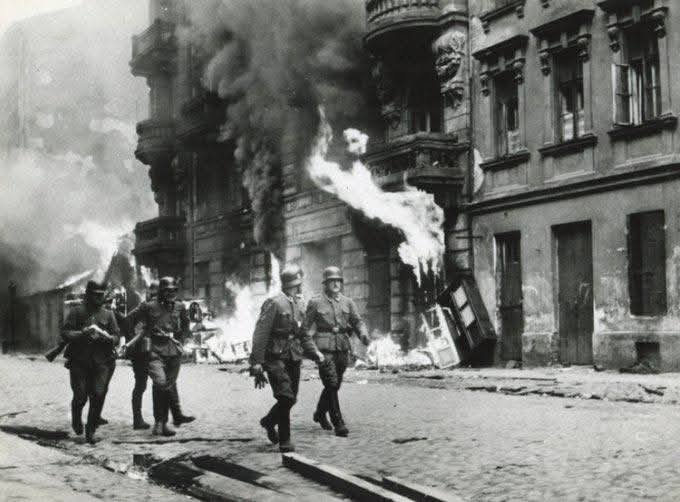
The uprising began on April 19, 1943, and by the time the SS commander announced to Berlin that “The former Jewish Quarter in Warsaw is no more,” Aliza was already in hiding on the Aryan side of the city, passing as a Polish girl named something other than Aliza Melamed.
BERGEN-BELSEN, AND THE TRAIN
Survival on the Aryan side was its own sustained terror — a wrong glance, a neighbor’s suspicion, a stranger on the street who recognized something in her bearing or her eyes. Eventually Aliza and her family were caught up in one of the war’s cruelest deceptions: the Hotel Polski scheme, in which Jews were offered false foreign passports and the promise of safe passage to exchange camps, in exchange for everything they had. Many of those who took the offer were taken to a nearby prison and shot. Aliza, her mother, and her sister were taken to Bergen-Belsen, where the cold, the starvation, the lice, and the death were relentless.
And then, in April 1945, an evacuation order came.
“On April 6, an unexpected order came to prepare for evacuation. We heard the thunder of cannons in the distance; they said that the city of Hannover was in the hands of the Allied armies… Evacuation? To where? To the unknown.”
About 2500 prisoners were loaded onto a train that wandered for six days through the chaos of a collapsing Germany, the front lines moving on all sides, the guards increasingly uncertain what to do or where to go. On April 13, 1945, with soldiers of the American 30th Infantry Division and 743rd Tank Battalion closing in near the village of Farsleben, the guards abandoned the train and disappeared into the countryside.
Aliza was now seventeen years old. She had survived the Warsaw Ghetto Uprising, Bergen-Belsen, and six days on a train going nowhere. When the transport of broken down passenger carriages and cattle cars finally stopped in the middle of a ravine and people began climbing out into the April air, she wrote:
“What will happen now, to us? We were alone. Slowly, people started leaving the carriages; the train was standing in the middle of a field. I also got off, with my faithful friend Tusia. We saw a small pond not far away, and our people were catching little fish there. Those among them with initiative found a tin, made a fire, and cooked the fish. We joined in, glad to have something to eat.”
FINDING HER, NEARLY EIGHTY YEARS LATER
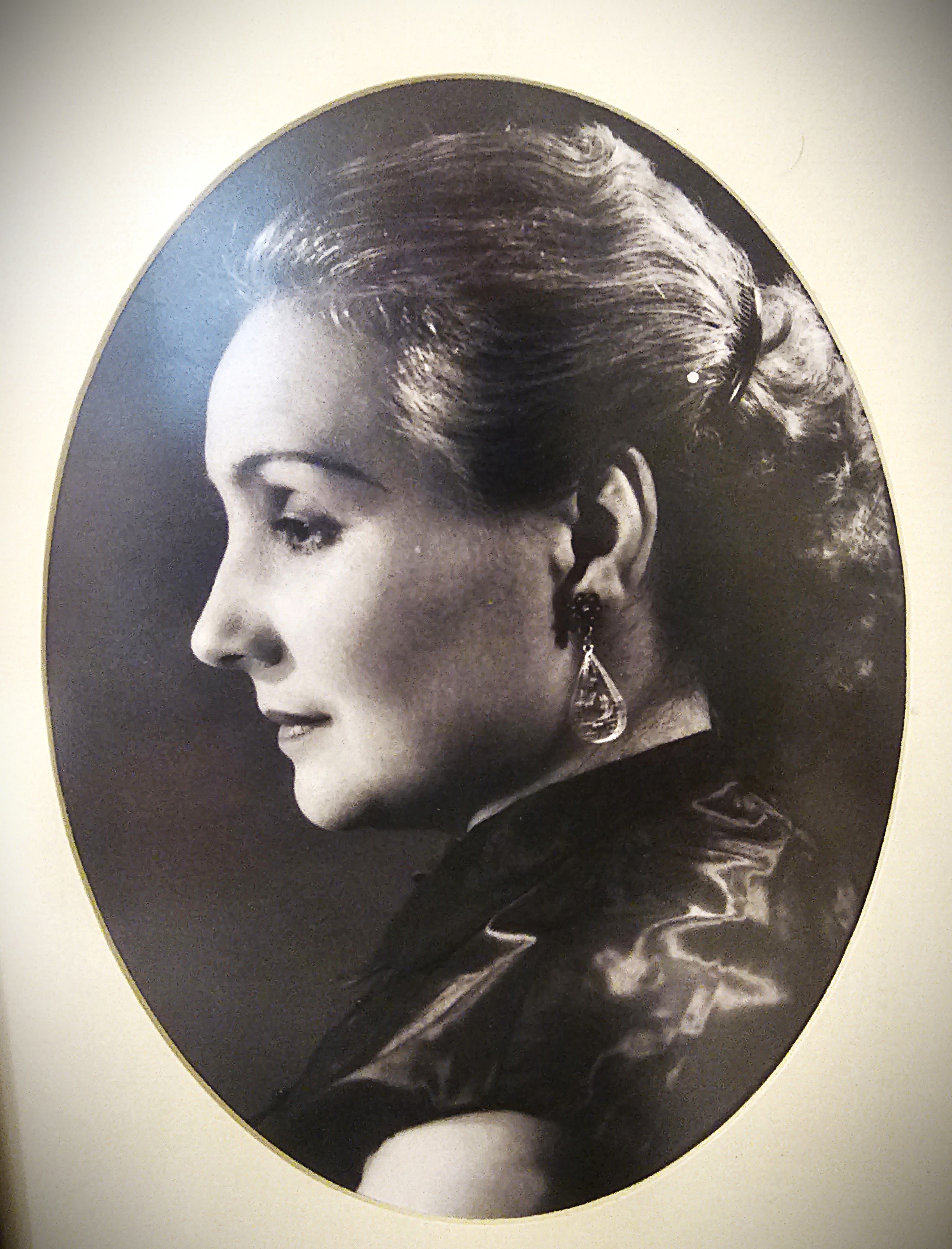
I first contacted Aliza Vitis-Shomron in 2016, when I was writing A Train Near Magdeburg, and she graciously gave me permission to use excerpts from Youth in Flames throughout the book. Her writing became one of the narrative spines of the entire project — a voice from inside the catastrophe that is young and precise and unflinching all at once, the diary of a girl who was told to survive so that she could testify, and who has spent every year since making good on that promise.
In April 2023, just days after CNN had featured her as part of their Holocaust Remembrance Day coverage, our film crew traveled to Kibbutz Givat Oz in northern Israel to interview her, on a quiet Saturday Shabbat morning. Her son Hanan meets us at the gate; he hops out of his car all smiles, beaming, greeting us so warmly, profuse in his thanks, and leads us up to his mother’s house, a corner of the kibbutz she had transformed over the years into a kind of garden, with plants and trees nurtured all around the house into something that just symbolized Israel, the biblical land, flowering in the desert.
She had just celebrated her 95th birthday, and she came out to meet us composed and ready, wearing a sweater, her white hair flowing, and as our crew set up the camera and lights she clipped a pin to her blouse, her 95-year-old fingers working carefully at the tiny clasp. When Lee Shackleford, our scriptwriter, asked what it signified, her translator smiled broadly: “Her special award for Valor Against Fascism — given to her by Israeli President Shimon Peres.” She is a national hero.
We were humbled to be in her presence, surrounded by the photos of her family that testified, “We triumphed, and flourished, despite Hitler and his minions.” She told us the story — the ghetto, her mother and sister, being sent out by the fighters with the instruction to live, Bergen-Belsen, the train, liberation — and at the memory of soldiers wanting the barely-alive seventeen-year-old to dance for them, she laughed with a warmth and humor that surprised everyone in the room. But she expressed to us, that it did not feel right to her—that underneath it was the grief that never entirely leaves: the depression, the guilt, the question that haunted her for years. Why did I live?

THE LAST SURVIVOR
Aliza Vitis-Shomron is now 97 years old and is widely recognized as the last living survivor of the Warsaw Ghetto Uprising — the last person alive who was inside the ghetto when the fighters rose, who carried messages for the resistance through those streets, who watched everything she had known burned to rubble and declared by the SS to be finished. She has spent the more than eight decades since fulfilling, with extraordinary commitment, the charge the resistance placed on her when she was fourteen: to live, and to tell the truth of what happened there.
She said it best herself, to CNN in 2023:
“It is important for me to tell the story, not so much my story, but how we fought bravely. If we don’t tell the world how we Jews fought, the world will only look at us as victims who went like lambs to the slaughter. But we did fight, and we did it in so many different ways. We need to tell people the truth.”
At the very end of our interview, she spoke of her fears for the future — the dwindling number of eyewitnesses, the weight of a story that will soon have no one left who lived it passing to those of us who only know it secondhand. “Who will keep my story alive?” she asked.
Our director, Mike Edwards, said quietly, but with a ready conviction: “We will.”
As we left Kibbutz Givat Oz that April morning, my wife Laura put her hands gently on Aliza’s cheek in farewell — a fleeting, wordless connection across eighty years of history, reaching all the way back to the fighters of the Warsaw Ghetto. We drove away through the quiet Israeli morning carrying something that is difficult to name: gratitude, grief, the particular weight of having sat in the presence of someone who has seen the worst of what human beings are capable of, and who has chosen, every day since, to answer it with testimony and with life.
The responsibility of that is not lost on any of us who were witnesses that morning. In the Hebrew scriptures, when the prophet Elijah’s time on earth was ending, he passed his cloak to his apprentice Elisha — a gesture that signified not merely succession, but the transfer of sacred purpose and spiritual power. We think of that image often, in this work. In our moments with her, something passed between the last survivor of the Warsaw Ghetto Uprising and the people who had come to make sure her story would not die with her. We have accepted that mantle, gladly and with humility.
The fighters at Mila 18, the bunker command post in the ghetto where Mordechai Anielewicz and many of the resistance fighters breathed their last, were right to send her out. They did not go quietly into the dark. Neither will their memory, not as long as there are people willing to carry it forward.
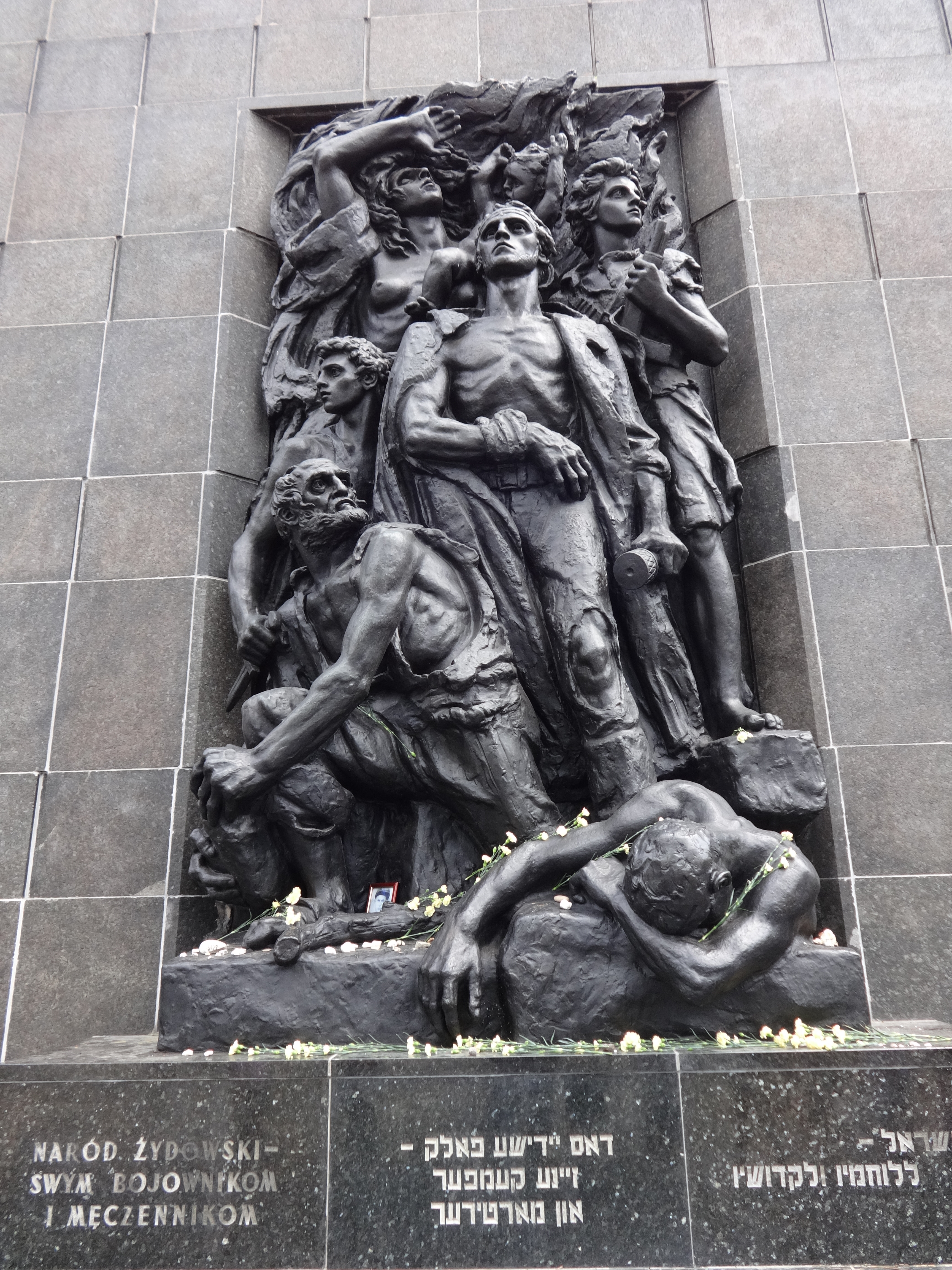
Aliza kept her promise to the dead; what the Nazis tried to erase, Aliza spent a lifetime refusing to let the memory, the legacy of the Jews who fought back against the machine of death, die.
That legacy is now ours, an obligation to honor and carry forward.
— Matthew Rozell, April 19, 2026, the 83rd anniversary of the start of the Warsaw Ghetto Uprising.
Aliza Vitis-Shomron’s account appears throughout A Train Near Magdeburg, available at matthewrozellbooks.com. The feature film A Train Near Magdeburg is in production, coming 2027. To learn more about the progress of the film, visit MagdeburgTrain.com and to support, the Augusta Chiwy Foundation.


 Teaching History Matters