Feeds:
Posts
Comments

Posts Tagged ‘Poland’

She Was Told to Live and Tell the Story:

Aliza Vitis-Shomron and the Warsaw Ghetto Uprising


Eighty-three years ago this April, the Jews remaining in the Warsaw Ghetto did something the world needs to pause and note: they fought back. It was not at all what some term, ‘sheep to the slaughter’; no, not by a long shot. Resistance took many forms, and this ‘incident’ deserves more than a footnote in history.

Against tanks, artillery, and the full machinery of the SS, roughly 700 young men and women armed mostly with pistols and homemade grenades held the diabolical German death machine at bay for nearly a month. It was the largest Jewish uprising of World War II, and the first significant urban revolt against Nazi occupation anywhere in Europe. On April 19, 1943 — the eve of Passover — the Warsaw Ghetto Uprising began. By May 16, the ghetto had been reduced to rubble.

Most of the fighters died there. A small number escaped. Fewer still survived the war.

And then there is Aliza.


HISTORICAL BACKGROUND

The Warsaw Ghetto, established by the Germans in October 1940 and sealed that November, was the largest Jewish ghetto in German-occupied Europe, holding approximately 400,000 Jews in an area of only 1.3 square miles. From July 22 to September 21, 1942 — in what became known as the “Great Action” — German SS and police units deported roughly 265,000 Warsaw Jews to the Treblinka killing center, killing approximately 35,000 more inside the ghetto during the operation itself.

By early 1943, approximately 70,000 to 80,000 Jews remained. In response, the Jewish Combat Organization (ŻOB) was formed, eventually fielding roughly 500 fighters alongside a second force of about 250. Together they stunned German forces on the first day of fighting, forcing troops back outside the ghetto wall. At least 7,000 Jews died fighting or in hiding, and the SS deported approximately 42,000 survivors to forced-labor camps where most were murdered in November 1943.

(Source: United States Holocaust Memorial Museum, Holocaust Encyclopedia. encyclopedia.ushmm.org)


A GIRL FROM WARSAW
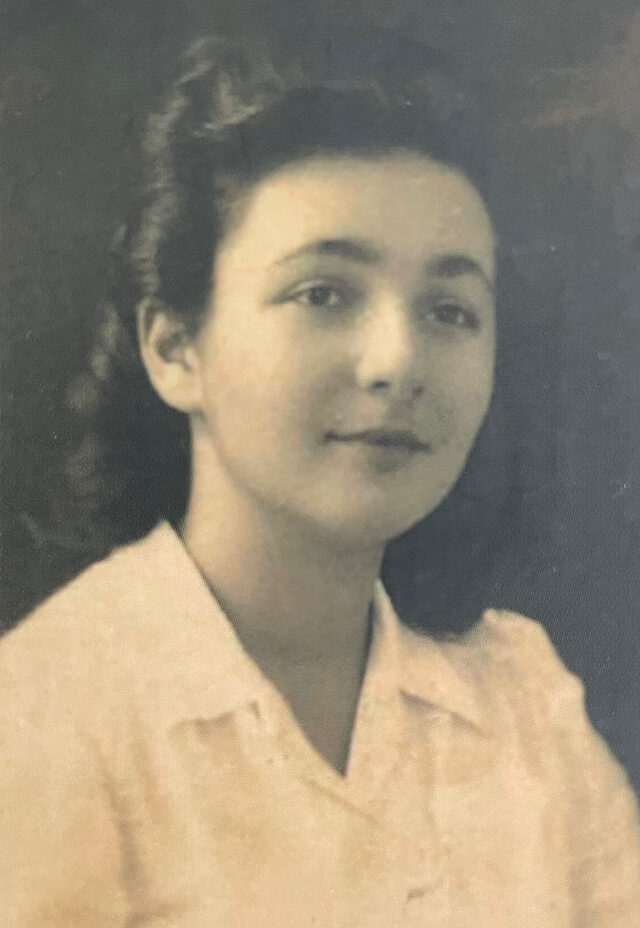
Aliza Melamed was born in Warsaw in 1928, the daughter of a prosperous family whose life was upended, like every Jewish life in the city, by the German invasion of September 1939. She was eleven years old when the bombs fell and the siege began, twelve when the ghetto was sealed and she was required to wear the white armband with its blue Star of David, and thirteen when she joined Hashomer Hatzair — the Zionist youth movement that would become the nucleus of the armed underground resistance.

In her memoir Youth in Flames — composed partly from a diary she kept at the time, partly from memory written down in Israel in the years immediately after the war — she described the ghetto with a teeming clarity that has never left me since I first read it:

“Will I be able to describe it, the largest ghetto in Europe? The overcrowding, the feeling of humiliation, the raging typhoid epidemic, the filthy gray sidewalks, and the houses crammed with masses of refugees from the country towns? Hundreds of thousands of people wanting to survive, running around like mice, trapped in a maze?”

Through the mass deportations of the summer of 1942, the teenager watched friends and neighbors disappear into the machinery of destruction. By winter she had become a courier for the resistance, moving secret messages and plans for the uprising through the ghetto’s streets and passages. She was just fourteen years old, and in risking her very life, no longer a child.


THE ORDER TO LIVE

As spring 1943 approached, it became clear to everyone remaining in the ghetto what the Germans were preparing. Aliza describes the atmosphere of those weeks with the terrible lucidity of someone who has spent decades processing a memory that never really recedes — the bunkers being dug in cellars, the false entrances hidden behind kitchen stoves, the engineers turning up with plans and tools, the growing certainty that this was the end. The young people in the ghetto were no longer preparing to survive; they were preparing to choose the manner of their own death.

Aliza’s family made the agonizing decision to split up in order to increase their chances. Her mother, whose appearance allowed her to pass as Aryan, took Aliza’s younger sister into hiding on the other side of the ghetto wall, relying on bribery, subterfuge, and nerves of steel. Her father volunteered to go to a work camp near Lublin. And Aliza — who wanted desperately to stay and fight alongside the resistance — was told by its leadership that at fourteen she was too young. They needed her to live, to escape to the Aryan side, and to carry the story out of the ghetto, no matter what happened to everyone else inside.

She wrote about the last moment with her father:

“We stood at the entrance of the house. Father was to leave me there and go off. He was pale and had a tormented look. He could not move. He hugged me, kissed me, and went off. He came back a moment later, and we embraced again. I did not cry. I clung to him. Again he left. No, I saw him come back to me once more… ‘Daddy, goodbye, see you again. You’d better go!’ One more hug, and he left. Left altogether.”

She never saw her father again, he was murdered at the Majdanek camp. Years later, when Aliza was leading a tour of Israeli high school students through that camp, she broke down on the very steps where the executions had been carried out — steps I would later walk myself on a teacher’s study trip to Poland, not knowing at the moment I stood there what connection they held. And upon encountering the pile of cremated remains the size of a small house, I too had my own encounter with being overwhelmed.
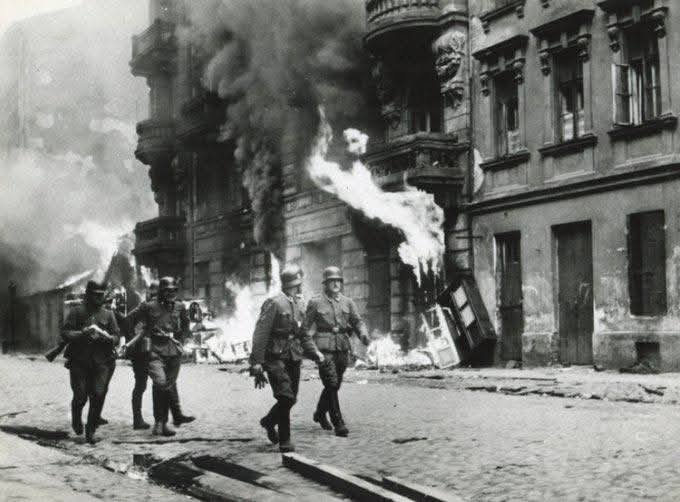
“The former Jewish Quarter in Warsaw is no more,”

The uprising began on April 19, 1943, and by the time the SS commander announced to Berlin that “The former Jewish Quarter in Warsaw is no more,” Aliza was already in hiding on the Aryan side of the city, passing as a Polish girl named something other than Aliza Melamed.


BERGEN-BELSEN, AND THE TRAIN

Survival on the Aryan side was its own sustained terror — a wrong glance, a neighbor’s suspicion, a stranger on the street who recognized something in her bearing or her eyes. Eventually Aliza and her family were caught up in one of the war’s cruelest deceptions: the Hotel Polski scheme, in which Jews were offered false foreign passports and the promise of safe passage to exchange camps, in exchange for everything they had. Many of those who took the offer were taken to a nearby prison and shot. Aliza, her mother, and her sister were taken to Bergen-Belsen, where the cold, the starvation, the lice, and the death were relentless.

And then, in April 1945, an evacuation order came.

“On April 6, an unexpected order came to prepare for evacuation. We heard the thunder of cannons in the distance; they said that the city of Hannover was in the hands of the Allied armies… Evacuation? To where? To the unknown.”

About 2500 prisoners were loaded onto a train that wandered for six days through the chaos of a collapsing Germany, the front lines moving on all sides, the guards increasingly uncertain what to do or where to go. On April 13, 1945, with soldiers of the American 30th Infantry Division and 743rd Tank Battalion closing in near the village of Farsleben, the guards abandoned the train and disappeared into the countryside.

Aliza was now seventeen years old. She had survived the Warsaw Ghetto Uprising, Bergen-Belsen, and six days on a train going nowhere. When the transport of broken down passenger carriages and cattle cars finally stopped in the middle of a ravine and people began climbing out into the April air, she wrote:

“What will happen now, to us? We were alone. Slowly, people started leaving the carriages; the train was standing in the middle of a field. I also got off, with my faithful friend Tusia. We saw a small pond not far away, and our people were catching little fish there. Those among them with initiative found a tin, made a fire, and cooked the fish. We joined in, glad to have something to eat.”


FINDING HER, NEARLY EIGHTY YEARS LATER
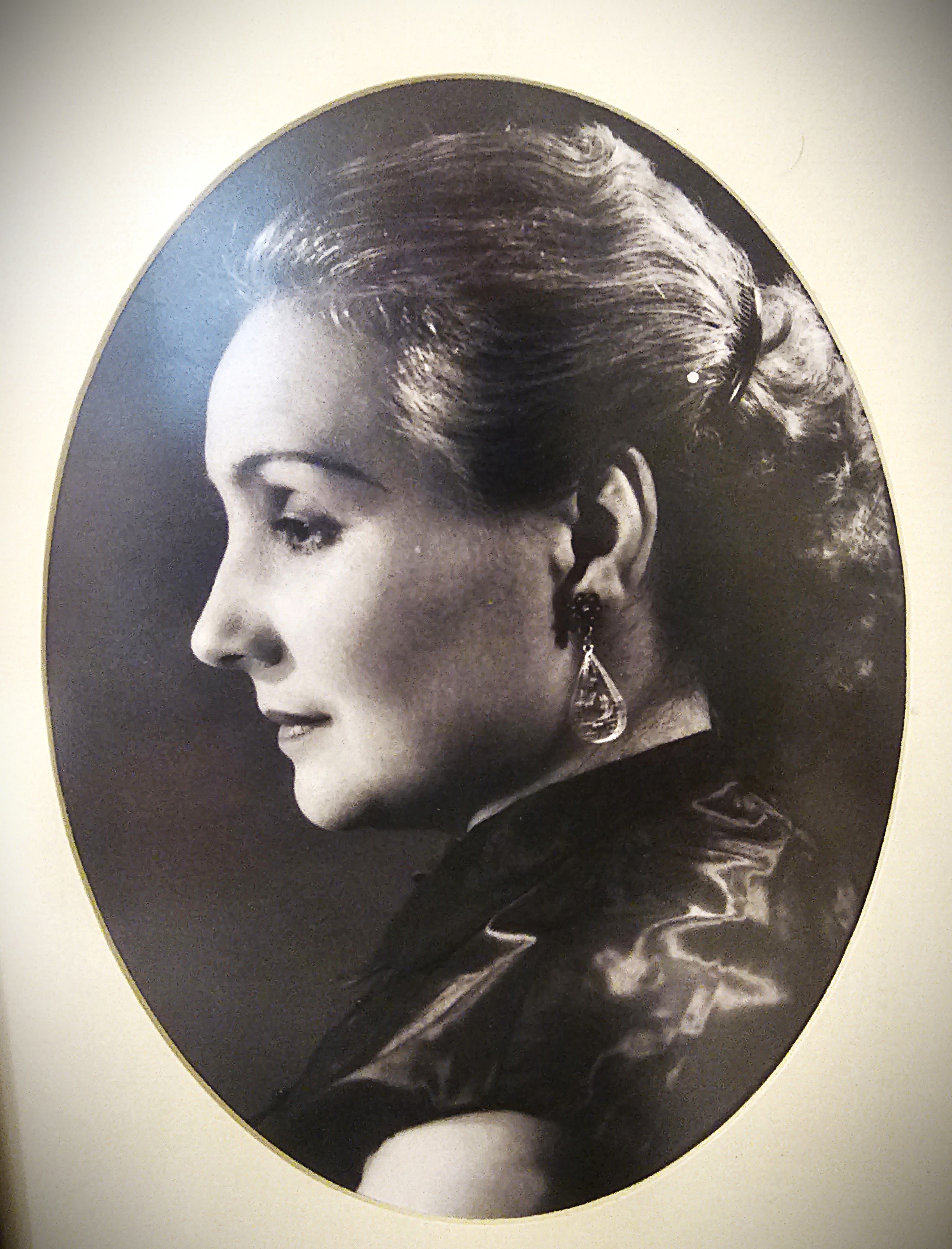
I first contacted Aliza Vitis-Shomron in 2016, when I was writing A Train Near Magdeburg, and she graciously gave me permission to use excerpts from Youth in Flames throughout the book. Her writing became one of the narrative spines of the entire project — a voice from inside the catastrophe that is young and precise and unflinching all at once, the diary of a girl who was told to survive so that she could testify, and who has spent every year since making good on that promise.

In April 2023, just days after CNN had featured her as part of their Holocaust Remembrance Day coverage, our film crew traveled to Kibbutz Givat Oz in northern Israel to interview her, on a quiet Saturday Shabbat morning. Her son Hanan meets us at the gate; he hops out of his car all smiles, beaming, greeting us so warmly, profuse in his thanks, and leads us up to his mother’s house, a corner of the kibbutz she had transformed over the years into a kind of garden, with plants and trees nurtured all around the house into something that just symbolized Israel, the biblical land, flowering in the desert.

She had just celebrated her 95th birthday, and she came out to meet us composed and ready, wearing a sweater, her white hair flowing, and as our crew set up the camera and lights she clipped a pin to her blouse, her 95-year-old fingers working carefully at the tiny clasp. When Lee Shackleford, our scriptwriter, asked what it signified, her translator smiled broadly: “Her special award for Valor Against Fascism — given to her by Israeli President Shimon Peres.” She is a national hero.

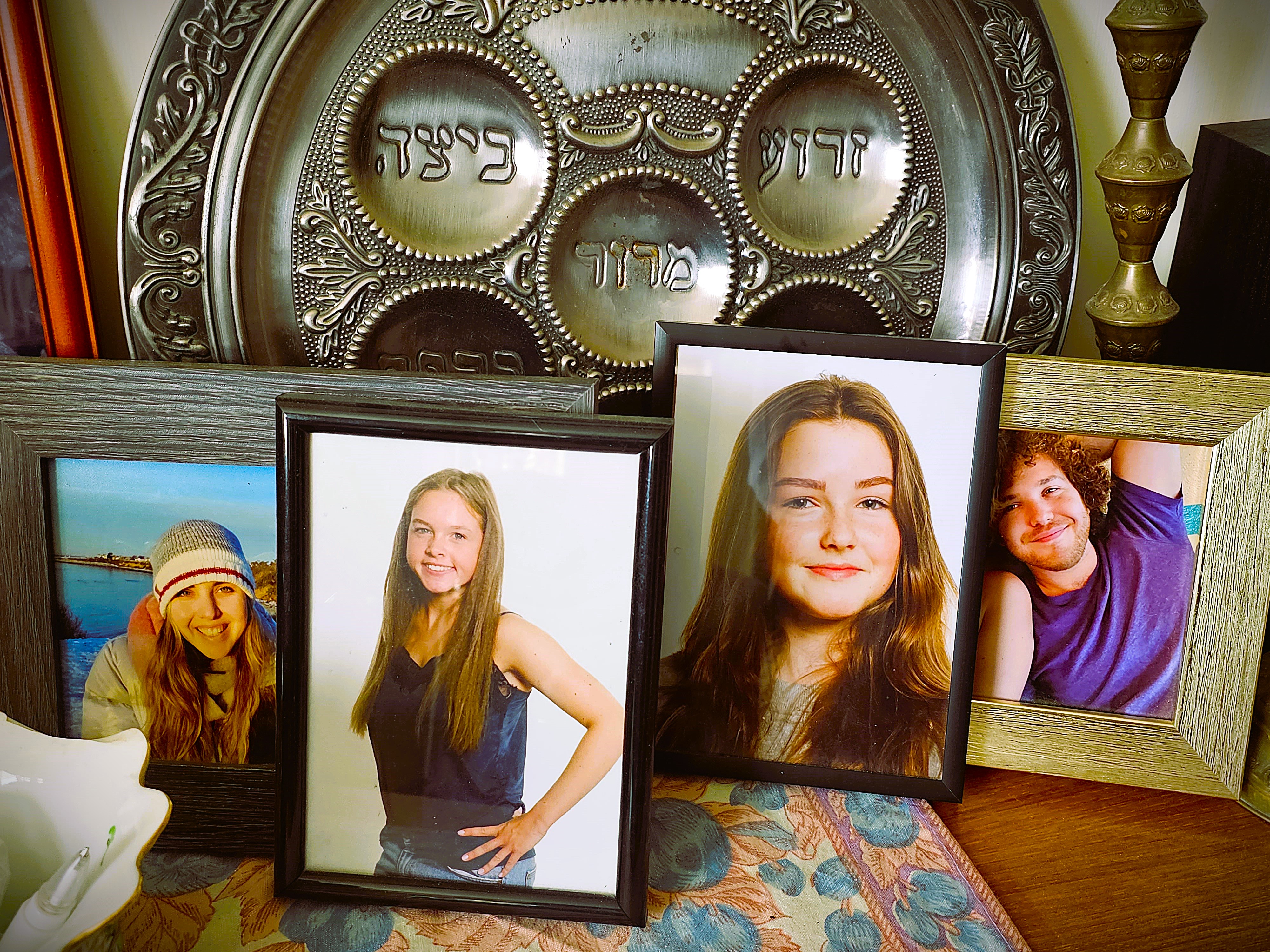
We were humbled to be in her presence, surrounded by the photos of her family that testified, “We triumphed, and flourished, despite Hitler and his minions.” She told us the story — the ghetto, her mother and sister, being sent out by the fighters with the instruction to live, Bergen-Belsen, the train, liberation — and at the memory of soldiers wanting the barely-alive seventeen-year-old to dance for them, she laughed with a warmth and humor that surprised everyone in the room. But she expressed to us, that it did not feel right to her—that underneath it was the grief that never entirely leaves: the depression, the guilt, the question that haunted her for years. Why did I live?

THE LAST SURVIVOR

Aliza Vitis-Shomron is now 97 years old and is widely recognized as the last living survivor of the Warsaw Ghetto Uprising — the last person alive who was inside the ghetto when the fighters rose, who carried messages for the resistance through those streets, who watched everything she had known burned to rubble and declared by the SS to be finished. She has spent the more than eight decades since fulfilling, with extraordinary commitment, the charge the resistance placed on her when she was fourteen: to live, and to tell the truth of what happened there.

She said it best herself, to CNN in 2023:

“It is important for me to tell the story, not so much my story, but how we fought bravely. If we don’t tell the world how we Jews fought, the world will only look at us as victims who went like lambs to the slaughter. But we did fight, and we did it in so many different ways. We need to tell people the truth.”

At the very end of our interview, she spoke of her fears for the future — the dwindling number of eyewitnesses, the weight of a story that will soon have no one left who lived it passing to those of us who only know it secondhand. “Who will keep my story alive?” she asked.

Our director, Mike Edwards, said quietly, but with a ready conviction: “We will.”

As we left Kibbutz Givat Oz that April morning, my wife Laura put her hands gently on Aliza’s cheek in farewell — a fleeting, wordless connection across eighty years of history, reaching all the way back to the fighters of the Warsaw Ghetto. We drove away through the quiet Israeli morning carrying something that is difficult to name: gratitude, grief, the particular weight of having sat in the presence of someone who has seen the worst of what human beings are capable of, and who has chosen, every day since, to answer it with testimony and with life.

The responsibility of that is not lost on any of us who were witnesses that morning. In the Hebrew scriptures, when the prophet Elijah’s time on earth was ending, he passed his cloak to his apprentice Elisha — a gesture that signified not merely succession, but the transfer of sacred purpose and spiritual power. We think of that image often, in this work. In our moments with her, something passed between the last survivor of the Warsaw Ghetto Uprising and the people who had come to make sure her story would not die with her. We have accepted that mantle, gladly and with humility.

The fighters at Mila 18, the bunker command post in the ghetto where Mordechai Anielewicz and many of the resistance fighters breathed their last, were right to send her out. They did not go quietly into the dark. Neither will their memory, not as long as there are people willing to carry it forward.
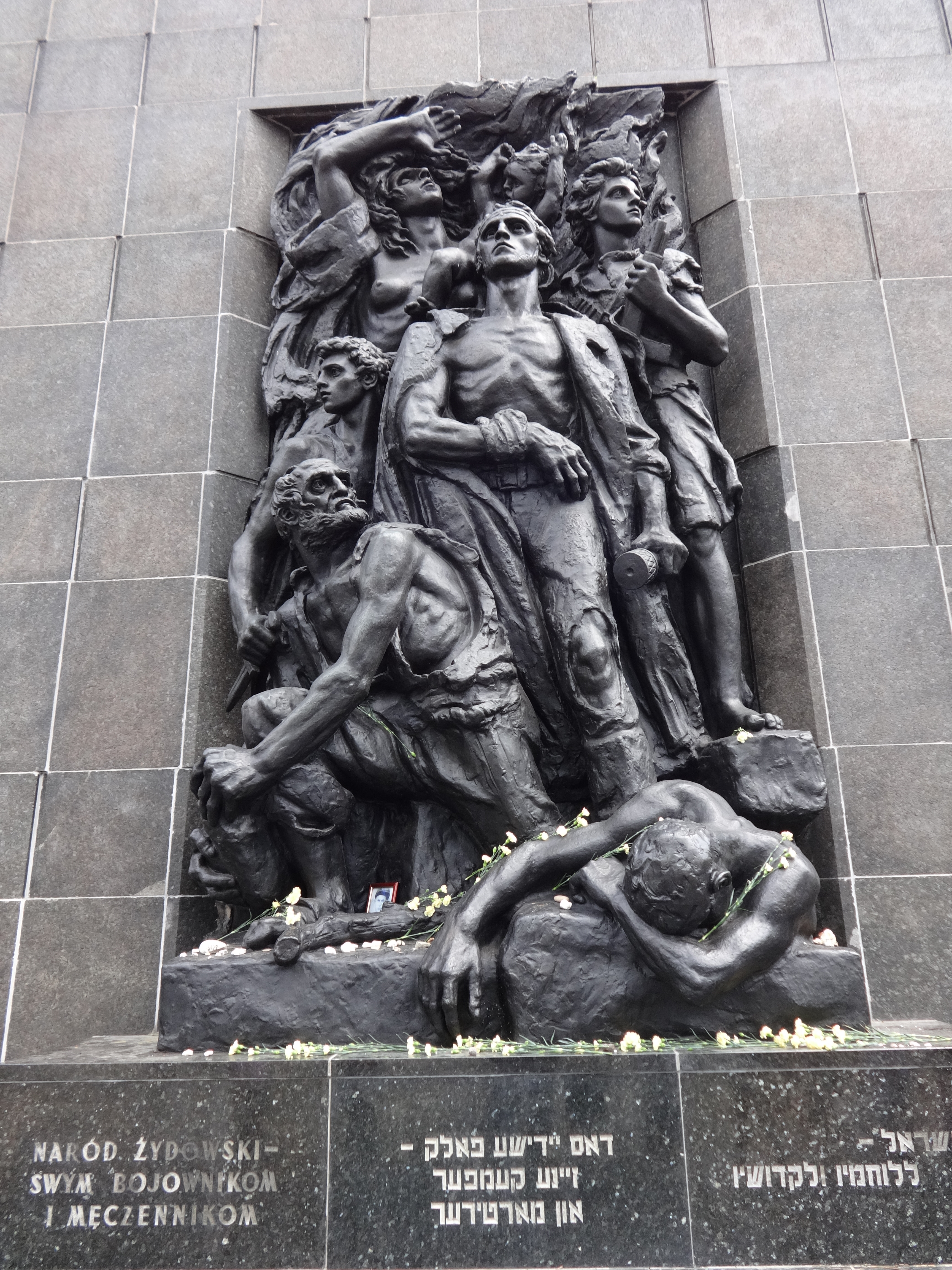
Memorial to Warsaw Uprising
Memorial to Warsaw Uprising. Matthew Rozell 2013.

Aliza kept her promise to the dead; what the Nazis tried to erase, Aliza spent a lifetime refusing to let the memory, the legacy of the Jews who fought back against the machine of death, die.

That legacy is now ours, an obligation to honor and carry forward.

— Matthew Rozell, April 19, 2026, the 83rd anniversary of the start of the Warsaw Ghetto Uprising.


Aliza Vitis-Shomron’s account appears throughout A Train Near Magdeburg, available at matthewrozellbooks.com. The feature film A Train Near Magdeburg is in production, coming 2027. To learn more about the progress of the film, visit MagdeburgTrain.com and to support, the Augusta Chiwy Foundation.
Read Full Post »

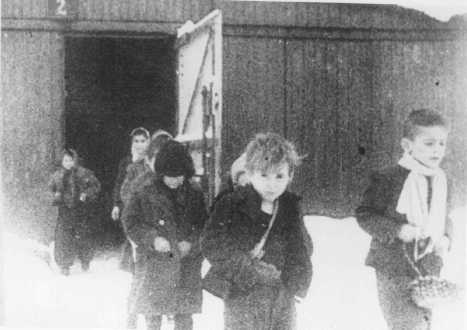
Soon after liberation, surviving children of the Auschwitz camp walk out of the children’s barracks. Poland, after January 27, 1945.

United States Holocaust Memorial Museum

I study this photograph,

and so it begins.

Seventy-three Years Later.

The war comes to a devastating conclusion.

The discoveries unfold:

Eyewitness encounters with the most horrific crime in the history of the world.

Battle-hardened tough guys cry.

They stomp their feet in rage, and get sick,

but the lost are lost.

The Survivors ‘carry on’.

The Soldiers ‘carry on’.

Some will be lost for the rest of their lives.

Now, it is Seventy-plus Years.

But it is not over,

because ‘closure’ is a myth,

and seven decades is but a blur.

The barracks door opens slowly. New tracks form in the snow

but how is life supposed to go on?

And now for the rest of humanity-

Just what have we learned,

Or have we just allowed ourselves to forget?

Is it even important, for us to stop and think

about snowflakes on little boys?

*****

-m.a.rozell-

See the Altantic’s photo essay here.

*************************************************************

Matthew Rozell is a teacher who has studied at the United States Holocaust Memorial Museum and Yad Vashem, Israel’s Holocaust Martyrs and Heroes Remembrance Authority. His second book,  A Train Near Magdeburg, is on teaching and remembering the Holocaust.

Read Full Post »

Soon after liberation, surviving children of the Auschwitz camp walk out of the children’s barracks. Poland, after January 27, 1945.

United States Holocaust Memorial Museum

I study this photograph,

and so it begins.

Seventy-two Years Later.

The war comes to a devastating conclusion.

The discoveries unfold:

Eyewitness encounters with the most horrific crime in the history of the world.

Battle-hardened tough guys cry.

They stomp their feet in rage, and get sick,

but the lost are lost.

The Survivors ‘carry on’.

The Soldiers ‘carry on’.

Some will be lost for the rest of their lives.

Now, it is Seventy-plus Years.

But it is not over,

because ‘closure’ is a myth,

and seven decades is but a blur.

The barracks door opens slowly. New tracks form in the snow

but how is life supposed to go on?

And now for the rest of humanity-

Just what have we learned,

Or have we just allowed ourselves to forget?

Is it even important, for us to stop and think

about snowflakes on little boys?

*****

-m.a.rozell-

See the Altantic’s photo essay here.

*************************************************************

Matthew Rozell teaches history at his alma mater in Hudson Falls, New York. His second book,  A Train Near Magdeburg, is on teaching and remembering the Holocaust.

Read Full Post »

This week I introduced what will be a series of posts under the heading of ‘Seventy Years’, marking the 70th anniversary of the close of World War II and discovery of the magnitude of the most horrific crime in the history of the world, the Holocaust.

Today I travel again back to Auschwitz-Birkenau, sharing some of my personal observations and photographs on the anniversary of the liberation by Soviet troops 70 years ago this week.

*****

July 12.

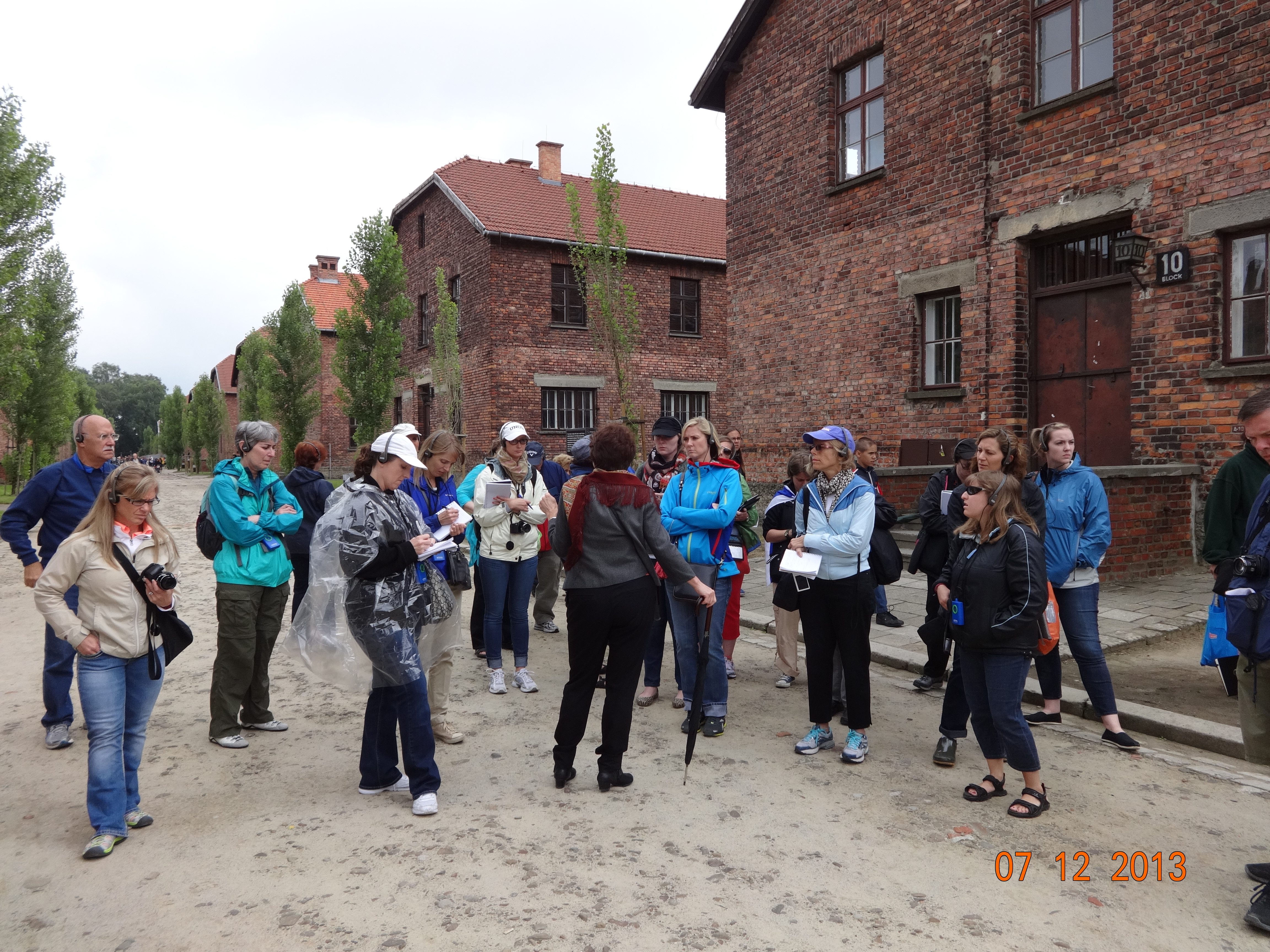
After the tour of Auschwitz I, our teacher travel study group has lunch on the bus in the parking lot, then drive the three kilometers through town to Birkenau.

There it is. The entry tower. The iconic symbol of evil.

787

Main entrance to the Auschwitz-Birkenau extermination camp. USHMM

Main entrance to Auschwitz-Birkenau . USHMM


We follow the guide up the stairs in the tower. From here we can see the sheer vastness of the camp.

696


Women's Barracks. Auschwitz II.

Women’s Barracks. Auschwitz II.


Dozens of long narrow women’s barracks, brick, still stand, albeit some braced with wood on the gable ends to keep them from toppling until they can be re-pointed. A. indicates that historic preservation here is a major concern.


Vastness

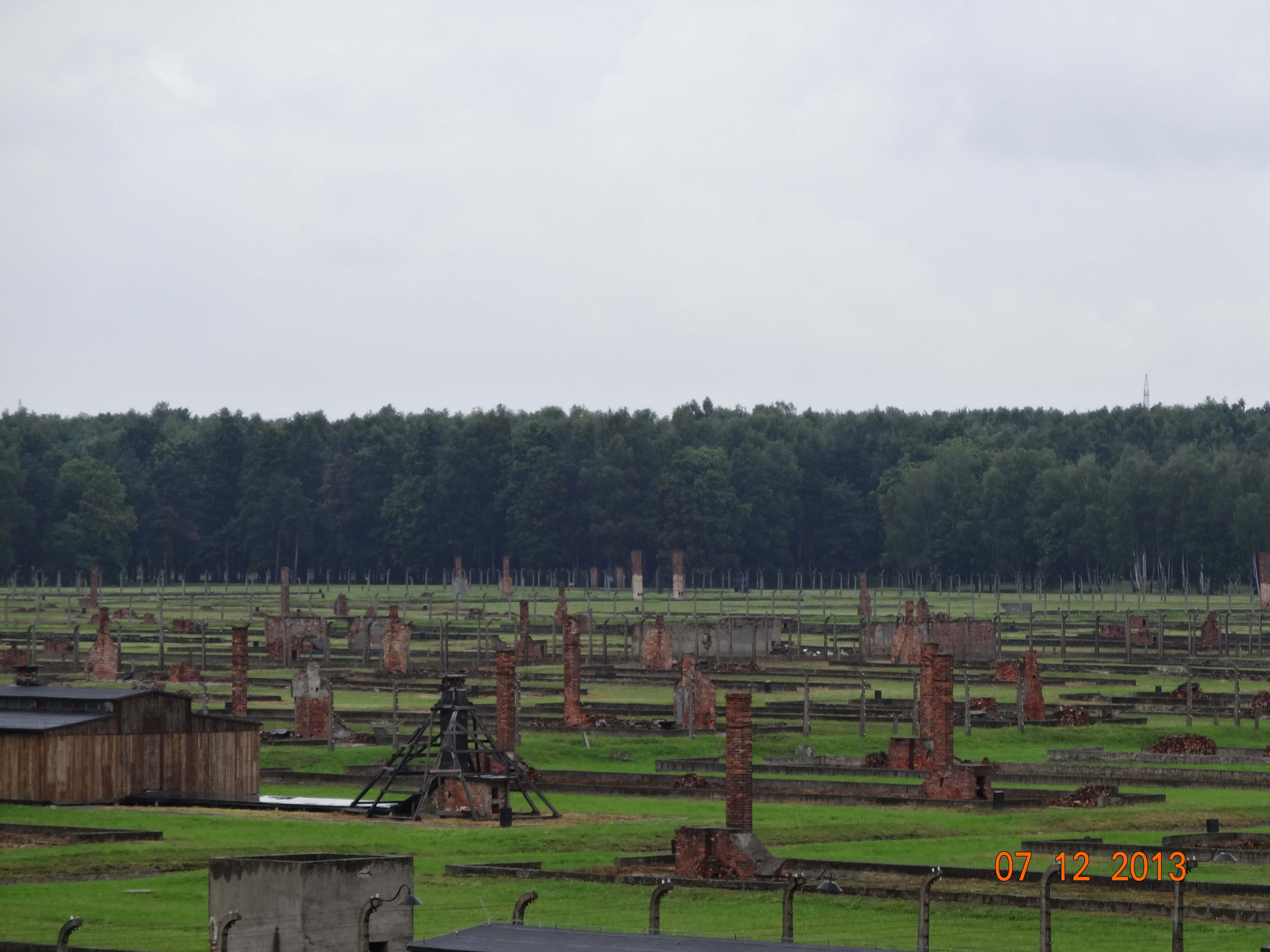
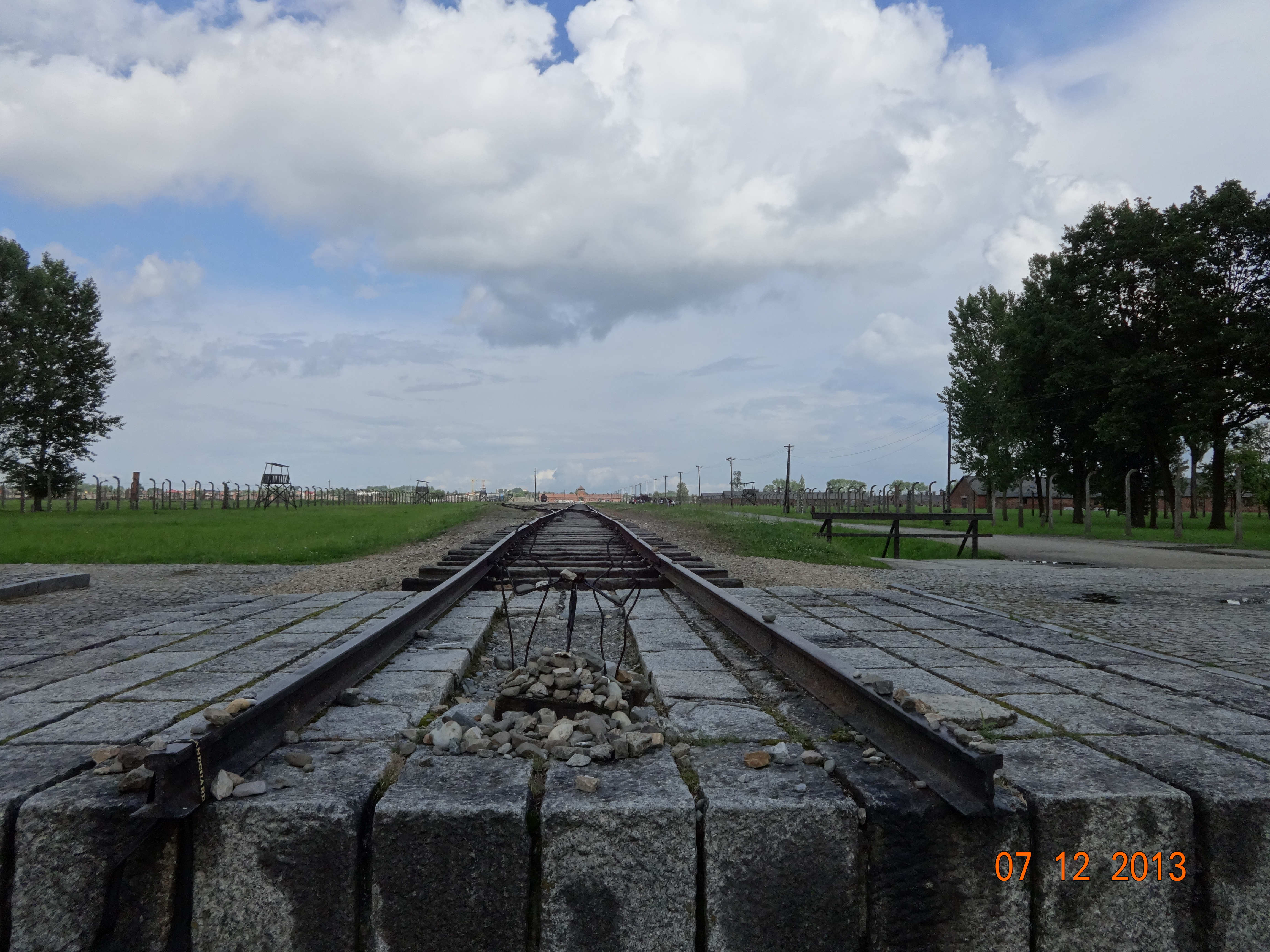
The rest of the camp is many square kilometers of row upon row of foundations and brick chimney stubs, surrounded by the menacing curved and tapered concrete concrete posts dotted with white insulators and strung with miles of parallel lines of barbed wire. In the summer of 1944, when hundreds of thousands of Hungarian families were deported here, the rail lines came right into the camp.

View of the Ramp at Auschwitz-Birkenau Showing the SS Selection of Hungarian Jews USHMM.

View of the Ramp at Auschwitz-Birkenau Showing the SS Selection of Hungarian Jews, USHMM.


View of the Ramp at Auschwitz-Birkenau Showing the SS Selection of Hungarian Jews, USHMM.

View of the Ramp at Auschwitz-Birkenau Showing the SS Selection of Hungarian Jews, USHMM.


Following the German invasion of Hungary in March 1944, over 400,000 Hungarian Jews  were deported and murdered at Auschwitz.


The Walk.

Our guide leads us along the path through the camp that leads to the gas chamber and crematorium. We walk in in silence along the roadway, the only sound the crunching of brick fragments and gravel underfoot.

Selected.

Selected.


The Walk.

707

It appears to have been paved with brick, slave labor, though in some spots it is hard to tell anymore. No one speaks, and on and on we walk. Two minutes. Five minutes. Ten minutes. Fifteen minutes. I’ve been on battlefields that are smaller than this site.


Flower ring as we make final approach to the chambers tucked into the wooded area nearby.

Finally we reach the end of the camp where the kitchens stood. A round concrete ring rises out of the earth, maybe 6 feet in diameter. Someone finally speaks and asks A. what it was. A giant flowerpot. She tells us also that they were placed near the entrances of the gas chambers. Flowers at the gas chambers.

Waiting. For what we do not know.

Waiting. For what we do not know. Exhausted from deportation and “travel”. We now know who they were. Yad Vashem.


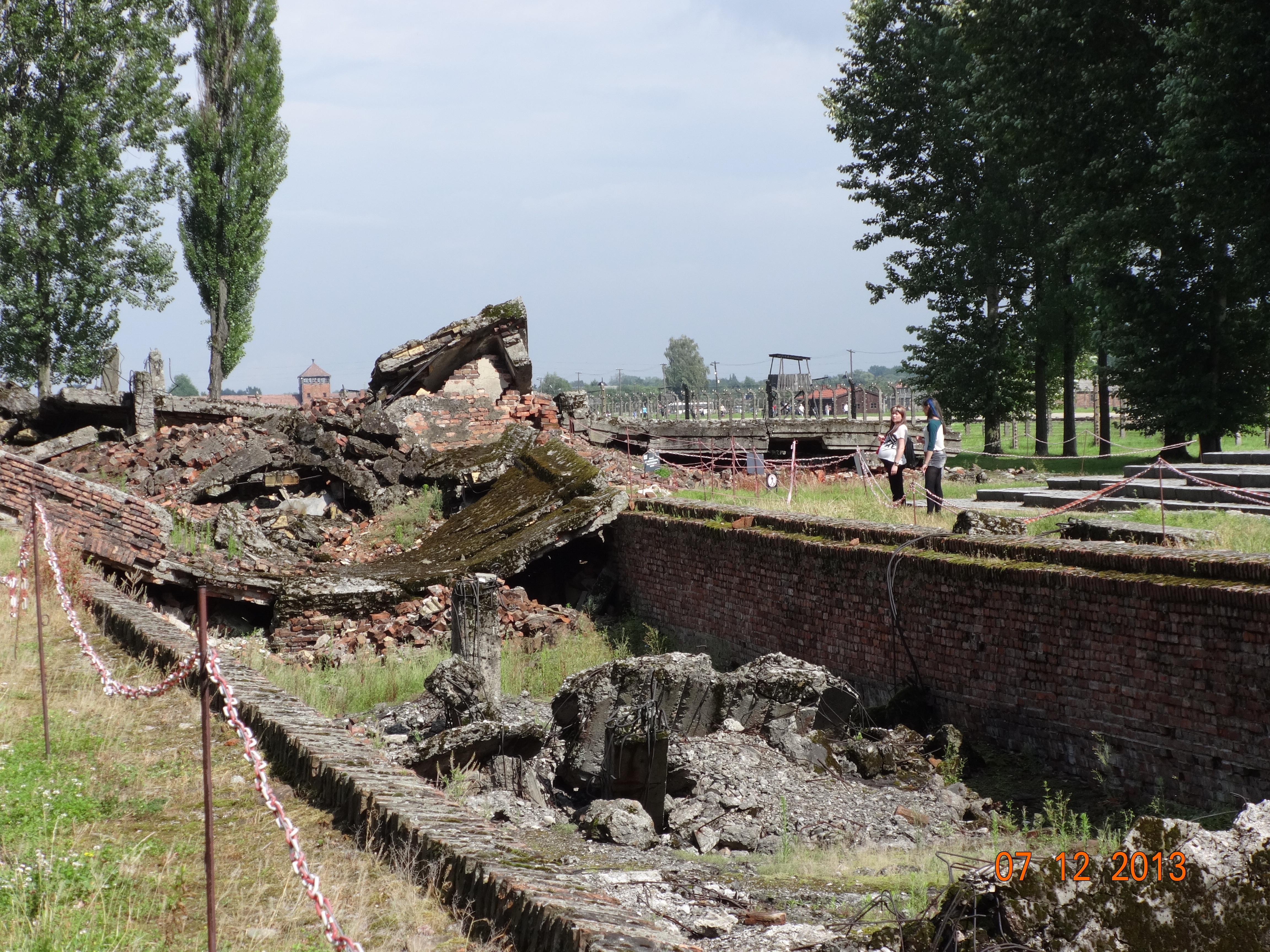
We turn left, and keep walking past interpretative signage. It seems like we are walking outside of camp perimeter. But we are not. Beautiful woods appear and we are walking on the edge of the woods with the camp to our left. We stop near another sign and rest for a moment, allowing the others to catch up. Then our guide calls our attention to the photo on the sign, showing Hungarian mothers and children doing the same thing we are doing. Halting and resting.  And a short path through the woods will take us to the ruins of the gas chamber/crematorium Number Five.

They waited here. Some days, in the summer of 1944, for hours.

They waited here. Some days, in the summer of 1944, for hours.


We are resting at the spot they rested at, 20 minutes after walking, immediately after disembarking of overcrowded transports that had been traveling for days. Here they waited, anxiously, as their turn to approach the chamber would come. But the victims of the transport ahead of them had to be removed from the chamber first. Some days in the summer of 1944 these victims were backed up for hours.

I pick up a rock from the path and carry it with me past the ruins. At the ashfield there is more signage and a memorial asking visitors not to walk through the field. I place my stone on the memorial, looking down to watch where I step. But it is probably a futile gesture-this whole place is an ashyard, a graveyard.


The secret sonderKommando photos. Where the bodies were burned in open air.

The secret sonderkommando photos. Where the bodies were burned in open air.


“So many Hungarian Jews were killed in the Auschwitz camps during that period that the crematoria were incapable of consuming all the bodies, and open pits for the purpose were dug.”

728

We turn again, and walk past the remains of crematorium Number Four. To the disinfection center for those selected to be worked to death. Again, a system. Disrobing. Wading through disinfectant. Shower. Uniform thrown at you, mismatched clogs or shoes.

 *****

E’s mother spent two years here. Her grandmother and the little ones were selected upon arrival. Her mom’s beloved sister was murdered in the quarry after slipping while carrying a large pot of soup in the ice and snow with three other girls. Today is a hard day. I want to comfort her, to carry her pack for her. I feel helpless. There is nothing I can do.

778

At the Soviet memorial constructed near the two destroyed gas chamber/crematoria at the end, we have a remembrance ceremony. Kaddish is recited in Hebrew. I read it aloud in English. With tears, E. tells us that she feels her grandmother smiling down on this extraordinary group of dedicated teachers. A lump rises, again. I swallow hard and try to blink back the wetness I feel welling in my eyes. Damn, I almost made it. Glad for the sunglasses, even though there is no sun.

770

775


772

776


“A Warning to Humanity.”

We light candles, turn our backs, and walk out, which provides another twenty-minute stretch of personal reflection. We have toured the epicenter of evil. We have been here, we try to process-but we just cannot. We need the individuals to speak to us. And like E’s family, they do.


738


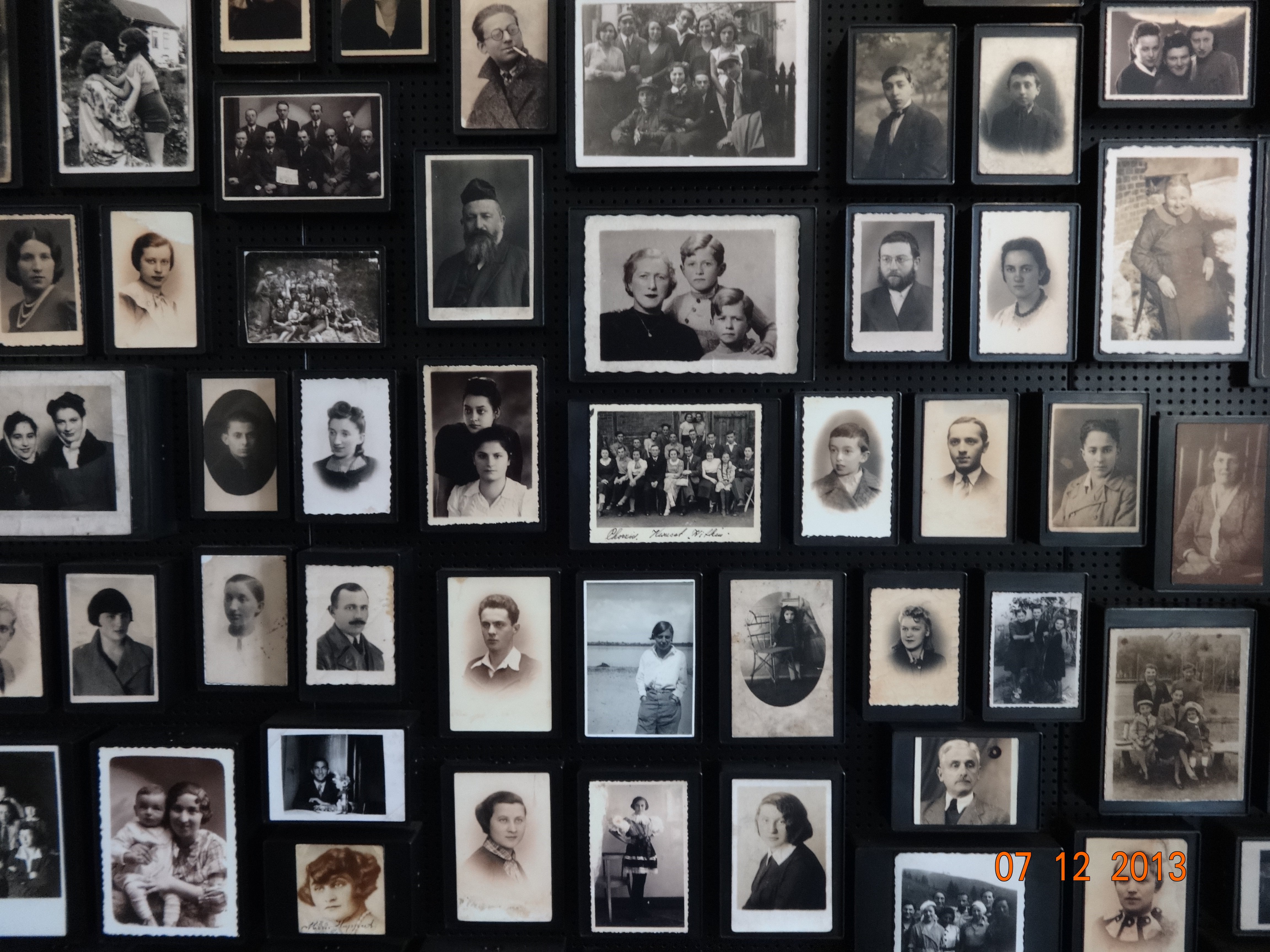
At the close of the disinfection center exhibit there are hundreds of photographs that had been discovered years after the camp was abandoned by the Germans. Pictures of loved ones who perished here.

For me, like the personal home movies of pre-war life for the victims at the exhibit at Auschwitz I, this is what has the most meaning. So I will leave you for now with a few close ups.

744

743

741

742


To Life.To Life.

*****

From National Public Radio:

A Holocaust Survivor, Spared From Gas Chamber By Twist Of Fate

by Soraya Sarhaddi Nelson, International Correspondent, Berlin

January 27, 2015 3:40 PM ET


Jack Mandelbaum, a Holocaust survivor from the Polish city of Gdynia, poses in front of a photograph showing him as a youth.

Jack Mandelbaum, a Holocaust survivor from the Polish city of Gdynia, poses in front of a photograph showing him as a youth. Tobias Schwarz/AFP/Getty Images

Seventy years ago, Soviet soldiers liberated Auschwitz, the most notorious of Nazi concentration camps.

Some 300 Holocaust survivors were at Auschwitz on Tuesday, along with several European presidents and other government officials, to honor at least 1.1 million people who were murdered, 1 million of whom were Jewish.

Among those killed there were Jack Mandelbaum’s mother and brother. The Polish-born Mandelbaum survived, spared at the last minute by an officer of the dreaded SS who yanked the teen away from his family and sent him instead to a forced labor camp.

Last week, Mandelbaum flew from his Naples, Fla., home to Berlin, to help open an exhibit on the children of Auschwitz, and to tell his story.

“I’m a person of action,” he says. “Anger doesn’t get you anyplace. Hate doesn’t get you anyplace.”

In August 1939, as the Nazis were about to invade Poland, Mandelbaum was 13 and living in the Polish port city of Gdynia. Mandelbaum says his father worried that the port would be attacked, so he sent his wife and three children to stay with relatives in the countryside.

He promised to join them six weeks later, but he never arrived. About a year later, he sent them a postcard from the Stutthof concentration camp.

“I guess he didn’t want us to worry about him, so he said he was OK,” Mandelbaum says.

He never saw his father again. His sister later died on a forced march to another concentration camp.

Prisoner 16013

Then, before dawn on June 14, 1942, the SS came for what was left of the family.

“They banged on the door and everyone had to come out in five minutes, and there was a lot of shooting and crying, and people didn’t know what was happening because they had to rush out,” Mandelbaum recalls. “Many people were even in their bed clothes. And we were lined up in the market square, and then we were marched to a local brewery.”

An SS officer there began separating people to the left and to the right. Mandelbaum says he clung to his mother and brother, who were sent to the left. But the SS officer saw in his documents that Mandelbaum had worked as an electrician’s helper.

“He grabbed me and pushed me to the other side,” Mandelbaum says. As for his family, he says, “The people who were to the left were sent to Auschwitz to be gassed. I never saw them again.”

To the Nazis, he became prisoner 16013 and spent the next three years at seven concentration camps. The first was Gross-Rosen, where prisoners worked in a granite quarry.

“There were so many prisoners,” he says. “We were in a big barrack, it had a concrete floor, it had no beds. And we were lined up like herring on the floor, so when one person turned, everybody else had to turn, it was so tight.”

Food was scarce, and the daily meal amounted to a single piece of bread and what Mandelbaum describes as soup made out of grass.

He recalls emaciated prisoners stuffing paper into their mouths to fatten their cheeks so they’d look healthier to the guards assigned to remove the weak for extermination. His own weight eventually dropped to 80 pounds.
But Mandelbaum says he refused to give up hope. He poured what little energy he had into work, hoping it would eventually lead to his release.

Suddenly, Freedom

“We had a good life before the war. I went to a public school, I had good clothes and good food and a nice apartment,” he says. “My dream was to go back to this life and be reunited with my family and my sister and my brother, and that sustained me.”

It also helped that he didn’t know the Nazis were trying to slaughter all Jews, something he says he and other prisoners learned only after liberation.

Their sudden freedom, too, was a complete shock, Mandelbaum says. “We didn’t know anything, only on the morning when we woke up and the Nazi flag wasn’t flying and the guards weren’t there.”

Unlike at Auschwitz, Allied soldiers did not free them, as his camp was in a no man’s land between the fleeing Nazis and advancing Russians. He and a friend from the camp grabbed an abandoned horse-drawn wagon and left as quickly as they could.

“We came across a women’s concentration camp and they were still locked up, so we actually became the ‘liberators’ of the camp,” he says, with a laugh.

Mandelbaum was 17 when the Holocaust ended. He says he returned to Poland several times to see if he could find his family but failed. He did find an uncle living in a hamlet near Munich.

The following year, he immigrated to the United States and settled in Kansas City, Mo., where he married, had four children and became a successful importer of ladies’ handbags. It would be 16 years before he began speaking publicly about the Holocaust, something he says he decided to do after talking to one of his neighbors.

“He asked me what kind of sports did I play in the concentration camp, so all of the sudden it just opened everything up, how little people knew what was going on, and this was when I started to speak in different venues about my experiences,” he says.

That desire to educate people brought Mandelbaum, 87, to Berlin last week. He says it’s sad to see anti-Semitism on the rise in Germany and elsewhere in Europe, but he hopes he and other Holocaust survivors can make a difference.

“You know, when we were in the camps, we would always ask, ‘How can the world stand by and let this happen?’ ” he says. “So it’s a matter of being vigilant, a matter of trying to do as much as you can in order to enlighten people [about] how dangerous it is when you become a bystander.”

http://www.npr.org/2015/01/27/381876276/a-holocaust-survivor-spared-from-auschwitz-at-the-last-second

*****


Read Full Post »

Yesterday I introduced what will be a series of posts under the heading of ‘Seventy Years’, marking the 70th anniversary of the close of World War II and discovery of the magnitude of the most horrific crime in the history of the world, the Holocaust.

Today I travel back to Auschwitz-Birkenau, sharing some of my personal observations and photographs on the anniversary of the liberation by Soviet troops 70 years ago this week.

*****

July 12.

So the day that all of us in our teacher travel study group approach with a bit of apprehension is finally here. We are on the bus from our hotel in Cracow to Auschwitz, about 40 miles to the west south west.

Yesterday we arrived in Crakow from Prague, taking the night train on a sleeper car.

790

Rolling southward one of our tour leaders points out an impressive large building on the top of a hill that looks like a five star hotel. Built after the German invasion in 1939, it was a rest and relaxation villa for Wehrmacht officers rotating off the Russian front to unwind for a bit, as industrialized mass murder was unfolding every single day less than an hour away.

Hocker Album- Dr. Josef Mengele, Rudolf Höss, Josef Kramer, and an unidentified officer. —USHMM

So, to introduce some of the major players:

I don’t make it a habit to showcase the perpetrators on this site, but in this one incredible photograph, taken at Auschwitz, you can see some of them above. Hoss was hung at Auschwitz  following his trial after the war. Kramer was executed by the British after his stint presiding of the horrors of Belsen after his transfer there. Of course, smiling Dr. Mengele escaped to Argentina and died in a drowning accident in the late 1970s. (The pictures in this photo album surfaced only a few years ago and were studied by my friend archivist Rebecca Erbelding at the United States Holocaust Memorial Museum. You can read more at the weblink above if you like.)

On to the tour.

638

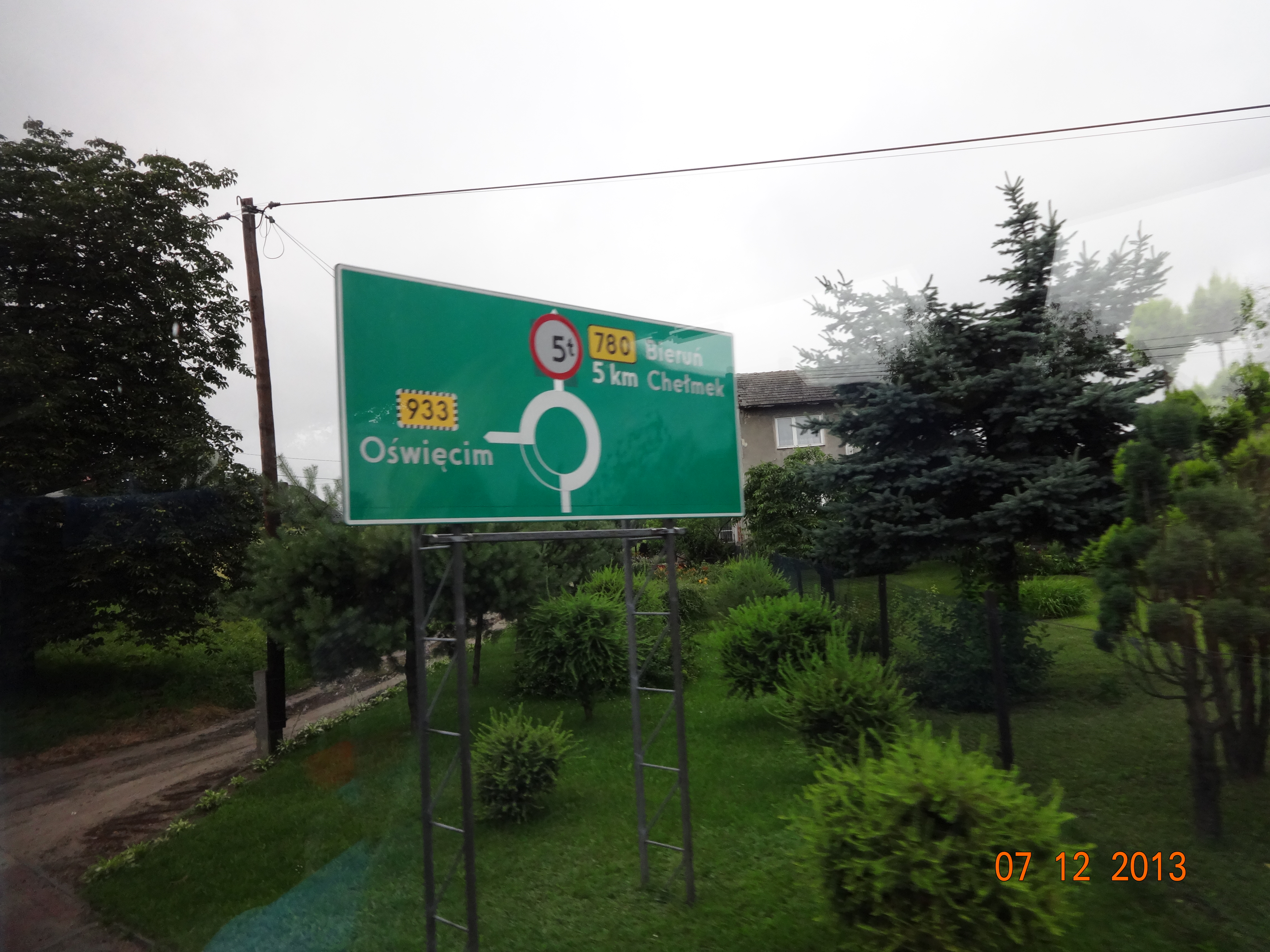
Soon we see the road signs for Oswiecim, the small Polish town at a railroad hub that has become one of the most visited tourist sites in Poland. Most of the world knows it by its German name-Auschwitz.

The bus lumbers into the overcrowded parking lot and docks in the slot. The driver kills the engine. And it begins to rain as our other leader, E.,  relates the story of her mother’s family, the idyllic childhood in this beautiful prewar country, a young teen when the nation is invaded, the oldest of four children. No one on the bus makes a sound. It is now raining very hard.

643

What is this place? Our guide A. is a top notch scholar, and she leads us on a day long tour that is hard to put into words.

660

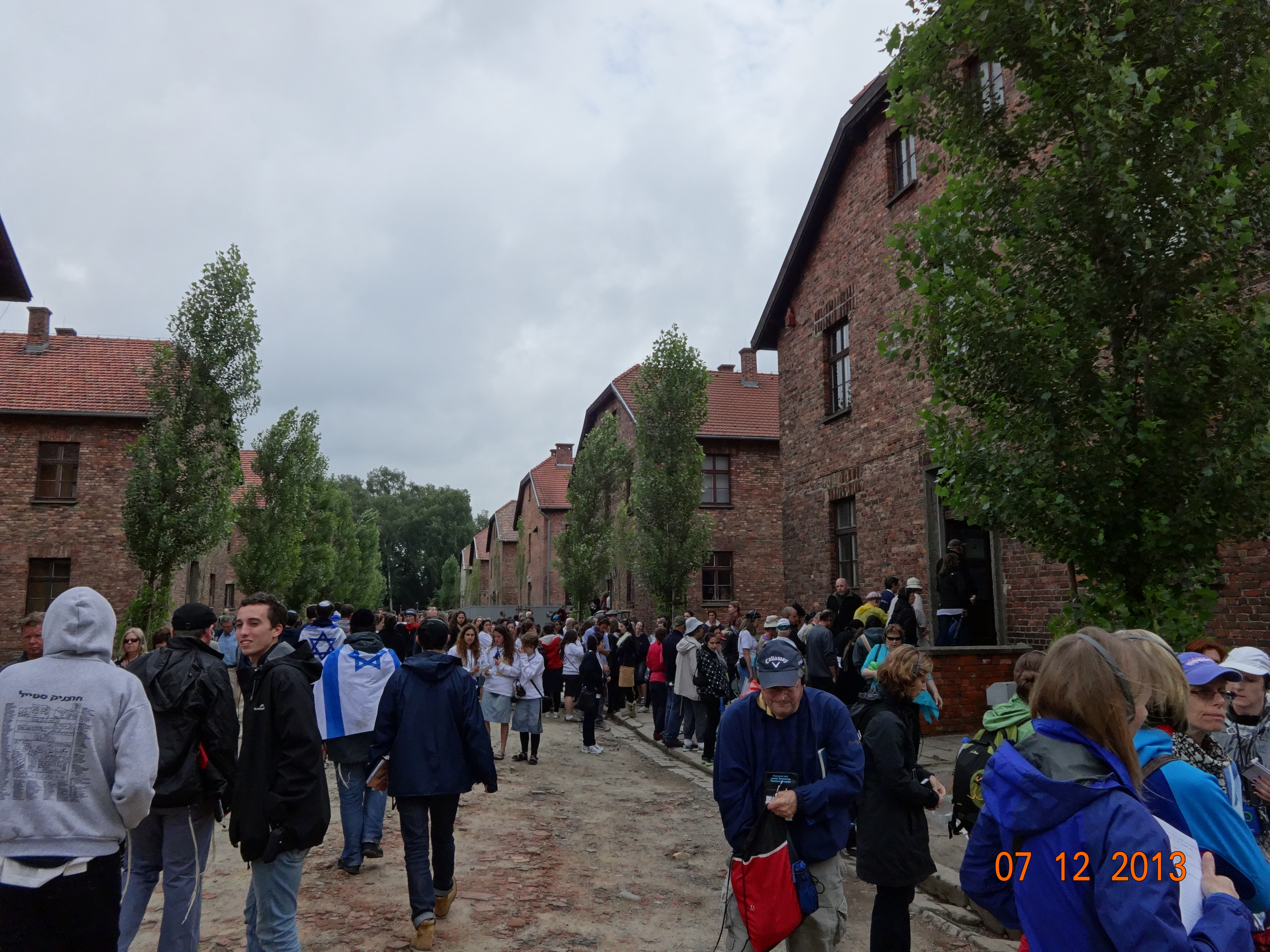
We begin at Auschwitz I, the first camp. This place is centrally located, a railway hub dating back to the turn of the century.

678

The first prisoners, after it is converted from a Polish military facility, are Soviet POWs and Polish prisoners and other “security risks” who will be worked to death slowly expanding this camp, and the much larger Auschwitz II-Birkenau. She walks us through the exhibits and the displays at the various blocks. Block 4 is the “Extermination Exhibit”. We think about the words, the language. Extermination- as if the victims were vermin. Over 1,100,000 were killed here, most of them Jews.

The Hub. The tentacles during the Holocaust.

We see the map with the spiderlike rail lines radiating inward to Auschwitz like tentacles, from northern Poland, from Germany, Hungary, as far south as Greece and as west as Paris and the Netherlands. In the summer of 1944, tens of thousands were murdered here, per day.

This place is ALWAYS crowded.

We see again the large scale terra cotta model of the process, which the German engineers had perfected  at Auschwitz II-Birkenau- the arrival of the transports, the undressing rooms with signs admonishing bewildered people to hang their belongings carefully and to remember the number of the wall pegs where they left them for quick retrieval later. The shower rooms that could fit in some cases entire transports, which were in fact the hermetically sealed gas chambers. The Germans above with their gas masks, waiting for the proper temperature to be reached through body heat, just the right humidity to be achieved before dropping in the pellets so the gas released would work more effectively. The anguished death throes of the thousands of naked figurines assault our senses. The process is not complete until the corpses are carried out by the sondercommando slaves, defiled for any gold fillings, the hair shorn from the women, the bodies then burned in the open air behind or cremated in the ovens.

676

But the tour is now just beginning.  Minutes before, we were looking at a terra cotta model. And now in Block 5 we will be presented with the evidence. This is an exhibition, after all. Exhibit A is about to slap us in the face. Hard. It is a room, 50 feet long, with nothing but human hair piled several feet back and as many feet tall. My heart skips a beat.

What are my eyes perceiving? Now we see a photo of stacks of bale bags, carefully labeled, packed and stacked, awaiting shipment back to the Reich for use in various products for the German war effort. Slippers for submariners so they can walk quietly aboard ship to evade Allied sonar. Stuffing for the seats of German pilots.

We shuffle on in silence with hundreds of others past the spectacles, the pots and pans, the suitcases carefully labelled by their owners with chalk on the orders of the perpetrators, again, for “quick retrieval”. And the shoes. Sorted. Case after case of women’s shoes. Men’s footwear. And then the children’s shoes.

665

Our knowledgeable guide takes us into Block 27, the new exhibit on the Shoah. This is a temporary relief of sorts as now we see faces, film and stills, of pre war Jewish life, projected on the walls. We hear songs and voices.

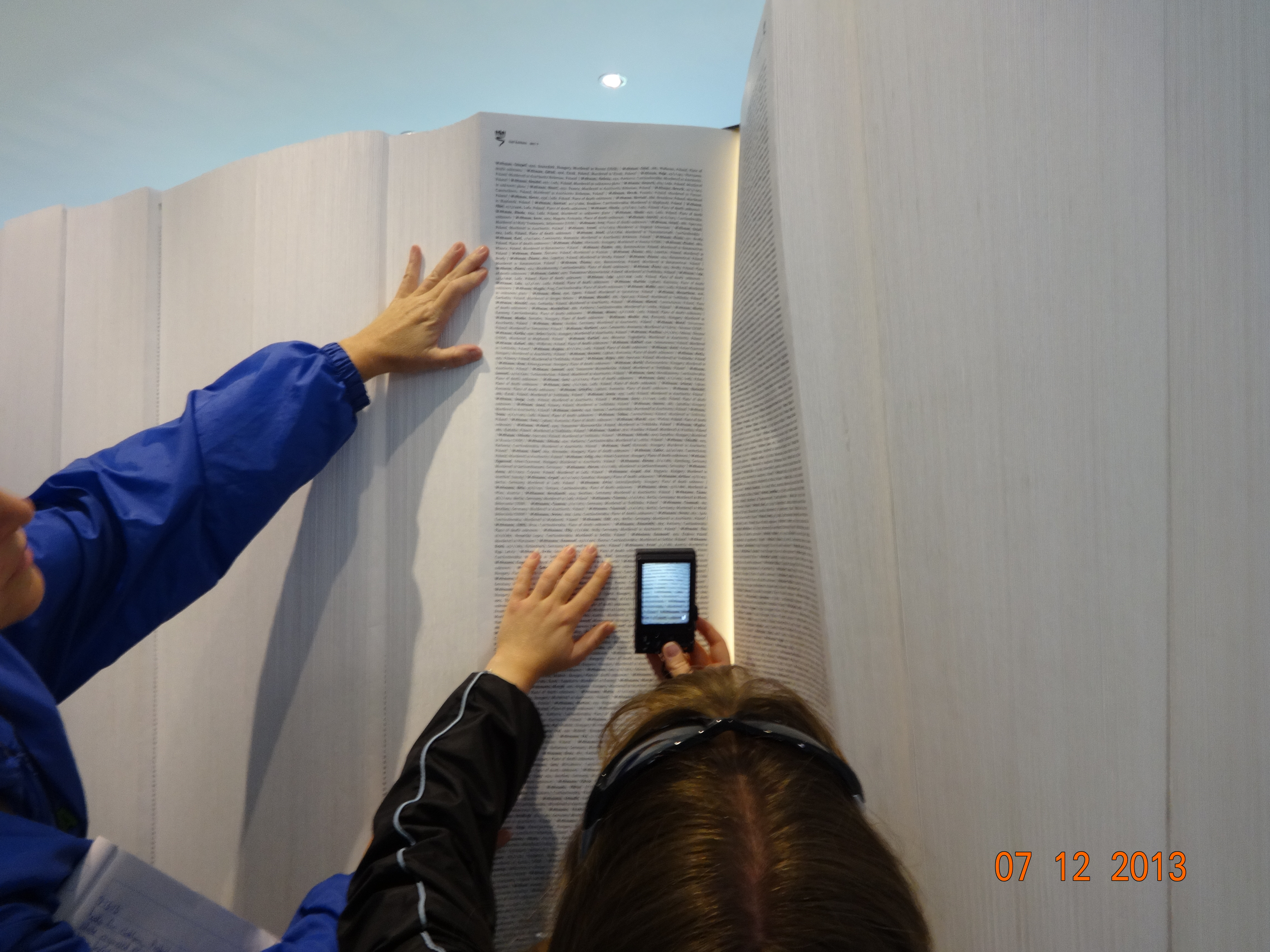
Book of Names. people cry again.

At the end is the Book of Life, containing four million names compiled thus far. A moving moment when E. and others in our tight knit group find entire pages with the names and dates of family members murdered during the Holocaust.

657

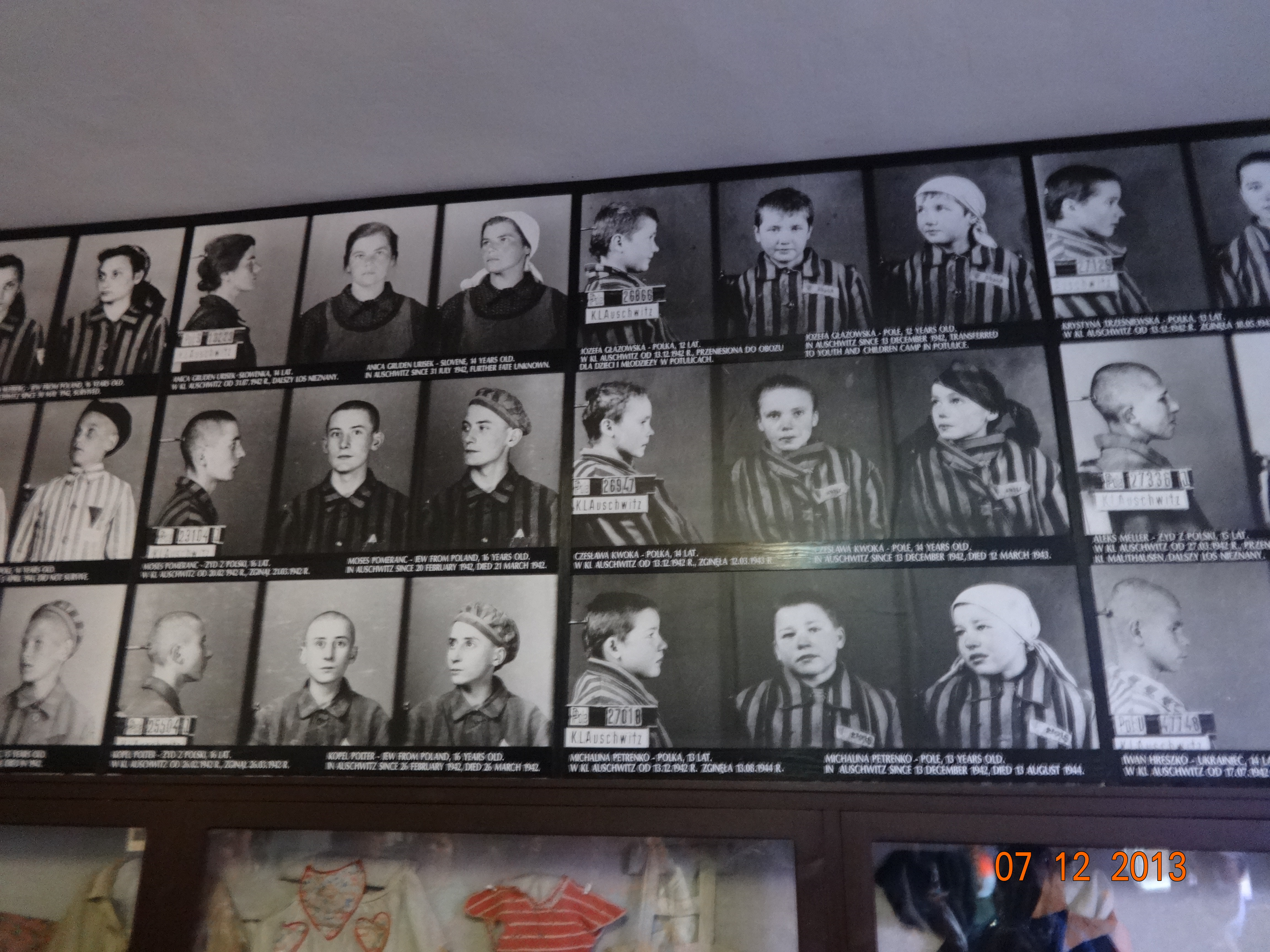
Girls. Shorn, beaten,  and photographed.

This is the Core.

*****

Read Full Post »

Soon after liberation, surviving children of the Auschwitz camp walk out of the children’s barracks. Poland, after January 27, 1945. — United States Holocaust Memorial Museum

I study this photograph,

and so it begins.

Seventy Years Later.

The war comes to a devastating conclusion.

The discoveries unfold:

Eyewitness encounters with the most horrific crime in the history of the world.

Battle-hardened tough guys cry.

They stomp their feet in rage, and get sick,

but the lost are lost.

The Survivors ‘carry on’.

The Soldiers ‘carry on’.

Now, it is Seventy Years.

But it is not over,

because ‘closure’ is a myth.

And for the rest of humanity-

How much have we learned?

How much have we forgotten?

Is it even important, for us to stop and think

about snowflakes on little boys?

*****

See the Altantic’s photo essay here.

*************************************************************

Matthew Rozell teaches history at his alma mater in Hudson Falls, New York. His first book, The Twilight of Living Memory: Reflections of the World War II Generation from Hometown, USA is due out this spring. His second book, in the works, is on teaching and remembering the Holocaust.

Read Full Post »