Feeds:
Posts
Comments

Posts Tagged ‘teaching history matters’

I am reposting this today for Veterans’ Day 2013. Also tune into CBS 6 Albany NY at 6pm this evening for a feature story on him. Frank was in the 30th Infantry Division, which liberated the Train Near Magdeburg; he came to our school.

The morning of December 16, 1944. A lonely outpost on the Belgian frontier.

“Both the enemy and the weather could kill you, and the two of them together was a pretty deadly combination.” Bulge veteran Bart Hagerman. Photo: George Silk/Time & Life Pictures/Getty Images Dec 20, 1944

In subzero temperatures, the last German counteroffensive of World War II had begun. Nineteen thousand American lives would be lost in the Battle of the Bulge. “Hell came in like a freight train. I heard an explosion and went back to where my friend was. His legs were blown off-he bled to death in my arms.” The average age of the American “replacement” soldier? 19.

Of the sixteen million American men and women who served in WWII, four and a quarter hundred thousand died on the field of conflict. In 2011, nearly 1000 veterans of World War II quietly slip away every day. The national memory of the war that did more than any other event in the last century to shape the history of the American nation is dying with them. The Germans threw 250,000 well trained troops and tanks against a lightly defended line on the Ardennes frontier in Belgium and Luxembourg, which created a pocket or “bulge” in the Allied offensive line, the objective being to drive to the port of Antwerp to split the American and British advance and force a separate peace with the Western Allies. What ensued was the bloodiest battle in American history. It saddens me that it comes as a shock to many Americans today that the “Battle of the Bulge” didn’t originate as a weight-loss term.

On a personal note, I have had the privilege of interviewing many of the veterans of this battle. In the high school where I teach, I have been inviting veterans to my classroom to share their experiences with our students. As their numbers dwindled, I smartened up, bought a camera, and began to record their stories. And for the past decade, I have been sending kids out into the field to record the stories of World War II before this generation fades altogether. These men and women have helped to spark students’ interest in finding out more about our nation’s past and the role of the individual in shaping it. On our website we have worked to weave the stories of our community’s sacrifices into the fabric of our national history. And that, to me, is what teaching history should be all about. After all, if we allow ourselves to forget about the teenager who bled to death in his buddy’s arms, if we overlook the sacrifices it took to make this nation strong and proud, we may as well forget everything else. I shudder for this country when I see what we have all forgotten, so soon. But if you are taking the time to read this post I suppose I am preaching to the saved.

I will close with the account of a nineteen year old infantryman who in fact survived the battle and the war, and who I was able to introduce to many Hudson Falls students on more than one occasion. Sixty-nine years ago this December, a day began that would forever change his life.  Frank is now the only living Medal of Honor recipient from World War II left in New York State and New England.

In the winter of 1944, nineteen year old Private First Class Currey’s infantry squad was fighting the Germans in the Belgian town of Malmédy to help contain the German counteroffensive in the Battle of the Bulge. Before dawn on December 21, Currey’s unit was defending a strong point when a sudden German armored advance overran American antitank guns and caused a general withdrawal. Currey and five other soldiers—the oldest was twenty-one—were cut off and surrounded by several German tanks and a large number of infantrymen. They began a daylong effort to survive.

Francis Currey MOH and Ned Rozell March 2010-Ned is friends with the last WWII Medal of Honor recipient in NY and NE, Frances Currey. Yes, the special edition GI Joe he signed for Ned is  19 yr. old Frank!

Francis Currey MOH and Ned Rozell March 2010-Ned is friends with the last WWII Medal of Honor recipient in NY and NE, Frances Currey. Yes, the special edition GI Joe he signed for Ned is 19 yr. old Frank!

The six GIs withdrew into an abandoned factory, where they found a bazooka left behind by American troops. Currey knew how to operate one, thanks to his time in Officer Candidate School, but this one had no ammunition. From the window of the factory, he saw that an abandoned half-track across the street contained rockets. Under intense enemy fire, he ran to the half-track, loaded the bazooka, and fired at the nearest tank. By what he would later call a miracle, the rocket hit the exact spot where the turret joined the chassis and disabled the vehicle.

Moving to another position, Currey saw three Germans in the doorway of an enemy-held house and shot all of them with his Browning Automatic Rifle. He then picked up the bazooka again and advanced, alone, to within fifty yards of the house. He fired a shot that collapsed one of its walls, scattering the remaining German soldiers inside. From this forward position, he saw five more GIs who had been cut off during the American withdrawal and were now under fire from three nearby German tanks. With antitank grenades he’d collected from the half-track, he forced the crews to abandon the tanks. Next, finding a machine gun whose crew had been killed, he opened fire on the retreating Germans, allowing the five trapped Americans to escape.

Deprived of tanks and with heavy infantry casualties, the enemy was forced to withdraw. Through his extensive knowledge of weapons and by his heroic and repeated braving of murderous enemy fire, Currey was greatly responsible for inflicting heavy losses in men and material on the enemy, for rescuing 5 comrades, 2 of whom were wounded, and for stemming an attack which threatened to flank his battalion’s position.

At nightfall, as Currey and his squad, including the two seriously wounded men, tried to find their way back to the American lines, they came across an abandoned Army jeep fitted out with stretcher mounts. They loaded the wounded onto it, and Currey, perched on the jeep’s spare wheel with a Browning automatic rifle in his hand, rode shotgun back to the American lines.

After the war in Europe had officially ended, Major General Leland Hobbs made the presentation on July 27, 1945, at a division parade in France.

source material Medal of Honor: Portraits of Valor Beyond the Call of Duty by Peter Collier.

Frank on TV   http://www.cbs6albany.com/news/features/top-story/stories/hometown-heroes-sergeant-francis-currey-12021.shtml

Frank signs autographs at our school.

Read Full Post »

Holocaust Survivor Clara Rudnick in her home, Photo Erica Miller 8/31/10

Holocaust Survivor Clara Rudnick in her home, Photo Erica Miller 8/31/10

I gave my first talk last night after returning this summer from an intensive 3 week European study tour. Arriving early to prepare and set up, I looked up and in walked Siobhan, a former student, and her mom, followed a little while by an older woman I was surprised and delighted to see- Mrs. Rudnick, or Clara. She gave me a hug and took off her coat and told me that she had taken a cab to the site of the lecture, and, oh, could I please give her a ride home? I was delighted.

During the lecture I recognized her before the audience, and thanked her for coming out. She told the audience how proud she was to live in the “North Country” of upstate New York. Heck, she’s lived here since 1949, a dozen years before I was born! She was moved to tears, as was Siobhan, who gave her a hug.

During the talk, she nodded her head in agreement to many of my points. Afterwards, she pulled out a piece of paper, a short statement that she had written, explaining that she had been meaning to call me.  You see, she was not the only traveler to Europe this summer. While I was in Poland touring Holocaust related sites, Mrs. Rudnick had returned to Lithuania of her youth.

Not an easy thing, given that

a. Clara is 89 years old;

b. Clara is a Holocaust survivor;

c. Clara lost most of her family to the SS Einsatzgruppen and their Lithuanian collaborators.

She and her late husband Abe were two of only 7000 survivors of the 70,000 Jews of Vilna. I was familiar with a lot of the history, but to understand more of what she had gone through, I looked up the following at the USHMM website:

The Lithuanians carried out violent riots against the Jews both shortly before and immediately after the arrival of German forces. In June and July 1941, detachments of German Einsatzgruppen (mobile killing units), together with Lithuanian auxiliaries, began murdering the Jews of Lithuania. By the end of August 1941, most Jews in rural Lithuania had been shot. By November 1941, the Germans also massacred most of the Jews who had been concentrated in ghettos in the larger cities. The surviving 40,000 Jews were concentrated in the Vilna, Kovno, Siauliai, and Svencionys ghettos, and in various labor camps in Lithuania. Living conditions were miserable, with severe food shortages, outbreaks of disease, and overcrowding.

In 1943, the Germans destroyed the Vilna and Svencionys ghettos, and converted the Kovno and Siauliai ghettos into concentration camps. Some 15,000 Lithuanian Jews were deported to labor camps in Latvia and Estonia. About 5,000 Jews were deported to extermination camps in Poland, where they were murdered. Shortly before withdrawing from Lithuania in the fall of 1944, the Germans deported about 10,000 Jews from Kovno and Siauliai to concentration camps in Germany.

Soviet troops reoccupied Lithuania in the summer of 1944. In the previous three years, the Germans had murdered about 90 percent of Lithuanian Jews, one of the highest victim rates in Europe.

Clara was anxious to speak to me. She told me of her trip with her son. Together they returned to Svinsyan, where her parents, two sisters and two brothers lived. To one of my students, a few years back, she told the following story:

On June 21st, 1941, the Nazis came into my town, I lived with my mother and father, two brother and two sisters. In July 4th, they took my oldest brother and burned him alive, with 90 other Jewish teenagers in my town. In the early part of August they came in and took my twin brother, along with another 100 teenagers and dug a big hole and buried them alive. In September they took the whole town about 8,000 people and brought then to where we held our flea markets- this was both of my sisters and my mother- out into the woods where they lined them up and shot them and left them there. This is where my father and I escaped- he knew a lot of men- and we went to farm to farm and hid out until the Nazis would come, and we would leave because if they caught us they would kill us and the people we were staying with, because they were harboring  fugitives.

At the town’s museum, she stopped to ask where the memorial of the murder site, Poligon, could be found. Clara said that they  told her that they did not know where it was, though half the town’s population, many of the families having lived their since the 1300s, had been murdered there.

At the hotel in Vilna she inquired how she could get to Ponary, and was simply told “there is nothing there”. Google Ponary. 110000 relevant results. 70,000 Jews were shot to death there by the Germans and Lithuanians.

Taking the English speaking bus tour of the Old City of Vilna, the guide described the Philharmonic Hall but did not tell the tourists that this was the entrance to the Vilna Ghetto, where she had been imprisoned until being deported to a slave labor camp and later to a concentration camp. When Clara asked why the guide did not mention this, the guide said that she “did not know.”

Maybe the guide was young and was not taught this history in school. Or maybe it was not important enough to be part of the official program. 90 to 95% of Lithuania’s Jews were murdered in the Holocaust. To one lady on the bus, and her son, it was important. In Clara’s words, “In just three days, I learned that Lithuania has not faced it history of the destruction of its 250,000 Jews”.

Clara is happy that I am keeping the memory alive. She put on her coat and climbed up into my pickup truck without assistance. She chatted all the way home as I tried to navigate to her house in the dark. She thanked me over and over. Not at all. Thank you for coming into my life and making me, and my students, a part of yours.

Here is an informative article which reveals exactly what Clara wanted me to know. Responsibility is not big on the list of Lithuania’s priorities.

Read Full Post »

Traveling compadres Tim, Scott, and Alan in front of our hotel next to the Presidential Palace, Warsaw, Poland, summer 2013.

Traveling compadres Tim, Scott, and Alan in front of our hotel next to the Presidential Palace, Warsaw, Poland, summer 2013. Out for a nightcap and to discuss our shared day.

I am stealing another post from my friend Scott. We traveled together for three weeks this summer on our roller coaster Holocaust tour, and he continued on. Here is a great post with great pictures. Wish I was there with you buddy, but you make it come alive for me and my readers. Great pics, too. Learned a lot. Safe travels. MR


WWII – The Nazis

01 Tuesday Oct 2013

During the 11 day tour of WWI and WWII, we stopped at some important and significant locations to Hitler and the Nazis.  I think it is important to look into the history and development of the Nazis if we want to further understand how this much hate can manifest in a  major government.  If you have been following the news out of Greece and their political party known as Golden Dawn (whose symbol resembles the swastika), I don’t think we are that far away from this still happening.

One stop that marked Hitler’s rise was the site of his Beer Hall Putsch in 1923.  Hitler tried to rally some fellow drinkers from a beer hall in Munich to overthrow the Bavaria State Government.  It failed.  Here is the room he gathered supporters:

Image


This was a great place to be.  However, if you took a moment to think about what happened here, you had to pause.  I think this is a great example of resilience, though, to see people using this space for good things today.

We also stopped in Nuremberg and visited Zeppelin Field – the site of the large Nazi rallies of the late 1930′s you have seen in documentaries and films.  In the 1970′s, the German government passed a law forbidding the destruction of important Nazi buildings.  However, seeing Zeppelin Field it is clear that they are not doing much to preserve these sites.

Image


The podium you see down there is the one Hitler stood on.  You can see this area has become a parking lot and it is also the route of a road race so you can see the racetrack walls on the right.  The field in front of you, blocked by trees, is where Nazi’s rallied.  Here is a close up of the sides:Image

Here is the podium straight on:Image

Image


When I was up there on the podium, I turned around and imagined Hitler walking through the doors behind the podium to the place I was standing – it was a little creepy.  Image

I am impressed and disgusted by the amount of energy and money and resources and humanity spent on this hateful man and his message.  But this field was full of people who supported him.  In the museum nearby, there are videos of older German ladies who recall as young children all the excitement when Hitler came to town.  They told of going home and getting ladders so they could see him when his parade passed by.  And they told the camera this – years later mind you – with smiles on their faces and laughter in their voices.  I did not sense a bit of shame of their role (though they WERE children) in what Germany did during WWII and leading up to.  This was a something that stuck with me.

The Museum I talk about was in the largest building the Nazis were building in Nuremberg.  It was never finished, but the building remains:

Image


To give you a better idea of its size, here is what it looks like inside – that is a motorcoach full sized bus below:

Image


Again, you can kind of see the disrepair this building is in.  It does house a pretty good museum on the history of Nazism and its place in Nuremberg history, but most of the building is crumbling.

Another place we went to was what we call The Eagle’s Nest up in the German Alps overlooking Austria.  This house was a gift to Hitler by the Nazi Party on his 50th Birthday.  We took our bus to the bottom of the mountain is sits upon and then had to take another bus, driven by special drivers to near the top.  This is how we saw the house at this point:ImageImage

Notice the tunnel in the picture above – this was the way to the elevator:Image


From here, we took an elevator up to the house.  The same elevator Hitler took.  Again – creepy.  It felt though like most people here were doing the touristy thing – like we were – rather than once again comprehending the historical significance of this man and this movement.  I couldn’t wait to get off the elevator.

At the house, it was beautiful.  It was much smaller than I had imagined.

Image


Here are some pics from inside.  They turned the living room area into a restaurant now:ImageImage

Here is the signature fireplace:

Image


Hitler must have stood right here on days like this (which was pretty cold up here in the mountains) warming his hands.  I had to get out of here  – so I went outside and enjoyed some spectacular views.  Notice the fresh snow on the surrounding mountaintops:

ImageImage

But no matter how impressive the view was, the reason for this place never escaped my mind.  When we got back down to the bottom of the mountain, we went through some Nazi bunkers that were built here as well:

Image


Inside were these tunnels and rooms:

ImageImageImage


In one room, they made into a memorial for Holocaust victims and names were being read 24/7.  Here is the room and the walls which were covered in graffiti I think encouraged by the museum people:

ImageImage


And this leads us to the details of the Nazi atrocities.  If you have been reading my blog, I have been to 8 or 9 concentration camps already.  I went to another one on this tour – the first camp – known as Dachau.  Here is the train platform and the main building the Jews (and political prisoners, POWs, etc.) went through:Image

The now all too familiar “Work will set you free” sign”

Image


The fence and guard towers:

ImageImage


The area where victims were gathered each day:

Image


The main lane with the barracks outlines and bunks inside:

ImageImageImageImageImage


The gas chamber:

Image


The old crematorium:

Image


When that wasn’t enough, the new crematorium:

Image


Image


You all know what happened here and the horrible thing the Nazis did.  If you want to know more, read my first 12 or so blogs.

There are some symbols of remembrance here, like this sculpture:

Image


And this synagogue:

Image


But this is a horrible place.  My group, many of whom had never been to a camp, where visibly shaken and moved.  That is why it was good that we visited the Court House that housed the Nuremberg Trials after WWII and saw the punishment of those responsible for this.

Here are the gates to the court house:

Image


This is a functioning court house today and the court room that housed the trial is still being used as well.  Here is a pic of what the outside looked like after WWII:Image

The court room today:

Image


Luckily we were there on a Saturday, so we could sit in here all we wanted.  They had little video monitors that you could use to watch parts of the trials.  It was great to sit there and watch, through logic and reason and rules and respect, these Nazis get convicted.  I could have watched this all day.  I could have watched this for a week.  I think I will have to watch the movies again when I get home, but this made me happy being here.

Finally, we visited a German cemetery:Image

Notice the markers in the ground – they represent two Nazis for two German soldiers were in every hole.  Standing there, I could not bring myself to forgive these people.  I almost felt like they did not deserve this burial and respect.  Just then, out of the fog, came our friends – reminding us of the message from the bridge that perhaps it was time to heal.

Image

http://scottdurham.wordpress.com/


Read Full Post »

guns at last lightI’m recovering from a foot injury and it has given me time to finish Rick Atkinson’s latest release, The Guns at Last Light: The War in Western Europe, 1944-1945 in his Liberation Trilogy. With school around the corner, I am excited to be teaching a couple dozen seniors once again about World War II, and in the springtime, the Holocaust.

I’m happy with Mr. Atkinson’s coverage of the heroics of the 30th Infantry Division-he even made a research pilgrimage to Hill 314 in Mortain, where elements of the 30th held off against a Hitler-ordered panzer counterattack for 6 days, saving the Allied breakout in Normandy in August 1944. 

If you are a follower of this site, you will know that that division is dear to my heart, not because of any blood relations who fought in it, but because they named me an honorary member of their Veterans of World War II Association for my work in the classroom and in uncovering and reuniting the story of the liberation of the concentration camp train at Farsleben, Germany on Friday, April 13, 1945.

So you can imagine my excitement when I ran across this passage last evening from page 599 of Rick’s book. He writes about some of the chaos that unfolded as POWs, slave laborers, and concentration camps were liberated in Germany:

“Instead, starvation, revenge, indiscipline, and chaos often created what Allied officers called a “liberation complex.” SHAEF [Supreme Headquarters Allied Expeditionary Forces ] had presumed that refugees “would be tractable, grateful, and powerless after their domination for from two to five years as the objects of German slave policies.” As an Army assessment concluded, “They were none of these things.… Newly liberated persons looted, robbed, murdered, and in some cases destroyed their own shelter.” Freed laborers plundered houses in the Ruhr, burning furniture for cook fires and discarding slave rags to dress in business suits, pajamas, and evening clothes ransacked from German wardrobes. Ravenous ex-prisoners licked flour off the floor of a Farsleben bakery. In Osnabrück, “rampageous” Russian slaves died after swilling V-2 rocket fuel discovered in a storage yard. Others smashed wine barrels and liquor bottles in a Hanover cellar, drinking so heavily from a sloshing, six-inch-deep pool of alcohol on the floor that several collapsed in a stupor and drowned before U.S. MPs could close the entrance.”

So I did a double take: Ravenous ex-prisoners licked flour off the floor of a Farsleben bakery. I checked his notes-page 801, sure enough, 30th Division G-2 report. I know I have read this before in my research of primary source documentation, originally sent to me by Frank Towers, one of the liberators.  Here it is.

30th Division Medical Detachment Diary & Log

Of course, the backstory surrounding the document above is the story that I have to tell- the soldiers of the 30th Infantry Division and the attached 743rd Tank Battalion, the Holocaust survivors whom they stumbled upon, liberated, and were reunited with 62 years later at our high school and subsequent events.  I’ll probably share the Benjamin photo with Mr. Atkinson on his FB page. 

Anyway, I recommend the book to any of my followers interested in the history of World War II in the European theater, and am really pumped to teach some very excited and motivated students this year, including the grandson of the tank commander who was sent to investigate the train.

This is how you “do” history, and how the teaching of history can sometimes take on a life of its own. So cool to be a part of it, and to read something in a best seller and be able to grasp the incredible backstory that awaits to be told.

Read Full Post »

My son, brother, and I were up at our camp retreat in the Adirondacks, begun by our dad 36 years ago.  Just six miles away is one of the most famous forts in colonial America. After breakfast, for fun, we thought we might see if it was possible to re-visit the fort, having heard that a few things had changed since our last time there.

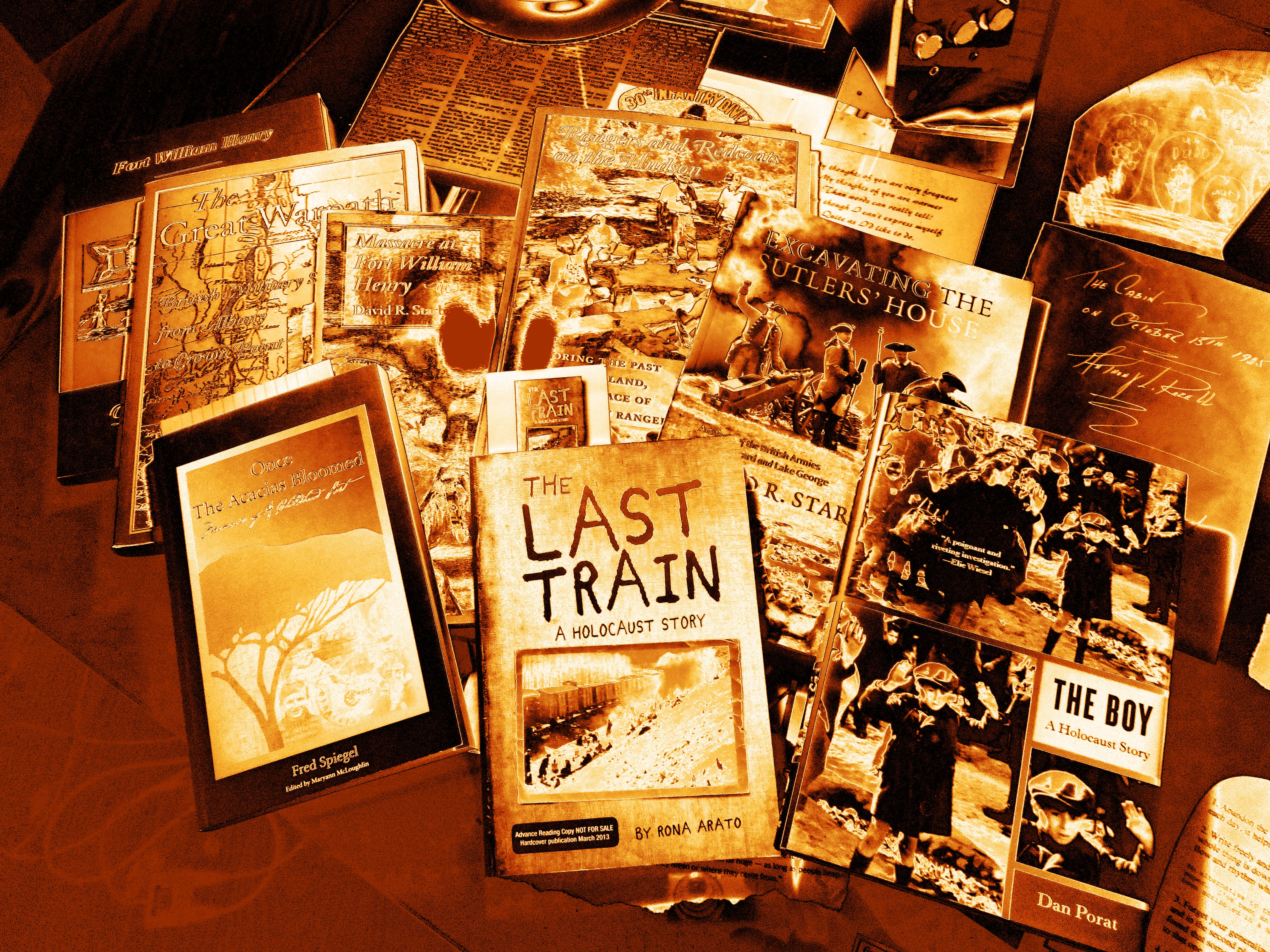
the books.

the books.

Sure enough, there was now a new entryway, complete with an admission booth. I pulled the truck up to it, and inquired whether we might proceed to the bookstore, which had always stocked a fair amount of titles, where one could peruse the stock, before deciding whether today would be the day to pay the full admission to check on any updates in the exhibits inside.

Not today. Not anymore. No  money up front, no visit to the bookstore.

Having served on an authentic historical site as a board member, I understand the desperate need to raise funds, but I did not have the $52.50 in my pocket that morning. We had not planned to spend the entire day there.

As the nice woman shrugged and turned us away, my brother said, “you should have told them who you are”.

Ha. He was having fun with me, and joking, of course. But it kind of brought forth  a sense of wonderment about my experiences this summer the authentic historical sites I visited all over the world.

I thought some about it. The bookstore that I had wanted to visit this morning stocked titles that featured my work as a history teacher and avocational archaeologist. I’m actually written about in some of the books.

I remembered I had a similar experience at our first major stop on the Holocaust Resistance  tour in Europe a few weeks back. As twenty five educators toured the site, all of my colleagues chose to give up part of their lunch hour for a private introduction by a key staff member who took the time to explain my role in helping that museum/memorial site create a special exhibition on the evacuation transports that left that concentration camp in April 1945.  As we boarded the bus at the end of the day, someone opened the Bergen Belsen official guidebook they had purchased in the bookstore (which in my excitement I had overlooked)- and there was the Benjamin photo, and summary of my work.

Later in the tour at another authentic site, concentration camp Ravensbruck in Germany, after an intense day I spied a different title and pulled it off the shelf, and showed it to another colleague. It’s the story of a survivor that I know, and this book probably would not have been written had it not been for the efforts that I had made in my teaching career.

The following week in Poland, the same thing happened to me with another title. I was able to open the book and point to my name in the credits and acknowledgments, and show where my work made a significant impact for the author and his thesis.
Pretentious bragging? I really, really hope not.   In fact I wrote this post weeks ago, not at all anxious to share, but as I process what has happened this summer, I figure stunned realization is more like it .

To visit authentic historical sites, some halfway around the world where I have never been before, and see the impact of this passion on others, is something both profound and humbling. I feel it has been transformative at some base level, yet I have not even completed my own book yet (it just keeps changing in my head- and believe me, it is up there). So it goes up to be added to the archive of happenings that occasionally knock me on the head.

In the end, getting turned away from the bookstore didn’t matter at all, except maybe to kindle a flame… though it is always a thrill to hold the book in your hands, and thumb to the page with your name on it.

Read Full Post »

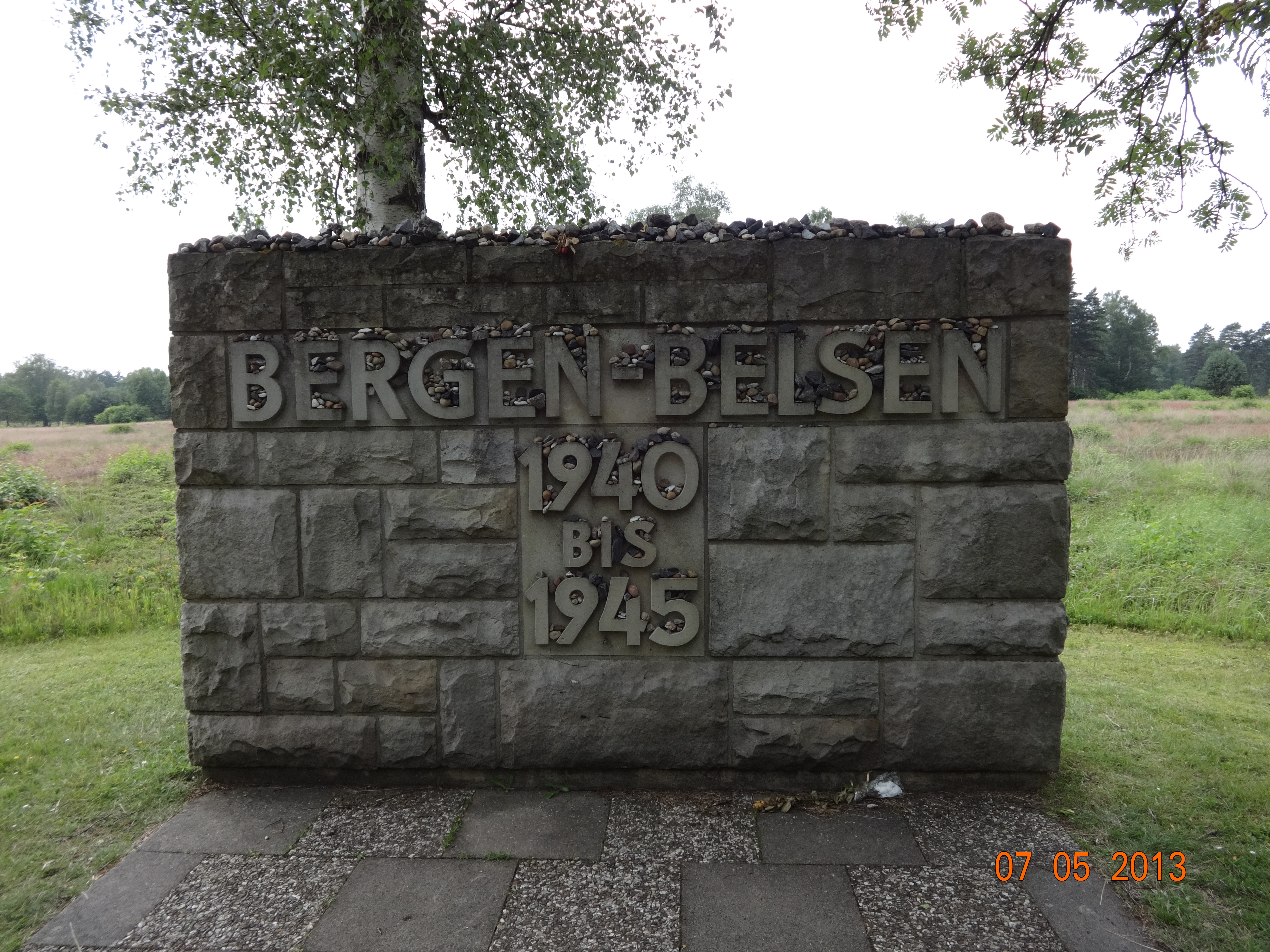
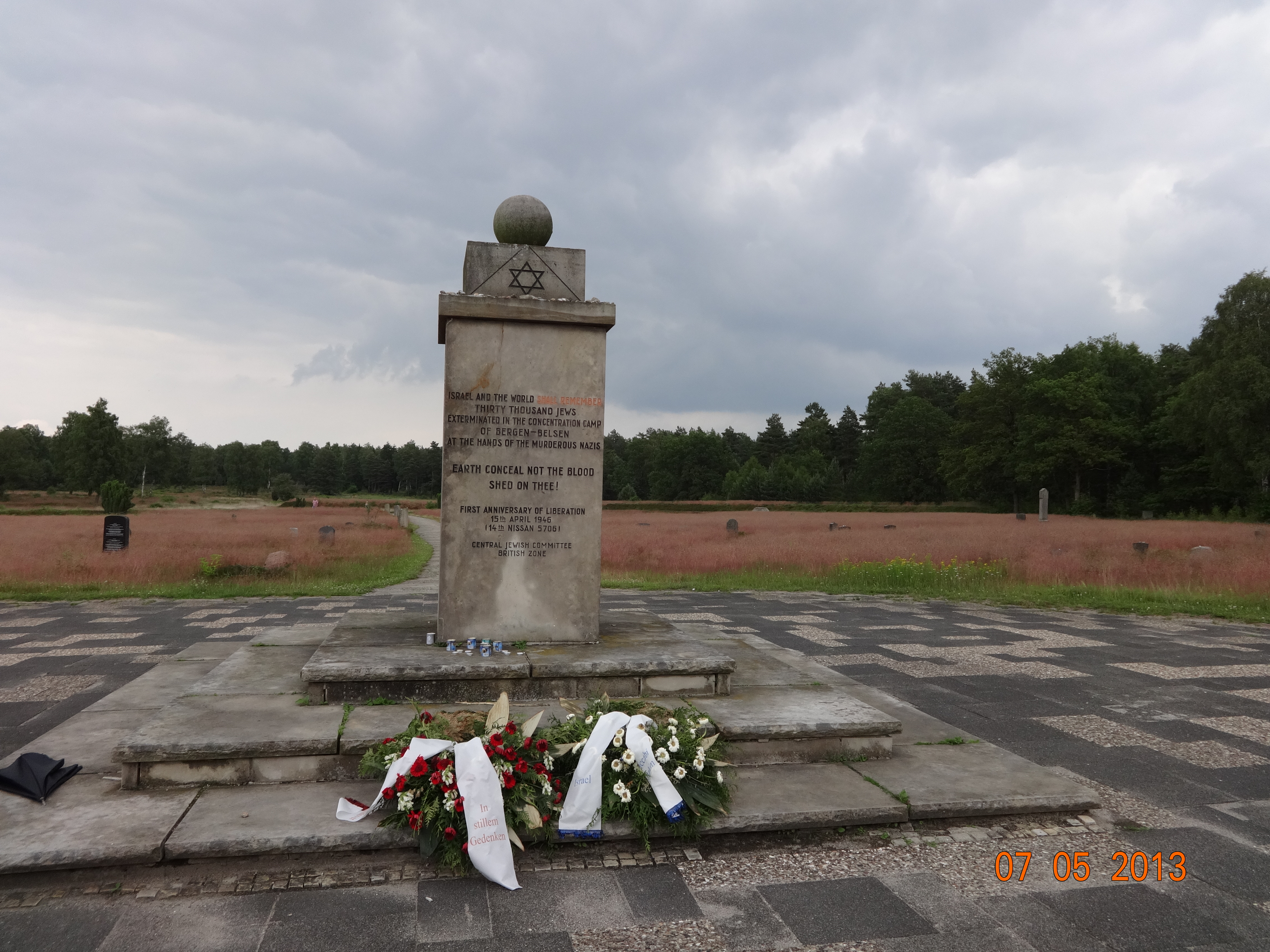
Bergen Belsen on July 5, 2013.

Bergen Belsen on July 5, 2013.

I am in Europe on a study tour of the Holocaust with 25 fellow educators of the United States. I am typing this as the morning breaks in the heart of Berlin, Germany. I had hoped to be able to get on-line and write more frequently but that is just not possible. There is too much to do while we are here visiting these authentic sites. But it is time to stop and reflect on some of the things that I have seen and experienced.

Our itinerary includes stops in Germany, the Czech Republic, and Poland. The power of visiting these sites after studying them so long can not be overstated.

Bergen-Belsen. For me, visiting this place after studying it in depth in relation to the exchange camps that were here was a powerful experience. Readers of the blog know of the stories of many of the survivors of Bergen Belsen who were in the exchange camp and their liberation on April 13, 1945 at Farsleben. Two days ago I got the back story of the exhibition panels you see here, that feature the photographs and the work that our project has uncovered.

In brief context: 120,000 prisoners passed through Bergen Belsen, and not all of them Jewish. 52,000 died here, perhaps 30,000 of them were Jewish. Belsen actually began as a POW camp- 20,000 Russians died here in the winter of 1941-42. In 1943, Himmler (the head of the SS) ordered that an exchange camp be set up for Jews who might possess foreign certificates or visas to emigrate, perhaps to use to bargain for German families interned abroad. 14,000 people went through the exchange camp. In November, 1944, thousands of women, and some children, including the Frank sisters, arrived from Auschwitz, to be “housed” near the exchange camp. What they received, in their miserable condition, were 18 oversized old tents which promptly blew down during a winter storm shortly after their arrival. With the arrival also of brutal SS administrators and guards, conditions deteriorated rapidly as the winter of 1944-45 turned into spring. The camp system began collapsing with the advance of the Red Army in the east and the British and Americans in the West. By the time the British arrived on April 15th at the camp gates, over 50,000 prisoners were suffering from extreme malnutrition, typhus, typhoid fever, and dysentery. Nearly ten thousand corpses lay about as the crematorium had long since broken down. Hundreds died on the day of liberation.

I'm here. Finally.  Jerrilyn Miller photo.

I’m here. Finally. Jerrilyn Miller photo.

So here I am. The bus guides swiftly through the beautiful German countryside. A night in the picturesque town of Celle the evening before has us well rested. The fields and forests bid us peaceful feelings as we move with our rendezvous with the past. It feels as if as we move we are stepping back in time.

Memorial site, Bergen Belsen.

Memorial site, Bergen Belsen.

We see the road signs for the memorial and I think many of us on the bus draw a collective breath as it turns into the parking lot of Gedenkstatte (Memorial) Bergen Belsen. It is surrounded by trees. We are the only persons, besides staff, who are here. As we disembark off the bus, Tif ties an Israeli flag around her neck so it drapes like a cape. It is quiet. But the birds are singing.

Now I remember that in 2007 I was beginning my first communications with Christian and Bernd, then staff members at the Memorial. They were excited about the opening of their new exhibition hall and education center. Two years later they would fly over, with the historian Thomas, to take part in our 2009 reunion. So now I am here for the first time to see them again.

We meet the staff, who are still preparing for us. I’m listed on the program at lunchtime for a talk about the exchange camps and how the project is incorporated into the exhibition. Bernd enters the room and greets me warmly.

After an introduction to the history of the site, we  watch the silent movies shot by the British beginning the second day after the liberation. Perhaps you’ve seen the photos or the films. Belsen, in 1945, was the last stop, the terminus of the Holocaust, as one historian has described it. It was a scene of horror. If you see a photo of a soldier wearing a mask, maneuvering a bulldozer to push corpses into an open pit, that was Bergen Belsen. Just over a month later, the British commander ordered the lice infested, typhus ridden barracks put to the torch.
So now we are on the grounds of the former camp. As we exit the exhibition memorial hall, we are confronted with a long narrow corridor of concrete that we must pass through, reinforcing the fact that we are moving from present to past. And now we are here.DSC00432
To some visitors, there is nothing here, just inviting walkways with interpretive signage and some markers. Woods, and open fields. But on closer inspection, we see the outlines of the past in the ruins. We walk to barracks ten of the exchange camp. You can see the outline at the woodline. Some of the foundation stones are marked with the names of those who passed through them. We retrace the steps from the barracks to the latrine, now many meters away off a footpath in the enveloping woods. Nature reclaims. Out of the corner of my eye, down the long narrow strip mowed to infinity where a fenceline once ran, I see a large deer guide out of the woods, pause and look my way, and vanish just as soon as it appeared. Is it obscene to find in this place now a feeling of inner peace, to find beauty in the stillness of a grey afternoon? Maybe so. But I feel it.
Back inside, Bernd is talking to our group at the Exhibit where the evacuation transports from the exchange camps are outlined with the photographs of Major Benjamin and Dr. Gross. He explains that between April 6 and 9th, 6700 men, women and children were evacuated on three transports. The “lucky” train was liberated by the Americans on April 13. Friday. One train did make it to the destination of Theresienstadt, where the occupants were liberated the last day of the war. On April 23rd, the third train was liberated by the Red Army at Trobitz, across the Elbe.

 Bernd Horstmann, Custodian of the Book of Names,  Matthew Rozell, History Teacher, July 5, 2013. Bergen Belsen, Evacuation transports exhibit.

Bernd Horstmann, Custodian of the Book of Names, Matthew Rozell, History Teacher, July 5, 2013. Bergen Belsen, Evacuation transports exhibit.

Bernd explains that as the exhibition was being planned, his colleague Christian discovered the photographs that I had been given by the Dr. Gross to place on my website. It altered their vision of the exhibition and he described their excitement as the corroborated the testimony of the soldiers with the photographs. Yes, this is the Farsleben transport. Yes, this is the transport that the Americans called “The Train Near Magdeburg”. My fellow teachers ask questions, and learn more about the exchange camp. They are putting faces to the victims when they see the pictures. I am happy to share this experience with them. I am here, and I am seeing it for the first time with them. They are part of this experience, at our first major stop on the trip. Later, on the bus, some are excited to see the Benjamin photo in the official Bergen Belsen guidebook. In my being caught up in the presence of the moment, I neglected to purchase one for myself, but there it is. I was not even aware of it.
Back out to the camp. The solemn monuments marking the mass graves. 1000 Tote. One thousand DSC00490dead. 2500 Tote. Two thousand five hundred dead. And on and on, elevated mass graves. On to the commemoration room. Candles are lit, stones are placed, the prayers are recited in Hebrew and English, led by Pauline, the only other New Yorker on the trip with me. We are all moved. I think of Carrol Walsh, the tank commander who led me to this story, the liberator who did not want to be called a hero, or even a liberator. His own memorial service is today, half a world away, but I am here in this place to remember him as well. It is altogether fitting and proper. And perhaps it is also something destined to be.

This evening we depart from Hannover to Berlin. It is pretty crazy and unsettling at the Friday evening platform. 27 people have to run for the train, as the track has changed, with hundreds of others. Our original seats are taken, so we have to find other due to a mixup. But we do not lose anyone, and as I settle in next to a kind stranger, made welcome, I notice our station stops along the way- Brunswick. Magdeburg. We are roughly following the route of the train, and the 30th Infantry Division in 1945. What take us 35 minutes to cover, takes 6 nights and 7 days in April 1945.
Today was also something destined to be, the culmination of something incredible I am still trying to figure it all out- but this trip is helping me to place in proper context the elements of the greatest crime in the history of the world. As we leave this place of obscene beauty and peace, I think of  the I think of  the survivor’s words:

Remember Me.

Remember. Bergen Belsen, July 5, 2013.

Remember. Bergen Belsen, July 5, 2013.

Read Full Post »

My boys. Thanks to my friend Chris Carola at the AP and Senator Little’s office for recognizing them while they were still with us.

2 NY vets of Edson’s Raiders recall WWII battles

By CHRIS CAROLA

— May. 26 3:38 PM EDT

In this Wednesday, May 22, 2013 photo, World War II veterans Bob Addison, left, and Jerry West pose for a photo, in Glens Falls, N.Y. Addison and West share more than a longtime friendship. They share some of the same memories of bloody battles fought on Pacific islands while serving with an elite Marine Corps unit that was the forerunnner of today's U.S. Special Forces. Living just miles apart, the two men are among the last surviving members of the original Marine Raider battalions that were the first American ground troops to attack Japanese-held territory. (AP Photo/Mike Groll)

In this Wednesday, May 22, 2013 photo, World War II veterans Bob Addison, left, and Jerry West pose for a photo, in Glens Falls, N.Y. Addison and West share more than a longtime friendship. They share some of the same memories of bloody battles fought on Pacific islands while serving with an elite Marine Corps unit that was the forerunnner of today’s U.S. Special Forces. Living just miles apart, the two men are among the last surviving members of the original Marine Raider battalions that were the first American ground troops to attack Japanese-held territory. (AP Photo/Mike Groll)

Gerald West held the laminated sheet of paper fellow World War II combat veteran Robert Addison pulled from an old briefcase and perused the 300-plus names listed under the words, “Lest We Forget.”

“I knew quite a few of those guys,” said West, 93, who made the short drive to Addison’s home 45 miles north of Albany recently to reminisce about their wartime service with the legendary Edson’s Raiders, an elite Marine Corps unit that was the forerunnner of today’s U.S. Special Forces.

The document Addison keeps among his wartime mementos and literature lists the names of members of the 1st Marine Raider Battalion who died while fighting the Japanese in the South Pacific. Addison and West are among the dwindling number of Edson’s Raiders still alive. Out of an original roster of about 900 men, fewer than 150 are believed to survive, according to Bruce Burlingham, historian for U.S. Marine Raider Association.

Dubbed Edson’s Raiders after their colorful, red-haired commander, Col. Merritt “Red Mike” Edson, the unit was the first U.S. ground force to attack Japan-held territory after Pearl Harbor. Landing on Tulagi in the Solomon Islands in August 1942, they beat the larger 1st Marine Division’s arrival on nearby Guadalcanal by an hour.

https://i0.wp.com/tsealey.net/thegunny/gfx/raiders.jpgThe 1st and 2nd Raider battalions, formed just days apart in February 1942, were the first commando-style units in the American military, predating the creation of the U.S. Army Rangers by four months. Trained in jungle warfare and hand-to-hand combat, the Raiders’ leatherneck pride paired with a pirate’s attitude was reflected in their distinctive battalion patch: a white death’s head skull in a red diamond, set against a blue background with five white stars representing the Southern Cross constellation.

Addison, an Alliance, Ohio, native, and West, who grew up outside Glens Falls, both fought at Tulagi and later on Guadalcanal, where Edson’s Raiders earned their vaunted place in American military lore for anchoring the thinly stretched Marine defenses that decimated Japanese forces during successive nighttime assaults in September 1942.

Fighting from positions separated by a few hundred yards along high ground near the island’s airfield, Addison and West helped defend what became known as Bloody Ridge _ but that the Marines called “Edson’s Ridge.” They wouldn’t learn until much later that the fight was considered a turning point that started the U.S. on its island-hopping road to victory in the Pacific.

“In combat, you only know what’s going on in your little world,” West said.

Edson was awarded the Medal of Honor for his front-line leadership during the battle, during which his Raiders suffered more than 250 killed and wounded. Bigger, bloodier battles awaited, but Edson’s Ridge and the Raiders hold a special place among leathernecks of all generations, according to Beth Crumley, a historian with the U.S. Marine Corps History Division.

“Anybody who has taken an interest in the history of the corps, they’re going to know the story about Edson and they’re going to know about the Raiders and know about the Battle of Edson’s Ridge,” she said.

After the Raiders’ next campaign on the island of New Georgia in the summer of 1943, Addison and West were sent back to the U.S. Addison was attending college as part of an officers program, and West was in Guam preparing for the invasion of Japan when the war ended.

They went their separate ways and didn’t get reacquainted until the early 1960s, when Addison moved to Glens Falls to become athletic director at a new community college. He ran into West at a Sears store where West was working, and they’ve remained close friends ever since.

“They were America’s first elite force unit and showed future units like the U.S. Army Special Forces what could be done with a handful of determined, well-trained, well-armed troops against a determined enemy,” said Robert A. Buerlein, co-author of “Our Kind of War: Illustrated Saga of the U.S. Marine Raiders of World War II.

http://bigstory.ap.org/article/2-ny-vets-edsons-raiders-recall-wwii-battles

********************************************

Gerry West and Bob Addison, U.S. Marine “Edson’s Raiders” World War II veterans, honored in Albany

By Betty Little
Posted by Betty Little on Tuesday, May 21st, 2013
Gerry West and Bob Addison, World War II veterans who served in the same elite U.S. Marines unit and have remained lifelong friends, were inducted into the New York State Senate Veterans Hall of Fame at a ceremony in Albany today.

Gerry West and Bob Addison, World War II veterans who served in the same elite U.S. Marines unit and have remained lifelong friends, were inducted into the New York State Senate Veterans Hall of Fame at a ceremony in Albany today.

Senator Betty Little nominated Addison of Glens Falls and West of Fort Edward.

“These two soldiers were among the first Americans to engage the Japanese in combat less than a year after Pearl Harbor,” said Senator Little.  “They were specially selected and trained to serve in the First Marine Raider Battalion, called Edson’s Raiders, and fought in critical and victorious battles on Guadalcanal.

“After the war, they returned home, started families and careers, but never lost touch and remained lifelong friends.  They are among the few remaining Edson’s Raiders and their bond is unique.  It was a wonderful honor for me to have them here today, along with their family and friends, to share their story and see them receive this well-deserved recognition.”

West and Addison were suggested to Senator Little by Hudson Falls history teacher Matthew Rozell.  Rozell is in the process of writing a series of articles on World War II, based on class archives of interviews, for the Washington County Historical Society Journal.  The following are excerpts from a part of the series entitled “Recording the Voices of World War II – From Pearl Harbor to Tokyo Bay”:

On September 14th, 1942, first light at Guadalcanal revealed over a thousand Japanese dead on the ridge.  Outnumbered five to one, for two nights the Raiders held on against Japanese shelling by sea and Imperial troops, and the battle became legendary in Marine Corps history.

            West recalls: “Most of us just refer to it as Bloody Ridge.  We had 50% casualties that night…two men in our battalion received the Congressional Medal of Honor and there were thirteen Navy Crosses awarded to men in our battalion just for that one battle, which is unheard of.”

            Suppressed from the public at the time, more than 7,000 U.S. Marines, soldiers and sailors would die in the six month Guadalcanal campaign.  Japanese losses were much higher.

            Bob Addison: “They called it Hell Island, the Japanese, because they had to live out in the jungles…They had lost over 26,000 men.”

            Only a handful of the original Marine Raiders are left.  Addison and West survived to return home, marry, and raise children.  Seventy one years later, their friendship endures.

The New York State Veterans’ Hall of Fame was created to honor and recognize outstanding veterans from the Empire State who have distinguished themselves both in military and civilian life.  The Hall of Fame can be accessed online at www.nysenate.gov/honoring-our-veterans .

Read Full Post »

Gerald West
Born: 1919
Served: U.S. Marines 1940-1957
U.S. Army 1957-1962
Residence: Fort Edward, New York
Nominated by Matthew Rozell, History teacher

Robert Addison
Born: 1922
Served: U.S. Marines 1942-1946; 1950-51
Residence: Glens Falls, New York
Nominated by Matthew Rozell, History teacher

Photo Credit: Robert H. Miller Gerry West and Bob Addison, Spring, 2011.

Photo Credit: Robert H. Miller
Gerry West and Bob Addison, Spring, 2011.

On May 21, 2013, local World War II veterans Gerald West and Robert Addison will be honored in a ceremony for the New York State Senate Veterans’ Hall of Fame. They were nominated by Senator Betty Little at the suggestion of Hudson Falls history teacher Matthew Rozell, whose students had interviewed these men several times.

Mr. Rozell is in the process of writing a series of articles on World War II for the Washington County Historical Society Journal utilizing the class archives of interviews. The following narrative is condensed from the upcoming Fall release of the Journal, which will publish Part II  (of 4) in the Pacific series entitled “Recording the Voices of World War II-From Pearl Harbor to Tokyo Bay.”

******************************************************************

 In this installment of an ongoing series, my students and I have pieced together narrative voices of local residents and their friends that show the enthusiasm for the war effort.  Maybe more importantly, their recollections amplify other points essential to an understanding of World War II, but often overlooked.  In the study of this war, we are tempted to both teach and learn the history as if the way things turned out was somehow preordained − as if, from the outset, it was a foregone conclusion the Allies would win the war.  Because we know how events turned out, we read the history with a sense of inevitability (as several historians have pointed out[1]).  Nothing could be further from the truth.

By talking to persons who lived through these troubled times, my students and I gained insight into the urgent, uncertain, confused way many events actually unfolded.   We confronted particularly – through the stories of local men and women − the nation’s unpreparedness in the first years of the Pacific War, beginning with the initial limited response to the Japanese attacks at Pearl Harbor, Wake Island, Guam, and the Philippines.  While military planners in Washington debated, numbers of local men would fight to survive in vicious jungle fighting.  Indeed, it was the incredible actions of these men, against overwhelming odds, which would shape events and force policymakers in Washington, D. C., to take notice.

******************************************************************

 Six months after Pearl Harbor, American naval forces won a decisive engagement at the Battle of Midway (June 4−7, 1942) At this time, advance elements of General Alexander Vandegrift’s 1st Marine Division were gathering in New Zealand, with no American offensive action planned until early 1943.  However, soon after Midway, intelligence showed a Japanese air base under construction at Guadalcanal in the Solomon Islands.  If finished, the Japanese noose encircling Australia would be complete and any Allied counteroffensive very difficult.  A U. S. amphibious landing was needed immediately, and on a scale not attempted since the World War I Allied debacle at Gallipoli (1915) − and with much less time to plan.  “I could not believe it,” General Vandegrift would later say of this plan.[2]

Vandegrift had within his command a special unit, under formation only since February 1942, the “1st Marine Raider Battalion,” which would play a key role in the ultimate U. S. success at Guadalcanal.  Schooled by veterans of Marine operations of the 1920s and 1930s in Central America and China, 900 specially selected young men formed a lightly-armed, mobile commando unit able to operate in sub-equatorial jungle − the vanguard for larger troop landings to follow.  Named “Edson’s Raiders” after their Colonel “Red Mike” Edson, the unit would earn combat honors unparalleled in Marine Corps history[3] in 18 weeks of violent engagements at Guadalcanal.

Of the 900 original Raiders, two local veterans interviewed by our class belonged to this elite group and currently reside in  Senator Little’s 45th Senate District.

Gerry West (R) shown training with Marine Gunner Angus H. Goss(L). When Japanese holed up in caves, the demolition platoon attached TNT charges to ends of poles and fashioned the techniques needed to root out the remaining defenders on the island of Tulagi in the first American ground offensive against Japanese troops in WW II. Department of Defense Photo (USMC) 55268

Gerry West (R) shown training with Marine Gunner Angus H. Goss (L). When Japanese holed up in caves, the demolition platoon attached TNT charges to ends of poles and fashioned the techniques needed to root out the remaining defenders on the island of Tulagi in the first American ground offensive against Japanese troops in WW II. Department of Defense Photo (USMC) 55268

Gerry West grew up in Fort Anne, and like many other during the Depression, decided to enlist in the Marine Corps following high school, and would remain in the military until 1962. In fact, he was already a Marine when he heard the news of Pearl Harbor. “I’ll never forget it. I was sitting in a barracks in Quantico, Virginia. I had the duty that weekend, and there were about ten of us there listening to the Washington Redskins football game which had just started…and something like 1:05 they broke in with the announcement saying that the Japanese had attacked Pearl Harbor.” Robert Addison of Glens Falls, originally from Ohio, spent 29 years as Athletic Director of Adirondack Community College.  He also recalls the day: “The Japanese bombed Pearl Harbor on my nineteenth birthday. A month later I found myself in the Marine Corps in a time compressed boot camp…When I was just about ready to finish boot camp, they were filling up and forming this Raider battalion.”

Addison made the cut and was interviewed by a Marine captain who told him the Raiders would be the cream of the Marine Corps, but also warned their mission would likely be “first in and last out.”[4]  Addison accepted the challenge and was assigned to a mortar squad in the fledgling Raiders.  More training followed.  Some days they marched, fully equipped, dozens of miles in the day, only to turn around and re-navigate the same terrain, in the dark, through swamps and across rivers.

Bob Addison: “When we got into the Raider Battalion, then we really got into the force.  On a Saturday morning, we would go on a 22-mile, full-pack, forced march − you know, in the morning − and then they give us liberty in the afternoon . . . And Edson was known for getting people in good physical condition.  He was the type of guy you would follow him anyplace, because what he would do when we were on these forced marches, he would stop and watch everybody go by, and he would walkie-talkie [to the head of the column], and they would hold up, and he would start [jogging past the men] double-time up [to the head of the column] . . .  When we came in, at the barracks, he would stand there and watch every man go by and give compliments to us − you know, “good job, good job.” That’s the type of leader he was.  Everybody practically worshipped him.  He was quite a leader.”[5]

The Raiders embarked on a cross-country train journey and were then, for two weeks, carried by reconverted World War I destroyers across the South Pacific to Samoa. There, in conditions of hot, muggy weather and frequent rain, training continued with cross-country hikes in a mountain terrain of steep ridges and slippery trails, often at night.  Sometimes pushed from 5:00 A. M. until 10:00 or 12:00 P. M., the men survived on skimpy rations, while also completing a training schedule that included practice landings in inflatable boats, Judo, bayonet combat, first aid, stalking, and demolition.[6]

Eight months after Pearl Harbor to the day, the Marines landed in combat. To secure Guadalcanal, the Raiders were assigned to take the neighboring island of Tulagi, where they would be up against the best of the Japanese combat forces, the Rikusentai  or Japanese “Special Naval Landing Forces.”  Coming in on Higgins Boats in the morning hours of August 7, 1942, the Raiders would clash for three days in vicious fighting, encountering hitherto-unknown Japanese cave bunkers plus their enemies’ sniper actions, night-fighting, and willingness to fight to the death.  The Raiders then conducted raids on Japanese camps on Guadalcanal, as enemy forces ere being reinforced at night, every night, while the US Navy left the scene.

From Addison scrapbook. Bob is at far left. ((Derek Pruitt/Post Star.)

From Addison scrapbook. Bob is at far left. ((Derek Pruitt/Post Star.)

Addison was trained as a mortar man and West was a demotions expert and tapped as a machine-gunner in the critical battles at Guadalcanal, where the Japanese were developing an airfield to support their attack on Australia. The Marines captured the airfield and the Raiders pulled back to high ground overlooking it to defend it. If the Ridge fell, Guadalcanal would fall; and if the ‘Canal fell, Australia might be next. A vicious battle for the high ground would ensue.

West recalls: “They did not get through us, if they had gotten through, they would’ve had the airstrip back. Most of us just refer to it as Bloody Ridge. We had 50% casualties that night…”

On September 14th, 1942, first light at Guadalcanal revealed over a thousand Japanese dead on the ridge.  Outnumbered five to one, for two nights the Raiders held on against Japanese shelling by sea and Imperial troops, and the battle has become legendary in Marine Corps history.

Battle of Edson's Ridge Painting by USMC artist who was at Guadalcanal.

Battle of Edson’s Ridge Painting by USMC artist who was at Guadalcanal.

West continues: “It was probably the decisive battle of the whole campaign. In the Battle of Bloody Ridge, just to give you an idea, two men in our battalion received the Congressional Medal of Honor and there were thirteen Navy Crosses awarded to men in our battalion just for that one battle, which is unheard of.”

Suppressed from the public at the time, more than 7000 U.S. Marines, soldiers and sailors would die in the six month Guadalcanal campaign. Japanese losses were much higher. By the time the last starving and dispirited Japanese troops left in Feb. 1943, further Japanese expansion into the South Pacific was halted.

Bob Addison: “They called it Hell Island, the Japanese, because they had to live out in the jungles… They had lost over 26,000 men. A lot of them died of starvation and diseases… When they left, they left 26,000 behind.”

Only a handful of the original Marine Raiders are left. Addison and West survived to return home, marry, and raise children. Seventy one years later, their friendship endures.

Condensed from the forthcoming Washington County Historical Society Journal.

The Washington County Historical Society Journal is an annual 96 page print publication of the WCHS. The Journal seeks to publish new research into any aspect of the County’s history, and this includes reminiscences and interesting unpublished source materials. All members of the WCHS receive it; for membership information, please visit their website at www.wchs-ny.org.

For more information contact Mr. Rozell at his website, http://teachinghistorymatters.com


[1] William Manchester, Goodbye, Darkness: A Memoir of the Pacific War (Boston: Little Brown, 1987) p. 167.

[2] Geoffrey C. Ward & Ken Burns, The War: An Intimate History (NYC: Knopf, 2007) pp. 47−49.

[3] Among them, 24 U. S. Navy ships would be named in honor of individual members of the Battalion before the war was over.  See Col. Joseph H. Alexander, Edson’s Raiders: The First Marine Raider Battalion in World War II (Annapolis: Naval Institute Press, 2000) p. 49.

[4] Alexander, op.cit., p. 32.

[5] Merritt “Red Mike” Edson was born just over the border from Washington Co. in Rutland, VT, in 1897. Retiring as a USMC Brigadier General, he returned to Vermont and became the first Commissioner of the Vermont State Police.

[6] Alexander, pp. 60−63.

************************************************************

From YNN News…

Bob and Jerry 5-21-13. YNN News, Albany, NY

Bob and Jerry 5-21-13. YNN News, Albany, NY

ALBANY, N.Y. — The souls who carry heavy memories from war were thanked in Albany on Tuesday for bearing the burden of our freedom.

World War II Veteran and Newburgh resident Warren Craig described, “We got hit 57 times. And I ended up jumping into the ocean at 12 o’clock at night, swimming with the sharks and the enemy.”

Craig enlisted when he was 17-years-old.

Fifty-four men and women have been added to the New York State Senate Veterans’ Hall of Fame for what they’ve done and kept doing over the years.

Senator Greg Ball explained, “Their heart never took the uniform off. And they continue to serve for the rest of their life.”

These men and women’s lives would then never be the same. Among them are Capt. Gerry West and Sgt. Robert Addison, who both served in the United States Marine Corp. during World War II. The two were part of the Edson’s Raiders, the original 900 members of a commando unit, and survived the battles of the Pacific Theater after Pearl Harbor.

“The bloody ridge on Guadalcanal. We were both there. It brings back a lot of memories,” said Addison, who now lives in Glens Falls.

West said, “The bad battles, like Bloody Ridge. You never forget something like that. We still talk about it and things we never forget.”

West resides in Fort Edward now.

“We’ve known each other for 71 years. Since February of ’42, so what would that be? 71 years,” he confirmed.

Now neighbors in the North Country, the two Edson’s Raiders are still right by each others’ side.

“Well, I just live down the road from him, so we’ve kept in touch all the time,” said Addison.

These legacies are once again being remembered and passed onto the younger generation.

“I grab a hold of fellas that don’t know what to do and take them with me, to get them started,” said Craig. “There’s so much opportunity out there.”

Troy native Daniel Honsinger, a veteran of the Vietnam War, said, “God bless America, that’s all.”

For more information on the Veterans’ Hall of Fame, visit www.nysenate.gov .

Read Full Post »

Two Toronto Holocaust survivors meet their liberators 65 years later
Two survivors of a death train out of Bergen-Belsen concentration camp finally link up with American soldiers who freed them in 1945.

A WWII-era booklet still possessed by Leslie Meisels documents his liberation as a young boy from a train destined for a death camp. Meisels, who eventually ended in Toronto, met a few of the surviving soldiers who freed him and 2,500 prisoners on the train.

A WWII-era booklet still possessed by Leslie Meisels documents his liberation as a young boy from a train destined for a death camp. Meisels, who eventually ended in Toronto, met a few of the surviving soldiers who freed him and 2,500 prisoners on the train.

Leslie Meisels is 86.

Leslie Meisels turned 68 last month.

Every April, since he was 18, Meisels has celebrated his rebirth. Sixty-eight years ago he was on the cusp of death, packed into a cattle car in a freight train with some 2,500 other skeletal Jewish prisoners. He weighed only 75 pounds.

Then a miracle. That train, which had set off from a concentration camp, was liberated by 12 shocked American soldiers in two tanks and an army jeep near Farsleben, Germany.

Up until then, the American GIs had assumed the gruesome stories they had heard about German death camps were just Allied propaganda devised to make them fight harder. But as they unlocked the boxcar doors, they witnessed humanity’s true capacity for evil.

They called it the death train. For Meisels, it was a train of life.

This past week marked the 68th anniversary of V-E Day, the end of the Second World War in Europe. It’s a good moment to tell the story of that train from Bergen-Belsen.

I heard about it last month in an email from a history teacher in upstate New York. He put me in touch with Meisels and Paul Arato: two Holocaust survivors from Hungary who in 1956 escaped their homeland, by then under Communist rule, and settled in North York.

Their stories are remarkably parallel. They grew up in nearby towns in eastern Hungary, they were both imprisoned by the Nazis in 1944, and they were sent first to Austrian farms as slave labourers and then to the Bergen-Belsen concentration camp in northern Germany.

Have you ever seen the horrifying Holocaust photos of dead, naked bodies being pushed by a bulldozer into open pits? That was Bergen-Belsen. Some 70,000 people were murdered there, including Anne Frank. They weren’t killed in gas chambers, like at Auschwitz. Instead the Nazis used starvation, sadism and disease here.

Meisels remembers mostly the hunger. They were given only watery turnip soup and a piece of bread each day. In four months, he lost 100 pounds.

Arato, just 6 then, remembers the rattling cold and twice-daily roll calls that often lasted hours. He and his older brother Oscar had to hold their mother upright, she was so weak from typhus. One day a boy in their line smiled because it was his birthday. As his “present,” an SS guard shot him dead. It was Oscar’s birthday the next day.

The horror is ungraspable.

By April 1945, the Nazis were retreating as both the Allied and Soviet armies advanced. One morning, both Meisels and Arato were awakened by guards and told to march. “We dragged our bodies over five kilometres,” says Meisels, “back to the train.”

Trains in Nazi Germany usually led to death. This one was no different. It was destined for another concentration camp in Czechoslovakia, but the guards also had orders to execute passengers. Meisels remembers one afternoon when all males 12 and older were ordered out of the packed boxcars and lined up in front of machine guns. They stood there two hours before being herded back into the putrid cars.

Over six days, the train progressed only 135 kilometres.

Arato remembers peering through between the wooden boxcar slats and seeing the SS guards drop their weapons and start running. Then he glimpsed a tank with a star on it.

The door slid open shortly and they were greeted by stunned American soldiers.

“It was hard for us to believe what we were actually seeing,” says one of those soldiers, Frank Towers, on the phone from Brooker, Fla. “We weren’t prepared for it. We were there to fight a war. We weren’t humanitarians. We didn’t know what to do.”

Says Meisels: “We cried, ‘Oh God, we are going to be free. We are going to be human beings again.’ ”

Towers, who was serving in the 30th Infantry Division, spent a day those taken off the train to convalescence homes and a hospital nearby before he had to push on with his battalion.

Meisels and Arato spent five months recovering in Germany before they could finally return to Hungary to search for the rest of their families. Eleven years later, they escaped Hungary and started their lives for a second time: getting married, building careers, having children, then grandchildren. Decades went by.

Then, a few years ago, their paths crossed at a business meeting. Arato, since retired, was an industrial designer. Meisels ran a family company making plastic moulds. At the end of the meeting, the topic of the Holocaust was raised. They discovered, to their shock, they had both been on that train from Bergen-Belsen.

Around the same time, that high school history teacher in New York named Matt Rozell stumbled upon the story.

To bring Second World War history alive, he’d instructed his Grade 10 students to interview their grandparents about the war. One summer, he visited one of his students’ grandfather: Carrol Walsh, a veteran turned New York State Supreme Court judge.

“After two hours, when the interview was ending, his daughter elbowed him and told him to tell me about the train,” Rozell says.

He learned Walsh had been in one of those tanks that chased away the SS soldiers and liberated the train.

Rozell posted the story on his website, Teaching History Matters, and a few years later a survivor from that train contacted him from Australia. Since then, 240 more have been located.

In 2007, Rozell hosted his first symposium on the train, bringing together survivors and liberators. Arato’s son came across a story about the reunion on the Internet by chance.

Arato told Meisels about it, and two years later they both traveled down to Hudson Falls, N.Y., for the second symposium. There they met Walsh and Towers.

That moment was a second liberation for Arato, now 74.

“A blanket was pulled from me,” he says. “I was always very lonesome. I didn’t share my stories with anybody. I grew up and spent all my years being angry. This meant I don’t have to be angry anymore.”

His wife, Rona, has just published a book about his story called The Last Train: A Holocaust Story.

Meisels visits schools around Toronto to speak about the Holocaust every week.

His message? “Hatred is something we have to fight against. When you hear a derogatory comment, say out loud that it is not right. When you are silent, you are not neutral. You are supporting the oppressor.”

He and Towers went to Washington, D.C. last month to celebrate the 20th anniversary of the Holocaust Museum there. Towers, now 96, is the last living U.S. veteran who liberated that train. Walsh died last December.

“We hugged,” Meisels says. “Whenever we are together, I am so overwhelmed by gratitude and joy.”

Truth can be more horrifying and wonderful than fiction. Every life is precious.

CLICK HERE FOR THE STORY OF ANOTHER TORONTO RESIDENT WHO FOUND HERSELF IN THE 1945 PHOTOGRAPHS


by Catherine Porter 

http://www.thestar.com/news/gta/2013/05/10/two_toronto_holocaust_survivors_meet_their_liberators_65_years_later_porter.html

Read Full Post »

In 1986 I traveled to the Soviet Union with a group of teachers. I was pre-service, but wanted the experience of traveling to Russia.
We flew into Moscow, toured a few days, then took the night train to Leningrad. It was April, it was beautiful. People were in a festive mood on the tour bus.
Then they took us to Piskaryovskoye Memorial Cemetery, just outside the city. Mournful music blared from garish loudspeakers.  Conversation ceased. We realized that here lay more people lost in one city’s siege than in all of America’s war dead. In one city. Mass graves. Mostly civilians. Nearly half a million. But just a fraction of Soviet war dead. During the Cold war, our official state tour guides insisted that we see this. I am grateful that they did. Eyes were opened.  Inscribed there in rock:
Here lie Leningraders
Here are citydwellers – men, women, and children
And next to them, Red Army soldiers.
They defended you, Leningrad,
The cradle of the Revolution
With all their lives.
We cannot list their noble names here,
There are so many of them under the eternal protection of granite.
But know this, those who regard these stones:No one is forgotten, nothing is forgotten.
So in the month of May, Remembrance Month in my eyes.

Read Full Post »

« Newer Posts - Older Posts »