Veterans Day: Hudson Falls teacher’s stories unite veterans with survivors

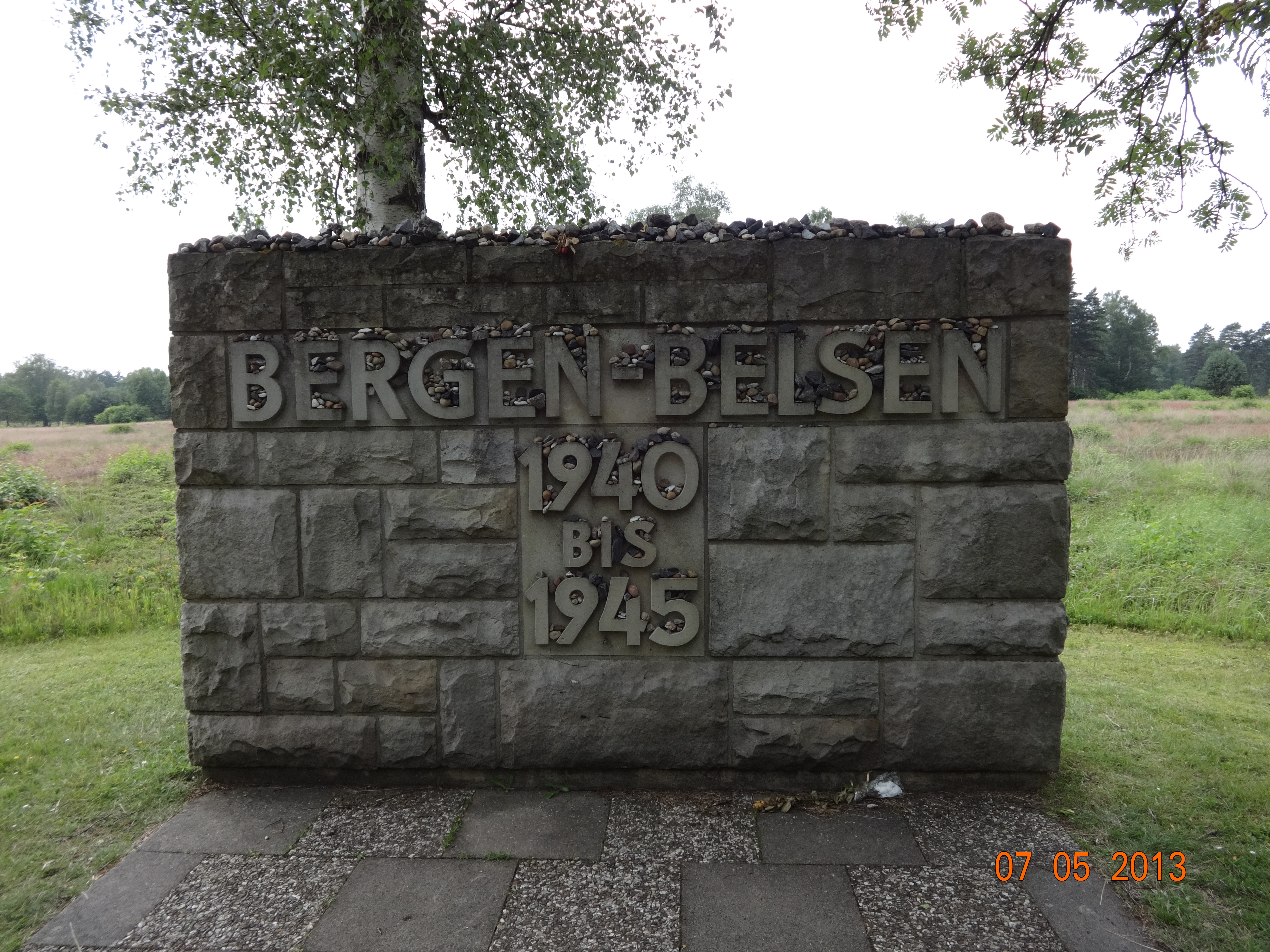
Posted in Uncategorized, tagged 30th Infantry Division, 531st Anti-Aircraft Artillery, 823rd Tank Destroyer Battalion, 95th Medical Battalion, Bergen Belsen, Carrol S Walsh Jr, concentration camps, Farsleben, Frank Towers, Friday April 13th 1945, George Gross, history education, Holocaust, Holocaust Education, Holocaust Writing, humanity, Liberators, Matthew Rozell, narrative history, New York State United Teachers, NYSUT, Power of Teaching, Purposeful Life, teaching history matters, Teaching the Holocaust, Train Near Magdeburg, World War II, World War II Living History Project on November 11, 2014|

Posted in Uncategorized, tagged 30th Infantry Division, 531st Anti-Aircraft Artillery, 823rd Tank Destroyer Battalion, 95th Medical Battalion, Bergen Belsen, Carrol S Walsh Jr, concentration camps, Farsleben, Frank Towers, Friday April 13th 1945, George Gross, history education, Holocaust, Holocaust Education, Holocaust Writing, humanity, Liberators, Matthew Rozell, narrative history, Power of Teaching, Purposeful Life, teaching history matters, Teaching the Holocaust, Train Near Magdeburg, World War II, World War II Living History Project on November 10, 2014| 2 Comments »
Thirteen summers ago, I sat down for an interview with an amazing man. What he would relate to me, and what I would do with it, would go on to change both of our lives. A seemingly small incident would be recalled almost as an aside in the wider context of World War II, but then would go on to reverberate through time, and space, creating ripples in the cosmos that grew into waves. Big waves that would carry me, and many others, to places we had never thought possible.
You see, on Friday, April 13th, 1945, twenty-five hundred lives were saved as advance elements of the U.S. Army 743rd Tank Battalion, 823rd Tank Destroyer Battalion, and 30th Infantry Division stumbled across the crime of the century, perhaps of all time.
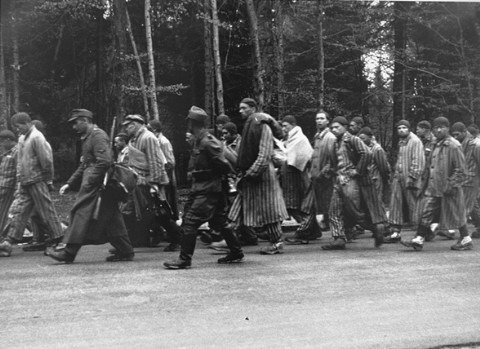
A train transport stopped at a railroad siding. Open boxcars, sealed boxcars, shabby passenger cars, engine. Some people wandering about, others too ill to move. Sick and emaciated human beings. Women. Men. Children. SS bands roaming the countryside. Orders to execute. A bridge over the River Elbe ahead to be blown to smithereens. With the transport, and the people on it.
The soldiers told me their stories. In the course of collecting their narratives, we found others who played their parts and rescued those people.
I listened. We wrote. We recorded, and I posted. Then, the wires began tripping. Seven Septembers ago, we put together the first of many reunions between these soldiers and the child survivors of the Holocaust they rescued.
“Joyful” does not do it justice. What do you say to the men who saved you and your family when you were a child?
Carrol smiles, grips their arms in greeting, and laughs, “Long time, no see!” Sixty-two years, that’s all. On April 13th, 1945, the war weary, “seen-it-all” twenty-four year old second lieutenant is in for the shock of his life.
***************************************************
Five years ago this week, we put on quite a show at our high school. High school kids listening to, meeting, sharing, laughing, crying, even dancing with octogenarian U.S. soldiers and Holocaust survivors. ABC World News called my classroom and told me they were on their way up from NYC headquarters to film us. You can see Carrol, and listen to fellow tank commander George Gross’ narrative from our interviews, and hear fellow soldier Frank Towers describe his role in the liberation.
The last evening together, soldiers and survivors from all over the world watched the broadcast together, and we said our prayer of thanksgiving. Hundreds of students became the witnesses for the generations to come.
And so it comes full circle. Nearly ten percent of the passenger list has been found, over 60 years later. Profound things keep happening.
***************************************************
We lost Carrol less than two years ago, George earlier. So I write this week to remember, and remind myself of what a legacy, and gift, they left us. While it may have been a tiny part of very productive lives (a New York State Supreme Court justice, and English literature professor, respectively), for the rest of my days I will think of the times I got to talk to them, and smile.
And think about their own words: “What are we going to do with all these people?”
Indeed. Just look at the generations that sprang forth, because of what our soldiers stopped to do, in a shooting war. In complex, fluid situations, there are no easy answers, but don’t you think that there is a very important lesson here?
It was not part of the mission. But maybe as a society we should break down and examine the values that made the mission change, if even as a “sideline”.
Sometimes it just feels good to feel proud.
But temper pride with the wisdom of the retired New York State Supreme Court justice:
“No.
They don’t owe us anything. Not a thing.
We owe them~
For what the world allowed to happen to them.”
Posted in Uncategorized on November 1, 2014|
~the real story behind the iconic photograph~
A high school history teacher sits down with a World War II veteran to record his experiences. Out of the conversation comes the inspiration for a series of events that changes many lives and helps to “repair the world”.

Friday, April 13th, 1945.
Moment of Liberation.
Farsleben, Germany
CREDIT: U.S. Army, Major Clarence Benjamin, 743rd Tank Battalion.
I’ve said for years, since I was first privately shown it by the American tank commanders whom I interviewed in 2001, that this photo would be destined to become one of the iconic photographs of the twentieth century.
Now it looks as if many people agree with me-since being discovered at my website, it’s now apparently been labeled as one of the 40 Of The Most Powerful Photographs Ever Taken “A moving collection of iconic photographs from the last 100 years that demonstrate the heartbreak of loss, the tremendous power of loyalty, and the triumph of the human spirit.” Look at it.
What a story is behind it.
And an even greater story is unfolding now, across time and space, through tragedy and triumph.
We are tripping the wires of the cosmos.
The short version of this story is that American soldiers saved 2500 helpless human beings from probable death. They ended a horrific episode endured by these people and gave them new life. I know two of the three Army officers who were present when the photograph was taken. And as a history teacher, I worked to reunite them with hundreds of child survivors who were liberated by them on that day.
Can you even imagine what unfolded as they re-met each other after 65, 70 years?
Here, we tell their stories.
********************************************************
Throughout the past decade or so I have worked very hard to bring the story of the American soldiers and the Holocaust to light. I did my private own interview with tank commander Carrol Walsh in July 2001. Walsh mentioned the train, almost as an afterthought following two hours of conversation (ABC video here), when prompted by his daughter, and directed me to George C. Gross, the other tank commander present who had taken additional photographs of the train liberation. He gave me his blessings, his pictures, and his beautiful narrative of the incident, which I posted to my school oral history website in 2002. There it sat for four years, and then we heard from our first survivor in Australia, a grandmother who had been a little girl on the train. I organized reunions and today we have had over a dozen of them, with the first occurring at our high school, mixing students with the survivors ans soldiers from all over the world.
Today, with the help of liberator Frank Towers and survivor’s daughter Varda Weisskopf of Israel we have tracked down nearly 275 survivors who have been very moved to discover the American soldiers who freed them, fellow survivors and later, even some of the medics who nursed them back to health. I’ve created this blog to chronicle the unfolding of this story. You can get started, here. If you would like to subscribe for updates, there is a button to the right of this page.
********************************************************
~The George C. Gross photos~
We have not yet found the mother and daughter in the photo here, though we have an idea of who they are. But we have found many others who do recognize themselves in Dr. Gross’ photos. You see, Dr. Gross had a small Kodak Brownie camera that his wife sent to him in combat. You can view them here with his narrative of them. They had never been seen outside of family and friends.
What makes these photos so special is that they reveal the moments of liberation. Still, it is important to be clear that most existing photos of the Holocaust, and Jewish prisoners and trains, are the horrifying images of victims being transported or offloaded at death camps to be murdered. So this photo is a rarity, and should not be considered an exemplar of the real horror that unfolded; rather, perhaps it derives its power as a testament to the power of the good, and the evil, men are capable of.
Matthew Rozell
In the words of a recent Israel documentary,
Trains in the Holocaust usually carried people to the last stop of their lives. The train of which Matt Rozell heard was a different one. It was going from death to life.
Holocaust survivor Ariela Rojek, right, was 11 years old in 1945 when she and 2,500 other concentration camp prisoners aboard a train near Magdeburg, Germany, were liberated by American forces including 1st Lt. Frank Towers, left with his son Frank Towers Jr., center. “You gave me my second life,” Rojek told Towers Wednesday, Sept. 21, 2011, at Hudson Falls High School during an event reuniting soldiers and survivors.
Jason McKibben Glens Falls Post Star
Posted in Uncategorized, tagged 30th Infantry Division, Bergen Belsen, concentration camps, Farsleben, Frank Towers, Friday April 13th 1945, history education, Holocaust, Holocaust Education, Holocaust Writing, humanity, Liberators, Matthew Rozell, narrative history, Power of Teaching, Purposeful Life, teaching history matters, Teaching the Holocaust, Train Near Magdeburg, World War II, World War II Living History Project on October 23, 2014|
Posted in Uncategorized, tagged 30th Infantry Division, Bergen Belsen, concentration camps, Farsleben, Frank Towers, Friday April 13th 1945, history education, Holocaust, Holocaust Education, Holocaust Writing, humanity, Liberators, Matthew Rozell, narrative history, Power of Teaching, Purposeful Life, teaching history matters, Teaching the Holocaust, Train Near Magdeburg, World War II, World War II Living History Project on October 13, 2014|
Meet my friend Frank. He’s 97. The story continues…. from the Boston Globe.
WW2 liberator reunites with Holocaust survivors
By Victoria Bedford
| Globe Correspondent October 12, 2014
“If not now, when?’’ asked Rabbi Joel Sisenwine, quoting from Hillel the Elder, a revered Jewish leader who lived at the time of King Herod. “If not me, who?”
It was Oct. 4, Yom Kippur, and Sisenwine stood before the congregation at Wellesley’s Temple Beth Elohim, introducing a very special visitor.
As Frank Towers walked up to speak, the teary-eyed congregation of 1,500 rose to give him a standing ovation.
Towers never considered himself special. Now 97, the South Boston native is living in Florida, where he spent most of his adult life as an office manager at a university data processing center. But in the early spring of 1945, in Farsleben, Germany, he was among a group of soldiers who liberated thousands of Nazi prisoners.
The rabbi invited two of those survivors, and their families, to step forward and stand beside Towers.
Yvette Namias, 92, of Peabody, did so. She was 22 in 1945 and long a prisoner at the notorious Bergen Belsen death camp before the liberation. She had never met Towers. Her family — children, grandchildren — stood around her.
Namias was joined by Charles Elbaum of Providence, a 17-year-old prisoner at the time of liberation, now surrounded by his children and grandchildren.
“Well,” Towers said to Namias after the ceremony, “I’ve spent a long time chasing you around the world.”
“He’s responsible for my family,” said Namias. “Without him, my family would not be here.”
Nothing in his life had prepared Towers for what he came upon on April 14, 1945. He was a young lieutenant in the 30th Infantry Division, a unit of the US Army National Guard, heading for Magdeburg, Germany, to fight one last major battle. In the town of Farsleben, they encountered a train that had been seized by the Army’s 743d Tank Battalion the day before. Towers was told it held 2,500 Jewish prisoners, and he was responsible for taking them to safety.
“What if you find a train loaded with Jews, what are you going to do? Nothing was ever said about anything like that.” Towers said. “If you come across a camp, like Dachau or Buchenwald, what are you going to do? We didn’t know anything about that situation.”
But the lieutenant found himself faced with a train full of death camp prisoners, 60 to 70 men, women, and children crammed into each train car, forced to stand until they collapsed from exhaustion, with a daily ration of thin potato soup, and one bucket for a bathroom. They were starved, sick, overworked, and in desperate need of medical assistance, which Towers and his men were wholly unprepared to provide.
Still, Towers and his men sprang into action, rounding up as much transportation as they could, and took the prisoners to the town of Hillersleben. There, a Red Cross unit processed the thousands of Jewish prisoners, gave them showers, provided clean clothes and dusted them with DDT, now a prohibited carcinogen, to kill lice and fleas.
Knowing that he was leaving the prisoners in good hands, Towers went on to fight a last battle, and returned to the States later in 1945. Soon, he started a family with his wife, Mary. Like many who lived through the war, he put his experiences in the rearview mirror for years, never talking much about what he had seen of the Holocaust.
“But I could tell it was eating him inside,” Mary said. “I knew that.”
Towers said his focus was just to move on. “Not much thought was given to the victims,” Towers said. “They were starting out on a new life somewhere.”
That all changed for him in 2005, when he was invited back to Magdeburg to speak about what happened 60 years before. There, he met Ernest Kahn, a survivor of Buchenwald who had been liberated by Towers’ division (“It was very emotional,’’ said Towers), and Kahn put him in touch with Matt Rozell, a high school teacher from Hudson Falls, N.Y., who was assembling an online archive of stories from the war. The two began working together to locate survivors from the train in Farsleben.
“The thing just snowballed,” Towers said. “Today we have located 275 of these children.”
Like Towers, Charles Elbaum, who was a 17-year-old prisoner when rescued from the train, rarely spoke about the Holocaust to his family. After his liberation, he went on to become a physics professor at Brown University, a husband, a father to three sons, and a grandfather to eight children. His son Dan, of Newton, and grandson Nathan met Towers at a reunion, and invited him to speak before the congregation at Temple Beth Elohim.
“Without what they did,” Dan Elbaum said, “I wouldn’t be here. Frank is the last known surviving veteran who was actually present at the liberation of the train.”
For Towers, who now travels around the world to tell his story, preserving the memory is the most important aspect of these talks.
“Dan and his family, and others just like him, he’s second-generation,” Towers said. “Many of them knew nothing about the incarceration of their parents. This second generation is entitled to know what happened, and how it happened, so that they in turn can pass it on to their children, and this will never happen again. That’s the hope in all of us.”
Posted in Uncategorized, tagged 42nd Infantry Division, 45th Infantry Division, Boxcars of Dead at Dachau, Dachau, history education, Holocaust, Holocaust Education, Hudson Falls High School, liberation of Dachau, Liberators, Matthew Rozell, middle school students, narrative history, NBC Learn, Richard Marowitz, teaching history matters, World War II, World War II Living History Project on August 7, 2014|
NBC Learn came to town and filmed in my classroom in late April. We were learning about some pretty heavy stuff, the liberation of the camps, in this case Dachau.
It was a good experience for my kids to kind of demonstrate what they learned and why the study of this particular segment of history is something that shouldn’t be forgotten.
“Our site is accessed by thousands of teachers and students…. [for use as] on-line curriculum for middle school students on World War II.”
“I owe a debt to you and your students for your help on the video… By allowing us to film in the class and setting it up for us, you and your students provided a context that was so essential to tell Rich’s difficult story.”
It’s pretty well done and the kids did a great job.
UPDATE: Richard passed shortly after this interview was released. It was his last one. God speed, Rich.
Here are some stills:
For more about the original visit by NBC, click here.
Posted in Uncategorized, tagged American Gathering of Jewish Holocaust Survivors and Their Descendants, Holocaust, Holocaust and Jewish Resistance Teachers Program, Holocaust Education, Holocaust Survivors, Holocaust Writing, Janusz Korczak, Mila 18, narrative history, teaching history matters, Teaching the Holocaust, the Holocaust, Train Near Magdeburg, Umschlagplatz, USHMM, Vladka Meed, Warsaw, Warsaw Ghetto, Warsaw ghetto uprising on July 18, 2014|
~Matthew Rozell, a history teacher whose project reunited hundreds of Holocaust survivors with the American soldiers who liberated them, takes a backwards journey to the authentic sites of the Holocaust, retracing the path of the survivors who are now his friends.~
A year ago I took one of the most transformative journeys of my life, with 24 fellow educators, to study the Holocaust and the Jewish resistance to it, in Washington, DC, Germany, the Czech Republic, and Poland. I kept an extensive diary and took tons of photographs. And contrary to many assumptions, it was a journey that led to profound understandings about life, not death. For the next several days, I have decided to go back and retrace my steps and try to process what unfolded for me.
****************************
July 18.
It’s been a helluva trip. I have toured authentic sites, met some good people, forged some pretty strong bonds with other educators as colleagues and friends. I’ve tramped the grounds where hundreds of my Holocaust survivor friends were held and/or had family members perish.
So. Now it is time to begin processing it all.
Writing this, I have been traveling and pondering for over 24 hours now. I am back in the USA – missing a flight, the airlines seemingly conspired to help extend my pensive mood by granting me a complimentary hotel room on the outskirt of nowhere near Dulles Airport- so my adventure will be extended one more night. I hardly know what day of the week it is but in a way that is kind of refreshing.
From Day One I think all of us on the trip are in the same boat- folks you know are excited and proud of you for being selected on an elite study tour for teachers, but maybe question a bit why one would spend $3 or 4K of one’s own treasure*, leave your family and loved ones for three weeks to travel with “strangers”, or forfeit 3 weeks of summer earning potential to tour the sites of the scenes of the greatest crime in the history of the world.
Well, you gotta give them that. This is kind of strange- or so it may seem if you are on the outside cupping your hand on the window glass trying to look in.
I think, as one of my Facebook followers put it, that we did something very brave. We toured over two dozen places where I figure 3 million people were murdered.
Or to put it in maybe a more appropriate context, we saw, walked through, and touched the ground where nearly a million families were killed. By no means did we tour the thousands of camps and subsites where millions more lives were destroyed.
The numbers tell the story in a way, but not completely, because try as one might, one cannot understand them. I know the numbers- I have the knowledge- but as Steve our tour historian says, there is a clear difference between knowledge and understanding. Some things are beyond comprehension.

Belzec. Letter from survivor to me, who lost her family there.
400,000 murdered in Belzec.
1.1 million in Auschwitz II/Birkenau.
900,000 at Treblinka.
We have been to all of these places in the past three days. People comment that they can’t get their head around it, they can’t begin to fathom the mass indifference to human life that we have witnessed.

Treblinka. 900,000 lost.
So let’s look at what we did come to some kind of understanding about.
What we learned was of the ripple effect of the seemingly small things that illustrated the resilience of the human spirit. That resistance does not have to be just using physical force against your tormentors- it goes way beyond that.

Majdanek. My “I’m in a really, really bad dream” day. Under the Soviet era memorial dome lies a pile of ash and cremated bone the size of a small house.
The program has been in operation for 30 years, begun by survivors of the Warsaw Ghetto, those who resisted but survived. Vladka Meed pointed out that the Ghetto Uprising in 1943, which held the Germans at bay for weeks, was begun by the young people. And it is for them, the young, that we educators make this trip.
So, trying to keep it simple and summing it up:
1. This was not a trip about death. It was a trip about life. I can’t say that I found God, but this trip was one of the most spiritually reflective journeys that I have ever been on, bordering on a religious experience. So folks will ask when I get home- how was it?-my answer will be:
Righteous. For me, not epic, not amazing, not awesome.
Righteous.
2. I had many of my Holocaust educational and pedagogical thoughts confirmed and other assumptions challenged. Some ideas presented to me I felt comfortable enough to challenge myself, but in thinking about them, I came to deeper understanding. The most important understanding confirmed is a problem that all teachers must struggle with in our flawed educational system. We have to be diligent about avoiding the promotion of generalization as fact, to avoid doing a disservice to our students. If you are teaching this history, you had better be versed enough and nuanced enough to accept inconsistencies, problematic complexities, and probe these things to induce a more intricate set of questions to your kids.
3. We have to be willing to accept that perhaps there are no correct answers- a notion that educators are uncomfortable with- but one that must be accepted, nevertheless. To promote generalities in this complex history, or any history is wrong. But especially this one, it seems to me. It was a watershed event in the history of the world, and for humanity, on many levels.
4. Lastly, it was certainly not just a trip to study how to teach the Holocaust. Perhaps reinforced more was how NOT to teach it. And at the end of the day, it was a tour not only of authentic sites, but also of the mind, and how to make it work.
Sometimes I thought myself to the verge of tears, behind the sunglasses. Thinking-not only about answers- but about the questions.
And that’s what these teachers “did on our summer vacation”.
* thanks to the American soldiers, Holocaust survivors, and special folks who were able to support my efforts.
Posted in Uncategorized, tagged Holocaust, Holocaust Education, Holocaust Survivors, Holocaust Writing, Janusz Korczak, Mila 18, narrative history, teaching history matters, Teaching the Holocaust, the Holocaust, Train Near Magdeburg, Umschlagplatz, USHMM, Warsaw, Warsaw Ghetto, Warsaw ghetto uprising on July 17, 2014| 2 Comments »
~Matthew Rozell, a history teacher whose project reunited hundreds of Holocaust survivors with the American soldiers who liberated them, takes a backwards journey to the authentic sites of the Holocaust, retracing the path of the survivors who are now his friends.~
A year ago I took one of the most transformative journeys of my life, with 24 fellow educators, to study the Holocaust and the Jewish resistance to it, in Washington, DC, Germany, the Czech Republic, and Poland. I kept an extensive diary and took tons of photographs. And contrary to many assumptions, it was a journey that led to profound understandings about life, not death. For the next several days, I have decided to go back and retrace my steps and try to process what unfolded for me.
****************************
July 16. I wrote in my journal on the bus ride back from Treblinka. The handwriting is nearly illegible due to the poor roads, underscoring the remoteness of this place where 900,000 plus were murdered.
In the afternoon we headed to the Jewish cemetery in Warsaw. As in many occupied areas the cemetery also contains a mass grave.
A poignant memorial statue also exists here to Janusz Korczak (1878-1942), who was murdered at Treblinka with 200 of his orphaned charges, accompanying them to the gas chambers.
There is so much more to learn here. In the evening we dress for a Chopin recital.
The dichotomy is striking. Horrible places by day. Evening debriefing and intense discussions over dinner, palatial accommodations by night. The concert is in a former palace.
I’d say we deserve it.
******************************************
July 17.
We tour Jewish Warsaw and finally the remnants of the ghetto wall, and also the Umschlagplatz. It is here that forced gatherings for the mass deportations to Treblinka took place. I am also reminded of the scene from the film “The Pianist”.

The Umschlagplatz. As many as 10,000 Jews were deported on some days to Treblinka. Upwards of 300,000 were sent from here to their deaths.

The Umschlagplatz. As many as 10,000 Jews were deported on some days to Treblinka. Upwards of 300,000 were sent from here to their deaths.
We walk the edge of the wall, memorialized in bronze in the sidewalk.
And we come to a section that still stands.
The Warsaw Ghetto uprising was the first open fight in an occupied city against the Germans. And it was conducted by Jewish youth, who held off the Germans for half a month in the spring of 1943. Utterly inspiring and amazing. We make our way to Mila 18, the bunker command post where Mordechai Anielewicz and many of the resistance fighters breathed their last. It is another solemn moment.
We know why we are here. We are not only witnesses, but we were chosen to become, for many, the point of entry on the immense and sometimes unfathomable subject of the Holocaust, and the many forms of resistance that were taken during it. And so rightly, our trip is concluding here. The processing will only come over time.
Posted in Uncategorized, tagged Holocaust, Holocaust Education, Holocaust Survivors, Holocaust Writing, narrative history, teaching history matters, Teaching the Holocaust, Train Near Magdeburg, Treblinka, USHMM on July 16, 2014|
~Matthew Rozell, a history teacher whose project reunited hundreds of Holocaust survivors with the American soldiers who liberated them, takes a backwards journey to the authentic sites of the Holocaust, retracing the path of the survivors who are now his friends.~
A year ago I took one of the most transformative journeys of my life, with 24 fellow educators, to study the Holocaust and the Jewish resistance to it, in Washington, DC, Germany, the Czech Republic, and Poland. I kept an extensive diary and took tons of photographs. And contrary to many assumptions, it was a journey that led to profound understandings about life, not death. For the next several days, I have decided to go back and retrace my steps and try to process what unfolded for me.
****************************
After my last post, I heard from a Holocaust survivor whom I feel very close to, several fellow travelers and supporters, and one person who appears convinced that I am a fool, though it is apparent that he did not study the full post, nor has any familiarity with my work. Not that he had any intention of that. He appears to be somewhat anally fixated on the gas chamber that I would not enter.
In fairness, even at the time I knew that my decision not to go into the gas chamber would spark a “reaction” like this. Here is what he wrote:
You’re an emotion and propaganda-susceptible gullible fool.
You’re “teaching history” and not going into the fraudulently alleged homicidal gas chambers? Or do you subconsciously already know it’s bullshit?
There were NO fake shower rooms disguised as gas chambers.
That’s a racist anti-German blood libel. Shame on you. The Bath and Disinfection 1 facility was just that!
Then he sent me to his website. Sure, I went. “Holocaust Hoax” or something original like that. Why, there is even a PayPal button for donations. Working out great, I am sure. Sigh. Same old rehashed, regurgitated nonsense. Fred Leuchter a qualified expert. Uh-huh. What else? Jewish supremacy/conspiracy. Okay. “Fraudulently alleged”. “Blood libel”. Hmm, heard that one before. The teaching history matters guy is “propaganda-susceptible”. Gullible. Racist at that, though I have written about my German friends and have gone out of my way to praise the German historians I have met on this journey.
Must be teaching the wrong history. So yes. Shame on me.
I get it. And I’m sure I’ll get a really well thought out nasty follow-up. But really, thanks for reinforcing the importance of what I do. Your words mean more than you could ever know.
****************************
July 16.
My impression of Poland is that it seems pretty flat. Makes sense, as this is in the heart of the great Northern Plain I have been teaching about for years. A natural invasion route. Sandy, too. After the German invasion of the USSR on June 22, 1941, the deployment of the Einsatzgruppen began in earnest and the plans for the Final Solution became clearer.
We are in Warsaw now.
In fact, our hotel, the Bristol, is right next door to the Presidential Palace. We are in the top digs in the town-which of course the Germans occupied before the war. We go out at night, to purge some of the madness that, if you are not careful, can begin to accumulate like a toxin in the soul. Light, refreshing conversation. Good Polish beer. And yes, laughs with fellow travelers.

The Bristol in Warsaw. A backdrop for Leon Uris’ classic Mila 18. Appropriate digs for superstar schoolteachers.

Tim, Scott, Alan. Warsaw. In front of our hotel, the Bristol. Outlaws, livin’ life and loving every minute of it.
Warsaw of 2014 is an exciting place to be, as Krakow was. I’ll come back to this in the next post.
Today we are bussed to Treblinka, about 50 miles northeast.
The primary roads turn on to secondary roads. Towns become villages as we make the final approach on tertiary roads that are dirt. But there are railroad tracks that we cross, then follow.
Treblinka I was a forced labor camp. Soon enough, orders came down to construct Treblinka II, a full-blown killing center authorized, like Sobibor and Belzec, within the parameters of Aktion Reinhard.
Much of the Warsaw ghetto occupants were murdered here, including, again, relatives of survivors I am close to. Micha Tomkiewitz’s father was shot down as he leapt from the train to Treblinka.
When we arrive here we go to a tiny museum where our guide Waclaw gives us the layout of the camp, overlooking a huge scale model.
SS guard vegetable garden in the front. The trains would roll in like clockwork, beginning in the early afternoon.
The deception reaches its height at Treblinka. There is a station, and a sign.
A clock. The barbed wire double fence is cloaked in trees, some branches even woven into the fence itself. New arrivals in transports of up to seven thousand, are sometimes greeted with a speech by the camp commander, then are directed to step down and disembark, to hand over all valuables, as they are at a “transit center”.
They undress in segregated areas, and run naked down the “tube” a camouflaged fenced in path that led to the gas chambers. They are beaten by SS men and specially trained Ukrainian guards. The clothes are searched by the sondercommandos and sorted.
We move on to the site of the gas chambers. Even the “bath house” has a Star of David, a Hebrew inscription that reads, “This is the gate through which the righteous pass.” Once inside, the doors are sealed, and a captured Soviet T-34 tank engine is started, pumping choking carbon monoxide into the chamber.
After a quarter-hour, the people would be dead. Bodies would then be pulled out and cavities searched for gold or other valuables. The disposition of the corpses evolved, almost as a science, at some of these centers. Iron railroad railswould be set up and huge pyres would be created. Near the end of the camp’s existence, Himmler ordered that bodies be exhumed and cremated, to hide the evidence. Ashes were scattered, mixed in with the sandy earth, and plowed over. Treblinka was so far off the beaten path and so well hidden that for years the general public had no knowledge of it.

Memorial stones. 1700 of them. One for each shtetl, town, city destroyed or purged of its Jewish population in Poland. Treblinka II.
Between July 1942 and Nov. 1943, probably near 900,000 people were murdered here. But a little known part of the story focuses on the uprising that lead to the camp’s demise, documented in narrative style in Jean-François Steiner’s 1966 book Treblinka. Under the noses of the SS and Ukrainians, a secret revolt manifested among the slave laborers. On August 2, 1943, six hundred attacked the guards, burned parts of the camp, and about half of them managed to escape into the forest. Most did not survive, but a few dozen did.
So we are at the scene of the crime , educators from across the USA, sharing this special bond, only 70 years later.
Talli: “There is such a presence”.
We gather at the site of the gas chambers. Mindy is reading her poem. Talli is crying. Beryl shares a special story. Elaine is crying. Matt’s tougher today, so after the prayer, he is going to wander the perimeter, by himself. Again.
We were only there for at the most a couple of hours. But, as my friend Alan, who shared these moments as well, says, “Treblinka manifests the Absence of Presence, the Presence of Absence. What’s there is not there, what’s not there is there.”
And with a little quiet, you can feel it. There is such a presence.
Posted in Uncategorized, tagged Holocaust, Holocaust Education, Holocaust Survivors, Holocaust Writing, Majdanek, narrative history, teaching history matters, Teaching the Holocaust, Train Near Magdeburg, USHMM on July 15, 2014| 6 Comments »
~Matthew Rozell, a history teacher whose project reunited hundreds of Holocaust survivors with the American soldiers who liberated them, takes a backwards journey to the authentic sites of the Holocaust, retracing the path of the survivors who are now his friends.~
A year ago I took one of the most transformative journeys of my life, with 24 fellow educators, to study the Holocaust and the Jewish resistance to it, in Washington, DC, Germany, the Czech Republic, and Poland. I kept an extensive diary and took tons of photographs. And contrary to many assumptions, it was a journey that led to profound understandings about life, not death. For the next several days, I have decided to go back and retrace my steps and try to process what unfolded for me.
****************************
July 14.
Belzec has changed me, somehow. Maybe the personal connection. At each new authentic site, where these unspeakable horrors were perpetrated, some kind of invisible hand pushes me just a little bit harder. It’s tough to explain. But this evening as I write into the early hours in my bed in the splendid Grand Hotel, perhaps Lublin’s most celebrated and storied, I am troubled a bit. I fall asleep fitfully, imagining the sounds of Nazi jackboots on the staircases outside the room where they once strode.
****************************
July 15.
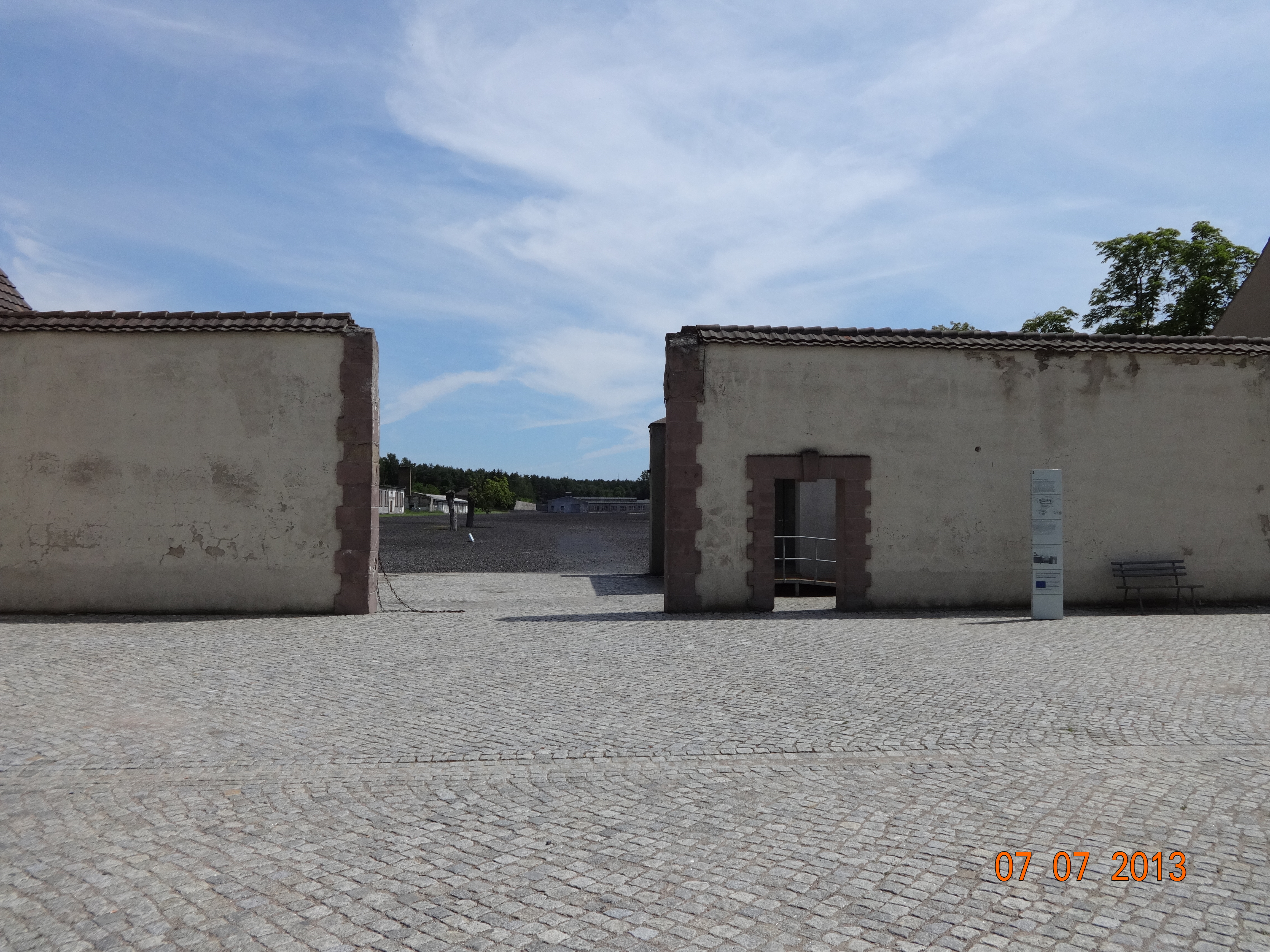
The month after the invasion of the Soviet Union, Himmler ordered the construction of a new concentration camp on the outskirts of Lublin, for centuries an important center of Jewish life and culture in Europe. The original purpose of the camp, to be known as Majdanek (pronounced “My-don-ek”), was to provide forced labor for the construction of SS and administrative centers in the planned eastern territories.
Majdanek holds a central role in the administration of Operation Reinhard. To recap, for just over two years beginning in October 1941, the purpose of the operation was
1) the physical annihilation of the Jews residing in the Generalgouvernement (occupied Poland);
2) the exploitation of some Jews selected to survive temporarily as forced laborers;
3) the seizure, evaluation, and recycling of clothing, personal property, valuables, and currency taken from the murdered Jews at the killing centers; and
4) the identification of so-called hidden assets of the Jews in the Generalgouvernement.Within the framework of Operation Reinhard, Majdanek primarily served to concentrate Jews whom the Germans spared temporarily for forced labor. It occasionally functioned as a killing site to murder victims who could not be killed at the Operation Reinhard killing centers: Belzec, Sobibor, and Treblinka II. It also contained a storage depot for property and valuables taken from the Jewish victims at the killing centers.
Like other concentration camps in the Reich, Majdanek also served as a killing site for targeted groups of individuals, including members of the Polish resistance, hostages taken from the Security Police prison in Lublin, and prisoners in the camp itself who were deemed no longer capable of work. ~USHMM
****************************
You know how a sound, or a smell, can bring trigger memory?
Creosote.
I am at Majdanek. This place is the real deal. The barracks are intact wooden shacks. The guard towers menace like creatures from “The War of the Worlds”.
On top of that, the Soviet Memorial in the far off distance resembles a flying saucer hovering over an unknown object.

Majdanek. Note Soviet Memorial at the end of the road… It is actually much more than a memorial. Which I did not know until I saw it with my own eyes.
The buildings reek. I know that smell. Gasoline-like. My dad used to layer it on thick, this petroleum based wood preservative, on our hunting shack in the Adirondacks when I was a teenager, before the government outlawed it for public use.
Creosote.
At this site, do you know that this camp is, to my knowledge, the only one that was captured intact, by Soviet forces, exactly 69 years ago this month as the Red Army overran this area? And it has an un-destroyed gas chamber?
So why not see it?
Go in it?
Well, I did go in the building where it is housed.
Low ceiling. Dark. Concrete floors with gutter channels. Sinks. Pushing a bit deeper, my chest begins to constrict. Collar feels tighter. Into another door and room in the “assembly line”. Showerheads above, all connected, all so orderly.
Trailing behind, now.
To continue moving forward with the group will bring me to the gas chamber. I turn around and my feet carry me back, fast, and through the entrance, I exit.
I’m just not going there.
Alan takes a photo inside, not of the chamber or the empty Zyklon B canisters, but of the sign:
I wait outside. I am conscious of a pull to witness, but today I am just not going to go in.
The next building is the storehouse. “Majdanek also served another key Operation Reinhard function; it contained storage facilities for clothing and personal items stolen from the Jews before their deaths in the Belzec, Sobibor, and Treblinka II killing centers.” (USHMM)
Walking in here you are overpowered first by the smell of the creosote, then your eyes try to take it all in- row upon row of piles of shoes, behind chicken wire. Is this possible?
Okay.
Time to move in to the barracks area.
Two young Polish women with a stroller casually pass us, chatting. They are cutting through Majdanek to take a shortcut to the Catholic cemetery on the outside of the memorial complex. The irony is not lost on the group.
And it is going to get a helluva lot more ironic in the next 20 minutes.
On to the Soviet Memorial and the crematorium. The crematorium is intact, too. Again I hang back.
My journal, written on the spot, at that moment:
I am at Majdanek. I would not go into the gas chamber and right now I will not go into the crematorium.
I go over and check out a memorial stone with a plaque near the steps to the Soviet Memorial.
So what happened at this spot? I think I need to sit down. Now.
They play the music really loud to try to disguise the gunshots to the folks back in the town. It’s starting to have the makings of a really long day. A bit chilly too, being early November and all. The shooters.
Journal again:
Right now I am sitting on the concrete steps alone in front of a memorial stone, right before the ditches where 18,500 Jews were executed in the “Harvest Festival”.
I am in front of a mass grave by myself. I want to be alone so right now I am pretending to write something deep.
So I’m kinda stunned, sitting on the stairs and scratching such nothingness into my notebook. What else should I be doing?
When the group trickles over to the steps, we ascend. Someone asks if I am okay.
Yeah, I’m fine.
Eighteen thousand five hundred. Murdered right in front of me. In one day. That is twenty times the population of our high school, on a good day, when they all feel like coming to school.
Now we are under the dome, that stupid looking flying saucer. We are in it, looking down on a mound the size of a small house. Big pile of whitish grayish stuff. And as the realization dawns, now comes the shock that nearly knocks me over on my ass. What the poor saps in the Twilight Zone must have felt as they realized everything was the opposite of what they had assumed. I’m suddenly in a very personal episode of the Twilight Zone.
I don’t need a sign for this. As a trained archaeologist, I have excavated this more than a few times.
Cooked bone.
I am looking at a mountain of burned bone. Calcified bone fragments, powder, and earth.

Kippah on ashes Majdanek 15 July 13. It’s a giant urn, an open air mausoleum. (Note people in background for scale.) Photo by Alan Bush.
I am face to face with cremated human remains. Bleached white and gray from superheat.
How many thousands of human beings are in front of me?
I don’t know why, but I don’t participate in the Kaddish here. Sorry. I don’t pocket a rock for a memorial memento, either.
Today was a bad dream day.
And if there are any words, they are drowned out by some kind of twisted irony here in Majdanek, this monument to the dead, in the sounds of being outflanked by a speeding baby stroller cutting through the camp, wheels squeaking-yes, maybe life, but an apt metaphor for the present, willful yet oblivious, dodging and darting the presence of the past.
But it’s here.