Feeds:
Posts
Comments

Posts Tagged ‘Holocaust’

Holocaust Survivor Clara Rudnick in her home, Photo Erica Miller 8/31/10

Holocaust Survivor Clara Rudnick in her home, Photo Erica Miller 8/31/10

I gave my first talk last night after returning this summer from an intensive 3 week European study tour. Arriving early to prepare and set up, I looked up and in walked Siobhan, a former student, and her mom, followed a little while by an older woman I was surprised and delighted to see- Mrs. Rudnick, or Clara. She gave me a hug and took off her coat and told me that she had taken a cab to the site of the lecture, and, oh, could I please give her a ride home? I was delighted.

During the lecture I recognized her before the audience, and thanked her for coming out. She told the audience how proud she was to live in the “North Country” of upstate New York. Heck, she’s lived here since 1949, a dozen years before I was born! She was moved to tears, as was Siobhan, who gave her a hug.

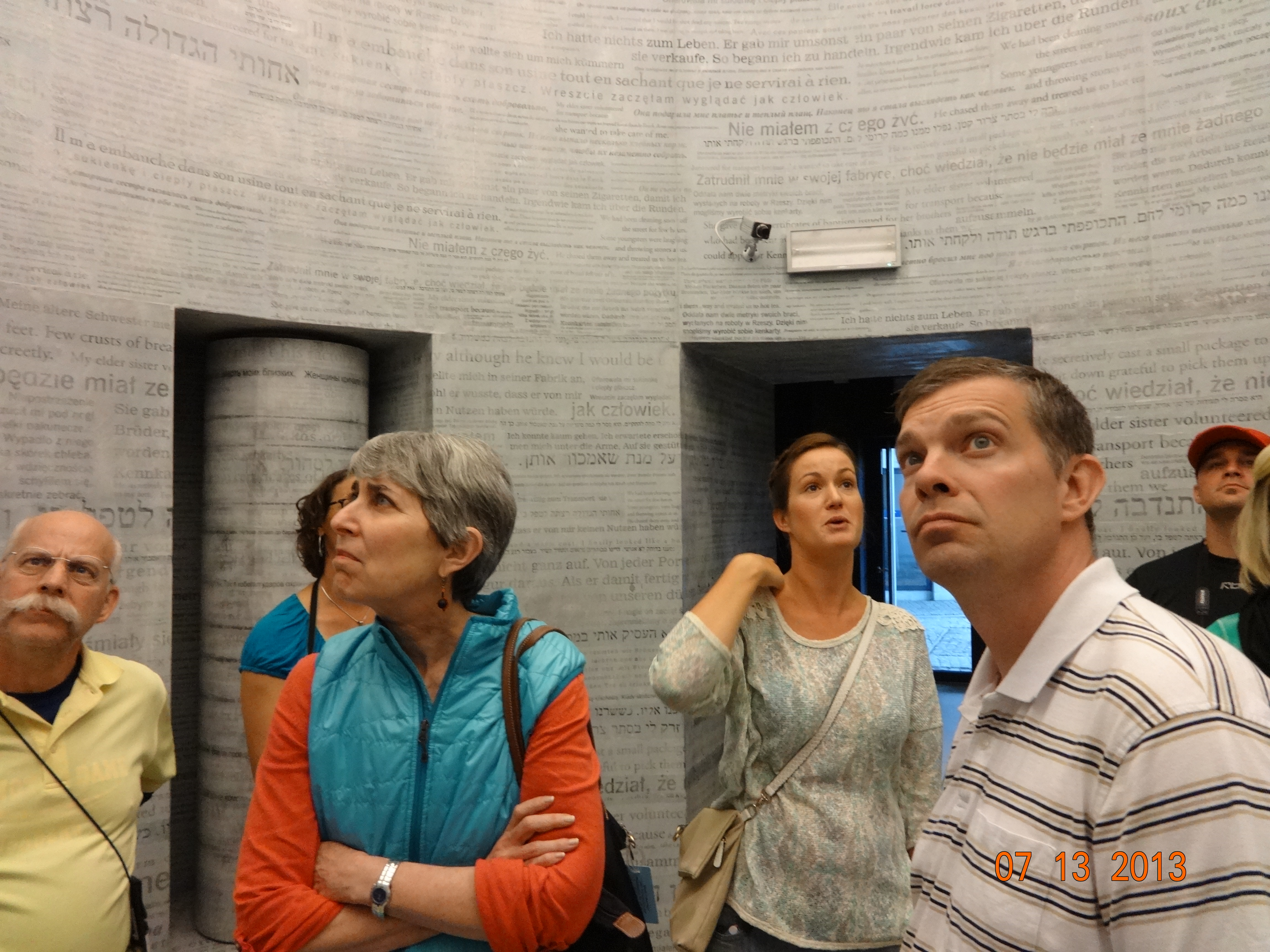
During the talk, she nodded her head in agreement to many of my points. Afterwards, she pulled out a piece of paper, a short statement that she had written, explaining that she had been meaning to call me.  You see, she was not the only traveler to Europe this summer. While I was in Poland touring Holocaust related sites, Mrs. Rudnick had returned to Lithuania of her youth.

Not an easy thing, given that

a. Clara is 89 years old;

b. Clara is a Holocaust survivor;

c. Clara lost most of her family to the SS Einsatzgruppen and their Lithuanian collaborators.

She and her late husband Abe were two of only 7000 survivors of the 70,000 Jews of Vilna. I was familiar with a lot of the history, but to understand more of what she had gone through, I looked up the following at the USHMM website:

The Lithuanians carried out violent riots against the Jews both shortly before and immediately after the arrival of German forces. In June and July 1941, detachments of German Einsatzgruppen (mobile killing units), together with Lithuanian auxiliaries, began murdering the Jews of Lithuania. By the end of August 1941, most Jews in rural Lithuania had been shot. By November 1941, the Germans also massacred most of the Jews who had been concentrated in ghettos in the larger cities. The surviving 40,000 Jews were concentrated in the Vilna, Kovno, Siauliai, and Svencionys ghettos, and in various labor camps in Lithuania. Living conditions were miserable, with severe food shortages, outbreaks of disease, and overcrowding.

In 1943, the Germans destroyed the Vilna and Svencionys ghettos, and converted the Kovno and Siauliai ghettos into concentration camps. Some 15,000 Lithuanian Jews were deported to labor camps in Latvia and Estonia. About 5,000 Jews were deported to extermination camps in Poland, where they were murdered. Shortly before withdrawing from Lithuania in the fall of 1944, the Germans deported about 10,000 Jews from Kovno and Siauliai to concentration camps in Germany.

Soviet troops reoccupied Lithuania in the summer of 1944. In the previous three years, the Germans had murdered about 90 percent of Lithuanian Jews, one of the highest victim rates in Europe.

Clara was anxious to speak to me. She told me of her trip with her son. Together they returned to Svinsyan, where her parents, two sisters and two brothers lived. To one of my students, a few years back, she told the following story:

On June 21st, 1941, the Nazis came into my town, I lived with my mother and father, two brother and two sisters. In July 4th, they took my oldest brother and burned him alive, with 90 other Jewish teenagers in my town. In the early part of August they came in and took my twin brother, along with another 100 teenagers and dug a big hole and buried them alive. In September they took the whole town about 8,000 people and brought then to where we held our flea markets- this was both of my sisters and my mother- out into the woods where they lined them up and shot them and left them there. This is where my father and I escaped- he knew a lot of men- and we went to farm to farm and hid out until the Nazis would come, and we would leave because if they caught us they would kill us and the people we were staying with, because they were harboring  fugitives.

At the town’s museum, she stopped to ask where the memorial of the murder site, Poligon, could be found. Clara said that they  told her that they did not know where it was, though half the town’s population, many of the families having lived their since the 1300s, had been murdered there.

At the hotel in Vilna she inquired how she could get to Ponary, and was simply told “there is nothing there”. Google Ponary. 110000 relevant results. 70,000 Jews were shot to death there by the Germans and Lithuanians.

Taking the English speaking bus tour of the Old City of Vilna, the guide described the Philharmonic Hall but did not tell the tourists that this was the entrance to the Vilna Ghetto, where she had been imprisoned until being deported to a slave labor camp and later to a concentration camp. When Clara asked why the guide did not mention this, the guide said that she “did not know.”

Maybe the guide was young and was not taught this history in school. Or maybe it was not important enough to be part of the official program. 90 to 95% of Lithuania’s Jews were murdered in the Holocaust. To one lady on the bus, and her son, it was important. In Clara’s words, “In just three days, I learned that Lithuania has not faced it history of the destruction of its 250,000 Jews”.

Clara is happy that I am keeping the memory alive. She put on her coat and climbed up into my pickup truck without assistance. She chatted all the way home as I tried to navigate to her house in the dark. She thanked me over and over. Not at all. Thank you for coming into my life and making me, and my students, a part of yours.

Here is an informative article which reveals exactly what Clara wanted me to know. Responsibility is not big on the list of Lithuania’s priorities.

Read Full Post »

DSC01140One of the things that came up in my talk last night was the question of what does one do in the classroom to use the Holocaust as a jumping point to address current world or national issues. In other words, what is the purpose of teaching the Holocaust?

Another question that always comes up, and came up last night as well, is how can people deny that the Holocaust ever took place?

These are very good questions and ones that I have wrestled with for some time, myself. I guess in formulating my response, I would have to consider my experiences, and relate one to the other.

1. When you really, really study and think about the Holocaust, as I have, the more it becomes clear that the subject is so expansive, there is so much that you do not know. I consider myself fairly well informed and educated on the subject, but as I stated in a previous post, KNOWLEDGE is not the same as UNDERSTANDING. So I guess I will defer to the survivor I know, asked the same question by a student, after giving his testimony to young people: “There will be always be those who deny or minimize the extent of the Holocaust. How can one even begin to understand the magnitude of the crime?”

It IS quite unbelievable, in a sense.

Which begs the question: How could the enormity of this watershed event, the greatest crime committed in the history of the world, happen?

The answer, simple but again in a general sense, too true. Mass ignorance is not an excuse. People knew.

In reality, few people gave a damn. Political leaders had more important priorities. Ordinary people went about their business.

2. Now the extrapolation*. Today in many schools the Holocaust is simplistically packaged up and sold to promote the cause du jour, whatever it may be, from bullying in the schoolyard to consequences of gun control. We boil down the causes to bullying gone wild, or handing over our guns, saying “See? This is what happens”.

Here is the eye opener for many educators out there.

The cause of the Holocaust was not a simple issue of “intolerance”.

Jewish and gentile communities lived side by side and interacted for hundreds of years. Men, women, and little children were not “bullied” to death. They were murdered on an industrial scale.

3. The only lesson I will promote in the classroom is to outline the enormity of the complexity, to go beyond just advocating “tolerance” and “diversity training” to make an attempt of a systematic examination of the abrogation of personal moral responsibility in the face of  an agenda that was made quite clear from the outset.

So what does this look like? Let’s take a quick look.

a. Mein Kampf was published in 1925. And Hitler never killed a single person in anger by his own hand. There is a reason why, in touring our national Holocaust museum, you will find few references in the exhibits to Hitler alone.

b. Mass murder didn’t just “happen”. There were a lot of logistical problems that had to be overcome. Statisticians, bankers, businessmen, engineers and  architects, mechanics and clerks sold the tabulating machines, arranged the train schedules, drew up the gas chambers, tested the crematoria, installed the hardware, and pushed the paper that meant life or death. Teachers taught lessons handed down by the state, doctors and nurses learned how to kill. Lawyers and judges perverted the notion of justice. Town cops and public servants with families back home were drafted into extermination brigades and became murderers of women and children. The few who refused to pull the trigger were not punished severely.

As I was packing up to leave, a doctor friend who attended my talk stopped me and told me that what I was doing was important, if only as a reminder, I suppose. She stated that in a recent public information event on the Affordable Care Act, someone rose and exclaimed with passion that the those without health insurance should be allowed to die. All around her, the statement was greeted with an outpouring of applause.

I’ll refrain from analogies-but, what, then, was it that she took away from the lecture?

Maybe it was the point that there are no simple explanations or lessons, that that there were no monsters, that to label a perpetrator as a monster is to strip him/her of our common link- humanity- which perversely, somehow absolves him, the nonhuman, of responsibility.

Maybe we are not so far removed, after all.

As I was leaving, in a quiet tone, she said:

The veneer is very thin.”

*If you are an educator looking for more guidance, here is a  a short video I made for the teaching of the Holocaust, according to USHMM guidelines.

Read Full Post »

Traveling compadres Tim, Scott, and Alan in front of our hotel next to the Presidential Palace, Warsaw, Poland, summer 2013.

Traveling compadres Tim, Scott, and Alan in front of our hotel next to the Presidential Palace, Warsaw, Poland, summer 2013. Out for a nightcap and to discuss our shared day.

I am stealing another post from my friend Scott. We traveled together for three weeks this summer on our roller coaster Holocaust tour, and he continued on. Here is a great post with great pictures. Wish I was there with you buddy, but you make it come alive for me and my readers. Great pics, too. Learned a lot. Safe travels. MR


WWII – The Nazis

01 Tuesday Oct 2013

During the 11 day tour of WWI and WWII, we stopped at some important and significant locations to Hitler and the Nazis.  I think it is important to look into the history and development of the Nazis if we want to further understand how this much hate can manifest in a  major government.  If you have been following the news out of Greece and their political party known as Golden Dawn (whose symbol resembles the swastika), I don’t think we are that far away from this still happening.

One stop that marked Hitler’s rise was the site of his Beer Hall Putsch in 1923.  Hitler tried to rally some fellow drinkers from a beer hall in Munich to overthrow the Bavaria State Government.  It failed.  Here is the room he gathered supporters:

Image


This was a great place to be.  However, if you took a moment to think about what happened here, you had to pause.  I think this is a great example of resilience, though, to see people using this space for good things today.

We also stopped in Nuremberg and visited Zeppelin Field – the site of the large Nazi rallies of the late 1930′s you have seen in documentaries and films.  In the 1970′s, the German government passed a law forbidding the destruction of important Nazi buildings.  However, seeing Zeppelin Field it is clear that they are not doing much to preserve these sites.

Image


The podium you see down there is the one Hitler stood on.  You can see this area has become a parking lot and it is also the route of a road race so you can see the racetrack walls on the right.  The field in front of you, blocked by trees, is where Nazi’s rallied.  Here is a close up of the sides:Image

Here is the podium straight on:Image

Image


When I was up there on the podium, I turned around and imagined Hitler walking through the doors behind the podium to the place I was standing – it was a little creepy.  Image

I am impressed and disgusted by the amount of energy and money and resources and humanity spent on this hateful man and his message.  But this field was full of people who supported him.  In the museum nearby, there are videos of older German ladies who recall as young children all the excitement when Hitler came to town.  They told of going home and getting ladders so they could see him when his parade passed by.  And they told the camera this – years later mind you – with smiles on their faces and laughter in their voices.  I did not sense a bit of shame of their role (though they WERE children) in what Germany did during WWII and leading up to.  This was a something that stuck with me.

The Museum I talk about was in the largest building the Nazis were building in Nuremberg.  It was never finished, but the building remains:

Image


To give you a better idea of its size, here is what it looks like inside – that is a motorcoach full sized bus below:

Image


Again, you can kind of see the disrepair this building is in.  It does house a pretty good museum on the history of Nazism and its place in Nuremberg history, but most of the building is crumbling.

Another place we went to was what we call The Eagle’s Nest up in the German Alps overlooking Austria.  This house was a gift to Hitler by the Nazi Party on his 50th Birthday.  We took our bus to the bottom of the mountain is sits upon and then had to take another bus, driven by special drivers to near the top.  This is how we saw the house at this point:ImageImage

Notice the tunnel in the picture above – this was the way to the elevator:Image


From here, we took an elevator up to the house.  The same elevator Hitler took.  Again – creepy.  It felt though like most people here were doing the touristy thing – like we were – rather than once again comprehending the historical significance of this man and this movement.  I couldn’t wait to get off the elevator.

At the house, it was beautiful.  It was much smaller than I had imagined.

Image


Here are some pics from inside.  They turned the living room area into a restaurant now:ImageImage

Here is the signature fireplace:

Image


Hitler must have stood right here on days like this (which was pretty cold up here in the mountains) warming his hands.  I had to get out of here  – so I went outside and enjoyed some spectacular views.  Notice the fresh snow on the surrounding mountaintops:

ImageImage

But no matter how impressive the view was, the reason for this place never escaped my mind.  When we got back down to the bottom of the mountain, we went through some Nazi bunkers that were built here as well:

Image


Inside were these tunnels and rooms:

ImageImageImage


In one room, they made into a memorial for Holocaust victims and names were being read 24/7.  Here is the room and the walls which were covered in graffiti I think encouraged by the museum people:

ImageImage


And this leads us to the details of the Nazi atrocities.  If you have been reading my blog, I have been to 8 or 9 concentration camps already.  I went to another one on this tour – the first camp – known as Dachau.  Here is the train platform and the main building the Jews (and political prisoners, POWs, etc.) went through:Image

The now all too familiar “Work will set you free” sign”

Image


The fence and guard towers:

ImageImage


The area where victims were gathered each day:

Image


The main lane with the barracks outlines and bunks inside:

ImageImageImageImageImage


The gas chamber:

Image


The old crematorium:

Image


When that wasn’t enough, the new crematorium:

Image


Image


You all know what happened here and the horrible thing the Nazis did.  If you want to know more, read my first 12 or so blogs.

There are some symbols of remembrance here, like this sculpture:

Image


And this synagogue:

Image


But this is a horrible place.  My group, many of whom had never been to a camp, where visibly shaken and moved.  That is why it was good that we visited the Court House that housed the Nuremberg Trials after WWII and saw the punishment of those responsible for this.

Here are the gates to the court house:

Image


This is a functioning court house today and the court room that housed the trial is still being used as well.  Here is a pic of what the outside looked like after WWII:Image

The court room today:

Image


Luckily we were there on a Saturday, so we could sit in here all we wanted.  They had little video monitors that you could use to watch parts of the trials.  It was great to sit there and watch, through logic and reason and rules and respect, these Nazis get convicted.  I could have watched this all day.  I could have watched this for a week.  I think I will have to watch the movies again when I get home, but this made me happy being here.

Finally, we visited a German cemetery:Image

Notice the markers in the ground – they represent two Nazis for two German soldiers were in every hole.  Standing there, I could not bring myself to forgive these people.  I almost felt like they did not deserve this burial and respect.  Just then, out of the fog, came our friends – reminding us of the message from the bridge that perhaps it was time to heal.

Image

http://scottdurham.wordpress.com/


Read Full Post »

Francis Curry, WWII Medal of Honor, with students.

Francis Curry, WWII Medal of Honor, with students.

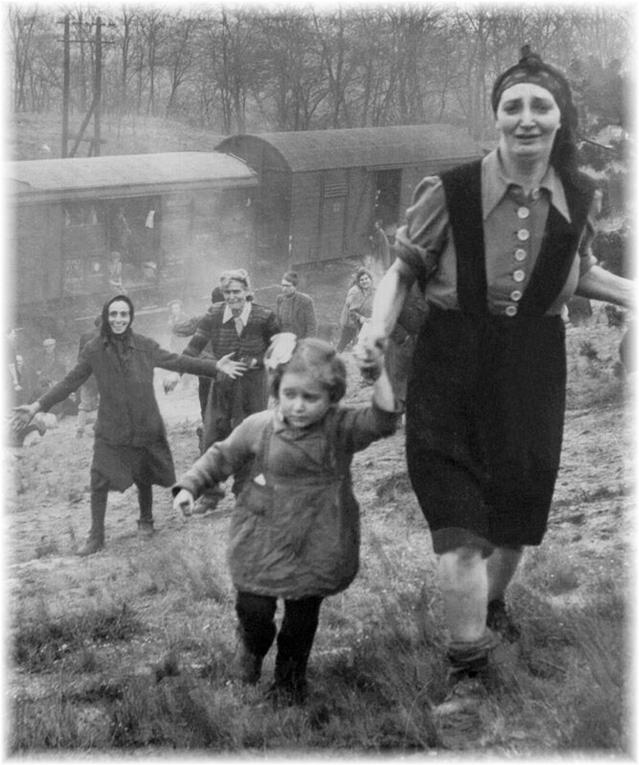
FOUR years ago today the most incredible week concluded with former soldiers and the Holocaust survivors they saved watching this newscast together in cocktail lounge of the Georgian Resort in Lake George along with teachers and students from Hudson Falls High School. Thank you Tara, Mary, Lisa, Rene, and all the staff. And to ABC World News for recognizing the importance of the occasion, and to the United States Holocaust Memorial Museum and the Bergen Belsen Memorial for their attendance and support.

A teacher’s job is to toss pebbles. Several of the participants are gone now, but the ripples here became huge, and no one will forget what they meant, where they came from, or what they have led to.

Watch a story about how a teacher fellow from the Museum reunited Jewish prisoners with U.S. Army soldiers who liberated them from a train near Magdeburg, Germany, on April 13, 1945.

Read Full Post »

I met Leslie Meisels exactly four years ago today, when he and  Ariela Rojek and Paul Arato drove all the way down from Toronto, Canada to meet their actual liberators.

Leslie is one of the most gracious men I have ever met; I am honored to have him as one of my friends and am proud to be in on what he calls the latest miracle of his life.

I wrote to a reporter/columnist in Toronto, Canada, several months back to comment on a story that she had written, and she then had the opportunity to interview several of my survivor friends in the community who had been liberated on the Train Near Magdeburg. She struck up a friendship with Leslie, and this ebook resulted.

A sample:

When I first reached Leslie Meisels on the phone one afternoon in late April and asked for an interview, he told me to hold on a minute — he needed to get his day planner.

I thought he was joking.

Leslie is 86. What could he possibly be doing to fill up a day planner?

A lot, it turns out.

He has a wife, two daughters, four grandchildren. He is an active member of the North York Philatelic Society and a committee member of Circle of Care, an organization that provides services for Holocaust survivors. And he is a regular speaker with the Holocaust Education Centre’s survivor speakers bureau. This spring there were weeks when he addressed four different groups of students about his experience during World War II.

This was one of those weeks. He squeezed me in. I wanted to talk to him about the Holocaust and, more precisely, about his liberation from the Nazi murderers by a dozen surprised American soldiers who found Leslie and about 2,500 other captives near the end of the war, packed in cattle cars on a German train.

An email from an American teacher had tipped me off to the fact that a number of Toronto Holocaust survivors had recently been reunited with their liberators.

Leslie was one of them.

Of course, you can’t talk about liberation without talking first about enslavement. So, sitting on the couch of the neat, spacious penthouse condominium he shares with his wife, Eva, in Thornhill, Leslie started proudly with his family history in eastern Hungary.

Then came his carefree childhood. Then the introduction of anti-Semitic laws, the ghetto, the trains, the months of slave labour and the horrors of the Bergen-Belsen concentration camp, where more than 70,000 prisoners — most of them Jews — were killed.

Our interview lasted more than three hours, fueled by many cups of coffee and servings of fresh cheese palacsintas (crêpes) whipped up by Eva.

I noticed Leslie’s hands while we spoke. They are enormous — each finger twice as thick as mine, the palms like dinner plates. They are a working man’s hands, without any of the dirt. Everything about Leslie is immaculate — his neatly clipped and cleaned fingernails, his ironed pants and pressed dress shirt with a silver pen poking from its breast pocket, his freshly shaven face. His stories of being treated like a rabid dog were cast in relief by the careful pride he took in his appearance. There is an Old World elegance about him.

But the thing that struck me most about Leslie was his cheeky humour. His brown eyes narrowed and sparkled repeatedly as he took a “side step” to tell me about the girl he was “necking” with while a slave labourer or a refugee. Despite the horrors he endured, or perhaps because of them, Leslie maintained his champagne spirit.

Near the end of the interview, a question bubbled in my mind: what did you take with you? The Nazis had invaded Hungary in 1944. They ordered all the Jews in Leslie’s and other towns to first leave their homes, and then to leave town altogether on a train we now know was headed towards slavery or murder. What would you take if you could carry only a small bag or pillowcase to hold your belongings?

“Underwear,” Leslie responded, “and my stamp collection.”

I wrote that down and moved on. There were a lot of overpowering details in Leslie’s stories, and I still needed to hear about the reunion. But the stamps snagged my attention. There was a boyish innocence about them.

What happened to those stamps, I asked him over the phone a couple days later.

He responded: “I still have them. My mother sewed them into the lining of my jacket.”

Imagine that! Most Jews had all their clothing and belongings stripped away upon entering the concentration camps. You can see their boot brushes, ceramic pots and dolls piled up behind glass cases in the Auschwitz-Birkenau State Museum in Poland. That Leslie managed to keep his jacket was surprising enough. But that fragile pieces of paper survived the horrendous conditions — well,that seemed miraculous.

I drove back to their condominium for a third interview, this one in Leslie and Eva’s little office. I asked to see some of those stamps.

So Leslie pulled out his master list — a two-page typewritten list of all the stamp albums he has. There are dozens and dozens. He found one with his early Hungarian stamps and pulled it down from the shelf. Inside he’d arranged thousands of stamps in neat rows.

When I expressed surprise at the number of stamps he had, he smiled and opened a drawer in his desk.

“A crazy stamp collector saves all the stamps he comes across,” he said, pulling out a Tupperware container brimming with stamps. “When there are many, many, many, he bundles them up . . . and stores them away. I have millions of stamps.”

Leslie’s wife calls herself a “stamp widow.” She says he spends hours with his stamps a day. He loves them still, like he did when he started his collection 78 years ago. He loves the precision of arranging them. He loves the challenge of collecting a full set of stamps. He loves their colours and their stories. Every stamp, he says, depicts a story of a place, a historic moment or figure, a cause. “You can learn about the world through stamps,” he said.

As we flipped through his collection and he began to tell me the rest of his story, I could see snatches of it reflected in his stamps.

It is the tale not just of an idyllic childhood followed by the horrors of the Holocaust, but also that of a man who lived under Communism, escaped, lived for two years in a refugee camp, arrived in North America with nothing and then built up his life for a second time. Just as every stamp embodies a public story, a bit of history, Leslie’s stamps also tell the story of his life, its joys and deep sorrows, its disasters and its miracles.

************************************************

He is giving his 25th lecture on the Holocaust since April.

“Put yourself in my shoes,” he says to the Cardinal Carter Catholic High School students. “I think you are between 16 and 18, right? You can feel what I felt when I experienced those horrors.”

“They have to know,” Leslie says. “Otherwise, it will be forgotten and could be repeated.”

He talks for just over an hour, pausing only twice for a sip of water.

The stories pour out of him — of the deaf village elder who was strung up by his wrists to a cattle car, of the SS guards with their dogs who laughed at the sight of him naked with his grandmother and mother, of the hunger. He stirs in life lessons — like how his woodworking knowledge saved his life in Bergen-Belsen. “You are the same age as I was,” he says. “Never think you are studying for your teachers or your parents. Whatever you are putting in your head, you never know how it will serve you in life.”

But Leslie’s descriptions are muted at times. He clutters his sentences with clauses and chooses math over graphic detail to describe some horrors. The train crowding, for instance, affords each person a “square foot.” He mentions the bucket but doesn’t fill in the details of how that meant people were forced to defecate in their pants. He is old-school; talk like that seems degrading. Or perhaps the pungent details are too dangerous for him, scratching away the protective layers on his memories.

A girl in a powder-blue sweatshirt in the second-last row appears to have fallen asleep.

Is he getting through to them? Like most Holocaust survivors,

Leslie won’t be around to recount these stories for much longer. That inescapable truth adds an urgency to his message. Who then will bear witness?

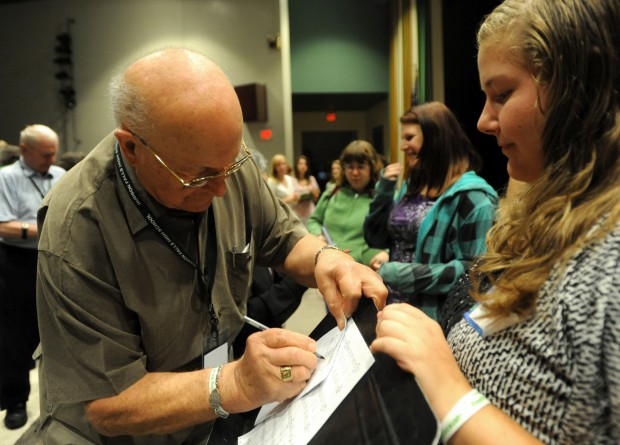
Holocaust survivor Leslie Meisels, left, signs a program for Hudson Falls senior Taylor Bump during Wednesday's "Remembering the Holocaust, Repairing the World" event. Meisels, who currently lives in Toronto, stressed the importance of relaying his experience to young people "so they remember and fight against discrimination, hatred and injustice." Jason McKibben Glens Falls Post Star

Holocaust survivor Leslie Meisels, left, signs a program for Hudson Falls senior Taylor Bump during Wednesday’s “Remembering the Holocaust, Repairing the World” event. Meisels, who currently lives in Toronto, stressed the importance of relaying his experience to young people “so they remember and fight against discrimination, hatred and injustice.”
Jason McKibben Glens Falls Post Star

He finishes his talk and asks for questions. The girl in the powder- blue sweatshirt from the back asks two. The second one is: “If you could go back, would you change any decisions you made?” She was listening, just with her eyes closed. Holocaust educator Ruth Ekstein says she often sees that — “the most fidgety kids you want to strangle, they are absorbing the most.” The content is so painful, it forces people to scratch and shuffle, or to close their eyes.

“Never allow this to happen to someone in the future, if you see an injustice,” Leslie tells the group. “Never just look at each other as equals. Treat each other as equals.”

************************************************

The last miracle

In 2001, Matt Rozell went to the home of one of his students in Hudson Falls, N.Y. Rozell is a high school history teacher there. He regularly assigned his Grade 10 students to interview the veterans in their family about World War II as a way to bring history alive.

That summer, he decided he would do the interviewing himself.

The veteran was retired New York State Supreme Court Justice Carrol Walsh Jr.

After two hours, when the interview was ending, Walsh’s daughter elbowed him and said, “Did you mention the train at all?”

“What?” Walsh said.

“The train.”

So Rozell asked to hear about this train, whatever it was.

Walsh told him about the beautiful, sunny day in April 1945, when after 10 months of fighting their way through France, Belgium,and Holland, and into Germany, his tank and his buddy George Gross’s tank were pulled out of the battalion to check out an abandoned train. An army scout had come across some Finnish prisoners of war in bad condition who reported they had escaped ,the train and that it was packed with prisoners.

Rozell posted the moving interview, as well as Gross’s astonishing photos from that day, on the school’s oral history website, where it sat quietly for four years.

That is, until a grandmother from Australia contacted him to ,say she had been a little girl on that train. The next month he got another email, and another, and another.

In September 2007, Rozell hosted the first reunion of Walsh and three survivors from that train. An Associated Press reporter wrote a story about the day-long event which was published around the world.

Paul Arato’s son Daniel read the story on the Internet. Arato was the 5-year-old boy who witnessed the birthday “present” of a bullet to the head in the Bergen-Belsen roll call. He was also a ,Hungarian Jew who grew up not far from Leslie. He, too, escaped Hungary in 1956 and resettled in Canada. An industrial designer, he was a work associate of Leslie. At the end of a business meeting, the topic of the Holocaust somehow came up. They discovered, to their shock, that they had both been on that train from Bergen-

Belsen. Paul, in turn, told Leslie about the Hudson Falls reunion.

Two years later, they both ventured down to Hudson Falls for a second reunion — a three-day symposium that brought together nine survivors and seven soldiers, including two of their liberators

— Frank Towers and Carrol Walsh.

On the drive down, Leslie was very excited. The initial meeting, over dinner, was spectacular.

“No words can explain the feeling of shaking hands, hugging, laughing and crying with the people who gave me back my life on April 13,” he says. “I never ever imagined that would happen.”

He calls the veterans “angels of my life.” They, in turn, said they were just doing their job.

Leslie and Walsh became close friends. They talked regularly on the phone. They spent some time together in Florida, before Walsh died last winter at the age of 91.

Leslie calls that friendship the last miracle of his life.

Leslie’s 17-year-old granddaughter, Jessica, visited Auschwitz last spring while participating in the two-week educational trip March of the Living. She left behind a small, hand-written sign that said: “I am marching in honour of my grandparents Eva and Leslie Meisels. As well as a soldier, Carrol Walsh.”

******************************************

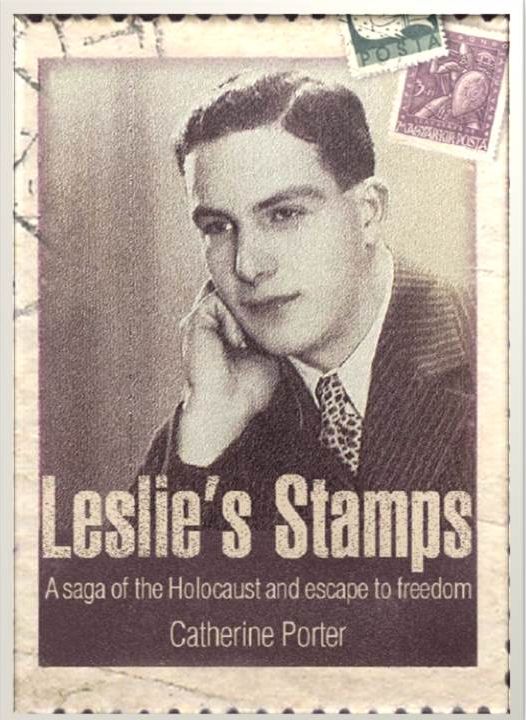
Leslie's StampsLeslie’s Stamps: A Saga of the Holocaust and Escape to Freedom

He had an idyllic childhood in a small Hungarian town where, it seemed, there was no animosity between the Christian majority and Jews like him. But with the rise of Hitler and the Nazis, everything changed for Leslie Meisels, who ended up in Bergen-Belsen concentration camp with his family. Through his wartime ordeals, Leslie carried his stamp collection, started when he was 8, in the lining of his jacket. In Leslie’s Stamps: A Saga of the Holocaust and Escape to Freedom, award-winning Toronto Star columnist Catherine Porter tells the dramatic story of Leslie’s life through his stamps. It is a tale of love, courage and the power of the human spirit.

Leslie’s Stamps: A Saga of the Holocaust and Escape to Freedom is available for $2.99 at http://starstore.ca/collections/star-dispatches-ereads/products/leslies-stamps and itunes.com/stardispatches.

Read Full Post »

Our teachers in Cracow, Poland, Schindler Factory Museum of Cracow.

Our teachers in Cracow, Poland, Schindler Factory Museum of Cracow.

So.

I have been traveling and pondering for over 24 hours now. I am back in the USA (loved Europe, especially the East, but kissing the ground right now…)- the airlines seemingly conspired to help  extend my pensive mood by granting me a complimentary hotel room on the outskirt of nowhere near Dulles Airport- so my adventure will be extended one more night. I hardly know what day of the week it is but in a way that is kind of refreshing.

I have been thinking about the effects of this trip. From Day One I think all of us on the trip are in the same boat- folks you know are excited and proud of you for being selected on an elite study tour for teachers, but maybe question a bit why one would spend $3 or 4K of one’s own treasure*, leave your family and loved ones for three weeks to travel with “strangers”, or forfeit 3 weeks of summer earning potential to tour the sites of the scenes of the greatest crime in the history of the world.

Well, you gotta give them that. This is kind of strange- or so it may seem if you are on the outside cupping your hand on the window glass trying to look in. I think, as one of my Facebook followers put it,  that we did something very brave. We toured over two dozen places where I figure 3 million people were murdered.

Or to put it in maybe a more appropriate context, we saw, walked through, and touched the ground where  nearly a million families were killed. By no means did we tour the thousands of camps and subsites where millions more lives were destroyed.


The numbers tell the story in a way, but not completely, because try as one might, one cannot understand them. I know the numbers- I have the knowledge- but as Steve our tour historian says, there is a clear difference between knowledge and understanding. Some things are beyond comprehension.

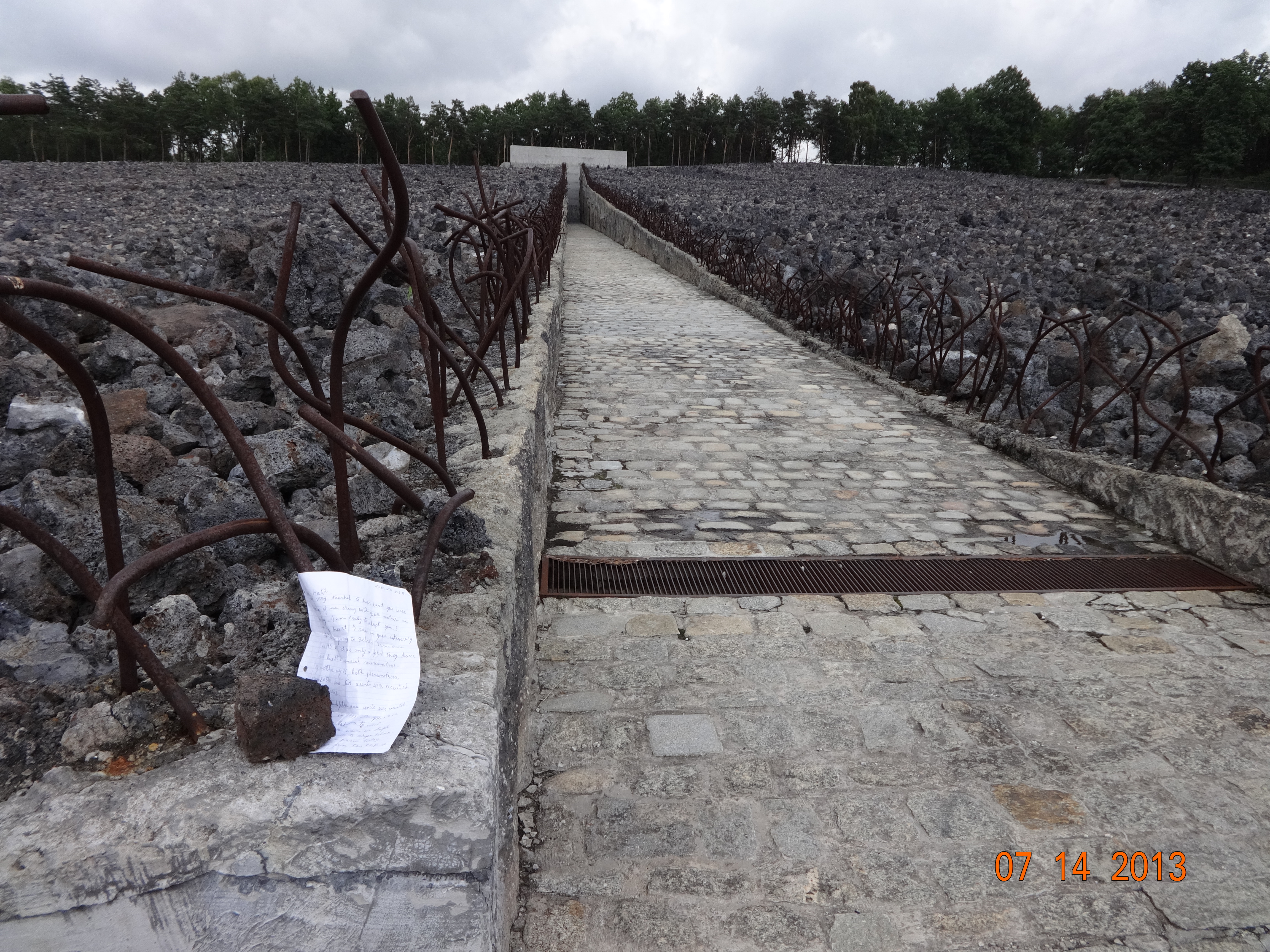
Belzec. Letter from survivor to me, who lost her family there.

Belzec. Letter from survivor to me, who lost her family there.

400,000 murdered in Belzec.

1.1 million in Auschwitz II/Birkenau.

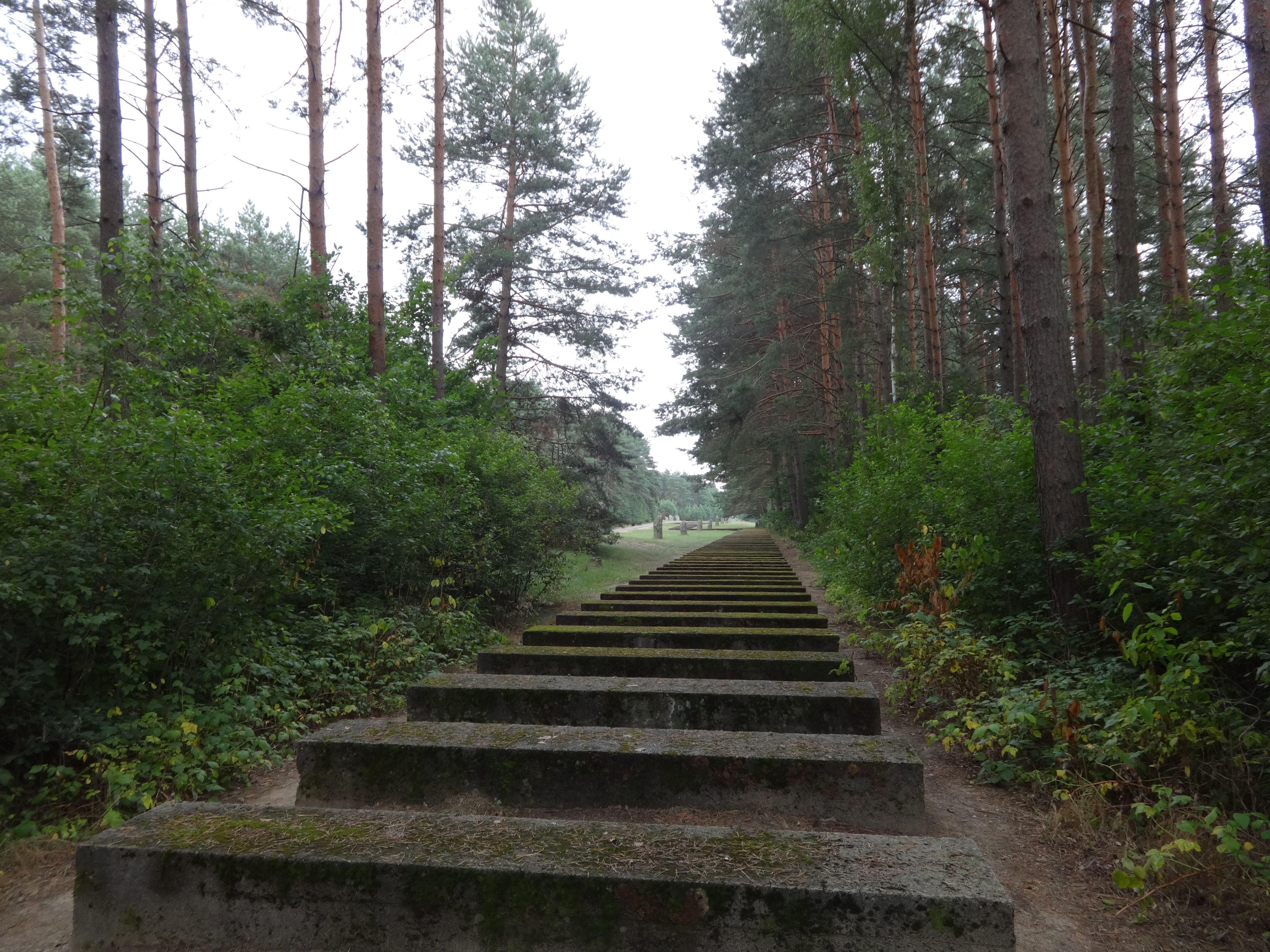
900,000 at Treblinka.

We have been to all of these places in the past three days. People comment that they can’t get their head around it, they can’t begin to fathom the mass indifference to human life that we have witnessed.

Treblinka. 900,000 lost.

Treblinka. 900,000 lost.

So let’s look at what we did come to some kind of understanding about.

What we learned was of the ripple effect of the seemingly small things that illustrated the resilience of the human spirit. That resistance does not have to be just using physical force against your tormentors- it goes way beyond that.

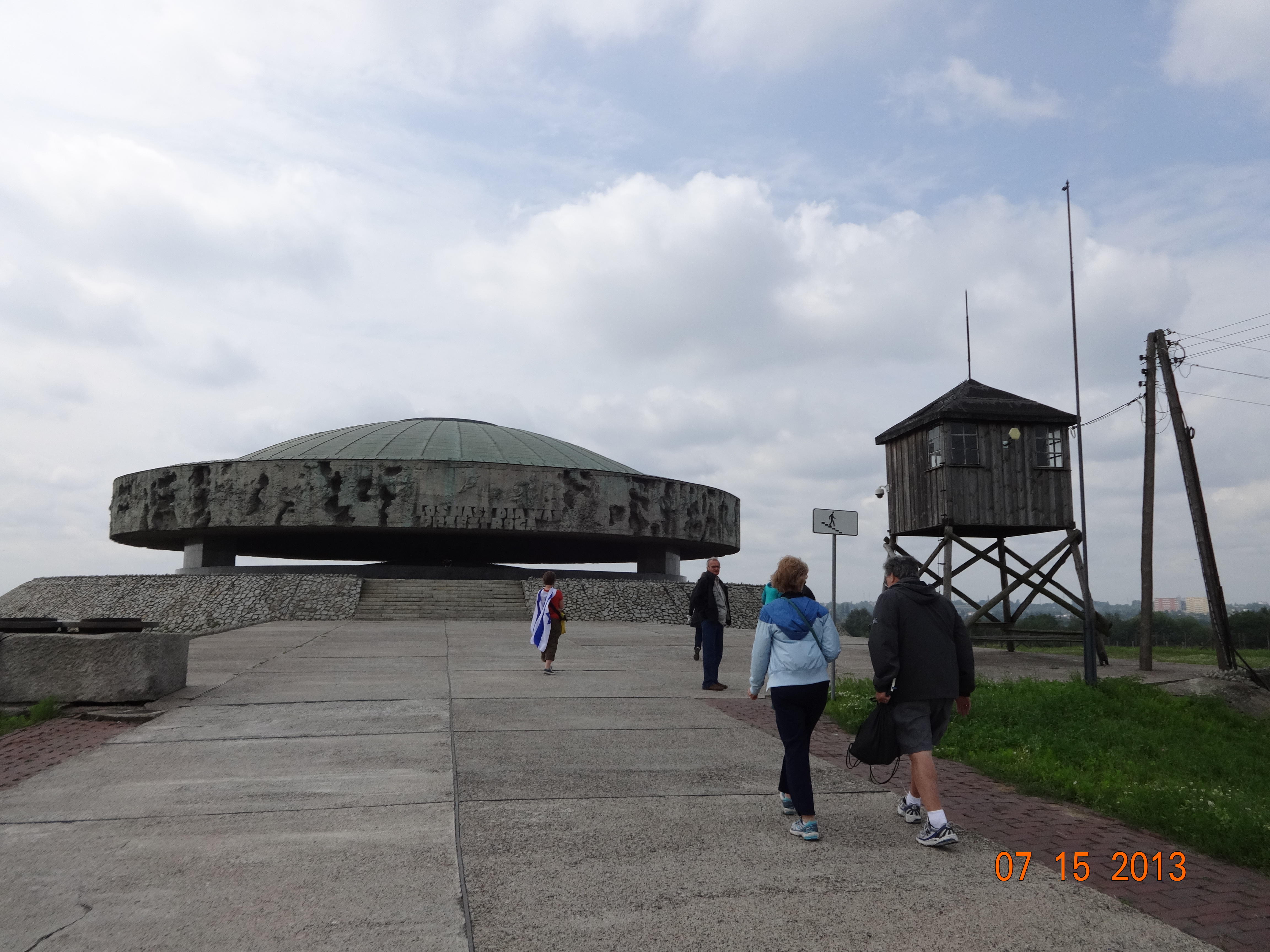
Madjanek. My "I'm in a really, really bad dream day". Under the Soviet era memorial lies a pile of ash and cremated bone the size of a small house.

Madjanek. My “I’m in a really, really bad dream” day. Under the Soviet era memorial dome lies a pile of ash and cremated bone the size of a small house.

The program has been in operation for 30 years, begun by survivors of  the Warsaw Ghetto, those who resisted but survived. Vladka Meed pointed out that the Ghetto Uprising in 1943, which held the Germans at bay for weeks, was begun by the young people. And it is for them, the young,  that we educators make this trip.

So, trying to keep it simple and summing it up:

1. This was not a trip about death. It was a trip about life.  I can’t say that I found God, but this trip was one of the most spiritually reflective journeys that I have ever been on, bordering on a religious experience. So folks will ask when I get home- how was it?-my answer will be:

Righteous.  For me, not epic, not amazing, not awesome.

Righteous.

2. I had many of my Holocaust educational and pedagogical thoughts confirmed and other assumptions challenged. Some ideas presented to me I felt comfortable enough to challenge myself, but in thinking about them, I came to deeper understanding. The most important understanding confirmed is a problem that all teachers must struggle with in our flawed educational system. We have to be diligent about avoiding the promotion of generalization as fact, to avoid doing a disservice to our students. If you are  teaching this history, you had better be versed enough and nuanced enough to accept inconsistencies, problematic complexities, and probe these things to induce a more intricate set of questions to your kids.

3. We have to be willing to accept that perhaps there are no correct answers- a notion that educators  are uncomfortable with- but  one that must  be accepted, nevertheless.  To promote generalities in this complex history, or any history is wrong. But especially this one, it seems to me. It was a watershed event in the history of the world, and for humanity, on many levels.

4. Lastly, it was certainly not just a trip to study how t0 teach the Holocaust. Perhaps reinforced more was how NOT to teach it. And  at the end of the day, it was a tour not only of authentic sites, but also of the mind, and how to make it work.

Sometimes I thought myself to the verge of tears. Thinking-not only about answers- but about the questions.

And that’s what these teachers “did on our summer vacation”.

Memorial to Warsaw Uprising

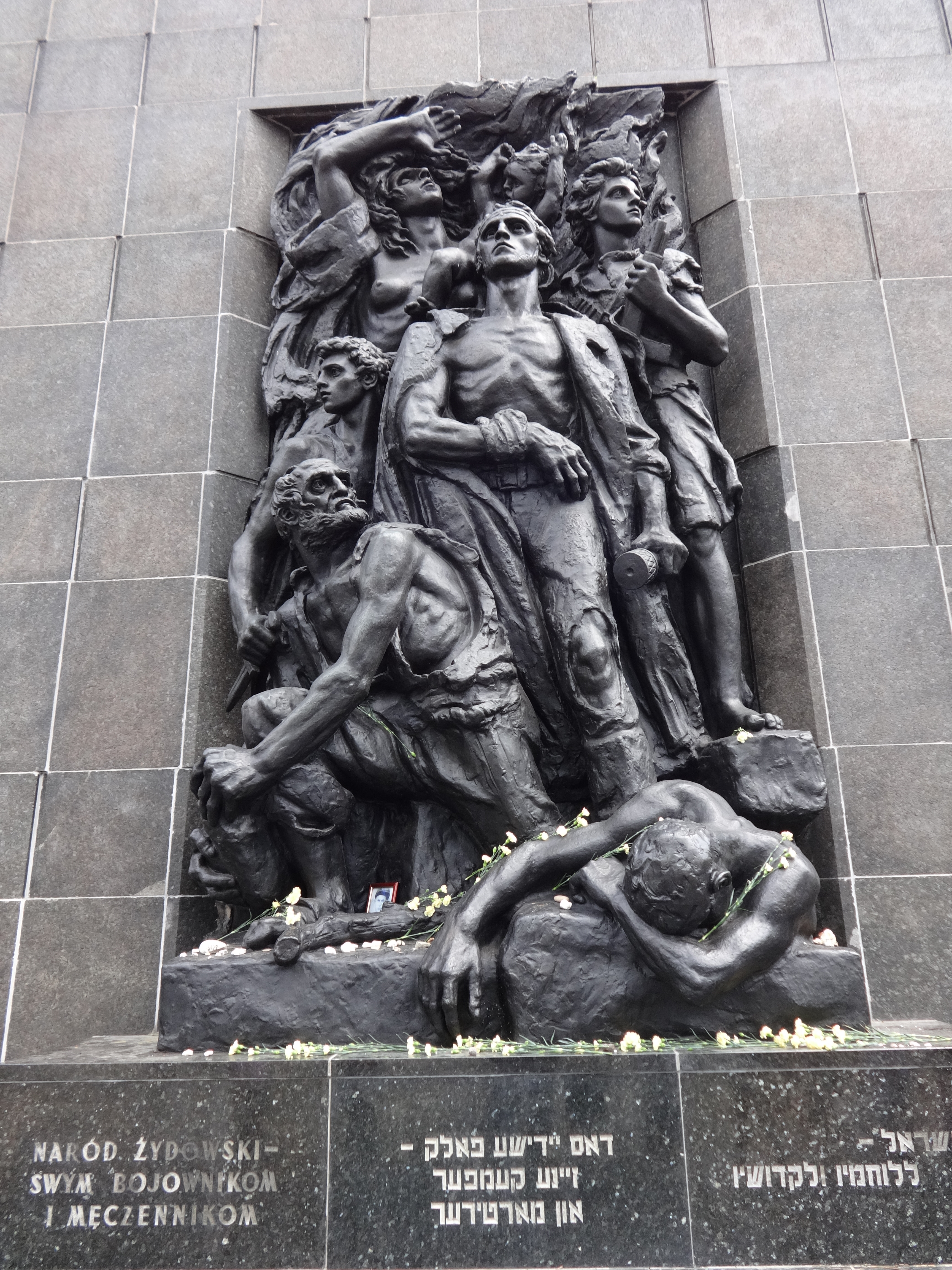
Memorial to Warsaw Ghetto Uprising

* thanks to the folks that were able to support my efforts. You know who you are!

Read Full Post »

To Life.

DSC01091So the day that many of us approach with a bit of apprehension is finally here. We are on the bus from our hotel in Cracow to Auschwitz, 50 miles to the west south west.

Yesterday we arrived in Cracow from Prague, taking the night train on a sleeper car. Near Prague we visited Terezin or Theresienstadt, and I hope to include my observations in another post.

Crakow is a lovely and vibrant little city of 850,000, currently in revival after the fall of communism 20 years ago. Wawel Castle in the heart of the town on the Vistula River became the seat of the German General Government for the administration of the  Polish Occupied Territories under Hans Frank. The guy’s name sends shivers down my spine. After the war and after his trial at Nuremburg he was executed.

Rolling southward one of our tour leaders points out an impressive large building on the top of a hill that looks like a five star hotel. Built after the German invasion in 1939, it was a rest and relaxation villa for Wehrmacht officers rotating off the Russian front to unwind for a bit, as industrialized mass murder was unfolding every single day less than an hour away.

Soon we see the road signs for Oswiecim, the small Polish town at a railroad hub that has become one of the most visited tourist sites in Poland. Most of the world knows it by its German name-Auschwitz.

DSC00994The bus lumbers into the overcrowded parking lot and docks in the slot. The driver kills the engine. And it begins to rain as our other leader, E.,  relates the story of her mother’s family, the idyllic childhood in this beautiful prewar country, a young teen when the nation is invaded, the oldest of four children. No one on the bus makes a sound. It is now raining very hard.

What is this place? Our guide A. is a top notch scholar, and she leads us on a day long tour that is hard to put into words. We begin at Auschwitz I, the first camp. This place is centrally located, a railway hub dating back to the turn of the century. The first prisoners, after it is converted from a Polish military facility, are Soviet POWs and Polish prisoners and other “security risks” who will be worked to death slowly expanding this camp, and the much larger Auschwitz II-Birkenau. She walks us through the exhibits and the displays at the various blocks. Block 4 is the “Extermination Exhibit”. We think about the words, the language. Extermination- as if the victims were vermin. Over 1,100,000 were killed here, most of them Jews. We see the map with the spiderlike raillines radiating inward to Auschwitz like tentacles, from northern Poland, from Germany, Hungary, as far south as Greece and as west as Paris and the Netherlands. In the summer of 1944, tens of thousands were murdered here, per day.

We see again the large scale terra cotta model of the process, which the German engineers had perfected  at Auschwitz II-Birkenau- the arrival of the transports, the undressing rooms with signs admonishing bewildered people to hang their belongings carefully and to remember the number of the wall pegs where they left them for quick retrieval later. The shower rooms that could fit in some cases entire transports, which were in fact the hermetically sealed gas chambers. The Germans above with their gas masks, waiting for the proper temperature to be reached through body heat, just the right humidity to be achieved before dropping in the pellets so the gas released would work more effectively. The anguished death throes of the thousands of naked figurines assault our senses. The process is not complete until the corpses are carried out by the sondercommando slaves, defiled for any gold fillings, the hair shorn from the women, the bodies then burned in the open air behind or cremated in the ovens.

But the tour is now just beginning.  Minutes before, we were looking at a terra cotta model. And now in Block 5 we will be presented with the evidence. This is an exhibition, after all. Exhibit A is about to slap us in the face. Hard. It is a room, 50 feet long, with nothing but human hair piled several feet back and as many feet tall. My heart skips a beat.

What are my eyes perceiving? Now we see a photo of stacks of bale bags, carefully labeled, packed and stacked, awaiting shipment back to the Reich for use in various products for the German war effort. Slippers for submariners so they can walk quietly aboard ship to evade Allied sonar. Stuffing for the seats of German pilots.

We shuffle on in silence with hundreds of others past the spectacles, the pots and pans, the suitcases carefully labelled by their owners with chalk on the orders of the perpetrators, again, for “quick retrieval”. And the shoes. Sorted. Case after case of women’s shoes. Men’s footwear. And then the children’s shoes.

Our knowledgeable guide takes us into Block 27, the new exhibit on the Shoah. This is a temporary relief of sorts as now we see faces, film and stills, of pre war Jewish life, projected on the walls. We hear songs and voices. At the end is the Book of Life, containing four million names compiled thus far. A moving moment when E. and others in our tight knit group find entire pages with the names and dates of family members murdered during the Holocaust.
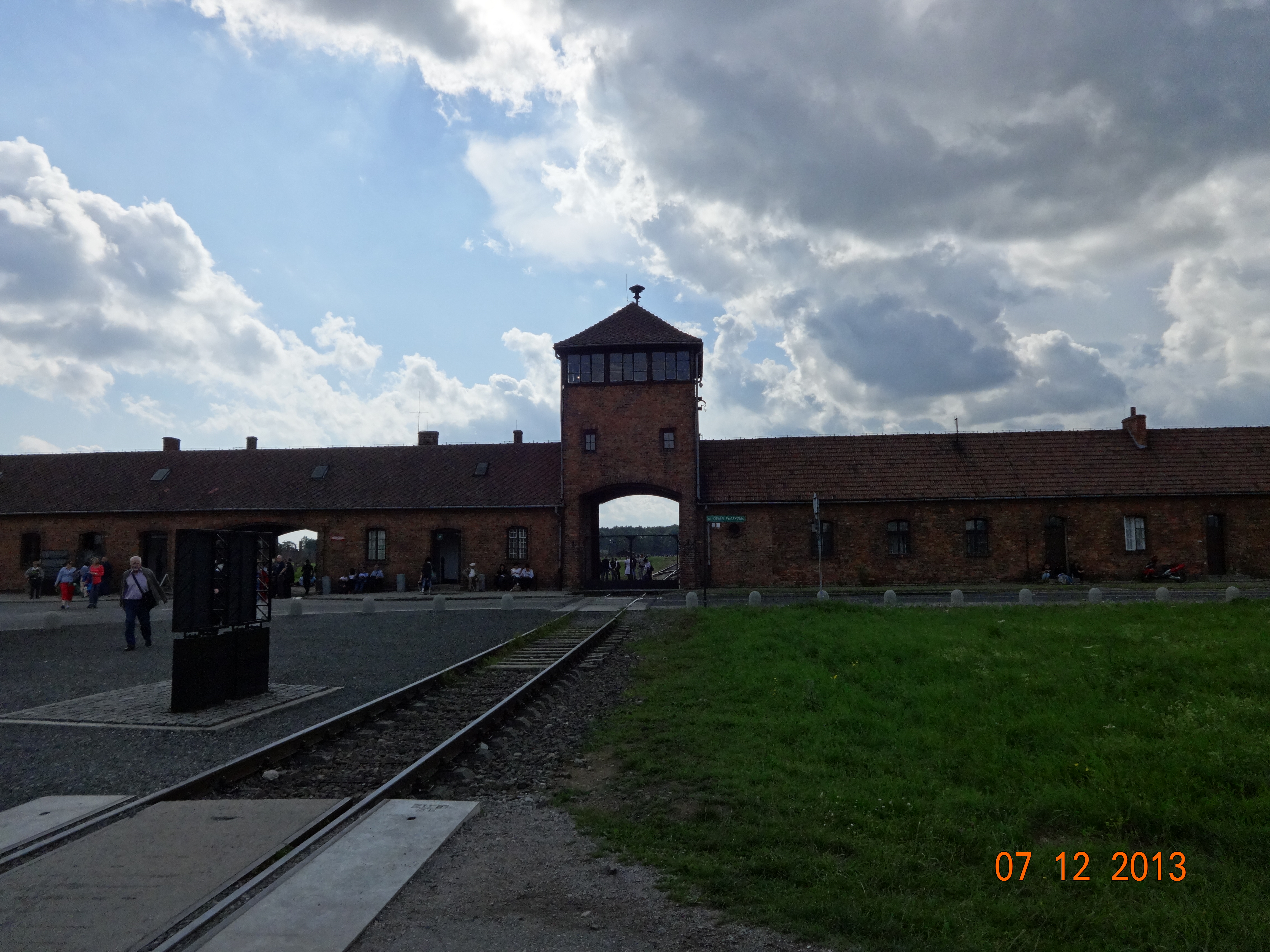
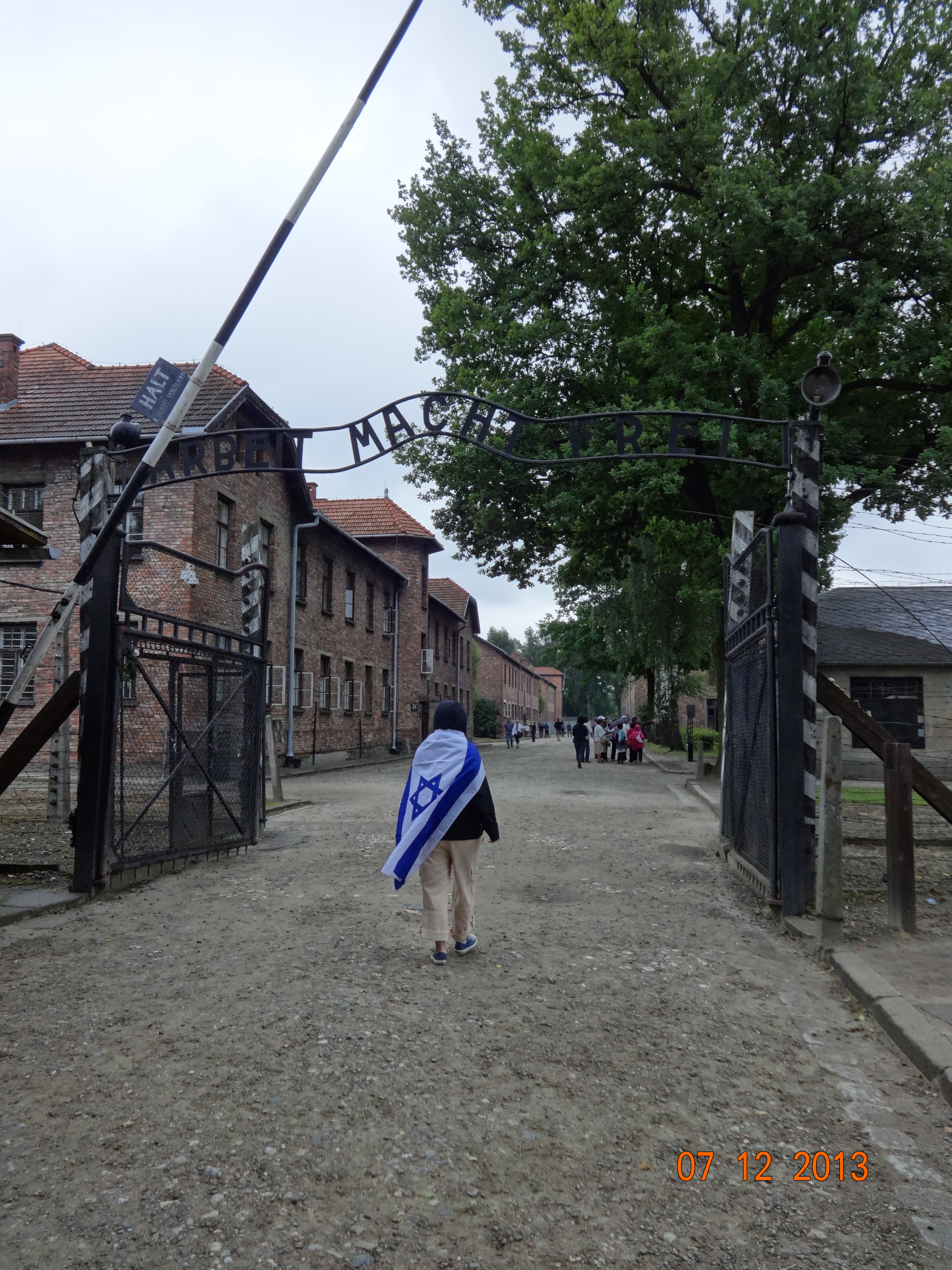
We have lunch on the bus in the parking lot, then drive the three kilometers through town to Birkenau. There it is. The entry tower. The iconic symbol of evil. DSC01140

We follow the guide up the stairs in the tower. From here we can see the sheer vastness of the camp. Dozens of long narrow women’s barracks, brick, still stand, albeit braced with wood on the gable ends to keep them from toppling until they can be re-pointed. She indicates that historic preservation here is a major concern.
The rest of the camp is many square kilometers of row upon row of foundations and brick chimney stubs, surrounded by the menacing curved and tapered concrete concrete posts dotted with white insulators and strung with miles of parallel lines of barbed wire. In the summer of 1944, when hundreds of thousands of Hungarian families were deported here, the rail lines came right into the camp.

Our guide leads us along the path through the camp that leads to the gas chamber and crematorium. We walk in in silence along the roadway, the only sound the crunching of brick fragments and gravel underfoot. It appears to have been paved with brick, slave labor, though in some spots it is hard to tell anymore. No one speaks, and on and on we walk. Two minutes. Five minutes. Ten minutes. Fifteen minutes. I’ve been on battlefields that are smaller than this site.

DSC01122

Finally we reach the end of the camp where the kitchens stood. A round concrete ring rises out of the earth, maybe 6 feet in diameter. Someone finally speaks and asks A. what it was. A giant flowerpot. She tells us also that they were placed near the entrances of the gas chambers. Flowers at the gas chambers.

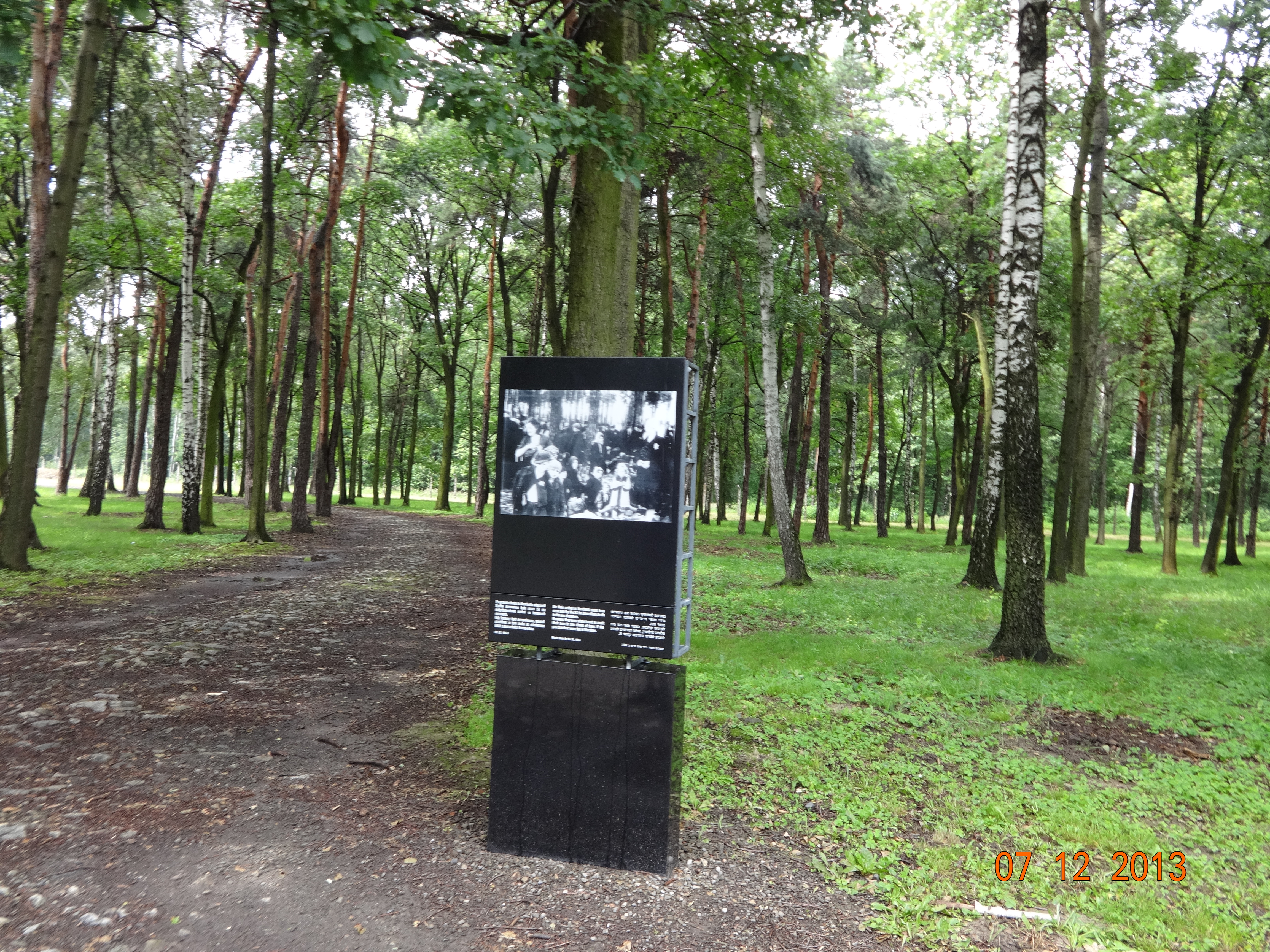
We turn left, and keep walking past interpretative signage. It seems like we are walking outside of camp perimeter. But we are not. Beautiful woods appear and we are walking on the edge of the woods with the camp to our left. We stop near another sign and rest for a moment, allowing the others to catch up. Then our guide calls our attention to the photo on the sign, showing Hungarian mothers and children doing the same thing we are doing. Halting and resting.  And a short path through the woods will take us to the ruins of the gas chamber/crematorium Number Five.

DSC01066We are resting at the spot they rested at, 20 minutes after walking, immediately after disembarking of overcrowded transports that had been traveling for days. Here they waited, anxiously, as their turn to approach the chamber would come. But the victims of the transport ahead of them had to be removed from the chamber first. Some days in the summer of 1944 these victims were backed up for hours.

I pick up a rock from the path and carry it with me past the ruins. At the ashfield there is more signage and a memorial asking visitors not to walk through the field. I place my stone on the memorial, looking down to watch where I step. But it is probably a futile gesture-this whole place is an ashyard, a graveyard.

We turn again, and walk past the remains of crematorium Number Four. To the disinfection center for those selected to be worked to death. Again, a system. Disrobing. Wading through disinfectant. Shower. Uniform thrown at you, mismatched clogs or shoes.

E’s mother spent two years here. Her grandmother and the little ones were selected upon arrival. Her mom’s beloved sister was murdered in the quarry after slipping while carrying a large pot of soup in the ice and snow with three other girls. Today is a hard day. I want to comfort her, to carry her pack for her. I feel helpless. There is nothing I can do.

At the Soviet memorial constructed near the two destroyed gas chamber/crematoria at the end, we have a remembrance ceremony. Kaddish is recited in Hebrew. I read it aloud in English. With tears, E. tells us that she feels her grandmother smiling down on this extraordinary group of dedicated teachers. A lump rises, again. I swallow hard and try to blink back the wetness I feel welling in my eyes. Damn, I almost made it. Glad for the sunglasses, even though there is no sun.

We light candles, turn our backs, and walk out, which provides another twenty-minute stretch of personal reflection. We have toured the epicenter of evil. We have been here, we try to process-but we just cannot. We need the individuals to speak to us. And like E’s family, they do.

At the close of the disinfection center are hundreds of photographs that had been discovered years after the camp was abandoned by the Germans. Pictures of loved ones who perished here. For me, like the personal home movies of pre-war life for the victims, this is what has the most meaning.

DSC01089
To Life.

Read Full Post »

World War II infantry veteran Carrol Walsh, top, hugs Holocaust survivor Paul Arato at a reunion in Queensbury, N.Y., on Tuesday, Sept. 22, 2009. Walsh’s unit liberated a Nazi train carrying 2,500 Jewish prisoners, including Arato, from the Bergen-Belsen concentration camp in Germany during the war’s waning days. (AP Photo/Tim Roske)

I am reposting this today to honor both of the men below. Paul Arato passed away this week in Toronto, Canada and his memorial service is today. Carrol Walsh, his liberator, died in Dec. at his home in Florida and his memorial service was last Friday in New York.

Paul and Rona would also check in annually for dinner with the Walsh family when they passed through our town. The last time I saw both of them together was in 2011 at one of these dinners in a local restaurant. They sat together and laughed and joked like old pals. Paul told the story of how he arrived in Detroit after the war as an eager late teen anxious to find work designing fast cars in the automobile industry and was driven to the bridge in Canada by law enforcement and pointed to the bridge to Canada, as he did not have the proper documentation. Picturing the scene in his mind, Carrol would laughed outloud and slapped his knee. Both men were so happy to have found each other.

Rest on, friends.

Holocaust Survivors Reunite With US Veterans

NY high school reunites Holocaust survivors liberated from Nazi death train by US soldiers

By CHRIS CAROLA

The Associated Press

HUDSON FALLS, N.Y.

The Holocaust survivor was 6 on that spring day in 1945 when he last saw the U.S. Army soldiers outside Magdeburg, Germany.

Paul Arato was among 2,500 starving and sickly Jewish prisoners from the Bergen-Belsen concentration camp, their train abandoned by its crew and Nazi guards as Allied forces advanced. Two U.S. Army tanks on a scouting patrol — one of them commanded by Carrol Walsh, then 24 — came upon the stopped boxcars.

Arato, now 71, and Walsh, 88, met again this week.

“Please give me a hug. You saved my life,” Arato told Walsh in an emotional reunion of concentration camp survivors and some of the veterans of the 30th Infantry Division who liberated them.

Arato, an industrial designer from Toronto, and Walsh, a retired state Supreme Court judge from Hudson Falls, came together for a Hudson Falls High School history symposium inspired by history teacher Matthew Rozell’s original World War II project in 2007.

“You were all kids on that train,” Walsh told the survivors, most of them in their early 70s, as they and their families greeted the veteran. “I was an old man. I was 24 years old!”

Those arriving early for Wednesday’s opening session gathered Tuesday night for an impromptu reunion before having dinner surrounded by the faux Adirondack decor of the nearly deserted indoor water park. Four of the five Nazi train survivors at the dinner had never met Walsh.

Walsh’s tank patrol discovered the desperate Bergen-Belsen survivors on April 13 — hundreds of emaciated Jewish prisoners who had been herded aboard one of three trains leaving the camp a week earlier to keep them from being liberated by advancing Allied forces.

Walsh’s patrol stayed for a time, handing out candy to some of the children, then moved on after reporting their discovery. Frank Towers, a 27-year-old first lieutenant in the 30th Division, led a convoy that took the newly liberated prisoners to a German town where they were given food and shelter.

For weeks, the men of the 30th had heard of Nazi atrocities against Jews and dismissed the stories as propaganda, Towers said. That all changed when they encountered the train.

“Then we believed,” said Towers, 93, of Brooker, Fla.

This week’s reunion is the fourth since 2007, when Walsh was joined by three of the train survivors at Hudson Falls High. History teacher Rozell’s World War II project included an Internet posting of Walsh’s account of the train liberation.

An Associated Press report of that first reunion prompted more survivors to come forward, some from as far away as Israel, Rozell said. In all, he has confirmed that more than 60 survivors are still living and has been in contact with about two dozen of them.

Nine survivors of the Nazi death train are participating in this symposium, along with Walsh, Towers and four other veterans of the 30th who fought in Germany. Rozell said this week’s gathering is likely to be the last such event of its scope, given the advanced ages of the veterans and survivors.

For Arato, Tuesday night’s reunion with Walsh brought back a flood of memories. He recalled getting candy from one of the soldiers and a handgun to play with.

“I remember it was a Tootsie Roll,” he said. “The gun wasn’t loaded.”

Arato fretted over one detail. He recalled seeing a Jeep along with the American tanks, but fellow survivor Fred Spiegel of Howell, N.J., didn’t remember seeing a third vehicle. Later, Walsh said his patrol consisted of two tanks — and a Jeep.

“There WAS a Jeep,” Arato said, a smile breaking out on his face. “I remembered it right.”

———

On the Net:

Hudson Falls High School World War II Living History Project: http://www.hfcsd.org/ww2

http://www.huffingtonpost.com/wires/2009/09/23/holocaust-survivors-reuni_0_ws_296673.html

http://www.ynetnews.com/articles/0,7340,L-3781062,00.html

Read Full Post »

Ravensbruck.

Ravensbruck.

We have visited a lot of sites in Germany since Bergen Belsen-in Berlin, the Wannsee Villa, where preliminary plans for the “Final Solution ” were signed off on after a one day conference, the Memorial to the Murdered Jews of Europe in the heart of the city, the Reichsbahn train platform, Track 17, where the Jews of Berlin were deported almost everyday for nearly two and a half years. We also visited Ravensbruck and Sachenhausen.

Ravensbruck is a couple of hours north of Berlin, in the former East Germany. It is notable for many reasons, probably first that it was a camp for women, and also a training faculty for SS camp guards-3500 women guards were trained here, and about 500 were in service. 130,000 women prisoners passed through here, and towards the end of the war, another 20,000 men.  No barracks are standing today, the houses for the SS leadership remain just outside the camp wall, where they lived with their families. Each day the camp gates would open and thousands of prisoners would stream out into the community for their slave labor assignments. Kind of hard to hide it from the kids. I suppose the attitude was that it was difficult, distasteful work, but the kids had to realized that it had to be done for the wonderful world that they were creating for the children’s future.

Immediately after the war the barracks were dismantled and given to refugees who had fled the Eastern Reich as it collapsed. Some are still used as houses today. The SS women guard barracks is used as a youth hostel education center today. They have a program where survivors interact with the kids for about 4 days, and sleep here at night. Our guide is the historian Matthias H. at the Gedenkstatte (Memorial). He appears to be in his early 40s and is passionate and knowledgeable, as are all of the German historians I have met thus far. Here are some of his observations that strike me the most:

In his opinion, the majority of Germans supported the master race theory. What disturbs him today is that in his opinion, few Germans today seem conscious of this. It is a very complex topic. The historians talk about the mass crimes, and in Matthias’ words, they work on thin ice. The responses range from some people wanted to know more- after all, many of them learned nothing about it from their teachers, many of whom were bystanders or even perpetrators. Some quietly deny the extent-but I have found that as you study it, you learn how vast and almost unbelievable it is in scope. Others, are tired of the topic- “yes, it happened, so what, enough…”

For Matthias, herein lies the greatest danger. It is important to have the past in front of you- NOT in the back of one’s mind, as one moves forward. The lesson may be simply how to “behave” , not just for Germans but for everyone.

Ravensbruck. Prisoners' gate on left, SS on right.

Ravensbruck. Prisoners’ gate on left, SS on right.

He walks us through the main camp entrance, where thousands of prisoners would pass everyday, explaining that for years he would avoid the single door entrance that the SS guards used-until one day a survivor he was leading on a tour walked through it, to symbolize her victory at this place.

He notes a few additional stories. Survivors corroborate that when new SS female guard recruits would come for training, initially they do not know how to deal with the new job. Industries wanting slave labor must send their own guard recruits, too.  They are not kind, but they do not seem possessed with the will to carry out this abhorrent work. Former prisoners would say that always within about two weeks new staff would have overcome the “cognitive dissonance” that would allow them to do their job without compassion. They become “hardened” and “get over it”.

Ravensbruck was built for 3000 prisoners. At its height it held 35,000. 30,000 were killed here. In the beginning the SS does  NOT want women with children in the camp. But as more and more territory is overrun, the camp swells. After the Warsaw Ghetto uprising in 1944, there are hundreds of pregnant women. Some are forced to abort; as numbers well, women give birth and the babies are taken to a “hospital” where they slowly starve to death. The crematorium works nonstop. Ash piles are created and dumped into the nearby lake as the Russians close in. When the camp is overrun by the Red Army, 2000 women and 2000 men, mostly to infirm to be death marched out of the camp, are found, but not before the Germans had installed a small operating gas chamber, where 5000 Hungarian women were murdered in 1944.

I think that the following story resonated the most with me as an educator of young people.

The butcher’s son delivered fresh cuts of meat nearly daily to the SS mess hall, which still stands. Late in life, the old man tells Matthias of his feeling as a young teen-going through the camp gates to deliver the meat, seeing the emaciated and foul smelling prisoners, and believing fully all he has been taught- that these people are indeed subhuman, vermin to be eliminated. It’s true. Just look at them. Just smell them. Disgusting. Everyday it is the same. They even march through the town to the labor sites. Best to keep a distance from them.

It’s the same until one cold morning when a new transport of women arrive-stripped naked, healthy, humiliated, shivering, crying, shocked, trying to cover themselves in the plaza. Now it is his turn for a shock. These are not subhuman, but girls his age and older, in distress.

And they are naked. He has probably never even seen his mother or sister undressed before. And it is at this moment that he realizes that his teachers and the adults in his life are wrong- that what he is witnessing is a crime. And now perhaps sixty years later he unburdens himself.

Finally, a survivor, Annika, recounts that the Scandinavian Red Cross appeared in the weeks before liberation and in the presence of these new people, the women stroke their hair (as it is growing in again after being shorn off) trying to make themselves presentable. As she is evacuated over the Danish border, something strange happens. People are crying at her miserable condition. At every stop, they crowd around tearfully, and want to help… What is this? Traveling through the towns in Germany, she recounts, no one cried. No one helped. To date, says Matthias, no former German perpetrator has shown remorse for his/her wartime behavior.

The bystanders probably included most of the victims’ neighbors and acquaintances, and certainly most of the townspeople where the crimes were perpetrated,  of thinking age.

But they all knew.

That for me is one of the axioms that will come out on this trip. But, suspending judgement- we were not there ourselves and placed in that positon-we have a lot to think about.

But we must think about this too-Hitler never murdered anyone by himself.

The lake at Ravensbruck, where ashes were dumped.

The lake at Ravensbruck, where ashes were dumped.

Read Full Post »

American Cemetery overlooking Omaha Beach, the primary landing zone for Americans during the D-Day invasion June 6, 1944. (U.S. Air Force Photo)Today one of my former students emailed me to visit saying that she had a surprise for me. She brought me a present- sand from the beach at Omaha in Normandy.

This was originally posted four Junes ago, I re-post here now.

I came into school today, on a Saturday, to start packing up my room for a move to another room.

But it is the 6th of June.

Instead I am getting nothing done, mesmerized by the scenes, live from Normandy, of the 65th anniversary celebration.

The President is there and so are 250 American veterans of the battle for Normandy,  including one of my good  friends, Buster Simmons, of the 30th Infantry Division. The Greatest Generations Foundation sponsored his visit with 9 other vets and college kids. Now I’m looking for him in the sea of faces.

My son Ned and I watched him last night as a “Person of the Week” on ABC World News in a story I contributed to. If you view the clip, you can see the photograph I provided ABC with, taken by Major Clarence Benjamin, of the liberation of the train. This is the photo that Buster uses when he speaks to high school classes to tell this story.

I am hopeful that we can get Buster to come to our high school for the  liberator-survivor reunion in September.

It was twenty five years ago, on this anniversary, that I wrote an essay in the local newspaper expressing my appreciation for the veterans of World War II. And as I begin to sort through and pack up 20+ years of memories in this room, three things are becoming clear: 1) my love for these men and women and what they did only increases as time passes; 2) the rest of my career will be focused on the promotion of narrative history in the classroom, linking students, veterans and survivors together; and 3) I won’t be getting any packing done this day.

Take a minute to watch Buster in the clip and take his optimism about the future of our nation to heart. Especially if -“you’re an American.”

Read Full Post »

« Newer Posts - Older Posts »