Feeds:
Posts
Comments

Posts Tagged ‘Holocaust Survivors’

"The anguish of the liberation and return to life". Note the Benjamin photograph on the banner.

“The anguish of the liberation and return to life”. Note the Benjamin photograph on the banner. From the Yad Vashem website.

Fourteen summers ago I sat down to listen to an old gentleman in a rocking chair. A  war weary tank commander in 1945, he told me stories of his World War II experiences and then showed me a picture that his major had taken on April 13, 1945. You see, he was there. It would be the first time in decades that this picture had seen the light of day. And because of its discovery, and what we would do with it, thousands of lives were about to change.

Yad Vashem, the Holocaust Authority in Israel, contacted me in December 2014 to inquire about using the Major Benjamin photo. I did immediately send them a high resolution copy. My friend in Israel writes, ‘[The photograph above was taken] during the main ceremony at  the Holocaust Remembrance Day at Yad Vashem. This photo shows the President of Israel Reuven Rivlin make his speech. You can see your photo there at the middle (banner) and I now think it was there throughout all the ceremony.’

I hope that whoever was present or sees this photograph will visit our website to learn the powerful story behind this amazing photograph in the context of the 70th anniversary of the liberation. No wonder the survivors of the train refer to April 13th as the day they were reborn. Below is the proper information.

Matthew Rozell

From Yad Vashem:

Holocaust Martyrs’ and Heroes’ Remembrance Day (Yom Hashoah in Hebrew) is a national day of commemoration in Israel, on which the six million Jews murdered in the Holocaust are memorialized. It is a solemn day, beginning at sunset on the 27th of the month of Nisan and ending the following evening, according to the traditional Jewish custom of marking a day. Places of entertainment are closed and memorial ceremonies are held throughout the country. The central ceremonies, in the evening and the following morning, are held at Yad Vashem and are broadcast on the television. Marking the start of the day-in the presence of the President of the State of Israel and the Prime Minister, dignitaries, survivors, children of survivors and their families, gather together with the general public to take part in the memorial ceremony at Yad Vashem in which six torches, representing the six million murdered Jews, are lit. The following morning, the ceremony at Yad Vashem begins with the sounding of a siren for two minutes throughout the entire country. For the duration of the sounding, work is halted, people walking in the streets stop, cars pull off to the side of the road and everybody stands at silent attention in reverence to the victims of the Holocaust. Afterward, the focus of the ceremony at Yad Vashem is the laying of wreaths at the foot of the six torches, by dignitaries and the representatives of survivor groups and institutions. Other sites of remembrance in Israel, such as the Ghetto Fighters’ Kibbutz and Kibbutz Yad Mordechai, also host memorial ceremonies, as do schools, military bases, municipalities and places of work. Throughout the day, both the television and radio broadcast programs about the Holocaust. In recent years, other countries and Jewish communities have adopted Yom Hashoah, the 27th of Nisan, to mark their own day of memorial for the victims of the Holocaust.

Holocaust Martyrs’ and Heroes’ Remembrance Day 2015 will be on Thursday, 16 April. The State opening ceremony will be held at Yad Vashem on Wednesday 15 April at 20:00.

Read Full Post »

Update from Nashville: At the 30th Infantry Veterans of WW2 70th anniversary reunion.

Today’s events began with the posting of the colors and a moving memorial service for the veterans of the 30th Infantry Division and 743rd Tank Battalion who have moved on. Missing many, especially for me Buster Simmons, who would offer up a prayer at this gathering in his capacity as chaplain. Rest on,old soldier.

94 year old veteran Marion Sanford comes up to me and grips my hand. I have not seen him in 2 years, but he is the same to me as he always was. As a reconnaissance man for the 30th Infantry Division, he tells me how much he saw and how much now in retrospect meeting the survivors and their families has meant to him. He saw many terrible things overseas, which he felt he had to leave out of his 2012 book, ‘Old Hickory Recon’. Don’t think for a minute that a soldier understood why a friend might be killed and the fickle hand of fate spared another. In what way can this be justified? Survivors’ guilt was not just for the Holocaust survivors to experience. But this ‘small’ incident, the liberation of the train near Magdeburg, seems to have altered his perspective and the perspective of many of the soldiers I have met at these reunions. It seems to have enhanced and  added to ‘man’s search for meaning’, in a sense, as far as the soldiers go.

0417151104-00

Posting the colors. MC Frank Towers in the background. Frank will be 98 in June.

 ***

After lunch, moving talks today by survivors George Somjen (Hungary), Elisabeth Seaman (Netherlands), Micha Tomkeiwitz (Poland) . To their liberators they recounted the events that they remembered and  more importantly, the impact that the liberation and the meeting of their liberators meant not only for them and their families, but also  the world.

Later, the amazing reflections of the 2nd generation ‘Train near Magdeburg’ survivors who are with us for the first time: Evelyn Marcus, formerly of the Netherlands, Orly Beigel of Mexico, and Marc Boyman of Canada. April 13th, the liberation date, for their families was a date always remembered and celebrated; a time to remember how the American soldiers loved life, and loved people, and treated the survivors with such tenderness, empathy, and respect, in marked contrast to the soldiers from another Allied nation who moved in to replace the Americans as the terms of the peace settlement were adjusted.


L-R: Peggy Wonder, 2nd G; Evelyn Markus, 2nd G; Frank Towers, liberator; Orly Beigel, 2nd G; Micha Tomkeiwicz, Elisabeth Seaman. Missing: Marc Boyman, 2nd G; George Somjen.

L-R: Marc Boyman, 2nd G; Peggy Wonder, 2nd G; Evelyn Markus, 2nd G; Frank Towers, liberator; Orly Beigel, 2nd G; Micha Tomkeiwicz, Elisabeth Seaman, Matthew Rozell Missing: George Somjen. Photo credit: Patti Jordan. 4-17-15.

I heard today so many vignettes of hope and promise for the future of mankind. And this, I witnessed with my own eyes. This gathering, this whole trip is an affirmation of the goodness of mankind, a meditation on the profound difference  that  one’s actions can make, and the confirmation that teaching history really does matter.

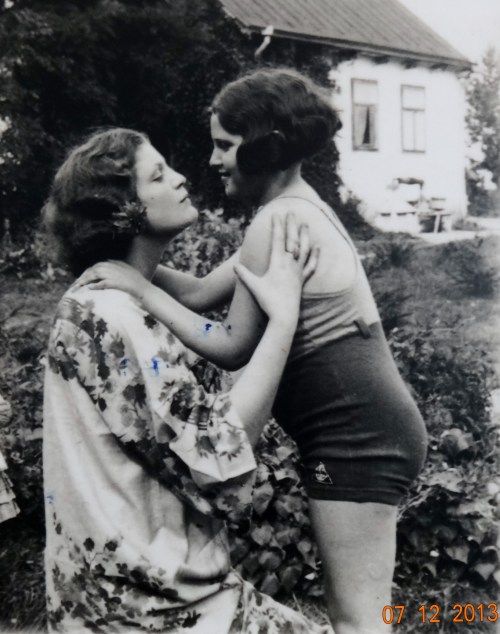
Orly Beigel’s mother, far left, 1945. Commonly mislabeled as ‘Buchenwald Survivors Entering Israel, 1945’. No. These girls ( L-Jetty (Jetta) Halpern and R-Magda Werber, together with Jetty’s older sister Golda Katz-Halpern, not pictured) pulled into the station at Guard d’Lion, Paris in France with much fanfare several weeks after liberation; there was a celebration as they arrived, so they thought that a celebrity must be on board. The war was over. In a rare instance, the survivors were the ones being celebrated.


Read Full Post »

Yom HaShoah ceremony and service, Jewish Federation of greater Rochester, New York, April 15, 2015. 700 folks come out on a midweek night. From an audience member: ‘The most beautiful, inspirational Yom HaShoah service I have ever been to.’

It was indeed a moving service and I was honored to have a part in it.

We stop and we pause, to reflect and remember.

Key take-aways from my presentation:


  1. The American Army was involved in a shooting war. More soldiers would die in the days to come. But they stopped. They helped these people. And some carried the trauma with them for the rest of their lives.
  2. People need heroes. But few of the liberators would like to be remembered this way. Maybe we should all take a moment to think about our own obligation to humanity.
  3. For every one person who was liberated on this ‘Train Near Magdeburg, nearly 2500 persons, keep close the reality that another 2500 perished in the Holocaust.
  4. Finally, the voices of the eyewitnesses need to always be with us. We need to keep them close. Or forget at our peril.

***

Carrol Walsh, liberator: Our lives were joined at that moment on April 13, 1945, and now we meet face to face and recall together that moment when my tank reached the train.

Steve Barry, survivor:There is no other army in this world that would stop and help 2500 lice-ridden, emaciated Jews, to save them. What army would stop, except the American army?

Steve Barry: Mounted SS troops came around, rode by the train, and started to yell ‘Raus, Raus, get out of the train!  Get out of the cars!’  And we saw them putting up machine gun nests. So obviously, even at that last moment, they were still trying to murder us.

Carrol Walsh: I had no idea who they were, where they had come from, where they were going – nothing. No idea. All I knew: here’s a train with these boxcars and people jammed in those boxcars. No idea. No, I had no idea.

Steve Barry: Very shortly after that we saw the first American GIs.  Well, actually there were two tanks.  I still get tears in my eyes. Right now I have tears in my eyes and I always will when I think about it.  That’s when we knew we were safe.

Letter  from Carrol Walsh to Steve Barry, 2008: ‘You are always expressing gratitude to me, the 743rd Tank Battalion and the 30th Infantry Division. But I do not believe gratitude is deserved because we were doing what we, and the whole world, should have been doing- rescuing and protecting innocent people from being killed, murdered by vicious criminals. You do not owe us. We owe you.  We can never repay you and the Jewish people of Europe for what was stolen from you: your homes, your possessions, your businesses, your money, your art, your family life, your families, your childhood, your dreams, and all your lives.’

Steve Barry:  Is this a beautiful person?

Carrol Walsh:  I think, I cannot believe today, as I look back on those, on those years and on what was happening, I cannot believe that the… world almost ignored those people and what was happening. I cannot believe it. How could we have all stood by and have let that happen? We owe those people a great deal. We owe those people everything. They do not owe us anything. We owe them for what we allowed to happen to them. That is how I feel.


Read Full Post »

April 17th. (1945)

Dear Chaplain;-

Haven’t written you in many months now, its funny how a few moments are so hard to find in which to write a letter way past due; it’s much easier to keep putting it off the way I’ve done. I’ll try to make up for it in this letter.

Today I saw a sight that’s impossible to describe, however I’ll try. Between 2400 and 3000 German refugees were overran by my division during our last operation; most of them were, or had been, inmates of concentration camps, their crimes the usual ones, – Jewish parentage, political differences with der Fuhrer, lack of sympathy for the SS, or just plain bad luck. Not one of these hundreds could walk one mile and survive; they had been packed on a train whose normal capacity was perhaps four or five hundred, and had been left there days without food.

Our division military government unit took charge of them, and immediately saw what a huge job it was going to be, so they sent out a call for help. Several of our officers went out to help them organize the camp they were setting up for them. The situation was extremely ticklish we soon learned; no one could smoke as it started a riot when the refugees saw the cigarette, and we couldn’t give the kiddies anything or they would have been trampled to death in the rush that would result when anything resembling food was displayed. The only nourishment they were capable of eating was soup; now the army doesn’t issue any of the Heinz’s 57 varieties, so we watered down C-ration[s] and it served quite well.  It was necessary to use force to make the people stay in line in order to serve them. They had no will power left, only the characteristics of beasts.

A few weeks of decent food will change them into a semblance of normal human beings; with God willing the plague of disease that was already underway, will be diverted; but I’m wondering what the affect of their ordeal they have been through, will be on their minds; most will carry scars for the rest of their days for the beatings that they were given. No other single thing had convinced me as this experience has that Germany isn’t fit to survive as a nation. I’ll never forget today.

I was going to write mother tonight but thought better of it. I’ll be in a better frame of mind tomorrow. I’m only a few dozen miles from Berlin right now, and its hard to realize the end is in sight. I’m always glad to receive your scandal sheet. You perhaps missed your calling, as your editorial abilities are quite plain.

As ever,

Charles.

March 11th, 2009

Dear Mr. Rozell:

My father-in-law was 1st. Lt. Charles M. Kincaid. He was a Liason Officer with the 30th. Division Artillery.  He was honored with an Air Medal in the battle of Mortain and a Bronze Medal in the battle of St. Lo.  In the battle of Mortain he won his Air Medal by calling in artillery adjustments while flying in a Piper L-4 over 4 panzer divisions on August 9, 1944.

first-lt-chuck-kincaid-sept-1944He rarely wrote home. He did write home to his minister about one event that evidently really caused him to stop and think. Attached is a copy of that letter that his sister transcribed – making copies for others to read.  The letter describes the Farsleben train and his experience there.

I need to thank you for your website and work. You and your students work enabled me to connect the letter with the actual historical event. It further enabled me to show my children the pictures and to make their Grandfather’s experience real, not just an old letter – that this event so affected him that he needed to tell his minister before he told his mother.

Thank you,
Mark A.

Read Full Post »


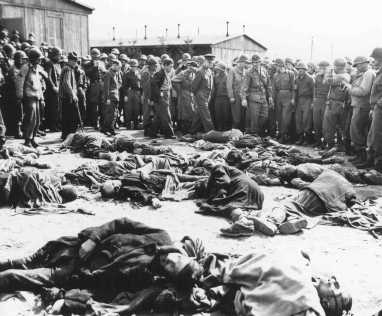
General Dwight D. Eisenhower (center), Supreme Allied Commander, views the corpses of inmates who perished at the Ohrdruf camp. Ohrdruf, Germany, April 12, 1945. — National Archives and Records Administration, College Park, Md. USHMM

We are told the American soldier does not know what he is fighting for. Now, at least he knows what he is fighting against.

— General Dwight D. Eisenhower, on visiting a subcamp of Buchenwald, April 12, 1945

April 4, 1945: The U.S. 4th Armored Division liberates the concentration camp at Ohrdruf, Germany, a subcamp of Buchenwald, the site of more than 4000 deaths during the previous three months. Victims were Jews, Poles, and Soviet POWs. Hundreds shot just before liberation had been working to build an enormous underground radio and telephone communications center. Very few inmates remain alive at liberation.

April, 1945: U.S. Generals Dwight Eisenhower, George Patton, and Omar Bradley visit the camp at Ohrdruf, Germany, and view corpses and other evidence of Nazi atrocities.

In late March 1945, the camp had a prisoner population of some 11,700, but in early April the SS evacuated almost all the prisoners on death marches to Buchenwald. The SS guards killed many of the remaining prisoners who were too ill to walk to the railcars.

When the soldiers of the 4th Armored Division entered the camp, they discovered piles of bodies, some covered with lime, and others partially incinerated on pyres. The ghastly nature of their discovery led General Dwight D. Eisenhower, Supreme Commander of the Allied Forces in Europe, to visit the camp on April 12, with Generals George S. Patton and Omar Bradley. After his visit, Eisenhower cabled General George C. Marshall, the head of the Joint Chiefs of Staff in Washington, describing his trip to Ohrdruf:

. . .the most interesting–although horrible–sight that I encountered during the trip was a visit to a German internment camp near Gotha. The things I saw beggar description. While I was touring the camp I encountered three men who had been inmates and by one ruse or another had made their escape. I interviewed them through an interpreter. The visual evidence and the verbal testimony of starvation, cruelty and bestiality were so overpowering as to leave me a bit sick. In one room, where they were piled up twenty or thirty naked men, killed by starvation, George Patton would not even enter. He said that he would get sick if he did so. I made the visit deliberately, in order to be in a position to give first-hand evidence of these things if ever, in the future, there develops a tendency to charge these allegations merely to “propaganda.”


Seeing the Nazi crimes committed at Ohrdruf made a powerful impact on Eisenhower, and he wanted the world to know what happened in the concentration camps. On April 19, 1945, he again cabled Marshall with a request to bring members of Congress and journalists to the newly liberated camps so that they could bring the horrible truth about Nazi atrocities to the American public. He wrote:

We continue to uncover German concentration camps for political prisoners in which conditions of indescribable horror prevail. I have visited one of these myself and I assure you that whatever has been printed on them to date has been understatement. If you could see any advantage in asking about a dozen leaders of Congress and a dozen prominent editors to make a short visit to this theater in a couple of C-54’s, I will arrange to have them conducted to one of these places where the evidence of bestiality and cruelty is so overpowering as to leave no doubt in their minds about the normal practices of the Germans in these camps. I am hopeful that some British individuals in similar categories will visit the northern area to witness similar evidence of atrocity.

That same day, Marshall received permission from the Secretary of War, Henry Lewis Stimson, and President Harry S. Truman for these delegations to visit the liberated camps.

Ohrdruf made a powerful impression on General George S. Patton as well. He described it as “one of the most appalling sights that I have ever seen.” He recounted in his diary that

In a shed . . . was a pile of about 40 completely naked human bodies in the last stages of emaciation. These bodies were lightly sprinkled with lime, not for the purposes of destroying them, but for the purpose of removing the stench.

When the shed was full–I presume its capacity to be about 200, the bodies were taken to a pit a mile from the camp where they were buried. The inmates claimed that 3,000 men, who had been either shot in the head or who had died of starvation, had been so buried since the 1st of January.

When we began to approach with our troops, the Germans thought it expedient to remove the evidence of their crime. Therefore, they had some of the slaves exhume the bodies and place them on a mammoth griddle composed of 60-centimeter railway tracks laid on brick foundations. They poured pitch on the bodies and then built a fire of pinewood and coal under them. They were not very successful in their operations because there was a pile of human bones, skulls, charred torsos on or under the griddle which must have accounted for many hundreds.

Source(s):

Weber, Louis. The Holocaust Chronicle. Publications International Ltd., 2007. http://www.holocaustchronicle.org

The United States Holocaust Memorial Museum, 1945- The Year of Liberation. 1995.

http://www.ushmm.org/wlc/en/media_ph.php?ModuleId=10006131&MediaId=3711

http://www.ushmm.org/wlc/en/article.php?ModuleId=10006131

*************************************************************

Matthew Rozell is a United States Holocaust Memorial Museum Teacher Fellow and teaches history at his alma mater in upstate New York. This year, he is authoring a series of posts under the heading of ‘Seventy Years’, marking the 70th anniversary of the close of World War II and of the ‘liberation phase’  of the Holocaust. His work has reunited 275 Holocaust survivors with the American soldiers who freed them.

His first book, a narrative of World War II in the Pacific as told through the previously unpublished recollections of two dozen veterans, is due out this spring. His second book, in progress, is on the power of  teaching, remembering the Holocaust, and this “Train Near Magdeburg’. He can be reached at marozell at gmail dot com.

Read Full Post »

The cosmos trips once more. This month, shortly after my previous post about the discovery of previously unknown artwork by Hungarian Holocaust survivor Ervin Abadi, I was contacted by the family of another American soldier who was at Hillersleben camp as the survivors of the train were being nursed back to health by the medics of the 95th Medical Gas Battalion. They sent me most of the drawings below [Monroe Williams credit, courtesy the Williams family], published here for the first time.

Abadi’s recently discovered artwork matches that of his previously known work, some of which is housed in the archives of the United States Holocaust Memorial Museum.

Ervin Abadi, Typhus. USHMM Collection. Probably completed at Hillersleben DP Camp, May, 1945.

Ervin Abadi, Typhus. USHMM Collection. Probably completed at Hillersleben DP Camp, May, 1945.

(If you suspect that you have any of Abadi’s art in your family, or if anyone remembers his time at Hillersleben or Bergen Belsen, please drop me a line at the bottom.)


He was driven to express his gratitude for the American soldiers who freed him from the train, brought him to the hospital at Hillersleben, nursed him back to health and protected him in his stay at the displaced persons camp. These important drawings are proof of that, and confirm his dedication to feverishly recording everything that he could about those days. He drew his surroundings, his memories of the horrors of Bergen Belsen, and the beautiful young American soldiers around him, and even their precious photos of loved ones in their wallets!

In his words:

“Let these drawings serve as proof of my everlasting gratitude towards those to whom I owe my life. … To the soldiers of the United States Army, particularly to our immediate liberators, those soldiers of the 9th regiment who first entered the village of Zilitz and gave us bread, milk, chocolate, and cigarettes….”

American soldier at Hillersleben, 'Man'.  Ervin Abadi. Completed at Hillersleben DP camp, May, 1945. Soldier Monroe Williams collection.

American soldier at Hillersleben, ‘Man’. Ervin Abadi. Completed at Hillersleben DP camp, May, 1945. Soldier Monroe Williams collection.

American soldier-medic at Hillersleben.  Ervin Abadi. Completed at Hillersleben DP camp, May, 1945. Soldier Monroe Williams collection.

American soldier-medic at Hillersleben. Ervin Abadi. Completed at Hillersleben DP camp, May, 1945. Soldier Monroe Williams collection.

A kapo inflicts a beating at Bergen-Belsen. Ervin Abadi. Completed at Hillersleben DP camp, May, 1945. Soldier Monroe Williams collection.

A kapo inflicts a beating at Bergen-Belsen. Ervin Abadi. Completed at Hillersleben DP camp, May, 1945. Soldier Monroe Williams collection.

The American hospital at Hillersleben. Ervin Abadi. Completed at Hillersleben DP camp, May, 1945. Soldier Monroe Williams collection.

The American hospital at Hillersleben. Ervin Abadi. Completed at Hillersleben DP camp, May, 1945. Soldier Monroe Williams collection.

Soldier Monroe Williams' parents. Probably sketched from wallet photo.  Ervin Abadi. Completed at Hillersleben DP camp, May, 1945. Soldier Monroe Williams collection.

Soldier Monroe Williams’ parents. Probably sketched from wallet photo. Ervin Abadi. Completed at Hillersleben DP camp, May, 1945. Soldier Monroe Williams collection.

Ervin Abadi. Completed at Hillersleben DP camp, May, 1945. Soldier Monroe Williams collection.

Ervin Abadi. Completed at Hillersleben DP camp, May, 1945. Soldier Monroe Williams collection.

The 'casino' at Hillersleben. Ervin Abadi. Completed at Hillersleben DP camp, May, 1945. Soldier Monroe Williams collection. Note Red Cross tents in foreground. May have served as temporary morgue station.

The ‘casino’ at Hillersleben. Ervin Abadi. Completed at Hillersleben DP camp, May, 1945. Soldier Monroe Williams collection. Note Red Cross tents in foreground. May have served as temporary morgue station.

Former hospital at Hillersleben today. (Christian Wolpers photo.)

Former hospital at Hillersleben today. (Christian Wolpers photo.)

'Hillersleben-some disorderly DPs getting a shower bath (DDT?)' Soldier Luca Furnari photograph.

‘Hillersleben-some disorderly DPs getting a shower bath (DDT?)’ Soldier Luca Furnari photograph.

*****

Former American medic Walter Gantz called me out of the blue 3 years ago. Like all of the soldiers now reappearing in Abadi’s drawings, he was there. A couple newspaper articles appeared about Walter’s experience at  Hillersleben shortly thereafter. I put survivors in touch with him:

By the fall of 1944, the 95th [Medical Gas]Battalion was stationed at the Belgian-German border.

That winter, Mr. Gantz helped treat the wounded at the Battle of the Bulge in the Ardennes region, and by the spring of ’45 his unit had made its way into Germany.

In mid-April, they were in the town of Hillersleben setting up a displaced persons hospital when the Allies came across a train that had come from the Nazi concentration camp Bergen-Belsen, where over 35,000 people, the vast majority of them Eastern European Jews, had died of typhus during the first few months of that year.

All told, there were roughly 2,400 emotionally damaged, disease-ridden and terribly malnourished people aboard the train. “Walking skeletons” was an apt description, according to Mr. Gantz.

“We weren’t knowledgeable about these (concentration camps) at the time,” said Mr. Gantz, who visited Bergen-Belsen days after it was liberated. There, he saw countless dead bodies “strewn everywhere.”

“It was hard to explain,” he said. “I cried. And then I prayed for these people. Not only were you angry about what happened, but you felt so helpless.”

Mr. Gantz’s unit spent about six weeks treating the survivors. A good 70 or 80 of them died, mostly of typhus. Among the biggest challenges was acquiring enough food supplies to feed them all. Many could only take their nourishment intravenously.

“A lot of them, if you were to give them food, they would gorge themselves and kill themselves. You had to be very careful as to what they ate,” he said. “Boy, oh boy, they would scream. Those screams would go right through your body.”

“Hillersleben was a living nightmare,” he added. “You don’t shake these horrible scenes from one’s mind.” {see more https://teachinghistorymatters.com/2011/11/04/my-parents-couldnt-understand-why-i-couldnt-sleep-at-times/}

***

Blessed – or maybe cursed – with a terrific memory, he can vividly recall the screams and overall sense of dread permeating the hospital, where he and his fellow medics wore a daily uniform of surgical masks, gloves and rubber aprons.

He remembers scooping handfuls of lice out of patients’ hair and administering countless needles and the time he had to carry the body of a little girl to a tent serving as a makeshift morgue.

“I still get flashbacks to that,” he said.

Many died, mostly of typhus. Among the biggest challenges was acquiring enough food to feed them all, since a good portion of them could only take their nourishment intravenously. One of the survivors Mr. Gantz has spoken with, Lexie Keston, now a resident of Australia, told him she weighed just 30 pounds at the time of the rescue. She was 8 years old.

As a result of Mr. Rozell’s [work], a handful of Bergen-Belsen survivors have been in touch with Mr. Gantz, including Ariela Rojek, a Toronto resident who was 11-1/2 years old at the time of the rescue.

Mrs. Rojek, a Pole who lost all but an aunt during the Holocaust, was among those suffering from typhus. She spent three weeks in semi-consciousness, and remembers having to be tied to the bed by medics trying to restrain her. Mr. Gantz could have been one of them, she said.

“Those soldiers, they gave me my life. Because I was very sick,” she said.

“It was tough. Some of our guys couldn’t take it,” Mr. Gantz said. “I have to admit, I did a lot of crying. I tried not to do it around the patients.”

Now, though, he has the peace of mind of knowing firsthand that, despite all the horrors, life did go on for the survivors of Bergen-Belsen, just as it did for him and his fellow veterans. Asked once by a friend what he took from his wartime experience, Mr. Gantz thought for a moment, then replied, “It made me stronger spiritually.”

“I’ve been blessed,” he said. “I thank the good Lord every day.”

“He’s one of the angels,” Mrs. Rojek said of Mr. Gantz. “I’m really grateful. Whenever I get a name and phone number, I always call them. They gave me a second life.”

Mr. Gantz, 87, said the whole experience has made him feel “10 feet tall.”

“I have to use the word mind-boggling. I guess you’d have to put it in the category of a dream,” he said. “I have to be honest with you, it’s embarrassing. All they keep saying is, ‘Thank you, thank you, thank you.’”

{see more https://teachinghistorymatters.com/2012/03/04/it-was-tough-some-of-our-guys-couldnt-take-it/}

********

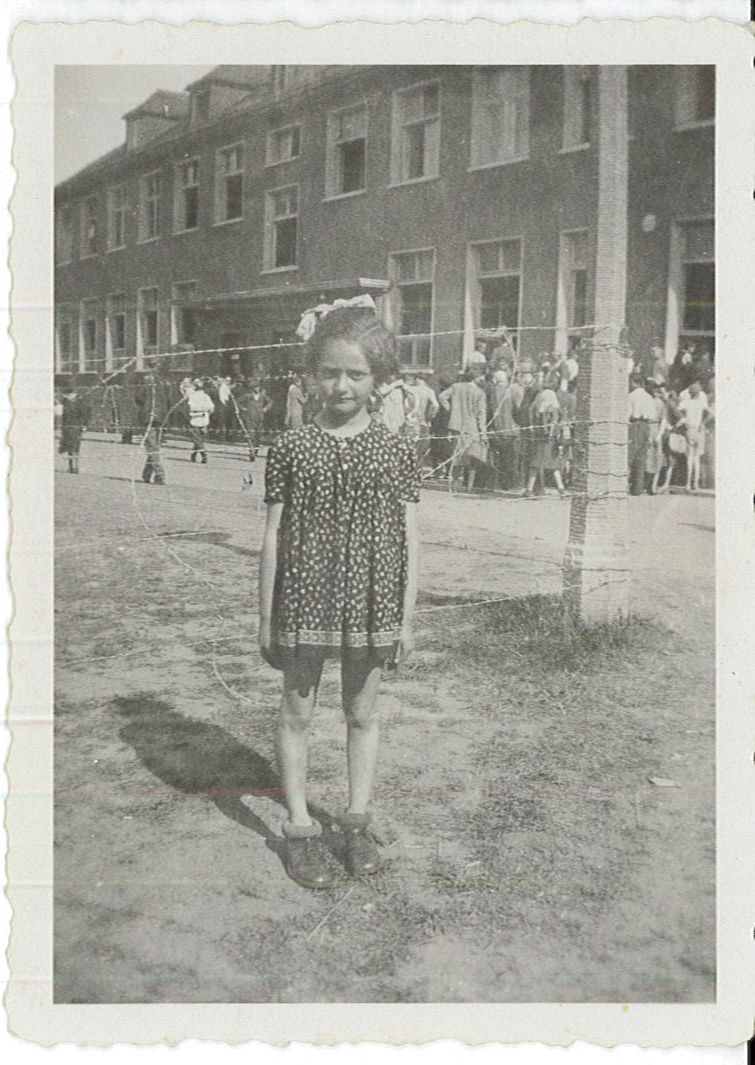
FINAL NOTE. We are also looking for this little girl, a survivor at Hillersleben. Her name was Irene. You can read the backstory here. Please contact me below.

'Hillersleben-Irene is in the flowered dress' Soldier Luca Furnari photograph.

‘Hillersleben-Irene is in the flowered dress’ Soldier Luca Furnari photograph.


*************************************************************

Matthew Rozell is a United States Holocaust Memorial Museum Teacher Fellow and teaches history at his alma mater in upstate New York. This year, he is authoring a series of posts under the heading of ‘Seventy Years’, marking the 70th anniversary of the close of World War II and of the ‘liberation phase’  of the Holocaust. His work has reunited 275 Holocaust survivors with the American soldiers who freed them.

His first book, a narrative of World War II in the Pacific as told through the previously unpublished recollections of two dozen veterans, is due out this spring. His second book, in progress, is on the power of  teaching, remembering the Holocaust, and this “Train Near Magdeburg’. He can be reached at marozell at gmail dot com.

Read Full Post »

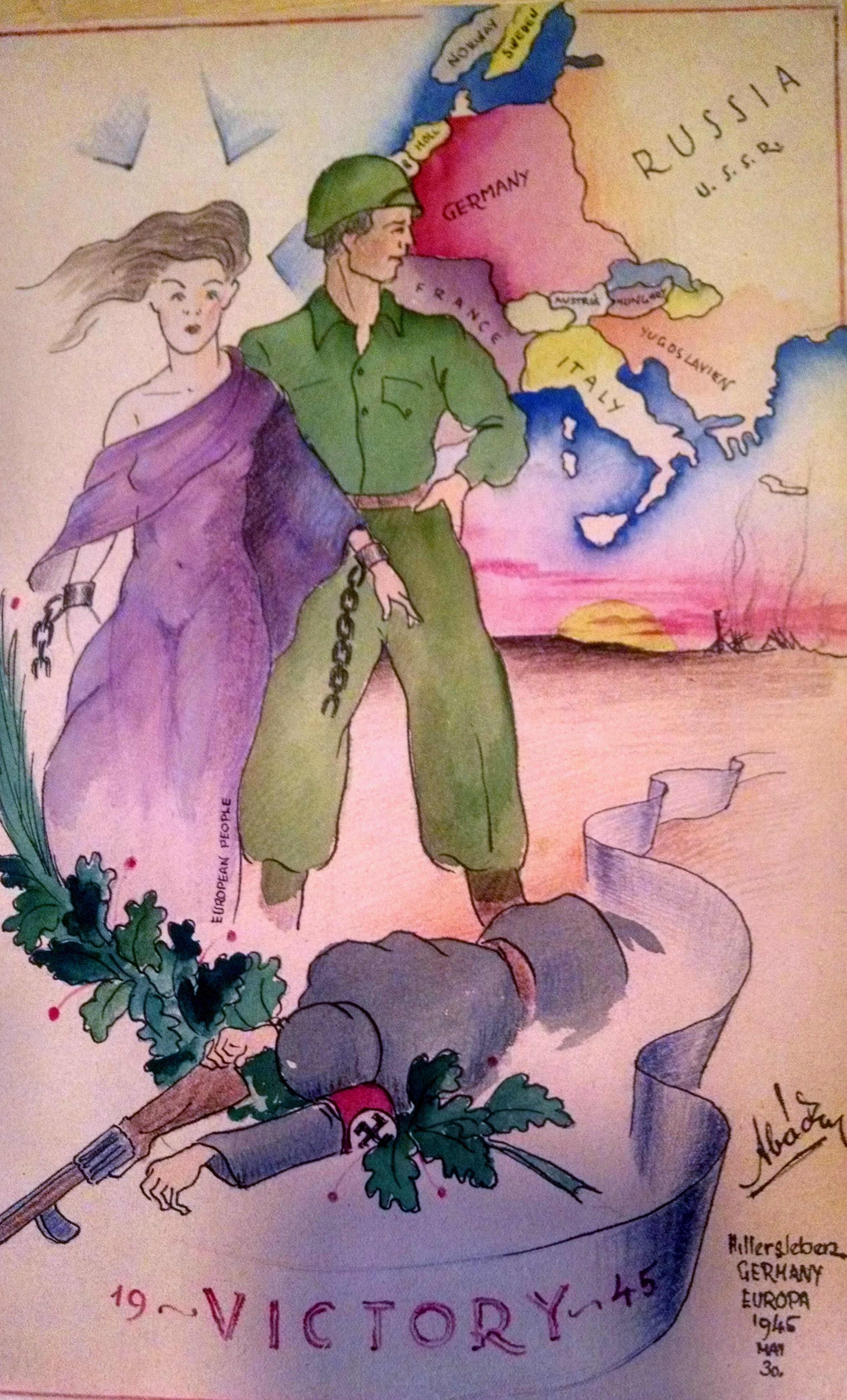
Victory, 1945. By Ervin Abadi. Hilersleben, Germany, May 1945.

Victory, 1945. By Ervin Abadi. Hillersleben, Germany, May 1945. Courtesy Chriss Brown, granddaughter of American soldier Don Rust.

The wires of the cosmos trip once more.

After almost exactly 70 years, a person came to this site on Jan. 30th with an inquiry:

I recently came across this site looking for a gentleman my grandfather became close to. My grandfather, Donald W. Rust of the 95th Medical Gas Treatment Battalion, helped him … and often spent time with him. The gentleman drew several pictures for my grandfather and I still have them today.

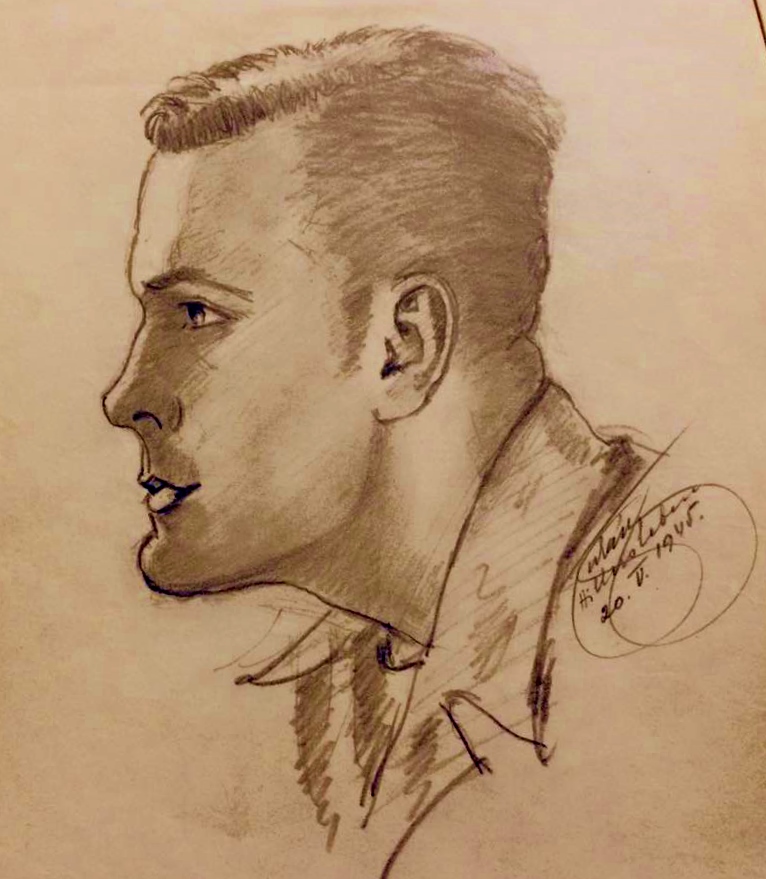
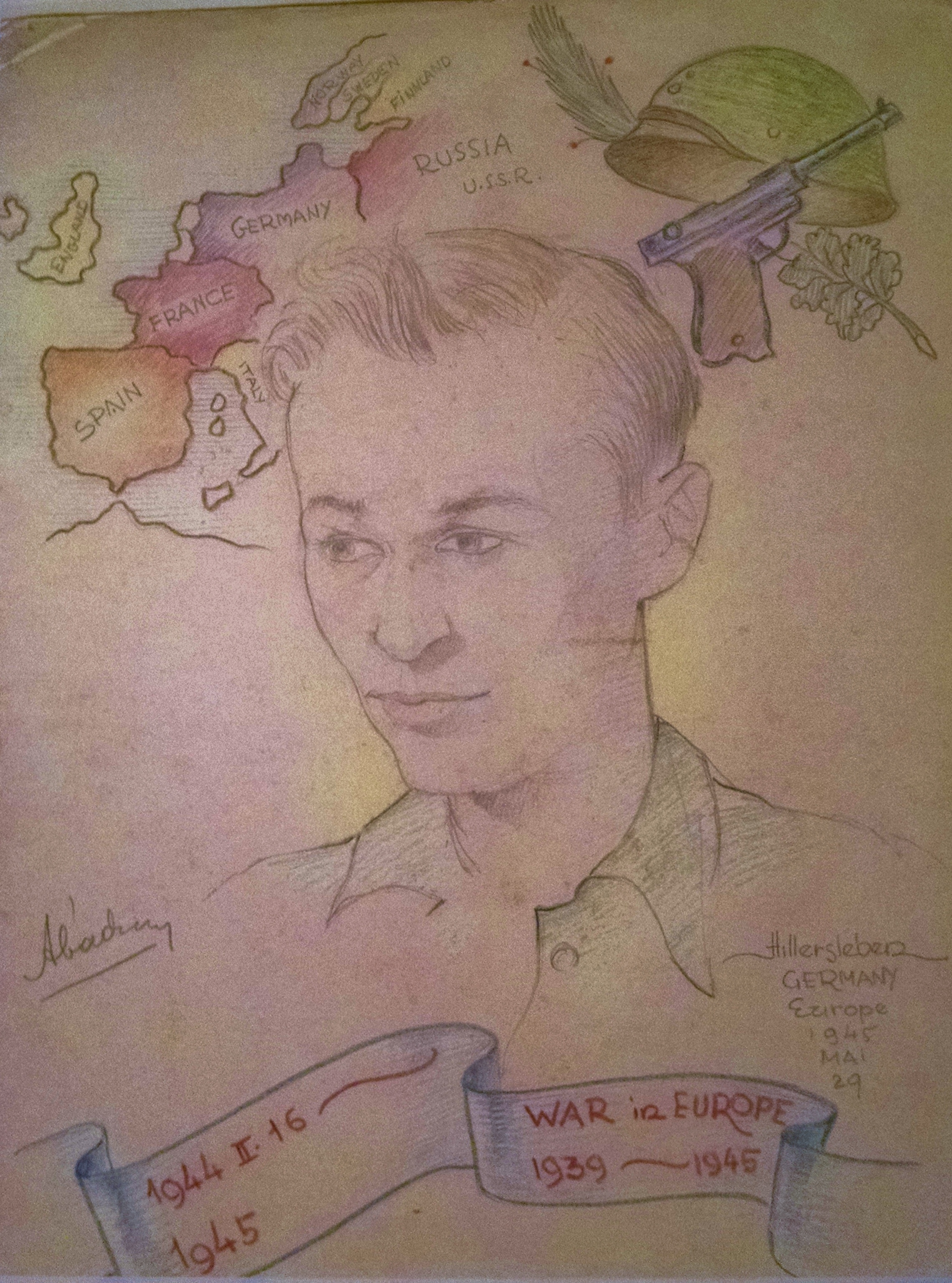
Donald W Rust of Kansas City KS. Hillersleben DP Camp, May 1945. Source: Chriss Brown, granddaughter of Don Rust.

Donald W Rust of Kansas City KS. Hillersleben DP Camp, May 1945. By Ervin Abadi. Source: Chriss Brown, granddaughter of Don Rust.

We looked while my grandfather was still alive but were unable to find any lists of the survivors until now. We cannot read his name clearly but we think the drawer’s name is ‘Albadi’ or something close to it. I would love to share the pictures he drew and also would like to hear if anyone can help me contact the survivor’s family. My grandmother turns 90 in March and it would mean the world to her to know what become of him.

My grandfather told us the gentleman was from Poland, but we don’t know what city. Unfortunately, my grandfather could not remember his name. If anyone can help, it would be much appreciated.  ~Chriss B.

***

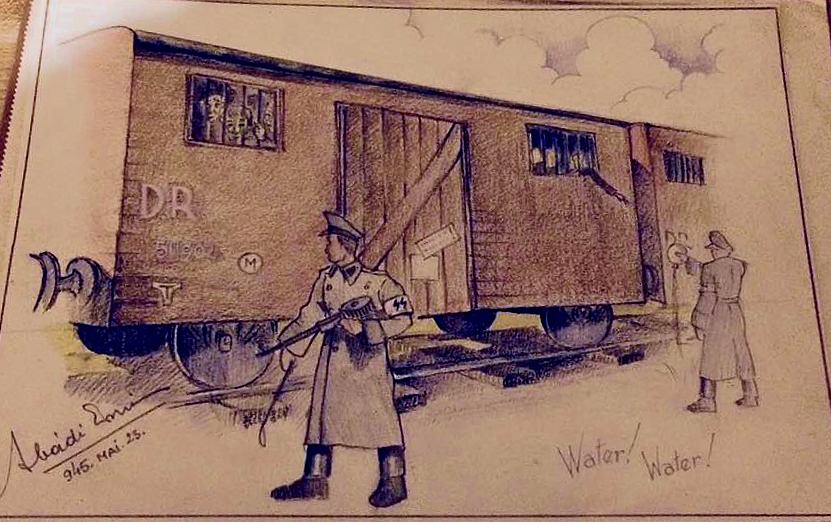
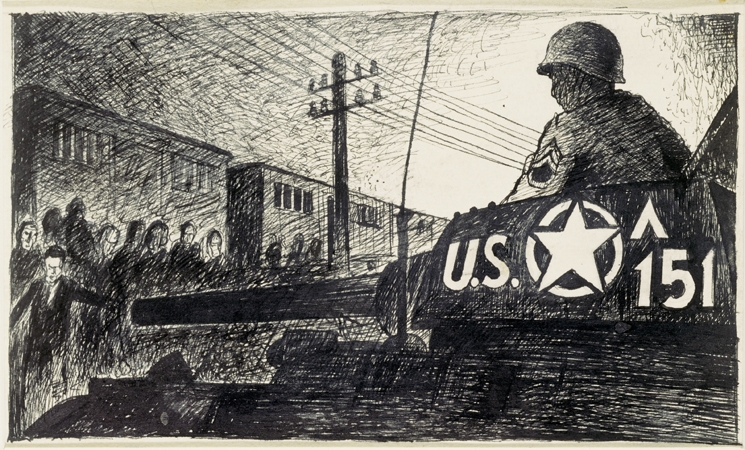
I immediately knew who she was talking about (though he hailed from Hungary, not Poland) and  got in touch with her. She sent me samples, and sure enough it was Ervin Abadi, whose work I was very familiar with. He had even sketched a drawing of the liberation with the tanks rolling in, but unfortunately he passed away 22 years before I sat down to do my interview with one of the tank commanders in the drawing.

Liberation, April 13th, 1945. Drawing by survivor Ervin Abadi. USHMM.

Liberation, April 13th, 1945. Drawing by survivor Ervin Abadi. USHMM.

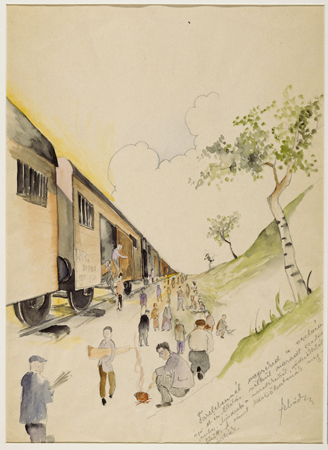
The Liberation of the Train, by Ervin Abadi. USHMM.

The Liberation of the Train, Farsleben, Germany, April, 1945. Ervin Abadi. USHMM.


Dozens of Abadi’s pieces are at the United States Holocaust Memorial Museum, and his bio there reads as follows:

In his early twenties when the war broke out, Ervin Abadi lived in Budapest, Hungary and wanted to be a painter. But, as with all Jewish males his age, he was taken to Russia by the Hungarian Army as a forced laborer. Abadi managed to escape but was captured after hiding out in the Karpet Mountains. After being brutally mistreated he managed to escape again, but was recaptured and taken to Bergen Belsen. When the camp was liberated  by the US Army [incorrect: his train transport from Belsen to Theresienstadt] on April 13, 1945, Abadi was taken to a hospital in Hillersleben, where he recovered. While in the hospital (and possibly earlier in the camp) he made 25-30 watercolors, dealing with his arrival at Bergen Belsen, life in the camp and its liberation by the US Army. Abadi returned to Budapest where he told about his life as a forced laborer and and an inmate of Bergen Belsen in a collection of 30 ink drawings. The work was published in 500 copies with Hungarian and English captions in 1946. The foreword of the book says, in part, “Let these drawings serve as proof of my everlasting gratitude towards those to whom I owe my life. … To the soldiers of the United States Army, particularly to our immediate liberators, those soldiers of the 9th regiment who first entered the village of Zilitz and gave us bread, milk, chocolate, and cigarettes….” Abadi, however, became disallusioned by Communist Hungary and managed to leave for Israel in 1947 or 1948 where he lived in Israel for the rest of his life. There he wrote 15 books in both Hebrew and Hungarian. He died in 1979.  [my emphasis]

***

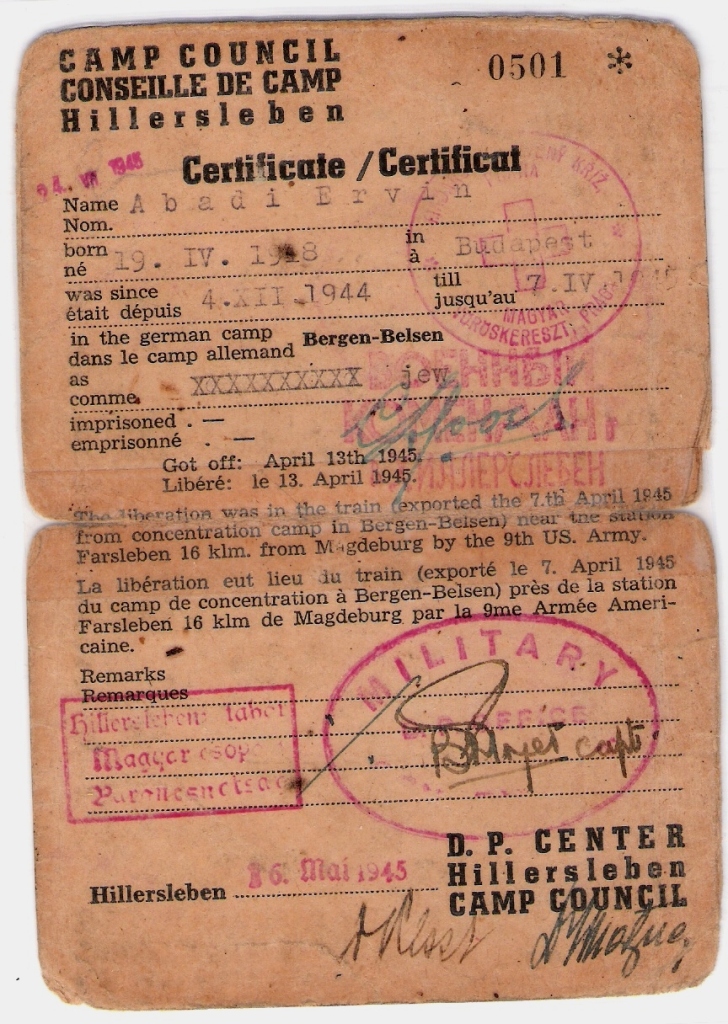
Ervin Abadi’s name is also the first on the existing manifest list. Some years ago, with the help of Varda W. in Israel, his daughter got in contact with me, and sent me his DP [displaced persons] document from Hillersleben:

Hillerleben Displaced Persons certificate-Ervin Abadi

Hillerleben Displaced Persons certificate-Ervin Abadi.

At that time, 5 years ago, his daughter wrote:

As you know, my father is a survivor from Bergen Belsen on the Magdeburg train. He got sick with typhus and was taken to the American Hospital at Hillersleben.

All my life my father told me to remember that he was saved by the Americans, and for that he will be grateful until his last day- and so must I, because if he was not to be saved- I wouldn’t be born.

My father passed away in 1979, and since then I tried to keep my promise to my father. I went to Normandy in France and walked the beaches that are soaked with the blood of the American soldiers and wanted to honor their memory, for because of them, I am living today.

A few years later I visited the World War II Memorial in Washington, DC. I met there an old gentleman and I found out that he was one of the American soldiers who fought on the beach on D-Day! I told him the story about my father and we both fell into each others arms crying. I felt like I fulfilled my promise to my father. ~Julia A. H.

**

So I dug out the letter, got in contact with Julia again,  and put her in touch with Chriss, the granddaughter of the soldier who in befriending Abadi, helped him in his recuperation.

Raymond D. Rape of Zelienople, PA ; Grafton D Junkin of Kennedy, Alabama ; Donald W Rust of Kansas City KS. Hillersleben DP Camp, May 1945. Source: Chriss Brown, granddaughter of Don Rust.

Raymond D. Rape of Zelienople, PA ; Grafton D Junkin of Kennedy, Alabama ; Donald W Rust of Kansas City KS. Hillersleben DP Camp, May 1945. Source: Chriss Brown, granddaughter of Don Rust.

From Julia, the artist’s daughter, last week:

I was very touched… 70 years after it happened, my father’s drawings came back to us.

We use to say that if his name is mentioned, a person lives forever.

Thank you again for remembering my father’s work of art.

*************************************************************


Read Full Post »

This week I introduced what will be a series of posts under the heading of ‘Seventy Years’, marking the 70th anniversary of the close of World War II and discovery of the magnitude of the most horrific crime in the history of the world, the Holocaust.

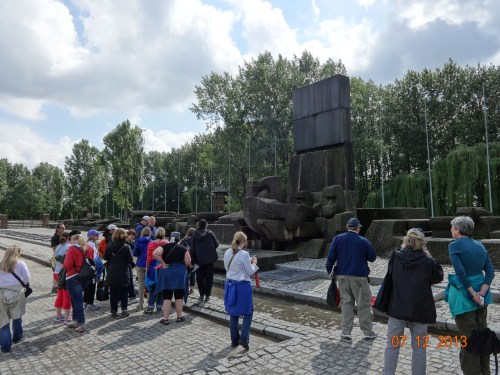
Today I travel again back to Auschwitz-Birkenau, sharing some of my personal observations and photographs on the anniversary of the liberation by Soviet troops 70 years ago this week.

*****

July 12.

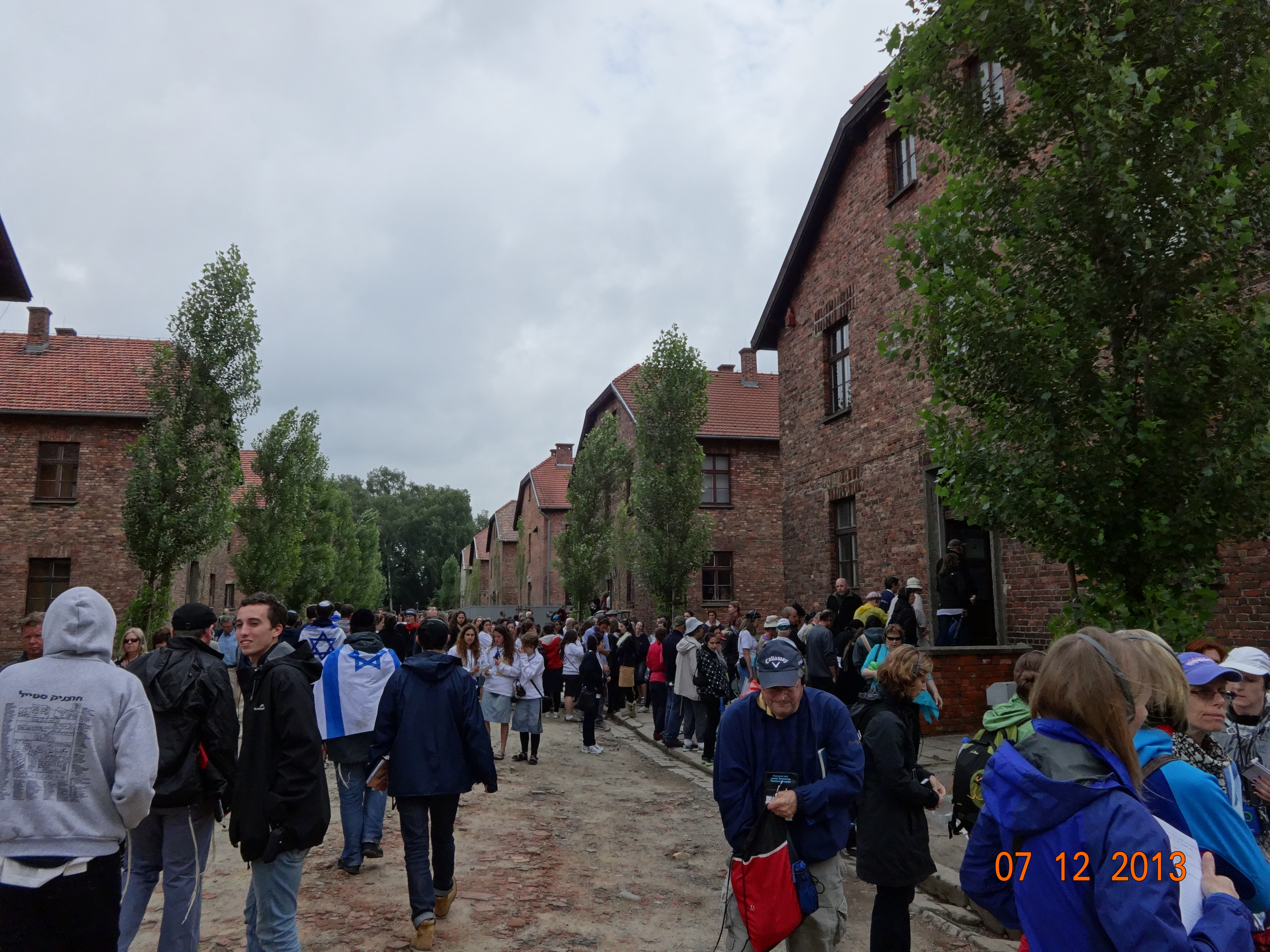
After the tour of Auschwitz I, our teacher travel study group has lunch on the bus in the parking lot, then drive the three kilometers through town to Birkenau.

There it is. The entry tower. The iconic symbol of evil.

787

Main entrance to the Auschwitz-Birkenau extermination camp. USHMM

Main entrance to Auschwitz-Birkenau . USHMM


We follow the guide up the stairs in the tower. From here we can see the sheer vastness of the camp.

696


Women's Barracks. Auschwitz II.

Women’s Barracks. Auschwitz II.


Dozens of long narrow women’s barracks, brick, still stand, albeit some braced with wood on the gable ends to keep them from toppling until they can be re-pointed. A. indicates that historic preservation here is a major concern.
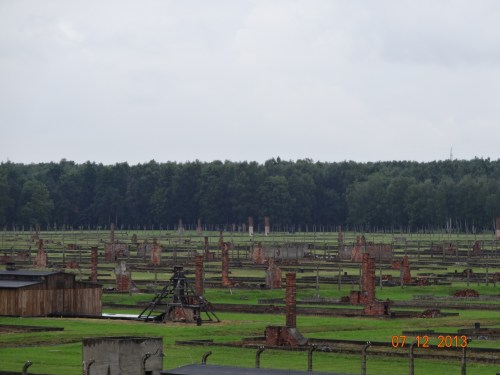
 

Vastness

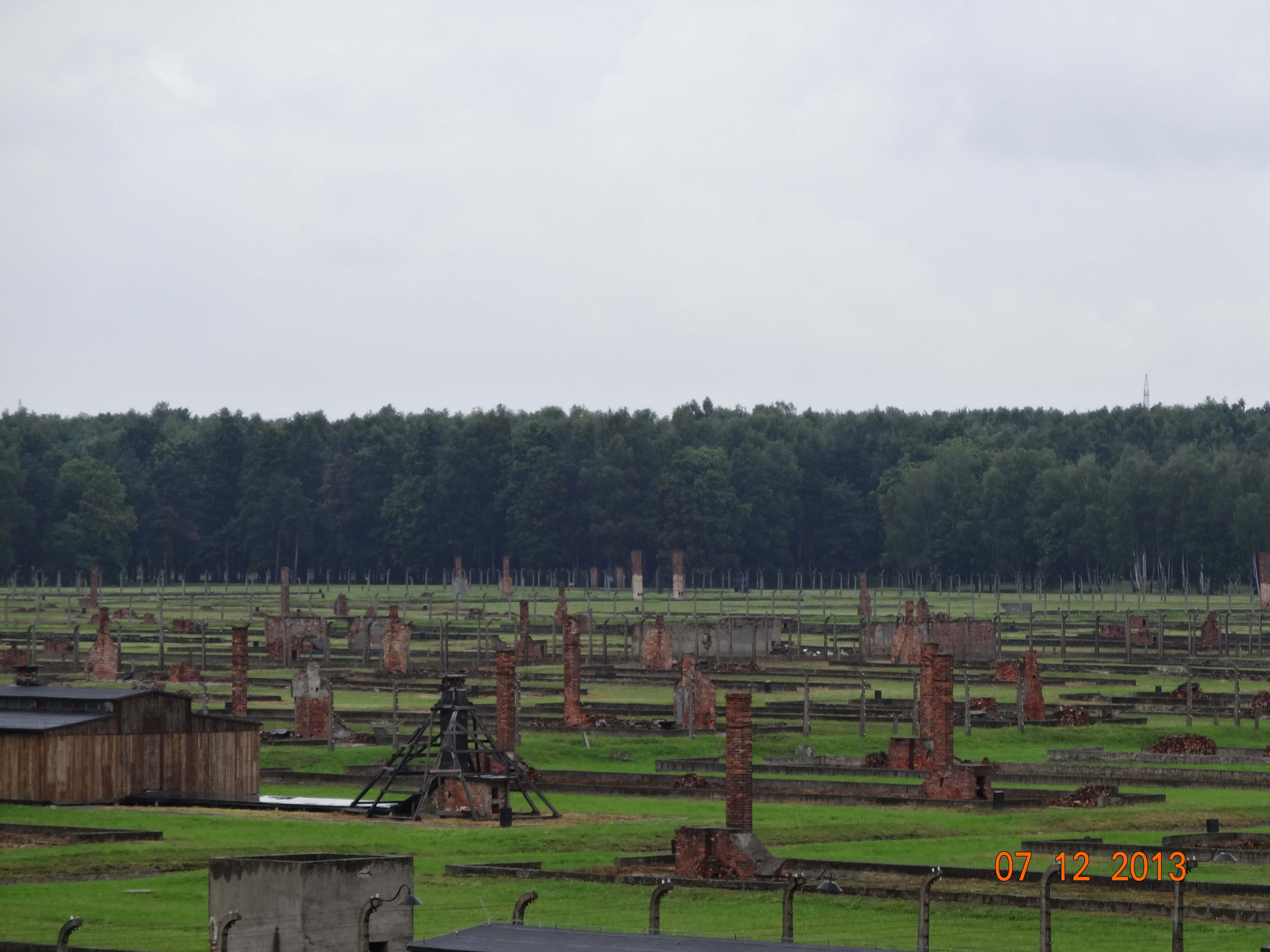
The rest of the camp is many square kilometers of row upon row of foundations and brick chimney stubs, surrounded by the menacing curved and tapered concrete concrete posts dotted with white insulators and strung with miles of parallel lines of barbed wire. In the summer of 1944, when hundreds of thousands of Hungarian families were deported here, the rail lines came right into the camp.
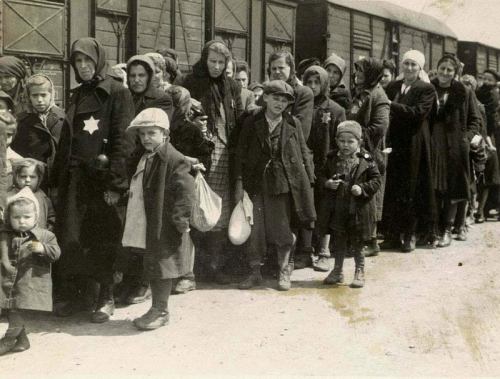
View of the Ramp at Auschwitz-Birkenau Showing the SS Selection of Hungarian Jews USHMM.

View of the Ramp at Auschwitz-Birkenau Showing the SS Selection of Hungarian Jews, USHMM.


View of the Ramp at Auschwitz-Birkenau Showing the SS Selection of Hungarian Jews, USHMM.

View of the Ramp at Auschwitz-Birkenau Showing the SS Selection of Hungarian Jews, USHMM.


Following the German invasion of Hungary in March 1944, over 400,000 Hungarian Jews  were deported and murdered at Auschwitz.


The Walk.

Our guide leads us along the path through the camp that leads to the gas chamber and crematorium. We walk in in silence along the roadway, the only sound the crunching of brick fragments and gravel underfoot.

Selected.

Selected.


The Walk.

707

It appears to have been paved with brick, slave labor, though in some spots it is hard to tell anymore. No one speaks, and on and on we walk. Two minutes. Five minutes. Ten minutes. Fifteen minutes. I’ve been on battlefields that are smaller than this site.


Flower ring as we make final approach to the chambers tucked into the wooded area nearby.

Finally we reach the end of the camp where the kitchens stood. A round concrete ring rises out of the earth, maybe 6 feet in diameter. Someone finally speaks and asks A. what it was. A giant flowerpot. She tells us also that they were placed near the entrances of the gas chambers. Flowers at the gas chambers.

Waiting. For what we do not know.

Waiting. For what we do not know. Exhausted from deportation and “travel”. We now know who they were. Yad Vashem.


We turn left, and keep walking past interpretative signage. It seems like we are walking outside of camp perimeter. But we are not. Beautiful woods appear and we are walking on the edge of the woods with the camp to our left. We stop near another sign and rest for a moment, allowing the others to catch up. Then our guide calls our attention to the photo on the sign, showing Hungarian mothers and children doing the same thing we are doing. Halting and resting.  And a short path through the woods will take us to the ruins of the gas chamber/crematorium Number Five.

They waited here. Some days, in the summer of 1944, for hours.

They waited here. Some days, in the summer of 1944, for hours.


We are resting at the spot they rested at, 20 minutes after walking, immediately after disembarking of overcrowded transports that had been traveling for days. Here they waited, anxiously, as their turn to approach the chamber would come. But the victims of the transport ahead of them had to be removed from the chamber first. Some days in the summer of 1944 these victims were backed up for hours.

I pick up a rock from the path and carry it with me past the ruins. At the ashfield there is more signage and a memorial asking visitors not to walk through the field. I place my stone on the memorial, looking down to watch where I step. But it is probably a futile gesture-this whole place is an ashyard, a graveyard.


The secret sonderKommando photos. Where the bodies were burned in open air.

The secret sonderkommando photos. Where the bodies were burned in open air.


“So many Hungarian Jews were killed in the Auschwitz camps during that period that the crematoria were incapable of consuming all the bodies, and open pits for the purpose were dug.”
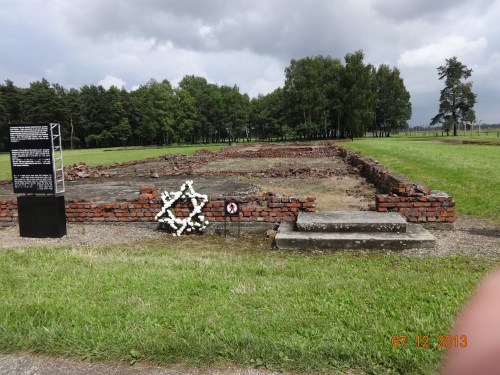
728

We turn again, and walk past the remains of crematorium Number Four. To the disinfection center for those selected to be worked to death. Again, a system. Disrobing. Wading through disinfectant. Shower. Uniform thrown at you, mismatched clogs or shoes.

 *****

E’s mother spent two years here. Her grandmother and the little ones were selected upon arrival. Her mom’s beloved sister was murdered in the quarry after slipping while carrying a large pot of soup in the ice and snow with three other girls. Today is a hard day. I want to comfort her, to carry her pack for her. I feel helpless. There is nothing I can do.

778

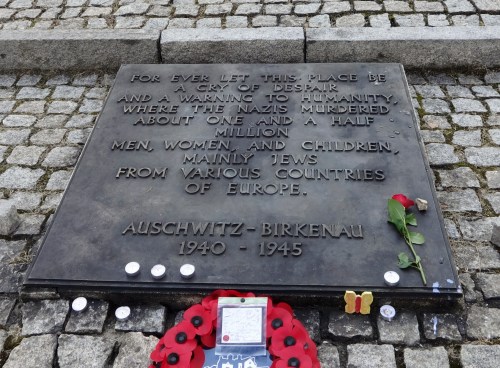
At the Soviet memorial constructed near the two destroyed gas chamber/crematoria at the end, we have a remembrance ceremony. Kaddish is recited in Hebrew. I read it aloud in English. With tears, E. tells us that she feels her grandmother smiling down on this extraordinary group of dedicated teachers. A lump rises, again. I swallow hard and try to blink back the wetness I feel welling in my eyes. Damn, I almost made it. Glad for the sunglasses, even though there is no sun.

770

775


772

776


“A Warning to Humanity.”

We light candles, turn our backs, and walk out, which provides another twenty-minute stretch of personal reflection. We have toured the epicenter of evil. We have been here, we try to process-but we just cannot. We need the individuals to speak to us. And like E’s family, they do.


738


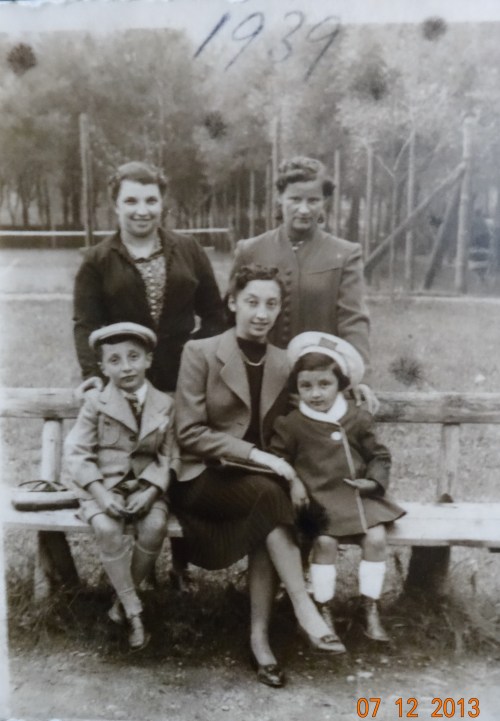
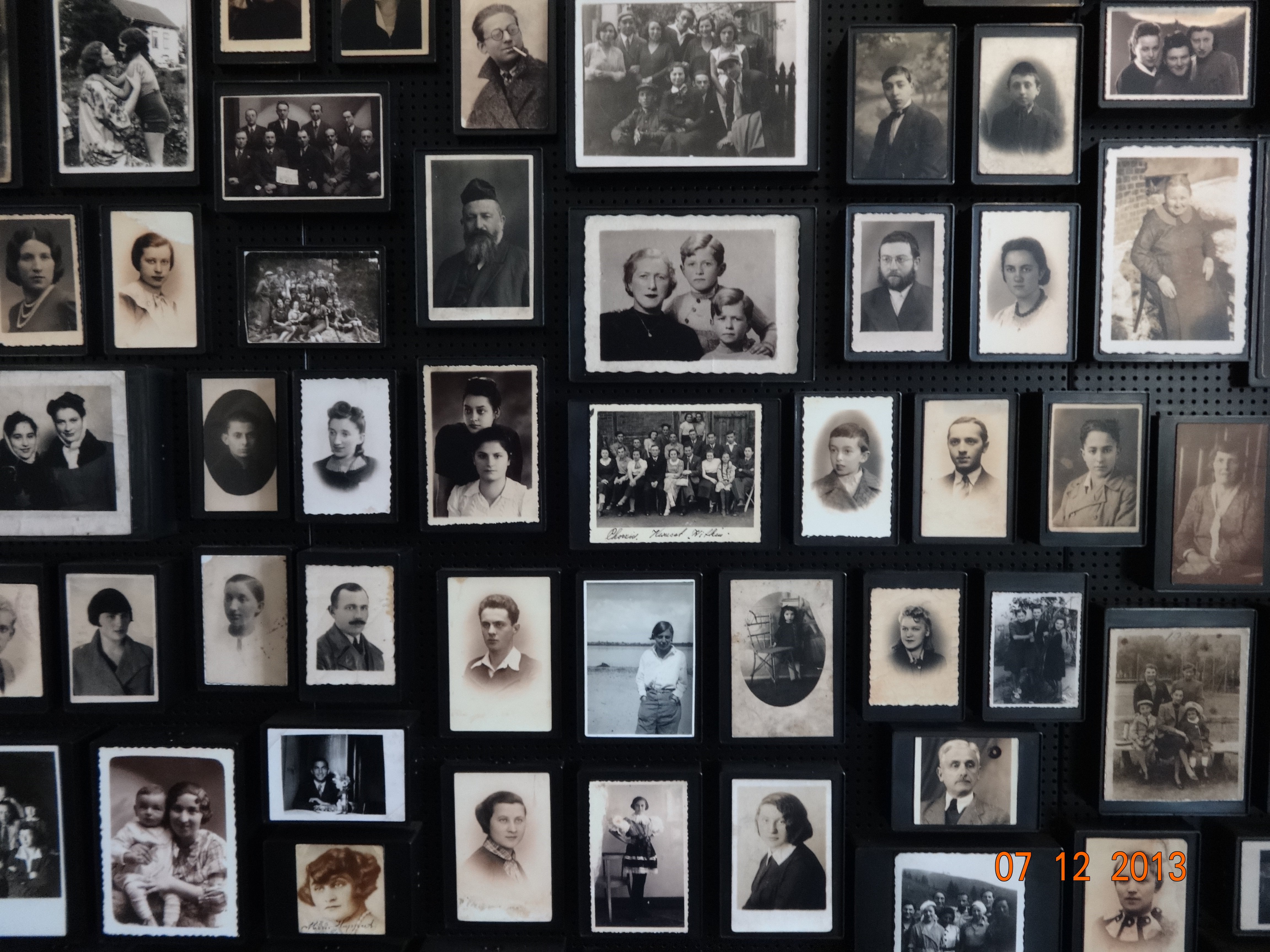
At the close of the disinfection center exhibit there are hundreds of photographs that had been discovered years after the camp was abandoned by the Germans. Pictures of loved ones who perished here.

For me, like the personal home movies of pre-war life for the victims at the exhibit at Auschwitz I, this is what has the most meaning. So I will leave you for now with a few close ups.
744

743

741

742


To Life.To Life.

*****

From National Public Radio:

A Holocaust Survivor, Spared From Gas Chamber By Twist Of Fate

by Soraya Sarhaddi Nelson, International Correspondent, Berlin

January 27, 2015 3:40 PM ET


Jack Mandelbaum, a Holocaust survivor from the Polish city of Gdynia, poses in front of a photograph showing him as a youth.

Jack Mandelbaum, a Holocaust survivor from the Polish city of Gdynia, poses in front of a photograph showing him as a youth. Tobias Schwarz/AFP/Getty Images

Seventy years ago, Soviet soldiers liberated Auschwitz, the most notorious of Nazi concentration camps.

Some 300 Holocaust survivors were at Auschwitz on Tuesday, along with several European presidents and other government officials, to honor at least 1.1 million people who were murdered, 1 million of whom were Jewish.

Among those killed there were Jack Mandelbaum’s mother and brother. The Polish-born Mandelbaum survived, spared at the last minute by an officer of the dreaded SS who yanked the teen away from his family and sent him instead to a forced labor camp.

Last week, Mandelbaum flew from his Naples, Fla., home to Berlin, to help open an exhibit on the children of Auschwitz, and to tell his story.

“I’m a person of action,” he says. “Anger doesn’t get you anyplace. Hate doesn’t get you anyplace.”

In August 1939, as the Nazis were about to invade Poland, Mandelbaum was 13 and living in the Polish port city of Gdynia. Mandelbaum says his father worried that the port would be attacked, so he sent his wife and three children to stay with relatives in the countryside.

He promised to join them six weeks later, but he never arrived. About a year later, he sent them a postcard from the Stutthof concentration camp.

“I guess he didn’t want us to worry about him, so he said he was OK,” Mandelbaum says.

He never saw his father again. His sister later died on a forced march to another concentration camp.

Prisoner 16013

Then, before dawn on June 14, 1942, the SS came for what was left of the family.

“They banged on the door and everyone had to come out in five minutes, and there was a lot of shooting and crying, and people didn’t know what was happening because they had to rush out,” Mandelbaum recalls. “Many people were even in their bed clothes. And we were lined up in the market square, and then we were marched to a local brewery.”

An SS officer there began separating people to the left and to the right. Mandelbaum says he clung to his mother and brother, who were sent to the left. But the SS officer saw in his documents that Mandelbaum had worked as an electrician’s helper.

“He grabbed me and pushed me to the other side,” Mandelbaum says. As for his family, he says, “The people who were to the left were sent to Auschwitz to be gassed. I never saw them again.”

To the Nazis, he became prisoner 16013 and spent the next three years at seven concentration camps. The first was Gross-Rosen, where prisoners worked in a granite quarry.

“There were so many prisoners,” he says. “We were in a big barrack, it had a concrete floor, it had no beds. And we were lined up like herring on the floor, so when one person turned, everybody else had to turn, it was so tight.”

Food was scarce, and the daily meal amounted to a single piece of bread and what Mandelbaum describes as soup made out of grass.

He recalls emaciated prisoners stuffing paper into their mouths to fatten their cheeks so they’d look healthier to the guards assigned to remove the weak for extermination. His own weight eventually dropped to 80 pounds.

But Mandelbaum says he refused to give up hope. He poured what little energy he had into work, hoping it would eventually lead to his release.

Suddenly, Freedom

“We had a good life before the war. I went to a public school, I had good clothes and good food and a nice apartment,” he says. “My dream was to go back to this life and be reunited with my family and my sister and my brother, and that sustained me.”

It also helped that he didn’t know the Nazis were trying to slaughter all Jews, something he says he and other prisoners learned only after liberation.

Their sudden freedom, too, was a complete shock, Mandelbaum says. “We didn’t know anything, only on the morning when we woke up and the Nazi flag wasn’t flying and the guards weren’t there.”

Unlike at Auschwitz, Allied soldiers did not free them, as his camp was in a no man’s land between the fleeing Nazis and advancing Russians. He and a friend from the camp grabbed an abandoned horse-drawn wagon and left as quickly as they could.

“We came across a women’s concentration camp and they were still locked up, so we actually became the ‘liberators’ of the camp,” he says, with a laugh.

Mandelbaum was 17 when the Holocaust ended. He says he returned to Poland several times to see if he could find his family but failed. He did find an uncle living in a hamlet near Munich.

The following year, he immigrated to the United States and settled in Kansas City, Mo., where he married, had four children and became a successful importer of ladies’ handbags. It would be 16 years before he began speaking publicly about the Holocaust, something he says he decided to do after talking to one of his neighbors.

“He asked me what kind of sports did I play in the concentration camp, so all of the sudden it just opened everything up, how little people knew what was going on, and this was when I started to speak in different venues about my experiences,” he says.

That desire to educate people brought Mandelbaum, 87, to Berlin last week. He says it’s sad to see anti-Semitism on the rise in Germany and elsewhere in Europe, but he hopes he and other Holocaust survivors can make a difference.

“You know, when we were in the camps, we would always ask, ‘How can the world stand by and let this happen?’ ” he says. “So it’s a matter of being vigilant, a matter of trying to do as much as you can in order to enlighten people [about] how dangerous it is when you become a bystander.”

http://www.npr.org/2015/01/27/381876276/a-holocaust-survivor-spared-from-auschwitz-at-the-last-second

*****


Read Full Post »

Yesterday I introduced what will be a series of posts under the heading of ‘Seventy Years’, marking the 70th anniversary of the close of World War II and discovery of the magnitude of the most horrific crime in the history of the world, the Holocaust.

Today I travel back to Auschwitz-Birkenau, sharing some of my personal observations and photographs on the anniversary of the liberation by Soviet troops 70 years ago this week.

*****

July 12.

So the day that all of us in our teacher travel study group approach with a bit of apprehension is finally here. We are on the bus from our hotel in Cracow to Auschwitz, about 40 miles to the west south west.

Yesterday we arrived in Crakow from Prague, taking the night train on a sleeper car.

790

Rolling southward one of our tour leaders points out an impressive large building on the top of a hill that looks like a five star hotel. Built after the German invasion in 1939, it was a rest and relaxation villa for Wehrmacht officers rotating off the Russian front to unwind for a bit, as industrialized mass murder was unfolding every single day less than an hour away.

Hocker Album- Dr. Josef Mengele, Rudolf Höss, Josef Kramer, and an unidentified officer. —USHMM

So, to introduce some of the major players:

I don’t make it a habit to showcase the perpetrators on this site, but in this one incredible photograph, taken at Auschwitz, you can see some of them above. Hoss was hung at Auschwitz  following his trial after the war. Kramer was executed by the British after his stint presiding of the horrors of Belsen after his transfer there. Of course, smiling Dr. Mengele escaped to Argentina and died in a drowning accident in the late 1970s. (The pictures in this photo album surfaced only a few years ago and were studied by my friend archivist Rebecca Erbelding at the United States Holocaust Memorial Museum. You can read more at the weblink above if you like.)

On to the tour.

638

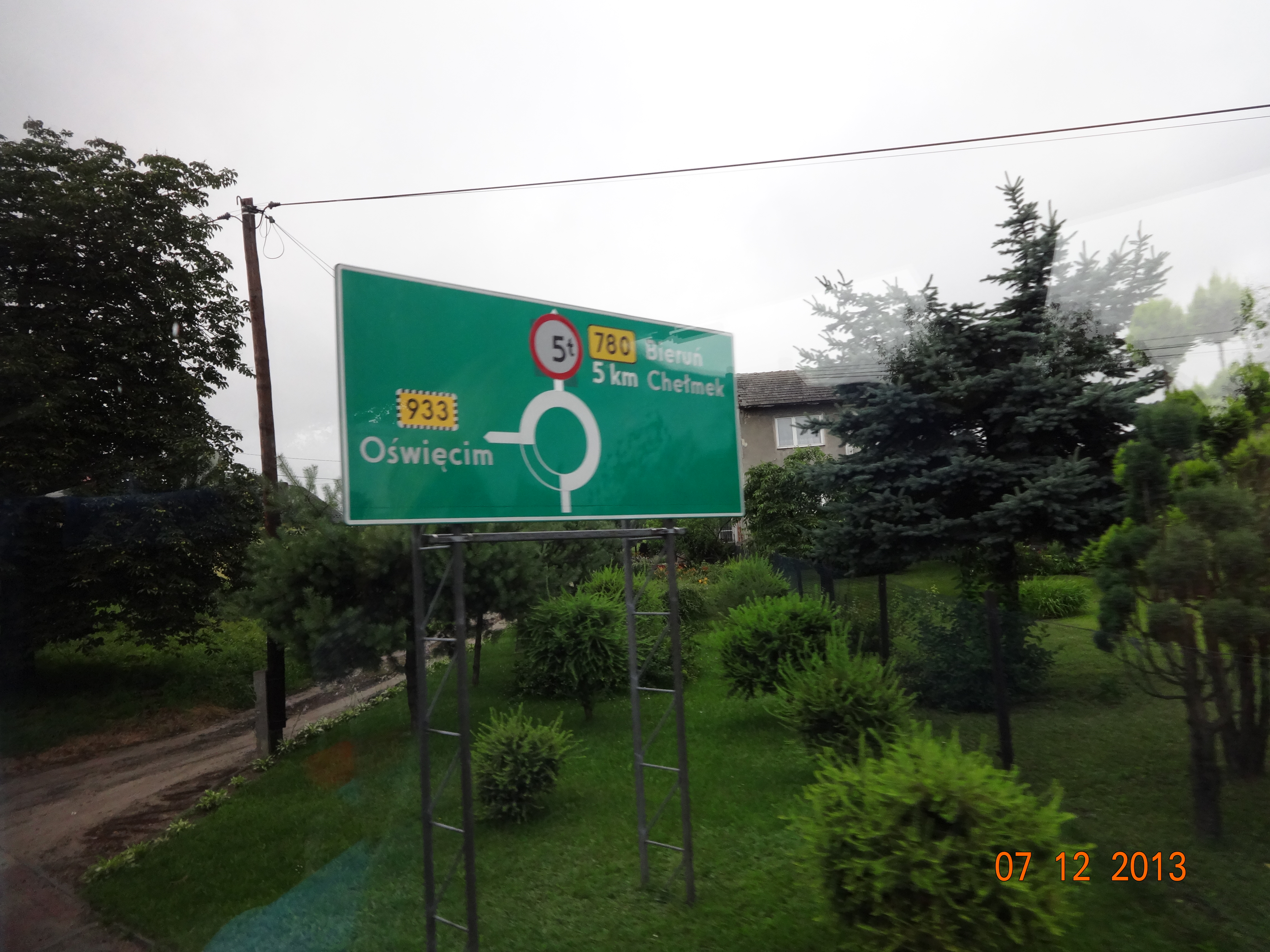
Soon we see the road signs for Oswiecim, the small Polish town at a railroad hub that has become one of the most visited tourist sites in Poland. Most of the world knows it by its German name-Auschwitz.

The bus lumbers into the overcrowded parking lot and docks in the slot. The driver kills the engine. And it begins to rain as our other leader, E.,  relates the story of her mother’s family, the idyllic childhood in this beautiful prewar country, a young teen when the nation is invaded, the oldest of four children. No one on the bus makes a sound. It is now raining very hard.

643

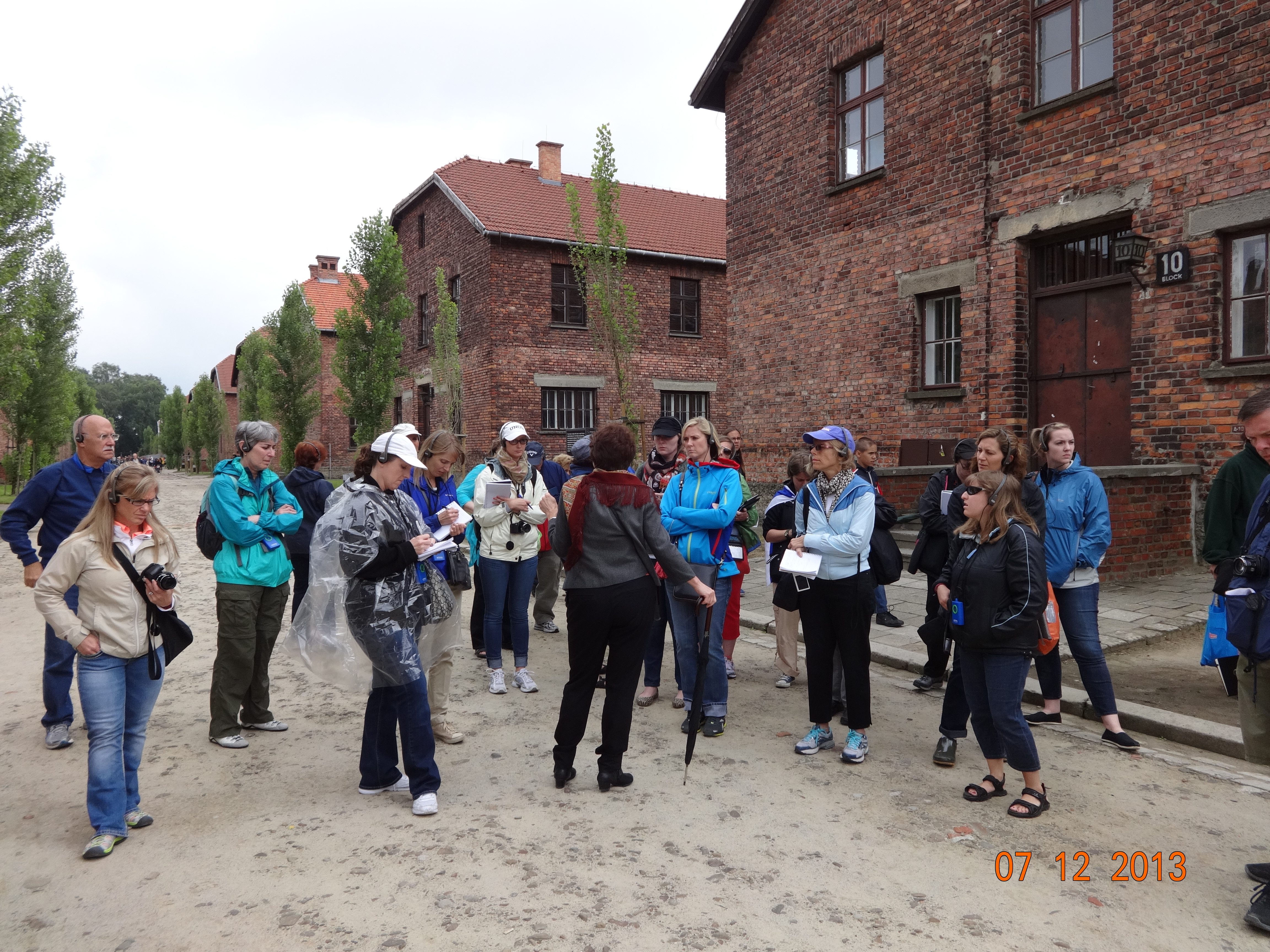
What is this place? Our guide A. is a top notch scholar, and she leads us on a day long tour that is hard to put into words.

660

We begin at Auschwitz I, the first camp. This place is centrally located, a railway hub dating back to the turn of the century.

678

The first prisoners, after it is converted from a Polish military facility, are Soviet POWs and Polish prisoners and other “security risks” who will be worked to death slowly expanding this camp, and the much larger Auschwitz II-Birkenau. She walks us through the exhibits and the displays at the various blocks. Block 4 is the “Extermination Exhibit”. We think about the words, the language. Extermination- as if the victims were vermin. Over 1,100,000 were killed here, most of them Jews.

The Hub. The tentacles during the Holocaust.

We see the map with the spiderlike rail lines radiating inward to Auschwitz like tentacles, from northern Poland, from Germany, Hungary, as far south as Greece and as west as Paris and the Netherlands. In the summer of 1944, tens of thousands were murdered here, per day.

This place is ALWAYS crowded.

We see again the large scale terra cotta model of the process, which the German engineers had perfected  at Auschwitz II-Birkenau- the arrival of the transports, the undressing rooms with signs admonishing bewildered people to hang their belongings carefully and to remember the number of the wall pegs where they left them for quick retrieval later. The shower rooms that could fit in some cases entire transports, which were in fact the hermetically sealed gas chambers. The Germans above with their gas masks, waiting for the proper temperature to be reached through body heat, just the right humidity to be achieved before dropping in the pellets so the gas released would work more effectively. The anguished death throes of the thousands of naked figurines assault our senses. The process is not complete until the corpses are carried out by the sondercommando slaves, defiled for any gold fillings, the hair shorn from the women, the bodies then burned in the open air behind or cremated in the ovens.

676

But the tour is now just beginning.  Minutes before, we were looking at a terra cotta model. And now in Block 5 we will be presented with the evidence. This is an exhibition, after all. Exhibit A is about to slap us in the face. Hard. It is a room, 50 feet long, with nothing but human hair piled several feet back and as many feet tall. My heart skips a beat.

What are my eyes perceiving? Now we see a photo of stacks of bale bags, carefully labeled, packed and stacked, awaiting shipment back to the Reich for use in various products for the German war effort. Slippers for submariners so they can walk quietly aboard ship to evade Allied sonar. Stuffing for the seats of German pilots.

We shuffle on in silence with hundreds of others past the spectacles, the pots and pans, the suitcases carefully labelled by their owners with chalk on the orders of the perpetrators, again, for “quick retrieval”. And the shoes. Sorted. Case after case of women’s shoes. Men’s footwear. And then the children’s shoes.

665

Our knowledgeable guide takes us into Block 27, the new exhibit on the Shoah. This is a temporary relief of sorts as now we see faces, film and stills, of pre war Jewish life, projected on the walls. We hear songs and voices.

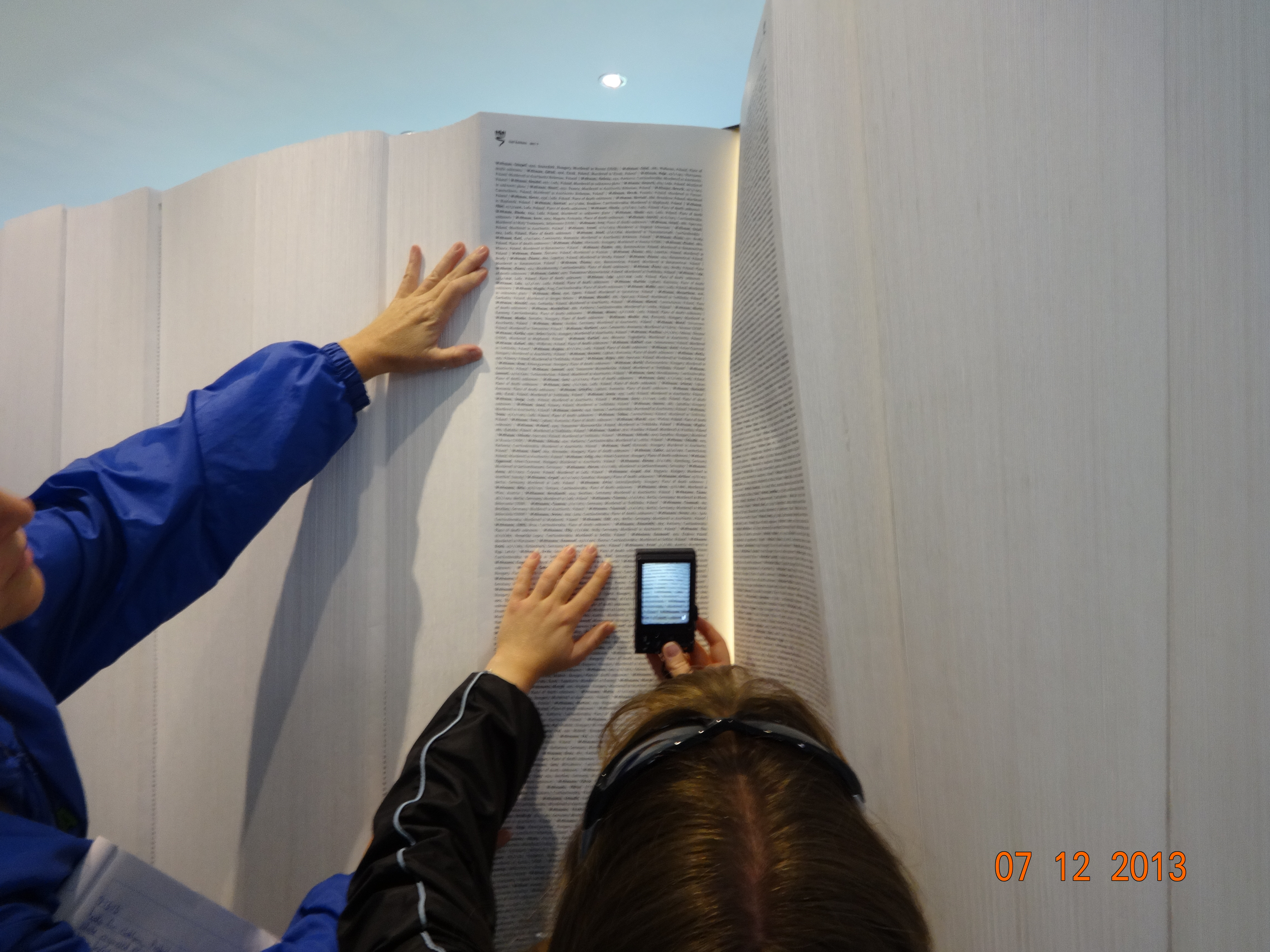
Book of Names. people cry again.

At the end is the Book of Life, containing four million names compiled thus far. A moving moment when E. and others in our tight knit group find entire pages with the names and dates of family members murdered during the Holocaust.

657

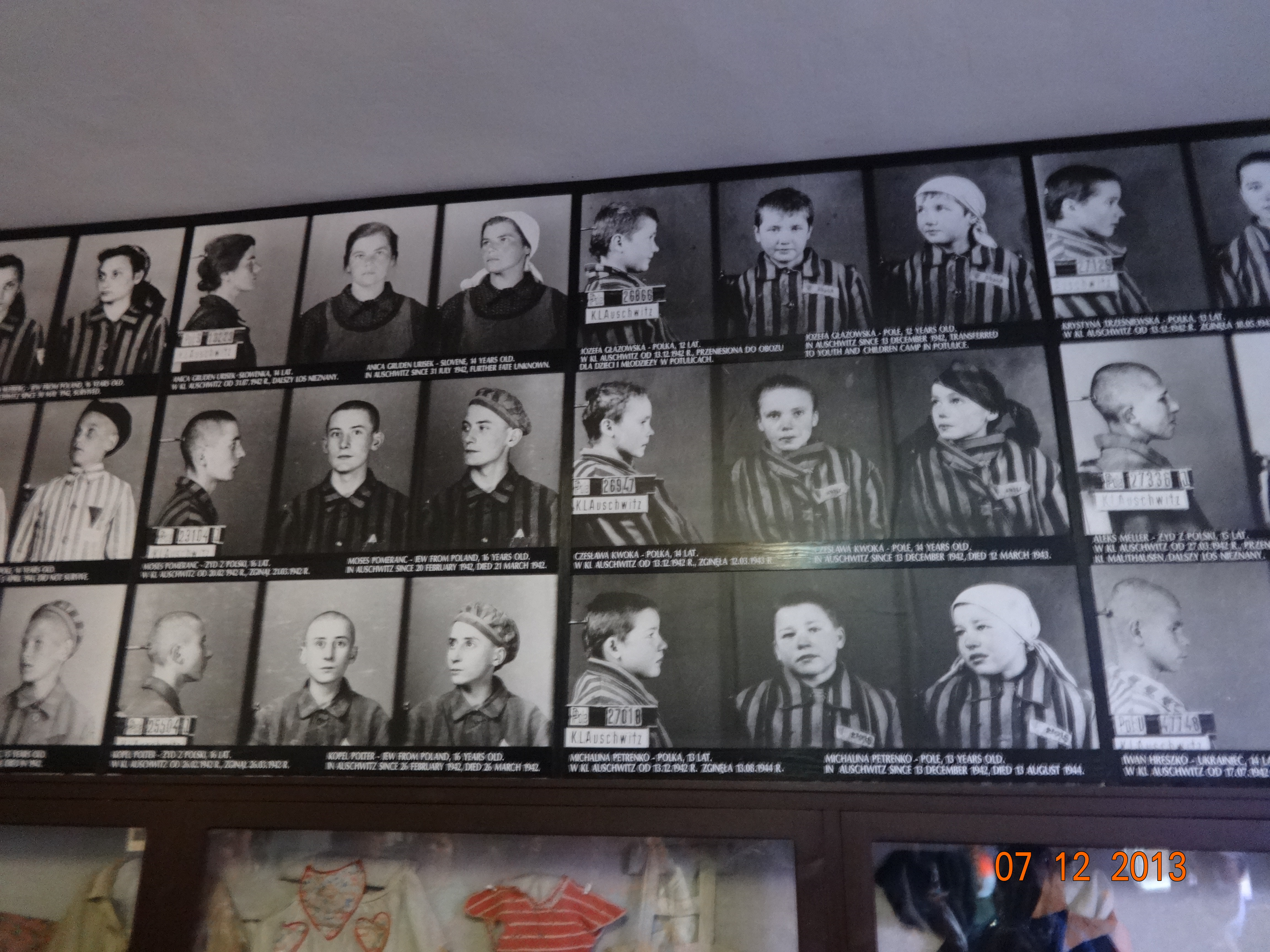
Girls. Shorn, beaten,  and photographed.

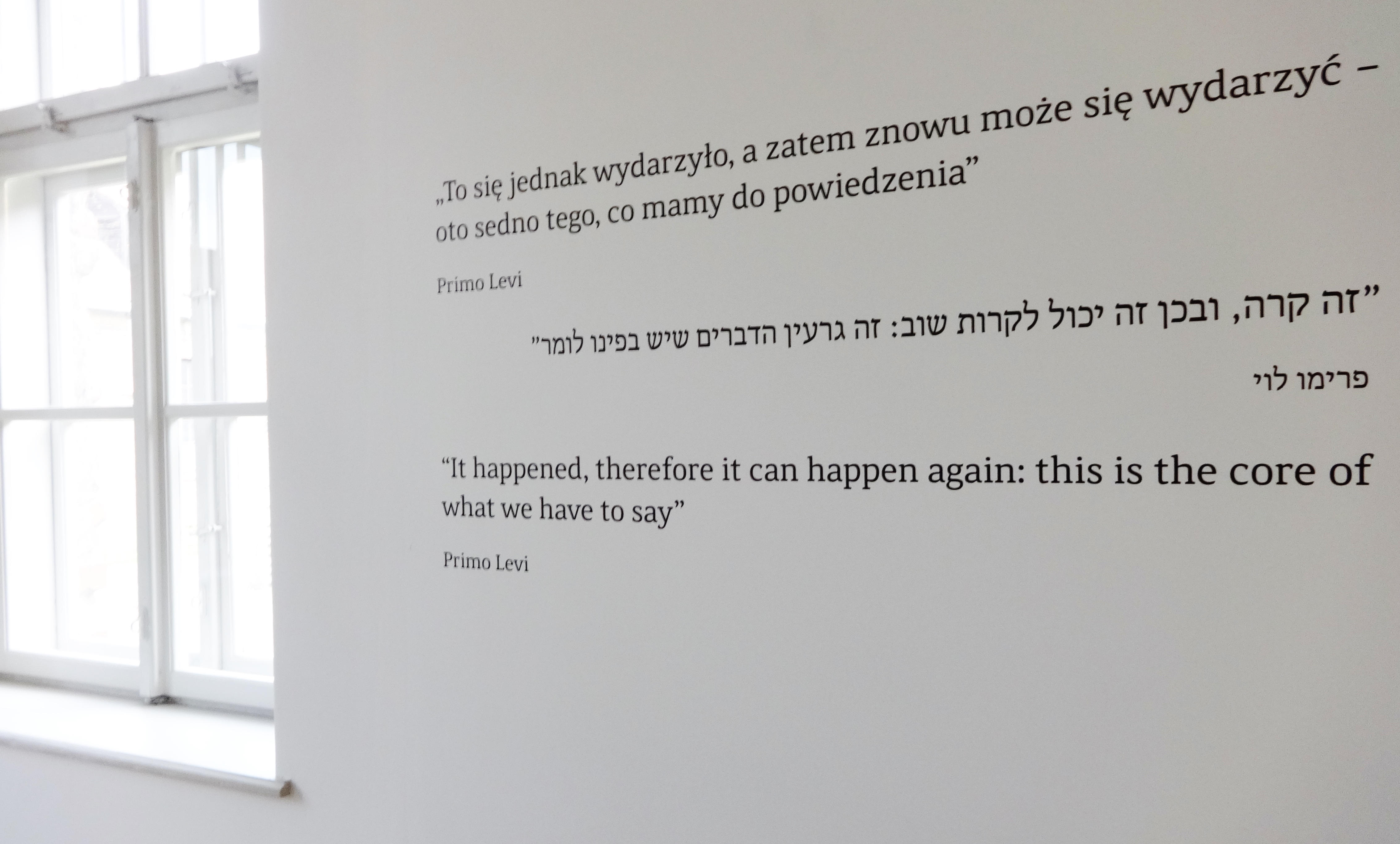
This is the Core.

*****

Read Full Post »

~Matthew Rozell, a history teacher whose project reunited hundreds of Holocaust survivors with the American soldiers who liberated them, takes a backwards journey to the authentic sites of the Holocaust, retracing the path of the survivors who are now his friends.~


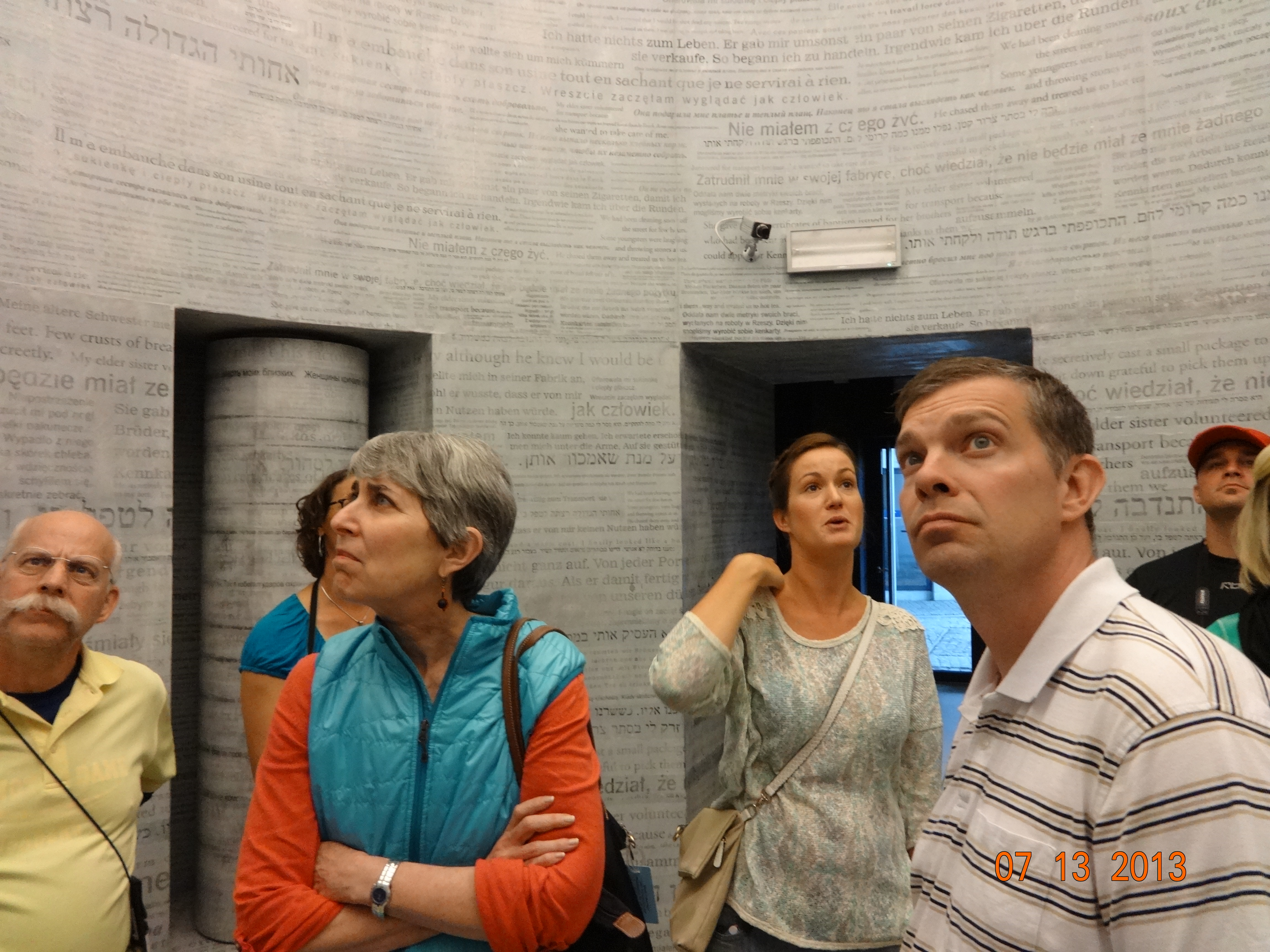
A year ago I took one of the most transformative journeys of my life, with 24 fellow educators, to study the Holocaust and the Jewish resistance to it, in Washington, DC, Germany, the Czech Republic, and Poland. I kept an extensive diary and took tons of photographs. And contrary to many assumptions, it was a journey that led to profound understandings about life, not death.  For the next several days, I have decided to go back and retrace my steps and try to process what unfolded for me.

****************************

July 18.

It’s been a helluva trip. I have toured authentic sites, met some good people, forged some pretty strong bonds with other educators as colleagues and friends. I’ve tramped the grounds where hundreds of my Holocaust survivor friends were held and/or had family members perish.

Our teachers in Cracow, Poland, Schindler Factory Museum of Cracow.

Our teachers in Cracow, Poland, Schindler Factory Museum of Cracow.

So. Now it is time to begin processing it all.

Writing this, I have been traveling and pondering for over 24 hours now. I am back in the USA – missing a flight,  the airlines seemingly conspired to help  extend my pensive mood by granting me a complimentary hotel room on the outskirt of nowhere near Dulles Airport- so my adventure will be extended one more night. I hardly know what day of the week it is but in a way that is kind of refreshing.

From Day One I think all of us on the trip are in the same boat- folks you know are excited and proud of you for being selected on an elite study tour for teachers, but maybe question a bit why one would spend $3 or 4K of one’s own treasure*, leave your family and loved ones for three weeks to travel with “strangers”, or forfeit 3 weeks of summer earning potential to tour the sites of the scenes of the greatest crime in the history of the world.

Well, you gotta give them that. This is kind of strange- or so it may seem if you are on the outside cupping your hand on the window glass trying to look in.

I think, as one of my Facebook followers put it,  that we did something very brave. We toured over two dozen places where I figure 3 million people were murdered.

Or to put it in maybe a more appropriate context, we saw, walked through, and touched the ground where  nearly a million families were killed. By no means did we tour the thousands of camps and subsites where millions more lives were destroyed.


The numbers tell the story in a way, but not completely, because try as one might, one cannot understand them. I know the numbers- I have the knowledge- but as Steve our tour historian says, there is a clear difference between knowledge and understanding. Some things are beyond comprehension.


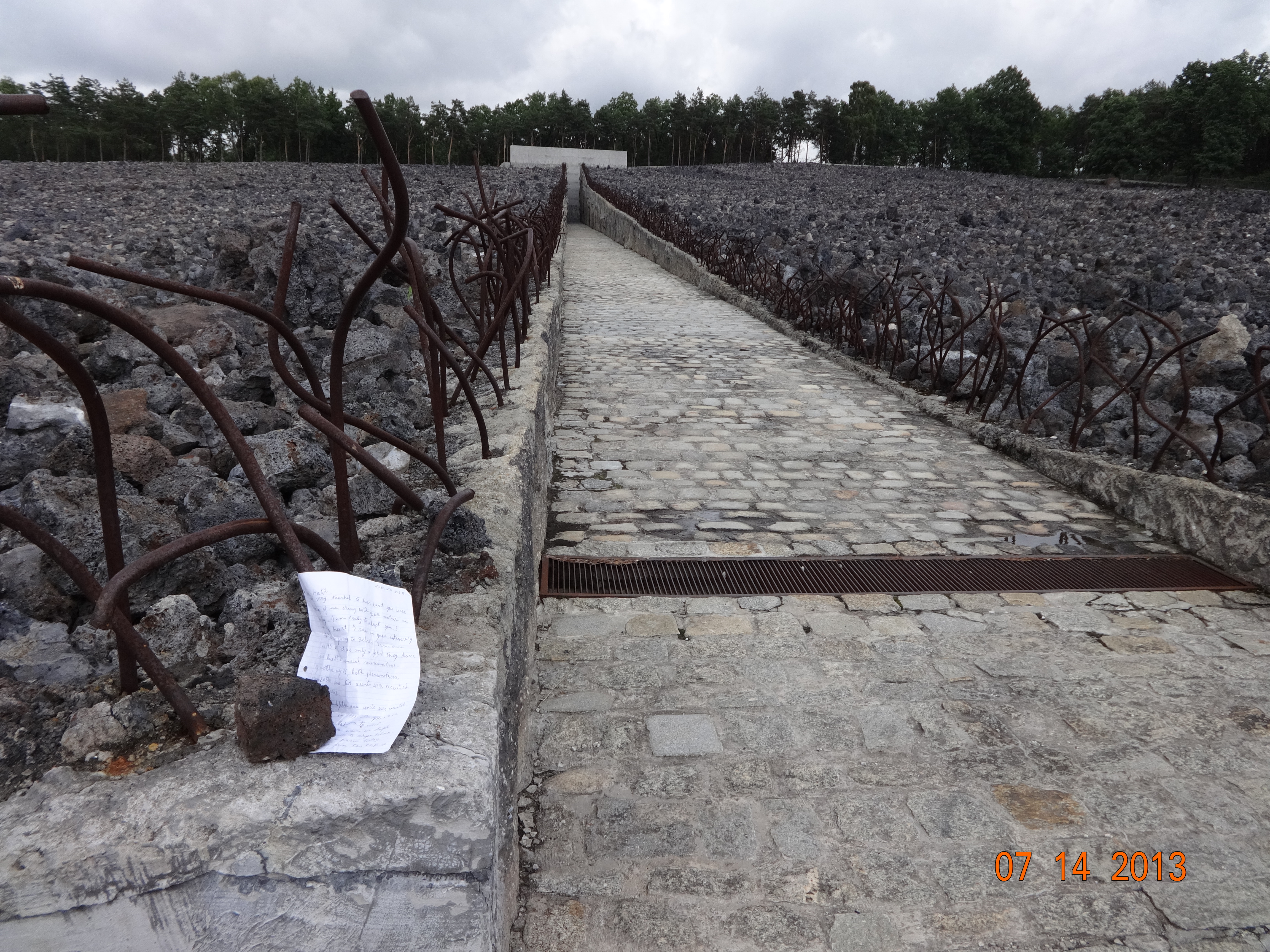
Belzec. Letter from survivor to me, who lost her family there.

Belzec. Letter from survivor to me, who lost her family there.
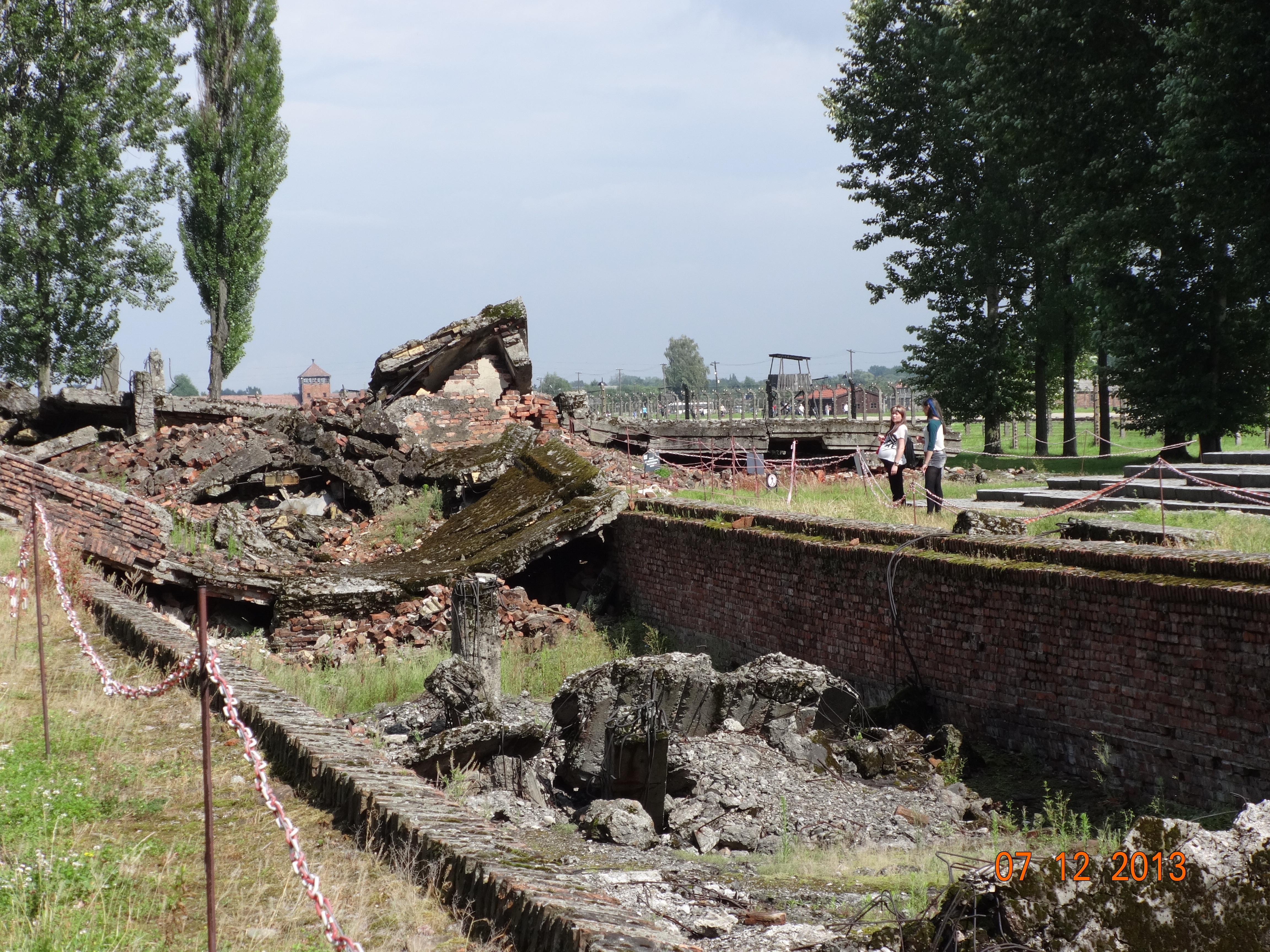
400,000 murdered in Belzec.

1.1 million in Auschwitz II/Birkenau.

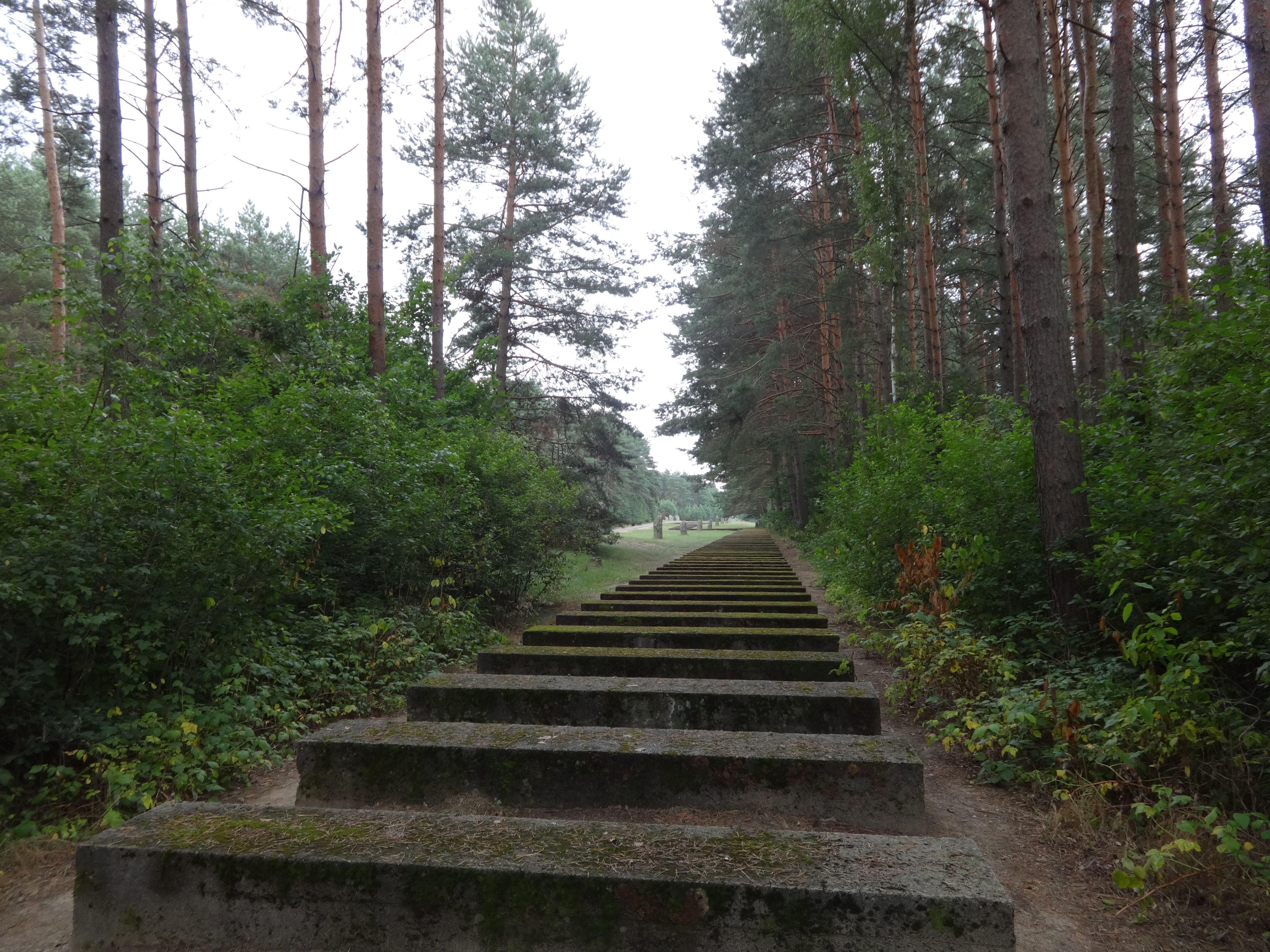
900,000 at Treblinka.

We have been to all of these places in the past three days. People comment that they can’t get their head around it, they can’t begin to fathom the mass indifference to human life that we have witnessed.

Treblinka. 900,000 lost.

Treblinka. 900,000 lost.

So let’s look at what we did come to some kind of understanding about.

What we learned was of the ripple effect of the seemingly small things that illustrated the resilience of the human spirit. That resistance does not have to be just using physical force against your tormentors- it goes way beyond that.

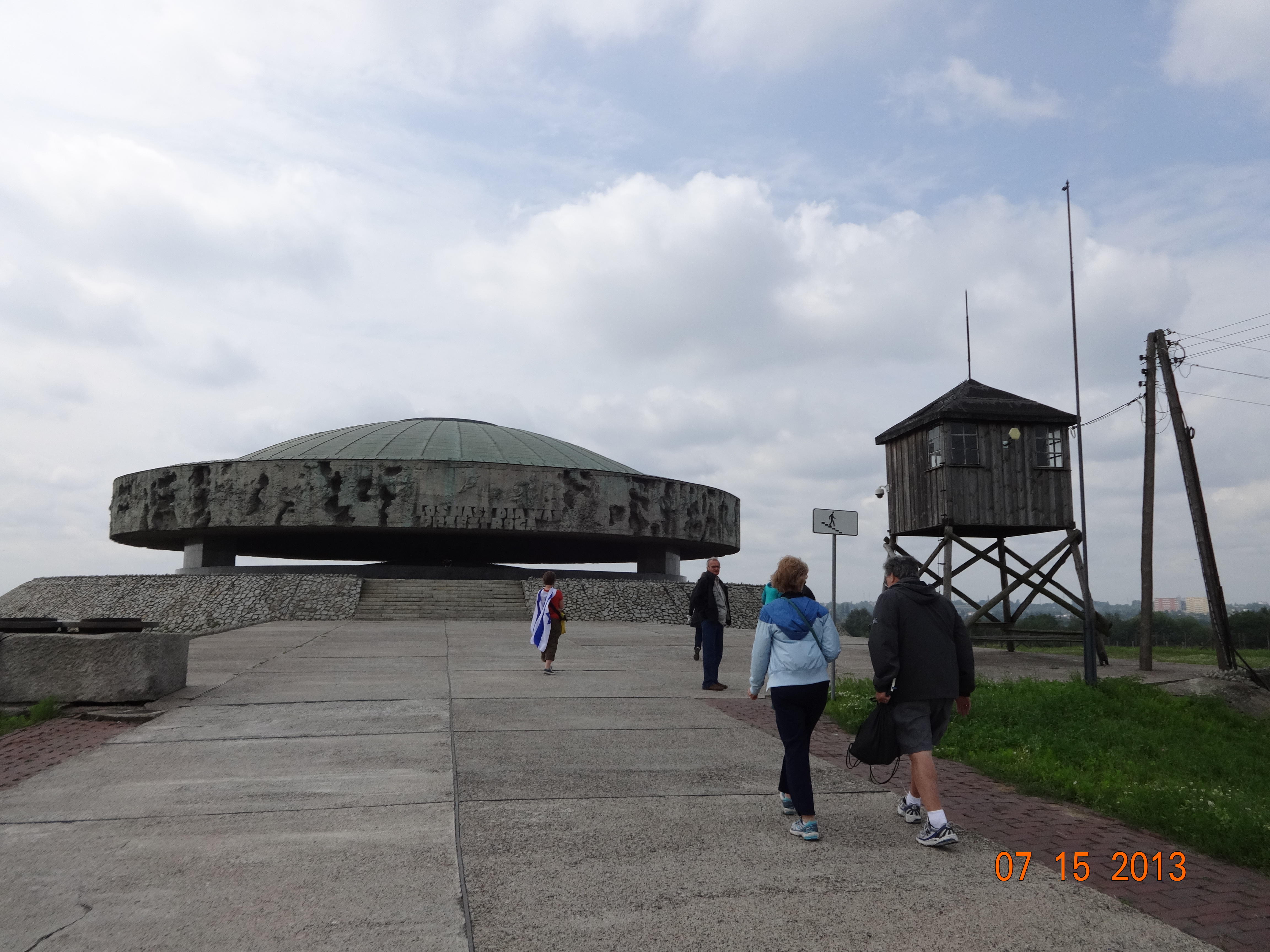
Madjanek. My "I'm in a really, really bad dream day". Under the Soviet era memorial lies a pile of ash and cremated bone the size of a small house.
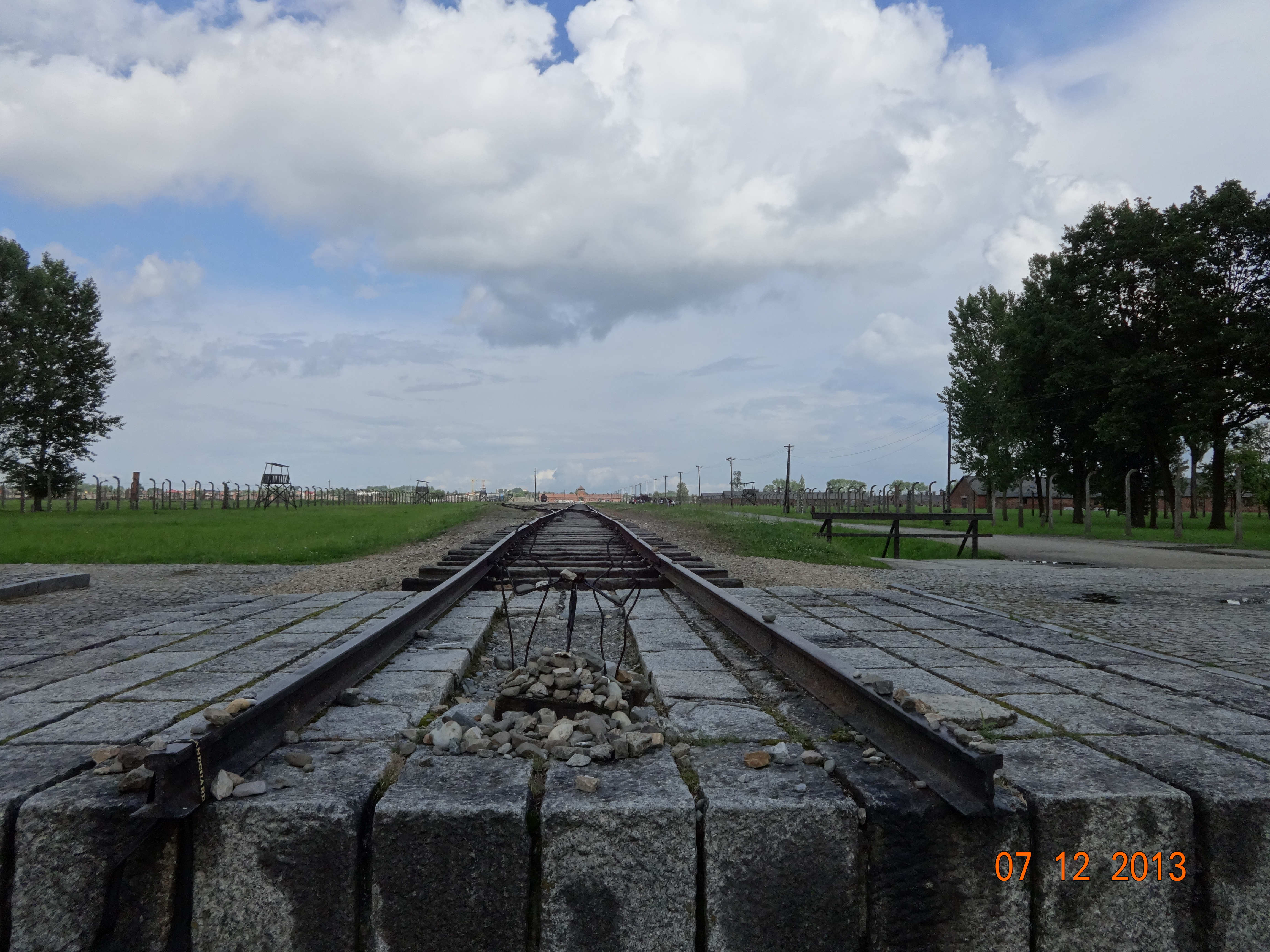
Majdanek. My “I’m in a really, really bad dream” day. Under the Soviet era memorial dome lies a pile of ash and cremated bone the size of a small house.
The program has been in operation for 30 years, begun by survivors of  the Warsaw Ghetto, those who resisted but survived. Vladka Meed pointed out that the Ghetto Uprising in 1943, which held the Germans at bay for weeks, was begun by the young people. And it is for them, the young,  that we educators make this trip.

So, trying to keep it simple and summing it up:

1. This was not a trip about death. It was a trip about life.  I can’t say that I found God, but this trip was one of the most spiritually reflective journeys that I have ever been on, bordering on a religious experience. So folks will ask when I get home- how was it?-my answer will be:

Righteous.  For me, not epic, not amazing, not awesome.

Righteous.

2. I had many of my Holocaust educational and pedagogical thoughts confirmed and other assumptions challenged. Some ideas presented to me I felt comfortable enough to challenge myself, but in thinking about them, I came to deeper understanding. The most important understanding confirmed is a problem that all teachers must struggle with in our flawed educational system. We have to be diligent about avoiding the promotion of generalization as fact, to avoid doing a disservice to our students. If you are  teaching this history, you had better be versed enough and nuanced enough to accept inconsistencies, problematic complexities, and probe these things to induce a more intricate set of questions to your kids.

3. We have to be willing to accept that perhaps there are no correct answers- a notion that educators  are uncomfortable with- but  one that must  be accepted, nevertheless.  To promote generalities in this complex history, or any history is wrong. But especially this one, it seems to me. It was a watershed event in the history of the world, and for humanity, on many levels.

4. Lastly, it was certainly not just a trip to study how to teach the Holocaust. Perhaps reinforced more was how NOT to teach it. And  at the end of the day, it was a tour not only of authentic sites, but also of the mind, and how to make it work.

Sometimes I thought myself to the verge of tears, behind the sunglasses. Thinking-not only about answers- but about the questions.

And that’s what these teachers “did on our summer vacation”.

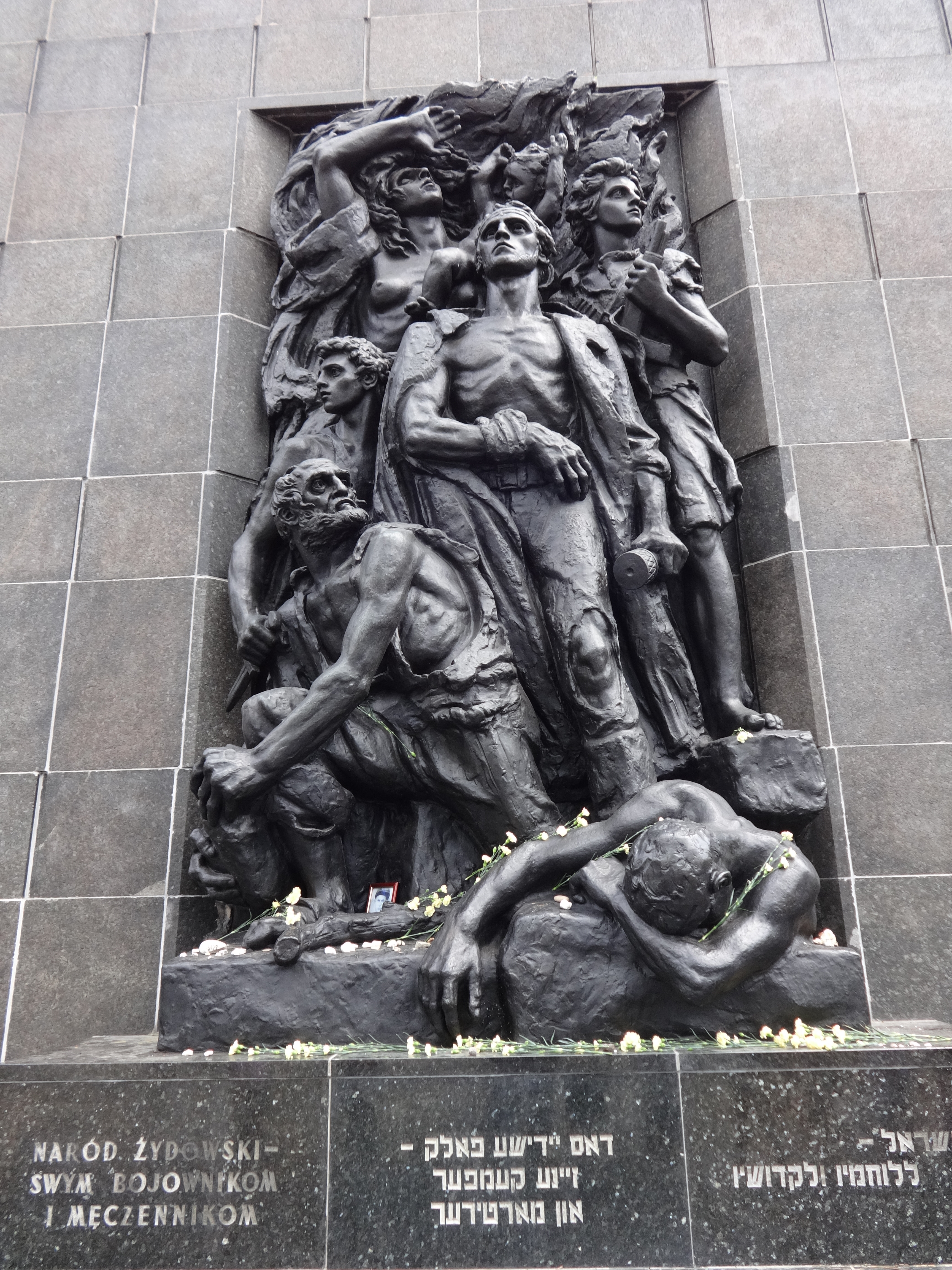
Memorial to Warsaw Uprising

Memorial to Warsaw Ghetto Uprising

* thanks to the American soldiers, Holocaust survivors, and special folks who were able to support my efforts.

Read Full Post »

« Newer Posts - Older Posts »