Feeds:
Posts
Comments

Archive for the ‘Uncategorized’ Category

Survivor Micha and his wife Louise recently returned from a trip to Bergen Belsen, Farsleben and Hilersleben. In 2006 Micha contacted me and has since met me and his fellow survivors and liberators many times, being one of our featured speakers for the first reunion here at the school. I’m including some photos above, and some of Louise’s notes below.

“…turns out the concrete underpass visible in some of George’s photos (above) helps with a positive [identification] of exactly where the front of the train was…

Christian W also indicated that the presence of the individuals with papers on the three trains wasn’t a random thing — it might have been a strategic move to separate prisoners who still had some potential value from the unfortunate souls being sent from the other camps at the end of the war. As I understand it, there is some evidence that Himmler decided to move all his “valuable” human pawns who could be exchanged for German POWs to a single more “secure” (?) location as it became clear that the Germans were going to lose the war soon, and he wanted these individuals handy to support negotiations for trades and deals. The [Bergen Belsen] Memorial even presents the routes the various trains took — the Farsleben train was the first and ran into difficulties moving south because of damage to major bridges. As a result, the other two trains took different paths.”


Read Full Post »

In recent correspondence with Christian Wolpers of the Bergen Belsen Memorial in Germany, he brought my attention to “the drawings of the Hungarian artist Ervin Abadi ,who was also on the train and made some watercolour drawings of the train, , the village of Zielitz (the rear end of the train was closer to Zielitz than to Farsleben, so some of the liberated say that they were liberated near Zielitz), Magdeburg and Bergen-Belsen.” Here are two of them.

Read Full Post »

Found this photo while in Washington at the USHMM searching their photo archives. It’s our train, and the Museum was not aware that it was

A woman and two children rest next to a stopped train.

A woman and two children rest next to a stopped train.

the train liberated near Farsleben. The photographer is identified as Harry E. Boll. I’m going to try to track him down.

Normally I don’t respond to the Holocaust deniers who have attacked this story (“Who Actually Believes This Garbage, These Are Starving Concentration Camps Survivors?”) but to the creeps out there who find my work offensive, thanks for the honor of annoying you. This one’s especially for you.

Read Full Post »

I’m back from the United States Holocaust Memorial Museum.

As promised, it was a very intense 6 day workshop with 13 other teachers from across the US, wonderfully moving and at times tough to fathom but always engrossing and enlightening. I met some friends for life here- these educators and I share a bond that runs very deep. We each have our own missions to fulfill, with the Museum staff and each other for support.

I am a United States Holocaust Memorial Museum Teacher Fellow. It’s a responsibility not to be taken lightly.

Read Full Post »

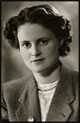
Sara in 1945

To the liberators:

I, Sara Atzmon Gottdiener am grateful to you in my name and the names of my fellow survivors of the death train you saved from a sure death so many years ago. You and your division have saved us at the last moment.
I was 12 years old then and was weighing about 37.5lb.

Although the great distance and the fact that I don’t know you personally, I have to confess that within my soul I feel very close to you as if I’ve known you all my life.

You then appeared to us like angels from heaven and saved us all from a sure death.

I always wanted to know, how did we seem to you? What did you think
about us? All of you were at your best, winning the war for the whole
world and on the other hand we, who didn’t even look like human beings!

We the Gottdiener family have lost 60 of our own family alone through
all kinds of indescribable deaths…

Half a year in Bergen Belzen was a university for life. We didn’t take a
shower for half a year, we were covered with lice and boils. We got once
a week bread made of sawdust about one slice a day and soup made of
potato skins. Recently I watched a documentary showing the kitchen
supervisor signing a receipt for meat delivered from the crematorium,
and so without knowing we became cannibals. The Dutch Jews were our
neighbors. I watched the piles of bodies coming out of their camp every
day, among them was Anna Frank. (in my work I try to draw their
prayers).
On April 6th 1945 we were taken out at night, the British were bombing,
we were given live typhoid vaccines and the march to the train started for
7 kilometers. Most of us were by now sick or very weak. We were 6 days
in the train until it stopped. The German soldiers asked for civilian clothes
and told us to say to the Americans that we were treated well by them.
They ran away. We saw a whole German hospital take off, bandaged and
all. That night we found ourselves in the middle of a cannon battle
between the Americans and the Germans.
The next day, April 13th 1945, [was] a sunny and quiet day. Two of my sisters
went looking for food, on their way they met you our “American Angels”
and you know the rest of the story. I remember the soup you mentioned
that you have brought from Hilersleben. (I didn’t draw the picture yet)…

We were all half dead and wouldn’t have last another week.
So, the fact is that you came along and gave us our lives back-a new life!
Three months following our release we were finally in the Land of Israel…

As of today we’re 8 remaining brothers and sisters that aren’t young
anymore, but we remember, never forgot! We are busy commemorating
our terrible ordeal, in schools, army bases telling about the miracles that
kept us alive so many years ago…
I will be very happy to meet you and the rest of our saviors as soon as we can organize this meeting.
I hope you have surfed my website, there you can see some of my paintings and hear some of the music.

Sincerely yours,

Sara Atzmon Gottdinier.

Read Full Post »

I cleaned out my parents house a couple years ago after they passed on and found this memorial card among my father’s possessions. It’s for the grandmother that I never knew- she died a few years before I was born.

Tonight I was staring at it and turned it over to read the text. As you can see she passed away exactly 50 years ago today. I think my grandmother is trying to say something to me.

I include it here so I continue to think about it and because the subject seems appropriate.

Read Full Post »

Yesterday, May 21, was the 63rd anniversary of the burning to the ground of Bergen Belsen by the British Army.

“Three American soldiers, one of them named Max. who liberated the train.” This message was from the son of Dina Rubinstein of Israel. It came to me on the 63rd anniversary liberatorsof the liberation. The guys may be members of the 743rd Tank Battalion. Anyone out there know who they are?

Dear Matt

Thanks

Today is the13th.

My mother still considers its to be her birthday, pity she is not in condition to come and meet you all.

My late father passed the same route that Mr. Ernest Kan did and met my mother then in Magdeburg. Since that day on they were together till the day he passed away.

I will show these clips on Saturday when my mother and all the rest of my family gathers at my place for the Passover eve dinner.

Even though I do not know you personally, and sure you do not know me, you mean a lot to me, you touched me deep inside.

I have no more words to explain my feelings, just want to thank you all for that wonderful gesture you made to my parents.

Greetings

Joseph Matzkel

Givatayim, Israel

These are the three guys who saved her life.

Read Full Post »

Appel- the roll call at Belsen

http://www.saraatzmon.com/

Here is the very first website of a survivor that popped up when I did a random search of “holocaust survivor art” to find examples for students for a project we are doing. I read her bio, and put two and two together ( in Belsen, liberated by the American Army near Magdeburg in April 1945), and sent her an email asking if she was on the train near Magdeburg…sure enough, can you believe she was on the train??? With her siblings we are now up to 33 survivors, I think… Sara lives in Israel.

“Sara Atzmon-Gottdiener was born in 1933 in Hajdunanas, Hungary, as the fourteenth of sixteen children. At the age of nine, her father and four of her brothers were taken to a forced labour-camp. The family was deported to Auschwitz in 1944 with a children’s transport. At the Polish border the train stopped, and, after a stay of some days, returned to a forced labour-camp in Austria. In the same year, 1944, her father died in her presence of hunger and depravation. At the end of November 1944 they spent four days for the second time, going through the disinfection camp at Strasshof. They were stripped naked and were “taken care of”… Half clothed, they were sent to Bergen-Belsen. They were made to stand outdoors there for long hours in the snow, during the appel. The small girl had a red child’s shoe on one foot, and a lady’s shoe with high heels on the other.

In April 1945 they were liberated by the American Army near the town of Magdeburg. At the age of twelve, weighing seventeen kilograms, Sara received the present of her life once more. Her father, Israel, three of her brothers, four nephews, her grandmother, brothers-in-law, uncles, cousins and many others had not returned from the camps.”

Sent: Monday, May 19, 2008 3:18 AM
To: Rozell Matt
Subject: RE: A Train near Magdeburg

Dear Matthew,

Yes I was in this train with my Mama and 11 brothers 1 nephew. Most of as, we arrive to Israel (Palestine) 3 months later. We survived, 13 from 16 brothers . Now we are 8 brothers . But, we gather[ed] in 2007, and we are now about 200 persons in the family. Most of them live in Israel.

Shalom from all my family

Sara Atzmon

Read Full Post »

“REMEMBER…”

Scene #1: The morning of December 16, 1944. A lonely outpost on the Belgian frontier.

In subzero temperatures, the last German counteroffensive of World War II had begun. Nineteen thousand American lives would be lost in the Battle of the Bulge. “Hell came in like a freight train. I heard an explosion and went back to where my friend was. His legs were blown off-he bled to death in my arms.” The average age of the American “replacement” soldier? 19.

Scene #2: Memorial Day, sixty-plus years later. In a small town in the United States, it is a day off from work or school and it is the unofficial start to the busy summer season. We sit in our lawn chairs, we chat with neighbors and sip our drinks when the gentlemen with the flag march past.

The holiday known originally as “Decoration Day” originated at the end of the Civil War when a general order was issued designating May 30, 1868, “for the purpose of strewing with flowers or otherwise decorating the graves of comrades who died in defense of their country during the late rebellion.” When Congress passed a law formally recognizing the last Monday in May as the day of national celebration, we effectively got our three-day weekend and our de facto beginning of summer.

Of the sixteen million American men and women who served in WWII, a half million died on the field of conflict. In 2007, over 1200 veterans of World War II quietly slip away every day. The national memory of the war that did more than any other event in the last century to shape the history of the American nation is dying with them. Incredibly, it comes as a shock to most Americans today that the “Battle of the Bulge” didn’t originate as a weight-loss term.

In the high school where I teach, I have been inviting veterans to my classroom to share their experiences with our students. As their numbers dwindled, I smartened up, bought a camera, and began to record their stories. We’ve spoken at length with a pilot forced to bail out at 28,000 feet of his flaming B-17 bomber, only to watch crew members die in the subsequent explosion and then be taken prisoner himself. We have had conversations with POWs who survived forced marches in brutal weather, and with Jewish infantrymen who were among the first to liberate the death camp at Dachau. We have met men who were handcuffed to Nazi war criminals at Nuremberg and who were assigned to suicide watch guard shifts there after fighting their way across Germany. We can imagine what it was like to sail eerily into Pearl Harbor 36 hours after the Japanese attack and see no lights except the USS Arizona still blazing with the bodies of hundreds of Americans entombed in it. We are with the torpedo bomber pilot as he takes off from the flight deck of the carrier USS Yorktown during the epic battle of Midway, and is forced to land on the deck of another carrier as the Yorktown burns and later slides to the bottom of the sea. We intently listen to a blind Marine describe what it was like to lose his eyesight fifty-nine years to the day of his being struck by mortar fragments, not once, but twice in the same day at Okinawa (and he told us that ” the hardest part was telling my mother”). Across a kitchen table I have discussions with other veterans, including a former 17 year old describing what it was like to share a foxhole with a headless fellow US Marine on Iwo Jima. My students and I are just “one person away” from the shock of Pearl Harbor, the chaos at Omaha Beach and the Huertgen Forest, the horrors of Guadalcanal, Tarawa, and Peleliu Island.

Sixty-plus years ago these men and women saved the world. I think about this: by the time my teaching career ends in 10 or 15 years, almost all of the survivors will be gone.

It’s not enough that I have an interest in their stories. I have long looked out into a sea of faces, some students mildly interested in what I have to say, but many others displaying a quiet and disturbing apathy about the past. What is infinitely reassuring and comforting to me, however, is that they all seem to have a genuine interest in a “real” connection with the past, with a person who becomes the ultimate source, because he or she was there.

These men and women have helped to spark students’ interest in finding out more about our nation’s past and the role of the individual in shaping it. On our website we have worked to weave the stories of our community’s sacrifices into the fabric of our national history. And that, to me, is what teaching history should be all about. After all, if we allow ourselves to forget about the teenager who bled to death in his buddy’s arms, if we overlook the sacrifices it took to make this nation strong and proud, we may as well forget everything else. Where will we be when there is nothing important about our past to remember? The answer is found in simple study of any other great civilization in history that allowed the collective memory of the past that once bound them together to be trivialized and blurred, to be eroded away and forgotten-

They’re not here anymore. This Memorial Day,

Remember.

Read Full Post »

Why It Matters…

This online journal was begun to chronicle the unfolding of something very special in my career that is, I think, profoundly affecting my life and the lives of others- the re-connection of a train transport full of 2500 Holocaust survivors with the American soldiers who liberated them on April 13th, 1945 near Magdeburg, Germany.

I am the history teacher from a small rural town in upstate New York, USA who is caught up in the middle of it all. My students and I don’t have a high profile website, but if you keep reading, you will see that several people’s lives have been changed by it.

On this web log you will find my posts. The first, “Remember”, was written years ago as a reaction to the “commercialization” of the American holiday of Memorial Day. It kind of describes how my World War II Living History Project came about, and I am proud of the fact that it began long before paying tribute to this generation or conducting oral history became fashionable. It’s about time Ken Burns caught up with us.

The second, “A Train near Magdeburg”, is a brief summary of this special story, showing how the power of the Internet is changing lives.

You will also find several news articles that describe the Holocaust survivor/liberator reunion our high school hosted on September 14th, 2007, as a byproduct of this educational project. The Associated Press article by Chris Carola was picked up and run either in print or on the Web by almost every major newspaper in the United States, and many abroad, including the Jerusalem Post. The CBS Evening News even did a story on it.

In short order I was hearing from survivors who were on that train transport from every “corner” of the globe. These conversations and emails were full of emotion, and I try to imagine the feelings as many of them contacted their actual liberators for the first time. Of course I can’t- only they can. Yet in speaking to many of them it is apparent that April 13th, 1945 was the day they were reborn. Some have actually discovered themselves in these amazing photographs taken on that day. The detail that many of them remember is amazing. And as one of them told me yesterday, the gratitude they feel is indescribable.

What follows is the unfolding of this story. I hope you will find them as moving as I have. Let me know what you think.

Matthew Rozell
Spring, 2008
marozell@hfcsd.org

Read Full Post »

« Newer Posts - Older Posts »