Feeds:
Posts
Comments

Posts Tagged ‘Liberators’

My good friend in Israel let me know that the April 15th  commemoration of the Holocaust at Yad Vashem in Israel was a moving event and sent me the link to the video of the ceremony marking the 70th anniversary of the liberation. While my work at piecing together the  narrative and the story behind the Major Benjamin photograph was not detailed, the photo which now seems to be becoming a cornerstone of the history of Holocaust liberation is all throughout the ceremony and especially at 8:31. One of my friends, a survivor who had been a six year old boy on this transport that Major Benjamin photographed at the moment his jeep arrived at the train, notes,

image.png

The photograph wouldn’t be there if not for your effort. It was presiding on 1.5 hrs of national ceremony in the presence of Israel’s president, prime minister, the entire government, the top army guys, survivors, chief rabbis and was nationally broadcast. You have a direct hand in this.

Me, a lowly teacher, whose work for an evening is presiding over presidents and prime ministers. I am proud and hope that the story is told over and over, and that it serves the memory of the victims, the survivors, and the liberators well. I just can’t believe sometimes this path I have been down, since the day 14 years ago when I took the time to listen to a war veteran, and began to backtrack his story.  There are other forces at work here, I think… and there is a cosmic force that reverberates in you when you teach the Holocaust from the heart.

Teachers out there, you all know the power of what we do. I hope this serves as an affirmation.

*************************************************************

Matthew Rozell is a United States Holocaust Memorial Museum Teacher Fellow and teaches history at his alma mater in upstate New York. His work has resulted in the reuniting of 275 Holocaust survivors and the American soldiers who freed them.

His first book, ‘The Things Our Fathers Saw’, is being released to coincide with the 70th anniversary of the end of World War II. His second book, in progress, is on the power of  teaching, remembering the Holocaust, the Benjamin photograph and this “Train Near Magdeburg’. He can be reached at marozell at gmail dot com.

Read Full Post »

"The anguish of the liberation and return to life". Note the Benjamin photograph on the banner.

“The anguish of the liberation and return to life”. Note the Benjamin photograph on the banner. From the Yad Vashem website.

Fourteen summers ago I sat down to listen to an old gentleman in a rocking chair. A  war weary tank commander in 1945, he told me stories of his World War II experiences and then showed me a picture that his major had taken on April 13, 1945. You see, he was there. It would be the first time in decades that this picture had seen the light of day. And because of its discovery, and what we would do with it, thousands of lives were about to change.

Yad Vashem, the Holocaust Authority in Israel, contacted me in December 2014 to inquire about using the Major Benjamin photo. I did immediately send them a high resolution copy. My friend in Israel writes, ‘[The photograph above was taken] during the main ceremony at  the Holocaust Remembrance Day at Yad Vashem. This photo shows the President of Israel Reuven Rivlin make his speech. You can see your photo there at the middle (banner) and I now think it was there throughout all the ceremony.’

I hope that whoever was present or sees this photograph will visit our website to learn the powerful story behind this amazing photograph in the context of the 70th anniversary of the liberation. No wonder the survivors of the train refer to April 13th as the day they were reborn. Below is the proper information.

Matthew Rozell

From Yad Vashem:

Holocaust Martyrs’ and Heroes’ Remembrance Day (Yom Hashoah in Hebrew) is a national day of commemoration in Israel, on which the six million Jews murdered in the Holocaust are memorialized. It is a solemn day, beginning at sunset on the 27th of the month of Nisan and ending the following evening, according to the traditional Jewish custom of marking a day. Places of entertainment are closed and memorial ceremonies are held throughout the country. The central ceremonies, in the evening and the following morning, are held at Yad Vashem and are broadcast on the television. Marking the start of the day-in the presence of the President of the State of Israel and the Prime Minister, dignitaries, survivors, children of survivors and their families, gather together with the general public to take part in the memorial ceremony at Yad Vashem in which six torches, representing the six million murdered Jews, are lit. The following morning, the ceremony at Yad Vashem begins with the sounding of a siren for two minutes throughout the entire country. For the duration of the sounding, work is halted, people walking in the streets stop, cars pull off to the side of the road and everybody stands at silent attention in reverence to the victims of the Holocaust. Afterward, the focus of the ceremony at Yad Vashem is the laying of wreaths at the foot of the six torches, by dignitaries and the representatives of survivor groups and institutions. Other sites of remembrance in Israel, such as the Ghetto Fighters’ Kibbutz and Kibbutz Yad Mordechai, also host memorial ceremonies, as do schools, military bases, municipalities and places of work. Throughout the day, both the television and radio broadcast programs about the Holocaust. In recent years, other countries and Jewish communities have adopted Yom Hashoah, the 27th of Nisan, to mark their own day of memorial for the victims of the Holocaust.

Holocaust Martyrs’ and Heroes’ Remembrance Day 2015 will be on Thursday, 16 April. The State opening ceremony will be held at Yad Vashem on Wednesday 15 April at 20:00.

Read Full Post »

Update from Nashville: At the 30th Infantry Veterans of WW2 70th anniversary reunion.

Today’s events began with the posting of the colors and a moving memorial service for the veterans of the 30th Infantry Division and 743rd Tank Battalion who have moved on. Missing many, especially for me Buster Simmons, who would offer up a prayer at this gathering in his capacity as chaplain. Rest on,old soldier.

94 year old veteran Marion Sanford comes up to me and grips my hand. I have not seen him in 2 years, but he is the same to me as he always was. As a reconnaissance man for the 30th Infantry Division, he tells me how much he saw and how much now in retrospect meeting the survivors and their families has meant to him. He saw many terrible things overseas, which he felt he had to leave out of his 2012 book, ‘Old Hickory Recon’. Don’t think for a minute that a soldier understood why a friend might be killed and the fickle hand of fate spared another. In what way can this be justified? Survivors’ guilt was not just for the Holocaust survivors to experience. But this ‘small’ incident, the liberation of the train near Magdeburg, seems to have altered his perspective and the perspective of many of the soldiers I have met at these reunions. It seems to have enhanced and  added to ‘man’s search for meaning’, in a sense, as far as the soldiers go.

0417151104-00

Posting the colors. MC Frank Towers in the background. Frank will be 98 in June.

 ***

After lunch, moving talks today by survivors George Somjen (Hungary), Elisabeth Seaman (Netherlands), Micha Tomkeiwitz (Poland) . To their liberators they recounted the events that they remembered and  more importantly, the impact that the liberation and the meeting of their liberators meant not only for them and their families, but also  the world.

Later, the amazing reflections of the 2nd generation ‘Train near Magdeburg’ survivors who are with us for the first time: Evelyn Marcus, formerly of the Netherlands, Orly Beigel of Mexico, and Marc Boyman of Canada. April 13th, the liberation date, for their families was a date always remembered and celebrated; a time to remember how the American soldiers loved life, and loved people, and treated the survivors with such tenderness, empathy, and respect, in marked contrast to the soldiers from another Allied nation who moved in to replace the Americans as the terms of the peace settlement were adjusted.


L-R: Peggy Wonder, 2nd G; Evelyn Markus, 2nd G; Frank Towers, liberator; Orly Beigel, 2nd G; Micha Tomkeiwicz, Elisabeth Seaman. Missing: Marc Boyman, 2nd G; George Somjen.

L-R: Marc Boyman, 2nd G; Peggy Wonder, 2nd G; Evelyn Markus, 2nd G; Frank Towers, liberator; Orly Beigel, 2nd G; Micha Tomkeiwicz, Elisabeth Seaman, Matthew Rozell Missing: George Somjen. Photo credit: Patti Jordan. 4-17-15.

I heard today so many vignettes of hope and promise for the future of mankind. And this, I witnessed with my own eyes. This gathering, this whole trip is an affirmation of the goodness of mankind, a meditation on the profound difference  that  one’s actions can make, and the confirmation that teaching history really does matter.

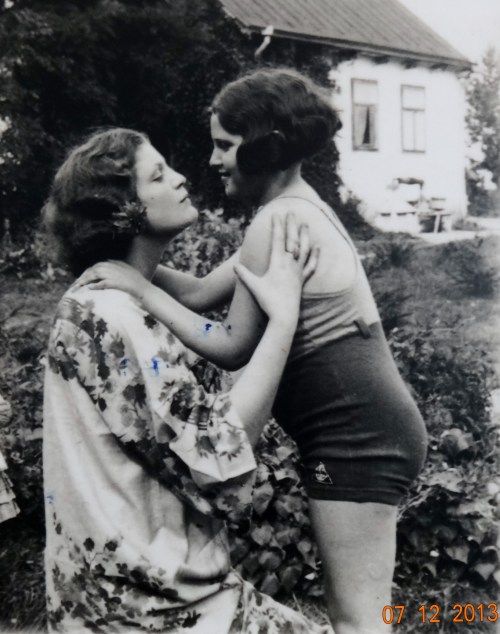
Orly Beigel’s mother, far left, 1945. Commonly mislabeled as ‘Buchenwald Survivors Entering Israel, 1945’. No. These girls ( L-Jetty (Jetta) Halpern and R-Magda Werber, together with Jetty’s older sister Golda Katz-Halpern, not pictured) pulled into the station at Guard d’Lion, Paris in France with much fanfare several weeks after liberation; there was a celebration as they arrived, so they thought that a celebrity must be on board. The war was over. In a rare instance, the survivors were the ones being celebrated.


Read Full Post »

Yom HaShoah ceremony and service, Jewish Federation of greater Rochester, New York, April 15, 2015. 700 folks come out on a midweek night. From an audience member: ‘The most beautiful, inspirational Yom HaShoah service I have ever been to.’

It was indeed a moving service and I was honored to have a part in it.

We stop and we pause, to reflect and remember.

Key take-aways from my presentation:


  1. The American Army was involved in a shooting war. More soldiers would die in the days to come. But they stopped. They helped these people. And some carried the trauma with them for the rest of their lives.
  2. People need heroes. But few of the liberators would like to be remembered this way. Maybe we should all take a moment to think about our own obligation to humanity.
  3. For every one person who was liberated on this ‘Train Near Magdeburg, nearly 2500 persons, keep close the reality that another 2500 perished in the Holocaust.
  4. Finally, the voices of the eyewitnesses need to always be with us. We need to keep them close. Or forget at our peril.

***

Carrol Walsh, liberator: Our lives were joined at that moment on April 13, 1945, and now we meet face to face and recall together that moment when my tank reached the train.

Steve Barry, survivor:There is no other army in this world that would stop and help 2500 lice-ridden, emaciated Jews, to save them. What army would stop, except the American army?

Steve Barry: Mounted SS troops came around, rode by the train, and started to yell ‘Raus, Raus, get out of the train!  Get out of the cars!’  And we saw them putting up machine gun nests. So obviously, even at that last moment, they were still trying to murder us.

Carrol Walsh: I had no idea who they were, where they had come from, where they were going – nothing. No idea. All I knew: here’s a train with these boxcars and people jammed in those boxcars. No idea. No, I had no idea.

Steve Barry: Very shortly after that we saw the first American GIs.  Well, actually there were two tanks.  I still get tears in my eyes. Right now I have tears in my eyes and I always will when I think about it.  That’s when we knew we were safe.

Letter  from Carrol Walsh to Steve Barry, 2008: ‘You are always expressing gratitude to me, the 743rd Tank Battalion and the 30th Infantry Division. But I do not believe gratitude is deserved because we were doing what we, and the whole world, should have been doing- rescuing and protecting innocent people from being killed, murdered by vicious criminals. You do not owe us. We owe you.  We can never repay you and the Jewish people of Europe for what was stolen from you: your homes, your possessions, your businesses, your money, your art, your family life, your families, your childhood, your dreams, and all your lives.’

Steve Barry:  Is this a beautiful person?

Carrol Walsh:  I think, I cannot believe today, as I look back on those, on those years and on what was happening, I cannot believe that the… world almost ignored those people and what was happening. I cannot believe it. How could we have all stood by and have let that happen? We owe those people a great deal. We owe those people everything. They do not owe us anything. We owe them for what we allowed to happen to them. That is how I feel.


Read Full Post »

April 17th. (1945)

Dear Chaplain;-

Haven’t written you in many months now, its funny how a few moments are so hard to find in which to write a letter way past due; it’s much easier to keep putting it off the way I’ve done. I’ll try to make up for it in this letter.

Today I saw a sight that’s impossible to describe, however I’ll try. Between 2400 and 3000 German refugees were overran by my division during our last operation; most of them were, or had been, inmates of concentration camps, their crimes the usual ones, – Jewish parentage, political differences with der Fuhrer, lack of sympathy for the SS, or just plain bad luck. Not one of these hundreds could walk one mile and survive; they had been packed on a train whose normal capacity was perhaps four or five hundred, and had been left there days without food.

Our division military government unit took charge of them, and immediately saw what a huge job it was going to be, so they sent out a call for help. Several of our officers went out to help them organize the camp they were setting up for them. The situation was extremely ticklish we soon learned; no one could smoke as it started a riot when the refugees saw the cigarette, and we couldn’t give the kiddies anything or they would have been trampled to death in the rush that would result when anything resembling food was displayed. The only nourishment they were capable of eating was soup; now the army doesn’t issue any of the Heinz’s 57 varieties, so we watered down C-ration[s] and it served quite well.  It was necessary to use force to make the people stay in line in order to serve them. They had no will power left, only the characteristics of beasts.

A few weeks of decent food will change them into a semblance of normal human beings; with God willing the plague of disease that was already underway, will be diverted; but I’m wondering what the affect of their ordeal they have been through, will be on their minds; most will carry scars for the rest of their days for the beatings that they were given. No other single thing had convinced me as this experience has that Germany isn’t fit to survive as a nation. I’ll never forget today.

I was going to write mother tonight but thought better of it. I’ll be in a better frame of mind tomorrow. I’m only a few dozen miles from Berlin right now, and its hard to realize the end is in sight. I’m always glad to receive your scandal sheet. You perhaps missed your calling, as your editorial abilities are quite plain.

As ever,

Charles.

March 11th, 2009

Dear Mr. Rozell:

My father-in-law was 1st. Lt. Charles M. Kincaid. He was a Liason Officer with the 30th. Division Artillery.  He was honored with an Air Medal in the battle of Mortain and a Bronze Medal in the battle of St. Lo.  In the battle of Mortain he won his Air Medal by calling in artillery adjustments while flying in a Piper L-4 over 4 panzer divisions on August 9, 1944.

first-lt-chuck-kincaid-sept-1944He rarely wrote home. He did write home to his minister about one event that evidently really caused him to stop and think. Attached is a copy of that letter that his sister transcribed – making copies for others to read.  The letter describes the Farsleben train and his experience there.

I need to thank you for your website and work. You and your students work enabled me to connect the letter with the actual historical event. It further enabled me to show my children the pictures and to make their Grandfather’s experience real, not just an old letter – that this event so affected him that he needed to tell his minister before he told his mother.

Thank you,
Mark A.

Read Full Post »

Friday the 13th. Today is the 70th anniversary, to the day.

This account comes to me from a survivor’s son who lives in Hungary. He had read of Carrol Walsh’s passing on the internet and contacted me. It is Carrol who is commanding one of these tanks. Sgt. George Gross commanded the other, and took photographs.

I just came across this website . My father was on this train.
He passed away twenty years ago, in April 1992.

Here is an excerpt from his memoirs about his liberation day.
—————————————————-

Translation from my father’s Memoirs pp. 302-304.
————————————————-

The day of April 13 1945 was a Friday and a sunny and windy day. In the morning, the SS opened the doors of the freight cars, after they had argued with each other whether they should kill us with their submachine guns. But the US troops were too close.

——————————————————————-

Perhaps it was an older SS man who prevented our execution. Later that day, a Jewish woman, who had been his lover in the camp, saved him from becoming a prisoner of war or worse. She got him civilian clothes, I do not know how. The same woman became the lover of an American soldier later.
——————————————————————

Several hundred people wrapped in rags streamed through the open doors, if they could be called people at all. We were all mere skeletons.

The train was idling in a deepening, so I climbed uphill, across a road and to a field. I was pulling out potatoes planted on the field, when a motorcycle approached. It was a motorcycle with a side-car. There was an elegant SS or Nazi leader in the front: I could not decide, since he was wearing a mixture of uniform and civilian clothes. It must have been his wife sitting behind him and his child in the side-car. He pulled over and offered me a cigarette. I told him I did not smoke, so he closed his silver-looking cigarette-case and started the engine.
He seemed to hesitate about the direction he should take.

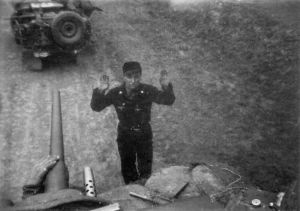
Prisoner taken. Photo by tank commander George C Gross, April, 1945.

Prisoner taken. Photo by tank commander George C Gross, April, 1945.

Then two small American tanks arrived. I was standing in the middle of the road, and noticed that the American soldier leaning out of the turret of one of the tanks aimed his gun at me.
The tank came closer and closer, and the soldier lowered his submachine gun. I must have looked terrible, so he did not take me for an enemy. I was lucky he had not shot me from the distance, since my small coat and boots vaguely resembled a military uniform. Lice were crawling all over my clothes and skin.

The few hundred former inhabitants of the concentration camp surrounded the tanks right away. Suddenly somebody remembered that the SS guarding us were still in the carriages. The SS were caught quickly, and lined up. The “intrepid” SS were trembling so heavily that their pants were flapping.

The first thing a Jewish woman asked from the soldier leaning out from the tank was money, and she received a dollar bill. She must have established her future with this dollar.

My attention was drawn to something else: in the rear of the tank there was a box of canned food. I climbed under the tank, emerged at its end, and pulled out a can. It turned out that I stole a can of oranges. This was my luck. I ate the potatoes charred in the can with the oranges, and probably this combination saved my life. Everyone who ate meat or anything greasy died within hours or within one or two days at the latest.

I felt fever in my body, undressed completely naked in front of staring women, and went into the ice-cold water of the lake next to the railroad. People warned me not to do this, but I went into the water, felt good, felt that I got rid of the lice and the burning heat of the fever. When I put on my rags again, I felt the fever ever stronger.

I asked an American soldier to sign the photo of my fiancee (I still have this photo). To my surprise, he signed the name Churchill. I thought he was joking. But he reassured me that his name was really Churchill.

(Once I read about a father named Churchill, who went to see his son’s grave in Vietnam during that war. The report mentioned that the father had been a soldier in World War II. He must have been my Churchill)

In the evening, there were news that we should flee, because the Germans pushed back the Americans. The Germans would massacre us for sure, the women had pulled out material for parachutes from a carriage in order to make clothes.

I was already so weak that I did not care whether the returning Germans would kill me: I stayed in one of the carriages, and fell asleep.

On Saturday, April 14, German peasant [horse-drawn] carts came for us by some order, so I was carried to Hillersleben. I dragged myself to the first floor of the first building, it looked like an office building, lay down under the sink of the bathroom, and fell asleep.

I am sure the American soldiers had no idea who we were and what we went through.

*******************************

First published in 2013. I am off to the last survivors/liberators reunion in Nashville Tennessee, this weekend.

Read Full Post »

{To commemorate the spring of 1945 and  liberation seventy years on, I  am posting the unfolding nature of the discovery of the Holocaust as Allied troops closed in from the East and the West.}

March 19, 1945:

Adolf Hitler issues the Nero-Befehl (Nero Order), a scorched-earth directive intended to leave only a ruined Germany for advancing troops.
March 19, 1945:

Two hundred survivors out of 1000 Jewish women who began a forced march from the Neusalz, Poland, slave-labor camp on January 26 are evacuated by train to the concentration camp at Bergen-Belsen, Germany; see this post.

Source: Weber, Louis. The Holocaust Chronicle. Publications International Ltd., 2007. http://www.holocaustchronicle.org

I  received this email from the son of survivors:

Dear Mr. Rozell,

My mother was one of the 200 or so that survived that “death march”!  The survivors were transported to the camp at Bergen-Belsen, where my mother was ultimately liberated on April 15, 1945.

Many years ago, she did relate to me a wartime story of hers which I wrote up in 2006, and had published.

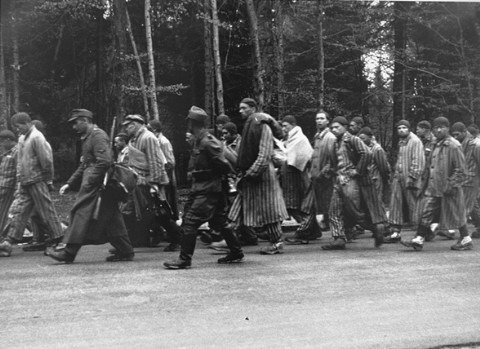
Prisoners on a death march from Dachau move towards the south along the Noerdliche Muenchner street in Gruenwald. German civilians secretly photographed several death marches from the Dachau concentration camp as the prisoners moved slowly through the Bavarian towns of Gruenwald, Wolfratshausen, and Herbertshausen. Few civilians gave aid to the prisoners on the death marches. Germany, April 29, 1945.  — KZ Gedenkstaette Dachau. USHMM

Prisoners on a death march from Dachau move towards the south along the Noerdliche Muenchner street in Gruenwald. German civilians secretly photographed several death marches from the Dachau concentration camp as the prisoners moved slowly through the Bavarian towns of Gruenwald, Wolfratshausen, and Herbertshausen. Few civilians gave aid to the prisoners on the death marches. Germany, April 29, 1945. — KZ Gedenkstaette Dachau. USHMM


The Defining Moment

By Joseph H. Danziger

It happened more than sixty years ago- and not to me- but I cannot dislodge it from my mind’s eye.  My consciousness will not surrender the thought of what it must have been like for my mother, especially on one ominous day. I am a child of Holocaust survivors.

My parents, and thousands like the, each have personal stories of their incarceration in the various concentration camps that dotted Germany, Poland and neighboring countries during World War II.

My parents rarely shared with me their accounts of that desperate period of their lives. When prodded, they might offer an occasional vignette. Seeing the pain on their faces in talking of these experiences, however, I didn’t push for details. Those are memories they certainly preferred to have long forgotten.

Of the stories that were begrudgingly told to me, one shared by my mother will haunt me forever. The soul-searching decision with which she was confronted on that fateful day so long ago is unfathomable to me. As a result of the decision she made that say, I am here to tell the tale.

My mother spent the flower of her youth- ages 17 through 20- within the confines of a concentration camp in Neusalz, Poland. It was a women’s “slave-labor” camp where yarn was processed for the war effort. Although it was not one of the infamous “death” camps such as Auschwitz, Treblinka or Sobibor, the distinction between these titles is hardly significant. In a death camp the aim was to kill as many and as quickly humanly possible. In a slave-labor camp the goal was, in effect, to work the laborers to death, with an ever-replenishing supply of labor. The death tolls in each were mind-boggling. The human skeletons who managed to survive all looked the same and had similar stories of deprivation, torture, depravity and the wanton taking of life.

In the midst of this living hell, an opportunity presented itself to my mother. She saw a possible means of escape. Despite knowing that if she got caught she would face certain death, she took the chance. She escaped, although she never explained exactly how.

Clad only in rags, she trudged through unfamiliar territory until she came to a house. She knocked on the door. She related her circumstance to the master of the house and pleaded for food and a place to hide. Although sympathetic to her plight, he told her he could not jeopardize his family. If found to have secreted a Jew, especially one who escaped from a nearby camp, he and his whole family would most likely be killed as a lesson to the community.

Yet, seeing my mother’s emaciated condition and dire need- and against his better judgment- he took pity on her. He invited her into his home, let her eat, bathe and sleep the night. Before the break of dawn, however, he said she must be gone. She thanked him and availed herself on his family’s kindness. For one night during a span of three years she had a full stomach, clean clothes and a restful night’s sleep.

She left before dawn, as promised. But where would she go? Only then did the truly desperate nature of her circumstance become apparent. For one such as she there was nowhere to go.

My mother was confronted with an unimaginable predicament, a sort of Gordian knot. Should she hazard freedom in an unfamiliar countryside filled with antisemitism where peril and betrayal would be her constant companions? Or should she attempt the inconceivable- a stealth re-entry into the camp from which she had just risked her life to escape- hoping the guards had not noticed her absence? As least there she reasoned, she had the known quantity of a controlled environment offering minimal subsistence, albeit in a horrific setting and under subhuman conditions. She chose the latter. In her mind, that choice offered the best chance for survival. As remarkable as was her original escape, doubly remarkable was her ability to re-enter the camp, unnoticed, and return to her quarters before the morning roll call.

With the memory of nearly one full day of freedom, my mother persevered. Then, in January 1945, together with 1,000 other interned women, she was set on a one-and-a-half-month forced to march to the concentration camp at Flossenburg, Germany, some 200 miles to the southwest. This was one of many so-called “death marches” that occurred toward the end of the war, in a calculated maneuver by the Nazis to deceive the Allies about the vast network of fully functioning concentration camps in operation during the war years.

Along the way to Flossenburg, 800 women were beaten, shot or left to die when they collapsed in the harsh winter. Upon their arrival, the remaining 200 women were transported to the concentration camp in Bergen-Belsen. On April 15, 1945, the British and the Canadians liberated the scant number of those remaining. One of those was my mother. One year later, after surviving family members were reunited, she married my father.

I cannot imagine any other Holocaust survivor choosing a purposeful re-entry into a concentration camp after an earlier successful escape. The very idea is mind-numbing. But she chose wisely, for which her five children and six grandchildren are her testament. I will forever marvel at the immense resolve of this remarkable woman and her relentless insistence on survival.


(Article first appeared in THE PHILADELPHIA LAWYER , SUMMER 2006. Retyped by student Jana Putzig. Used with permission.)

*************************************************************

Matthew Rozell is a United States Holocaust Memorial Museum Teacher Fellow and teaches history at his alma mater in upstate New York. This year, he is authoring a series of posts under the heading of ‘Seventy Years’, marking the 70th anniversary of the close of World War II and of the ‘liberation phase’  of the Holocaust. His work has reunited 275 Holocaust survivors with the American soldiers who freed them.

His first book, a narrative of World War II in the Pacific as told through the previously unpublished recollections of two dozen veterans, is due out this spring. His second book, in progress, is on the power of  teaching, remembering the Holocaust, and this “Train Near Magdeburg’. He can be reached at marozell at gmail dot com.

Read Full Post »

This week I introduced what will be a series of posts under the heading of ‘Seventy Years’, marking the 70th anniversary of the close of World War II and discovery of the magnitude of the most horrific crime in the history of the world, the Holocaust.

Today I travel again back to Auschwitz-Birkenau, sharing some of my personal observations and photographs on the anniversary of the liberation by Soviet troops 70 years ago this week.

*****

July 12.

After the tour of Auschwitz I, our teacher travel study group has lunch on the bus in the parking lot, then drive the three kilometers through town to Birkenau.

There it is. The entry tower. The iconic symbol of evil.

787

Main entrance to the Auschwitz-Birkenau extermination camp. USHMM

Main entrance to Auschwitz-Birkenau . USHMM


We follow the guide up the stairs in the tower. From here we can see the sheer vastness of the camp.

696


Women's Barracks. Auschwitz II.

Women’s Barracks. Auschwitz II.


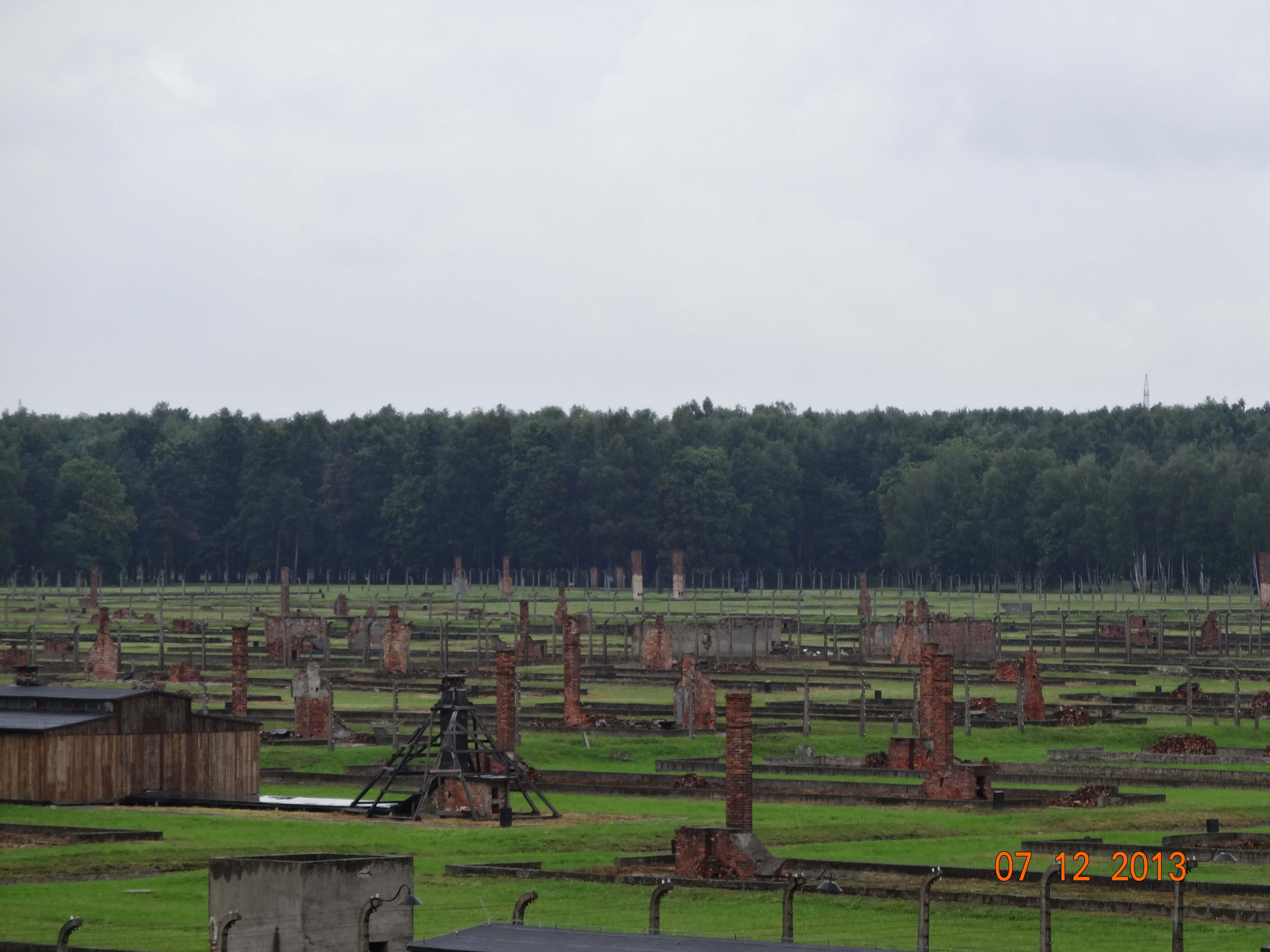
Dozens of long narrow women’s barracks, brick, still stand, albeit some braced with wood on the gable ends to keep them from toppling until they can be re-pointed. A. indicates that historic preservation here is a major concern.
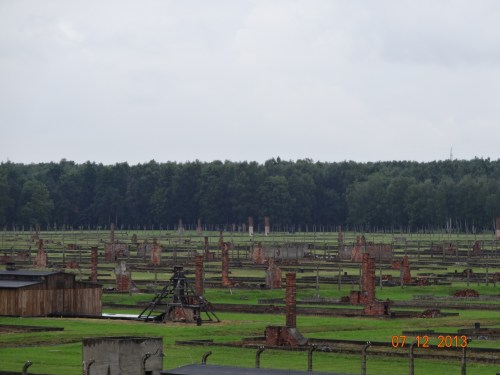
 

Vastness

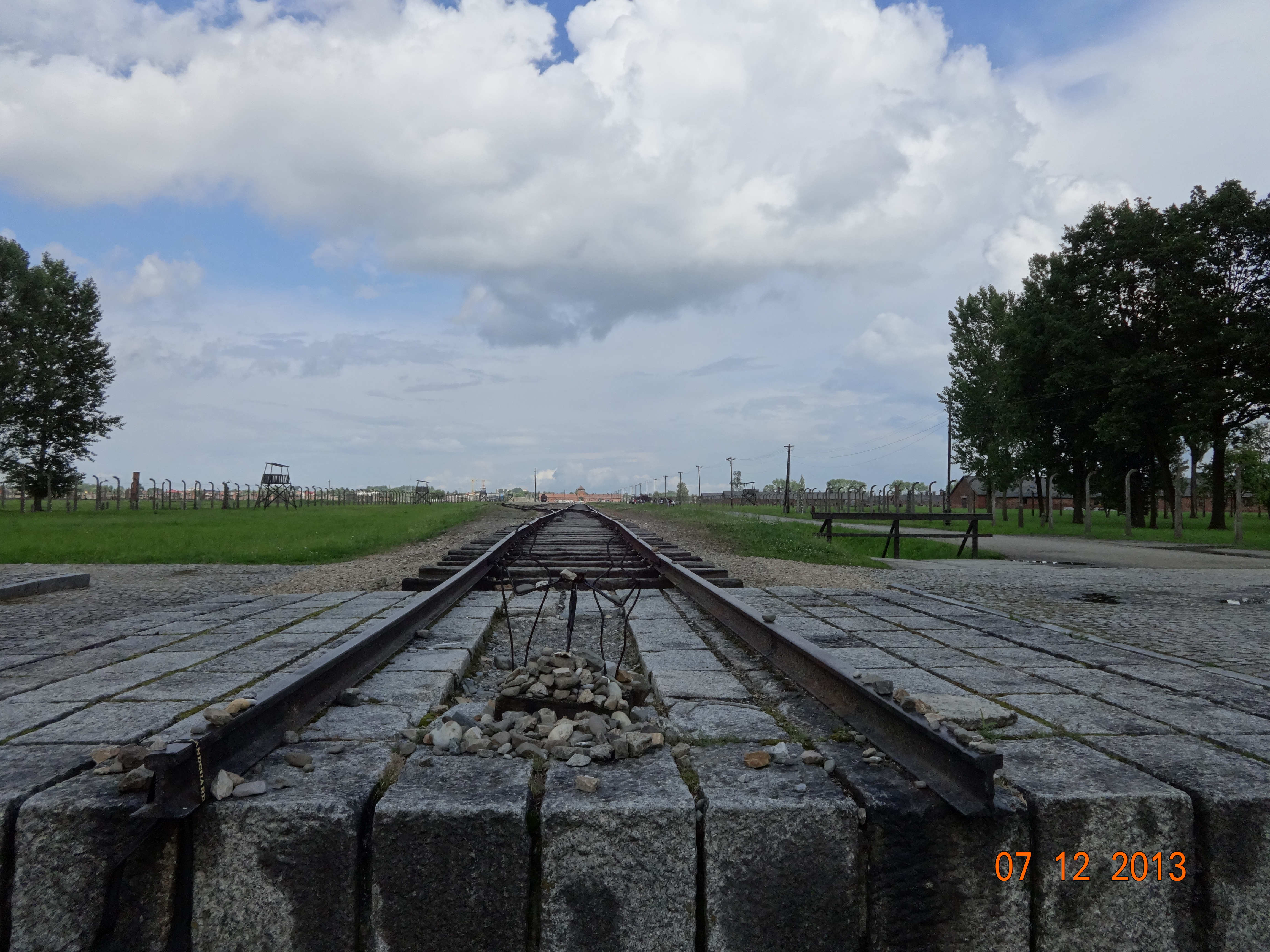
The rest of the camp is many square kilometers of row upon row of foundations and brick chimney stubs, surrounded by the menacing curved and tapered concrete concrete posts dotted with white insulators and strung with miles of parallel lines of barbed wire. In the summer of 1944, when hundreds of thousands of Hungarian families were deported here, the rail lines came right into the camp.
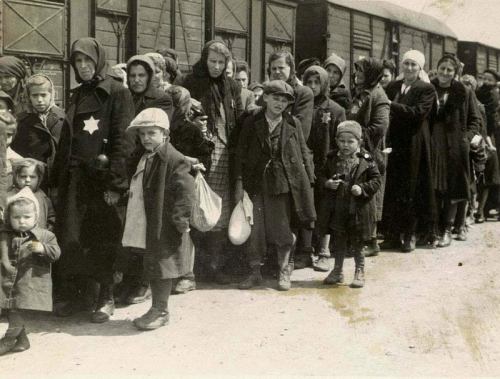
View of the Ramp at Auschwitz-Birkenau Showing the SS Selection of Hungarian Jews USHMM.

View of the Ramp at Auschwitz-Birkenau Showing the SS Selection of Hungarian Jews, USHMM.


View of the Ramp at Auschwitz-Birkenau Showing the SS Selection of Hungarian Jews, USHMM.

View of the Ramp at Auschwitz-Birkenau Showing the SS Selection of Hungarian Jews, USHMM.


Following the German invasion of Hungary in March 1944, over 400,000 Hungarian Jews  were deported and murdered at Auschwitz.


The Walk.

Our guide leads us along the path through the camp that leads to the gas chamber and crematorium. We walk in in silence along the roadway, the only sound the crunching of brick fragments and gravel underfoot.

Selected.

Selected.


The Walk.

707

It appears to have been paved with brick, slave labor, though in some spots it is hard to tell anymore. No one speaks, and on and on we walk. Two minutes. Five minutes. Ten minutes. Fifteen minutes. I’ve been on battlefields that are smaller than this site.


Flower ring as we make final approach to the chambers tucked into the wooded area nearby.

Finally we reach the end of the camp where the kitchens stood. A round concrete ring rises out of the earth, maybe 6 feet in diameter. Someone finally speaks and asks A. what it was. A giant flowerpot. She tells us also that they were placed near the entrances of the gas chambers. Flowers at the gas chambers.

Waiting. For what we do not know.

Waiting. For what we do not know. Exhausted from deportation and “travel”. We now know who they were. Yad Vashem.


We turn left, and keep walking past interpretative signage. It seems like we are walking outside of camp perimeter. But we are not. Beautiful woods appear and we are walking on the edge of the woods with the camp to our left. We stop near another sign and rest for a moment, allowing the others to catch up. Then our guide calls our attention to the photo on the sign, showing Hungarian mothers and children doing the same thing we are doing. Halting and resting.  And a short path through the woods will take us to the ruins of the gas chamber/crematorium Number Five.

They waited here. Some days, in the summer of 1944, for hours.

They waited here. Some days, in the summer of 1944, for hours.


We are resting at the spot they rested at, 20 minutes after walking, immediately after disembarking of overcrowded transports that had been traveling for days. Here they waited, anxiously, as their turn to approach the chamber would come. But the victims of the transport ahead of them had to be removed from the chamber first. Some days in the summer of 1944 these victims were backed up for hours.

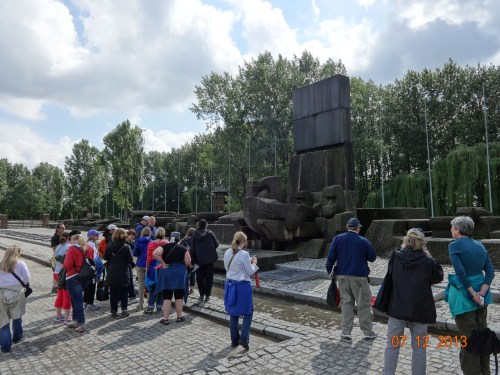
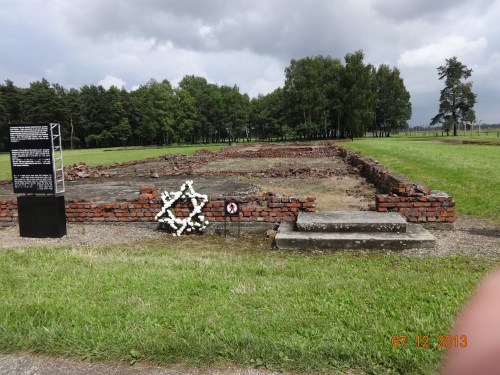
I pick up a rock from the path and carry it with me past the ruins. At the ashfield there is more signage and a memorial asking visitors not to walk through the field. I place my stone on the memorial, looking down to watch where I step. But it is probably a futile gesture-this whole place is an ashyard, a graveyard.


The secret sonderKommando photos. Where the bodies were burned in open air.

The secret sonderkommando photos. Where the bodies were burned in open air.


“So many Hungarian Jews were killed in the Auschwitz camps during that period that the crematoria were incapable of consuming all the bodies, and open pits for the purpose were dug.”
728

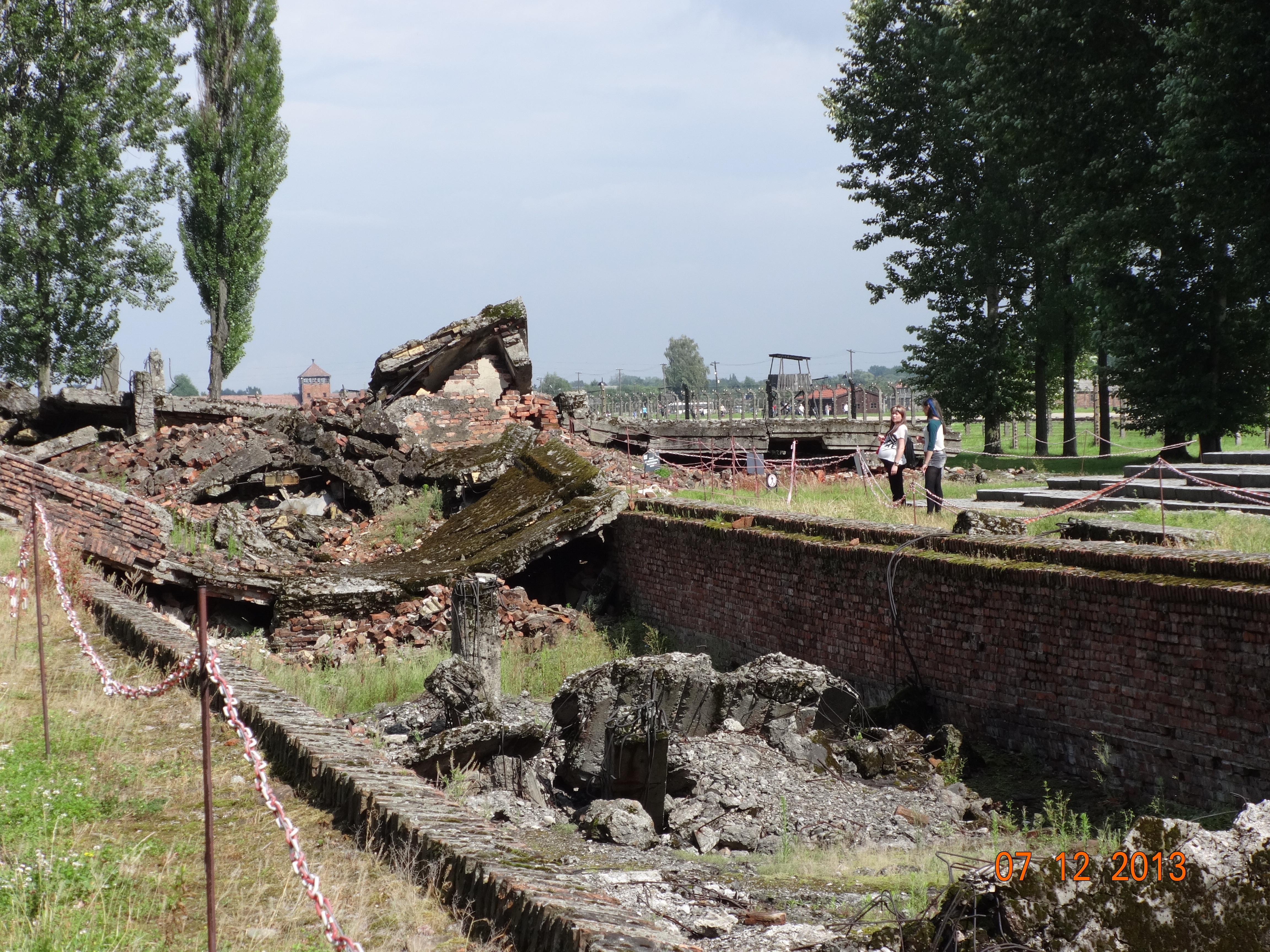
We turn again, and walk past the remains of crematorium Number Four. To the disinfection center for those selected to be worked to death. Again, a system. Disrobing. Wading through disinfectant. Shower. Uniform thrown at you, mismatched clogs or shoes.

 *****

E’s mother spent two years here. Her grandmother and the little ones were selected upon arrival. Her mom’s beloved sister was murdered in the quarry after slipping while carrying a large pot of soup in the ice and snow with three other girls. Today is a hard day. I want to comfort her, to carry her pack for her. I feel helpless. There is nothing I can do.

778

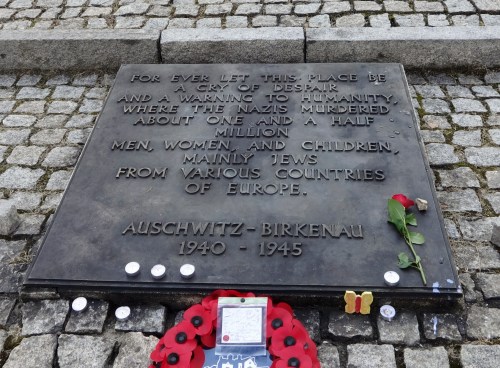
At the Soviet memorial constructed near the two destroyed gas chamber/crematoria at the end, we have a remembrance ceremony. Kaddish is recited in Hebrew. I read it aloud in English. With tears, E. tells us that she feels her grandmother smiling down on this extraordinary group of dedicated teachers. A lump rises, again. I swallow hard and try to blink back the wetness I feel welling in my eyes. Damn, I almost made it. Glad for the sunglasses, even though there is no sun.

770

775


772

776


“A Warning to Humanity.”

We light candles, turn our backs, and walk out, which provides another twenty-minute stretch of personal reflection. We have toured the epicenter of evil. We have been here, we try to process-but we just cannot. We need the individuals to speak to us. And like E’s family, they do.


738


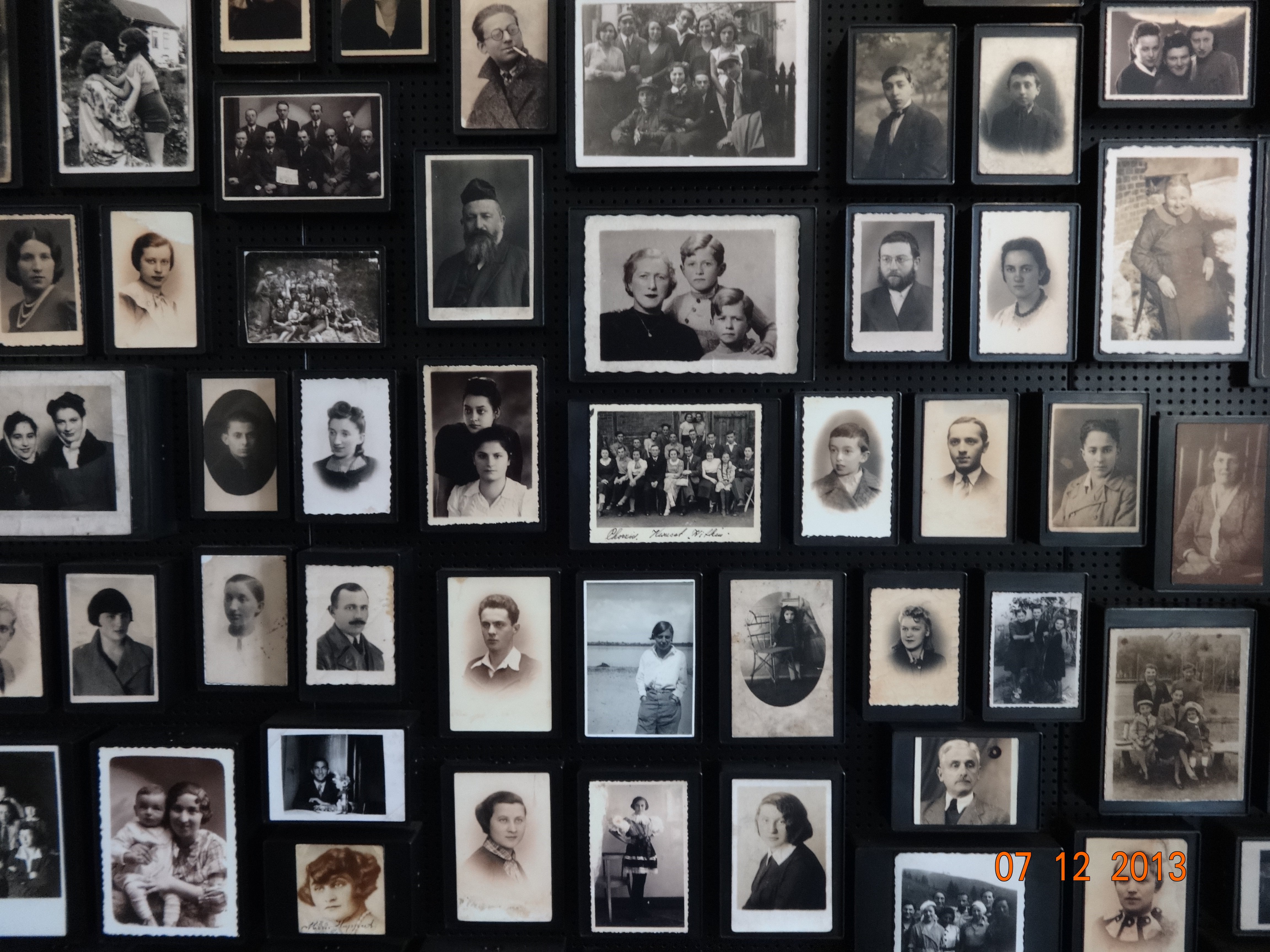
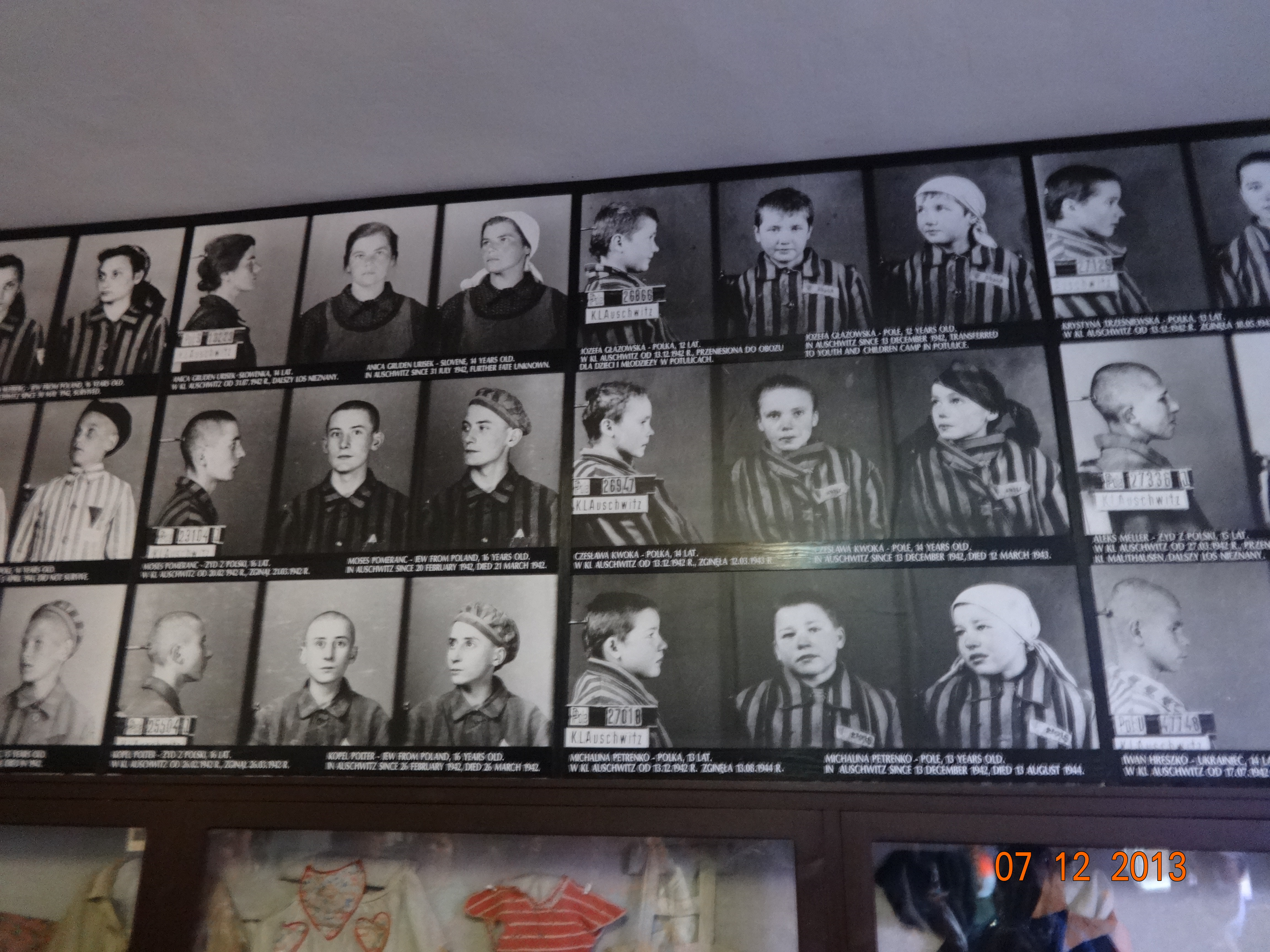
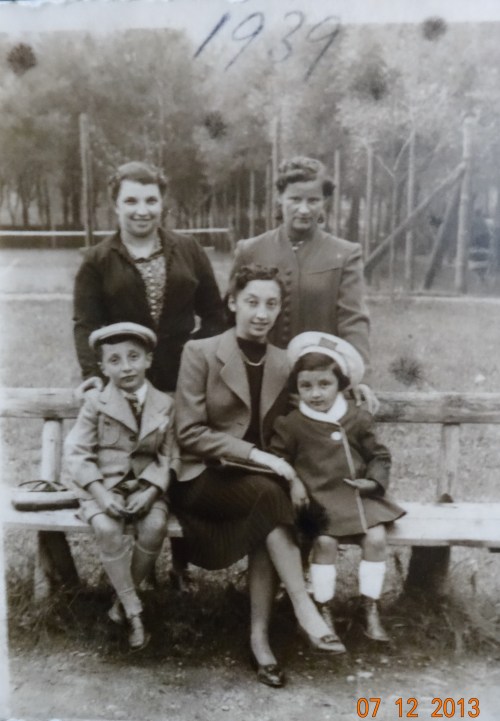
At the close of the disinfection center exhibit there are hundreds of photographs that had been discovered years after the camp was abandoned by the Germans. Pictures of loved ones who perished here.

For me, like the personal home movies of pre-war life for the victims at the exhibit at Auschwitz I, this is what has the most meaning. So I will leave you for now with a few close ups.
744

743

741

742


To Life.To Life.

*****

From National Public Radio:

A Holocaust Survivor, Spared From Gas Chamber By Twist Of Fate

by Soraya Sarhaddi Nelson, International Correspondent, Berlin

January 27, 2015 3:40 PM ET


Jack Mandelbaum, a Holocaust survivor from the Polish city of Gdynia, poses in front of a photograph showing him as a youth.

Jack Mandelbaum, a Holocaust survivor from the Polish city of Gdynia, poses in front of a photograph showing him as a youth. Tobias Schwarz/AFP/Getty Images

Seventy years ago, Soviet soldiers liberated Auschwitz, the most notorious of Nazi concentration camps.

Some 300 Holocaust survivors were at Auschwitz on Tuesday, along with several European presidents and other government officials, to honor at least 1.1 million people who were murdered, 1 million of whom were Jewish.

Among those killed there were Jack Mandelbaum’s mother and brother. The Polish-born Mandelbaum survived, spared at the last minute by an officer of the dreaded SS who yanked the teen away from his family and sent him instead to a forced labor camp.

Last week, Mandelbaum flew from his Naples, Fla., home to Berlin, to help open an exhibit on the children of Auschwitz, and to tell his story.

“I’m a person of action,” he says. “Anger doesn’t get you anyplace. Hate doesn’t get you anyplace.”

In August 1939, as the Nazis were about to invade Poland, Mandelbaum was 13 and living in the Polish port city of Gdynia. Mandelbaum says his father worried that the port would be attacked, so he sent his wife and three children to stay with relatives in the countryside.

He promised to join them six weeks later, but he never arrived. About a year later, he sent them a postcard from the Stutthof concentration camp.

“I guess he didn’t want us to worry about him, so he said he was OK,” Mandelbaum says.

He never saw his father again. His sister later died on a forced march to another concentration camp.

Prisoner 16013

Then, before dawn on June 14, 1942, the SS came for what was left of the family.

“They banged on the door and everyone had to come out in five minutes, and there was a lot of shooting and crying, and people didn’t know what was happening because they had to rush out,” Mandelbaum recalls. “Many people were even in their bed clothes. And we were lined up in the market square, and then we were marched to a local brewery.”

An SS officer there began separating people to the left and to the right. Mandelbaum says he clung to his mother and brother, who were sent to the left. But the SS officer saw in his documents that Mandelbaum had worked as an electrician’s helper.

“He grabbed me and pushed me to the other side,” Mandelbaum says. As for his family, he says, “The people who were to the left were sent to Auschwitz to be gassed. I never saw them again.”

To the Nazis, he became prisoner 16013 and spent the next three years at seven concentration camps. The first was Gross-Rosen, where prisoners worked in a granite quarry.

“There were so many prisoners,” he says. “We were in a big barrack, it had a concrete floor, it had no beds. And we were lined up like herring on the floor, so when one person turned, everybody else had to turn, it was so tight.”

Food was scarce, and the daily meal amounted to a single piece of bread and what Mandelbaum describes as soup made out of grass.

He recalls emaciated prisoners stuffing paper into their mouths to fatten their cheeks so they’d look healthier to the guards assigned to remove the weak for extermination. His own weight eventually dropped to 80 pounds.

But Mandelbaum says he refused to give up hope. He poured what little energy he had into work, hoping it would eventually lead to his release.

Suddenly, Freedom

“We had a good life before the war. I went to a public school, I had good clothes and good food and a nice apartment,” he says. “My dream was to go back to this life and be reunited with my family and my sister and my brother, and that sustained me.”

It also helped that he didn’t know the Nazis were trying to slaughter all Jews, something he says he and other prisoners learned only after liberation.

Their sudden freedom, too, was a complete shock, Mandelbaum says. “We didn’t know anything, only on the morning when we woke up and the Nazi flag wasn’t flying and the guards weren’t there.”

Unlike at Auschwitz, Allied soldiers did not free them, as his camp was in a no man’s land between the fleeing Nazis and advancing Russians. He and a friend from the camp grabbed an abandoned horse-drawn wagon and left as quickly as they could.

“We came across a women’s concentration camp and they were still locked up, so we actually became the ‘liberators’ of the camp,” he says, with a laugh.

Mandelbaum was 17 when the Holocaust ended. He says he returned to Poland several times to see if he could find his family but failed. He did find an uncle living in a hamlet near Munich.

The following year, he immigrated to the United States and settled in Kansas City, Mo., where he married, had four children and became a successful importer of ladies’ handbags. It would be 16 years before he began speaking publicly about the Holocaust, something he says he decided to do after talking to one of his neighbors.

“He asked me what kind of sports did I play in the concentration camp, so all of the sudden it just opened everything up, how little people knew what was going on, and this was when I started to speak in different venues about my experiences,” he says.

That desire to educate people brought Mandelbaum, 87, to Berlin last week. He says it’s sad to see anti-Semitism on the rise in Germany and elsewhere in Europe, but he hopes he and other Holocaust survivors can make a difference.

“You know, when we were in the camps, we would always ask, ‘How can the world stand by and let this happen?’ ” he says. “So it’s a matter of being vigilant, a matter of trying to do as much as you can in order to enlighten people [about] how dangerous it is when you become a bystander.”

http://www.npr.org/2015/01/27/381876276/a-holocaust-survivor-spared-from-auschwitz-at-the-last-second

*****


Read Full Post »

Yesterday I introduced what will be a series of posts under the heading of ‘Seventy Years’, marking the 70th anniversary of the close of World War II and discovery of the magnitude of the most horrific crime in the history of the world, the Holocaust.

Today I travel back to Auschwitz-Birkenau, sharing some of my personal observations and photographs on the anniversary of the liberation by Soviet troops 70 years ago this week.

*****

July 12.

So the day that all of us in our teacher travel study group approach with a bit of apprehension is finally here. We are on the bus from our hotel in Cracow to Auschwitz, about 40 miles to the west south west.

Yesterday we arrived in Crakow from Prague, taking the night train on a sleeper car.

790

Rolling southward one of our tour leaders points out an impressive large building on the top of a hill that looks like a five star hotel. Built after the German invasion in 1939, it was a rest and relaxation villa for Wehrmacht officers rotating off the Russian front to unwind for a bit, as industrialized mass murder was unfolding every single day less than an hour away.

Hocker Album- Dr. Josef Mengele, Rudolf Höss, Josef Kramer, and an unidentified officer. —USHMM

So, to introduce some of the major players:

I don’t make it a habit to showcase the perpetrators on this site, but in this one incredible photograph, taken at Auschwitz, you can see some of them above. Hoss was hung at Auschwitz  following his trial after the war. Kramer was executed by the British after his stint presiding of the horrors of Belsen after his transfer there. Of course, smiling Dr. Mengele escaped to Argentina and died in a drowning accident in the late 1970s. (The pictures in this photo album surfaced only a few years ago and were studied by my friend archivist Rebecca Erbelding at the United States Holocaust Memorial Museum. You can read more at the weblink above if you like.)
On to the tour.

638

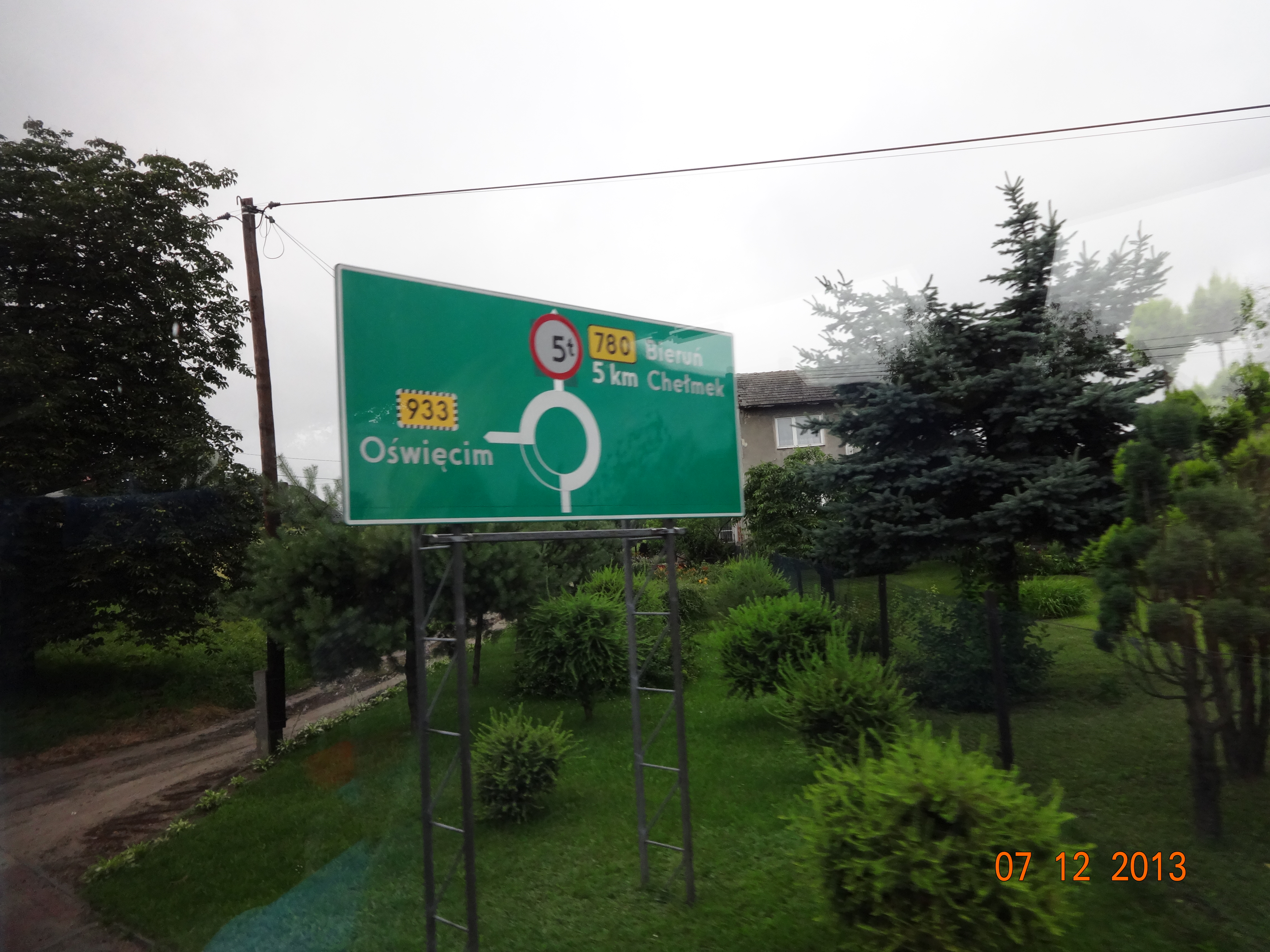
Soon we see the road signs for Oswiecim, the small Polish town at a railroad hub that has become one of the most visited tourist sites in Poland. Most of the world knows it by its German name-Auschwitz.

The bus lumbers into the overcrowded parking lot and docks in the slot. The driver kills the engine. And it begins to rain as our other leader, E.,  relates the story of her mother’s family, the idyllic childhood in this beautiful prewar country, a young teen when the nation is invaded, the oldest of four children. No one on the bus makes a sound. It is now raining very hard.

643

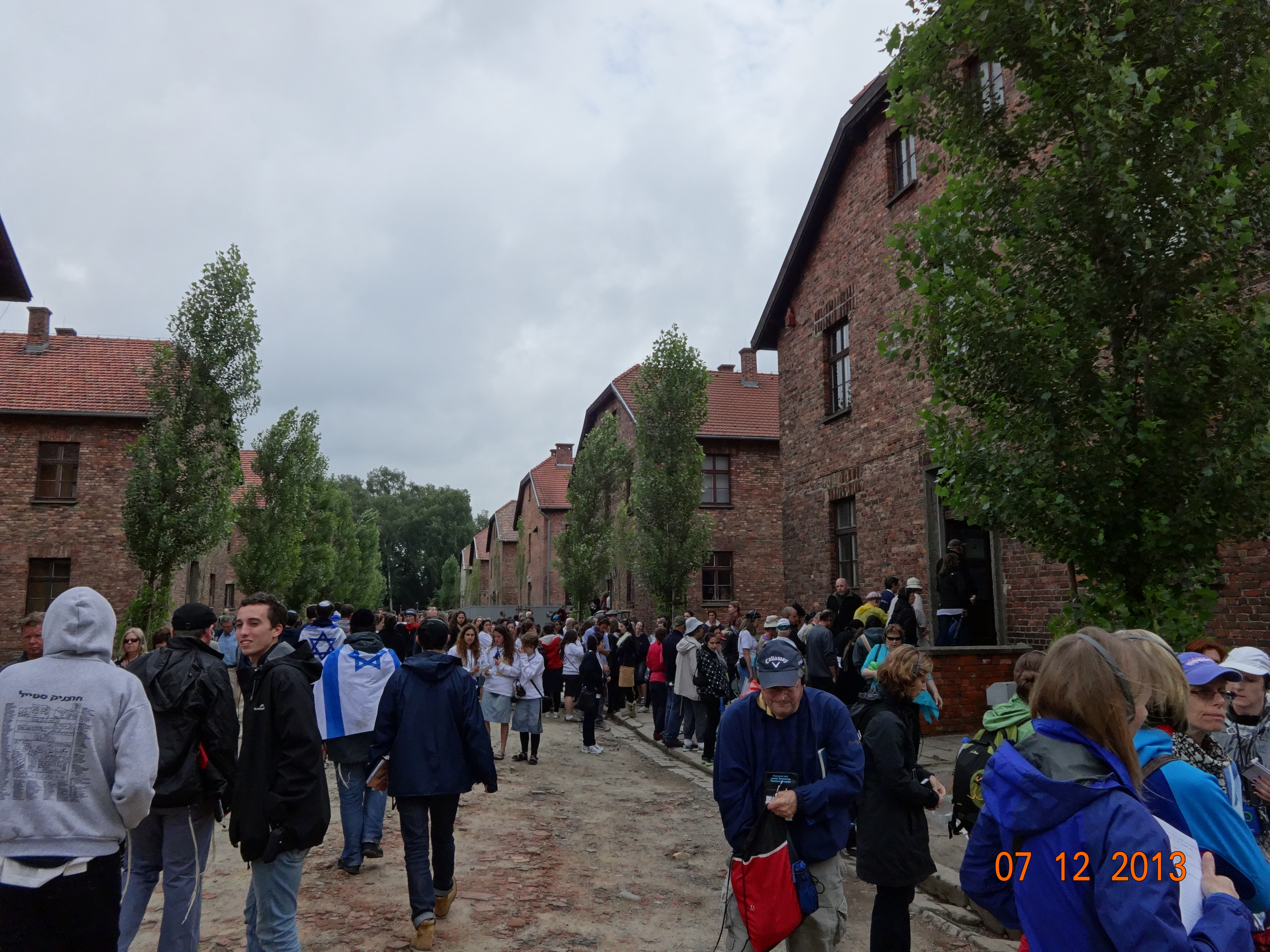
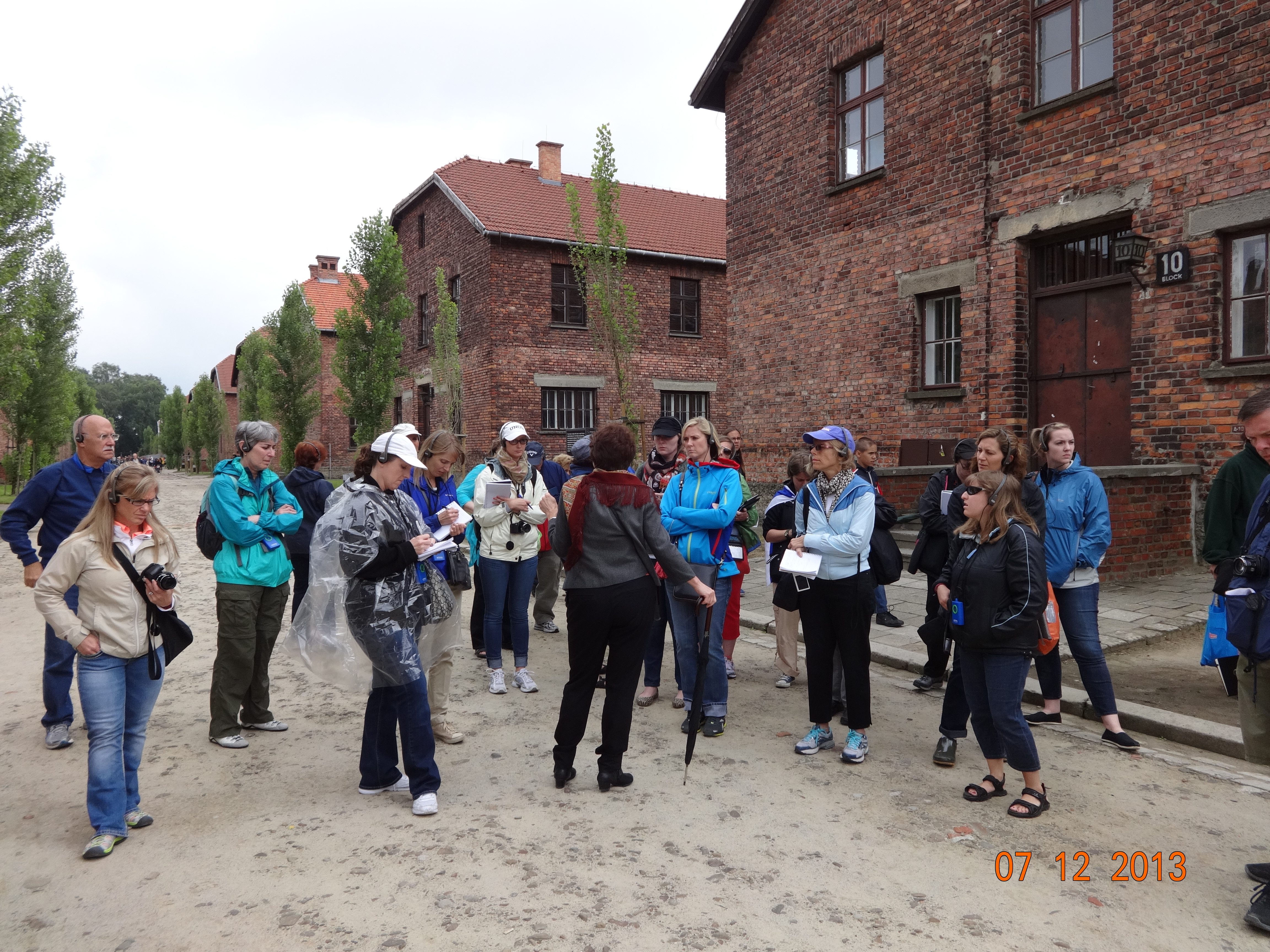
What is this place? Our guide A. is a top notch scholar, and she leads us on a day long tour that is hard to put into words.

660

We begin at Auschwitz I, the first camp. This place is centrally located, a railway hub dating back to the turn of the century.

678

The first prisoners, after it is converted from a Polish military facility, are Soviet POWs and Polish prisoners and other “security risks” who will be worked to death slowly expanding this camp, and the much larger Auschwitz II-Birkenau. She walks us through the exhibits and the displays at the various blocks. Block 4 is the “Extermination Exhibit”. We think about the words, the language. Extermination- as if the victims were vermin. Over 1,100,000 were killed here, most of them Jews.

The Hub. The tentacles during the Holocaust.

We see the map with the spiderlike rail lines radiating inward to Auschwitz like tentacles, from northern Poland, from Germany, Hungary, as far south as Greece and as west as Paris and the Netherlands. In the summer of 1944, tens of thousands were murdered here, per day.

This place is ALWAYS crowded.

We see again the large scale terra cotta model of the process, which the German engineers had perfected  at Auschwitz II-Birkenau- the arrival of the transports, the undressing rooms with signs admonishing bewildered people to hang their belongings carefully and to remember the number of the wall pegs where they left them for quick retrieval later. The shower rooms that could fit in some cases entire transports, which were in fact the hermetically sealed gas chambers. The Germans above with their gas masks, waiting for the proper temperature to be reached through body heat, just the right humidity to be achieved before dropping in the pellets so the gas released would work more effectively. The anguished death throes of the thousands of naked figurines assault our senses. The process is not complete until the corpses are carried out by the sondercommando slaves, defiled for any gold fillings, the hair shorn from the women, the bodies then burned in the open air behind or cremated in the ovens.

676

But the tour is now just beginning.  Minutes before, we were looking at a terra cotta model. And now in Block 5 we will be presented with the evidence. This is an exhibition, after all. Exhibit A is about to slap us in the face. Hard. It is a room, 50 feet long, with nothing but human hair piled several feet back and as many feet tall. My heart skips a beat.

What are my eyes perceiving? Now we see a photo of stacks of bale bags, carefully labeled, packed and stacked, awaiting shipment back to the Reich for use in various products for the German war effort. Slippers for submariners so they can walk quietly aboard ship to evade Allied sonar. Stuffing for the seats of German pilots.

We shuffle on in silence with hundreds of others past the spectacles, the pots and pans, the suitcases carefully labelled by their owners with chalk on the orders of the perpetrators, again, for “quick retrieval”. And the shoes. Sorted. Case after case of women’s shoes. Men’s footwear. And then the children’s shoes.

665

Our knowledgeable guide takes us into Block 27, the new exhibit on the Shoah. This is a temporary relief of sorts as now we see faces, film and stills, of pre war Jewish life, projected on the walls. We hear songs and voices.

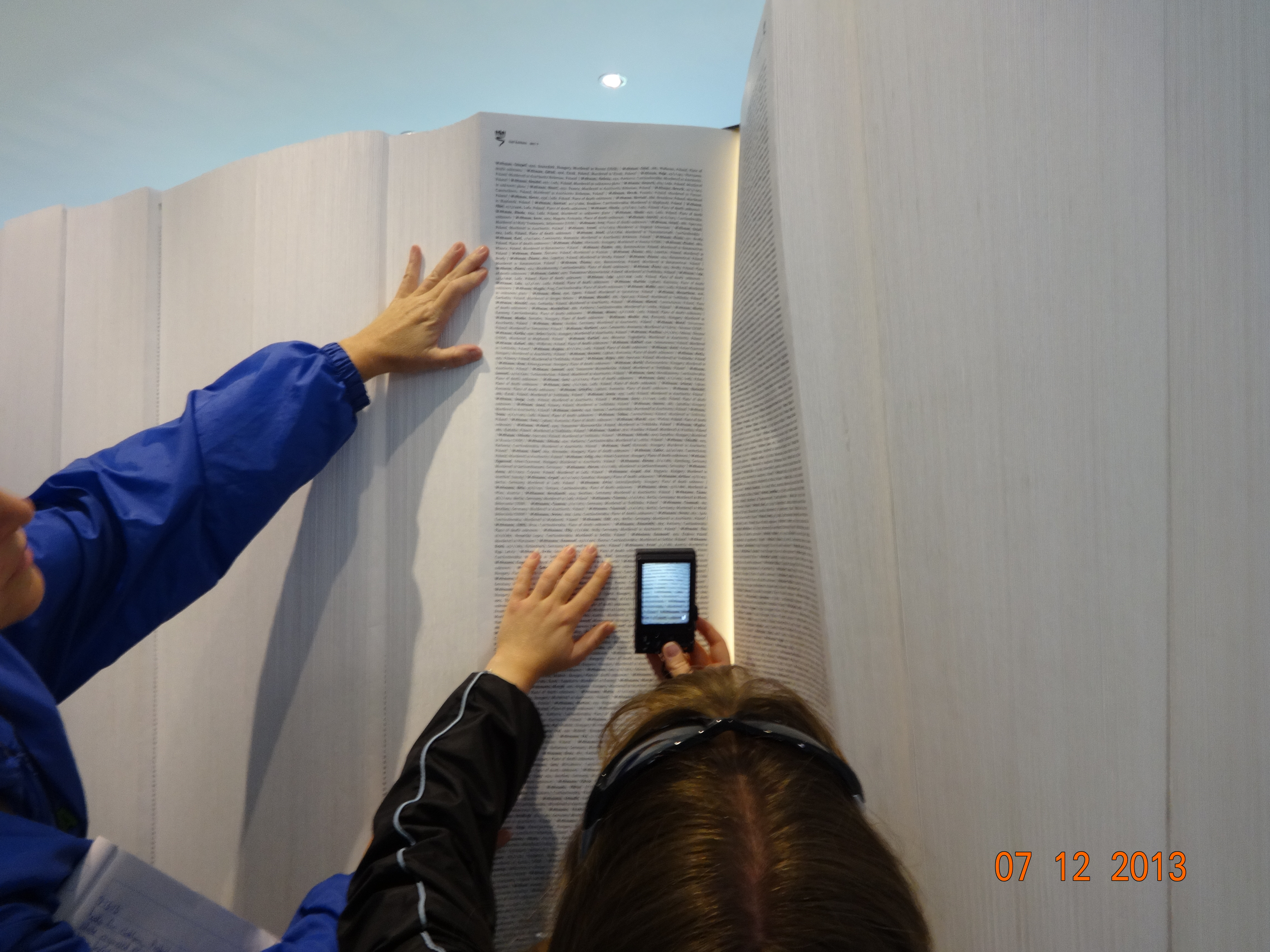
Book of Names. people cry again.

At the end is the Book of Life, containing four million names compiled thus far. A moving moment when E. and others in our tight knit group find entire pages with the names and dates of family members murdered during the Holocaust.

657

Girls. Shorn, beaten,  and photographed.

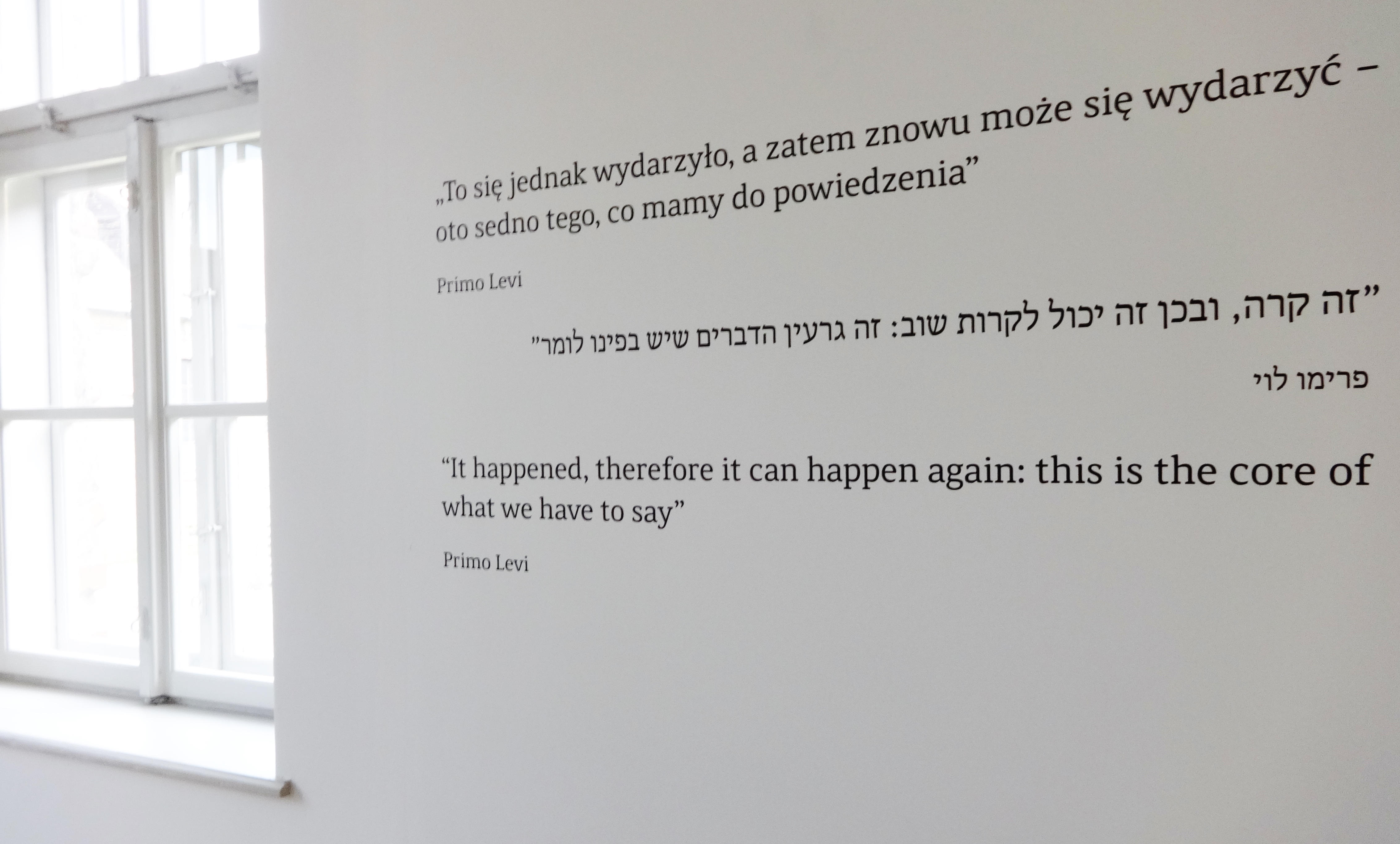
This is the Core.

*****

Read Full Post »

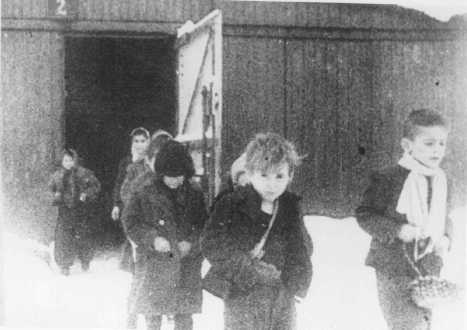
Soon after liberation, surviving children of the Auschwitz camp walk out of the children’s barracks. Poland, after January 27, 1945. — United States Holocaust Memorial Museum

I study this photograph,

and so it begins.

Seventy Years Later.

The war comes to a devastating conclusion.

The discoveries unfold:

Eyewitness encounters with the most horrific crime in the history of the world.

Battle-hardened tough guys cry.

They stomp their feet in rage, and get sick,

but the lost are lost.

The Survivors ‘carry on’.

The Soldiers ‘carry on’.

Now, it is Seventy Years.

But it is not over,

because ‘closure’ is a myth.

And for the rest of humanity-

How much have we learned?

How much have we forgotten?

Is it even important, for us to stop and think

about snowflakes on little boys?

*****

See the Altantic’s photo essay here.

*************************************************************

Matthew Rozell teaches history at his alma mater in Hudson Falls, New York. His first book, The Twilight of Living Memory: Reflections of the World War II Generation from Hometown, USA is due out this spring. His second book, in the works, is on teaching and remembering the Holocaust.
Read Full Post »

« Newer Posts - Older Posts »