Feeds:
Posts
Comments

Posts Tagged ‘Holocaust Survivors’

~Matthew Rozell, a history teacher whose project reunited hundreds of Holocaust survivors with the American soldiers who liberated them, takes a backwards journey to the authentic sites of the Holocaust, retracing the path of the survivors who are now his friends.~


A year ago I took one of the most transformative journeys of my life, with 24 fellow educators, to study the Holocaust and the Jewish resistance to it, in Washington, DC, Germany, the Czech Republic, and Poland. I kept an extensive diary and took tons of photographs. And contrary to many assumptions, it was a journey that led to profound understandings about life, not death.  For the next several days, I have decided to go back and retrace my steps and try to process what unfolded for me.

****************************

July 16. I wrote in my journal on the bus ride back from Treblinka. The handwriting is nearly illegible due to the poor roads, underscoring the remoteness of this place where 900,000 plus were murdered.

In the afternoon we headed to the Jewish cemetery in Warsaw. As in many occupied  areas the cemetery also contains a mass grave.

1107

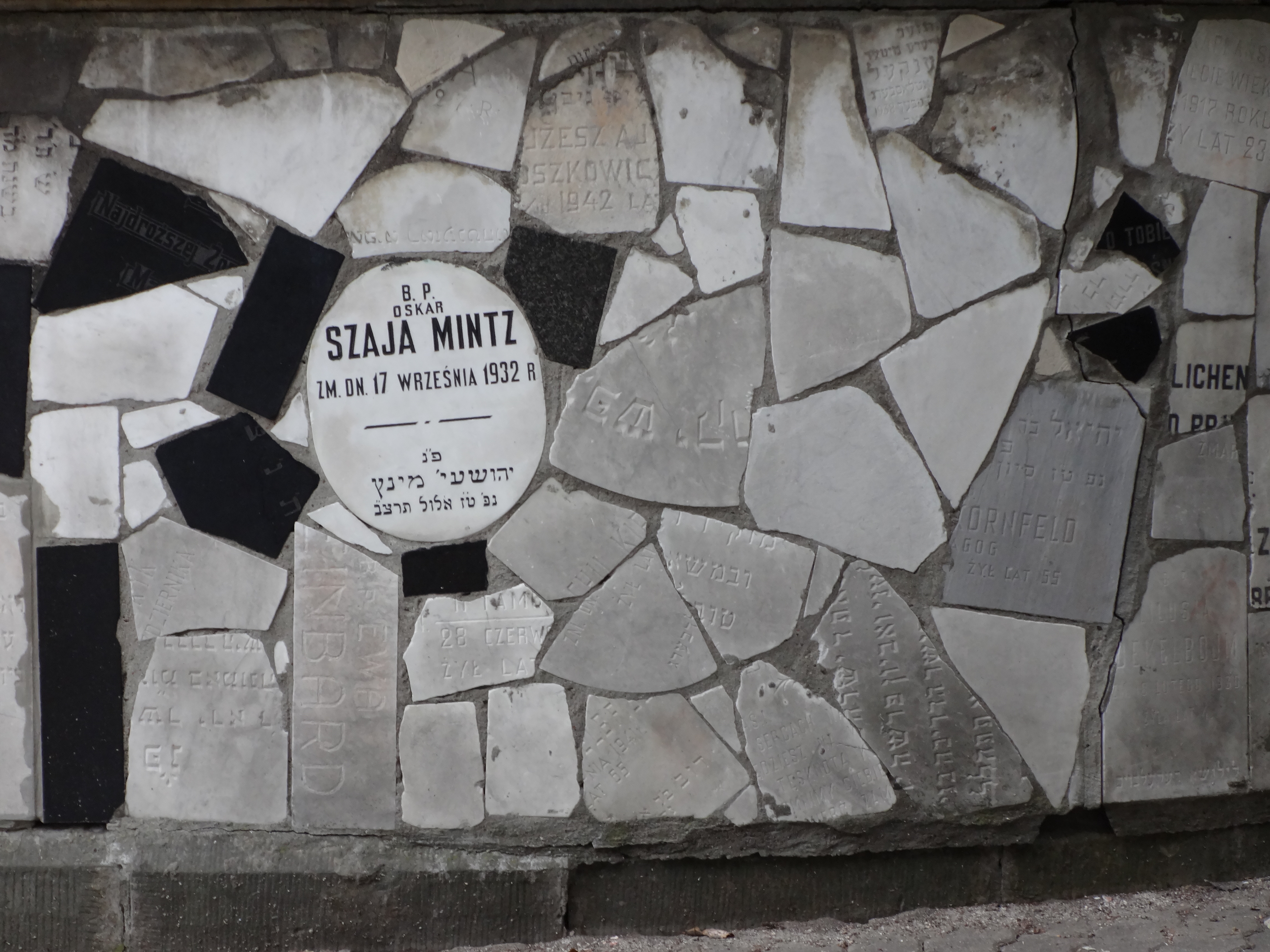
Wall rebuilt with smashed stones. Warsaw Jewish cemetery.

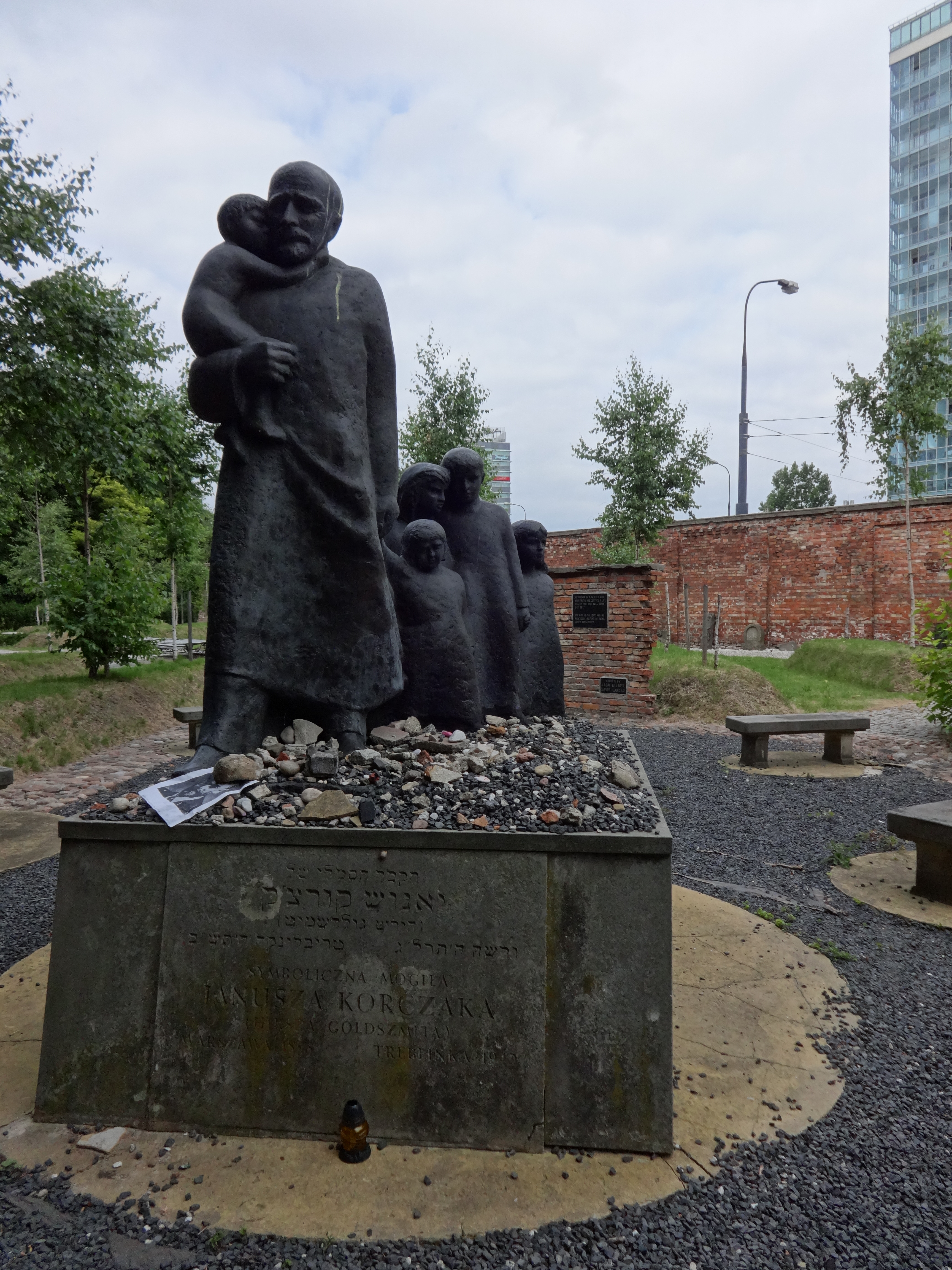
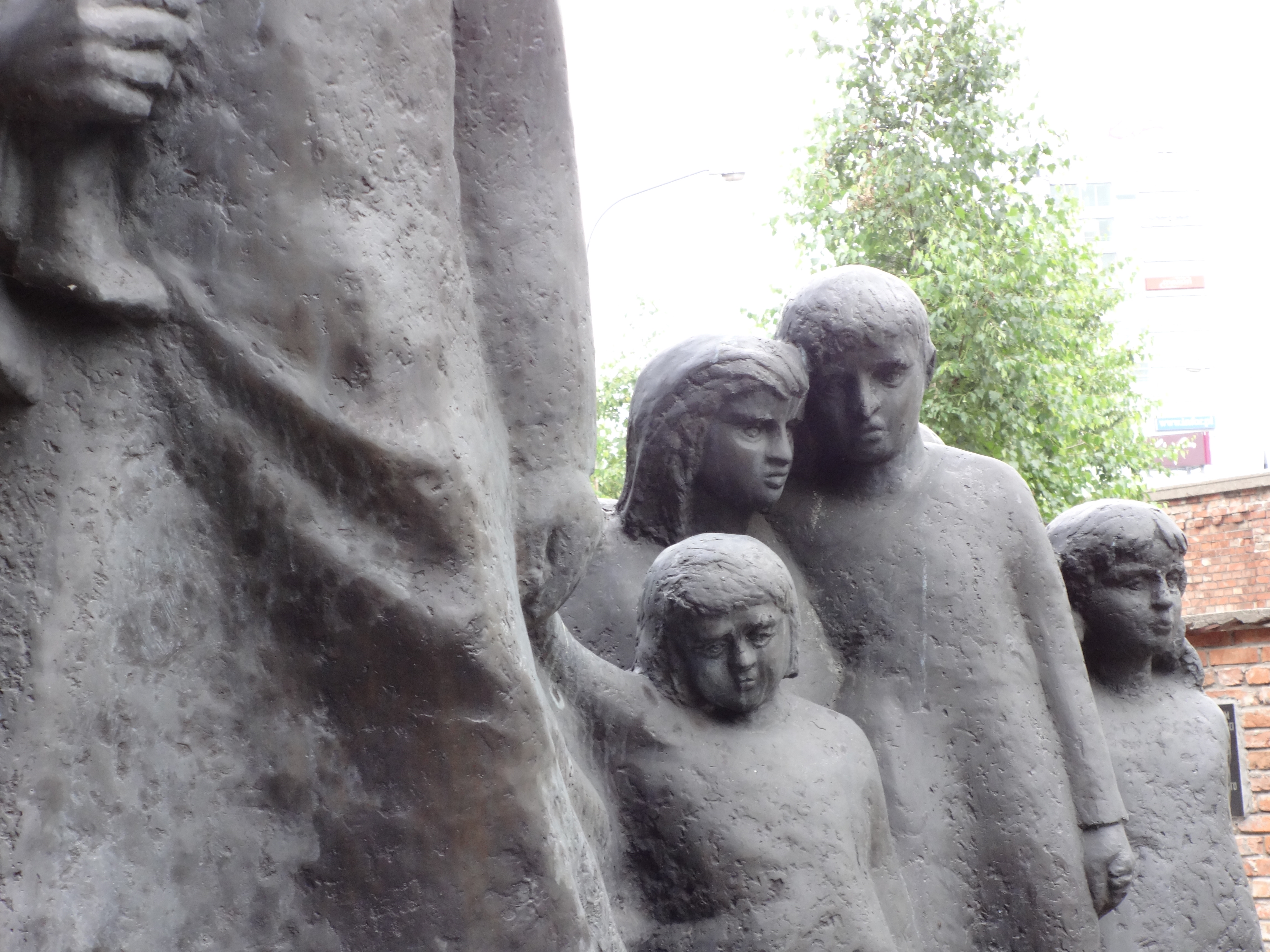
A poignant memorial statue also exists here to Janusz Korczak (1878-1942), who was murdered at Treblinka with 200 of his orphaned charges, accompanying them to the gas chambers.

1121


1122


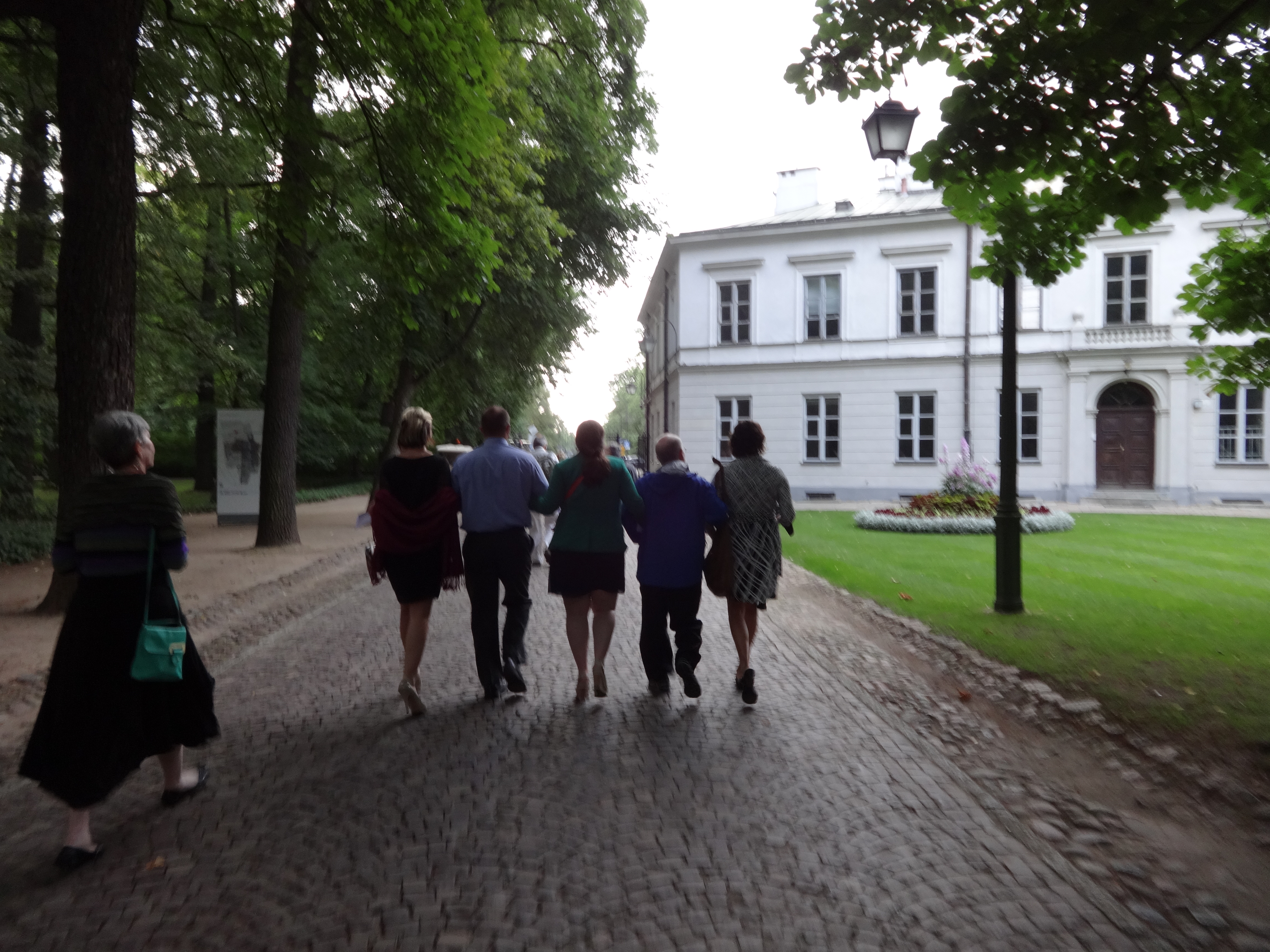
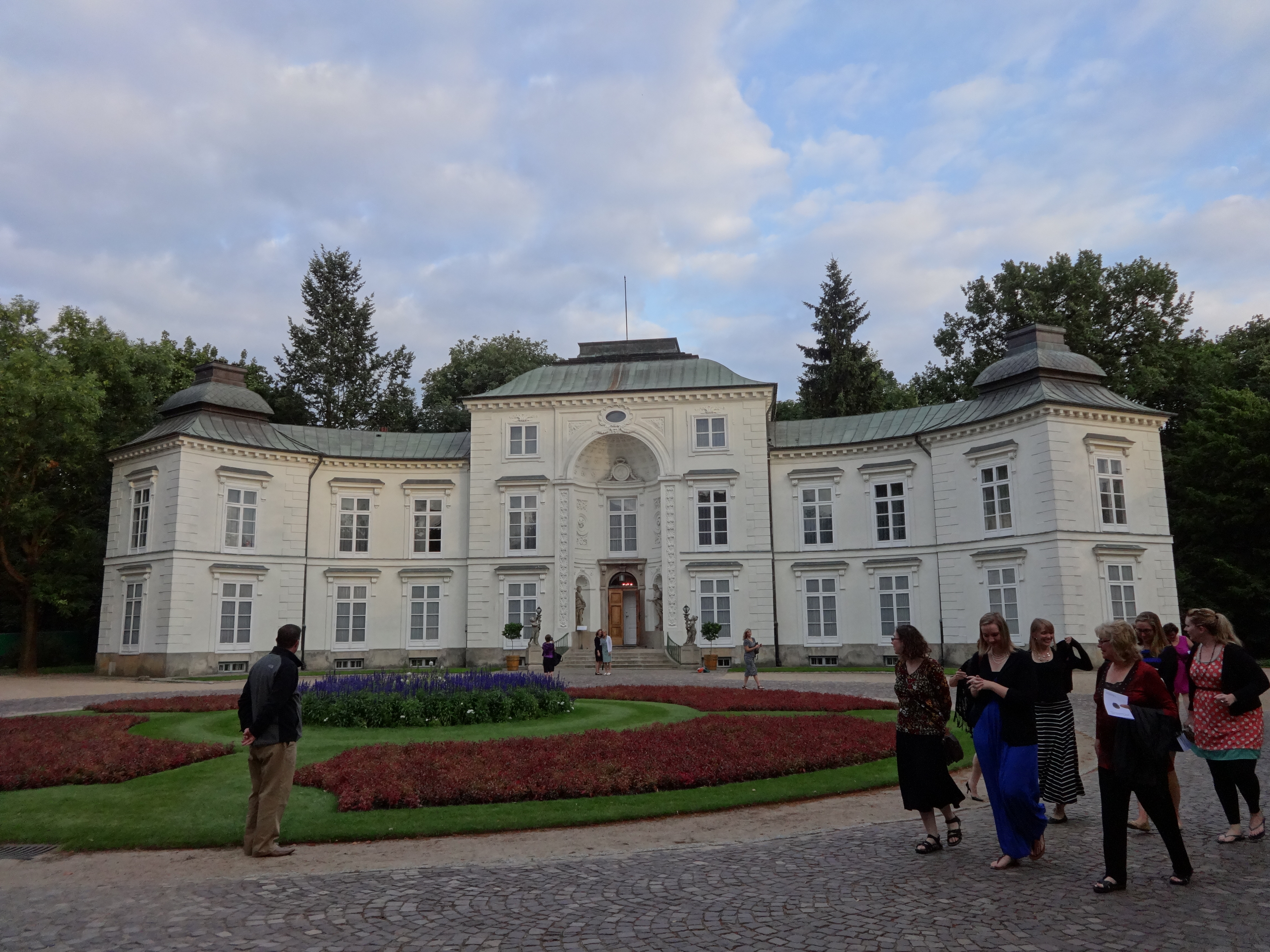
There is so much more to learn here. In the evening we dress for a Chopin recital.


1141

The dichotomy is striking. Horrible places by day. Evening debriefing and intense discussions over dinner, palatial accommodations by night. The concert is in a former palace.


1140

I’d say we deserve it.

******************************************

July 17.

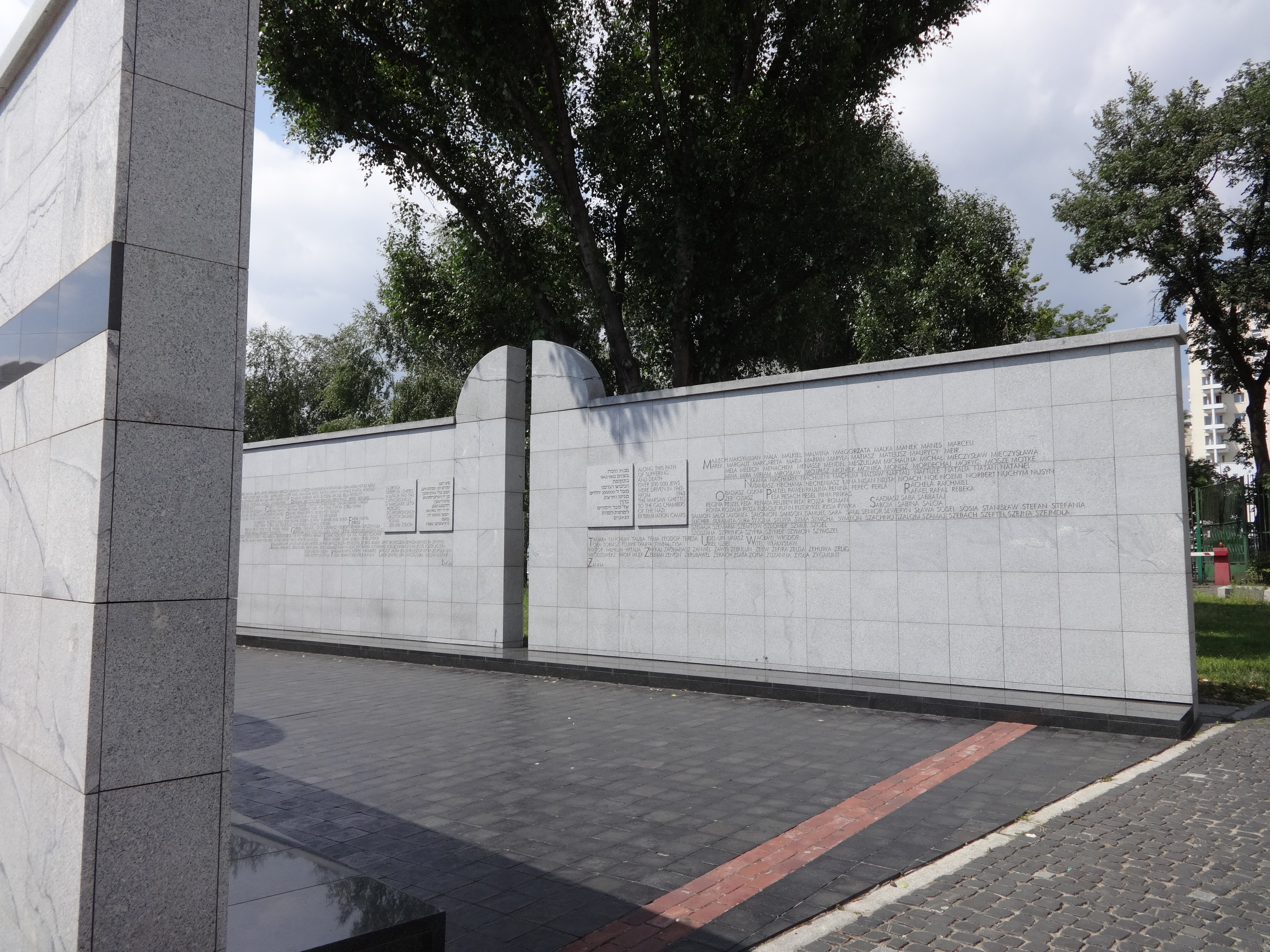
We tour Jewish Warsaw and finally the remnants of the ghetto wall, and also the Umschlagplatz. It is here that forced gatherings for the mass deportations to Treblinka took place. I am also reminded of the scene from the film “The Pianist”.


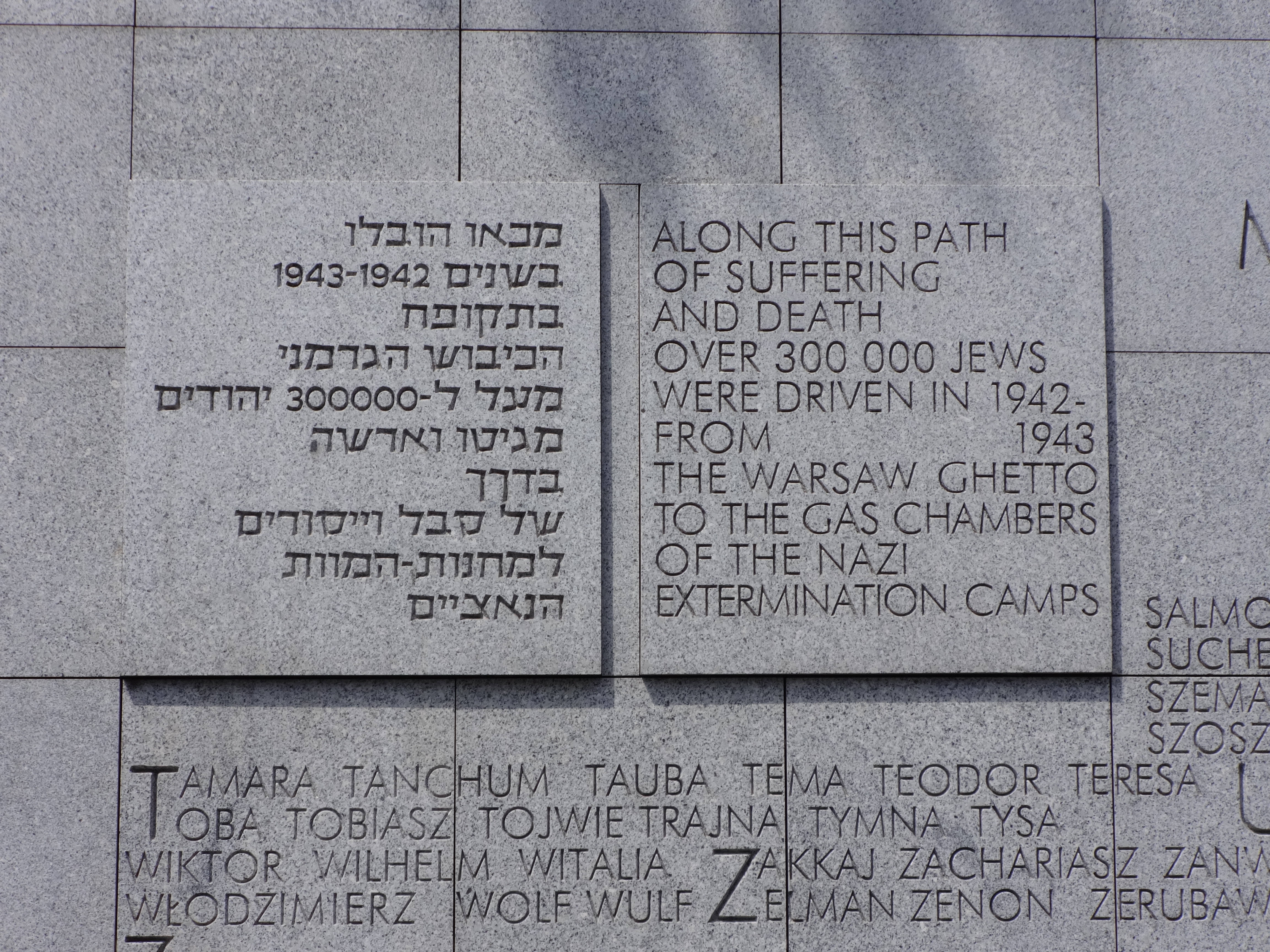
The Umschlagplatz. As many as 10,000 Jews were deported on some days to Treblinka. Upwards of 300,000 were sent from here to their deaths.


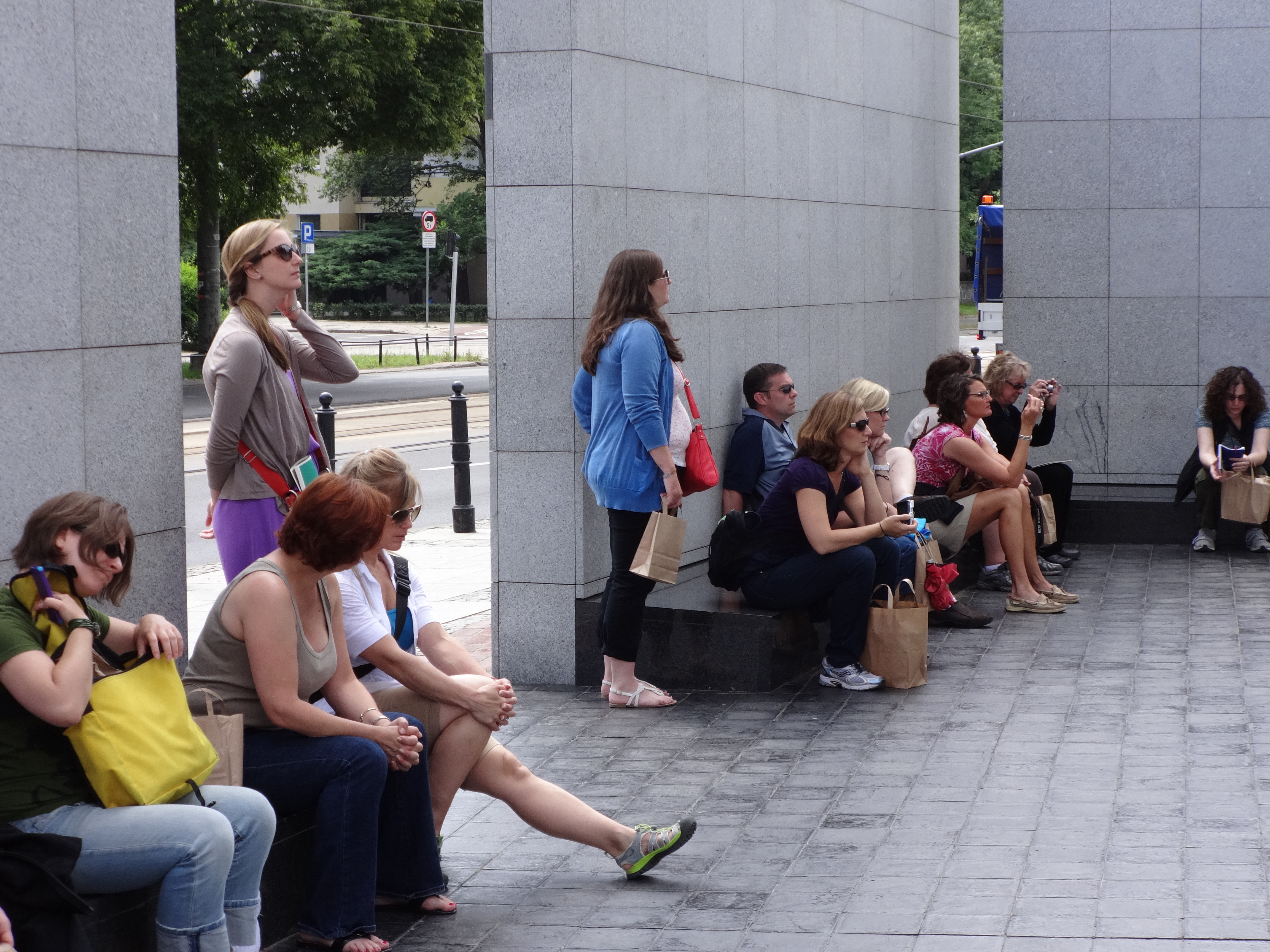
The  Umschlagplatz. Our group. 2013.

The Umschlagplatz. Our group. 2013.


1227

The  Umschlagplatz. As many as 10,000 Jews were deported on some days to Treblinka. Upwards of 300,000 were sent from here to their deaths.

The Umschlagplatz. As many as 10,000 Jews were deported on some days to Treblinka. Upwards of 300,000 were sent from here to their deaths.

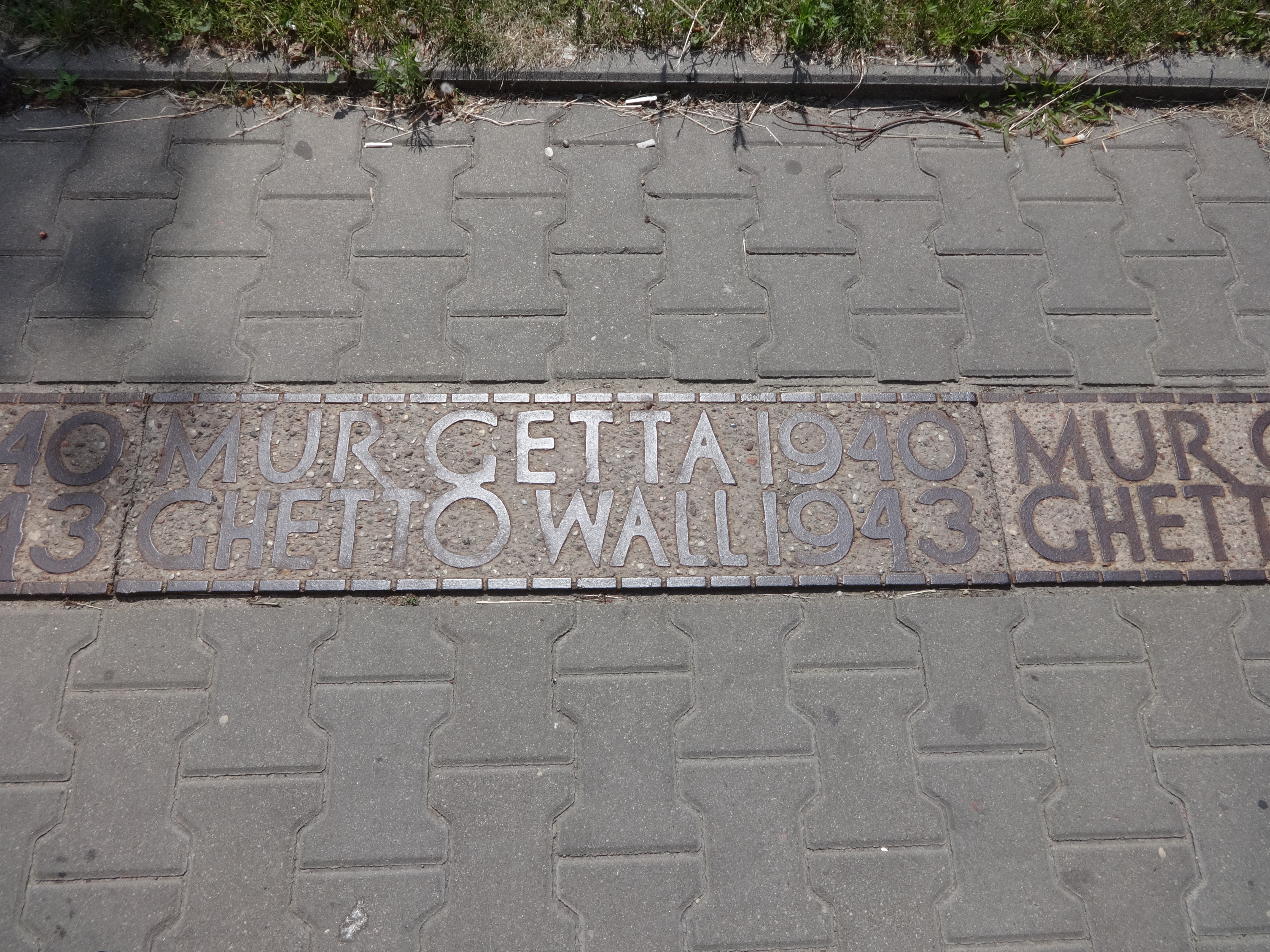
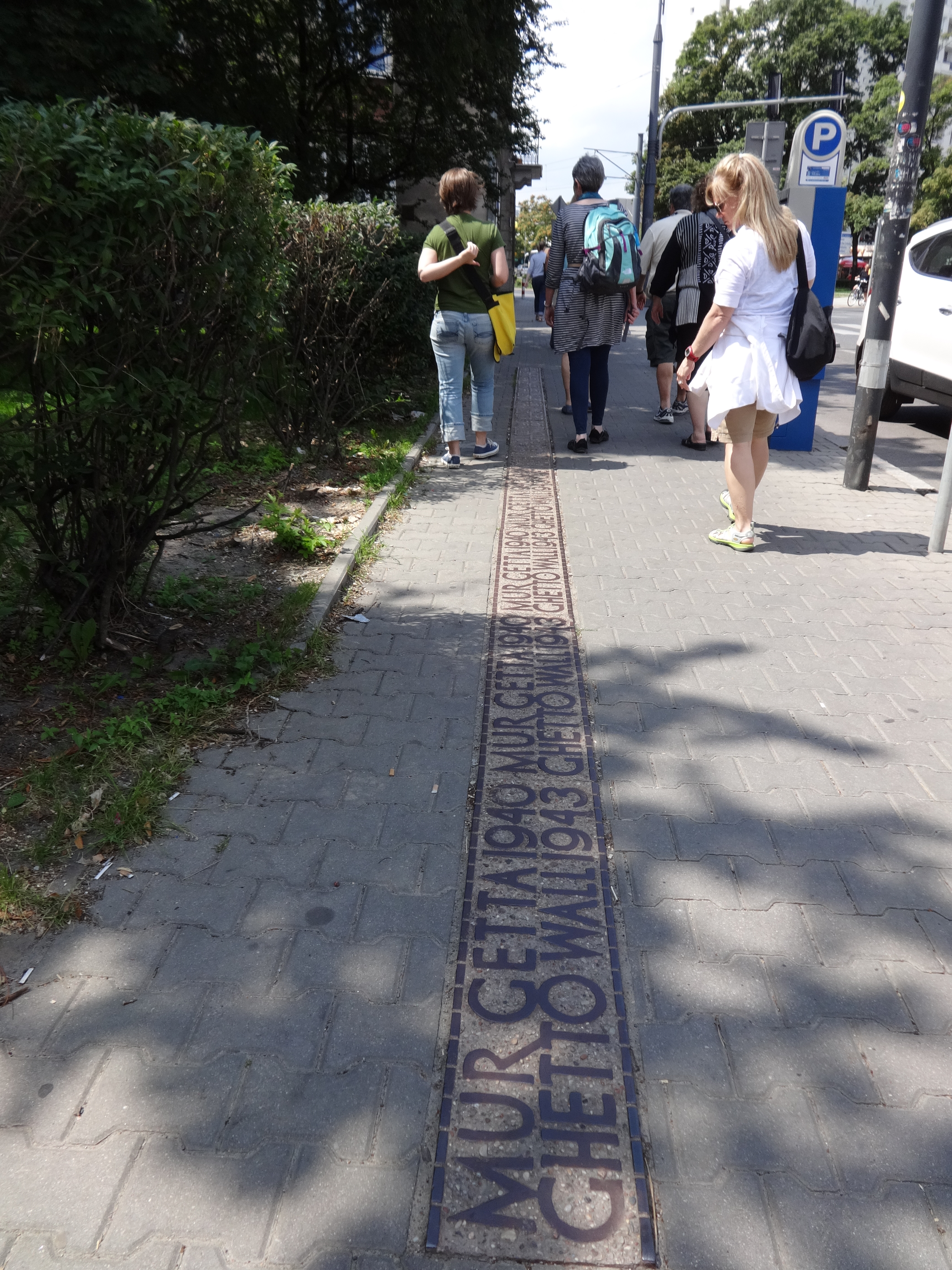
We walk the edge of the wall, memorialized in bronze in the sidewalk.


1239


1240

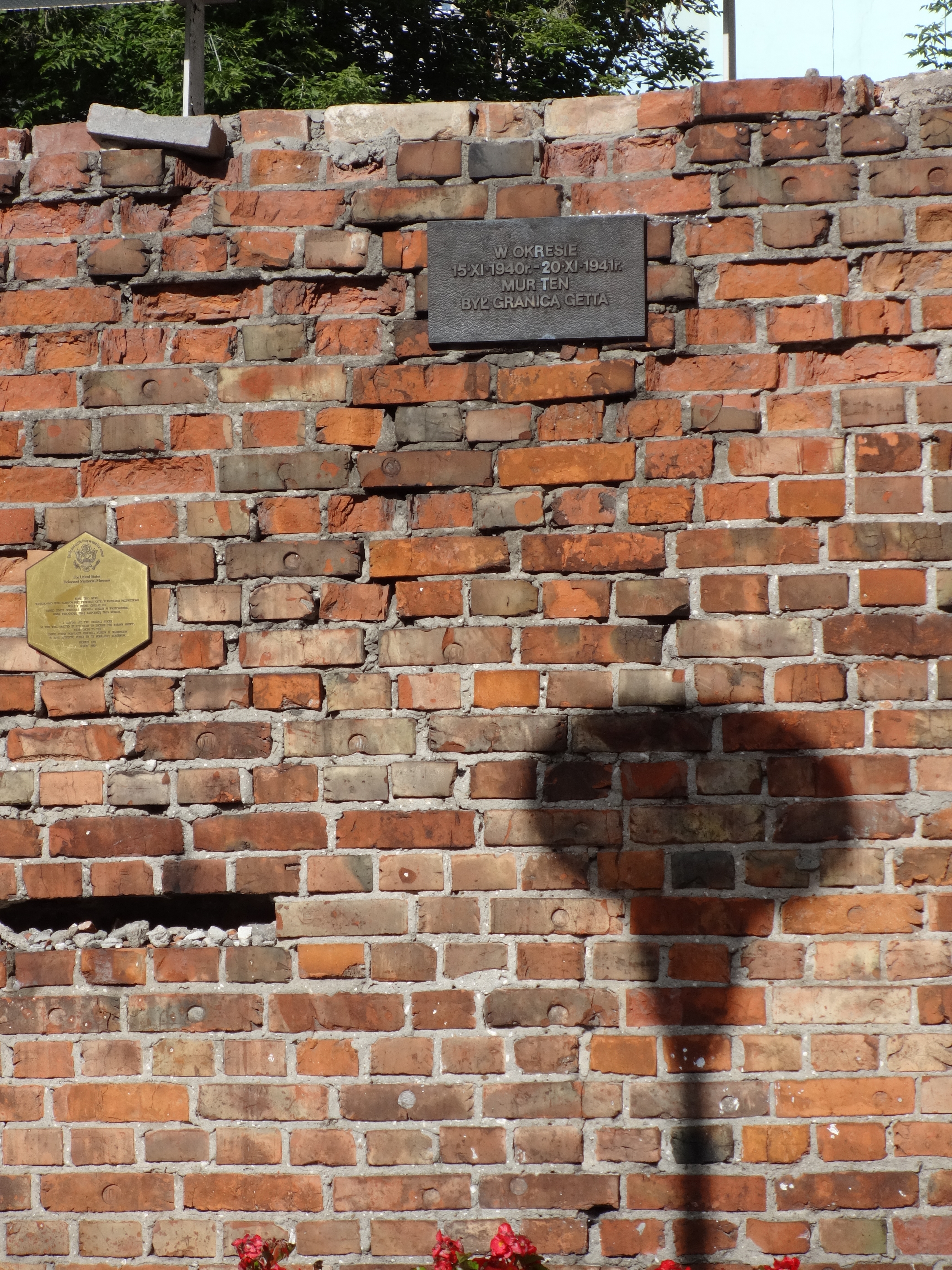
And we come to a section that still stands.

Warsaw Ghetto wall.

Warsaw Ghetto wall.


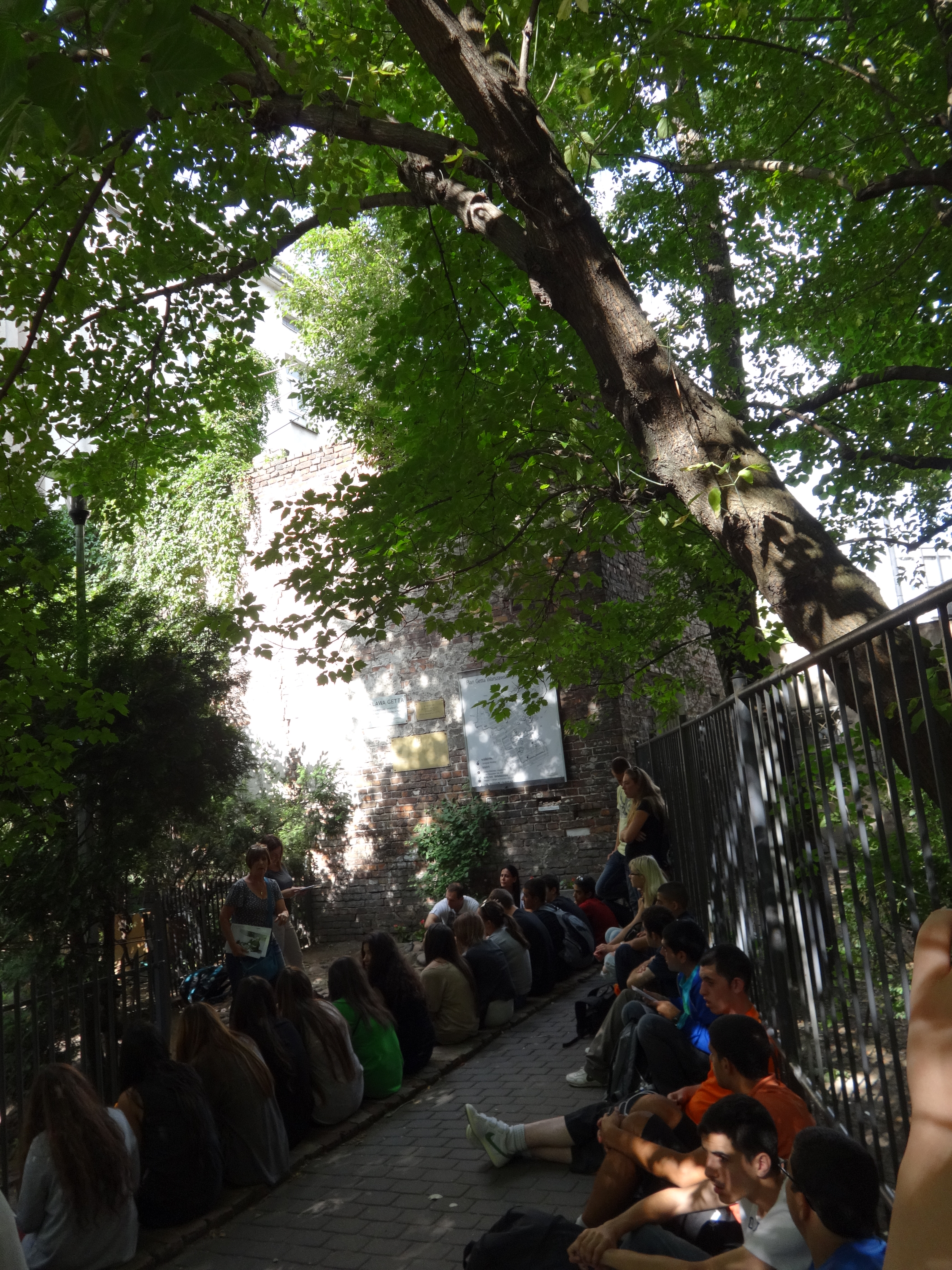
Warsaw Ghetto wall. Some Israeli teens are hear, listening to their teacher.

Warsaw Ghetto wall. Some Israeli teens are here, listening to their teacher.

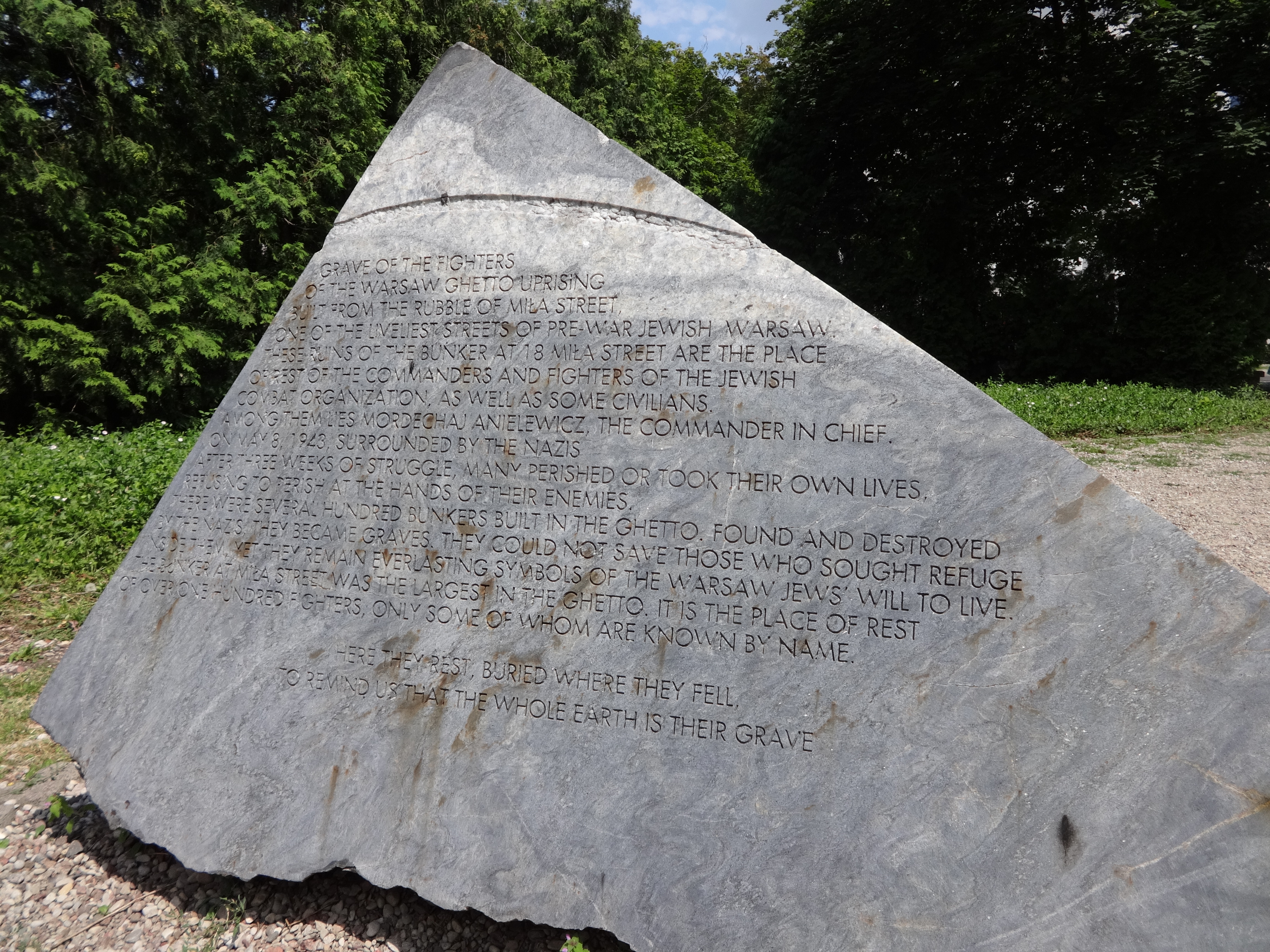
The Warsaw Ghetto uprising was the first open fight in an occupied city against the Germans. And it was conducted by Jewish youth, who held off the Germans for half a month in the spring of 1943. Utterly inspiring and amazing. We make our way to Mila 18, the bunker command post where Mordechai Anielewicz and many of the resistance fighters breathed their last. It is another solemn moment.

18 Mila Street.

18 Mila Street.

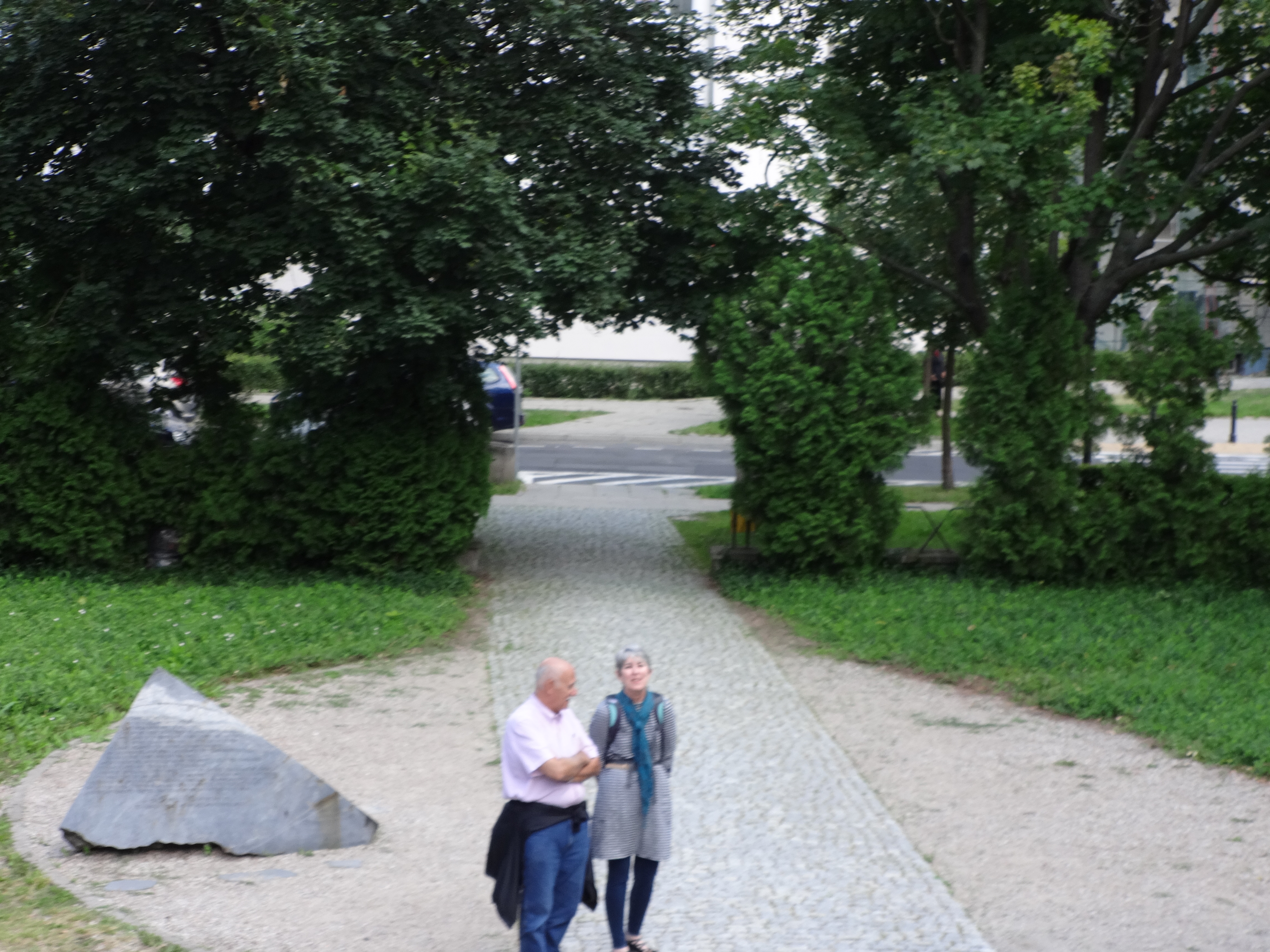
Monument at Mila 18.

Monument at Mila 18.


We know why we are here. We are not only witnesses, but we were chosen to become, for many, the point of entry on the immense and sometimes unfathomable subject of the Holocaust, and the many forms of resistance that were taken during it.  And so rightly, our trip is concluding here. The processing will only come over time.


Read Full Post »

~Matthew Rozell, a history teacher whose project reunited hundreds of Holocaust survivors with the American soldiers who liberated them, takes a backwards journey to the authentic sites of the Holocaust, retracing the path of the survivors who are now his friends.~


A year ago I took one of the most transformative journeys of my life, with 24 fellow educators, to study the Holocaust and the Jewish resistance to it, in Washington, DC, Germany, the Czech Republic, and Poland. I kept an extensive diary and took tons of photographs. And contrary to many assumptions, it was a journey that led to profound understandings about life, not death.  For the next several days, I have decided to go back and retrace my steps and try to process what unfolded for me.


****************************

After my last post, I heard from a Holocaust survivor whom I feel very close to, several fellow travelers and supporters, and one person who appears convinced that I am a fool, though it is apparent that he did not study the full post, nor has any familiarity with my work. Not that he had any intention of that. He appears to be somewhat anally fixated on the gas chamber that I would not enter.

In fairness, even at the time I knew that my decision not to go into the gas chamber would spark a “reaction” like this. Here is what he wrote:

You’re an emotion and propaganda-susceptible gullible fool.

You’re “teaching history” and not going into the fraudulently alleged homicidal gas chambers? Or do you subconsciously already know it’s bullshit?

There were NO fake shower rooms disguised as gas chambers.

That’s a racist anti-German blood libel. Shame on you. The Bath and Disinfection 1 facility was just that!

Then he sent me to his website. Sure, I went. “Holocaust Hoax” or something original like that.  Why, there is even a PayPal button for donations. Working out great, I am sure. Sigh. Same old rehashed, regurgitated nonsense. Fred Leuchter a qualified expert. Uh-huh.  What else?  Jewish supremacy/conspiracy.  Okay. “Fraudulently alleged”. “Blood libel”. Hmm, heard that one before. The teaching history matters guy is “propaganda-susceptible”. Gullible. Racist at that, though I have written about my German friends and have gone out of my way to praise the German historians I have met on this journey.

Must be teaching the wrong history. So yes. Shame on me.

I get it. And I’m sure I’ll get a really well thought out nasty follow-up. But really, thanks  for reinforcing the importance of what I do. Your words mean more than you could ever know.

****************************

 July 16.

My impression of Poland is that it seems pretty flat. Makes sense, as this is in the heart of the great Northern Plain I have been teaching about for years. A natural invasion route. Sandy, too. After the German invasion of the USSR on June 22, 1941, the deployment of the Einsatzgruppen  began in earnest and the plans for the Final Solution became clearer.

1096

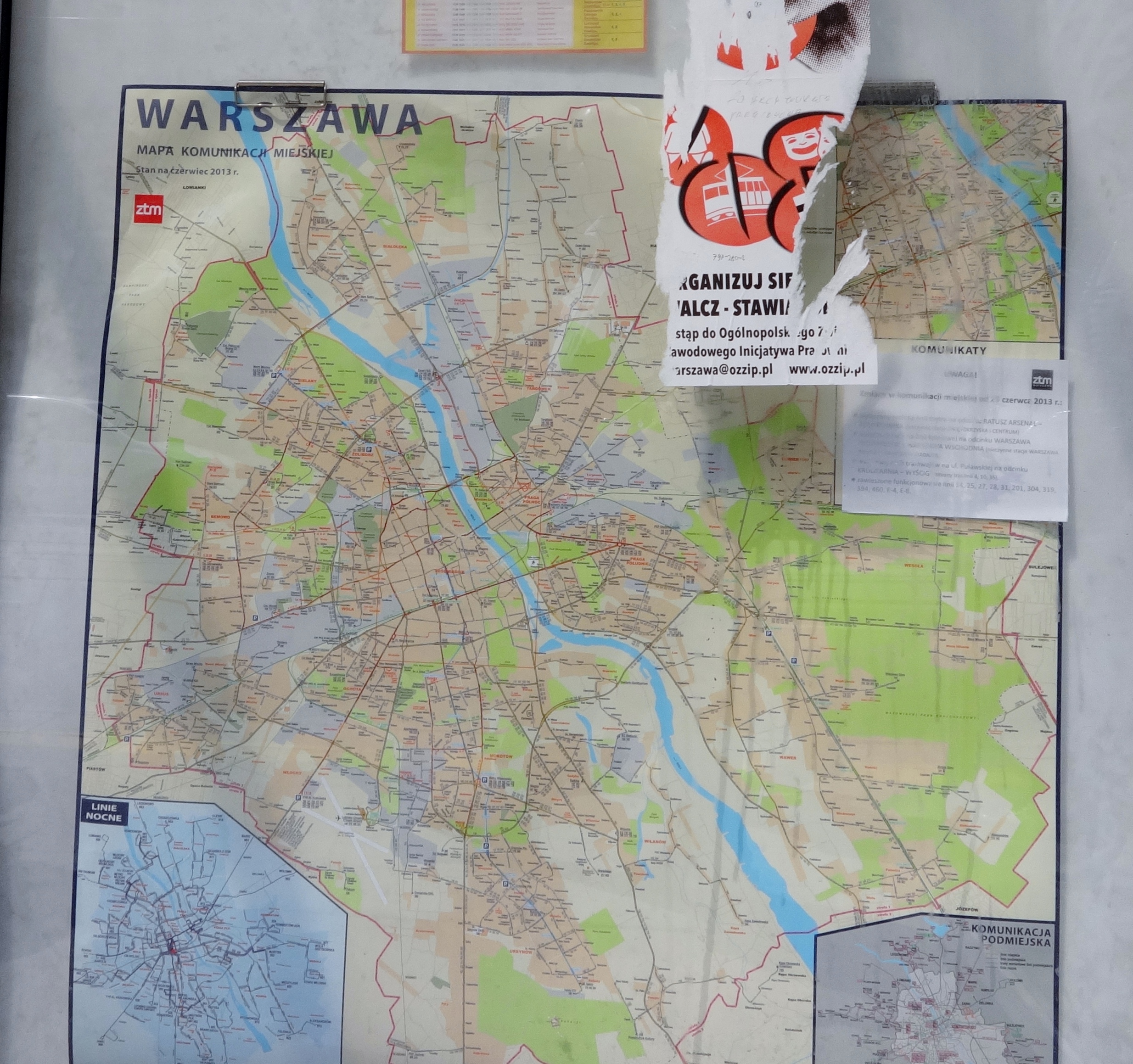
We are in Warsaw now.

1218

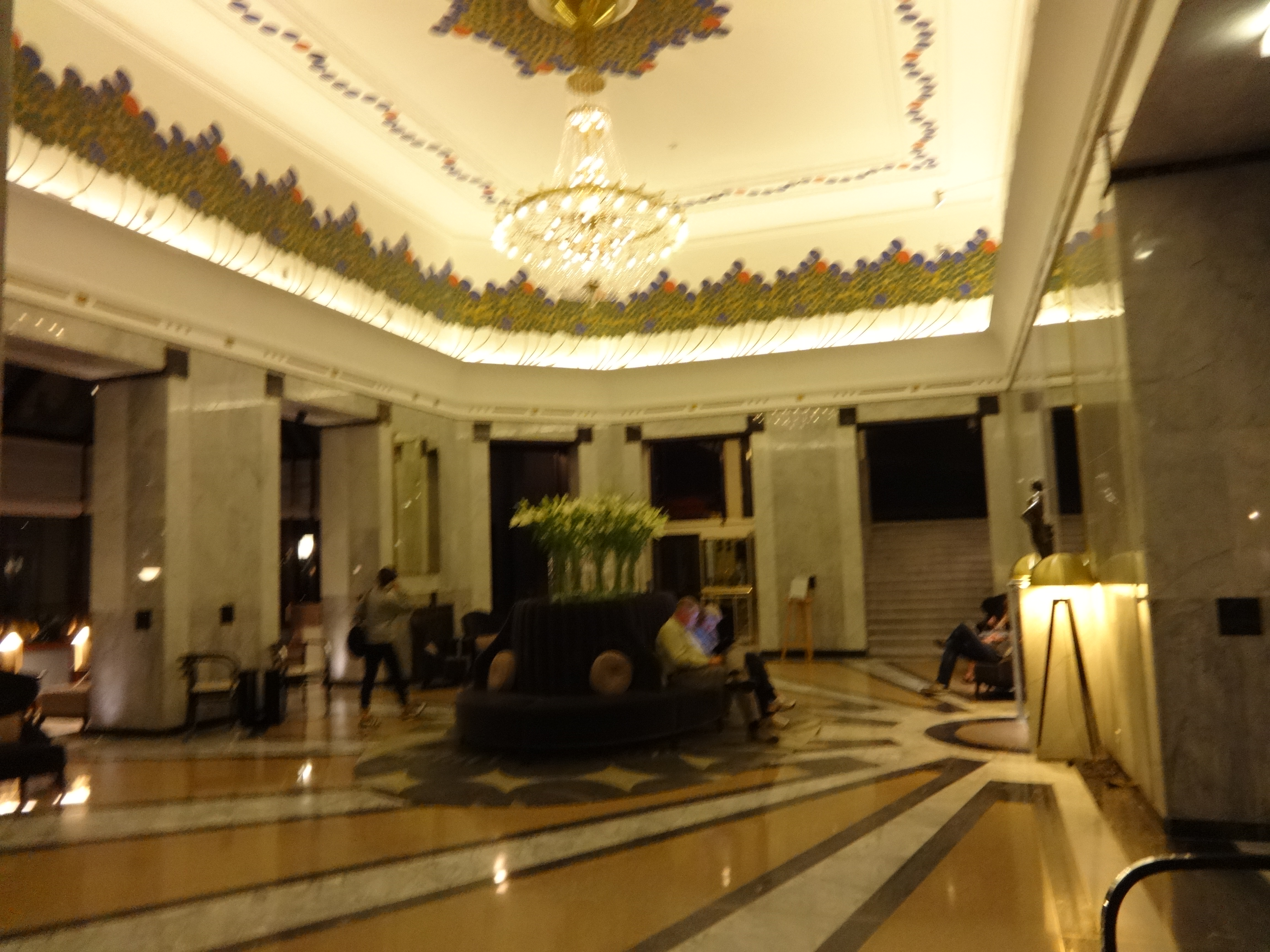
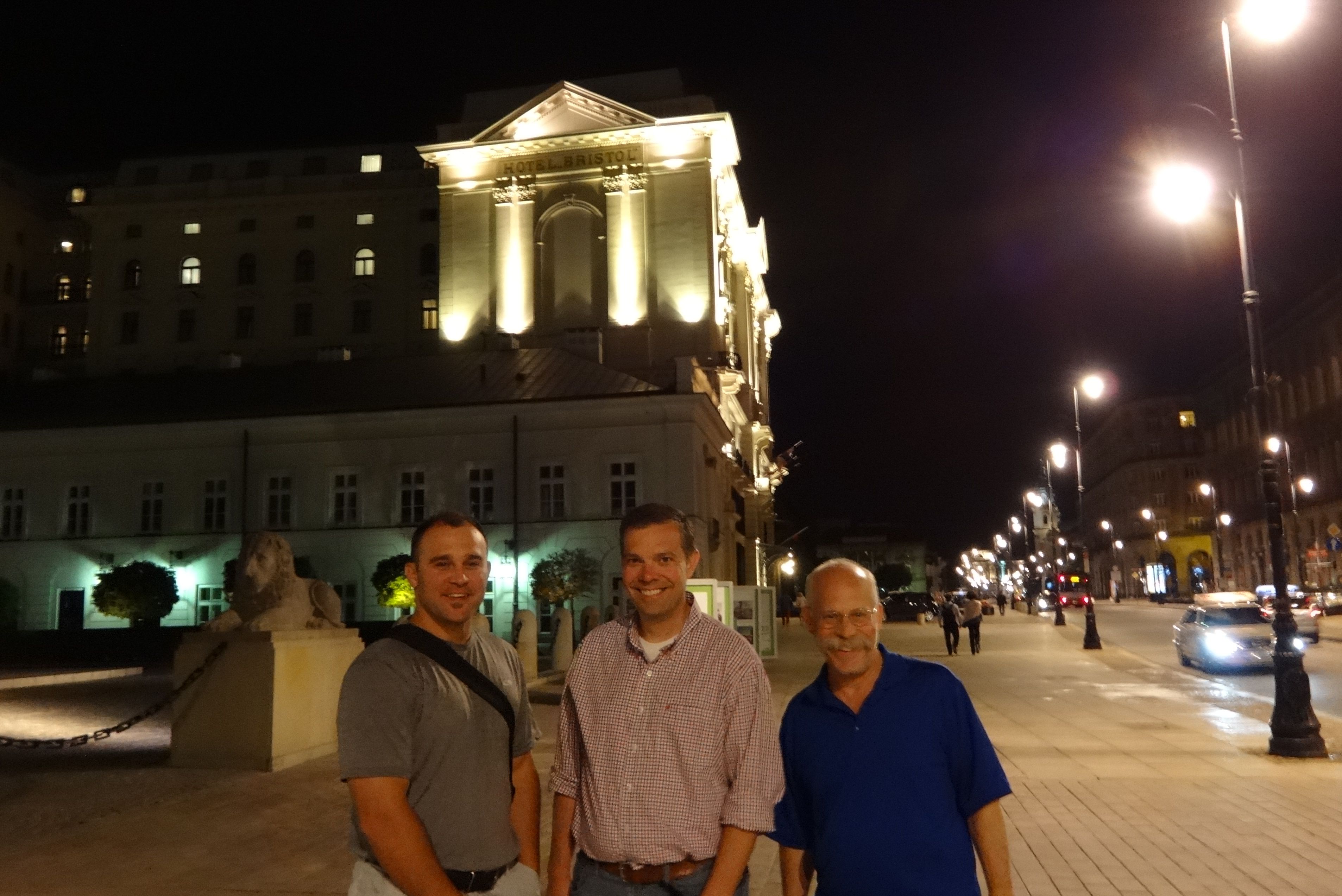
In fact, our hotel, the Bristol, is right next door to the Presidential Palace. We are in the top digs in the town-which of course the Germans occupied before the war. We go out at night, to purge some of the madness that, if you are not careful, can begin to accumulate like a toxin in the soul. Light, refreshing conversation. Good Polish beer. And yes, laughs with fellow travelers.

The Bristol in Warsaw. A backdrop for Leon Uris' classic Mila 18.

The Bristol in Warsaw. A backdrop for Leon Uris’ classic Mila 18.

The Bristol in Warsaw. A backdrop for Leon Uris' classic Mila 18.

The Bristol in Warsaw. A backdrop for Leon Uris’ classic Mila 18. Appropriate digs for superstar schoolteachers.

The Presidential Palace right next to the Bristol. Literally. Where they put us up.

The Presidential Palace right next to the Bristol. Literally. Where they put us up.

Tim, Scott, Alan. Warsaw. In front of our hotel, the Bristol.

Tim, Scott, Alan. Warsaw. In front of our hotel, the Bristol. Outlaws, livin’ life and loving every minute of it.


Warsaw of 2014 is an exciting place to be, as Krakow was. I’ll come back to this in the next post.

Today we are bussed to Treblinka, about 50 miles northeast.

The primary roads turn on to secondary roads. Towns become villages as we make the final approach on tertiary roads that are dirt. But there are railroad tracks that we cross, then follow.

1054

Treblinka I was a forced labor camp. Soon enough, orders came down to construct Treblinka II, a full-blown killing center authorized, like Sobibor and Belzec,  within the parameters of Aktion Reinhard.

1088

The language. “Extermination Camp.” Commonly used. Like human beings were bugs or something.

Much of the Warsaw ghetto occupants were murdered here, including, again, relatives of survivors I am close to. Micha Tomkiewitz’s father was shot down as he leapt from the train to Treblinka.

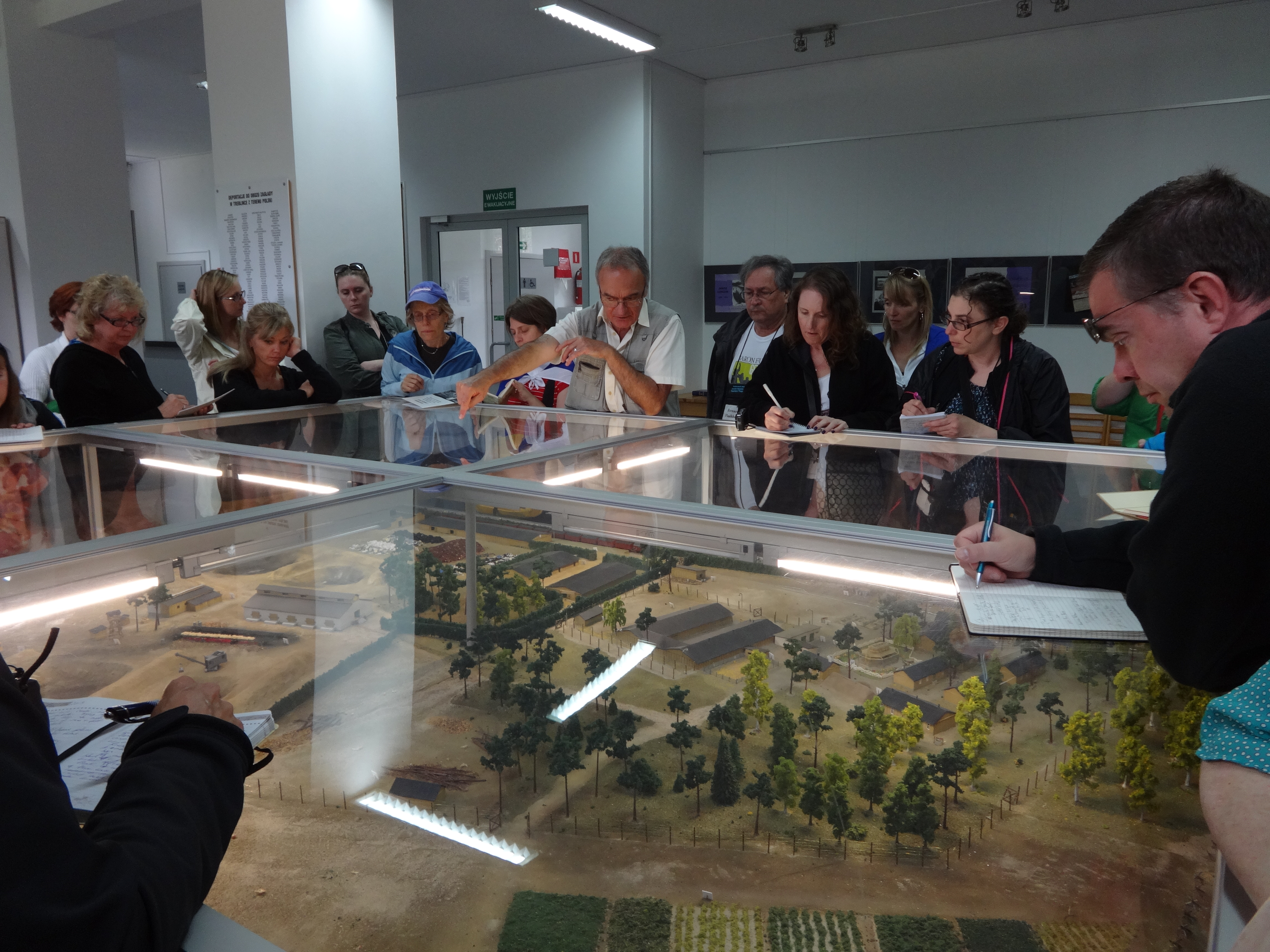
When we arrive here we go to a tiny museum where our guide Waclaw gives us the layout of the camp, overlooking a huge scale model.

Model of Treblinka II.

Model of Treblinka II.

SS guard vegetable garden in the front. The trains would roll in like clockwork, beginning in the early afternoon.

1087

The deception reaches its height at Treblinka. There is a station, and a sign.

Treblinka station sign. Yad Vashem.

Treblinka station sign. Yad Vashem.

A clock. The barbed wire double fence is cloaked in trees, some branches even woven into the fence itself. New arrivals in transports of up to seven thousand, are sometimes greeted with a speech by the camp commander, then are directed to step down and disembark, to hand over all valuables, as they are at a “transit center”.

1075

Scott contemplates disembarkation site. Treblinka II.

They undress in segregated areas, and  run naked down the “tube” a camouflaged fenced in path that led to the gas chambers. They are beaten by SS men and specially trained Ukrainian guards. The clothes are searched by the sondercommandos and sorted.

1085

We move on to the site of the gas chambers. Even the “bath house” has a Star of David, a Hebrew inscription that reads, “This is the gate through which the righteous pass.” Once inside, the doors are sealed, and a captured Soviet T-34 tank engine is started, pumping choking carbon monoxide into the chamber.

The Soviet memorial at the site of the gas chambers. Kaddish is said. Treblinka II.

The Soviet memorial at the site of the gas chambers. Kaddish is said. Treblinka II.

After a quarter-hour, the people would be dead. Bodies would then be pulled out and cavities searched for gold or other valuables. The disposition of the corpses evolved, almost as a science, at some of these centers. Iron railroad railswould be set up and huge pyres would be created. Near the end of the camp’s existence, Himmler ordered that bodies be exhumed and cremated, to hide the evidence. Ashes were scattered, mixed in with the sandy earth, and plowed over.  Treblinka was so far off the beaten path and so well hidden that for years the general public had no knowledge of it.

Memorial stones. 1700 of them. One for each shtetl, town, city destoryed or purged of its Jewish population in Poland. Treblinka II.

Memorial stones. 1700 of them. One for each shtetl, town, city destroyed or purged of its Jewish population in Poland. Treblinka II.

Between July 1942 and Nov. 1943, probably near 900,000 people were murdered here. But a little known part of the story focuses on the uprising that lead to the camp’s demise, documented in narrative style in Jean-François  Steiner’s 1966 book Treblinka. Under the noses of the SS and Ukrainians, a secret revolt manifested among the slave laborers. On August 2, 1943, six hundred attacked the guards, burned parts of the camp, and about half of them managed to escape into the forest. Most did not survive, but a few dozen did.

So we are at the scene of the crime , educators from across the USA, sharing this special bond, only 70 years later.

Talli: “There is such a presence”.

We gather at the site of the gas chambers. Mindy is reading her poem. Talli is crying. Beryl shares a special story. Elaine is crying. Matt’s tougher today, so after the prayer, he is going to wander the perimeter, by himself. Again.

We were only there for at the most a couple of hours. But, as my friend Alan, who shared these moments as well,  says, “Treblinka manifests the Absence of Presence, the Presence of Absence. What’s there is not there, what’s not there is there.”

And with a little quiet, you can feel it. There is such a presence.

Read Full Post »

~Matthew Rozell, a history teacher whose project reunited hundreds of Holocaust survivors with the American soldiers who liberated them, takes a backwards journey to the authentic sites of the Holocaust, retracing the path of the survivors who are now his friends.~


A year ago I took one of the most transformative journeys of my life, with 24 fellow educators, to study the Holocaust and the Jewish resistance to it, in Washington, DC, Germany, the Czech Republic, and Poland. I kept an extensive diary and took tons of photographs. And contrary to many assumptions, it was a journey that led to profound understandings about life, not death.  For the next several days, I have decided to go back and retrace my steps and try to process what unfolded for me.

****************************

July 14.

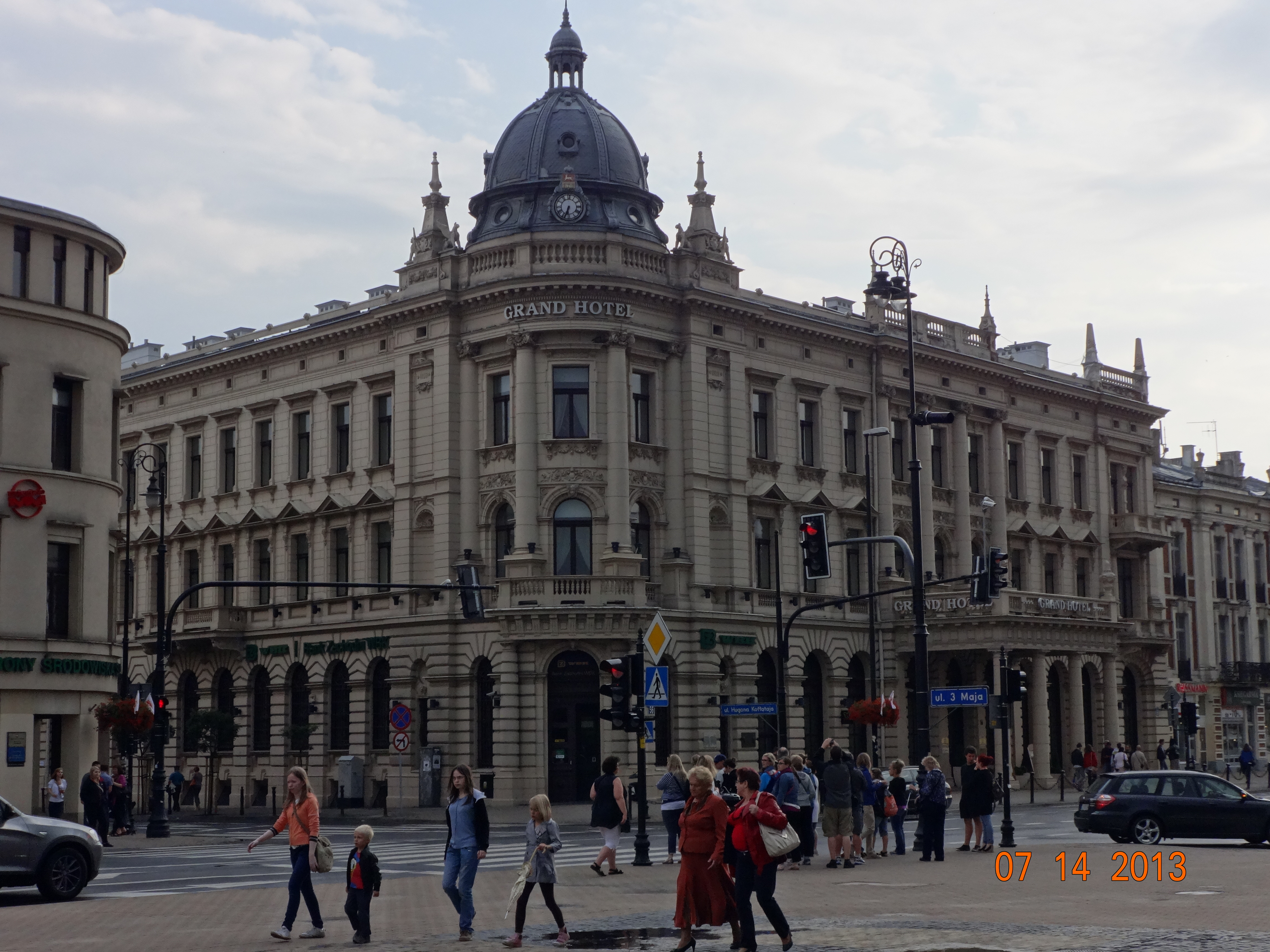
Belzec has changed me, somehow. Maybe the personal connection. At each new authentic site, where these unspeakable horrors were perpetrated, some kind of invisible hand pushes me just a little bit harder. It’s tough to explain. But this evening as I write into the early hours in my bed in the splendid Grand Hotel, perhaps Lublin’s most celebrated and storied, I am troubled a bit. I fall asleep fitfully, imagining the sounds of Nazi jackboots on the staircases outside the room where they once strode.

Grand Hotel, Lublin.

Grand Hotel, Lublin.

Grand Hotel, Lublin.

Grand Hotel, Lublin.

Grand Hotel, Lublin.

Grand Hotel, Lublin.

****************************

July 15.

The month after the invasion of the Soviet Union, Himmler ordered the construction of a new concentration camp on the outskirts of Lublin, for centuries an important center of Jewish life and culture in Europe. The original purpose of the camp, to be known as Majdanek (pronounced “My-don-ek”), was to provide forced labor for the construction of SS and administrative centers in the planned eastern territories.

1013

Majdanek holds a central role in the administration of Operation Reinhard. To recap, for just over two years beginning in October 1941, the purpose of the operation was

1) the physical annihilation of the Jews residing in the Generalgouvernement (occupied Poland);
2) the exploitation of some Jews selected to survive temporarily as forced laborers;
3) the seizure, evaluation, and recycling of clothing, personal property, valuables, and currency taken from the murdered Jews at the killing centers; and
4) the identification of so-called hidden assets of the Jews in the Generalgouvernement.

Within the framework of Operation Reinhard, Majdanek primarily served to concentrate Jews whom the Germans spared temporarily for forced labor. It occasionally functioned as a killing site to murder victims who could not be killed at the Operation Reinhard killing centers: Belzec, Sobibor, and Treblinka II. It also contained a storage depot for property and valuables taken from the Jewish victims at the killing centers.

Like other concentration camps in the Reich, Majdanek also served as a killing site for targeted groups of individuals, including members of the Polish resistance, hostages taken from the Security Police prison in Lublin, and prisoners in the camp itself who were deemed no longer capable of work. ~USHMM

Majdanek. Photo by Alan Bush.

Majdanek. Photo by Alan Bush.


Majdanek.

Majdanek. Premier Soviet Sixties style.

****************************

You know how a sound, or a smell, can bring trigger memory?

Creosote.


Majdanek.

Majdanek.


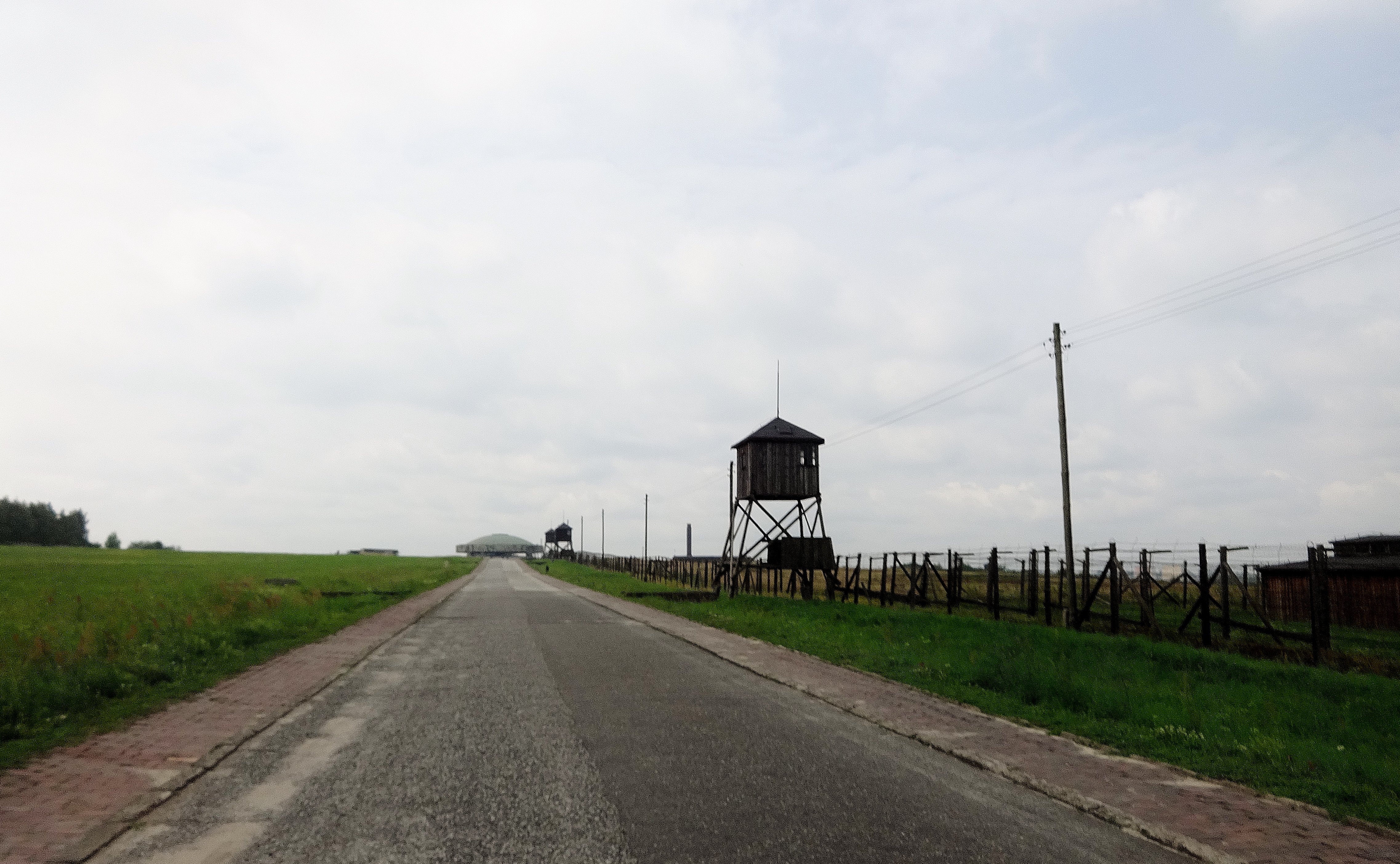
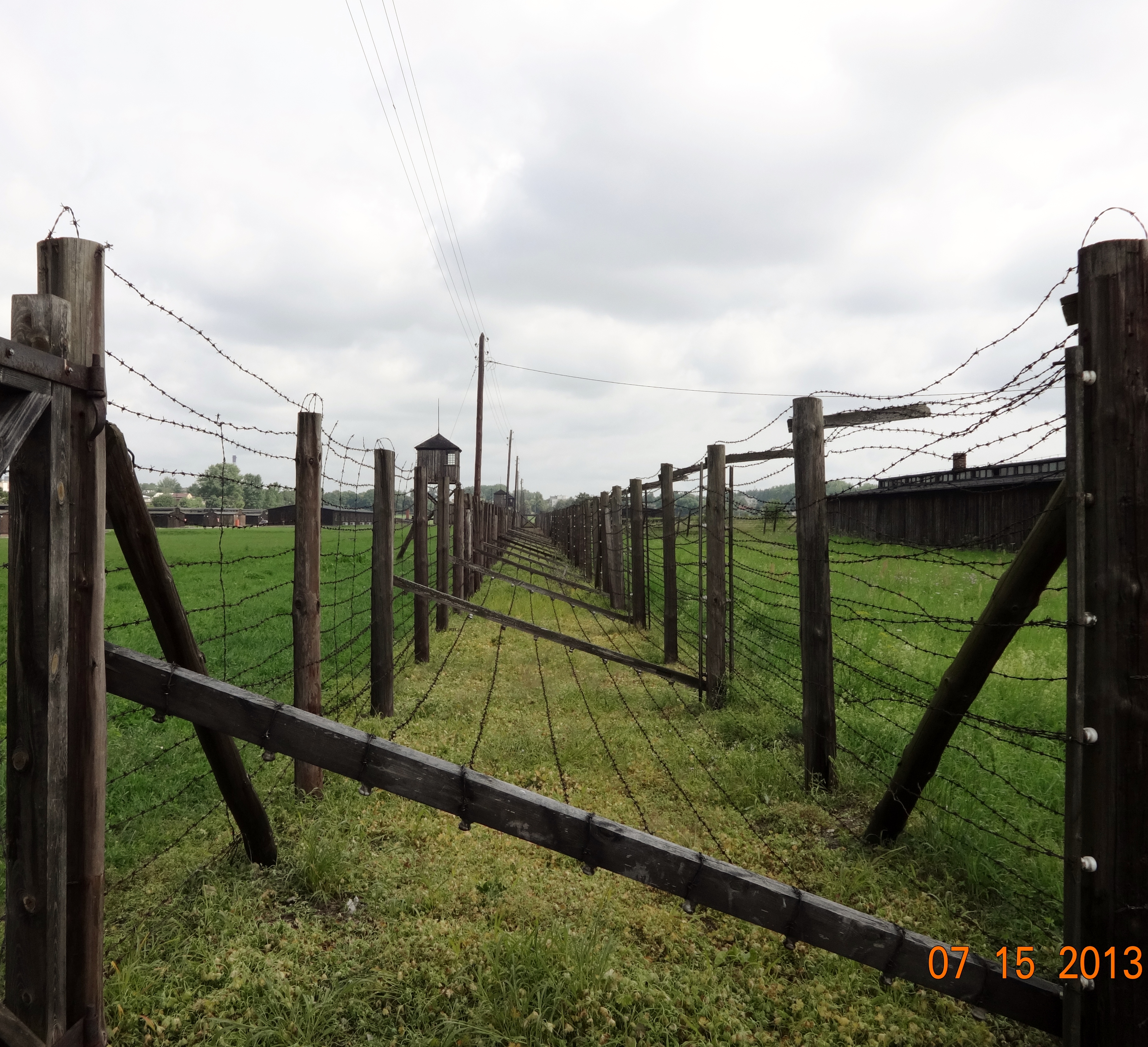
I am at Majdanek. This place is the real deal. The barracks are intact wooden shacks. The guard towers menace like creatures from “The War of the Worlds”.

On top of that, the Soviet Memorial in the far off distance resembles a flying saucer hovering over an unknown object.
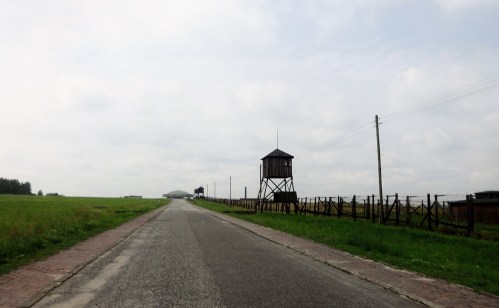
Majdanek. Note Soviet Memorial. It is actually a mausoleum. Which I did not know until I saw it with my own eyes. Human remains.

Majdanek. Note Soviet Memorial at the end of the road… It is actually much more than a memorial. Which I did not know until I saw it with my own eyes.


1023

Approaching the memorial. Still no idea of what I am about to witness.


The buildings reek. I know that smell. Gasoline-like. My dad used to layer it on thick, this petroleum based wood preservative, on our hunting shack in the Adirondacks when I was a teenager, before the government outlawed it for public use.

Creosote.

At this site,  do you know that this camp is, to my knowledge, the only one that was captured intact, by Soviet forces, exactly 69 years ago this month as the Red Army overran this area? And it has an un-destroyed gas chamber?

So why not see it?

Go in it?

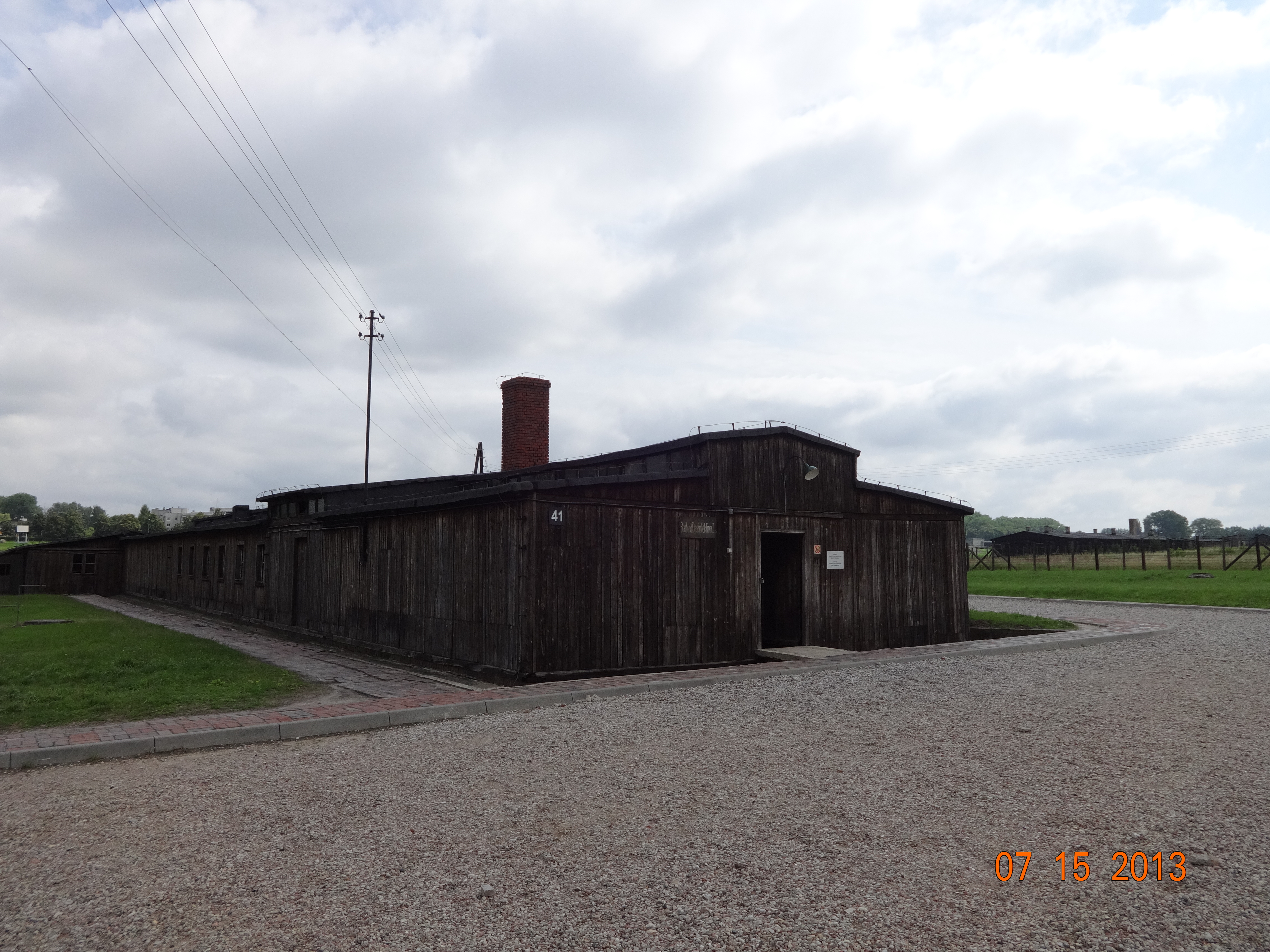
Majdanek. Gas Chamber building. "Showers".

Majdanek. Gas Chamber building. “Showers”.


Majdanek. Gas Chamber building. "Bath and Disinfection I"

Majdanek. Gas Chamber building. “Bath and Disinfection I”

Well, I did go in the building where it is housed.

Low ceiling. Dark. Concrete floors with gutter channels. Sinks. Pushing a bit deeper, my chest begins to constrict. Collar feels tighter. Into another door and room in the “assembly line”. Showerheads above, all connected, all so orderly.

Trailing behind, now.

To continue moving forward with the group will bring me to the gas chamber. I turn around and my feet carry me back, fast, and through the entrance, I exit.

I’m just not going there.

Alan takes a photo inside, not of the chamber or the empty Zyklon B canisters, but of the sign:

Bath and Disinfection I-Fawn, Alan, Ashley, Beryl--Majdanek Poland 15 July 2014. Photo by Alan Bush.

Bath and Disinfection I-Fawn, Alan, Ashley, Beryl–Majdanek Poland 15 July 2014. Photo by Alan Bush.


I wait outside. I am conscious of a pull to witness, but today I am just not going to go in.

1018

The next building is the storehouse. “Majdanek also served another key Operation Reinhard function; it contained storage facilities for clothing and personal items stolen from the Jews before their deaths in the Belzec, Sobibor, and Treblinka II killing centers.” (USHMM)

Walking in here you are overpowered first by the smell of the creosote, then your eyes try to take it all in- row upon row of piles of shoes, behind chicken wire. Is this possible?
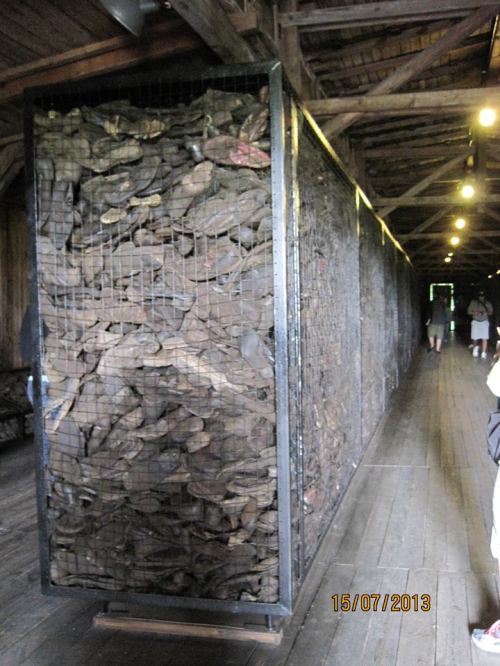
Shoes and lost dignity Majdanek Poland 15 July 13. Alan Bush photo.
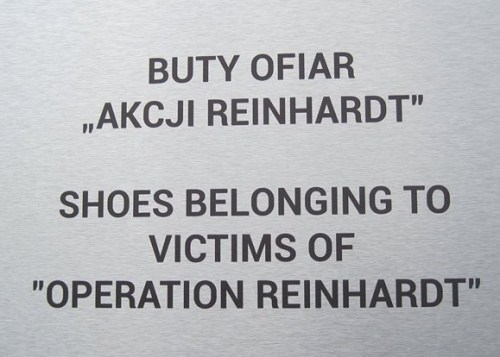
Shoes and lost dignity, Majdanek Poland 15 July 13. Alan Bush photo.

Alan Bush photo.

Alan Bush photo.

Okay.

Time to move in to the barracks area.

Two young Polish women with a stroller casually pass us, chatting. They are cutting through Majdanek to take a shortcut to the Catholic cemetery on the outside of the memorial complex. The irony is not lost on the group.

And it is going to get a helluva lot more ironic in the next 20 minutes.
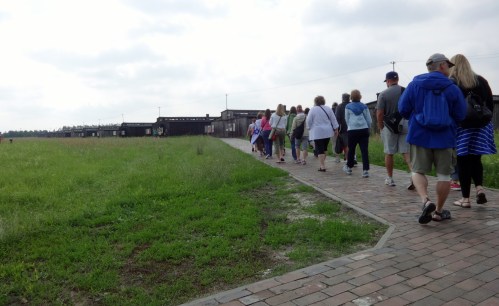
Barracks area.

Barracks area.

On to the Soviet Memorial and the crematorium. The crematorium is intact, too. Again I hang back.


My journal, written on the spot, at that moment:

majdanek excerpt

I am at Majdanek. I would not go into the gas chamber and right now I will not go into the crematorium.


I go over and check out a memorial stone with a plaque near the steps to the Soviet Memorial.
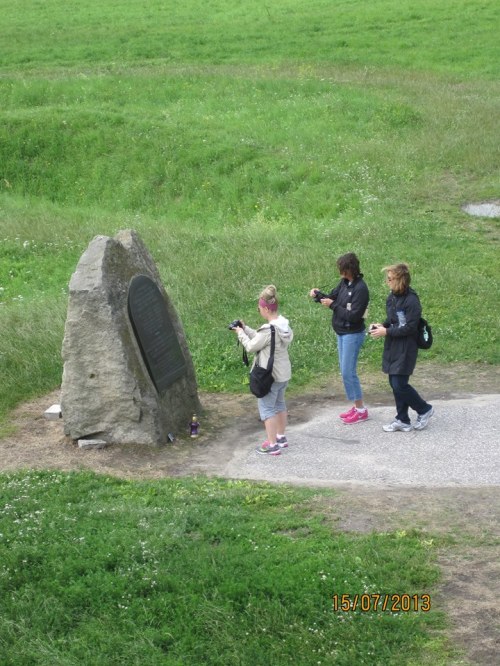
 

Memorial Stone. Note undulating terrain in background. Alan Bush photo.

Memorial Stone. Note undulating terrain in background. Alan Bush photo.


Me alone at Majdanek.

Me alone at Majdanek.

So what happened at this spot? I think I need to sit down. Now.

They play the music really loud to try to disguise the gunshots to the folks back in the town. It’s starting to have the makings of a really long day.  A bit chilly too, being early November and all.  The shooters.


Journal again:

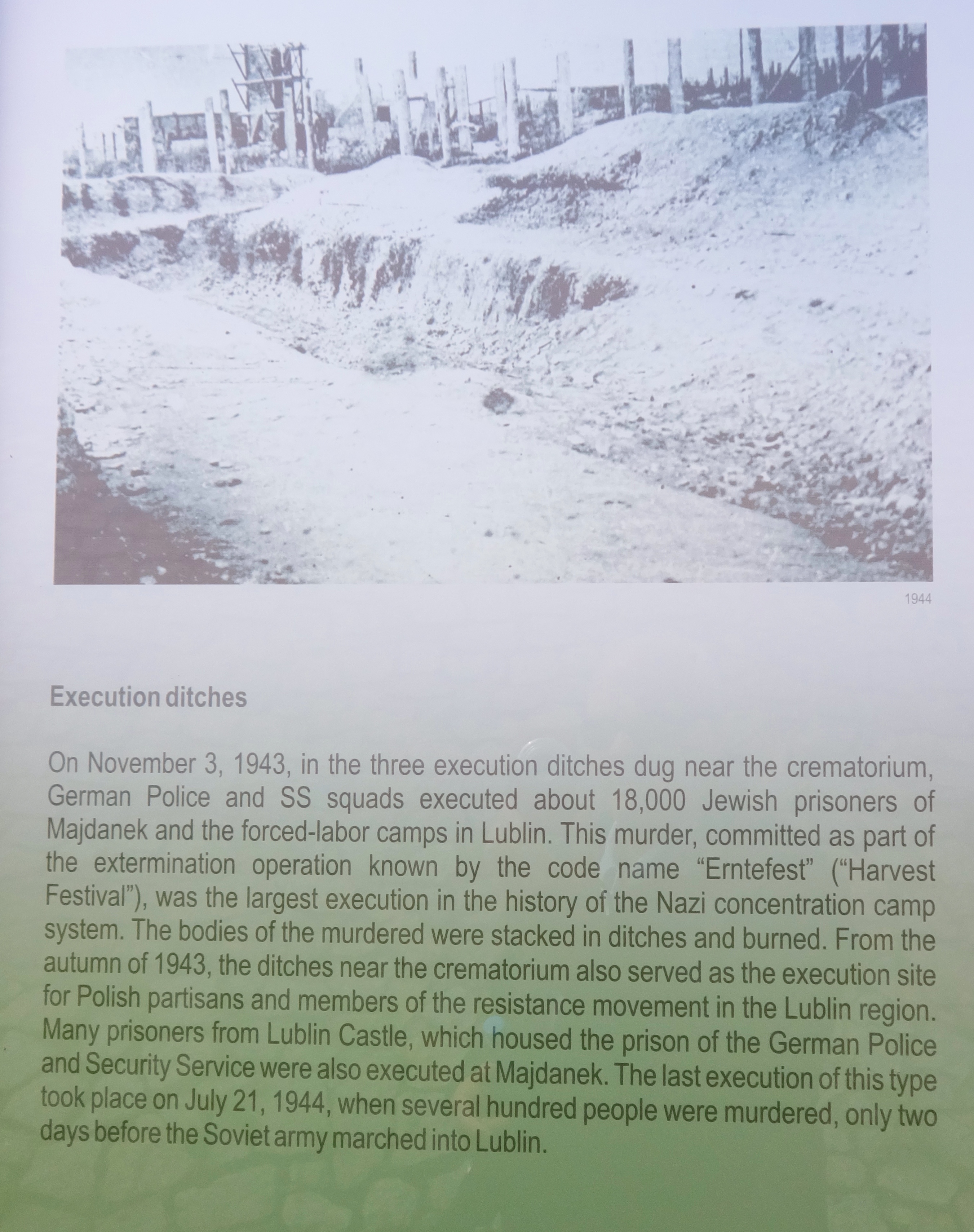
Right now I am sitting on the concrete steps alone in front of a memorial stone, right before the ditches where 18,500 Jews were executed in the “Harvest Festival”.

I am in front of a mass grave by myself. I want to be alone so right now I am pretending to write something deep.


And here is your 1943 view.

And here is your 1943 view.


So I’m kinda stunned, sitting on the stairs and scratching such nothingness into my notebook. What else should I be doing?

When the group trickles over to the steps, we ascend. Someone asks if I am okay.

Yeah, I’m fine.

Eighteen thousand five hundred. Murdered right in front of me. In one day. That is twenty times the population of our high school, on a good day, when they all feel like coming to school.


Now we are under the dome, that stupid looking flying saucer. We are in it, looking down on a mound the size of a small house. Big pile of whitish grayish stuff. And as the realization dawns, now comes the shock that nearly knocks me over on my ass. What the poor saps in the Twilight Zone must have felt as they realized everything was the opposite of what they had assumed. I’m suddenly in a very personal episode of the Twilight Zone.

I don’t need a sign for this. As a trained archaeologist, I have excavated this more than a few times.

Cooked bone.

I am looking at a mountain of burned bone. Calcified bone fragments, powder, and earth.

Kippah on ashes Majdanek 15 July 13. Photo by Alan Bush.

Kippah on ashes Majdanek 15 July 13. It’s a giant urn, an open air mausoleum.          (Note people in background for scale.) Photo by Alan Bush.

I am face to face with cremated human remains. Bleached white and gray from superheat.

How many thousands of human beings are in front of me?

I don’t know why, but I don’t participate in the Kaddish here. Sorry. I don’t pocket a rock for a memorial memento, either.
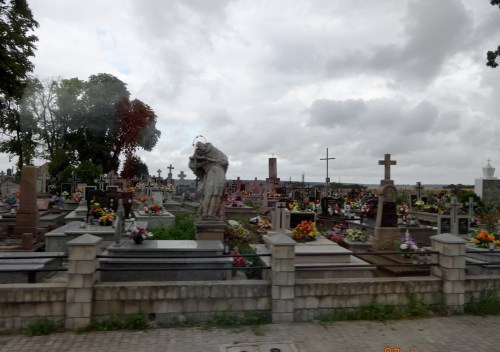
 

Catholic cemetery, Poland.

Catholic cemetery, Poland. I suppose you could get an accurate count here.

Today was a bad dream day.

And if there are any words, they are drowned out by some kind of twisted irony here in Majdanek, this monument to the dead, in the sounds of being outflanked by a speeding baby stroller cutting through the camp, wheels squeaking-yes, maybe life, but an apt metaphor for the present, willful yet oblivious, dodging and darting the presence of the past.

But it’s here.

Read Full Post »
~Matthew Rozell, a history teacher whose project reunited hundreds of Holocaust survivors with the American soldiers who liberated them, takes a backwards journey to the authentic sites of the Holocaust, retracing the path of the survivors who are now his friends.~


A year ago I took one of the most transformative journeys of my life, with 24 fellow educators, to study the Holocaust and the Jewish resistance to it, in Washington, DC, Germany, the Czech Republic, and Poland. I kept an extensive diary and took tons of photographs. And contrary to many assumptions, it was a journey that led to profound understandings about life, not death.  For the next several days, I have decided to go back and retrace my steps and try to process what unfolded for me.

***************************

July 13. Our last day in this beautiful, revitalized city of Krakow. And like the city, the Jewish community is also trying to revitalize. There is even a Jewish Cultural Festival coming up in Krakow. Our non-Jewish young Polish guides here have certainly been passionate about not letting the past die, as were our German historians encountered on our trip. Gusia takes us to the Jewish Community Center, and Jakub gives us a guided tour in the new Jewish Heritage Museum. He reaches 12,000 schoolchildren, doing outreach, and works with others to resurrect desecrated Jewish cemeteries. As he puts it, it is Polish heritage as well as Jewish heritage. In the 15th and 16th centuries, Poland was the center of European Jewish life.  In fact, at the end of the 18th century, 75% of the world’s Jews lived in the former Galicia,  once part of Poland, Ukraine and the Austria-Hungarian empire. Still, in most places in Poland there is nothing left of what was. Out of what was once millions, today only between 12,000 and 14,000 Jews call Poland home. Let’s not forget that after the war, Jewish survivors were not exactly welcomed back by their neighbors with open arms. And the Communist regime conducted its own purges of Jews as well.

All the more reason to embrace the work of Gusia and Jakub and other dedicated Poles.

Jewish Community Center, Krakow

Jewish Community Center, Krakow.

***************************************

letter from AR at Belzec July 2013

July 14. Bus ride is long, from Krakow to Belzec (pronounced “Bel-zich”) Memorial site. Five hours. Imagine what it was like traveling in a packed railcar.   Well, we can’t.

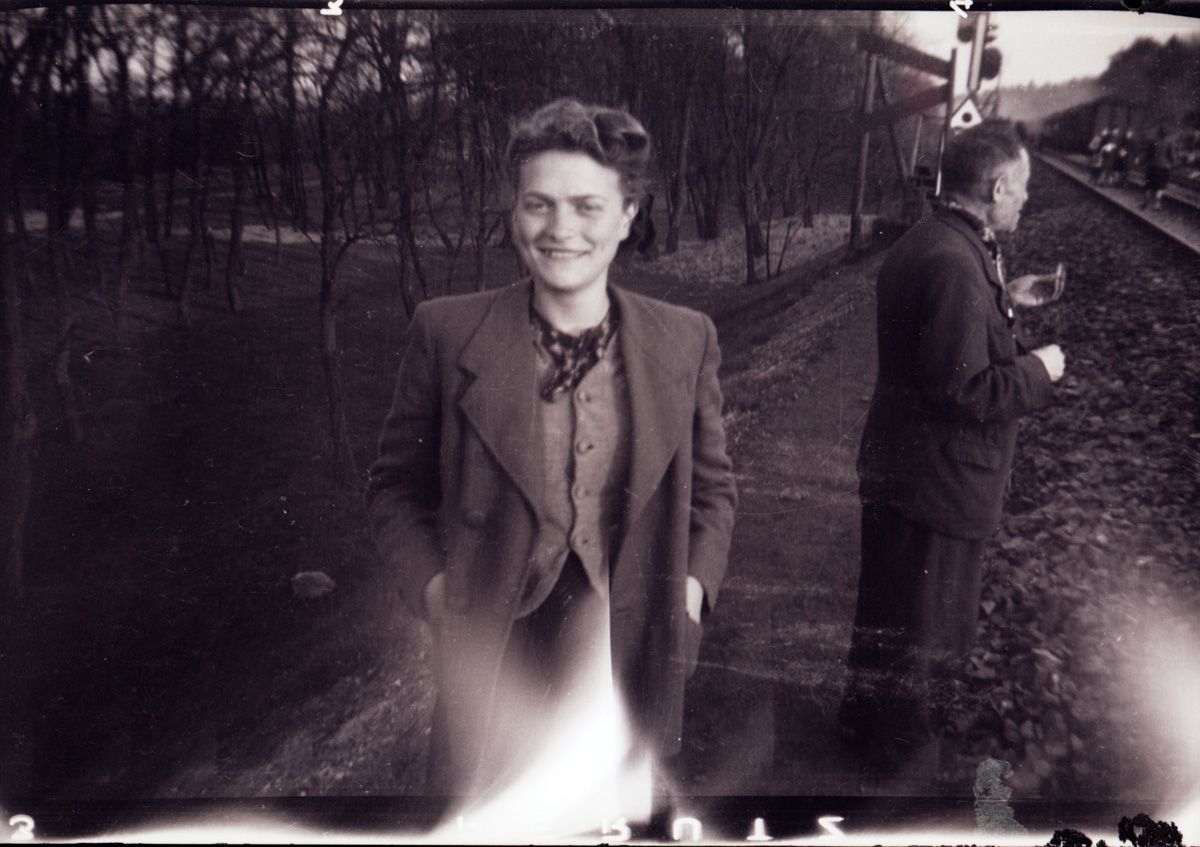
I carry a letter with me written by my friend, survivor Ariela, who, like many friends is supporting me in my travel here. It has been in my pocket for weeks. Ariela was 11 when she was liberated with her aunt on the train near Magdeburg, from Bergen Belsen. She too had been in the prison at Montelupich in Krakow.

A little girl.

In a political prison.


Ariela R. at the time of her liberation. Age 11. April 1945. Photograph by liberator George C. Gross.

Ariela R. at the time of her liberation. Age 11. April 1945. Photograph by liberator George C. Gross.


So, I am kind of quiet as we approach the memorial site. Ariela’s mother, only 36, both of her grandmothers, her grandfather and two aunts were murdered here in 1942. Her father, other grandfather, and uncle were murdered in Auschwitz, where we were two days ago.

930

Belzec, Poland. Half a million people murdered on this site. Half a million.

Belzec, Poland. Half a million people murdered on this site. Half a million. Unreal.

From the USHMM:

“In November 1941, SS and police authorities in Lublin District began construction of a killing center on the site of the former Belzec labor camp. The choice of location was dictated by good rail connections and proximity to significant Jewish populations in the Lvov, Krakow, and Lublin districts of the Generalgouvernement. The facility was finished in the late winter of 1942 as part of what later would be called Operation Reinhard (also called Aktion Reinhard), the plan implemented by the SS and Police Leader in Lublin to murder the Jews of the Generalgouvernement. Belzec began operations on March 17, 1942.”

Belzec Memorial.

Belzec Memorial.

Belzec Memorial site. There was no memorial for nearly 60 years.

Belzec Memorial site. There was no memorial for nearly 60 years.

“Trains of 40 to 60 freight cars, with 80 to 100 people crowded into each car, arrived at the Belzec railway station. Twenty freight cars at a time were brought into the camp. Arriving Jews were ordered to disembark. German SS and police personnel announced that the Jewish deportees had arrived at a transit camp and were to hand over all valuables.”

922


“Initially, men were separated from women and children, though in later months, as transport arrivals became more chaotic due to increased awareness of the victims of what would happen, the Germans and the Trawniki-trained auxiliaries could not always implement this segregation. The Jews were forced to undress and run through the “tube,” which led directly into gas chambers deceptively labeled as showers. Once the chamber doors were sealed, auxiliary police guards started an engine located outside the building housing the gas chambers. Carbon monoxide was funneled into the gas chambers, killing all those inside. The process was then repeated with deportees in the next 20 freight cars. ”

Jews are forced into boxcars destined for the Belzec extermination camp. Lublin, Poland, 1942. USHMM.

Jews are forced into boxcars destined for the Belzec extermination camp. Lublin, Poland, 1942. USHMM.

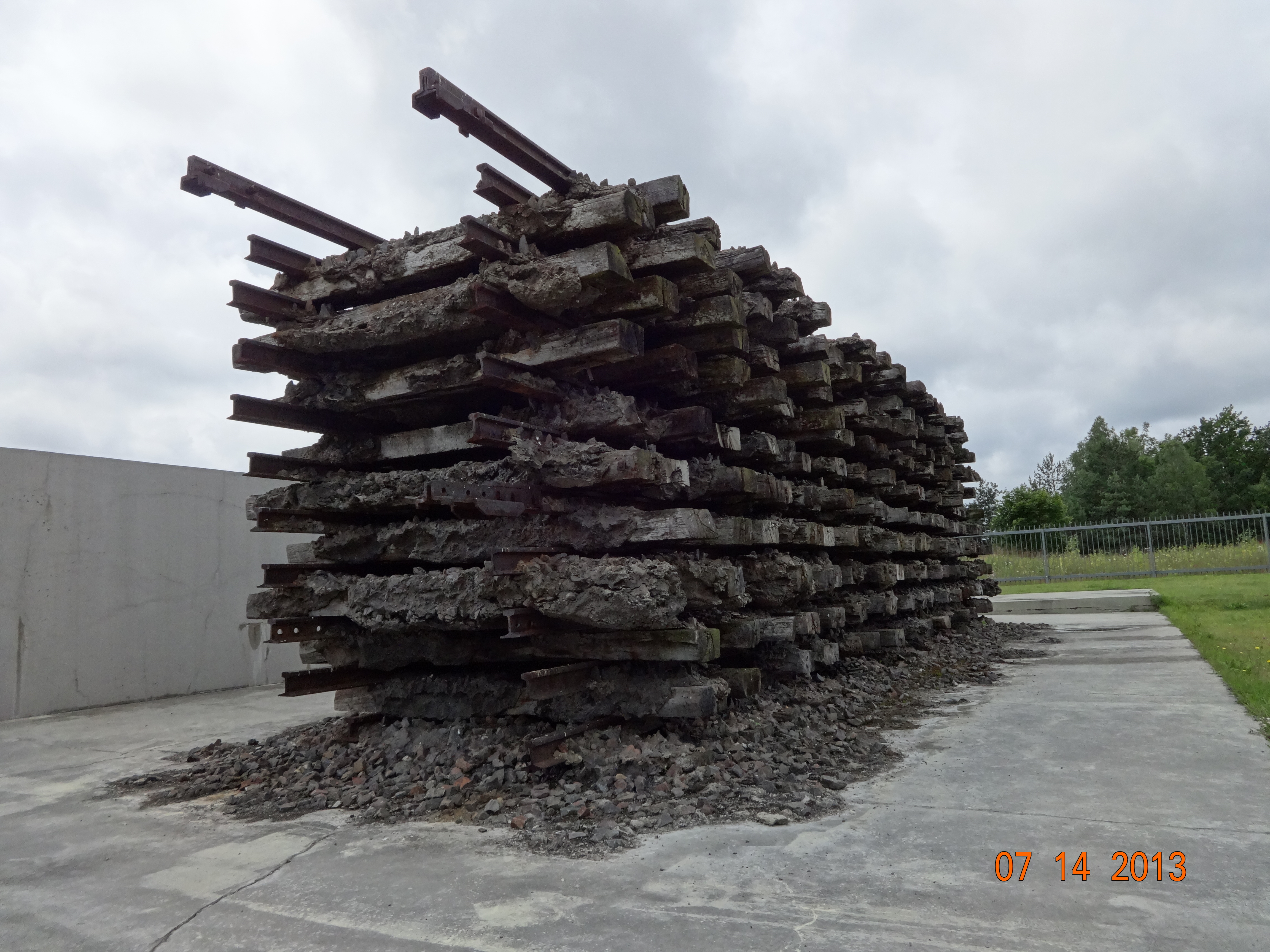
“Groups of prisoners selected to remain alive as forced laborers removed bodies from the gas chambers and buried the victims in mass graves. Other prisoners were forced to sort the victims’ possessions and clean out freight cars for the next deportation. Camp staff periodically murdered these forced laborers, and replaced them with newly arrived prisoners. In October 1942, German SS and police personnel, using groups of Jewish prisoners, began to exhume the mass graves at Belzec and burn the bodies on open-air “ovens” made from rail track. The Germans also utilized a machine to crush bone fragments into powder. By late spring 1943, the camp was dismantled. During June 1943, the remaining Jewish prisoners were either shot in Belzec or deported to the Sobibor killing center to be gassed. After Belzec was dismantled, the Germans plowed over the site. Soviet forces overran the region in July 1944.”-USHMM

Belzec.

Belzec.

Open air ovens. Rail track. Machine. Bone fragments. Powder.


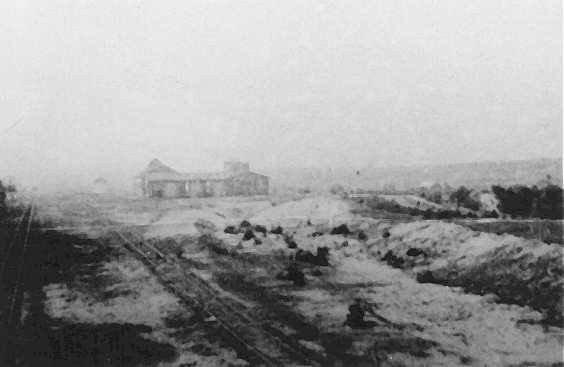
End of the Belzec extermination camp, c 1944.  USHMM

End of the Belzec killing center, c 1944. USHMM


Belzec.

Belzec.

The women in our group enter the memorial for a private ceremony. The seven men walk the perimeter, near the hillside. The memorial project leaders were told that during the Operation Reinhard actions, some of the locals would picnic on the hillside behind us as transports pulled in to discharge the terrified and doomed victims.

They would watch.

After the German attempt to destroy the site and hide the evidence of a half a million  gassed and cremated, the site would be rifled for gold, pockmarked with shovel pits by the local population.

Surely those Jews had gold with them, when they were killed.

907

When Ariela came here in 1993, it had reverted to forested hillside.

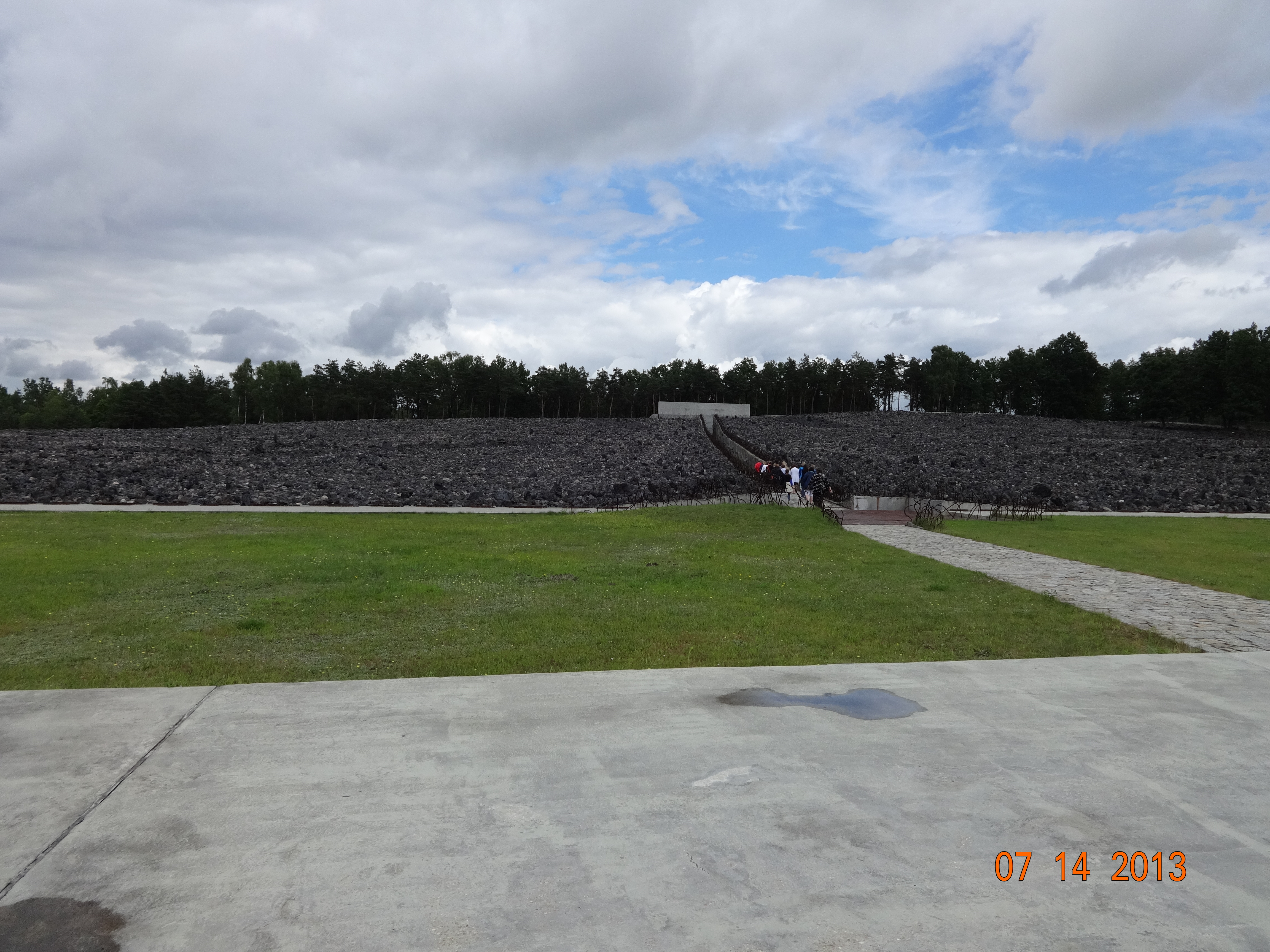
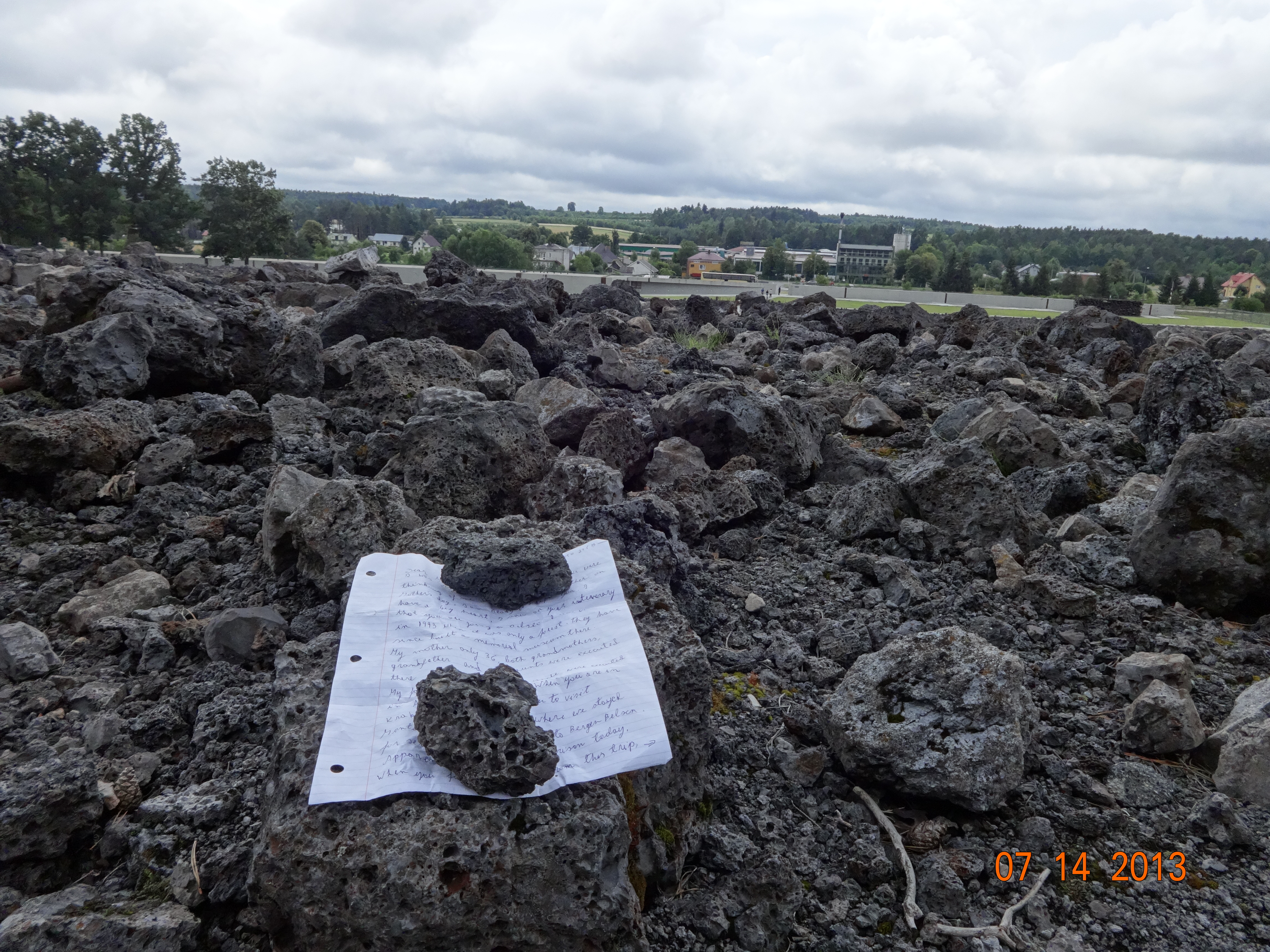
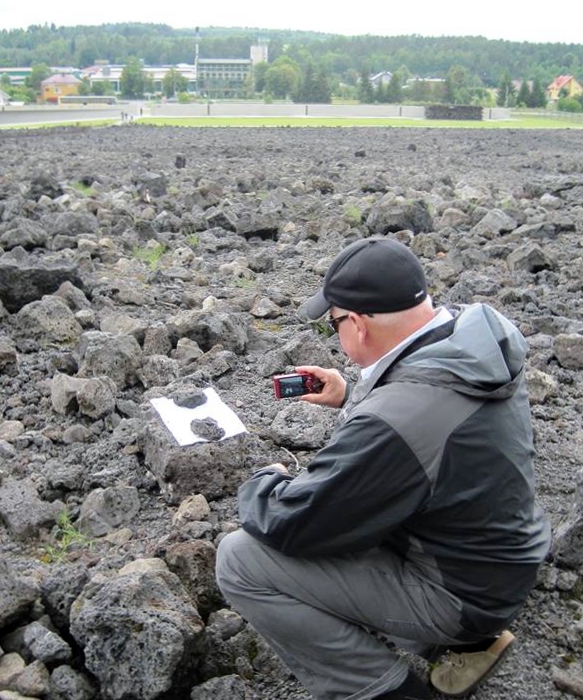
I unfold the letter and step out into the volcanic type rocks imported here to build the memorial. I am setting up my own memorial.

902


Matt Rozell at Belzec, 2013. Photo by Alan Bush.

Matt Rozell at Belzec, 2013. Photo by Alan Bush.


Belzec.

Belzec.

After the touring of the memorial (though “touring” is the wrong word, perhaps “witnessing” is the right one), I am lost in thought.  I had kept the letter to myself. Alan asks, gently,  if he may see it. It gets passed around in the back of the bus on our way to the hotel in Lublin. After what we have seen today, I think it makes an important impact on all.

Later, Alan sends his photograph of me placing the letter on the memorial, to Ariela. She is touched and writes back:

I want to thank you with all my heart for what you did for me, by taking my letter and putting it on the ground where my mother’s bones are spread. When I saw the picture, I cried. It is already 71 years but my heart still has feeling, for all my family. My father asked in his last letter from jail that I should pray for him, and believe me that I do.

Ariela went on to marry and have a wonderful family. Her beloved husband, another survivor, passed a short time ago.

***

Yes, it was another tough day, but somehow I feel like we are making a difference by coming here. I come with no agenda other than to see what happened, though obviously I too feel a personal stake in it all.

*

Sometimes, when I’m working on the woodpile or resting on the tailgate of my truck, I wonder why I was chosen to connect Holocaust survivors with their “angels”. Like this little girl with her liberators. And from there, to journey back in time to uncover what happened here.

Ariela meets her liberator Carrol "Red" Walsh, Sept. 2009, at our "reunion".

Ariela meets her liberator, tank commander Carrol “Red” Walsh, Sept. 2009, at our “reunion”.

I suppose I could have just let things be.

But I couldn’t leave things alone.

Holocaust survivor Ariela Rojek, right, was 11 years old in 1945 when she and 2,500 other concentration camp prisoners aboard a train near Magdeburg, Germany, were liberated by American forces including 1st Lt. Frank Towers, left with his son Frank Towers Jr., center. "You gave me my second life," Rojek told Towers Wednesday, Sept. 21, 2011, at Hudson Falls High School during an event reuniting soldiers and survivors. Jason McKibben Glens Falls Post Star

Holocaust survivor Ariela Rojek, right, was 11 years old in 1945 when she and 2,500 other concentration camp prisoners aboard a train near Magdeburg, Germany, were liberated by American forces including 1st Lt. Frank Towers, left with his son Frank Towers Jr., center. “You gave me my second life,” Rojek told Towers Wednesday, Sept. 21, 2011, at Hudson Falls High School during an event reuniting soldiers and survivors.
Photo by Jason McKibben, Glens Falls Post Star

It certainly seems that one thing builds upon another for a reason, and though we may not know that reason, it is there. Our actions reverberate across borders and through time.

It’s true.

So I’m here to make another special connection.

IMG_0001


Maybe from little girl to mother.

So no one forgets.


Kisses for Grandma.

Kisses for Grandma.


And the cycle, the mystery, the life continues.


913

Read Full Post »

~Matthew Rozell, a history teacher whose project reunited hundreds of Holocaust survivors with the American soldiers who liberated them, takes a backwards journey to the authentic sites of the Holocaust, retracing the path of the survivors who are now his friends.~


A year ago I took one of the most transformative journeys of my life, with 24 fellow educators, to study the Holocaust and the Jewish resistance to it, in Washington, DC, Germany, the Czech Republic, and Poland. I kept an extensive diary and took tons of photographs. And contrary to many assumptions, it was a journey that led to profound understandings about life, not death.  For the next several days, I have decided to go back and retrace my steps and try to process what unfolded for me.

***************************

July 13. By now it’s probable that you have seen the film Schindler’s List. Today we visited his enamelware factory, now a museum.  Part of the film was shot here.

792

Here is a look at some of the things inside:

Schindler factory. Stairwell leading to office.

Schindler factory. Stairwell leading to office.


Schindler factory. Oscar Schindler's office.

Schindler factory. Oskar Schindler’s office. His desk, chair, wall map.

Schindler factory. Alan Bush photo.

Schindler factory. Alan Bush photo.


Gusia moves us on to some of the other exhibits, explaining life in Krakow pre-war as well as life during the occupation. By 1943, when the ghetto in Krakow was liquidated, 21,000 Germans lived here.

One of the exhibits is on the Montelupich Prison, the Gestapo prison where people would be interrogated and tortured. When I see the sign, my heart skips a beat. I KNOW people who have been locked up here. So it is not ancient history, and here it is before my very eyes:

Montelupich Prison, the Gestapo prison in Krakow.

Montelupich Prison, the Gestapo prison in Krakow.


Montelupich Prison.

Montelupich Prison.

Our survivor Gina continues her story from the previous post:

One day in November I left my family with the purpose of finding work outside the ghetto with the idea of returning later to take them with me.
I left at 10 o’clock at night. I was accompanied by a young Pole who took me to Lemberg, where we arrived on the evening of the next day at ten o’clock. I had to stay over for a night in a farm while the young Pole went to see what possibilities there were for me. He came back next day at seven o’clock in the morning and he informed me that other Jews having obtained Aryan papers were in the district and they were trying to do something for me.
These people had obtained responsible posts in several factories as Aryans, and they helped me as much as they could. I got a job in a German office as typist. Nobody knew that I was a Jewess. After a few days the owner of the factory told me he wanted to court me as he liked my looks, and I had to run away from him.
I had to change my papers and my name so that he couldn’t find me. I altered my papers and I said that I was married. I then took up work in another factory where I could work without being disturbed.
One night I was sitting at home. I heard somebody knock at the door. It was the German police. I was asked for my papers, I showed them to them. And after examining them they told me I was a Jewess. I was asked to accompany them to the Gestapo. I refused to go saying that I preferred to die on the spot rather than go to the Gestapo. We talked for one hour and I was obliged to accompany them. In the street they took away from me all my valuables, my watch, my money and told me to leave Lemberg immediately. I was left alone in a solitary street. I couldn’t find a bed for the night. I had to change again my papers. I was tired out. I wanted to commit suicide. Next day I found a new home and I had many new troubles.
Coming in one day I was told by the land-lady that the policemen looked for me during the day. I left the house and I went to the place where I received the correspondence from my mother, in which she was telling that we had received foreign naturalization papers which would allow us to go to Palestine. I packed my things and returned home immediately.
When I returned home my mother was in one ghetto and my sister in the other. I had to hide in a cellar because if the German discovered that i had false Aryan papers I could be shot. I kept in hiding in this place for about two months.
Being now of foreign nationality we had to present ourselves regularly to the Gestapo. At one day they informed us that we would be sent to Palestine to be exchanged with German prisoners. On the next day the German police came at our house at 3 o’clock in the night and told us to pack up our things and go to the station. They told us we would go directly to Palestine.
Instead of Palestine they carried us in a prison in the town of Krakow; we were conducted in one of the prison cells where there were already 26 persons. It was a very dark place. We were very depressed and disappointed. We knew already what the Germans were capable of but it was new sadism on their part. The only food they give us was a tiny piece of bread and watery soup. At night we slept on the floor and we heard people crying because they were being beaten. We heard also a good deal of firing. We had always the impression that they will come to take us.
Then they informed us that we were interned and that we should have to wait. We waited and waited. In the day time we could observe how they were making sadistic gymnastics with the people. This made a very bad impression on us.

Gina was later sent to Bergen Belsen, where more trials awaited, and was liberated on April 13th, 1945 by the Americans who came across the evacuation transport near Farsleben, Germany.

****************************************

If you have watched Schindler’s List, you may be familiar with the scene of the liquidation of the ghetto in March, 1943, in accordance with Operation Reinhard. From the USHMM:

The SS and police planned the liquidation of the Krakow ghetto for mid-March 1943, in accordance with the Himmler’s order in October 1942 to complete the murder of the Jews residing in the Generalgouvernement, incarcerating those few whose labor was still required in forced-labor camps.

On March 13-14, 1943, the SS and police carried out the operation, shooting some 2,000 Jews in the ghetto. The SS transferred another 2,000 Jews — those capable of work and the surviving members of the Jewish Council and the Jewish police force  — to the Plaszow forced-labor camp, and the rest of the Jews, approximately 3,000, to the Auschwitz-Birkenau killing center in two transports, arriving on March 13 and March 16. At Auschwitz-Birkenau, the camp authorities selected 549 persons from the two transports (499 men and 50 women) to be registered as prisoners and murdered the others, approximately 2,450, in the gas chambers.”


Liquidation of the Krakow ghetto.

Liquidation of the Krakow ghetto.


Memorial, Krakow Ghetto.

Memorial, Krakow Ghetto.


Liquidation of the Krakow ghetto.

Liquidation of the Krakow ghetto.


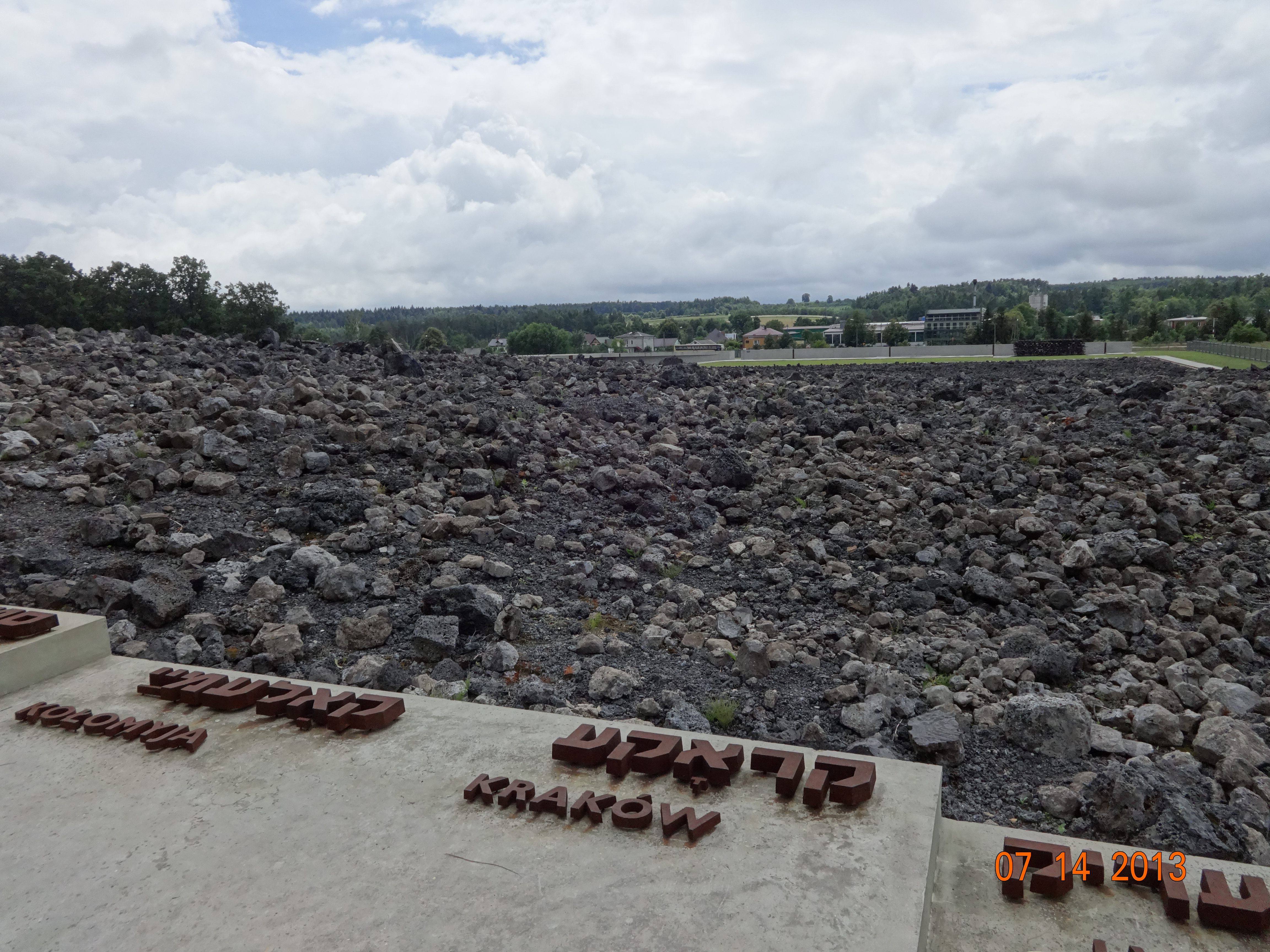
Belzec Site memorial.

Belzec Site memorial.

So now it’s time to reflect again on where this all fits into the big picture.

Humans want resolution, closure, whatever you want to call it. Oskar Schindler was a complex man who made a difference.  But he was one of the very few, and in reality there are no happy endings to this story.

Important lessons, yes. Happy endings, no.

Tomorrow we head to Belzec.


Read Full Post »

~Matthew Rozell, a history teacher whose project reunited hundreds of Holocaust survivors with the American soldiers who liberated them, takes a backwards journey to the authentic sites of the Holocaust, retracing the path of the survivors who are now his friends.~


A year ago I took one of the most transformative journeys of my life, with 24 fellow educators, to study the Holocaust and the Jewish resistance to it, in Washington, DC, Germany, the Czech Republic, and Poland. I kept an extensive diary and took tons of photographs. And contrary to many assumptions, it was a journey that led to profound understandings about life, not death.  For the next several days, I have decided to go back and retrace my steps and try to process what unfolded for me.

***************************

July 12.

After a very intense day at Auschwitz-Birkenau, after people in our own tiny group found the names of their murdered families in the Book of Life, we had a debriefing session at the hotel. The consensus is that for one to simply have the will to live, in a place where life was not valued, is an act of defiance and resistance. For one person to care for another under such circumstances, where one is not even considered a person, is extraordinary.

People did these unspeakable acts to other people. But the “monster” myth is just that.  I suppose it is one way of coping with the unthinkable. Let the perpetrators off the hook in a sense, labeling them “monsters”, not humans capable of deeply evil deeds,  and move on. Don’t you think it kind of absolves them of something? They are not human, after all,  so what does one expect of them?

Others may choose not to think about  such things at all. I certainly do not blame them. But to me, to not think about it is to forget, and to forget is as good as saying that it did not happen. But you can’t just talk about the history, the chronology. To really try to understand, one has to know the stories of the individuals who were here. To make it real, and the same goes for all history.

***************************

1.4 million people visit here every year. That too presents its own set of challenges.

***************************

July 13.

We are back with our guide Gusia. She is taking us to the Krakow Ghetto area, which will include the Oscar Schindler factory, now a museum.

According to his autobiography, “The Pianist” director and child survivor Roman Polanski recalled as a young child, his initial feeling in the Krakow ghetto here was  that “if only one could explain to them that we had done nothing wrong, the Germans would realize that it all was a gigantic misunderstanding.”

If only.

Assembly point, memorial, Krakow Ghetto.

Assembly point, memorial, Krakow Ghetto.


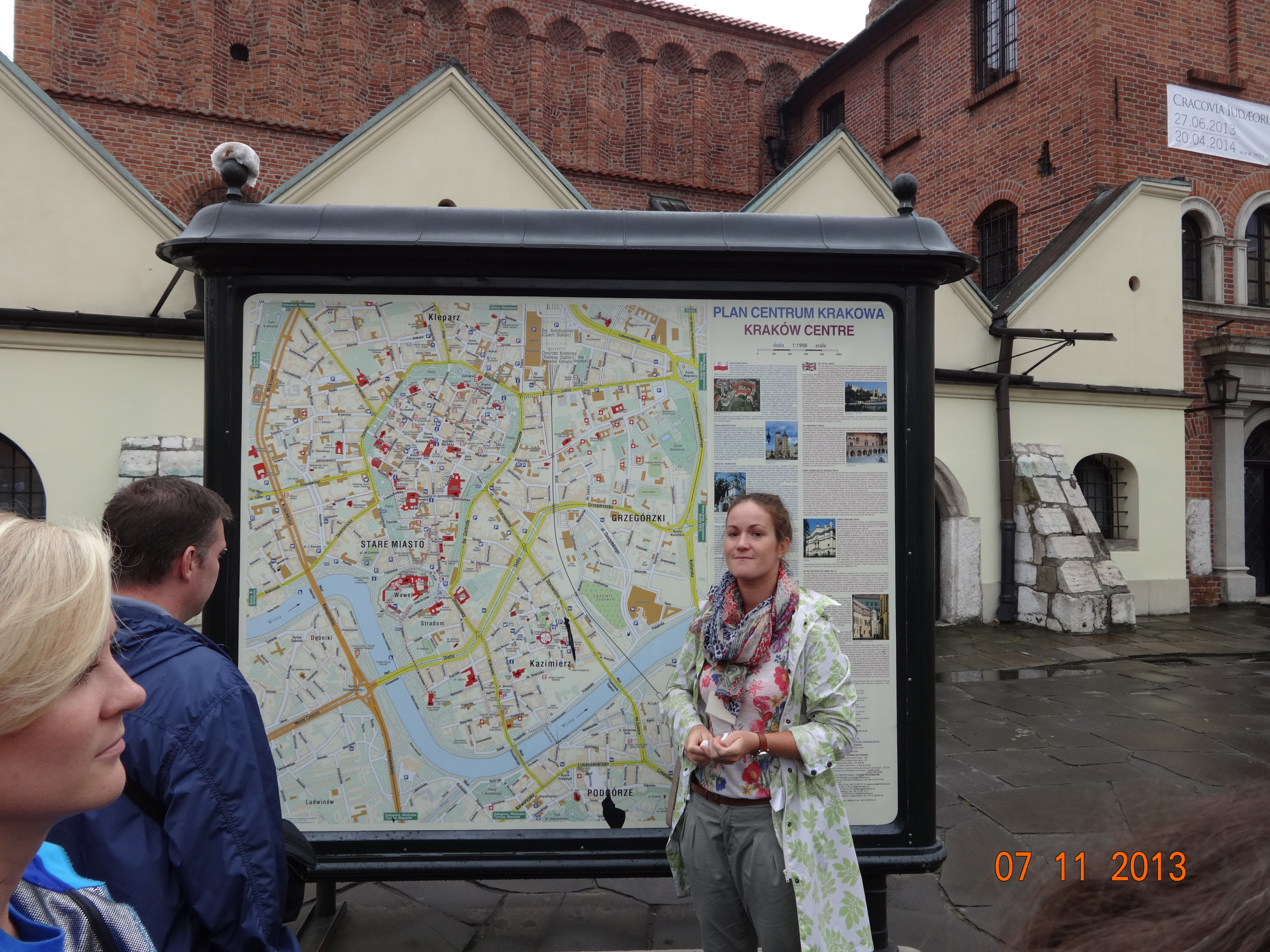
Old Town, in the Jewish Quarter. Gusia.

Old Town, in the Jewish Quarter. Gusia.


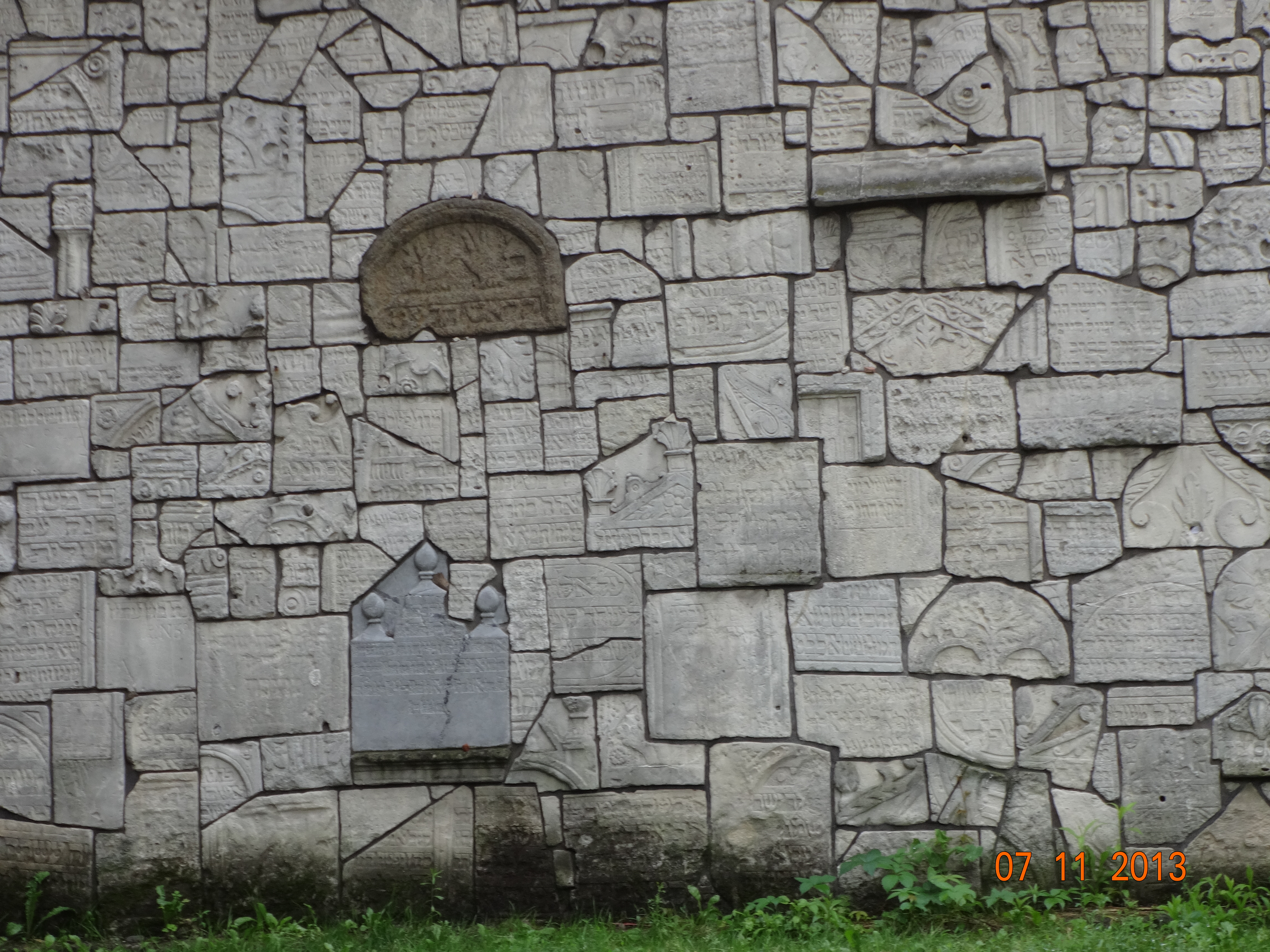
Restored Jewish Cemetery. Remuh. Wall constructed with gravestones destroyed by the Nazis.

Restored Jewish Cemetery. Remuh. Wall constructed with gravestones destroyed by the Nazis.

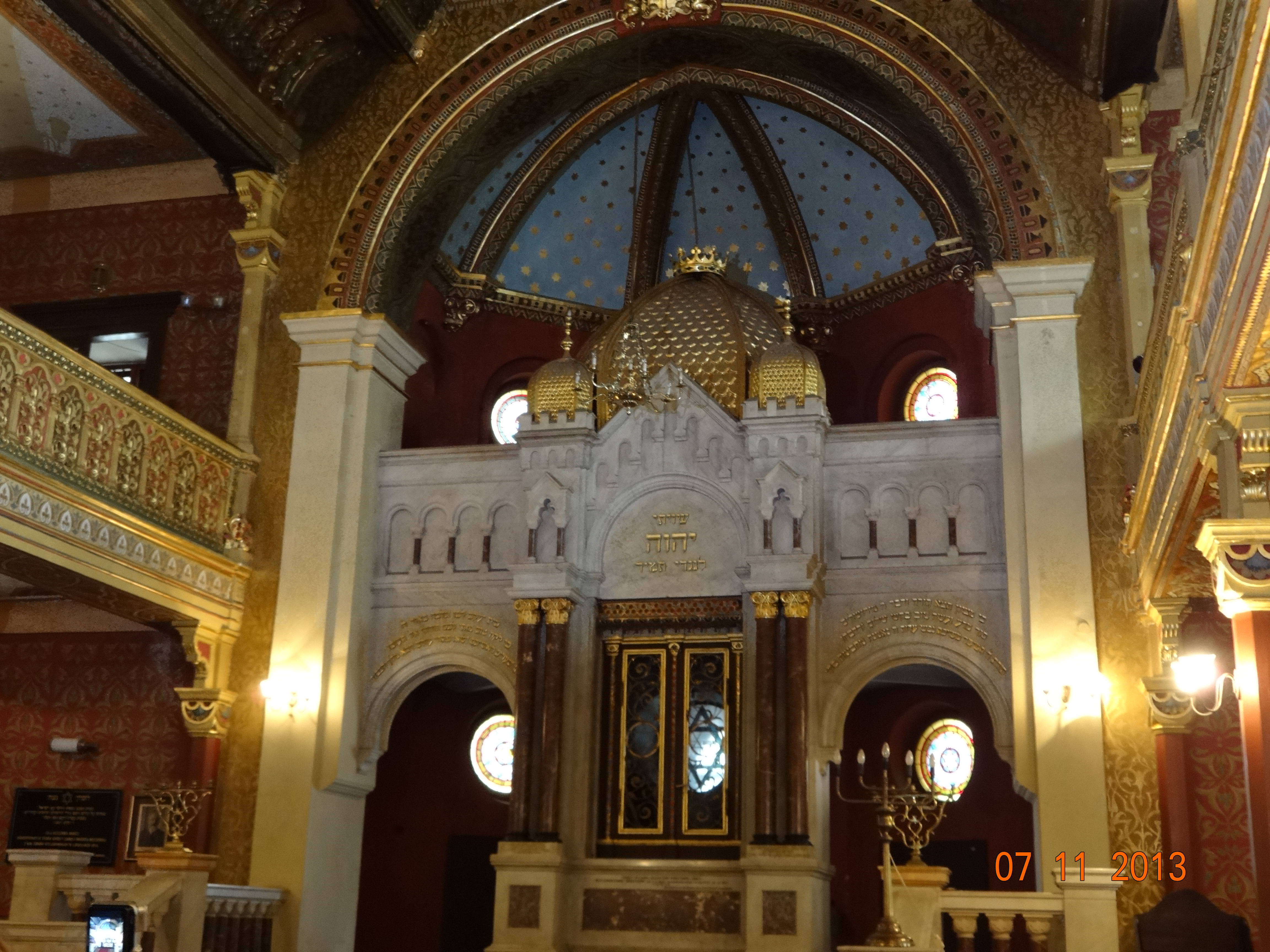
Tempel Synagogue, interior. Restored. Used a stable by Germans. Krakow.

Tempel Synagogue, interior. Restored. Used a stable by Germans. Krakow.


Now I have a story to tell, and this is where it begins, in Krakow, in 1939.

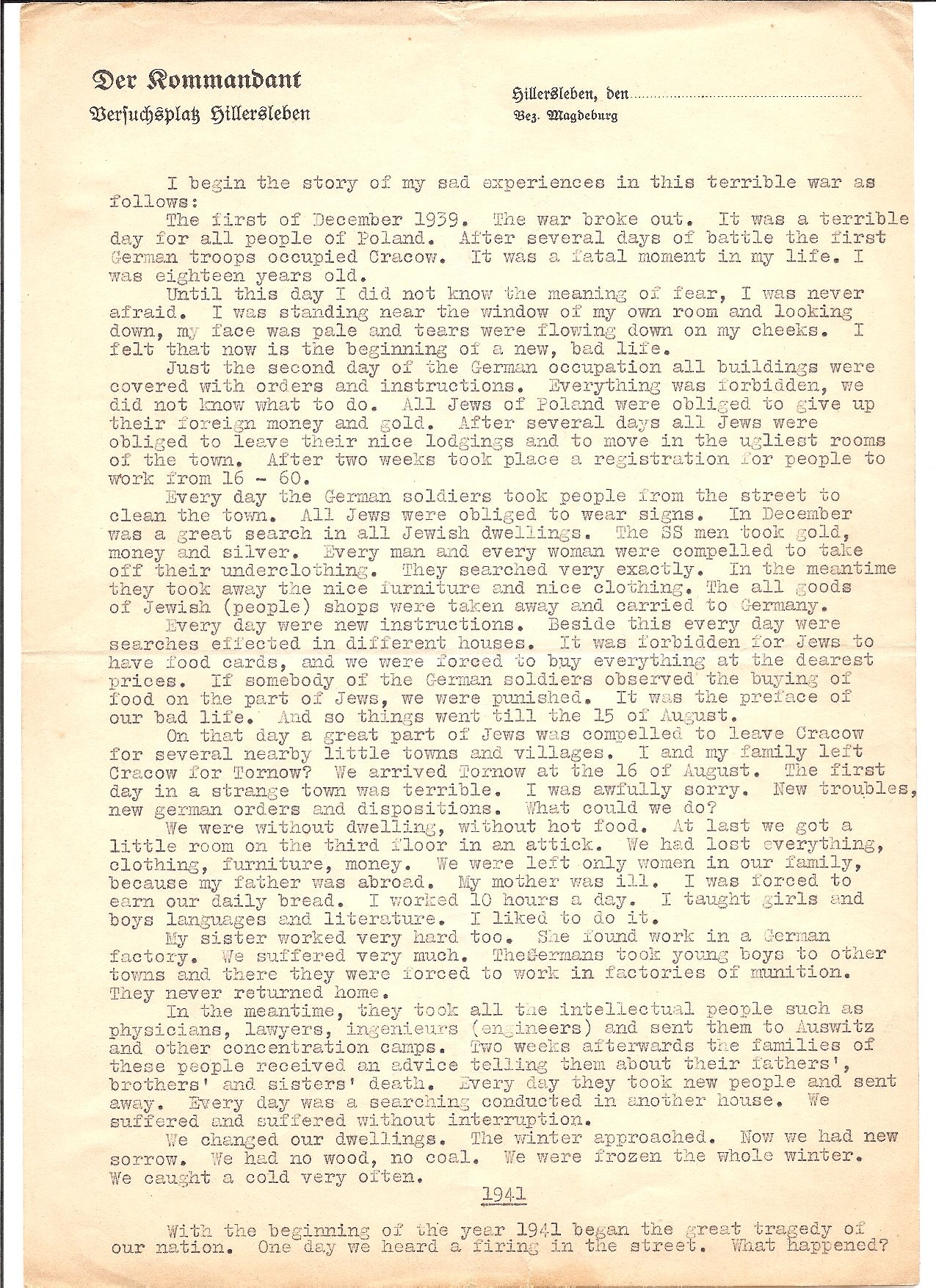
An internet search led a manuscript collector to my site. A five page typewritten document, written on the stationary and letterhead of the Nazi camp commandant at Hilersleben following the liberation of the Farsleben train in April 1945, traces the autobiographical journey of the Jewish girl from Krakow and the horrors, and miracles, that befell her. And yes, we did identify positively the author, who was still alive when the dots were connected.


page-1-compactI begin the story of my sad experiences in this terrible war as follows:

The First of [September] 1939. The war broke out. It was a terrible day for all people of Poland. After several days of battle the first German troops occupied Cracow. It was a fatal moment in my life. I was eighteen years old.

Until this day I did not know the meaning of fear, I was never afraid. I was standing near the window in my own room and looking down, my face was pale and tears were flowing down on my cheeks. I felt that now is the beginning of a new, bad life.

Krakow was to be one of the only cities not destroyed by the Germans, as it would become the seat of their “General Government” for the administration of the Occupied Territories in the East. It was, of course, to be “Judenrein”.

Just the second day of the German occupation all buildings were covered with orders and instructions. Everything was forbidden, we did not know what to do. All Jews of Poland were obliged to give up their foreign money and gold. After several days all Jews were obliged to leave their nice lodgings and move in the ugliest rooms of the town. After two weeks took place registration from people to work from 16-60.

Every day the German soldiers took people from the street to clean the town. All Jews were obliged to wear signs. In December was a search of all Jewish dwellings. The SS men took gold, money, and silver. Every man and every woman were compelled to take off all their underclothing. They searched very exactly. In the meantime they took away the nice furniture and nice clothing. All the goods of Jewish  shops were taken away and carried to Germany.

The population was disarmed and by November, 1939, the intellectuals all arrested. From the USHMM:

“Like elsewhere in the Generalgouvernement, the German occupation authorities required Jews in Krakow city and the surrounding areas to report for forced labor (October 1939), form a Jewish Council (November 1939) identify themselves by means of a white armband with a blue Star of David to be worn on the outer clothing (December 1939), register their property (January 1940-March 1940), and to be concentrated in ghettos (September 1940-March 1941).”

Gina was sent to the nearby Tarnow Ghetto the following August:

In the meantime they took all the intellectual people such as physicians, lawyers, engineers and sent them to Auschwitz and other concentration camps. Two weeks afterwards the families of these people received advice telling them about their fathers’, brothers’, and sisters’ deaths. Every day they took new people and sent away. Every day was a searching conducted in another house. We suffered and suffered without interruption.
We changed our dwellings. The winter approached. Now we had new sorrow. We had no wood, no coal. We were frozen the whole winter. We caught a cold very often.
1941
With the beginning of the year 1941 began the great tragedy of our nation. One day we heard a firing in the street. What happened? Nobody knew. Everyone was afraid to look through the window. After some hours i went down and the streets were full of blood. I went to search for my sister. Where is she? Perhaps dead. At last she returned home. I was happy she was alive. When she entered the room I couldn’t recognize her, she looked pale and full of fear. She couldn’t speak and did not want to describe what she had seen.
Every few days this story repeated itself.
On the 10 of June everybody from 12-60 was obliged to register at the working office. The German ordered that every one working with them should be allowed to remain at his place. The people were very irritated. The all streets were full of poor people hurrying to find work.
I was a teacher as I mentioned before. What could I do now? Where to look for work? What could I do with my mother and grandmother? They were not able to do anything. What I felt in this day was impossible to describe.
At last I found work in a factory. My luck was that my sister had found work, too, and we were able to help our family.

1942

A NEW AKTION
The night of the 10 of June. Nobody was sleeping in the whole town. The Jewish office registered the whole night under the control of the SS groups. They were obliged to make a list of people who were unable to work.
Five o’clock in the morning…. I was with my sister in the room. The mother and grand-mother were hidden in our attic. Suddenly we heard a knock at the door. At the doors were standing two SS men with revolvers in their hands.
The first asked “Why have you not answered at once?”
I couldn’t answer.
After a moment he asked “Where is your family?”
“Nobody is at home” I answered.
The SS man: “Where is your mother hidden? If you will not tell me at once I will shoot you.”
I repeated harshly “I don’t know.”
He got very angry and told me once more: “I will shoot you both at once.”
We had known their methods very well, and we were ready every minute.
He searched in our dwelling but he couldn’t find my mother. After several minutes they went away.
On this day perhaps 20 men visited our houses and every one of them wanted to take my mother but nobody could find her. On this day they killed in the streets 10,000 people and 15,000 were sent away to  Belzec. From this village nobody returned.

Belzec, Poland. Half a million people murdered on this site. Half a million.

Belzec, Poland. Half a million people murdered on this site. Half a million.

This action lasted 8 days with two interruptions. During the free-time the grave diggers were obliged to bury the dead people.

Martin Spett, who was also liberated with Gina by the Americans at Farsleben on April 13, 1945, was 14 and recalls:

We heard the columns of Jews under German, German escort at night. It was going constantly. They were passing our house because this was already on the outskirts of the city, the cemetery, and they were marching them to the woods behind the city. And as we found out later they they were all shot over there. During the day I looked out through the shingles. My father said I shouldn’t look but, anyway, I was a kid, I was curious. And the roof was overlooking the cemetery and wagons with bodies, dead bodies, were coming in. Groups, they were bringing in groups of Jewish people that had to dig ditches, and the bodies dumped in, and after those Jews that dug the ditches, they were shot also and pushed, by another group that came in after them, into those ditches, and lime was poured over, over the bodies, and the next group covered up those ditches and dug other ditches. They brought in [pause] they brought in [pause] pregnant women, and they didn’t use any bullets. They used bayonets [pause]. The screams of the mothers that their children, they, they tore the children out of their arms [pause]. And the screams of the children I still hear. (USHMM)

Gina continues:

Now the whole people were forced to move in one place, where they made a “ghetto”. After three months was a new action. In the meantime the SS men leaders killed everyday several persons. One of them couldn’t eat without shooting before. Before every meal he wanted to see blood.

SELECTION

On the 15 of September was a beginning of a new action. Every one of us received a sign on his work-card. There were two kinds of signs: 1) The first meant to live, 2) the second meant to die. I and my sister received signs to live. Our mother was hidden in a cellar.
On the 16 of September at 6 o’clock in the morning I was standing and waiting. I waited, for what? What could I expect? I was standing on a great square and the Nazi SS police started to make a selection of all old persons and children, putting them apart, whilst all young and valid persons were also put in a separate place.
Subsequently the children and old persons were shot before our eyes.
Now they took from the remaining young persons every tenth person standing in the turn and shot them too. I was lucky enough to be the eighth person and was thus saved from death from a pure  coincidence.
I had no news from my mother whom I had left hidden in the cellar of my house. I was anxious lest my mother should be brought on the square and shot. We had to wait standing on the square until 7 o’clock in the evening without getting any food, closely guarded by Nazi barbarian soldiers. At 7 o’clock in the evening they brought in mothers having small babies and shot all the babies in the presence of their mothers. At 9 o’clock in the evening they allowed us to go home, where I had a great joy to find my family alive. It was a miracle.
After these scenes had taken place all Jews had to leave their homes and go to new lodgings in the ghetto, where they had to be all concentrated. A barbed wire had to be put around the ghetto and no Jew was allowed to come out of this place. So our martyrdom continued: every day being sadder than the foregoing.
After two months of this ghetto life a new action took place, as a result of which 13 thousand people were murdered and 2 thousand people remained on in the ghetto. It was a miracle that the members of my family remained alive. After this took place, the German declared that no Jew would be allowed to remain alive, and I then decided to take up Aryan papers. One day in November I left my family with the purpose of finding work outside the ghetto with the idea of returning later to take them with me.

Gina as photogrpahed by her liberator George C. Gross, Sat. morning, April 14th, 1945. Farsleben, Germany.

Gina as photographed by her liberator George C. Gross, Sat. morning, April 14th, 1945. Farsleben, Germany.

Gina would survive, as would Martin, and I will continue her story as I visit the sites associated with her in the next post.

From the USHMM:

“The Germans decided to destroy the Tarnow ghetto in September 1943. The surviving 10,000 Jews were deported, 7,000 of them to Auschwitz and 3,000 to the Plaszow concentration camp in Krakow. In late 1943, Tarnow was declared “free of Jews” (Judenrein). By the end of the war, the overwhelming majority of Tarnow Jews had been murdered by the Germans. Although some 700 Jews returned to the city after liberation, virtually all of them soon left to escape local antisemitism.”

Belzec, Poland. Half a million people murdered on this site.

Belzec, Poland. Half a million people murdered on this site.

Read Full Post »
Matthew Rozell, 30th Infantry Veterans of WWII, Holocaust survivors at Mighty Eighth Air Force Museum, March 2, 2012.

Matthew Rozell, 30th Infantry Veterans of WWII, Holocaust survivors at Mighty Eighth Air Force Museum, March 2, 2012.

Have you ever been to a reunion of folks who have been annually meeting one another, every year, for nearly 70 years?

Where the main participants had their youths forged in the steel of battle, and come together annually to remind themselves of what it was all about?

I have been honored and privileged to attend six such reunions with the veterans of the 30th Infantry Division of World War II.

To sit with these men, and their wives and family members and hear their stories, and chuckle as they josh with each other, or to shed a tear at the memorial service for the ones who were lost, is an incredible experience.

What has made it even more profound, over the last few years, has been the inclusion of the Holocaust survivors that they saved, and their extended families who would not be here today, if not for their efforts, at these gatherings. And add a Medal of Honor recipient, one of the few surviving from World War II, for good measure.

Worthwhile? I had a 94 year old veteran grab me by the arm a couple years back, and he said to me, after listening to me and the survivors of the Holocaust speak, “Now I know what I fought for.”

This year, the reunion is unfolding as I write this in Savannah, Georgia, with the gracious hosts Carol Thompson and Jack Sullivan and his wife Stella, the children of one of the soldiers who served in the 118th Artillery.  Unfortunately I am snowed in up north, digging out under 18 inches. I’ve included my greetings to the gathering below as they meet on the 69th anniversary of the end of World War II. Next year is the 70th and I really hope that they meet again and that I can be there. As the letter indicates, they helped to send me to Europe this summer as well. Here is a PDF of what I saw.

Matthew Rozell

February 14, 2014

AND HERE IS MY REUNION GREETINGS MESSAGE AND PICS

Read Full Post »

A Conversation with Rona Arato, author of THE LAST TRAIN: A HOLOCAUST STORY

By Sharon Salluzzo

In The Last Train, Rona Arato deftly tells her husband Paul’s remembrances of his life between April 1944 and November 1945. Paul was five years old when he, his ten-year-old brother, Oscar, and their mother (his father had already been taken away to a work camp) were taken from their home and forced into a ghetto, put in boxcars and taken to a farm in Austria, and finally to Bergen Belsen Concentration Camp. In April 1945, Paul and his family were again put in boxcars. American soldiers, who were in combat at the time, liberated the train near Farsleben, Germany. The physical and psychological horrors endured by Paul make a very strong impact. Rona lets the events carry the book.

But the story doesn’t end there. In September 2009, Hudson Falls, NY history teacher, Matt Rozell, held a Holocaust Symposium and a reunion for the train survivors and the soldiers who liberated the train. They spoke with students, and with one another. It was a time of great emotion, constantly moving between sorrow and joy. I am so glad that Rona included Paul’s remarks to the students in her book. I was fortunate to be in the audience at the symposium, and I will never forget listening to Paul as he spoke. I grew up having seen a photograph that Paul waited sixty years to see. My father was one of the U.S. soldiers who liberated the train. I sat next to Rona at dinner that last night of the reunion. She said she wanted to write Paul’s story. Four years later it has now been published. I am delighted to share a conversation I recently had with her.

Sharon: What kind of preparation did you have to do in order to write THE LAST TRAIN?

Rona: I often tell people that when I married Paul, I married the Holocaust. While it was at the symposium at Hudson Falls High School that I became determined to write Paul’s story, I have been accumulating information and background since our marriage. To get a better understanding of his background, I interviewed Holocaust survivors for Steven Spielberg’s Survivors of the Shoa Visual History Foundation between 1994 and 1998. Paul had applied for family reparations after the War, and I read the outlines. Occasionally, he would tell me some of his experiences. In the late 1970s or early 80s, he and I visited Karcag, Hungary, Paul’s hometown. It was still under Communist control and very much the way it was when Paul lived there. The roads were mud. Some of the people were still pumping their water from the community well. I was able to get a feeling for his life and what they had been through. Writing this book was an emotional journey but also a fascinating journey. I heard the testimony of other train survivors during the symposium. One of them, Leslie Meisels, had worked with Paul for years before they discovered they were both on that train. Isn’t that an amazing coincidence? Of course I was doing research through books and online websites right up to publication. In fact, I had to call my editor and say “Stop the presses!” as I discovered a key fact. We had thought that these Hungarian Jews were rounded up and sent off by Nazi SS guards. Paul and I learned that it was actually Hungarian Gendarmes under SS troops who were sent by Adolf Eichmann. Paul said to me, “No wonder I could understand them. They were speaking Hungarian.” The end papers of the book are a copy of the transport page from the Bergen Belsen Memorial in Germany. The United States Holocaust Memorial Museum checked facts for me. And my editor was wonderful in telling me where I needed to fill in background information.

Sharon: Paul has his sixth birthday during this time. How do you get into the mind of a six-year-old boy who is held in a Nazi Concentration Camp?

Rona: While Paul’s childhood in Hungary and mine in the United States were very different, the timeframe was the same. It was easy for me to go back to what it was like growing up in the 1940s. I have a good imagination and can close my eyes and remember what it felt like to be that age. In addition, my grandchildren are young, and I am able to observe them and their reactions to situations.

Sharon: There are a number of photographs, including Paul’s parents as a young married couple, and Paul’s nursery school picture. How were these preserved?

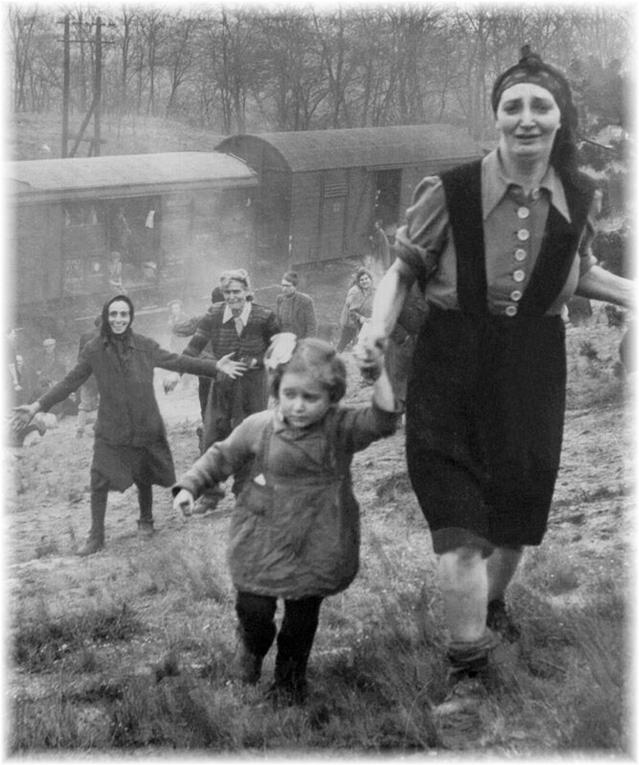
Rona: Their house in Hungary was bombed, so there were no pictures left there after the war. Some photos were sent to Paul’s uncle in Cleveland. After the war, almost every town made a Yizkor book – Yizkor is the Hebrew word for memorial. These books chronicle the history of the town, the Jews who lived there before the war and list those who did not return. Paul’s nursery school picture comes from the Karcag book. When Paul and I visited Karcag, we photographed the water pump and the Synagogue. Some of the photos in the book were taken by the soldiers on the days the train and the camp were liberated. Did you know that the photograph of the woman and her daughter emerging from the death train is now on a list of the 40 most iconic Jewish pictures?

Sharon: That is amazing, Rona, because until a few years ago, it was known to only the soldiers who liberated the train. My Dad kept it in his top dresser drawer. When he told his story to (history teacher) Matt Rozell, Matt put it on his website. The Internet has been a powerful tool in spreading this story.

moment-of-liberation1.jpg

Rona: That was how we learned about the work Matt Rozell was doing. My son read an article on the Internet about the train and sent it to me. I gave it to Paul who recognized it as the train he had been on. We contacted Matt who said he was organizing a symposium at Hudson Falls High School. It was there that Paul and your Dad (Carrol Walsh) met. I included that wonderful picture of Paul and your Dad embracing right after Paul said, “Give me a hug. You saved my life!”

Sharon: Not only is it a great picture of Paul and Dad, but it captures the feeling of all the survivors who had spent a lifetime searching for the soldiers who saved them.

Sharon: How did you approach the actual writing and selection of words and language?

Rona: I wrote the story in English, not Hungarian, but I wrote in a way they might have spoken. I tried to use the vernacular of the time. We don’t have a record of their exact words but we do know how they would have spoken, and what they were feeling at the time. When I have included Hungarian or Yiddish words, I have included explanations for them. Writers always need to listen to how people speak.

Sharon: THE LAST TRAIN recounts historical events for which you have created dialogue between characters. How would you classify this book?

Rona: I would call it creative nonfiction, or fictionalized nonfiction. The events that happened to Paul are all true. Occasionally, I needed a bridge between incidents or to show the passage of time. When I created a scene, I discussed it with Paul for authenticity. For example, I included a scene in which Paul sights the return of the storks, and has a conversation with his mother. I needed something to create a sense of time and place, and what they were feeling in the absence of Paul’s father. When Paul told me there were storks that returned every spring, I knew I had found the bridge I needed. My intention was to recreate the history. To bring the reader along, the writer needs to show the drama of the events.

Sharon: There are many heart-stopping scenes: when Paul is confronted, nose-to-snout with the ferocious German Shepherd dogs; when he is separated from his mother and brother at the train station; when he sneaks through Bergen Belsen to visit his uncle; and, of course, when the SS guard shoots the boy standing next to Paul.

Rona: I was not going to include that last event. I thought it was too strong for my audience. I was telling my editor about it, and he insisted that I include it. He said it was important to tell exactly what happened.

Sharon: What did Paul think of the way you portray him?

Rona: When he first read it he said, “You are making me look like a bratty little kid.” I responded, “Well, you were!” But what I actually meant by that is he acted like a typical 5 or 6 year-old in that he was terrified. But his own distinctive personality also shows through where he was both feisty and stubborn. These were important traits to have.

Sharon: Why did you include the reunion in the book?

Rona: The reunion was approximately 60 years after their liberation. It was, without a doubt, one of the most amazing shared experiences of my life. The powerful feelings shared by the soldiers and survivors radiated to their families and to the students at the high school. They were reunited because a high school history teacher interviewed a soldier and the information was put on his website. For the survivors and soldiers to share this experience with the students is so important. These students will share what they heard with their children. They are the ones who will pass along what happened. It was a life changing experience for everyone involved.

Sharon: What has surprised you most about the publication of THE LAST TRAIN?

Rona: That the audience goes beyond middle school and high school. Their parents and other adults are reading the book and responding.

Sharon: What would you like to see children and adults take away from this book?

Rona: This is a universal story of survival. I want my readers to see how this family and their extended family took care of each other and watched over each other. Paul’s mother was suffering with typhus and her young sons literally propped her up at roll call so the soldiers would not see how ill she was. Oscar became a father figure for Paul. He told Paul to stand up straight and not to cry. In the camps you don’t break down. I want my readers to be able to say, “Thank God I have the right to show my emotions. It’s okay to be a kid.”

Sharon: Thank you for speaking with me today. Paul’s family returned to Hungary, but life changed tremendously. He eventually came to Canada. Is there another book here?

Rona: There very well could be! It was not easy getting out of Communist Hungary.

The Last Train offers so much in terms of discussion points. It makes a huge impact in its 142 pages. It would be a great introduction to a study of the Holocaust for high school students. It is also accessible for 10 year-year-olds. Adults will truly understand the importance of both parts of this story. Of course there are the general topics of World War II and the Holocaust but there are also topics of bullying, physical and psychological fears, strength and courage, mother-child relationship, sibling relationship, family and friendship, defining a hero, the impact of a photograph, and hope. It is a story of captivity and deliverance; a story of new-found friendships, deep respect and a sense of inner peace discovered sixty years beyond the events of World War II.

WATCH PAUL ARATO SPEAK TO STUDENTS FOR THE FIRST TIME

Rona’s presentation on THE LAST TRAIN includes a Power Point display including original photographs. It is suitable for children nine and up as well as adults. For more information about Rona Arato, her books and her presentations, visit www.ronaarato.com.

To book Rona for a visit, go to www.childrenslit.com/bookingservice/arato-rona

If, after reading The Last Train, you would like more information about the train to Magdeburg and the Hudson Falls High School symposium, please go to Matt Rozell’s site: https://teachinghistorymatters.com/. By the way, train survivors are still contacting Matt from all around the world. Frank Towers, the lieutenant who oversaw the liberation, has made it his life’s work to locate any remaining survivors. To date, about 350 have been found.

found at http://www.clcd.com/features/th_Rona_Arato_Final.php

Read Full Post »

Holocaust Survivor Clara Rudnick in her home, Photo Erica Miller 8/31/10

Holocaust Survivor Clara Rudnick in her home, Photo Erica Miller 8/31/10

I gave my first talk last night after returning this summer from an intensive 3 week European study tour. Arriving early to prepare and set up, I looked up and in walked Siobhan, a former student, and her mom, followed a little while by an older woman I was surprised and delighted to see- Mrs. Rudnick, or Clara. She gave me a hug and took off her coat and told me that she had taken a cab to the site of the lecture, and, oh, could I please give her a ride home? I was delighted.

During the lecture I recognized her before the audience, and thanked her for coming out. She told the audience how proud she was to live in the “North Country” of upstate New York. Heck, she’s lived here since 1949, a dozen years before I was born! She was moved to tears, as was Siobhan, who gave her a hug.

During the talk, she nodded her head in agreement to many of my points. Afterwards, she pulled out a piece of paper, a short statement that she had written, explaining that she had been meaning to call me.  You see, she was not the only traveler to Europe this summer. While I was in Poland touring Holocaust related sites, Mrs. Rudnick had returned to Lithuania of her youth.

Not an easy thing, given that

a. Clara is 89 years old;

b. Clara is a Holocaust survivor;

c. Clara lost most of her family to the SS Einsatzgruppen and their Lithuanian collaborators.

She and her late husband Abe were two of only 7000 survivors of the 70,000 Jews of Vilna. I was familiar with a lot of the history, but to understand more of what she had gone through, I looked up the following at the USHMM website:

The Lithuanians carried out violent riots against the Jews both shortly before and immediately after the arrival of German forces. In June and July 1941, detachments of German Einsatzgruppen (mobile killing units), together with Lithuanian auxiliaries, began murdering the Jews of Lithuania. By the end of August 1941, most Jews in rural Lithuania had been shot. By November 1941, the Germans also massacred most of the Jews who had been concentrated in ghettos in the larger cities. The surviving 40,000 Jews were concentrated in the Vilna, Kovno, Siauliai, and Svencionys ghettos, and in various labor camps in Lithuania. Living conditions were miserable, with severe food shortages, outbreaks of disease, and overcrowding.

In 1943, the Germans destroyed the Vilna and Svencionys ghettos, and converted the Kovno and Siauliai ghettos into concentration camps. Some 15,000 Lithuanian Jews were deported to labor camps in Latvia and Estonia. About 5,000 Jews were deported to extermination camps in Poland, where they were murdered. Shortly before withdrawing from Lithuania in the fall of 1944, the Germans deported about 10,000 Jews from Kovno and Siauliai to concentration camps in Germany.

Soviet troops reoccupied Lithuania in the summer of 1944. In the previous three years, the Germans had murdered about 90 percent of Lithuanian Jews, one of the highest victim rates in Europe.

Clara was anxious to speak to me. She told me of her trip with her son. Together they returned to Svinsyan, where her parents, two sisters and two brothers lived. To one of my students, a few years back, she told the following story:

On June 21st, 1941, the Nazis came into my town, I lived with my mother and father, two brother and two sisters. In July 4th, they took my oldest brother and burned him alive, with 90 other Jewish teenagers in my town. In the early part of August they came in and took my twin brother, along with another 100 teenagers and dug a big hole and buried them alive. In September they took the whole town about 8,000 people and brought then to where we held our flea markets- this was both of my sisters and my mother- out into the woods where they lined them up and shot them and left them there. This is where my father and I escaped- he knew a lot of men- and we went to farm to farm and hid out until the Nazis would come, and we would leave because if they caught us they would kill us and the people we were staying with, because they were harboring  fugitives.

At the town’s museum, she stopped to ask where the memorial of the murder site, Poligon, could be found. Clara said that they  told her that they did not know where it was, though half the town’s population, many of the families having lived their since the 1300s, had been murdered there.

At the hotel in Vilna she inquired how she could get to Ponary, and was simply told “there is nothing there”. Google Ponary. 110000 relevant results. 70,000 Jews were shot to death there by the Germans and Lithuanians.

Taking the English speaking bus tour of the Old City of Vilna, the guide described the Philharmonic Hall but did not tell the tourists that this was the entrance to the Vilna Ghetto, where she had been imprisoned until being deported to a slave labor camp and later to a concentration camp. When Clara asked why the guide did not mention this, the guide said that she “did not know.”

Maybe the guide was young and was not taught this history in school. Or maybe it was not important enough to be part of the official program. 90 to 95% of Lithuania’s Jews were murdered in the Holocaust. To one lady on the bus, and her son, it was important. In Clara’s words, “In just three days, I learned that Lithuania has not faced it history of the destruction of its 250,000 Jews”.

Clara is happy that I am keeping the memory alive. She put on her coat and climbed up into my pickup truck without assistance. She chatted all the way home as I tried to navigate to her house in the dark. She thanked me over and over. Not at all. Thank you for coming into my life and making me, and my students, a part of yours.

Here is an informative article which reveals exactly what Clara wanted me to know. Responsibility is not big on the list of Lithuania’s priorities.

Read Full Post »
A Backwards Journey into the Holocaust

Matthew Rozell, a history teacher at Hudson Falls High School whose project has reunited hundreds of Holocaust survivors with the American soldiers who liberated them, will speak at a gathering of the NYS Archeological Association, Adirondack Chapter, on Friday evening, October 18, 2013.

Bernd Horstmann, Custodian of the Book of Names, Matthew Rozell, History Teacher, July 5, 2013. Bergen Belsen, Evacuation transports exhibit, based in part on Rozell's work.

Bernd Horstmann, Custodian of the Book of Names, Matthew Rozell, History Teacher, July 5, 2013. Bergen Belsen, Evacuation transports exhibit, based in part on Rozell’s work.

Mr. Rozell has been recognized as ABC World News Person of the Week, the Organization of American Historians Tachau Teacher of the Year, and the NYS DAR American History Teacher of the Year. He is also the recipient of the Washington County Historical Society Cronkite Award, the Glen at Hiland Meadows President’s Award, and most recently, the NSDAR Medal of Education Award and the SUNY Geneseo Alumni Association Educator of the Year Award for 2013.

Rozell will take his listeners on a lecture and photo tour to the authentic sites of the Holocaust, retracing the path of the survivors who are now his friends, beginning with their liberation and traveling backwards in time.  His three week odyssey was made with 23 other educators this past summer and was funded by the Holocaust and Jewish Resistance Teachers’ Program,  the 30th Infantry Division Veterans of World War II, Holocaust survivors, and many other supporters and friends. Rozell is having an article published in a prominent Holocaust education journal this spring.

The program begins promptly at 7:30pm at the Rogers Island Visitors Center, 11 Rogers Island Drive, Fort Edward New York, and is free to the public.

Belzec, Poland. Letter from a survivor to me, the site where she lost her mother. Nearly 70 years later I would have the honor of introducing her to her own liberators.

Belzec, Poland. Letter from a survivor to me, the site where she lost her mother. Nearly 70 years later I would have the honor of introducing her to her own liberators.

Read Full Post »

« Newer Posts - Older Posts »