Feeds:
Posts
Comments

Posts Tagged ‘Bergen Belsen Memorial’

As the museum turns 20, officials understand that the demise of those who survived the prison camps as children means looking backward in a different way.

30th ID Colors, Capitol Rotunda, April 11, 2013

30th ID Colors, Capitol Rotunda, April 11, 2013

Tonight is the Nation Tribute Dinner. Frank, Leslie and Elisabeth are there- two survivors and their actual liberator. Tomorrow they get interviewed near the 30th Infantry Division Flag, recently installed in the main foyer of the Museum as a liberating division. About time. I nearly cried when I saw it paraded into the Capitol Rotunda for the Days of Remembrance  commemoration this year. First time! I really think the project helped get the 30th on the recognition radar screen…here is a good article, found on USA Today.

WASHINGTON — The adult survivors of the Holocaust are mostly gone now, and those who survived as children — and were old enough at the time to remember their ordeals — are now in their 70s and 80s.

It won’t be long before no eyewitnesses remain.

That’s why, as the U.S. Holocaust Memorial Museum marks its 20th anniversary Monday with more than 750 survivors, museum officials are calling it one of the last large gatherings of those who managed to escape Hitler’s death machine.

For those who have dedicated themselves to teaching future generations about the Holocaust and its victims, the demise of the survivors means looking backward in a different way — a way that no longer includes people looking others straight in the face and recounting what they saw and what they lived.

You can read all the documentation of the Holocaust in the world, said Diane Saltzman, director of survivor affairs at the U.S. Holocaust Memorial Museum, “but hearing somebody’s voice, sitting across the table or across the room from a human being, there’s no true substitute.”

Jonathan Sarna, professor of American Jewish history at Brandeis University, wants his classes to understand this.

“I tell my students annually that they have a special responsibility,” he said. “They are the last generation that will be able to say that they personally knew survivors of the Holocaust. It is a big change, just like it was when the last Civil War veteran passed from the scene.”

The Holocaust, now “perceived history,” will become “received” history, Sarna said. The challenge is that it doesn’t recede from memory.

Holocaust educators take heart in the many institutions and younger people committed to ensuring that future generations will know about the 6 million Jews who died; of the concentration camps, gas chambers and crematoria set up to carry out Hitler’s “Final Solution”; and of the 5 million Roma (Gypsies), gay people and others murdered because the Nazis deemed them, like the Jews, unworthy of life.

That’s the mission of the U.S. Holocaust Memorial Museum, said Saltzman, which has hosted some 35 million visitors since it opened just off the National Mall in 1993. The institution is full of audio and video testimony from survivors, artifacts from their lives before and after they were sent to concentration camps, and films and diaries that document the genocide.

“The museum stands as that eyewitness going forward,” Saltzman said. “We are the repository of all that evidence, and all of those memories.”

From the Washington museum to Jerusalem’s Yad Vashem to smaller museums around the world, these institutions preserve history that will soon no longer be passed on firsthand. So, too, does Holocaust literature, from Anne Frank’s famous diary to Night, by survivor and Nobel laureate Elie Wiesel, who will give the keynote speech at the Washington museum’s anniversary Monday, alongside former president Bill Clinton.

The Shoah Foundation, based at the University of Southern California, has videotaped testimony from more than 51,000 survivors since film director Steven Spielberg started the project in 1994, when there were about 350,000 Holocaust survivors worldwide.

Curriculum programs in schools introduce children in the U.S. and elsewhere to the Holocaust, and these programs will continue, even when survivors aren’t part of them anymore.

Norman Frajman, 83, thinks of that day. He was 10 years old when World War II began, and has sharp memories of life in the Warsaw Ghetto and of the Majdanek death camp in eastern Poland, where his mother and younger sister died. All told, he lost 126 members of his immediate and extended family.

“I probably wouldn’t remember what I had for breakfast, but I remember all that happened to me during the carnage,” said Frajman, who now lives in Boynton Beach, Fla., and has been sharing his testimony with schoolchildren for more than 30 years.

But not with young children. “The atrocities are indescribable. I can’t address anyone at the elementary school level,” he said. “It’s too graphic.”

For all the graphic details available from survivors, and primary and secondary texts and film, Holocaust denial still thrives on the Internet and in many parts of the world where anti-Semitism has strong roots.

Even in the presence of Holocaust survivors, there are people who insist the genocide never happened, Sarna said. The hope, when there are no more survivors, is that the museums and the video archives will make it “impossible for most people to accept the word of the deniers.”

In the meantime, as long as he is able, Frajman will tell his story and teach about the Holocaust in hopes of preventing another one. “Yesterday it was directed against the Jews. Tomorrow it could be against Christians, the next day against Muslims — unless people heed and listen,” he said.

But he is optimistic that his words and those of other survivors will resonate long after he is gone.

“Judging by today’s young people that I encounter when I go to schools to speak, we are in for a better tomorrow,” Frajman said. “They listen. They are very perceptive. They take it to heart.”

Read Full Post »

Thanks to Alan Smason for a nice article. I have added some clarifying remarks in brackets for posterity and additional accuracy.

Soldiers, survivors converge in Louisville

April 19, 2013

By ALAN SMASON, Exclusive to the CCJN

Frank Towers remembers the day through the haze of 68 years, a footnote at the end of World War II. Matt Rozell was never there, but through his efforts and those of his students, he can dictate with amazing accuracy what happened in Farsleben, Germany those many years ago. Yet to the five Holocaust survivors who met with Towers and Rozell at a World War II reunion this past weekend in Louisville, KY, it was a day they will never forget. It was the day American forces gave them something they thought they would never see again: freedom!

30th Division U.S. Army Infantry Veterans executive secretary Frank Towers, center, welcomes Gideon Kornblum, left, and Kurt Bronner. (Photo by Alan Smason)

At 95 years, Towers is the last of the 30th Division of the United States Army Infantry members who can say he was there and had personal contact with this almost forgotten chapter of history. His testimony shows he was assigned the duty of dealing with what the Nazis regarded as human refuge on April 14, the day after the survivors, crammed into tiny freight cars, starving and in some cases dying, had been freed from their captors by members of the Tank Destroyer Batallion 743 [note: 743rd Tank Battalion. 823rd Tank Destroyer battalion assisted later in the day.]assigned to Tower’s 30th Division named for Andrew Jackson and fondly referred to as “Old Hickory.”

Rozell, a high school teacher in Hudson Falls, NY, is the conduit by which Towers and the remaining 30th Division members have connected to the Holocaust survivors, all now septgenarians or octogenarians, from the first of three trains sent out from Bergen-Belsen concentration camp on April 6. It is through his “Teaching History Matters” website set up decades ago and fueled as part of his commitment to teaching his students the lessons of World War II that he has become heralded as an authority on an event that took place years before he was born.

It is through his efforts and the resources he and his students have placed on the Internet that reunions where veterans can meet with survivors have been possible. More than 200 survivors of what Towers calls “the death train” have been identified and contacted through Rozell’s networking efforts.The five survivors who traveled to Louisville to spend time with their families touring the Louisville Slugger plant and other city sites are part of a vast network of Holocaust train survivors now living throughout the United States, Canada, Israel, Europe and as far away as Australia. The manifest of the names of all those loaded on the train is now listed on Rozell’s site and linked with the United States Holocaust Museum and Yad Vashem in Jerusalem.

This year two train survivors, Ariel University emeritus math professor Gideon Kornblum from Jerusalem and retired graphics printer Kurt Bronner from Los Angeles, were new to the gathering. They joined with retired Duke University medical professor Dr. George Somjen from Durham, NC; Brooklyn College physics professor Micha Tomkiewicz from Brooklyn, NY; and Bruria Bodek Falik from Woodstock, NY, all of whom have attended reunions with the remaining veterans beginning in 2008 and continuing ever since.

Bergen-Belsen concentration camp survivors (from left) Micha Tomkiewicz, Bruria Falik and Kurt Bronner. (Photo by Alan Smason)

In every case these Holocaust survivors brought their wives, children and grandchildren with them to meet and socialize with the children and grandchildren of the men they consider the liberators of their families.

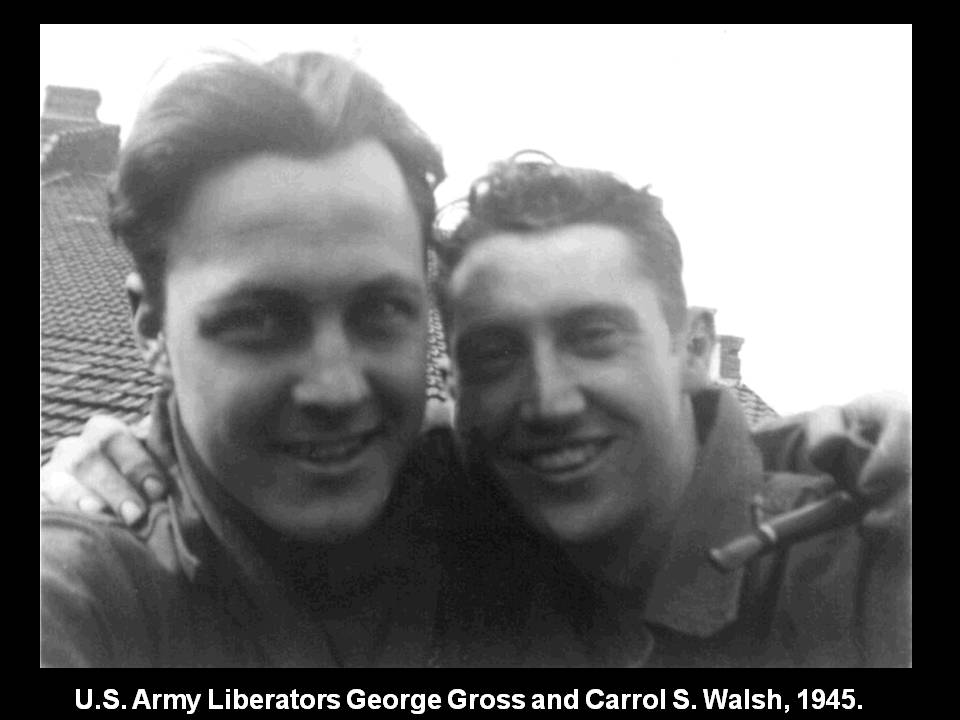
This year only 12 veterans were in attendance. Their number was lessened in December with the passing away in Florida of Carrol Walsh, a retired New York State Supreme Court judge, who was one of the two tank commanders that captured the train in question.

It was through Walsh’s grandson, a student in Rozell’s history class more than a decade ago, that Rozell first learned of what occurred on that date. Beginning in 2001, he heard first-hand in a series of interviews with Walsh how he and fellow tank commander George Gross happened onto the train and its human cargo.

Rozell explained how the train got there. On April 6 the Bergen-Belsen commander, fearing the approach of the Soviet Army [note: the British Army] and not wanting to let the world know of the savagery of the Third Reich and its “Final Solution,” dispatched three separate trains crammed full with prisoners to Theresienstadt concentration camp, also known by the name of its garrison city, Terezin. Of the three trains sent out that date [note: not all three trains were dispatched on same day], the first with 2,500 aboard encountered a series of mishaps that made it fall into the hands of the Americans on April 13. A second train with 1,700 prisoners aboard, using information it gleaned from the first train, eventually made it to Terezin on April 20, where most of its inhabitants were liberated on May 8 by the Soviet Army. The third train with 2,400 souls aboard also was liberated by Soviet troops on April 23 at Trobitz.

With laser pointer in hand, former 1st Lt. Frank Towers prepares to show audience members where the train was liberated at Farsleben. (Photo by Alan Smason)

Walsh and Gross were on a scouting mission along with members of the 119th regiment, having been dispatched from the recently captured town of Hillersleben by Major Clarence Benjamin. Benjamin had come upon several Jews who had escaped the train while it lay in wait. They had told him of the train’s existence and he instructed Walsh and Gross to accompany him.

Despite its holding a full head of steam, the train commanded by SS Captain Hugo Schlegel and its complement of a dozen guards or SS troops were contemplating orders from the German command. In front of them were the Allied forces, while behind them the Soviet troops were advancing. The orders were chilling. Either blow up the train there with explosives found in one of the freight cars or advance the train to the Elbe River, blow up a bridge there and plunge the train into the waters below, killing all aboard including the guards.

The train was standing at a spot so remote it was originally considered as Magdeburg by the World War II veterans who first began to tell their stories. Walsh and Gross saw several Jewish prisoners milling about, but when they pressed their tanks into service, the German guards threw their rifles down, ran away or disrobed, attempting to evade capture by donning the clothes of their captives. It was in vain, though, because their much better physical condition gave them away almost immediately.

Emeritus mathematics professor Gideon Kornblum traveled from Jerusalem to be a part of the reunion of the veterans and survivors. (Photo by Alan Smason)

Gross placed his tank in front of the train, while Walsh went back to the headquarters to alert them to their finding. With their Nazi captors away or arrested, the train’s doors were flung open and the wretched survivors  began to slowly vacate the compartments to which they had been confined.

“These freight cars were much smaller than the ones we see on our normal railroads, about half to two-thirds the size of our freight cars,” Towers recounted. “These freight cars were left over and remodeled after World War I and became known as ’40 and 8s.’ They could easily hold 40 men or eight horses, thus the nomenclature.”

“These cars that they encountered contained 75 to 80 men, women and children,” Towers continued. “They’d been in these cars for six days, stopping at night to get their daily ration, which basically was a kettle of water with some potato skins or lentils. That was their ration for six days.”

When Walsh returned with backup troops, they came face to face with the horrors of the Holocaust, none of which they had seen in their march towards the heart of Germany.

Kurt Bronner, at his first reunion of the 30th Division of the U.S. Army Infantry, gives his thanks to the veterans, (Photo by Alan Smason)

“They had very little sanitary facilities. They were dirty, stinking, flea-infested and lice-infested and put into these cattle cars,” Towers recalled. “When they opened the doors of these cars, many of the victims just fell out to the ground. Some of our men just had to turn and throw up; the stench was so bad. This was inhumane. This was what the Germans were giving them: nothing. They were treated lower than animals.”

Rozell concurred, but gave an interesting sidenote. The German guards had radios and had informed the prisoners of the death less than 24 hours before of President Franklin D. Roosevelt in Warm Springs, GA. Many of the U.S. soldiers were so busy fighting battles that they first found out about his death through the freed Holocaust survivors. [note: the reporter may have heard this from someone, but it was not me. I indicated what the soldiers told me- that the column was stopped and they were notified by their own commanders. Shocked, they went on to liberate the train the next day.] The prisoners were fearful at first because the Germans had told them the Americans would shoot them when they found them.

“There was one soldier, an individual I hear many soldiers talk about,” Rozell remembered. “Apparently, he came down from the hill and he said in Yiddish ‘I’m a Jew. I’m Jewish.’ He was from Brooklyn and I’ve heard it from at least a half-dozen people because it does make an impression.”

When 1st Lt. Towers was ordered to the train the following day he had several concerns. “The first thing we wanted to do was get these people medical care,” Towers stated.

“We were sort of in the middle of a no man’s land. We had to get these people out of there,” he noted. “So it fell in my lap to get transportation to get those people out of there and to remove them back to a previous town that had been liberated the day before at Hillersleben.”

Sadly, 30 of the victims on the train had already died of organ failure or starvation and were buried immediately at Farsleben, according to Towers.  Over the course of the next two weeks, nearly another two dozen weakened survivors contracted typhus and died. They were buried in a cemetery in Hillersleben, some five miles away. One of these was Somjen’s father.[note: the number is over 100.]

Little did Towers know, but the interaction he had with transporting the victims of the Holocaust was to be short-lived. Within a few days of arranging their transportation and care by private citizens and for the sick to a nearby German field hospital, he and other segments of the 30th Division were moving out to fight the Germans in what turned out to be their final assault at Magdeburg. Within days the war was over for Towers and the entire 30th Division.

For the survivors they had liberated, most of whom were Hungarian Jews, there were many years of living in displaced persons camps, moving back to their hometowns to attempt to find parents or loved ones and, eventually, emigration to more welcoming countries as Communism gripped the Slavic states.

For Kornblum, who was only five at the end of the war and who was then an orphan, much of the story of his past was brought to life at Yad Vashem, the Holocaust memorial and museum in Jerusalem, near where he now resides with his wife Annette. Although several previous attendees had come in from European cities or like Falik had lived in Israel for a time, Kornblum is the first resident of the Jewish state to travel expressly [note: others have travelled to the USA to reunions from Israel] to a 30th Division reunion.

“Originally people gave me the impression that I was aboard the train headed for Tobitz. I was very happy to learn that I was in the so-called Magdeburg train liberated near Farsleben,” Kornblum confessed. He remembers some childhood memories such as celebrating Shabbat with his grandfather on Friday evenings in addition to the slaying of his mother at the hands of the Nazis and the death of his father at Bergen-Belsen. “But I have very little recollection,” he admitted.

Bronner, who was 18 at the time of liberation, had far more vivid memories of that day, even though he spoke no English at that time. “The first  words in English I ever learned was (sic) ‘One only,’” he said. “That was when I went to the bathroom and I closed the door. Having the privacy to be by myself: that was freedom!”

Rozell first became aware of the impact his website was making in 2006, when he was contacted via email by an elderly [note: a grandmother, but not my idea of elderly] woman in Australia who was only seven at the time of the liberation of the train. She was amazed at the images displayed on the site captured on the day of her liberation by Benjamin and Gross. Thus began countless emails and telephone calls to many excited survivors with Rozell’s website as their focus.

When Rozell contacted the archivist at the Bergen-Belsen concentration camp, he received more material, such as the manifest list of passengers, which enabled him to do outreach with other survivors, who now were scattered across the globe. Rozell, Tomkiewicz and his wife [note: Rozell, Towers and Varda Wiesskopf] have now contacted approximately 240 survivors, all 18 years or under at the time of their liberation [note: a few were older].

Rozell has held several reunions with his high school class in Hudson Falls and has had Towers and Walsh meet with the survivors of the train, beginning in 2007. He has had oral histories recorded on video and transcribed for insertion on his website. Since 2008 the 30th Division members, led by executive secretary Towers, have invited the Holocaust train survivors to be included in their reunion activities as guests. The veterans and their families have joined with the Holocaust victims and their families to ensure that this small event at the end of World War II will always be remembered.

Crescent City Jewish News

Read Full Post »

 In April  2008 I was accepted into the  United States Holocaust Memorial Museum Teacher Fellowship Program. I was called out of my classroom to the principal’s office-wondering if I was in trouble, I was relieved and excited to learn that he had just received a phone call from Peter Fredlake, the museum official in charge of educational outreach, and that I and 13 other teachers from across the country would be heading to Washington DC for a week that coming summer.
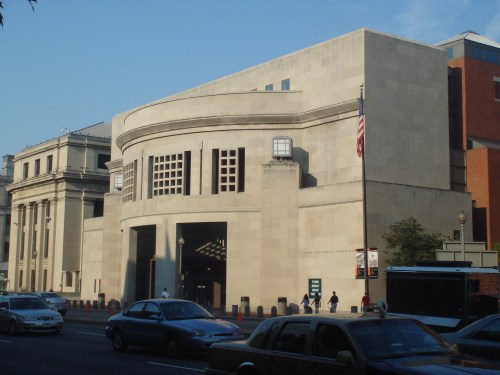
dsc024721I cannot fathom that it was only 5 years ago. How my life has changed.

Since then I have been honored by the Museum director, had a Museum film made about me, and spoken on behalf of its educational program. I’ve helped to gather artifacts for donation to the Museum, and recently helped facilitate the transfer of the liberation photographs to the Museum photo archivist. And next week, I will be proud as the 30th Infantry Division flag is installed in entryway to the Museum, now formally recognized as a liberating division. I’ll probably cry when I return to the Museum this summer and see for myself that it has taken its rightful place.

It all begins with an idea, a vision, though no one knows what doors will be gone through to get there.

As the Museum commemorates it 20th anniversary this month, I’d like to share Michael Berenbaum’s piece below.

April 3, 2013

How the  U.S. Holocaust Memorial Museum changed my life

By Michael Berenbaum

JewishJournal.com

My daughter, Ilana, then a young college student, asked if she could go with me to the opening of the United States Holocaust Memorial Museum, on April 22, 1993 (the date was tied to the Warsaw Ghetto Uprising’s 50th anniversary). I said: “I will be leaving very early.” She responded: “I’ll be up.”

I couldn’t wait to get to the museum that morning. First of all, my home was in chaos. My sister and brother-in-law were in from Israel for the occasion. My mother came up from Florida. A couple of days before, they’d had an automobile accident, and, as a result, my mother was in a wheelchair. More importantly, the opening of the museum, which once seemed so far away, had finally arrived. I felt like a bridegroom on his wedding day or an expectant father after 14 years of gestation, filled with joy and anticipation, anxiety and excitement, even a bit of fear.

Ilana, for her part, was normally allergic to mornings. In those days, the only way she would be up at 6 a.m. was if she had pulled an all-nighter. But true to her word, she was ready to go. Then, no sooner had she gotten into the car, she turned to me and said: “It is time to quit.”

I was stunned. “Give me time to enjoy the opening,” I replied lamely.

*************************************************************************

I had been involved with the creation of the museum on and off for some 14 years. I began my professional life as a young academic teaching at Wesleyan University and serving as university Jewish chaplain when something rather unexpected happened. I was invited by Rabbi Irving “Yitz” Greenberg to head Zachor, the Holocaust Remembrance Institute of the National Jewish Conference Center, which he had founded. Then, just after I began my work there, President Jimmy Carter turned to Elie Wiesel to chair the President’s Commission on the Holocaust. Wiesel, in turn, asked Greenberg to be its director. Greenberg had just left City College to direct the Conference Center and was deeply committed there, so he accepted this unprecedented challenge with the understanding that he would not have to move to Washington and would serve only in a part-time capacity. He turned to me to move with my family to Washington, in January 1979, to serve as deputy director for the commission, which in reality meant leading a two-, then later, a three-person staff. We had just moved into a new home in Connecticut, my son, Lev, had been born the spring before, and Ilana had just started kindergarten, but opportunities like that do not come along often, so off we went to Washington.

The commission made three basic decisions in the first nine months of its work. President Carter had charged it with recommending an “appropriate national memorial to the victims of the Holocaust.” And the commission decided upon a “living memorial,” a museum to tell the story of the Holocaust, an educational institution but also an academic research institute, library and archives to teach the Holocaust and its lessons, to enhance scholarship and learning as well as a “Committee on Conscience” to warn of any impending genocide and arouse the conscience of the nation and of world leadership to combat genocide.

Banners commemorating the 20th anniversary hang on the 14th Street entrance to the United States Holocaust Memorial Museum. Photo courtesy of the U.S. Holocaust Memorial Museum

Second, the museum also would be built in Washington, where it would have to address the American experience as well as the national ethos. Some had argued for New York, then as now, the city with the largest Jewish population in the country. But since museums are always in dialogue with their visitors, the choice of Washington was to prove defining.

Third, the museum would be a public private-partnership, built on public land with private funds and gifted to the American people. At the time, we were in the middle of an energy crisis, a period of high inflation and high debt — or what seemed high at the time — and President Carter, in particular, was not anxious to undertake new expenditures. Working from January to September 1979 we submitted a report to the president, and the United States Holocaust Memorial Council was launched early the next year, first as a presidential initiative and later by a unanimous act of Congress, but not before there was a major struggle between the chairman and the president over the definition of the Holocaust.

At issue was whether the term Holocaust applied only to the 6 million Jews who were murdered, or to the 6 million Jews and the non-Jews who were victimized by the Nazis. President Carter wanted a broad definition, and Wiesel, who had dedicated his distinguished career to preserving the Jewishness of the Holocaust, would not work under the Carter definition. Wiesel had solved the problem of how to deal with non-Jewish victims of Nazism, with language: “While not all the victims were Jews, all Jews were victims.” and. “The uniqueness of the Holocaust is its universality.”

I was caught in the middle, between the president and the chairman, and was summarily fired. Disappointed, I thought that I would never have the opportunity to help build the museum that had just been conceived. I taught, I wrote, I directed the Jewish Community Council of Greater Washington.

I began to write about several of the issues that had been central to the commission’s concerns on the Americanization and later the nativization of the Holocaust — the clash between the stories retold on American soil and those which predominate in Israel and elsewhere, and the authentic and inappropriate ways in which past recollections are used to justify the present and to construct a future. And I continue focus much of my writing on this very same issue today, more than three decades later. I also wrote on commemorating the Holocaust and on the issue of the uniqueness and universality of the Holocaust, contending that only by including non-Jewish victims of Nazism could we understand the singularity of Jewish victimization during the Holocaust.

*************************************************************************

Many people falsely presume that to compare two events — genocides, in this case — is to equate them. In reality, only in comparison can we understand what is distinct about each. We must compare and contrast in order to understand.

Seven years elapsed, and Wiesel resigned as chairman on the eve of his departure to Oslo to receive the Nobel Peace Prize. In the interim, the council had been through several directors and several plans — none successful. I had remained close to the survivors with whom I had always had a special affinity — none more so than Miles Lerman and Benjamin Meed, and I was invited to rejoin the project to preserve its neshama (spirit), first as a consultant and later as project director.

My writings served me well, because I had been struggling with the question central to the museum’s mission: How do you move the audience of that time back 50 years and introduce them to a European event in the heart of the U.S. capital, the locus of the American national experience? How do you transmit an understanding of the Holocaust to the American people so that it resonates with the American narrative while still doing justice to the event? Would Jews — the prime creators of the museum — be courageous enough to bring a Judeo-centric story to the center of American life, and would the American people be interested or dismiss the museum as parochial?

I drew upon everything in my own life experience as a postwar child, born to American parents but taught by refugees and survivors, and attending an Orthodox synagogue established by people who had fled Frankfurt and Antwerp just after Kristallnacht, rebuilding their lives and re-creating the world they had left behind in Europe on American soil in the freedom of the new world.

The museum had been given prime land adjacent to the United States Mint — indeed, a crematorium had once been on the site, where dollars going out of circulation had been burned — and adjacent to the National Mall. Situated at the intersection between the museums of Washington, and the monuments of Washington, the site is also within blocks of the White House and Capitol Hill.

“By the Waters of Babylon we sat and we wept as we remembered Zion,” the Psalmist said.

The place from which you remember an event shapes how the event is remembered.

By its very nature, however, the museum would have to stand in contrast to its surroundings. Everywhere else, Washington’s museums celebrate human achievements in art, science, history, technology, scholarship and learning. The monuments pay homage to the great men (and, soon, women) of history — Washington and Jefferson, Lincoln and Roosevelt. And governmental Washington is power personified. The U.S. Holocaust Memorial Museum would demonstrate what could happen when human genius and technology, when men of history and the power of government are let loose without the restraints of “checks and balances,” without an appreciation for the “inalienable rights” of all, without separation of powers, without appreciating that all men are created equal.

After several false starts, we had a building replete with symbolism, created by master architect James Ingo Freed. The design included three floors of exhibition space, so the story of the Holocaust would have to be told in three chapters, leading to the question: Does one rise and then descend, or does one climb stairs from floor to floor? As we decided on descent, it became clear that the transition between the National Mall and the Holocaust experience would need to begin in the elevator. Three floors meant three acts to the drama: the World Before and the Rise of Nazism 1933-1939; the Holocaust 1940-1945; and then Resistance and Rescue, Liberation, the Nuremberg Trials and the survivors rebuilding their lives, first in the displaced-person camps and then in the United States and Israel. There were large exhibition spaces and bridges leading to four square rooms, followed by stairs. To fit an exhibition inside such a building, the bridges would serve as transition spaces, the sequential exhibition spaces that followed would lead to a story in four segments. The stairs would mark a descent deeper into the story, more engrossed in the Holocaust narrative.

*************************************************************************

Still, there was no exhibition.

We created a team. No single individual can create a museum; it takes a village of lay people, donors and professionals, historians and curators, fundraisers and institutional builders working together, despite differences, toward one unified goal. Jeshajahu “Shaike” Weinberg, who had created Beit Hatfutsot, the Museum of the Diaspora in Tel Aviv, came in first as a consultant and later as director to build the museum’s infrastructure to give us the benefit of his wisdom and of his experience. Martin Smith, a distinguished documentary filmmaker, also came on board and was joined by Ralph Appelbaum as the museum’s brilliant designer. I was the scholar of the team and most often the public face to the community, scholars, educators and donors, and we worked so closely that our ideas became enmeshed and often we cannot recall who first advanced the concept.

We knew the museum must become a storytelling institution. The two most powerful means of contemporary storytelling are novels and movies. But while film has a captive audience and moving imagery, a museum is just the opposite; its audience moves, its imagery is captive. (Those who have been to the Museum of Tolerance in Los Angeles can see a hybrid of the two, as that museum uses light and sound to keep its audience walking through its exhibits.) We believed that if we got the narrative right, if we made the story compelling, we could encourage the audience to walk through the exhibition at their own pace and still get the story.

But the story had to be personalized. Six million is a statistic. One person’s experience is a story. We decided that visitors would get an identification card so the events they were to see would be encountered through the lens of the victim whose story they carried with them.

Still, however smart you may think yourself to be, you are much better off if you are also lucky, and the museum has a piece of unbelievable luck. Communism was falling, the Soviet Union was in a steep and inexorable decline, and communist officialdom was looking to turn toward the West and away from Moscow. The museum project came along seeking to obtain artifacts just at a time when contact with Washington was welcomed — and here was a U.S. government project on a Jewish theme. Due to the political skill of Miles Lerman, then chair of the museum’s International Relations Committee, who spoke the native languages and could navigate his way about Eastern Europe — a former partisan, he could drink with the best of them, and that was so necessary in Eastern Europe — we were able to obtain on loan or as a gift many of the thousands of artifacts that comprise the museum, including the railcar of the type that was used to transport Jews from ghettos to death camps and the authentic barracks from Birkenau in which we depict the experience of the death camps. We also obtained one of the two milk cans that Emanuel Ringelblum used to bury the Oneg Shabbes archives in Warsaw; and 5,000 shoes, a dissecting table and a crematorium door from Majdanek, which shape the visitors’ understanding of gassing. Because of the plethora of artifacts, we were able to give the visitors a sense that a story lies behind each artifact.

And even Weinberg, who had pioneered the idea of an artifactless museum, had to change his ideology and help create an evidentiary-based, artifact-grounded exhibition.

We integrated films into the museum experience; 70 audio programs and three major films — one on anti-Semitism and one on the Nazi rise to power. Because the museum is situated in Washington, it had to tell the governmental story: What did America and the West know?  When did it know it? And, most importantly, what did it do with such knowledge? So the visitor pauses in the middle of telling a European story to tell the American story. Twice, the visitor has the choice of seeing any one or all of five short films on pre-World War II American policy on the top floor, and on the bottom floor of the exhibition, the wartime record of the American government. There was no pressure of museum staff or officials to soften the story and make the U.S. government look good. We felt compelled to tell the truth as we knew it, the whole truth as best we could.

We wrestled with the question of how to end the museum; our initial thoughts were trite, and an important story must have a significant ending. We came to the realization that the only ones who could bridge that world with our world would be those who have actually lived in both worlds. The museum could only end with the voices of survivors telling us their stories, brief glimpses into the concentration camp universe, specific understandings of the choiceless choices they were forced to make, moments where they felt some dignity and times when they felt the full measure of their defeat, of their loss. Those who were there were allowed to speak, and they reminded us that for every story that we heard there were 6 million stories that could not be told.

Some wanted an uplifting ending. After all, Americans like it when people live happily after. But although there are many uplifting stories told, in those 90 minutes we experience the whole of humanity — evil incarnate, goodness personified, courage without end, and the most craven of cowardice and everything in between.

The day the museum opened was the coldest April day in the history of Washington. The field beyond the museum, which would hold the massive crowds attending the opening — the survivors and their children and grandchildren, liberators and their families, donors and their descendants who were so very proud of what they had enabled to rise, as well as ordinary Americans who would form the core of the museum’s visitors — held knee-deep mud. The heads of state were there — presidents and prime ministers from many of the countries occupied by the Germans. The invitation to Franjo Tuđjman, the Holocaust-denying president of Croatia, had caused the museum considerable embarrassment. We had followed the advice of the State Department not to create an international incident. We should have remembered that we answered to a higher authority.

More than one survivor said that this was not ordinary rain: “The heavens were crying.” Perhaps they were. The Museum of Tolerance and New York’s Museum of Jewish Heritage: A Living Memorial to the Holocaust opened in rainstorms; Yad Vashem opened on a frigidly cold evening, so rare in May.

Menachem Rosensaft, child of Holocaust survivors, put it ever so wisely: “Every once in a while you learn that there is a God. No one should have enjoyed this event, and they couldn’t. And the presidents of Romania and Hungary, France and Germany —and even the president of the United States — were chilled to their bones at this ceremony, as they damn well should be.”

*************************************************************************

We had a dream that if we built it, they would come.

The farmer from Iowa and the factory worker from Detroit, schoolchildren from Maine to Florida, from Oregon to Texas, teachers and scholars, soldiers and policemen, heads of states and ordinary citizens — in the days and years that followed, the number of visitors exceeded even our most exalted of dreams in quantity — we dreamed of 1 million; we averaged almost twice that number — and, more importantly, in quality. Jews and non-Jews, Americans of all races and creeds, ages and educational backgrounds. Museums in Washington tend to be white institutions — not so the United States Holocaust Memorial Museum.

I turned to my daughter that morning with tears in my eyes. I understood that we had all paid a price, a steep price for the creation of this institution. I had worked on it 24/6 for many long years while raising my children, and having them in my sole custody. I had gone from youth to middle age. I had lost my father. I had divorced. My children had endured my absence and at times my distracted presence. They had grown up surrounded by ongoing discussions of death and destruction. Ilana had written her college essay on growing up with Zyklon B in the garage, just behind her tennis racket and skis. This was my life, and I chose it, but because of that choice it became theirs. I asked her indulgence: “Allow me to enjoy the opening,” I pleaded. And so she did.

Was it worth it? Surely it was.

Was the price to be paid steep? Yes. Would I do it again? In a minute; yet, hopefully, differently.

Still, my daughter intuited something I did not then know. I was soon to face an existential problem: What do you do after you have done everything you wanted to do? I was in my mid-40s, too young and too poor to retire. And stuck in the notion that for some of us, there is more challenge in creating something than in managing it.

Ilana and I spoke deeply that day. I told her that I could now die. Now she was stunned. I reassured her, seeing the look on her face: “Don’t worry, hopefully I won’t; and I have much, so much, to live for — but I could die and face my Maker saying that what I had done with the talents and the opportunities that I was given was worthy of a life. That feeling has never left me.

What do you do with the rest of your life? I now answer that day by day through new challenges, and wonderful and important opportunities to serve, grow, learn and contribute.

 http://www.jewishjournal.com/ yom_hashoah/article/how_the_u.s._holocaust_memorial_museum_changed_my_life/

Read Full Post »

Matthew Rozell, 30th Infantry Veterans of WWII, Holocaust survivors at Mighty Eighth Air Force Museum, March 2, 2012.

Matthew Rozell, 30th Infantry Veterans of WWII, Holocaust survivors at Mighty Eighth Air Force Museum, March 2, 2012.

Frank Towers’ invitation to soldiers, survivors, interested parties and their families to come to Louisville in the spring. The soldiers have convened annually since the end of World War II; since 2008, thanks to the project, the 30th Infantry Division has hosted Holocaust survivors and their families as well for very emotional, uplifting, and fun times. Email for details.

*********************************************************************************************************

Don’t forget the dates!!       April 11 – 12 – 13, 2013

Don’t forget to make your Hotel Reservation

and Registration!!

Hotel Crowne Plaza,  Louisville, KY

*********************************************************************************************************

Dear Fellow 30 Division Members and Friends:

I hope you all enjoyed your holiday and that the New Year holds only good things for you and your family.

Now that the holidays are over it is time to focus on making your reservations for the Reunion.  Included are the Pre-Registration Form and the Reservation Form and the information to make your hotel reservations. Please do it NOW.

We have a great program planned and will include a trip to the Louisville Slugger Factory and Museum, a professional photographer that will take a picture of you and/or your family (so bring your medals and ribbons to show off).  We will also have one of Louisville’s noteworthy news casters, Ken Schulz, MC our banquet on Saturday evening.  Our entertainment will include a local bagpiper as well as others.

Why come to Louisville?

Louisville, is a city of urban neighborhoods that have been revitalized, and some of our best known shopping areas are the Bardstown Road and Frankfort Avenue corridors with their small shops and plentiful locally owned restaurants.  The homes and buildings in the Old Louisville neighborhood is one of the largest historic preservation districts featuring Victorian architecture in the U.S.  The Downtown area has had significant renovations over the last few years with the construction of the YUM! Center which is home court for our Louisville Cardinals men’s and women’s basketball teams.  The Center, along with Waterfront Park and Fourth Street Live, have attracted new housing, shops and restaurants breathing new life into the area.

Louisville has museums to interest everyone..  Home to the Frazier International History Museum; The Muhammad Ali Center; The Louisville Science Center; The Kentucky Museum of Art and Craft and many, many more.

Our hotel, the Crowne Plaza, is locally owned and operated.  It is near the airport and offers free shuttle service from the airport to the hotel.  The Crowne Plaza also offers many amenities including indoor/outdoor pool, fitness center, boutique shop, 24 hours business center, complimentary Wi-Fi, and more.

You can see Louisville is the place to be, so much so that Louisville was named “The Top U.S. Travel Destination for 2013” by Lonely Planet’s, the world’s leading travel publisher.

We are looking forward to having you here and sharing some of our history and hospitality with you, and most of all, to meet many of your former friends and colleagues.

Best Regards,

Bill Vaughan. President

30th Infantry Division Veterans of WWII

*********************************************************************************************************

Taps – 2012

(Last 6 Months)

ADAMS, Cleveland L. 30 MP Plat. 7/30/12 Stockbridge, GA

ADKINSON, Bruce 743 TkBn B 6/17/12 Beverly, MA

DUMEY JR, (DuMay) Leon 120-G 11/23/12 Cape Girardeau, MOM

FARKAS, Louis 119-I 12/ /12 Colton, OR

HOGUE, Donald W. 117 K 6/12/12 Montevallo, AL

HOUCK, Arthur T. 120-K 6/16/12 Hampstead, MD

LAZINGER, Sol 117-B 6/13/12 Philadelphia, PA

MAXEY, James C. 120 CN 6/ 29 /12 Tullahoma, TN

MILLER, Edmund L. 120-H 9/07/12 Pewamo, MI

PITRUZZELLO, Joseph S. 119-L 5/02/08* Alexander City, AL

PRUITT, Frank H. 120-2BnHq 12/10/12 Spartanburg, SC

PULVER, Murray S. 120-B 9/21/12 Peoria, AZ

STANFORD, Arna V. Widow 8/18/10* Williamsburg, VA

STECKLER, William 105 Engr. B 9/09/12 Palm Harbor, FL

SULLIVAN, Thomas “Jack” 118 FA 8/07/12 Savannah, GA

TURNER, Woodrow W. 117-F 8/15/12 Littleton, CO

UBBES, Jean M 743 TkBn-B 7/28/12 Kalamazoo, MI

VOORHIS, Thomas K. 120-K 8/06/12 Manteca, CA

WALSH, Carrol S. 743 TkBn-D 12/17/12 Sarasota, FL

YOUNG SR., James E. 120 6/26/12 Butler, PA

Those with an asterisk (*) were received too late for a prior publication.

Our Most Sincere Condolences to the Families of These Lost Heroes

*********************************************************************************************************

As most of you already know, men of the 743rd Tk. Bn., and  30th Infantry Division, liberated over 2.500 victims of the Holocaust from Bergen-Belsen on 13 April 1945.

We will be honored to have some of these Survivors join with us again at Louisville.  Two of them have never been with us before, so they will give a resume of their life history, so be sure to come to hear these stories that have never been told before.

One of these Survivors will be coming all of the way from Jerusalem, Israel, joining with other members of his family, to meet his Liberators for the first time.  The other Survivor will be coming from San Diego, CA with his daughter, also to meet for the very first time with some of his liberators.

To make it clear, each of you veterans were “Liberators” of this group of victims.  Although you may not have had any personal hands-on experience with them at the time of their liberation, You were doing your job which was supporting the action in the local vicinity of this tremendous discovery and the release of these frail humans to Freedom.

Join with us on this occasion to meet these Survivors that you helped to liberate 68 years ago !!

This will be an Historic event !!  68 years to the date of their Liberation !!!


Read Full Post »

Class Act
Historic Reuniter
By Nancy Cooper
Photography by Erica Miller
Volume 147, Number 1, January/February 2013, Page 7

How does a young man from a small town with no experience in Holocaust education become a well-regarded figure in World War II and Holocaust history nationwide?

Matthew Rozell 12-12 American Spirit magazine

Not purposely posed. Erica Miller photo. Click the photo to see what I mean…. Only thing missing from 1992 is Dad.

The answer is part of the story of the remarkable career of Matthew Rozell, history teacher at Hudson Falls High School in New York. Following in the footsteps of his father, who was a history teacher in a nearby town, Rozell has taught at his alma mater for the past 25 years.

When Rozell emphasizes to his students the importance of tracking down primary sources, he has a dramatic way of proving his point. Through such primary research, he and his students have been able to identify and reunite Holocaust survivors with the U.S. soldiers who freed them.

Rozell’s instrumental role in such a historic reunion began in 2001 when he sat with Carrol “Red” Walsh, tank commander, U.S. Army 743rd Tank Battalion, to listen to some of his World War II tales. After nearly two hours of conversation, Walsh was reminded by his daughter to “tell [Rozell] about the train.” That prompt was a catalyst to a bigger story.

Walsh related that in April 13, 1945, his tank division saw something unexpected near Magdeburg, Germany: freight train cars alone on a track. When he drove his tank alongside the train, he could see that the cars were filled with Jewish men, women and children—more than 2,000 of them.

Intrigued by the story, Rozell searched for photographs of the liberation, which he posted on his school’s website in 2002. It wasn’t until four years later that Rozell received an e-mail from a grandmother in Australia who had been a 7-year-old girl on that train. She said that as soon as saw the photographs, she fell out of her chair: This was the day of her liberation in 1945.

From then on, “Almost every time I opened my e-mail inbox, there would be another message from a survivor, somebody that I wasn’t aware of before,” Rozell says. “These people weren’t aware of each other for the most part before finding the site.”

With the help of liberator Frank Towers and a survivor’s daughter, Varda Weisskopf of Israel, Rozell and his students went on to reunite nearly 225 Holocaust survivors with their American liberators. Rozell organized 10 reunions: One took place in Israel and three happened at his school. Students recorded the individuals’ interviews as part of a World War II Living History Project (www.hfcsd.org/ww2). Learn more at https://teachinghistorymatters.wordpress.com.{clarification: there have been at least 10 reunions since Rozell began the project; however he did not organize the ones occurring off campus but rather participated in or otherwise helped to facilitate them.}

Students have said of Rozell and the project: “He puts history right in front of your eyes. Never could I have gotten the experience of meeting such inspiring people who learned to love after the ultimate form of prejudice was thrust upon them. A message of acceptance not only reached the little town of Hudson Falls, but the entire world.”

“It’s life-altering,” said another. “And because we’ve heard these stories, it’s our job to make sure it won’t happen again.”

The powerful lesson hasn’t been limited to his students at Hudson Falls. In 2008 Rozell was awarded a Museum Teacher Fellowship at the U.S. Holocaust Memorial Museum for his work in Holocaust education. The Tennessee Holocaust Commission has created workshops based on his work. On September 25, 2009, Rozell and his students were named ABC World News “Persons of the Week.” His project was also the subject of the U.S. Holocaust Memorial Museum documentary “Honoring Liberation,” which debuted at the Holocaust Days of Remembrance in Washington, D.C., in April 2010.

To keep his teaching methods fresh, Rozell says, “I listen to the kids and adjust all the time. Some days you do not know the impact you have, but I can look to the dozens of kids who have gone into history education as a feather in my cap of sorts.”

He advises today’s youth not to take the sacrifices of the past for granted: “Talk to older Americans who served their nation.”

-American Spirit Magazine, Jan.Feb. 2013. National Society Daughters of the American Revolution.

Read Full Post »

Just when you think that maybe things are “quieting down”,  an email comes in your inbox again.

At Thanksgiving Time.

Can’t wait to speak to Kurt. In the meantime, read below. He has to be around the 230th survivor of the train to make our acquaintance…good work Frank and Varda! Frank, you never cease to amaze me, at 95 yrs young, you are doing laps around me! So now I can share with the students, and fellow survivors and soldiers!

In the words of survivor Dr. Micha Tomkiewitz, “welcome to the family!”

—–Original Message—–
From: Kurt Bronner

Survivors Kurt Bronner and his lovely wife. Thanks to Frank and Varda W. for finding them- “welcome to the family”

Sent: Thursday, November 22, 2012 2:31 PM
To: Rozell Matt
Subject: Thanks

Dear Matt…This last week I have been in touch with Frank Towers and Varda W….They found me on the list on survivors of the deathtrain..I have seen movies and stories…Its like my past has been opened up…On this day of Thanksgiving I would like to wish you a happy peaceful Year and thank you for opening up a chapter of many survivors on that train…I live in Los Angeles and the Burbank school system has had a similar program and I have been talking to students in junior and high schools…Have 100s of letters from the students…Teachers like you are in my Golden book..Thank you for your groundbreaking efforts…with my best to You and your family with my love, Kurt Bronner

Teaching tolerance

April 08, 2000

by Irma Lemus, Burbank Leader

MEDIA DISTRICT NORTH — Fifty-five years have passed, but Kurt Bronner can still vividly recall his mother being beaten by a Nazi soldier as he watched helplessly through a barbed wire fence. It was the last time Bronner, now 74, ever saw his mother.

The Encino resident revisited the horrific nine months he spent at Bergen-Belsen, a concentration camp in northern Germany, Friday during a presentation to Burbank High School students.

The event was part of the Burbank Human Relations Council’s Holocaust remembrance program, held every April and May to coincide with Burbank’s Interfaith Days of Remembrance. About 25 Holocaust survivors and liberators are involved in the program, speaking at area schools about the human toll of hate and bigotry run amok

“If you remember anything from today, remember that hate exists and you, as future leaders, must stop the Holocaust from happening again,” Bronner, a Hungarian native, told the students.

“People think that it can’t happen here, but I remember my father once told me that it couldn’t happen in Hungary and it did,” said Bronner, who was removed from his home along with his family at the age of 17.

Don Duplechein, who served in the U.S. Army’s 567th Ambulance Company during World War II, also spoke to students Friday. He described the scene as he and about 30 other troops arrived at the Nazis’ Dachau death camp at the end of the war.

“You couldn’t believe it. When we arrived we saw people begging for food with lice all over their heads. We knew we had to feed and bathe these people,” Duplechein said.

To a small group of students who gathered after the presentation, Bronner spoke in more detail about his experiences in the concentration camp.

“A lot of people think that children were held at the camps, but the truth is that in a lot of the camps the children were killed and the only ones allowed to live were young people and adults,” he said.

Danny Screws, 17-year-old Burbank junior, said it was difficult to believe that nobody was willing to act to stop what was happening.

“I asked him [Bronner] how the government could let the people be treated that way. He told me that, although they were from Hungary, they were still Jews. I think that was wrong,” Screws said.

Bronner described traveling to the concentration camp by train with hundreds of people piled into a single boxcar, barely able to move or breathe . He talked about the horrible living conditions at the camps where thousands of people died from starvation and disease.

“I remember trying to find my father’s body as he was put on a horse-drawn carriage. I couldn’t find him to say goodbye because of all the bodies piled up,” said Bronner, whose father died at Bergen-Belsen.

Bronner was asked if he hated the Nazis for what they did to his family.

“You know, a student once asked me what I would do if the people that killed my parents walked through the door. I told the student that killing the person wouldn’t bring my parents back and it would make me a killer. You have to forgive, but never forget,” he said.

Read Full Post »

  I am re-posting this on the anniversary of a car crash that would claim the life of Holocaust survivor and later U.S. Army Ranger, Steve Barry.

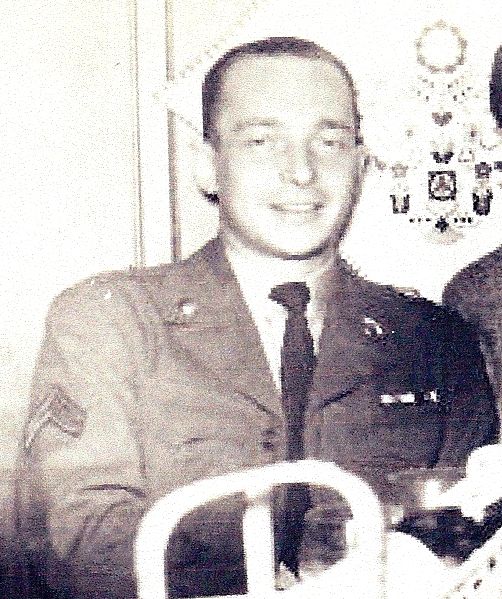
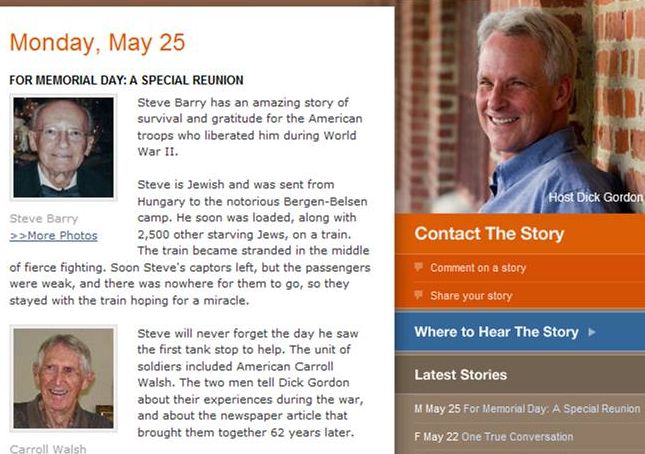
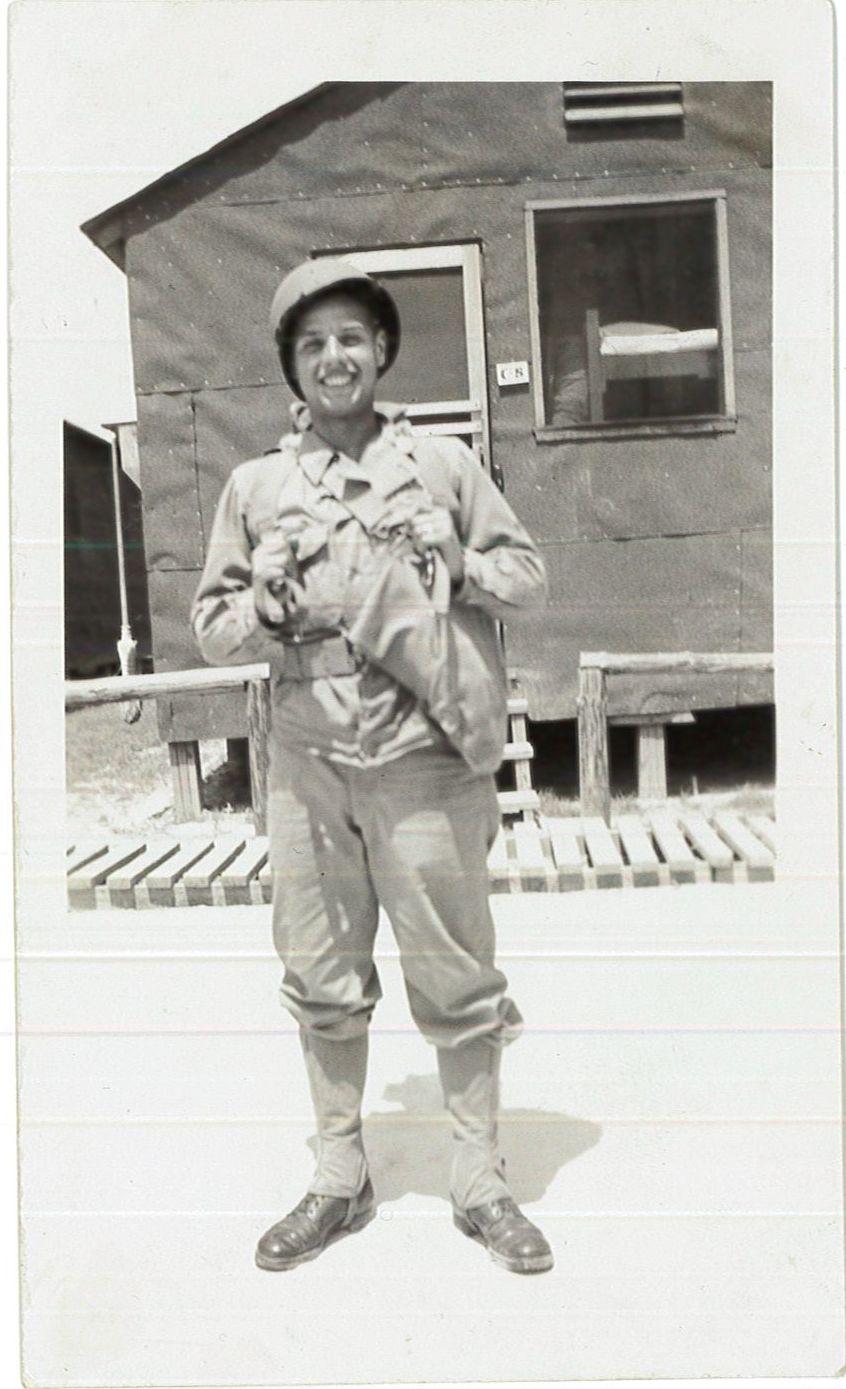
My friend on the left described himself at one point in his life as the “Happiest Korean War Draftee”. Steve was a  survivor from Hungary who beat the odds and lived through the horrors of the Holocaust after the Germans invaded that country in 1944 and did their best to kill him on several occasions. He spent his 20th birthday jammed in a boxcar destined for Bergen Belsen, witnessed people dying of starvation and disease by the thousands,  and was liberated on April 13th, 1945 at the hands of the 743rd Tank Battalion and the 30th Infantry Division of the US 9th Army, aboard the train near Magdeburg.  He emigrated to the United States in Dec. 1948 after spending years in a displaced persons camp, applied for citizenship immediately, and was drafted in 1950, only to be assigned occupation duty in a far off nation- you guessed it-Germany. He was so happy to serve his adopted country…

Steve passed away yesterday, January 16th, 2012, after a long and difficult ordeal from injuries sustained in an automobile accident in September. I’ll always remember his special Christmas and Easter cards that he sent to me, made personally on his computer; his funny, self depreciating humor; and above all his overwhelming happiness at being able to finally meet the men who saved him. I hope that the memories sustain his wife Stella and his children and their families, and also the friends that he made later in life and became soulmates with- soldiers Carrol Walsh and Frank Towers, the soldiers who arrived on the scene to free him and help him begin his life anew.

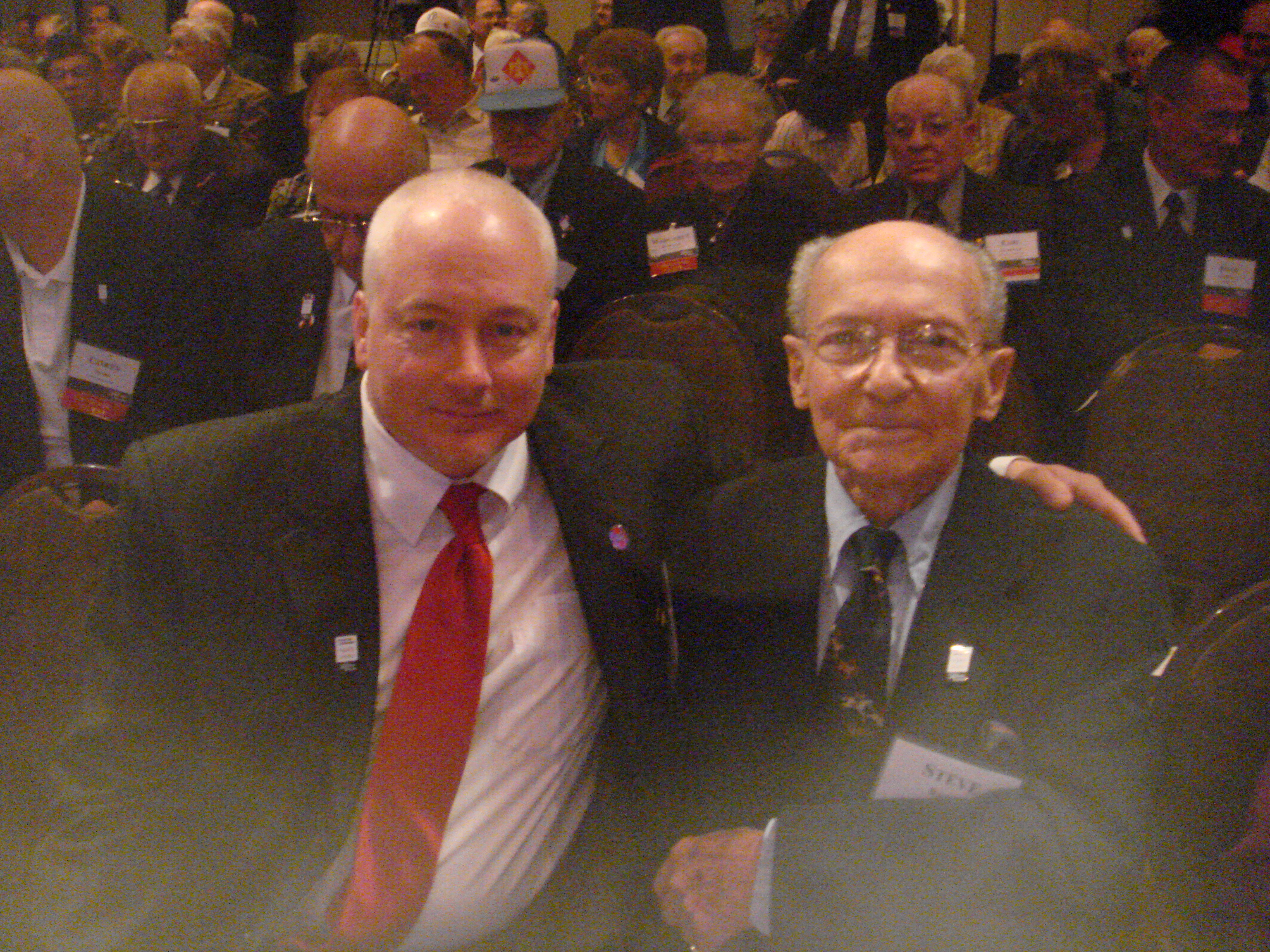
Matthew Rozell, Stephen Barry, National DOR Ceremony, Washington, DC April 2010. This photo was taken the day after the 65th anniversary of Steve’s liberation in April 1945. We had just been honored by the director of the United States Holocaust Memorial Museum before the national ceremony in the Capitol Rotunda.

I will leave you with a few of his words-and we will remember. Thanks, Steve, for all that you gave us, and for passing the torch to a new generation of students to carry your message forth.

An earlier post… The Holocaust Survivor and the US Army Ranger…

A fantastic national radio interview that I helped to arrange, knowing he would be the perfect speaker…

And the educational films I constructed from them.

 Stephen B. Barry, 87, of Boca Raton, Florida, passed away peacefully on January 16, 2012 following a serious car accident in late September 2011. A Holocaust survivor,who was proud to be an American, he went on to live the American dream. He is survived by his wife Stella of nearly 58 years, his children Barbara (Paul), Jamie (Jerry) and Randy and his beloved granddaughters, Amanda and Victoria and many extended family and friends. Services to be held at Beth Israel Memorial Chapel in Delray. In lieu of flowers, the family requests contributions in his memory be made to The United States Holocaust Museum.
Published in Sun-Sentinel on January 18, 2012

Read Full Post »

Dear Mr. Rozell,

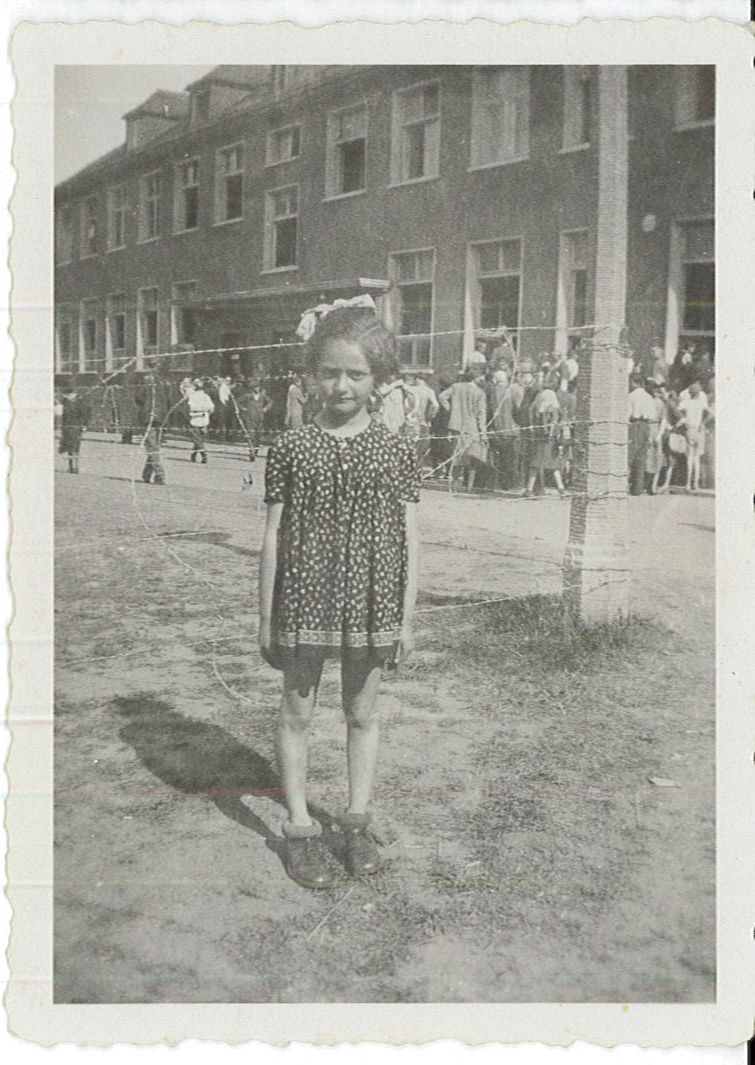
Hilersleben -Luca Furnari

 My grandfather, Luca Furnari, is 90 years old and served in the 95th medical battalion with Mr. Gantz at Hillersleben. He has a number of photographs from this period.  For many years he has thought about trying to find a particular young girl who he helped sneak extra rations to at the DP camp and whose mother asked him to take back to the United States. He and some friends actually had a whole plan of how they were going to sneak her onto the boat back to the US, it’s a great story. Unfortunately, as you know, they were told they were going to the Pacific theatre and the plan became impossible.  Her name was Irene / Iren / Irena.  I have a photograph and have searched the manifest on your website, there are 3 possible people of approximately the right ages: Irena Gitler, Iren Roth and Iren Wittels.   I was wondering if you had come across any survivors from Hillersleben with the same name. 

Hilersleben-Irene is in the flowered dress

Also, I know my grandfather would love to be connected to any other surviving members from the US Army that were at Hillersleben.  

 My grandfather is the large picture on the left hand side.  Irene is in the flowered dress in the picture by herself and on the lap of another US soldier, whose name is Turner (?).  The picture with the baby is also Turner, and they are in the DP camp.  My grandfather’s inscription reads

Hilersleben-Turner-boy that kid sure did cry that day — until we gave her some chocolate.

“boy that kid sure did cry that day — until we gave her some chocolate”.  The picture of the building with barrels in the foreground is from Hillersleben too. It has a strange inscription from my grandfather

Hilersleben-some disorderly DPs getting a shower bath (DDT?)

“some disorderly DPs getting a shower bath”.  The one with the two girls just says “Two of the children that lived in the D.P. center we were taking care of. Cute eh hon?” (He was sending the pictures to my grandmother back in the States.)

The child Irene is the girl that my grandfather would like to try to locate. 

Soldier Turner and Irene.

Any help you can provide is MOST appreciated.

Best,
R.

Hilersleben-Two of the children that lived in the D.P. center we were taking care of. Cute eh hon?

Read Full Post »


April 17th. (1945)

Dear Chaplain;-

Haven’t written you in many months now, its funny how a few moments are so hard to find in which to write a letter way past due; it’s much easier to keep putting it off the way I’ve done. I’ll try to make up for it in this letter.

Today I saw a sight that’s impossible to describe, however I’ll try. Between 2400 and 3000 German refugees were overran by my division during our last operation; most of them were, or had been, inmates of concentration camps, their crimes the usual ones, – Jewish parentage, political differences with der Fuhrer, lack of sympathy for the SS, or just plain bad luck. Not one of these hundreds could walk one mile and survive; they had been packed on a train whose normal capacity was perhaps four or five hundred, and had been left there days without food.

Our division military government unit took charge of them, and immediately saw what a huge job it was going to be, so they sent out a call for help. Several of our officers went out to help them organize the camp they were setting up for them. The situation was extremely ticklish we soon learned; no one could smoke as it started a riot when the refugees saw the cigarette, and we couldn’t give the kiddies anything or they would have been trampled to death in the rush that would result when anything resembling food was displayed. The only nourishment they were capable of eating was soup; now the army doesn’t issue any of the Heinz’s 57 varieties, so we watered down C-ration[s] and it served quite well.  It was necessary to use force to make the people stay in line in order to serve them. They had no will power left, only the characteristics of beasts.

A few weeks of decent food will change them into a semblance of normal human beings; with God willing the plague of disease that was already underway, will be diverted; but I’m wondering what the affect of their ordeal they have been through, will be on their minds; most will carry scars for the rest of their days for the beatings that they were given. No other single thing had convinced me as this experience has that Germany isn’t fit to survive as a nation. I’ll never forget today.

I was going to write mother tonight but thought better of it. I’ll be in a better frame of mind tomorrow. I’m only a few dozen miles from Berlin right now, and its hard to realize the end is in sight. I’m always glad to receive your scandal sheet. You perhaps missed your calling, as your editorial abilities are quite plain.

As ever,

Charles.             (transcribed by Kaylee Merlow, HFHS ’11.)

March 11th, 2009

Dear Mr. Rozell:

My father-in-law was 1st. Lt. Charles M. Kincaid. He was a Liason Officer with the 30th. Division Artillery.  He was honored with an Air Medal in the battle of Mortain and a Bronze Medal in the battle of St. Lo.  In the battle of Mortain he won his Air Medal by calling in artillery adjustments while flying in a Piper L-4 over 4 panzer divisions on August 9, 1944.

first-lt-chuck-kincaid-sept-1944He rarely wrote home. He did write home to his minister about one event that evidently really caused him to stop and think. Attached is a copy of that letter that his sister transcribed – making copies for others to read.  The letter describes the Farsleben train and his experience there.
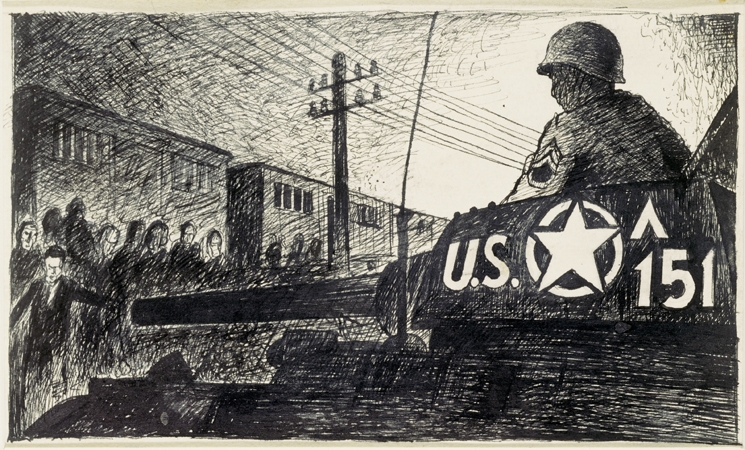
I need to thank you for your website and work. You and your students work enabled me to connect the letter with the actual historical event. It further enabled me to show my children the pictures and to make their Grandfather’s experience real, not just an old letter – that this event so affected him that he needed to tell his minister before he told his mother.

Thank you,
Mark A.

Read Full Post »

Holocaust survivor recalls kindness of US troops

Another survivor of the train near Magdeburg appears. International Holocaust Remembrance Day, 2012. I hope she finds her way to this site so she can meet her actual liberators! Thanks for Leslie Meisels for tipping us off to the article. Aliza’s memoir of life in the Warsaw Ghetto and beyond is very moving and can be found here.

By GIL SHEFLER 01/27/2012 00:34
JERUSALEM POST

“The American soldiers didn’t know what to do and they showered us with chocolates and cigarettes.”

Aliza Vitis-Shomron on Thursday vividly recalled her brush with death on the eve of her liberation from the Nazis in 1945.

The survivor, who spoke on a panel at the Kibbutz Yad Mordechai Holocaust Museum the day before the world marks International Holocaust Remembrance Day, said a rumor had spread among the group of Jewish prisoners she was part of in Poland that they were about to be murdered.

Rather than surrendering them to the Allies closing in from the east and west, the prisoners feared their captors were planning to plunge their train into the Elbe River and drown everyone.

“Panic and fear spread quickly,” recalled the Polish-born Israeli who survived the Warsaw Ghetto and the Bergen-Belsen concentration camp in Germany. “Just as we were at the point of despair, two American tanks came rolling down a hill and saved us.”

The feeble Jewish prisoners emerged from the train and embraced the stunned soldiers of the US 30th Armored Division.

the tank commanders who freed her.

“We were crying with joy,” she said. “The American soldiers didn’t know what to do and they showered us with chocolates and cigarettes.”

Vitis-Shomron said she did not feel that she had defeated the Nazis.

“I did not triumph,” said Vitis-Shomron, an educator who has four great-grandchildren.

“What happened accompanies me, but I try to live and live well. I try to teach humanitarian values to our youths. We must never do upon others what was done to us.”

The panel Vitis-Shomron was part of at Yad Mordechai, the kibbutz named after the leader of the Warsaw Ghetto Uprising (Mordechai Anielewicz), included Simcha “Kojak” Rotem, who fought in the uprising, and former defense minister Moshe Arens.

It was one of many events held in Israel and around the world commemorating the remembrance day.

On Wednesday, Israeli Ambassador to the UN Ron Prosor, American Jewish Committee Executive Director David Harris and members of the newly formed World Forum of Russian Jewry met at United Nations headquarters to honor the memory of those killed by the Nazis.

The AJC head said the lesson learned from the murder of six million Jews required the world to prevent Iran from acquiring nuclear capabilities.

“This past September, indeed on these grounds, the notorious Holocaust denier, Iranian President Mahmoud Ahmadinejad, spoke,” Harris said. “To their credit, several UN member ambassadors walked out, but, shamefully, the majority stayed in the General Assembly hall and applauded his remarks.”

The president of the World Forum of Russian Jewry, Ukrainian businessman Alexander Levin, joined the call urging the UN to take action against the Islamic Republic.

More Holocaust memorial events are planned for Israel and around the world on Friday.

Supreme Court President Dorit Beinisch, Deputy Foreign Minister Danny Ayalon and ambassadors from more than a dozen countries including Germany, the US, Egypt and the Philippines are set to gather at the Massuah Institute for Holocaust Studies at Kibbutz Tel Yitzhak near Netanya to take part in a memorial ceremony.

The UN designated January 27, the anniversary of the liberation of Auschwitz by the Red Army, as International Holocaust Remembrance Day in 2005. It is marked by governments and organizations around the world.

Israel, however, observes its official Holocaust Remembrance Day on the 26th of Nissan, the anniversary of the Warsaw Ghetto Uprising, according to the Jewish calendar. Its selection reflects the Jewish state’s preference to emphasize Jewish resistance to the Nazis.

http://www.jpost.com/JewishWorld/JewishNews/Article.aspx?id=255355

Read Full Post »

« Newer Posts - Older Posts »