"for the sake of humanity"… A small town American high school history project changes lives worldwide. These are the observations of a veteran teacher- on the Power of Teaching, the importance of the study of History, and especially the lessons we must learn, and teach, on the Holocaust. Click on "Holocaust Survivors, Liberators Reunited" tab above to begin.
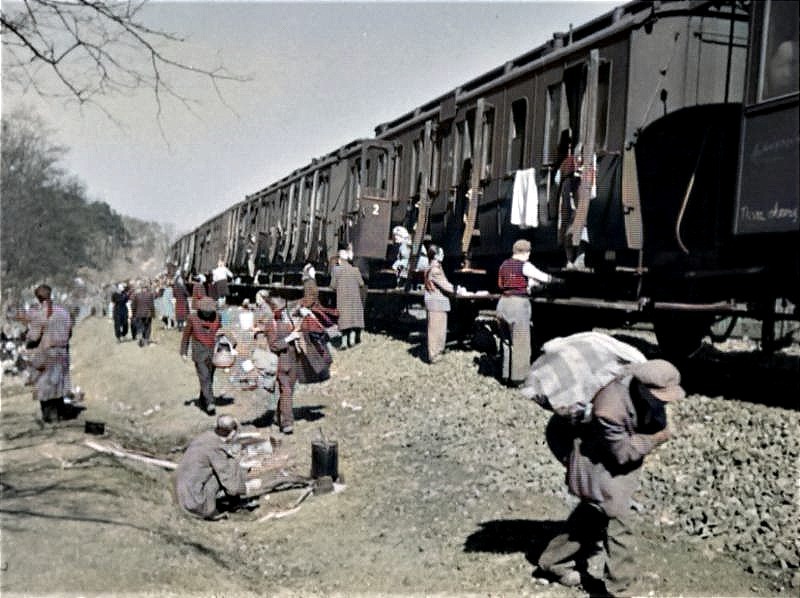
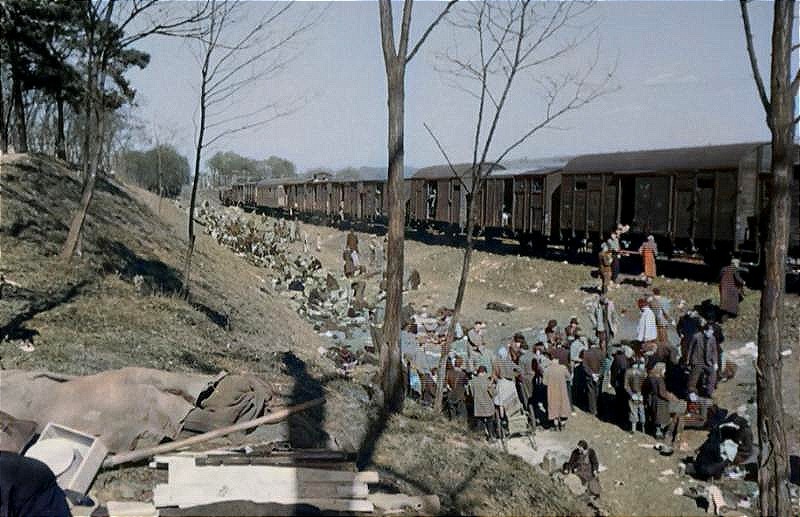
Newly discovered US Army footage of the Train Near Magdeburg surfaces after 78 years.
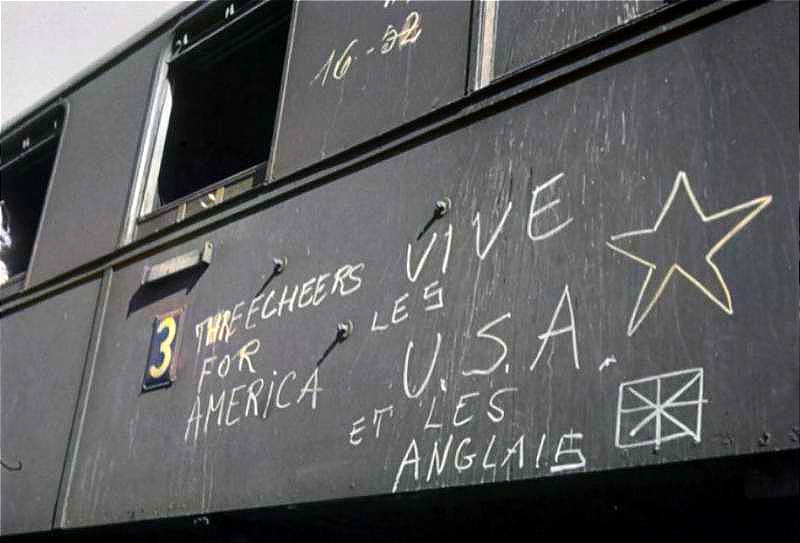
‘Three Cheers For America.’ Note numbers on car, Car #16 out of 52. Colorized still from newly discovered film.
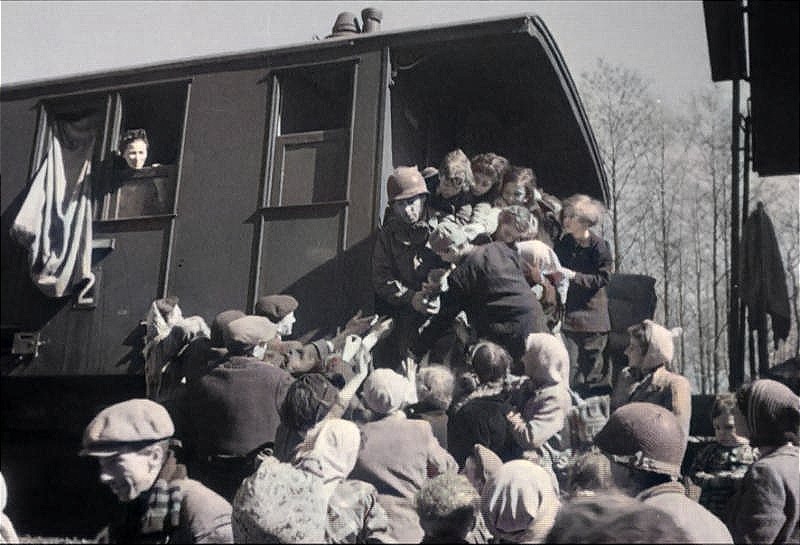
American soldier handing out food, backing up as starving people swarm him. Colorized still from newly discovered film.
If you are coming to this website cold, as a public high school history teacher, 22 summers ago I sat down with an 80 year old WWII veteran, initially reluctant to tell his story, and almost forgetting to tell this part of it, but eventually, the following came out.
In the closing days of the war, fighting across central Germany, he and another tank commander came across a train stalled by the tracks with desperate people milling about. They were 2500 Holocaust victims from Bergen-Belsen. And they needed immediate help. Their major and one of the tank commanders had a camera. After my interviews with them, they gave me permission to place the photos on the school website.
Farsleben train, moment of liberation, Friday the 13th of April,1945. Two American tank commanders and their major in a jeep liberate the train. Major Benjamin snaps the photo.
Four years ticked by. Then I heard from a grandmother in Australia who had been a seven-year old girl on the train. Others followed. I was able to re-unite the liberators with the people and the families they saved as young men. Over eleven reunions on three continents took place. So now, twenty-two years after our initial interview, this footage of the event appears in my life.
Another miracle in a story of miracles. And this one is HUGE.
A contact in Germany, Susanne at the museum in Wolmirstedt near the Farsleben, Germany liberation site outside of the city of Magdeburg on the Elbe River, recently emailed to say that she had seen part of a German documentary that included footage of people milling about a long train transport, and US Army soldiers helping, dispensing food and the like. She wondered if it was our train. Having been to the liberation site in person, and studying this story for decades, I was sure from the five seconds or so of a liberated train I watched that it was indeed our train.
Our team led by Mike Edwards inquired at the National Archives and just four weeks later, they sent the following footage to us. Of course, it had been filmed by the US Army Signal Corps in the aftermath of the Friday the 13th of April 1945 liberation, when our tankers of the 743rd came upon the train.
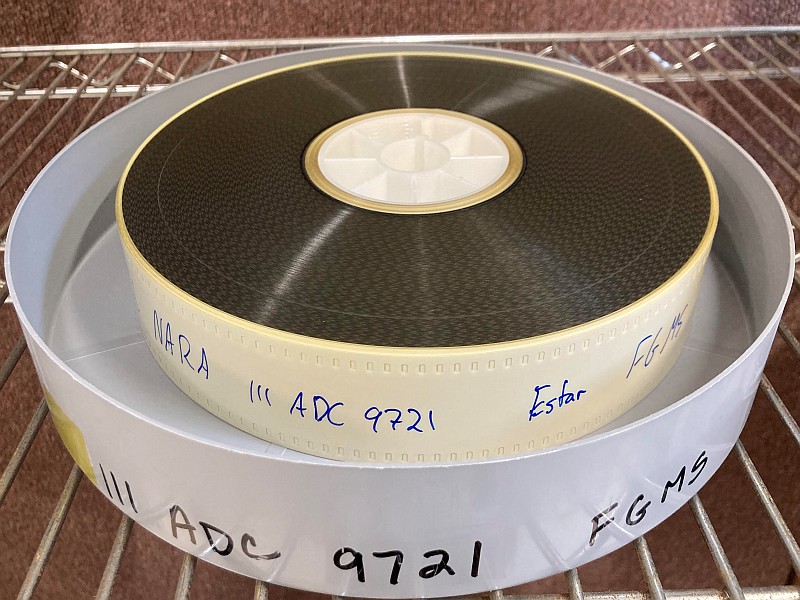
Newly discovered US Army footage of Farsleben train, April 1945. National Archives, public domain.NARA photo of film reel can.
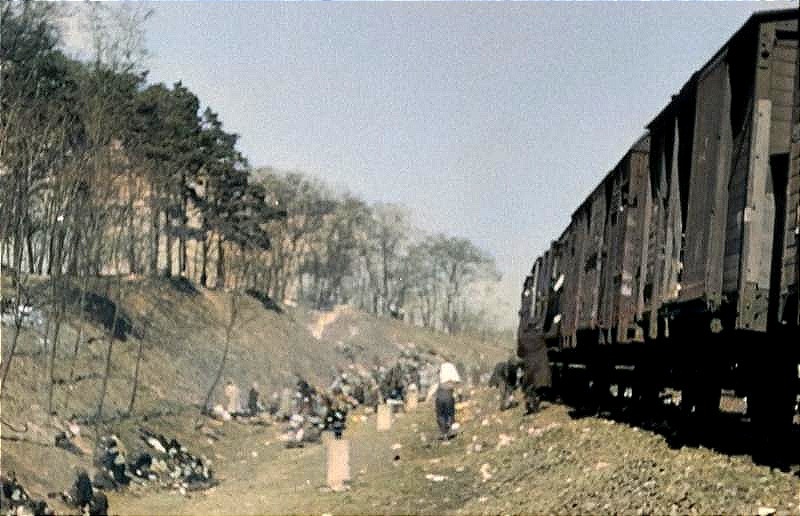
US SIGNAL CORPS footage reel dated 4.17.1945, in the immediate aftermath of the train’s liberation by the 743 Tank Battalion and 30th Infantry Division. No sound. From NARA: “Summary: Numerous scenes, freed Jewish prisoners in groups along railroad tracks. Their expressions furnish a clue to the suffering they endured. Individual shots: Men, women, and children, some of them in various stages of emaciation. Flashes of US soldiers distributing food. The group surrounding the soldiers push forward to receive meager bits of food. LS, village being shelled by German artillery from across the Elbe River.”
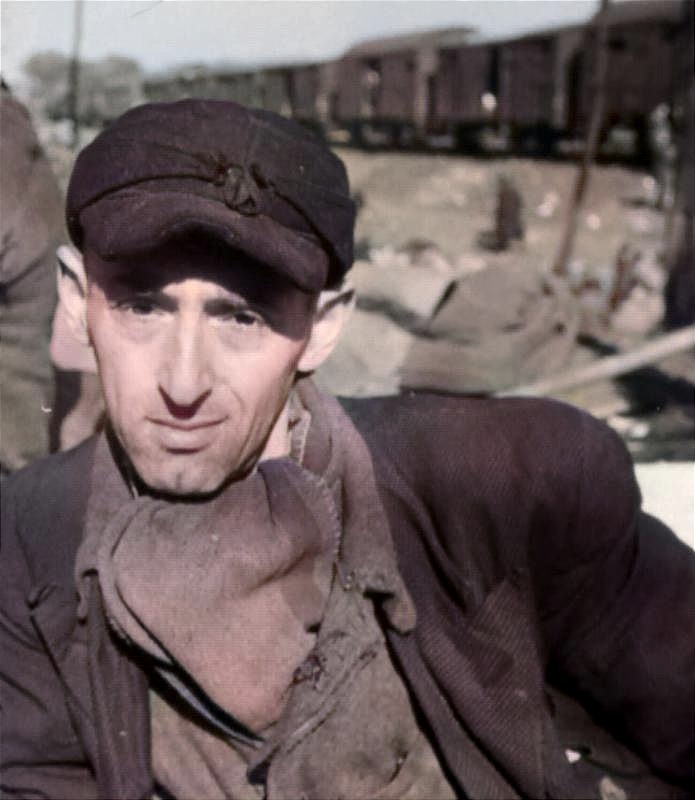
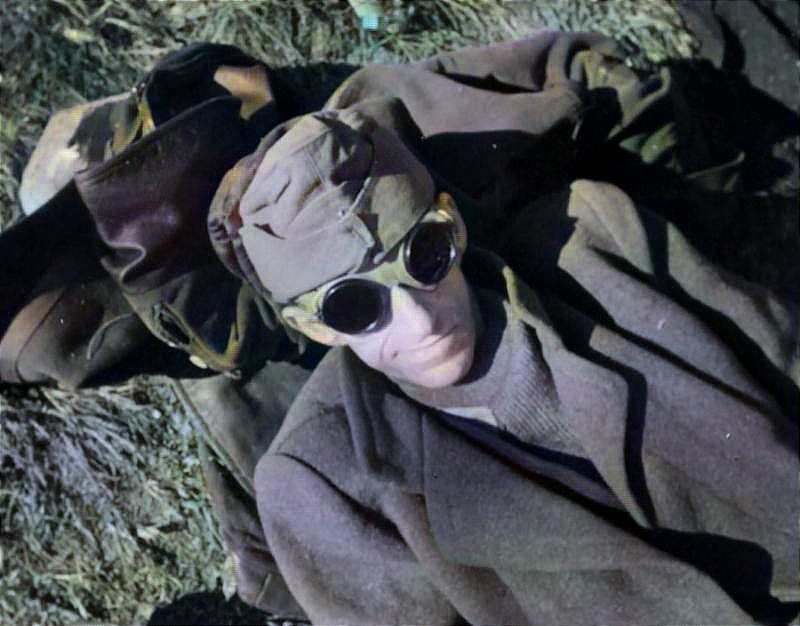
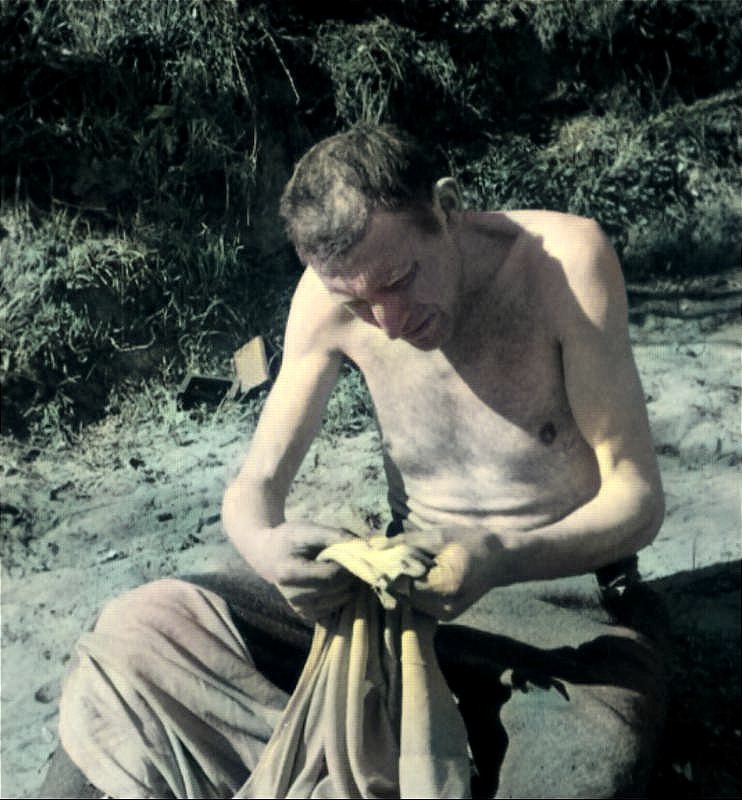
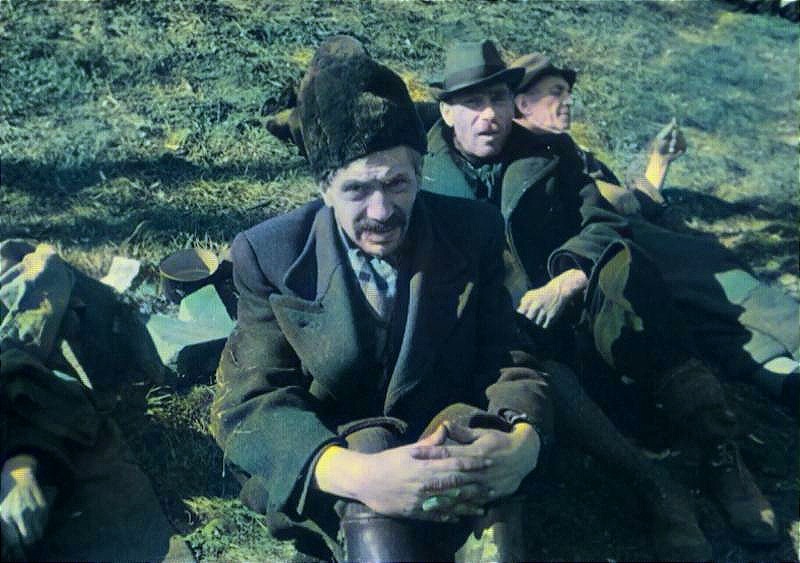
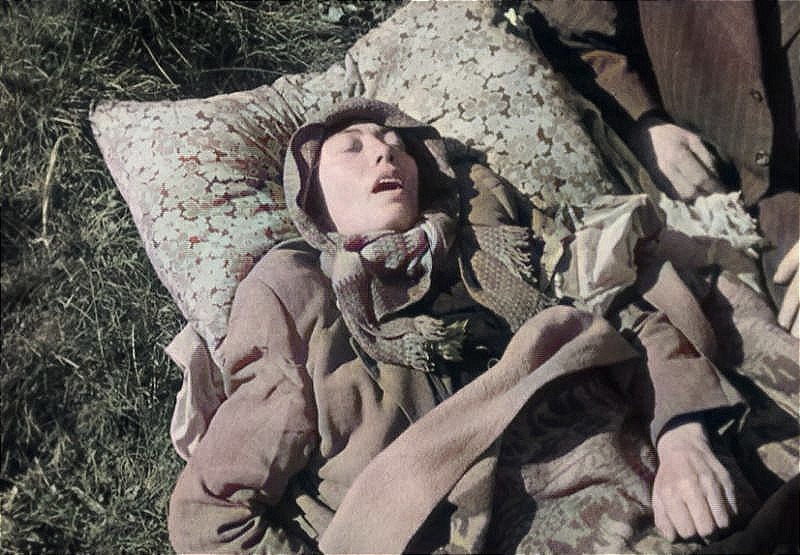
My best guess is that it was taken on Saturday 4.14.45, given the other US Signal Corps photographs from that day. What is fantastic is that this footage gives us a better perspective on liberation and its aftermath. Poignant and moving scenes: men crushing lice in their clothing. Families sprawled out, resting in the mid-April sunshine. Crowds swarming a soldier distributing food, bring to mind the Chuck Kincaid letter dated April 17, in which he expresses shock and horror at what he was seeing. A father holding his young daughter up so she can witness, and also put her hand out with the others. People in obvious distress, some likely very sick, some so exhausted they can hardly make an expression for the cameraman. The unsmiling little boy in hat, looking into the camera. The European script writing, numbering the cars, 52 of them, on the side of one of the cars; my guess is that it was done at Bergen-Belsen as they loaded the cars. And, of course, the beautiful American soldiers, trying to distribute food. Just who are they?
Red Walsh and George Gross and their tanks had departed for the final battle by the time of the Signal Corps arrival. Frank Towers was there, in and out that day, and medic Walter Gantz remembered being there that day.
I have been asked how I feel about this, surfacing 22 years to the day of my original interview with Red Walsh. With many of the stills, we have an entirely new portfolio of pictures to go through. We have already made one positive identification: the family of poet Yaakov Barzilai writes to confirm that he is visible in the footage, along with Yaakov’s mother and sister.
Top to bottom, in circle: Yaakov Barzilai, his sister Yehudit, his mother Iren, seated.Yaakov and author this spring in Israel.
So if you are a person who follows my blog from the early days, you know that not just is this an astounding development, but also one that confirms again that the past still has secrets to reveal, that in contextualizing the photos and film into the story of the Train Near Magdeburg, more healing is already taking place in our mission to ‘repair the world’. [And if you can see yourself, your family, or recognize any of the people, reach out to me here in the comments, or drop a line to matthew@matthewrozellbooks.com.]
A boy after liberation.
So, how does this make me FEEL? Frankly, it is immensely gratifying, though even without this footage, this is an incredible story. But to actually see the newly discovered film is another nail in the coffin of Holocaust denial. The soldiers didn’t lie. They WITNESSED it with their own eyes, and suffered the consequences themselves.
I cannot say that I am entirely shocked or stunned at this amazing development, because, as I told my wife, this is larger than any of us. We are part of a cosmic, maybe holy process, a process of the unfolding of the ‘so many miracles’ of this story. I’m sad that my four soldier friends mentioned above and all my survivor friends who have also now passed, are not with us to see it, to comment on it, to share in it with me and the living survivors and their families. But I am grateful to be able to live it now, and I am proud that those twenty-two years ago I had the audacity to want to have a conversation with a reluctant World War II veteran, and the curiosity to pause and take note of what he revealed upon his daughter’s prompting, to begin what would become this never-ending journey to help heal the world, and now with a team dedicated to telling this story to the world on film. It is with an undying sense of Wonder that we get to witness yet again the Power of LOVE transcending Time and Space. Of the GOOD countering the evil.
Seventy-eight years vanishes in an instant. This project is a portal, evidenced many times over. So I’m proud of it, but also humbled by it. And I’m humbled by all the people all over the world who have also come believe in it, and champion the message, and healing the world with their own love and compassion. This is larger than all of us.
Below you will find a gallery of stills of the train and the people captured on that film 78 years ago, which I derived/created this weekend from the public domain film, and also added some color to, to highlight the scenes. [Tap the thumbnails for the information icon with my labels/captions; please write for permission if you wish to use any of them.] And don’t forget to write or comment below if you recognize someone!
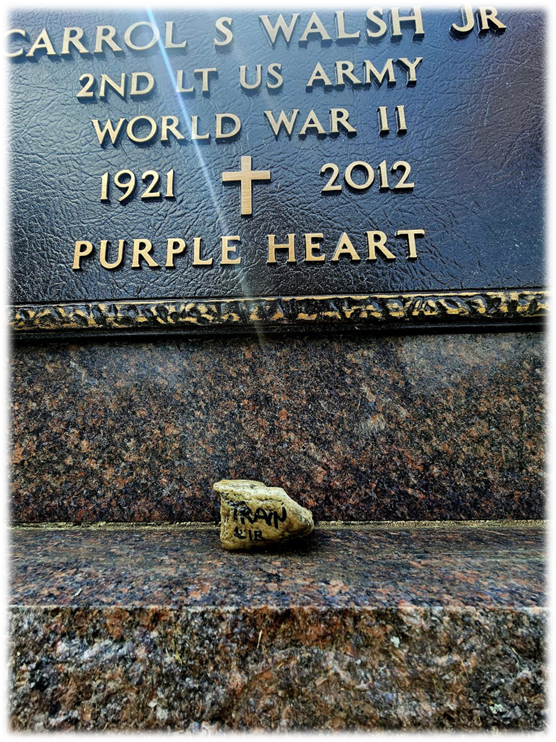
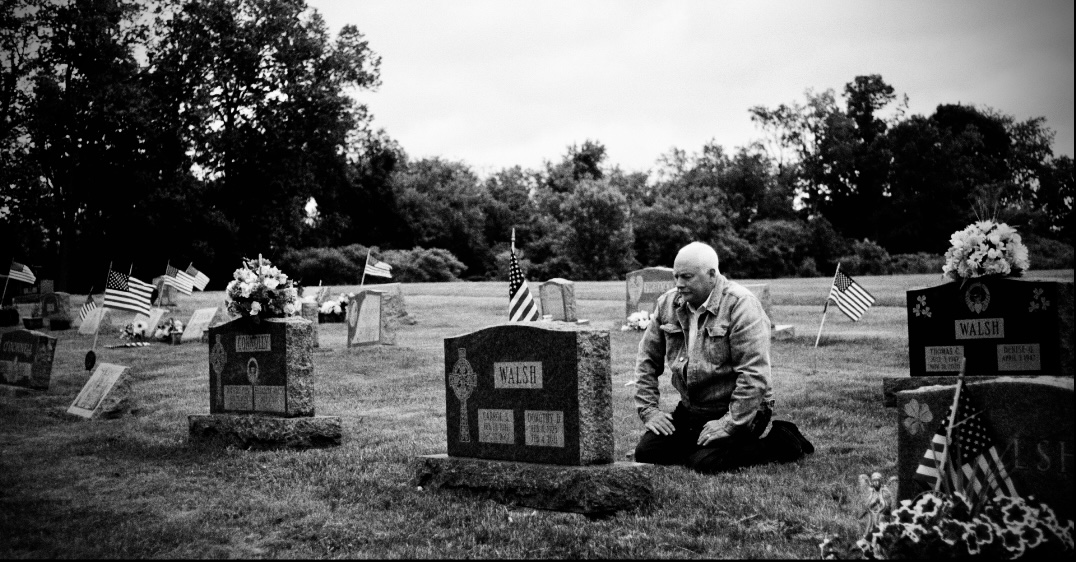
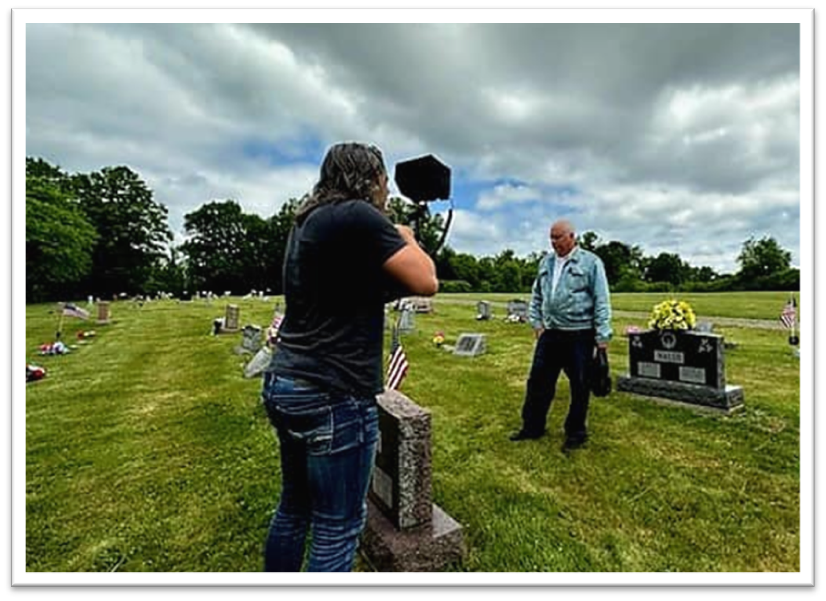
I finally got to visit the resting place of the man who, in a miracle of many miracles of the story of The Train Near Magdeburg, changed the trajectory of my life, over the two decades after he reluctantly entered it. He was not crazy about sitting down with a high school history teacher he did not even know, to tell his World War II story. It took coaxing from his son-in-law, his daughter, and also ultimately the fact that his grandson was enrolled via a computer printout sheet into my classroom.
‘A Visit with an Old Friend’. Mike Edwards photo, June, 2023.
Carrol ‘Red’ Walsh was laid to rest here in the foothills of the Adirondacks in Johnstown, NY in the early summer of 2013. It was he, a now retired NYS Supreme Court justice, who first told me the story of the train, at the prompting of his daughter Elizabeth at her home in Hudson Falls exactly a dozen years before, when I was 40. He was eighty, sitting in a rocking chair, telling stories with a relish. But he had almost forgotten about the incident when his tank and another came upon the train of 2500 Jewish victims of the Holocaust, a transport from Bergen-Belsen that had become a death train, but that was now the transport that led to life, with the chance encounter with these American forces near the Elbe River on Friday, the 13th of April, 1945.
“There we were, driving across central Germany, a beautiful April day, when we came across a train, a long string of boxcars…. and what are we going to do, with all these people? They need help…”
“You should talk to my friend George Gross. He was in the second tank, and he had a camera…”
So I did. Dr. Gross, former professor of English literature, was honored and eager to help a fellow educator. He gave me the narrative he wrote up, his tank having stayed with the train for 24 hours after Walsh’s tank rushed to join the column heading towards the pivotal final battle at the city of Magdeburg, which refused to surrender, a dozen miles away. He also had a camera, and recorded a dozen or so shots. He also gave me the dramatic moment of liberation photo taken by the major as the tanks and the major’s jeep pulled up to the train in the initial moment of investigation, which turned out to be the precise moment of salvation and liberation. I posted them on my school website, which displayed the stories of the World War II veterans I had interviewed 50 plus years after war’s end. And they sat there: the ‘hit counter’ I had installed averaged 25 pings on a good day.
For years.
Time marched on. Students came and went. My family got bigger. And my parents were now gone. And I know I was in the middle of a deep depression after that, triggered by losing my mom at the relatively young age of 72 on All Souls Day in November, 2005, after years of the cruelty of early onset cognitive decline. There were flickers of mother Mary’s delightful self, and her eyes shone with love in those difficult years, but really, the pain in my heart just expanded every time I saw her. So as my visits to the nursing home dwindled, my guilt compounded. How could God be so cruel to this woman who devoted her life advocating for the powerless against ‘the powers that be’? I didn’t get it; I was so angry it was eating me alive; I was in an accumulating fog of rage. I got counselling, but I was still royally, royally enraged.
I trudged through that winter. I went through the motions of life, which became a chore. I ran away to the woods to work on a cabin to distract my thoughts, but I trudged through my days. To boot, I have also always been affected by this black dog labelled ‘seasonal affective disorder’, which generally strikes hardest in late February and most of March, when I seem to historically reach my lowest point, coming off the long northern winters that never seem to end.
Which also happens to be my birth month.
In retrospect, in the first quarter of 2006, despite the joys of being a much-loved husband and father and almost-worshipped educator and all that, I was just lost. And there’s a huge amount of guilt in feeling that, knowing you are blessed with all the former, and still feeling like you are simply okay with not being on the planet.
Just what was the point? I just wasn’t getting it anymore.
But this is what happened next.
Four years after that I posted the photos, six months after my mother had passed, and right around my 45th birthday, I turned to my computer as I was giving an exam, to check my email. It was early afternoon, and a ‘Lexie’ person in Australia had pinged me.
She wanted to tell me that she had been a seven-year old Dutch girl on the train.
She wanted to tell me that thanks to me, my school website, my posting of the narratives and photographs, she had found George Gross, and worked up the courage to call him out of the blue. They both had a cry. And now she wanted me to please send her a disc with the photos of the day of her liberation.
I was stunned. A tear ran down my cheek. I looked out of the corner of my eye. Good, the kids are still working on the test, no one looking this way.
Just what was this?
The following November―literally on the eve of the first anniversary of Mom’s death―I got another email from a professor of physics at Brooklyn College. He had been a six-year old Polish boy with his mother on the train. He too, wished to thank me, and even suggested that we should all get together, since by now we knew of three persons who had been liberated, and of course, the still living tank commanders.
The following April the deal was sealed when a retired El Al airline executive in New Jersey reached out to me, having been pointed to my website by a friend who saw it. He mentioned that he spoke to schoolchildren about his experiences as a German boy during the Holocaust. He was thirteen when he was liberated by those tank commanders and those soldiers.
Hmm, I began to think… why not? I plotted a mini-reunion at our high school for the second week of school, in September, 2007, before Red Walsh and his wife Dorothy would head to Florida for the winter. Ever since nearly freezing to death in a tank during the Battle of the Bulge, he just could not stand the cold. Carrol was curious, of course. He didn’t want honors and accolades, but he wanted to meet these men. A doctor from London who had been a six-year-old Hungarian child on the train would round out the gathering, also coming up to Hudson Falls, and meet Red for the first time in front of the high school students.
We started planning over the summer with a supportive school administration, and help from teachers and staff members. I knew a guy at the Associated Press out of Albany who had a keen interest in military type stories. He came up the day before to meet Walsh in my classroom as he told stories and bantered with my 10th graders. (Sixteen years later―three days ago―I found the pristine original Hi-8 recording of this in my archives at home stored in a closet area under the stairs, ha ha! Another miracle!)
His photographer snapped away. The reporter posted the story in the morning on Friday, September 14th, just as Walsh was greeting his new survivor friends with, ‘Long time, no see!’
They gave their testimonies that afternoon to the students, who thundered them with applause. It was another miracle, that this twenty-four year old exhausted soldier got to see the results of his actions sixty-two years later.
After our goodbyes, on Saturday I headed out to the big box store to buy a new desktop computer. The salesman, doing his job, tried to upsell me a monitor. He pressed the ‘on’ button. The screen flickered to life. And there, on the Yahoo! news page which was the monitor’s default homepage, my classroom came roaring into view.
There was Red, telling his stories to my students. The entire world now knew of our reunion. The trajectory of this story was about to take off. My life was going to change.
Before the weekend was out, the school servers had crashed from traffic trying to download the liberation pictures. I heard from 60 more survivors of the train, some of whom I would become very close to. I heard from Frank Towers, the soldier tasked with moving the people out of harm’s way. I heard from the people at the United States Holocaust Memorial Museum, who asked me to apply to their prestigious Teacher Fellowship Program. I did. I was accepted, and we planned another reunion two years later that was even bigger, that would land us as the ABC World News Persons of the Week on September 25, 2009.
Two years after that, we did a final reunion at our high school. Frank and I worked together on ten other reunions in the States, and survivor’s daughter Varda Weisskopf in Israel engineered a reunion there with Frank and perhaps 55 survivors. To date, nearly 300 survivors have been located from the train―or, maybe more telling, several have found us.
With film director Mike Edwards and crew I have gotten to retrace Red’s journey, from Normandy, through France, and on to the liberation site in Germany. We got to Israel again to interview a dozen more survivors, with Varda’s invaluable help. I’ve gotten to see firsthand the miracles of this story playing out in the modern world. And now I am again unpacking the story, that I have learned over these years that just never has an ending. And as we will try to let the world know, the message of the film is one of hope.
It’s the story of the power of love, conquering time and space.
A portal opened a crack that warm afternoon on Coleman Avenue in Hudson Falls, and I stuck my foot in before it closed back up, and I went through the door. Sometimes the room went dark for a time. Sometimes a long time. But a sliver of light always appeared at the darkest times, beckoning me to push open to another corridor, another room with more doors, another pathway. It is the ebb and flow of the cosmos. Of life. And it’s never-ending.
This is what I am learning, after twenty-two years.
I remember at that time in 2013 being upset at not being able to be at Red’s grave as the family, first and second generation survivors, and a fellow teacher representing in my stead laid him to rest (thanks Tara). But guess where I was that day? At the Bergen-Belsen Memorial in Germany, where I got to lead 20 other teachers in the Mourner’s Kaddish at the House of Remembrance. How unscripted. But how fitting.
“I think in my mind it is such an amazing thing that that our lives were joined in that moment on April 13th, 1945; all the years [that] have gone by since. We have had lives, families, jobs, whatever. And here we are again, and now we meet face to face and recall together that moment when my tank reached the train.“
[RED, TO SURVIVOR] “You are always expressing gratitude to me, the 743rd Tank Battalion and the 30th Infantry Division. But I do not believe gratitude is deserved because we were doing what we, and the whole world, should have been doing- rescuing and protecting innocent people from being killed, murdered by vicious criminals. You do not owe us. We owe you! We can never repay you and the Jewish people of Europe for what was stolen from you: your homes, your possessions, your businesses, your money, your art, your family life, your families, your childhood, your dreams, and all your lives.That is how I feel.“
[SURVIVOR]: “You know, I kept calling him my liberator. He says: ‘I am really not your liberator. It was my job. I just happened to be there.’ I said, ‘I do not care what you tell me. I mean, you are my liberator!”[chuckles]
Long time, no see, Red. The world needs heroes, my friend. Deal with it.
Johanna at Margraten American Cemetery, Netherlands, Memorial Day, 2023.
POSTSCRIPT: I’m dedicating this post to my young German friend Johanna, who was born near the liberation site almost exactly the time of my first encounter with Red Walsh. Thank you for keeping the memory alive. We are on a journey, and just remember, it ebbs and flows, and that is the way of the universe.
Tuesday morning, June 6, 1944. Omaha Beach. National Archives.
So, it is the sixth of June again.
The ocean pounds the advance of sand amidst the relics of a different age, the hulking remnants of the tide of battle. The surf rolls in and kisses the beach, as the last participants mix on the hallowed bluff above with the politicians who have gathered from all over the world.
Thirty-nine years ago I watched as the American president honored the fallen, and the living, at the cemetery for the fortieth anniversary. Just out of college, something stirred inside me. Something was awoken.
Those thirty-nine years have passed. I began by writing letters to the newspaper. I began to interview D-Day veterans and others. I began to collect stories- not relics, prizes, or artifacts. I really had little interest in captured Nazi flags or samurai swords.
I wanted to talk to the men who were there.
The fiftieth anniversary came next with great pomp and more reflection. It graced the covers of the major newsweeklies. “Saving Private Ryan” would soon stir the consciousness of a new generation, and the reflections of the old. And I learned so much more of the war beyond the beachhead. That there were so many beachheads.
The sixtieth anniversary came around. Students on their bi-annual trips to France would bring me back their photographs and the requisite grains of white sand from Omaha Beach. Teenagers had their emotions a bit tempered, I think. I would go on to introduce them to so many who were there, when they themselves were teenagers.
So now it is the seventy-ninth. On the 65th, I wrote about a friend, Buster Simmonds, a combat medic who is no longer with us. Another time, I featured a D-Day veteran, Bill Gast, a 743rd tanker who made it from surf to beach and beyond.
And it is the subject of the fifth oral history in my World War II series, ‘The Things Our Fathers Saw: D-Day and Beyond’. Featured in it is one of our frequent classroom visitors, Tony Leone, a Coast Guard veteran of D-Day aboard an LST. And as I was working on his narrative this past March, footage of his ACTUAL SHIP, LST 27, was discovered, loading up for D-Day [click the photo below, it is only a minute long].
Tony left us in 2010. I’ll leave you with the book excerpt below. And remember to pause for a moment this day, June 6th, to think about what they did, 79 years ago.
Excerpt from ‘The Things Our Fathers Saw: D-Day and Beyond, by Matthew A. Rozell
He sits behind a student desk, wearing a medal presented to him by the French government that he also wears to Mass every Sunday. ‘I wear it with pride to pay homage to those fellows who burned alive next to me. I made it and they didn’t. It still bothers me.’
He rests on his walking cane and leans forward as he speaks. He is animated—he motions with his hands to emphasize his points. A prolific author and newspaper letter writer, Anthony’s mission is to educate the public about what his generation of Americans went through: ‘It would be at least 25 years after World War II before I could begin to think about the experiences of that time. They were buried deep in my subconscious and remained there so that my mind and body could heal.’
Anthony F.J. Leone
The Invasion of Normandy
I got assigned to USS LST 27. I said to myself, ‘What the heck is an LST?’ We boarded in Norfolk, Virginia. I carried my sea bag, along with the rest of the graduates of boot camp, up this long gangway. This was the biggest vessel I had ever seen in my life! If you had it up here on Lake George, it was 327 feet long, imagine that, and 50 feet wide. That’s a big ship.
‘LST’ stands for ‘Landing Ship, Tanks’. What we did is to carry small boats. We sent the small boats in first loaded with troops and vital supplies, then we came in right up to the beachhead with the LSTs and opened the bow doors and dropped the ramps. But on D-Day, not even the small boats could get in among the obstacles, and there were mines all over the place. They were killing our soldiers like sheep to the slaughter.
*
We left Norfolk in March of 1944 and landed in Africa. We had gone through bad air raids by the Germans in the Mediterranean and U-boat attacks but we survived. One ship was hit and set afire, a ship carrying lumber, and incidentally the crews couldn’t get the fire out; it was in the stern of our convoy. We got attacked by the Luftwaffe, JU-88s and Dornier torpedo bombers.
We reached Africa without further incident and then we sailed for England. We landed in Swansea, Wales, and we got liberty [after] we unloaded an LCT from the ship. An LCT is a long, wide, flat-box sort of landing craft where the ramp drops down and the conning tower is in the back, and we had one topside. We carried it piggyback; what we did was fill the starboard bilge tanks with water and then chop the cables holding the LCT on, onto these greased wooden skids. By severing the cables, the thing would slam into the water with a big splash. We got rid of that thing because there were some heavy seas and we were top heavy. These were the craft that what would land the men, later on.
About the end of May, about a week before D-Day, we went to Southampton, and then to Falmouth, to become part of the back-up force for the D-Day landings. We took on units from the 175th Infantry, which belonged to the 29th Division. Everything was frozen in place, we couldn’t move. The area was sealed off, we couldn’t go on liberty, we couldn’t visit the British girls, which was quite a sacrifice in those days, since they were all over the Yanks. We were like the invention of sliced bread; the British girls couldn’t get enough of the Yanks. [Laughs] We had a lot of money I guess, and we showed up the British service men pretty bad. The American troops over there, their behavior was abominable. The British treated them really good, but the Americans were spoiled had a lot of money, and… well, it’s the same old story.
They sealed us off, and on the 4th and 5th of June we were ready to go. We headed toward ‘Piccadilly Circus’, that was the code name of the circle in the middle of the Channel that we were supposed rendezvous at, from there the flotillas would go towards the English beachheads [in Normandy] and we would go towards the American beachheads, Omaha Beach and Utah Beach.
We went out to the sea on the 5th, and it was really stormy. Eisenhower was really blown away by [the weather]. So, they waited, and I guess a British meteorologist saw a break, a window in the weather. Eisenhower had decided to go for it, he had his fingers crossed, he had a letter ready apologizing for the loss of lives and withdraw from the continent in case it failed.[1] So, we went, the first units moved up from British ports of Southampton, London, Plymouth and Portland. We were the second, the backup force from Falmouth.
The Americans had gotten off the beach by late June 6th. Of course, [before that], the Germans had mowed them down like a wheat field. As I said before, there were German privates just sitting there with machine guns, just killing Americans and crying as they were doing it, ‘Please go back, I don’t want to kill no more!’ [Repeats this line in German]. At one point, General Bradley was going to pull them off, take all the people at Omaha Beach and bring them over to Utah. Utah was a pretty successful landing—there, casualties were [far less].
By the time we got to the [Omaha] beachhead the next day, it was a mess. We came in with the LSTs. We had already launched our LCVPs [on June 6] which brought in the troops, the ‘Landing Craft Vehicle-Personnel’, that is, a Higgins Boat. It was invented by Andrew Higgins, a boat builder from the United States. Then it was time for us to come in and unload the tanks.
It was now June 7th; all you saw was a layer of white smoke on the beach. The [US Army] Rangers had gotten in behind the Germans, but when we [first arrived there with the big ship], it was still hot, there were still mines all over the place, hedgehogs and stakes driven in the ground with Teller mines sitting on them. At high tide when you came in you couldn’t see them. Our LCVPs had to negotiate between them, this was impossible at high tide, you had to wait until the tide was way out, then the soldiers had to walk almost half a mile over bare land, no foliage or anything.
As we came in, it was pretty hard to negotiate because the mined obstacles were still all over the place and there were pieces of human bodies floating all over. The American soldiers had the life belts on that you activate, and they inflated because they had a CO2 cartridge. But because the guys had heavy packs on, it would up-end them and drown them because they couldn’t get loose. We saw a lot of soldiers floating that way. Their life belts worked alright, but they killed them. Their bodies floated to and fro all day long.
After we saw that, we were not too enthusiastic about going in and hitting the beach—we said, ‘If this is happening out here, what is going to happen there?’ Even though it was a couple days later, we were all armed to the teeth. We had our clothing well-impregnated with chemicals to withstand a gas attack, and when your body got out of it, that stuff would drive you crazy.
We proceeded in. Now up in our conning tower, our officers had barricaded themselves behind a pile of mattresses up in the bridge, not that they were ‘chicken’, they were just being smart about the whole thing, they didn’t want to get hit with shrapnel.
We had that on and we were all ready to go over, life jackets and helmets, I was manning the 20mm gun and all of a sudden, the public address system crackled. I heard the damnedest noise, that scared me more than the enemy, really, when it first came on [singing], ‘Mairzy doats and dozy doats And liddle lamzy divey/ A kiddley divey too/ Wouldn’t you?’. It was the voice of our skipper, and he was dead drunk. [Laughs] Now understand that he was a very solemn-looking individual, dark, so dark that at night we couldn’t see him, so we called him ‘The Shadow’—when he walked on the bridge, all you would see was the glow of his cigarette. He would let it burn to his lips and then spit it out, he was [tough as nails]. So here is this guy who is fearless, and as we were going in, he is singing ‘Mairzy Doats’[2] I would have chosen a different tune really, but everyone burst out laughing, so it was a morale builder in a sense. It told us the captain was human after all, and he was just as much afraid as we were!
So we went in and hit the beach, started up the ventilator fans as we had big tubes coming out of the tank deck to suck the exhaust fumes out—and incidentally, both their vehicles were burning oil, don’t know why, poor maintenance. They got them going and the trucks were towing—this was the 175th Heavy Tank Company, it was part of the 29th Division—they started to move out when the brake seized on the 57mm anti-tank cannon carriage they were towing in the back of the lead truck. Marion Burroughs, a friend of mine who was driving it later told me, ‘God that saved my life, that brake locking up like that, it never happened before in all my years of working with it.’ That’s the way things happen, you know. He motioned for the other truck to go back around him—it was an army wrecker, used for picking up tanks or wrecked vehicles. It went around and both of the vehicles went out, the wrecker hit a mine just coming off the ramp. They had it taped off where it was safe you know, I still think they went ‘off the tape’, the taped-off lanes to distinguish between the mined and unmined areas… It blew up and there were bodies all over the place and the trucks were filled with Chesterfield and Old Gold cigarettes, I remember vividly; ‘Lucky Strike had gone to war’ with gold packaging—they had taken the green out of the cigarette wrapper to save the cadmium that was green, I think—well, I remember those cigarettes just went all over the place, bazooka shells, the thing was loaded with ammo and gasoline and it went up, a flaming cauldron—it was like a blast furnace! These poor guys were screaming and they were pinned to the frame and you could see the rubber of the tires all turning to liquid and dripping. And their screams! It seemed like they screamed long after life left their bodies. I still hear them sometimes. If you ever hear a person screaming in agony when they were being burned alive… [looks down, shakes head]
We went out to see what we could do. I reached down and a piece of shrapnel came through the top of my helmet, punched it open, and broke some skin. I didn’t realize it until later, when the thing fell off my head and landed on the deck. You couldn’t get near the fire because the flames were so hot. A couple of individuals did rescue somebody, and I went out again to get another helmet. They were all over the place, like coconuts. I saw one with netting on it, and I went to get it and ‘zing-zing-zing’ [gestures quickly, tapping the air in succession three times], there were little bursts of sand right in front of it, some German probably anticipated my move and said, ‘well, this guy’s not going to get his helmet.’
One of our officers, a deck officer, a little fellow named Serge, went out and dragged somebody back to the ship. Now they had always made fun of Serge because of his size; he was puny, like another Don Knotts, all nervous and such. They all used to pick on him, like making him stand on a table because he was Jewish, things like that; that was World War II, you know. A colored steward would have to stand on the back of the bus—even though he survived a lot of battles, he had to stand on the back of the bus in Norfolk, Virginia. This is what World War II was really like.
He went out in the surf, the crazy [son of a gun, and rescued some guys], and he got back, I think he got the Silver Star or something for it. He was ten-foot-tall in our eyes after that. Finally, we closed the damn bow door; we lifted the ramp—it takes ages for that thing to come up on chains—and we closed the bow. We waited for the fires to subside and the flames went down, and we went out. We hated to see what was still out there. Things were still hot, fires were still burning, everything was gone—it was just bones sitting there, grinning skeletons.
[Later] on Utah Beach on June 19, a big storm stirred up a lot of mines. As we were coming in our lookout yelled, ‘Stop engines! Wreckage in the water, dead ahead!’ We slowed and stopped. Apparently, there was an LCT that had been hit earlier and it was laying there. Had we gone another 25 or 30 feet, we would have been impaled, practically stuck on the thing—so we couldn’t move. We reversed and motioned for the LST in line behind us to go around us. When they went around us, and as they made that move alongside, they blew right in half; they struck a mine. Now try to picture a huge structure like an LST, 327 feet long, welded steel, 50 feet wide, blowing in two, [lifting out of the water and straight up into the air]. The crew aboard it had a motley assortment of pets. They had pigeons, and chickens—what the hell would you have a chicken onboard for?—chickens, and dogs and cats; this was strictly forbidden, but they let them get away with it. Just before, we had been waving to the guys and laughing at the animals. We were the ‘Suicide Navy’, they called us. A very apropos title.
There were medical teams assigned to all the landing ships, like the LSTs, and they were composed of one or two naval doctors and a team of corpsmen. We had a surgical operating station in the back of the tank section, it was a complete operating room and they operated on the wounded there. At times we’d go back to eat, and we’d set our trays down in the dining room. They’d operate on the tables there, and our trays would slide in the blood—well, you don’t feel much like eating after that.
That is what I had to live with every day. The wounded, the dying, the death, it became a way of life. That’s bad, that’s real bad. When I got discharged from the service, I got a 100 percent disability because I was a basket case. I had to get some shock treatment, once or twice. I spent ten years at the VA hospital in out-patient treatment, I’m still going there in Albany. But I would do it all over again, because it was a cause. A cause célèbre, you might say. It’s nothing like what’s going on today.
War itself should be abolished, it should be outlawed. There can’t conceivably be any winners, [with these nuclear weapons]. For me it was bad enough to see men die all the time. I’d hate to see, right now today, a dog die—if a dog got hit by a car, I’d die, I’d feel badly. But now think about seeing human beings die, and then you get used to it, to endure you have to say to yourself, ‘This is a way of life, I have to live with it’. That crew became my family for two years, the only home I had. The medal presented to [us veterans by France] is the most beautiful medal I’ve ever seen, and I wear it with honor every Sunday. The priest doesn’t like the medal because to him it speaks of violence and war, but this is the biggest argument against war there is. For kids to even think of settling arguments with violence and war, that just shouldn’t be considered, because it is a foolish move. The innocent die.
[1]he had a letter ready-Eisenhower had hastily drafted a letter accepting responsibility in the event of a colossal failure at the Normandy landings: “Our landings in the Cherbourg-Havre area have failed to gain a satisfactory foothold and I have withdrawn the troops. My decision to attack at this time and place was based upon the best information available. The troops, the air and the Navy did all that Bravery and devotion to duty could do. If any blame or fault attaches to the attempt it is mine alone.” National Archives.
[2]Mairzy Doats-A silly novelty song that hit #1 in the US pop charts in March 1944. As others have noted, the amusing sheet music lyrics sung by Mr. Leone are revealed in the song’s bridge, “If the words sound queer and funny to your ear/ A little bit jumbled and jivey/ Sing ‘Mares eat oats and does eat oats/ And little lambs eat ivy/ A kid’ll eat ivy too/ Wouldn’t you?”.
From the Portsmouth D-Day Story Museum: “The number of people killed in the fighting is not known exactly. Accurate record keeping was very difficult under the circumstances. Books often give a figure of 2,500 Allied dead for D-Day. However, research by the US National D-Day Memorial Foundation has uncovered a more accurate figure of 4,414 Allied personnel killed on D-Day. These include 2,501 from the USA, 1,449 British dead, 391 Canadians and 73 from other Allied countries. Total German losses on D-Day (not just deaths, but also wounded and prisoners of war) are estimated as being between 4,000 and 9,000. Over 100,000 Allied and German troops were killed during the whole of the Battle of Normandy, as well as around 20,000 French civilians, many as a result of Allied bombing.”
Here in the United States, Memorial Day is upon us.
In interviewing WW II veterans over the years, I found that most whom I was privileged to know shied away from honors and recognition on Memorial Day. I was reminded of the sacrifices that the veterans made, again and again, but they all told me that the real heroes were the ones that did not come home. And that Memorial Day was the day reserved for THEM; contrary to popular American opinion, it’s not another Veterans Day. But this weekend we tip our hat to the veterans among us, and post that ‘salute to the troops’, thank them for their service, and we are free to start our summer vacation. Did we just give ourselves some kind of pass?
The holiday known originally as “Decoration Day” originated at the end of the Civil War when a general order was issued designating May 30, 1868, “for the purpose of strewing with flowers or otherwise decorating the graves of comrades who died in defense of their country during the late rebellion.” When Congress passed a law formally recognizing the last Monday in May as the day of national remembrance, we effectively got our three-day weekend and our de facto beginning of summer. But do we really want to know? If we do, maybe we can take the time to seek out one of those who fell on those faraway fields, and think about what it means on a personal level, try to find out more about a life that was cut short. Here are a few to think about.
***
Riverside Cemetery, Oshkosh, Winnebago County, Wisconsin, USA. Credit: J M Schumann
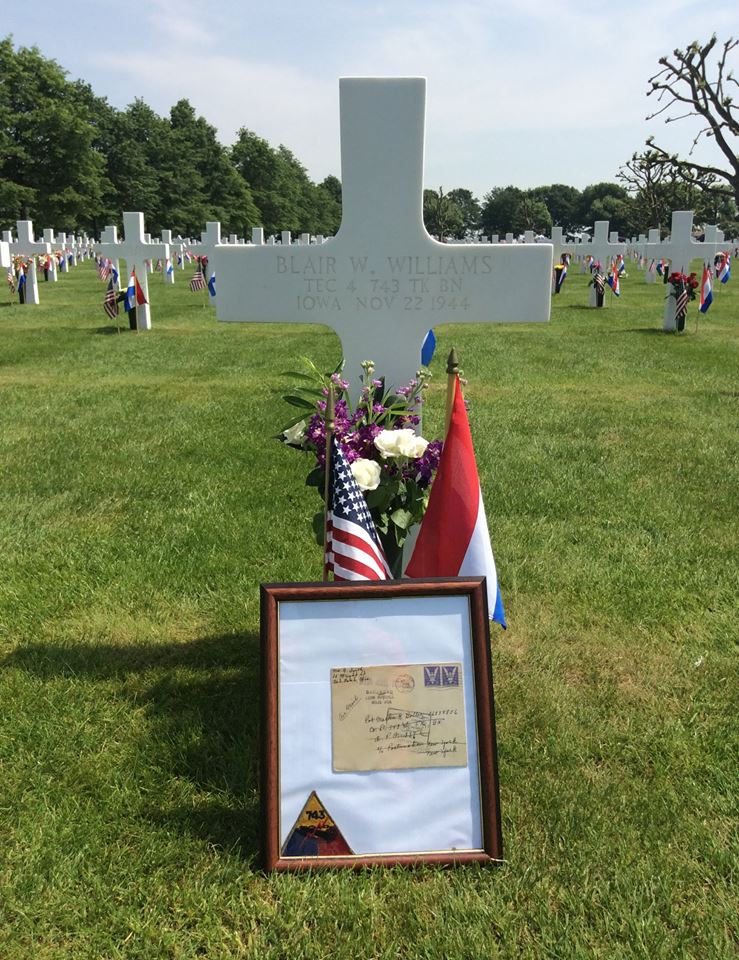
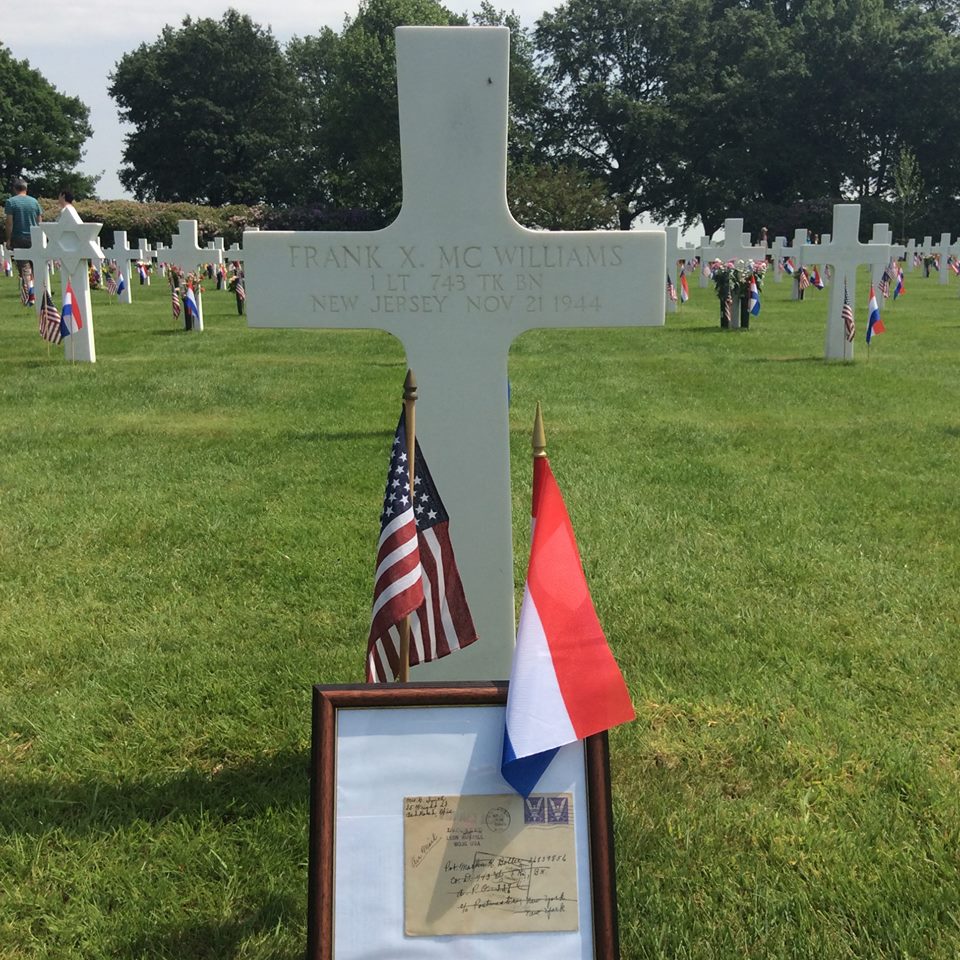
This is Marvin Boller. His remains did make it home. A Thanksgiving letter written to him did not. The backstory:
In writing my second book, I revisited a horrific incident that occurred in the earliest days of American penetration onto enemy soil in Germany. Resistance was stiff; on a cold and rainy morning the day before Thanksgiving, 1944, three tanks of the 743rd Tank Battalion’s ‘D’ Company were wiped out in a muddy apple orchard a few miles across the river.
In 2012, I was alerted to the existence of this WWII era letter in a memorial museum in Belgium. The envelope was postmarked Nov. 27, 1944, and addressed from the USA to PFC Marvin K. Boller, D Co., 743rd Tank Battalion. It was from his wife, possibly. It was also stamped ‘DECEASED’. Return to Sender.
Vince Heggen, who tends graves of the men who were killed with Martin, posted this for Memorial Day:
Co D 743rd Tank Bn was moving from Langendorf to Erberich in November, 1944. It kept raining the whole day before they arrived in the orchards near Erberich. It was 8h20 when a German tank opened fire and knocked out 3 light tanks… All the crews were killed and a few of them are buried at the cemetery of Margraten. The letter, in front of the graves , was written by Marvin Boller’s wife. Marvin was killed just the day before Thanksgiving and the letter was marked ‘return to sender’. The letter made the link between the crew members of Marvin’s tank buried here, and Marvin who was buried [elsewhere].
I wrote to Carrol Walsh, a liberator of the train near Magdeburg and a fellow member of Company D, and asked if he knew Boller; I also sent him this image of the envelope.
He wrote back:
‘Hi Matt, I was stunned when I read your message. I remember Boller very well and remember when he got killed. I believe it was just before Thanksgiving 1944 when a big German tank wiped out three tanks of the first platoon of Co. D of the 743rd. Every member of every crew of every one of the tanks was killed. I seem to remember packages arriving for some of these guys after they had been killed. I used to tease Boller, who was an older man, because he wanted to vote for Tom Dewey and I was big for my pal, FDR. Boy what a memory you stirred up. I knew all the guys that got killed in that engagement.’
Walsh and others would survive and go on to liberate Holocaust survivors on April 13th, 1945. And the letter has never been opened.
I did not know you, I don’t know if anyone is alive who knew you, but you are not forgotten.
After 24 or more hours of travel back to the USA from Israel, we landed in film director Mike Edwards’ hometown of Columbus, Ohio. I am here to support Mike, as he was invited to be the keynote at Ohio’s Holocaust Commission commemoration at the State House, and will be interviewed by Governor Mike DeWine himself.
Right now, I am billeted in a downtown hotel near the State House, awaiting pickup for the short ride there.
(Ohio Statehouse last night, me walking by to pick up cold pizza.)
Also in attendance will be the daughter and son-in-law of 30th Infantry Division Ohio soldier Chuck Kincaid; the shock and horror at seeing the survivors of the train just after liberation caused him to write letter to his pastor, which was shared with me by Mark Andersen fourteen (!) years ago. You can see it here, it will be included in the program.
They took the time to get the story right; they cared. I will also include the shorter version I recorded from the TV in my hotel room from the evening news. As you can see, we are pretty passionate about our mission and education, even if only running on four hours of sleep. The jetlag disappears as the adrenaline in recounting this powerful story kicks in, though back at the hotel at dinnertime I ordered food, set my head down to relax to await its preparation, and promptly fell asleep for hours… but cold pizza was just fine with me.
We hope that our message of love and hope transcending time and space resonates, and that it will be contagious.
Yesterday we conducted our last interviews, two children of camp Bergen-Belsen who actually knew each other then. Miriam Muller was just 4, and Yitzhak Glecer was just 2, but they had memories of playing together in Belsen, digging holes and playing in the mud.
Miriam and Yitzhak. Photo by Josh.
The crew and I took a taxi to the Glecer home just outside of Jerusalem, the driver, conservatively dressed on this Sunday with kippah, white shirt, black pants and shoes, very interested in what we were doing, traveling with all this gear, and Mike explained our mission here in Israel, to film a dozen or so survivors answering our questions about a terrible time in their lives, but also of the miracle of liberation, which is increasingly clear on every one of our stops, and this being our last two interviews.
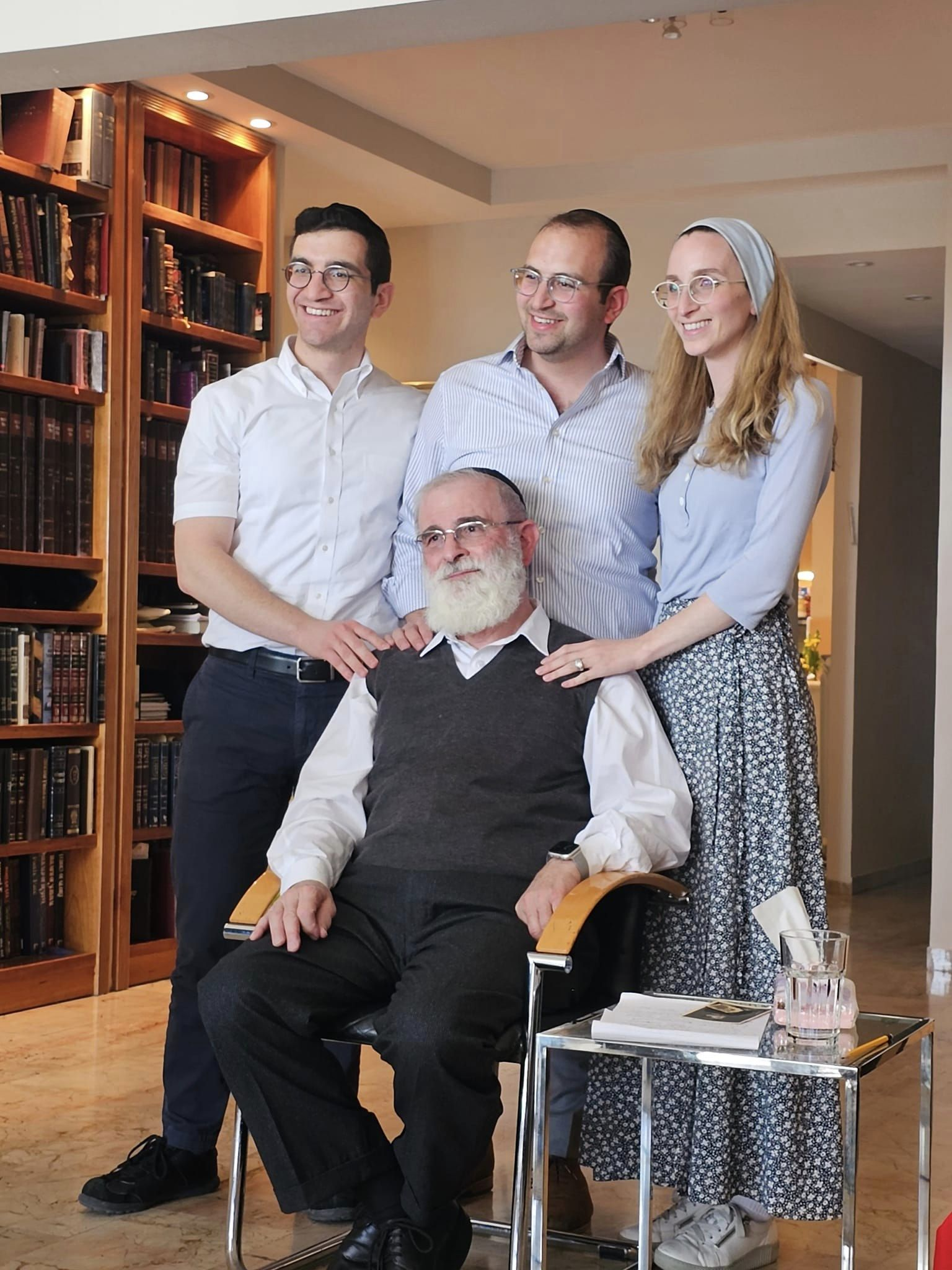
We found the beautiful apartment building on a beautiful Sunday morning, the view from the family’s 6th floor balcony overlooking the hills and valleys of this part of Jerusalem. We were greeted warmly by Sara, Yitzhak’s wife, and youngest son, who at age 23 may just be the youngest second generation survivor in the world, Yitzhak realizing late in life that he needed to have these children to make the ultimate refutation of he-who-shall-remain-nameless.
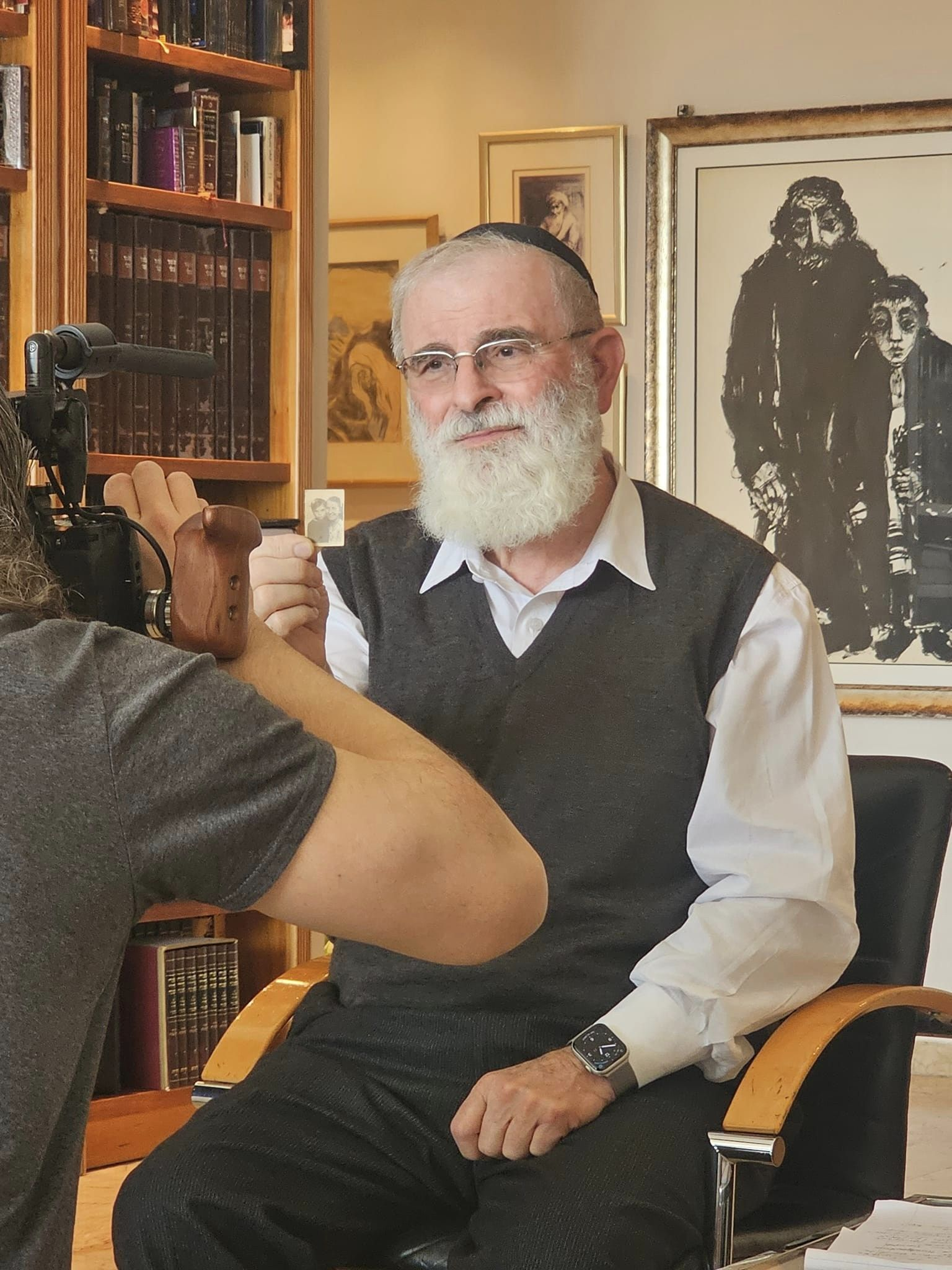
He was in his study, preparing for the interview, which he later said he was reluctant to do, but after consulting his books, decided it must be done for not only his family, but for future generations. He emerged from his study after we were seated with coffee, and came to the couch where I was, impeccably attired, and greeted me warmly, so happy to meet me and full of questions.
He carried the well-worn copy of my book, which gratified me immensely not because he simply possessed it, but because it had obviously also been consulted many, many times. Well, you know, I wrote it for him and all the survivors, to help them, as well as the world, contextualize their very personal and unique experiences in the context of the unimaginable Shoah. No small task.
His story was amazing. He was born just before the Jewish people of Krakow were being forced into the ghetto. Well, can you imagine this? A young couple with a newborn baby? Terrorized people, then forced into hiding? Before the action that liquidated the ghetto (yes, see Schindler’s List liquidation of the ghetto scene-that was Krakow), the took a chance an acquired false papers, at no small expense.
In Belsen, the young toddler disappears and his father finds him playing with a dog- the dog of the new camp commandant, who is discussing with the head kapo the list of people to be evacuated to a new place for foreigners like the Glecer family, who is on the list. The father holds his breath, trying to retrieve the son playing with the dog, and the commandant begins to question Yitzhak’s dad. The kapo is trying to persuade the commandant to place his family on the list, apparently instead of the Glecers. The commandant agrees. A week later, it is clear that the transport went to Auschwitz from Belsen, all occupants killed as their papers had been discovered to be false.
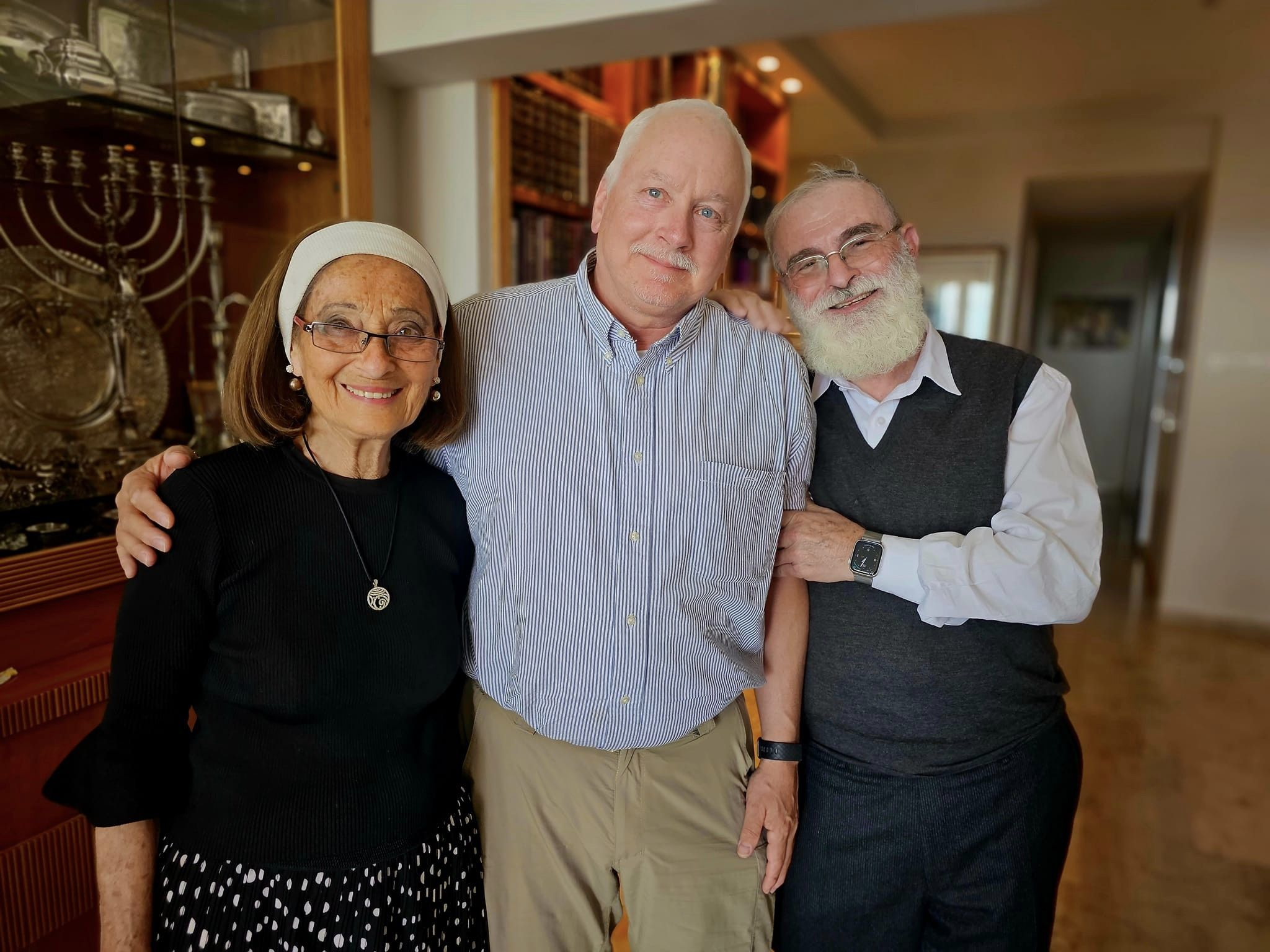
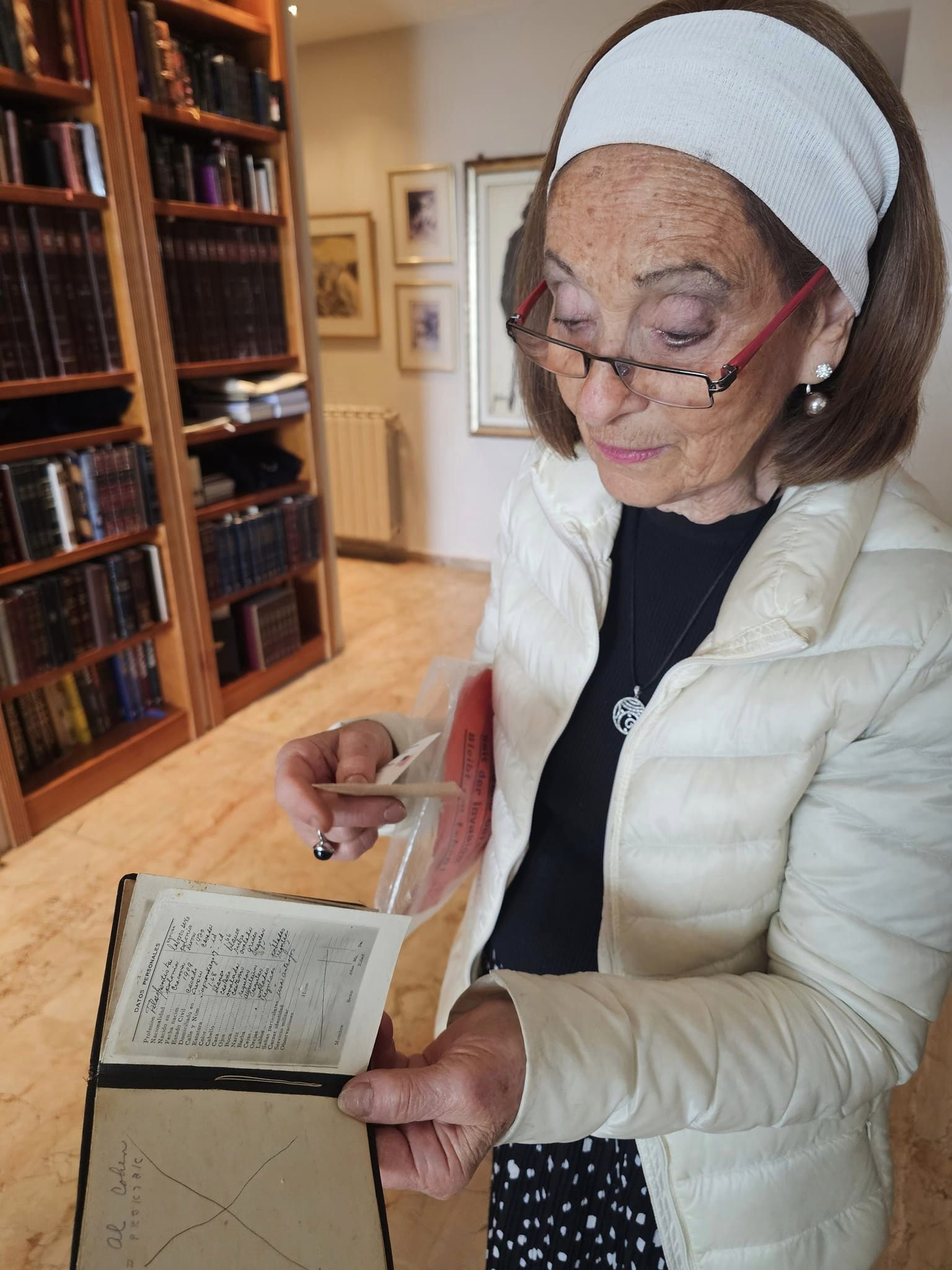
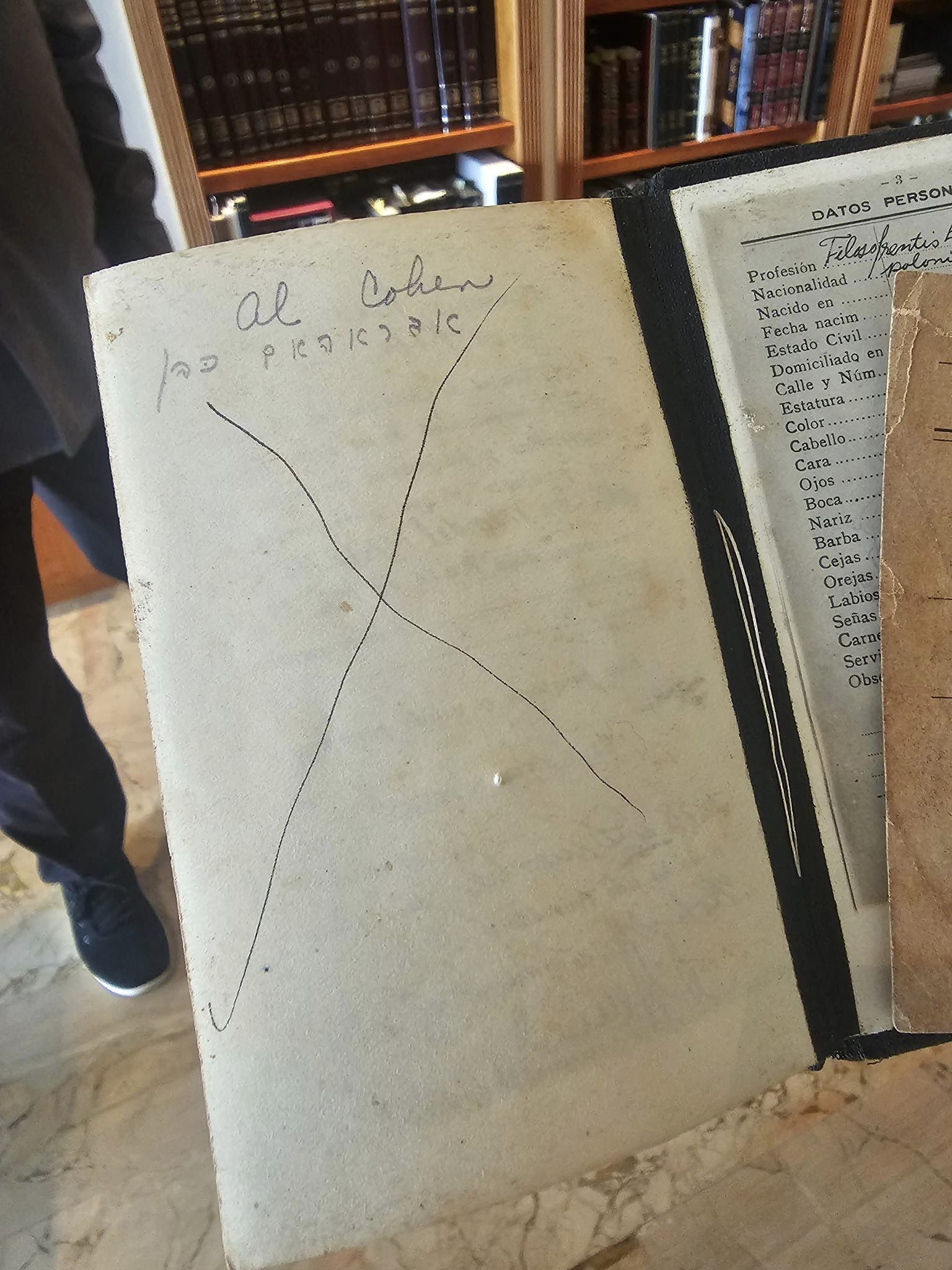
This saved their lives, and like Miriam Muller, who had arrived to the apartment as well, brought her father’s actual document, false papers issued by the Chilean Consulate, that kept her family alive- which I had never seen before, but almost all families on the train possessed. And here it was, even bearing the autograph of US Army soldier Abraham ‘Al’ Cohen, whom hundreds of survivors remember as he walked down the hill at liberation, tears streaming down his face, crying in Yiddish, “I am Jew, too!” Here was the actual proof of his existence!
The false passport book. Soldier’s autograph.
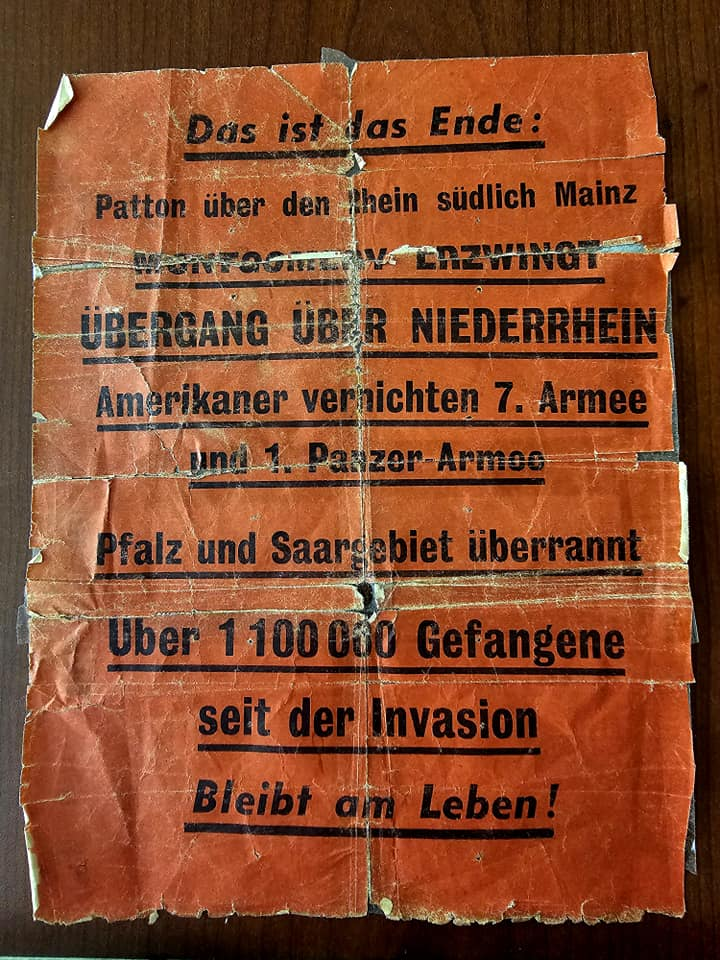
Miriam also brought a red leaflet, with a message in German, calling for the end of the war, that Patton had crossed the Rhine, that Montgomery was on the way, that 1.1 million Germans were already surrendered.
Surrender! Now! And Live!
Apparently, the driver of the train took the message to heart, as he had sped off with the engine towards home, rather than following the last minute order to drive over the bridge at the Elbe River, surrounded by advancing Russian and American forces, and blowing up the bridge over the Elbe with the train and all the victims on it.
Miriam gave her testimony beautifully, and at the end, took my hands, shaking her head, smiling, speaking of “it’s a miracle, a miracle”.
“You know, you are truly a messenger of God. You are His messenger!” I was trying to hold the tears back all afternoon, listening to the two of them. Mike showed the film trailer to the families before we left; I retreated to their balcony to try to process what we had just witnessed once more here in the City of God. Yitzhak’s children were already ribbing their dad about what he might wear on the red carpet of Hollywood.
I was quiet that evening at dinner with the group. I cant believe what we have done here, with the help of our friend Varda Weisskopf, who made virtually all of the arrangements with the survivors.
I’ll be processing it for a long, long time. Thanks for following with us. More later.
We went north again and visited with survivors Yaakov and Simcha. Yaakov Barzilai just turned 90; a Tel Aviv TV crew was present to record our mission as he is a well-known poet. He greeted me with a hug; like me, he began writing poems and books later in life, his first was at age 54. He’s up to 16… 5 more than me! He read a poem for his liberators, gesturing emotionally throughout his interview, with some English sprinkled in. “Bullshit!” was one that came through loud and clear-his response to Holocaust denial. He gave me a kiss on the cheek as we said goodbye.
Yaakov. photo by Lee.Yaakov’s 16th title, published Nov. 2021 at age 88.Yaakov’s family. Hitler did not win.Josh, Joe, Mike. What a team…Simcha. photo by Josh.
We had lunch and found the kibbutz and modest home of Simcha Berkowitz, his home health aide outside so we would find it. He sat at the table patiently and quietly, not knowing English, smiling beside his wife, who helped him with his hearing aids as they guys set up the shot. He remembered a lot at 12 yrs old or so; like Yaakov, he was from Hungary. Our driver Zvi translated excellently as he spoke in concise, short bites of how the Germans moved into that country in March 1944 and they were herded into the ghetto to await deportation. By a miracle, 40 people were taken off of one of three transports to Auschwitz, and placed on one heading to Austria.
In October 1944, they arrived at Belsen. He spoke of the lack of food, the filth, the bodies piling up, and meeting his cousin there, who worked at the crematorium (before it broke down). As his cousin described having to incinerate his own mother and sister’s bodies, a Ukrainian guard beat the cousin to death with a club before Simcha’s eyes.
He remembered the train, the tanks, the soldiers and his liberation very well. The soldiers were angels sent from Heaven.
It was another important, emotional day. The families are so thankful and glad that we are here. We talked about it later.
We are thankful to be on this mission of remembrance.
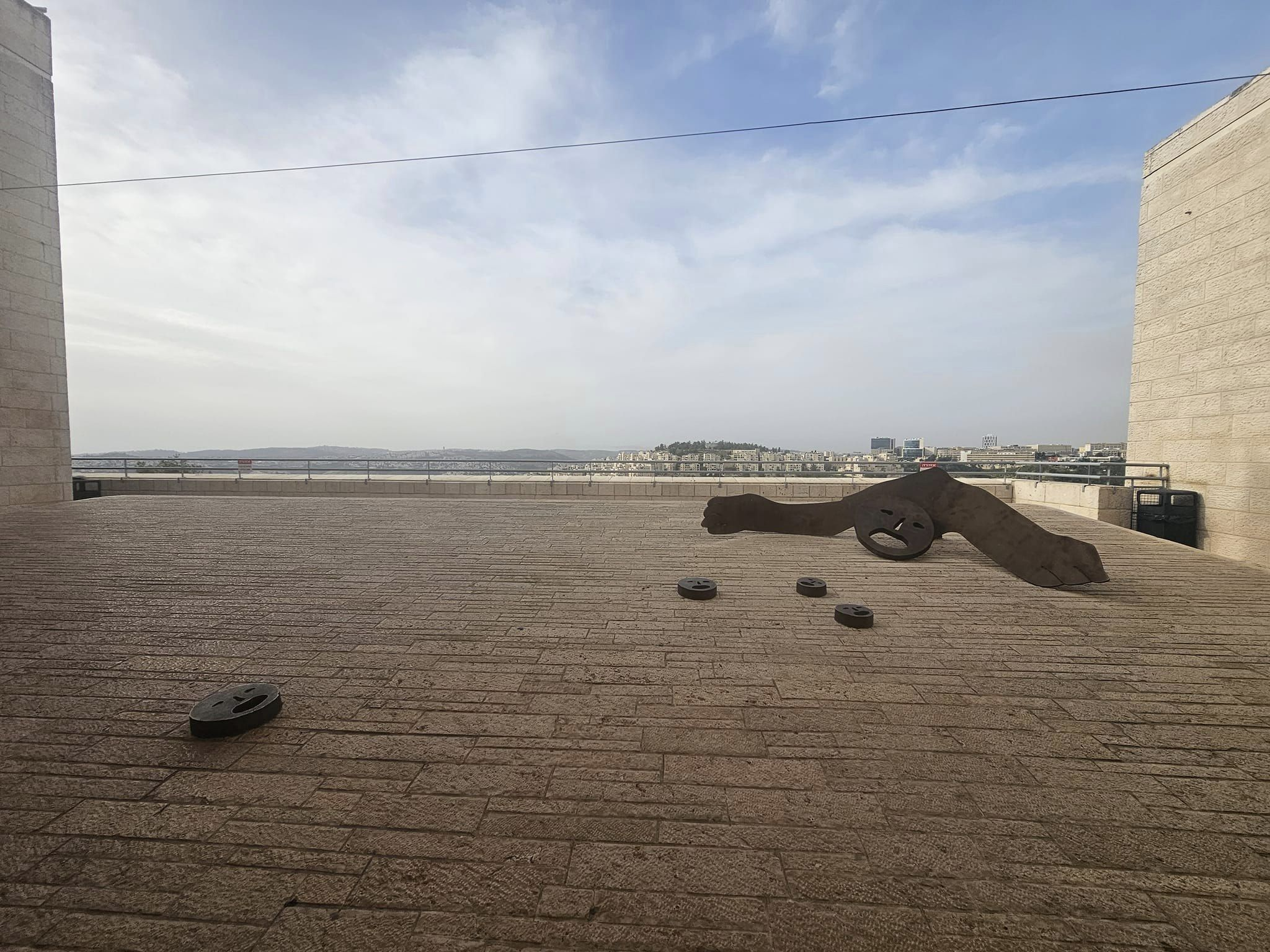
A visit to Yad Vashem, Israel’s Holocaust Martyrs and Heroes Remembrance Authority. Film team tour of the Museum. A must. Reviewed my journal of my 2013 three week study at the International School here.
Thankful and feeling well informed and confident and qualified to guide this film into being.
Today we headed North to outside of Haifa and Netanya to interview two young lovelies (Aliza, Ruti) of Polish heritage (with 2nd Gen and grandchildren present!) who were rescued by American soldiers in the Train Near Magdeburg story. My heart skipped a beat or two. They were so happy to finally meet me, it was hard to hold back the tears. Kleenex was deployed; they were so excited by our visit, and the professionalism of our great crew.
photo by Josh. Aliza GilonAliza, 14.Aliza’s family. Hitler did not win.Joe, Josh and Aliza.photo by Josh. RutiRuti in one of the 1945 Gross photographs.photo by Mike. Lee, Josh, Matt. Med Sea, Netanyaphoto by Josh
We are halfway through our interview tour here in Israel with the survivors of the Train near Magdeburg.
Of course, it has been quite powerful. We are mindful and treading carefully through what can certainly be a minefield of trauma, of opening up painful memories, but our focus is on the love and compassion shown to our friends by the liberating soldiers of the previous century. We hope to tap into their insights, and the joy that many of them experienced generations later when they had the opportunity to connect with the actual men who saved them.
This, of course, is why many of them travelled to the United States to meet them, or supported Frank Towers visit to Israel to meet him here a dozen years ago.
Two days ago we visited with our first survivor on this leg of the journey. John Fransman was a six year old Dutch boy who survived Bergen Belsen with his mother, but lost his father there to starvation, and a young cousin, 10 year old Helen, who died 10 days after liberation.
John was liberated on 4.13.45 by the Americans who came across the train.
In the afternoon we schlepped our gear up north again, this time to ‘7 year old’ Hedwig’s retirement community. She remembered her father exclaiming about the white star on the tanks as the Americans arrived at the train. “It was as if the tanks emanated from the earth, the people swarmed the tanks to greet the soldiers…”
Yesterday we interviewed Eran Leitersdorf, who is a well-known doctor and Professor and former Dean of Medicine at Hadassah Hebrew University.
His mother was Gina Rappaport, the brilliant young Polish woman who spoke several languages and served as George Gross’s interpreter when the train was liberated. It was pretty emotional. We discussed PTSD, and his mother’s optimism. “The good always wins.”


































 Teaching History Matters