Feeds:
Posts
Comments

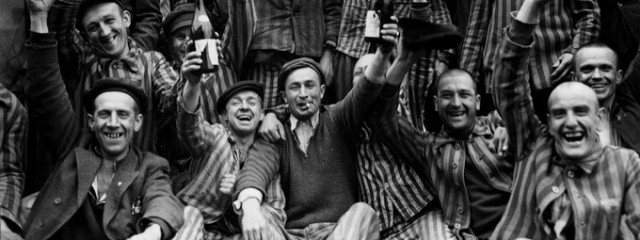
BusterOne of the hard parts about this project is that people whom you come to know and love get older and pass away on you. But you are thankful that you came to know them, and how you saw them enrich your life and the lives of others.

I first met Buster over five years ago, when I attended my first 30th Infantry Division reunion and he served as the chaplain and the master of ceremonies and chief auctioneer at our final banquet. He had a funny way of putting folks at ease, and the auctions were like a comedy act. He was very devout and serious about his chaplain duties, though.

I have a couple short video clips to share. The first I post on D-Day every year. A producer from ABC News in New York called me looking for the Benjamin photo for a piece on veterans returning to Normandy. Though the 30th did not land until after D-Day, the fact is that Allied forces were only ten miles in, with some very heavy and decisive battles still ahead for the 30th. They would also be bombed not once but twice by Allied heavy bombers on two consecutive days before the launch of Operation Cobra.Buster was a combat medic. “You did not stop to think about how you would cope. You just did the best you could.”

Buster was so taken with the appearance of the Holocaust survivors in the Old Hickorymen’s lives after 62 years, he told the story everywhere he went. After his wife died unexpectedly, he was at a loss, but I know that getting out into the community to tell the story of the Holocaust and the 30th’s connection to this amazing photograph kept him going for a while. He’d call me up at school, looking for pictures to share with students down South in the classrooms. He became a Holocaust educator! And he was sure proud to be an American.

He and his son Sandy, who also recently passed, expended a great deal of energy traveling to our high school in upstate NY for the last reunion with soldiers and survivors at our high school. At the tail end of this short clip he describes one of the wonders of this trip for him. I guess if I was dancing with a lovely young thing, or two, or three, I would say the same!

To close, I wish to paraphrase the reporter for the ABC story, Erin Hayes:

Maybe, just maybe, a group of students like those at College of the Ozarks will discover [veterans] and they’ll get them to tell their stories, to hear what I heard … that a generation that will soon be gone left us a legacy of bravery and wisdom and resilience.

We really, really should treasure that — before it’s too late.

Rest on, Buster. Peace to their families.

*******************************************************************

Buster Marion Simmons, 91, a resident of Farmington, Ark., passed away July 20, 2013 in Fayetteville. He was born July 7, 1922 in Orange County, N.C, the son of Tom and Olivia Jackson Simmons.

Buster served in the United States Army during World War II. He was a Combat Medic in the 30th Infantry Division throughout the European theater. He served as the Chaplain for the 30th Infantry Division reunions. Buster attended many reunions in Europe and all over the USA. His favorite trip to Europe was in 1994 when his granddaughter traveled with him. He worked until he was more than 80 years old.

He was preceded in death by his parents; wife of 67 years Bessie Mae Simmons; two sons, Eric G. Simmons and William J. “Sandy” Simmons; three brothers, William Clinton, Glimer and Wayne; one sister Lucille Oakley.

Survivors include one daughter-in-law Kathy Simmons; one granddaughter, Nancy Woodward and husband Rusty; one great-grandson Garrett Woodward and his grand dachshund Buster, all of Farmington.

A Memorial Service will be held at 4 p.m. Tuesday, July 23, 2013, at the Luginbuel Chapel in Prairie Grove with Preston Beeks officiating. He will be interred in Burlington, N.C. at a later date.

Memorials may be made to the Willard Walker Hospice Home, 325 E. Longview St. Fayetteville, AR. 72704; Farmington Senior Center – Meals on Wheels, 340 W. Main, Farmington, AR. 72730 or a charity of your choice .

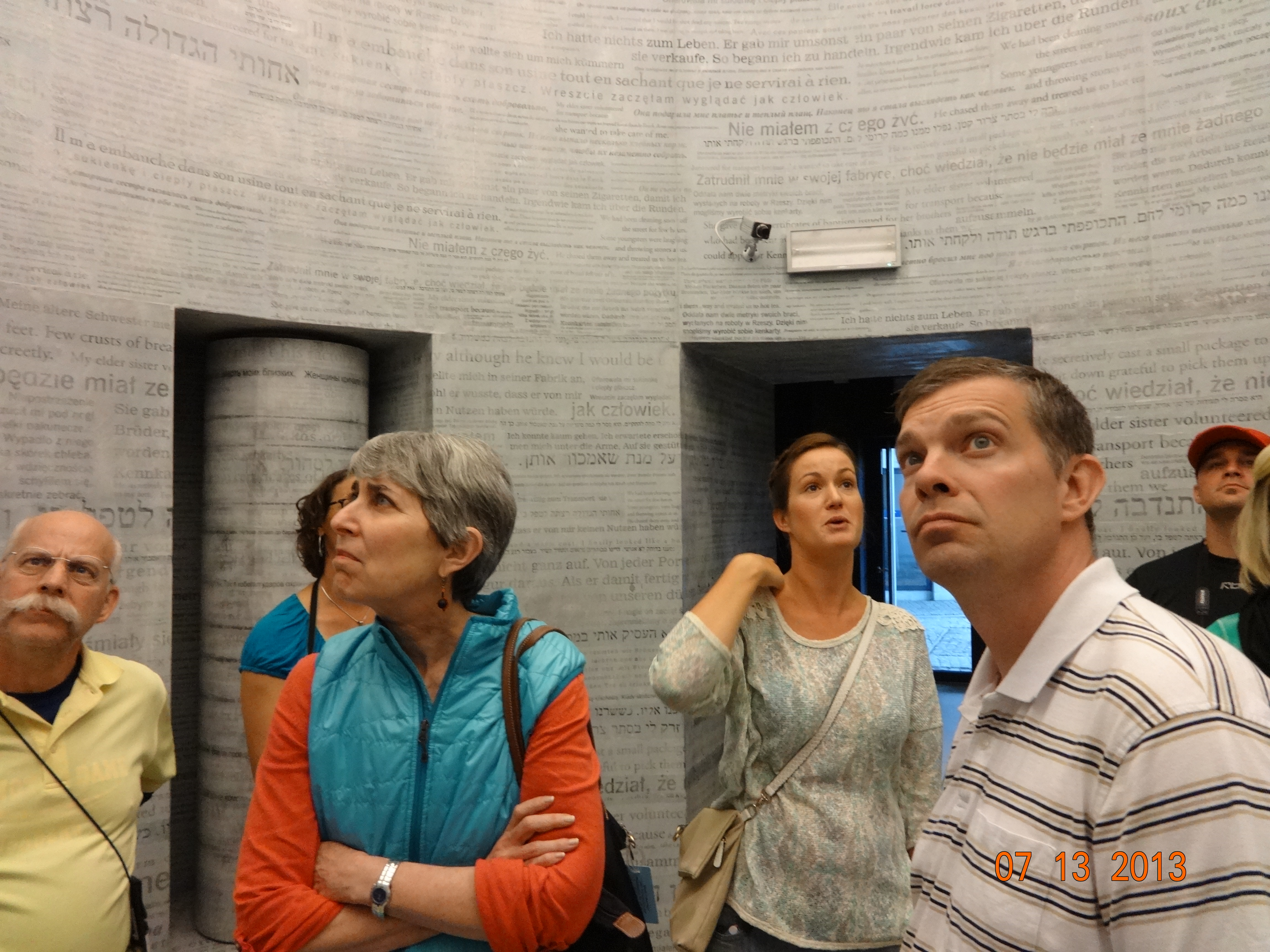
Our teachers in Cracow, Poland, Schindler Factory Museum of Cracow.

Our teachers in Cracow, Poland, Schindler Factory Museum of Cracow.

So.

I have been traveling and pondering for over 24 hours now. I am back in the USA (loved Europe, especially the East, but kissing the ground right now…)- the airlines seemingly conspired to help  extend my pensive mood by granting me a complimentary hotel room on the outskirt of nowhere near Dulles Airport- so my adventure will be extended one more night. I hardly know what day of the week it is but in a way that is kind of refreshing.

I have been thinking about the effects of this trip. From Day One I think all of us on the trip are in the same boat- folks you know are excited and proud of you for being selected on an elite study tour for teachers, but maybe question a bit why one would spend $3 or 4K of one’s own treasure*, leave your family and loved ones for three weeks to travel with “strangers”, or forfeit 3 weeks of summer earning potential to tour the sites of the scenes of the greatest crime in the history of the world.

Well, you gotta give them that. This is kind of strange- or so it may seem if you are on the outside cupping your hand on the window glass trying to look in. I think, as one of my Facebook followers put it,  that we did something very brave. We toured over two dozen places where I figure 3 million people were murdered.

Or to put it in maybe a more appropriate context, we saw, walked through, and touched the ground where  nearly a million families were killed. By no means did we tour the thousands of camps and subsites where millions more lives were destroyed.


The numbers tell the story in a way, but not completely, because try as one might, one cannot understand them. I know the numbers- I have the knowledge- but as Steve our tour historian says, there is a clear difference between knowledge and understanding. Some things are beyond comprehension.

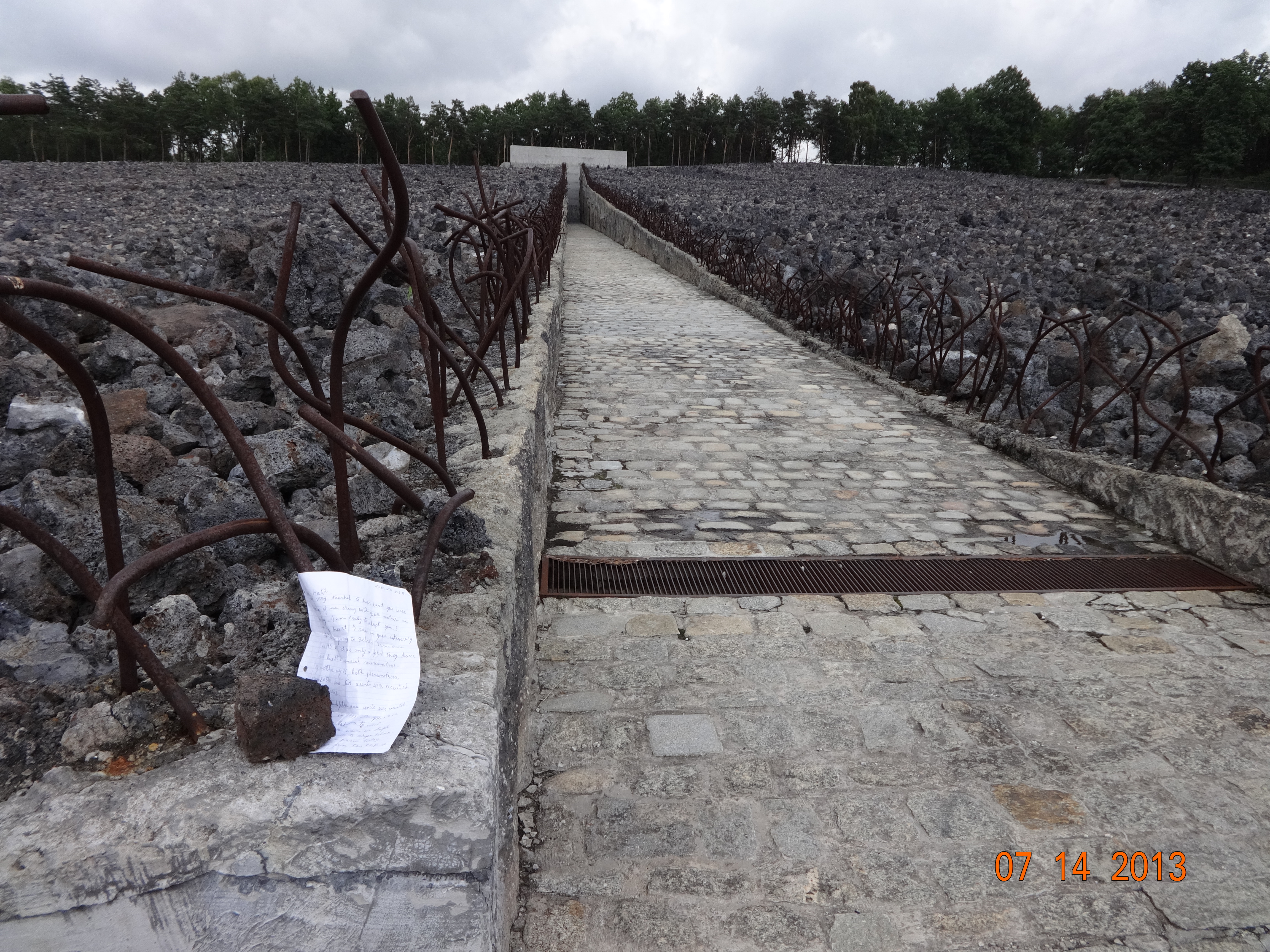
Belzec. Letter from survivor to me, who lost her family there.

Belzec. Letter from survivor to me, who lost her family there.

400,000 murdered in Belzec.

1.1 million in Auschwitz II/Birkenau.

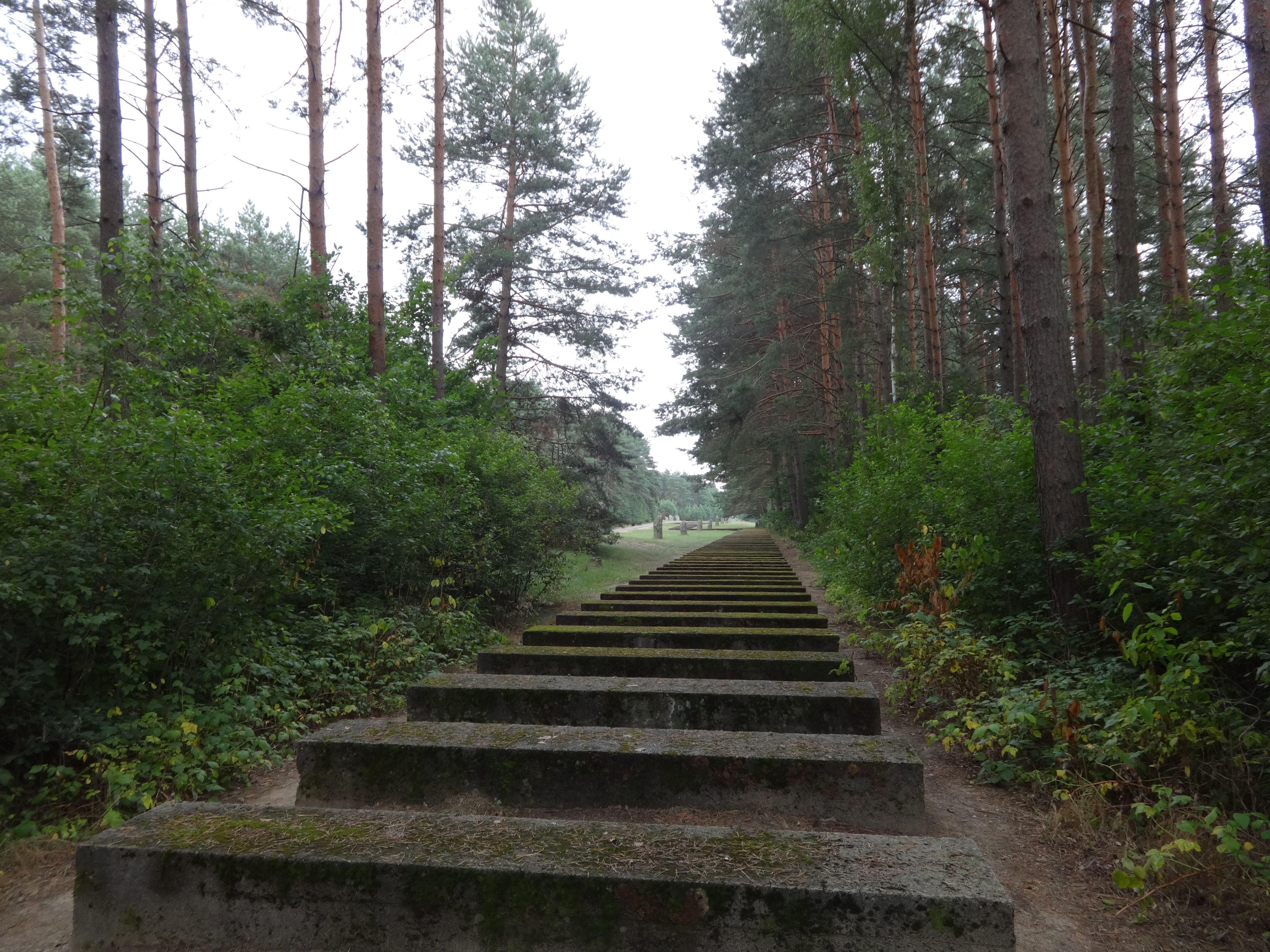
900,000 at Treblinka.

We have been to all of these places in the past three days. People comment that they can’t get their head around it, they can’t begin to fathom the mass indifference to human life that we have witnessed.

Treblinka. 900,000 lost.

Treblinka. 900,000 lost.

So let’s look at what we did come to some kind of understanding about.

What we learned was of the ripple effect of the seemingly small things that illustrated the resilience of the human spirit. That resistance does not have to be just using physical force against your tormentors- it goes way beyond that.

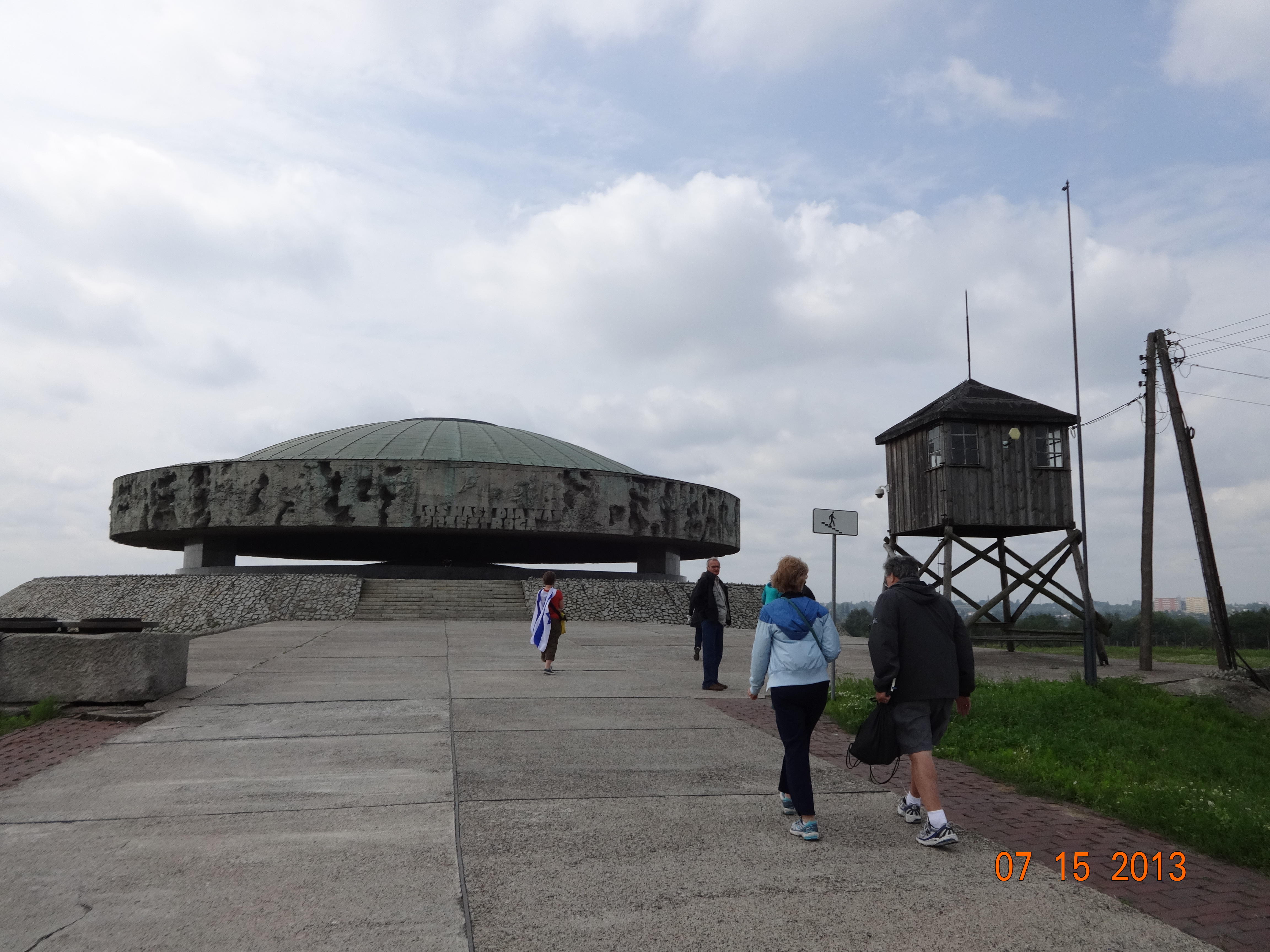
Madjanek. My "I'm in a really, really bad dream day". Under the Soviet era memorial lies a pile of ash and cremated bone the size of a small house.

Madjanek. My “I’m in a really, really bad dream” day. Under the Soviet era memorial dome lies a pile of ash and cremated bone the size of a small house.

The program has been in operation for 30 years, begun by survivors of  the Warsaw Ghetto, those who resisted but survived. Vladka Meed pointed out that the Ghetto Uprising in 1943, which held the Germans at bay for weeks, was begun by the young people. And it is for them, the young,  that we educators make this trip.

So, trying to keep it simple and summing it up:

1. This was not a trip about death. It was a trip about life.  I can’t say that I found God, but this trip was one of the most spiritually reflective journeys that I have ever been on, bordering on a religious experience. So folks will ask when I get home- how was it?-my answer will be:

Righteous.  For me, not epic, not amazing, not awesome.

Righteous.

2. I had many of my Holocaust educational and pedagogical thoughts confirmed and other assumptions challenged. Some ideas presented to me I felt comfortable enough to challenge myself, but in thinking about them, I came to deeper understanding. The most important understanding confirmed is a problem that all teachers must struggle with in our flawed educational system. We have to be diligent about avoiding the promotion of generalization as fact, to avoid doing a disservice to our students. If you are  teaching this history, you had better be versed enough and nuanced enough to accept inconsistencies, problematic complexities, and probe these things to induce a more intricate set of questions to your kids.

3. We have to be willing to accept that perhaps there are no correct answers- a notion that educators  are uncomfortable with- but  one that must  be accepted, nevertheless.  To promote generalities in this complex history, or any history is wrong. But especially this one, it seems to me. It was a watershed event in the history of the world, and for humanity, on many levels.

4. Lastly, it was certainly not just a trip to study how t0 teach the Holocaust. Perhaps reinforced more was how NOT to teach it. And  at the end of the day, it was a tour not only of authentic sites, but also of the mind, and how to make it work.

Sometimes I thought myself to the verge of tears. Thinking-not only about answers- but about the questions.

And that’s what these teachers “did on our summer vacation”.

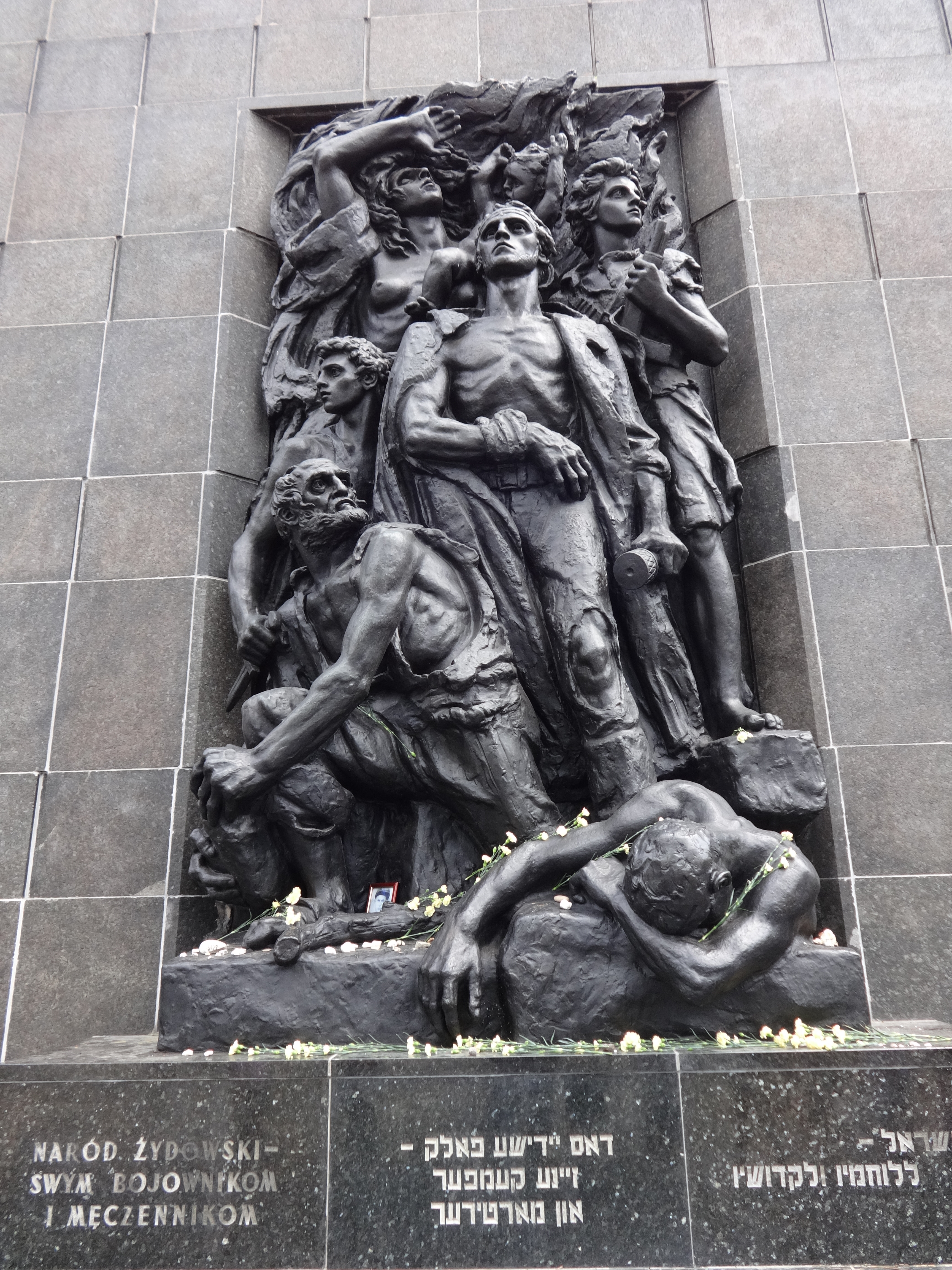
Memorial to Warsaw Uprising

Memorial to Warsaw Ghetto Uprising

* thanks to the folks that were able to support my efforts. You know who you are!

To Life.

DSC01091So the day that many of us approach with a bit of apprehension is finally here. We are on the bus from our hotel in Cracow to Auschwitz, 50 miles to the west south west.

Yesterday we arrived in Cracow from Prague, taking the night train on a sleeper car. Near Prague we visited Terezin or Theresienstadt, and I hope to include my observations in another post.

Crakow is a lovely and vibrant little city of 850,000, currently in revival after the fall of communism 20 years ago. Wawel Castle in the heart of the town on the Vistula River became the seat of the German General Government for the administration of the  Polish Occupied Territories under Hans Frank. The guy’s name sends shivers down my spine. After the war and after his trial at Nuremburg he was executed.

Rolling southward one of our tour leaders points out an impressive large building on the top of a hill that looks like a five star hotel. Built after the German invasion in 1939, it was a rest and relaxation villa for Wehrmacht officers rotating off the Russian front to unwind for a bit, as industrialized mass murder was unfolding every single day less than an hour away.

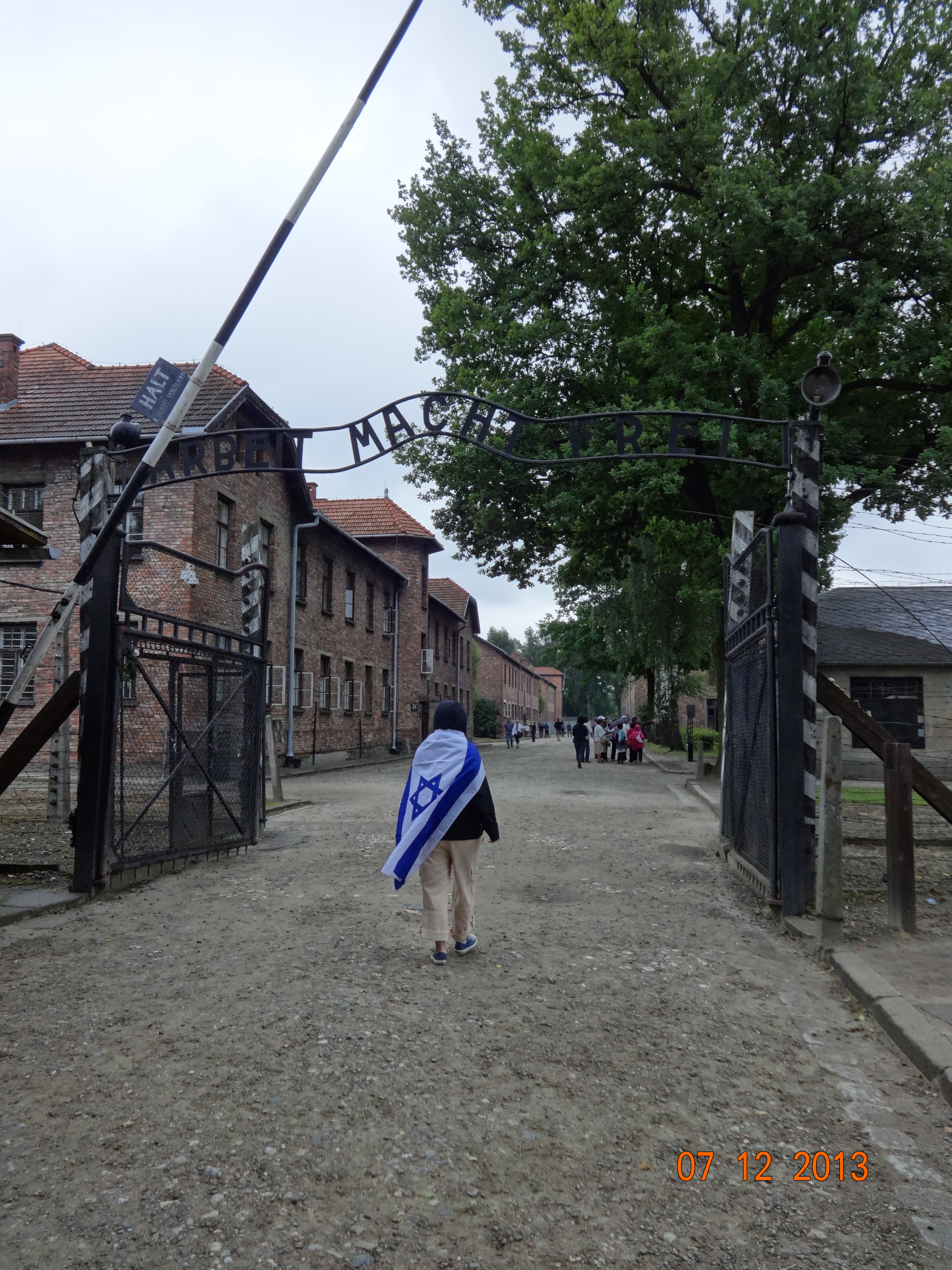
Soon we see the road signs for Oswiecim, the small Polish town at a railroad hub that has become one of the most visited tourist sites in Poland. Most of the world knows it by its German name-Auschwitz.

DSC00994The bus lumbers into the overcrowded parking lot and docks in the slot. The driver kills the engine. And it begins to rain as our other leader, E.,  relates the story of her mother’s family, the idyllic childhood in this beautiful prewar country, a young teen when the nation is invaded, the oldest of four children. No one on the bus makes a sound. It is now raining very hard.

What is this place? Our guide A. is a top notch scholar, and she leads us on a day long tour that is hard to put into words. We begin at Auschwitz I, the first camp. This place is centrally located, a railway hub dating back to the turn of the century. The first prisoners, after it is converted from a Polish military facility, are Soviet POWs and Polish prisoners and other “security risks” who will be worked to death slowly expanding this camp, and the much larger Auschwitz II-Birkenau. She walks us through the exhibits and the displays at the various blocks. Block 4 is the “Extermination Exhibit”. We think about the words, the language. Extermination- as if the victims were vermin. Over 1,100,000 were killed here, most of them Jews. We see the map with the spiderlike raillines radiating inward to Auschwitz like tentacles, from northern Poland, from Germany, Hungary, as far south as Greece and as west as Paris and the Netherlands. In the summer of 1944, tens of thousands were murdered here, per day.

We see again the large scale terra cotta model of the process, which the German engineers had perfected  at Auschwitz II-Birkenau- the arrival of the transports, the undressing rooms with signs admonishing bewildered people to hang their belongings carefully and to remember the number of the wall pegs where they left them for quick retrieval later. The shower rooms that could fit in some cases entire transports, which were in fact the hermetically sealed gas chambers. The Germans above with their gas masks, waiting for the proper temperature to be reached through body heat, just the right humidity to be achieved before dropping in the pellets so the gas released would work more effectively. The anguished death throes of the thousands of naked figurines assault our senses. The process is not complete until the corpses are carried out by the sondercommando slaves, defiled for any gold fillings, the hair shorn from the women, the bodies then burned in the open air behind or cremated in the ovens.

But the tour is now just beginning.  Minutes before, we were looking at a terra cotta model. And now in Block 5 we will be presented with the evidence. This is an exhibition, after all. Exhibit A is about to slap us in the face. Hard. It is a room, 50 feet long, with nothing but human hair piled several feet back and as many feet tall. My heart skips a beat.

What are my eyes perceiving? Now we see a photo of stacks of bale bags, carefully labeled, packed and stacked, awaiting shipment back to the Reich for use in various products for the German war effort. Slippers for submariners so they can walk quietly aboard ship to evade Allied sonar. Stuffing for the seats of German pilots.

We shuffle on in silence with hundreds of others past the spectacles, the pots and pans, the suitcases carefully labelled by their owners with chalk on the orders of the perpetrators, again, for “quick retrieval”. And the shoes. Sorted. Case after case of women’s shoes. Men’s footwear. And then the children’s shoes.

Our knowledgeable guide takes us into Block 27, the new exhibit on the Shoah. This is a temporary relief of sorts as now we see faces, film and stills, of pre war Jewish life, projected on the walls. We hear songs and voices. At the end is the Book of Life, containing four million names compiled thus far. A moving moment when E. and others in our tight knit group find entire pages with the names and dates of family members murdered during the Holocaust.
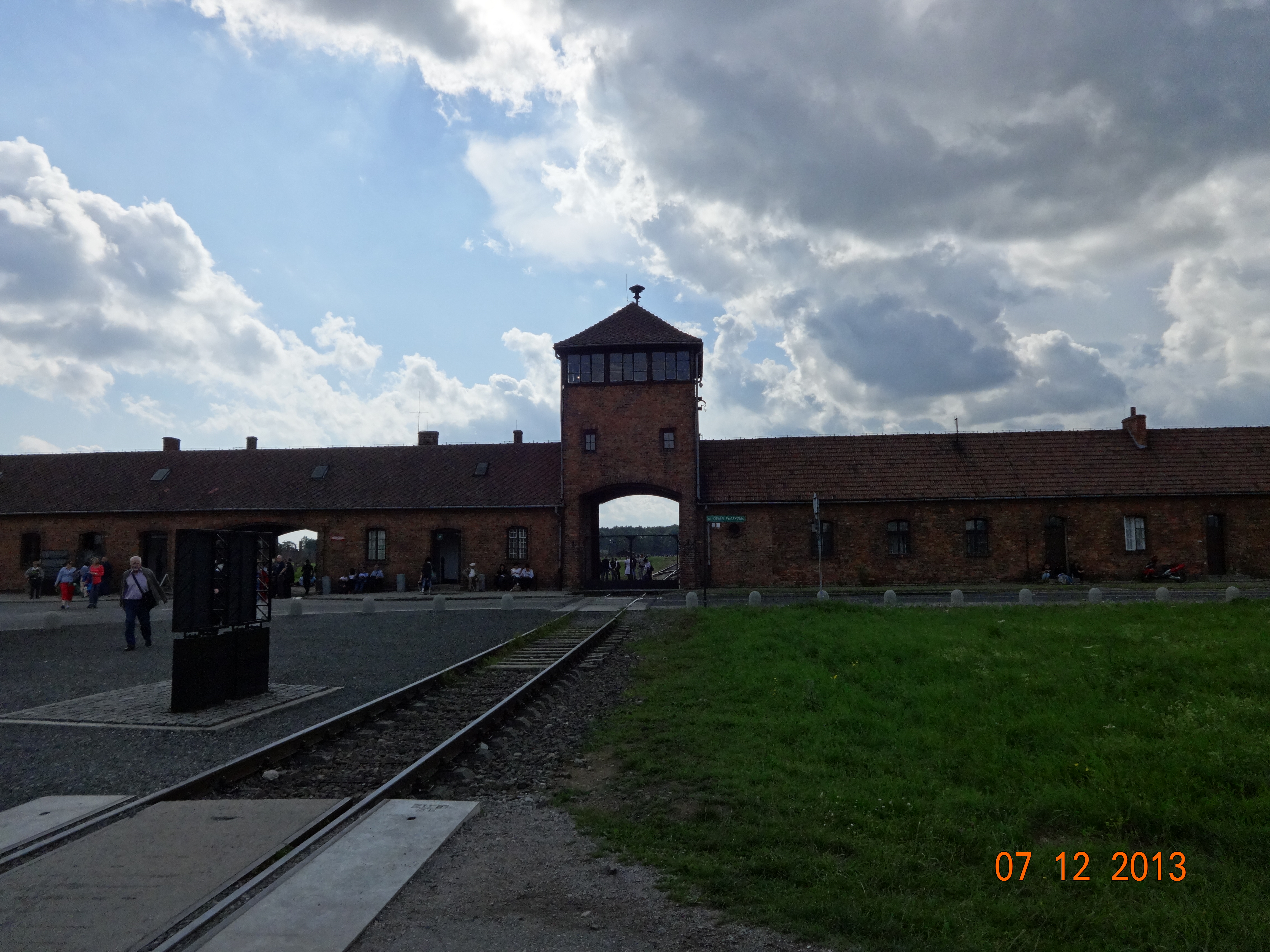
We have lunch on the bus in the parking lot, then drive the three kilometers through town to Birkenau. There it is. The entry tower. The iconic symbol of evil. DSC01140

We follow the guide up the stairs in the tower. From here we can see the sheer vastness of the camp. Dozens of long narrow women’s barracks, brick, still stand, albeit braced with wood on the gable ends to keep them from toppling until they can be re-pointed. She indicates that historic preservation here is a major concern.
The rest of the camp is many square kilometers of row upon row of foundations and brick chimney stubs, surrounded by the menacing curved and tapered concrete concrete posts dotted with white insulators and strung with miles of parallel lines of barbed wire. In the summer of 1944, when hundreds of thousands of Hungarian families were deported here, the rail lines came right into the camp.

Our guide leads us along the path through the camp that leads to the gas chamber and crematorium. We walk in in silence along the roadway, the only sound the crunching of brick fragments and gravel underfoot. It appears to have been paved with brick, slave labor, though in some spots it is hard to tell anymore. No one speaks, and on and on we walk. Two minutes. Five minutes. Ten minutes. Fifteen minutes. I’ve been on battlefields that are smaller than this site.

DSC01122

Finally we reach the end of the camp where the kitchens stood. A round concrete ring rises out of the earth, maybe 6 feet in diameter. Someone finally speaks and asks A. what it was. A giant flowerpot. She tells us also that they were placed near the entrances of the gas chambers. Flowers at the gas chambers.

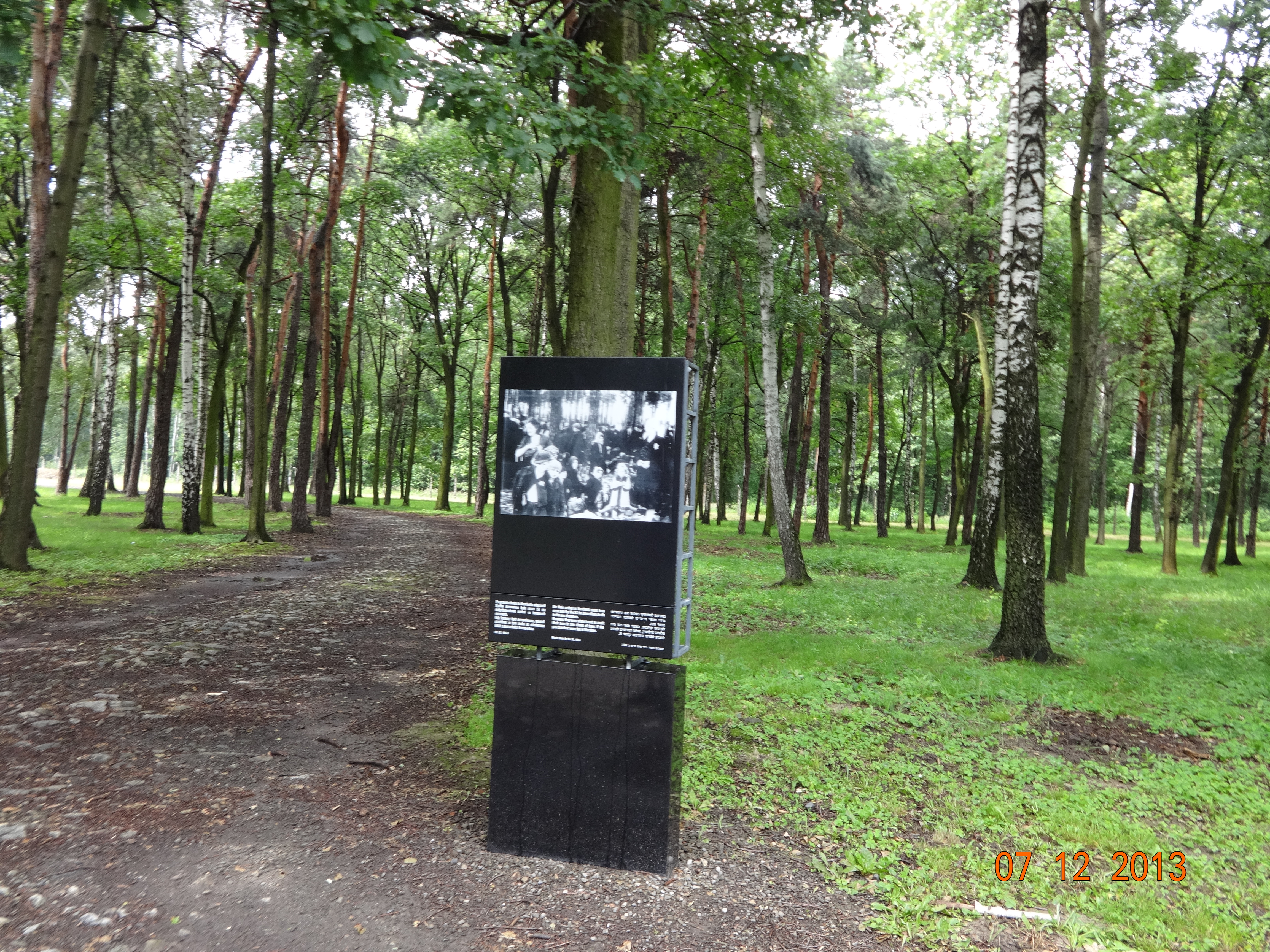
We turn left, and keep walking past interpretative signage. It seems like we are walking outside of camp perimeter. But we are not. Beautiful woods appear and we are walking on the edge of the woods with the camp to our left. We stop near another sign and rest for a moment, allowing the others to catch up. Then our guide calls our attention to the photo on the sign, showing Hungarian mothers and children doing the same thing we are doing. Halting and resting.  And a short path through the woods will take us to the ruins of the gas chamber/crematorium Number Five.

DSC01066We are resting at the spot they rested at, 20 minutes after walking, immediately after disembarking of overcrowded transports that had been traveling for days. Here they waited, anxiously, as their turn to approach the chamber would come. But the victims of the transport ahead of them had to be removed from the chamber first. Some days in the summer of 1944 these victims were backed up for hours.

I pick up a rock from the path and carry it with me past the ruins. At the ashfield there is more signage and a memorial asking visitors not to walk through the field. I place my stone on the memorial, looking down to watch where I step. But it is probably a futile gesture-this whole place is an ashyard, a graveyard.

We turn again, and walk past the remains of crematorium Number Four. To the disinfection center for those selected to be worked to death. Again, a system. Disrobing. Wading through disinfectant. Shower. Uniform thrown at you, mismatched clogs or shoes.

E’s mother spent two years here. Her grandmother and the little ones were selected upon arrival. Her mom’s beloved sister was murdered in the quarry after slipping while carrying a large pot of soup in the ice and snow with three other girls. Today is a hard day. I want to comfort her, to carry her pack for her. I feel helpless. There is nothing I can do.

At the Soviet memorial constructed near the two destroyed gas chamber/crematoria at the end, we have a remembrance ceremony. Kaddish is recited in Hebrew. I read it aloud in English. With tears, E. tells us that she feels her grandmother smiling down on this extraordinary group of dedicated teachers. A lump rises, again. I swallow hard and try to blink back the wetness I feel welling in my eyes. Damn, I almost made it. Glad for the sunglasses, even though there is no sun.

We light candles, turn our backs, and walk out, which provides another twenty-minute stretch of personal reflection. We have toured the epicenter of evil. We have been here, we try to process-but we just cannot. We need the individuals to speak to us. And like E’s family, they do.

At the close of the disinfection center are hundreds of photographs that had been discovered years after the camp was abandoned by the Germans. Pictures of loved ones who perished here. For me, like the personal home movies of pre-war life for the victims, this is what has the most meaning.

DSC01089
To Life.

World War II infantry veteran Carrol Walsh, top, hugs Holocaust survivor Paul Arato at a reunion in Queensbury, N.Y., on Tuesday, Sept. 22, 2009. Walsh’s unit liberated a Nazi train carrying 2,500 Jewish prisoners, including Arato, from the Bergen-Belsen concentration camp in Germany during the war’s waning days. (AP Photo/Tim Roske)

I am reposting this today to honor both of the men below. Paul Arato passed away this week in Toronto, Canada and his memorial service is today. Carrol Walsh, his liberator, died in Dec. at his home in Florida and his memorial service was last Friday in New York.

Paul and Rona would also check in annually for dinner with the Walsh family when they passed through our town. The last time I saw both of them together was in 2011 at one of these dinners in a local restaurant. They sat together and laughed and joked like old pals. Paul told the story of how he arrived in Detroit after the war as an eager late teen anxious to find work designing fast cars in the automobile industry and was driven to the bridge in Canada by law enforcement and pointed to the bridge to Canada, as he did not have the proper documentation. Picturing the scene in his mind, Carrol would laughed outloud and slapped his knee. Both men were so happy to have found each other.

Rest on, friends.

Holocaust Survivors Reunite With US Veterans

NY high school reunites Holocaust survivors liberated from Nazi death train by US soldiers

By CHRIS CAROLA

The Associated Press

HUDSON FALLS, N.Y.

The Holocaust survivor was 6 on that spring day in 1945 when he last saw the U.S. Army soldiers outside Magdeburg, Germany.

Paul Arato was among 2,500 starving and sickly Jewish prisoners from the Bergen-Belsen concentration camp, their train abandoned by its crew and Nazi guards as Allied forces advanced. Two U.S. Army tanks on a scouting patrol — one of them commanded by Carrol Walsh, then 24 — came upon the stopped boxcars.

Arato, now 71, and Walsh, 88, met again this week.

“Please give me a hug. You saved my life,” Arato told Walsh in an emotional reunion of concentration camp survivors and some of the veterans of the 30th Infantry Division who liberated them.

Arato, an industrial designer from Toronto, and Walsh, a retired state Supreme Court judge from Hudson Falls, came together for a Hudson Falls High School history symposium inspired by history teacher Matthew Rozell’s original World War II project in 2007.

“You were all kids on that train,” Walsh told the survivors, most of them in their early 70s, as they and their families greeted the veteran. “I was an old man. I was 24 years old!”

Those arriving early for Wednesday’s opening session gathered Tuesday night for an impromptu reunion before having dinner surrounded by the faux Adirondack decor of the nearly deserted indoor water park. Four of the five Nazi train survivors at the dinner had never met Walsh.

Walsh’s tank patrol discovered the desperate Bergen-Belsen survivors on April 13 — hundreds of emaciated Jewish prisoners who had been herded aboard one of three trains leaving the camp a week earlier to keep them from being liberated by advancing Allied forces.

Walsh’s patrol stayed for a time, handing out candy to some of the children, then moved on after reporting their discovery. Frank Towers, a 27-year-old first lieutenant in the 30th Division, led a convoy that took the newly liberated prisoners to a German town where they were given food and shelter.

For weeks, the men of the 30th had heard of Nazi atrocities against Jews and dismissed the stories as propaganda, Towers said. That all changed when they encountered the train.

“Then we believed,” said Towers, 93, of Brooker, Fla.

This week’s reunion is the fourth since 2007, when Walsh was joined by three of the train survivors at Hudson Falls High. History teacher Rozell’s World War II project included an Internet posting of Walsh’s account of the train liberation.

An Associated Press report of that first reunion prompted more survivors to come forward, some from as far away as Israel, Rozell said. In all, he has confirmed that more than 60 survivors are still living and has been in contact with about two dozen of them.

Nine survivors of the Nazi death train are participating in this symposium, along with Walsh, Towers and four other veterans of the 30th who fought in Germany. Rozell said this week’s gathering is likely to be the last such event of its scope, given the advanced ages of the veterans and survivors.

For Arato, Tuesday night’s reunion with Walsh brought back a flood of memories. He recalled getting candy from one of the soldiers and a handgun to play with.

“I remember it was a Tootsie Roll,” he said. “The gun wasn’t loaded.”

Arato fretted over one detail. He recalled seeing a Jeep along with the American tanks, but fellow survivor Fred Spiegel of Howell, N.J., didn’t remember seeing a third vehicle. Later, Walsh said his patrol consisted of two tanks — and a Jeep.

“There WAS a Jeep,” Arato said, a smile breaking out on his face. “I remembered it right.”

———

On the Net:

Hudson Falls High School World War II Living History Project: http://www.hfcsd.org/ww2

http://www.huffingtonpost.com/wires/2009/09/23/holocaust-survivors-reuni_0_ws_296673.html

http://www.ynetnews.com/articles/0,7340,L-3781062,00.html

Ravensbruck.

Ravensbruck.

We have visited a lot of sites in Germany since Bergen Belsen-in Berlin, the Wannsee Villa, where preliminary plans for the “Final Solution ” were signed off on after a one day conference, the Memorial to the Murdered Jews of Europe in the heart of the city, the Reichsbahn train platform, Track 17, where the Jews of Berlin were deported almost everyday for nearly two and a half years. We also visited Ravensbruck and Sachenhausen.

Ravensbruck is a couple of hours north of Berlin, in the former East Germany. It is notable for many reasons, probably first that it was a camp for women, and also a training faculty for SS camp guards-3500 women guards were trained here, and about 500 were in service. 130,000 women prisoners passed through here, and towards the end of the war, another 20,000 men.  No barracks are standing today, the houses for the SS leadership remain just outside the camp wall, where they lived with their families. Each day the camp gates would open and thousands of prisoners would stream out into the community for their slave labor assignments. Kind of hard to hide it from the kids. I suppose the attitude was that it was difficult, distasteful work, but the kids had to realized that it had to be done for the wonderful world that they were creating for the children’s future.

Immediately after the war the barracks were dismantled and given to refugees who had fled the Eastern Reich as it collapsed. Some are still used as houses today. The SS women guard barracks is used as a youth hostel education center today. They have a program where survivors interact with the kids for about 4 days, and sleep here at night. Our guide is the historian Matthias H. at the Gedenkstatte (Memorial). He appears to be in his early 40s and is passionate and knowledgeable, as are all of the German historians I have met thus far. Here are some of his observations that strike me the most:

In his opinion, the majority of Germans supported the master race theory. What disturbs him today is that in his opinion, few Germans today seem conscious of this. It is a very complex topic. The historians talk about the mass crimes, and in Matthias’ words, they work on thin ice. The responses range from some people wanted to know more- after all, many of them learned nothing about it from their teachers, many of whom were bystanders or even perpetrators. Some quietly deny the extent-but I have found that as you study it, you learn how vast and almost unbelievable it is in scope. Others, are tired of the topic- “yes, it happened, so what, enough…”

For Matthias, herein lies the greatest danger. It is important to have the past in front of you- NOT in the back of one’s mind, as one moves forward. The lesson may be simply how to “behave” , not just for Germans but for everyone.

Ravensbruck. Prisoners' gate on left, SS on right.

Ravensbruck. Prisoners’ gate on left, SS on right.

He walks us through the main camp entrance, where thousands of prisoners would pass everyday, explaining that for years he would avoid the single door entrance that the SS guards used-until one day a survivor he was leading on a tour walked through it, to symbolize her victory at this place.

He notes a few additional stories. Survivors corroborate that when new SS female guard recruits would come for training, initially they do not know how to deal with the new job. Industries wanting slave labor must send their own guard recruits, too.  They are not kind, but they do not seem possessed with the will to carry out this abhorrent work. Former prisoners would say that always within about two weeks new staff would have overcome the “cognitive dissonance” that would allow them to do their job without compassion. They become “hardened” and “get over it”.

Ravensbruck was built for 3000 prisoners. At its height it held 35,000. 30,000 were killed here. In the beginning the SS does  NOT want women with children in the camp. But as more and more territory is overrun, the camp swells. After the Warsaw Ghetto uprising in 1944, there are hundreds of pregnant women. Some are forced to abort; as numbers well, women give birth and the babies are taken to a “hospital” where they slowly starve to death. The crematorium works nonstop. Ash piles are created and dumped into the nearby lake as the Russians close in. When the camp is overrun by the Red Army, 2000 women and 2000 men, mostly to infirm to be death marched out of the camp, are found, but not before the Germans had installed a small operating gas chamber, where 5000 Hungarian women were murdered in 1944.

I think that the following story resonated the most with me as an educator of young people.

The butcher’s son delivered fresh cuts of meat nearly daily to the SS mess hall, which still stands. Late in life, the old man tells Matthias of his feeling as a young teen-going through the camp gates to deliver the meat, seeing the emaciated and foul smelling prisoners, and believing fully all he has been taught- that these people are indeed subhuman, vermin to be eliminated. It’s true. Just look at them. Just smell them. Disgusting. Everyday it is the same. They even march through the town to the labor sites. Best to keep a distance from them.

It’s the same until one cold morning when a new transport of women arrive-stripped naked, healthy, humiliated, shivering, crying, shocked, trying to cover themselves in the plaza. Now it is his turn for a shock. These are not subhuman, but girls his age and older, in distress.

And they are naked. He has probably never even seen his mother or sister undressed before. And it is at this moment that he realizes that his teachers and the adults in his life are wrong- that what he is witnessing is a crime. And now perhaps sixty years later he unburdens himself.

Finally, a survivor, Annika, recounts that the Scandinavian Red Cross appeared in the weeks before liberation and in the presence of these new people, the women stroke their hair (as it is growing in again after being shorn off) trying to make themselves presentable. As she is evacuated over the Danish border, something strange happens. People are crying at her miserable condition. At every stop, they crowd around tearfully, and want to help… What is this? Traveling through the towns in Germany, she recounts, no one cried. No one helped. To date, says Matthias, no former German perpetrator has shown remorse for his/her wartime behavior.

The bystanders probably included most of the victims’ neighbors and acquaintances, and certainly most of the townspeople where the crimes were perpetrated,  of thinking age.

But they all knew.

That for me is one of the axioms that will come out on this trip. But, suspending judgement- we were not there ourselves and placed in that positon-we have a lot to think about.

But we must think about this too-Hitler never murdered anyone by himself.

The lake at Ravensbruck, where ashes were dumped.

The lake at Ravensbruck, where ashes were dumped.

Remember Me.

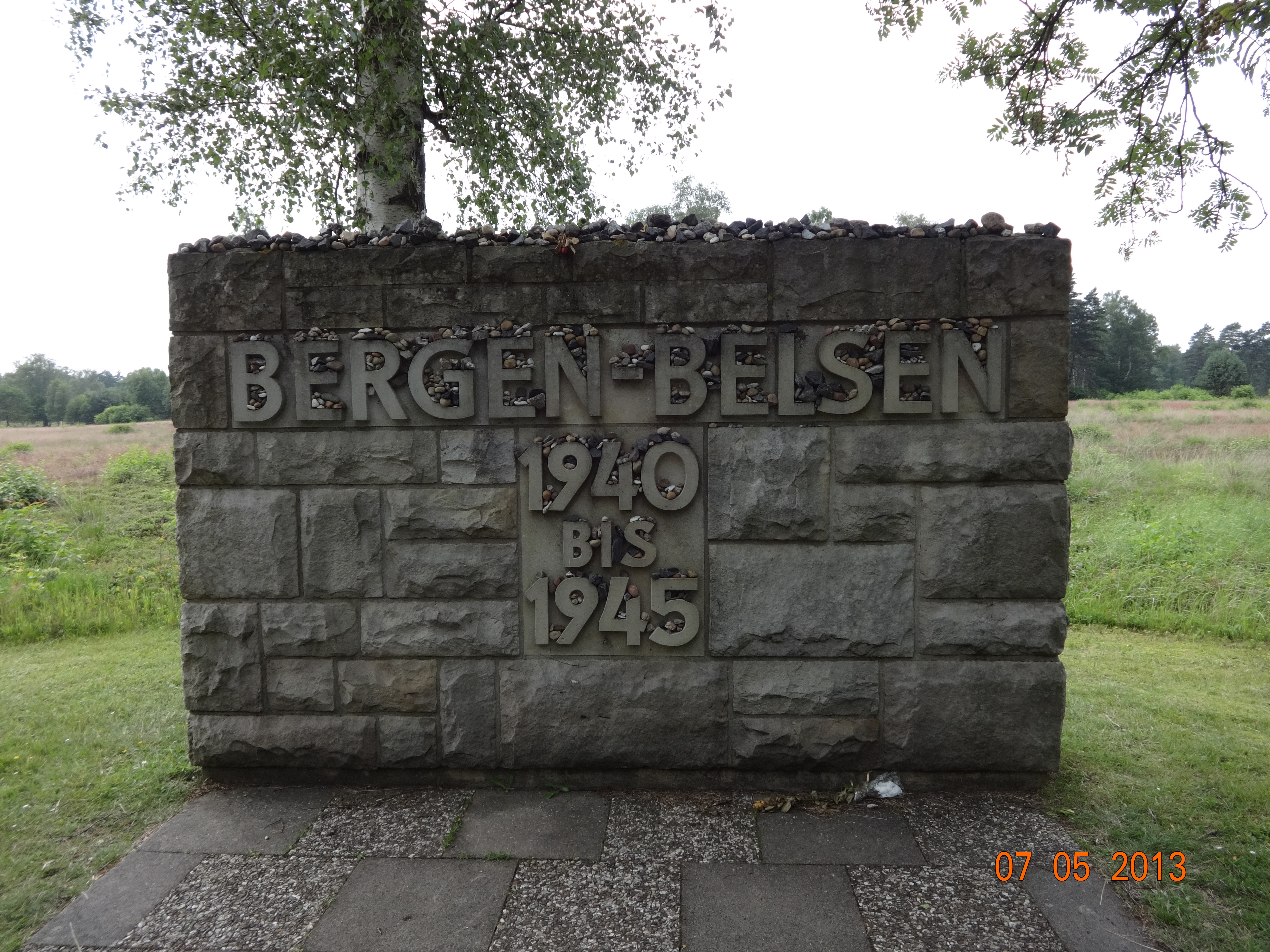
Bergen Belsen on July 5, 2013.

Bergen Belsen on July 5, 2013.

I am in Europe on a study tour of the Holocaust with 25 fellow educators of the United States. I am typing this as the morning breaks in the heart of Berlin, Germany. I had hoped to be able to get on-line and write more frequently but that is just not possible. There is too much to do while we are here visiting these authentic sites. But it is time to stop and reflect on some of the things that I have seen and experienced.

Our itinerary includes stops in Germany, the Czech Republic, and Poland. The power of visiting these sites after studying them so long can not be overstated.

Bergen-Belsen. For me, visiting this place after studying it in depth in relation to the exchange camps that were here was a powerful experience. Readers of the blog know of the stories of many of the survivors of Bergen Belsen who were in the exchange camp and their liberation on April 13, 1945 at Farsleben. Two days ago I got the back story of the exhibition panels you see here, that feature the photographs and the work that our project has uncovered.

In brief context: 120,000 prisoners passed through Bergen Belsen, and not all of them Jewish. 52,000 died here, perhaps 30,000 of them were Jewish. Belsen actually began as a POW camp- 20,000 Russians died here in the winter of 1941-42. In 1943, Himmler (the head of the SS) ordered that an exchange camp be set up for Jews who might possess foreign certificates or visas to emigrate, perhaps to use to bargain for German families interned abroad. 14,000 people went through the exchange camp. In November, 1944, thousands of women, and some children, including the Frank sisters, arrived from Auschwitz, to be “housed” near the exchange camp. What they received, in their miserable condition, were 18 oversized old tents which promptly blew down during a winter storm shortly after their arrival. With the arrival also of brutal SS administrators and guards, conditions deteriorated rapidly as the winter of 1944-45 turned into spring. The camp system began collapsing with the advance of the Red Army in the east and the British and Americans in the West. By the time the British arrived on April 15th at the camp gates, over 50,000 prisoners were suffering from extreme malnutrition, typhus, typhoid fever, and dysentery. Nearly ten thousand corpses lay about as the crematorium had long since broken down. Hundreds died on the day of liberation.

I'm here. Finally.  Jerrilyn Miller photo.

I’m here. Finally. Jerrilyn Miller photo.

So here I am. The bus guides swiftly through the beautiful German countryside. A night in the picturesque town of Celle the evening before has us well rested. The fields and forests bid us peaceful feelings as we move with our rendezvous with the past. It feels as if as we move we are stepping back in time.

Memorial site, Bergen Belsen.

Memorial site, Bergen Belsen.

We see the road signs for the memorial and I think many of us on the bus draw a collective breath as it turns into the parking lot of Gedenkstatte (Memorial) Bergen Belsen. It is surrounded by trees. We are the only persons, besides staff, who are here. As we disembark off the bus, Tif ties an Israeli flag around her neck so it drapes like a cape. It is quiet. But the birds are singing.

Now I remember that in 2007 I was beginning my first communications with Christian and Bernd, then staff members at the Memorial. They were excited about the opening of their new exhibition hall and education center. Two years later they would fly over, with the historian Thomas, to take part in our 2009 reunion. So now I am here for the first time to see them again.

We meet the staff, who are still preparing for us. I’m listed on the program at lunchtime for a talk about the exchange camps and how the project is incorporated into the exhibition. Bernd enters the room and greets me warmly.

After an introduction to the history of the site, we  watch the silent movies shot by the British beginning the second day after the liberation. Perhaps you’ve seen the photos or the films. Belsen, in 1945, was the last stop, the terminus of the Holocaust, as one historian has described it. It was a scene of horror. If you see a photo of a soldier wearing a mask, maneuvering a bulldozer to push corpses into an open pit, that was Bergen Belsen. Just over a month later, the British commander ordered the lice infested, typhus ridden barracks put to the torch.
So now we are on the grounds of the former camp. As we exit the exhibition memorial hall, we are confronted with a long narrow corridor of concrete that we must pass through, reinforcing the fact that we are moving from present to past. And now we are here.DSC00432
To some visitors, there is nothing here, just inviting walkways with interpretive signage and some markers. Woods, and open fields. But on closer inspection, we see the outlines of the past in the ruins. We walk to barracks ten of the exchange camp. You can see the outline at the woodline. Some of the foundation stones are marked with the names of those who passed through them. We retrace the steps from the barracks to the latrine, now many meters away off a footpath in the enveloping woods. Nature reclaims. Out of the corner of my eye, down the long narrow strip mowed to infinity where a fenceline once ran, I see a large deer guide out of the woods, pause and look my way, and vanish just as soon as it appeared. Is it obscene to find in this place now a feeling of inner peace, to find beauty in the stillness of a grey afternoon? Maybe so. But I feel it.
Back inside, Bernd is talking to our group at the Exhibit where the evacuation transports from the exchange camps are outlined with the photographs of Major Benjamin and Dr. Gross. He explains that between April 6 and 9th, 6700 men, women and children were evacuated on three transports. The “lucky” train was liberated by the Americans on April 13. Friday. One train did make it to the destination of Theresienstadt, where the occupants were liberated the last day of the war. On April 23rd, the third train was liberated by the Red Army at Trobitz, across the Elbe.

 Bernd Horstmann, Custodian of the Book of Names,  Matthew Rozell, History Teacher, July 5, 2013. Bergen Belsen, Evacuation transports exhibit.

Bernd Horstmann, Custodian of the Book of Names, Matthew Rozell, History Teacher, July 5, 2013. Bergen Belsen, Evacuation transports exhibit.

Bernd explains that as the exhibition was being planned, his colleague Christian discovered the photographs that I had been given by the Dr. Gross to place on my website. It altered their vision of the exhibition and he described their excitement as the corroborated the testimony of the soldiers with the photographs. Yes, this is the Farsleben transport. Yes, this is the transport that the Americans called “The Train Near Magdeburg”. My fellow teachers ask questions, and learn more about the exchange camp. They are putting faces to the victims when they see the pictures. I am happy to share this experience with them. I am here, and I am seeing it for the first time with them. They are part of this experience, at our first major stop on the trip. Later, on the bus, some are excited to see the Benjamin photo in the official Bergen Belsen guidebook. In my being caught up in the presence of the moment, I neglected to purchase one for myself, but there it is. I was not even aware of it.
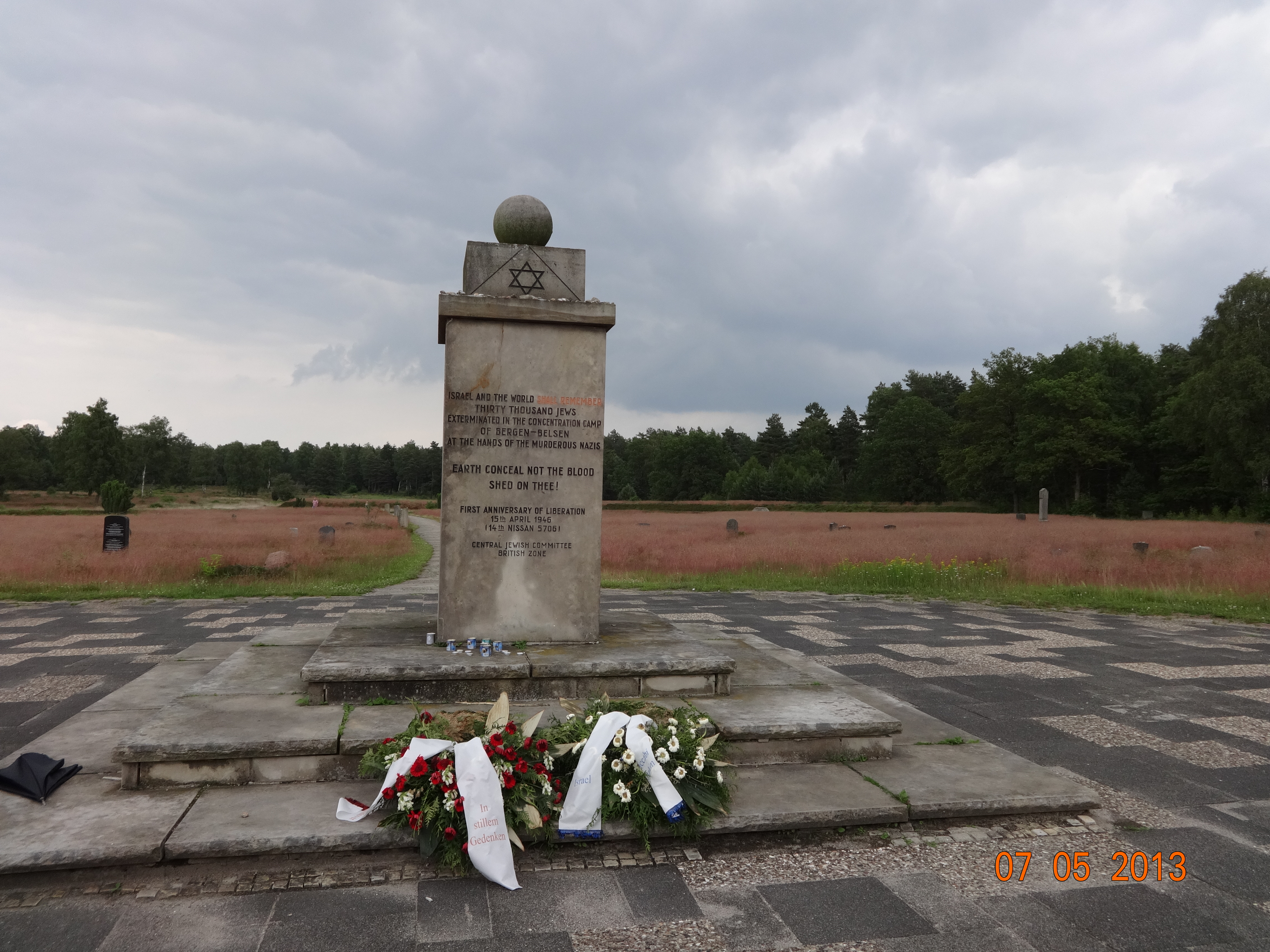
Back out to the camp. The solemn monuments marking the mass graves. 1000 Tote. One thousand DSC00490dead. 2500 Tote. Two thousand five hundred dead. And on and on, elevated mass graves. On to the commemoration room. Candles are lit, stones are placed, the prayers are recited in Hebrew and English, led by Pauline, the only other New Yorker on the trip with me. We are all moved. I think of Carrol Walsh, the tank commander who led me to this story, the liberator who did not want to be called a hero, or even a liberator. His own memorial service is today, half a world away, but I am here in this place to remember him as well. It is altogether fitting and proper. And perhaps it is also something destined to be.

This evening we depart from Hannover to Berlin. It is pretty crazy and unsettling at the Friday evening platform. 27 people have to run for the train, as the track has changed, with hundreds of others. Our original seats are taken, so we have to find other due to a mixup. But we do not lose anyone, and as I settle in next to a kind stranger, made welcome, I notice our station stops along the way- Brunswick. Magdeburg. We are roughly following the route of the train, and the 30th Infantry Division in 1945. What take us 35 minutes to cover, takes 6 nights and 7 days in April 1945.
Today was also something destined to be, the culmination of something incredible I am still trying to figure it all out- but this trip is helping me to place in proper context the elements of the greatest crime in the history of the world. As we leave this place of obscene beauty and peace, I think of  the I think of  the survivor’s words:

Remember Me.

Remember. Bergen Belsen, July 5, 2013.

Remember. Bergen Belsen, July 5, 2013.

Jimmie Butterfield died this week.

His obit is pretty humble. So was the man.

Jimmie used to come to my classroom with his bride of 65+ years, Mary. She would joke with him, and us, and call him by his high school nickname, “But”. Maybe it was “Butt”, I do not know, but they had fun playing around with each other in front of 17 and 18 year olds.

Ten years ago, after the two of them and Danny Lawler, another First Marine Division veteran of really hard fighting at Peleliu and Okinawa, came to my room for an afternoon, I came home to an email from one of my senior girls, telling me how meaningful meeting Jimmie and Mary and Danny was to her and her classmates. Jimmie, of course was blind and hard of hearing. Mary had to yell at him, he would crack a grin under the dark glasses and flirt with her. The girls loved it.

You see, Jimmie Butterfield got struck not once but twice in the head by enemy fire at Okinawa on May 19, 1945. He was evacuated first to Guam, then to Hawaii and later stateside for over 18 months and as many for reconstructive surgery. It was clear early on though that he would never see again.

He told us that he told his high school sweetheart to leave him be. Not to get attached to him, a blind man.

Well, she told us what she thought of that. They ran a small mom and pop store back in Glens Falls together until they retired.

Mary passed last fall. Jimmie died at home this week. What obstacles they overcame together…

What more can I say.

James F. Butterfield

June 27, 2013 1:48 am

GLENS FALLS — James F. Butterfield, 87, of Glens Falls, passed away Monday, June 24, 2013, at his home.

He was born Dec. 17, 1925, in Glens Falls, the son of the late James and Helen K. (McNulty) Butterfield.

Jim was a veteran with the U.S. Marines, serving as a corporal during World War II. He served in the South Pacific and, upon discharge, was awarded the Purple Heart.

He married the love of his life, Mary LaCivita in 1945; they enjoyed 67 years of wonderful marriage before she passed away Oct. 25, 2012.

Jim and his wife, Mary, were the proud owners and operators of Butterfield Grocery Store on Bay Street for 40 years. They loved traveling to Hawaii and Florida and cherished the time spent with their family.

Besides his mother and his wife, Mary, he was predeceased by his only daughter, Mary Jane (Butterfield) Daley; his brother, Ken Butterfield; and his sister, Alice.

Survivors include four grandchildren, Holli (David) Flaherty, of Boston, Mass., Jessica Daley of Philadelphia, Pa., James Daley of Boston, Mass., and Rebecca Daley of Columbia, S.C.; his sister-in-law, Celia Butterfield of Vermont; and nieces, Barbara (Chuck) Krull of North Carolina and Mary (Kevin) Hastings of Glens Falls.

A Mass of Christian burial will be celebrated at 11 a.m. Saturday, June 29, 2013, at St. Mary’s Church, 62 Warren St., Glens Falls.

Burial will follow in St. Mary’s Cemetery, South Glens Falls.

Friends may call from 9 to 10 a.m. Saturday, June 29, at Singleton Sullivan Potter Funeral Home, 407 Bay Road, Queensbury.

Remembrances can be made in Jim’s memory to Glens Falls Association for the Blind, 144 Ridge St., Glens Falls, NY 12801.

For those who wish, online condolences may be made by visiting sbfuneralhome.com.

Dan Lawler and James Butterfield

You can view a book preview at the Amazon site. Available in digital and paperback format. Book can also be purchased at http://matthewrozell.com/order-the-things-our-fathers-saw/

They saw it here first because I took the time to talk to “old” people..

http://popchassid.com/photos-holocaust-narrative/

 Photos That Change The Holocaust Narrative

Victims. Helpless. Downtrodden.

That’s the narrative that’s been spread about Jews for the last 70 years since the Holocaust. We’ve embraced it to our detriment. We can’t seem to address antisemitism without running to the world and screaming that we’re being persecuted, rather than standing up strongly in defiance, aware of our own inner strength.

The Holocaust has scarred us, a yetzer hara (sneaky bastard of a voice in our heads), that keeps trying to tell us how we are defined by our past, controlled by events that happened to us, instead of using those moments as points of growth.

And, in a weird way, that’s why all those images of us looking so helpless, so gaunt, in heaps of nameless bodies, have become a morbid fascination for us. We, and by extension the rest of the world, have chosen to define the Holocaust with these images.

But there are other images. Images that show a more subtle, more true, story. A story that shows our inner power, our inner turmoil in dealing with a situation we cannot comprehend, our attempts to gain justice, and our final steps into moving above and beyond our past and into a new future.

These are the images you will see below. Some of them may be disturbing to you. Some of them may inspire you.

But in the end, they do one thing that we desperately need as a people: they tell the real story of the Holocaust. A story that goes beyond victimhood and into our present-day lives. And today, on Yom HaShoa, 2013, it’s about time that story got told.

– See more at: http://popchassid.com/photos-holocaust-narrative/#sthash.PZpCfg4F.dpuf

My new friends in Russia told me that the entry they solicited from me last month won a contest (commemorating the end of WWII) took first place out of 1600 entries. I did not even realize it was a contest.

Главная / Одна победа / Joint victory

A Train Near Magdeburg (Поезд под Магдебургом)

5 голосов (Количество голосов через сайт)
5 голосов (Совокупные голоса через сайт и вне сайта)

(Перевод с английского. Для сохранения эмоциональной составляющей рассказа, мы рекомендуем, по-возможности, прочесть работу в оригинале).
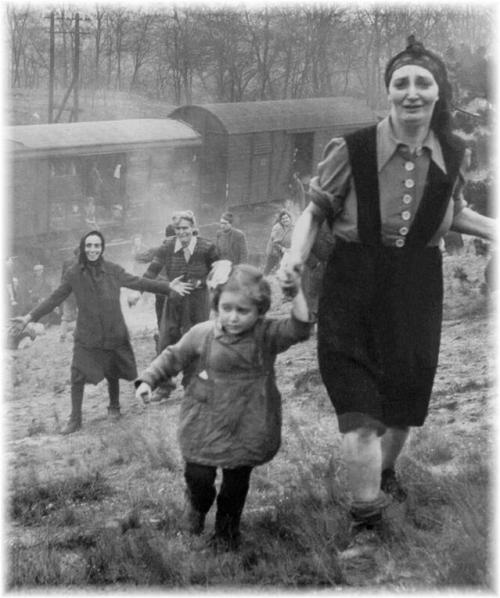
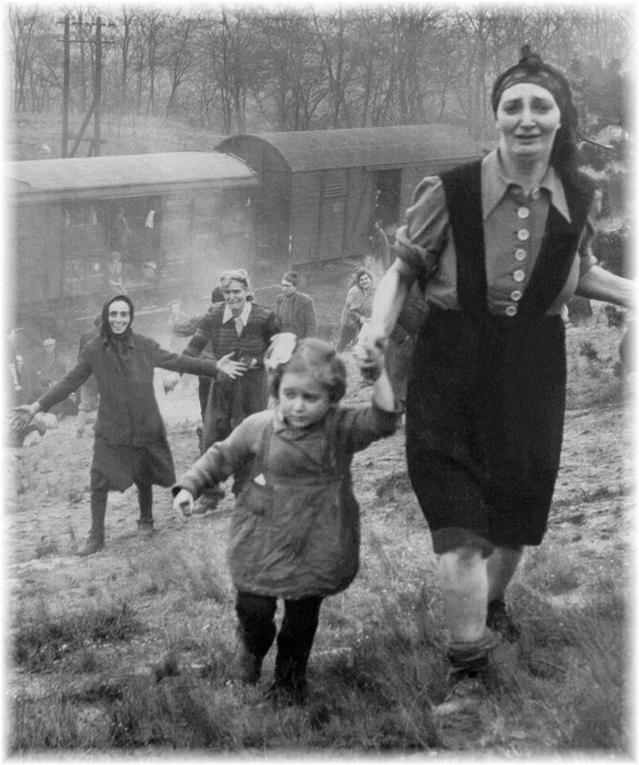
Friday, April 13th, 1945.                              Moment of Liberation.  Farsleben, Germany CREDIT: U.S. Army,     Major Clarence Benjamin, 743rd Tank Battalion.

Friday, April 13th, 1945.
Moment of Liberation.
Farsleben, Germany
CREDIT: U.S. Army, Major Clarence Benjamin, 743rd Tank Battalion.

В пятницу 13 апредя 1945 года я, командир экипажа легкого танка, вел свою машину в составе колонны 743 танкового батальона и 30 пехотной дивизии армии США. Мы направлялись вдоль берега Эльбы на юг к Магдебургу (Германия). После 3х недельного перехода к Эльбе мы были измотаны и пребывали в мрачном настроении. Хотя мы понимали, что война закачивается, радость от приближающейся победы была омрачена известием о смерти Президента Рузвельта. Неожиданно, мне и танку под командованием моего приятеля, сержанта Кэрроллу Уолшу, приказали отделиться от колонны и сопровождать майора Клэренса Л.Бенджамина из 743 танкового батальона в короткой разведывательной операции к западу от нашего маршрута. Оказалось, что экипаж танка майора Бенджамина повстречал нескольких истощенных солдат-финнов. Как оказалось, им удалось совершить побег из поезда, до отказа забитого голодающими узниками концлагерей. Экипаж майора повел два наших танка, на каждом из которых дополнительно сидели несколько пехотинцев из 30й пехотной дивизии, по узкой дороге к маленькой желедорожной станции, где в тупике стоял поезд, собранный из разнотипных пассажирских и грузовых вагонов. Вокруг него в апатии лежали или сидели люди, которые еще не увидели наших танков. Стражников не было видно. Должно быть, они разбежались еще до нашего приезда…по крайней мере, перестрелки около поезда я не помню. Освобождение узников этого поезда запомнилось мне не историей нашего героизма, а историей подлинного мужества его пленников.

Майор сделал очень эмоционально сильную фотографию в тот момент, когда первые несколько человек из поезда поняли, что они спасены. Люди на этой фотографии все еще лежат у поезда, пытаясь впитать хоть немного энергии от солнечных лучей. На первом плане – только что увидевшая нас женщина с раскинутыми руками и выражением удивления и радости на лице. Буквально через несколько секунд после этого момента женщина увидела мешок, брошенный кем-то из убегающих немецких солдат, и, порывшись в нем, триумфально показала всем банку солдатских консервов. На нее тут же накинулась целая толпа изголодавшихся, похожих на живых скелетов, людей, пытавшихся выхватить у нее находку. Мои крики на них не имели эффекта, и мне в итоге пришлось спуститься с танка и пробираться сквозь истощенных и измученных людей, чтобы оттащить нападавших от женщины, которая быстро схватила банку и убежала. Когда я расталкивал толпу вокруг женщины, то поневоле я ощущал себя школьником-хулиганом, обижающим малышей – так слабы были все вокруг меня. В результате этого инцидента я в полной мере осознал, в сколь плачевном состоянии пребывали узники поезда.

Я и мой экипаж проехали на своем танке в начало поезда и остались там, как символ того, что поезд с этого момента находится под охраной солдат армии США. Танк, которым командовал Кэрролл Уолш, бал направлен обратно в батальон за подмогой. С нами остались лишь пехотинцы. Насколько я помню, мой танк остался единственной охранявшей поезд бронемашиной весь день и вечер этого дня, а также ночь. Затем события развивались очень быстро. Нам передали, что командующий 823го противотанкового батальона отдал приказ бургомистрам всех окрестных городков приготовить и доставить к поезду продовольствие, и что Военное Правительство в ближайшее время возьмет на себя все заботы о спасенных людях. До этого момента нас оставили присматривать за голодающими людьми из поезда, охранять их, и сопереживать, не имея возможности немедленно облегчить их положение.

Насколько мне помнится, ко мне подошел один из узников – кадровый офицер финнской армии и предложил организовать охрану по периметру поезда. Я одобрил идею и попросил его организовать охрану и выставить на постах караульных, что и было сделано очень быстро и эффективно. Я с удивлением и восхищением наблюдал, как истощенные, обессиленные солдаты возвращались к исполнению своих воинских обящанностей. Они выглядели почти счастливыми од одной только мысли, что они вновь будут защищать кого-то. И хотя все их вооружение составляли лишь палки и немногочисленные автоматы, брошенные в спешке убегающими немцами, все вместе они могли дать довольно серьезный отпрор противнику. Это позволило мне немного расслабиться и пообщаться с людьми.

Ко мне подошла молодая женщина по имени Джина Раппапорт и предложила побыть переводчицей. Помимо своего родного польского очень хорошо говорила по-английски и немного – еще на нескольких языках.Мы с ней встали около танка, где незаметно собралась целая толпа мужчин, женщин и детей. До конца жизни мне не забыть эту сцену: с каким уважением и вежливостью относились они друг к другу, как важно было для каждого из них представиться, сказать, кто он такой. Каждый был во внимании, каждый старался полностью представиться – имя и фамилия, национальность и страна, откуда был родом этот человек (например, «Польский еврей из Венгрии»). Каждый затем старался подойти и пожать мне руку. Эти рукопожатия одновременно символизировали, с одной стороны, уважение, и благодарность, а с другой – самоутверждение, обретение себя заново – как личности, как человека. Я и мои друзья – закаленные боями ветераны, умеющие сдерживать эмоции. Тем не менее, в тот момент мне не удалось удержаться от слез. Не удается и до сих пор, стоит мне вспомнить тот момент – силу духа и мужество тех людей.

А их улыбки…У меня хранится снимок нескольких девочек из поезда: худые, почти прозрачные, со впалыми щеками и огромными глазами, видевшими слишком много ужаса и страданий, – как трогательно они улыбались, несмотря на лишения! Маленькие дети подходили со смущенными улыбками, подталкиваемые счастливыми мамами, чтобы сфотографироваться с нами. Я несколько раз прошел через вагоны по ходу поезда, смотрел на людей. Некоторые просто лежали – страдая от боли, или просто без сил. Другие – сидели и делились друг с другом планами и мечтами о будущем, с которым уже успели попрощаться, и которое неожиданно вновь обрело смысл и реальность.Кто-то просто ходил за мной, куда бы я ни направился, не мешая мне и не вмешиваясь в мои дела, а просто пытаясь быть ближе к одному из своих спасителей. Мне, в свою очередь, было очеть тяжело осознавать невозможность помочь всем немедленно, но у меня и товарищей не было ни еды, ни медикаментов. За неполные сутки моего дежурства из поезда вынесли не меньше шестнадцати тел – павших смертью храбрых в битве с голодом, не доживших совсме немного до момента, когда пришла помощь.

И пассажирские и товарные вагоны изнутри находились в ужасающем состоянии – результат многодневной скученности и антисанитарии. Но, к моему удивлению, сами люди не выглядели грязными. Их старая и износившаяся одежда в большинстве случаев была относительно чистой – было видно, что люди приложили огромные усилия выглядеть как модно лучше перед своими освободителями. Мне сказали, что многие успели сходить к обнаруженному неподалеко усточнику, чтобы помыться и постирать одежду. В моих глазах это стало еще одним примером невероятной силы духа этих мужественных людей.

Часть вечерая провел, беседуя с Джиной Раппопорт – женщиной, предложившей мне свою помощь в качестве переводчика. В начале войны она оказалась в Варшавском гетто, где несколько лет подряд с болью наблюдала как нацисты постепенно увозят оттуда людей в концентрационные лагеря смерти. Наконец пришел ее черед: ее перевезли в Берген-Белсен – концлагерь, условия содержания узников в котором были чудовищными – точь-в-точь такие, как я позднее прочел в официальных хрониках.

Когда нацисты начали понимать приближение окончания войны, они ускорили уничтожение узников концлагерей. Около 2500 тысяч пленников лагеря, в числе которых была и Джина, под конвоем набили в поезд и отправили колесить по всей Германию в надежде, что найдётся неосвобожденный еще концлагерь, где их можно было бы уничтожить до прихода Советских войск с восточного фронта, или американцев – с западного. Поскольку у пленников поезда практически не было с собой пищи, очень многие погибли по пути. Остальные во время бесцельного мотания по рельсам потеряли остаток веры в возможность спасения. Поэтому, когда их поезд бросили на рельсах в этом тупике в долине, они ни на что не надеялись и ждали конца. К сожалению, у меня не было возможности записать историю Джины. Через несколько месяцев после окончания войны, когда я уже вернулся домой в Сан-Диего, я получил от нее короткое письмо. Она жила в Париже и строила большие планами на будущее. Я ответил ей, но, к сожалению, она не продолжила переписку. Надеюсь, что ее жизнь в итоге сложилась так, как она мечтала.

На следующее утро мой экипаж, дождавшись прихода помощи, был направлен назад в батальон. Мы завели танк и помахали на прощание нашим новым друзьям. Я оглянулся и увидел одинокую фигурку Джины Раппопорт, которая вышла из толпы и махала нам рукой. Повинуясь неожиданному и необъяснимому порыву, я заглушил мотор, спрыгнул с танка, подбежал к Джине, обнял ее и поцеловал в лоб, как бы прося прощения за все ужасы и невыразимую жестокость, которые причинили этим несчастным люди в форме (пускай они были и нашими врагами), молясь за то, чтобы дальнейшая их жизнь у всех них сложилась счастливо и спокойно.

Джордж С.Гросс.,Калифорния.

Holocaust Survivors, Liberators Reunited – ABC News : Person of the Week: Teacher takes students on a journey of humanity.


Автор: Мэттью Розелл, штат Нью-Йорк, США.

A Train Near Magdeburg

On Friday, April 13, 1945, I was commanding a light tank in a column of the 743rd Tank Battalion and the 30th Infantry Division, moving south near the Elbe River toward Magdeburg, Germany. After three weeks of non-stop advancing with the 30th from the Rhine to the Elbe as we alternated spearhead and mop-up duties with the 2nd Armored Division, we were worn out and in a somber mood because, although we knew the fighting was at last almost over, a pall had been cast upon our victories by the news of the death of President Franklin D. Roosevelt.  I had no inkling of the further grim news that morning would bring. Suddenly, I was pulled out of the column, along with my buddy Sergeant Carrol Walsh in his light tank, to accompany Major Clarence L. Benjamin of the 743rd in a scouting foray to the east of our route.  Major Benjamin had come upon some emaciated Finnish soldiers who had escaped from a train full of starving prisoners a short distance away. The major led our two tanks, each carrying several infantrymen from the 30th Infantry Division on its deck, down a narrow road until we came to a valley with a small train station at its head and a motley assemblage of passenger compartment cars and boxcars pulled onto a siding.  There was a mass of people sitting or lying listlessly about, unaware as yet of our presence. There must have been guards, but they evidently ran away before or as we arrived, for I remember no firefight.  Our taking of the train, therefore, was no great heroic action but a small police operation.  The heroism that day was all with the prisoners on the train.

Major Benjamin took a powerful picture just as a few of the people became aware that they had been rescued.  It shows people in the background still lying about, trying to soak up a bit of energy from the sun, while in the foreground a woman has her arms flung wide and a great look of surprise and joy on her face as she rushes toward us.  In a moment, that woman found a pack left by a fleeing German soldier, rummaged through it, and held up triumphantly a tin of rations.  She was immediately attacked by a swarm of skeletal figures, each intent upon capturing that prize. My yelling did no good, so that I finally had to leap from my tank and wade through weak and emaciated bodies to pull the attackers off the woman, who ran quickly away with her prize.  I felt like a bully, pushing around such weak and starving fellow humans, but it was necessary to save the woman from great harm.  The incident drove home to me the terrible plight of the newly freed inhabitants of the train.

I pulled my tank up beside the small station house at the head of the train and kept it there as a sign that the train was under American protection now.  Carroll Walsh’s tank was soon sent back to the battalion, and I do not remember how long the infantrymen stayed with us, though it was a comfort to have them for a while. My recollection is that my tank was alone for the afternoon and night of the 13th.  A number of things happened fairly quickly.  We were told that the commander of the 823rd Tank Destroyer battalion had ordered all the burgermeisters of nearby towns to prepare food and get it to the train promptly, and were assured that Military Government would take care of the refugees the following day. So we were left to hunker down and protect the starving people, commiserating with if not relieving their dire condition.

I believe that the ranking officer of the Finnish prisoners introduced himself to me and offered to set up a perimeter guard. I think I approved and asked him to organize a guard, set out pickets, and handle the maintenance and relief of the outposts. However it happened, the guard was set up swiftly and efficiently. It was moving and inspiring to see how smartly those emaciated soldiers returned to their military duties, almost joyful at the thought of taking orders and protecting others again.  They were armed only with sticks and a few weapons discarded by the fleeing German guards, but they made a formidable force, and they obviously knew their duties, so that I could relax and talk to the people. A young woman named Gina Rappaport came up and offered to be my interpreter. She spoke English very well and was evidently conversant with several other languages besides her native Polish.  We stood in front of the tank as along line of men, women, and little children formed itself spontaneously, with great dignity and no confusion, to greet us.  It is a time I cannot forget, for it was terribly moving to see the courtesy with which they treated each other, and the importance they seemed to place on reasserting their individuality in some seemingly official way.  Each would stand at a position of rigid attention, held with some difficulty, and introduce himself or herself by what grew to be a sort of formula:  the full name, followed by “a Polish Jew from Hungary”-or a similar phrase which gave both the origin and the home from which the person had been seized.  Then each would shake hands in a solemn and dignified assertion of individual worth. Battle-hardened veterans learn to contain their emotions, but it was difficult then, and I cry now to think about it. What stamina and regenerative spirit those brave people showed!

Also tremendously moving were their smiles.  I have one picture of several girls, specter-thin, hollow-cheeked, with enormous eyes that had seen much evil and terror, and yet with smiles to break one’s heart.  Little children came around with shy smiles, and mothers with proud smiles happily pushed them forward to get their pictures taken.  I walked up and down the train seeing some lying in pain or lack of energy, and some sitting and making hopeful plans for a future that suddenly seemed possible again. Others followed everywhere I went, not intruding but just wanting to be close to a representative of the forces that had freed them.  How sad it was that we had no food to give immediately, and no medical help, for during my short stay with the train sixteen or more bodies were carried up the hillside to await burial, brave hearts having lost the fight against starvation before we could help them.

The boxcars were generally in very bad condition from having been the living quarters of far too many people, and the passenger compartments showed the same signs of overcrowding and unsanitary conditions.  But the people were not dirty.  Their clothes were old and often ragged, but they were generally clean, and the people themselves had obviously taken great pains to look their best as they presented themselves to us.  I was told that many had taken advantage of the cold stream that flowed through the lower part of the valley to wash themselves and their clothing.  Once again I was impressed by the indomitable spirits of these courageous people.

I spent part of the afternoon listening to the story of Gina Rappaport, who had served so well as interpreter.  She was in the Warsaw ghetto for several years as the Nazis gradually emptied the ghetto to fill the death camps, until her turn finally came.  She was taken to Bergen-Belsen, where the horrible conditions she described matched those official accounts I later heard.  She and some 2500 others, Jews from all over Europe, Finnish prisoners of war, and others who had earned the enmity of Nazidom, were forced onto the train and taken on a back-and-forth journey across Germany, as their torturers tried to get them to a camp where they could be eliminated before Russians on one side or Americans on the other caught up with them. Since the prisoners had little food, many died on the purposeless journey, and they had felt no cause for hope when they were shunted into this little unimportant valley siding.  Gina told her story well, but I have never been able to write it.  I received a letter from her months later, when I was home in San Diego.   I answered it but did not hear from her again.  Her brief letter came from Paris, and she had great hopes for the future.  I trust her dreams were realized.

We were relieved the next morning, started up the tank, waved good-bye to our new friends, and followed a guiding jeep down the road to rejoin our battalion.  I looked back and saw a lonely Gina Rappaport standing in front of a line of people waving us good fortune.  On an impulse I cannot explain, I stopped the tank, ran back, hugged Gina, and kissed her on the forehead in a gesture I intended as one asking forgiveness for man’s terrible cruelty and wishing her and all the people a healthy and happy future. I pray they have had it.

George C. Gross,Spring Valley, California

http://wp.me/pevEg-77

Автор:
Matthew Rozell
Hudson Falls, New York, USA,
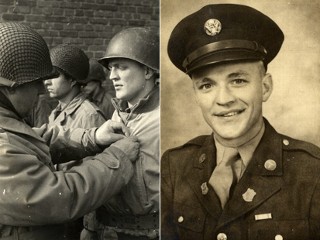
This is from last evening’s PBS NewsHour. Book is on my summer reading list. April 1945 a focus of my studies.

‘Bad to the Very End’: Author Reflects on the Long, Deadly Road to WWII Victory

In honor of the 69th anniversary of D-Day, Ray Suarez talks to historian Rick Atkinson about his new book, “The Guns at Last Light,” which chronicles the brutal fight for victory at the end of World War II.

JEFFREY BROWN: Finally tonight, we mark June 6, D-Day.

Ray is back with book conversation he recorded recently about World War II.

RAY SUAREZ: The war that had a hand in cementing U.S. status as a superpower and created the map of the modern world ended almost 70 years ago.

You could fill a library with books about the Second World War, yet historians still find new things to say and new ways to say it.

Award-winning author and historian Rick Atkinson has just completed the third book in his “Liberation Trilogy,” “The Guns at Last Light: The War in Western Europe, 1944-1945.” And he joins me now.

And, Rick, if nothing else, this book is a reminder that, with D-Day, there was still some of the worst fighting of the war left to go.

RICK ATKINSON, author, “The Guns at Last Light”: That’s certainly true, Ray.

I think the horror of it is difficult to imagine 70 years later. And it continues really after D-Day, almost to the last gunshot. There were almost 11,000 Americans killed in Germany in April 1945, the last full month of the war in Europe. And that’s nearly as many as died in June 1944, the month of invasion.

So the bloodletting continued right to the end. The notion that many Americans have that it was bad on the beaches, and then something bad happened during the Battle of the Bulge in December 1944, and then it was kind of sweeping into Germany and the war was essentially over is actually quite incorrect. It was bad to the very end, almost to May 8, 1945, when the war in Europe ended.

RAY SUAREZ: Terrible, ferocious, deadly fighting through Northern France, through Holland and Belgium, and finally into the German homeland.

Then you bring us to one British officer who says, “Why don’t the silly bastards give up?”

What was the German calculation in those last months, when it was clear they could no longer militarily prevail?

RICK ATKINSON: Well, there are several things at play.

Part of it is terror. Hitler had a police state of the first order. And those who showed any sign of being weak-kneed faced prison or often summary execution. That prevented a lot of people who knew that the war was not going to turn out well for Germany from giving up.

In other cases, you have to say that 80 million Germans tended in large measure to be true believers, that they believed in the fuhrer almost to the bitter end. You would see parades, for example, on Hitler’s birthday, April 20, 1945, in Berlin — this is 10 days before he kills himself — of young girls, young boys who are too young to go into the military carrying flags and singing patriotic songs, people cheering along the streets of a badly battered Berlin at that point.

So, the German psyche was such that they’d been heavily influenced by propaganda. And they were just generally disinclined to give up.

RAY SUAREZ: Rick, you also remind us that the war got deadlier as it went on, because both sides were innovating, inventing new ways of killing the other side practically until the last day of the war.

RICK ATKINSON: That’s true, Ray. The lethality increases as the war goes along, and it — it’s extraordinary how brutal it is.

We Americans, for example, invented something called the POZIT Fuse. That was the code name. There was a little radar sensor in the nose of an artillery shell, and it could, by emanating radar signals, determine when a passing plane or when an approaching target was just within the kill radius of the burst, and detonate that shell.

It was used for the first time in the Battle of the Bulge in December 1944. The Germans called it pure manslaughter. It was part and parcel of a generation of weapons that came along, napalm used for the first time around this time. The Germans had invented the V-1 and V-2 flying bombs and then a ballistic missile, the V-2, with terrifying results, most of them launched against London or Antwerp with devastating results to civilians.

RAY SUAREZ: We have in the final weeks and months of the war some moments where it’s hard to tell where moral authority existed, if such a thing any longer existed.

How could you tell concentration camp inmates not to rise up and kill their captors who were trying to surrender and act like normal soldiers? How could you put trial Americans who, sickened by the slaughter, would just turn and around pop these guys with their sidearms as they tried to surrender? It got nasty, brutal, and frightening in those final weeks.

RICK ATKINSON: This is true.

And it’s not just the final weeks, actually. There’s killing of prisoners that begins early in the liberation of Europe by American, British, Canadian soldiers, and, of course, by the Germans. It intensifies during that last 11 months from Normandy on.

But when you get to the camp liberation phase, particularly in April 1945, for example, at Dachau, American soldiers coming into this camp, tens of thousands of emaciated, horribly treated prisoners, and thousands of bodies lying around, and there were soldiers that went on a rampage. There were at least a couple dozen S.S. guards who had surrendered, had been taken into custody who were murdered, probably more than that.

This is at the same time that there are liberated inmates rampaging, tearing literally some camp guards limb from limb. There was an investigation. The investigators found that, yes, there had been prisoners murdered by American soldiers. Nothing was ever done of it. No one really had the stomach to prosecute American soldiers under these circumstances.

This is just one example of many, though, of the barbarity that war unleashes with — inside otherwise good soldiers.

RAY SUAREZ: I want to continue this conversation with you online.

The book is “The Guns at Last Light.”

Rick Atkinson, thanks a lot.

RICK ATKINSON: Thank you, Ray.

http://www.pbs.org/newshour/bb/military/jan-june13/atkinson_06-06.html