Feeds:
Posts
Comments

Archive for the ‘Uncategorized’ Category

Here is the interview that I did with NYSUT last week.

A staff member who is maybe thinking of leaving the profession wrote me a nice card about a month ago. In a follow up conversation she told me she saw me as a “beacon”- her word- for other teachers. That’s fairly heavy stuff to hear.

I feel  responsibility to add some extra comments below for the benefit of  teachers in general, and anyone else who is interested.

http://itswhatwedo.nysut.org/

Photo credit: Kris Dressen.

The reporter was competent, engaged and interested, but she had her deadline and we ran out of time.

I did not have a chance to tell her about the medic. I’ll include it below and will be passing it on to her. Kind of like the “moral of the story”, especially when you realize what it means for the soldiers.

I hope it serves as a reminder to teachers that what we all do every day makes a difference.

Here is the postscript to the story.

 *********************************************************************************

An important epilogue to the NYSUT story.

I know that some of you have been following the unfolding of the train liberation and reunions.  The part that is not mentioned in the article  is a phone call I got last Oct. from an 88 year old man in Scranton, PA who found me- and really wanted to be put in touch with the survivors.

You see, he had been a twenty something Army medic in 1945 when ordered to move out to the abandoned German Air Force hospital grounds at Hilersleben, immediately after the tank commanders came across that “death train” and Frank Towers evacuated the occupants to get them out of the battle zone.

Blessed – or maybe cursed – with a terrific memory, he can vividly recall the screams and overall sense of dread permeating the hospital, where he and his fellow medics wore a daily uniform of surgical masks, gloves and rubber aprons.

He remembers scooping handfuls of lice out of patients’ hair and administering countless needles, and the time he had to carry the body of a little girl to a tent serving as a makeshift morgue.

For six nonstop weeks after the liberation they confronted the horror and the evil. Well over 100 Holocaust victims, now his patients, died after they were freed by our troops. No one had trained Walter for this, and  for all these years he has lived with the guilt, the nightmares, and the trauma.

For 60 years he and his wartime buddies met after the war. Walter told me and some of our kids that in recounting their war stories, not one of them ever brought up that place called Hilersleben.

Those guys must have suffered from PTSD. And like many soldiers, his generation just did not talk about that.

Now he calls me at school, to chat, laugh, to let me know which of our survivors has contacted him, and to tell me he wants to meet me.

********************************************

Wait a minute-rewind- How did that happen?

I mean, Why did HE, find ME?

That all happened WAY before I was born.

I think about this, every single day.
Is there a reason I put on this earth? How do I make sense of my responsibility as a human being?

Did those soldiers have to put themselves in harm’s way, in many respects scarring themselves for life,  to care for “the brutalized and wretched” whom they did not even know?

******************************

What I offer to other teachers:
I’m an educator and so are you. As persons who spend most of our waking hours with young people, I can only postulate that we are in the “business” of molding human beings- which of course is not really a business at all. Like the soldiers thrust into that situation, ultimately we are caretakers of humanity.   It is an overwhelming responsibility, but it is not just a job.
It’s a mission.

Those soldiers made choices, confronted evil, sacrificed a ton, and saved humanity– Carrol, George, Frank, and Walter (“the Babe”)- and in doing so, I know they saved me, too. It sounds cliché, simplistic, Pollyanna, whatever- but it’s true.

You do your best to make a difference.

Lots of times you think you lose.

But here’s the real crazy part- most of the time you probably win.

Like these soldiers, sometimes you don’t know you have won until years later.

It’s just what we do.

Read Full Post »

  • Yesterday I got a phone call from US Army medic/veteran Babe Gantz in Scranton, PA. He wanted to thank me for putting the National WWII Museum in touch with him. They came to his house and did an interview with him. His call came during a class with my 9th graders-they were good when I shushed them and pointed to the phone at my ear. (When an 89 year old calls you and wants to talk, you don’t tell him it’s a bad time. ) When I got off the phone I told them who he was, and how he spent six weeks’ time with the survivors after their liberation, and how much it traumatized him then, and what meeting some of them, 67 years later, has done for healing him now.
  • Frank Towers wrote to invite me to Louisville for the next reunion of 30th Infantry Division soldiers of WW2. Frank is 95 and still researching the survivors from the train near Magdeburg, who he carried to Hilersleben in our US convoys after the stopping of the train by the tank commanders. He is working on his drafts and always updating our list, and we are up to over 230 survivors now.
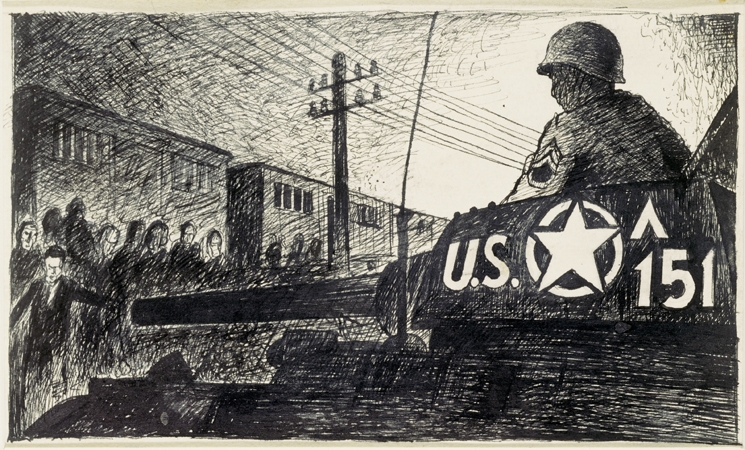
  • Carrol Walsh, the tank commander whose interview with me started this whole thing, is settled and doing nicely with his wife Dorothy down in Florida. It could very well be Carrol in this drawing by survivor Ervin Abadi of the 1945 liberation day. He was a Hungarian artist who nearly died in Belsen. Of course he did not know who the American driving the tank was. None of the 2500 liberated did.

They do now. Because of a teacher and his kids, who cared.

*****************************************************************************

In the middle of the journey of our life, I came to myself in a dark wood where the straight way was lost.

  • More unrandomness.

The other day I received the Holocaust library of one of the survivors who really meant a lot to me, who passed away earlier in the year.  His daughters wanted me to have them. I unpacked two big boxes of books and put them on my bookcase.
The first title I picked “randomly” to open was In the Garden of Beasts by Erik Larson, about the unfolding Nazi horror through the eyes of our first diplomat to Hitler’s Germany in 1933.

In a dark night of the soul moment, literally around 3am, the first page I opened to had this quote:
“In the middle of the journey of our life, I came to myself in a dark wood, where the straight way was lost.”–  from Dante. The Divine Comedy.

Whoa.

I read it, and re-read it. Over and over.

It resonated with me as if my friend Steve was speaking to me from beyond. And I know he was. In the ABC News video, he explains how his life was profoundly altered, and it is a reminder to me that the choices that I have made as an educator are for the sake of humanity.

The wood is dark.  I can now see that the straight way may be lost, but I come to myself. The path is still there.

Creating meaningful life learning experiences for our kids are what being a teacher is all about.

Don’t all real teachers do this, for the sake of humanity?

***************************************************************************

  • I’ve just put the finishing touches on student speeches for our National Honor Society induction. The 12th grade members have to deliver these to their younger peers who are now being inducted.

We cultivate the ideals of character, leadership, scholarship, and service to others. The seniors speak of individuals in history  who have gone through trials to triumph in the face of adversity. We have been practicing night after night for the big day tomorrow. They will make their parents and teachers very proud.

Some parents, community  movers and shakers, will approach me and say thank you for what you are doing for our children, for helping them blossom and  grow, gaining confidence, expanding  life experiences, etc., etc., etc. They are really saying this in recognition of all of the teachers, and when I reply, I think I am speaking for most of them:

No.

Thank you for what your children are doing- for me.

Read Full Post »

I open this story this morning and was pleasantly rewarded with the work of a man I consider a friend, US Holocaust Memorial Museum ‘s Steve Vitto. Steve has worked with me on several occasions to help locate documents and paper trails for other friends who are victims of Nazi persecution.

He is a time traveling detective of the finest sort. Congrats Steve, and to Mr. Greenfield for an inspirational story.

Holocaust documents reveal story behind Obama’s tailor

By Ned Martel, Washington Post blog, 11/5/12

The story of Martin Greenfield, the 84-year-old, Czech-born tailor to presidents, proved particularly resonant with families touched by the Holocaust—or as in his case, devastated by it. My colleague Alice Crites and I could not have told his story so fully without records from a special archive, maintained at U.S. Holocaust Museum and Library.

Four years ago, seeing those records would have been impossible. In 2007, the museum, and other plaintiffs, won a legal case to open up a trove of records kept in Bad Arolsen, Germany, and administered by the government there. Before the suit, if survivors or their family members sought a record, they would receive only a summary of what the archive contained, not the actual documents.

Now, in Washington and at sites in 10 other countries, archivists are standing by, ready to fulfill requests to see digital scans of horrifying paperwork. Through the new International Tracing Service Archive, citizens have access to 100 million documents on 17 million people. (In addition, Greenfield and others in his path to freedom gave moving video testimonials for The Shoah Project, which can be viewed at the library.)

The documents proved haunting. But what’s so scary about a piece of paper? Above all, the 30 or so we found on Greenfield demonstrated the precise record-keeping of highly premeditated mass murder. The systemization of hatred is evident in every entry in these documents, even in something as mundane as a folder with a checklist of what’s inside it. In many months of looking over documents that pertain to Greenfield, I saw the meticulous handwriting of registrars, who noted the boy’s birthday (August 9, 1928), his hometown (Pavlovo, now in Ukraine), and his assignments inside a concentration camp. The bureaucrats were taking better care of the papers than the prisoners.

Steven Vitto, a 22-year veteran of the museum, did the search for Martin Greenfield’s documents, using some key details. His name was Maxmilian Grunfeld back then. We knew roughly when he entered Auschwitz, when he left, and when he entered Buchenwald. It was late enough in the war that records in the first camp were either less detailed, written in a hurry, or destroyed. Vitto said that the Russians who liberated Auschwitz didn’t have the same success in preserving documents as the Americans who freed Buchenwald.

Since Martin/Max was in both places, Vitto had good luck in finding papers related to the boy’s time in the latter camp. For instance, a document marked with the boy’s tattoo number from Auschwitz — A4406 — and signed by his shaky hand purports to record his personal effects for safekeeping. But the “Effektenkarte” is blank. After all, Martin/Max arrived at Buchenwald after a grueling forced march out of Auschwitz and then a train ride in an open car, where passengers lit fires to keep warm. The boy arrived, in other words, emptyhanded.

His name is listed in Block 58, a barrack that housed new prisoners in that January of 1945. During the Allied occupation of Germany, Martin/Max appears again in records, written in German and English. There’s one chilling answer to a question about “reason for arrest”: the one word response is “Jew.” Mind you, that was written by an American clerk interpreting the German reason, but it’s no less chilling and no less true.

This is a site for anyone to many research requests for documents on Holocaust survivors and victims.

From http://www.washingtonpost.com/blogs/arts-post/post/holocaust-documents-reveal-story-behind-obamas-tailor/2012/11/05/0cc40e68-2523-11e2-ac85-e669876c6a24_blog.html

For Martin Greenfield s full story-

http://www.washingtonpost.com/politics/tailoring-a-new-life-in-america/2012/10/31/d0f8b904-e56e-11e1-936a-b801f1abab19_story.html

Read Full Post »

A great interview with Frank McCourt. One of my heroes. My late mom’s too, who also narrowly missed growing up in Depression era Ireland. She met Frank and she was also the product of Irish parents who had recently emigrated from the same county (as McCourt) in the 30s’ to NYC. She was also a passionate educator, a dedicated school nurse teacher, who constantly battled the admins on behalf of the kids who came to her for help. “Nursey Rozell” would also not hesitate to kick your ass if you just wanted to get out of class, but with a keen eye for compassion when it was needed.
Interview With Frank McCourt
Frank McCourt, the author of Angela’s Ashes and ‘Tis, is a retired English teacher. He lived in New York City; he passed away in July 2009.

Q: What do you see as some of the major obstacles to improving public schools in our country?

We don’t like our kids. This is a country, this is a nation of people who don’t like their kids. Therefore, the teachers are baby sitters. We don’t look at teachers as scholars the way they do in Europe. In Spain you’re called a professor if you’re a high school teacher, and they pay teachers, they pay teachers in Europe. We don’t here. We resent if, we resent giving them pay raises. If they rise up and say we need a cost of living adjustment, [we say], “Oh, what do you mean you need a cost of living adjustment? Look at all the time you’ve got off. You’re finished at 3 o’clock, never mind that you go home with a bag of papers to correct, and then you have the summers off. These teachers with their summers off! Oh my, I wish I were a teacher.” Well, there’s nobody stopping you from becoming a teacher! Go and become a teacher, dammit! All these so called professionals, investment bankers and lawyers, [they say], “Oh these teachers have their summers off.” You know what most teachers do? They go out and get a job to subsidize their miserable pittance they get from most community boards and boards of education.

Q: Why did you become a teacher?

When I got out of the army I had the GI Bill. Since I had no high school education or anything like that, I came to NYU and they took a chance on me and let me in. I suppose I was what you might call a mature student of 22. And, I thought, I’d like, at one time I thought I’d like to become a journalist, but because I had no education, and because I’d come from this horrible background of poverty and so on, no education, no self esteem, so I didn’t see myself mingling with two-fisted, hard-bitten journalists. I would dream of going up to the New York Times and asking them if I could please be a copy boy or let me scrub the toilets or something like that. But I couldn’t rise to those heights. So the two things I liked most of all were books and children. I used to see American movies where the teacher is there in the classroom and all the kids file in — it was usually a movie about Nebraska or something like that where everybody’s white and blue eyed, and there’s Doug the quarterback and Susan the beauty queen, and they sit there with their pens poised while you discourse most eloquently on John Donne, and they’d all sit there and they would love me to death and I would be the hero of the community. Well, it didn’t turn out like that. I became a teacher all right. I wanted to become a teacher because I had a misconception about it. I didn’t know that I’d be going into, when I first became a high school teacher in New York, that I’d be going into a battle zone, and no one prepared me for that. They’re all natural enemies, teenagers are all natural enemies, they’re really animals, but I love them, I love animals, and the average teenager should be sent to some remote place like Australia, till he’s 20. But I like the teaching because it keeps you on your toes all the time. You can’t back off, and some teachers say, “Oh, give them busy work.” Well, when you’re with bright kids you can’t give them busy work, but..it keeps you… in a sense it’s like Hemingway talking about grace under pressure. You’re facing the bull, and that moment that the bull’s horn comes close to you is the moment at which you could die. That’s what it’s like going into the classroom — you could die in there.

Q: How did you learn to be a successful teacher?

There was what you would call a turning point in my life. I was ill-prepared and insecure — because I had never been in a high school in my life — in this first job. I knew nothing about American kids and their strange tribal ways, and it seemed to me that they were throbbing with sexuality, which you wouldn’t find in Ireland, because they’d knock it out of you. But here, there’s boys and girls in the class, and I didn’t know what to do; and the only models I had for teaching were Irish school masters, and that was all threat, sticks, straps, and physical beatings. So, of course I wasn’t gonna, there was gonna be no physical beating…there were kids in those classes who were on the football team, and would’ve broken me in two. But I would become frustrated and I would yell at them, I’d say to them, “You better keep up now, you’re not doing the work, you’re not bringing in your textbooks,” and so on, and I’d rant and rave. ‘Til one day there was a little African-American girl sitting in the front row — Sylvia — and she was beautiful and always impeccably dressed. And one day she said, “Mr. McCourt!” “What?” “Mr. McCourt.” “What?” “Chill Out!” So, that was the first time I ever heard that expression, but I knew what it meant, so I chilled. What that meant was I became more and more of a human being. I dropped the Irish schoolmaster mask. It didn’t work anymore. What I learned then was the main device, if you want to call it that for a successful teacher, was honesty. I said look, we’re in this together, I’m learning, I would say that, I’m learning. This is what I discovered years and years and years later, I was the big learner out of this teaching experience.

Q: Tell us about your first teaching experience.

When I got my first teaching job, which was on Staten Island in 1958, I took over in midterm spring of ’58 for an old lady named Ms. Mudd, m-u-d-d. And she was just, she just, the kids were driving her crazy. And she said to me, “They’re driving me crazy,” she says to me, “You look out this window,” and the school overlooked New York Harbor. She said, “You look out this window in a week, and you’ll see this ship passing by, and you’ll see me waving from this cruise ship, and the two things I never want to see again is Staten Island and teenagers!”

She left me with mounds, piles of old papers and books, and I went rummaging through the old papers, and I didn’t know what to do with the kids, so I had them reading these old papers, and some of them went back to the Second World War. And they were compositions written by young Staten Island students at that time, who later went off to war, off to the Second World War. And some of the kids in my class discovered these papers, and they were overcome: “This was my father, this was my uncle, this was my cousin Vinny,” and so on. And it was so exciting, and I said to them, “This composition paper is crumbling,” and they would copy them, and they were taking them home to their families, “Look what Uncle Vinny…” And this was a tremendous moment. It was my bridge to the kids. There was such a feeling of community, and emotion, because sometimes the kids, girls and boys, would come across some item from the Second World War from somebody in their family who had been a student at McKee. And, they would be overcome and have to run out of the room. That was one, I think that was my first bridge to them.

Q: How did you balance the emotional needs of students with their intellectual ones?

These girls would come from, I had one class of 35 girls come in these white dresses, uniforms or whatever they are, with hair, hairdos, these beehive hairdos, where you could raise a sparrow in each family. They came into my class and they sat, this first day they sat down, and they took out little boxes, and they started doing their nails and plucking their eyebrows, and fixing their eyelids and so on, eyelashes, and I said what — this was a vocational high school — I said, “What shop is this?” “Cosmetology.” I said, “What’s cosmetology?” “Beauty culture.” And then they’d comment on me, they’d say, “Yo teach, your hair is a mess, your nails need work. Why don’t you come up to beauty culture and we’ll do you?” That was an invitation I declined.

But all of this was human stuff and it had nothing to do with the curriculum. In the meantime, I’m finding my way, because nobody was there to help me. I’m finding my way through this education minefield. I’d go up to the teacher’s cafeteria at lunchtime. On one side of the cafeteria the old timers were gathered — they’re giving me advice, and they’re saying, traditional and conservative and they’ve been through it, and they say you know, “You’re the boss in that classroom, you tell them what to do, don’t ever tell them anything about yourself, nothing private.” Then I’d go to the other side of the cafeteria, and there are the younger teachers who were progressive, you know, students of John Dewey, and they’d say, “Well, you know, these kids are people. These are real people and we have to meet their felt needs.” I didn’t know what a felt need was, but I guess I tried to meet their felt needs. It was a long, slow process, because there’s no, there’s no method or technique by which you can become a successful teacher overnight. It takes years. And it’s like writing I suppose, or like any art, or any human endeavor — you have to find your own way. You have to find your own style, techniques and style. So, I found my own style after a while, and sometimes I would imitate other teachers who had certain ways of dealing with classes. Didn’t work, never worked. It’s like being a writer. You imitate Faulkner, you imitate Hemingway, you imitate Scott Fitzgerald, but in the end you find your own voice, and your own style, and that’s what I had to do as a teacher.

Q: Describe a typical day of teaching as you remember it.

Most teachers would have, first period on the second floor, then it’s up to the sixth floor for the second period, down to third floor for the third period, and in between, in between the second and third period you had what they call homeroom, official class. You had this group of kids, and you had to take their attendance, give them bus passes and food vouchers and whatever, and get excuses for the previous day’s absence. You had to keep all these records. You were like a big clerk, a bookkeeper. And then you go to your next class. So there were five classes, so you’d have lunch, and then you’d have what they call, somewhere along the line, a building assignment. And my building assignment most the time was to supervise the student cafeteria. And you’d go in there and you’d hear them feeding, swilling, and whining and moaning about the food and you see kids throwing food away and you think of your own childhood when we would have eaten the stuff out of the garbage can, and I was convinced, they’d say, “Oh, this is terrible, this hot dog.” I was convinced that most of these kids were gourmets. They went home to bouillabaisse every night or fine wines. Then, if you’re an English teacher, if you’ve been foolish enough to give them an assignment, they hand it in. And you take it home in a bag. You go home and your heart is heavy because you have 170 kids. Now if you give them an assignment 250 words, multiply 170 by 250, and that’s like reading the Encyclopedia Britannica. And there’s another book you’d like to read or a movie you’d like to see, or you’d like to talk to your wife once in a while, but you have all these papers. Sunday night comes. That’s the worst night of the week for any teacher in the country because they know this stuff is piled up and they’re in such a state of despair. And you try to do it, and like any kid who has homework to do, “I’ll get up in the morning and do it.” Well you know you’re not going to do 170 papers, so you do what you can, and try to get it back to them, but the load never lightened.

Q: Why are teachers important in our society?

What’s the most precious material we have in the country: children. If we don’t give them the best keepers and mentors and teachers, we’re destroying them. We’re destroying the country. They are the future, and the teachers are there everyday with the future. And we’re so careless about that. We underpay teachers, we hire poorly prepared teachers, and we don’t help them. We don’t go into the schools and help them, “What can I do?” We don’t participate. It’s a matter of taking care of the children. If you have a child who’s ill, you want the best doctor. You want the best surgeon, “I want the best surgeon for my child.” But do we say that about teachers? No, we don’t. We know that surgeons are well paid, they better be well paid, they don’t want to have worries at home. It should be the same way with teachers. They’re the single most important profession in the country because they’re shaping the future. And some of them are misshaping the future or they’re not being helped by us. And as I said before, we don’t like our children. Because the proof of it is how we treat our teachers. That’s the one fine and significant proof: how you treat your teachers. And they’re treated badly.

Q: What can we do to help improve our nation’s schools?

One of the reasons the schools are in such a state is no one consults the teachers. I used to watch some of these programs on television and you’d have somebody from some corporation, and you’d see some jerk from the think tank, and then you’d have a union official, and I’d call… One time I called Channel 13 in New York, they had one of these discussions about schools, and I said — they were inviting us, calls from the outside — and the lady said, “Well what would your question be?”

And I said, “Why don’t you have a teacher on this panel?”

“Oh, that’s a very interesting question…”

I said, “It’s about schools, isn’t it?”

“Yes.”

But I never got through. One never gets through.

http://www.pbs.org/onlyateacher/today8.html

Read Full Post »

Lessons learned from a survivor.

Keeping it real. A nice article to re-post. Lessons learned from a survivor.

Aron Lieb, Holocaust Survivor, a Stranger, Saved My Life

by Susan Kushner Resnick

You’re moving through life, trying to make it to the end of the day, when a stranger approaches. You immediately calculate a response: Open the door he’s knocked upon or pull it tight and turn away? Many factors come into play. Is he dangerous? Is your world too full of good things or too cluttered with bad for you to bother with someone new? Are you shy or embarrassed by how much you need to talk to somebody?

When it happened to me, I talked back. The man had stopped me in the lobby of a Jewish community center as I put my baby in his car seat.

“Vhat’s his name?” he asked in an accent full of history.

I sized him up: an old fellow wearing a cap and glasses. He appeared to be clean and unarmed, plus his eyes twinkled. Probably just a grandpa who missed his own cherubs, I thought.

I told him my baby’s name, asked him about himself and learned that my grandfather assumption had been way off. He didn’t have children or grandchildren. He only had one living relative because everyone else had been killed during the Holocaust.

Aron Lieb had spent the war in a ghetto, in forced labor camps and in several brand name camps: Auschwitz, Birkenau and Dachau. After American soldiers welcomed him back to the living with chocolate bars, he came to America. Here he worked as a deli counterman while enduring an unhappy marriage until his wife’s death.

I t was a sad life, yet he had those twinkly eyes. I wanted to know more.

I suggested we meet for coffee the following week. This wasn’t something I’d ever done before, but it felt right. What harm could one coffee do?

No harm at all, it turned out. That morning changed my life.

At first we were just coffee mates. Then he started coming to my house for holidays, bringing my kids birthday candy and telling me all of his stories. You might think that he sprinkled his tales of tragedy with bits of wisdom, Tuesdays with Morrie style. But that wasn’t his way. Instead, he told jokes, complained about the headache he’d had since before the war and flirted with every woman he saw.

Then his eyes stopped twinkling. That’s when the life lessons commenced.

The Red Cross did many helpful things for survivors after the war, but I don’t think they provided counseling. Now we know about PTSD, but it was around then, too, and Aron had buried his symptoms for years. As one ages, psychological defenses break down as much as collagen and muscle tone do. He became depressed and anxious, requiring psychiatric care. When I realized that he didn’t have anyone to help him navigate the medical system, I signed health care proxy and power of attorney documents, essentially adopting him.

He recovered, but after a while, the misery returned. He spent all of his time alone in his apartment, eating not much more than rice and pills. When he threatened to kill himself, I knew he needed more than I could provide. But due to a complication in how this poverty-level Holocaust survivor had spent his German reparations, he couldn’t get into a Jewish nursing home until I collected a pile of money for expenses.

Organized religion can be wonderful and terrible. Fighting Aron’s battles showed me both. I’d expected the established Jewish community to provide anything necessary to help him die with dignity. When they wouldn’t, I was heartbroken. Already ambivalent about the religion I’d been raised in, their refusal to do what was right almost caused me to quit altogether. But my faith was restored when the rabbi of the small congregation I infrequently attended asked congregants for help. Soon, people who knew neither of us donated whatever they could — some sending checks for $5 and $10 — to keep Aron safe.

Aron used to tell me that I’d saved his life, but he actually did most of the saving. He gave me the gift of being able to help somebody. He exposed me to the best and worst of humanity. And he showed, through the example of his entire life, that we humans can endure everything.

All because I talked to a stranger.

http://www.huffingtonpost.com/susan-kushner-resnick/holocaust-survivor-stranger-saved-my-life_b_2065898.html

Read Full Post »

I’m kind of an old school taskmaster. Last week, I made my US History students memorize the Preamble to the US Constitution. They complained, but the next day,  a few were eager to recite it for their peers in class. Jaime, an exchange student from Spain, literally leapt at the chance to recite it in English for his peers. He jumped out of his seat, smoothed down his clothes, and stood before his desk, and did it, even though he admitted he did not know what “Dome Est Teak –  Tron Qwheel Leetey” meant! The class applauded, and one by one they rose behind their desks to give it a shot. They stood and recited for their teacher and each other 54 of the most important words in American history! They competed  in standing, stumbling, and fumbling through it,  but when they left the classroom I could still hear the Preamble ringing out in the crowded hallways.

The so called lesson took on a life of its own. And in the nature of the current climate of teacher expectations, I reflect to myself, where is the value to this activity? Was it just entertainment? Should I  “monitor and adjust” and not allow it to unfold in other classes? For 20 minutes there was nothing but good natured fun and laughter coming from the class in peals. I suppose I could have had them do a internet search and fill in the blank activity. But when we met again and actually broke the words down, perhaps they took on greater meaning.

By the way, the other classes loved it too. Yep, especially when we wasted more time watching this clip afterwards. Got to teach them about Mayberry hometown values, too. Our inside joke in the classroom- “when you learn something, you learn it.”

Read Full Post »

  I am re-posting this on the anniversary of a car crash that would claim the life of Holocaust survivor and later U.S. Army Ranger, Steve Barry.

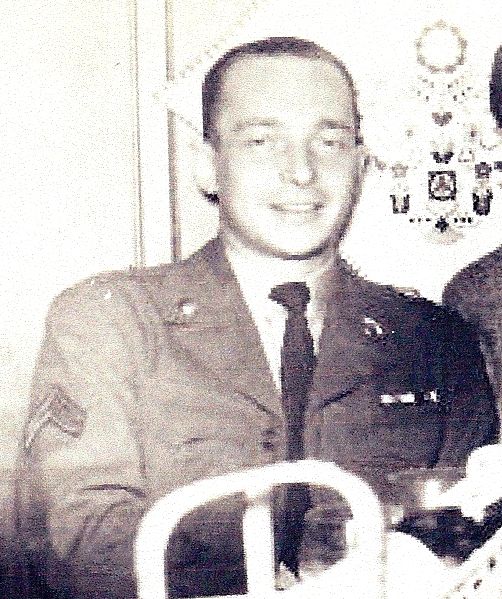
My friend on the left described himself at one point in his life as the “Happiest Korean War Draftee”. Steve was a  survivor from Hungary who beat the odds and lived through the horrors of the Holocaust after the Germans invaded that country in 1944 and did their best to kill him on several occasions. He spent his 20th birthday jammed in a boxcar destined for Bergen Belsen, witnessed people dying of starvation and disease by the thousands,  and was liberated on April 13th, 1945 at the hands of the 743rd Tank Battalion and the 30th Infantry Division of the US 9th Army, aboard the train near Magdeburg.  He emigrated to the United States in Dec. 1948 after spending years in a displaced persons camp, applied for citizenship immediately, and was drafted in 1950, only to be assigned occupation duty in a far off nation- you guessed it-Germany. He was so happy to serve his adopted country…

Steve passed away yesterday, January 16th, 2012, after a long and difficult ordeal from injuries sustained in an automobile accident in September. I’ll always remember his special Christmas and Easter cards that he sent to me, made personally on his computer; his funny, self depreciating humor; and above all his overwhelming happiness at being able to finally meet the men who saved him. I hope that the memories sustain his wife Stella and his children and their families, and also the friends that he made later in life and became soulmates with- soldiers Carrol Walsh and Frank Towers, the soldiers who arrived on the scene to free him and help him begin his life anew.

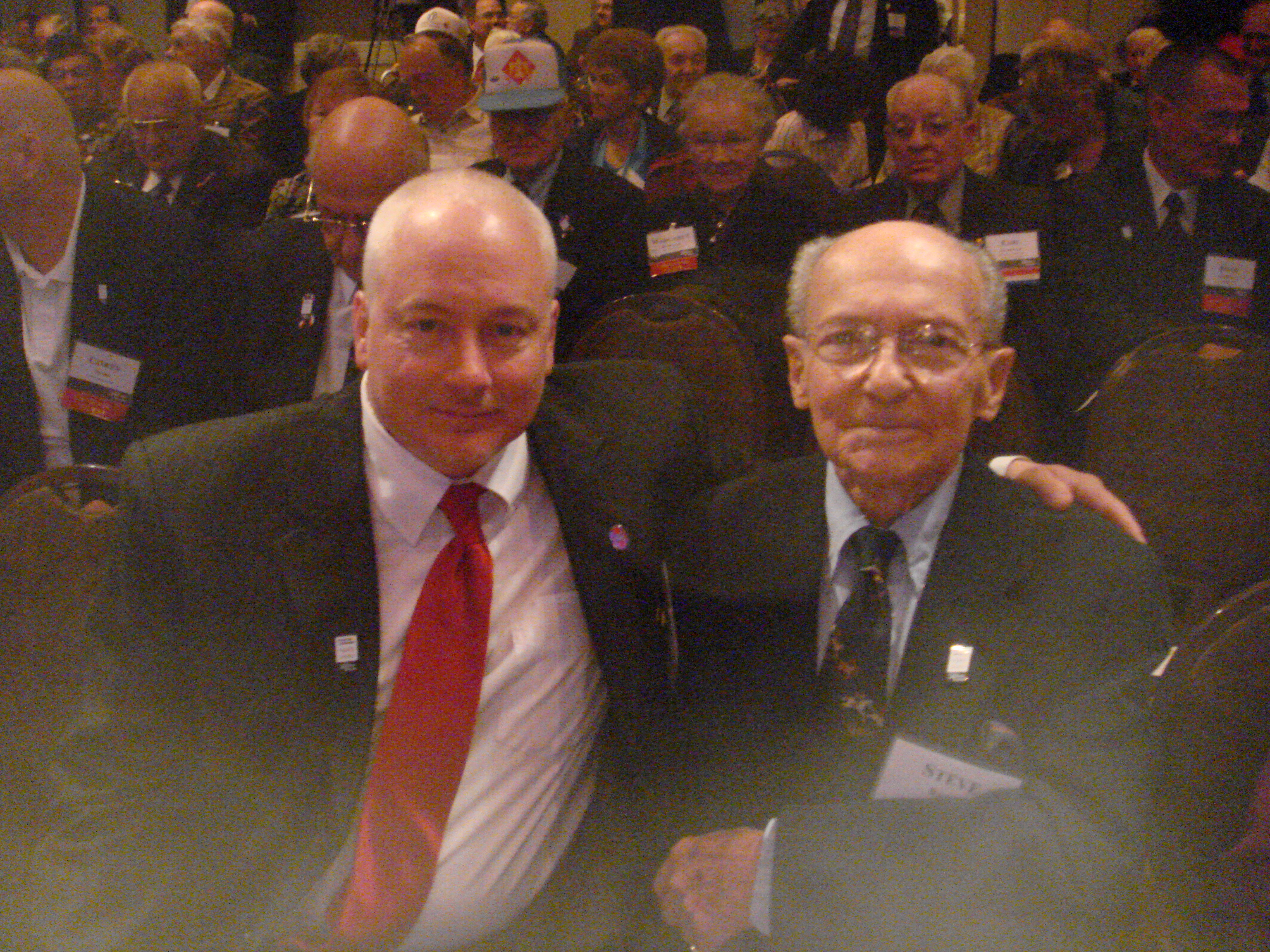
Matthew Rozell, Stephen Barry, National DOR Ceremony, Washington, DC April 2010. This photo was taken the day after the 65th anniversary of Steve’s liberation in April 1945. We had just been honored by the director of the United States Holocaust Memorial Museum before the national ceremony in the Capitol Rotunda.

I will leave you with a few of his words-and we will remember. Thanks, Steve, for all that you gave us, and for passing the torch to a new generation of students to carry your message forth.

An earlier post… The Holocaust Survivor and the US Army Ranger…

A fantastic national radio interview that I helped to arrange, knowing he would be the perfect speaker…

And the educational films I constructed from them.

 Stephen B. Barry, 87, of Boca Raton, Florida, passed away peacefully on January 16, 2012 following a serious car accident in late September 2011. A Holocaust survivor,who was proud to be an American, he went on to live the American dream. He is survived by his wife Stella of nearly 58 years, his children Barbara (Paul), Jamie (Jerry) and Randy and his beloved granddaughters, Amanda and Victoria and many extended family and friends. Services to be held at Beth Israel Memorial Chapel in Delray. In lieu of flowers, the family requests contributions in his memory be made to The United States Holocaust Museum.
Published in Sun-Sentinel on January 18, 2012

Read Full Post »

Israeli archaeologist digs into Nazi death camp

 Wednesday Aug 22, 2012

Israeli archaeologist Yoram Haimi shows aluminum plate  at the site of the former German Nazi death camp of Sobibor. Photo / AP

I have been an avocational archaeologist for many years; have made some significant academically credited discoveries. This aspect of combating Holocaust denial really intrigues me. MR

When Israeli archaeologist Yoram Haimi decided to investigate his family’s unknown Holocaust history, he turned to the skill he knew best: He began to dig.

After learning that two of his uncles were murdered in the infamous Sobibor death camp, he embarked on a landmark excavation project that is shining new light on the workings of one of the most notorious Nazi killing machines, including pinpointing the location of the gas chambers where hundreds of thousands were killed.

Sobibor, in eastern Poland, marks perhaps the most vivid example of the “Final Solution,” the Nazi plot to wipe out European Jewry. Unlike other camps that had at least a facade of being prison or labor camps, Sobibor and the neighboring camps Belzec and Treblinka were designed specifically for exterminating Jews. Victims were transported there in cattle cars and gassed to death almost immediately.

But researching Sobibor has been difficult. After an October 1943 uprising at the camp, the Nazis shut it down and leveled it to the ground, replanting over it to cover their tracks.

Today, tall trees cover most of the former camp grounds. Because there were so few survivors – only 64 were known – there has never been an authentic layout of the camp, where the Nazis are believed to have murdered some 250,000 Jews over an 18-month period. From those few survivors’ memories and partial German documentation, researchers had only limited understanding of how the camp operated.

“I feel like I am an investigator in a criminal forensic laboratory,” Haimi, 51, said near his home in southern Israel this week, a day before departing for another dig in Poland. “After all, it is a murder scene.”

Over five years of excavations, Haimi has been able to remap the camp and has unearthed thousands of items. He hasn’t found anything about his family, but amid the teeth, bone shards and ashes through which he has sifted, he has recovered jewelry, keys and coins that have helped identify some of Sobibor’s formerly nameless victims.

The heavy concentration of ashes led him to estimate that far more than 250,000 Jews were actually killed at Sobibor.

“Because of the lack of information about Sobibor, every little piece of information is significant,” said Haimi. “No one knew where the gas chambers were. The Germans didn’t want anyone to find out what was there. But thanks to what we have done, they didn’t succeed.”

The most touching find thus far, he said, has been an engraved metal identification tag bearing the name of Lea Judith de la Penha, a 6-year-old Jewish girl from Holland who Israel’s Yad Vashem Holocaust memorial confirmed was murdered at the camp.

Haimi calls her the “symbol of Sobibor.”

“The Germans didn’t discriminate. They killed little girls too,” he said. “This thing (the tag) has been waiting for 70 years for someone to find it.”

Haimi’s digs, backed by Yad Vashem, could serve as a template for future scholarship into the Holocaust, in which the Nazis and their collaborators killed about 6 million Jews.

“I think the use of archaeology offers the possibility of giving us information that we didn’t have before,” Deborah Lipstadt, a prominent American Holocaust historian from Emory University, said. “It gives us another perspective when we are at the stage when we have very few people who can speak in the first person singular.”

She said that if the archaeological evidence points to a higher death toll at Sobibor than previously thought, “it is not out of sync with other research that has been done.”

Haimi’s basic method is similar to what he does at home, where he does digs for Israel’s antiquites authority in the south of the country – cutting out squares of land and sifting the earth through a filter. Because of the difficult conditions at Sobibor and the sensitive nature of the effort, he is also relying on more non-invasive, high-tech aids such as ground-penetrating radar and global positioning satellite imaging.

Based on debris collected and patterns in the soil, he has been able to figure out where the Nazis placed poles to hold up the camp’s barbed wire fences.

That led him to his major breakthrough – the mapping of what the Germans called the Himmelfahrsstrasse, or the “Road to Heaven,” a path upon which the inmates were marched naked into the gas chambers. He determined its route by the poles that marked the path. From that, he determined where the gas chambers would have been located.

He also discovered that another encampment was not located where originally thought and uncovered an internal train route within Sobibor. He dug up mounds of bullets at killing sites, utensils from where he believes the camp kitchen was located and a swastika insignia of a Nazi officer.

Along the way, he and his Polish partner Wojciech Mazurek, along with some 20 laborers, have stumbled on thousands of personal items belonging to the victims: eye glasses, perfume bottles, dentures, rings, watches, a child’s Mickey Mouse pin, a diamond-studded gold chain, a pair of gold earrings inscribed ER – apparently the owner’s initials – a silver medallion engraved with the name “Hanna.”

He also uncovered a unique version of the yellow star Jews were forced to wear by the Nazis, made out of metal instead of cloth, which researchers determined to have originated in Slovakia.

Marek Bem, a former director of the museum at Sobibor, said the first excavations began at the site in 2001, with several stages before he invited Haimi to join in 2007. He said the mapping of the 200-meter (yard) long Himmelfahrsstrasse opens the door for looking for the actual gas chambers.

“We are nearer the truth,” he said. “It tells us where to look for the gas chambers.”

Haimi is not allowed to take any of the items out of Poland, but he consults regularly with Yad Vashem’s International Institute for Holocaust Research, which helps him interpret his findings and gives them historical perspective.

Dan Michman, head of the institute, said Haimi’s research helps shed light on the “technical aspects” of the Holocaust. It also grants insight, for example, on what people chose to take with them in their final moments.

“His details are exact and that is an important tool against Holocaust denial. It’s not memories, it’s based on facts. It’s hard evidence,” he said.

But the accurate layout is Haimi’s greatest contribution, allowing researchers to learn more about how it functioned, said Deborah Dwork, director of the Strassler Family Center for Holocaust and Genocide Studies at Clark University in Worcester, Mass.

She said some critics have suggested that the sites of former death camps are “sacred” and “should remain untouched.” But she said she believes the excavation is justified. “I feel that our need for knowledge outweighs those concerns.”

Once his work in Sobibor is done, Haimi hopes to move on to research at Treblinka and other destroyed death camps.

Though archaeology is usually identified with the study of ancient history, Haimi thinks that with survivors rapidly dying it could soon become a key element in understanding the Holocaust.

“This is the future research tool of the Holocaust,” he said.

– AP

http://www.nzherald.co.nz/world/news/article.cfm?c_id=2&objectid=10828626&ref=rss

Read Full Post »

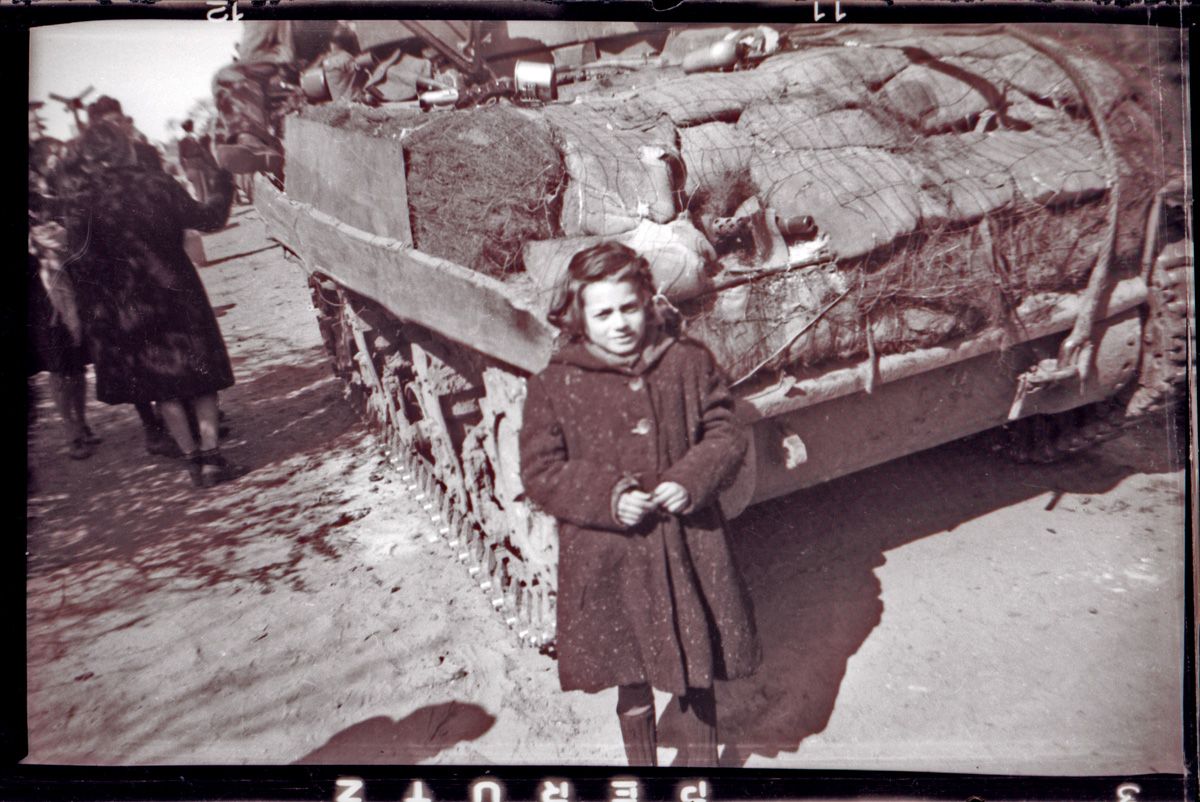
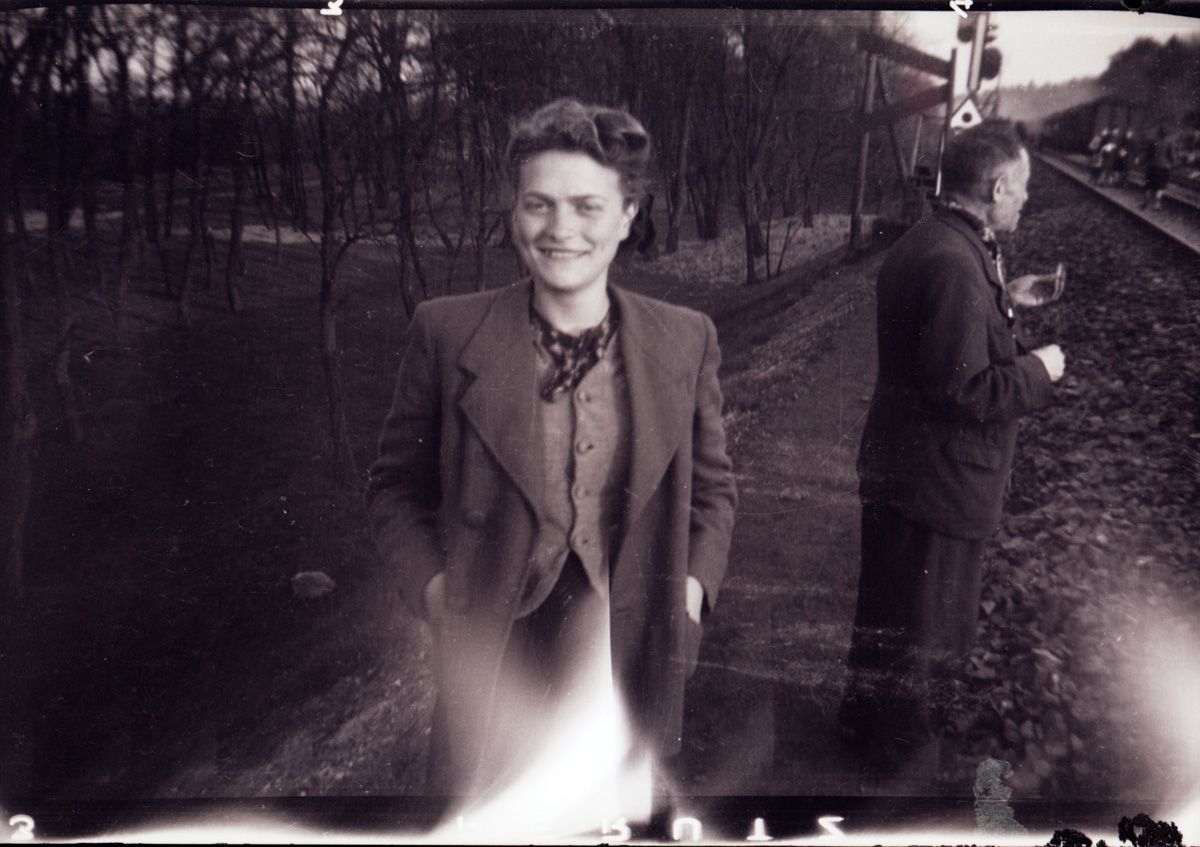
On the cusp of 100,000 visits to this site,  I am posting three photographs of the liberation of the train near Magdeburg that were discovered earlier this summer, with permission.  Gina Rappaport is the subject who appears in two of the photos, along with her sister and her cousin. I think it is shortly before tanker George Gross departed to join the rest of the battalion on Saturday morning, April 14, 1945.

“We were relieved the next morning, started up the tank, waved good-bye to our new friends, and followed a guiding jeep down the road to rejoin our battalion.  I looked back and saw a lonely Gina Rappaport standing in front of a line of people waving us good fortune.  On an impulse I cannot explain, I stopped the tank, ran back, hugged Gina, and kissed her on the forehead in a gesture I intended as one asking forgiveness for man’s terrible cruelty and wishing her and all the people a healthy and happy future. I pray they have had it.

Read Full Post »

Last week I had the honor of being the recipient of the Glen at Hiland Meadows President’s Award. For the last several years, my twelfth graders have interviewed this retirement community’s residents. One student is paired off with an individual whose life story is then documented by the student. An interview is conducted, transcribed, and then researched; a paper is produced that adds an important aspect of the story of World War II and the Great Depression to the historical record, a story that otherwise would have been lost. One copy is then sent to the state archives. The kids and the elders bond and learn a great deal from each other. My kids have produced two hundred plus folders of material and I am now in the process of sorting it all out for professional articles.

I had no formal remarks prepared. On the way over in the car the principal asked me how many awards I had received in my career. Self consciously I said that I thought this was the ninth or tenth. I had told no one but my students that I was going to the ceremony, as I would be missing them on the last day. I did not tell colleagues and I did not even tell my own wife, herself a teacher. They work every bit as hard as I do. Instead they get collectively kicked everyday by the local paper.

To my surprise, my wife had been contacted and entered the room to join us at a table that included a CEO, bank president, and health care executive. In the room also were board chairpersons, town supervisors, a school superintendent, Congressional staffers, judges, more bank presidents, other CEOs- you get the picture, the movers and shakers. They were very nice down-to-earth folks who seemed to relish the opportunity to step back from the office and network a bit with their peers.  One of them leaned into the principal and me and asked what our take was on the daily articles, editorials, and columns slamming everything in the education profession.

I knew right then what my remarks would be about. I thanked the audience but the first person I recognized was my wife- not just for her support, but because we were the only two teachers in the room (teachers could learn so much from networking like this, but instead she had to play hookey)! Then I thanked my principal and explained to the crowd that some of the most profound lessons can be found by allowing the teacher the latitude in the classroom to lead students on a journey of discovery that may not necessarily take the path of pretesting and post testing kids to death. I gave the example of a girl who interviewed a resident there, a grizzled Marine who survived many battles against the Japanese, including Iwo Jima, and lost quite a few friends in the process.  She was amazed at his life story, but something he said had struck a discordant note with her- here was a man who questioned the decision to use atomic force against the Japanese (combat Marines in World War II generally will tell you that it was the best thing that happened, from the standpoint of their own existence). So I gave Jillian books, articles, papers, websites, and off she went to produce a 45 page paper about Ralph and the controversy surrounding the 50th anniversary of the bombing and the national displaying of the Enola Gay. A connection was kindled, a publishable paper was written, a scholar was born, and today Jillian is in journalism school.

I don’t take credit for helping her find herself- she did all the work. But I know I won’t be getting the same results if I am turned into a “content support specialist”. While I recognize (and think I am pretty good at) my role as an assessment coach in certain subjects, I’m not a technician. I’m a history teacher. The new measures being instituted as a one-size-fits-all cure all by persons who are not even in the classroom  are myopic knee jerk political fixes that will have the effect of killing opportunities like these for our students. My senior elective which brought me to this awards ceremony and many others will likely be dead on arrival for not conforming to some narrow minded political quick fix. This class is not broken, but it will be killed off if it does not conform. And forget about bringing in World War II and Holocaust survivors to offer their life changing stories to the student body. Teachers are already scared to death to leave their classrooms. Shame on us all for allowing this.

Of course I did not bring that up, but I did tell them that contrary to what is read in the paper, punishing teachers is not going to solve the problems of society and will do more harm than good. (Do you know that we’ll even be graded for kids who are not in the classroom because an adult, somewhere, maybe a “parent”, lets them stay home all day?)

Personal responsibly and moral efficacy can’t be legislated- but they can be modeled and emulated. What better way to strengthen our national fiber, restore pride in ourselves and  draw courage from the lessons of the past than to charge a young person with preserving an older American’s story?

The talk was well received. Maybe I got to teach another lesson today. Fact is that some of the most powerful ones are unscripted.

Read Full Post »

« Newer Posts - Older Posts »