Feeds:
Posts
Comments

Posts Tagged ‘United States Holocaust Memorial Museum’

Woodstock event remembers Holocaust

WOODSTOCK, N.Y. — A Yom Hashoah event that will remember the Holocaust will take place April 7 at 3 p.m. at the Woodstock Jewish Congregation, 1682 Glasco Turnpike, Woodstock NY, 12498.

Synagogue Main Number (845) 679-2218
Email info@wjcshul.org
Persons of all faiths are welcome.

The Yom Hashoah  observance will include a candlelight memorial service, followed by an address by Matthew Rozell titled “Honoring the Hour of Liberation and Defeating the Legacy of Hitler.” Rozell is the founder of a project that has reunited survivors from the Bergen-Belsen concentration camp with the U.S. soldiers who liberated them from a train transport during the closing days of World War II. To date, with the help of Varda Weisskopf and Frank Towers, more than 240 survivors worldwide have been located, and 10 reunions have taken place since 2007. Rozell is also a teaching fellow at the United States Holocaust Memorial Museum and has spoken on behalf of its educational programs. His work can be seen at teachinghistorymatters.wordpress.com.

The ABC News video can be seen here.

Read Full Post »

Class Act
Historic Reuniter
By Nancy Cooper
Photography by Erica Miller
Volume 147, Number 1, January/February 2013, Page 7

How does a young man from a small town with no experience in Holocaust education become a well-regarded figure in World War II and Holocaust history nationwide?

Matthew Rozell 12-12 American Spirit magazine

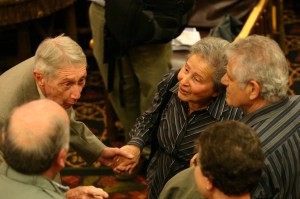
Not purposely posed. Erica Miller photo. Click the photo to see what I mean…. Only thing missing from 1992 is Dad.

The answer is part of the story of the remarkable career of Matthew Rozell, history teacher at Hudson Falls High School in New York. Following in the footsteps of his father, who was a history teacher in a nearby town, Rozell has taught at his alma mater for the past 25 years.

When Rozell emphasizes to his students the importance of tracking down primary sources, he has a dramatic way of proving his point. Through such primary research, he and his students have been able to identify and reunite Holocaust survivors with the U.S. soldiers who freed them.

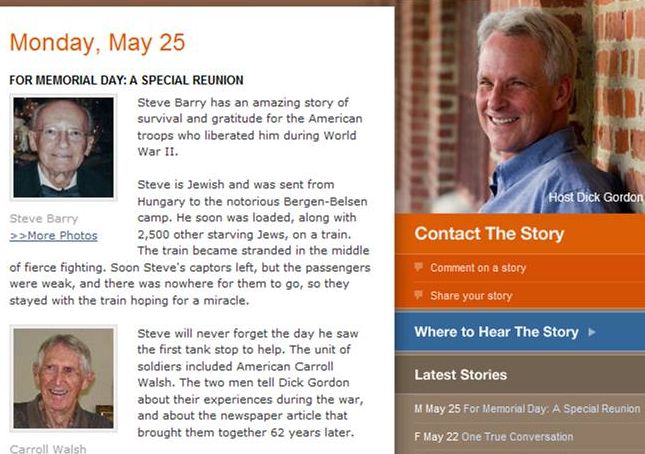
Rozell’s instrumental role in such a historic reunion began in 2001 when he sat with Carrol “Red” Walsh, tank commander, U.S. Army 743rd Tank Battalion, to listen to some of his World War II tales. After nearly two hours of conversation, Walsh was reminded by his daughter to “tell [Rozell] about the train.” That prompt was a catalyst to a bigger story.

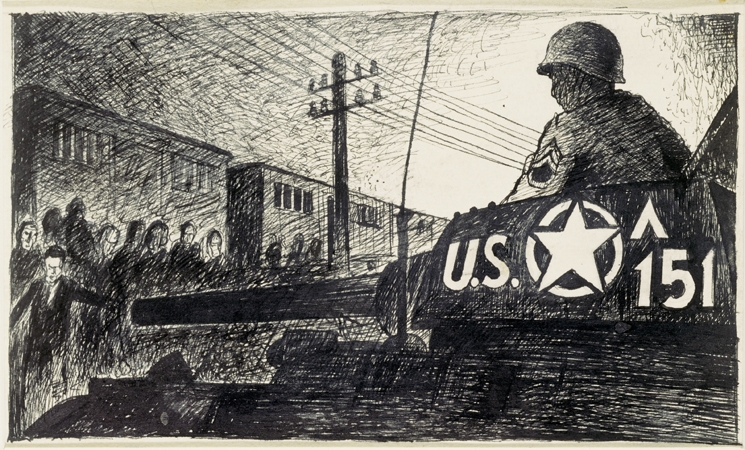
Walsh related that in April 13, 1945, his tank division saw something unexpected near Magdeburg, Germany: freight train cars alone on a track. When he drove his tank alongside the train, he could see that the cars were filled with Jewish men, women and children—more than 2,000 of them.

Intrigued by the story, Rozell searched for photographs of the liberation, which he posted on his school’s website in 2002. It wasn’t until four years later that Rozell received an e-mail from a grandmother in Australia who had been a 7-year-old girl on that train. She said that as soon as saw the photographs, she fell out of her chair: This was the day of her liberation in 1945.

From then on, “Almost every time I opened my e-mail inbox, there would be another message from a survivor, somebody that I wasn’t aware of before,” Rozell says. “These people weren’t aware of each other for the most part before finding the site.”

With the help of liberator Frank Towers and a survivor’s daughter, Varda Weisskopf of Israel, Rozell and his students went on to reunite nearly 225 Holocaust survivors with their American liberators. Rozell organized 10 reunions: One took place in Israel and three happened at his school. Students recorded the individuals’ interviews as part of a World War II Living History Project (www.hfcsd.org/ww2). Learn more at https://teachinghistorymatters.wordpress.com.{clarification: there have been at least 10 reunions since Rozell began the project; however he did not organize the ones occurring off campus but rather participated in or otherwise helped to facilitate them.}

Students have said of Rozell and the project: “He puts history right in front of your eyes. Never could I have gotten the experience of meeting such inspiring people who learned to love after the ultimate form of prejudice was thrust upon them. A message of acceptance not only reached the little town of Hudson Falls, but the entire world.”

“It’s life-altering,” said another. “And because we’ve heard these stories, it’s our job to make sure it won’t happen again.”

The powerful lesson hasn’t been limited to his students at Hudson Falls. In 2008 Rozell was awarded a Museum Teacher Fellowship at the U.S. Holocaust Memorial Museum for his work in Holocaust education. The Tennessee Holocaust Commission has created workshops based on his work. On September 25, 2009, Rozell and his students were named ABC World News “Persons of the Week.” His project was also the subject of the U.S. Holocaust Memorial Museum documentary “Honoring Liberation,” which debuted at the Holocaust Days of Remembrance in Washington, D.C., in April 2010.

To keep his teaching methods fresh, Rozell says, “I listen to the kids and adjust all the time. Some days you do not know the impact you have, but I can look to the dozens of kids who have gone into history education as a feather in my cap of sorts.”

He advises today’s youth not to take the sacrifices of the past for granted: “Talk to older Americans who served their nation.”

-American Spirit Magazine, Jan.Feb. 2013. National Society Daughters of the American Revolution.

Read Full Post »

Just when you think that maybe things are “quieting down”,  an email comes in your inbox again.

At Thanksgiving Time.

Can’t wait to speak to Kurt. In the meantime, read below. He has to be around the 230th survivor of the train to make our acquaintance…good work Frank and Varda! Frank, you never cease to amaze me, at 95 yrs young, you are doing laps around me! So now I can share with the students, and fellow survivors and soldiers!

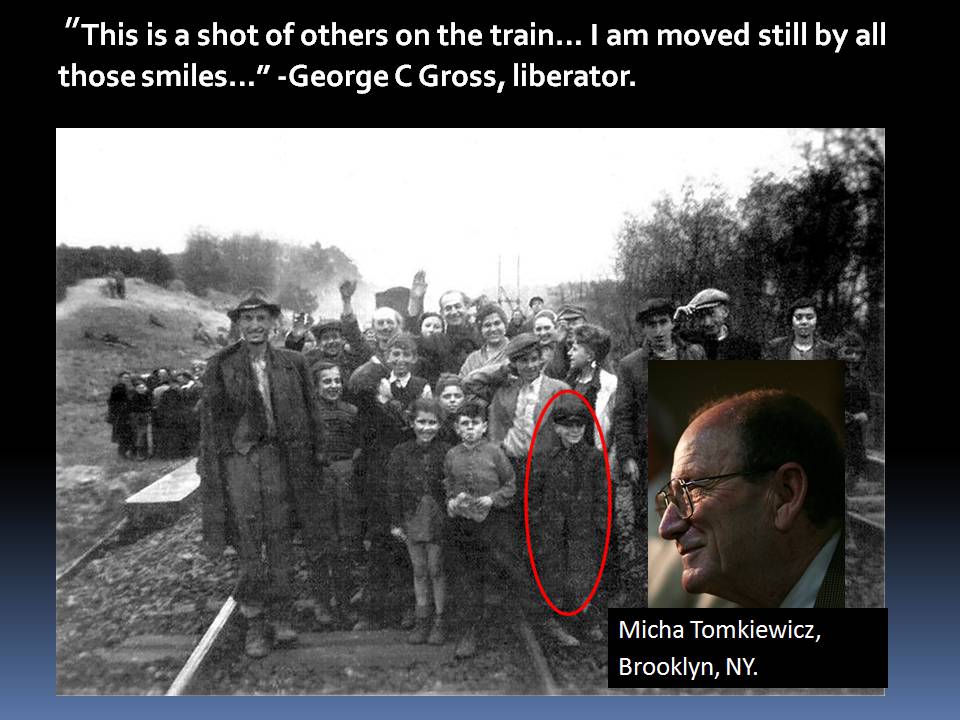
In the words of survivor Dr. Micha Tomkiewitz, “welcome to the family!”

—–Original Message—–
From: Kurt Bronner

Survivors Kurt Bronner and his lovely wife. Thanks to Frank and Varda W. for finding them- “welcome to the family”

Sent: Thursday, November 22, 2012 2:31 PM
To: Rozell Matt
Subject: Thanks

Dear Matt…This last week I have been in touch with Frank Towers and Varda W….They found me on the list on survivors of the deathtrain..I have seen movies and stories…Its like my past has been opened up…On this day of Thanksgiving I would like to wish you a happy peaceful Year and thank you for opening up a chapter of many survivors on that train…I live in Los Angeles and the Burbank school system has had a similar program and I have been talking to students in junior and high schools…Have 100s of letters from the students…Teachers like you are in my Golden book..Thank you for your groundbreaking efforts…with my best to You and your family with my love, Kurt Bronner

Teaching tolerance

April 08, 2000

by Irma Lemus, Burbank Leader

MEDIA DISTRICT NORTH — Fifty-five years have passed, but Kurt Bronner can still vividly recall his mother being beaten by a Nazi soldier as he watched helplessly through a barbed wire fence. It was the last time Bronner, now 74, ever saw his mother.

The Encino resident revisited the horrific nine months he spent at Bergen-Belsen, a concentration camp in northern Germany, Friday during a presentation to Burbank High School students.

The event was part of the Burbank Human Relations Council’s Holocaust remembrance program, held every April and May to coincide with Burbank’s Interfaith Days of Remembrance. About 25 Holocaust survivors and liberators are involved in the program, speaking at area schools about the human toll of hate and bigotry run amok

“If you remember anything from today, remember that hate exists and you, as future leaders, must stop the Holocaust from happening again,” Bronner, a Hungarian native, told the students.

“People think that it can’t happen here, but I remember my father once told me that it couldn’t happen in Hungary and it did,” said Bronner, who was removed from his home along with his family at the age of 17.

Don Duplechein, who served in the U.S. Army’s 567th Ambulance Company during World War II, also spoke to students Friday. He described the scene as he and about 30 other troops arrived at the Nazis’ Dachau death camp at the end of the war.

“You couldn’t believe it. When we arrived we saw people begging for food with lice all over their heads. We knew we had to feed and bathe these people,” Duplechein said.

To a small group of students who gathered after the presentation, Bronner spoke in more detail about his experiences in the concentration camp.

“A lot of people think that children were held at the camps, but the truth is that in a lot of the camps the children were killed and the only ones allowed to live were young people and adults,” he said.

Danny Screws, 17-year-old Burbank junior, said it was difficult to believe that nobody was willing to act to stop what was happening.

“I asked him [Bronner] how the government could let the people be treated that way. He told me that, although they were from Hungary, they were still Jews. I think that was wrong,” Screws said.

Bronner described traveling to the concentration camp by train with hundreds of people piled into a single boxcar, barely able to move or breathe . He talked about the horrible living conditions at the camps where thousands of people died from starvation and disease.

“I remember trying to find my father’s body as he was put on a horse-drawn carriage. I couldn’t find him to say goodbye because of all the bodies piled up,” said Bronner, whose father died at Bergen-Belsen.

Bronner was asked if he hated the Nazis for what they did to his family.

“You know, a student once asked me what I would do if the people that killed my parents walked through the door. I told the student that killing the person wouldn’t bring my parents back and it would make me a killer. You have to forgive, but never forget,” he said.

Read Full Post »

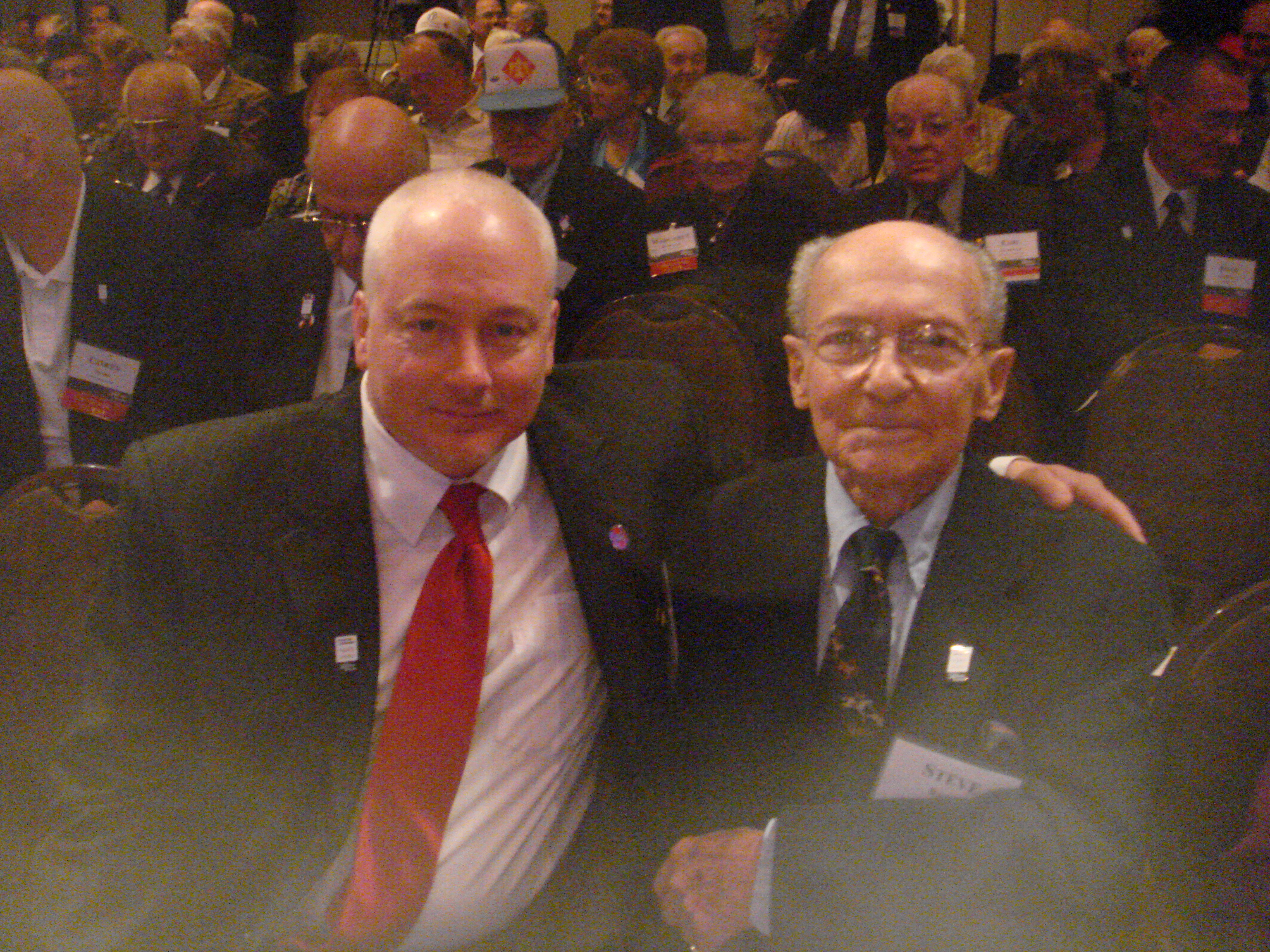
  I am re-posting this on the anniversary of a car crash that would claim the life of Holocaust survivor and later U.S. Army Ranger, Steve Barry.

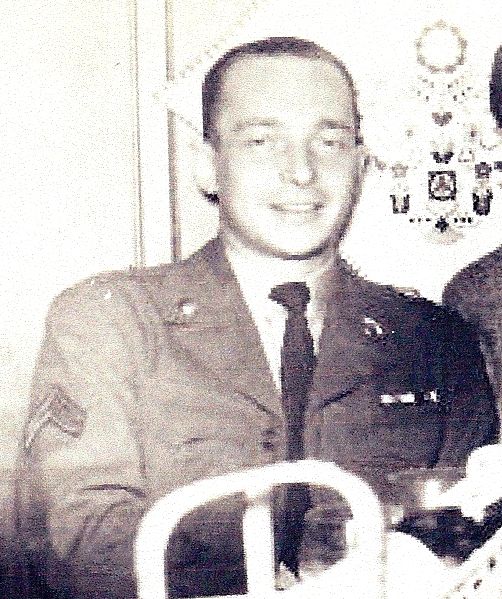
My friend on the left described himself at one point in his life as the “Happiest Korean War Draftee”. Steve was a  survivor from Hungary who beat the odds and lived through the horrors of the Holocaust after the Germans invaded that country in 1944 and did their best to kill him on several occasions. He spent his 20th birthday jammed in a boxcar destined for Bergen Belsen, witnessed people dying of starvation and disease by the thousands,  and was liberated on April 13th, 1945 at the hands of the 743rd Tank Battalion and the 30th Infantry Division of the US 9th Army, aboard the train near Magdeburg.  He emigrated to the United States in Dec. 1948 after spending years in a displaced persons camp, applied for citizenship immediately, and was drafted in 1950, only to be assigned occupation duty in a far off nation- you guessed it-Germany. He was so happy to serve his adopted country…

Steve passed away yesterday, January 16th, 2012, after a long and difficult ordeal from injuries sustained in an automobile accident in September. I’ll always remember his special Christmas and Easter cards that he sent to me, made personally on his computer; his funny, self depreciating humor; and above all his overwhelming happiness at being able to finally meet the men who saved him. I hope that the memories sustain his wife Stella and his children and their families, and also the friends that he made later in life and became soulmates with- soldiers Carrol Walsh and Frank Towers, the soldiers who arrived on the scene to free him and help him begin his life anew.

Matthew Rozell, Stephen Barry, National DOR Ceremony, Washington, DC April 2010. This photo was taken the day after the 65th anniversary of Steve’s liberation in April 1945. We had just been honored by the director of the United States Holocaust Memorial Museum before the national ceremony in the Capitol Rotunda.

I will leave you with a few of his words-and we will remember. Thanks, Steve, for all that you gave us, and for passing the torch to a new generation of students to carry your message forth.

An earlier post… The Holocaust Survivor and the US Army Ranger…

A fantastic national radio interview that I helped to arrange, knowing he would be the perfect speaker…

And the educational films I constructed from them.

 Stephen B. Barry, 87, of Boca Raton, Florida, passed away peacefully on January 16, 2012 following a serious car accident in late September 2011. A Holocaust survivor,who was proud to be an American, he went on to live the American dream. He is survived by his wife Stella of nearly 58 years, his children Barbara (Paul), Jamie (Jerry) and Randy and his beloved granddaughters, Amanda and Victoria and many extended family and friends. Services to be held at Beth Israel Memorial Chapel in Delray. In lieu of flowers, the family requests contributions in his memory be made to The United States Holocaust Museum.
Published in Sun-Sentinel on January 18, 2012

Read Full Post »

“On April 30, 1945, Jewish-American G.I. Richard Marowitz  stormed into Hitler’s bedroom looking for anything he could bring back to headquarters.

Richard Marowitz of Albany , NY was on the scene for the liberation of Dachau. The following day he was at Hitler’s villa in Munich. Here is his story as told to Matthew Rozell and a group of students at Hudson Falls High School ten years ago.  Marowitz is a Jewish war veteran. Read the postscript to learn more about Hitler’s hat.

Richard M. Marowitz-42nd Rainbow Division-

The Liberation of Dachau

interviewed at Hudson Falls High School.

On the 29th of April 1945, my platoon was called into the command post, we were in a little village, I don’t remember the name of it, but it was probably about 25-30 miles from Dachau.  We were given new maps which showed Dachau, and we were told that the 20th Armored were already on the road to Dachau and our job was to take off and get to the tail end of the 20th Armored and be liaison between the 20th Armored and the infantry that would be coming down behind us in two and a half ton trucks, which is kind of idiotic but that’s the way the army was. The reason for that was we were having a race with the 3rd Division on one side of us, and the 45th Division on the other side of us, and they wanted the 42nd to win the race. So we took off on the road going very quickly like we usually do – if we came to a tree, the woods, or a village, we would stop and reconnoiter and find out if it was ok to go through without getting killed – and we kept getting pushed on the radio, ‘where are you,’ ‘what are your Greek coordinates,’ and ‘what’s taking so long? We are going to lose the race.’  After awhile of this kind of nonsense, Lieutenant Short stopped us and he said we to have to make a choice, either we’re going to have to step on the gas and go like hell and let surprise be on our side, or we’re going to lose the race and then everybody is going to get mad at us.  So we decided to step on the gas and go like hell, which is what we did. In the process, we ran into a whole lot of little hornet’s nests – it would have made a movie you wouldn’t have believed anyways – for example, we cut a German convoy in half that was going across a road that we were on, firing as we went through they didn’t know what happened because we weren’t supposed to be there and they were driving off the road. We did the same thing with another convoy that was going on a road in the opposite direction and parallel to ours, and we just fired on them as we went.  We came upon a village, and somebody fired on us and we went up on a small knoll next to the road and we dragged all the junk we had accumulated on the bottom of our jeeps like bazookas, mortars, etc. We fired on them and they probably thought they hit the front of the division. There’s no way they could’ve assumed it was only 28 men. Lieutenant Short stood up, honest to God, he actually said this: “Three men assault the town.” Three of us went in, Larry, myself and Howard Hughes, that’s his real name – great BAR man, Browning automatic rifle …and we claimed the first few houses, we accumulated 160, 170, 180 prisoners who looked around expecting to find more of us.  We broke up their weapons, told them to put their hands on their heads and walk back up the road.  They looked at us like were crazy; we looked back like we weren’t.   We went through another village and a German fired a panzerfaust, which is like a German bazooka, it landed on the other side of us and blew us out of the jeep. We dispatched quickly and we got back in the jeep and took off again.  These are the kinds of things that happened on the way to Dachau. 

When we got close to Dachau, you see there are a lot of smells in war, you smell the death smell all the time, but it’s usually farm animals who were rotting in the fields who were killed, rotting or whatever.  As we got closer to Dachau, we got this awful smell and we assumed it was farm animals, that we were going to pass a farm, or whatever. We finally got to the outskirts of Dachau and were pinned down.  Dachau was a favorite camp of the Germans, their first major camp, it was in Germany.  They didn’t want to give it up the other camps were walkovers.  The Germans just left them, and that was it.  But in this case at Dachau, they didn’t want to give it up too easily, there were a lot of SS guys around.  They were dropping some SS on us, and a lot of snipers – at one point an American tank came out of Dachau.  We were stuck in the ditch at that point, we stood up and realized we made a mistake when the gun came down on us – but at that instant, an American tank destroyer came up behind us and blew the tank away.  It happened to be an American tank that had been captured by the Germans and the guys in the tank destroyer knew that we didn’t have any tanks in there so therefore it had to be a captured tank.  I kissed a tank destroyer that day.     

    At that point, they told us to clean out the snipers and then proceeded to go into the camp.  At the outskirts of that camp, we went into a house – we banged on it, it was like a little small farm on the outskirts.  The door opened and there was a mother, a father, a daughter and a dog.  The mother had buckteeth, the father had buckteeth, the daughter had buckteeth, and when I looked down and saw that the dog had buckteeth, I was just hysterical.   It was the funniest sight, I was tense you know, and I could use anything at that point for a laugh.   Of course the other guys looked at me like I was nuts! Anyway, we did find some snipers – one we did away with that was firing away from a house nearby.  After we silenced him, we went up to see who it was.  He was eleven or twelve years old, one of the Hitler youth, who were actually worse than the SS.  They were just so brainwashed … we ran into a lot of those kids in their short pants. 

On the siding, you saw pictures of it in the slides, outside of the camp, adjacent to the camp, there were actually forty boxcars of bodies and

American soldiers of the U.S. 7th Army, force boys believed to be Hitler youth, to examine boxcars containing bodies of prisoners starved to death by the SS. USHMM

we found one man alive in that forty…there are some pictures of that one man, I don’t know whether he survived or not.  The prisoners were just walking skeletons, and they just dropped where they were and died.  There were piles of bodies, of bodies that had been gassed and readied for the ovens.  Some of them still lived because those boxcars were brought to Dachau to burn those bodies.  It was a total mess.  And the smell was not a farm; it was Dachau that we had smelled miles before we got there.  And yet, people in the village who were right next to the camps said they didn’t know what was going on.  People in Munich, which was actually only nine miles from Dachau, didn’t know what was going on.  Now if you want to believe that, the Brooklyn Bridge is still for sale.

    I never went back and I don’t intend to, I don’t feel like I want to.  But it is almost impossible to describe the feelings, so I’m not going to try.  But when you looked around some of these tough soldiers were throwing up and crying all over the place.  It is not possible to really describe the number of feelings you get when you walk into something like that.  Because that’s a scene that … well, first of all nobody told us about the camp!  We had no idea what a concentration camp did.  We were going to Dachau, period.  It was another village as far as we were concerned.  That’s kind of a shock to get all at one time. 

Interview recorded on May 3, 2002.

See Rich and I in a 2014 NBC LEARN video here.

POSTSCRIPT:

“On April 29, 1945, the 42nd Rainbow Division 222nd I&R platoon entered the gates of Dachau. One of many units sent to liberate the death camp, they saw first-hand the horrors of Hitler’s death machine.

The next day, 12 men of the I&R were ordered to search Adolph Hitler’s Munich apartment for military intelligence. Jewish-American G.I. Richard Marowitz, self-appointed wiseacre of the unit, stormed into Hitler’s bedroom looking for anything he could bring back to headquarters.

All he found was a black top hat.

Still angered by what he had seen at Dachau, Marowitz flew into a rage and jumped on the hat, crushing it, imagining Hitler’s head still inside. Then Marowitz, known for his comic antics even under stress, put Hitler’s crushed hat on his head and marched through the apartment with his best imitation of Charlie Chaplin doing Hitler from The Great Dictator. Tense from the day before, the I&R unit cracked up. Years later Marowitz found out that the same day he stomped Hitler’s hat, the Führer committed suicide in his bunker.

Marowitz returned home to Albany, N.Y., with the ultimate war souvenir stuffed into his duffel bag. He became a clothing manufacturer and professional magician and rarely talked about his war experiences. For the next 50 years, Hitler’s hat fittingly sat in a brown paper bag, buried at the bottom of his magic trick closet.

Following Marowitz to a Rainbow Division reunion, Hitler’s Hat interviews his I&R unit buddies to retell the story of Hitler’s hat. Daring and innovative, the documentary presents a rare mix of humor and history in an original take on World War II.”


“The Story of Hitler’s Hat”,
http://www.jeffkrulik.com/hitlershat/index.html

Read Full Post »


April 17th. (1945)

Dear Chaplain;-

Haven’t written you in many months now, its funny how a few moments are so hard to find in which to write a letter way past due; it’s much easier to keep putting it off the way I’ve done. I’ll try to make up for it in this letter.

Today I saw a sight that’s impossible to describe, however I’ll try. Between 2400 and 3000 German refugees were overran by my division during our last operation; most of them were, or had been, inmates of concentration camps, their crimes the usual ones, – Jewish parentage, political differences with der Fuhrer, lack of sympathy for the SS, or just plain bad luck. Not one of these hundreds could walk one mile and survive; they had been packed on a train whose normal capacity was perhaps four or five hundred, and had been left there days without food.

Our division military government unit took charge of them, and immediately saw what a huge job it was going to be, so they sent out a call for help. Several of our officers went out to help them organize the camp they were setting up for them. The situation was extremely ticklish we soon learned; no one could smoke as it started a riot when the refugees saw the cigarette, and we couldn’t give the kiddies anything or they would have been trampled to death in the rush that would result when anything resembling food was displayed. The only nourishment they were capable of eating was soup; now the army doesn’t issue any of the Heinz’s 57 varieties, so we watered down C-ration[s] and it served quite well.  It was necessary to use force to make the people stay in line in order to serve them. They had no will power left, only the characteristics of beasts.

A few weeks of decent food will change them into a semblance of normal human beings; with God willing the plague of disease that was already underway, will be diverted; but I’m wondering what the affect of their ordeal they have been through, will be on their minds; most will carry scars for the rest of their days for the beatings that they were given. No other single thing had convinced me as this experience has that Germany isn’t fit to survive as a nation. I’ll never forget today.

I was going to write mother tonight but thought better of it. I’ll be in a better frame of mind tomorrow. I’m only a few dozen miles from Berlin right now, and its hard to realize the end is in sight. I’m always glad to receive your scandal sheet. You perhaps missed your calling, as your editorial abilities are quite plain.

As ever,

Charles.             (transcribed by Kaylee Merlow, HFHS ’11.)

March 11th, 2009

Dear Mr. Rozell:

My father-in-law was 1st. Lt. Charles M. Kincaid. He was a Liason Officer with the 30th. Division Artillery.  He was honored with an Air Medal in the battle of Mortain and a Bronze Medal in the battle of St. Lo.  In the battle of Mortain he won his Air Medal by calling in artillery adjustments while flying in a Piper L-4 over 4 panzer divisions on August 9, 1944.

first-lt-chuck-kincaid-sept-1944He rarely wrote home. He did write home to his minister about one event that evidently really caused him to stop and think. Attached is a copy of that letter that his sister transcribed – making copies for others to read.  The letter describes the Farsleben train and his experience there.

I need to thank you for your website and work. You and your students work enabled me to connect the letter with the actual historical event. It further enabled me to show my children the pictures and to make their Grandfather’s experience real, not just an old letter – that this event so affected him that he needed to tell his minister before he told his mother.

Thank you,
Mark A.

Read Full Post »

Holocaust survivor recalls kindness of US troops

Another survivor of the train near Magdeburg appears. International Holocaust Remembrance Day, 2012. I hope she finds her way to this site so she can meet her actual liberators! Thanks for Leslie Meisels for tipping us off to the article. Aliza’s memoir of life in the Warsaw Ghetto and beyond is very moving and can be found here.

By GIL SHEFLER 01/27/2012 00:34
JERUSALEM POST

“The American soldiers didn’t know what to do and they showered us with chocolates and cigarettes.”

Aliza Vitis-Shomron on Thursday vividly recalled her brush with death on the eve of her liberation from the Nazis in 1945.

The survivor, who spoke on a panel at the Kibbutz Yad Mordechai Holocaust Museum the day before the world marks International Holocaust Remembrance Day, said a rumor had spread among the group of Jewish prisoners she was part of in Poland that they were about to be murdered.

Rather than surrendering them to the Allies closing in from the east and west, the prisoners feared their captors were planning to plunge their train into the Elbe River and drown everyone.

“Panic and fear spread quickly,” recalled the Polish-born Israeli who survived the Warsaw Ghetto and the Bergen-Belsen concentration camp in Germany. “Just as we were at the point of despair, two American tanks came rolling down a hill and saved us.”

The feeble Jewish prisoners emerged from the train and embraced the stunned soldiers of the US 30th Armored Division.

the tank commanders who freed her.

“We were crying with joy,” she said. “The American soldiers didn’t know what to do and they showered us with chocolates and cigarettes.”

Vitis-Shomron said she did not feel that she had defeated the Nazis.

“I did not triumph,” said Vitis-Shomron, an educator who has four great-grandchildren.

“What happened accompanies me, but I try to live and live well. I try to teach humanitarian values to our youths. We must never do upon others what was done to us.”

The panel Vitis-Shomron was part of at Yad Mordechai, the kibbutz named after the leader of the Warsaw Ghetto Uprising (Mordechai Anielewicz), included Simcha “Kojak” Rotem, who fought in the uprising, and former defense minister Moshe Arens.

It was one of many events held in Israel and around the world commemorating the remembrance day.

On Wednesday, Israeli Ambassador to the UN Ron Prosor, American Jewish Committee Executive Director David Harris and members of the newly formed World Forum of Russian Jewry met at United Nations headquarters to honor the memory of those killed by the Nazis.

The AJC head said the lesson learned from the murder of six million Jews required the world to prevent Iran from acquiring nuclear capabilities.

“This past September, indeed on these grounds, the notorious Holocaust denier, Iranian President Mahmoud Ahmadinejad, spoke,” Harris said. “To their credit, several UN member ambassadors walked out, but, shamefully, the majority stayed in the General Assembly hall and applauded his remarks.”

The president of the World Forum of Russian Jewry, Ukrainian businessman Alexander Levin, joined the call urging the UN to take action against the Islamic Republic.

More Holocaust memorial events are planned for Israel and around the world on Friday.

Supreme Court President Dorit Beinisch, Deputy Foreign Minister Danny Ayalon and ambassadors from more than a dozen countries including Germany, the US, Egypt and the Philippines are set to gather at the Massuah Institute for Holocaust Studies at Kibbutz Tel Yitzhak near Netanya to take part in a memorial ceremony.

The UN designated January 27, the anniversary of the liberation of Auschwitz by the Red Army, as International Holocaust Remembrance Day in 2005. It is marked by governments and organizations around the world.

Israel, however, observes its official Holocaust Remembrance Day on the 26th of Nissan, the anniversary of the Warsaw Ghetto Uprising, according to the Jewish calendar. Its selection reflects the Jewish state’s preference to emphasize Jewish resistance to the Nazis.

http://www.jpost.com/JewishWorld/JewishNews/Article.aspx?id=255355

Read Full Post »

Steve is one of my good friends and Frank is the featured liberator coming to our 2011 Reunion. Steve wishes he could be here and so do I! I miss the guy!!

If you would like to see a nice clip of Steve reuniting with one of his liberators, you can click on the link. Steve became a US Army Ranger after he was liberated by the Americans.

Read Full Post »

Another honored speaker for our Sept. 2009 and 2011 reunion…

Holocaust survivor Leslie Meisels addresses his liberators for the first time.

“Please allow me to express my utmost gratitude for the gentlemen who liberated us, those brave American soldiers, who were saying that they didn’t do anything heroic, that they just did their jobs. But in doing their job, they gave us back our lives. And for that, I thank you, from the bottom of my heart…”

In part II, Leslie gives a harrowing description of how he narrowly escaped death a few days before liberation.

Read Full Post »

It is April 13th, the 66th anniversary of the liberation. And in no small coincidence, I have been granted approval to travel to Israel with liberator Frank Towers to meet over 50 survivors of the train near Magdeburg liberated on this day in 1945.
Read below the moving narrative of Dr. George C. Gross, his remembrance of the liberation day, written 10 years ago, before he was aware of any of the survivors. He got to know quite a few before he passed on Feb. 1, 2009. Greetings to all the survivors on the day of your rebirth, and to the soldiers who, in “just doing our jobs”, saved the world.

A Train Near Magdeburg

Foreword:

Excerpt from Wayne Robinson, Move out Verify: the Combat Story of the 743rd Tank Battalion (Germany, no publisher, 1945), 162-63:

There was another sidelight to the death of fascism in Europe.  Only a few of the battalion saw it.  Those who did will never forget it.

A few miles northwest of Magdeburg there was a railroad siding in wooded ravine not far from the Elbe River. Major Clarence Benjamin in a jeep was leading a small task force of two light tanks from Dog Company on a routine job of patrolling. The unit came upon some 200 shabby looking civilians by the side of the road.  There was something immediately apparent about each one of these people, men and women, which arrested the attention. Each one of them was skeleton thin with starvation, a sickness in their faces and the way in which they stood-and there was something else.  At the sight of Americans they began laughing in joy-if it could be called laughing.  It was an outpouring of pure, near-hysterical relief.

The tankers soon found out why.  The reason was found at the railroad siding.

There they came upon a long string of grimy, ancient boxcars standing silent on the tracks.  In the banks by the tracks, as if to get some pitiful comfort from the thin April sun, a multitude of people of all shades of misery spread themselves in a sorry, despairing tableaux  [sic]. As the American uniforms were sighted, a great stir went through this strange camp. Many rushed toward the Major’s jeep and the two light tanks.

Bit by bit, as the Major found some who spoke English, the story came out.

This had been-and was-a horror train.  In these freight cars had been shipped 2500 people, jam-packed in like sardines, and they were people that had two things in common, one with the other:  They were prisoners of the German State and they were Jews.

These 2500 wretched people, starved, beaten, ill, some dying, were political prisoners who had until a few days before been held at concentration camp near Hanover.  When the Allied armies smashed through beyond the Rhine and began slicing into central Germany, the tragic2500 had been loaded into old railroad cars-as many as 68 in one filthy boxcar-and brought in a torturous journey to this railroad siding by the Elbe.  They were to be taken still deeper into Germany beyond the Elbe when German trainmen got into an argument about the route and the cars had been shunted onto the siding.  Here the tide of the Ninth Army’s rush had found them.

They found it hard to believe they were in friendly hands once more: they were fearful that the Germans would return.  They had been guarded by a large force of SS troopers, most of whom had disappeared in the night. Major Benjamin, knowing there were many German Army stragglers still in the area, left one of the light tanks there with its accompanying doughboys as a protective guard.  The Major then returned to Division headquarters to report the plight of these people.

For 24 hours, the crew of the tank remained on watch as their charges streamed about the vehicle, crying and laughing their thanks of rescue, and those who could told stories of slavery, oppression, torture, imprisonment, and death.  To hear their stories, to see before them the results of inhuman treatment lifted still another corner of the cover which, on being removed, exposed the full cruel spirit of Nazism which permitted such things to be. And this was but one of the many such stories being brought to light as Allied soldiers ripped into the secrets of Adolph Hitler’s Third Reich.

The train needed some badly needed food that night.  More, the promise of plentiful food the next day was given to them.  The commanding officer of the 823rd Tank Destroyer Battalion was seeing to it that such food would be available.  He had ordered German farmers of the surrounding towns to stay up all night, if necessary, to get food to these people.  Other Americans concerned themselves with locating living quarters to get the concentration camp victims away from the evil-smelling freight cars before more of them died and were covered by a blanket or just left lying in their last sleep beside the railroad tracks.

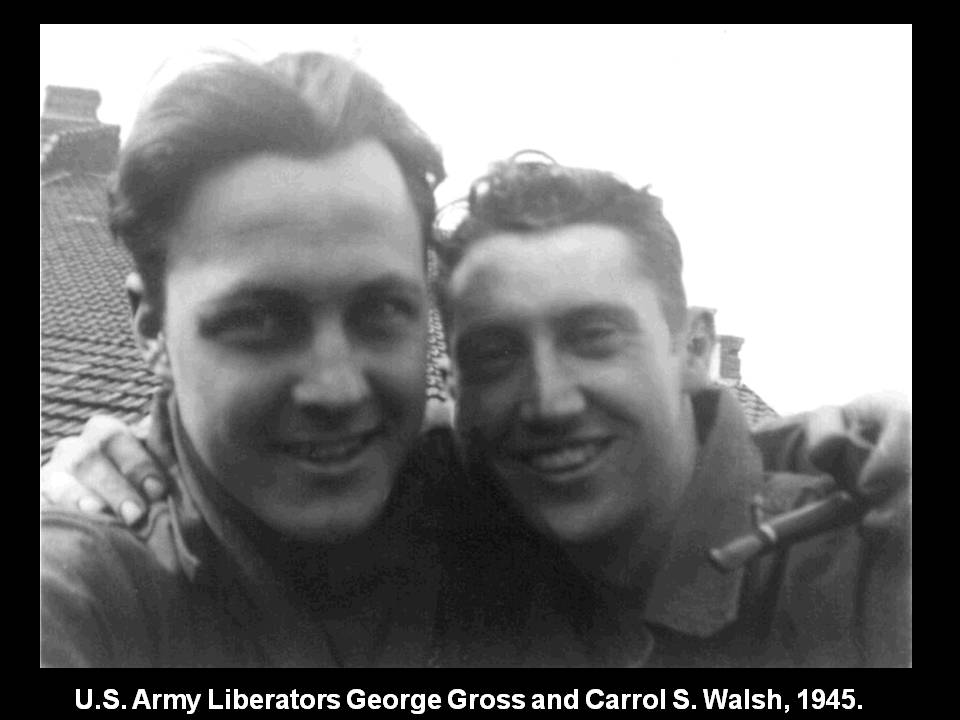
Sgt. George Gross (relayed to Matthew Rozell, March, 2002):
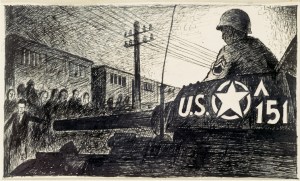
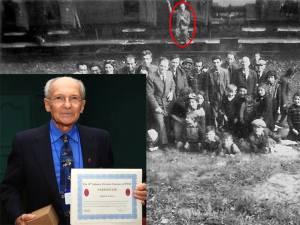
On Friday, April 13, 1945, I was commanding a light tank in a column of the 743rd Tank Battalion and the 30th Infantry Division, moving south near the Elbe River toward Magdeburg, Germany. After three weeks of non-stop advancing with the 30th from the Rhine to the Elbe as we alternated spearhead and mop-up duties with the 2nd Armored Division, we were worn out and in a somber mood because, although we knew the fighting was at last almost over, a pall had been cast upon our victories by the news of the death of President Franklin D. Roosevelt.  I had no inkling of the further grim news that morning would bring. Suddenly, I was pulled out of the column, along with my buddy Sergeant Carrol Walsh in his light tank, to accompany Major Clarence L. Benjamin of the 743rd in a scouting foray to the east of our route.  Major Benjamin had come upon some emaciated Finnish soldiers who had escaped from a train full of starving prisoners a short distance away. The major led our two tanks, each carrying several infantrymen from the 30th Infantry Division on its deck, down a narrow road until we came to a valley with a small train station at its head and a motley assemblage of passenger compartment cars and boxcars pulled onto a siding.  There was a mass of people sitting or lying listlessly about, unaware as yet of our presence. There must have been guards, but they evidently ran away before or as we arrived, for I remember no firefight.  Our taking of the train, therefore, was no great heroic action but a small police operation.  The heroism that day was all with the prisoners on the train.

Major Benjamin took a powerful picture just as a few of the people became aware that they had been rescued.  It shows people in the background still lying about

Farsleben train, moment of liberation, 4-13-1945

trying to soak up a bit of energy from the sun, while in the foreground a woman has her arms flung wide and a great look of surprise and joy on her face as she rush

es toward us.  In a moment, that woman found a pack left by a fleeing German soldier, rummaged through it, and held up triumphantly a tin of rations.  She was immediately attacked by a swarm of skeletal figures, each intent upon capturing that prize. My yelling did no good, so that I finally had to leap from my tank and wade through weak and emaciated bodies to pull the attackers off the woman, who ran quickly away with her prize.  I felt like a bully, pushing around such weak and starving fellow humans, but it was necessary to save the woman from great harm.  The incident drove home to me the terrible plight of the newly freed inhabitants of the train.

I pulled my tank up beside the small station house at the head of the train and kept it there as a sign that the train was under American protection now.  Carroll Walsh’s tank was soon sent back to the battalion, and I do not remember how long the infantrymen stayed with us, though it was a comfort to have them for a while. My recollection is that my tank was alone for the afternoon and night of the 13th.  A number of things happened fairly quickly.  We were told that the commander of the 823rd Tank Destroyer battalion had ordered all the burgermeisters of nearby towns to prepare food and get it to the train promptly, and were assured that Military Government would take care of the refugees the following day. So we were left to hunker down and protect the starving people, commiserating with if not relieving their dire condition.
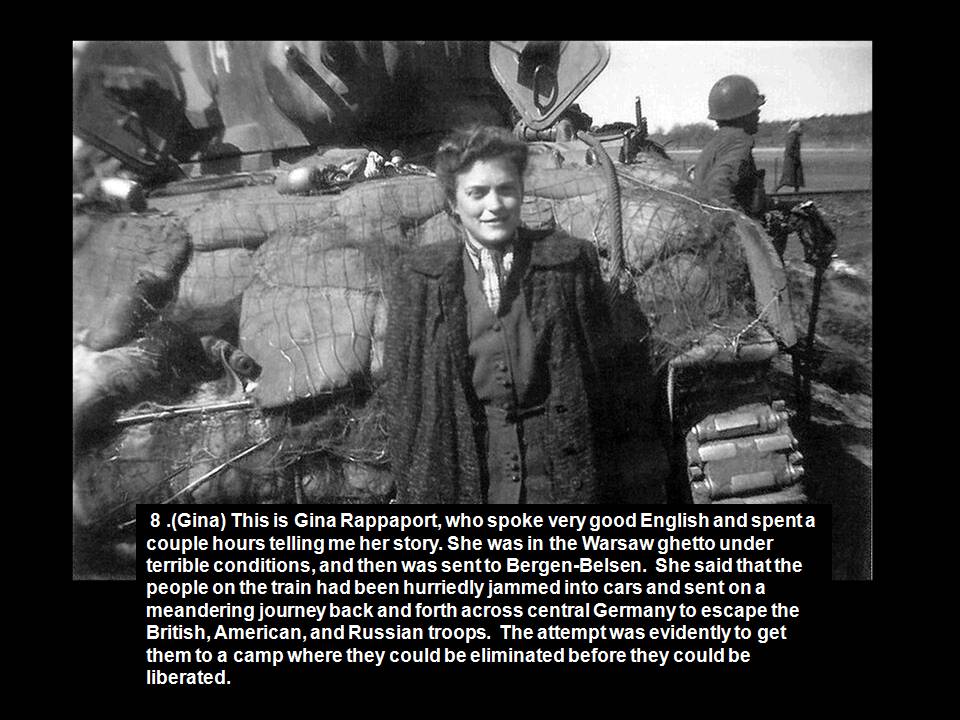
I believe that the ranking officer of the Finnish prisoners introduced himself to me and offered to set up a perimeter guard. I think I approved and asked him to organize a guard, set out pickets, and handle the maintenance and relief of the outposts. However it happened, the guard was set up swiftly and efficiently. It was moving and inspiring to see how smartly those emaciated soldiers returned to their military duties, almost joyful at the thought of taking orders and protecting others again.  They were armed only with sticks and a few weapons discarded by the fleeing German guards, but they made a formidable force, and they obviously knew their duties, so that I could relax and talk to the people. A young woman named Gina Rappaport came up and offered to be my interpreter. She spoke English very well and was evidently conversant with several other languages besides her native Polish.  We stood in front of the tank as along line of men, women, and little children formed itself spontaneously, with great dignity and no confusion, to greet us.  It is a time I cannot forget, for it was terribly moving to see the courtesy with which they treated each other, and the importance they seemed to place on reasserting their individuality in some seemingly official way.  Each would stand at a position of rigid attention, held with some difficulty, and introduce himself or herself by what grew to be a sort of formula:  the full name, followed by “a Polish Jew from Hungary”-or a similar phrase which gave both the origin and the home from which the person had been seized.  Then each would shake hands in a solemn and dignified assertion of individual worth. Battle-hardened veterans learn to contain their emotions, but it was difficult then, and I cry now to think about it. What stamina and regenerative spirit those brave people showed!
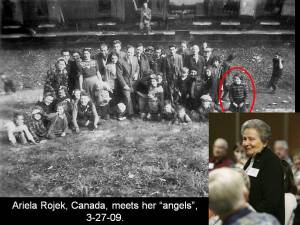
Also tremendously moving were their smiles.  I have one picture of several girls, specter-thin, hollow-cheeked, with enormous eyes that had seen much evil and terror, and yet with smiles to break one’s heart.  Little children came around with shy smiles, and mothers with proud smiles happily pushed them forward to get their pictures taken.  I walked up and down the train seeing some lying in pain or lack of energy, and some sitting and making hopeful plans for a future that suddenly seemed possible again. Others followed everywhere I went, not intruding but just wanting to be close to a representative of the forces that had freed them.  How sad it was that we had no food to give immediately, and no medical help, for during my short stay with the train sixteen or more bodies were carried up the hillside to await burial, brave hearts having lost the fight against starvation before we could help them.
The boxcars were generally in very bad condition from having been the living quarters of far too many people, and the passenger compartments showed the same signs of overcrowding and unsanitary conditions.  But the people were not dirty.  Their clothes were old and often ragged, but they were generally clean, and the people themselves had obviously taken great pains to look their best as they presented themselves to us.  I was told that many had taken advantage of the cold stream that flowed through the lower part of the valley to wash themselves and their clothing.  Once again I was impressed by the indomitable spirits of these courageous people.

Frank Towers, a World War II veteran who helped liberate 2,500 Jews on a train bound for a Nazi concentration camp, meets Bruria Falik of Woodstock, who was on the train, at Arbor Ridge at Brookmeade in Rhinebeck. (Photos by Karl Rabe/Poughkeepsie Journal)

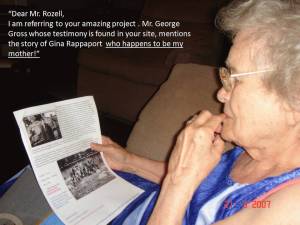
I spent part of the afternoon listening to the story of Gina Rappaport, who had served so well as interpreter.  She was in the Warsaw ghetto for several years as the Nazis gradually emptied the ghetto to fill the death camps, until her turn finally came.  She was taken to Bergen-Belsen, where the horrible conditions she described matched those official accounts I later heard.  She and some 2500 others, Jews from all over Europe, Finnish prisoners of war, and others who had earned the enmity of Nazidom, were forced onto the train and taken on a back-and-forth journey across Germany, as their torturers tried to get them to a camp where they could be eliminated before Russians on one side or Americans on the other caught up with them. Since the prisoners had little food, many died on the purposeless journey, and they had felt no cause for hope when they were shunted into this little unimportant valley siding.  Gina told her story well, but I have never been able to write it.  I received a letter from her months later, when I was home in San Diego.   I answered it but did not hear from her again.  Her brief letter came from Paris, and she had great hopes for the future.  I trust her dreams were realized.
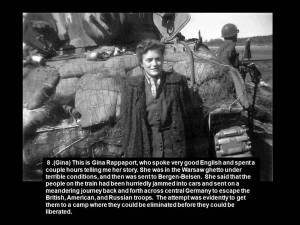
We were relieved the next morning, started up the tank, waved good-bye to our new friends, and followed a guiding jeep down the road to rejoin our battalion.  I looked back and saw a lonely Gina Rappaport standing in front of a line of people waving us good fortune.  On an impulse I cannot explain, I stopped the tank, ran back, hugged Gina, and kissed her on the forehead in a gesture I intended as one asking forgiveness for man’s terrible cruelty and wishing her and all the people a healthy and happy future. I pray they have had it.
George C. Gross

Spring Valley, California

June 3, 2001

click here for the ANNOTATED PHOTOGRAPHS

LISTEN to Carrol Walsh and George Gross share their recollections of the liberation of “A Train Near Magdeburg” (9:32)

Read Full Post »

« Newer Posts - Older Posts »