Feeds:
Posts
Comments

Posts Tagged ‘history education’

This originally appeared at the Huffington Post website for Veterans Day.  Maybe it is appropriate to share for Thanksgiving.

The author contacted me in 2007 when news of our first reunion went viral  in the Associated Press. Later, in 2009, he was invited to a gathering of the soldiers who saved his father and other survivors on this train here at our high school. His talk to our gathering can be seen below, published here for the first time.

Praise for the American Soldiers Who Saved My Father From a Death Train

By Lev Raphael

 In early April 1945, my father was packed into a train with 2500 other prisoners from Bergen-Belsen as the Nazis insanely tried to keep British and American troops from rescuing them. The train was made up of 45 cars with their doors sealed shut; the crowding was horrific and of course there was no food or water.

 In the chaos of war, this hellish train wandered for a week and finally stopped at Farsleben, a tiny town not far from the Elbe, sixteen kilometers from Magdeburg, the site of one of Germany’s largest munitions plants. German communications had collapsed and the commander couldn’t get clearance to move across the Elbe, so he ended up decamping ahead of the American troops he knew were coming. When two American tanks appeared on April 13th, the remaining guards escaped.

 Frank W. Towers, a 1st Lieutenant of the 30th Infantry Division, reported that the stench when the locked cattle cars were opened “was almost unbearable, and many of the men had to rush away and vomit. We had heard of the cruel treatment which the Nazis had been handing out to Jews and political opponents of the Nazi regime, whom they had enslaved, but we thought it was propaganda and exaggerated. As we went along [in Germany] it became more apparent that this barbaric savagery was actually true.”

 The troops that had found this train were racing to the Elbe because it was the last barrier to their advance across Germany, and now they had a totally unexpected burden of some twenty-five hundred prisoners to house and provide for. The answer was about nine miles to the west. American troops had just captured several hundred Germans at the Wehrmacht base and proving ground in Hillersleben where tests had been conducted for giant railway guns manufactured by Krupp.

 It was an ironic place for Jews to be sheltered, cared for, and brought back to life. But then what place in Germany wouldn’t have been an ironic location?

 This verdant military setting with its clean, heated quarters for officers and soldiers was a virtual paradise for people who had been treated like animals for years. That’s where my parents met and fell in love. My mother was in Hillersleben because she had escaped from a slave labor camp in Magdeburg and been brought there by American troops now using it as a temporary Displaced Persons camp.

 She and my father had each lost everything in what would come to be called the Holocaust: home, families, countries. So there wasn’t any time to play any pre-war games. “Do you like me?” he asked. She did, and as my father tersely put it years later, from that moment on “She was mine and I was hers.” My mother moved in with him that night, beginning their fifty-four years together.

 Frank Towers, who is 97, is the last surviving soldier who rescued the prisoners on that train, who saved my father from almost certain death and brought about his encounter with my mother. I’ve had the honor of meeting Frank and shaking his hand, and I’ve written about him in my memoir My Germany, but on this Veteran’s Day, with the survivors of the Holocaust and their saviors dwindling faster and faster, it’s more important than ever to thank him in public, and praise the memory of those other “train heroes” who are no longer alive.

The account in this blog is excerpted from My Germany: A Jewish Writer Returns to the World His Parents Escaped.

 http://www.huffingtonpost.com/lev-raphael/veterans-day-praise-for-t_b_6124862.html

 ***************************************************

Five years ago this fall, we put on quite a show at our high school.  High school kids listening to, meeting, sharing, laughing, crying, even dancing  with octogenarian U.S. soldiers and Holocaust survivors. Here, Raphael shares his remarks with the soldiers, survivors, and students about growing up in a survivor household, and his coming to terms with Germany.


Read Full Post »

Veterans’ Day is here. My state teachers union, one of the largest in the nation, spotlighted me and I think did a decent story on why I think studying history matters, and highlighted my promotion of the transformative power of narrative history on young people. The lesson was on the history of Veterans’ Day, and the sacrifices that some of our veterans made.

I think I channeled to the kids what was important about veterans and Veterans’ Day.

But just to be clear to any followers or readers, I find a recent phenomena a bit unsettling-a collective rush to say to our veterans those five words, “thank you for your service.” And in a certain context, it is my understanding that a lot of veterans feel this way also. We mean well. But it seems to me like a lot of times we give ourselves a pass, when we say or write those words.

I’m guessing you know, that for every American who chooses to sign on to our military, there are over 100 who chose not to?

But, no judgments there. I had no burning desire to enlist after high school, so I did not “serve” in our armed forces.  Maybe I was lucky I had other options or opportunities.

Or maybe I chose to do something else.

And I feel good. In many ways I “serve” my fellow man every time I step through the schoolhouse door. I have spent more of my life in my classroom than any other single place in the world.

Sure, they pay me for it. But I’d like to think that it has been more than just a way to make a living.

I like putting a face on what we have been through as a nation-and it’s my job to encourage my students to be involved, to step up, to serve others.

raking-in-rain

It’s raining, and we are raking leaves- on Veterans Day. For veterans.

But actually, it’s my responsibility as a member of the human race.

So why do we write, “thank you for your service”? Appreciation, sure, but just what are we thanking our veterans for? If we answer “freedom”, or “putting themselves in harm’s way for us” while we go about our Very Important Lives, what does that mean?

Now ask the real questions:

1. What are WE all doing to ensure our nation’s well being?

2. Outside of complaining on Facebook, are WE active in our participation in the decisions that send our troops into harm’s way?

3. Is the most recent war, the LONGEST in America’s history, even remotely tangible to most Americans, outside of the tax bills?

4. If we wanted to really express our thanks, don’t you think WE would also pay a little attention or make a bit more noise about how our government looks after them when their service is over?

That’s why “thank you for your service” rings a bit hollow for me when posted, uttered, printed and broadcast over and over, ad infinitum. Let’s be honest. What most of us really mean is “thank you for the stuff I’d rather not pay attention to so I can get on with my life”.


Maybe we should honor them by just taking time to listen, and paying a little bit of attention,  more than one day a year.


Read Full Post »

Veterans Day: Hudson Falls teacher’s stories unite veterans with survivors

Author: Liza Frenette
Source: NYSUT Communications

veterans day

Caption: Photo of Matt Rozell by Andrew Watson.

History teacher Matt Rozell knows where he will be on Veterans Day. He’ll be in same place he is every year: working with students to help veterans. This year, he and 28 of his Hudson Falls high school students will be out raking leaves and doing yard work at the homes of veterans.

In his world, the one he shares with students, veterans are held in the highest regard.

“These soldiers, and what they’ve gone through for our country…” he said, trailing off. Rozell, a member of the Hudson Falls Teachers Association, was standing in the school entryway in front of a new display called The Veterans Wall. It is filled with photographs and stories of veterans from World War II through the wars in Iraq and Afghanistan.

Their mission was protection. Rozell’s mission has been to make sure students know what that protection cost and what it preserved. In a metal filing cabinet in Rozell’s living history classroom there are 200 written student interviews with World War II veterans. Each folder includes the interview, positions papers, fact checks, photographs, letters and other primary sources.

[Hudson Falls Teachers Association member Matt Rozell on the history of Veterans Day and keeping history alive through the “power of the narrative story.”]

That’s 200 stories now documented; important pieces of history, of personal lives that intersected and collided with the deadliest war in history. These veterans became part of the Allies Forces in a brutal war from 1939 to 1945 – a war involving most nations of the world, the Holocaust, nuclear bombing, and sobering losses. According to the World War II Museum, there were 15 million combat deaths; 25 million wounded; and 45 million civilian deaths.

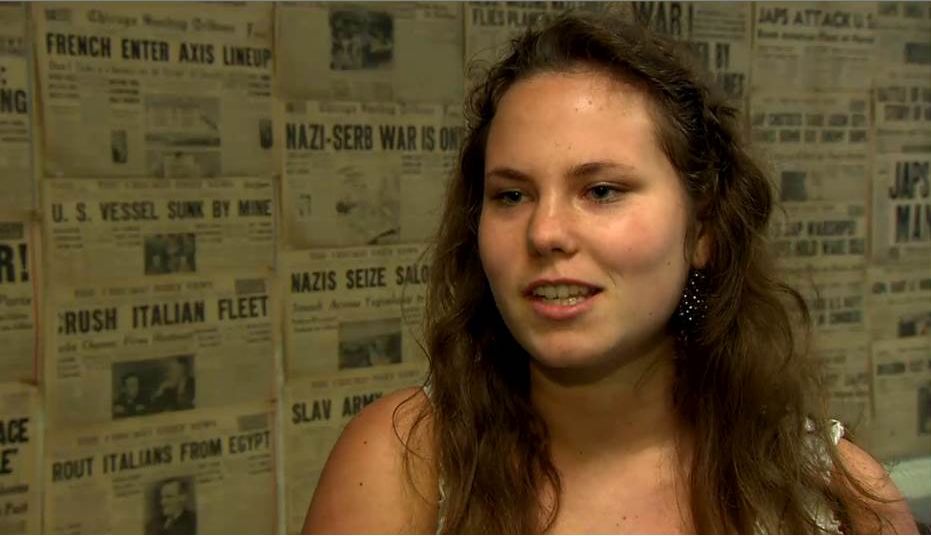
The front wall of Rozell’s classroom is covered with the front pages of actual newspapers chronicling stages of the war as it stormed across the world: “France Joins Britain in War on Germany;” “Roosevelt is Dead; Truman Sworn In;” “Germans Take Oslo: Sweden Gets Warning;” “Reich Scraps Versailles Pact.”

But it is on the last wall where the stories uncovered by Rozell and his students are the most personal. Here, there is a map of the world. In certain sections, it is dense with colored pushpins that students insert for tracking survivors.

The pins represent people: Jewish people who were rescued by American soldiers in Germany on a train from Bergen Belsen concentration camp, destined to be killed at the end of the war. The pins also represent the soldiers who saved them and the soldiers’ families.

“There were 2,500 Jews inside,” said the soft-spoken Rozell, whose blue eyes fill with tears telling the story. Some were already dead; all were emaciated. It was April 13, 1945. They were covered with lice. Some had typhus.

“It was at the point in the war when everything was collapsing under the Third Reich,” Rozell said. “Their final order was to murder everyone on the train.” German soldiers were to drive the train onto a bridge and blow up the bridge. But first, they ordered the men and boys off the train.

“They were going to machine gun them,” Rozell said.

Then the Americans, en route to a nearby battle, crested the hill in their tanks. They stayed 24 hours to guard the train, and then other soldiers came in to help transport the survivors.

In the last 10 years, 275 rescuers and survivors have been reunited through Rozell, the web site he created,https://teachinghistorymatters.com/tag/matthew-rozell/, and veteran Frank Towers, now 97. Towers was a soldier with the 30th Infantry Division who was charged with relocating the train survivors to a safe place for medical care and treatment the day after the rescue.

“His job was to move people out of harm’s way. He had trucks. It took all day,” Rozell said.

Towers, 97 has now met children of those train survivors, “people who would not exist if Americans hadn’t liberated the train,” Rozell said.

Rozell’s  determination to have his students experience the meaning of the closing days of WWII drew the attention not only of families and survivors, but also of the media. He and his students have been featured on NBC Learn as part of “Lessons of the Holocaust” (http://www.youtube.com/watch?v=koQCU9Rhys0.

In September 2009 ABC World News with Diane Sawyer named them as “Persons of the Week.”

Rozell also works with the Holocaust Museum in Washington, D.C.

His story of action in the classroom began years ago when he had students first start interviewing veterans and videotaping them. Then they would transcribe them and type them up.  “This was before the internet,” he said.

In the mid 90s he began putting the stories online.  Rozell also conducted interviews, and one of them was with the grandfather of one of his students, a WWII veteran. He set up a video camera and the pair talked for two hours. A retired state Supreme Court justice, Carrol Walsh had been in combat in a tank.

“He hated it. Once he was trapped for three days,” Rozell said.

As the interview was winding down, Rozell recalls, Judge Walsh’s daughter stepped in and said “Did you tell him about the train?”

Walsh was one the soldiers who came across the train full of imprisoned Jewish people as they were driving their tanks. He told Rozell how they found the people on the train and scared off the German soldiers guarding it.

liberation

Next, Walsh directed Rozell to George Gross, a fellow tank commander who had taken photographs that day from the tank. More recently, Gross had written a narrative about his part in the liberation of the train.

Rozell eventually interviewed him by speakerphone in a class interview.

Rozell posted the transcripts of the interviews with Walsh and Gross – now deceased – on the school web site under a WWII history project.

The site got hits, but it more or less languished for about four years.

Then the trickle started. A grandmother from Australia who had been a little girl on the train contacted Rozell. Then a doctor in London, a scientist in Brooklyn and a retired airline executive in New Jersey found him through his site. They were all survivors from the train.

Rozell decided to host a reunion for them in 2007 at the school, and of course Walsh was invited.

“Judge Walsh – the only soldier there – met them with a laugh, and said ‘Long time, no see!'” Rozell recalls.

The Associated Press picked up the story about the reunion, and the school’s web site got so many hits it crashed the system. Rozell heard from 60 more people who were on that train.


The AP story is how veteran Frank Towers found out about the story. He contacted Rozell and they worked together. Since then there have been over 10 reunions – three of them in Hudson Falls,one in Israel, and many organized by Towers. Besides Israel and New York, they’ve been held in North and South Carolina  Tennessee, and Florida. With the help of survivors daughter Varda Weisskopf in Israel, they have brought survivors and their descendants together with American soldiers and their descendants. Their homes are now in places such as Great Britain, Canada, Israel, America, and Australia.

In 2011, Rozell and his son were given a gift of attending one of the reunions in Israel. There, he met 65 people who were on the train.

“The survivors [and soldiers] chipped in and bought a ticket for me and my son,” he said, still awestruck about the event three years later. “I’ve never been in the Middle East.”

NBC News recently heralded Towers’ quest to reunite survivors in http://www.nbcnews.com/watch/ann-curry-reports/children-from-death-train-reunited-346382403757.

In the video, a young girl cries, trying to express how much it means to her to meet the man who liberated her grandfather on the train.

Rozell, a graduate of SUNY Geneseo, is in his 29th year of teaching history. He says his journey is about “the power of teaching.”

“We can use the power of history to get kids involved, engaged and more empowered themselves,” he said.

The Washington County Historical Society has published some of the student stories in the file cabinet, giving both students and veterans, a voice.

http://www.nysut.org/news/2014/november/veterans-day-using-the-power-of-story-to-make-history-come-alive-for-hudson-falls-students

Thanks, Liza, Andrew and Leslie for visiting our school and seeing the power for yourselves.

Read Full Post »

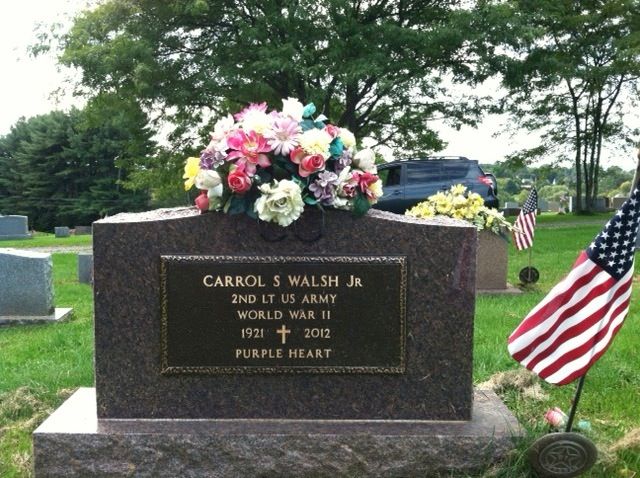
Carrol S Walsh Jr. At rest in Johnstown, NY. Photo by Elizabeth Connolly.

Carrol S Walsh Jr. At rest in Johnstown, NY. Photo by Elizabeth Connolly.

Thirteen summers ago, I sat down for an interview with an amazing man. What he would relate to me, and what I would do with it, would go on to change both of our lives.  A seemingly small incident would be recalled almost as an aside in the wider context of World War II, but then would go on to reverberate through time, and space, creating ripples in the cosmos that grew into waves. Big waves that would carry me, and many others, to places we had never thought possible.

You see, on Friday, April 13th, 1945, twenty-five hundred lives were saved as advance elements of the U.S. Army 743rd Tank Battalion, 823rd Tank Destroyer Battalion, and  30th Infantry Division stumbled across the crime of the century, perhaps of all time.

A train transport stopped at a railroad siding. Open boxcars, sealed boxcars, shabby passenger cars, engine. Some people wandering about, others too ill to move. Sick and emaciated human beings.  Women. Men. Children. SS bands roaming the countryside. Orders to execute. A bridge over the River Elbe ahead to be blown to smithereens. With the transport, and the people on it.

The soldiers told me their stories.  In the course of collecting their narratives, we found others who played their parts and rescued those people.

I listened. We wrote. We recorded, and I posted. Then, the wires began tripping. Seven Septembers ago, we put together the first of many reunions between these soldiers and the child survivors of the Holocaust they rescued.

“Joyful” does not do it justice. What do you say to the men who saved you and your family when you were a child?

Carrol smiles, grips their arms in greeting, and laughs, “Long time, no see!” Sixty-two years, that’s all. On April 13th, 1945, the war weary, “seen-it-all” twenty-four year old second lieutenant is in for the shock of his life.

***************************************************

Five years ago this week, we put on quite a show at our high school.  High school kids listening to, meeting, sharing, laughing, crying, even dancing  with octogenarian U.S. soldiers and Holocaust survivors. ABC World News called my classroom and told me they were on their way up from NYC headquarters to film us. You can see Carrol, and listen to fellow tank commander George Gross’ narrative from our interviews, and hear fellow soldier Frank Towers describe his role in the liberation.

The last evening together, soldiers and survivors from all over the world watched the broadcast together, and we said our prayer of thanksgiving. Hundreds of students became the witnesses for the generations to come.

And so it comes full circle. Nearly ten percent of the passenger list has been found, over 60 years later. Profound things keep happening.

***************************************************

We lost Carrol less than two years ago, George earlier. So I write this week to remember, and remind myself of what a legacy, and gift, they left us. While it may have been a tiny part of  very productive lives (a New York State Supreme Court justice, and English literature professor, respectively), for the rest of my days I will think of the times I got to talk to them, and smile.

And think about their own words: “What are we going to do with all these people?”

Indeed. Just look at the generations that sprang forth, because of what our soldiers stopped to do, in a shooting war. In complex, fluid situations, there are no easy answers, but don’t you think that there is a very important lesson here?

It was not part of the mission. But maybe as a society we should break down and examine the values that made the mission change, if even as a “sideline”.

Sometimes it just feels good to feel proud.

But temper pride with the wisdom of the retired New York State Supreme Court justice:

“No.

They don’t owe us anything. Not a thing.

We owe them~

For what the world allowed to happen to them.”


Read Full Post »

NBC Video about liberator Frank Towers, based on our project here at this website, and what has driven Frank since we met up in 2007.
Godspeed survivors, family members, soldier liberators.  Keep going, Frank.
Remember.
Children from Death Train Reunited
The emotional reunion of a former American soldier and the Jewish children he helped save from the Holocaust 70 years ago. Link below:
OR

Read Full Post »

Meet my friend Frank. He’s 97. The story continues…. from the Boston Globe.

WW2 liberator reunites with Holocaust survivors

By Victoria Bedford
| Globe Correspondent   October 12, 2014

“If not now, when?’’ asked Rabbi Joel Sisenwine, quoting from Hillel the Elder, a revered Jewish leader who lived at the time of King Herod. “If not me, who?”

It was Oct. 4, Yom Kippur, and Sisenwine stood before the congregation at Wellesley’s Temple Beth Elohim, introducing a very special visitor.

As Frank Towers walked up to speak, the teary-eyed congregation of 1,500 rose to give him a standing ovation.

Towers never considered himself special. Now 97, the South Boston native is living in Florida, where he spent most of his adult life as an office manager at a university data processing center. But in the early spring of 1945, in Farsleben, Germany, he was among a group of soldiers who liberated thousands of Nazi prisoners.

The rabbi invited two of those survivors, and their families, to step forward and stand beside Towers.

Yvette Namias, 92, of Peabody, did so. She was 22 in 1945 and long a prisoner at the notorious Bergen Belsen death camp before the liberation. She had never met Towers. Her family — children, grandchildren — stood around her.

Namias was joined by Charles Elbaum of Providence, a 17-year-old prisoner at the time of liberation, now surrounded by his children and grandchildren.

“Well,” Towers said to Namias after the ceremony, “I’ve spent a long time chasing you around the world.”

“He’s responsible for my family,” said Namias. “Without him, my family would not be here.”

Nothing in his life had prepared Towers for what he came upon on April 14, 1945. He was a young lieutenant in the 30th Infantry Division, a unit of the US Army National Guard, heading for Magdeburg, Germany, to fight one last major battle. In the town of Farsleben, they encountered a train that had been seized by the Army’s 743d Tank Battalion the day before. Towers was told it held 2,500 Jewish prisoners, and he was responsible for taking them to safety.

“What if you find a train loaded with Jews, what are you going to do? Nothing was ever said about anything like that.” Towers said. “If you come across a camp, like Dachau or Buchenwald, what are you going to do? We didn’t know anything about that situation.”

But the lieutenant found himself faced with a train full of death camp prisoners, 60 to 70 men, women, and children crammed into each train car, forced to stand until they collapsed from exhaustion, with a daily ration of thin potato soup, and one bucket for a bathroom. They were starved, sick, overworked, and in desperate need of medical assistance, which Towers and his men were wholly unprepared to provide.

Still, Towers and his men sprang into action, rounding up as much transportation as they could, and took the prisoners to the town of Hillersleben. There, a Red Cross unit processed the thousands of Jewish prisoners, gave them showers, provided clean clothes and dusted them with DDT, now a prohibited carcinogen, to kill lice and fleas.

Knowing that he was leaving the prisoners in good hands, Towers went on to fight a last battle, and returned to the States later in 1945. Soon, he started a family with his wife, Mary. Like many who lived through the war, he put his experiences in the rearview mirror for years, never talking much about what he had seen of the Holocaust.

“But I could tell it was eating him inside,” Mary said. “I knew that.”

Towers said his focus was just to move on. “Not much thought was given to the victims,” Towers said. “They were starting out on a new life somewhere.”

That all changed for him in 2005, when he was invited back to Magdeburg to speak about what happened 60 years before. There, he met Ernest Kahn, a survivor of Buchenwald who had been liberated by Towers’ division (“It was very emotional,’’ said Towers), and Kahn put him in touch with Matt Rozell, a high school teacher from Hudson Falls, N.Y., who was assembling an online archive of stories from the war. The two began working together to locate survivors from the train in Farsleben.

“The thing just snowballed,” Towers said. “Today we have located 275 of these children.”

Like Towers, Charles Elbaum, who was a 17-year-old prisoner when rescued from the train, rarely spoke about the Holocaust to his family. After his liberation, he went on to become a physics professor at Brown University, a husband, a father to three sons, and a grandfather to eight children. His son Dan, of Newton, and grandson Nathan met Towers at a reunion, and invited him to speak before the congregation at Temple Beth Elohim.

“Without what they did,” Dan Elbaum said, “I wouldn’t be here. Frank is the last known surviving veteran who was actually present at the liberation of the train.”

For Towers, who now travels around the world to tell his story, preserving the memory is the most important aspect of these talks.

“Dan and his family, and others just like him, he’s second-generation,” Towers said. “Many of them knew nothing about the incarceration of their parents. This second generation is entitled to know what happened, and how it happened, so that they in turn can pass it on to their children, and this will never happen again. That’s the hope in all of us.”

http://www.bostonglobe.com/metro/regionals/west/2014/10/11/liberator-reunites-with-holocaust-survivors/FGUj2uW2crSYIiQIUbdbWM/story.html


Read Full Post »

Slide17NBC Learn came to town and filmed in my classroom in late April. We were learning about some pretty heavy stuff, the liberation of the camps, in this case Dachau.

It was a good experience for my kids to kind of demonstrate what they learned and why the study of this particular segment of history is something that shouldn’t be forgotten.

Slide24From the producer:

“Our site is accessed by thousands of teachers and students…. [for use as] on-line curriculum for middle school students on World War II.”

“I owe a debt to you and your students for your help on the video… By allowing us to film in the class and setting it up for us, you and your students provided a context that was so essential to tell Rich’s difficult story.”


It’s pretty well done and the kids did a great job.

UPDATE: Richard passed shortly after this interview was released. It was his last one. God speed, Rich.

Here are some stills:

Slide5

Slide22

Slide13

Slide4

Slide14

Slide18

Slide16


Slide11

For more about the original visit by NBC, click here.

Read Full Post »

A year ago I took one of the most transformative journeys of my life, with 24 fellow educators, to study the Holocaust and the Jewish resistance to it, in Washington, DC, Germany, the Czech Republic, and Poland. I kept an extensive diary and took tons of photographs. For the next several days, I have decided to go back and retrace my steps and try to process what unfolded for me. Not weighty tomes, but maybe a picture and a note from the diary.

Berlin. We arrived here late in the evening on the 5th from Hannover by rail, and set up headquarters in the Marriott Berlin, which is very nice, for a few days. On the 6th we ventured out by our tour bus to several places of note. Below I will show you the photos I took, and the World War II era context, and help you connect the dots.

The Reichstag.

The Reichstag.

The Reichstag with its transparent dome, so citizens today can literally look down and see what their legislators are up to. Hmmmm.

The Reichstag in 1945.

The Reichstag in 1945.

Brandenburg Gate.

Brandenburg Gate. Tourists.

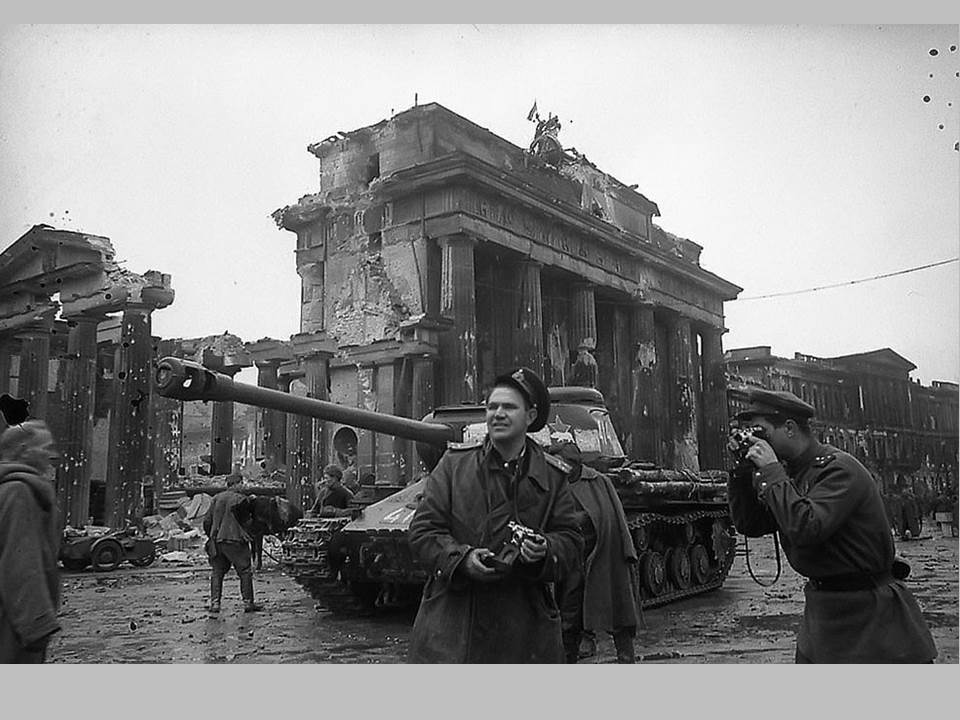
Brandenburg Gate, 1945. Tourists. Of the Soviet persuasion.

Brandenburg Gate, 1945. Tourists. Of the Soviet persuasion.

162Above is the stadium built for the 1936 Berlin Summer Olympics. Still in use today.

stadium 1936Inside during the Games in 1936. Kinda makes you think a lot about how Hitler and the Nazi party came to power. Don’t forget, no one is forcing these good citizens to make the salute. Exhibit A: The power of nationalism, and charisma.

Olympic Stadium from the tower.

Olympic Stadium from the tower.

i know that guy...

I know that guy…and so much for painting with too broad a brush.

181

reviewing stands outside the stadium proper.

reviewing stands outside the stadium proper.


Read Full Post »

A year ago I took one of the most transformative journeys of my life, with 24 fellow educators, to study the Holocaust and the Jewish resistance to it, in Washington, DC, Germany, the Czech Republic, and Poland. I kept an extensive diary and took tons of photographs.  For the next several days, I have decided to go back and retrace my steps and try to process what unfolded for me. Not weighty tomes, but maybe a picture and a note from the diary.

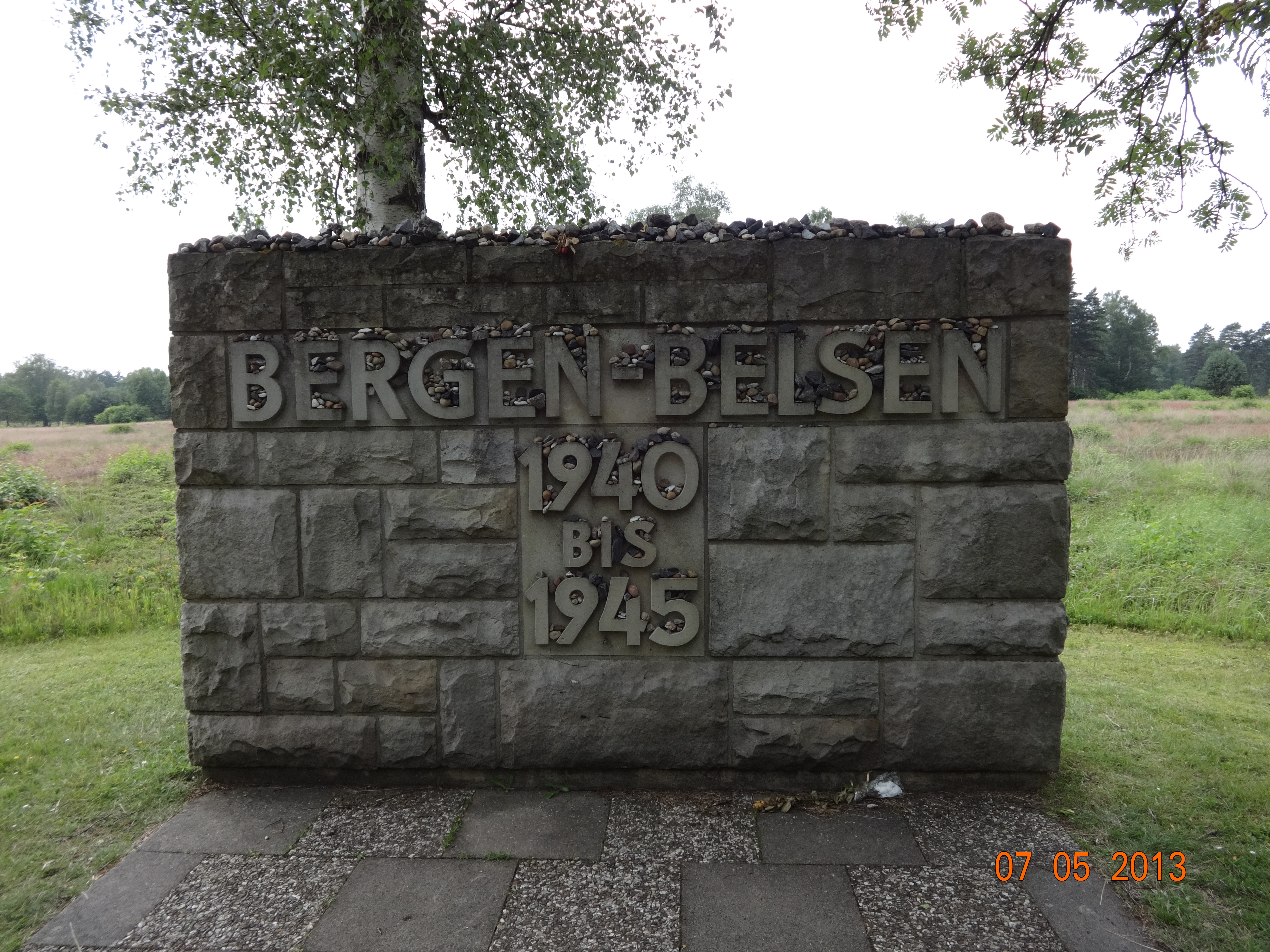
Bergen Belsen on July 5, 2013.

Bergen Belsen on July 5, 2013.

“Belsen! I think they had been in Belsen.”

On July 5, 2013, we are on our way from the hotel in nearly Celle to this destination. Our first concentration camp of the tour.

Trying to remember the name of the concentration camp, the elderly gentleman exclaimed these words as he animated his story from the rocking chair across from me. I was in his daughter’s house on a brilliant July day, twelve summers before. It seems like a lifetime ago. But if I had not taken the time to go there and sit down with him, you would not be reading any of this.

People, mostly news media, get the story wrong all the time.  I had not invited the veteran to class because I had had his grandson. It was a series of coincidences that changed so many lives, but then again, I am sure there are no coincidences.

Is it a coincidence that I am making my first trip to Belsen on the day that he is being laid to rest in his hometown back in New York state? Or that by 8pm I will be traveling on the same spur of tracks toward Magdeburg, on which the Sherman light tank he was commanding sixty-eight springs ago came to the train with 2500 Jewish victims of the Holocaust onboard?

I was picking my young children up from daycare. I knew Tim, the other father there at the same time, picking up his young son. I had his older son in class at the time. Tim knew I liked to talk to World War II veterans, and he invited me to come over and speak to his father in law, a retired NYS Supreme Court justice, who was coming up to stay for the summer. So I took him up on it. What a great man, funny too. We conversed on tape for nearly two hours, and I was about to turn the camera off, and his daughter, Tim’s wife Elizabeth, spoke up:

Daughter: Did you mention the train at all? That was kind of interesting.
CW: No, I didn’t tell him about the train.
MR: What was that?
CW: Well, late in the war, again a nice, beautiful April day… we were shooting like crazy across the top of Germany and Major Benjamin of the 743rd was kind of out ahead scouting a little bit… he came back to the battalion and he pulled my tank and George Gross’s tank [fellow tank commander] out. He told us to go with him. So we did.
We came to a place where there was a long train of boxcars. … I can remember pulling up alongside the train of boxcars, Gross and I, and Major Benjamin. As it turned out, it was a train full of concentration camp victims, prisoners, who were being transported from one of their camps…Belsen!  I think they had been in Belsen, on their way to another camp…
So there they were. All of these people, men, women, children, jam-packed in those boxcars, I couldn’t believe my eyes. And there they were! So, now they knew they were free, they were liberated. That was a nice, nice thing. I was there for a while that afternoon. You know, you got to feed these people. Give them water. They are in bad shape. Major Benjamin took some pictures, and George Gross took some pictures too…

 Bernd Horstmann, Custodian of the Book of Names,  Matthew Rozell, History Teacher, July 5, 2013. Bergen Belsen, Evacuation transports exhibit.

Bernd Horstmann, Custodian of the Book of Names, Matthew Rozell, History Teacher, July 5, 2013. Bergen Belsen, Evacuation transports exhibit.

Twelve years later and here I am. I know some of the historians who work here-they have been to America to meet me- and I am going to see an exhibit that in fact incorporates some of the fruits of my labors. To date, we have reunited over 240 persons who were on that transport with the soldiers who liberated them. And I found the photographs that tell the story so well, photos that through the generosity of the soldiers who shared them with me, are now also in the United States Holocaust Memorial Museum, our national institution.

In brief context: 120,000 prisoners passed through Bergen Belsen, and not all of them Jewish. 52,000 died here, perhaps 30,000 of them were Jewish. Belsen actually began as a POW camp- 20,000 Russians died here in the winter of 1941-42. In 1943, Himmler (the head of the SS) ordered that an exchange camp be set up for Jews who might possess foreign certificates or visas to emigrate, perhaps to use to bargain for German families interned abroad. 14,000 people went through the exchange camp. In November, 1944, thousands of women, and some children, arrived from Auschwitz, to be “housed” near the exchange camp, including Anne Frank and her sister Margot. What they received, in their miserable condition, were 18 oversized old tents which promptly blew down during a winter storm shortly after their arrival. With the arrival also of brutal SS administrators and guards, conditions deteriorated rapidly as the winter of 1944-45 turned into spring.

The camp system began collapsing with the advance of the Red Army in the east and the British and Americans in the West. By the time the British arrived on April 15th at the camp gates, over 50,000 prisoners were suffering from extreme malnutrition, typhus, typhoid fever, and dysentery. Nearly ten thousand corpses lay about as the crematorium had long since broken down. Anne and Margot were dead, as the first Yanks crossed the Rhine River at the end of March. Hundreds died on the day of liberation. A true scene of horror.

Shortly before the liberation, between April 6 and 9, 1945, 6700 men, women, and children from the exchange camp passed through the camp gates and marched several kilometers to the railhead that many had arrived at months or years earlier. Three train transports of cattle cars and shabby passenger cars were prepared and loaded. Some people were executed for attempting to steal sugar beets at the railhead .
The transports would be headed for the Theresienstadt concentration camp, which at the time was far enough from advancing Allied lines and indeed would prove to be the last camp liberated on the last day of the war (I will trace that route later in our journey). Only one train made it there. The other two were liberated, one by the Americans at Farsleben near Magdeburg, and the other by the Russians near Tröbitz.
The first train left Bergen-Belsen on 6 April 1945 and travelled for six days before coming to a stop near the village of Farsleben. It was this transport that the soldiers I interviewed came upon on Friday, April 13, 1945.

I promised no weighty tomes, but maybe it is too late. After an introduction to the history of the site, we  watch the silent movies shot by the British beginning the second day after the liberation. Perhaps you’ve seen the photos or the films.  If you see a photo of a soldier wearing a mask, maneuvering a bulldozer to push corpses into an open pit, that was Bergen Belsen. Just over a month later, the British commander ordered the lice infested, typhus ridden barracks put to the torch. So today, to some visitors, there is nothing here, just inviting walkways with interpretive signage and some markers. Woods, and open fields.

Matthew Rozell and the ruins at Belsen, 7-5-2013. Jerrilyn Miller photo.

Matthew Rozell and the ruins at Belsen, 7-5-2013. Jerrilyn Miller photo.

But on closer inspection, we see the outlines of the past in the ruins. We walk to barracks ten of the exchange camp. You can see the outline at the woodline. Some of the foundation stones are marked with the names of those who passed through them. We retrace the steps from the barracks to the latrine, now many meters away off a footpath in the enveloping woods. Nature reclaims. Out of the corner of my eye, down the long narrow strip mowed to infinity where a fenceline once ran, I see a large deer guide out of the woods, pause and look my way, and vanish just as soon as it appeared. Is it obscene to find in this place now a feeling of inner peace, to find beauty in the stillness of a grey afternoon? Maybe so.

DSC00490Back out to the camp. The solemn monuments marking the mass graves. 1000 Tote. One thousand dead. 2500 Tote. Two thousand five hundred dead. And on and on, elevated mass graves. On to the commemoration room.

Candles are lit, stones are placed, the prayers are recited in Hebrew and English, led by Pauline, the only other New Yorker on the trip with me. We are all moved.

Now I think of Carrol Walsh, the tank commander who led me to this story, the liberator who did not want to be called a hero, or even a liberator. His own memorial service is today, half a world away, but I am here in this place to remember him as well. It is altogether fitting and proper. And I am sure that cosmically, it is also something destined to be.

This evening we depart from Hannover to Berlin. It is pretty crazy and unsettling at the Friday evening platform. 27 people have to run for the train, as the track has changed, with hundreds of others. Our original seats are taken, so we have to find other due to a mixup. But we do not lose anyone, and as I settle in next to a kind stranger, made welcome, I notice our station stops along the way- Brunswick. Magdeburg.

This was not planned, either. We are roughly following the route of the train, and the 30th Infantry Division in 1945. What take us 35 minutes to cover, takes 6 nights and 7 days in April 1945.

We tripped the wires of the cosmos. Today was the culmination of something incredible I am still trying to figure it all out- but this trip is helping me to place in proper context the elements of the greatest crime in the history of the world. As we leave this place of obscene beauty and peace, I think of  the I think of  the survivor’s words:

Remember Me.

136


Read Full Post »

A year ago I took one of the most transformative journeys of my life, with 24 fellow educators, to study the Holocaust and the Jewish resistance to it, in Washington, DC, Germany, the Czech Republic, and Poland. I kept an extensive diary and took tons of photographs.  For the next several days, I have decided to go back and retrace my steps and try to process what unfolded for me. Not weighty tomes, but maybe a picture and a note from the diary.

040So here is Frankfurt. We arrived at 5am local time after a transatlantic flight. Before we even hit our hotel properly we were off on the tour. The old girl goes back a ways. For the last eight hundred years or so, there was a significant  Jewish population, decimated by the occasional pogrom but somehow bouncing back. That is until Kristallnacht, when the largest synagogues were burned to the ground. In 1933, 30,000 Jews lived in Frankfurt; in 1945, only 600 remained (you can read more here).


The Memorial to the Frankfurt Jews was a testament to the tens of thousands denounced and deported, by date and destination, to their deaths by their neighbors and the Nazi regime.

Memorial to the Frankfurt Jews. July 3 2013

Memorial to the Frankfurt Jews. July 3 2013

Each metal bump out has a person’s name. Shortly afterwards, we drove past the Frank House, from which the Frank family made their way to “safety” in the Netherlands, a path followed by many. You know the rest of the story. Anne Frank. We’ll connect more dots later on the tour.


I suppose there is a lot more to Frankfurt but we are not here long, though I do sneak out of the hotel several times to explore, solo and with like minded companions. As this trip begins, so does the wondering. You know, just the night before I heard testimony

Matt Rozell and Henry Greenbaum, Washington, DC, July 1, 2013

Matt Rozell and Henry Greenbaum, Washington, DC, July 1, 2013

of survivor Henry Greenbaum and had dinner with him and the group. He is part of the family on Geddy Lee’s mother’s side, Polish survivors who made their way to North America after the war. If you are not quite sure who Geddy Lee is, he is the bass player and vocalist for one of the most talented power trios on Earth. And he is playing Frankfurt. His mother and father met in a work camp in Poland, then Auschwitz.  His dad was liberated by the Americans at Dachau, his mom by the British at Belsen, where we are heading soon. And they returned for the 50th anniversary of the liberation in 1995, at the invitation of the Germans, with hundreds of others, walking the ground, healing some wounds.

“Dankeschön, Frankfurt!” he happily exclaims several times during the show here. How much do we read into that? Nothing, I suppose.  Though there is something magnificent about Geddy’s roots, the family history, and Rush coming to Frankfurt and just nailing it. The German fans, the lovers of the band, of the music, of Geddy… It literally brings a happy tear to my eye.

And of course the eternal question-what else did the world lose, because of the Holocaust? Unfathomable.

But here is a taste.

Read Full Post »

« Newer Posts - Older Posts »