Feeds:
Posts
Comments

Posts Tagged ‘Hillersleben’

Here is the interview that I did with NYSUT last week.

A staff member who is maybe thinking of leaving the profession wrote me a nice card about a month ago. In a follow up conversation she told me she saw me as a “beacon”- her word- for other teachers. That’s fairly heavy stuff to hear.

I feel  responsibility to add some extra comments below for the benefit of  teachers in general, and anyone else who is interested.

http://itswhatwedo.nysut.org/

Photo credit: Kris Dressen.

The reporter was competent, engaged and interested, but she had her deadline and we ran out of time.

I did not have a chance to tell her about the medic. I’ll include it below and will be passing it on to her. Kind of like the “moral of the story”, especially when you realize what it means for the soldiers.

I hope it serves as a reminder to teachers that what we all do every day makes a difference.

Here is the postscript to the story.

 *********************************************************************************

An important epilogue to the NYSUT story.

I know that some of you have been following the unfolding of the train liberation and reunions.  The part that is not mentioned in the article  is a phone call I got last Oct. from an 88 year old man in Scranton, PA who found me- and really wanted to be put in touch with the survivors.

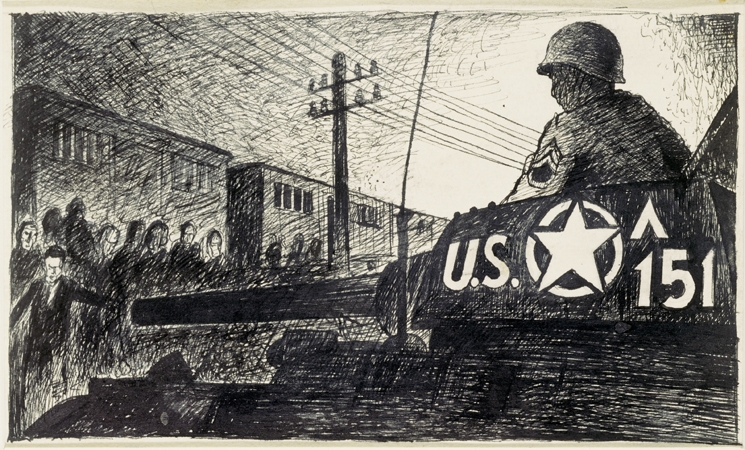
You see, he had been a twenty something Army medic in 1945 when ordered to move out to the abandoned German Air Force hospital grounds at Hilersleben, immediately after the tank commanders came across that “death train” and Frank Towers evacuated the occupants to get them out of the battle zone.

Blessed – or maybe cursed – with a terrific memory, he can vividly recall the screams and overall sense of dread permeating the hospital, where he and his fellow medics wore a daily uniform of surgical masks, gloves and rubber aprons.

He remembers scooping handfuls of lice out of patients’ hair and administering countless needles, and the time he had to carry the body of a little girl to a tent serving as a makeshift morgue.

For six nonstop weeks after the liberation they confronted the horror and the evil. Well over 100 Holocaust victims, now his patients, died after they were freed by our troops. No one had trained Walter for this, and  for all these years he has lived with the guilt, the nightmares, and the trauma.

For 60 years he and his wartime buddies met after the war. Walter told me and some of our kids that in recounting their war stories, not one of them ever brought up that place called Hilersleben.

Those guys must have suffered from PTSD. And like many soldiers, his generation just did not talk about that.

Now he calls me at school, to chat, laugh, to let me know which of our survivors has contacted him, and to tell me he wants to meet me.

********************************************

Wait a minute-rewind- How did that happen?

I mean, Why did HE, find ME?

That all happened WAY before I was born.

I think about this, every single day.
Is there a reason I put on this earth? How do I make sense of my responsibility as a human being?

Did those soldiers have to put themselves in harm’s way, in many respects scarring themselves for life,  to care for “the brutalized and wretched” whom they did not even know?

******************************

What I offer to other teachers:
I’m an educator and so are you. As persons who spend most of our waking hours with young people, I can only postulate that we are in the “business” of molding human beings- which of course is not really a business at all. Like the soldiers thrust into that situation, ultimately we are caretakers of humanity.   It is an overwhelming responsibility, but it is not just a job.
It’s a mission.

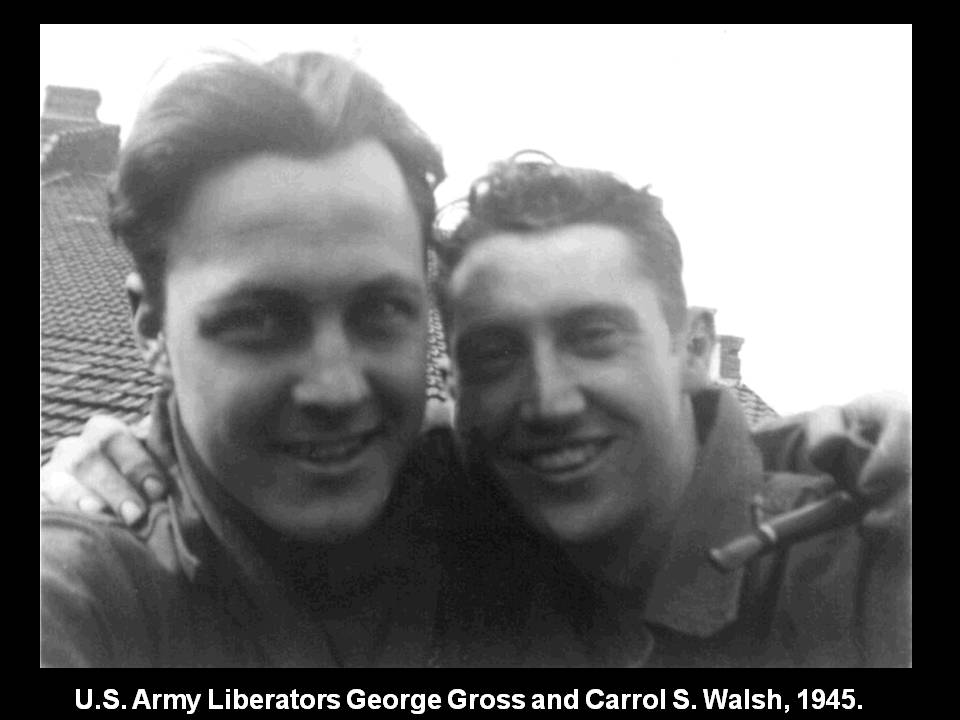
Those soldiers made choices, confronted evil, sacrificed a ton, and saved humanity– Carrol, George, Frank, and Walter (“the Babe”)- and in doing so, I know they saved me, too. It sounds cliché, simplistic, Pollyanna, whatever- but it’s true.

You do your best to make a difference.

Lots of times you think you lose.

But here’s the real crazy part- most of the time you probably win.

Like these soldiers, sometimes you don’t know you have won until years later.

It’s just what we do.

Read Full Post »

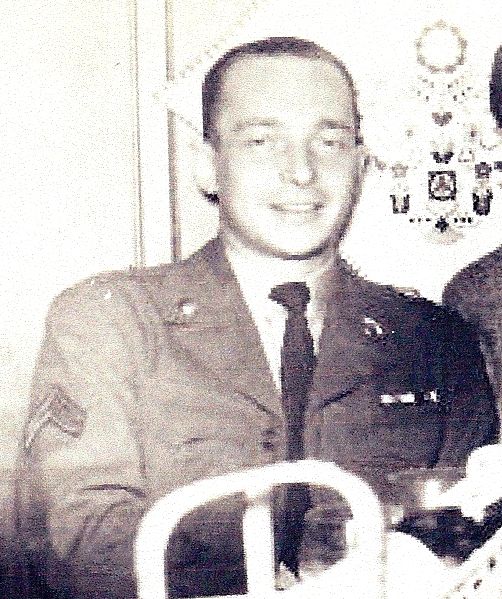
  I am re-posting this on the anniversary of a car crash that would claim the life of Holocaust survivor and later U.S. Army Ranger, Steve Barry.

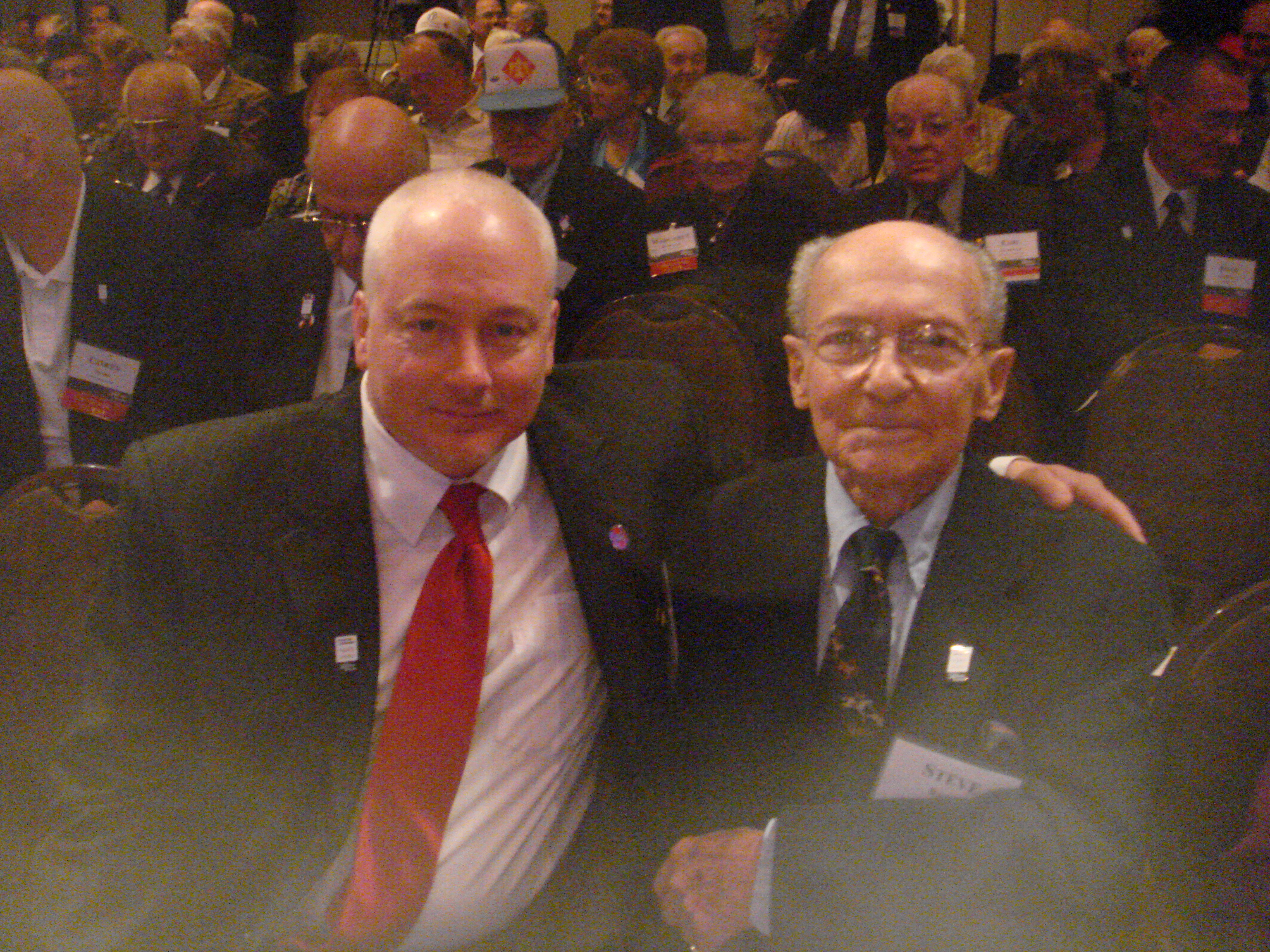
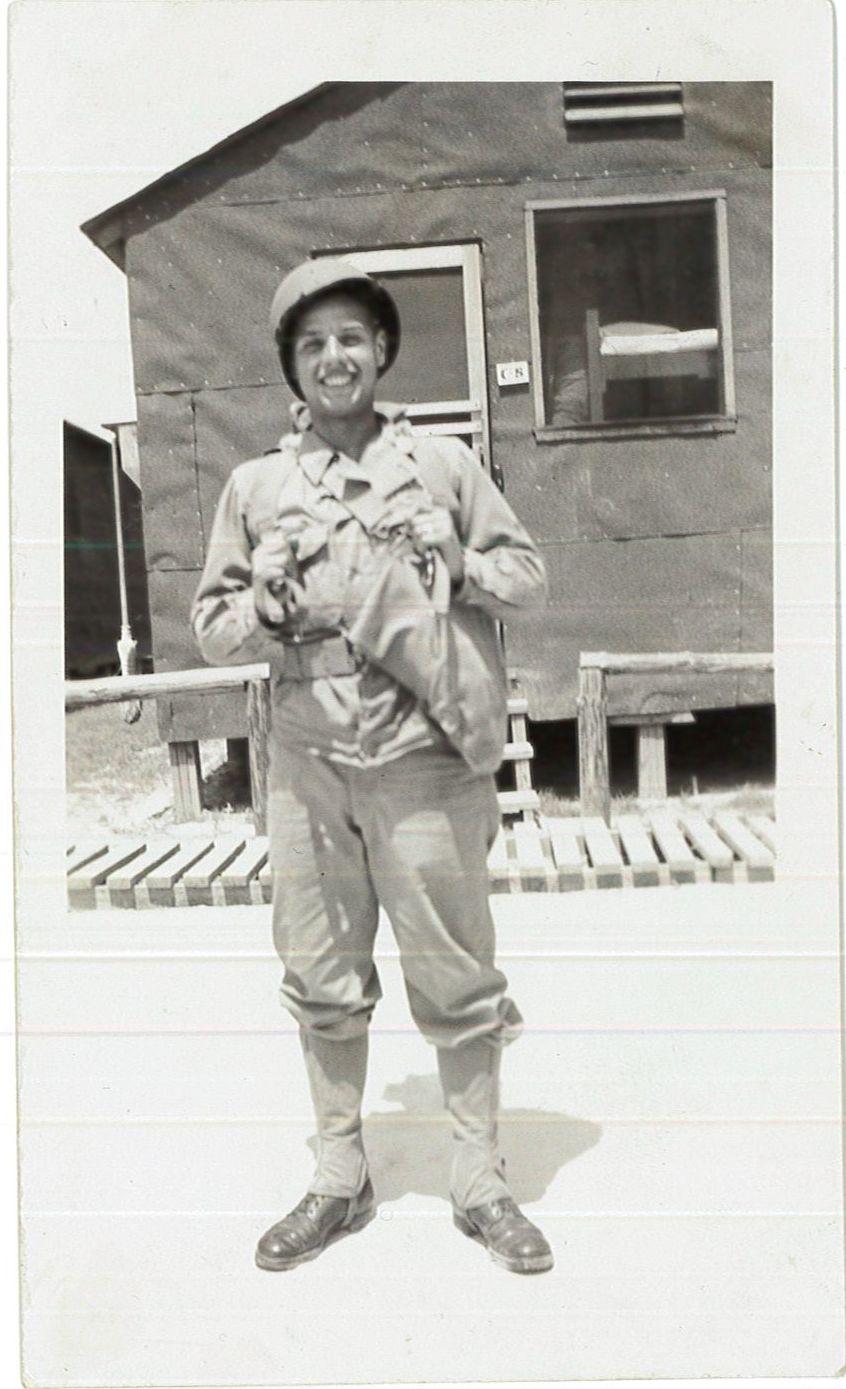
My friend on the left described himself at one point in his life as the “Happiest Korean War Draftee”. Steve was a  survivor from Hungary who beat the odds and lived through the horrors of the Holocaust after the Germans invaded that country in 1944 and did their best to kill him on several occasions. He spent his 20th birthday jammed in a boxcar destined for Bergen Belsen, witnessed people dying of starvation and disease by the thousands,  and was liberated on April 13th, 1945 at the hands of the 743rd Tank Battalion and the 30th Infantry Division of the US 9th Army, aboard the train near Magdeburg.  He emigrated to the United States in Dec. 1948 after spending years in a displaced persons camp, applied for citizenship immediately, and was drafted in 1950, only to be assigned occupation duty in a far off nation- you guessed it-Germany. He was so happy to serve his adopted country…

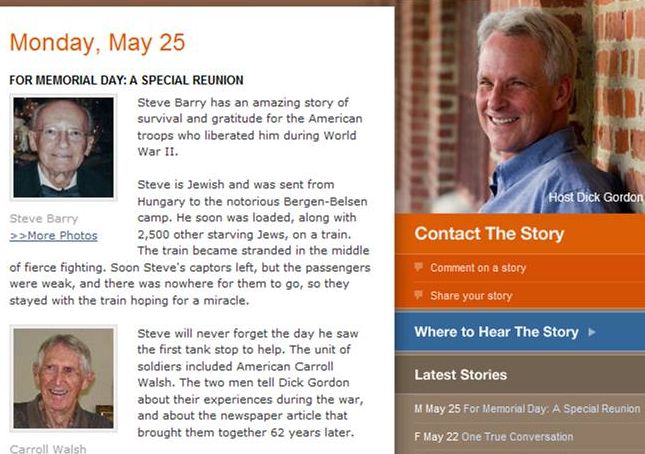
Steve passed away yesterday, January 16th, 2012, after a long and difficult ordeal from injuries sustained in an automobile accident in September. I’ll always remember his special Christmas and Easter cards that he sent to me, made personally on his computer; his funny, self depreciating humor; and above all his overwhelming happiness at being able to finally meet the men who saved him. I hope that the memories sustain his wife Stella and his children and their families, and also the friends that he made later in life and became soulmates with- soldiers Carrol Walsh and Frank Towers, the soldiers who arrived on the scene to free him and help him begin his life anew.

Matthew Rozell, Stephen Barry, National DOR Ceremony, Washington, DC April 2010. This photo was taken the day after the 65th anniversary of Steve’s liberation in April 1945. We had just been honored by the director of the United States Holocaust Memorial Museum before the national ceremony in the Capitol Rotunda.

I will leave you with a few of his words-and we will remember. Thanks, Steve, for all that you gave us, and for passing the torch to a new generation of students to carry your message forth.

An earlier post… The Holocaust Survivor and the US Army Ranger…

A fantastic national radio interview that I helped to arrange, knowing he would be the perfect speaker…

And the educational films I constructed from them.

 Stephen B. Barry, 87, of Boca Raton, Florida, passed away peacefully on January 16, 2012 following a serious car accident in late September 2011. A Holocaust survivor,who was proud to be an American, he went on to live the American dream. He is survived by his wife Stella of nearly 58 years, his children Barbara (Paul), Jamie (Jerry) and Randy and his beloved granddaughters, Amanda and Victoria and many extended family and friends. Services to be held at Beth Israel Memorial Chapel in Delray. In lieu of flowers, the family requests contributions in his memory be made to The United States Holocaust Museum.
Published in Sun-Sentinel on January 18, 2012

Read Full Post »

Dear Mr. Rozell,

Hilersleben -Luca Furnari

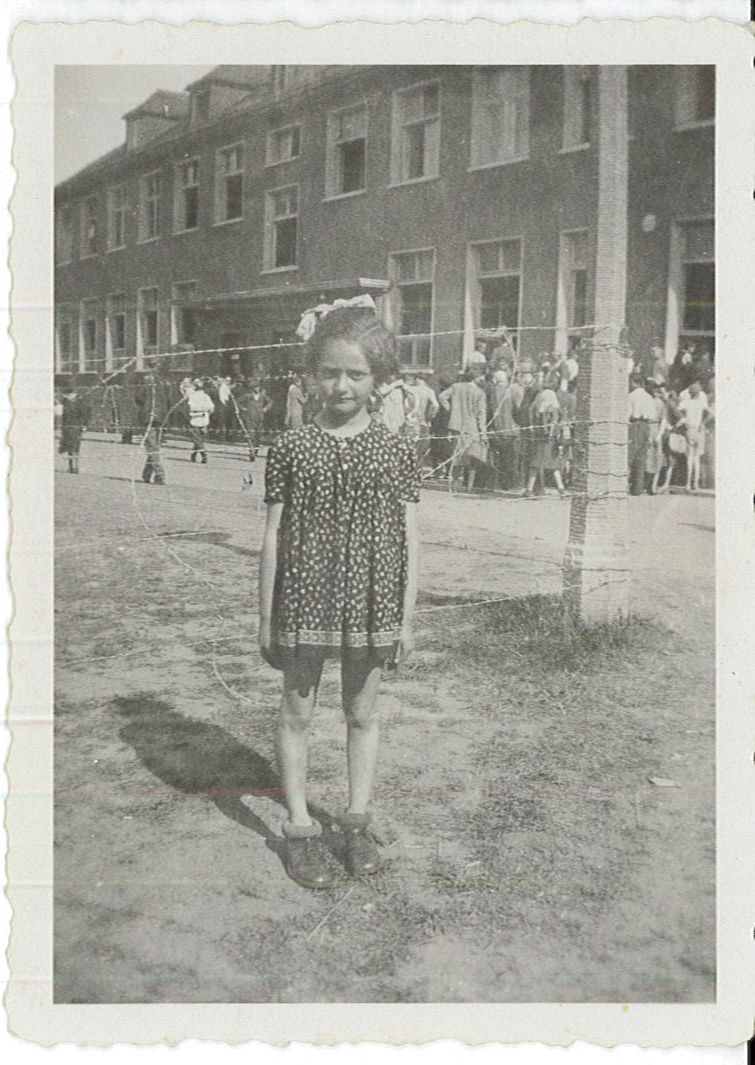
 My grandfather, Luca Furnari, is 90 years old and served in the 95th medical battalion with Mr. Gantz at Hillersleben. He has a number of photographs from this period.  For many years he has thought about trying to find a particular young girl who he helped sneak extra rations to at the DP camp and whose mother asked him to take back to the United States. He and some friends actually had a whole plan of how they were going to sneak her onto the boat back to the US, it’s a great story. Unfortunately, as you know, they were told they were going to the Pacific theatre and the plan became impossible.  Her name was Irene / Iren / Irena.  I have a photograph and have searched the manifest on your website, there are 3 possible people of approximately the right ages: Irena Gitler, Iren Roth and Iren Wittels.   I was wondering if you had come across any survivors from Hillersleben with the same name. 

Hilersleben-Irene is in the flowered dress

Also, I know my grandfather would love to be connected to any other surviving members from the US Army that were at Hillersleben.  

 My grandfather is the large picture on the left hand side.  Irene is in the flowered dress in the picture by herself and on the lap of another US soldier, whose name is Turner (?).  The picture with the baby is also Turner, and they are in the DP camp.  My grandfather’s inscription reads

Hilersleben-Turner-boy that kid sure did cry that day — until we gave her some chocolate.

“boy that kid sure did cry that day — until we gave her some chocolate”.  The picture of the building with barrels in the foreground is from Hillersleben too. It has a strange inscription from my grandfather

Hilersleben-some disorderly DPs getting a shower bath (DDT?)

“some disorderly DPs getting a shower bath”.  The one with the two girls just says “Two of the children that lived in the D.P. center we were taking care of. Cute eh hon?” (He was sending the pictures to my grandmother back in the States.)

The child Irene is the girl that my grandfather would like to try to locate. 

Soldier Turner and Irene.

Any help you can provide is MOST appreciated.

Best,
R.

Hilersleben-Two of the children that lived in the D.P. center we were taking care of. Cute eh hon?

Read Full Post »

“On April 30, 1945, Jewish-American G.I. Richard Marowitz  stormed into Hitler’s bedroom looking for anything he could bring back to headquarters.

Richard Marowitz of Albany , NY was on the scene for the liberation of Dachau. The following day he was at Hitler’s villa in Munich. Here is his story as told to Matthew Rozell and a group of students at Hudson Falls High School ten years ago.  Marowitz is a Jewish war veteran. Read the postscript to learn more about Hitler’s hat.

Richard M. Marowitz-42nd Rainbow Division-

The Liberation of Dachau

interviewed at Hudson Falls High School.

On the 29th of April 1945, my platoon was called into the command post, we were in a little village, I don’t remember the name of it, but it was probably about 25-30 miles from Dachau.  We were given new maps which showed Dachau, and we were told that the 20th Armored were already on the road to Dachau and our job was to take off and get to the tail end of the 20th Armored and be liaison between the 20th Armored and the infantry that would be coming down behind us in two and a half ton trucks, which is kind of idiotic but that’s the way the army was. The reason for that was we were having a race with the 3rd Division on one side of us, and the 45th Division on the other side of us, and they wanted the 42nd to win the race. So we took off on the road going very quickly like we usually do – if we came to a tree, the woods, or a village, we would stop and reconnoiter and find out if it was ok to go through without getting killed – and we kept getting pushed on the radio, ‘where are you,’ ‘what are your Greek coordinates,’ and ‘what’s taking so long? We are going to lose the race.’  After awhile of this kind of nonsense, Lieutenant Short stopped us and he said we to have to make a choice, either we’re going to have to step on the gas and go like hell and let surprise be on our side, or we’re going to lose the race and then everybody is going to get mad at us.  So we decided to step on the gas and go like hell, which is what we did. In the process, we ran into a whole lot of little hornet’s nests – it would have made a movie you wouldn’t have believed anyways – for example, we cut a German convoy in half that was going across a road that we were on, firing as we went through they didn’t know what happened because we weren’t supposed to be there and they were driving off the road. We did the same thing with another convoy that was going on a road in the opposite direction and parallel to ours, and we just fired on them as we went.  We came upon a village, and somebody fired on us and we went up on a small knoll next to the road and we dragged all the junk we had accumulated on the bottom of our jeeps like bazookas, mortars, etc. We fired on them and they probably thought they hit the front of the division. There’s no way they could’ve assumed it was only 28 men. Lieutenant Short stood up, honest to God, he actually said this: “Three men assault the town.” Three of us went in, Larry, myself and Howard Hughes, that’s his real name – great BAR man, Browning automatic rifle …and we claimed the first few houses, we accumulated 160, 170, 180 prisoners who looked around expecting to find more of us.  We broke up their weapons, told them to put their hands on their heads and walk back up the road.  They looked at us like were crazy; we looked back like we weren’t.   We went through another village and a German fired a panzerfaust, which is like a German bazooka, it landed on the other side of us and blew us out of the jeep. We dispatched quickly and we got back in the jeep and took off again.  These are the kinds of things that happened on the way to Dachau. 

When we got close to Dachau, you see there are a lot of smells in war, you smell the death smell all the time, but it’s usually farm animals who were rotting in the fields who were killed, rotting or whatever.  As we got closer to Dachau, we got this awful smell and we assumed it was farm animals, that we were going to pass a farm, or whatever. We finally got to the outskirts of Dachau and were pinned down.  Dachau was a favorite camp of the Germans, their first major camp, it was in Germany.  They didn’t want to give it up the other camps were walkovers.  The Germans just left them, and that was it.  But in this case at Dachau, they didn’t want to give it up too easily, there were a lot of SS guys around.  They were dropping some SS on us, and a lot of snipers – at one point an American tank came out of Dachau.  We were stuck in the ditch at that point, we stood up and realized we made a mistake when the gun came down on us – but at that instant, an American tank destroyer came up behind us and blew the tank away.  It happened to be an American tank that had been captured by the Germans and the guys in the tank destroyer knew that we didn’t have any tanks in there so therefore it had to be a captured tank.  I kissed a tank destroyer that day.     

    At that point, they told us to clean out the snipers and then proceeded to go into the camp.  At the outskirts of that camp, we went into a house – we banged on it, it was like a little small farm on the outskirts.  The door opened and there was a mother, a father, a daughter and a dog.  The mother had buckteeth, the father had buckteeth, the daughter had buckteeth, and when I looked down and saw that the dog had buckteeth, I was just hysterical.   It was the funniest sight, I was tense you know, and I could use anything at that point for a laugh.   Of course the other guys looked at me like I was nuts! Anyway, we did find some snipers – one we did away with that was firing away from a house nearby.  After we silenced him, we went up to see who it was.  He was eleven or twelve years old, one of the Hitler youth, who were actually worse than the SS.  They were just so brainwashed … we ran into a lot of those kids in their short pants. 

On the siding, you saw pictures of it in the slides, outside of the camp, adjacent to the camp, there were actually forty boxcars of bodies and

American soldiers of the U.S. 7th Army, force boys believed to be Hitler youth, to examine boxcars containing bodies of prisoners starved to death by the SS. USHMM

we found one man alive in that forty…there are some pictures of that one man, I don’t know whether he survived or not.  The prisoners were just walking skeletons, and they just dropped where they were and died.  There were piles of bodies, of bodies that had been gassed and readied for the ovens.  Some of them still lived because those boxcars were brought to Dachau to burn those bodies.  It was a total mess.  And the smell was not a farm; it was Dachau that we had smelled miles before we got there.  And yet, people in the village who were right next to the camps said they didn’t know what was going on.  People in Munich, which was actually only nine miles from Dachau, didn’t know what was going on.  Now if you want to believe that, the Brooklyn Bridge is still for sale.

    I never went back and I don’t intend to, I don’t feel like I want to.  But it is almost impossible to describe the feelings, so I’m not going to try.  But when you looked around some of these tough soldiers were throwing up and crying all over the place.  It is not possible to really describe the number of feelings you get when you walk into something like that.  Because that’s a scene that … well, first of all nobody told us about the camp!  We had no idea what a concentration camp did.  We were going to Dachau, period.  It was another village as far as we were concerned.  That’s kind of a shock to get all at one time. 

Interview recorded on May 3, 2002.

See Rich and I in a 2014 NBC LEARN video here.

POSTSCRIPT:

“On April 29, 1945, the 42nd Rainbow Division 222nd I&R platoon entered the gates of Dachau. One of many units sent to liberate the death camp, they saw first-hand the horrors of Hitler’s death machine.

The next day, 12 men of the I&R were ordered to search Adolph Hitler’s Munich apartment for military intelligence. Jewish-American G.I. Richard Marowitz, self-appointed wiseacre of the unit, stormed into Hitler’s bedroom looking for anything he could bring back to headquarters.

All he found was a black top hat.

Still angered by what he had seen at Dachau, Marowitz flew into a rage and jumped on the hat, crushing it, imagining Hitler’s head still inside. Then Marowitz, known for his comic antics even under stress, put Hitler’s crushed hat on his head and marched through the apartment with his best imitation of Charlie Chaplin doing Hitler from The Great Dictator. Tense from the day before, the I&R unit cracked up. Years later Marowitz found out that the same day he stomped Hitler’s hat, the Führer committed suicide in his bunker.

Marowitz returned home to Albany, N.Y., with the ultimate war souvenir stuffed into his duffel bag. He became a clothing manufacturer and professional magician and rarely talked about his war experiences. For the next 50 years, Hitler’s hat fittingly sat in a brown paper bag, buried at the bottom of his magic trick closet.

Following Marowitz to a Rainbow Division reunion, Hitler’s Hat interviews his I&R unit buddies to retell the story of Hitler’s hat. Daring and innovative, the documentary presents a rare mix of humor and history in an original take on World War II.”


“The Story of Hitler’s Hat”,
http://www.jeffkrulik.com/hitlershat/index.html

Read Full Post »


April 17th. (1945)

Dear Chaplain;-

Haven’t written you in many months now, its funny how a few moments are so hard to find in which to write a letter way past due; it’s much easier to keep putting it off the way I’ve done. I’ll try to make up for it in this letter.

Today I saw a sight that’s impossible to describe, however I’ll try. Between 2400 and 3000 German refugees were overran by my division during our last operation; most of them were, or had been, inmates of concentration camps, their crimes the usual ones, – Jewish parentage, political differences with der Fuhrer, lack of sympathy for the SS, or just plain bad luck. Not one of these hundreds could walk one mile and survive; they had been packed on a train whose normal capacity was perhaps four or five hundred, and had been left there days without food.

Our division military government unit took charge of them, and immediately saw what a huge job it was going to be, so they sent out a call for help. Several of our officers went out to help them organize the camp they were setting up for them. The situation was extremely ticklish we soon learned; no one could smoke as it started a riot when the refugees saw the cigarette, and we couldn’t give the kiddies anything or they would have been trampled to death in the rush that would result when anything resembling food was displayed. The only nourishment they were capable of eating was soup; now the army doesn’t issue any of the Heinz’s 57 varieties, so we watered down C-ration[s] and it served quite well.  It was necessary to use force to make the people stay in line in order to serve them. They had no will power left, only the characteristics of beasts.

A few weeks of decent food will change them into a semblance of normal human beings; with God willing the plague of disease that was already underway, will be diverted; but I’m wondering what the affect of their ordeal they have been through, will be on their minds; most will carry scars for the rest of their days for the beatings that they were given. No other single thing had convinced me as this experience has that Germany isn’t fit to survive as a nation. I’ll never forget today.

I was going to write mother tonight but thought better of it. I’ll be in a better frame of mind tomorrow. I’m only a few dozen miles from Berlin right now, and its hard to realize the end is in sight. I’m always glad to receive your scandal sheet. You perhaps missed your calling, as your editorial abilities are quite plain.

As ever,

Charles.             (transcribed by Kaylee Merlow, HFHS ’11.)

March 11th, 2009

Dear Mr. Rozell:

My father-in-law was 1st. Lt. Charles M. Kincaid. He was a Liason Officer with the 30th. Division Artillery.  He was honored with an Air Medal in the battle of Mortain and a Bronze Medal in the battle of St. Lo.  In the battle of Mortain he won his Air Medal by calling in artillery adjustments while flying in a Piper L-4 over 4 panzer divisions on August 9, 1944.

first-lt-chuck-kincaid-sept-1944He rarely wrote home. He did write home to his minister about one event that evidently really caused him to stop and think. Attached is a copy of that letter that his sister transcribed – making copies for others to read.  The letter describes the Farsleben train and his experience there.

I need to thank you for your website and work. You and your students work enabled me to connect the letter with the actual historical event. It further enabled me to show my children the pictures and to make their Grandfather’s experience real, not just an old letter – that this event so affected him that he needed to tell his minister before he told his mother.

Thank you,
Mark A.

Read Full Post »

Whitwell, Tennessee.

Not much cultural diversity. 50% free and reduced lunch. Industry supporting then devastating the community, then leaving town. Home of the Tigers… sound familiar, Hudson Falls?

Last fall Hudson Falls kids and I had the pleasure of getting to know Joe Fab, the major moving force behind the film  Paper Clips, when he came to our town to speak.On Tuesday morning this week, a few educators and I  loaded into  cars for a pleasant drive from Nashville to Whitwell, to visit the middle school where it all began, and their Children’s Holocaust Memorial, a cattle car from Germany that was used to carry human beings to the killing centers.

The middle school is in  a new building that also houses a special Holocaust Memorial library, which is thought to be the largest single collection in the state, many volumes donated by survivors and congregations worldwide. Every letter they ever received is archived there, including the negative ones that arrived with the paper clips twisted into swastikas. Imagine. Middle school kids not picking and choosing what to save, but archiving like historians for the future.

Linda Hooper, the former principal, greeted the nine of us, and gave us a private talk about the impact of the project and the unbelievable ripple effect it has had on people’s lives across the world. Sandy Roberts told us how the project unfolded in her after school class, when a child raised his hand to say, “Mrs. Roberts, excuse me, but I don’t know what six million is.” Because they took the time to investigate together, students and parents reflected together in a meaningful way on the impact of learning about the Holocaust on their lives. And that is how this project was born.

Before we move to criticize the project as just another counting activity, the collecting and counting of objects to symbolize human life, come to Whitwell and meet the people. Read the letters from the survivors who send in a paper clip, or dozens, and reach out to these children who have touched them enough to tell their families’ stories.

No one can fathom six million plus. But read the letters to feel for yourself individual stories of the millions who were lost. Come to Whitwell and see for yourself the power of a small community excited about learning, and its impact on the world, because they wanted to care about other human beings.

Read Full Post »


Israeli educational psychologist Haim Ginott writes about a letter that teachers would receive from their principal each year:

I am a survivor of a concentration camp. My eyes saw what no person should witness: gas chambers built by learned engineers. Children poisoned by educated physicians. Infants killed by trained nurses. Women and babies shot by high school and college graduates.

So, I am suspicious of education.

My request is this:  Help your children become human. Your efforts must never produce learned monsters, skilled psychopaths or educated Eichmanns. Reading, writing, and arithmetic are important only if they serve to make our children more human.

This has become the mission statement and educational philosophy of some Holocaust education institutions and it really sums up what my mission as  a teacher is all about. But please note  below that I did not intend it that way. At all.

Today I will be a special guest for the Tennessee Days of Remembrance Ceremony at the State Capitol in Nashville with legislative members, the governor and the lieutenant governor. This evening I will give my first address to fellow Holocaust educators.

How does a kid from a small town with no experience in Holocaust education go on to add a new chapters to the stories of thousands of persons’ lives? To become a regarded figure in Holocaust and History education circles, nationwide?

The honest answer is, I just don’t know.

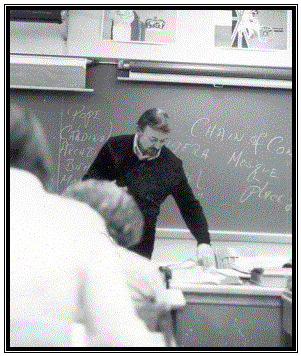
My dad in the classroom. Around the time that I puffed out my chest and claimed I certainly would not be a teacher.

But it happened. This from a kid who distinctly remembers the purposeful slight given to his dad. Dad was a history teacher in Glens Falls, the next town over. He was good, and he loved the students. Everyday he came home happy and sometimes even humming a tune. Who delivered the purposeful slight? His first born son.

Our relationship,  as I grew into the teenage years, was a bit strained. So when he asked me, as a junior or senior,  in the car riding home from school one day down Main Street, the MAIN STREET of the town that produced him, what I would like to do someday after I graduated from high school, I told him, “I don’t know, but I won’t be in HUDSON FALLS anymore, and I SURE WON’T BE A TEACHER…..”- the desired effect was achieved by the angry teen, the wound deep, the twist of the knife distinct…

Yet there I was, eight years later, living in the room out back of the family homestead on that Main Street, fending my way on the other side of the desk in the classroom of my alma mater, and not just any classroom- a history classroom, teaching the exact same subject as the old man…

What if I had never come home, as planned? What if I had not gone back to school for a teaching certificate, after graduating with that “unmarketable” history degree? What if I had landed that job in the college town I called my new home, instead if coming in 2nd for it? I would have never met the tank commanders. Then, what if Walsh’s daughter had not said, after two exhausting hours of combat tales, just as we were about to turn the camera off,   “Dad, did you tell Mr. Rozell about the train?

Things happen for a reason. I think there are no coincidences.

In the words of a former  principal of mine, we are here “to make human beings out of them” (not that they were not before, but you get his point-the exact same point of the speaker noted above.)

I am suspicious of those who will dictate to me from ” on high” what I should be doing in the classroom. Perhaps Dr.  Ginott would have agreed.


Read Full Post »

I interviewed a Holocaust refugee and another liberator on Friday last… rolled into one! A special man. A German Jew whose father was mortally injured on Kristalnacht, Henry Birnbrey was sponsored and got out of Germany as a young teen and was given special permission from FDR to join the Army-previously classified “enemy alien” for his German birth- and stumbled upon the train as a forward artillery spotter scouting positions in the lead up to the final battle at Magdeburg.  Henry was in the 531st AAA of the 30th Infantry Division- Survivor Steve Barry mentions forward artillery spotters in his memoirs- and Henry was one of them. Much of what follows is his testimony as given to the Breman Museum in Atlanta, Georgia, interspersed with his memories as privately published in  his war memoirs.

I was born in Dortmund, Germany in 1923. During 1937 and 1938 my parents made applications for me to emigrate to Palestine, New Zealand and the USA. The USA visa came in first and an emergency visa was issued to me the week Hitler invaded Austria, as the various agencies feared that this invasion would be followed by war.

I left Germany on March 31, 1938, leaving my parents behind. In the meanwhile, my father had already been arrested. He was accused of having made statements against the government. He was released with the promise to abandon his business and livelihood. Consequently, we lived without income during the years 1937 and 1938. After I left Germany, my father was picked up again on Kristallnacht (November 9, 1938) and he died a couple of months later from the wounds received when he was picked up and arrested. My mother died a few months later. The death certificate of my father stated the cause of death as “heart failure” and only in 1999 did I finally locate the documents that verified what happened in 1938, but too late to entitle me to compensation, which had been denied because their records showed a natural death.

The Birmingham Section of the council of Jewish Women sponsored my immigration to the US, and the social services were provided by the Jewish Children Service here in Atlanta. I moved to Atlanta in January 1939. In Birmingham and Atlanta I lived in foster homes.

I supported myself by working in a clothing store, later managing a shoe store, and in 1942 I went to work for a local accountant. In 1943 I joined the US Army. In 1944 I was with the Normandy invasion forces. During my service in the army, but towards the end of the war, I came across  a train of cattle cars full of Jewish concentration camp survivors and people who did not survive. We opened the cars and were shocked to see the condition of the occupants of these cattle cars. During this same week as we were advancing toward the Oder River, we passed ditches full of corpses of concentration camp inmates who had been marched to the West to escape the Russian advance. Around April 1945, I became a counter intelligence agent and interrogated German POWs and citizens.

After the war, I found out that most of my family had perished in the concentration camps. My mother was one of ten children, and out of that family, two first cousins survived. These cousins had made aliyah in 1937. My father was one of three brothers and again, two first cousins survived. One had made aliyah to Israel in 1938 and the other one survived behind the Iron Curtain. The rest of the family perished. I found documents in the Berlin archive that showed when these people were born and when they died. What I was not prepared for was the detail of information which included the place they were assembled, the number of the transport which took them to the concentration camp and all sort of sordid details.

Henry continues: During World War II, I wanted to get to our hometown but I could not because the British Army was over there and we were a little bit south of there, but my experience as a soldier I think is worth mentioning. First of all, we were in the neighborhood of Magdeburg on reconnaissance. And we had, we had this horrible odor. We didn’t know what was happening. And it turned out to be one of the freight trains full of Jews being shipped from one concentration camp to another. And therefore I was able to personally witness this terrible inhumanity that was taking place. And all of these were my fellow Jews and brothers and everything else. They were almost, they had been reduced to such a non-human state it was impossible to communicate with them. I mean, all we could do is to try to get them food and ask for help. There was nothing we could do. These people were half dead, half crazy. I mean they’d been locked in these cars, were lying on the floor. It was just a horrible thing to witness, and something I’ll never forget as long as I live.

http://www.thebreman.org

And from Henry’s memoirs…. skeptics note again a liberator describing “walking skeletons” ….We moved on to the Braunschweig (Brunswick) area. Here, along the highway, we encountered ditches full of dead concentration camp prisoners who had been marched from one camp to another and were shot before they had a chance to be liberated.
…In April of 1945 while on reconnaissance near Magdeburg we encountered a horrible odor. As we got closer we discovered an abandoned train of cattle cars. When we opened the cars they were filled with half dead and dead Jews being transported from the Bergen-Belsen concentration camp to another camp. The sub-human conditions to which these people were subjected to had reduced them to a very sorry state. We did not know how long they had been in those cars, they looked like walking skeletons and could barely speak. Unfortunately we had no food to share with them, which gave us a very helpless feeling. When headquarters was notified, someone evacuated all German civilians from a nearby village, Hillersleben and turned this village into a hospital. Unfortunately we could not stay around to learn more, to speak to and encourage these people or perform other deeds of human kindness…I was reminded of the words of the prophet Ezekiel-”He took me down in the spirit of G-d and set me down in the valley. It was full of bones.”

…and this is where I (MR) am trying to put the pieces of the story together….


Read Full Post »

Haunting cover image from Boder’s groundbreaking interview book.

Today I was visiting links on the Internet related to oral history projects. The description I found below intrigued me-interviews recorded in the summer of 1946.

“Voices of the Holocaust – Online repository that contains audio clips and transcripts of interviews done by Dr. David Boder of Holocaust survivors in 1946. The mission of Voices of the Holocaust project is to provide a permanent digital archive of digitized, restored, transcribed, and translated interviews with Holocaust survivors conducted by Dr. Boder in 1946, so that they can be experienced by a global audience of students, researchers, historians, and the general public.”

I went to the site at the  Paul V. Galvin Library at the Illinois Institute of Technology. I then clicked on places in Europe that Dr. Boder went to record his interviews, displaced persons camps or transit areas as survivors sorted out their lives and tried to plan their future. On the actual pages you can not only read the transcription, but also hear the actual recordings…. and he encouraged several survivors to sing for him on tape. Amazing.

Well, I saw some names that I thought I recognized from survivors I have met or from the manifest list provided by the Bergen Belsen Memorial. Sure enough, several of these survivors were liberated on our train near MagdeburgBelow I have the complete transcript, taken from the site, of a 24 year old Greek Jew who lost both of his parents upon liberation. If you go to the link, you can actually listen to his testimony from 1946! Below, I have taken the liberty of emphasizing his liberation story in bold print.

Dr. Alan Rosen recently published a book on this fascinating subject, and you can read his bio of Dr. Boder here. Dr. Rosen reports that his actual name is Mene Mizrahi.

*********************************************************************************************************************************************

David Boder: [In English] This is Spool 9-43B. The interviewee is Mr. Mizrachi and he speaks English. November the 21st 1950. Boder.
David Boder: This is Spool 43 continued. The interviewee is Señor Manis Mizrachi or Mr. Manis Mizrachi. Born in Greece, how old are you Mr. Mizrachi?
Manis Mizrachi: I am twenty-four years old.
David Boder: He’s twenty-four years old. He speaks good English and we will have his report in English. Also Mr. Mizrachi would you tell us again what is your full name where were you born?
Manis Mizrachi: My name is Mizrachi Mimi I have been born in Salonika.
David Boder: Yes. Your last name is really Mizrachi so we . . .
Manis Mizrachi: . . . Mizrachi, yes
David Boder: . . . call you in America “Minis Mizrachi.”
Manis Mizrachi: . . . Mizrachi, yes
David Boder: You were born where?
Manis Mizrachi: In Salonika, 1922.
David Boder: In 1922, yes.
Manis Mizrachi: The 17th of January.
David Boder: Yeah, and tell me, who were your parents and what was their business.
Manis Mizrachi: My parents – my father was Oscar Mizrachi and he was . . . he saled articles which he brought from every country and he was a representative of several firms.
David Boder: Ah! He was an importer?
Manis Mizrachi: importer yes.
David Boder: Yes, for instance what kind of articles was he selling?
Manis Mizrachi: He was selling clothing and paper, he brought paper and several other things what he could make.
David Boder: Now tell me how many people were in your family?
Manis Mizrachi: We’re three people.
David Boder: Yes.
Manis Mizrachi: My father, mother and me.
David Boder: You were the only son?
Manis Mizrachi: The only son.
David Boder: Yes, and now tell me where were you and what happened to your family when the Germans came to Greece?
Manis Mizrachi: Before the Germans came to Greece since my father was a freemason, we . . . were afraid for the Germans, them not to take him away from us. That for we made it up to go to Athens, the capital of Greece, since it is a very big country so we could . . .
David Boder: [speaking over each other] Big city you mean . . .
Manis Mizrachi: Big city, yes,
David Boder: So you could be better protected . . .
Manis Mizrachi: Better protected.
David Boder: Tell me what citizenship did your father have? Greece or Spanish?
Manis Mizrachi: My father was Spanish
David Boder: And your mother?
Manis Mizrachi: My mother was Turkish.
David Boder: Turkish? And you were considered what?
Manis Mizrachi: I have been considered Spanish.
David Boder: Because your father was Spanish. Have you lived in Spain?
Manis Mizrachi: Never, I have never in Spain.
David Boder: Yes, all right, and so you went to AthensManis Mizrachi: And so we went to Athens but anyhow the Germans took us because although the Consul of Spain has certifies us that we have no reason to be afraid that the Germans will take us and but for this obliged us not to leave and not to hide ourselves and so the Germans came one night at two o’clock and got us [the whole family, they beat us firstly] and afterwards they put us into the Greek jail.
David Boder: All right, now . . . Tell me this . . . [mutters] All right, tell me this: Were other Jews then arrested already and deported?
Manis Mizrachi: A lot of Jews, Spanish Jews, were arrested and [spread?] with our family together.
David Boder: Yes, and what was it a kind of a raid at that time or what?
Manis Mizrachi: It was a raid, it was a raid for whole Spanish in order not to leave them the time to hide themselves because one day before they arrested all Greek citizens, Jews of course.
David Boder: They arrested the Greeks citizens that were Jews. And now they began to arrest the Spanish citizens . . . well didn’t you show your papers from the Consul?
Manis Mizrachi: We showed our papers from the Consul but it [laughing a little] helped nothing.
David Boder: All right, so then what did they do with the family, go slowly step-by-step.
Manis Mizrachi: Then they put us in cars and brought us in the Greek jail where we were obliged to sleep down without any help . . . they give us no things to eat, nothing. We’re made whole day without any thing . . .
David Boder: [interrupting] Was the family together?
Manis Mizrachi: The family was together firstly; afterwards, they ordered us the men to go separately and the women from the other side. So we remained there in the jail about fifteen days and the first of April we were obliged to leave the jail and they put us into trains . . . of beasts.
David Boder: Why do you call it “trains of beasts?” They were . . .
Manis Mizrachi: Because they were closed trains were they are putting the [laughing a little] . . . horses and . . . the pigs
David Boder: . . . the trains with the openings? Because animals they transport . . .
Manis Mizrachi: No, they were closed but they were with wires.
David Boder: [Talking over each other] Where were the wires?
Manis Mizrachi: The wires were at the windows. Little window was there, very high, although they were afraid us not to look from what happened around and so they put us there and they locked us, the door so we couldn’t get out for any necessary . . .
David Boder: For any necessary? Were you men and women together . . .
Manis Mizrachi: We were men and women together. Sixty-four people in a wagon, it was very difficult to take air and to eat, we had nothing to eat.
David Boder: Didn’t they tell you to take your things?
Manis Mizrachi: No, they didn’t give – they gave us only some carrots and bottle of water and place . . .
David Boder: What do you mean a bottle of water for all or what?
Manis Mizrachi: It was . . . two big bottles
David Boder: Two big bottles of water.
Manis Mizrachi: . . . bottles of water.
David Boder: What do you think? How many liters was there in each one?
Manis Mizrachi: Twenty-five liters about.
David Boder: You mean twenty-five liters to the bottle?
Manis Mizrachi: Yes, and it was very hard we couldn’t have water enough because we had children with us and we couldn’t wash ourselves we were very dirty . . .
David Boder: Yes.
Manis Mizrachi: . . . and after the tenth day of traveling
David Boder: [astonished] . . . wait you mean you were ten days, ten days in the car?
Manis Mizrachi: In all we were fourteen days but after the tenth day they opened – they got out the wires so we could look outwards but we were without shaving ourselves and were like beasts.
David Boder: Now tell me what kind of toilet facilities did you have?
Manis Mizrachi: No one. Every two days they opened us the doors in order to get out things that . . . we couldn’t keep anymore in our leavings[?]
David Boder: Did you have a pocket for it?
Manis Mizrachi: No, it was in a piece of papers what they gave us specially for that.
David Boder: And women and men together in this . . .
Manis Mizrachi: Women and men together . . .
David Boder: . . . and children
Manis Mizrachi: . . . it was awful
David Boder: And so?
Manis Mizrachi: And so, until we arrived at six in the morning—six o’clock in the morning and the town of Celle which is some kilometers far from the camp, real camp of Bergen-Belsen. And so we went there, we were obliged to go—to step seven or eight kilometers.
David Boder: To walk?
Manis Mizrachi: To walk there with our grandfathers, with our fathers, sisters, sick women, with our children and however it was very difficult for us and this one who couldn’t walk he was beaten by the Germans, soldiers, by the capos . . . were the leaders.
David Boder: What is capos?
Manis Mizrachi: Capos were the leaders.
David Boder: Were they prisoners?
Manis Mizrachi: They were prisoners but who . . . somewhere . . . collaborated with the Germans together. And they beat us awfully we were not accustomed to this kind of manner and they were laughing at us when we made strange figures.
David Boder: Strange faces you mean?
Manis Mizrachi: Strange faces, yes.
David Boder: And well, and so how long did it last to walk these eight kilometers?
Manis Mizrachi: This eight kilometers took us about . . . one hour and a half.
David Boder: [after a pause] That’s very fast walking.
Manis Mizrachi: Yes! We were obliged to run.
David Boder: Well you had no things to carry
Manis Mizrachi: No things to carry, nothing.
David Boder: Well then . . .
Manis Mizrachi: Because we had some things we could keep with us but we were obliged to leave it in the way in order to go very fast because it was a Polish capo behind and he was beating you.
David Boder: A Polish capo?
Manis Mizrachi: A Polish, yes.
David Boder: All right, but you were together with your father and mother?
Manis Mizrachi: No I wasn’t even with my father, and my mother had been put in another range [?].
David Boder: Oh, your mother was put in another what?
Manis Mizrachi: In other file.
David Boder: In another file, all right. But she was marching the same way with you?
Manis Mizrachi: Yes, much in the same way.
David Boder: All right.
Manis Mizrachi: Afterwards we went to the camp they . . . were obliged to stay there for l’appel.
David Boder: What is the name of the camp?
Manis Mizrachi: The camp Bergen-Belsen.
David Boder: Yes
Manis Mizrachi: We were obliged to stay there about two hours waiting until the German come and ask our names . . .
David Boder: Yes . . .
Manis Mizrachi: . . . conforming to the list that he could have in Athens when he put us into the train
David Boder: Do you have a tattoo number?
Manis Mizrachi: No, in Bergen-Belsen there was no tattoo number.
David Boder: Yes.
Manis Mizrachi: My account number was one thousand four hundred sixty two.
David Boder: Uh-huh, all right
Manis Mizrachi: . . . It was my account number
David Boder: One thousand . . .
Manis Mizrachi: One thousand four hundred sixty two.
David Boder: ..sixty two. And so . . .
Manis Mizrachi: And so we have been put in big barrack . . .
David Boder: You with your father?
Manis Mizrachi: With my father and with my mother in separate barrack. And around us was the wires—electric . . .
David Boder: Oh, electric wires. Yes.
Manis Mizrachi: . . . have been charged. And we couldn’t go out firstly until the doctor came in order to see whether we’re ill or not.
David Boder: Yes.
Manis Mizrachi: And afterwards we could be with our mother and with every friend and so on because of our citizenship.
David Boder: Oh, because you were Spanish.
Manis Mizrachi: Spanish, yes. The only thing which we had. As Spanish people.
David Boder: Yes.
Manis Mizrachi: Of course, firstly we couldn’t eat what they gave us. It were carrots in boiled water. This was our eating. And we gave it to other brothers of us—other Jews—of Greece. And Polish people too who were with us in the camp. And we were obliged after one week to eat because we starved. And so we carried everything—everything green that we saw on the earth we took it out from there and we started to eat it without caring if it was dirty or clean.
David Boder: Uh-huh, without cooking?
Manis Mizrachi: Without cooking . . .
David Boder: Yes.
Manis Mizrachi: . . . like beasts.
David Boder: Yes.
Manis Mizrachi: And so they started to put us in this category of prisoners that starved to eat and wore closed and we had no rights to go out – to work – we were obliged to stay.
David Boder: Well, because the Spanish . . .
Manis Mizrachi: Because Spanish citizenship.
David Boder: . . . we were not supposed to work
Manis Mizrachi: We were not supposed to work but this was bad because the others who were out they were working at the transport of food, of legumes . . .
David Boder: Of vegetables.
Manis Mizrachi: Of vegetables. And they could have some profit in taking some of them. But for us it was impossible. And so we were obliged to live on only those things that we received from Germans.
David Boder: Did the Red Cross help in any way.
Manis Mizrachi: We had no help of the Red Cross. Never we got help from the Red Cross. Only our capos they had . . . many profits who unfortunately they put only for themselves and they never helped the others
David Boder: Were the capos Jews?
Manis Mizrachi: They were the Jews with us from Greece they came with us. And they started making friendship with the Polish capos, the old ones who were there and so they had a lot of . . .
David Boder: Polish Jewish?
Manis Mizrachi: Polish Jewish. I speak always from Jewish
David Boder: And so?
Manis Mizrachi: And so they made friendship with them and so they had everything for their own families. They had special room to live and they ate separately. We were not to see what they were eating, we smelled only the meat and everything else that they got . . . from the Germans.
David Boder: From the Germans?
Manis Mizrachi: From the Germans. And, unfortunately, our people—the people who didn’t want to beat and to collaborate with the Germans—starved and had only his home in back.
David Boder: Yes
Manis Mizrachi: This is all [slightly laughing].
David Boder: Well, and that was in . . . Auschwitz?
Manis Mizrachi: That was in Bergen-Belsen.
David Boder: In Bergen-Belsen . . .
Manis Mizrachi: Bergen-Belsen.
David Boder: Well . . . did you hear about . . . All right, so how long were you in Bergen-Belsen?
Manis Mizrachi: I have been there about eighteen months—one year and six months.
David Boder: And then, where were you taken from?
Manis Mizrachi: Then I have been taken—we have been put into a big train in order to be transported to Theresienstadt. In the last days—two days before the English came, the British troops came in Bergen-Belsen.
David Boder: Yes.
Manis Mizrachi: Um, this train was a big train of sixty-four wagons.
David Boder: Yes.
Manis Mizrachi: And have been put in, again in . . . beasts-cars . . .
David Boder: Cattle-wagons?
Manis Mizrachi: Cattle-wagons. Sixty-four to seventy people in a car and started of course many ‘spense [?] . . . many sick . . .
David Boder: Many sick people.
Manis Mizrachi: . . . many sick people. We started then with the Typhus.
David Boder: Oh yes.
Manis Mizrachi: It was then when I lost my two parents. Unfortunately, at the last days. I lost them—my father . . .
David Boder: What do you mean—in Bergen-Belsen?
Manis Mizrachi: In the train—the big train—they caught there Typhus
David Boder: Oh, in the train. About how many days before liberation?
Manis Mizrachi: The first died . . . at just at the same . . . at the moment of the liberation and my mother which was looking for [after] my father died ten days afterwards . . .
David Boder: After the liberation
Manis Mizrachi: And I got it too . . .
David Boder: You got it?
Manis Mizrachi: . . . because I was obliged to see . . . to look for [after] for my mother.
David Boder: You had to look for your mother, yes? And?
Manis Mizrachi: And so I got it also—”I meant thirty in one days”[?]
David Boder: What typhus was it? Ricket . . . Ricket . . . Spotted typhus?
Manis Mizrachi: Spotted typhus, yes.
David Boder: So then you lost your parents.
David Boder: [speaking over each other] .. of liberation. And you remained alone.
Manis Mizrachi: I remained quite alone without any help. Quite alone.
David Boder: All right, so where did you go then?
Manis Mizrachi: I was student and then the American troops were very kind with us—they helped us.
David Boder: Well, which camp were you freed or were you freed from the train?
Manis Mizrachi: From the train directly because it was an air attack.
David Boder: Oh, yes.
Manis Mizrachi: Attack of the air force.
David Boder: Yes.
Manis Mizrachi: British Air force.
David Boder: And so?
Manis Mizrachi: And so the machine . . . had been in damage.
David Boder: The, yes, the machine was damaged.
Manis Mizrachi: . . . was damaged.
David Boder: Yes, and the train couldn’t continue.
Manis Mizrachi: . . . couldn’t continue. And . . . we made some activity there we got prisoners, the Germans, the SS . . .
David Boder: Yes.
Manis Mizrachi: . . . and we waited until the American tanks.
David Boder: . . . came.
Manis Mizrachi: Came. Yes, it was ninth army. The ninth American army.
David Boder: Uh-huh.
Manis Mizrachi: . . . Which liberated us.
David Boder: Yes, so then you took the SS prisoners? Why didn’t you kill them?
Manis Mizrachi: [slightly laughing] We had no right to kill them . . .
David Boder: Why?
Manis Mizrachi: Because the capos—the chiefs . . .
David Boder: Yes.
Manis Mizrachi: . . . who directed this movement told us not to do anything until the American troops arrived.
David Boder: Yes
David Boder: And then what did the Americans do with them?
Manis Mizrachi: The Americans took their arms and they took them away, we don’t know what happened.
David Boder: They took them prisoners?
Manis Mizrachi: Prisoners, yes.
David Boder: All right, and then you were in the train,
Manis Mizrachi: And then . . .
David Boder: . . . where were you taken from there?
Manis Mizrachi: And at once, the officers, the American officers went to the village—the German village of Farsleben.
David Boder: Yes.
Manis Mizrachi: There. And he gave the order to every person to take us in, to take several families into his house.
David Boder: Yes.
Manis Mizrachi: And so, we got the place for some days.
David Boder: Uh-huh, and who was feeding you?
Manis Mizrachi: The Germans were obliged to feed us.
David Boder: Uh-huh.
Manis Mizrachi: They had a lot to feed us.
David Boder: And what did the Germans then say?
Manis Mizrachi: The Germans said that they never knew every- . . . something that happened to Jews and out of Germany and that they behaved something so ill with the Jews in the concentration camps that they let them starve and that they killed them. They didn’t know anything about those things. And whenever they knew, of course, they wouldn’t leave it . . . let the Germans . . .
David Boder: [finishing the thought] . . . they wouldn’t have let them do such things.
Manis Mizrachi: Yes.
David Boder: Uh-huh and then, where did you go and how did you go?
Manis Mizrachi: Then I was where, I got ill and I went at Hillersleben.
David Boder: Yes
Manis Mizrachi: Hillersleben is not far from them, some ten kilometers.
David Boder: Yes.
Manis Mizrachi: And then I meant the hospital, hospital El Melwani [?] there were three hospitals.
David Boder: Did you get typhus too?
Manis Mizrachi: I got Typhus too.
David Boder: So when they took you from the train did you have typhus already?
Manis Mizrachi: No I didn’t have.
David Boder: Oh, you didn’t have . . .
Manis Mizrachi: I was looking for [after] my mother.
David Boder: You were taking care of your mother?
Manis Mizrachi: Yes, taking care of her until she died.
David Boder: Yes.
Manis Mizrachi: Afterwards . . .
David Boder: Did you see your father dying?
Manis Mizrachi: I . . . . My father died on my hands.
David Boder: Yes.
Manis Mizrachi: I buried him with two other Jewish comrades.
David Boder: Yes.
Manis Mizrachi: . . . in Farsleben. And my mother died in Hillersleben.
David Boder: Yes.
Manis Mizrachi: They are seven kilometers away. I didn’t see my mother died – dead – because I was very ill at this moment. I was with 41.4 Centigrade . . .
David Boder: Temperature. Already with typhus?
Manis Mizrachi: With Typhus yes.
David Boder: And so when the freedom came . . . ?
Manis Mizrachi: When the freedom came, I was quite alone I remained quite alone . . .
David Boder: Did they take you to a hospital?
Manis Mizrachi: Yes.
David Boder: You were taken to a hospital?
Manis Mizrachi: I have been taken to a hospital.
David Boder: . . . and nurse to help?
Manis Mizrachi: Nurse help, German nurse. And they were not bad but they always tried to make sabotage.
David Boder: The Germans?
Manis Mizrachi: The Germans.
David Boder: In what way?
Manis Mizrachi: In what way . . . because they were throwing away the medicaments and whenever we were calling them but they didn’t come—only when the Brit- [corrects] an American soldier was present.
David Boder: . . . and then he would take . . .
Manis Mizrachi: . . . but not, they never took care of us.
David Boder: All right, and when you got well what happened then?
Manis Mizrachi: Then I took some days in order to get . . . stronger then because I couldn’t walk. I had forty-two kilograms.
David Boder: And where did you spend those days—in the hospital?
Manis Mizrachi: In the hospital.
David Boder: Yes.
Manis Mizrachi: And afterwards I have been taken by the American army and I said that I had parents in France. And that for they brought . . .
David Boder: You said that you had parents in France?
Manis Mizrachi: Yes, I had. I had.
David Boder: Relatives you mean?
Manis Mizrachi: I have relatives, yes. Relatives.
David Boder: Apart from your father and mother.
Manis Mizrachi: Relatives, yes. Relatives in France.
David Boder: And so they took you?
Manis Mizrachi: So they took me here and . . . unfortunately they had been displaced too. Deported and they didn’t come back.
David Boder: They did come back?
Manis Mizrachi: They did not come back.
David Boder: So you didn’t find relatives?
Manis Mizrachi: I did find. And I remained here.
David Boder: Yes. And for what are you working now?
Manis Mizrachi: Now I am working for the AJDC.
David Boder: For the American join . . .
Manis Mizrachi: [finishing] . . . distribution committee.
David Boder: What are you doing?
Manis Mizrachi: I am in the accounting department.
David Boder: Where did you learn English?
Manis Mizrachi: I learned English alone because I finished the German school . . .
David Boder: Where? Greece?
Manis Mizrachi: In Salonika, yes.
David Boder: You finished the German school where you learned Greek [corrects] where you learned English?
Manis Mizrachi: German. German and French and since I liked very much to learn English I learned it quite alone.
David Boder: with . . . [speaking over each other]
Manis Mizrachi: Just alone, myself.
David Boder: By which method? Shocked that haven’t got a better [ununintelligible] that you had to go to school?
Manis Mizrachi: No, I learned it quite alone. There was a friend of mine who went to the school . . . and I learned . . .
David Boder: And learned it alone. Now what do you plan to do in the future?
Manis Mizrachi: I am studying now; I am studying radio.
David Boder: Where, at the ORT?
Manis Mizrachi: No, quite alone, I am training myself.
David Boder: All right.
David Boder: You are studying radio and then you want to do what?
Manis Mizrachi: Then I hope to work in radio..
David Boder: Where?
Manis Mizrachi: I don’t know yet, perhaps I can go to the country I would be very satisfied.
David Boder: Which country?
Manis Mizrachi: I don’t know where to . . . the States? [Break in tape]
David Boder: . . . relatives in America?
Manis Mizrachi: . . . unfortunately, I have no one.
David Boder: You have no one.
Manis Mizrachi: No one.
David Boder: . . . Well this concludes Mr. .Mizrachi’s report. Taken on the- . . . on August the 12th at the offices of the American Joint Distribution Committee . . . recording of the Illinois Institute of Technology.
http://voices.iit.edu/interview?doc=mizrachiM&display=mizrachiM_en

Also note that the USHMM is looking for Mr. Mizrachi and several others who were interviewed that summer by Dr. Boder. For more information, click here.

Read Full Post »

Holocaust survivor recalls kindness of US troops

Another survivor of the train near Magdeburg appears. International Holocaust Remembrance Day, 2012. I hope she finds her way to this site so she can meet her actual liberators! Thanks for Leslie Meisels for tipping us off to the article. Aliza’s memoir of life in the Warsaw Ghetto and beyond is very moving and can be found here.

By GIL SHEFLER 01/27/2012 00:34
JERUSALEM POST

“The American soldiers didn’t know what to do and they showered us with chocolates and cigarettes.”

Aliza Vitis-Shomron on Thursday vividly recalled her brush with death on the eve of her liberation from the Nazis in 1945.

The survivor, who spoke on a panel at the Kibbutz Yad Mordechai Holocaust Museum the day before the world marks International Holocaust Remembrance Day, said a rumor had spread among the group of Jewish prisoners she was part of in Poland that they were about to be murdered.

Rather than surrendering them to the Allies closing in from the east and west, the prisoners feared their captors were planning to plunge their train into the Elbe River and drown everyone.

“Panic and fear spread quickly,” recalled the Polish-born Israeli who survived the Warsaw Ghetto and the Bergen-Belsen concentration camp in Germany. “Just as we were at the point of despair, two American tanks came rolling down a hill and saved us.”

The feeble Jewish prisoners emerged from the train and embraced the stunned soldiers of the US 30th Armored Division.

the tank commanders who freed her.

“We were crying with joy,” she said. “The American soldiers didn’t know what to do and they showered us with chocolates and cigarettes.”

Vitis-Shomron said she did not feel that she had defeated the Nazis.

“I did not triumph,” said Vitis-Shomron, an educator who has four great-grandchildren.

“What happened accompanies me, but I try to live and live well. I try to teach humanitarian values to our youths. We must never do upon others what was done to us.”

The panel Vitis-Shomron was part of at Yad Mordechai, the kibbutz named after the leader of the Warsaw Ghetto Uprising (Mordechai Anielewicz), included Simcha “Kojak” Rotem, who fought in the uprising, and former defense minister Moshe Arens.

It was one of many events held in Israel and around the world commemorating the remembrance day.

On Wednesday, Israeli Ambassador to the UN Ron Prosor, American Jewish Committee Executive Director David Harris and members of the newly formed World Forum of Russian Jewry met at United Nations headquarters to honor the memory of those killed by the Nazis.

The AJC head said the lesson learned from the murder of six million Jews required the world to prevent Iran from acquiring nuclear capabilities.

“This past September, indeed on these grounds, the notorious Holocaust denier, Iranian President Mahmoud Ahmadinejad, spoke,” Harris said. “To their credit, several UN member ambassadors walked out, but, shamefully, the majority stayed in the General Assembly hall and applauded his remarks.”

The president of the World Forum of Russian Jewry, Ukrainian businessman Alexander Levin, joined the call urging the UN to take action against the Islamic Republic.

More Holocaust memorial events are planned for Israel and around the world on Friday.

Supreme Court President Dorit Beinisch, Deputy Foreign Minister Danny Ayalon and ambassadors from more than a dozen countries including Germany, the US, Egypt and the Philippines are set to gather at the Massuah Institute for Holocaust Studies at Kibbutz Tel Yitzhak near Netanya to take part in a memorial ceremony.

The UN designated January 27, the anniversary of the liberation of Auschwitz by the Red Army, as International Holocaust Remembrance Day in 2005. It is marked by governments and organizations around the world.

Israel, however, observes its official Holocaust Remembrance Day on the 26th of Nissan, the anniversary of the Warsaw Ghetto Uprising, according to the Jewish calendar. Its selection reflects the Jewish state’s preference to emphasize Jewish resistance to the Nazis.

http://www.jpost.com/JewishWorld/JewishNews/Article.aspx?id=255355

Read Full Post »

« Newer Posts - Older Posts »