Feeds:
Posts
Comments

Posts Tagged ‘Bergen Belsen’

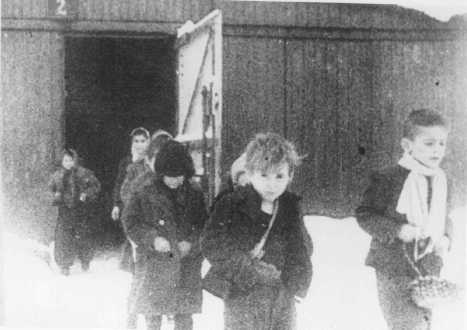
Soon after liberation, surviving children of the Auschwitz camp walk out of the children’s barracks. Poland, after January 27, 1945. — United States Holocaust Memorial Museum

Soon after liberation, surviving children of the Auschwitz camp walk out of the children’s barracks. Poland, after January 27, 1945. — United States Holocaust Memorial Museum

Today is International Holocaust Remembrance Day, the day Soviet troops over ran Auschwitz in 1945. This week I received a note from an Israeli survivor friend, shortly after the passing of one of her liberators, Carrol Walsh. Sara lost over 60 of her family there- and her immediate family was saved only because the day they arrived at Auschwitz, the death machinations were working at full capacity and her transport was rerouted to Belsen. She was liberated on 13 April on the evacuation transport near Farsleben, known here as the Train Near Magdeburg…

In her letter she asks important questions of me. I have responded the best that I could, below.

Dear Matthew,

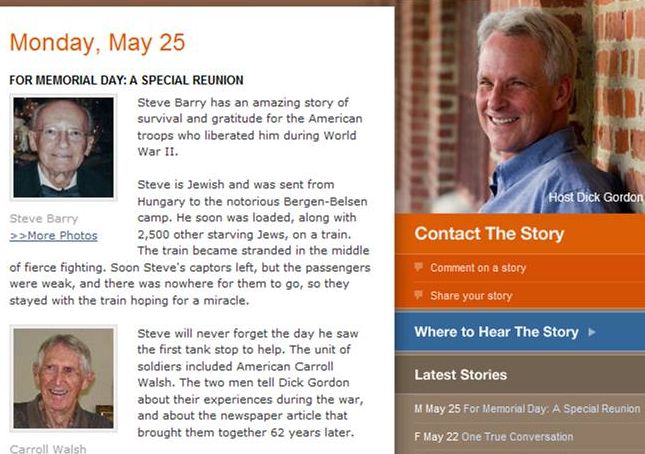
 We were very sad to hear that Carrol Walsh passed away. Only lately did I get to know him, and he risked his life in order to save ours. It is a pity we did not get to meet more.

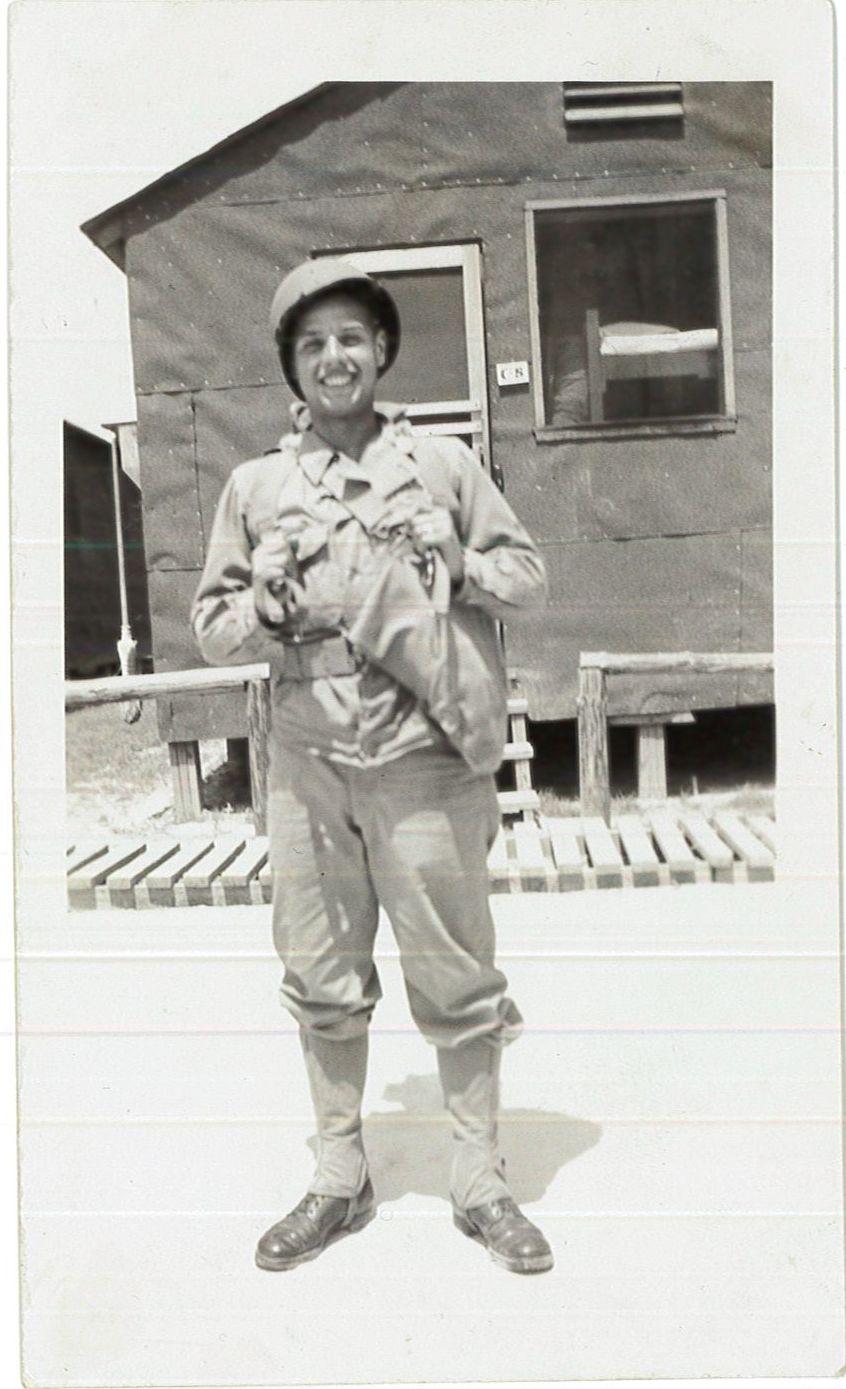
I can’t express in words the loving feelings for the young tank commander that for sure always had a smile on his face, and never stopped smiling after we met- 65 years after the victory. I am sure Carrol Walsh made the best out of his life; I was fulfilled to know him and his beautiful family.

I read about his profession in the years of his life. It was interesting to see how much meeting with us affected him.

I thank you for your unusual courage to initiate the exciting meeting [reunion].

I suppose you were very excited for the event you had initiated. Did the idea come in different parts? I am trying to understand the development of your thinking.
When you first wrote to me about the meeting [invitation to the proposed reunion], it was on the day we were released- the 13th of April. I got home after meeting my brothers and celebrating the release [liberation]day. I couldn’t relax, I immediately told all my brothers. I was so happy, as if it was happening again.

The meeting completed a missing part in the picture for me, after all the horrifying things we went through we couldn’t even dream of a miracle like that coming out of the blue.

I cannot go back more to the extermination camps and escort groups because I don’t have the physical nor mental power to do that anymore.

There are questions that bother me.

Are you able to answer them?

Why shouldn’t the world forget and let this be over?  

A. So, some people do want to forget. Others will say that it did not happen. For those reasons, it must never be forgotten. This is the biggest crime in the history of the world.

As Walsh states, how could humanity have stood by and let that happen?

Does my work, the hard work I do, do anything against the forgetting?

A.The most impressionable minds in the world are those of the youth. It is they who the Nazis “educated”; it made it easier for the crimes to be committed. This is why they must hear now.

The work that you, and I do, has an impression. I hope to continue this work after you must slow down. Please remember that.


You are a historian, should the memory be kept?

A.The memory must be kept. As educators it is our duty to keep it alive. We must fight those who trivialize or denigrate its importance.

Is there a proper way to keep the memory?

A.There is no one way except to be open to the discussion of humanity and how humans could do this to one another. We must also bear in mind however, that the soldiers who helped the suffering to new life bore their own pains in doing so, yet also made a choice to redeem humanity. Some did not sleep soundly for years.

I think this is so, and also must not be forgotten. The war brought out the most evil in the world. But I think it also revealed some goodness in the form of the soldiers who liberated or otherwise cared for the victims.

Who should be documenting everything, the “victim” or the “aggressor”?

A.The aggressor fades from memory. New generations asks questions. It is true that some are bothered by the questions. But the young will always be curious and want to know- is this a stain on the German people? I know some Germans today who work very hard to keep the memory alive, as you also do.

The victims give the testimony. This is all they can do. But it is the evidence of the crime, and one that new generations must work with. That is why your work is so important.

Who is in charge of making the conclusions?

A.I would say that institutions such as the United States Holocaust Memorial Museum and Yad Vashem are the world leaders in this area. I have been trained, well, I should hope, by the USHMM. I do not know enough about the German institutions but I hope to raise enough funds to travel to the camps and study there this summer.

Read Full Post »

Matthew Rozell, 30th Infantry Veterans of WWII, Holocaust survivors at Mighty Eighth Air Force Museum, March 2, 2012.

Matthew Rozell, 30th Infantry Veterans of WWII, Holocaust survivors at Mighty Eighth Air Force Museum, March 2, 2012.

Frank Towers’ invitation to soldiers, survivors, interested parties and their families to come to Louisville in the spring. The soldiers have convened annually since the end of World War II; since 2008, thanks to the project, the 30th Infantry Division has hosted Holocaust survivors and their families as well for very emotional, uplifting, and fun times. Email for details.

*********************************************************************************************************

Don’t forget the dates!!       April 11 – 12 – 13, 2013

Don’t forget to make your Hotel Reservation

and Registration!!

Hotel Crowne Plaza,  Louisville, KY

*********************************************************************************************************

Dear Fellow 30 Division Members and Friends:

I hope you all enjoyed your holiday and that the New Year holds only good things for you and your family.

Now that the holidays are over it is time to focus on making your reservations for the Reunion.  Included are the Pre-Registration Form and the Reservation Form and the information to make your hotel reservations. Please do it NOW.

We have a great program planned and will include a trip to the Louisville Slugger Factory and Museum, a professional photographer that will take a picture of you and/or your family (so bring your medals and ribbons to show off).  We will also have one of Louisville’s noteworthy news casters, Ken Schulz, MC our banquet on Saturday evening.  Our entertainment will include a local bagpiper as well as others.

Why come to Louisville?

Louisville, is a city of urban neighborhoods that have been revitalized, and some of our best known shopping areas are the Bardstown Road and Frankfort Avenue corridors with their small shops and plentiful locally owned restaurants.  The homes and buildings in the Old Louisville neighborhood is one of the largest historic preservation districts featuring Victorian architecture in the U.S.  The Downtown area has had significant renovations over the last few years with the construction of the YUM! Center which is home court for our Louisville Cardinals men’s and women’s basketball teams.  The Center, along with Waterfront Park and Fourth Street Live, have attracted new housing, shops and restaurants breathing new life into the area.

Louisville has museums to interest everyone..  Home to the Frazier International History Museum; The Muhammad Ali Center; The Louisville Science Center; The Kentucky Museum of Art and Craft and many, many more.

Our hotel, the Crowne Plaza, is locally owned and operated.  It is near the airport and offers free shuttle service from the airport to the hotel.  The Crowne Plaza also offers many amenities including indoor/outdoor pool, fitness center, boutique shop, 24 hours business center, complimentary Wi-Fi, and more.

You can see Louisville is the place to be, so much so that Louisville was named “The Top U.S. Travel Destination for 2013” by Lonely Planet’s, the world’s leading travel publisher.

We are looking forward to having you here and sharing some of our history and hospitality with you, and most of all, to meet many of your former friends and colleagues.

Best Regards,

Bill Vaughan. President

30th Infantry Division Veterans of WWII

*********************************************************************************************************

Taps – 2012

(Last 6 Months)

ADAMS, Cleveland L. 30 MP Plat. 7/30/12 Stockbridge, GA

ADKINSON, Bruce 743 TkBn B 6/17/12 Beverly, MA

DUMEY JR, (DuMay) Leon 120-G 11/23/12 Cape Girardeau, MOM

FARKAS, Louis 119-I 12/ /12 Colton, OR

HOGUE, Donald W. 117 K 6/12/12 Montevallo, AL

HOUCK, Arthur T. 120-K 6/16/12 Hampstead, MD

LAZINGER, Sol 117-B 6/13/12 Philadelphia, PA

MAXEY, James C. 120 CN 6/ 29 /12 Tullahoma, TN

MILLER, Edmund L. 120-H 9/07/12 Pewamo, MI

PITRUZZELLO, Joseph S. 119-L 5/02/08* Alexander City, AL

PRUITT, Frank H. 120-2BnHq 12/10/12 Spartanburg, SC

PULVER, Murray S. 120-B 9/21/12 Peoria, AZ

STANFORD, Arna V. Widow 8/18/10* Williamsburg, VA

STECKLER, William 105 Engr. B 9/09/12 Palm Harbor, FL

SULLIVAN, Thomas “Jack” 118 FA 8/07/12 Savannah, GA

TURNER, Woodrow W. 117-F 8/15/12 Littleton, CO

UBBES, Jean M 743 TkBn-B 7/28/12 Kalamazoo, MI

VOORHIS, Thomas K. 120-K 8/06/12 Manteca, CA

WALSH, Carrol S. 743 TkBn-D 12/17/12 Sarasota, FL

YOUNG SR., James E. 120 6/26/12 Butler, PA

Those with an asterisk (*) were received too late for a prior publication.

Our Most Sincere Condolences to the Families of These Lost Heroes

*********************************************************************************************************

As most of you already know, men of the 743rd Tk. Bn., and  30th Infantry Division, liberated over 2.500 victims of the Holocaust from Bergen-Belsen on 13 April 1945.

We will be honored to have some of these Survivors join with us again at Louisville.  Two of them have never been with us before, so they will give a resume of their life history, so be sure to come to hear these stories that have never been told before.

One of these Survivors will be coming all of the way from Jerusalem, Israel, joining with other members of his family, to meet his Liberators for the first time.  The other Survivor will be coming from San Diego, CA with his daughter, also to meet for the very first time with some of his liberators.

To make it clear, each of you veterans were “Liberators” of this group of victims.  Although you may not have had any personal hands-on experience with them at the time of their liberation, You were doing your job which was supporting the action in the local vicinity of this tremendous discovery and the release of these frail humans to Freedom.

Join with us on this occasion to meet these Survivors that you helped to liberate 68 years ago !!

This will be an Historic event !!  68 years to the date of their Liberation !!!


Read Full Post »

Friday the 13th.

This account comes to me from a survivor’s son who lives in Hungary. He had read of Carrol Walsh’s passing on the internet and contacted me. It is Carrol who is commanding one of these tanks. Sgt. George Gross commanded the other, and took photographs.

I just came across this website . My father was on this train.
He passed away twenty years ago, in April 1992.

Here is an excerpt from his memoirs about his liberation day.
—————————————————-

Translation from my father’s Memoirs pp. 302-304.
————————————————-

The day of April 13 1945 was a Friday and a sunny and windy day. In the morning, the SS opened the doors of the freight cars, after they had argued with each other whether they should kill us with their submachine guns. But the US troops were too close.

——————————————————————-

Perhaps it was an older SS man who prevented our execution. Later that day, a Jewish woman, who had been his lover in the camp, saved him from becoming a prisoner of war or worse. She got him civilian clothes, I do not know how. The same woman became the lover of an American soldier later.
——————————————————————

Several hundred people wrapped in rags streamed through the open doors, if they could be called people at all. We were all mere skeletons.

The train was idling in a deepening, so I climbed uphill, across a road and to a field. I was pulling out potatoes planted on the field, when a motorcycle approached. It was a motorcycle with a side-car. There was an elegant SS or Nazi leader in the front: I could not decide, since he was wearing a mixture of uniform and civilian clothes. It must have been his wife sitting behind him and his child in the side-car. He pulled over and offered me a cigarette. I told him I did not smoke, so he closed his silver-looking cigarette-case and started the engine.
He seemed to hesitate about the direction he should take.

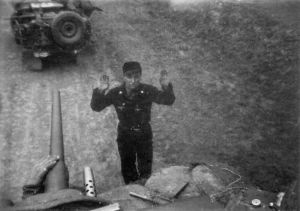
Prisoner taken. Photo by tank commander George C Gross, April, 1945.

Prisoner taken. Photo by tank commander George C Gross, April, 1945.

Then two small American tanks arrived. I was standing in the middle of the road, and noticed that the American soldier leaning out of the turret of one of the tanks aimed his gun at me.
The tank came closer and closer, and the soldier lowered his submachine gun. I must have looked terrible, so he did not take me for an enemy. I was lucky he had not shot me from the distance, since my small coat and boots vaguely resembled a military uniform. Lice were crawling all over my clothes and skin.

The few hundred former inhabitants of the concentration camp surrounded the tanks right away. Suddenly somebody remembered that the SS guarding us were still in the carriages. The SS were caught quickly, and lined up. The “intrepid” SS were trembling so heavily that their pants were flapping.

The first thing a Jewish woman asked from the soldier leaning out from the tank was money, and she received a dollar bill. She must have established her future with this dollar.

My attention was drawn to something else: in the rear of the tank there was a box of canned food. I climbed under the tank, emerged at its end, and pulled out a can. It turned out that I stole a can of oranges. This was my luck. I ate the potatoes charred in the can with the oranges, and probably this combination saved my life. Everyone who ate meat or anything greasy died within hours or within one or two days at the latest.

I felt fever in my body, undressed completely naked in front of staring women, and went into the ice-cold water of the lake next to the railroad. People warned me not to do this, but I went into the water, felt good, felt that I got rid of the lice and the burning heat of the fever. When I put on my rags again, I felt the fever ever stronger.

I asked an American soldier to sign the photo of my fiancee (I still have this photo). To my surprise, he signed the name Churchill. I thought he was joking. But he reassured me that his name was really Churchill.

(Once I read about a father named Churchill, who went to see his son’s grave in Vietnam during that war. The report mentioned that the father had been a soldier in World War II. He must have been my Churchill)

In the evening, there were news that we should flee, because the Germans pushed back the Americans. The Germans would massacre us for sure, the women had pulled out material for parachutes from a carriage in order to make clothes.

I was already so weak that I did not care whether the returning Germans would kill me: I stayed in one of the carriages, and fell asleep.

On Saturday, April 14, German peasant [horse-drawn] carts came for us by some order, so I was carried to Hillersleben. I dragged myself to the first floor of the first building, it looked like an office building, lay down under the sink of the bathroom, and fell asleep.

I am sure the American soldiers had no idea who we were and what we went through.

Read Full Post »

Just when you think that maybe things are “quieting down”,  an email comes in your inbox again.

At Thanksgiving Time.

Can’t wait to speak to Kurt. In the meantime, read below. He has to be around the 230th survivor of the train to make our acquaintance…good work Frank and Varda! Frank, you never cease to amaze me, at 95 yrs young, you are doing laps around me! So now I can share with the students, and fellow survivors and soldiers!

In the words of survivor Dr. Micha Tomkiewitz, “welcome to the family!”

—–Original Message—–
From: Kurt Bronner

Survivors Kurt Bronner and his lovely wife. Thanks to Frank and Varda W. for finding them- “welcome to the family”

Sent: Thursday, November 22, 2012 2:31 PM
To: Rozell Matt
Subject: Thanks

Dear Matt…This last week I have been in touch with Frank Towers and Varda W….They found me on the list on survivors of the deathtrain..I have seen movies and stories…Its like my past has been opened up…On this day of Thanksgiving I would like to wish you a happy peaceful Year and thank you for opening up a chapter of many survivors on that train…I live in Los Angeles and the Burbank school system has had a similar program and I have been talking to students in junior and high schools…Have 100s of letters from the students…Teachers like you are in my Golden book..Thank you for your groundbreaking efforts…with my best to You and your family with my love, Kurt Bronner

Teaching tolerance

April 08, 2000

by Irma Lemus, Burbank Leader

MEDIA DISTRICT NORTH — Fifty-five years have passed, but Kurt Bronner can still vividly recall his mother being beaten by a Nazi soldier as he watched helplessly through a barbed wire fence. It was the last time Bronner, now 74, ever saw his mother.

The Encino resident revisited the horrific nine months he spent at Bergen-Belsen, a concentration camp in northern Germany, Friday during a presentation to Burbank High School students.

The event was part of the Burbank Human Relations Council’s Holocaust remembrance program, held every April and May to coincide with Burbank’s Interfaith Days of Remembrance. About 25 Holocaust survivors and liberators are involved in the program, speaking at area schools about the human toll of hate and bigotry run amok

“If you remember anything from today, remember that hate exists and you, as future leaders, must stop the Holocaust from happening again,” Bronner, a Hungarian native, told the students.

“People think that it can’t happen here, but I remember my father once told me that it couldn’t happen in Hungary and it did,” said Bronner, who was removed from his home along with his family at the age of 17.

Don Duplechein, who served in the U.S. Army’s 567th Ambulance Company during World War II, also spoke to students Friday. He described the scene as he and about 30 other troops arrived at the Nazis’ Dachau death camp at the end of the war.

“You couldn’t believe it. When we arrived we saw people begging for food with lice all over their heads. We knew we had to feed and bathe these people,” Duplechein said.

To a small group of students who gathered after the presentation, Bronner spoke in more detail about his experiences in the concentration camp.

“A lot of people think that children were held at the camps, but the truth is that in a lot of the camps the children were killed and the only ones allowed to live were young people and adults,” he said.

Danny Screws, 17-year-old Burbank junior, said it was difficult to believe that nobody was willing to act to stop what was happening.

“I asked him [Bronner] how the government could let the people be treated that way. He told me that, although they were from Hungary, they were still Jews. I think that was wrong,” Screws said.

Bronner described traveling to the concentration camp by train with hundreds of people piled into a single boxcar, barely able to move or breathe . He talked about the horrible living conditions at the camps where thousands of people died from starvation and disease.

“I remember trying to find my father’s body as he was put on a horse-drawn carriage. I couldn’t find him to say goodbye because of all the bodies piled up,” said Bronner, whose father died at Bergen-Belsen.

Bronner was asked if he hated the Nazis for what they did to his family.

“You know, a student once asked me what I would do if the people that killed my parents walked through the door. I told the student that killing the person wouldn’t bring my parents back and it would make me a killer. You have to forgive, but never forget,” he said.

Read Full Post »

Here is the interview that I did with NYSUT last week.

A staff member who is maybe thinking of leaving the profession wrote me a nice card about a month ago. In a follow up conversation she told me she saw me as a “beacon”- her word- for other teachers. That’s fairly heavy stuff to hear.

I feel  responsibility to add some extra comments below for the benefit of  teachers in general, and anyone else who is interested.

http://itswhatwedo.nysut.org/

Photo credit: Kris Dressen.

The reporter was competent, engaged and interested, but she had her deadline and we ran out of time.

I did not have a chance to tell her about the medic. I’ll include it below and will be passing it on to her. Kind of like the “moral of the story”, especially when you realize what it means for the soldiers.

I hope it serves as a reminder to teachers that what we all do every day makes a difference.

Here is the postscript to the story.

 *********************************************************************************

An important epilogue to the NYSUT story.

I know that some of you have been following the unfolding of the train liberation and reunions.  The part that is not mentioned in the article  is a phone call I got last Oct. from an 88 year old man in Scranton, PA who found me- and really wanted to be put in touch with the survivors.

You see, he had been a twenty something Army medic in 1945 when ordered to move out to the abandoned German Air Force hospital grounds at Hilersleben, immediately after the tank commanders came across that “death train” and Frank Towers evacuated the occupants to get them out of the battle zone.

Blessed – or maybe cursed – with a terrific memory, he can vividly recall the screams and overall sense of dread permeating the hospital, where he and his fellow medics wore a daily uniform of surgical masks, gloves and rubber aprons.

He remembers scooping handfuls of lice out of patients’ hair and administering countless needles, and the time he had to carry the body of a little girl to a tent serving as a makeshift morgue.

For six nonstop weeks after the liberation they confronted the horror and the evil. Well over 100 Holocaust victims, now his patients, died after they were freed by our troops. No one had trained Walter for this, and  for all these years he has lived with the guilt, the nightmares, and the trauma.

For 60 years he and his wartime buddies met after the war. Walter told me and some of our kids that in recounting their war stories, not one of them ever brought up that place called Hilersleben.

Those guys must have suffered from PTSD. And like many soldiers, his generation just did not talk about that.

Now he calls me at school, to chat, laugh, to let me know which of our survivors has contacted him, and to tell me he wants to meet me.

********************************************

Wait a minute-rewind- How did that happen?

I mean, Why did HE, find ME?

That all happened WAY before I was born.

I think about this, every single day.
Is there a reason I put on this earth? How do I make sense of my responsibility as a human being?

Did those soldiers have to put themselves in harm’s way, in many respects scarring themselves for life,  to care for “the brutalized and wretched” whom they did not even know?

******************************

What I offer to other teachers:
I’m an educator and so are you. As persons who spend most of our waking hours with young people, I can only postulate that we are in the “business” of molding human beings- which of course is not really a business at all. Like the soldiers thrust into that situation, ultimately we are caretakers of humanity.   It is an overwhelming responsibility, but it is not just a job.
It’s a mission.

Those soldiers made choices, confronted evil, sacrificed a ton, and saved humanity– Carrol, George, Frank, and Walter (“the Babe”)- and in doing so, I know they saved me, too. It sounds cliché, simplistic, Pollyanna, whatever- but it’s true.

You do your best to make a difference.

Lots of times you think you lose.

But here’s the real crazy part- most of the time you probably win.

Like these soldiers, sometimes you don’t know you have won until years later.

It’s just what we do.

Read Full Post »

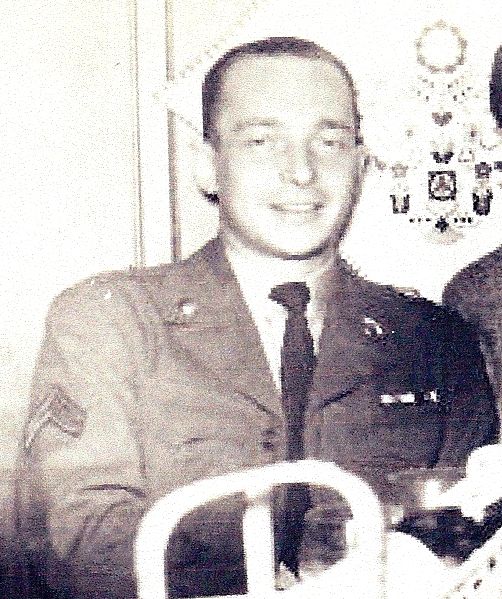
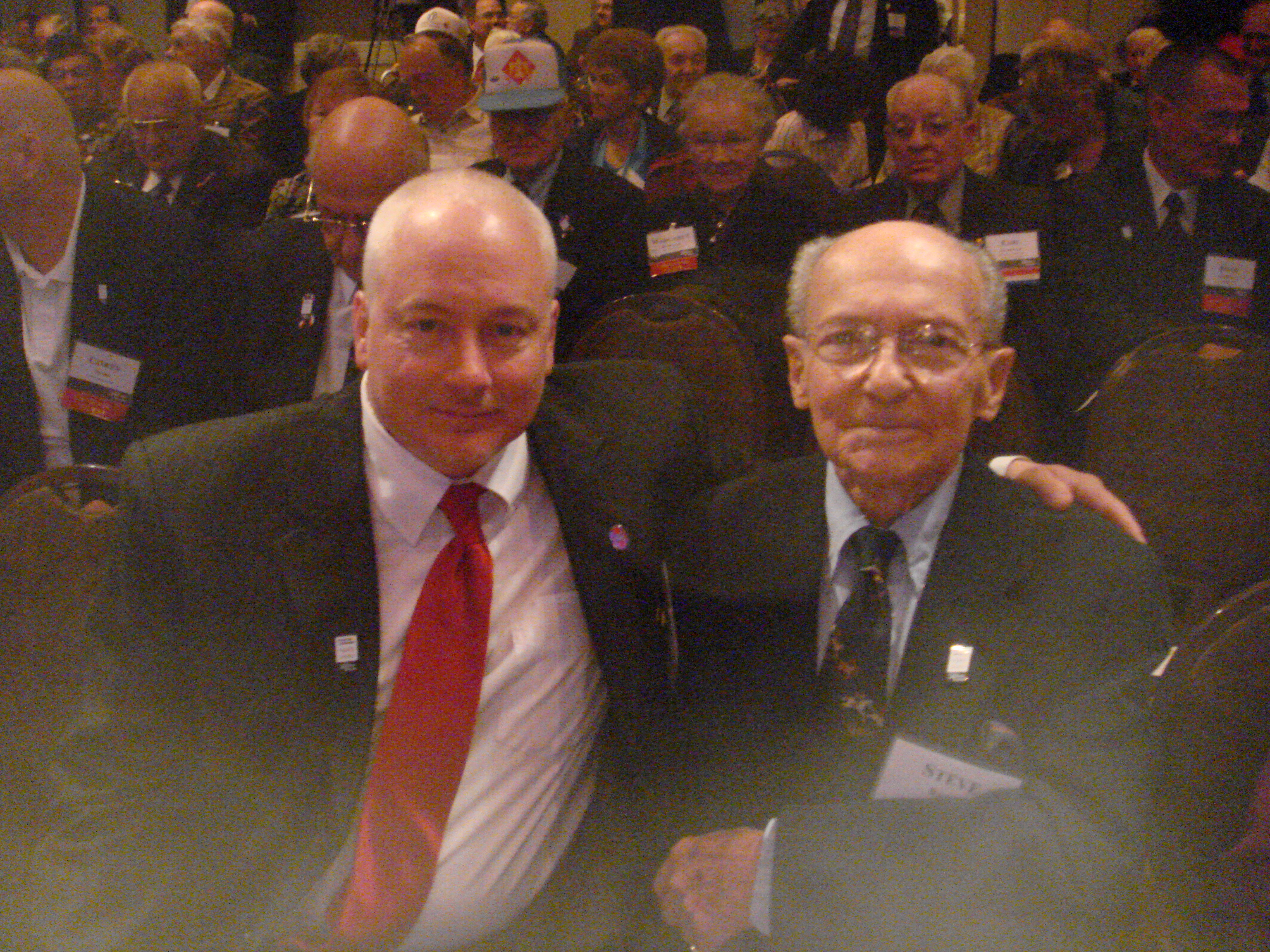
  I am re-posting this on the anniversary of a car crash that would claim the life of Holocaust survivor and later U.S. Army Ranger, Steve Barry.

My friend on the left described himself at one point in his life as the “Happiest Korean War Draftee”. Steve was a  survivor from Hungary who beat the odds and lived through the horrors of the Holocaust after the Germans invaded that country in 1944 and did their best to kill him on several occasions. He spent his 20th birthday jammed in a boxcar destined for Bergen Belsen, witnessed people dying of starvation and disease by the thousands,  and was liberated on April 13th, 1945 at the hands of the 743rd Tank Battalion and the 30th Infantry Division of the US 9th Army, aboard the train near Magdeburg.  He emigrated to the United States in Dec. 1948 after spending years in a displaced persons camp, applied for citizenship immediately, and was drafted in 1950, only to be assigned occupation duty in a far off nation- you guessed it-Germany. He was so happy to serve his adopted country…

Steve passed away yesterday, January 16th, 2012, after a long and difficult ordeal from injuries sustained in an automobile accident in September. I’ll always remember his special Christmas and Easter cards that he sent to me, made personally on his computer; his funny, self depreciating humor; and above all his overwhelming happiness at being able to finally meet the men who saved him. I hope that the memories sustain his wife Stella and his children and their families, and also the friends that he made later in life and became soulmates with- soldiers Carrol Walsh and Frank Towers, the soldiers who arrived on the scene to free him and help him begin his life anew.

Matthew Rozell, Stephen Barry, National DOR Ceremony, Washington, DC April 2010. This photo was taken the day after the 65th anniversary of Steve’s liberation in April 1945. We had just been honored by the director of the United States Holocaust Memorial Museum before the national ceremony in the Capitol Rotunda.

I will leave you with a few of his words-and we will remember. Thanks, Steve, for all that you gave us, and for passing the torch to a new generation of students to carry your message forth.

An earlier post… The Holocaust Survivor and the US Army Ranger…

A fantastic national radio interview that I helped to arrange, knowing he would be the perfect speaker…

And the educational films I constructed from them.

 Stephen B. Barry, 87, of Boca Raton, Florida, passed away peacefully on January 16, 2012 following a serious car accident in late September 2011. A Holocaust survivor,who was proud to be an American, he went on to live the American dream. He is survived by his wife Stella of nearly 58 years, his children Barbara (Paul), Jamie (Jerry) and Randy and his beloved granddaughters, Amanda and Victoria and many extended family and friends. Services to be held at Beth Israel Memorial Chapel in Delray. In lieu of flowers, the family requests contributions in his memory be made to The United States Holocaust Museum.
Published in Sun-Sentinel on January 18, 2012

Read Full Post »

Dear Mr. Rozell,

Hilersleben -Luca Furnari

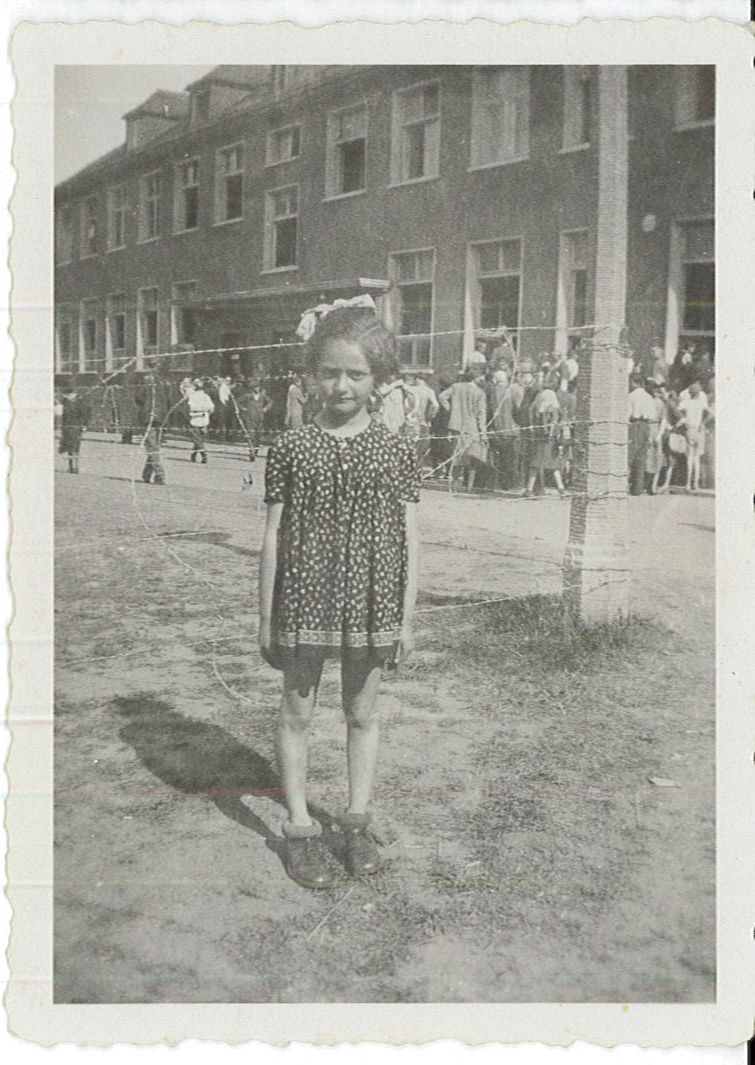
 My grandfather, Luca Furnari, is 90 years old and served in the 95th medical battalion with Mr. Gantz at Hillersleben. He has a number of photographs from this period.  For many years he has thought about trying to find a particular young girl who he helped sneak extra rations to at the DP camp and whose mother asked him to take back to the United States. He and some friends actually had a whole plan of how they were going to sneak her onto the boat back to the US, it’s a great story. Unfortunately, as you know, they were told they were going to the Pacific theatre and the plan became impossible.  Her name was Irene / Iren / Irena.  I have a photograph and have searched the manifest on your website, there are 3 possible people of approximately the right ages: Irena Gitler, Iren Roth and Iren Wittels.   I was wondering if you had come across any survivors from Hillersleben with the same name. 

Hilersleben-Irene is in the flowered dress

Also, I know my grandfather would love to be connected to any other surviving members from the US Army that were at Hillersleben.  

 My grandfather is the large picture on the left hand side.  Irene is in the flowered dress in the picture by herself and on the lap of another US soldier, whose name is Turner (?).  The picture with the baby is also Turner, and they are in the DP camp.  My grandfather’s inscription reads

Hilersleben-Turner-boy that kid sure did cry that day — until we gave her some chocolate.

“boy that kid sure did cry that day — until we gave her some chocolate”.  The picture of the building with barrels in the foreground is from Hillersleben too. It has a strange inscription from my grandfather

Hilersleben-some disorderly DPs getting a shower bath (DDT?)

“some disorderly DPs getting a shower bath”.  The one with the two girls just says “Two of the children that lived in the D.P. center we were taking care of. Cute eh hon?” (He was sending the pictures to my grandmother back in the States.)

The child Irene is the girl that my grandfather would like to try to locate. 

Soldier Turner and Irene.

Any help you can provide is MOST appreciated.

Best,
R.

Hilersleben-Two of the children that lived in the D.P. center we were taking care of. Cute eh hon?

Read Full Post »


April 17th. (1945)

Dear Chaplain;-

Haven’t written you in many months now, its funny how a few moments are so hard to find in which to write a letter way past due; it’s much easier to keep putting it off the way I’ve done. I’ll try to make up for it in this letter.

Today I saw a sight that’s impossible to describe, however I’ll try. Between 2400 and 3000 German refugees were overran by my division during our last operation; most of them were, or had been, inmates of concentration camps, their crimes the usual ones, – Jewish parentage, political differences with der Fuhrer, lack of sympathy for the SS, or just plain bad luck. Not one of these hundreds could walk one mile and survive; they had been packed on a train whose normal capacity was perhaps four or five hundred, and had been left there days without food.

Our division military government unit took charge of them, and immediately saw what a huge job it was going to be, so they sent out a call for help. Several of our officers went out to help them organize the camp they were setting up for them. The situation was extremely ticklish we soon learned; no one could smoke as it started a riot when the refugees saw the cigarette, and we couldn’t give the kiddies anything or they would have been trampled to death in the rush that would result when anything resembling food was displayed. The only nourishment they were capable of eating was soup; now the army doesn’t issue any of the Heinz’s 57 varieties, so we watered down C-ration[s] and it served quite well.  It was necessary to use force to make the people stay in line in order to serve them. They had no will power left, only the characteristics of beasts.

A few weeks of decent food will change them into a semblance of normal human beings; with God willing the plague of disease that was already underway, will be diverted; but I’m wondering what the affect of their ordeal they have been through, will be on their minds; most will carry scars for the rest of their days for the beatings that they were given. No other single thing had convinced me as this experience has that Germany isn’t fit to survive as a nation. I’ll never forget today.

I was going to write mother tonight but thought better of it. I’ll be in a better frame of mind tomorrow. I’m only a few dozen miles from Berlin right now, and its hard to realize the end is in sight. I’m always glad to receive your scandal sheet. You perhaps missed your calling, as your editorial abilities are quite plain.

As ever,

Charles.             (transcribed by Kaylee Merlow, HFHS ’11.)

March 11th, 2009

Dear Mr. Rozell:

My father-in-law was 1st. Lt. Charles M. Kincaid. He was a Liason Officer with the 30th. Division Artillery.  He was honored with an Air Medal in the battle of Mortain and a Bronze Medal in the battle of St. Lo.  In the battle of Mortain he won his Air Medal by calling in artillery adjustments while flying in a Piper L-4 over 4 panzer divisions on August 9, 1944.

first-lt-chuck-kincaid-sept-1944He rarely wrote home. He did write home to his minister about one event that evidently really caused him to stop and think. Attached is a copy of that letter that his sister transcribed – making copies for others to read.  The letter describes the Farsleben train and his experience there.

I need to thank you for your website and work. You and your students work enabled me to connect the letter with the actual historical event. It further enabled me to show my children the pictures and to make their Grandfather’s experience real, not just an old letter – that this event so affected him that he needed to tell his minister before he told his mother.

Thank you,
Mark A.

Read Full Post »

Whitwell, Tennessee.

Not much cultural diversity. 50% free and reduced lunch. Industry supporting then devastating the community, then leaving town. Home of the Tigers… sound familiar, Hudson Falls?

Last fall Hudson Falls kids and I had the pleasure of getting to know Joe Fab, the major moving force behind the film  Paper Clips, when he came to our town to speak.On Tuesday morning this week, a few educators and I  loaded into  cars for a pleasant drive from Nashville to Whitwell, to visit the middle school where it all began, and their Children’s Holocaust Memorial, a cattle car from Germany that was used to carry human beings to the killing centers.

The middle school is in  a new building that also houses a special Holocaust Memorial library, which is thought to be the largest single collection in the state, many volumes donated by survivors and congregations worldwide. Every letter they ever received is archived there, including the negative ones that arrived with the paper clips twisted into swastikas. Imagine. Middle school kids not picking and choosing what to save, but archiving like historians for the future.

Linda Hooper, the former principal, greeted the nine of us, and gave us a private talk about the impact of the project and the unbelievable ripple effect it has had on people’s lives across the world. Sandy Roberts told us how the project unfolded in her after school class, when a child raised his hand to say, “Mrs. Roberts, excuse me, but I don’t know what six million is.” Because they took the time to investigate together, students and parents reflected together in a meaningful way on the impact of learning about the Holocaust on their lives. And that is how this project was born.

Before we move to criticize the project as just another counting activity, the collecting and counting of objects to symbolize human life, come to Whitwell and meet the people. Read the letters from the survivors who send in a paper clip, or dozens, and reach out to these children who have touched them enough to tell their families’ stories.

No one can fathom six million plus. But read the letters to feel for yourself individual stories of the millions who were lost. Come to Whitwell and see for yourself the power of a small community excited about learning, and its impact on the world, because they wanted to care about other human beings.

Read Full Post »


Israeli educational psychologist Haim Ginott writes about a letter that teachers would receive from their principal each year:

I am a survivor of a concentration camp. My eyes saw what no person should witness: gas chambers built by learned engineers. Children poisoned by educated physicians. Infants killed by trained nurses. Women and babies shot by high school and college graduates.

So, I am suspicious of education.

My request is this:  Help your children become human. Your efforts must never produce learned monsters, skilled psychopaths or educated Eichmanns. Reading, writing, and arithmetic are important only if they serve to make our children more human.

This has become the mission statement and educational philosophy of some Holocaust education institutions and it really sums up what my mission as  a teacher is all about. But please note  below that I did not intend it that way. At all.

Today I will be a special guest for the Tennessee Days of Remembrance Ceremony at the State Capitol in Nashville with legislative members, the governor and the lieutenant governor. This evening I will give my first address to fellow Holocaust educators.

How does a kid from a small town with no experience in Holocaust education go on to add a new chapters to the stories of thousands of persons’ lives? To become a regarded figure in Holocaust and History education circles, nationwide?

The honest answer is, I just don’t know.

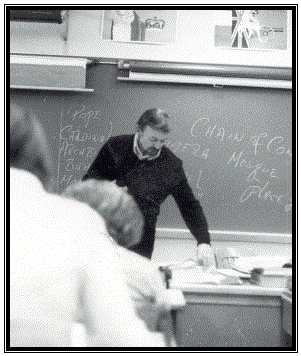
My dad in the classroom. Around the time that I puffed out my chest and claimed I certainly would not be a teacher.

But it happened. This from a kid who distinctly remembers the purposeful slight given to his dad. Dad was a history teacher in Glens Falls, the next town over. He was good, and he loved the students. Everyday he came home happy and sometimes even humming a tune. Who delivered the purposeful slight? His first born son.

Our relationship,  as I grew into the teenage years, was a bit strained. So when he asked me, as a junior or senior,  in the car riding home from school one day down Main Street, the MAIN STREET of the town that produced him, what I would like to do someday after I graduated from high school, I told him, “I don’t know, but I won’t be in HUDSON FALLS anymore, and I SURE WON’T BE A TEACHER…..”- the desired effect was achieved by the angry teen, the wound deep, the twist of the knife distinct…

Yet there I was, eight years later, living in the room out back of the family homestead on that Main Street, fending my way on the other side of the desk in the classroom of my alma mater, and not just any classroom- a history classroom, teaching the exact same subject as the old man…

What if I had never come home, as planned? What if I had not gone back to school for a teaching certificate, after graduating with that “unmarketable” history degree? What if I had landed that job in the college town I called my new home, instead if coming in 2nd for it? I would have never met the tank commanders. Then, what if Walsh’s daughter had not said, after two exhausting hours of combat tales, just as we were about to turn the camera off,   “Dad, did you tell Mr. Rozell about the train?

Things happen for a reason. I think there are no coincidences.

In the words of a former  principal of mine, we are here “to make human beings out of them” (not that they were not before, but you get his point-the exact same point of the speaker noted above.)

I am suspicious of those who will dictate to me from ” on high” what I should be doing in the classroom. Perhaps Dr.  Ginott would have agreed.


Read Full Post »

« Newer Posts - Older Posts »