Feeds:
Posts
Comments

Keeping it real. A nice article to re-post. Lessons learned from a survivor.

Aron Lieb, Holocaust Survivor, a Stranger, Saved My Life

by Susan Kushner Resnick

You’re moving through life, trying to make it to the end of the day, when a stranger approaches. You immediately calculate a response: Open the door he’s knocked upon or pull it tight and turn away? Many factors come into play. Is he dangerous? Is your world too full of good things or too cluttered with bad for you to bother with someone new? Are you shy or embarrassed by how much you need to talk to somebody?

When it happened to me, I talked back. The man had stopped me in the lobby of a Jewish community center as I put my baby in his car seat.

“Vhat’s his name?” he asked in an accent full of history.

I sized him up: an old fellow wearing a cap and glasses. He appeared to be clean and unarmed, plus his eyes twinkled. Probably just a grandpa who missed his own cherubs, I thought.

I told him my baby’s name, asked him about himself and learned that my grandfather assumption had been way off. He didn’t have children or grandchildren. He only had one living relative because everyone else had been killed during the Holocaust.

Aron Lieb had spent the war in a ghetto, in forced labor camps and in several brand name camps: Auschwitz, Birkenau and Dachau. After American soldiers welcomed him back to the living with chocolate bars, he came to America. Here he worked as a deli counterman while enduring an unhappy marriage until his wife’s death.

I t was a sad life, yet he had those twinkly eyes. I wanted to know more.

I suggested we meet for coffee the following week. This wasn’t something I’d ever done before, but it felt right. What harm could one coffee do?

No harm at all, it turned out. That morning changed my life.

At first we were just coffee mates. Then he started coming to my house for holidays, bringing my kids birthday candy and telling me all of his stories. You might think that he sprinkled his tales of tragedy with bits of wisdom, Tuesdays with Morrie style. But that wasn’t his way. Instead, he told jokes, complained about the headache he’d had since before the war and flirted with every woman he saw.

Then his eyes stopped twinkling. That’s when the life lessons commenced.

The Red Cross did many helpful things for survivors after the war, but I don’t think they provided counseling. Now we know about PTSD, but it was around then, too, and Aron had buried his symptoms for years. As one ages, psychological defenses break down as much as collagen and muscle tone do. He became depressed and anxious, requiring psychiatric care. When I realized that he didn’t have anyone to help him navigate the medical system, I signed health care proxy and power of attorney documents, essentially adopting him.

He recovered, but after a while, the misery returned. He spent all of his time alone in his apartment, eating not much more than rice and pills. When he threatened to kill himself, I knew he needed more than I could provide. But due to a complication in how this poverty-level Holocaust survivor had spent his German reparations, he couldn’t get into a Jewish nursing home until I collected a pile of money for expenses.

Organized religion can be wonderful and terrible. Fighting Aron’s battles showed me both. I’d expected the established Jewish community to provide anything necessary to help him die with dignity. When they wouldn’t, I was heartbroken. Already ambivalent about the religion I’d been raised in, their refusal to do what was right almost caused me to quit altogether. But my faith was restored when the rabbi of the small congregation I infrequently attended asked congregants for help. Soon, people who knew neither of us donated whatever they could — some sending checks for $5 and $10 — to keep Aron safe.

Aron used to tell me that I’d saved his life, but he actually did most of the saving. He gave me the gift of being able to help somebody. He exposed me to the best and worst of humanity. And he showed, through the example of his entire life, that we humans can endure everything.

All because I talked to a stranger.
http://www.huffingtonpost.com/susan-kushner-resnick/holocaust-survivor-stranger-saved-my-life_b_2065898.html

I’m kind of an old school taskmaster. Last week, I made my US History students memorize the Preamble to the US Constitution. They complained, but the next day,  a few were eager to recite it for their peers in class. Jaime, an exchange student from Spain, literally leapt at the chance to recite it in English for his peers. He jumped out of his seat, smoothed down his clothes, and stood before his desk, and did it, even though he admitted he did not know what “Dome Est Teak –  Tron Qwheel Leetey” meant! The class applauded, and one by one they rose behind their desks to give it a shot. They stood and recited for their teacher and each other 54 of the most important words in American history! They competed  in standing, stumbling, and fumbling through it,  but when they left the classroom I could still hear the Preamble ringing out in the crowded hallways.

The so called lesson took on a life of its own. And in the nature of the current climate of teacher expectations, I reflect to myself, where is the value to this activity? Was it just entertainment? Should I  “monitor and adjust” and not allow it to unfold in other classes? For 20 minutes there was nothing but good natured fun and laughter coming from the class in peals. I suppose I could have had them do a internet search and fill in the blank activity. But when we met again and actually broke the words down, perhaps they took on greater meaning.

By the way, the other classes loved it too. Yep, especially when we wasted more time watching this clip afterwards. Got to teach them about Mayberry hometown values, too. Our inside joke in the classroom- “when you learn something, you learn it.”

  I am re-posting this on the anniversary of a car crash that would claim the life of Holocaust survivor and later U.S. Army Ranger, Steve Barry.

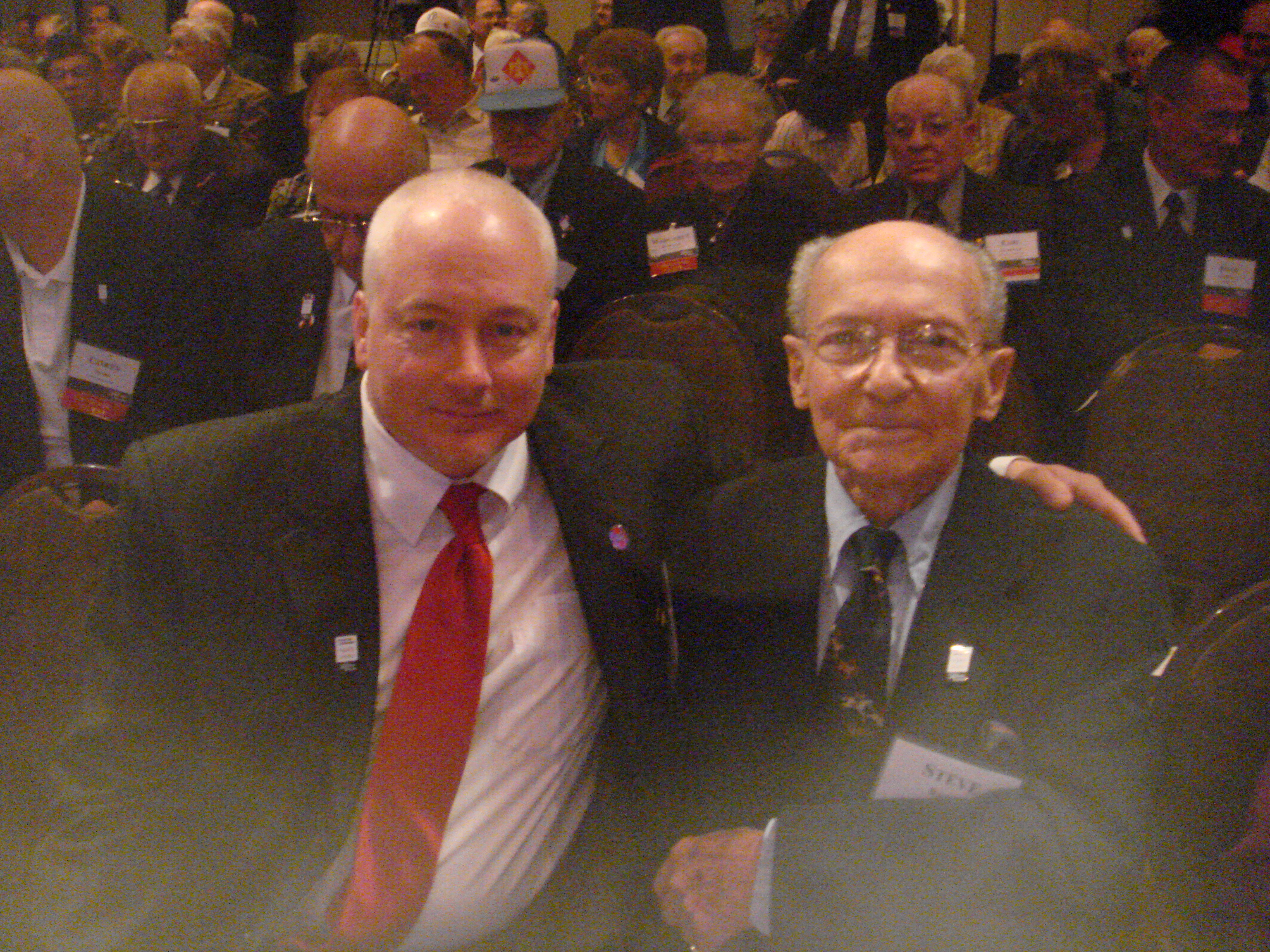
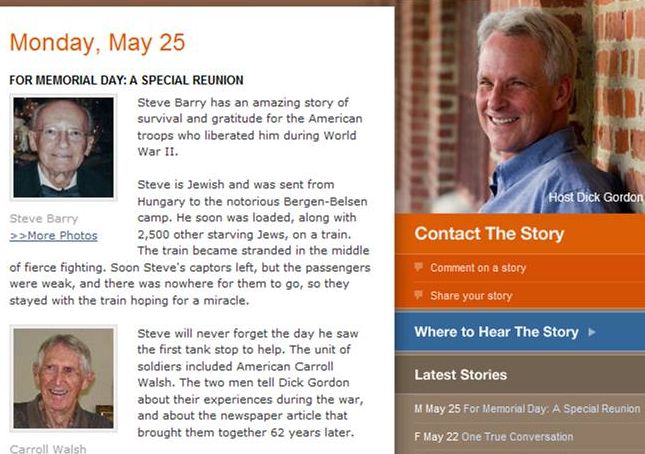
My friend on the left described himself at one point in his life as the “Happiest Korean War Draftee”. Steve was a  survivor from Hungary who beat the odds and lived through the horrors of the Holocaust after the Germans invaded that country in 1944 and did their best to kill him on several occasions. He spent his 20th birthday jammed in a boxcar destined for Bergen Belsen, witnessed people dying of starvation and disease by the thousands,  and was liberated on April 13th, 1945 at the hands of the 743rd Tank Battalion and the 30th Infantry Division of the US 9th Army, aboard the train near Magdeburg.  He emigrated to the United States in Dec. 1948 after spending years in a displaced persons camp, applied for citizenship immediately, and was drafted in 1950, only to be assigned occupation duty in a far off nation- you guessed it-Germany. He was so happy to serve his adopted country…

Steve passed away yesterday, January 16th, 2012, after a long and difficult ordeal from injuries sustained in an automobile accident in September. I’ll always remember his special Christmas and Easter cards that he sent to me, made personally on his computer; his funny, self depreciating humor; and above all his overwhelming happiness at being able to finally meet the men who saved him. I hope that the memories sustain his wife Stella and his children and their families, and also the friends that he made later in life and became soulmates with- soldiers Carrol Walsh and Frank Towers, the soldiers who arrived on the scene to free him and help him begin his life anew.

Matthew Rozell, Stephen Barry, National DOR Ceremony, Washington, DC April 2010. This photo was taken the day after the 65th anniversary of Steve’s liberation in April 1945. We had just been honored by the director of the United States Holocaust Memorial Museum before the national ceremony in the Capitol Rotunda.

I will leave you with a few of his words-and we will remember. Thanks, Steve, for all that you gave us, and for passing the torch to a new generation of students to carry your message forth.

An earlier post… The Holocaust Survivor and the US Army Ranger…

A fantastic national radio interview that I helped to arrange, knowing he would be the perfect speaker…

And the educational films I constructed from them.

 Stephen B. Barry, 87, of Boca Raton, Florida, passed away peacefully on January 16, 2012 following a serious car accident in late September 2011. A Holocaust survivor,who was proud to be an American, he went on to live the American dream. He is survived by his wife Stella of nearly 58 years, his children Barbara (Paul), Jamie (Jerry) and Randy and his beloved granddaughters, Amanda and Victoria and many extended family and friends. Services to be held at Beth Israel Memorial Chapel in Delray. In lieu of flowers, the family requests contributions in his memory be made to The United States Holocaust Museum.
Published in Sun-Sentinel on January 18, 2012

Israeli archaeologist digs into Nazi death camp

 Wednesday Aug 22, 2012

Israeli archaeologist Yoram Haimi shows aluminum plate  at the site of the former German Nazi death camp of Sobibor. Photo / AP

I have been an avocational archaeologist for many years; have made some significant academically credited discoveries. This aspect of combating Holocaust denial really intrigues me. MR

When Israeli archaeologist Yoram Haimi decided to investigate his family’s unknown Holocaust history, he turned to the skill he knew best: He began to dig.

After learning that two of his uncles were murdered in the infamous Sobibor death camp, he embarked on a landmark excavation project that is shining new light on the workings of one of the most notorious Nazi killing machines, including pinpointing the location of the gas chambers where hundreds of thousands were killed.

Sobibor, in eastern Poland, marks perhaps the most vivid example of the “Final Solution,” the Nazi plot to wipe out European Jewry. Unlike other camps that had at least a facade of being prison or labor camps, Sobibor and the neighboring camps Belzec and Treblinka were designed specifically for exterminating Jews. Victims were transported there in cattle cars and gassed to death almost immediately.

But researching Sobibor has been difficult. After an October 1943 uprising at the camp, the Nazis shut it down and leveled it to the ground, replanting over it to cover their tracks.

Today, tall trees cover most of the former camp grounds. Because there were so few survivors – only 64 were known – there has never been an authentic layout of the camp, where the Nazis are believed to have murdered some 250,000 Jews over an 18-month period. From those few survivors’ memories and partial German documentation, researchers had only limited understanding of how the camp operated.

“I feel like I am an investigator in a criminal forensic laboratory,” Haimi, 51, said near his home in southern Israel this week, a day before departing for another dig in Poland. “After all, it is a murder scene.”

Over five years of excavations, Haimi has been able to remap the camp and has unearthed thousands of items. He hasn’t found anything about his family, but amid the teeth, bone shards and ashes through which he has sifted, he has recovered jewelry, keys and coins that have helped identify some of Sobibor’s formerly nameless victims.

The heavy concentration of ashes led him to estimate that far more than 250,000 Jews were actually killed at Sobibor.

“Because of the lack of information about Sobibor, every little piece of information is significant,” said Haimi. “No one knew where the gas chambers were. The Germans didn’t want anyone to find out what was there. But thanks to what we have done, they didn’t succeed.”

The most touching find thus far, he said, has been an engraved metal identification tag bearing the name of Lea Judith de la Penha, a 6-year-old Jewish girl from Holland who Israel’s Yad Vashem Holocaust memorial confirmed was murdered at the camp.

Haimi calls her the “symbol of Sobibor.”

“The Germans didn’t discriminate. They killed little girls too,” he said. “This thing (the tag) has been waiting for 70 years for someone to find it.”

Haimi’s digs, backed by Yad Vashem, could serve as a template for future scholarship into the Holocaust, in which the Nazis and their collaborators killed about 6 million Jews.

“I think the use of archaeology offers the possibility of giving us information that we didn’t have before,” Deborah Lipstadt, a prominent American Holocaust historian from Emory University, said. “It gives us another perspective when we are at the stage when we have very few people who can speak in the first person singular.”

She said that if the archaeological evidence points to a higher death toll at Sobibor than previously thought, “it is not out of sync with other research that has been done.”

Haimi’s basic method is similar to what he does at home, where he does digs for Israel’s antiquites authority in the south of the country – cutting out squares of land and sifting the earth through a filter. Because of the difficult conditions at Sobibor and the sensitive nature of the effort, he is also relying on more non-invasive, high-tech aids such as ground-penetrating radar and global positioning satellite imaging.

Based on debris collected and patterns in the soil, he has been able to figure out where the Nazis placed poles to hold up the camp’s barbed wire fences.

That led him to his major breakthrough – the mapping of what the Germans called the Himmelfahrsstrasse, or the “Road to Heaven,” a path upon which the inmates were marched naked into the gas chambers. He determined its route by the poles that marked the path. From that, he determined where the gas chambers would have been located.

He also discovered that another encampment was not located where originally thought and uncovered an internal train route within Sobibor. He dug up mounds of bullets at killing sites, utensils from where he believes the camp kitchen was located and a swastika insignia of a Nazi officer.

Along the way, he and his Polish partner Wojciech Mazurek, along with some 20 laborers, have stumbled on thousands of personal items belonging to the victims: eye glasses, perfume bottles, dentures, rings, watches, a child’s Mickey Mouse pin, a diamond-studded gold chain, a pair of gold earrings inscribed ER – apparently the owner’s initials – a silver medallion engraved with the name “Hanna.”

He also uncovered a unique version of the yellow star Jews were forced to wear by the Nazis, made out of metal instead of cloth, which researchers determined to have originated in Slovakia.

Marek Bem, a former director of the museum at Sobibor, said the first excavations began at the site in 2001, with several stages before he invited Haimi to join in 2007. He said the mapping of the 200-meter (yard) long Himmelfahrsstrasse opens the door for looking for the actual gas chambers.

“We are nearer the truth,” he said. “It tells us where to look for the gas chambers.”

Haimi is not allowed to take any of the items out of Poland, but he consults regularly with Yad Vashem’s International Institute for Holocaust Research, which helps him interpret his findings and gives them historical perspective.

Dan Michman, head of the institute, said Haimi’s research helps shed light on the “technical aspects” of the Holocaust. It also grants insight, for example, on what people chose to take with them in their final moments.

“His details are exact and that is an important tool against Holocaust denial. It’s not memories, it’s based on facts. It’s hard evidence,” he said.

But the accurate layout is Haimi’s greatest contribution, allowing researchers to learn more about how it functioned, said Deborah Dwork, director of the Strassler Family Center for Holocaust and Genocide Studies at Clark University in Worcester, Mass.

She said some critics have suggested that the sites of former death camps are “sacred” and “should remain untouched.” But she said she believes the excavation is justified. “I feel that our need for knowledge outweighs those concerns.”

Once his work in Sobibor is done, Haimi hopes to move on to research at Treblinka and other destroyed death camps.

Though archaeology is usually identified with the study of ancient history, Haimi thinks that with survivors rapidly dying it could soon become a key element in understanding the Holocaust.

“This is the future research tool of the Holocaust,” he said.

– AP

http://www.nzherald.co.nz/world/news/article.cfm?c_id=2&objectid=10828626&ref=rss

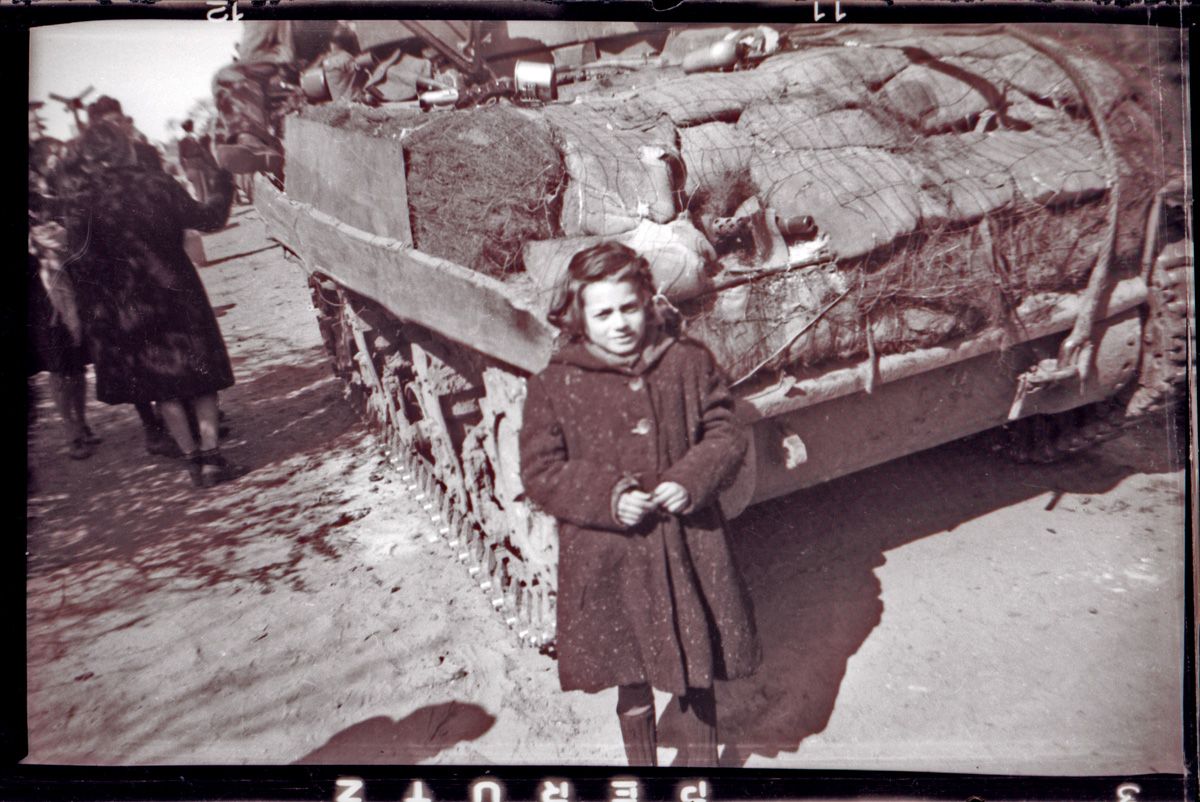
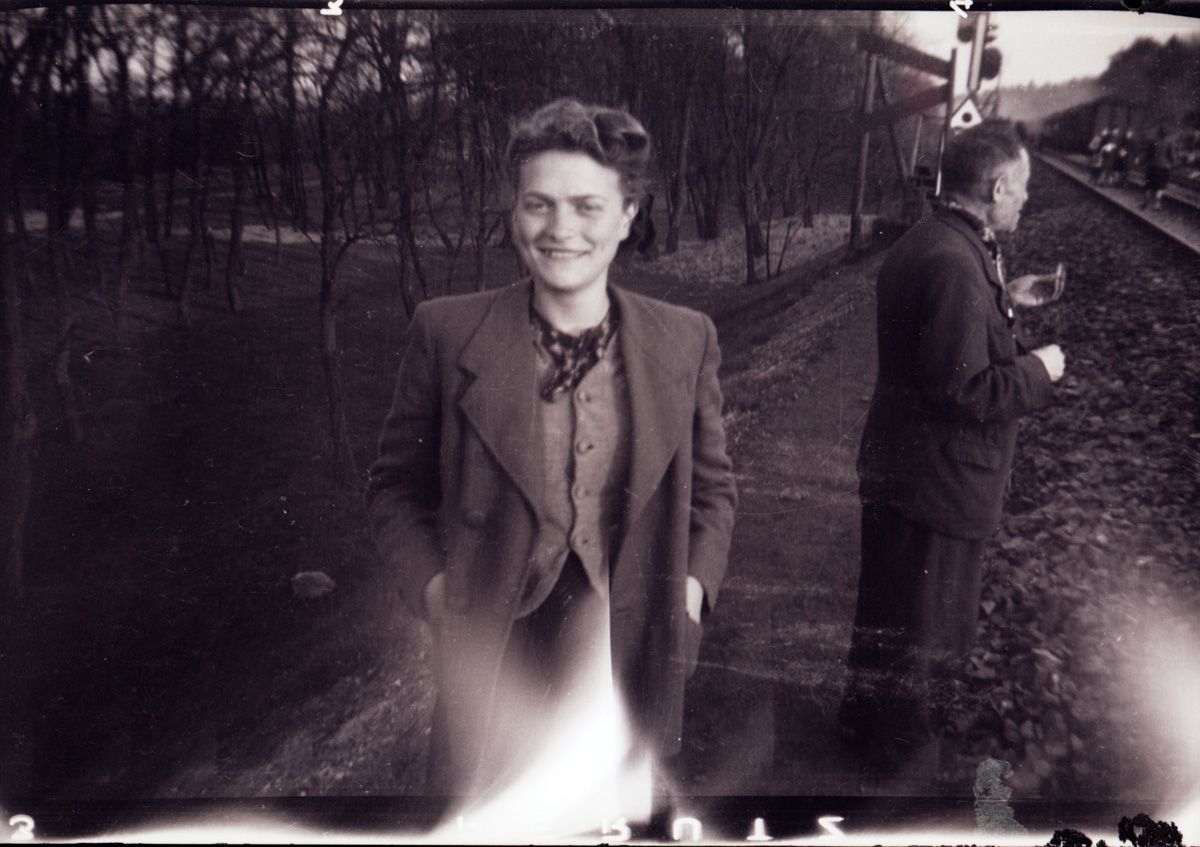
On the cusp of 100,000 visits to this site,  I am posting three photographs of the liberation of the train near Magdeburg that were discovered earlier this summer, with permission.  Gina Rappaport is the subject who appears in two of the photos, along with her sister and her cousin. I think it is shortly before tanker George Gross departed to join the rest of the battalion on Saturday morning, April 14, 1945.

“We were relieved the next morning, started up the tank, waved good-bye to our new friends, and followed a guiding jeep down the road to rejoin our battalion.  I looked back and saw a lonely Gina Rappaport standing in front of a line of people waving us good fortune.  On an impulse I cannot explain, I stopped the tank, ran back, hugged Gina, and kissed her on the forehead in a gesture I intended as one asking forgiveness for man’s terrible cruelty and wishing her and all the people a healthy and happy future. I pray they have had it.

Last week I had the honor of being the recipient of the Glen at Hiland Meadows President’s Award. For the last several years, my twelfth graders have interviewed this retirement community’s residents. One student is paired off with an individual whose life story is then documented by the student. An interview is conducted, transcribed, and then researched; a paper is produced that adds an important aspect of the story of World War II and the Great Depression to the historical record, a story that otherwise would have been lost. One copy is then sent to the state archives. The kids and the elders bond and learn a great deal from each other. My kids have produced two hundred plus folders of material and I am now in the process of sorting it all out for professional articles.

I had no formal remarks prepared. On the way over in the car the principal asked me how many awards I had received in my career. Self consciously I said that I thought this was the ninth or tenth. I had told no one but my students that I was going to the ceremony, as I would be missing them on the last day. I did not tell colleagues and I did not even tell my own wife, herself a teacher. They work every bit as hard as I do. Instead they get collectively kicked everyday by the local paper.

To my surprise, my wife had been contacted and entered the room to join us at a table that included a CEO, bank president, and health care executive. In the room also were board chairpersons, town supervisors, a school superintendent, Congressional staffers, judges, more bank presidents, other CEOs- you get the picture, the movers and shakers. They were very nice down-to-earth folks who seemed to relish the opportunity to step back from the office and network a bit with their peers.  One of them leaned into the principal and me and asked what our take was on the daily articles, editorials, and columns slamming everything in the education profession.

I knew right then what my remarks would be about. I thanked the audience but the first person I recognized was my wife- not just for her support, but because we were the only two teachers in the room (teachers could learn so much from networking like this, but instead she had to play hookey)! Then I thanked my principal and explained to the crowd that some of the most profound lessons can be found by allowing the teacher the latitude in the classroom to lead students on a journey of discovery that may not necessarily take the path of pretesting and post testing kids to death. I gave the example of a girl who interviewed a resident there, a grizzled Marine who survived many battles against the Japanese, including Iwo Jima, and lost quite a few friends in the process.  She was amazed at his life story, but something he said had struck a discordant note with her- here was a man who questioned the decision to use atomic force against the Japanese (combat Marines in World War II generally will tell you that it was the best thing that happened, from the standpoint of their own existence). So I gave Jillian books, articles, papers, websites, and off she went to produce a 45 page paper about Ralph and the controversy surrounding the 50th anniversary of the bombing and the national displaying of the Enola Gay. A connection was kindled, a publishable paper was written, a scholar was born, and today Jillian is in journalism school.

I don’t take credit for helping her find herself- she did all the work. But I know I won’t be getting the same results if I am turned into a “content support specialist”. While I recognize (and think I am pretty good at) my role as an assessment coach in certain subjects, I’m not a technician. I’m a history teacher. The new measures being instituted as a one-size-fits-all cure all by persons who are not even in the classroom  are myopic knee jerk political fixes that will have the effect of killing opportunities like these for our students. My senior elective which brought me to this awards ceremony and many others will likely be dead on arrival for not conforming to some narrow minded political quick fix. This class is not broken, but it will be killed off if it does not conform. And forget about bringing in World War II and Holocaust survivors to offer their life changing stories to the student body. Teachers are already scared to death to leave their classrooms. Shame on us all for allowing this.

Of course I did not bring that up, but I did tell them that contrary to what is read in the paper, punishing teachers is not going to solve the problems of society and will do more harm than good. (Do you know that we’ll even be graded for kids who are not in the classroom because an adult, somewhere, maybe a “parent”, lets them stay home all day?)

Personal responsibly and moral efficacy can’t be legislated- but they can be modeled and emulated. What better way to strengthen our national fiber, restore pride in ourselves and  draw courage from the lessons of the past than to charge a young person with preserving an older American’s story?

The talk was well received. Maybe I got to teach another lesson today. Fact is that some of the most powerful ones are unscripted.

“Those who can make you believe absurdities can make you commit atrocities.”
Voltaire (1694-1778)

In my state, New York, the educational gurus and data driven whiz kids at State Ed and outside testing consortiums are redefining public education in a way that is scary. Test, Test, Test. Measurement, accountability, formative assessment, summative assessment, normative assessment, on and on. Goodbye to meaning, depth, compassion, empathy.

How does one measure life changing experiences? The reunions I have organized of Holocaust survivors and their American liberators meeting with thousands of students are now a thing of the past. Now it’s time to focus on the pretests and the post tests. And the tests in between.

 God be with you if you as a teacher have the courage to stand up and say no.

German Medical Association Apologizes for Holocaust Horrors

The German Medical Association has apologized for sadistic experiments and other atrocious actions of doctors more than six decades ago under the Nazis.

By Christine Hsu | May 25, 2012

The German Medical Association has apologized for sadistic experiments and other atrocious actions of doctors more than six decades ago under the Nazis.

In the statement adopted on Wednesday at the Bundesärztekammer (German Medical Association) meeting in Nuremberg, the association said that many doctors under the Nazis were “guilty, contrary to their mission to heal, of scores of human rights violations and we ask the forgiveness of their victims, living and deceased, and of their descendants.”

The declaration also says that contrary to popular belief doctors were not ordered by political authorities to kill and to experiment on prisoners, instead the doctors had engaged in the Holocaust as leaders and enthusiastic Nazi supporters.

Besides conducting pseudo-scientific experiments on prisoners in Nazi concentration camps, German doctors played a large role in the Nazi’s program of forced sterilization or euthanasia of the mentally ill or others deemed “unworthy of life.”

The association noted that “outstanding representatives of renowned academic medical and research institutions were involved” in establishing and carrying out the mass execution of millions in the Holocaust.

They said “these crimes were not the actions of individual doctors but involved leading members of the medical community” and should serve as a warning for the future [my emphasis].

OK. About time, I suppose.

Now read the quote below. Israeli educational psychologist Haim Ginott writes about a letter that teachers would receive from their principal each year:

I am a survivor of a concentration camp. My eyes saw what no person should witness: gas chambers built by learned engineers. Children poisoned by educated physicians. Infants killed by trained nurses. Women and babies shot by high school and college graduates.

So, I am suspicious of education.

My request is this:  Help your children become human. Your efforts must never produce learned monsters, skilled psychopaths or educated Eichmanns. Reading, writing, and arithmetic are important only if they serve to make our children more human.

Dear Mr. Rozell,

Hilersleben -Luca Furnari

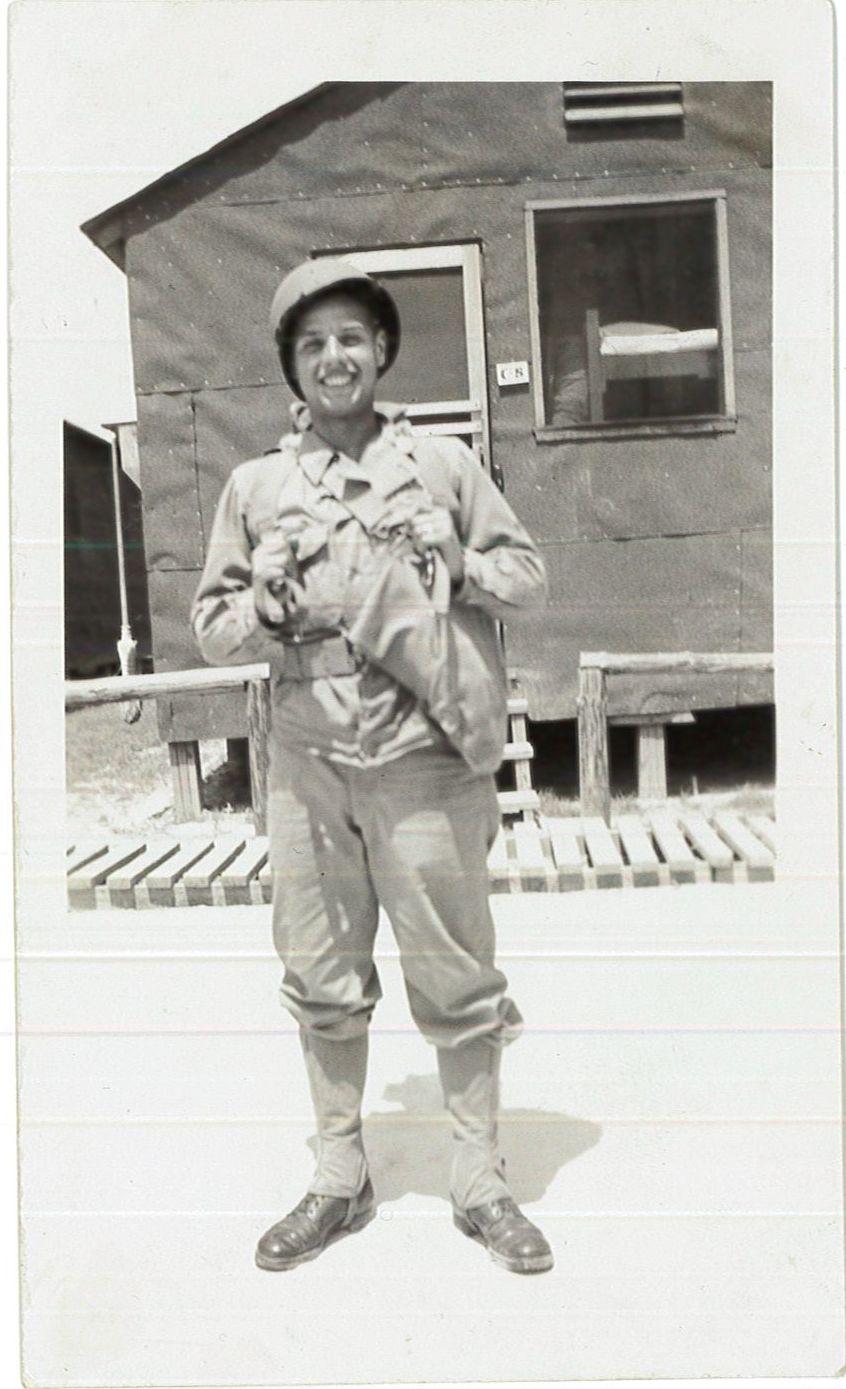
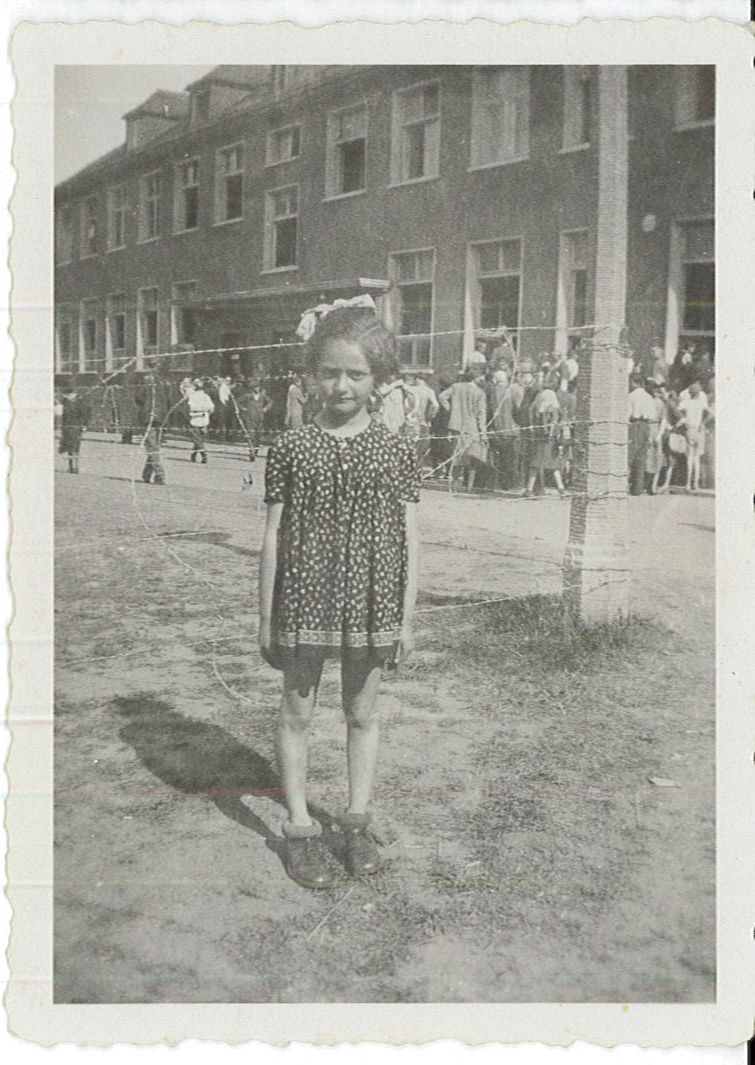
 My grandfather, Luca Furnari, is 90 years old and served in the 95th medical battalion with Mr. Gantz at Hillersleben. He has a number of photographs from this period.  For many years he has thought about trying to find a particular young girl who he helped sneak extra rations to at the DP camp and whose mother asked him to take back to the United States. He and some friends actually had a whole plan of how they were going to sneak her onto the boat back to the US, it’s a great story. Unfortunately, as you know, they were told they were going to the Pacific theatre and the plan became impossible.  Her name was Irene / Iren / Irena.  I have a photograph and have searched the manifest on your website, there are 3 possible people of approximately the right ages: Irena Gitler, Iren Roth and Iren Wittels.   I was wondering if you had come across any survivors from Hillersleben with the same name. 

Hilersleben-Irene is in the flowered dress

Also, I know my grandfather would love to be connected to any other surviving members from the US Army that were at Hillersleben.  

 My grandfather is the large picture on the left hand side.  Irene is in the flowered dress in the picture by herself and on the lap of another US soldier, whose name is Turner (?).  The picture with the baby is also Turner, and they are in the DP camp.  My grandfather’s inscription reads

Hilersleben-Turner-boy that kid sure did cry that day — until we gave her some chocolate.

“boy that kid sure did cry that day — until we gave her some chocolate”.  The picture of the building with barrels in the foreground is from Hillersleben too. It has a strange inscription from my grandfather

Hilersleben-some disorderly DPs getting a shower bath (DDT?)

“some disorderly DPs getting a shower bath”.  The one with the two girls just says “Two of the children that lived in the D.P. center we were taking care of. Cute eh hon?” (He was sending the pictures to my grandmother back in the States.)

The child Irene is the girl that my grandfather would like to try to locate. 

Soldier Turner and Irene.

Any help you can provide is MOST appreciated.

Best,
R.

Hilersleben-Two of the children that lived in the D.P. center we were taking care of. Cute eh hon?

PBS NEWSHOUR, MAY 2, 2012

JEFFREY BROWN: And finally tonight, one woman’s story of survival during the Holocaust and her new life in America as a champion of immigrants and citizenship.

Judy Woodruff has our conversation.

And a warning: It includes some disturbing images.

GERDA WEISSMANN KLEIN, Holocaust survivor: I guess we all knew that this was going to be the first step to the end of the road, either to liberation or to — to doom.

JUDY WOODRUFF: Those first steps for 20-year-old Gerda Weissmann from Bielsko, Poland, that snowy, frigid January in 1945 did lead to liberation, but only after three-and-a-half months and 350 miles of unimaginable horror.

Of the more than 2,000 young Jewish women and girls who the German S.S. forced to walk that death march through the snows of Eastern Europe, fewer than 150 survived. Most already had endured six years of ghettos, concentration camps and slave labor after Hitler’s army had invaded Czechoslovakia and Poland in 1939.

All had been separated from their families and loved ones.

GERDA WEISSMANN KLEIN: I was the only one from my family who survived, the only one of my dearest friends.

JUDY WOODRUFF: Among the American forces who found the starving and half-dead women was a young Jewish intelligence officer, Kurt Klein. While she was convalescing, Gerda and Kurt fell in love. They were married in 1946, and she emigrated to the U.S. They raised a family in Buffalo, N.Y., and devoted their lives to community service, working for tolerance, and honoring those who had died in the Holocaust.

Her 1957 memoir, “All But My Life,” led to an Oscar-winning documentary in 1996.

GERDA WEISSMANN KLEIN: I have been in a place for six incredible years where winning meant a crust of bread and to live another day.

JUDY WOODRUFF: In 2011, President Obama awarded her the Medal of Freedom, the highest honor a civilian can receive.

For the past several years, Gerda Weissmann Klein has been championing the values of citizenship and the immigrant’s role in creating a diverse and vibrant America.

And, Mrs. Klein, it’s an honor to have you with us.

GERDA WEISSMANN KLEIN: The honor is mine. I’m deeply grateful.

JUDY WOODRUFF: First of all, tell — tell me, why is it so important for people to keep talking about the Holocaust and what happened?

GERDA WEISSMANN KLEIN: I think, of course, the importance of the Holocaust should only be too illuminate the fact that it — that hatred and tyranny and all that is not over.

It is going on every single day. And I think that we should have more people come from countries where it is happening to see the type of pictures. You know, when I see pictures of little children holding battered little things for food, when villages are being burned, this is still going on.

I just think the Holocaust should be used as a beacon to show of what hatred and intolerance and all those things which have led to so much pain all over the world is capable.

JUDY WOODRUFF: People read your story or they hear your story, and they want to know what gave you the strength to survive, when so many others didn’t, that terrible experience.

GERDA WEISSMANN KLEIN: I do believe that it is 95 percent of luck, to be at the right moment at the right time, you know when selection came, you, you, you know.

Furthermore, I obviously had a very good and healthy constitution. And the will to live is extremely strong. You know, even I – I’ve just gone through quite a bit of illness. I’m going to be 88 years old, and I was in the hospital with people who were over 90, and the will to live is still strong.

I think that’s the very magic of life, and particularly if you were as young — we were all in our early 20s when it happened — or not quite 20 — the will to live pushes you on.

JUDY WOODRUFF: So, you’re now — what, it’s 62 years later. You are a very young 87. What’s kept you going?

GERDA WEISSMANN KLEIN: What kept me going is what kept everyone else going, the hope that, when it’s all over, we will go home to our families, to the life we left behind.

And I think that was probably the worst is, when it was over, there was nothing there. In my case, I met my beloved husband at the very moment of liberation, and my life took a different turn. And I could credit him with everything.

JUDY WOODRUFF: And what about in the six decades since? What’s kept you going all this time? You’ve dedicated yourself to work on. . .

JUDY WOODRUFF: . . . intolerance.

GERDA WEISSMANN KLEIN: I’ve been so fortunate.

I mean, you know, I need to ask myself every day, why am I here? I’m no better. Why was I was holding my children and grandchildren in my arms, sitting down to dinner with friends, walking in the rain? And I said I’ve been given the privilege of a meal. So, you know, you have to look back and say, if you have what you have, you know, survival is an incredible privilege. It’s also a very nagging and deep obligation. You know, it’s all the time.

JUDY WOODRUFF: And one of the ways you have given back is, you have been involved in so many causes.

GERDA WEISSMANN KLEIN: Well, hopefully to try to help a little.

JUDY WOODRUFF: … the Holocaust Museum. And you founded a few years ago this organization. . .

GERDA WEISSMANN KLEIN: Citizenship Counts.

JUDY WOODRUFF: . . . Citizenship Counts.

What is it that you want to convey to the younger generation through this?

GERDA WEISSMANN KLEIN: Well, let me put it this way.

I was so fortunate in meeting my husband, who brought me here, and I love this country. I love it with the love that only one who has been hungry and homeless for as long as I have been.

And my dream was, which probably is everybody else’s, complete assumption, my dream was to be married, of course to him, to live in a home and become a part of a community, to have children, to be involved. And all this became mine.

I came here not being able to speak English, and I always wanted to write. I came here not knowing one soul but my beloved husband. And look what happened. I didn’t — I wasn’t Mother Teresa. I didn’t work in the slums of Calcutta. I didn’t give my life to it. I have lived a good middle-class life. I didn’t discover a cure to cancer. You know, I didn’t become rich to endow great things.

I was just an average person. And why did it happen to me? And it only can happen in America, only in America. And I want to give back to this country.

JUDY WOODRUFF: Finally, do you think the United States is handling immigrants, immigration the way it should be today?

GERDA WEISSMANN KLEIN: I don’t know that — having had yearned so much for freedom, you can imagine that that’s a very difficult question for me.

And I hope and pray that, in the ultimate decision of justice, the heart will win over the brain.

JUDY WOODRUFF: Gerda Weissmann Klein, again, it’s our honor to talk with you. Thank you very much for being with us in the studio. Thank you.

GERDA WEISSMANN KLEIN: Thank you.

 
http://www-tc.pbs.org/s3/pbs.videoportal-prod.cdn/media/swf/PBSPlayer.swf

Watch Holocaust Survivor: Hatred, Tyranny Continue ‘Every Day’ on PBS. See more from PBS NewsHour.

“On April 30, 1945, Jewish-American G.I. Richard Marowitz  stormed into Hitler’s bedroom looking for anything he could bring back to headquarters.

Richard Marowitz of Albany , NY was on the scene for the liberation of Dachau. The following day he was at Hitler’s villa in Munich. Here is his story as told to Matthew Rozell and a group of students at Hudson Falls High School ten years ago.  Marowitz is a Jewish war veteran. Read the postscript to learn more about Hitler’s hat.

Richard M. Marowitz-42nd Rainbow Division-

The Liberation of Dachau

interviewed at Hudson Falls High School.

On the 29th of April 1945, my platoon was called into the command post, we were in a little village, I don’t remember the name of it, but it was probably about 25-30 miles from Dachau.  We were given new maps which showed Dachau, and we were told that the 20th Armored were already on the road to Dachau and our job was to take off and get to the tail end of the 20th Armored and be liaison between the 20th Armored and the infantry that would be coming down behind us in two and a half ton trucks, which is kind of idiotic but that’s the way the army was. The reason for that was we were having a race with the 3rd Division on one side of us, and the 45th Division on the other side of us, and they wanted the 42nd to win the race. So we took off on the road going very quickly like we usually do – if we came to a tree, the woods, or a village, we would stop and reconnoiter and find out if it was ok to go through without getting killed – and we kept getting pushed on the radio, ‘where are you,’ ‘what are your Greek coordinates,’ and ‘what’s taking so long? We are going to lose the race.’  After awhile of this kind of nonsense, Lieutenant Short stopped us and he said we to have to make a choice, either we’re going to have to step on the gas and go like hell and let surprise be on our side, or we’re going to lose the race and then everybody is going to get mad at us.  So we decided to step on the gas and go like hell, which is what we did. In the process, we ran into a whole lot of little hornet’s nests – it would have made a movie you wouldn’t have believed anyways – for example, we cut a German convoy in half that was going across a road that we were on, firing as we went through they didn’t know what happened because we weren’t supposed to be there and they were driving off the road. We did the same thing with another convoy that was going on a road in the opposite direction and parallel to ours, and we just fired on them as we went.  We came upon a village, and somebody fired on us and we went up on a small knoll next to the road and we dragged all the junk we had accumulated on the bottom of our jeeps like bazookas, mortars, etc. We fired on them and they probably thought they hit the front of the division. There’s no way they could’ve assumed it was only 28 men. Lieutenant Short stood up, honest to God, he actually said this: “Three men assault the town.” Three of us went in, Larry, myself and Howard Hughes, that’s his real name – great BAR man, Browning automatic rifle …and we claimed the first few houses, we accumulated 160, 170, 180 prisoners who looked around expecting to find more of us.  We broke up their weapons, told them to put their hands on their heads and walk back up the road.  They looked at us like were crazy; we looked back like we weren’t.   We went through another village and a German fired a panzerfaust, which is like a German bazooka, it landed on the other side of us and blew us out of the jeep. We dispatched quickly and we got back in the jeep and took off again.  These are the kinds of things that happened on the way to Dachau. 

When we got close to Dachau, you see there are a lot of smells in war, you smell the death smell all the time, but it’s usually farm animals who were rotting in the fields who were killed, rotting or whatever.  As we got closer to Dachau, we got this awful smell and we assumed it was farm animals, that we were going to pass a farm, or whatever. We finally got to the outskirts of Dachau and were pinned down.  Dachau was a favorite camp of the Germans, their first major camp, it was in Germany.  They didn’t want to give it up the other camps were walkovers.  The Germans just left them, and that was it.  But in this case at Dachau, they didn’t want to give it up too easily, there were a lot of SS guys around.  They were dropping some SS on us, and a lot of snipers – at one point an American tank came out of Dachau.  We were stuck in the ditch at that point, we stood up and realized we made a mistake when the gun came down on us – but at that instant, an American tank destroyer came up behind us and blew the tank away.  It happened to be an American tank that had been captured by the Germans and the guys in the tank destroyer knew that we didn’t have any tanks in there so therefore it had to be a captured tank.  I kissed a tank destroyer that day.     

    At that point, they told us to clean out the snipers and then proceeded to go into the camp.  At the outskirts of that camp, we went into a house – we banged on it, it was like a little small farm on the outskirts.  The door opened and there was a mother, a father, a daughter and a dog.  The mother had buckteeth, the father had buckteeth, the daughter had buckteeth, and when I looked down and saw that the dog had buckteeth, I was just hysterical.   It was the funniest sight, I was tense you know, and I could use anything at that point for a laugh.   Of course the other guys looked at me like I was nuts! Anyway, we did find some snipers – one we did away with that was firing away from a house nearby.  After we silenced him, we went up to see who it was.  He was eleven or twelve years old, one of the Hitler youth, who were actually worse than the SS.  They were just so brainwashed … we ran into a lot of those kids in their short pants. 

On the siding, you saw pictures of it in the slides, outside of the camp, adjacent to the camp, there were actually forty boxcars of bodies and

American soldiers of the U.S. 7th Army, force boys believed to be Hitler youth, to examine boxcars containing bodies of prisoners starved to death by the SS. USHMM

we found one man alive in that forty…there are some pictures of that one man, I don’t know whether he survived or not.  The prisoners were just walking skeletons, and they just dropped where they were and died.  There were piles of bodies, of bodies that had been gassed and readied for the ovens.  Some of them still lived because those boxcars were brought to Dachau to burn those bodies.  It was a total mess.  And the smell was not a farm; it was Dachau that we had smelled miles before we got there.  And yet, people in the village who were right next to the camps said they didn’t know what was going on.  People in Munich, which was actually only nine miles from Dachau, didn’t know what was going on.  Now if you want to believe that, the Brooklyn Bridge is still for sale.

    I never went back and I don’t intend to, I don’t feel like I want to.  But it is almost impossible to describe the feelings, so I’m not going to try.  But when you looked around some of these tough soldiers were throwing up and crying all over the place.  It is not possible to really describe the number of feelings you get when you walk into something like that.  Because that’s a scene that … well, first of all nobody told us about the camp!  We had no idea what a concentration camp did.  We were going to Dachau, period.  It was another village as far as we were concerned.  That’s kind of a shock to get all at one time. 

Interview recorded on May 3, 2002.

See Rich and I in a 2014 NBC LEARN video here.

POSTSCRIPT:

“On April 29, 1945, the 42nd Rainbow Division 222nd I&R platoon entered the gates of Dachau. One of many units sent to liberate the death camp, they saw first-hand the horrors of Hitler’s death machine.

The next day, 12 men of the I&R were ordered to search Adolph Hitler’s Munich apartment for military intelligence. Jewish-American G.I. Richard Marowitz, self-appointed wiseacre of the unit, stormed into Hitler’s bedroom looking for anything he could bring back to headquarters.

All he found was a black top hat.

Still angered by what he had seen at Dachau, Marowitz flew into a rage and jumped on the hat, crushing it, imagining Hitler’s head still inside. Then Marowitz, known for his comic antics even under stress, put Hitler’s crushed hat on his head and marched through the apartment with his best imitation of Charlie Chaplin doing Hitler from The Great Dictator. Tense from the day before, the I&R unit cracked up. Years later Marowitz found out that the same day he stomped Hitler’s hat, the Führer committed suicide in his bunker.

Marowitz returned home to Albany, N.Y., with the ultimate war souvenir stuffed into his duffel bag. He became a clothing manufacturer and professional magician and rarely talked about his war experiences. For the next 50 years, Hitler’s hat fittingly sat in a brown paper bag, buried at the bottom of his magic trick closet.

Following Marowitz to a Rainbow Division reunion, Hitler’s Hat interviews his I&R unit buddies to retell the story of Hitler’s hat. Daring and innovative, the documentary presents a rare mix of humor and history in an original take on World War II.”


“The Story of Hitler’s Hat”,
http://www.jeffkrulik.com/hitlershat/index.html