Feeds:
Posts
Comments

My third book is now available as an ebook at Amazon, Barnes and Noble, Kobo and other outlets. The paperback should be out by first week of September.

It is the story of eight airmen as they grew up during the Great Depression and then joined the US Army Air Forces and took to the skies over Europe. Each man held a different crew position on the ‘heavies’, the B-24 Liberator or the B-17 Flying Fortress. Most had a connection to ‘Hometown USA’, a name coined during WWII for Glens Falls NY and the surrounding environs and small communities that lined the Hudson River 200 miles north of New York City.

I’ll leave you with the teaser for now. The book is all in their own words, like they are speaking to us across the kitchen table (and that is exactly where some of them were seated when they told their stories…) It’s intimate, it’s heart wrenching at times, and it’s bust-out-loud-laughing funny at others. And it’s real history from real people, something a lot of Americans seem to have forgotten these days. We need these guys now as much as we did during the war.

Click here to see the book in the stores. Click here for a book preview. 

Earl Morrow, B-17 pilot and POW in my classroom , May, 2011. Credit. Robert H Miller.

Dying for freedom isn’t the worst that could happen. Being forgotten is.


— ‘You flew with what I would call ‘controlled fear’. You were scared stiff, but it was controlled. My ball turret gunner—he couldn’t take it anymore… I guess he was right. He’s dead now. But he had lost control of the fear. He never got out of that ball turret; he died in that ball turret.’ —B-24 bombardier


~THE LONG-AWAITED SEQUEL IN THE BEST SELLING ‘The Things Our Fathers Saw’ SERIES~

How soon we forget. Or perhaps, we were never told. That is understandable, given what they saw.


— ‘I spent a lot of time in hospitals. I had a lot of trouble reconciling how my mother died [of a cerebral hemorrhage] from the telegram she opened, saying I was [shot down and] “missing in action”. I didn’t explain to her the fact that ‘missing in action’ is not necessarily ‘killed in action’. You know? I didn’t even think about that. How do you think you feel when you find out you killed your mother?’ —B-24 bombardier


At the height of World War II, LOOK Magazine profiled a small upstate New York community for a series of articles portraying it as the wholesome, patriotic model of life on the home front. Seventy years later, a history teacher tracks down the veterans with a connection to “Hometown, USA” who fought the war in the air over Europe, men who were tempered in the tough times of the Great Depression and forged in battle. He rescues and resurrects firsthand accounts of combat and brotherhood, of captivity and redemption, and the aftermath of a war that left no American community unscathed.
Here are the stories that the magazine could not tell, from a vanishing generation speaking to America today.


— ‘I was in the hospital with a flak wound. The next mission, the entire crew was killed. The thing that haunts me is that I can’t put a face to the guy who was a replacement. He was an 18-year old Jewish kid named Henry Vogelstein from Brooklyn. It was his first and last mission. He made his only mission with a crew of strangers.’ —B-24 navigator


By the end of 2018, fewer than 400,000 WW II veterans will still be with us, out of the over 16 million who put on a uniform. But why is it that today, nobody seems to know these stories?
Maybe our veterans did not volunteer to tell us; maybe we were too busy with our own lives to ask. But they opened up to the younger generation, when a history teacher told their grandchildren to ask.


— ‘The German fighters picked us. I told the guys, ‘Keep your eyes open, we are about to be hit!’ I saw about six or eight feet go off my left wing. I rang the ‘bail-out’ signal, and I reached out and grabbed the co-pilot out of his seat. I felt the airplane climbing, and I thought to myself, ‘If this thing stalls out, and starts falling down backwards, no one is going to get out…’ —B-17 pilot


This book brings you the previously untold firsthand accounts of combat and brotherhood, of captivity and redemption, and the aftermath of a war that left no American community unscathed.
As we forge ahead as a nation, we owe it to ourselves to become reacquainted with a generation that is fast leaving us, who asked for nothing but gave everything, to attune ourselves as Americans to a broader appreciation of what we stand for.

THE THIRD BOOK

I’m putting together the final edits for my new book, The Things Our Fathers Saw—The Untold Stories of the World War II Generation-Volume II. The subtitle is War in the Air—From the Great Depression to Combat. In it, I track the wartime experiences of seven or eight veterans of the air war over Europe. I also make some surprising discoveries regarding a family cousin who was killed at age 20. I’ll be posting some excerpts over the next few days.

I know that some folks subscribed to this site for the Holocaust educational material. While this may not be directly related to the Holocaust, understand that it is all about keeping the memory alive. And I have to tell you that some of my biggest cheerleaders for these stories about our World War II veterans come from the Holocaust survivor community.

Maybe I’ll start with the guy who lived on the corner for most of my life. In 1969, he also became my younger brother’s godfather. Thirty-four years later he ran into some of my students at a garage sale. They found out he was in World War II, and asked him for an interview for my class.

I had no idea that Dick was even in World War II. Here’s just an excerpt. You can order the full book here; the paperback edition will be out Sept. 1, 2017.


War in the Air-Flight Engineer Dick Varney

Richard Varney

I grew up during the Depression. I remember that day in 1929 [when the stock market crashed] very well. I was about 17 or 18. I had been working for two years; I went to work at 15 years old with working papers. My parents, God bless them, they grew up in an era when school was not that important. You went to work as soon as you were able to help the family. I don’t think you people understand what I am saying or what that means, but it meant a lot. But I wish that I had gone to school. I did later on, but I made it in life without [a formal education]. I had to do it my way. I worked at the sawmill on Haskell Avenue in Glens Falls; it’s not there now. I also started playing at dances in a band when I was 17 and did it for a long, long time; it was a lot of fun. It was quite necessary then because the wages then weren’t what they are now. I took lessons for a little while on the violin, but I played by ear from then on. I also taught myself to play the alto and tenor saxophone, which I still have, incidentally.

You have to realize that when I went to work at the Imperial factory, later, if you weren’t late or forgot to ring in and out, you got 40 cents an hour. Can you imagine that? You worked 40 hours; you got sixteen dollars a week! Now on this, you had a family to support—it isn’t like what it’s like today. In the Depression era you could buy a home for 1,500 dollars. You couldn’t hang a door for that now! Money was something you didn’t have, but you didn’t feel deprived in those days because nobody else had any money. No, you probably had one change of clothes, maybe one pair of shoes if you were lucky. You didn’t wear them in the summer because you didn’t want to wear them out. I’m not exaggerating, because you just didn’t have the money. You made do. You didn’t eat a lot of prepared food, you [improvised and] cooked your own. You ate a lot of things… [Have you ever had] dandelions? We used to go and pick them. Clean them, cook them, you make do. You just didn’t always have money with those kinds of wages.

*

On December 7, 1941, I was working at the Imperial Color paint factory in Glens Falls. It was a shock— I was outraged naturally, because it was a sneak attack.  But it was not unexpected; believe me, we had been heading towards it. In fact, in my opinion we were already in an undeclared war; we were actually in it because we were supporting England. We had been giving them everything they needed; from then on it was just a matter of time before we all got into it.  But Germany and Japan declared war on us first.

I was not a kid; I was 30 years old at the time. I was married and I had no idea what the future was going to bring for us, because I did not know what they wanted to do. I don’t think anybody relished the idea of going to war; nobody does. But nevertheless, I think we had a level of patriotism at that time that we won’t ever see again; certainly we don’t have it now. Everybody was behind it, the whole situation, at that time. I don’t think you heard anybody wondering whether we should go in or not, because we were in. In retrospect it was so long ago now, a lot of the details are not as sharp as they should be maybe, but I can remember most of it.

Richard ‘Dick’ Varney, flight engineer, first row second from right, and the crew of his B-24 Liberator Source: Richard Varney, Sr..

I was drafted in April of 1943, I think. Then we went through God knows how many schools, how much training, to prepare us for it.

I took my army basic training in Miami Beach. It was tough duty in Miami Beach. [Laughs] After that we were assigned to air mechanic school, and there I was trained for the B-24 Liberator. I was being trained as the aircraft flight engineer, and my job at that time was everything mechanical on the plane. It was the flight engineer’s responsibility, so you were taught everything about the airplane. Then after we graduated from there, they sent us to Panama City for air gunnery. After that we went to various places and to Westover, and from there our crew was formed. Now this crew, when it was put together, was the first time that I had met most of these people, the enlisted men I met. Then we went to Walker Air Base in South Carolina, and there we met our pilot, copilot, navigator, and bombardier; from then on, we were a unit—we stayed together, we trained together, all our practice missions and everything. Then we went to Langley, Virginia, and from there we took radar training. And that was the last duty in this part of the world—from there we flew to Goose Bay, Labrador and then to Iceland and from there to Wales. We flew all the way over. Now as a unit we stayed that way. And then when we got there, we were assigned to our bomb group. And there we went through even more training—that’s all you ever did, you train, train, train, and train.

‘There Are No Heroes’

The B-17 crews were the glory boys. The B-24 flew faster, carried more bombs, and flew higher, but the B-17s were the glory boys. We didn’t name our planes like they did. We had ten to a crew in the 24s, yes. Originally they had a ball turret on the bottom but when we got over across the ocean they took that out and they put the radar transmitter in the bottom, where the belly turret was. That left the engineer free to do everything mechanical and the assistant engineer flew the top turret [gun] in my plane.

Finally we were scheduled for our first mission, to Hamburg. It was a vital mission, in the sense that Hamburg had all their oil refineries. And without that, they couldn’t fly, they couldn’t have gasoline, they couldn’t have anything, so you could destroy it because it would certainly limit their supplies. It was a very important mission. And because of that they concentrated their [fighter] aircraft and anti-aircraft guns to protect it. So that’s a target I really remember, believe me.

I’ve seen planes go down, naturally. And the only things you’d look for were how many ‘chutes came out of it because when an airplane gets spinning, you couldn’t get out. Sometimes because of centrifugal force, the spinning of the plane would kill you, because you couldn’t get out. As I said before, I never got hurt. It was always the other guy. And the frame of mind that you have is something that most people can’t understand—you can see this happening, but it’s not you. It becomes an impersonal thing; it has to be, because you would go crazy if it wasn’t. Not that you didn’t have sympathy for the people but still, it wasn’t you. I don’t know how to explain it. But there are no heroes, contrary to what people may think. It’s like a job. I don’t think there are any heroes up there because you’re just doing your job, you have to—you either did, or you didn’t come back. You don’t have time enough really to be scared a lot.

*

Our missions were all over. They were over the Rhineland, yes sure. And Cologne, Dusseldorf, whatever you can think of. And we hit them wherever they were—we bombed as far as Austria and Czechoslovakia; in fact we even hit Berchtesgaden, which was Hitler’s retreat.

Most of the missions we flew were around 20,000 feet and believe me, in the winter time at that altitude, it’s about minus 70 degrees. That’s cold. But we did have heated suits, heated clothes. And of course under those circumstances we still had our job to do. As an engineer, I had duties at the time. I had to check to make sure the generators were synchronized, I opened the bomb bay doors, and I transferred fuel. All of these things were part of my job. I won’t speak for the other people; they had their own jobs. But that is what I did.

*

‘Something Always Goes Wrong’

Did anything ever go wrong during your job?


Did anything ever go wrong? [Chuckles] Oh, something always goes wrong. Yes, I remember one time when we got ready on the ‘IP’, which is the Initial Point, where we start the bomb run to the target—I forget where the mission was to—well, they loaded the bombs all right. But there’s a propeller on the back of it, and when you drop them, the wind screws the propeller off. When that propeller comes off, that bomb is armed; it won’t go off otherwise. But when the group crews load them, they’re supposed to put a safety wire through it, in each thing. Well, somebody on that mission [laughs], they didn’t put the safety wires in. So when I opened the bomb bay doors, the wind hit them and I called the pilot on the intercom and I said, ‘I got news for you, we got 10 thousand pound bombs here that are now armed. The propellers are all off.’ Any piece of flak coming through would hit the nose of them and… [Makes the sound of an explosion] that would be all she wrote, you wouldn’t find anything! It didn’t though. But that’s one time I sweated a little bit, I can tell you. [Chuckles]  You couldn’t fix anything. We were on the ‘IP’. You couldn’t take evasive action, you couldn’t do anything and we’re flying right through that flak. But when they dropped the bombs, it was fine.

Flak

I learned more about the German anti-aircraft than I did about anything else because that was the only way you could defend yourself against anti-aircraft; oh yes, we picked up holes, sure. Flak holes. And they generally fired in bursts of three. They used their 88s, they called them, and at different levels. The first one would be 18,500 feet, and another one would be at 18,700 and so on; three. They’re like steps. And they would try to bracket you with the target. And each battery they had of anti-aircraft was three guns, usually. But they so had many of those batteries at some of our targets! When they started firing, you would have thought there was a thunderstorm up there, you know what I mean? But I never lost it, I never lost an engine. I did lose the oil out of one when we landed because there was a hole in the oil reservoir, but the pump in it was strong enough so I didn’t lose the engine in the air. No, I made sure the engines were alright before we went up. As I said before, I don’t make that much of that because there’s not many heroes up there. You’re doing your job, that’s all. But for flying personnel, we had the highest rate of causalities than any branch of the service, because there’s no foxholes up there either, no place to hide, but [we were lucky.] Out of our original crew of ten, we only lost two. There was a bomb group that was short a co-pilot and a tail gunner. And we weren’t scheduled to fly that day, so they assigned them to that other aircraft, from the other group. And they got shot down. They didn’t come back.

You didn’t do too much worrying because it’s something that you were trained to do, and you had to do it and you’re busy and taking care of the duties of the job. You didn’t have much time to think about anything else. No, I don’t think we always wondered—of course, it crosses your mind naturally, why wouldn’t it? When you look out the side window and see a plane going down, it isn’t you, but naturally you’re going to wonder about it, you know… But as far as that, that’s all there’s to it. I mean, the way the job was—what in retrospect, what I did like about the air corps was that despite the hazards, if you went over and came back, you did have a place to sleep. You weren’t like an infantryman sleeping in a foxhole! You ate in the mess halls; you did get your hot food. But outside of that, as I said, I don’t think there were many heroes flying up there—I can’t say I worried too much—because what are you going to do? If you don’t like it, are you going to get out and walk? You’re going where the plane goes, that’s all there is to it. And that’s it. But I can’t say I got to take much credit for that. The only thing you can take credit for is being able to function under those conditions. You take 70 degrees below zero and you’ve got murderous work, and if you take your gloves off, it wouldn’t be for two minutes and your hands would be frozen. Outside of that, that’s the part of it.

*

I’m just telling you that I don’t feel that air combat was such a personal thing. It only gets personal when you’re flying through flak or got another plane coming at you or something—then it gets a little bit personal. So, like I say—what are you going to do? So I don’t pretend to be a hero; I just did my job, and I was good at my job, too. I made it a point to be, because I wanted to learn everything about that plane that I could. [When I entered the service] I never expected to fly. I thought I’d be a mechanic at my age. Instead of that, I wound up over places, I’ll never know how, but I did. I was in pretty good condition physically I guess. Not very exciting, but that’s the way it is.

This interview took place in 2003. Dick Varney passed away on April 28th, 2008, just shy of his 97th birthday.

Mr. and Mrs. Varney and my kid brother, 1969.

My Friend Frank.

My friend Frank Towers would have turned 100 years old today. Frank passed on July 4th, 2016.

Frank W. Towers.

Frank was born on June 13, 1917. Think about that for a minute. John F. Kennedy also came into the world, less than a month before Frank. ‘Buffalo Bill’ Cody left the world. American involvement in WWI was just getting underway, and Frank’s future 30th Infantry Division was formally activated. Gandhi was tromping around India, investigating the poor conditions of local farmers under British rule. Revolutionaries in Ireland were still licking their wounds after the doomed Easter Rising against the British the year before. The Russian Revolution was just getting started. American suffragettes that summer were arrested for picketing the White House for the right to vote for women.

So into this world came Frank W. Towers. And Frank Towers came into my life after he had already lived a good, long one, in September, 2007, shortly after he turned 90. But he had more things to do before the Almighty called him home.

He did not know me, and I did not know him-I have never even been to Florida, where he lived. But, from the news he learned of a reunion that we had recently done at our high school. He read about how I had reunited World War II tank commanders from the US Army 743rd Tank Battalion and 30th Infantry Division with the children of the Holocaust who he also had helped to liberate. And Frank said to himself, “Wait, I know about this. I was there, too.”

Frank reached out to me and we began a fruitful partnership in trying to locate more of the survivors who were on that train. He invited me, and the survivors, to the 30th Infantry Division Veterans of World War II reunions that they held annually down south. And these were powerfully moving events, to see the soldiers touched by the gestures of the survivors; and for the survivors to laugh and cry with their liberators was a gift that they, their children and grandchildren, will never forget. We also held additional reunions at our school, for the sake of making students the new witnesses to what happened during the Holocaust. Varda W., a survivor’s daughter in Israel, even orchestrated a massive reunion of 55 survivors and their children for Frank in Rehovot, Israel when he was almost 94… talk about a rock star. I was there to see him mobbed.

Frank Towers greeting survivors at the Weizmann Institute, Rehovot, Israel, May 2011. Credit: Matthew Rozell

*

There’s talk this week in Holocaust education circles of another important birthday, and another ‘Frank’-Anne Frank would have turned 88 yesterday.  She came into the world on June 12, 1929, in Frankfurt, Germany; I’ve seen the house where she was born, and I’ve been to the place where she died, at age 15. Just shy of her last birthday, on June 6th, 1944, she recorded the following entry:

‘This is D-Day,’ the BBC announced at 12 o’clock. This is the day. The invasion has begun!

Anne Frank iat school in 1940,Amsterdam, the Netherlands). Unknown photographer; public domain.

Is this really the beginning of the long-awaited liberation? The liberation we’ve all talked so much about, which still seems too good, too much of a fairy tale ever to come true?… The best part of the invasion is that I have the feeling that friends are on the way. Those terrible Germans have oppressed and threatened us for so long that the thought of friends and salvation means everything to us!

On D-Day, 26 year old 1st Lieutenant Frank Towers was also listening to this news in England as the 30th Infantry Division was preparing to ship out to the battle a few days later. Anne and her family would be betrayed in Amsterdam that August, as Frank’s 30th infantry Division held off a massive German counterattack in Mortain, France. The family was deported to Auschwitz and then Anne and her sister Margot were sent to Bergen Belsen, all the while with the Allies slugged forth through that long summer, fall and winter into 1945. Anne and Margot died in Belsen before the spring came, and liberation; there is a marker to honor them but they lie in a mass grave there today, whereabouts unknown, like so many thousands of others. Frank would not know them, but would help to liberate and rescue some 2500 from the train near Magdeburg, including some who knew of the Frank sisters. And yes, we are left to ponder some of Anne Frank’s closing words to humanity:

I keep my ideals, because in spite of everything I still believe that people are really good at heart.

The United States Holocaust Memorial Museum estimates that only 5,000 of the 107,000 Jews deported from the Netherlands between 1942 and 1944 survived. That’s less than 5%. But I close today with Frank Towers, at age 97, in the Netherlands in 2014 meeting the generations who survived because of that fateful day when the US Army investigated a curious Bergen-Belsen transport stopped by the tracks near the Elbe River. And listen to the little girl in the video. The world was too late for Anne Frank, but maybe her ideals indeed live on.


‘If I ever feel lost, or if I ever question the world and humanity, I will be able to find comfort in your words.’

Today was my last day with my seniors- they are on a senior trip tomorrow. One of them took the time to send me this email last night, finishing homework that I had assigned-(reading my book of course, on the Holocaust):
Hi Mr. Rozell, I know it is late and it probably isn’t the best thing for me to be telling you that I just finished your book (haha) but I was completely taken away by the ending and I had to say something.
The way you wrote the ending was incredibly insightful and clarifying, it was an amazing comparison between the Holocaust and our world today. I couldn’t get over how thoughtful the questions that you asked the reader [to consider] and what you realized during your time in Jerusalem as it came to an end. It was by far my favorite ending to any book I have ever read and I can see myself looking back years from now on the last few pages, if I ever feel lost or if I ever question the world and humanity, and I will be able to find comfort in your words. Thank you for being an inspiration to the entire class of 2017, we were truly lucky to have you!

I hope I served you well, kids. And I hope you can teach others. Ciao, baby. I’ll be around.

The last crew, June, 2017. Credit: Joan K. Lentini

Now I’m letting you know about this upcoming event below, so that you know. My blog certainly will not end, but a big part of me will be always in Room A-8.

Note: “Matthew Rozell is retiring. He will be honored as a Righteous Gentile on June 11th, 2017. In addition to his being honored, Matt will discuss his new book, “A Train Near Magdeburg,” about Jewish prisoners from Bergen-Belsen concentration camp and the U.S. soldiers who saved them, and how he and his students were able to unite the prisoners with their saviors. The general public is invited to attend this free, very special evening followed by a reception in Matt’s honor.”

Sunday, June 11, 2017, 7pm
Synagogue Center, Shaaray Tefila, 68 Bay St. Glens Falls NY 12801


So, it is the sixth of June again.

American Cemetery overlooking Omaha Beach, the primary landing zone for Americans during the D-Day invasion June 6, 1944. (U.S. Air Force Photo)The ocean pounds the advance of sand amidst the relics of a different age, the hulking remnants of the tide of battle. The surf rolls in and kisses the beach, as the last participants mix on the hallowed bluff above with the politicians who have gathered from all over the world.

Thirty years ago I watched as the American president honored  the fallen, and the living, at the cemetery for the fortieth anniversary. Just out of college, something stirred inside me. Something was awoken.

Those thirty years have passed. I began by writing letters to the newspaper. I began to interview D-Day veterans and others. I began to collect stories- not relics, prizes, or artifacts. I really had little interest in captured Nazi flags or samurai swords.

I wanted to talk to the men who were there.

The fiftieth anniversary came next with great pomp and more reflection. It graced the covers of the major newsweeklies. “Saving Private Ryan” stirred the consciousness of a new generation, and reflections of the old. And I learned so much more of the war beyond the beachhead. That there were so many beachheads.

The sixtieth anniversary came around. Students on their bi-annual trips to France would bring me back their photographs and the requisite grains of white sand from Omaha Beach. Teenagers had their emotions  a bit tempered, I think. I would go on to introduce them to so many who were there. When they themselves were teenagers.

So now it is the seventy-second. On the 65th, I wrote about a friend who is no longer here, but today I would like to introduce you to a survivor of D Day who is still with us.

I first met Bill Gast at a reunion of 30th Infantry Division and 743rd Tank Battalion soldiers at a reunion in March 2008, in which I  was present with several Holocaust survivors who were meeting their liberating soldiers for the first time. Later, Bill came to my high school to speak to students. I think the experience of sharing, and meeting the Holocaust survivors whom the 743rd came upon and liberated, affected him deeply.

Unlike many who may be physically able, Bill has no intention of going back to the sands of Omaha for this anniversary. As he explained to our students in 2009,

“I’m listed [in the event program] as a liberator- however, I am also a survivor of World War II, having landed on Omaha Beach in Normandy, France on D-day and fighting through to the end when the Germans surrendered, May the 7th, 1945.”

“Pictures.

Video games.

Movies.

Words.

They simply do not covey the feeling of fear.

The shock.

The stench.

The noise.

The horror, and the tragedy.

The injured.

The suffering.

The dying, and the dead.”

*****************************************

D-Day: the view from a tank on Omaha Beach

Washington (AFP) – From inside his tank, the young soldier could see “practically nothing” on Omaha Beach.

Seventy years later, William Gast still wonders whether he rolled over his comrades sheltering from German gunfire that day.

Gast was 19 years old the morning of June 6, 1944. “We came in at H-10, that was 10 minutes before the designated hour.”

He cannot recall why he and his fellow soldiers arrived early, but he has other memories that have never left him.

As part of Company A, 743rd Tank Battalion, 1st Army, Gast remembers the training beforehand in Britain, when he rehearsed driving the Sherman tank onto the landing craft. And then floating in the English Channel.

“Another night we went out and we didn’t come back. That was it.”

Gast got to know the captain of the landing craft that would ferry his tank to the beaches of Normandy.

The skipper promised he would get them close enough that they would not be submerged in water, like so many tanks were that day.

He kept his word.

Another tank unit at Omaha Beach was less fortunate, with 27 of 32 tanks launched at sea five kilometers (three miles) from the coast sinking before they could reach land, despite being outfitted with a flotation screens.

“The order was given to go, we started our engines up, they lowered the ramp,” said Gast.

Amid German shrapnel and sea spray, he “could feel the tracks spinning.”

At last, the tank tracks took hold on the sandy sea bottom and he drove up the beach.

– Like throwing marbles at a car –

Down below in the driver’s seat, Gast tried to steer the tank with the aid of a small, manual periscope.

“You can imagine how much we could see, practically nothing,” he said.

The radios inside the tank were so unreliable that his commander would tell Gast which way to turn by kicking him on the left or right shoulder.

The difficulty in seeing the way ahead has left Gast with a gnawing sense that he may have run over the bodies of American soldiers on the beach.

“The saddest part about the whole thing is, not being able to see, I may have run over some of my own people.

“And if I did, I don’t even know it. I can’t ever get that out of my mind, you know?”

Bill Gast awarded the Silver Star.

Bill Gast awarded the Silver Star.

Corporal Gast heard machine gun bullets hitting the side of the tank, “like throwing marbles at a car — that’s what it sounded like.”

“And there were shells that exploded right beside me. You could feel the tank shake.”

For Gast, it was a day of fear and terror, and following orders without reflection.

“I can’t tell much about what happened, I was scared to death to start with,” he said.

“It was just like putting it on automatic, you just did what you had to do, did what you were told to do.”

By noon, close to 19,000 American soldiers who landed at Omaha were still pinned down on the beach.

– High school sweetheart –

Carefully laid plans had unraveled as the beach became a killing zone, with troops mowed down under a fusillade of German machine gun, artillery and mortar fire.

Small teams of US troops eventually managed to break through on the bluffs between German positions, with the help of combat engineers blowing up obstacles.

The losses were staggering: more than 2,000 dead, wounded and missing on Omaha beach. The exact toll is still unknown. Of the 15 tanks in Gast’s Company A, only five survived without damage.

Gast, from Lancaster, Pennsylvania, earned the Silver Star and the Purple Heart during his combat tour, and went on to marry his high school sweetheart.

Now 89 years old, he recently was awarded France’s Legion d’Honneur at a small ceremony for World War II veterans at the French embassy in Washington.

The short, soft spoken man stood up to receive the medal and shook hands with a French diplomat. But he has no plans to return to Normandy for the 70th anniversary of the D-Day landings.

His son, Bill, said his father did not want to relive that day: “It’s important we don’t forget but you try to hide things somewhere.”

http://news.yahoo.com/d-day-view-tank-omaha-beach-104656852.html

*****************************************

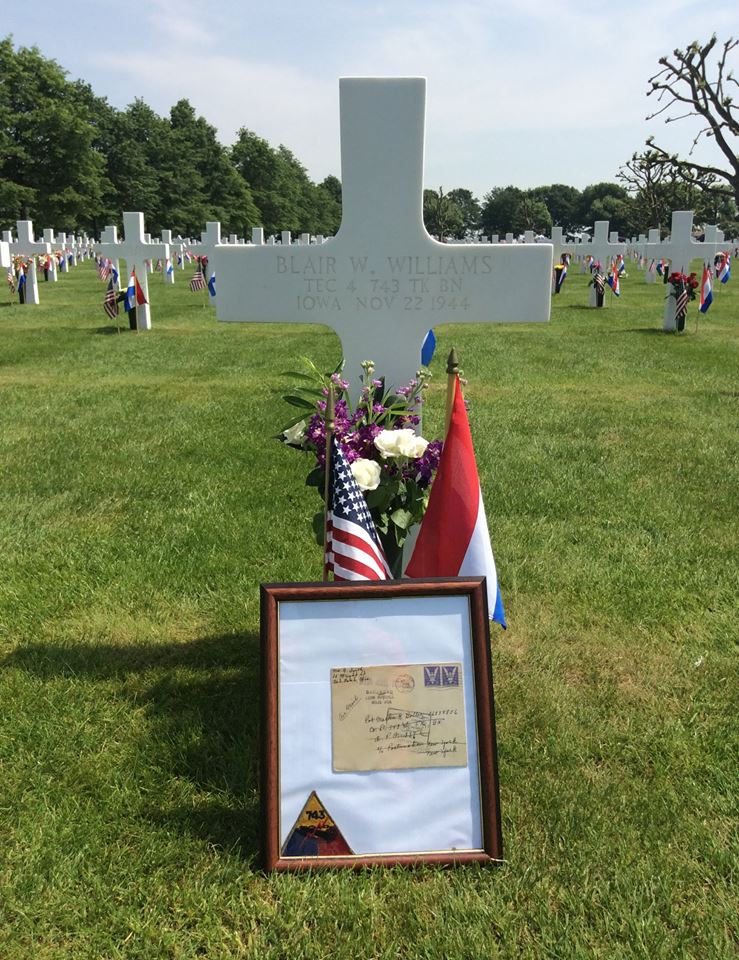
Blair Williams grave by Vincent Heggen, 2017. Netherlands American Cemetery.

Here in the United States, Memorial Day will be upon us soon.

In interviewing WW II veterans over the years, I found that most whom I was privileged to know shied away from honors and recognition on Memorial Day.  I was reminded of the sacrifices that the veterans made, again and again, but they all told me that the real heroes were the ones that did not come home. And that Memorial Day was the day reserved for THEM; contrary to popular American opinion, it’s not another Veterans Day. But this weekend we tip our hat to the veterans among us, and post that ‘salute to the troops’, thank them for their service, and we are free to start our summer vacation. Did we just give ourselves some kind of pass?

The holiday known originally as “Decoration Day” originated at the end of the Civil War when a general order was issued designating May 30, 1868, “for the purpose of strewing with flowers or otherwise decorating the graves of comrades who died in defense of their country during the late rebellion.” When Congress passed a law formally recognizing the last Monday in May as the day of national remembrance, we effectively got our three-day weekend and our de facto beginning of summer. But do we really want to know?  If we do, maybe we can take the time to seek out one of those who fell on those faraway fields, and think about what it means on a personal level, try to find out more about a life that was cut short. Here are a few to think about.

***

Riverside Cemetery, Oshkosh, Winnebago County, Wisconsin, USA. Credit: J M Schumann

This is Marvin Boller. His remains did make it home. A Thanksgiving letter written  to him did not. The backstory:

In writing my second book, I revisited a horrific incident that occurred in the earliest days of American penetration onto enemy soil in Germany.  Resistance was stiff; on a cold and rainy day before Thanksgiving, 1944, 3 tanks of the 743rd Tank Battalion’s ‘D’ Company were wiped out in a muddy apple orchard a few miles across the river.

In 2012, I was alerted to the existence of this WWII era letter in a memorial museum in Belgium. The envelope was postmarked Nov. 27, 1944, and addressed from the USA to PFC Marvin K. Boller, D Co., 743rd Tank Battalion. It was also stamped ‘DECEASED’.

Vince Heggen, who tends graves of the men who were killed with Martin, posted this for Memorial Day:

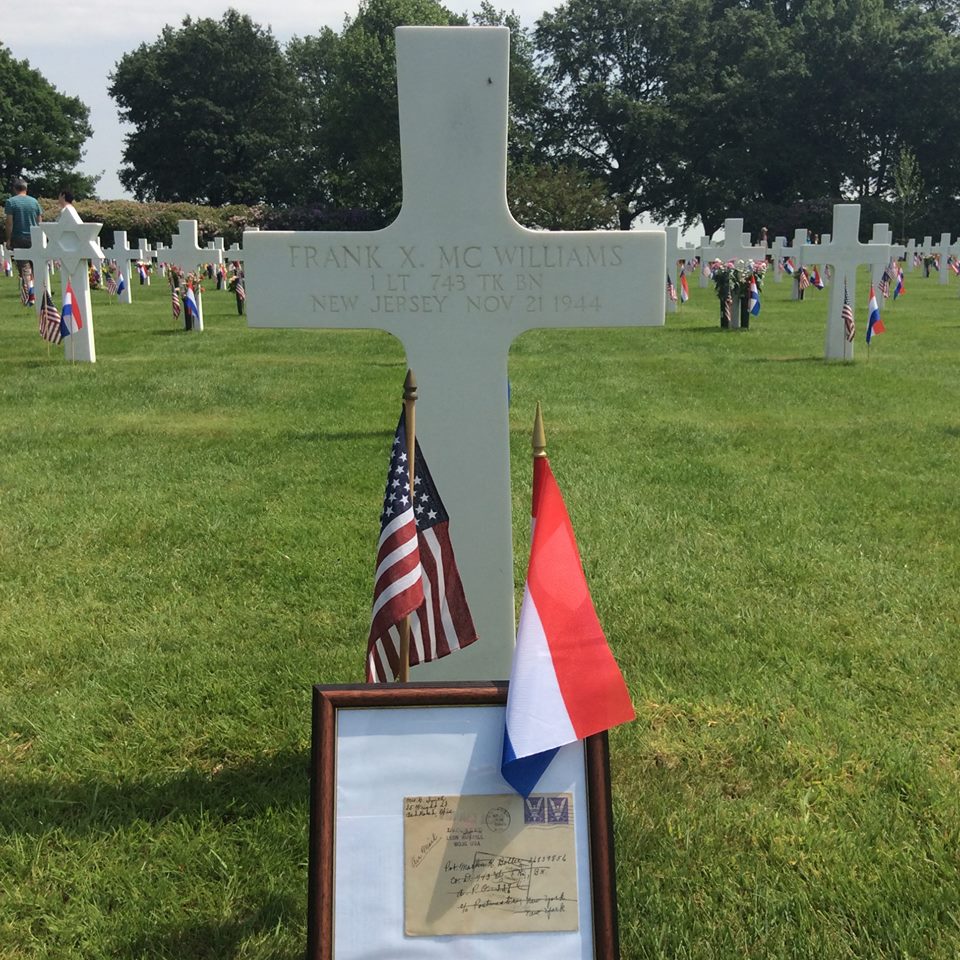
 Co D 743rd Tank Bn was moving from Langendorf to Erberich in November, 1944. It kept raining the whole day before they arrived in the orchards near Erberich. It was 8h20 when a German tank opened fire and knocked out 3 light tanks… All the crews were killed and a few of them are buried at the cemetery of Margraten. The letter, in front of the graves , was written by Marvin Boller’s wife. Marvin was killed just the day before Thanksgiving and the letter was marked ‘return to sender’.  The letter made the link between the crew members of Marvin’s tank  buried here, and Marvin who was buried [elsewhere].

Frank McWilliams grave by Vincent Heggen, 2017. Netherlands American Cemetery.


{You can read a Washington Post article:

Americans gave their lives to defeat the Nazis. The Dutch have never forgotten.}


I wrote to Carrol Walsh, a liberator of the train near Magdeburg and a fellow member of Company D, and asked if he knew Boller; I also sent him this image of the envelope.

He wrote back:

‘Hi Matt, I was stunned when I read your message. I remember Boller very well and remember when he got killed.  I believe it was just before Thanksgiving 1944 when a big German tank wiped out three tanks of the first platoon of Co. D of the 743rd. Every member of every crew of every one of the tanks was killed.  I seem to remember packages arriving for some of these guys after they had been killed.  I used to tease Boller, who was an older man, because he wanted to vote for Tom Dewey and I was big for my pal, FDR.  Boy what a memory you stirred up.  I knew all the guys that got killed in that engagement.’

Walsh and others would survive and go on to liberate Holocaust survivors on April 13th, 1945. And the letter has never been opened.

I did not know you, I don’t know if anyone is alive who knew you, but you are not forgotten.


MARVIN K. BOLLER

PFC, 743 TANK BN WORLD WAR II

Birth: Oct. 9, 1908
Death: Nov. 22, 1944

More can also be seen here.

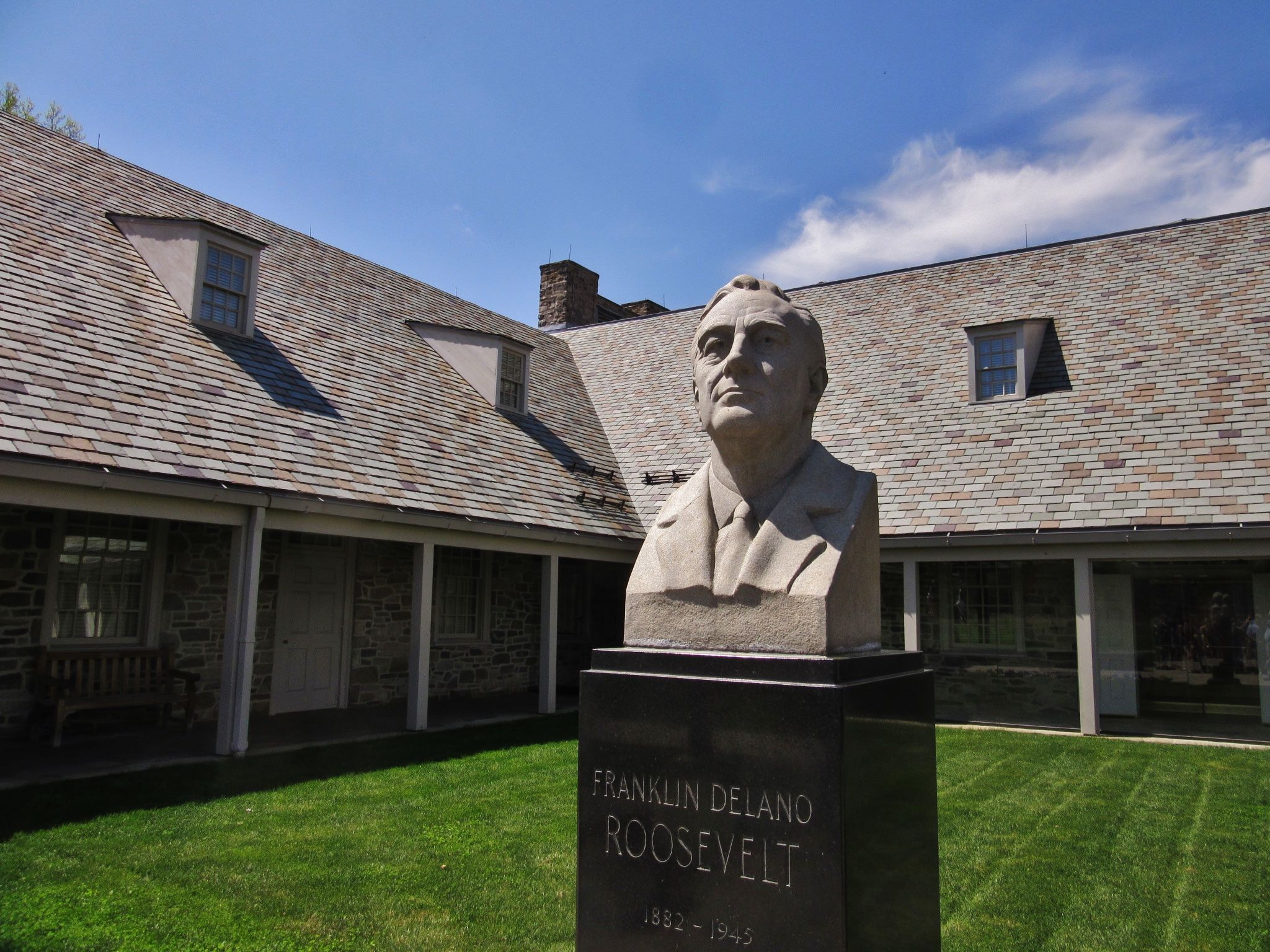
Two of our high school classes went to the FDR Presidential Library and Museum in Hyde Park, New York on Friday. We blew a bus tire on the way down, but managed to get a replacement bus to make it all the way there, about two and a half hours away. Because our visit was very abbreviated, I’ll touch on the exhibit that moved us the most, where we spent most of our time.


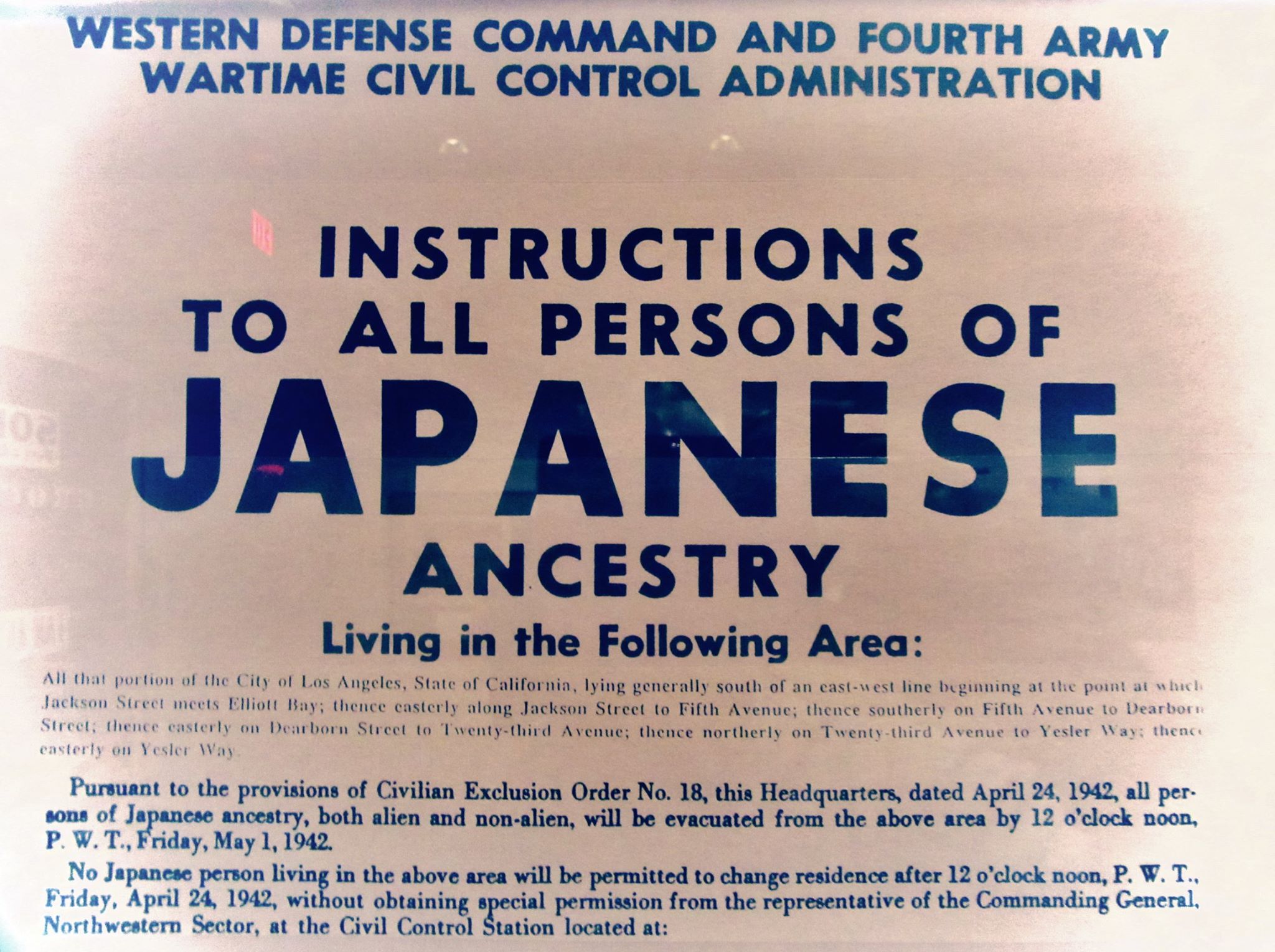
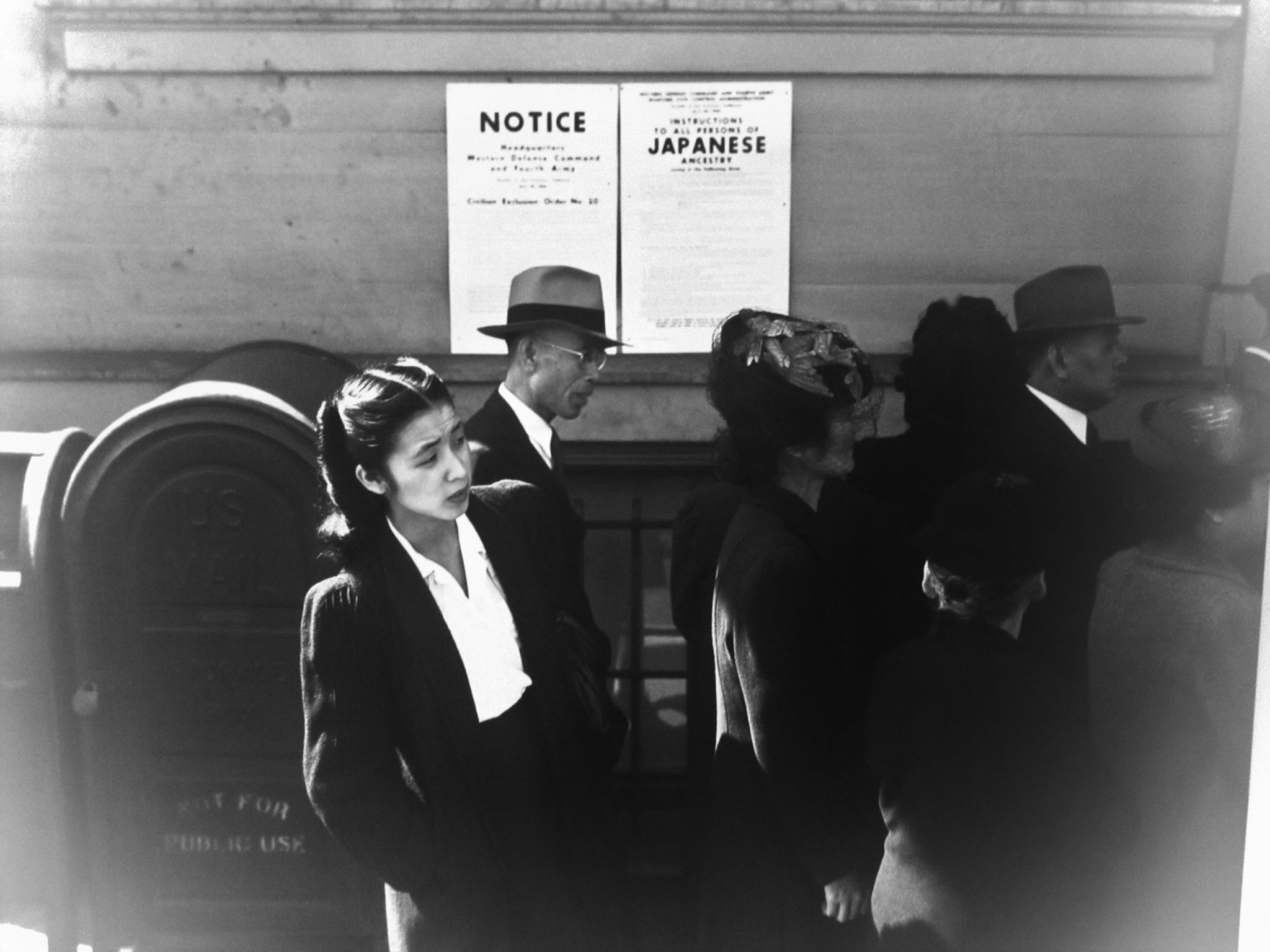
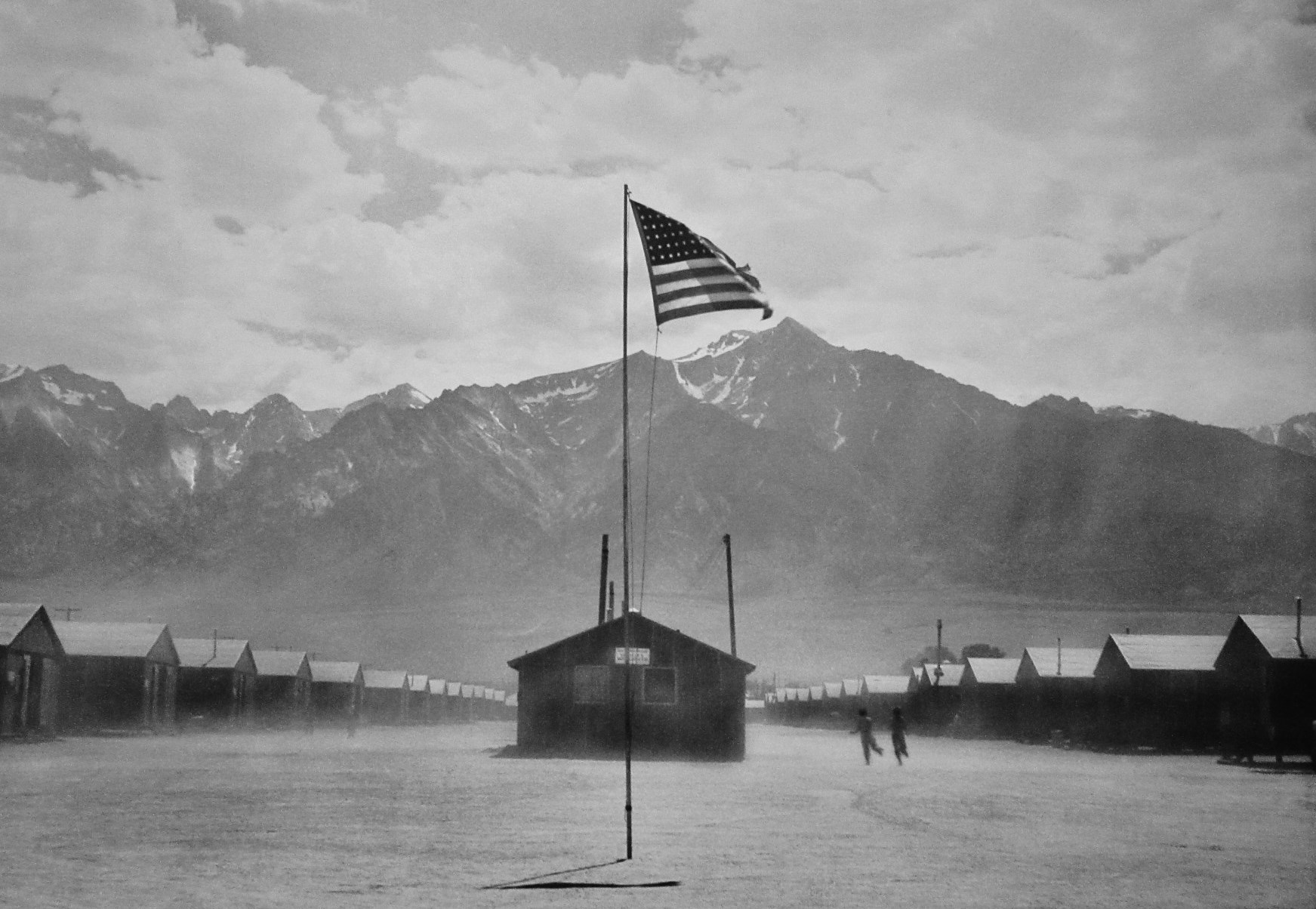
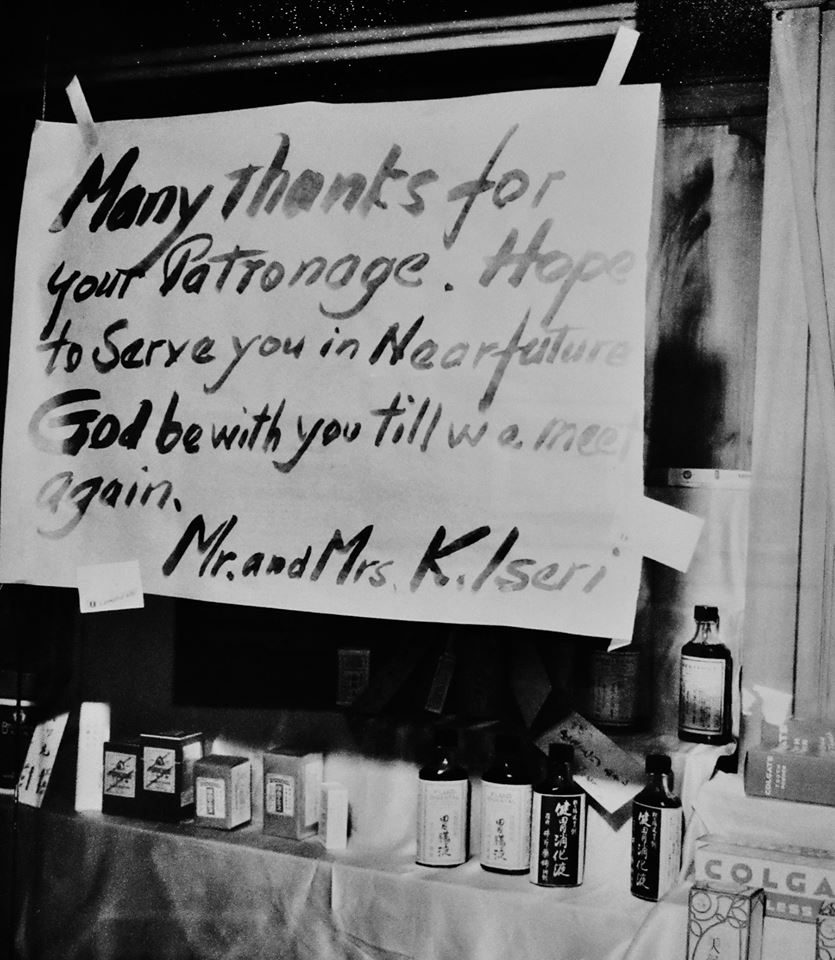
It was fitting that we arrived during this last week of April, though it was not planned this way. You see, the apple blossoms were blooming, just as they probably were exactly 75 years ago, when notices like these sprang up all over California. Executive Order 9066 had been signed by FDR only as few months before, and now, it was taking effect.

April 25th, 1942-75 yrs this past week.
Anxious residents wait outside a ‘civil control station’ in San Francisco where they will be given their instructions for evacuation day. Dorothea Lange

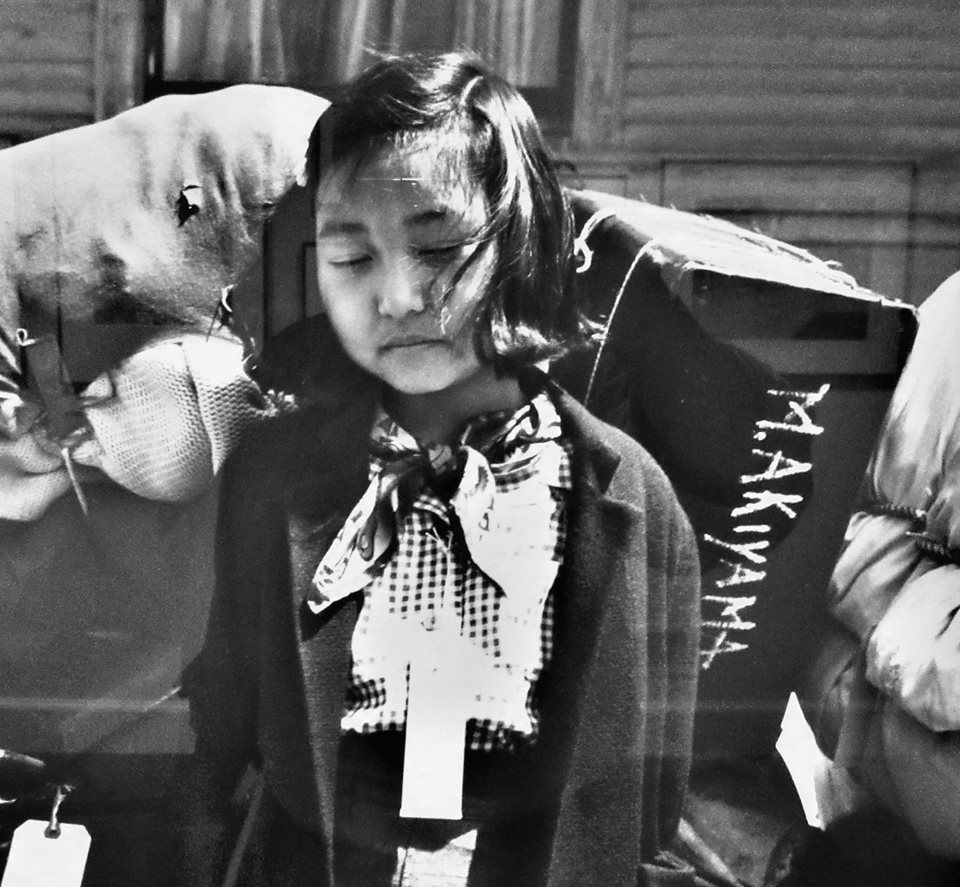
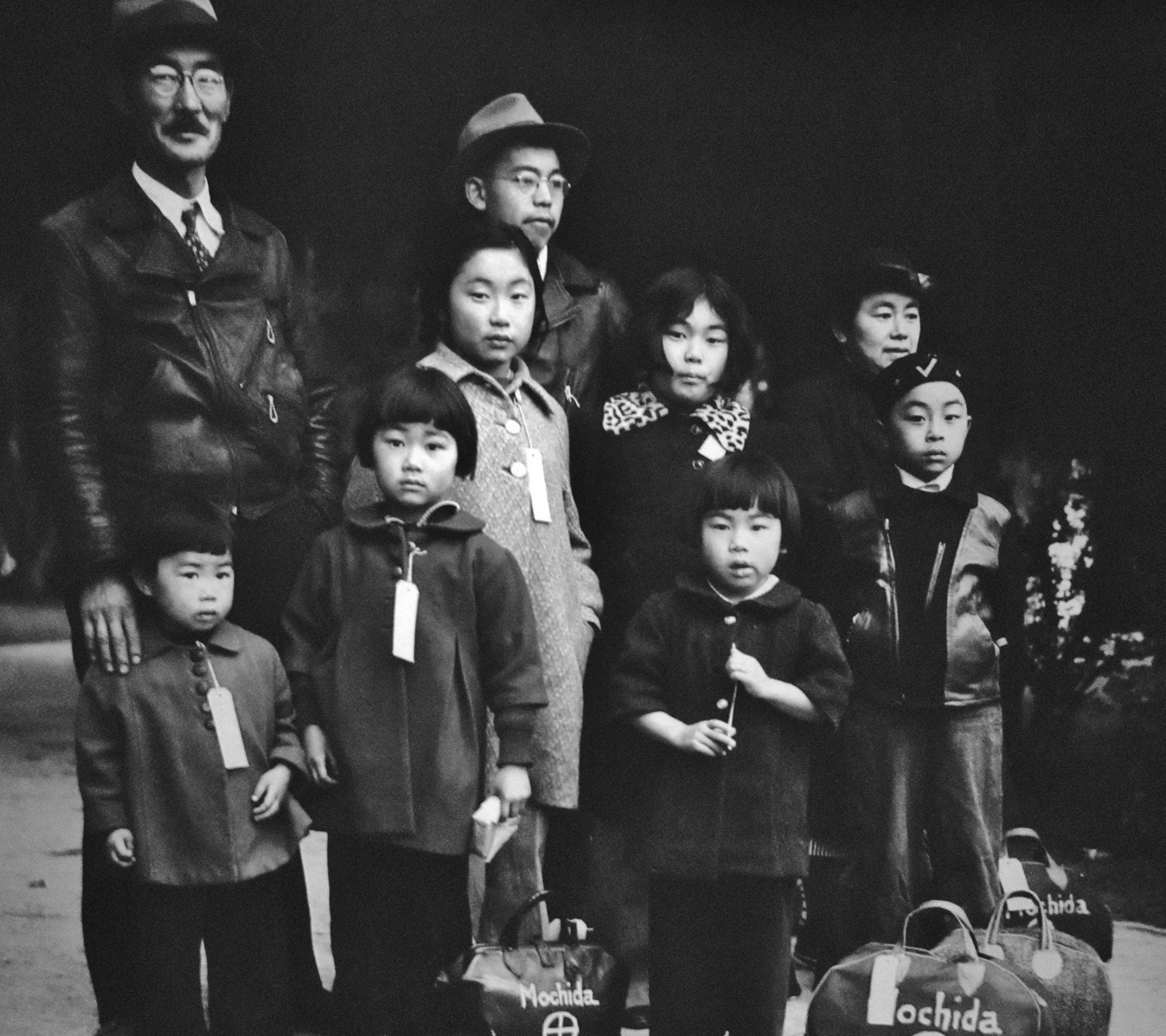
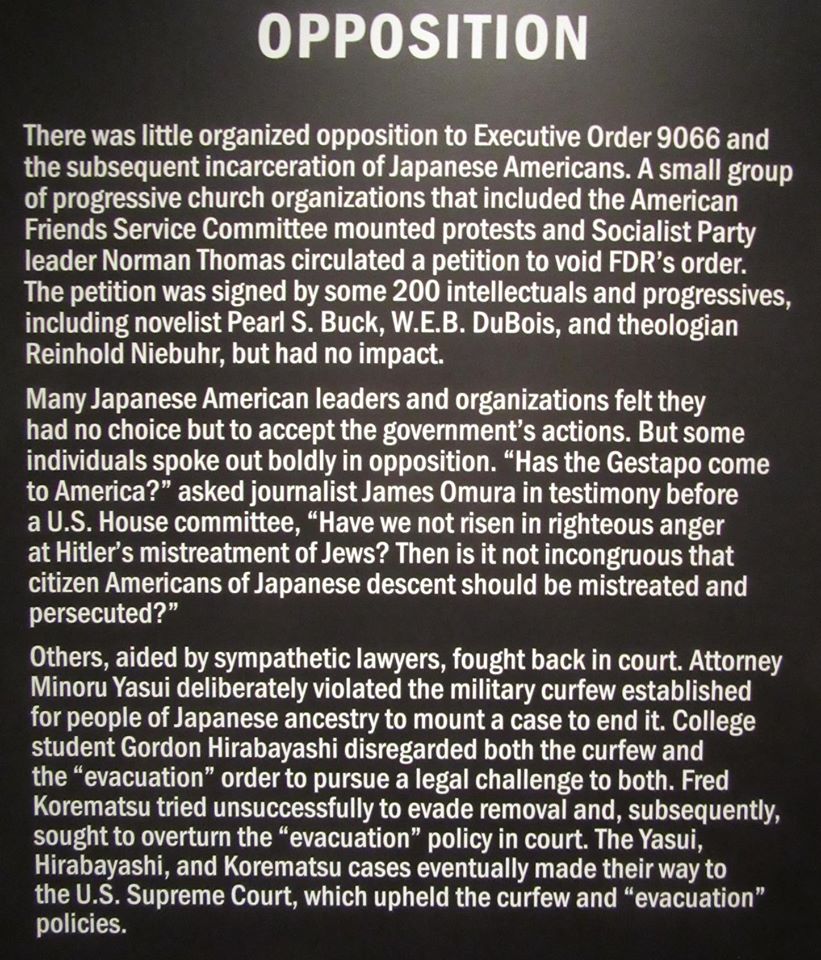
From the Museum: “On February 19, 2017 — the 75th anniversary of the signing of Executive Order 9066 — the Franklin D. Roosevelt Presidential Library and Museum opened a new photographic exhibition entitled, IMAGES OF INTERNMENT: THE INCARCERATION OF JAPANESE AMERICANS DURING WORLD WAR II, with over 200 photographs including the work of Dorothea Lange and Ansel Adams. Signed by President Franklin D. Roosevelt, Executive Order 9066 led to the incarceration of 120,000 people of Japanese descent — including approximately 80,000 American citizens — during World War II.”

“In the tense weeks after Japan’s December 7, 1941 attack on Pearl Harbor, many Americans — particularly those on the Pacific Coast — feared enemy attack and saw danger in every corner. Rumors and sensational media reports heightened the climate of fear. Under pressure from military and political leaders, President Roosevelt issued Executive Order 9066 on February 19, 1942. It is widely viewed today as a serious violation of civil liberties.”

I’ll leave you with more photos of photos I took on our visit.

Kimiko Kitagaki waits for an ‘evacuation’ bus that is due to leave in 30 minutes. Dorothea Lange, May 6, 1942


Kimito’s dad, former owner of a dyeing and cleaning business.

Members of the Mochida Family Awaiting Evacuation

Arrival at the Santa Anita Assembly Center from San Pedro.

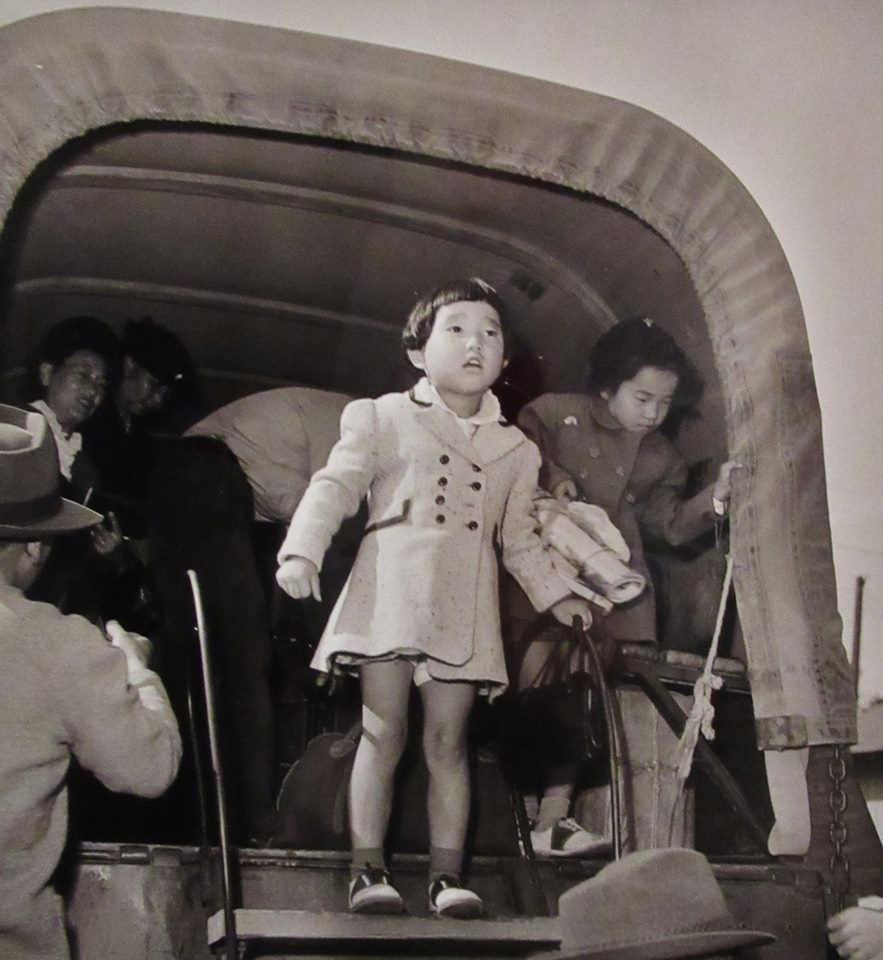
1945. A girl exits a truck that transported her family from the Granada, Colorado camp to a railroad depot, where they will board a train for California. Hikaru Iwasaki .Oct. 6, 1945


We will debrief and unpack our trip down to Hyde Park on Monday-there were many more things to see, but this is where we spent our 2 hours.


And I’d say the kids learned that the past is still relevant, with no prompting needed. But how little we adults really seem to learn from the past.

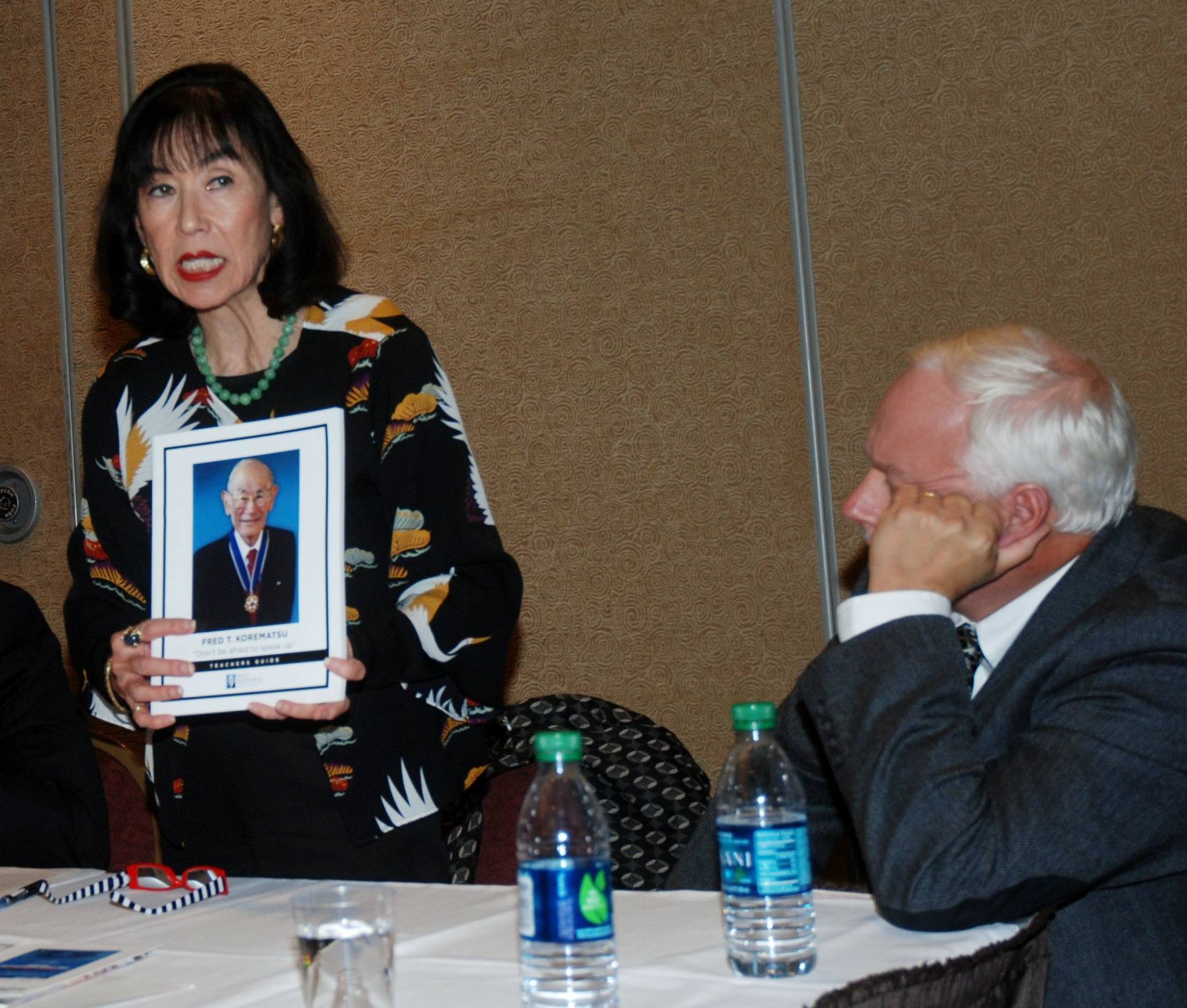
The author with Karen Korematsu, daughter of Fred, now head of the Korematsu Institute, at a plenary presentation on Human Rights for the Law, Youth and Citizenship Program of the New York State Bar Association, Oct. 2015. (see above)

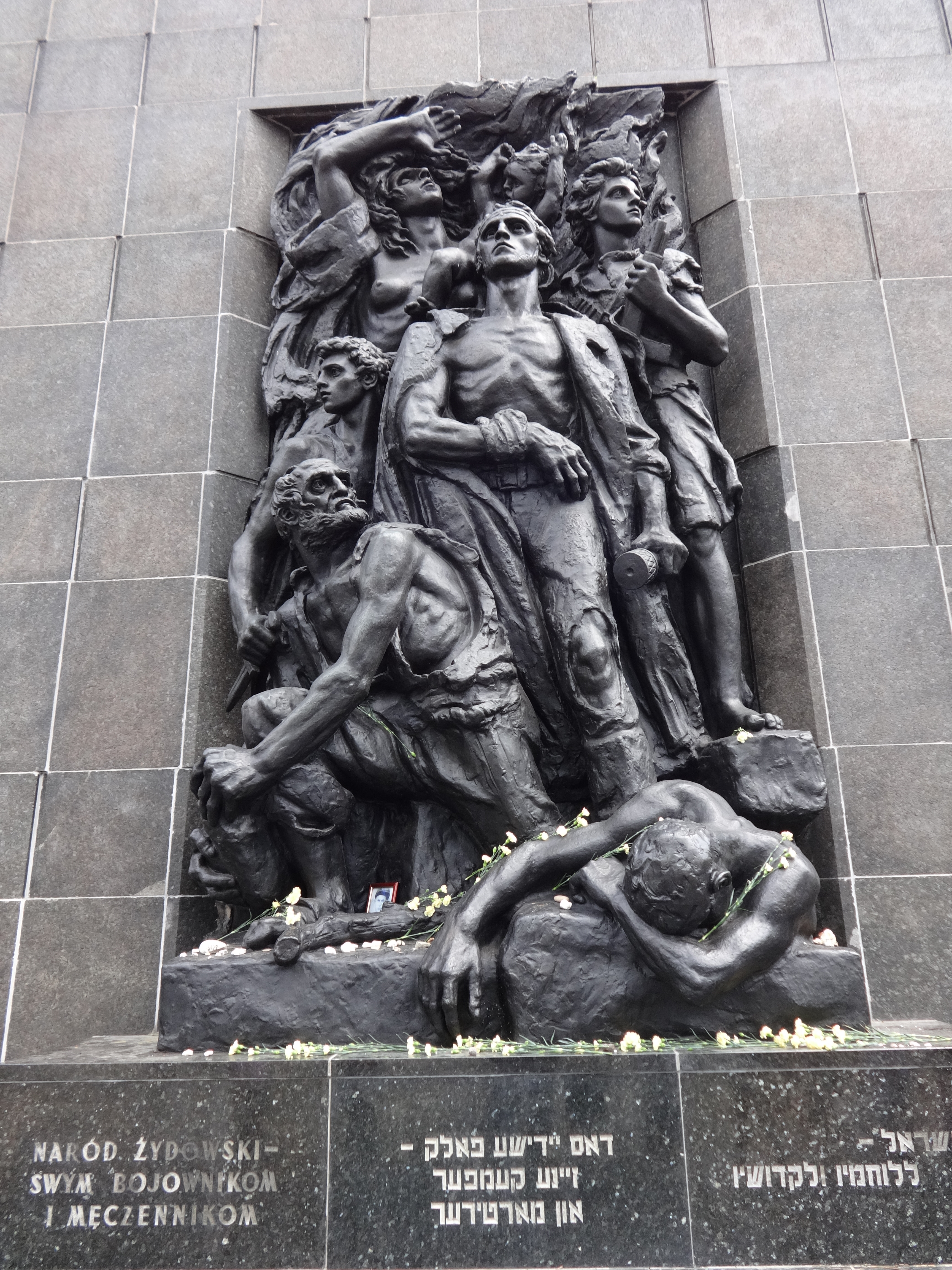
Memorial to Warsaw Uprising

You have heard a lot from me this week because April is a special month for Holocaust commemoration and remembrance. Besides marking the 1945 anniversary of the liberation of many of the camps, it also marks the anniversary of the largest single uprising against German oppression of the Jews, which occurred in Warsaw in 1943. It is important to note, however that resistance to evil manifested in many different forms, not just physical ‘pushback’, as I was reminded on my Holocaust and Jewish Resistance Teachers Program tour in 2013. As the anniversary of the Warsaw Ghetto Uprising is now upon us, I share this post, an excerpt from my recent book, also recounting the narrative of a fourteen year old Jewish resistance fighter who was told she had to leave the ghetto by her leaders, so that she might live to remember them and tell this story.

*****

As 1943 dawned, the SS returned to the ghetto for another major deportation. They encountered the first armed resistance from the ghetto fighters and beat a hasty retreat, leaving behind wounded and weapons, and calling off the operation. For the next three months, the ghetto fighters organized and prepared for the final struggle. On the eve of Passover, April 19th, the Germans returned again, this time with the aim of liquidating the ghetto once and for all, in time for Hitler’s birthday on the 20th. By then, there were between 300-350 active fighters; the young were now the real leaders of the ghetto, having decided not between life and death, but rather, how to die.* Aliza recorded her observations of the preparations for the final battle they all knew was coming.

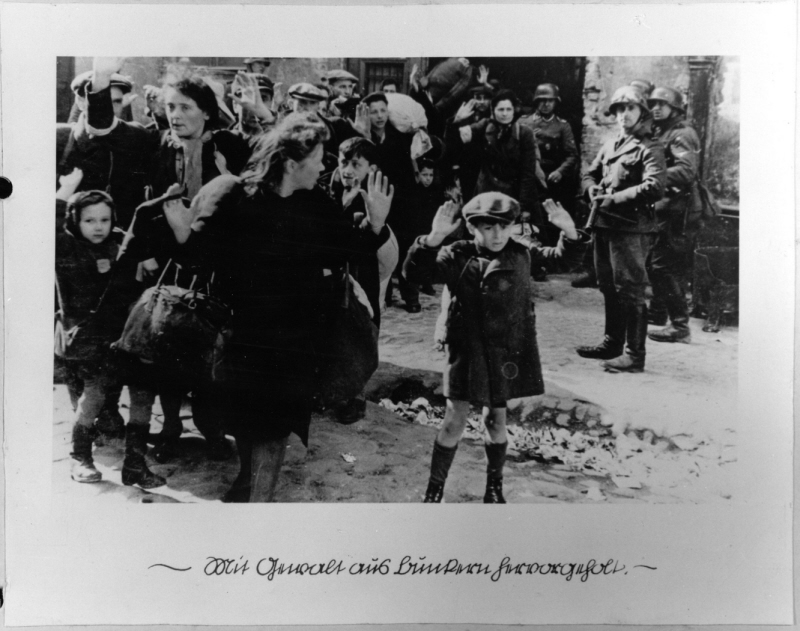
Jews captured by SS and SD troops during the suppression of the Warsaw ghetto uprising are forced to leave their shelter and march to the Umschlagplatz for deportation.  from the notorious Stroop Report. USHMM.

Aliza Melamed Vitis–Shomron

Spring, 1943

As spring approached, the atmosphere in the reduced ghetto changed. We waited for the final ‘aktion’, for the final extermination of the Jews of Warsaw’. People began to build bunkers. Experts turned up, engineers who built bunkers with electric light, in wells and toilets. Most of the bunkers were dug in cellars. There were various ways to enter the bunkers from the ground floor: by raising a cover in the kitchen stove or through an opening in the large stove attached to the wall, or in many other strange ways, according to the fertile imagination of the builders. The ghetto was preparing for a struggle.

March passed, and April came. Talk about the approaching final liquidation of the ghetto intensified. The ghetto was fully aware of it and prepared. It was the calm before the storm, suffused with energy and tension. Frequent shots near the ghetto and sudden evening searches by the SS command cars heralded what was to come. Sending off the people working for Töbens and Schultz factory workshops to Poniatow and Travniki* caused apprehension, even though they had gone of their own free will. If they are sending out the workers, what will happen to all the rest? The companies of the SS General Globocnik *, in charge of extermination, again arrived in Warsaw.

The only possibility left is to escape to the Aryan side, to dress up as a Pole and look for acquaintances or people willing to hide Jews in exchange for money. For a few thousand zloty, one could get a Polish birth certificate and a ration card. People handed over their children to Christian clerics, to monasteries and to peasants in the villages. Sacks were thrown over the walls daily and openly, at least on our side. People paid bribes to the foremen of the work crews to be able to join them going out to work on the Aryan side. Some of them did not look Jewish and were lucky enough to find ‘good’ Poles. Women dyed and oxidized their hair, and created curls by rolling their hair in pieces of paper, to look like blonde gentile girls. But they could not change the color of their eyes, or their dejected and pallid look. A Jew could also be picked out by his hesitant walk, his bent back, and his eyes constantly darting around him. We were so preoccupied by our aspiration to look like ‘goyim’ that we examined ourselves and others: Does that man look like a Jew? Will they recognize him in the street?

Of course, a new profession cropped up among the simple Polish people, with many demanding a bribe, or being paid to be an informer, a blackmailer. We were deeply disappointed; we thought that as witnesses of our tragedy, our compatriots, sharing the same language and culture, they would hold out a hand to save us. But it did not happen. A few of them hid Jews for large sums of money; these were mostly people connected to socialist activities and the left wing parties. Many devout Christians and religious scholars did so without taking money, out of true nobility of spirit. Many others, from among the simple folk, made a living by informing on Jews to the Gestapo, and collaborated willingly out of pure antisemitism. They walked around in the streets close to the ghetto, spied by the gates and the places where Jews worked on the Aryan side and looked for victims. Thousands made a living in this way.

*

The state of our family grew worse. We began to suffer from hunger. There were no clothes left to sell, we lived on the food we had received in the workshop, distributed by the Germans.

Aliza’s family decided to split up to increase chances of survival. Her more ‘Aryan-looking’ mother and younger sister, with a great deal of bribery, subterfuge, and nerves of steel, went into hiding on the Aryan side. Her father decided to take the chance and volunteer to go to the work camp near Lublin. Aliza herself wanted to stay and fight in the ghetto, but now only fourteen she was deemed too young and directed by the leadership of the resistance to make her way to the Aryan side as well, to live to tell the story. 

Aliza’s cousin stayed in the ghetto to fight the Germans. For three days, the resistance fought on, against impossible odds. It was weeks before the ghetto was overcome; there were few survivors.

Lazar

In the morning, we heard dull sounds of firing and explosions. In another house, in Swentojerska Street 34, the Z.O.B. had their positions. People from the organization told us about a mine they had detonated when the Germans decided to penetrate into our area; about battles leaving ten Germans dead; about a ‘peace delegation’ of SS officers who came with a white flag asking for an armistice to pick up their wounded, and how they fired at them at once. The fighters were elated, exhausted—but looked happy.

The battle in most of the houses in that area lasted two days. They ran from house to house. The leader of the group was the commander Marek Edelman. Dozens of fighters took part in the battle; some of them were killed. They went out at night to try to make contact with their friends. They told us that the battle inside the ghetto was still going on, that the fighters had delayed the entry of the tanks and set fire to them with homemade Molotov bottles. They were stationed at windows and changed their positions by moving across the rooftops. We in the shelters decided to open fire only when they discovered us. We made up our minds to defend our families to the end, not let them take us to Treblinka.

On the third day, fighting also broke out in the area of the workshops of Töbens and Schultz. At the last moment many people preferred to move to the Poniatow camp. In the meantime, the Germans began to set fire to the houses. On the second day of the uprising, the fighters told us about fires in the ghetto. We sat in the crowded shelter, praying that they wouldn’t get to us. We had expected the worst, but not fires. The people in the shelter said goodbye to each other. We were in despair, expecting certain death. We could already smell the smoke. Someone came from the neighboring house; people were fleeing from adjacent houses. There were no Germans around. After a night full of dread, just before dawn, we did hear German voices in the courtyard. They were calling to the Jews to come out at once, or else they’d burn us alive.

The artillery was constantly firing incendiary bombs. Whole blocks of houses were on fire. The shelter was not damaged, but the water stopped running. The electricity went out. The walls of the shelter became unbearably hot, smoke penetrated the cellar. We sat there, coughing, wrapped up in wet sheets. People wept, dragged themselves to the courtyard with the last vestige of strength. We had no choice, we would defend ourselves in the yard. The men cleared the opening and gave the order—‘wrap yourselves up in sheets soaked in the remnants of water, lie in the middle of the courtyard, in the garden.’

The yard is full of people, smoke covers everything, the top floors are in flames, the fire is running wild without any interference, parts of walls are collapsing and falling into the yard. People lying on the ground are groaning with pain…

Suddenly, we hear German voices in the street. God! We thought it was all over, that they’ve left us here. What shall we do? Several Germans burst in through the gate…

Lazar was captured and beaten, but managed to escape deportation, and made it to his cousin’s hiding place on the Aryan side.


I saw a different Lazar before me. He used to be arrogant, a show-off. The person sitting here now was thin, withdrawn; he stammered slightly when he spoke. We’ll have to live together in that small room in the cellar. Who knows how long? Until this damned war is over?

The Beginning of May, 1943

They say that the ghetto no longer exists. The wreckage of the houses is still standing; the piles of cinders still crackle, and at night shadowy figures, seeking food and shelter, still move about in there. But the ghetto no longer exists; 500,000 people have gone up in smoke. And those still alive bleed inwardly, their deep wounds will never heal. And maybe there will be no one left when freedom comes? Why are human beings so cruel and evil? They speak about the future, about truth, about Man as proof of God’s great wisdom, and it’s all lies, lies!

I know there are also good people, but they are persecuted; society rejects them as weaklings. Why am I prevented from seeing the wonders of nature and the world, from breathing fresh air?

The full narrative is available here.

******************************************

In 2013 I visited Warsaw, rebuilt; almost nothing remains of the ghetto itself- with slight exceptions.

July 17, 2013

We tour Jewish Warsaw and finally the remnants of the ghetto wall, and also the Umschlagplatz. It is here that forced gatherings for the mass deportations to Treblinka took place. I am also reminded of the scene from the film “The Pianist”.

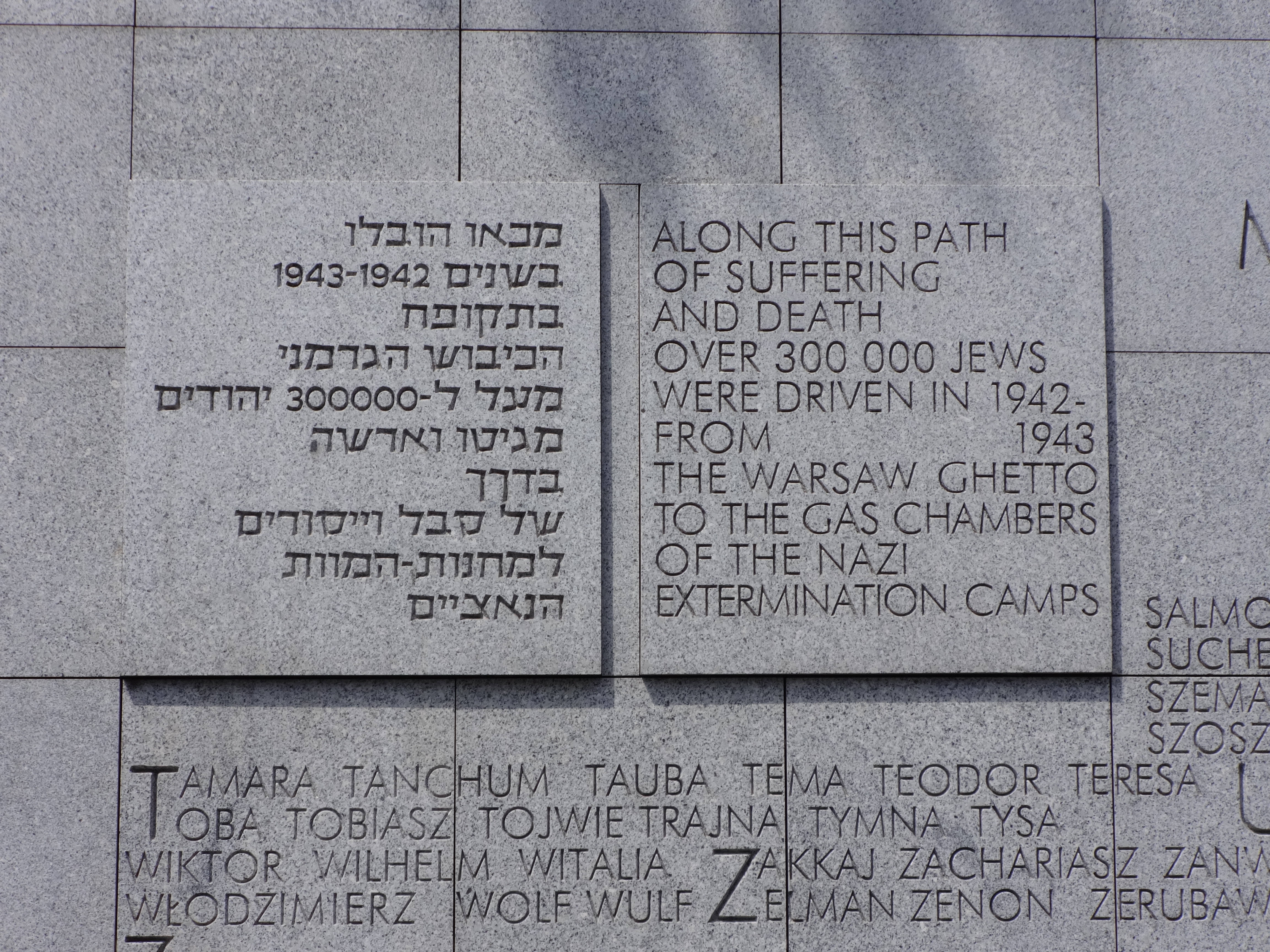
The Umschlagplatz. As many as 10,000 Jews were deported on some days to Treblinka. Upwards of 300,000 were sent from here to their deaths.

The Umschlagplatz. Our group. 2013.

The Umschlagplatz. Our group. 2013.

1227

The Umschlagplatz. As many as 10,000 Jews were deported on some days to Treblinka. Upwards of 300,000 were sent from here to their deaths.

The Umschlagplatz. As many as 10,000 Jews were deported on some days to Treblinka. Upwards of 300,000 were sent from here to their deaths.

We walk the edge of the wall, memorialized in bronze in the sidewalk.

1240

And we come to a section that still stands.

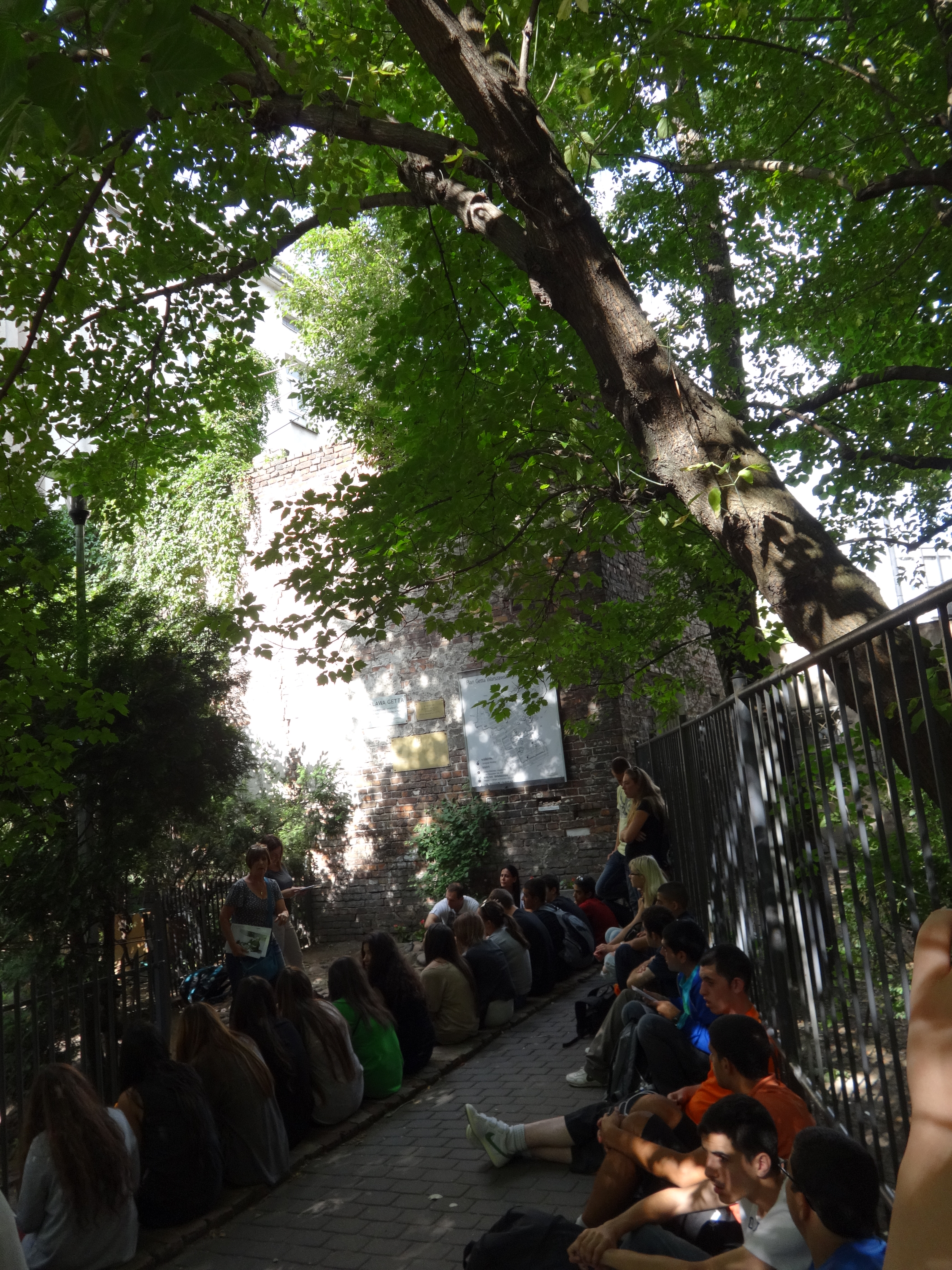
Warsaw Ghetto wall.

Warsaw Ghetto wall.

Warsaw Ghetto wall. Some Israeli teens are hear, listening to their teacher.

Warsaw Ghetto wall. Some Israeli teens are here, listening to their teacher.

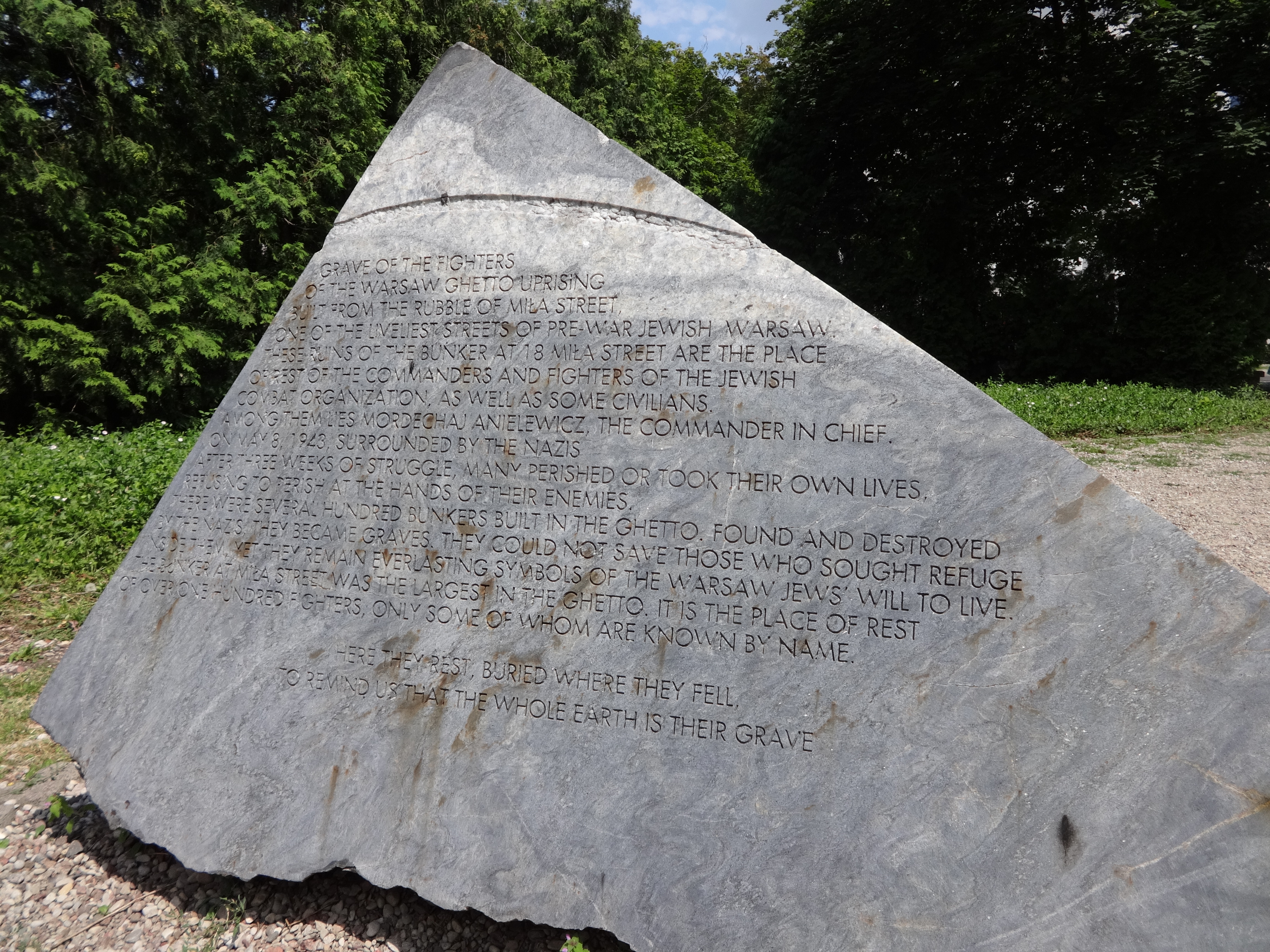
The Warsaw Ghetto uprising was the first open fight in an occupied city against the Germans. And it was conducted by Jewish youth, who held off the Germans for half a month in the spring of 1943. Utterly inspiring and amazing. We make our way to Mila 18, the bunker command post where Mordechai Anielewicz and many of the resistance fighters breathed their last. It is another solemn moment.

18 Mila Street.

18 Mila Street.

Monument at Mila 18.

Monument at Mila 18.

We know why we are here. We are not only witnesses, but we were chosen to become, for many, the point of entry on the immense and sometimes unfathomable subject of the Holocaust, and the many forms of resistance that were taken during it.  And so rightly, our trip is concluding here. The processing will only come over time.

***

* By then, there were between 300-350 fighters- Bauer, Yehuda. ‘Current Issues in Holocaust Education and Research: The Unprecedentedness of the Holocaust in an Age of Genocide.’ Lecture notes, International School for Holocaust Studies at Yad Vashem, Jerusalem, Israel. July 21, 2016.

* Poniatow and Travniki– forced–labor camps for Jews in Lublin District near the concentration camp Majdanek.

* SS General Globocnik –SS and police leader who directed Operation Reinhard between autumn 1941 and summer 1943.

72 years ago, on Friday the 13th of April, the 743rd Tank Battalion overran the train near Magdeburg, Germany. Shortly  thereafter, other attached units of the 30th Infantry Division, notably the 105th Medical Detachment and the 823rd Tank Destroyer Battalion, also arrived at the liberation site and immediately set to work trying to handle this unexpected encounter. The account of T4 Wilson Rice as he reports on the disposition of the survivors and the soldiers in this combat zone is revealing. 

The following is an extract of more detailed information that is from the 30th Inf. Div. G-2 Report, 17 April 1945, about the concentration camp train:

CONCENTRATION CAMP TRAIN

On  13-14 April, 1945 troops of the 823rd Tank Destroyer Battalion, moving into billets in the town of Farsleben, discovered that the normal population of 500 in the town, had been augmented by approximately 2,500 persons crammed onto a prison train of 45 cars, most of them freight wagons, which had been standing in the station for two days.  Conditions on the train were frightful.  It was critically overcrowded, and filthy almost beyond description, particularly in view of the lack of sanitary facilities. Nineteen persons had already been stricken with typhus and six more were already dead of the disease.  No food had been received for three days, and those who still had the strength, were almost dangerously ravenous, some swarming into the local bakery to lick up the raw flour.

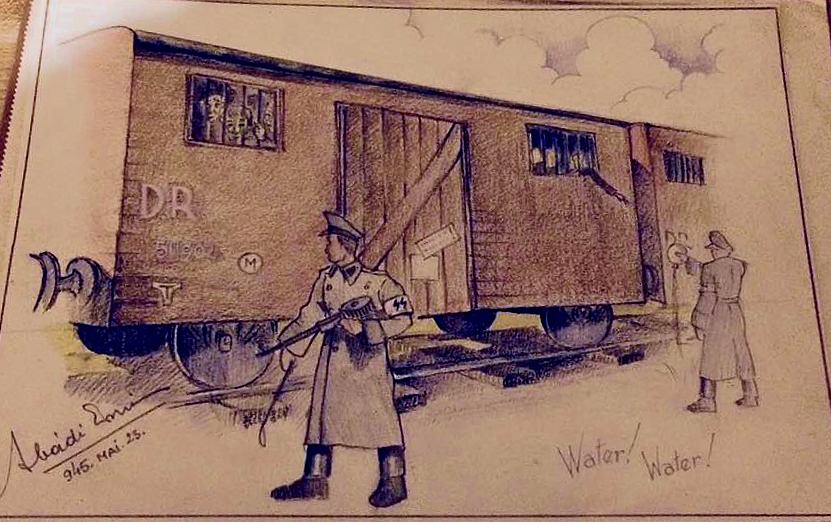
“WATER, WATER!” Ervin Abadi. Completed at Hillersleben DP camp, May, 1945. Soldier Monroe Williams collection.

The commanding officer of the 823rd T.D. Bn immediately ordered the Burgomeister to provide food for the train’s passengers by the slaughtering of cattle and sheep, and the all night operation of the town’s two bakeries, and to provide housing by the community.  These arrangements were confirmed by the Military Government, which later moved the group to barracks in Neuhaldensleben.

Interrogation of 20 of the passengers revealed that they were Jews and some other political prisoners who had been confined in the Bergen-Belsen Concentration Camp located near Celle, Province of Hannover.  This section of Bergen-Belsen was believed to be the only camp set up exclusively for Jews, and was termed as a stopover to Camp xxx. The prisoners were supposed to be used in exchange for German citizens through neutral countries.

On 7 April 1945, the entire exchange group of Jews was suddenly alerted and bundled into the train which wound up on the Farsleben siding.  The train left 8 April and was said to be bound for Theresienstadt, in the Sudetenland.  The train was halted at Farsleben because of the advances of our troops; before the guards and crew abandoned it, the prisoners were told to cross the Elbe River on foot.

[Hauptmann Schlegel, the train commander] estimated that 15,000 persons had died at the camp during his stay there, out of a constantly changing population of about 40,000, attributing the deaths to typhus and typhoid, both of which were frequent, rather than to deliberate starvation.  He said he knew of two as doctors and a “number” of civilian doctors at the camp.  On the train, he stated, there were three civilian doctors.  Five persons died while enroute.  He believed that the 33,000 prisoners outside the stop-over camp at Bergen-Belsen, were about equally political and criminal cases.

A kapo inflicts a beating at Bergen-Belsen. Ervin Abadi. Completed at Hillersleben DP camp, May, 1945. Soldier Monroe Williams collection.

A PW [prisoner of war] stated that the camp was run by two officers of the Totenkopf  Verbande, SS/Hauptsturmfuhrer (Capt.) Kramer and SS/Untersturmfuhrer (Lt.) Klipp.  His own attitude was one of hand-washing apathy.  He was not responsible for what went on, was just a pawn–and if he was bothered by some of the things that went on, no one knows about it.

This is one of the many stories of the Nazi’s organized cruelty of the German model of total warfare.  Two other suspects of the case which certainly will affect the task of Military Government, which will face many of the units now devoted to fighting, were developed at Farsleben.  The first in the report by many of the prisoners, that the inhabitants of the town were very friendly when the train first stopped there –because they expected the hourly arrival of the U.S. Troops.  Later, when our failure to arrive aroused some doubts, the populace reverted to hostility and contempt.  Our troops, when they did arrive, however, found the citizenry of Farsleben most eager to be of help to the prisoners.  The second observation was made by Military Government Officers, after the prisoners had been fed and deloused and after beds and clean bed-clothes had been set up for them in barns and other buildings. The set up looked beautiful, but only for a short time.  The personal standards of cleanliness of many members of the group were bad, and some even went so far as to defecate on the floor of their living quarters.  This rehabilitation for many of the victims of Hitler’s Europe, must mean far more than mere relocation and provision of adequate food and quarters, which itself is no great problem.  True rehabilitation must provide for even so fundamental a thing as a sense of physical decency, for a large number of those who have been treated have lived for years as animals.

Casualties to date:                              Division                      24,778

Civilian                                        974

Enemy                           2,100

Other Units                   3,628

31,480

Three months ago I got up early, fired up the computer, and typed out the letter that has been in the way back part of my mind for a while. At the end of this school year, I will have served thirty years in public education at my own alma mater, and over a year at St. Mary’s Academy, the Catholic school a town over.

rozie-77

Passport photo for class trip to Spain, Summer 1977. 30 of us, peaking on hormones, were there a whole MONTH. God bless our chaperones…Mr. and Mrs Borys and Miss Schiavetti….

But in reality, I started here a long, long time ago. I don’t really recall tons from high school, but I well remember getting off the bus, scared, as an incoming ninth grader, and asking a neighborhood kid how to find my locker. He mercifully steered me in the right direction, and somehow I navigated through the labyrinth of this mystifying and terrifying place called high school; with the help of exceptional teachers, and a small circle of friends, in a snap of the fingers I found myself as a young man at age 18 longing to leave this community.

I’ve written before about my stinging teenage words to my father, when he asked about my plans for the future…  ‘I’m leaving this town, I don’t know what I want to do, but I do know I am NOT going to become a teacher, like you’—a passing shot before I headed off to college a few hundred miles away. Later, at 26, after several independent years on my own, I was paying him a token in rent, and driving his old car around town. And I was a teacher, a high school teacher like him, and wait—oh, yes—teaching the exact same subject that he had been teaching for thirty years, world history. Even the young can’t outrun the karmic wheel, it seems.

Feb 3, 1992 Glens Falls Post Star story. Captain and the Kid.

Feb 2, 1992 Glens Falls Post Star story. Captain and the Kid.

So it was with this realization, and a small amount of sadness, that I began my day today teaching, finally knowing that my days in this room—this very school that produced me so many decades ago—this place where I have walked the halls more than any other place in my adult life—are numbered. I also well remember my father’s bittersweet retirement letter—remarking on his thirty years, how he loved it, but also how he wished no fanfare, but to leave as quietly as he had come in, thirty years before. At the time (1993), it was all a blur for me, banging out lesson plans, calling parents of troublesome kids, hammering my way forward into some toenail of a crack into their lives… how am I going to reach these kids? Some of my colleagues figured me for a ‘short-timer’, but as it turns out, I WAS A LIFER.

A lifer. How did that happen?  But, I did it. When times got tough, and I mean really, really brutal in our profession, I kept going. Many teachers left—but I and thousands and thousands of others did not.

A few years back I wrote, respectfully, about where I thought our profession was at, and what our anointed ones were doing in the name of ‘educational reform’. My busiest single day on this blog (14K reads on a January Saturday) was not over history or Holocaust education, but over the sword of Damocles hanging over our heads as a teaching profession. You get to the point where you have to just walk away from the political posturing, heading down the hall with your back to the noise and your feet carrying you back into the classroom, where nothing else matters. You are in your realm, your element. Of course, Dad knew this. The kids KNOW that you know what you are talking about. And some of them maybe see that this student—teacher connection is what real life is all about. You build a relationship, maybe even not one that can be quantified or measured by the bean counters—and sometimes you even go on to do great things together.

My father had a glimpse of that with his own teaching life, and a mirror to what the future had in store for me. “A teacher finds, eventually, their own niche, their own method,” he said. “Teaching is not a matter of how ‘smart’ you are, it’s a matter of personality. If you’re strong and fair, it doesn’t make any difference what you teach.”

*

 My dad passed 17 years ago. I think of him a lot, now that my turn at ‘retirement’ has come around, I suppose. Sure, there is the excitement and happiness of starting onto something new; my wife retired from her 33 years in the classroom less than a year ago (I told the NYS Commissioner of Education and the NYS Board of Regents, in person, how I felt about her in this video). It feels like it is finally okay to clean house and throw out decades’ worth of academic accumulation, though I hesitate to call it ‘clutter’. With every folder that I gently tip over the edge of the wastebasket, or maybe no longer feel the need to replace into the filing cabinet, there is also a part of me that feels like it is gradually folding into the flotsam and jetsam of the river of time. Each day passes quicker now as the path takes a more defining bend in its long journey, where everything is finally blending and equalizing into the sea of tranquility and good intent. I am close enough to finally see this; I try to absorb it all, live each moment; I try to just ‘be’, with the kids.

*

I told my freshmen and sophomore classes today (I teach all grade levels) that in fact they are my last respective ninth and tenth grade classes. I have been avoiding this, though I figured that the news was out, and they probably already knew. The young freshmen appeared not to know—there was an element of shock that took me aback for a moment—well, in truth, for the rest of the lesson. Though I am at my best teaching under emotionally searing moments, I think we were both rattled momentarily-they at realizing I won’t be here for them anymore in a few weeks, like old times; me at their reaction to that reality. While I look forward to the future, comes a time when you are confronted with the impact you are making, and the realization that after 30 plus years, you won’t be making it on that daily basis anymore.

My old man confined himself to the back porch the summer after he retired—back pain, he said. [He had never really had it before, except for the time he fell out of the tree while picking apples with us kids in our childhood. We were concerned, then snickered, as he writhed a bit on the ground. He uttered a few choice words in our direction, had his ribs and back wrapped for a couple weeks, and seemed fine after that.] He did not move off that porch all summer. Back pain, my ass. I’ve got your number now, old man.

And now with one click of the ‘post’ button, thirty plus years of service to ‘Hometown, USA’—to my country—and to humanity—begin the descent over the falls of history themselves. Prosit, my father would say. A toast—so be it, and may it benefit you.

*

proud-to-be-a-fallser-and-an-american-today

Nate St. John photo, 12-7-2016. Prosit.


Here is the Post Star article…. and here; thanks Bill Toscano…