Feeds:
Posts
Comments

Archive for the ‘Uncategorized’ Category

     A dirt mound topped by an urn. A simple memorial built with their own hands.
     
This is what the farmers of Hartford, New York could afford to memorialize their sons who did not come home from the Civil War.
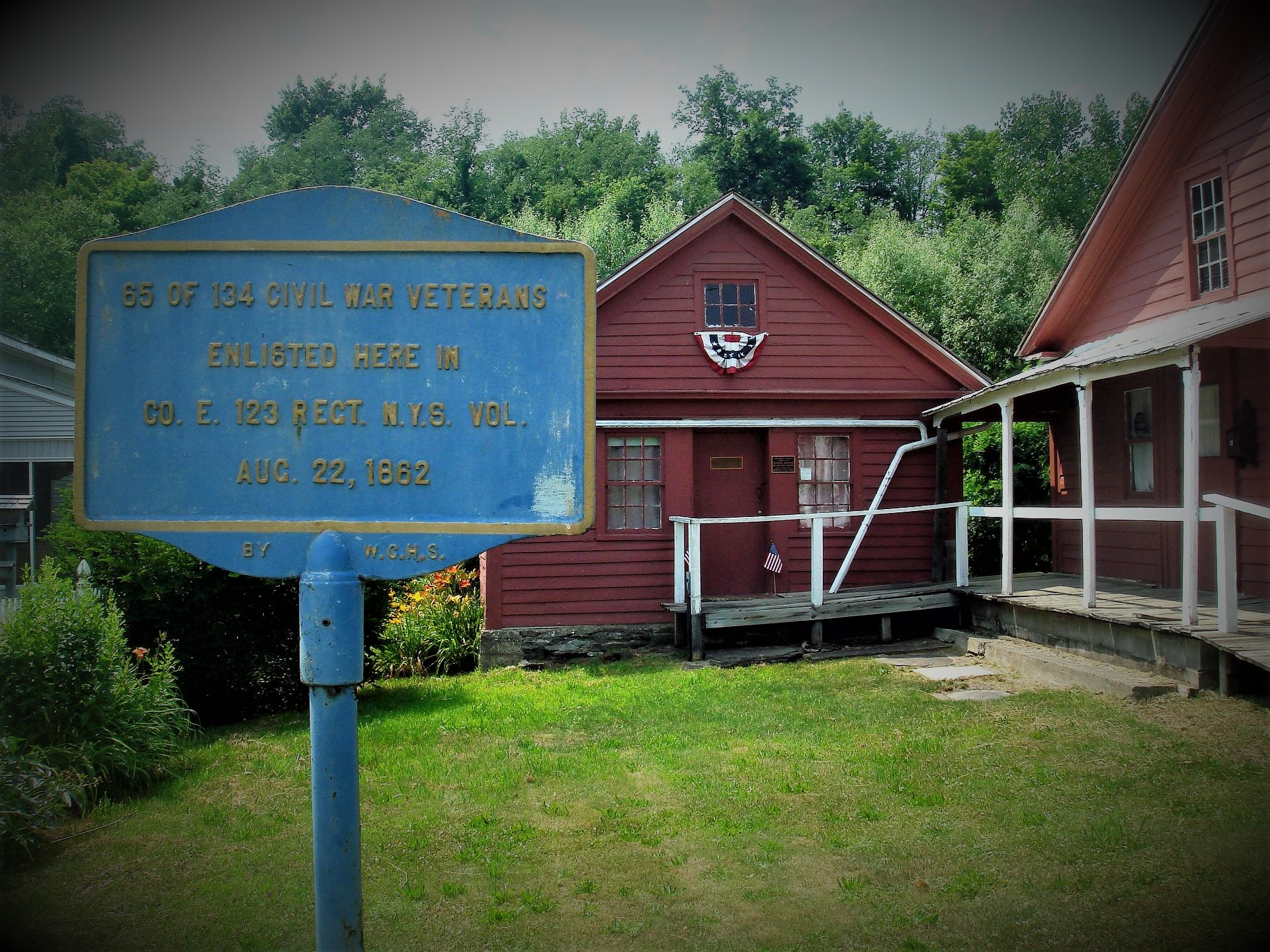
   
 Across the street is only Civil War recruitment building still standing in New York; stepping into the street and snapping a photo would still take you back to 1860s and 70s.
   
 It is much unchanged today, in the gentle, rolling hills near where I live, just a hundred and fifty miles south of the Canadian border. Except for the ‘Stars and Bars’ snapping profanely and contemptuously in the breeze down the road.
*****
     
The holiday we now know as Memorial Day
started in 1968 as ‘Decoration Day’, when a general order was issued designating May 30, 1868, “for the purpose of strewing with flowers or otherwise decorating the graves of comrades who died in defense of their country during the late rebellion.” When Congress passed a law formally recognizing the last Monday in May as the day of national celebration, we effectively got our three-day weekend and our de facto beginning of summer.
     
This Memorial Day I am reminded of the many World War II veterans I interviewed who still remembered the Civil War veterans of their own youth. So I share a reminiscence from the late historian Bruce Catton, and highly recommend this compilation of his work to reflect on what it all meant. Here are the Civil War veterans of his youth, remembering their friends, in Michigan, who did not return home. Have a contemplative holiday. MR
*****
Underneath the Lilacs
One of the most pleasant holidays of the year was Memorial Day, universally known then as Decoration Day because it was the day when you went out to the cemetery and decorated graves. This day, of course, belonged to the Civil War veterans, although as years passed, it more and more became a day to put flowers on the grave of any loved one who had died, and when it came, just about everyone in town went to the cemetery with a basket of lilacs. Lilacs grow like weeds in our part of the country, and most farmers planted a long row of lilacs as windbreaks around their houses; in town, almost every house had lilacs in the yard, and in late May, the scent of them lay on the breeze. To this day, I never see lilac blossoms without remembering those Decoration Day observances of long ago.

The Civil War veterans were men set apart.
On formal occasions, they wore blue uniforms with brass buttons and black campaign hats, by the time I knew them, most had long gray beards, and whatever they may have been as young men they had an unassuming natural dignity in old age. They were pillars, not so much of the church (although most of them were devout communicants) as of the community; the keepers of its patriotic traditions, the living embodiment, so to speak, of what it most deeply believed about the nation’s greatness and high destiny. They gave an especial flavor to the life of the village. Years ago they had marched thousands of miles to legendary battlefields, and although they had lived half a century since then in our quiet backwater all anyone ever thought of was that they had once gone to the ends of the earth and seen beyond the farthest horizon. There was something faintly pathetic about these lonely old men who lived so completely in the past that they had come to see the war of their youth as a kind of lost golden age, but as small boys, we never saw the pathos. We looked at these men in blue, existing in pensioned security, honored and respected by all, moving past the mounded graves with their little flags and their heaps of lilacs, and we were in awe of them. Those terrible names out of the history books – Gettysburg, Shiloh, Stone’s River, Cold Harbor – came alive through these men. They had been there. And now they stood by the G.A.R. monument in the cemetery and listened to the orations and the prayers and the patriotic songs, and to watch them was to be deeply moved.

The G.A.R., of course, was the Grand Army of the Republic, the veterans’ organization of those days. The Benzonia [Michigan] local of this organization was officially the E. P. Case Post Number 372, and it had been named for Edward Payson Case, a Benzonia man who died in 1886, a year before the post was organized. He must have been quite a man; he had enlisted in 1864, in the artillery, and his unit had been sent to Cumberland Gap on garrison duty and had finished out the war there, never getting into combat. Almost to a man, our G.A.R. members had been in violent action during the war, and they never would have named the local post after a noncombat soldier if he had not been an impressive sort of person. The monument they built, sometime in the late 1880s or early 1890s, was completely homemade. It was a fat column of field stone and mortar, no more than four or five feet tall, capped by a round slab of rock that was just a little wider than the supporting column; it looks like an overgrown toadstool, and it would be funny if it were not so unmistakably the work of men who were determined to have a monument and built one with their own hands because they could not pay for a professional job. The spirit that built it redeems it; it stands today as the most eloquent, heart-warming Civil War memorial I ever saw.

I remember the G.A.R. men as a group, rather than as individuals, although a few do stand out. There was Elihu Linkletter, a retired minister when I knew him, who had lost his left arm in the Wilderness. I never looked at him without thinking (in bemused small-boy fashion) how proud he must be to carry this visible sign of his sacrifice for all to see. Mr. Linkletter was devoted to birds, and he waged unceasing war on red squirrels because they robbed birds’ nests and ate fledglings. He used to tramp about with a .22 rifle, shooting every red squirrel he saw; he could use it one-handed and he was a remarkably good marksman with it.

There was John Van Deman, who once told me how he had been wounded in some battle in West Virginia; like all the other veterans he pronounced “wounded” to rhyme with “sounded,” which somehow made it more impressive. There was Lyman Judson, who had served in the cavalry under Phil Sheridan and who had been invalided out of the service when, his horse being shot out from under him, he had fallen heavily on the base of his spine so that he suffered thereafter from a weak back. Forty-five years later, in Benzonia, he slipped on the ice and again fell heavily on the base of his spine. In some unaccountable way, this cured him, and for the rest of his life, his back was as sound and as pain-free as anyone’s.

And there was Cassius Judson (no relation) who in 1916 went down to Manistee to see [the first ever motion picture film] The Birth of a Nation. When he got back, I asked him if he had not been impressed by the picture’s portrayal of the Battle of Atlanta. Mr. Judson, who had been in that battle personally, smiled faintly and said: “Well, it wasn’t much like the real thing.”

Then, finally, there was John Morrow, who had been an infantryman in an Ohio regiment and who had once exchanged words with General William T. Sherman himself. (“Exchanged” probably is not the word, because Sherman did all of the talking.) Anyway, during the Atlanta campaign Morrow and some comrades were out on patrol, and they came to a stream where there was a grassy bank with trees to cast a pleasant shade, and the day was mortally hot, and so they all stacked arms and stretched out for a breather. Just then, Sherman and some of his staff rode up, and Sherman came over to find out what these soldiers were doing. When he found out, as Morrow remembered it, he “used language that would make a mule driver blush” and in no time, the boys were back on patrol in the hot sun. They did not hold this against General Sherman, figuring that it was just part of the fortunes of war.

By the time I knew them, these veterans were in their seventies, or very close to it, and a hale and hearty lot they were. There was one man, whose name I do not remember, who lived on a farm a few miles south of town. He had fought at Gettysburg, and in 1913, there was a big fiftieth-anniversary celebration of that battle, with surviving veterans invited to attend. This old chap went to Gettysburg, enjoyed the three days’ activities, and then came home by train, and when he finished the trip, at Beulah, he found that the friend who was to have met him with a buggy to drive him out to his farm had somehow failed to make it. Quite undaunted, the seventy-year-old veteran picked up his carpetbag and hiked the five miles home. He could see nothing remarkable in this because he had had many worse hikes during the war.

In their final years, the G.A.R. men quietly faded away. Their story had been told and retold, affectionate tolerance was beginning to take the place of respectful awe, and in Europe, there was a new war that by its sheer incomprehensible magnitude seemed to dwarf that earlier war we knew so well. One by one, the old men went up to that sun-swept hilltop to sleep beneath the lilacs, and as they departed, we began to lose more than we knew we were losing. For these old soldiers, simply by existing, had unfailingly expressed the faith we lived by; not merely a faith learned in church, but something that shaped us as we grew up. We could hardly have put it into words, and it would not have occurred to us to try, but we oriented our lives to it, and if disorientation lay ahead of us, it would come very hard. It was a faith in the continuity of human experience, in the progress of the nation toward an ideal, in the ability of men to come triumphantly through any challenge. That faith lived, and we lived by it.

Now it is under the lilacs.

Excerpt from Catton, Bruce. Bruce Catton’s America. New Word City, Inc., 2017.

Read Full Post »

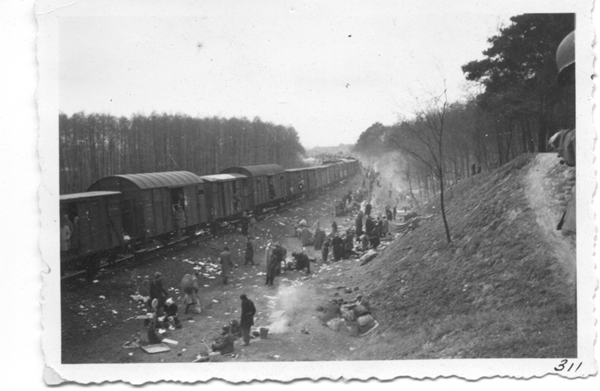
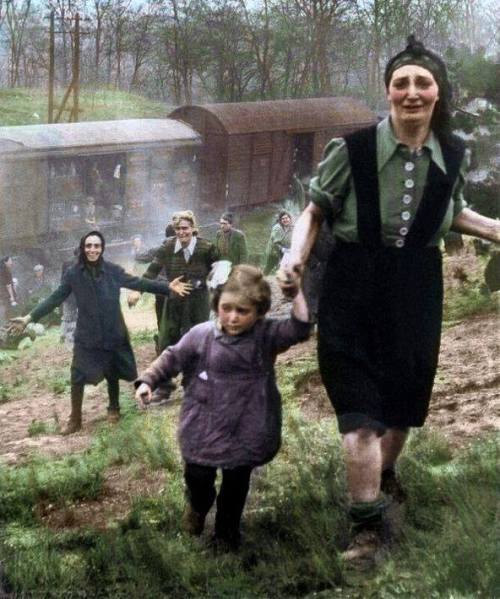
My tree in my hometown of Hudson Falls NY, 2018, and some of the just-liberated survivors of the ‘Train near Magdeburg’ on Friday, April 13, 1945, Farsleben, Nazi Germany. Sgt. George C. Gross photo.

The Remembering Tree {Words written for the occasion of the dedication of a tree in my honor in my hometown, May, 2018.}

I recently got a late-night email from a friend whose father I wrote about in my first book on the War in the Pacific.

“Thank you for helping my dad live forever.”

I met Ron when he emailed to say that he often thought of my own father, his high school history teacher, class of 1965. It was in my dad’s class that he and a friend made plans to join the Marines, where they would wind up in combat in Vietnam.

Ron’s dad had been a survivor of the infamous Bataan Death March, and a prisoner of the Japanese for three and a half years. As a result, he was bedridden by the time Ron reached his teens. He died as Ron started high school. Fifty years later, I wrote about his dad; the book has been a best seller in World War II circles.

Over the course of writing another four (and counting) books profiling the men and women who fought in World War II, or survived the Holocaust, I have heard similar statements, most from people who I never even met.

“My father would never talk about it. Thank you for helping me understand him.”

 “I thought about my father and cried all the way through your book.”

“Thank you for sharing the love and admiration you had for the survivors and the liberators.”

“Thank you for giving back to your community by making history real for your students and readers.”

And the comments, really I suppose the catharses, always move me, especially when I think of where, and how, it all started.

***

When I was a kid, I rose early on summer mornings to get out of the house at 2 Main Street before the rest of my four siblings got up. The subliminal goal was to have some time to myself, to explore the village where I was about to awaken to so much history. I walked uptown past the new ‘savings & loan’ on the corner of the block, past the stately brick mansion where General Lafayette himself lunched after the Revolution he helped to save fifty years before was being fought in the vicinity. So here, along the banks of the meandering Hudson River, I was heading to while away the summer morning in search of old bottle dumps and buried treasures from the Revolution and colonial wars that raged through two hundred years ago.

I continued past Fielder’s Drug Store and Carleton’s Funeral Home, past the august old high school that now served as the place where we ‘southies’ attended our sixth grade before moving up to the new junior high school. I walked past the New Deal post office with its earthy WPA murals of local scenes of the river industries, logging and paper making, Depression-era farmers in blue overalls coming into town. The churches were now in sight, as was the turn-of-the-century county courthouse on the corner. Crossing Maple Street, I was in the heart of the business district, full of former hotels and more family drugstores and businesses.

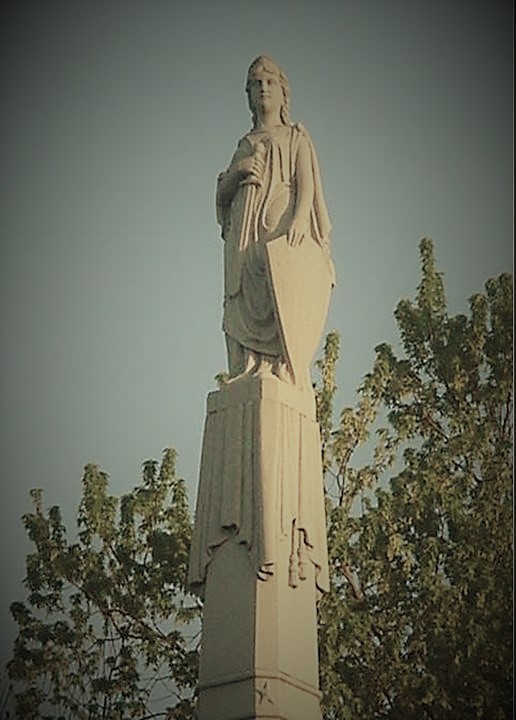
Soldiers Monument, Hudson Falls, on the Hudson River, in 1946.

And looming at the head of the village park was Miss Columbia atop the Civil War Soldiers Monument, who with her drawn sword and battle shield struck a commanding posture that seemed to say, ‘Go ahead. Make my day’.

I’d oblige the old girl in a few years as a mid-teen, a brush that involved my first and last tastes of whiskey from the bottle and a rude late-night attempt to scale her. When I awoke the next morning (to my horrified stupefaction, in my mother’s bed), I think Miss Columbia cracked a stony smile from her perch a mile away. A youthful indiscretion, a painful lesson learned. This teen burned with shame, but he would make amends someday, and somehow Miss Columbia knew that.

***

By 1979 when I graduated from Hudson Falls High School, I had also acquired the teenage itch to leave for the greener pastures of higher education. In conversation with my father as a senior in high school, I responded to his questions about my plans with the timeless wisdom and wit of the eighteen-year old—‘I’m leaving this town, I don’t know what I want to do, but I do know I am NOT going to become a teacher, like you’—a passing shot before I headed off to college a few hundred miles away. Take that, old man.

But, touché. He had the last laugh, because at 26, I was now paying him a token in rent and driving his old car around town. And I became a teacher, a high school teacher like him, and wait—oh, yes—teaching the exact same subject that he had been teaching for thirty years, high school history. Even the young can’t outrun the karmic wheel. But then, maybe there was a higher purpose in coming home to serve my community that I could not begin to understand yet. You see, if I had not returned, a lot of very cool things would not have happened, and it’s times like these that I have to just stop and think about that.

I was a young teacher, but soon enough I began casting pebbles. I began to interview World War II veterans when they were still ‘a dime a dozen’, drawing their stories out, following leads, and putting my own students on the hunt for a good story. It took a bit of time and an almost obsessive dedication. But thank goodness I did that, as an adult coming of age, back in my hometown.

I’d have more encounters with that monument in the park, too. I wanted to know her history, what she admonished, and what that terrible war meant to our town and our nation. She obliged one Saturday evening when I sat with a survivor of the WWII Battle of Midway, a recipient of the Navy Cross and the Silver Star. I remember:

He settles into a comfortable chair across from me and lights up a cigarette, relaxing and clearly delighted with the company. His wife has passed, his children have long since moved on, and he and I are alone. With a twinkle in his eye, he tells me joke after joke and regales me with one incredible World War II story after the other. We laugh and pass the time; the lifeblood of this small town is being transfused as he recalls his life and his old companions in the quiet of his living room, and then he tells me something that will resonate with me to this day:

‘This monument is presented by Dr. Erskine G. Clark to the Village of Sandy Hill
Dedicated to the honor and patriotism of the soldiers of Washington County who served in our war to suppress the southern rebellion of 1861, waged against the life of the nation.
———————-
Dedicated June 30, 1887′

A little boy in the 1920s walks the streets of this town with his grandfather, hand in hand. They near the Soldiers Monument erected in the 1880s to remember the young men of the community who fell in the Civil War. The old man stops, points, and wipes his eye, proclaiming bitterly to the youngster that ‘there stands nothing but a tribute to Southern marksmanship’. Here is the young kid who would go on to pilot dozens of harrowing combat missions in World War II, the little boy holding the hand of his aged grandfather who had fought at terrible places like Gettysburg two generations earlier. In shaking Judge John Leary’s hand, eighty years on, I am suddenly conscious that I am now physically connected to the sixteen-year-old boy from our town who fought in the furious action at the turning point of the Civil War.[1]

So there it was. This is what Miss Columbia wanted me to find out, to try to understand.[i] We had come full circle, I supposed. But not quite yet. For it was also in this time that I sat down with another veteran here in my hometown as he recounted his Army travails as a combat tank soldier across northern Europe into Germany. I took the time to talk to Judge Carrol Walsh, and somehow the universe tilted just long enough for a crack to be opened across time and space.

In 1945, Sergeant Walsh was a tank commander fighting across northern Europe and into Germany. That July afternoon nearly sixty years later he told me many stories of pitched battles and close calls, of weeks that alternated between the extremes of boredom and sheer terror. And then at his daughter’s prompting, he spoke of this:

Well, late in the war, again a nice, beautiful April day—we were shooting like crazy across the top of Germany, and Major Benjamin of the 743rd was kind of out ahead scouting a little bit—he came back to the battalion and he pulled my tank and George Gross’s tank [fellow tank commander] out. He told us to go with him. So we did.

We came to a place where there was a long train of boxcars. I can remember pulling up alongside the train of boxcars, Gross and I, and Major Benjamin. As it turned out, it was a train full of concentration camp victims, prisoners who were being transported from one of their camps… I think they had been in Bergen-Belsen, on their way to another camp…

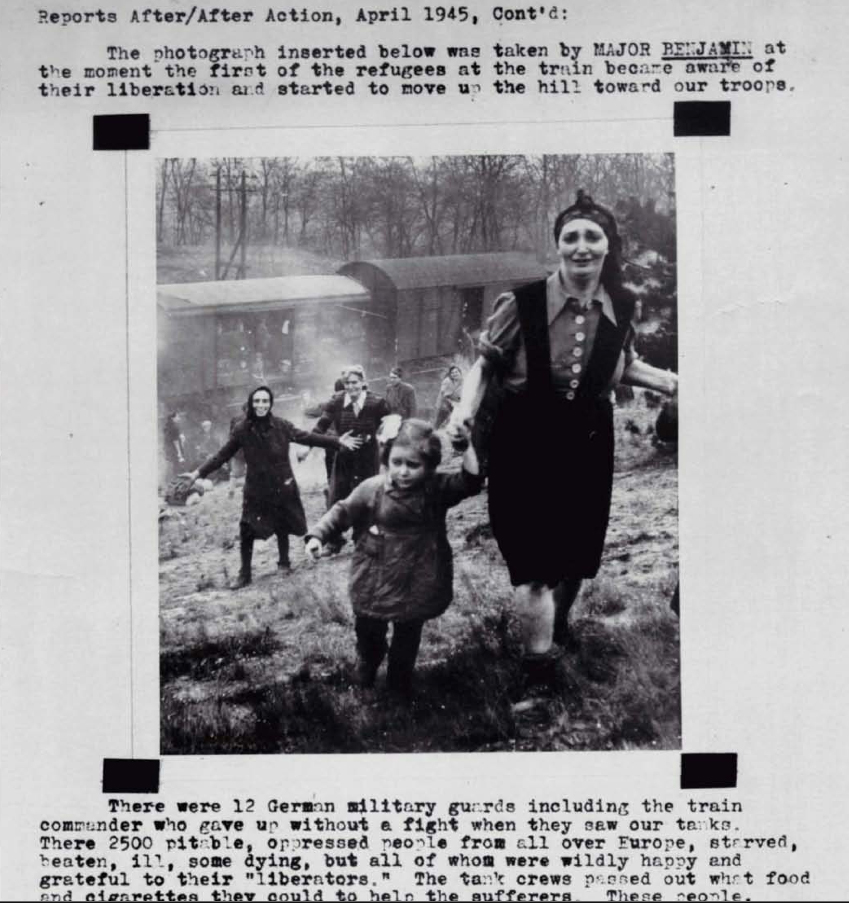
743rd S-3 After Action journal report- the moment of liberation

So there they were. All of these people, men, women, children, jam-packed in those boxcars, I couldn’t believe my eyes. And there they were! So, now they knew they were free, they were liberated. That was a nice, nice thing. I was there for a while that afternoon. You know, you got to feed these people! Give them water. They are in bad shape! Major Benjamin took some pictures, and George Gross took some pictures too…[2]


‘That was a nice, nice thing.’ Later, this will strike me as the under-statement of all time. Though we could not know it at that moment in the summer of 2001, a portal across time and space had just unlocked, and I would wind up stepping across the threshold; our lives and the lives of thousands of other people would be affected, for the better, and there was healing.

***

Ten years after that interview on Coleman Avenue in this village, I was invited to attend a special reunion in Rehovot, Israel, where liberator Frank Towers and I addressed an auditorium filled with fifty-five survivors of the ‘Train Near Magdeburg’ and their children and grandchildren.[3] In the audience were over 500 people who probably would not have been born, had it not been for the actions of this soldier and the others. As we listened to the testimony, a woman began softly crying behind me. I kept my cool and bit my lip and didn’t cry until another survivor’s daughter approached me and told me that my name in Hebrew meant something along the lines of, ‘Mystery of God’. Heavy, heavy words. Yet here I was, halfway around the world, connecting people unknowingly bound together in the greatest crime in the history of the world. Watching families heal. We would have eleven reunions on three continents, the first right here in Hudson Falls. The ripples continue to reverberate; I still get emails expressing thanks and amazement from survivor families who come across my work anew.

That’s not to say it’s all been an easy road. I had to become extremely conversant in the macro and micro aspects of the study of the Holocaust, and extremely proficient in the teaching of it (and there are a lot of ways to get it wrong). I’ve sat at the feet of the best instructors in the world, who helped me reach powerful insights, and gave me the tools to defend myself and to prepare my course of action when I come under attack by Holocaust deniers and minimizers.

Don’t forget, I am not Jewish, and I will assert that that is not without some import here (I don’t think I was even in a synagogue or temple until my forties, though our folks certainly had Jewish friends). It’s important because I truly believe I was chosen, as a gentile, to be a witness myself. I had no ‘agenda’, and I can’t explain why I have the occasion now to write all this any other way, let alone start this blog 10.5 years ago (closing this year in on a half-million hits), or write that book for ten years that clocked in at 500 pages (and nearly killed me in the process). And now I’m working with an Emmy Award-winning filmmaker, also a gentile and a friend, to bring it to the world on another platform it deserves. The Greater Glens Falls Jewish community has honored me many times over, contributing to my journeys to the authentic sites of the Holocaust and my study in Israel.[4] Now they have asked the village for permission to honor me where it all started, the hometown where I wandered so freely, the hometown I tried to escape as a restless teen, the hometown that called me back and gave rise to an incredible career. This is the place where the trauma was recalled, and where our students became new witnesses. My hometown is also where new miracles occurred, and where this healing first began. My survivor friend Leslie, who traveled from Toronto to be at two of the Hudson Falls reunions, expressed to his liberators and to the students at Hudson Falls High:

“I survived because of many miracles. But for me to actually meet, shake hands, hug, and cry together with my liberators—the ‘angels of life’ who literally gave me back my life—was just beyond imagination.”

***

I recently left the classroom after more than 31 years, but with my fifth book due in a few weeks, I’m still busy honoring memory. My dear mother and father, and many of the World War II veterans and Holocaust survivors I interviewed, are now gone. And so we come back to this tree. If you don’t know history, you don’t know anything. You are like the leaf that doesn’t know it is part of the tree.[5] This tree commemorating my pilgrimage is an appropriate symbol, a gentle reminder to the young to be curious, to wonder, to hope, to dream, to take risks, to take advantage of the memory and knowledge of those who came before them. This tree symbolizes life, and its roots are anchored in memory.

‘Prosit’, the old man would say on occasion, invoking his schoolboy Latin. ‘So it is, and may it be to your advantage.’ As the breezes caress this maple’s leaves, in the rustling may you hear the whispers of those who came before us, those who like Miss Columbia inexorably called me home to attend to a life’s work. Now with this ‘remembering tree’ growing in her garden, may the ripples continue to go forth and ping the past, and may your fathers, and mothers, live forever.


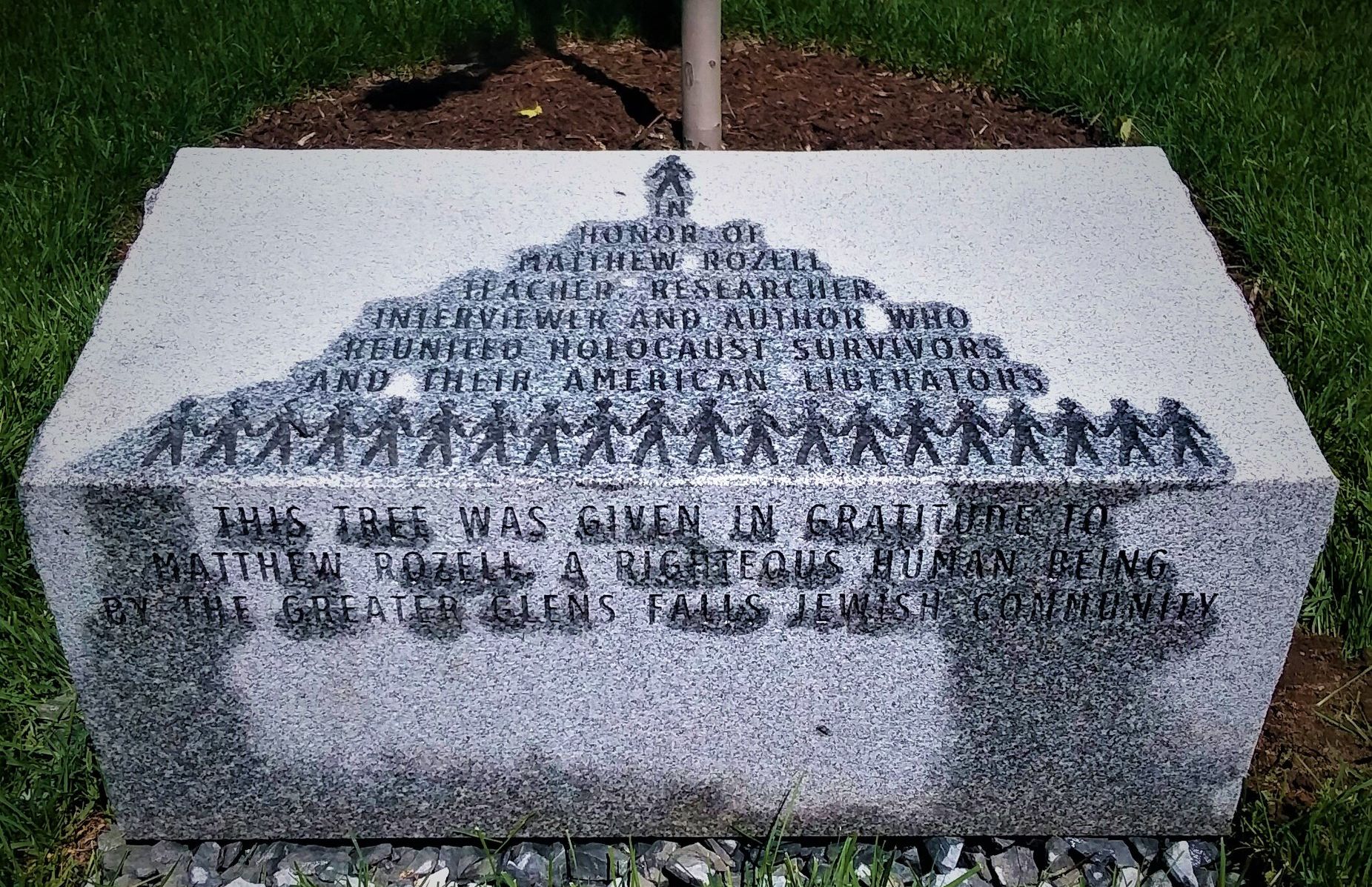
“Marker for special dedication ceremony ​to ​​honor Matthew Rozell​ on Sunday, May 27, 2018, at 1:00 p.m. at Juckett Park in downtown Hudson Falls. At this ceremony, ​we will dedicate ​the tree ​purchased by the Greater Glens Falls Jewish Community​ in recognition of Matt​ as a righteous human being​ for his work as a historian, teacher, Holocaust educator and author who reunited survivors and their American liberators.
Through his teachings, writings and efforts, Matt has brought a greater awareness of the Holocaust not only to our community but also globally.
The tree was ​planted by ​the Village of Hudson Falls​,​​ and ​the ​special marker ​was ​installed by Loiselle Memorials.”


*************

Some notes:

[1] Excerpted from my first book, The Things Our Fathers Saw—The Untold Stories of the World War II Generation From Hometown, USA-Volume I: Voices of the Pacific Theater.

[2] Excerpted from my second book, A Train Near Magdeburg: A Teacher’s Journey into the Holocaust, and the reuniting of the survivors and liberators, 70 years on.

[3] Expertly organized by survivor’s daughter and my friend, Varda Weisskopf.

[4] My dear friend and supporter Sunny Buchman spearheaded this effort.

[5] I stole this leaf/tree quote from Michael Crichton’s book, Timeline.

[i] This is what Miss Columbia wanted me to find out, to try to understand—As a ‘soapbox’ aside, the teacher still in me has to add that learning all this is one of the reasons I find the I’m-a-rebel-on-a-new-bandwagon-and-in-your-face-if you-don’t-like-it display of the Stars and Bars locally both profane and contemptuous. Because here in the northern towns where your own great-great-great-grandfathers were from, fighting and dying in those far-off fields, never to return home, there is still something to be said about cracking a book and educating oneself, or not sleeping or texting thru history class… something important about REMEMBERING.

So there.

Read Full Post »

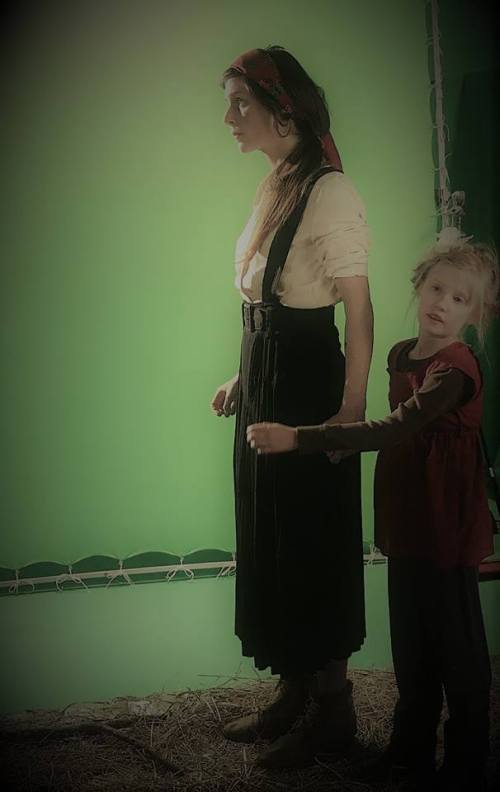
Today they started shooting the trailer for the Train story, on the 75th anniversary of the Warsaw Ghetto uprising. Look for it on PBS someday or better yet, give a shout if you can help us get it funded. It will happen. Maybe you can help or know somebody who wants to be a part of it.

matthew@teachinghistorymatters.com

It is a cool spring morning. In the background, down the hill, are two cattle cars. If we look closely, we can see a figure sitting on the edge of the opening of a boxcar, perhaps too weak to climb out yet soaking up some energy from the warming April sun. In front of him, a wisp of smoke seems to rise from a small makeshift fire that others have gathered around. The sound of gunfire is echoing nearby; a metallic clanking sound is growing louder at the top of the hill.

This is an appropriate backdrop for the marvel unfolding in the foreground. Now only a few steps away, a woman and perhaps her young daughter are trudging up the hill toward the photographer. The woman has her hair wrapped in a scarf and is clutching the hand of the girl with her right hand. Her left arm is extended outward as if in greeting; her face is turning into a half smile in a mixture of astonishment and enveloping joy, as if she is on the cusp of accepting the belief that she and her daughter have just been saved.

It is Friday, the 13th of April, 1945. Led by their major scouting in a Jeep, Tanks 12 and 13 of ‘D’ Company, 743rd Tank Battalion, US Army, have just liberated a train transport with thou-sands of sick and emaciated victims of the Holocaust. In an instant, Major Clarence L. Benjamin snaps a photograph so fresh and raw that if one did not know better, one might think it was from a modern cellphone, although it will be soon buried into his official report back to headquarters. 
But what have they stumbled upon? Where have these people come from? 
And what do the soldiers do now?

And on a related note, here is the USHMM social media #AskWhy short released last week, on the 73rd anniversary of the liberation (1:16) Thanks to the Museum’s Josh Blinder and his team…

Read Full Post »

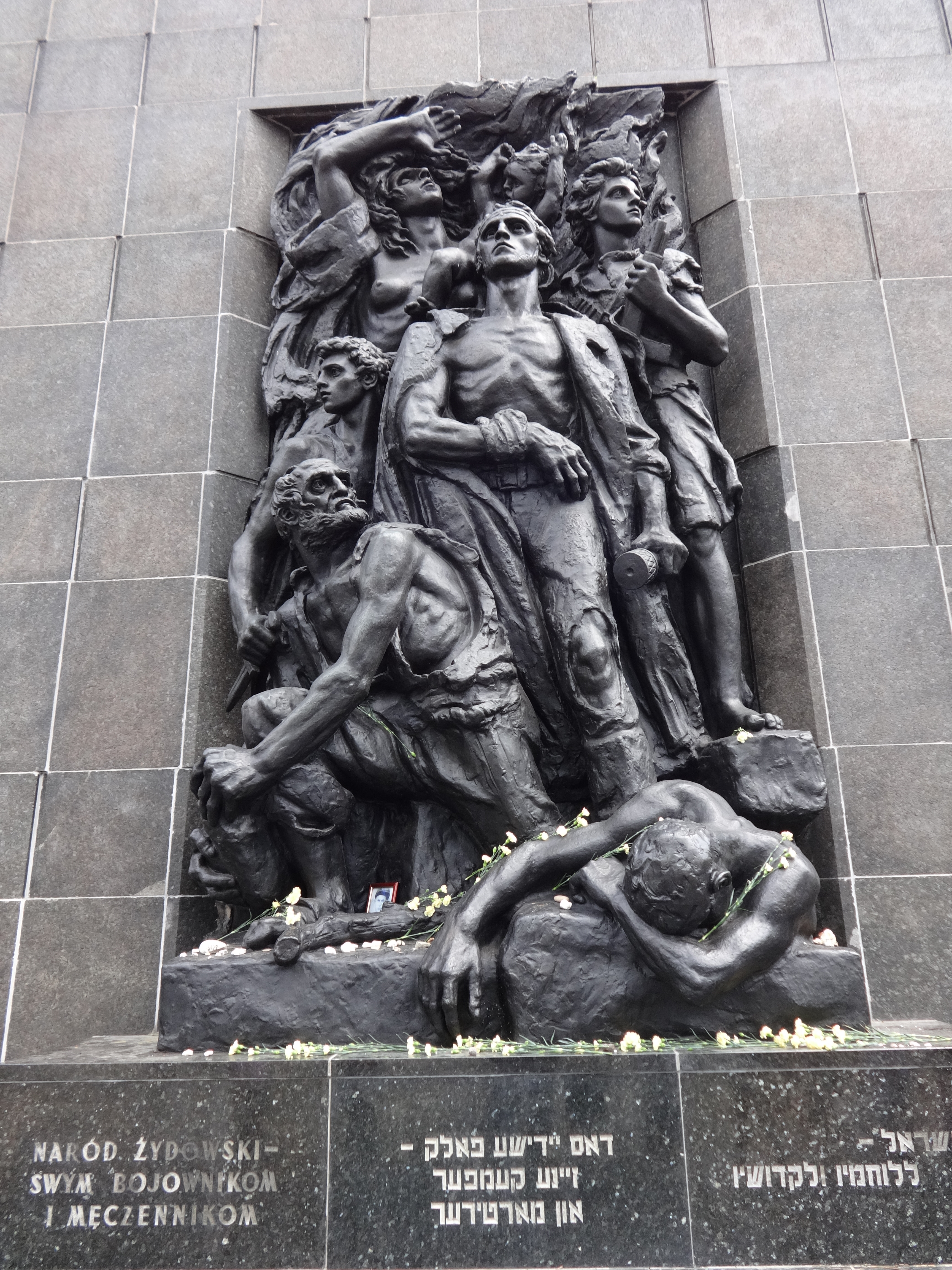
Memorial to the Warsaw Ghetto Uprising.

Today is the 75th anniversary of the Warsaw Ghetto Uprising, which marks the anniversary of the largest single uprising against German oppression of the Jews, which occurred in Warsaw in 1943. It is important to note, however that resistance to evil manifested in many different forms, not just physical ‘pushback’, as I was reminded on my Holocaust and Jewish Resistance Teachers Program tour in 2013. As the anniversary of the Warsaw Ghetto Uprising is now upon us, I share this post, an excerpt from my recent book, also recounting the narrative of a fourteen year old Jewish resistance fighter who was told she had to leave the ghetto by her leaders, so that she might live to remember them and tell this story.

*****

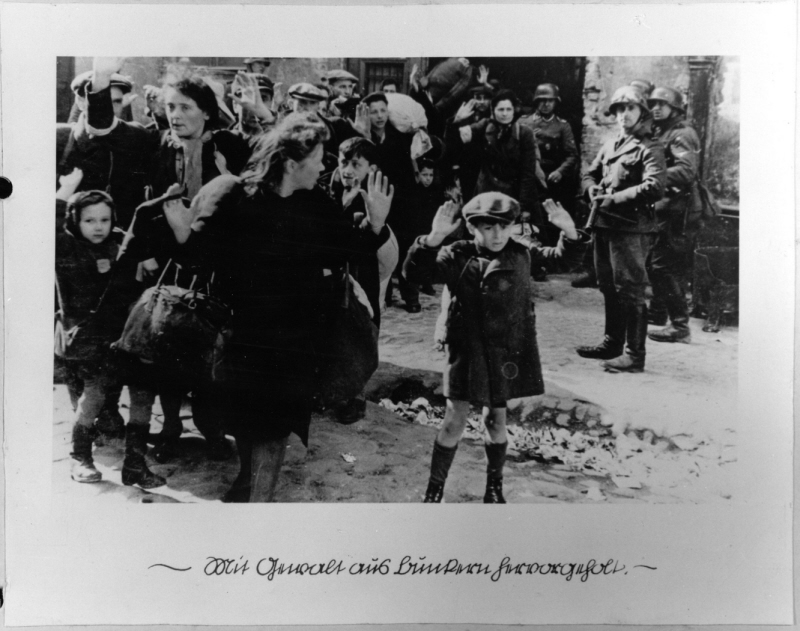
As 1943 dawned, the SS returned to the ghetto for another major deportation. They encountered the first armed resistance from the ghetto fighters and beat a hasty retreat, leaving behind wounded and weapons, and calling off the operation. For the next three months, the ghetto fighters organized and prepared for the final struggle. On the eve of Passover, April 19th, the Germans returned again, this time with the aim of liquidating the ghetto once and for all, in time for Hitler’s birthday on the 20th. By then, there were between 300-350 active fighters; the young were now the real leaders of the ghetto, having decided not between life and death, but rather, how to die.* Aliza recorded her observations of the preparations for the final battle they all knew was coming.

Jews captured by SS and SD troops during the suppression of the Warsaw ghetto uprising are forced to leave their shelter and march to the Umschlagplatz for deportation.  from the notorious Stroop Report. USHMM.

Aliza Melamed Vitis–Shomron

Spring, 1943

As spring approached, the atmosphere in the reduced ghetto changed. We waited for the final ‘aktion’, for the final extermination of the Jews of Warsaw’. People began to build bunkers. Experts turned up, engineers who built bunkers with electric light, in wells and toilets. Most of the bunkers were dug in cellars. There were various ways to enter the bunkers from the ground floor: by raising a cover in the kitchen stove or through an opening in the large stove attached to the wall, or in many other strange ways, according to the fertile imagination of the builders. The ghetto was preparing for a struggle.

March passed, and April came. Talk about the approaching final liquidation of the ghetto intensified. The ghetto was fully aware of it and prepared. It was the calm before the storm, suffused with energy and tension. Frequent shots near the ghetto and sudden evening searches by the SS command cars heralded what was to come. Sending off the people working for Töbens and Schultz factory workshops to Poniatow and Travniki* caused apprehension, even though they had gone of their own free will. If they are sending out the workers, what will happen to all the rest? The companies of the SS General Globocnik *, in charge of extermination, again arrived in Warsaw.

The only possibility left is to escape to the Aryan side, to dress up as a Pole and look for acquaintances or people willing to hide Jews in exchange for money. For a few thousand zloty, one could get a Polish birth certificate and a ration card. People handed over their children to Christian clerics, to monasteries and to peasants in the villages. Sacks were thrown over the walls daily and openly, at least on our side. People paid bribes to the foremen of the work crews to be able to join them going out to work on the Aryan side. Some of them did not look Jewish and were lucky enough to find ‘good’ Poles. Women dyed and oxidized their hair, and created curls by rolling their hair in pieces of paper, to look like blonde gentile girls. But they could not change the color of their eyes, or their dejected and pallid look. A Jew could also be picked out by his hesitant walk, his bent back, and his eyes constantly darting around him. We were so preoccupied by our aspiration to look like ‘goyim’ that we examined ourselves and others: Does that man look like a Jew? Will they recognize him in the street?

Of course, a new profession cropped up among the simple Polish people, with many demanding a bribe, or being paid to be an informer, a blackmailer. We were deeply disappointed; we thought that as witnesses of our tragedy, our compatriots, sharing the same language and culture, they would hold out a hand to save us. But it did not happen. A few of them hid Jews for large sums of money; these were mostly people connected to socialist activities and the left wing parties. Many devout Christians and religious scholars did so without taking money, out of true nobility of spirit. Many others, from among the simple folk, made a living by informing on Jews to the Gestapo, and collaborated willingly out of pure antisemitism. They walked around in the streets close to the ghetto, spied by the gates and the places where Jews worked on the Aryan side and looked for victims. Thousands made a living in this way.

*

The state of our family grew worse. We began to suffer from hunger. There were no clothes left to sell, we lived on the food we had received in the workshop, distributed by the Germans.

Aliza’s family decided to split up to increase chances of survival. Her more ‘Aryan-looking’ mother and younger sister, with a great deal of bribery, subterfuge, and nerves of steel, went into hiding on the Aryan side. Her father decided to take the chance and volunteer to go to the work camp near Lublin. Aliza herself wanted to stay and fight in the ghetto, but now only fourteen she was deemed too young and directed by the leadership of the resistance to make her way to the Aryan side as well, to live to tell the story. 

Aliza’s cousin stayed in the ghetto to fight the Germans. For three days, the resistance fought on, against impossible odds. It was weeks before the ghetto was overcome; there were few survivors.

Lazar

In the morning, we heard dull sounds of firing and explosions. In another house, in Swentojerska Street 34, the Z.O.B. had their positions. People from the organization told us about a mine they had detonated when the Germans decided to penetrate into our area; about battles leaving ten Germans dead; about a ‘peace delegation’ of SS officers who came with a white flag asking for an armistice to pick up their wounded, and how they fired at them at once. The fighters were elated, exhausted—but looked happy.

The battle in most of the houses in that area lasted two days. They ran from house to house. The leader of the group was the commander Marek Edelman. Dozens of fighters took part in the battle; some of them were killed. They went out at night to try to make contact with their friends. They told us that the battle inside the ghetto was still going on, that the fighters had delayed the entry of the tanks and set fire to them with homemade Molotov bottles. They were stationed at windows and changed their positions by moving across the rooftops. We in the shelters decided to open fire only when they discovered us. We made up our minds to defend our families to the end, not let them take us to Treblinka.

On the third day, fighting also broke out in the area of the workshops of Töbens and Schultz. At the last moment many people preferred to move to the Poniatow camp. In the meantime, the Germans began to set fire to the houses. On the second day of the uprising, the fighters told us about fires in the ghetto. We sat in the crowded shelter, praying that they wouldn’t get to us. We had expected the worst, but not fires. The people in the shelter said goodbye to each other. We were in despair, expecting certain death. We could already smell the smoke. Someone came from the neighboring house; people were fleeing from adjacent houses. There were no Germans around. After a night full of dread, just before dawn, we did hear German voices in the courtyard. They were calling to the Jews to come out at once, or else they’d burn us alive.

The artillery was constantly firing incendiary bombs. Whole blocks of houses were on fire. The shelter was not damaged, but the water stopped running. The electricity went out. The walls of the shelter became unbearably hot, smoke penetrated the cellar. We sat there, coughing, wrapped up in wet sheets. People wept, dragged themselves to the courtyard with the last vestige of strength. We had no choice, we would defend ourselves in the yard. The men cleared the opening and gave the order—‘wrap yourselves up in sheets soaked in the remnants of water, lie in the middle of the courtyard, in the garden.’

The yard is full of people, smoke covers everything, the top floors are in flames, the fire is running wild without any interference, parts of walls are collapsing and falling into the yard. People lying on the ground are groaning with pain…

Suddenly, we hear German voices in the street. God! We thought it was all over, that they’ve left us here. What shall we do? Several Germans burst in through the gate…

Lazar was captured and beaten, but managed to escape deportation, and made it to his cousin’s hiding place on the Aryan side.


I saw a different Lazar before me. He used to be arrogant, a show-off. The person sitting here now was thin, withdrawn; he stammered slightly when he spoke. We’ll have to live together in that small room in the cellar. Who knows how long? Until this damned war is over?

The Beginning of May, 1943

They say that the ghetto no longer exists. The wreckage of the houses is still standing; the piles of cinders still crackle, and at night shadowy figures, seeking food and shelter, still move about in there. But the ghetto no longer exists; 500,000 people have gone up in smoke. And those still alive bleed inwardly, their deep wounds will never heal. And maybe there will be no one left when freedom comes? Why are human beings so cruel and evil? They speak about the future, about truth, about Man as proof of God’s great wisdom, and it’s all lies, lies!

I know there are also good people, but they are persecuted; society rejects them as weaklings. Why am I prevented from seeing the wonders of nature and the world, from breathing fresh air?

The full narrative is available here.

******************************************

In 2013 I visited Warsaw, rebuilt; almost nothing remains of the ghetto itself- with slight exceptions.

July 17, 2013

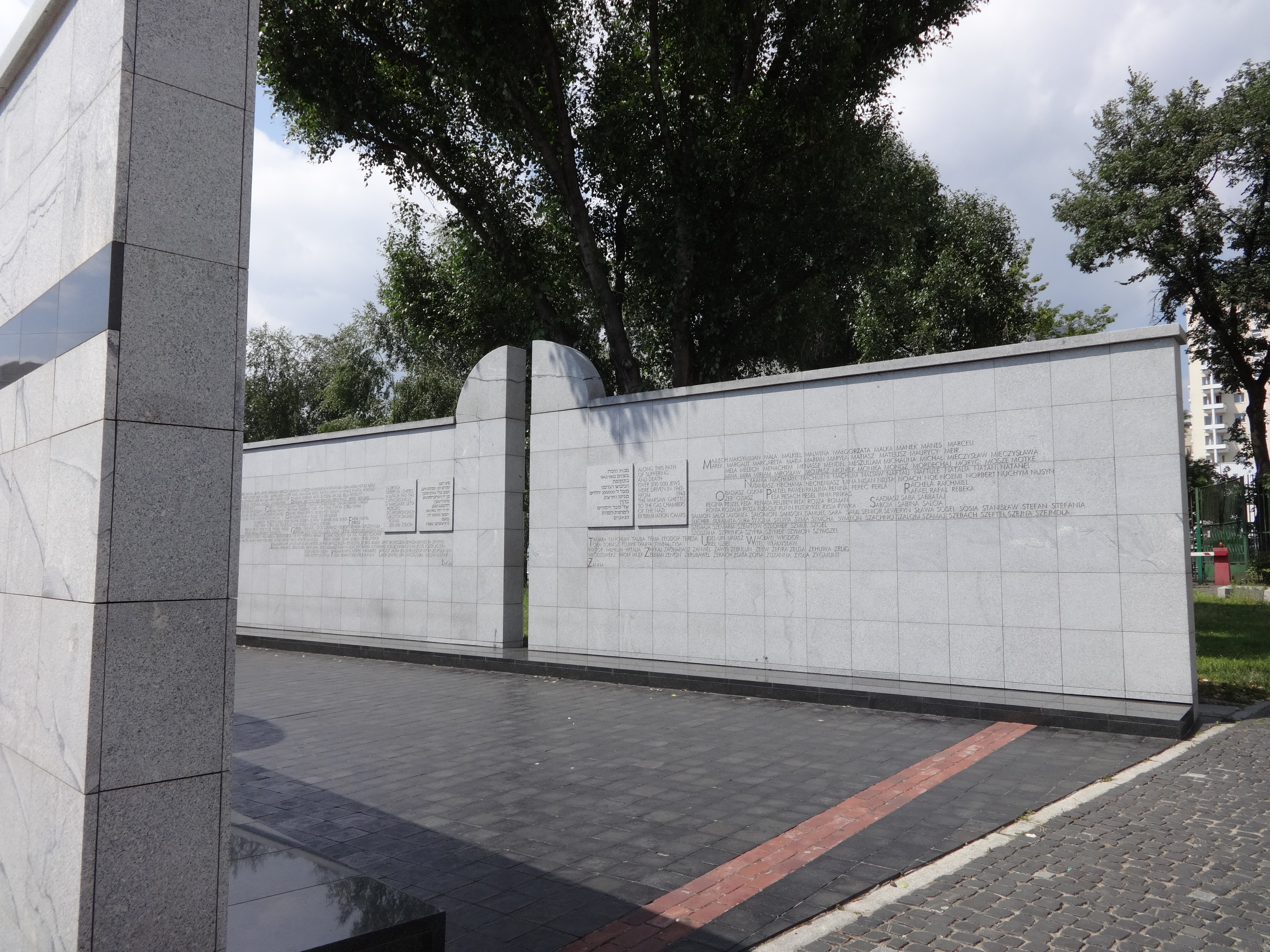
We tour Jewish Warsaw and finally the remnants of the ghetto wall, and also the Umschlagplatz. It is here that forced gatherings for the mass deportations to Treblinka took place. I am also reminded of the scene from the film “The Pianist”.

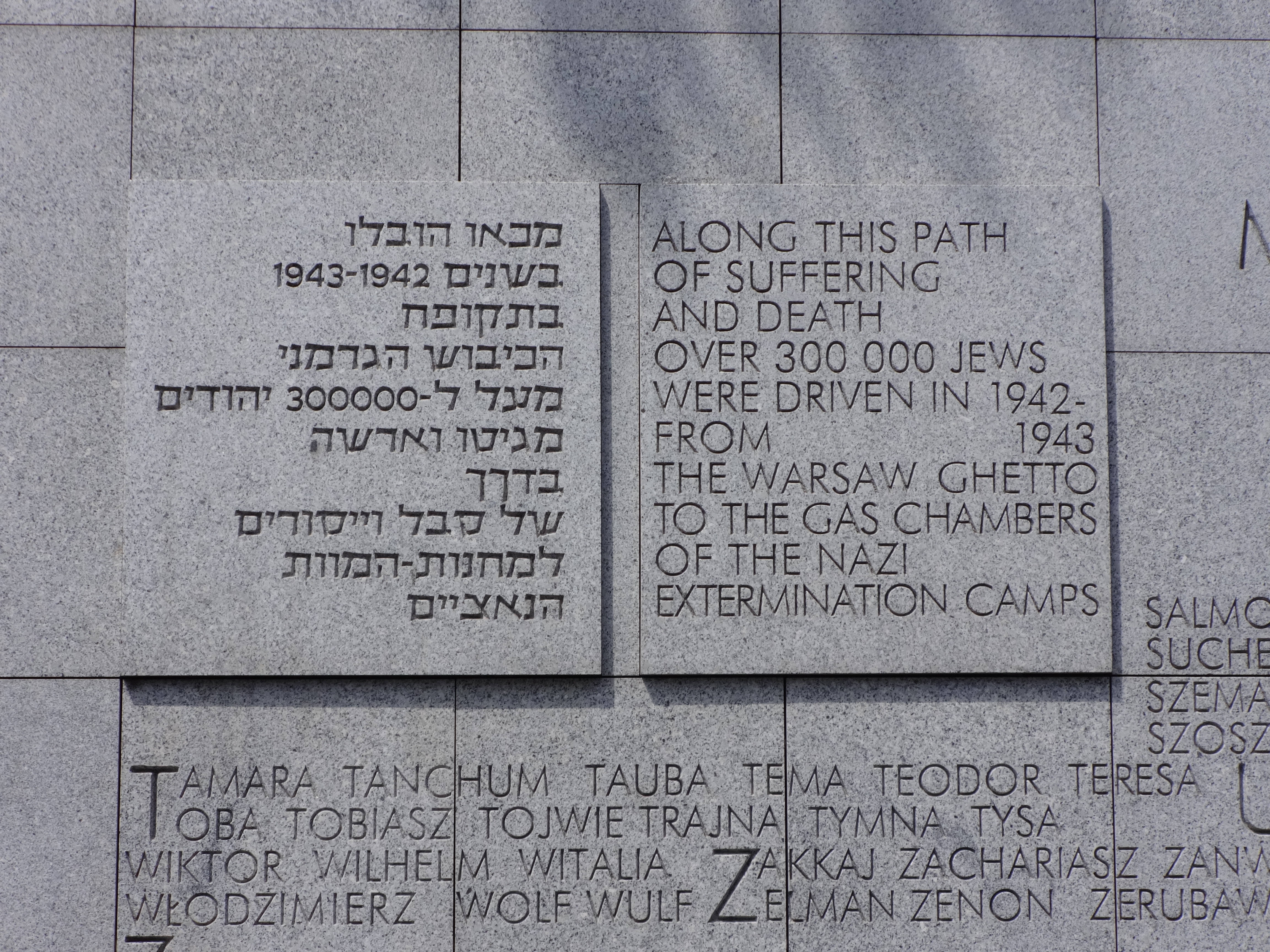
The Umschlagplatz. As many as 10,000 Jews were deported on some days to Treblinka. Upwards of 300,000 were sent from here to their deaths.

The Umschlagplatz. Our group. 2013.

The Umschlagplatz. Our group. 2013.

1227

The Umschlagplatz. As many as 10,000 Jews were deported on some days to Treblinka. Upwards of 300,000 were sent from here to their deaths.

The Umschlagplatz. As many as 10,000 Jews were deported on some days to Treblinka. Upwards of 300,000 were sent from here to their deaths.

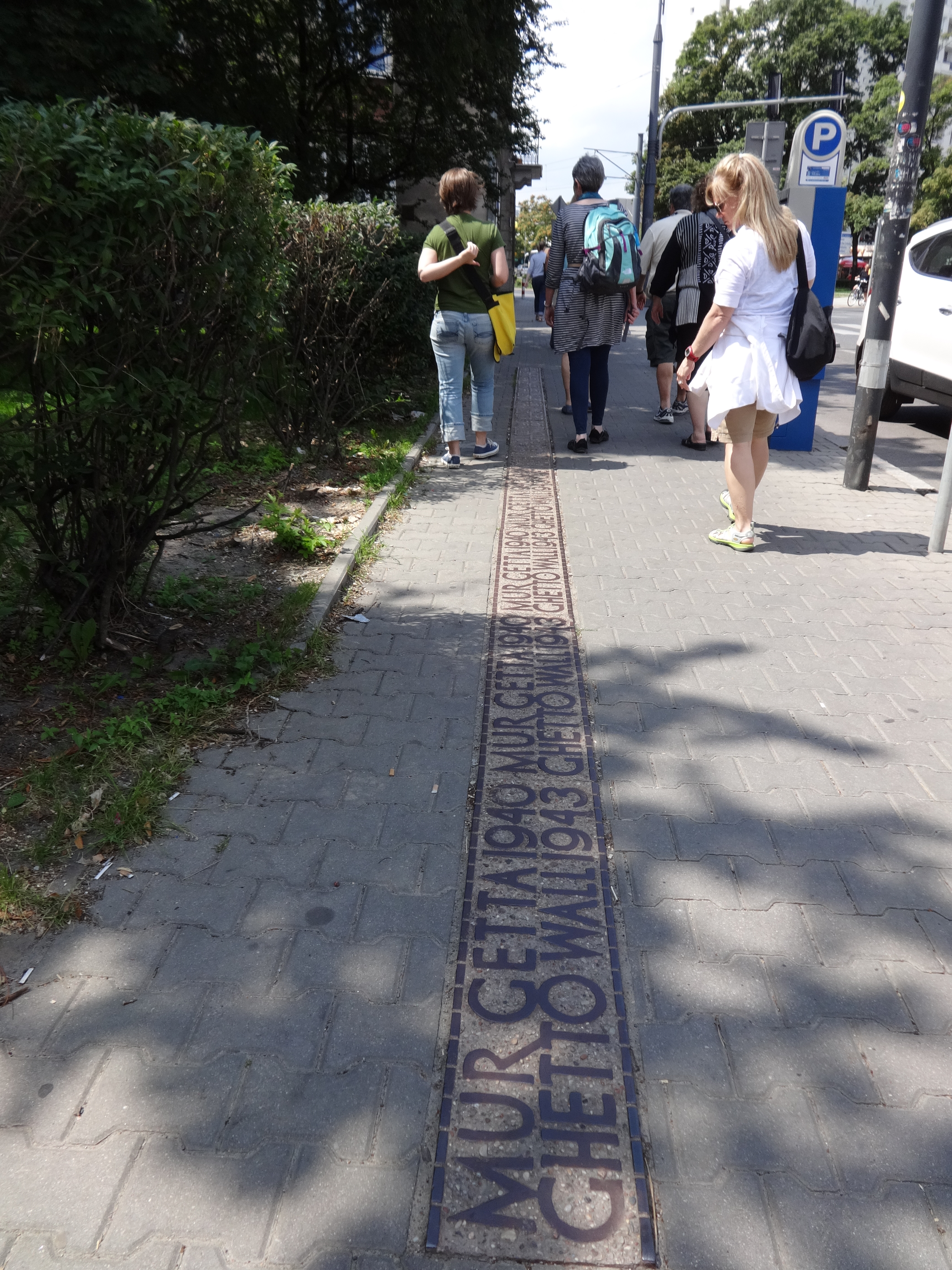
We walk the edge of the wall, memorialized in bronze in the sidewalk.

1240

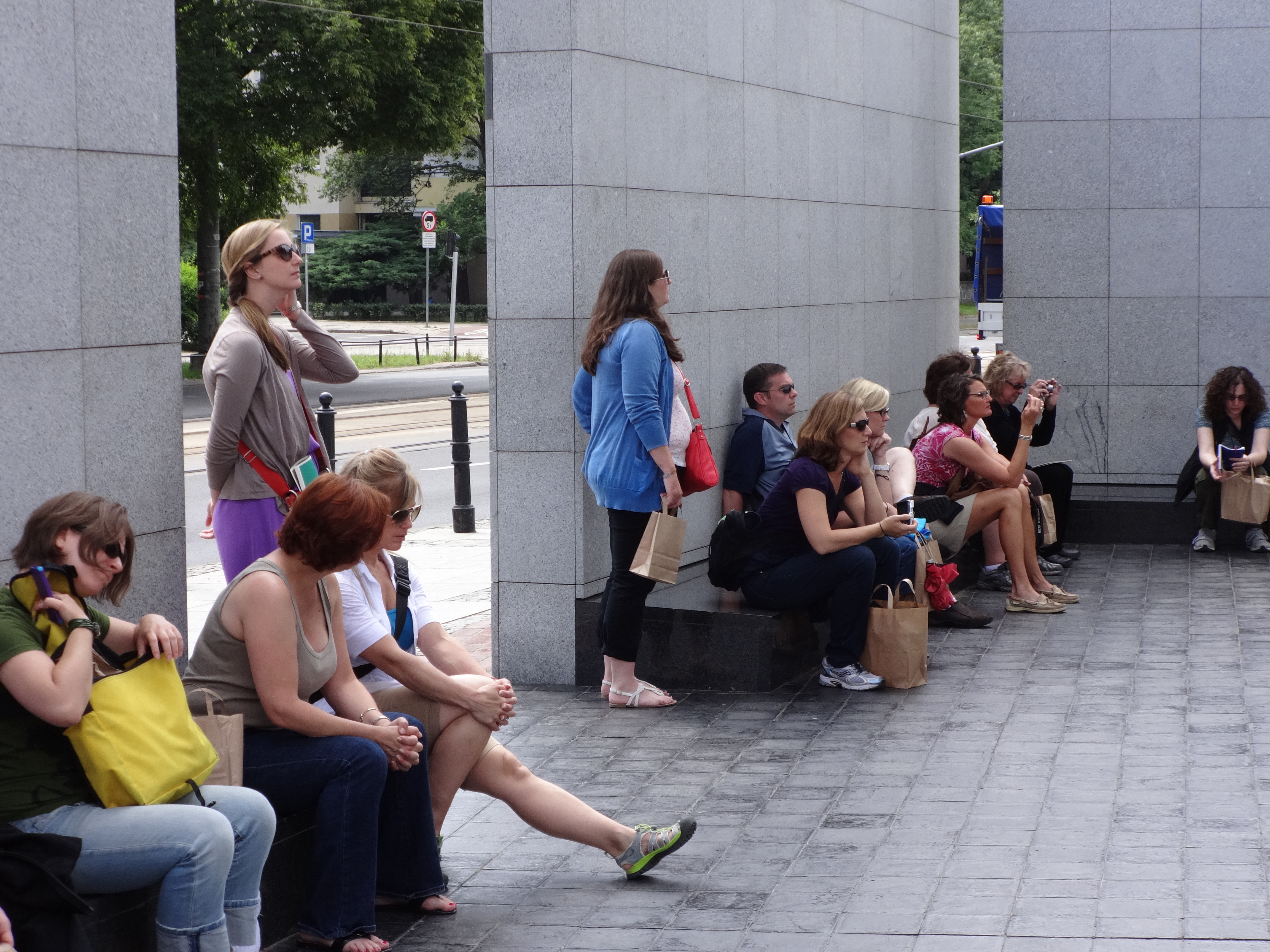
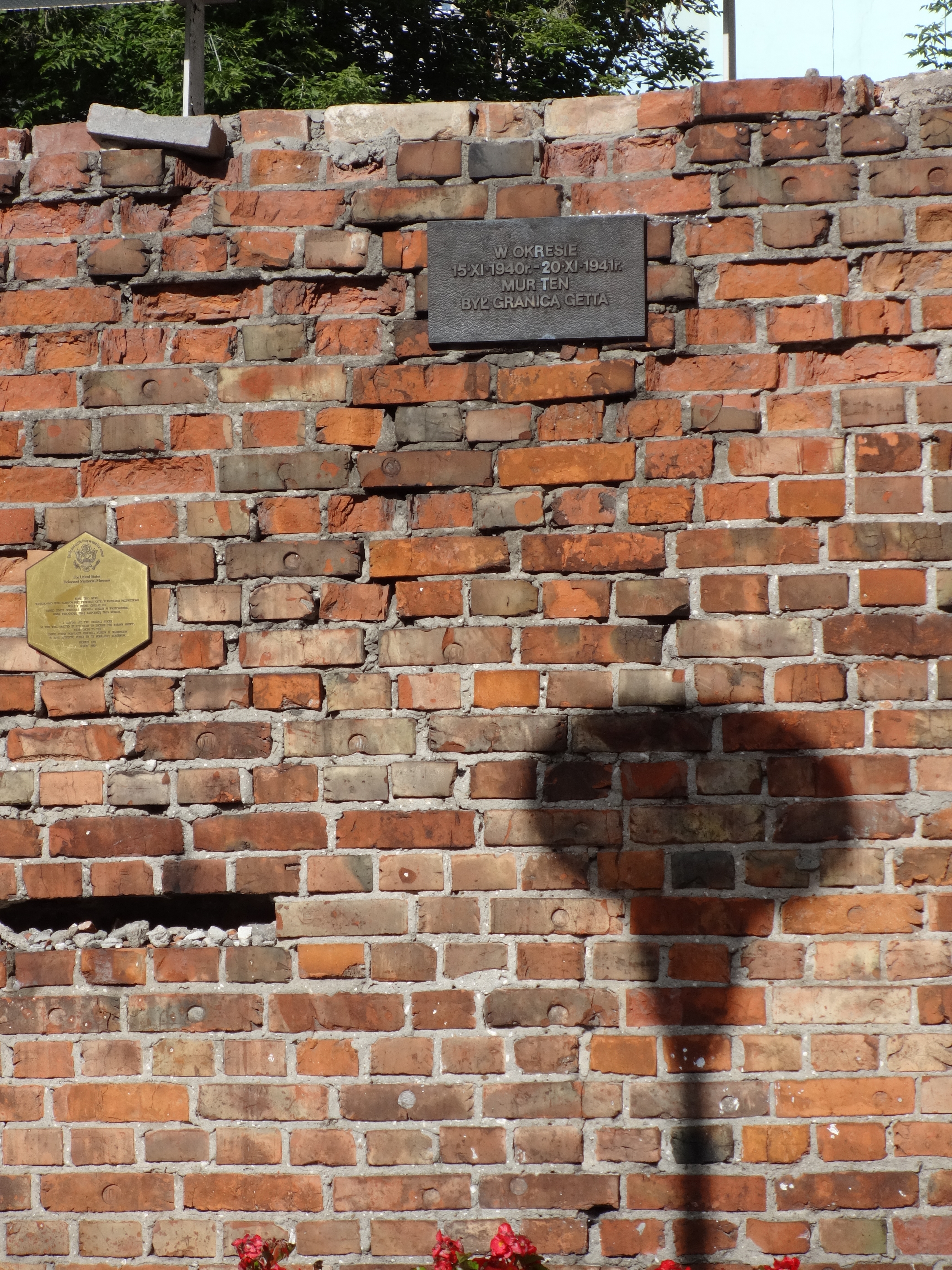
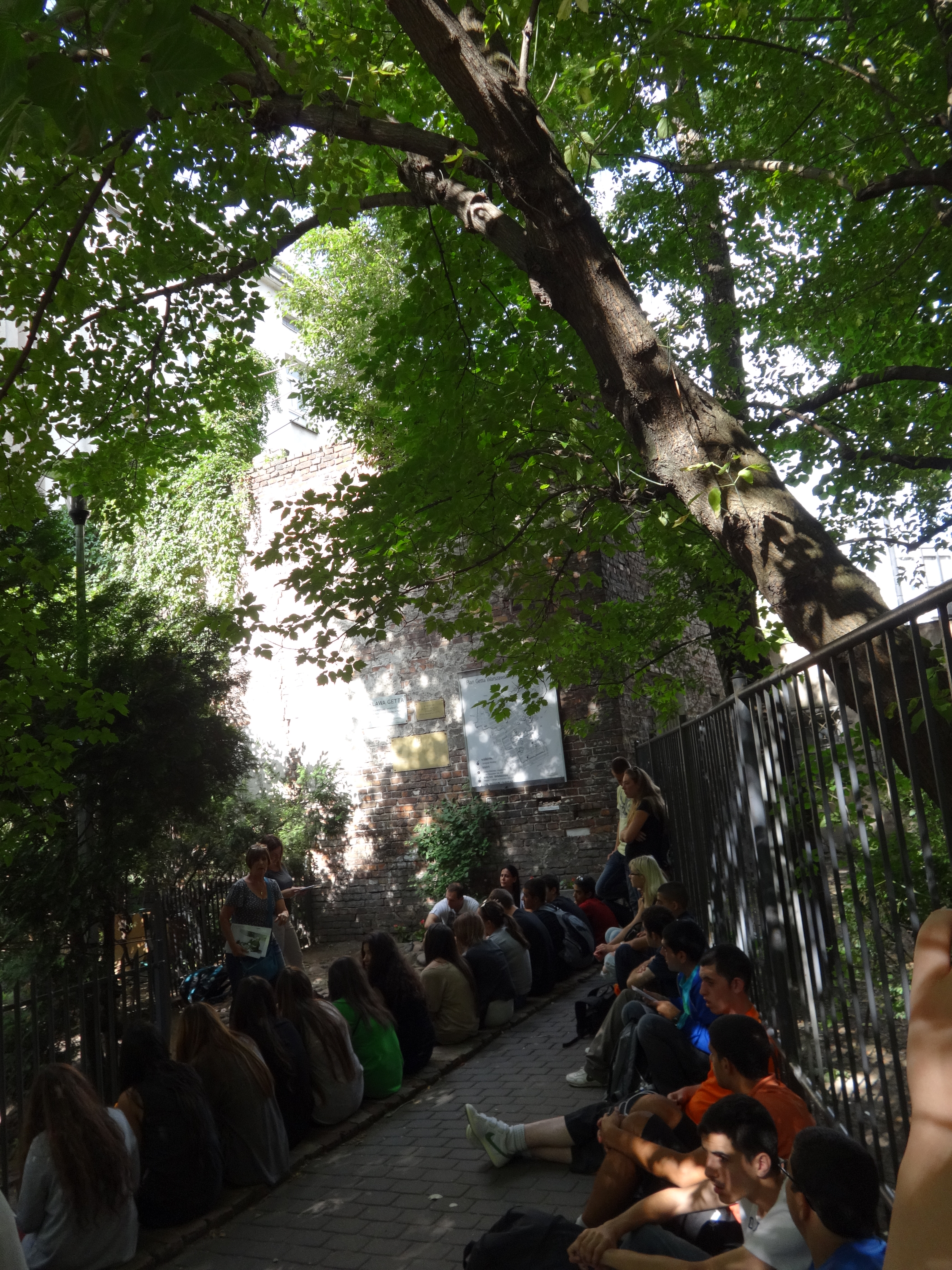
And we come to a section that still stands.

Warsaw Ghetto wall.

Warsaw Ghetto wall.

Warsaw Ghetto wall. Some Israeli teens are hear, listening to their teacher.

Warsaw Ghetto wall. Some Israeli teens are here, listening to their teacher.

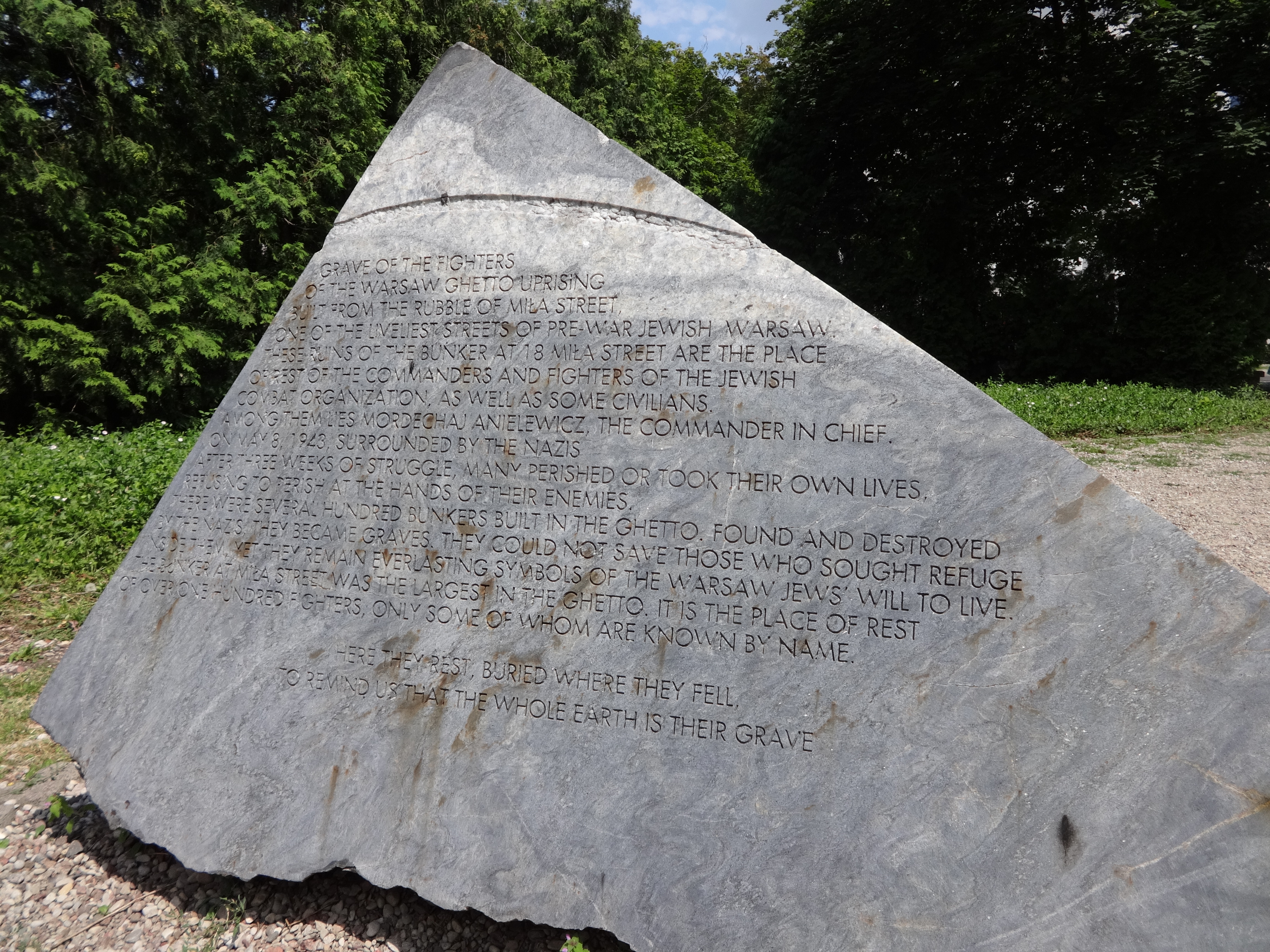
The Warsaw Ghetto uprising was the first open fight in an occupied city against the Germans. And it was conducted by Jewish youth, who held off the Germans for half a month in the spring of 1943. Utterly inspiring and amazing. We make our way to Mila 18, the bunker command post where Mordechai Anielewicz and many of the resistance fighters breathed their last. It is another solemn moment.

18 Mila Street.

18 Mila Street.

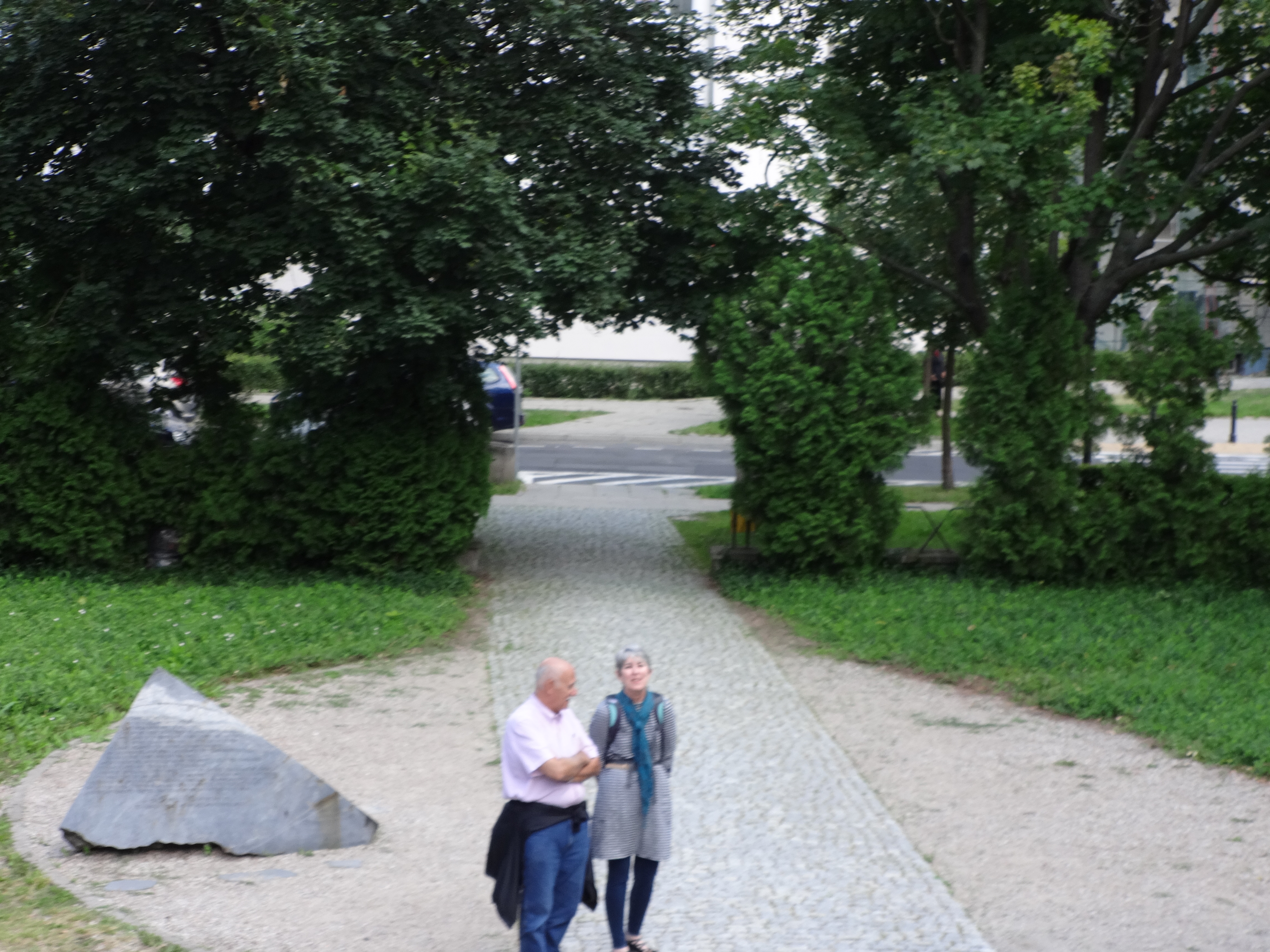
Monument at Mila 18.

Monument at Mila 18.

We know why we are here. We are not only witnesses, but we were chosen to become, for many, the point of entry on the immense and sometimes unfathomable subject of the Holocaust, and the many forms of resistance that were taken during it.  And so rightly, our trip is concluding here. The processing will only come over time.

***

* By then, there were between 300-350 fighters- Bauer, Yehuda. ‘Current Issues in Holocaust Education and Research: The Unprecedentedness of the Holocaust in an Age of Genocide.’ Lecture notes, International School for Holocaust Studies at Yad Vashem, Jerusalem, Israel. July 21, 2016.

* Poniatow and Travniki– forced–labor camps for Jews in Lublin District near the concentration camp Majdanek.

* SS General Globocnik –SS and police leader who directed Operation Reinhard between autumn 1941 and summer 1943.

Read Full Post »

I was flipping through some photos I took about this time of year and found this one. I remember it. I took it on a Sunday night in late March 2016. About twenty-four hours later, same beautiful March weather, same glorious sky, a friend died in an accident. I found out the next day, and wrote this right before his funeral. I thought of that sunset and I thought of him. Coming to my admin page here, I see the original post has been visited many times over the last week or so. It turned out to be one of my most shared posts here, rightfully so. A damn good man. C.J. Hebert, 1964-2016.

*******************************

At the high school where I have taught for nearly 30 years, we got a notification early in the week that one of our former principals had died suddenly in an accident. He was just 51, a little bit younger than me, but he was a giant both in his stature and presence, and also especially the way he conducted himself inside and outside the school. We worked together closely on a lot of stuff, so hearing the news of his passing was a jolt.

A good man.

A good man.

C.J. Hebert was our leader for eight years. In 2010 he spread his wings and expanded his horizons and took a job as superintendent in the Cooperstown, NY school district. He just grew, and was ready to grow some more. He was excited, and told me at one of our last meetings that he was thrilled that his new office would not be out of the way, but would be near where the kids were all the time.

It turned out to be a long day to get through. When I got home last night, I read some of the online comments from his colleagues and former students. C.J. was a big outdoorsman. He liked to shoot, hunt, and fish. If he went into the woods unarmed looking for a bear, you’d worry about the bear. When the kids in the National Honor Society would come to him selling our magazine subscription fundraiser, he always opened his checkbook, though he told me with a chuckle that his subscription to Field and Stream was now paid up to 2025.  And some of these kids I read about last night he even shepherded through bowhunting classes.

He could be tough, but was always respectful in his professional demeanor. And when you were sitting with him in his office, you could talk to him man-to-man. He always liked hearing what I was up to. He had an easy laugh and though it may be a cliché, there was a twinkle in his eye that told of a deep personal interest in you, genuine good will and a down-to-earth contentedness that just radiated and went unspoken miles.

My current principal made the rounds to see how some of us old dogs were doing with the news. He knew him well too and I know we were all shocked by the loss. My dear friend Mary was his secretary all the time he was here, and even though C.J. left our school 6 years ago, the loss just hits you, like the wall you used to lean on suddenly falling down on you. I can’t imagine what it must be like for his family and his community now.

*

Later in the day and totally unrelated, I was gently reminded by a friend in the IT department that I should do something with my school email inbox-that it had reclaimed its place as the largest in the school district.   (Okay, I admit it, I’m bad. I’m not a hoarder, but I’m not an immediate deleter, either…) At first I felt mildly chastised at being reminded at least twice. But through my friend, the universe dropped me a notice. Maybe not so unrelated, after all.

So I set about it- going back and deleting, one by one, the emails I do not want to keep, and do not wish to archive. Today I was on Day Two of this activity-which in a way is turning out to be some kind of release, an ablution of sorts, as I wind down my career. Staring at the screen and hammering away for all of the spare time that I can afford seems at first like a mindless endeavor, but then it slowly dawns that me that I am processing a loss that I did not ever expect to deal with-and here on Day Two I find the last email from C.J. to me, from June 2010, six years ago.

I save that one.

And I remember that I saved all of the handwritten cards and formal letters that he took the time to write to me, over the years, as a supporter of my work in the classroom and in this school, expressing appreciation for the true meaning of what it is to be an educator- the connecting with other human beings, to foster their development, to watch them grow, with pride. He did not mind chewing a little ass when it needed to be chewed, but that was always a flash and the twinkle always returned.

When he was leaving our school district, a local paper asked him what he would remember from his time here at Hudson Falls High. I did not see the article, but I was told that he held a special place in his heart for the two soldiers-survivors reunions we held while he was at the helm here. We planned it and between C.J. and many, many committed others, we pulled it off, and even made it on the ABC World News. It touched me that this meant so much to him, but in hindsight, that is what he was all about- providing students with life changing opportunities and fostering their development as human beings.

So, it turns out that for me, across time and space, there is a significant loss here. There are no special words of wisdom, or special comforts that I can present to his wife, his son, his family-only that the universe presented him to so many people in so many different ways, most which you may never even know about- but that in the bigger picture, perhaps the one that we cannot see just yet, there is that glow of contentedness and confidence, that twinkle and the easy laugh, and that unassuming good will towards others that will always inspire, and that we can all aspire to. And that it won’t just go away. Though I have not talked to him in six years, there is a warmth that I can feel enveloping my insides almost physically right now, thinking of him.

And it feels damn good.

I’ll be pecking away at my email inbox again tomorrow. It will take a lot longer, as  I have another six years to go-now back to the time when C.J. Hebert was at our helm-and I will probably have to read each one from him, I suspect. And with a twinkle, or something, in my own eye.

Lessons taught; the universe beckons. Godspeed, my good man.


Calling hours and memorial suggestions are below.

http://www.watertowndailytimes.com/obit/clifton-j-hebert-iii-cj-20160322


**********************************************

Read Full Post »

I was unpacking a box from my classroom last week, full of framed pictures and awards from my previous life as a classroom teacher of history and the Holocaust. Yes, I know it is February, and I ‘retired’ in June. I guess that it’s taking so long because some days I wrestle with the fact that I’m no longer in the classroom with the kids everyday. But I can tell you that students and teachers have been on my mind all week long, given the events in a Florida high school.

So I’m unpacking this box (and subliminally wondering why I am even bothering to unpack the box, now eight months down the line), dusting off the frames but noticing a few small yellow spots that don’t go away with a wipe, but can be scraped away with a fingernail. I’m curious, and then it all comes flooding back.

Oh yeah. It was from that day a few years ago when an enraged 18-year-old in my classroom (whom I had been walking on eggshells around all year long) suddenly sprang out of his seat like a coiled spring and hurled his books at me from across the room, narrowly missing me, and, rapid reload, fired his 20-ounce sticky breakfast energy drink which exploded at the horizon line above my head where the yellow painted cinderblock wall and ceiling met, spattering and raining sticky golden gunk everywhere. He turned and it seemed like he nearly tore the metal classroom door out of its frame, opening it with such a velocity that it ricocheted off the closet, and stormed out of the room and down the hall.

I instinctively walked quickly to the door, closed it, and locked it. My stunned students were quiet as I returned to my desk and called the office. And then I somehow managed to carry on with the lesson, until I could follow up the next period. Must keep things ‘normal’. But I was shaking. All I had done was ask him nicely, respectfully, and personally, three times, to stop texting during the lesson. I was gentle, quiet. I even said please. I don’t think the other kids even heard me, hence their stunned incredulity at the explosive reaction of the student. Later I insisted that he not be allowed in the vicinity of my classroom, and maybe I was lucky that my wish was granted. I’m sure I was lucky on many levels. I never saw him again.

All of this brought back what I have been thinking about all week. It was not my first brush with some level of threatening or violent behavior in the classroom.  We, kids and their teachers, administrators, deal with this enough so that the ‘what ifs’ are always present, but now they are again hurtling from the back to the forefront of our lives.

And so to my teacher friends, some of whom, hearts heavy, cried in front of their students this past week, it’s okay. You’re bombarded and pounded-again-but your kids know that you are there to listen to them. So that’s just where it is right now. You are there for them, and frankly, in this moment, they are there for you, too.

Now I circle back to that question-was there every really a time when I would not have put it on the line for my kids? Not at all.  And truth be told now, I always balanced a 3-foot-long piece of angle iron (left over from school construction) on my knees, when seated just behind the door, while the kids were huddled in the corner during the shooter drills. (Maybe it wouldn’t do any good, but it sure felt comforting to hold on to a heavy piece of metal.) And after a week of fumbling to find the right words, I read this article in the NY Times. Yes. Times like these I really miss my school family, and the beautiful human beings we nurture and cultivate. And kudos to Bruce Klasner, fellow Holocaust and Jewish Resistance Teachers’ Program alumnus. I don’t know Bruce, but he nailed it for me.

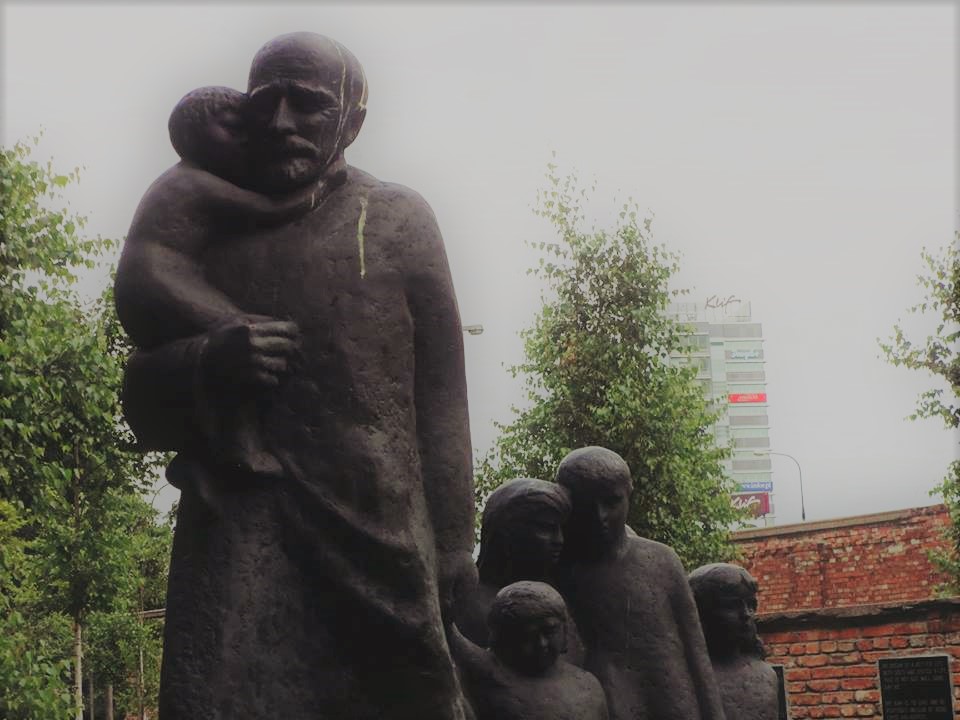
Janusz Korczak memorial, Warsaw, Poland. I took this while on myHolocaust and Jewish Resistance Teachers’ Program journey. Look him up sometime. And read below.

*********************

School Shootings Put Teachers in New Role as Human Shields
By JULIE TURKEWITZ    FEB. 19, 2018

TAMARAC, Fla. — The shooting was all over, but the emotional reckoning had just begun, and so on Saturday the teachers of Broward County packed their union hall to discuss what it meant to have become the nation’s human shields.

“Last night I told my wife I would take a bullet for the kids,” said Robert Parish, a teacher at an elementary school just miles from Marjory Stoneman Douglas High, where a former student killed 17 people, including three staff members who found themselves in the line of fire.

Since the attack last week, said Mr. Parish, “I think about it all the time.”

Across the country, teachers are grappling with how their roles have expanded, from educator and counselor to bodyguard and protector. They wonder if their classrooms are properly equipped, if they would recognize the signs of a dangerous student, and most of all, if they are prepared to jump in front of a bullet.

In the last few days, teachers wrote to Congress, urging bans on assault weapons, and to state lawmakers, seeking permission to carry firearms to school. They attended local protests and reviewed safety plans with students. And in the evenings, they spoke with friends and family about an excruciating reality — that teachers, who once seemed mostly removed from the life-or-death risks faced by the ranks of police officers and firefighters, might now be vulnerable.

“I visualized what it would look like, and it made me sick,” said Catherine Collett, 28, a sixth-grade teacher in Northern Virginia who has spent recent days running through a thousand violent scenarios. “Could I empty out the cabinet and throw out the shelves and put kids in the cabinets? Is my better chance just barricading the doors? Can I move furniture that fast? Do I ask my kids to help me?”

Many teachers said even contemplating such worries felt far from what they had once imagined their challenges would be. As if the mounting pressures of test scores and email messages to parents and bus duty and hall duty and new certifications and all those meetings wasn’t enough. But the death toll has piled up — staff killed in shootings at Columbine High School in Colorado in 1999, Sandy Hook Elementary in 2012 and now at Stoneman Douglas in Florida — and is forcing a shift in how teachers view their responsibilities.

“When I started teaching, I thought I was just coming in to teach,” said José Luis Vilson, 36, a middle school math teacher in New York City. Now he has come to view himself as a first responder, too, and added that instruction on topics such as conflict resolution and first aid would be useful.

Bo Greene, 56, a calculus and statistics teacher in Bar Harbor, Me., said the planning for dangerous situations had increased and grown more specific in the last year, even in her quiet school district. All of it feels jarring after decades in education, she added.

“I never had any of this,” Ms. Greene said. “We had the basic fire drills.”

Nowhere was the conversation among teachers more intense than in Broward County, where Stoneman Douglas is one of more than 300 schools, and Nikolas Cruz, charged in the shooting, had been among the district’s 270,000 students.

Laurel Holland, who was Mr. Cruz’s 11th-grade English teacher, said teachers in big public schools cannot possibly be expected to look into every student’s background to know if they have long been troubled. The year that she taught Mr. Cruz, she had more than 150 students, she said.

“There’s not enough time,” she said.

In the case of Mr. Cruz, she said, it was clear something was wrong. “He didn’t work and play well with others,” she said. “I was frightened.”

Ms. Holland eventually reported him to the administration, and he was removed from her class after one semester.

Inside the crowded union building on Saturday, educators held hands and shouted “Union strong!” before getting down to business.

How, they asked, were they going to stop the next one?

For hours they spoke of the golf clubs and baseball bats they would like to keep in their classrooms, of the bulletproof vests they wish they had, of the challenges of removing mass killers from their midst.

“I’m curious to know, out of the people here, how many Nikolases they have at their school?” said Elizabeth Sundin, 48, a teacher’s assistant. “Because I have one at our school.”

Outside, in the balmy Florida night, Mr. Parish, 51, of Broadview Elementary, was wrestling with the question of the class door. When an armed attacker begins to prowl, and a student is left in the hall, “Do I let the kid in, and maybe the gunman behind her?” he said. “Or do I not let them in and save the whole class? That’s a decision I can’t make.”

Inside, under the glare of fluorescent lights, Bruce Klasner, 61, of Everglades High was wondering why the district had not created a text message system that could send instructions in the event of an attack.

“I teach the Holocaust,” he shouted at the rows of exhausted teachers. “I taught them,” he said of his students, “about a man by the name of Janusz Korczak who walked into the gas chambers with his children because he refused to leave them. And after this happened my kids are sitting outside saying, ‘Mr. K, would you give your life for me?’”

Mr. Klasner said he would — of course. “I said, ‘Did you even have to ask?’”

In a corner, Andrea Suarez, 35, of Westpine Middle School was worried about her own students, who have special needs and often make loud noises, meaning it is almost impossible to hide them.

These days, she said her plan for responding to a shooting involves corralling the children into a closet, occupying them with snacks, and positioning herself in front of the closet door with a pair of sharp scissors.

“I’ve been having a lot of difficulty sleeping,” said Ms. Suarez, whose four children have been urging her to leave the profession. “I keep hearing kids screaming and gunshots in my head.”

Here in Tamarac, the union meeting was wrapping up.

Jim Gard, in cargo pants and a union polo, stood outside, amid palm trees. At 58, he has been a teacher for 36 years, he said, and works at Stoneman Douglas. When the shooting broke out, he was in math class, not far from where many were shot. He had taught Mr. Cruz, as well as two of the dead.

“You know, if I go through my college transcripts — master’s degree, doctorate courses, all that — I know for sure there are no courses that say: ‘Shooter on Campus 101,’” he said.

The Broward County school district announced on Monday that staff members would return to Stoneman Douglas at the end of the week. Classes are expected to resume on Tuesday, Feb. 27.

Mr. Gard said many of his colleagues were struggling with the idea of returning.

And yet, he said, “I want to go back. I want to go back to my kids. I want to go back to my classroom. I want to see the kids, I want to teach the kids — and that’s the bottom line.”

https://www.nytimes.com/2018/02/19/us/teachers-school-shootings

Read Full Post »

MTF Spotlight – Matt Rozell

Here’s a recent article from the Museum Teacher Fellowship Program at the USHMM. Many friends, so dedicated to this mission we are all on. Thanks Josh.

USHMM's avatarMuseum Teacher Fellows

MR.June 2017 cropped
Interview and Article by:
Josha Sietsma, Netherlands (MTF 2016)

For Matt Rozell (Granville, NY; MTF 2008), the term ‘retired’ doesn’t define his state of being. A real teacher never stops teaching. Writing books that educate, and with a bigger audience than ever, Matt talks to us on his connection with the Museum and connecting survivors with liberators: “I think [also] it is true that our work as educators is never ever done”.

To start, what are your tools of trade? What is essential to your work, your performance.
A passion to connect to history using real people. When I begin to speak about the history, Holocaust or otherwise, there is a level of excitement and passion that just flows out of me and engages my audience, be it high school students or senior citizens listening to one of my presentations. And it has been with me since my earliest days…

View original post 1,496 more words

Read Full Post »

Soon after liberation, surviving children of the Auschwitz camp walk out of the children’s barracks. Poland, after January 27, 1945.

United States Holocaust Memorial Museum

I study this photograph,

and so it begins.

Seventy-three Years Later.

The war comes to a devastating conclusion.

The discoveries unfold:

Eyewitness encounters with the most horrific crime in the history of the world.

Battle-hardened tough guys cry.

They stomp their feet in rage, and get sick,

but the lost are lost.

The Survivors ‘carry on’.

The Soldiers ‘carry on’.

Some will be lost for the rest of their lives.

Now, it is Seventy-plus Years.

But it is not over,

because ‘closure’ is a myth,

and seven decades is but a blur.

The barracks door opens slowly. New tracks form in the snow

but how is life supposed to go on?

And now for the rest of humanity-

Just what have we learned,

Or have we just allowed ourselves to forget?

Is it even important, for us to stop and think

about snowflakes on little boys?

*****

-m.a.rozell-

See the Altantic’s photo essay here.

*************************************************************

Matthew Rozell is a teacher who has studied at the United States Holocaust Memorial Museum and Yad Vashem, Israel’s Holocaust Martyrs and Heroes Remembrance Authority. His second book,  A Train Near Magdeburg, is on teaching and remembering the Holocaust.

Read Full Post »

2017. Another year down.

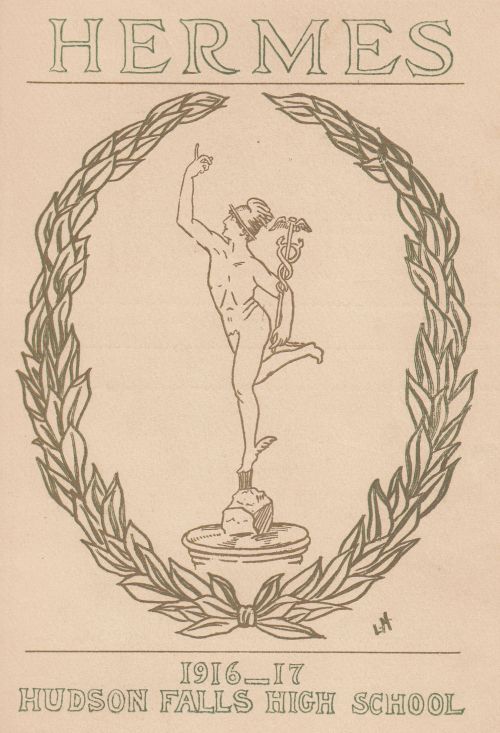
I have not posted a lot since I “retired” but here is one I wanted to sneak in before the new year dawns. Actually I should have done it a long time ago, but the fact is it only came to light last spring. Deep in a filing cabinet, a copy of the very first yearbook of our school district emerged- exactly 100 years later. So I scanned it and here it is, in its entirety. Our yearbook staff used some of it in the 2017 Hudson Falls CSD yearbook. Thanks to some eagle-eyed staff members, it’s safe in the district vault now as well. There are actually two copies known now to exist. Believe me, I searched for them for years. The earliest I could find in the vault was 1919.

I could ramble on about its significance to our community, but I will let the pages speak for themselves now.  Most of the folks who get this notice in their email inbox signed up to learn more about the Holocaust, or WWII, or the importance of teaching history. But this is the community that raised my dad, and me and my brothers and sisters, and that my mom became a big part of. It’s the school that produced yours truly and many fascinating people. It’s where I spent my career, and did the things you come here for. It’s also a snapshot of an American small town 100 years ago. And for my ‘former’ school community, this is me, Mr. Rozell, still here, charging up the parapet on the last day, and holding the fort.

Hermes. The messenger of the gods. I hope you enjoy it-I compressed it to 10MB I think- Have a wonderful 2018, but here is to 2017, and 1917.

Click on the cover photo, or here to download. Catch you on the rebound. Have a great 2018!


Read Full Post »

In 2003, I interviewed one of the original Tuskegee Airmen, who visited our school on numerous occasions to tell his story. Mr. Clarence Dart was a great storyteller, not only of the war but particularly about growing up in the Depression. Here is an excerpt from Volume 3.

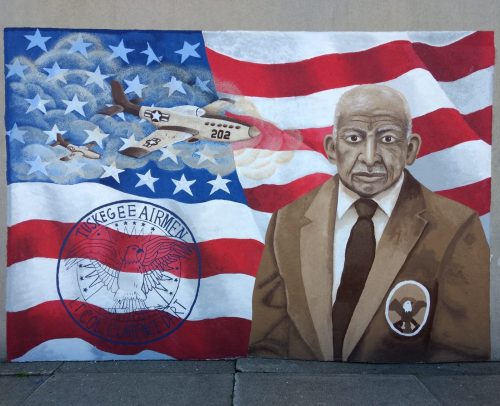
Mural of Clarence Dart in his hometown, Elmira, NY.

Clarence Dart

Tuskegee Airman

 December, 2003.

Clarence Dart, Dec. 2003. Matthew Rozell photo.

[The Great Depression] was a tough time. To think of the way people had to live. People who had good jobs and overnight lost them because of the crash in 1929 when the stock market crashed on Wall Street. Overnight, millionaires became paupers. No money, period. A lot of people, believe it or not, jumped out of those windows down there in New York [City] and committed suicide. The shock was just that great. To think that they were penniless overnight because they bought stocks on what they call “margins”. It wasn’t enough to cover or reserve when the market collapsed and so they just became penniless overnight.

It affected everybody. People were selling apples for a nickel on street corners. My father, fortunately, didn’t lose his job because he worked on the railroad, but he kept taking pay cuts all the way through the Depression until the time it started to turn around when World War II started. I think he was down under twenty-five dollars a week, take home pay. We had just bought a house and boy, did we struggle during that time! I could take the whole afternoon telling you how we lived and what my mother used to do to keep me in clothes. My mother would buy shirts from the Salvation Army store. She would turn the collars because they would get frayed. She would take the collars off, turn them and sew them back onto the shirts. It was a time when people really had to be on their own. Of course, it also brought people together. There was some welfare help, but it was tough, especially in the wintertime. We kids use to go down and stand next to the railroad tracks. The firemen on the locomotives use to shovel coal off of the engines as they went by. We would pick up the coal and take it home. Of course, we burned everything; we didn’t have central heating in homes in those days. Everybody had either a fireplace or a big central furnace with one duct on the top that supposedly was to heat the whole house. We use to go out and pick wild mustards and stuff like that for food. Everyone had a garden also. There was a lot of implementation to survive.

( Of course) our clothes for one thing, I could remember especially in the winter we had what you called garters, but they were rubber boots, no insulation in the darn things. We would go out and play until we couldn’t feel anything in our feet and hands. You could come home and first thing we would put you in tepid water, supposedly to warm you up. As soon as you hit that water, you would start screaming. I don’t know if any of you have had frostbite or anything like that, from being out skiing or ice skating until your hands get so cold you don’t feel anything anymore. It lasts practically forever. Once it happens to you, you will always feel that cold. I experienced it again, so to speak, when we were flying, switched to the P-51s, at high altitudes, around anywhere from twenty-five thousand to over thirty thousand feet. There wasn’t much heat in the airplanes. The heat in the P-51s would come in on one side and that foot would get warm, but you would have to sort of cross your feet [laughs] to defrost the other foot. I’ll get to that further on to make a continuity.

The way I got into the service when the war started, a friend and I were talking about going into the navy. But, my mother put a stop to that right quick. She said, “You’re not going into any army, navy or anything.” Well, you know how mothers are, they’re still that way today.

When the war started in 1941, I had just turned twenty-one. I was singing in our church choir at our radio station that afternoon when they came in and said that Pearl Harbor had been bombed. I had just turned twenty-one December sixth and it happened the next day.

*

After high school, there were no jobs so I went to what they called Elmira Aviation Ground School. The state figured they would start all these training schools for people to learn how to be mechanics, machinists and radio operators.  I took all the classes that I could. I figured I was set to do anything, but you go around and how things were in those days, you were rejected for one reason or another.  When the assessment team from the Air Corps came around with their tests, I passed all their tests, except my medical.  Most of my medical was all right, except I didn’t pass the depth perception test.  That was because I was so excited I didn’t get sleep the night before.  My eye sight was kind of fuzzy.  In those days, the depth perception test used two sticks.  One of the sticks had a line on it and you had to move the sticks until they were opposite each other.  This was supposed to demonstrate your depth perception so when you came into land [laughs] you knew how far the ground was below you or something like that.  But it was a rudimentary test.  Anyway they told me, “You go back and get rested.  So when we come back again will give you another test.”  That happened about 8 months after that.  So I came around and passed the test.  They said, “Go home, when your class is called, we’ll cut orders and give you the oath of office.  We will see you get to Tuskegee for training.”  Well, they were still building the field down there in Tuskegee, so I didn’t feel to bad about it.  I told my draft board that I was going into the Air Corps.

*

Eventually, after they got us settled down some of us were transferred to the campus of the Tuskegee Institute for our ground training, to learn navigation and communications and stuff like that.  I didn’t have any trouble because I had the experience of radio and so forth.  Eventually, while we were there, after we passed our tests in ground school they would truck us each day out to Molton Field, the field I told you is going to be a national monument.  We trained in PT-17s which were biplanes built by Steermancompany. It was the thrill of my life!

*

I finally graduated from advanced and eventually I got my commission on November 3rd, in 1943.  We transitioned into P-40s.That was an experience because in the military in those days when you transitioned into another airplane they just showed you to start the engine and gave you some of the air speeds you should fly at for approach and take off, and away you go, there is no instructor in there with you.  Nowadays in the military you have to go to school and simulators.  That’s why they require everyone to have a college education in the Air Force today because it is very complicated.  There are lots of buttons to push.  If you ever get to see the cockpit of those fighters nowadays you just wonder how the guys ever have time to do anything, but just watch all these little screens [laughs] and push all these little buttons and what not.  Doing the things they have to do is very complicated.  My class fell as we graduated.  We took our transitioning into this one beat up P-40 that they had there.

After that we were sent to Patrick Henry and were transferred over seas.  We had to the [good] fortune to be on a luxury liner that had been converted to a troop transport, so we had good meals except that we ran into one big storm and… well, it wasn’t funny, because this one time in the middle of the storm the ship started to roll. Then it got worse and the next thing you know the chairs and tables,  they weren’t bolted down, people were sliding from one side [laughs] of the ship to the other, oh what a mess! You could here the crockery and the plates falling on the floor, breaking! Well, after about a couple hours of that, we got out of the storm into calmer water and after nine days we landed in Oran, Morocco. We were sent to the edge of the desert to train for a while.

The 99th Fighter Squadron, which I was eventually transferred to, had come over earlier. They had fought with the 12th Air Force with the 79th Fighter Group and they had moved to Italy. We got a chance to do some dive bombing and strafing  there on the desert and flying under a bridge, which we were told not to do, but we all did it anyhow, just the thrill of it… [Laughs] you know? There was nobody around to tell us really what to do. There were no officials so to speak except for the people running the field there, so once we got out of sight … we used to do the same thing at Tuskegee. We used to buzz the people picking cotton in the fields [chuckles], stuff like that. There were all kinds of complaints…people just didn’t know how to report us… if they got a number off the airplane or something, you know, you’d be washed out right away.

We were put on a C-47 to catch up to the 99th, I’m just speaking about myself now, and Capodichino, outside of Naples, Italy on the day before Vesuvius exploded, I mean erupted [March 18, 1944]. Just the weight of the ashes out of that volcano destroyed nearly every airplane on the field, broke the wings off, the tails off, it was a mess. So we didn’t have any airplanes to fly and we had to wait about… oh I guess it was over a week, and they flew in replacements for us. Then they moved us to a little town outside of Naples called Cercola,  and we were based there for  I would say the first few months and that’s where I started mycombat career.

The first time you find people trying to kill you, it puts a different phase in your life. You know,  when I was a kid I used read all these romantic stories about “G-8 and his Battle Aces” about air duels in WWI, when they were flying the Fokkers and the Allies were flying Spads, Sopwith-Camels and stuff like that. Well, our job mainly was to do divebombing  and strafing, so we were never more than two or three thousand feet in the air, and you would have to come down from that anyhow to strafe, except when you were divebombing.

I think it was on my fifth mission we got a call to relieve some GIs that had been pinned down by the Germans. They told us to go give them some help. We had a new flight leader, and he should have known better, because he had been there about a month or two ahead of us…  so he started…he put us in trail, like in a gunnery school formation you know, everybody nose to tail, but with, you know, space. So we spotted the target- we went around the first time firing at,  I think it was, a German machine gun nest; no return fire, so we went around the second time. I said  “This isn’t right”, because the rules of combat… you make the first pass, if you don’t get any return fire, you just keep going, you come back another day. Well, we went around a third time and the ground opened up -it was [like] the best 4th of July sight you’ve ever seen! They threw everything at us, and it wasn’t long before I heard a big “bang” and the cowling started peeling off- like somebody peeling a banana. Then another “bang” and a hole opened up between my feet and the rudder pedals and another “bang” behind the cockpit, and  the next thing I knew I was “counting blades”! There was a three-bladed prop on the P-40s and the engine…they shot out my fuel lines, oil lines, coolant lines, and the engine quit. And since we were strafing, I think I was…down under five hundred feet! So I couldn’t jump out, because the kinds of ‘chutes [parachutes] we had in those days, if you weren’t at least two thousand feet, your chances of landing safely weren’t too good, because they were kind of slow opening, they didn’t pop open like the ‘chutes  do today. So I had to find a field to put the thing down- I figured I had picked a good field, I thought it was a good field, but it turned out it was a plowed field, but from the air it looked like it was kind of smooth.  So I knew I was going to have to belly land this thing. I reached down, pushed this little lever that locked my harness and glided toward the field and the next thing… just as I was about to put it down, the airplane stalled!  One wing dropped, and I think it was the right wing caught the ground, and the airplane cartwheeled, a really rough ride. When it came to a stop- I was sitting there kind of dazed in the cockpit- I saw these guys running over this wall into the field, it turned out they happened to be GIs, not from the place where we were relieving … this was another group of guys, who said the Germans had moved out of this field about an hour before. I was sitting there just in the cockpit because both wings were broken off, the engine was out of the mount, and the tail was broken off and they got me out of the cockpit.  They had a medic with them who fixed up my few scrapes and bangs, but I was on crutches, I guess … well, they got me transportation back to my base.  I was on crutches I think for about three days, because I was a little sore [before] I was back in the air.

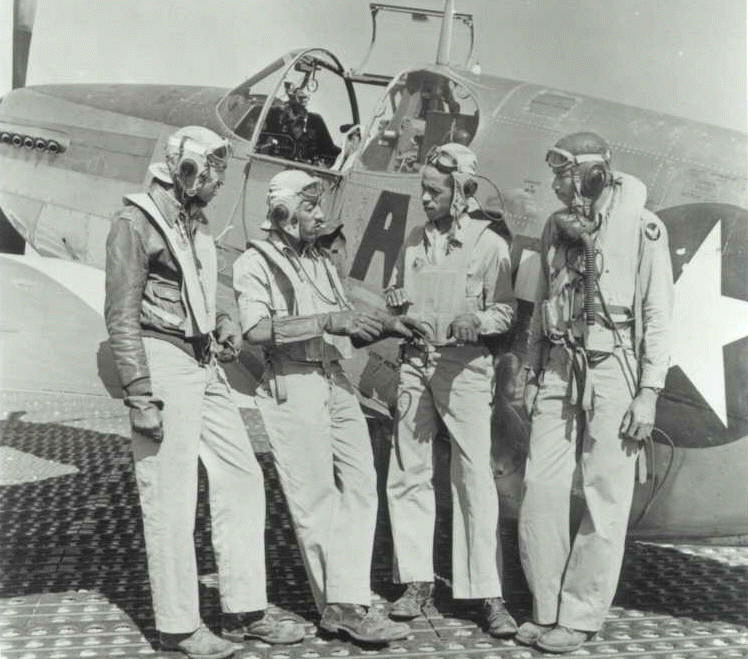
(L-R) Tuskegee Airmen Clarence Dart, Elwood Driver, Hebert Houston, Alva Temple discuss kill of ME-109, summer, 1944, Italy

because Mark Clark  had taken Rome, liberated it, and the Germans were on the run. I got back to my base and flew a few more missions….when they brought the other three squadrons over, we got brand new P-51s like the one in that picture. [Points to picture on the table-(L-R) Tuskegee Airmen Clarence Dart, Elwood Driver, Hebert Houston, Alva Temple discuss kill of ME-109, summer, 1944, Italy] Now this was a P-51 C or B, not the D’s that everybody thinks of [Points to picture again] when they talk about P-51s. These were the Razorbacks. But they were good airplanes. In fact, I liked them better than the newer D’s- to me, they were more maneuverable, it was more like a Spitfire t-because the D’s were heavier and they didn’t feel as agile as the C’s were and I felt comfortable, because I thought you weren’t as exposed in these airplanes.  In the D’s you had that bubble canopy, you had that 360 degree view but… like I said, it was heavier… and I didn’t like it, but eventually I was given one and told I had to keep it and they gave my airplane to my wingman! But anyway….

The reason why we got our reputation was when we first got over there [to Italy], we used to take the bombers from the IP, which is the Initial Point, to the target and pick them up when they came off the target. We wouldn’t go [all the way to the target]…but then Colonel Davis said ‘from now on, you’ll go with the bombers through the whole mission”  because the Germans were sending their fighters up in their own flak- they were getting desperate. Our mission was to keep the fighters off the bombers, not to disrupt the formation, because when the bombardier took over the airplane at the Initial Point, he flew the bomber through the Norden bombsight…once he started on a target,  he couldn’t deviate because he’s figuring out the wind drift and everything, so the bombs will hit where they’re supposed to. It didn’t always work, but that was our mission-we kept the Germans off the bombers and that’s why we never lost a bomber to enemy fighters in 200 missions. At first they didn’t want us…but toward the end, they started asking for us as an escort, because we protected them to and from the missions. Of course, we couldn’t do anything about the flak, though. In fact, we lost some of our own guys getting hit by flak.

Read Full Post »

« Newer Posts - Older Posts »