Feeds:
Posts
Comments

This evening my wife and I spent an hour with filmmaker Ken Burns in the company of 300 other individuals, most seemingly well educated and literate. (I wonder how many other history teachers were in the audience.) We sat in the front row as he read from the introduction to his book, but the true passion came forth in the question and answer period that followed. Then he burned with the intensity that comes from the conviction that you know you are right and that your work has amounted to something because IT MATTERS. (I recall his impatience at one particular comment or question, saying “All you have to do is visit the United States Holocaust Memorial Museum in Washington, DC and see the canisters of Zyklon B, and become aware of  the millions of pages of documents kept by the Germans themselves, to allay any question about the magnitude of the Holocaust”.)

For me, and clearly for him, it has never been about “my country, right or wrong” or even the idea of a “Greatest Generation”… during the Second World War, some very courageous people followed their convictions not to kill and instead became social pariahs and /or incarcerated individuals. (Read John H. Abbott’s “Reflections on Machismo” interview in Studs Terkel’s The Good War.) For me, teaching history is about teaching the kids what happened by letting the stories unfold, to engage or to repel. We learn that history is never black and white because life is not, and has never been.

What motivated and pushed him to work on this film on the Second World War boiled down to two things- the fact that this generation is fading very quickly, but more importantly that our nation’s collective memory of what happened sixty-odd years ago seems to be dying faster than those men and women are. One the one hand, we feel unabashed gratitude. On the other, we feel sheer outrage at the fact that what’s become standardized ( besides test, test, test, or more likely, because of it) a kid can graduate high school with honors and still not know that much about the context of his own history… I’ve been outraged for a long time, but I’d like to think that in sharing some of this outrage with my students, they can pick up on its importance… Burns and I have been on the same page for a long time. I’ve been conducting these oral histories for almost my entire career in the classroom. Thank God his work is starting to raise awareness among educators to the point that it is becoming almost fashionable.

At the book signing I was a bit disappointed because it became immediately clear that he had to get through this ritual as quickly as possible to satisfy the line of people who had paid their 55 dollars for their 30 seconds with him. Laura and I were nearly the first persons in line and it was a little nuts, he wasn’t too relaxed, but I can’t blame him. (Getting 20,000 hits on our ww2 website on a single weekend and equivalent of 67 pages of guestbook posts/emails reading about dads, uncles, granddads who fought in the war was an honor, but a bit overwhelming- I can only imagine what it is like for him…) Still, in my Ralphy “Christmas Story” fantasy-world I got to tell him what we have been doing at our school, making sure that none of our students graduates as ignorant as the average American is about his own history. I got to tell him that he was one of my heroes and he got to tell me that no, we were his heroes…
But honestly, that’s not really important. I did manage to get my books signed, one for my student Sara, and slip him the DVD of the Holocaust Survivor-Liberator Reunion that my class brought about. While he hardly looked at it before tucking it under the table, if he’s true to his passion, and he obviously is, he will be curious enough to watch at least part of it. He’ll see that there’s at least one school whose students KNOW the importance of history. Thanks, Ken, for a great evening.
In the video post below he expresses some of his outrage. (It’s also cute because if you listen closely, you can hear my wife ask me if I understand him…)
Amen, brother.


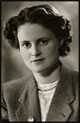
Ina 1940

The amazing journey continues. 


Steal A Pencil For Me is the title of a film recently released at Netflix. Shortly after the reunion Dr. Gross , liberator, received the following email:

Sent: Monday, September 24, 2007 10:53 AM
Subject: Train Magdeburg 1945

I was born in Amsterdam, Holland. We, my parents, older sister and I had been sent to Bergen Belsen from Westerbork where my father died in February 1945. At the time I was 10 years old and was together with my mother and older sister on the train you liberated, . I seem to remember that, coming back from searching for some food together with a cousin, we saw “somebody” with a gun running down a low hill and being told that this was an American soldier and that we were free!!!!! My memories are very vague, probably as a result of not talking about the camps for about 50 years until I realized, like many other people, that it was time to tell my children and grandchildren as much as I could remember. Last week I read the article in the Jerusalem Post, (in Israel) about you and Judge Walsh liberating “my train” on 13. April 1945. There are no words to say “thank you” that will express my feelings while reading about your experiences.. I sent the article together with links from the internet to my cousins Jack Polak and Ina Polak-Soep in New York and I am sure they will contact you directly. Thank you!!!!!!! J.W-S

I got a call from Ina about a film that was about to be released concerning her and her (future) husband’s Holocaust survivor story. It is a love story set in Bergen Belsen. Later, Jack was on the train liberated by the Russians and Ina was on the train liberated by the Americans.

Anyway, it is a beautiful story set against the tragic background of Belsen, although it has a happy ending… 60+ years of marriage. The production, storyline and cinematography is all top notch. The synopsis from the website:

“STEAL A PENCIL FOR ME is a compelling documentary feature film by Academy Award® nominee Michèle Ohayon about the power of love and the ability of humankind to rise above unimaginable suffering.

1943: Holland is under total Nazi occupation. In Amsterdam, Jack, an unassuming accountant, first meets Ina at a birthday party – a 20-year-old beauty from a wealthy diamond manufacturing family who instantly steals his heart. But Jack’s pursuit of love will be complicated; he is poor and married to Manja, a flirtatious and mercurial spouse.

When the Jews are being deported, the husband, the wife and the lover find themselves at the same concentration camp; actually living in the same barracks. When Jack’s wife objects to the relationship in spite of their unhappy marriage, Jack and Ina resort to writing secret love letters, which sustain them throughout the horrible circumstances of the war.

Jack: “I’m a very special Holocaust survivor. I was in the camps with my wife and my girlfriend; and believe me, it wasn’t easy.”

The Blessed 743rd

From: Ern Kan
Sent: Sat 9/15/2007 8:09 PM
To: Rozell Matt
Subject: A train near Magdeburg

Dear Mr. Rozell:
My name is Ernest Kan .
I was tremendously pleased and excited to find your above titled history
project.
I happened to be one of the Jewish concentration camp survivors who was
liberated by the blessed 743.U.S.Tank Battalion and 30.U.S.infantry
division in Magdeburg on that fateful day April 13. 1945.
In 2005 I was invited with Frank Towers,a former lieutenant of the 30.
by the Lord Mayor of the city of Magdeburg as guests of honor to
participate in the celebration of 60 years of the liberation of the city
by American troops and the 1200 year birthday of Magdeburg.
We were put up in the best hotel,THE MARITIME, and gave many speeches
and interviews with TV and newspaper coverage culminating in the signing
of the book of honor of the city,with the city fathers present and
cameras popping. In all it was a most successful trip telling our stories to many students
and the citizens of Magdeburg. Most everything was recorded on DVDs and videos.

I was liberated at the POLTE ammunition factory in Magdeburg where I was
a slave worker after having been brought there by freight train from
concentration camp
STUTTHOF near Danzig in the fall of 1944.
My
Odyssey began in Riga,Latvia where the Germans occupied our apartment on the first of July 1941.Shortly thereafter we were put into the Riga Ghetto.My mother was murdered with 27000 other Jews in the forest of Rumbula(see website Rumbula forest) November 30. and Dec 9. 1941.during the partial liquidation of the ghetto.The Ghetto was finally liquidated
in 1943 ,my dad was shipped to Auschwitz where he perished and I, who was 20 at the time was put into the concentration camp
KAISERWALD near Riga.
With the approach of the Soviet army in 1944,
Kaiserwald was evacuated by
ship and we were shipped to
Stutthof concentration camp,after about a month to Polte in Magdeburg where I WAS LIBERATED.
You know the rest.

My personal story was also taped in Berlin Germany where I was kicked
out of my High school on Nov.11.1938 because I was Jewish.
I was invited by my former school in June 2003 where I gave the
commencement exercise address to the graduating class and received an
honorary diploma retroactively. My story is being shown in the Berlin school district as part of the Holocaust education program.

Again allow me to congratulate you and your students on your outstanding
educational project and If I can contribute any personal details ,do not
hesitate to contact me.
Best regards

Ernest Kan

Sent: Fri 9/14/2007 9:16 PM
To: Rozell Matt
Subject: WWII Living History project

Dear Mr. Rozell:

Quite serendipitously (to be explained at another time), my brother found out about and then forwarded me, to view your project’s website.

My mother Jean (nee’ Gusia Weinstock) was on that train near Magdeburg (from Bergen Belsen) and was liberated just as Lexie K. describes. She was brought to Hilerslaben and then went on to live in Brussels for 3 years before emigrating to the United States in 1948. She survived along with her parents and her only brother. At the time of her liberation, my mother was 15. She is now 77. I have been hearing this story my entire life.

Additionally, you will be surprised to know that my father (now 82)was in the American 1st Army 30th Infantry Division. At the time, I believe that he had already been wounded and was hospitalized in either Germany or England…but he can tell you more. Upon a post war trip home from visiting cousins in France, he met my Uncle on a Cunard ship…

My parents met in Brooklyn and married in June 1950.

They have many, many stories to tell…
My parents-Jean and Sol
Many thanks for your fantastic work and I hope to hear from you soon.

Best Regards,
Lisette 


Soldiers reunite with Nazi death train survivors
By OMAR AQUIJE, Glens Falls Post-Star

Friday, September 14, 2007 9:09 PM EDT

HUDSON FALLS, NEW YORK-
The audience stood, applauded and cheered after five men shook hands, smiled and faced the packed crowd.

What the audience witnessed was history — an unexpected chapter to an extraordinary tale that began 62 years ago in Germany, at the end of World War II, and continued Friday at Hudson Falls High School.

The experience was overwhelming for Carrol Walsh, who was among the five men on stage.
After all, it made him recall the events of April 13, 1945, when he and his tank battalion investigated a train that German troops had abandoned near Magdeburg, Germany.
The battalion discovered 2,500 Jews crammed in boxcars en route to a death camp.
The Jewish families had been held captive for two years, during which they survived the infamous concentration camp at Bergen-Belsen and were forced to live with little food in unsanitary conditions under German military watch.
But on that fateful, April day, they were liberated, thanks to Walsh, his buddy, Sgt. George Gross, and others in the battalion, which included two tanks.
If not for their help, Fred Spiegel, Micha Tomkiewicz and Peter Lantos may not have survived to see the end of the war, let alone the emotional connections made during Friday’s event.
“I feel very emotional about the meeting and the get-together, never having ever to imagine that I would meet anyone who was on that train,” said Walsh after the morning program. He is now a retired judge who moved to Hudson Falls in July after living in Johnstown.

“To see these people in the flesh is simply an overwhelming, emotional experience,” he said.

Tomkiewicz, who is now the director of environmental studies at the Brooklyn College of the City University of New York, could only remember pieces of his liberation because he was a child at the time. Therefore, he and other survivors started searching for more details to fill in the blanks.
But the information he obtained left him with a broad and abstract image of the past — until Friday.
“Suddenly, we have names. We can shake hands. We can put our own background in a context we couldn’t put before,” Tomkiewicz said after the morning program. “Suddenly you have an event that crystallizes that scenario.”

The fifth man on stage was Matthew Rozell, not a passenger on the train, but rather a Hudson Falls High School history teacher who created a World War II history project in the 1980s to generate student interest in that war. The project has since evolved into a detailed Web site that chronicles war stories from local military veterans.

One of his students was Walsh’s grandson, which is what led Rozell to interview Walsh in 2001. During the interview, Walsh’s daughter suggested he tell Rozell about the train.
Afterward, Walsh put Rozell in contact with Gross, who lived in California.
Gross provided photos and narratives of the liberation for Rozell to post on the project Web site.
Four years later, Rozell received an e-mail from Lexie Keston, a Holocaust survivor who was on the same train. She was 6 at the time.
The Web site, located at http://www.hfcsd.org/ww2, also led Tomkiewicz, Spiegel and Lantos to Rozell, and ultimately spawned Friday’s reunion.
Lantos, an emeritus professor of neuropathology at the University of London, traveled from England to attend Friday’s event, while Spiegel, an author and lecturer, came from New Jersey.
“It’s really a humbling experience,” Rozell said after the morning program. “To be able to share it with the school and the students — for me, that’s where the gratification is.”
The two-part reunion included speeches from the three survivors. Spiegel and Lantos each spoke about the books they wrote on their Holocaust experiences.
Dr. Gross, an emeritus professor of English who lives in San Diego, was unable to attend the reunion because of health reasons. He did, though, provide a letter that was read to the gathering by English teacher Rene Roberge. The reunion was recorded, and a copy of the recording will be sent to Gross.
Ms. Keston, who lives in Sydney, Australia, also was unable to attend, but she also wrote a letter that was read aloud by history teacher Mrs. Tara Sano at the gathering.
“I found the experience so raw and emotional that I screamed and burst into tears,” she wrote of her reaction on finding the liberation photos on Rozell’s Web site.
The morning program included the showing of “A Train Near Magdeburg,” a DVD by seniors Troy Belden and Eric Roman, that included the photos and narratives by the liberators of the train scene.
The dozen photos showed families leaving the train and some children smiling at the camera despite being weakened from starvation. The project really had an impact on the students who worked in it. “Meeting these people that came from the worst of the worst, and they just have the most positive attitude about it,” said Hudson Falls senior Troy Belden.
Later on, Lantos and Spiegel sold copies of their books outside the auditorium. Hudson Falls senior Adam Armstrong, who bought a book, was surprised his school could play a role in Holocaust history.
“I still can’t believe that our school — that not a lot of people will know about because we are a small town — can do this much for history itself, that we can be history in the making,” Armstrong said. Those involved in the event said the chance meeting has changed them as well.
“Sixty-two years ago, as those events happened, I never in my wildest imagination thought I would ever meet anyone from that train again,” said Walsh.
Though the photos and narratives have been on the Web for four years, more people have been viewing them recently, Rozell said. He expects more soldiers and survivors will come forward with their own stories of the Magdeburg train as the reunion gains publicity, he said.
Tomkiewicz said he is trying to convince the education department at his school to invite Rozell for a presentation.
“When he started the project, he had no idea where it was going to lead to,” Tomkiewicz said of Rozell. “It is an excellent manifestation of what education can do.”

Thanks to Omar Aquije and the Glens Falls Post-Star for permission to use this story, as well as Albany, NY’s Capital News 9’s Kaitlyn Ross for filling in some detail.
The 800 students of HFHS set the standards of respectfulness and decorum at this important occasion.-MR 12-3-07


World War II veteran Carrol Walsh talks to a history class at Hudson Falls High School in Hudson Falls, N.Y., Thursday, Sept. 13, 2007. The retired state Supreme Court judge will be reunited with three of the survivors of the Nazi death train Walsh’s unit liberated near Magdeburg, on the Elbe River about 50 miles southwest of Berlin. (AP Photo/Mike Groll) 

HUDSON FALLS, N.Y. — Carrol “Red” Walsh didn’t know what to expect when his patrol came across a train stopped along a hillside during the U.S. Army’s dash across northern Germany in the final, chaotic days of World War II.

In and around the abandoned line of freight cars milled some 2,500 emaciated and ragged Jewish prisoners from the Bergen-Belsen concentration camp. There were scores of children.

“They were just jammed, crammed in there,” said Walsh, a 24-year-old tank commander in April 1945.

On Friday, the now 86-year-old retired state Supreme Court judge reunited with three of the survivors of the Nazi death train his unit found near Magdeburg, about 50 miles southwest of Berlin. The train was on its way to another concentration camp.

The veteran and the survivors were to take part in a daylong program hosted at the high school in this Hudson River village north of Albany.

The reunion has its roots in a class project launched by Matthew Rozell, a history teacher at Hudson Falls High School. In the early 1990s, he created a special project to collect stories from local veterans and post them on a Web site.

One of Rozell’s students was Walsh’s grandson, who told the teacher about his grandfather’s wartime service. Several years ago, Rozell interviewed Walsh and George Gross, a fellow tank commander from Spring Valley, Calif.

Their account of the train liberation was posted on the project’s Web site, along with black-and-white photographs taken that day by Gross and the major leading their patrol.

That’s where some of the child survivors of the Nazi train, now in their 60s and 70s, found their story.

“All of this to a large degree came out of a high school project. This to me is fascinating,” said survivor Micha Tomkiewicz, a Polish Jew from Warsaw who was 6 when he and his mother and uncle were liberated.

Tomkiewicz had an earlier reunion with Gross and his family. He said he’s looking forward to meeting Walsh, and he credited Rozell for the reunions.

“It’s pretty humbling,” Rozell said.

Tomkiewicz was to be joined by fellow survivors Peter Lantos, a neurologist from London, and Fred Spiegel, an author from Howell, N.J.

Friday’s program includes a viewing of “A Train Near Magdeburg,” a 10-minute DVD produced by two of Rozell’s students, followed by talks from each of the three survivors.

For Walsh, it will be his first face-to-face meeting with anyone from the train since he came upon them on what turned out to be their lucky day — Friday the 13th, April, 1945.

“I had almost forgotten about the incident itself, really, over the years,” Walsh said. “It was almost like another day in combat. Nothing surprised me by then.”

~As a result of the worldwide publicity garnered by the attention to this story, eighteen more child survivors have contacted our school and their liberators since the reunion took place on September 14th, 2007. Read on… Special thanks to Chris Carola of the Associated Press for his interest in the story.