Feeds:
Posts
Comments

Posts Tagged ‘The Things Our Fathers Saw’

How my 93 yr. old history teacher, who survived a deadly kamikaze attack in the spring of 1945, got to address the Japanese people on the eve of the 70th anniversary of the end of WW II.
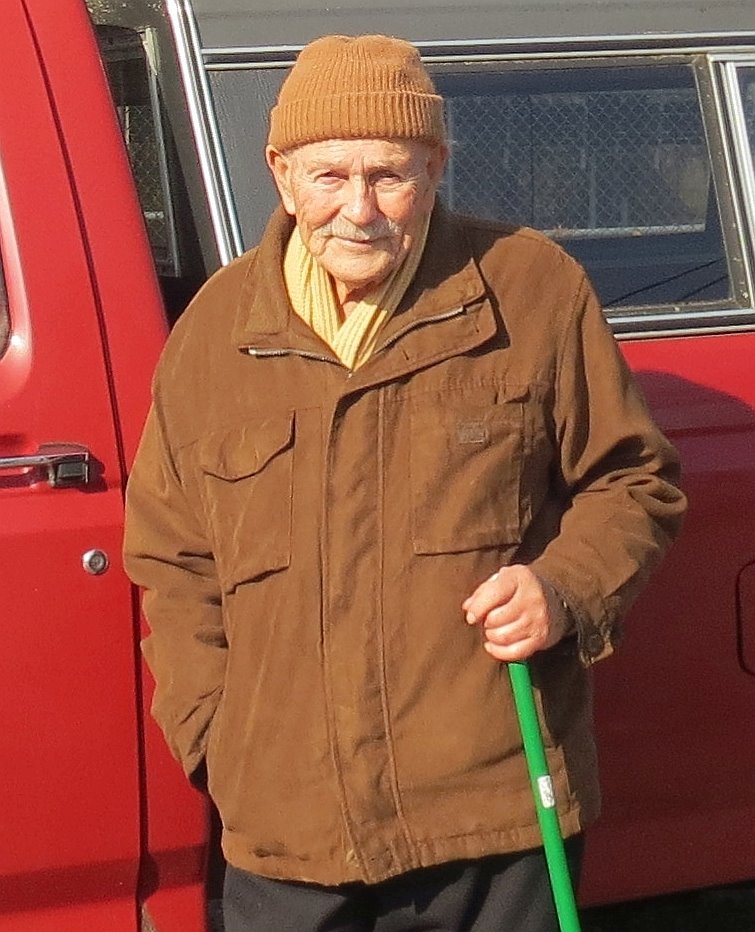
Mr. Alvin Peachman, Nov. 2014, out for his daily walk. Photo by Mike Nicholson, HFHS Class of 1979.

Mr. Alvin Peachman, Nov. 2014, out for his daily walk. Photo by Mike Nicholson, HFHS Class of 1979.

Be sure to come out and see us at the first author event- yes, Mr. Peachman will be there, too. He has TWO chapters in the book.

August 8th, 1-4 pm
The Village Booksmith.
223 Main St, Hudson Falls, NY 12839
(518) 747-3261

As the book  ‘The Things Our Fathers Saw ‘ went to press, I was contacted by the Japan’s largest news wire service, “with over 50 million subscribers worldwide, publishing articles in Japanese, English, Chinese and in Korean…” They wanted a veteran’s “reflections as we approach the 70th anniversary of the double bombings of Hiroshima and Nagasaki” (which he offers in the book, Chapter 13, ‘The Kamikazes’). So, seventy years after the war, Mr. Peachman got to address the Japanese people. The story is not out yet, but I just called him to ask him how it went.

Mr. Peachman: “It was very nice, the reporter was happy to speak to me. I told her, ‘I hope you have an hour or two.’ We had many things in common- I had traveled to Japan several times after the war, and we knew of the same places. I told her, you can’t say that you feel the same as you did, 70 years later. During World War II, the Japanese would fight to the death. I honestly felt that the bomb was necessary to end the war, though I feel that President Roosevelt made a mistake by demanding unconditional surrender. And I have questions about how and when the bomb was used. But make no mistake, the coming land invasion of Japan would have been a bloodbath.”

From the book:

 ‘I Lost Many Friends’


Matthew Rozell: So what did you think about the atomic bomb?

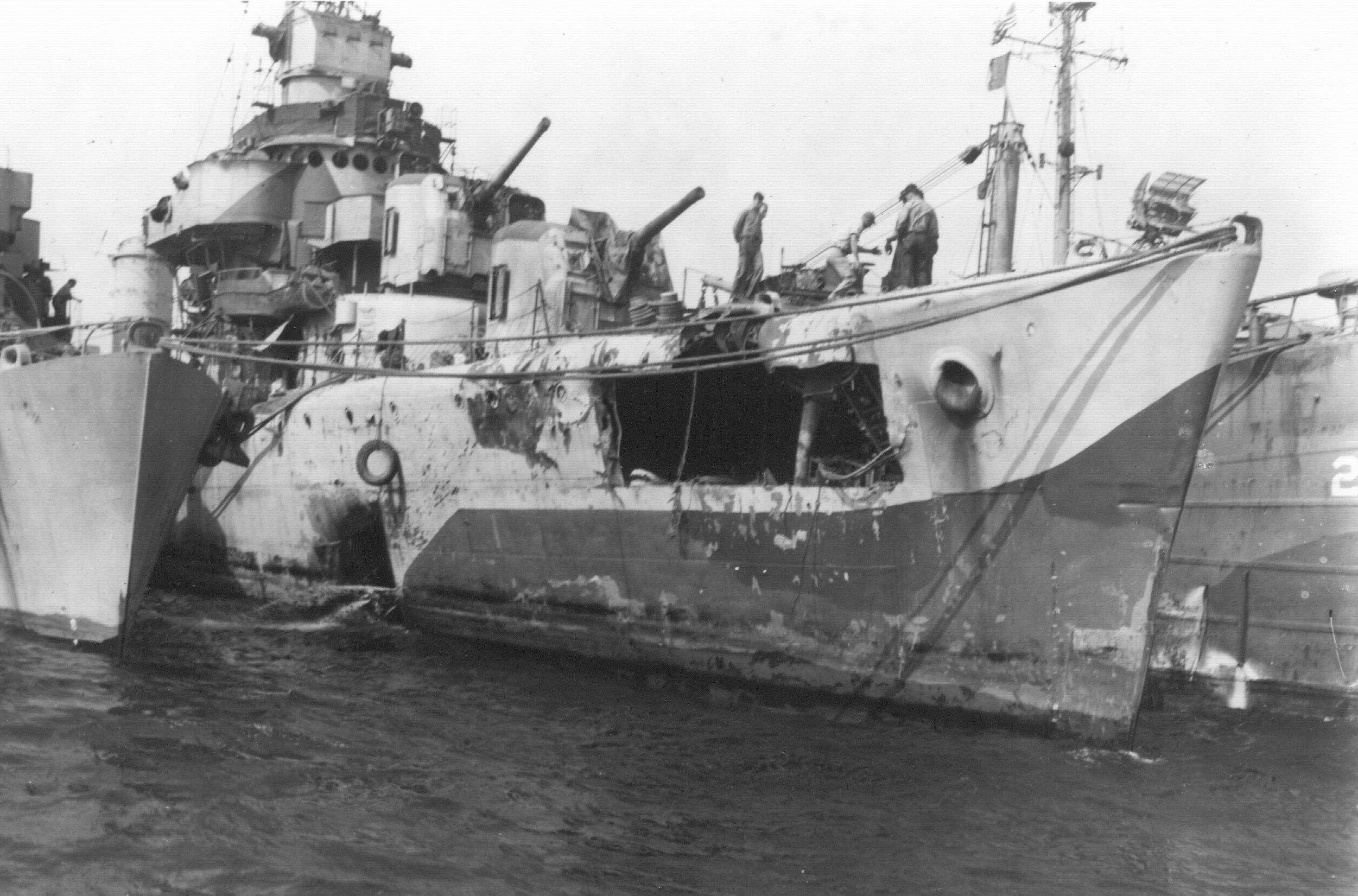
Best thing that ever happened to us. If it wouldn’t have been for the atomic bomb, I think we would have had a catastrophic amount of men killed, and probably the elimination of the Japanese nation as a whole. It would have been a terrible thing to conquer. I think it did a great deal in helping to save a million or two men, as well as the Japanese. I believe Harry Truman was a wonderful president in that regard; he really did a great favor to us. But I do not understand why we had to wait so long to figure things out! We shouldn’t have gone into Okinawa if we knew we had the atomic bomb because in Okinawa, we had 50,000 casualties! Our whole division was hit, except for the Wilmarth, as I told you. Two hundred and fifty ships were hit at Okinawa by kamikazes. The day we got hit, 26 ships got hit, and six were sunk to the bottom! I believe the Japanese had over 500 aircraft against us that day, suicide aircraft. Have you ever been startled by a partridge suddenly trying to fly into you? It is really a scary thing! Although you weren’t thinking of it at the time, it was a scary thing that these people would give up their lives like that. It was the most Navy lives lost in one battle. I lost many friends.

Destroyer Escort USS WITTER undergoing repairs following kamikaze attack. Alvin Peachman collection.

Destroyer Escort USS WITTER undergoing repairs
following kamikaze attack. Alvin Peachman collection.

As the land battle for Okinawa raged toward its crescendo with the fury of a storm, the kamikaze attacks would claim over 15,000 American casualties for the Navy alone.
Read Full Post »

We are about a week out from the launch of my first book, The Things Our Fathers Saw.  It clocks in at 286 print pages, and none of it is filler. Over 30 veteran stories are featured. The angle is new and unlike any other WW2 title out there. I am pretty excited. You get some butterflies, too; you are throwing yourself out to the world and you are going to be judged every time someone picks it up. So, why do it? I’d like to tell you what the experience of writing a first book has meant to me.

First off, I have been planning to write this book for well over a decade. Why?

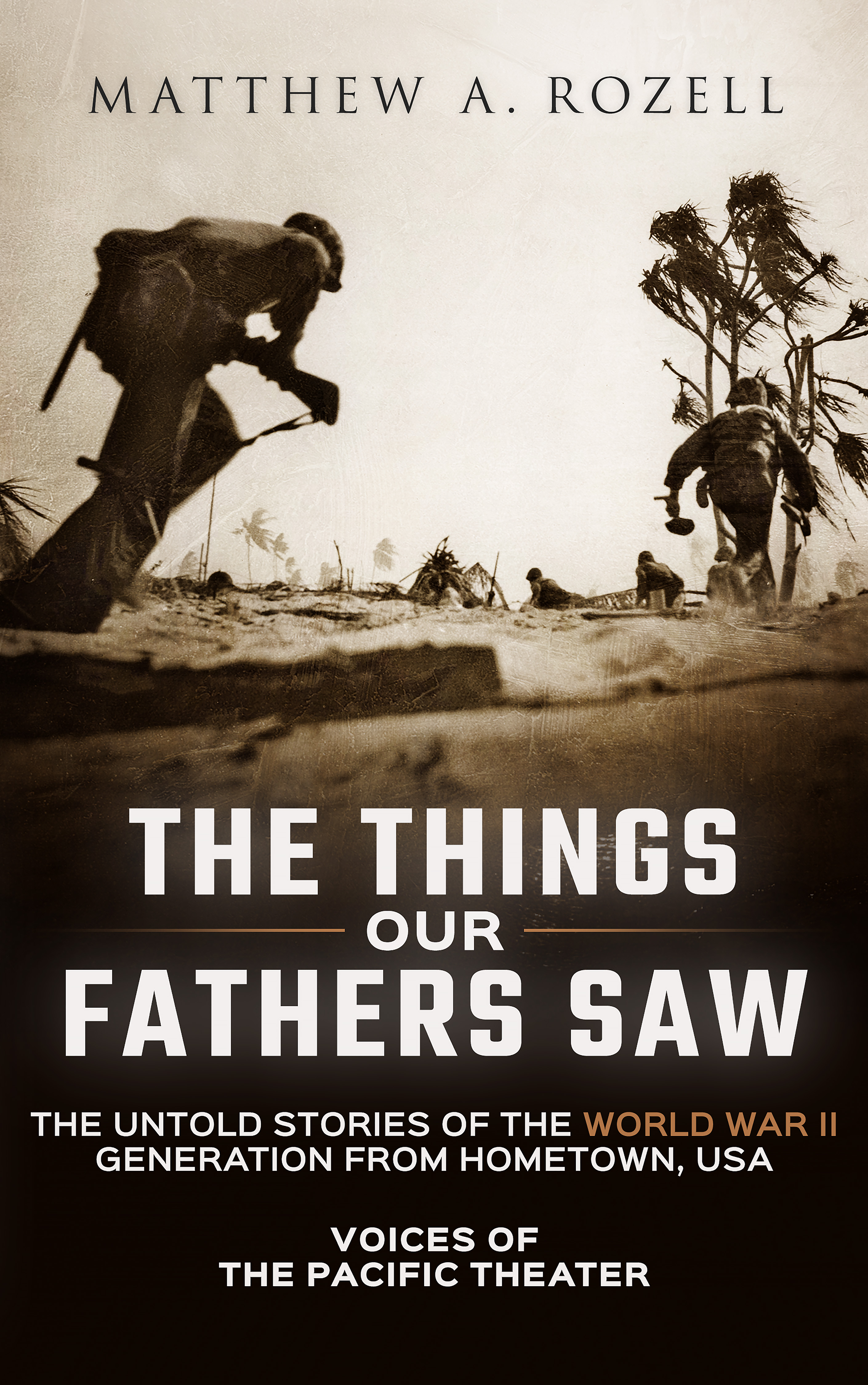
The Things Our Fathers Saw - Front Cover

Besides the fact that it has been a major portion of my life’s work, I’ll offer up the other cliché that it is ‘a story that needs to be told’. Though I didn’t wake up one day and decide to write a book. The stories have bouncing around in my head for years.  I’ve shared them over and over again in my classes. The men and women who told them to me and to our young people are gone, or sadly won’t be with us forever. And I’m not taking the stories with me when it’s my turn to go. This is my legacy, this is their legacy, and more importantly, if you are an American, it is your legacy too.

And I don’t care how much you know about World War II, or the Pacific War. You WILL learn something new in this book. Not because I am a genius or an expert, but because I thought that I was pretty well-versed on this history, but I learned  A LOT myself in the research and writing of it. And if you are a bit hazy on the subject, or maybe were a wee bit disinterested in it when in school (if you were taught it in the first place), you are about to be blown away-by the writing, I hope, but especially the history.

*

Here is why I did NOT write the book. It was not about the money, and any author who writes for money, well, that is a book you probably do not want to read. I did not set forth to cash in, or write for “personal gain”. I think my brother said it best, simply, when he told me it is just something that you have to do.

That said, the book did not write itself. It has been in the works on a daily basis for nearly a year now. I’ve gotten up at 1:00 in the morning and worked to 4 or 5 AM, slipping back into the sack for a power nap before charging off again to school. Somedays, it killed me.

The past month, since school got out, I have been glued to this chair. The manuscript that I have been working on has been updated and revised 41 times since final exams wrapped up. I’ve gone back and forth with my beta editors and my mapmaker, Susan Winchell-Sweeney, on at least a weekly basis since April. I spent my school vacations studying, researching, editing and transposing a never-before-published prisoner of war diary, and cross-referencing and tracking down confirmations for the stories that appear in my book.

And I have found out that some super best-selling authors on similar topics should have done a little bit more of this type of homework.

So what you are going to get, is my best.

***

Some people looked at me curiously when I said I was going to publish independently-mostly people who are caught up in traditional publishing. ‘Self-publishing’ gets a bad rap, gets ‘poo-pooed’-and there is a LOT of dreck and drivel out there. But for me, and for my brothers who are also writers, we just don’t want to deal with the gatekeepers at this time (my brother lost the rights to his first book, watched it go out of print, and had to buy the rights back when the opportunity arose). This allows us the independence to produce the work that we have envisioned in our heads with total control. That is not to say that you don’t seek help in the form of editing, the title, the book layout and design (I even had a contest of sorts on Facebook to refine and select the final cover design, with feedback from hundreds). But I’m told that the first thing a traditional publisher is going to ask today is, ‘how will YOU (the author) market this book?’ What is your following, and where is your brand? Voilà. Woodchuck Hollow Press came into the world.

014

Final edits coming to you from the Woodchuck Hollow Studios.

Marketing? That is a whole other venture, the business side, I suppose. Personal gain did not figure into the motivation for doing this, but obviously I have incurred expense (that cover cost us a small fortune, but worth it, thanks to Damon Freeman at Damonza.com), and in investing so much of my time, I chose to forgo other opportunities to supplement the family income. I don’t know how to explain it, it is just something that I had to do (though that walk-in closet that I started for my wife last summer still is not done-but we are still married!). If a major publisher or bookseller shows interest, we can talk. But we are not going to lose sleep worrying over the numbers. The woodchucks will handle it.

Built-from-scratch cabinet doors for inside walk-in closet. By scratch means I cut the trees for it. Kinda like building a book. On to the next set.

Built-from-scratch cabinet doors for inside walk-in closet. ‘By scratch’ means I cut the trees for it. Kinda like building a book. On to the next set.

Stay tuned for more details. It will be available on Amazon in print and ebook format, and signed copies will be available via my website (http://matthewrozell.com/) or at local events I may be invited to do. Thanks for following this blog, and you can get more frequent updates if you are on Facebook by following/liking the AuthorMatthewRozell page.

Any others out there who want to share the experience of writing a book? Comments on my comments? Now if you will excuse me, I have to go out and deal with that pesky woodpecker who keeps hammering away at my house. Have a great day!

Read Full Post »

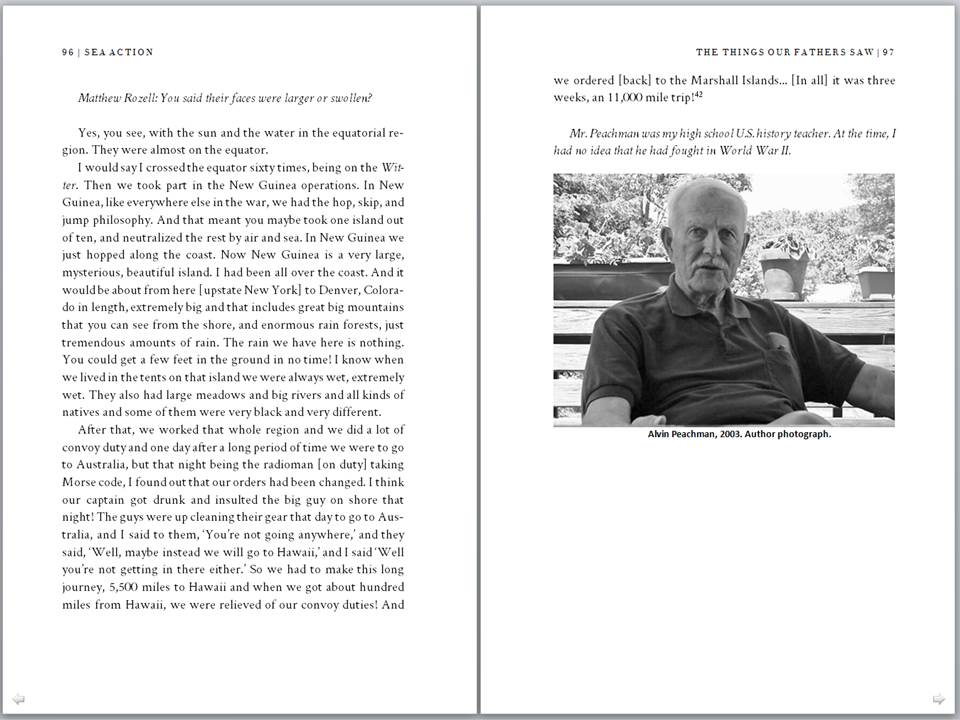
In 2003, I set out to interview a retiree living on the quiet boulevard leading up to our high school. I sat on his backporch with him for a few hours on a late spring afternoon. Born in 1922, he was in the Navy, serving as a radioman on a destroyer escort, and he seemed to be everywhere in the Pacific during World War II. Like John A. Leary, he also spent a great deal of time supporting the Marines, and saw his first action in the South Pacific in the reduction of the massive Japanese base at Rabaul on New Britain.

Mr. Peachman turned 93 this past March. He was my high school history teacher.


Alvin Peachman

From “The Things Our Fathers Saw” by Matthew Rozell.

From “The Things Our Fathers Saw” by Matthew Rozell.


You can view a book preview at the Amazon site. Available in digital and paperback format. Book can also be purchased at http://matthewrozell.com/order-the-things-our-fathers-saw/

*************************************************************


 Book Description: At the height of World War II, LOOK Magazine profiled an upstate New York community for a series of articles portraying it as the wholesome, patriotic model of life on the home front. Seventy years later, a high school history teacher and his students track down over two dozen veterans residing around ‘Hometown, USA’ who fought the war in the Pacific, from Pearl Harbor to the surrender at Tokyo Bay. They resurrect firsthand accounts of combat and brotherhood, of captivity and redemption, and the aftermath of a war that left no community unscathed. Here are the stories that the magazine could not tell, from a special generation of Americans speaking to the youth of America today.  270 pages.

About the Author: Matthew Rozell’s teaching career is now spanning 4 decades, beginning as a quiet kid returning to teach in his own hometown to being recognized as a national History Teacher of the Year and as a recipient of a national Medal for History Education. Rozell is a United States Holocaust Memorial Museum Teacher Fellow, has had his lessons filmed for NBC Learn, and has even been chosen as the ABC World News Person of the Week. He is also a recipient of several state and local awards for history education. He writes on the power of teaching and the importance of the study of history at his website,teachinghistorymatters.com.

He can be reached at marozell at gmail dot com.

Read Full Post »

This story below is an excerpt from my first book. It was published for the 70th anniversary of the end of the war.

My friend Jimmy Butterfield used to come to my classroom with his bride of 60+ years, Mary. She would joke with him, and us, and call him by his high school nickname, “But”. Maybe it was “Butt”, I don’t know, but they had fun playing around with each other in front of 17 and 18 year olds.

Jimmy, of course, was blind and hard of hearing. Mary had to yell at him, he would crack a grin under the dark glasses and flirt with her. The girls loved it. When the hearing aide was cranked up to eleven, we would get some echo and feedback, which didn’t seem to bother him, or the students in the class listening to his story. He just liked to talk to the kids.

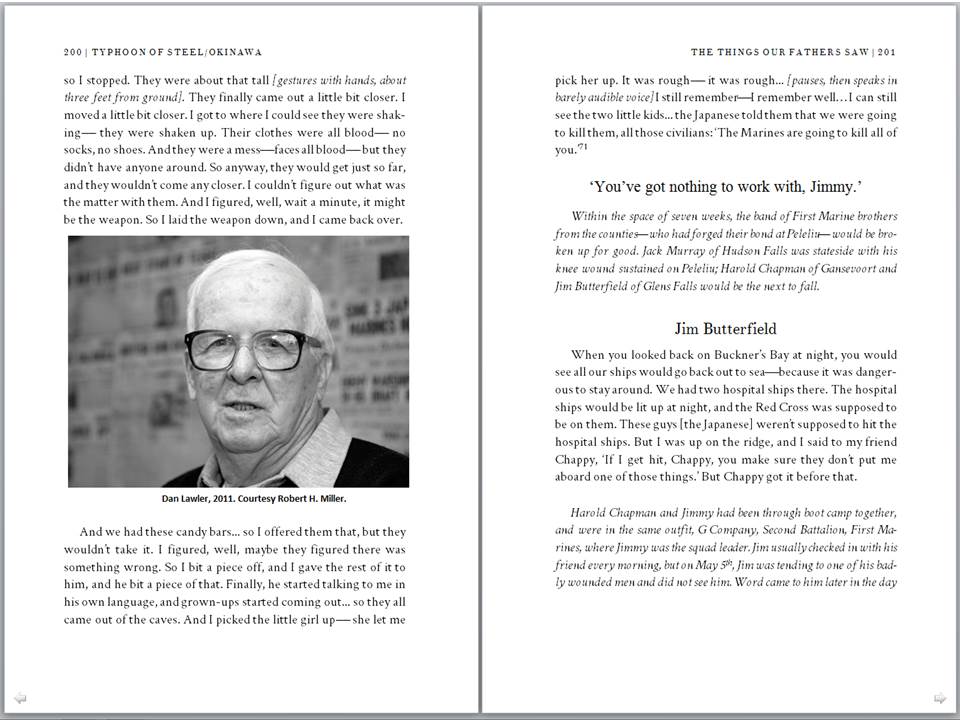
Several years ago, after the two of them and Danny Lawler (another First Marine Division veteran of really hard fighting in the Pacific at Peleliu and Okinawa) came to my room for an afternoon, I came home to an email from one of my senior girls, telling me how meaningful meeting Jimmy and Mary and Danny was to her and her classmates. I still have it.

You see, Jim Butterfield got struck not once but twice in the head by enemy fire at Okinawa about this time in May  1945 (that is 70 years ago this month, if you are noticing). He was evacuated first to Guam, then to Hawaii and later stateside for over 18 months, and as many operations, for reconstructive surgery.  When he did realize that he would never see again,  he was ready to tell his high school sweetheart to leave him be. Not to get attached to him, a blind man.

Well, she told us what she thought of that. They ran a small mom and pop store back in Glens Falls together until they retired.

Why is Jim’s story important? Well, you’ll have to listen to him tell it. You have the sense of the unfolding realization of the loss he is feeling, but at the same time, wonderment at his and Mary’s resilience in making a successful life afterwards. The sacrifices made by this and other generations of veterans becomes real. We need to also note that Jim came home. Chappy and many others others did not.

Jim never looked for sympathy or pity- and of course would be the first to point out that Memorial Day is for those who did not return. But still, if we are to pause as a nation for one weekend to remember, we can’t forget what this nineteen year old from Hometown USA gave up as well.

Mary and Jim have since passed on. What obstacles they overcame together…

Rest on Jimmy and Mary. Thanks for letting us witness your story.

******************************************

From "The Things Our Fathers Saw" by Matthew Rozell.

From “The Things Our Fathers Saw” by Matthew Rozell.


Mary and Jim Butterfield Jan. 2007

Mary and Jim Butterfield in my classroom, Jan. 2007.

*************************************************************

Excerpted from “The Things Our Fathers Saw: The Untold Stories of the World War II Generation from Hometown, USA“. Order the book here.

 Book Description: At the height of World War II, LOOK Magazine profiled an upstate New York community for a series of articles portraying it as the wholesome, patriotic model of life on the home front. Seventy years later, a high school history teacher and his students track down over two dozen veterans residing around ‘Hometown, USA’ who fought the war in the Pacific, from Pearl Harbor to the surrender at Tokyo Bay. They resurrect firsthand accounts of combat and brotherhood, of captivity and redemption, and the aftermath of a war that left no community unscathed. Here are the stories that the magazine could not tell, from a special generation of Americans speaking to the youth of America today.  292 pages.


 H


Read Full Post »

« Newer Posts