Feeds:
Posts
Comments

Posts Tagged ‘Japan’

Just finished my 10th book in the Things Our Fathers Saw series, on the CBI theater of the war. I wrote this at the end, thinking about my time with the veterans of World War II.

“It is my earnest hope, and indeed the hope of all mankind, that from this solemn occasion a better world shall emerge out of the blood and carnage of the past—a world founded upon faith and understanding, a world dedicated to the dignity of man and the fulfillment of his most cherished wish for freedom, tolerance, and justice.”

—Remarks By General Douglas MacArthur, Surrender Ceremony Ending The War With Japan And World War II, September 2, 1945

“Can’t we just let go of this war? My father spent four years in, [and] my uncles four years; they NEVER talked about it! Long dead soldiers, long ago war!”

-American commenter on one of the author’s social media posts, highlighting the series, The Things Our Fathers Saw, September 2024


Was it really that long ago?

Seventy-nine years ago last month, Admiral ‘Bull’ Halsey’s flagship USS Missouri was in Tokyo Bay awaiting the arrival of the Japanese delegation with General MacArthur and Admiral Nimitz aboard, positioned near the spot where Commodore Matthew C. Perry had anchored his ‘Black Ships’ on his first visit to Japan in 1853. On display aboard the battleship that morning was the flag that flew on December 7, 1941, over Hickam Field at Pearl Harbor, and the 31-starred Old Glory standard of Perry’s flagship from nearly a century before, now accompanied by hundreds of American warships. The Japanese delegation was escorted promptly aboard at 9:00 a.m., and at MacArthur’s invitation, signed the terms of surrender. As if on cue, four hundred gleaming B-29 bombers roared slowly by in the skies overhead, escorted by fifteen hundred fighters.[i]
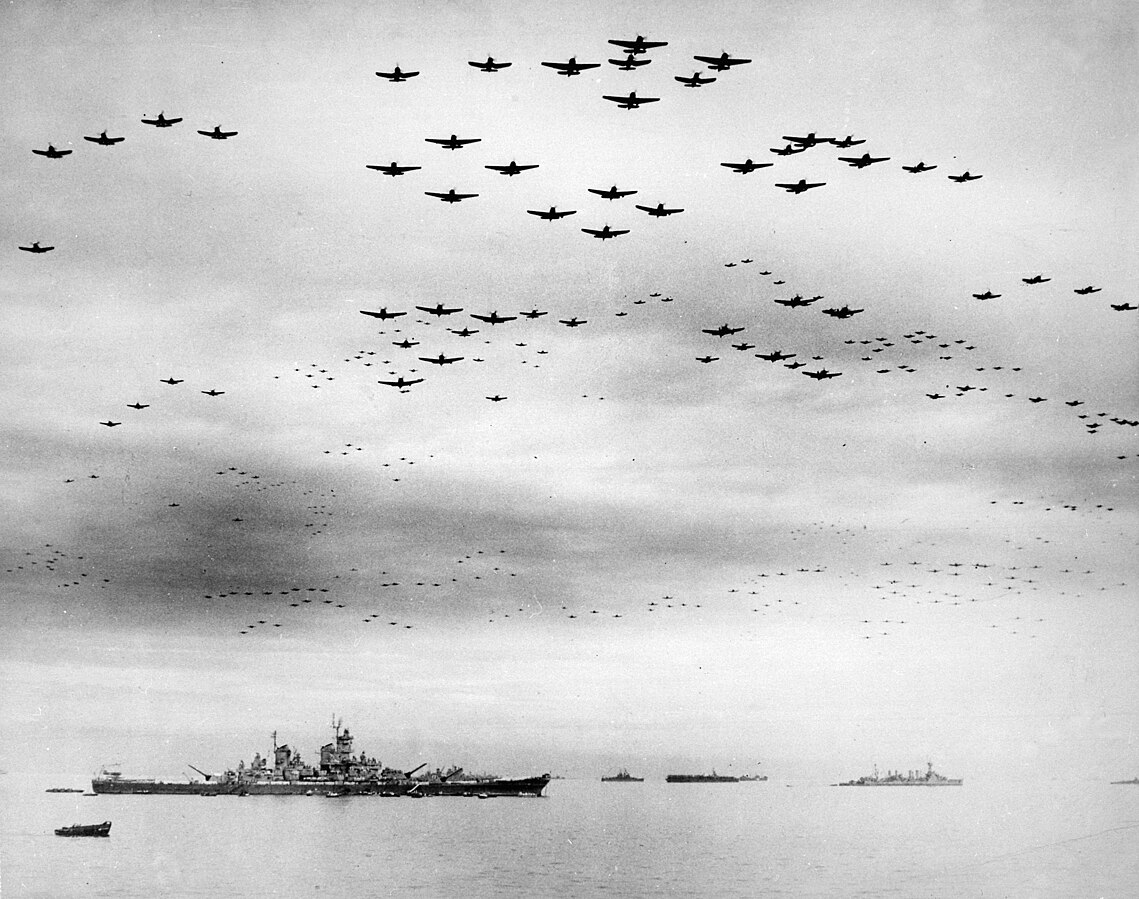
Surrender ceremonies, 2,000 plane flyover, USS MISSOURI left foreground.
National Archives. Public domain.

In the United States and Europe, it was six years to the day that the bloodiest conflict in human history had begun; after those six years of savage fighting, the devastation was unprecedented and incalculable. Between sixty and eighty-five million people—the exact figure will never be known—would be dead. Overseas, the victors would be forced to deal with rubble-choked cities and tens of millions of people on the move, their every step dogged with desperation, famine, and moral confusion. American servicemen, battle-hardened but weary, would be forced to deal with the collapse of civilization and brutally confronted with the evidence of industrial-scale genocide. Old empires were torn asunder, new ones were on the ascent. The Chinese Communists were victorious in China before the end of the decade; the British and other colonial powers began shedding their colonies in South Asia and elsewhere. In 1952, American occupation ended, lasting nearly twice as long as the war with America itself.

Now, the ‘American Century’ was well underway. American power and leadership of the free world was unparalleled and unprecedented. The Marshall Plan literally saved Europe. Enemies became allies. Former allies became adversaries. The Atomic Age began. And the United States of America rebuilt, reconstructed, and remodeled Japan. Of course, this ‘American Century’ was not free from hubris, error, and tragic mistakes, but all of this is part of the legacy that shapes us to this day.


In regards to the end of World War II, I can recall, in the early 1980s as a young history teacher in training, observing a veteran teacher describing the end of the war with Japan by making an analogy to his eighth graders:

‘It’s like two brothers who had a fight. The winner picks up the loser, dusts him off, and they go on as brothers and friends.’

Overlooked, perhaps, were the eight million Chinese civilians and millions of others in Asia slaughtered by Japanese troops in their imperial lust for conquest, the Allied prisoners of war brutalized and worked to death or executed in slave labor camps, the Allied seamen shot while foundering in the water at the explicit orders of the Japanese Imperial Navy, to say nothing of the deceitfulness of Pearl Harbor. I’m sure my twenty minutes observing the teacher in action left out what he hopefully covered in class; he must have known World War II veterans, just as I did. And these are things I suppose you learn later in life, as I did—but only because I wanted to know as much as I could learn. I was born sixteen years after the killing stopped, but ripples of that war have never ended.

If you are a reader of this series, you know how I got our veterans involved once I found my footing in my own classroom. My fascination with World War II began with the comic books of my 1970s pre-teen days, Sgt. Rock and Easy Company bursting off the pages in the bedroom I shared with my younger brothers at 2 Main Street. As a newly minted college grad a decade later, I was drawn to the spectacle of our veterans returning to the beaches of Normandy on the black-and-white TV in my apartment for the fortieth anniversary of D-Day. I was reading the only oral history compilation I was aware of, Studs Terkel’s euphemistically titled 1984 release, The Good War: An Oral History of World War II, over and over. I studied that book, planting the seed for my own debut in the classroom. And in retrospect, I think I reached out to my students asking them if they knew anyone in World War II, yes, as a way to engage them in the lessons at hand, but also to satisfy my own selfish curiosity: just what ‘resources’—really national treasures—did we have in our own backyard, surrounding our high school? I was going to find out. Man, was I going to find out!

Of course they ‘never talked’ about it! Why would they bring ‘The War’ up with their wives, their sons, their daughters? And frankly, most of the civilians they returned home to and surrounded themselves with at work, in the community, and even in their own families, weren’t really all that interested in hearing about it. It was time to get on with life.

But then those guys headed back to the Normandy beachheads, now approaching retirement age, most in their early sixties, if that (about my age right now) …

Somebody was now listening! Somebody gave a damn! And maybe the old soldier could talk about that kid who was shot and lingered on for a while in the far-off jungles of Burma, the country boy far from home who was proud to be a soldier, the eighteen-year-old who wondered now if he was going to die. The combat photographer David Quaid spoke to his interviewers until he was too exhausted to go on. But somebody was interested, and he had things to say—things to get off his chest—before he would no longer be able to say them; like David, a lot of the guys I knew opened up like a pressurized firehose after all those years of silence. It was frankly cathartic, and maybe now they could ‘let go of this war.’

Should we?


I didn’t respond to the commenter in the thread, but another person added,

“I understand, but if there is no conversation, nothing gets shared—nothing gets learned! May your family all rest in peace!”

I know in my heart that opening up to others, even complete strangers, but especially to the young, finally brought our veterans peace.


[i] Dower, John W. Embracing Defeat: Japan in the Wake of World War II. New York, W. W. Norton & Company. 1999. P. 43.
Read Full Post »

Pearl Harbor survivor was quick to share memories

OCTOBER 04, 2015 2:00 PM • BILL TOSCANO

Editor’s note: Every life has a story. In this column, we pay tribute to people who have died recently.

I wrote about Mr. Ross and his passing a few weeks ago. This article appeared in the Post Star yesterday as he was being laid to rest. The reporter had contacted me for comment. And just so folks are aware, I asked him not to mention my recent book unless it was okay with Mr. Ross’ family. Rest easy, Barney. You made a lot of people happy in this life.

Barney Ross by Erin Coker, Courtesy Post-Star

Barney Ross by Erin Coker, Courtesy Post-Star

There’s a footnote at the bottom of Page 21 of Matthew Rozell’s recently published “The Things Our Fathers Saw” that sums up the late Barney Ross perfectly.
“In his remembrances, Mr. Ross’ voice began to break up recalling his friends who had passed before him. Barney brought smiles through the tears as he reminded my students that, ‘I may get emotional, but I’m still a tough guy.’ “
Rozell and his students at Hudson Falls High School were among many who heard Ross’ first-hand story of the attack on Pearl Harbor, the Pacific War and the signing of the surrender in Tokyo Bay.
Over the years, he had to think a little harder and sometimes needed prompting, but once the Whitehall native started telling his story, the memory and emotion took over.
Gerald A. “Barney” Ross, 94, died Thursday, Aug. 27, at Indian River Rehabilitation and Nursing Center in Granville, and with him died another memory of the attack that brought the U.S. into World War II. Ross, a lifelong resident of Whitehall, was one of an estimated 2,000 to 2,500 survivors remaining out of 60,000 who were at Pearl Harbor on that day of infamy.
Ross was a 1940 graduate of Whitehall High School and played on the 1939 unbeaten, untied, unscored-upon team. He was a hunter, fisherman and lifelong communicant of Our Lady of Angels Roman Catholic Church.
Following graduation, Ross enlisted in the U.S. Navy in August 1940. He served on the USS Blue during the Japanese attack on Pearl Harbor on Dec. 7, 1941.
Ross met Alice Marie Doyle at a USO dance in Philadelphia, and they were married in 1946. He operated Ross’s Restaurant in Whitehall and was later employed as a machine operator at Decora Industries in Fort Edward, retiring after many years of service.
Indelible memories
Gerald An electrician’s mate aboard the USS Blue, Ross found himself in the destroyer’s magazine during the battle, feeding ammunition to an anti-aircraft gun on the top deck.
“I’d get a shell, put that in the hoist,” Ross said in one of his many interviews. “And I’d get a powder and put that in the hoist. That way, I was feeding the gun. … I feel that we did our job.”
He had been in the harbor on the USS Blue when the Japanese planes dove out of the sky and dropped their bombs, and when the enemy submarines simultaneously sent torpedoes into American ships, in the surprise attack on America’s Pacific fleet.
“When the Japanese attacked, I was on the deck waiting for a boat to take me to a church service,” Ross said. “We saw a plane dive toward the USS Utah, then within minutes, it was the worst devastation you could ever imagine — the USS Arizona was blown up and the USS Oklahoma was turned over on its belly.”
Over the past seven weeks, at least five other survivors of the attack have died, including Joe Langdell, who at 100 was the oldest survivor of the USS Arizona. Eight men who served on the Arizona during the attack remain alive.
Ray Chavez, who at 103 years old is believed to be the oldest living survivor of the attack, recently threw out the first pitch at a San Diego Padres game.
In all, 2,000 to 2,500 of the 60,000 survivors are thought to still be alive, according to USS Arizona Memorial officials. More than 2,400 Americans died during the attack, including 68 civilians. Most — 1,177 — were killed when the Arizona exploded and caught fire.
‘A real nice man’
Rozell said he had not been in touch with Ross recently, but the man left a deep impression on him.
“He came across as a real nice man — down to earth, with a great warmth for the students he met in my classroom. A man who loved his town, his family and the entire region. But having survived the shock of Pearl Harbor, he always left us with a warning: ‘Be vigilant.’ That was in 1988 [1998].”

Ross was one of the first of many veterans to visit Rozell’s classroom. He is the first veteran quoted in “The Things Our Fathers Saw.”
“As a nation, we were sleeping; it is a terrible thing to say, but we just …” Ross is quoted as saying.
“I was just standing there waiting for a motor launch to take me to a bigger ship to go to Mass, to go to church! We had no inkling, no inkling whatsoever,” he added.
“We were sitting there like sitting ducks! Here are men, if you can visualize, men struggling to get out of the ships. A lot of them were sleeping in because they had the day off. It was a horrible thing! This fleet was coming to blow us off the face of the earth.”
Paying respects
Ross is survived by his wife and his three sons, Gerald F. Ross and his wife, Patricia, of Hartford, Dennis A. Ross and his wife, Angella Gibbons, of Marshfield, Vermont, and Christopher D. Ross of Whitehall.
Ross lived at Indian River Nursing Home in Granville for the past six years, and his wife still lives there.
A Mass of Christian burial was celebrated Saturday at St. Mary’s Roman Catholic Church in Granville.
Rite of Committal will be celebrated at 1 p.m. Monday at Gerald B. H. Solomon Saratoga National Cemetery in Schuylerville with full military honors.

http://poststar.com/lifestyles/columns/local/epitaph/pearl-harbor-survivor-was-quick-to-share-memories/article_f37b8284-0a58-5d8f-b5c5-8576e20dd2bc.html

Read Full Post »

Dorothy Schechter probably saw Mr. Cole in his practice runs. The only female on the base in the Carolinas, she describes, in my new book, the experience of watching and wondering what the future Doolittle Raiders were up to.


cover

At 100, a Doolittle Raider recalls WWII suicide mission

Nathan Hunsinger/Staff Photographer, The Dallas Morning News

James Megellas (left), the 82nd Airborne’s most decorated officer, and Richard Cole, co-pilot to Jimmy Doolittle on his famous 1942 Tokyo raid, celebrated Cole’s birthday Monday by toasting during a reception for Doolittle raid survivors at the Frontiers of Flight Museum.

They took off knowing they wouldn’t be able to land.

When a Japanese fishing boat spotted the American aircraft carrier April 18, 1942, the Doolittle Raiders had to start their flight early. They had to strike back against Japanese assaults in the Pacific, even though they wouldn’t have enough fuel to reach landing strips in China.

On his 100th birthday Monday, sitting under a Frontiers of Flight Museum replica of the B-25 bomber he flew that day, Lt. Col. Dick Cole remembered everything.

“I was scared the entire time,” Cole said, noting that he knew he might die but “you’d hope you wouldn’t.”

Despite his apprehension, he was in awe serving as a co-pilot next to Jimmy Doolittle, “the greatest pilot in the world.”

As a kid, Cole would ride his bicycle to a levee above Ohio’s McCook Airfield, where he sometimes caught a glimpse of the famous pilot.

The eastern coast of Japan was peaceful the morning of the raid that changed the course of World War II, Cole recalled.

Japanese citizens waved, mistaking the plane for one of their own. Over Tokyo, Cole and Doolittle dropped incendiaries to light fires so the 15 planes behind them could see what to bomb.

Back over the water, sea spray and fog made it impossible to navigate. Doolittle guessed a direction toward China, and they flew until they ran out of fuel and bailed out.

2 still living

Most of the 80 airmen survived the raid, but Cole is one of only two who are still alive.

Cole, saying simply that it was his job, volunteered for the raid after seeing a listing saying “Wanted for dangerous mission.”

His centennial birthday celebration Monday at the museum included a screening of the new documentary Doolittle’s Raiders: A Final Toast.

About 600 people turned out to sing “Happy Birthday” to Cole.

“This is history that we’ve all known about in our lives, and we get to see it firsthand,” Navy veteran John Hansen said.

Jim Roberts, president of the American Veterans Center, said the story of the Doolittle Raiders resonates with young people more than many others from World War II.

“I think it’s because of the sheer audacity of the raid,” he said. “It was seen by many at the time as a suicide mission because it was a one-way trip.”

It was the first U.S. success in the Pacific after Pearl Harbor, heartening Americans and shaking Japan. It led the Japanese to attack Midway Island, where they suffered a defeat that marked the war’s turning point.

On the ground

After bailing out over China, Cole hiked for a day before he found Chinese soldiers who reunited him with Doolittle and smuggled them out of danger. The Japanese killed an estimated 100,000 Chinese in retaliation for the raid.

For more than a year, Cole stayed in Asia, setting up a link between India and China, and flying over the Himalayas.

Cole and his wife moved to Alamo in the Rio Grande Valley to grow oranges and grapefruit. They raised five children.

The Raiders had reunions every year until 2013, a tradition Cole said began after Doolittle kept his promise to throw “the biggest party you ever had” in Miami when the war ended. Doolittle died in 1993 at 96.

“Why did I get to be one of the last people? I didn’t do anything special,” said Cole, who now lives in Comfort.

Source: http://www.dallasnews.com/news/community-news/park-cities/headlines/20150907-at-100-a-doolittle-raider-recalls-wwii-suicide-mission.ece?hootPostID=efcab07f925d65315d623f5988358d4e


Read Full Post »

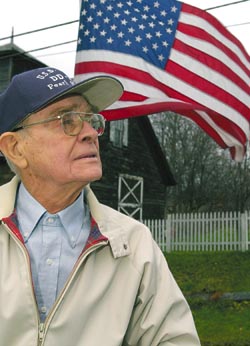
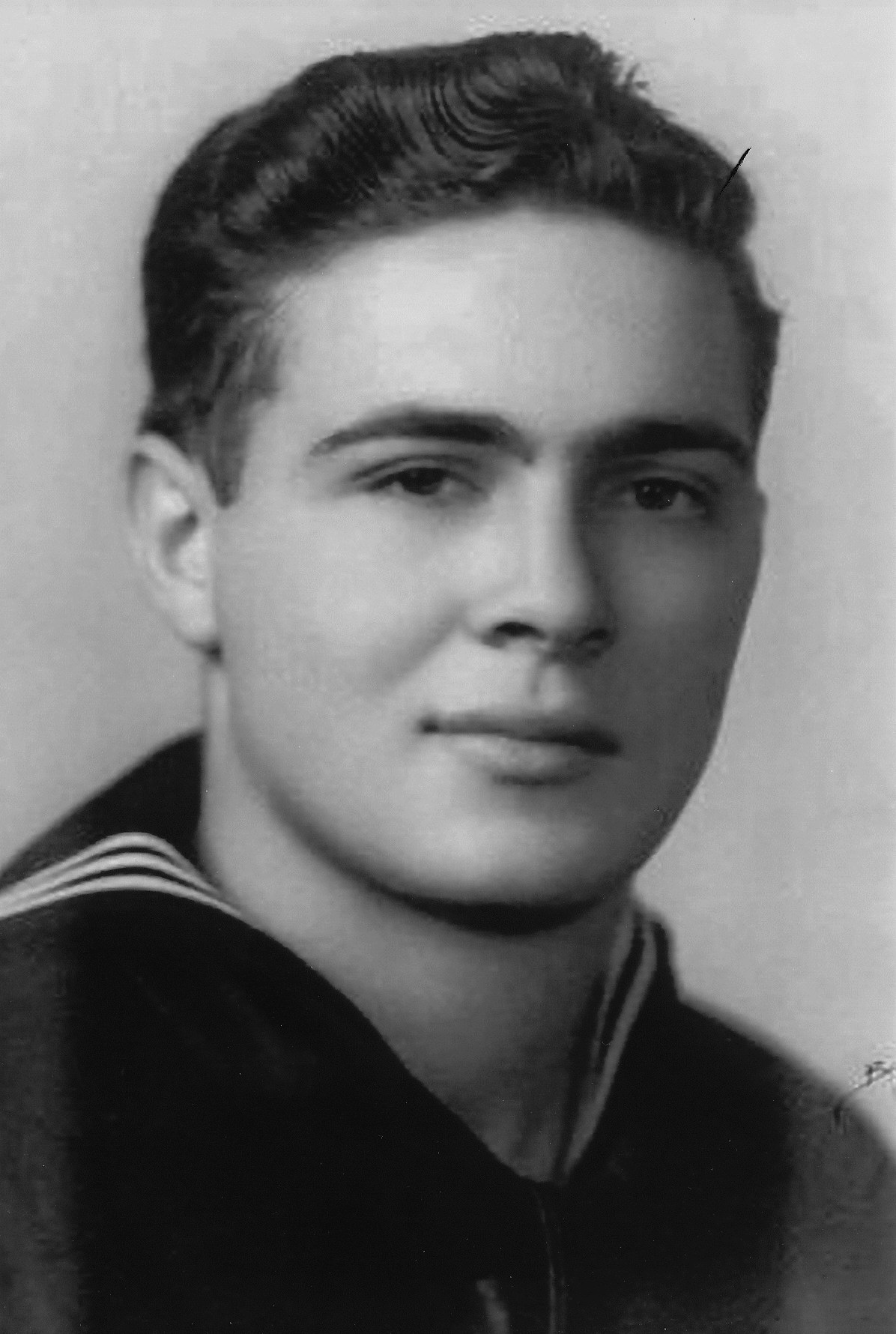
My friend Barney Ross passed away a few days ago.

I hadn’t seen him in a while, and I know he was not well these past few years, but he was one of the first vets to come to my class and spend some time with us. He is also the first veteran to speak in my new book. I remember one poignant moment when he briefly lost composure recounting his friends who had died and whom he missed. It’s always something to be prepared for when you interview any veteran, but Barney hardly missed a beat-he brought smiles through the tears as he reminded us that, “I may get emotional, but I’m still a tough guy.”

So today, on the anniversary of the signing of the surrender aboard the USS Missouri, where his boat was also anchored for the ceremony, I’ll let him recount for you what it was like at Pearl Harbor when the Japanese attacked. Yes, he was there, too.

Rest easy, Barney.

***

Gerald

early interview in my class- housed now at the New York State Military Museum collection.


Read Full Post »

I hope you’ll never have to tell a story like this, when you get to be 87.  I hope you’ll never have to do it.

 ― Marine veteran of the 1945 Battle of Iwo Jima, to his teenage interviewer

Ralph Leinoff, a Marine who fought at the Battle of Iwo Jima during World War II, stands in front of the drawing he modeled after Joseph Rosenthal's iconic photograph of five Marines and one Navy corpsman raising the American flag atop Mount Suribachi. (Portrait by Erica Miller, courtesy the Saratogian)

Ralph Leinoff, a Marine who fought at the Battle of Iwo Jima during World War II, stands in front of the drawing he modeled after Joseph Rosenthal’s iconic photograph of five Marines and one Navy corpsman raising the American flag atop Mount Suribachi. (Portrait by Erica Miller, courtesy the Saratogian)

Last night I did my first public reading from the book, The Things Our Fathers Saw. The turnout was great for a lovely summer evening, and I was especially gratified to meet the extended family of one of the book’s main narrators, Iwo Jima veteran Ralph Leinoff.

Ralph loved people, and he spent much time sharing his story with our young people especially. He did not like to get into the grit and the gore, but he told enough to  show why this history should not be forgotten. In fact, his quote above is the lede for the book on the back cover, and interior.

In my book I tell the story of how he came to draw the iconic photograph that he witnessed, right there in the thick of the battle for Iwo Jima, where 7000 US Marines would fall, including many of his friends.

***


*************************************************************

Matthew Rozell’s career as a history teacher is now spanning four decades. Over the course of the past 20 years, he and his students conducted hundreds of interviews with the World War II generation. One such interview led to the reuniting of a train transport of Holocaust survivors with their American liberators, over 60 years later. He is currently working on a trilogy of narrative histories based on these interviews.

His first book, a narrative of World War II in the Pacific as told through the previously unpublished recollections of over 30 veterans, was released in August. It is available here.  His second book, in progress, is on the power of  teaching, remembering the Holocaust, and the real story behind the  iconic photo of the “Train Near Magdeburg’. He can be reached at his Facebook page at Author Matthew Rozell or by commenting below.

Read Full Post »


Excerpt from the new book “The Things Our Fathers Saw” and Joe Minder’s prisoner of war dairy, dated 70 years ago this weekend, on the day he tasted freedom.

[In mid-August] On the radio the Japanese Emperor Hirohito spoke to his people and said, ‘The time has come when we must bear the unbearable.’ It was the first time they had heard his voice. Shaken prison camp commandants awaited word of whether or not to carry out the “kill-all” order within their camps.

Joe Minder recorded his observations as the prisoners dared to hope that their redemption was near.


Joseph Minder 1941.

Joseph Minder 1941.


Upcoming events page: http://matthewrozell.com/author-appearances/

Order the signed book directly: http://matthewrozell.com/order-the-things-our-fathers-saw/

Order paperback or ebook from Amazon:

******


Read Full Post »

001

Mr. Peachman and author, at debut book signing, Aug. 8, 2015. Mary Rozell photo.

As the book  ‘The Things Our Fathers Saw ‘ went to press, I was contacted by the Japan’s largest news wire service, “with over 50 million subscribers worldwide, publishing articles in Japanese, English, Chinese and in Korean…” They wanted a veteran’s “reflections as we approach the 70th anniversary of the double bombings of Hiroshima and Nagasaki” (which he offers in the book, Chapter 13, ‘The Kamikazes’). So, seventy years after the war, Mr. Peachman got to address the Japanese people. The story is below. I called him to ask him how it went.

Mr. Peachman: “It was very nice, the reporter was happy to speak to me. I told her, ‘I hope you have an hour or two.’ We had many things in common- I had traveled to Japan several times after the war, and we knew of the same places. I told her, you can’t say that you feel the same as you did, 70 years later. During World War II, the Japanese would fight to the death. I honestly felt that the bomb was necessary to end the war, though I feel that President Roosevelt made a mistake by demanding unconditional surrender. And I have questions about how and when the bomb was used. But make no mistake, the coming land invasion of Japan would have been a bloodbath.”

Mr. Peachman and author, at debut book signing, Aug. 8, 2015. Article in Japanese in foreground. Mary Rozell photo.

Mr. Peachman and author, at debut book signing, Aug. 8, 2015. Article in Japanese in foreground. Mary Rozell photo.

NEXT LOCAL AUTHOR APPEARANCE/EVENT:
• BOOK SIGNING AND TALK-Sunday, August 23, 7:00 pm:
The Glen at Hiland Meadows, 39 Longview Drive, Queensbury, NY 12804

From the Kyodo Japanese News Service :
Thank you so very much for all of your help and for putting us in touch with Mr. Peachman. As I explained to you both it was part of a series of short interviews conducted with people from around the world on the subject of views on the atomic bomb.
In addition to Mr. Peachman, whose comments we wrote about, we also spoke with a third generation Japanese American in LA, a former factory worker in Beijing, a female university student in Seoul, a high school teacher in Hong Kong who was involved in the protest movements, a former office worker in Germany, a Professor Emeritus from Israel, a young Iranian whose parent was a writer and a former preacher from Scotland.
We are so appreciative of our conversation with Mr. Peachman and because of the importance of what he said, he was mentioned at the top. Please see the Japanese article with the mark indicating the part where he spoke.
In Summary: we simply explained that many in the U.S. believe that the atomic bomb was necessary to help save lives and that Mr. Peachman was aboard a ship off Okinawa when it was attacked by Kamikaze planes. He lost some of his crew mates and upon hearing the news that the bomb was dropped was relieved because he did not think that he would have survived another encounter with the Japanese. Although he is saddened by the deaths that occurred in Hiroshima he did believe that it did save lives.
I hope this is helpful to you and please pass along our appreciation to Mr. Peachman and we also thank you so much for putting us in touch with him.
Please see the attached file.
Best regards,
S. M.

*************************************************************

Matthew Rozell’s career as a history teacher is now spanning four decades. Over the course of the past 20 years, he and his students conducted hundreds of interviews with the World War II generation. One such interview led to the reuniting of a train transport of Holocaust survivors with their American liberators, over 60 years later. He is currently working on a trilogy of narrative histories based on these interviews.

His first book, a narrative of World War II in the Pacific as told through the previously unpublished recollections of over 30 veterans, was released in August. It is available here.  His second book, in progress, is on the power of  teaching, remembering the Holocaust, and the real story behind the  iconic photo of the “Train Near Magdeburg’. He can be reached at his Facebook page at Author Matthew Rozell or by commenting below.

Read Full Post »

How my 93 yr. old history teacher, who survived a deadly kamikaze attack in the spring of 1945, got to address the Japanese people on the eve of the 70th anniversary of the end of WW II.

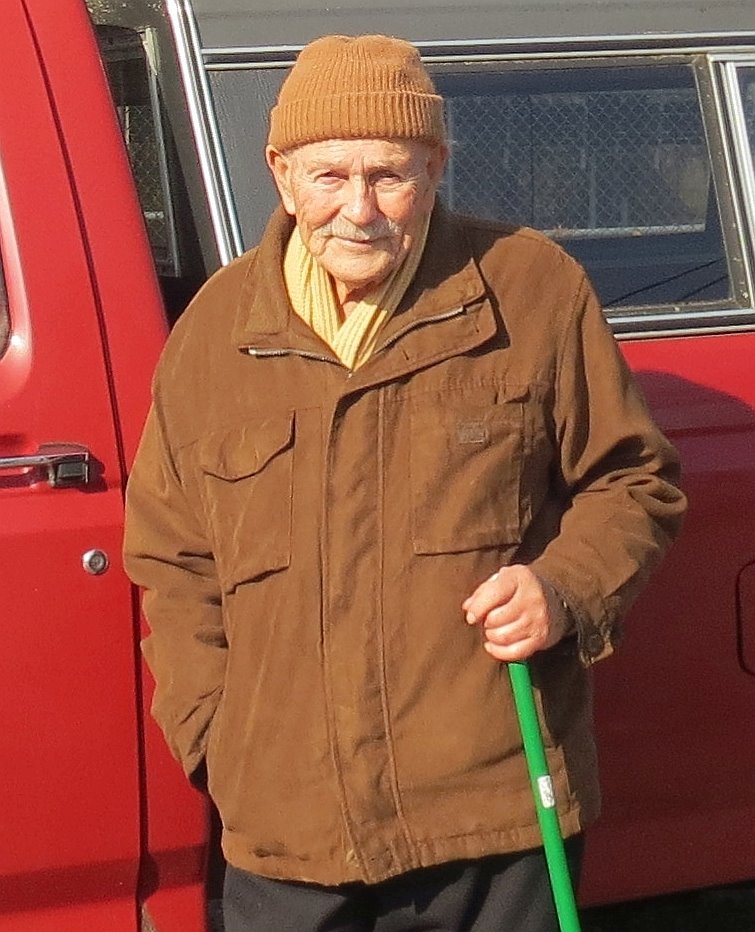
Mr. Alvin Peachman, Nov. 2014, out for his daily walk. Photo by Mike Nicholson, HFHS Class of 1979.

Mr. Alvin Peachman, Nov. 2014, out for his daily walk. Photo by Mike Nicholson, HFHS Class of 1979.

Be sure to come out and see us at the first author event- yes, Mr. Peachman will be there, too. He has TWO chapters in the book.

August 8th, 1-4 pm
The Village Booksmith.
223 Main St, Hudson Falls, NY 12839
(518) 747-3261

As the book  ‘The Things Our Fathers Saw ‘ went to press, I was contacted by the Japan’s largest news wire service, “with over 50 million subscribers worldwide, publishing articles in Japanese, English, Chinese and in Korean…” They wanted a veteran’s “reflections as we approach the 70th anniversary of the double bombings of Hiroshima and Nagasaki” (which he offers in the book, Chapter 13, ‘The Kamikazes’). So, seventy years after the war, Mr. Peachman got to address the Japanese people. The story is not out yet, but I just called him to ask him how it went.

Mr. Peachman: “It was very nice, the reporter was happy to speak to me. I told her, ‘I hope you have an hour or two.’ We had many things in common- I had traveled to Japan several times after the war, and we knew of the same places. I told her, you can’t say that you feel the same as you did, 70 years later. During World War II, the Japanese would fight to the death. I honestly felt that the bomb was necessary to end the war, though I feel that President Roosevelt made a mistake by demanding unconditional surrender. And I have questions about how and when the bomb was used. But make no mistake, the coming land invasion of Japan would have been a bloodbath.”

From the book:

 ‘I Lost Many Friends’


Matthew Rozell: So what did you think about the atomic bomb?

Best thing that ever happened to us. If it wouldn’t have been for the atomic bomb, I think we would have had a catastrophic amount of men killed, and probably the elimination of the Japanese nation as a whole. It would have been a terrible thing to conquer. I think it did a great deal in helping to save a million or two men, as well as the Japanese. I believe Harry Truman was a wonderful president in that regard; he really did a great favor to us. But I do not understand why we had to wait so long to figure things out! We shouldn’t have gone into Okinawa if we knew we had the atomic bomb because in Okinawa, we had 50,000 casualties! Our whole division was hit, except for the Wilmarth, as I told you. Two hundred and fifty ships were hit at Okinawa by kamikazes. The day we got hit, 26 ships got hit, and six were sunk to the bottom! I believe the Japanese had over 500 aircraft against us that day, suicide aircraft. Have you ever been startled by a partridge suddenly trying to fly into you? It is really a scary thing! Although you weren’t thinking of it at the time, it was a scary thing that these people would give up their lives like that. It was the most Navy lives lost in one battle. I lost many friends.

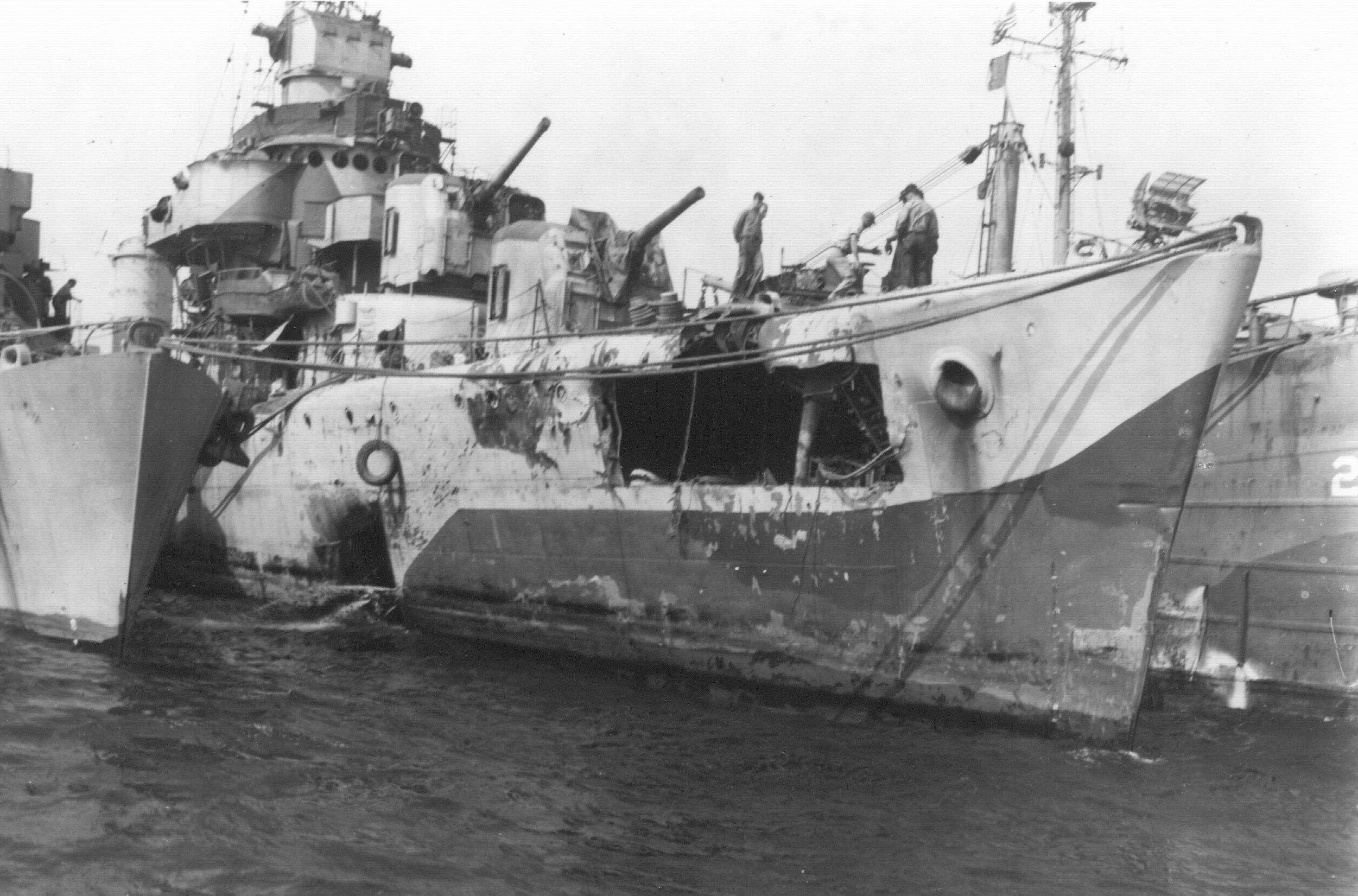
Destroyer Escort USS WITTER undergoing repairs following kamikaze attack. Alvin Peachman collection.

Destroyer Escort USS WITTER undergoing repairs
following kamikaze attack. Alvin Peachman collection.

As the land battle for Okinawa raged toward its crescendo with the fury of a storm, the kamikaze attacks would claim over 15,000 American casualties for the Navy alone.

Read Full Post »