TEN YEARS AGO, my first book was published.
Eight years before that, my high schoolers and I sat down with Jim and Mary Butterfield for what would turn out to be the last time.
They are featured in that first book, The Things Our Fathers Saw, Vol. 1-Voices of the Pacific. And their story is one of my favorites.

Jimmy used to come to my classroom with his bride of 65+ years, Mary. She would joke with him, and us, and call him by his high school nickname, “But”. Maybe it was “Butt”, I don’t know, but they had fun playing around with each other in front of 17 and 18 year olds.
The two of them, and Danny Lawler, another First Marine Division veteran of really hard fighting at Peleliu and Okinawa, came to my room for an afternoon. Later, I came home to an email from one of my senior girls, telling me how meaningful meeting Jimmy and Mary and Danny was to her and her classmates.
Jimmy, of course was blind and hard of hearing. Mary had to yell at him, he would crack a grin under the dark glasses and flirt with her. The high school girls loved it.
You see, Jimmy Butterfield got struck not once but twice in the head by enemy fire at Okinawa on May 19, 1945. He was evacuated first to Guam, then to Hawaii and later stateside for over 18 months and as many for reconstructive surgery. It was clear early on, though, that he would never see again.
To everyone but Jimmy.
When he eventually was ‘informed’, he told us that he instructed his high school sweetheart to leave him be. Not to get attached to him, a blind man.
Well, she told us what she thought of that. They ran a small mom and pop store back in Glens Falls together until they retired.
Mary passed in the fall of 2013. Jimmy died at home the following spring. What obstacles they overcame together. Below, from Vol. 1, they recount how Jimmy learned, weeks after the battle, that he would never see again.
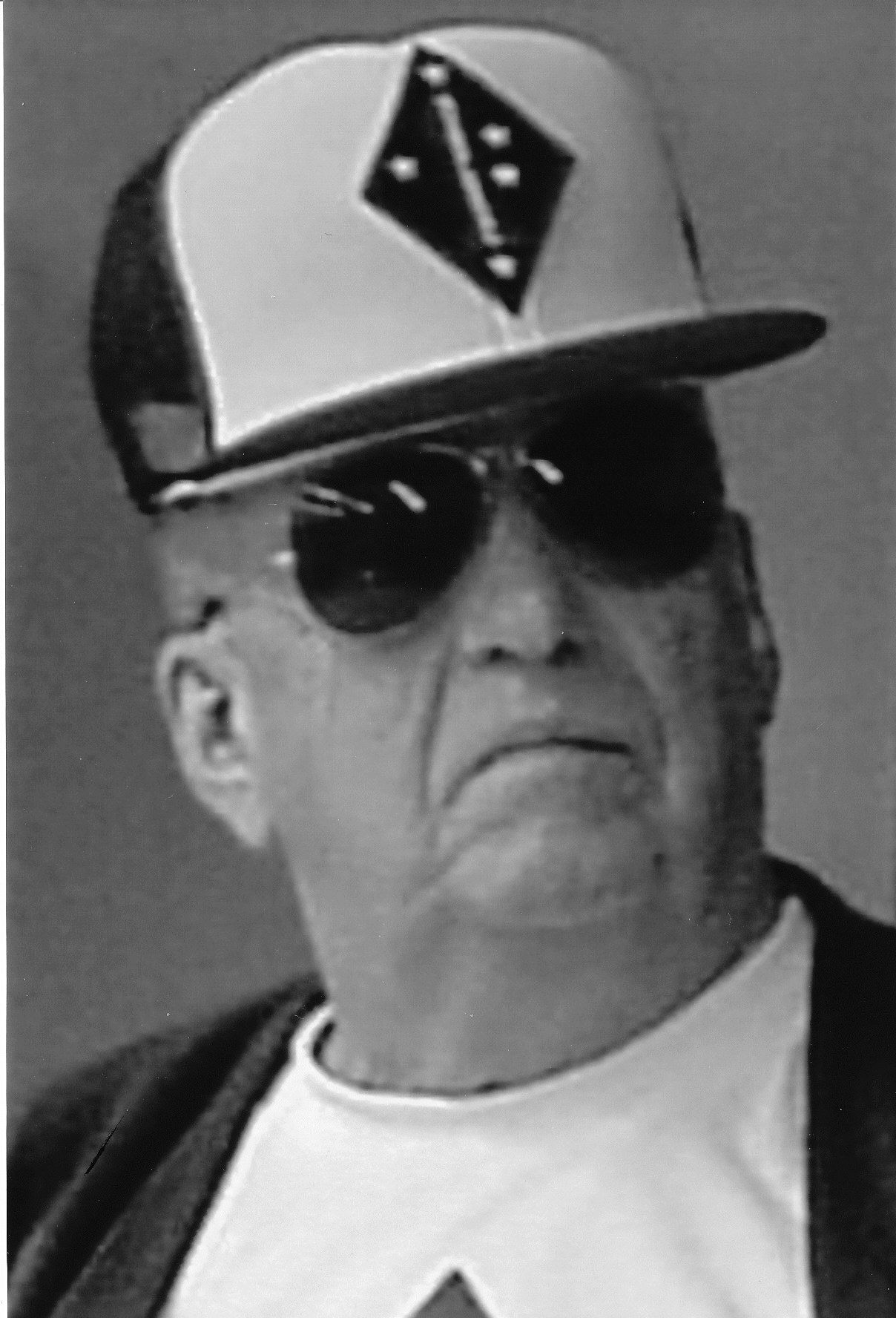
Jimmy: I didn’t know, until they told me there [in the hospital in Hawaii].
So here’s the climax. Every morning there was inspection with the doctors. So the doctor came around that morning. He said, ‘How are you, Jim?’
I said, ‘Fine.’ He said, ‘You need anything?’ I said, ‘Nope, I’m doing fine.’ He says, ‘Well, are you used to the idea?’ I said, ‘Used to what idea?’
He said, ‘That you’re not going to see again.’
Well, you could hear a pin drop. I said, ‘I don’t think I heard you, Doc.’ He said, ‘You’re not going to see again.’ I said, ‘What?’ He said, ‘Didn’t they tell you in Guam?’
I said, ‘No! But it’s a good thing that [first] doctor isn’t here, because I’d kill him!’ I got so mad! I couldn’t really grab the idea. I’m not going to see again? … What the hell did I know about blindness? Nothing!
I said, ‘How about operations?’
He said, ‘You’ve got nothing to work with, Jimmy.’
So a pat on the shoulder, and he just walks away. The nurse comes over and says, ‘The doctor wants you to take this pill.’ I said, ‘You know what the doctor can do with that pill?’
Mary: Don’t say it.
Jim: I’m not going to, Mary.
So I had a hard… two months, I guess. I kept mostly to myself. I wouldn’t talk to people. I tried to figure out what the hell I was going to do when I got home. How was I going to tell my mother this? You know what I mean?
So they come around and said, ‘You’ve got a phone call.’ So I went in to where the phone was. They were calling me from home. They got the message, see…
This one here was on the phone [points to Mary].
I said, ‘Looks like things have changed, kiddo.’
She said, ‘No, we’ll discuss this when you get home.’ She was already bossing me around. [Laughter]
But that’s how I found out, and that’s how it happened. And after a while, I just started to live with it.
There are not days—even today—I go to bed and I wish I could see. So much I miss. I miss watching a nice girl walking down the street. I miss seeing my daughter, my wife. I even miss looking at Danny. [Laughter]
Mary: But you see, I’m only seventeen to you now. That’s a good thing.
Jim: Since we got in the conversation, when I dream, and I do dream, everything is real. Everything I knew before, I see it as it was then, not today. My wife and daughter would never get old in my eyes. When I dream of Mary, she’s still seventeen years old.
Mary: But you never saw your daughter.
Jim: I dream about my daughter. Mary’s caught me doing this. We lost our daughter a year and a half ago. But I sit right up in bed and I’m trying to push away that little cloud of fog in front of her, but I can’t quite make her out.
Mary says, ‘What are you doing?’ I say, ‘Just dreaming.’
Jim Butterfield was nineteen years old at the Battle of Okinawa.
In the final push at the Shuri Line that cost him his eyesight, the Marines lost over 3,000 men and the U. S. Army even more. When the island was declared secure near the end of June, in Lawler’s K/3/5, only 26 Peleliu veterans who had landed with the company had survived Okinawa. It had been the bloodiest campaign of the Pacific, with over 12,500 Americans killed or missing and nearly three times that number wounded. For the Japanese, no accurate counts are possible, but perhaps 110,000 were killed.


 Teaching History Matters