Feeds:
Posts
Comments

{*As part of the conclusion to my USHMM Teacher Fellowship project, I  am posting the unfolding nature of the discovery of the camps as Allied troops closed in from the East and the West, sixty-five years to the day that the discovery/event occurred. This material was published elsewhere, as noted below; it is used with permission. This post also gets an inordinate amount of hits; please be sure to visit the “About” link for context.}
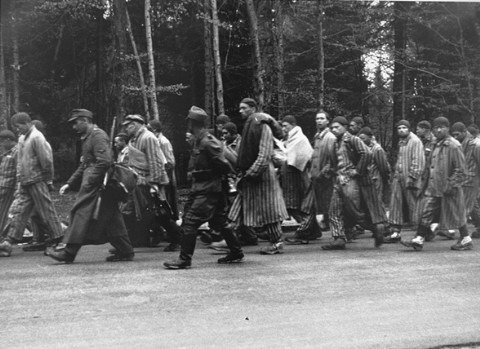
Prisoners on a death march from Dachau move towards the south along the Noerdliche Muenchner street in Gruenwald. German civilians secretly photographed several death marches from the Dachau concentration camp as the prisoners moved slowly through the Bavarian towns of Gruenwald, Wolfratshausen, and Herbertshausen. Few civilians gave aid to the prisoners on the death marches. Germany, April 29, 1945. — KZ Gedenkstaette Dachau. USHMM

Early April 1945

The SS evacuates thousands of Jews–mostly on foot–as Allied and Soviet forces press in from the east and west. Evacuees are taken to camps at Bergen-Belsen, Germany; Dachau, Germany; Ebensee, Austria; Leitmeritz, Czechoslovakia; and Theresienstadt, Czechoslovakia. The operation is rife with daily beatings and murders as well as deaths from starvation and typhus. Thirteen hundred Jews are evacuated on foot from Vienna; only 700 will reach their destination, the Gusen, Austria, camp, alive.

The evacuations of the concentration camps had three purposes:

(1) SS authorities did not want prisoners to fall into enemy hands alive to tell their stories to Allied and Soviet liberators

(2) the SS thought they needed prisoners to maintain production of armaments wherever possible

(3) some SS leaders, including Himmler, believed irrationally that they could use Jewish concentration camp prisoners as hostages to bargain for a separate peace in the west that would guarantee the survival of the Nazi regime.

The SS guards had strict orders to kill prisoners who could no longer walk or travel. As evacuations depended increasingly on forced marches and travel by open rail car or small craft in the Baltic Sea in the brutal winter of 1944-1945, the number who died of exhaustion and exposure along the routes increased dramatically. This encouraged an understandable perception among the prisoners that the Germans intended them all to die on the march. The term death march was probably coined by concentration camp prisoners.

During these death marches, the SS guards brutally mistreated the prisoners. Following their explicit orders, they shot hundreds of prisoners who collapsed or could not keep pace on the march, or who could no longer disembark from the trains or ships. Thousands of prisoners died of exposure, starvation, and exhaustion. Forced marches were especially common in late 1944 and 1945, as the SS evacuated prisoners to camps deeper within Germany. (USHMM)

April 1, 1945 – The Red Army liberates Sered labor camp in Slovakia. The first UNRRA (United Nations Relief and Rehabilitation Administration) teams enter Germany in the wake of the Allied armies to facilitate and assist in the relief of the displaced persons.

April 1, 1945: The SS initiates death marches to evacuate the concentration camps at Dora-Mittelbau and Kochendorf, Germany.

April 3, 1945: All 497 members of a slave-labor group at Bratislava, Slovakia, are shot and killed by their captors. The Nazis evacuate the concentration/slave-labor camp at Nordhausen, Germany.

Source(s):

Weber, Louis. The Holocaust Chronicle. Publications International Ltd., 2007. http://www.holocaustchronicle.org

The United States Holocaust Memorial Museum, 1945- The Year of Liberation. 1995.

http://www.ushmm.org/wlc/en/article.php?ModuleId=10005162

{As part of the conclusion to my USHMM Teacher Fellowship project, I  am posting the unfolding nature of the discovery of the camps as Allied troops closed in from the East and the West, sixty-five years to the day that the discovery/event occurred.}


March 21, 1945: Red Army troops enter the Pruszcz, Poland, camp near Stutthof. Only about 200 women prisoners, out of an original 1100, remain alive.

March 26, 1945 – American troops liberate the town of Hadamar, Germany.

March 29, 1945: The Red Army takes Danzig.

March 30, 1945: Jewish women being led to their deaths at the Ravensbrück, Germany, camp grapple with their SS guards. Nine of the women escape but are recaptured and murdered with the rest.

March 30, 1945: Soviet troops enter Austria.

Buses used to transport patients to Hadamar euthanasia center. The windows were painted to prevent people from seeing those inside. Germany, between May and September 1941. — Hessisches Hauptstaatsarchiv Wiesbaden

March 31, 1945 – Members of the US 2d Infantry Division investigate the facilities of the Hadamar euthanasia killing institution after local inhabitants report the murder of thousands of people. The Americans find 550 patients still alive. Several members of the staff are arrested.

March 31, 1945– One source mentions that Anne Frank died at the age of 15 in the Bergen Belsen concentration camp.

Source(s):

Weber, Louis. The Holocaust Chronicle. Publications International Ltd., 2007. http://www.holocaustchronicle.org

The United States Holocaust Memorial Museum, 1945- The Year of Liberation. 1995.
http://www.ushmm.org/wlc/en/media_ph.php?ModuleId=10005200&MediaId=881

{As part of the conclusion to my USHMM Teacher Fellowship project, I  am posting the unfolding nature of the discovery of the camps as Allied troops closed in from the East and the West, sixty-five years to the day that the discovery/event occurred.}

March 19, 1945:

Adolf Hitler issues the Nero-Befehl (Nero Order), a scorched-earth directive intended to leave only a ruined Germany for advancing troops.
March 19, 1945:

Two hundred survivors out of 1000 Jewish women who began a forced march from the Neusalz, Poland, slave-labor camp on January 26 are evacuated by train to the concentration camp at Bergen-Belsen, Germany; see this post.

Source(s): Weber, Louis. The Holocaust Chronicle. Publications International Ltd., 2007. http://www.holocaustchronicle.org

I recently received this email from the son of survivors:

Dear Mr. Rozell,

My mother was one of the 200 or so that survived that “death march”!  The survivors were transported to the camp at Bergen-Belsen, where my mother was ultimately liberated on April 15, 1945.

Many years ago, she did relate to me a wartime story of hers which I wrote up in 2006, and had published.

Here it is…

The Defining Moment

By Joseph H. Danziger

It happened more than sixty years ago- and not to me- but I cannot dislodge it from my mind’s eye.  My consciousness will not surrender the thought of what it must have been like for my mother, especially on one ominous day. I am a child of Holocaust survivors.

My parents, and thousands like the, each have personal stories of their incarceration in the various concentration camps that dotted Germany, Poland and neighboring countries during World War II.

My parents rarely shared with me their accounts of that desperate period of their lives. When prodded, they might offer an occasional vignette. Seeing the pain on their faces in talking of these experiences, however, I didn’t push for details. Those are memories they certainly preferred to have long forgotten.

Of the stories that were begrudgingly told to me, one shared by my mother will haunt me forever. The soul-searching decision with which she was confronted on that fateful day so long ago is unfathomable to me. As a result of the decision she made that say, I am here to tell the tale.

My mother spent the flower of her youth- ages 17 through 20- within the confines of a concentration camp in Neusalz, Poland. It was a women’s “slave-labor” camp where yarn was processed for the war effort. Although it was not one of the infamous “death” camps such as Auschwitz, Treblinka or Sobibor, the distinction between these titles is hardly significant. In a death camp the aim was to kill as many and as quickly humanly possible. In a slave-labor camp the goal was, in effect, to work the laborers to death, with an ever-replenishing supply of labor. The death tolls in each were mind-boggling. The human skeletons who managed to survive all looked the same and had similar stories of deprivation, torture, depravity and the wanton taking of life.

In the midst of this living hell, an opportunity presented itself to my mother. She saw a possible means of escape. Despite knowing that if she got caught she would face certain death, she took the chance. She escaped, although she never explained exactly how.

Clad only in rags, she trudged through unfamiliar territory until she came to a house. She knocked on the door. She related her circumstance to the master of the house and pleaded for food and a place to hide. Although sympathetic to her plight, he told her he could not jeopardize his family. If found to have secreted a Jew, especially one who escaped from a nearby camp, he and his whole family would most likely be killed as a lesson to the community.

Yet, seeing my mother’s emaciated condition and dire need- and against his better judgment- he took pity on her. He invited her into his home, let her eat, bathe and sleep the night. Before the break of dawn, however, he said she must be gone. She thanked him and availed herself on his family’s kindness. For one night during a span of three years she had a full stomach, clean clothes and a restful night’s sleep.

She left before dawn, as promised. But where would she go? Only then did the truly desperate nature of her circumstance become apparent. For one such as she there was nowhere to go.

My mother was confronted with an unimaginable predicament, a sort of Gordian knot. Should she hazard freedom in an unfamiliar countryside filled with anti-Semitism where peril and betrayal would be her constant companions? Or should she attempt the inconceivable- a stealth re-entry into the camp from which she had just risked her life to escape- hoping the guards had not noticed her absence? As least there she reasoned, she had the known quantity of a controlled environment offering minimal subsistence, albeit in a horrific setting and under subhuman conditions. She chose the latter. In her mind, that choice offered the best chance for survival. As remarkable as was her original escape, doubly remarkable was her ability to re-enter the camp, unnoticed, and return to her quarters before the morning roll call.

With the memory of nearly one full day of freedom, my mother persevered. Then, in January 1945, together with 1,000 other interned women, she was set on a one-and-a-half-month forced to march to the concentration camp at Flossenburg, Germany, some 200 miles to the southwest. This was one of many so-called “death marches” that occurred toward the end of the war, in a calculated maneuver by the Nazis to deceive the Allies about the vast network of fully functioning concentration camps in operation during the war years.

Along the way to Flossenburg, 800 women were beaten, shot or left to die when they collapsed in the harsh winter. Upon their arrival, the remaining 200 women were transported to the concentration camp in Bergen-Belsen. On April 15, 1945, the British and the Canadians liberated the scant number of those remaining. One of those was my mother. One year later, after surviving family members were reunited, she married my father.

I cannot imagine any other Holocaust survivor choosing a purposeful re-entry into a concentration camp after an earlier successful escape. The very idea is mind-numbing. But she chose wisely, for which her five children and six grandchildren are her testament. I will forever marvel at the immense resolve of this remarkable woman and her relentless insistence on survival.

My father passed away in 1981. My mother is now 82 and, other than having some memory troubles, is in good health and lives with one of my sisters in Virginia.

(Article first appeared in THE PHILADELPHIA LAWYER , SUMMER 2006. Retyped by student Jana Putzig. Used with permission.)

Contact the teacher, Matthew Rozell, at marozell@hfcsd.org

View Diane Sawyer’s Persons of the WeeK!

March 5, 1945: The U.S. Ninth Army reaches the Rhine River south of Düsseldorf, Germany.

By Travis Loller, Associated Press Writer NASHVILLE, Tenn. Posted 3/5/2010 7:50 PM ET

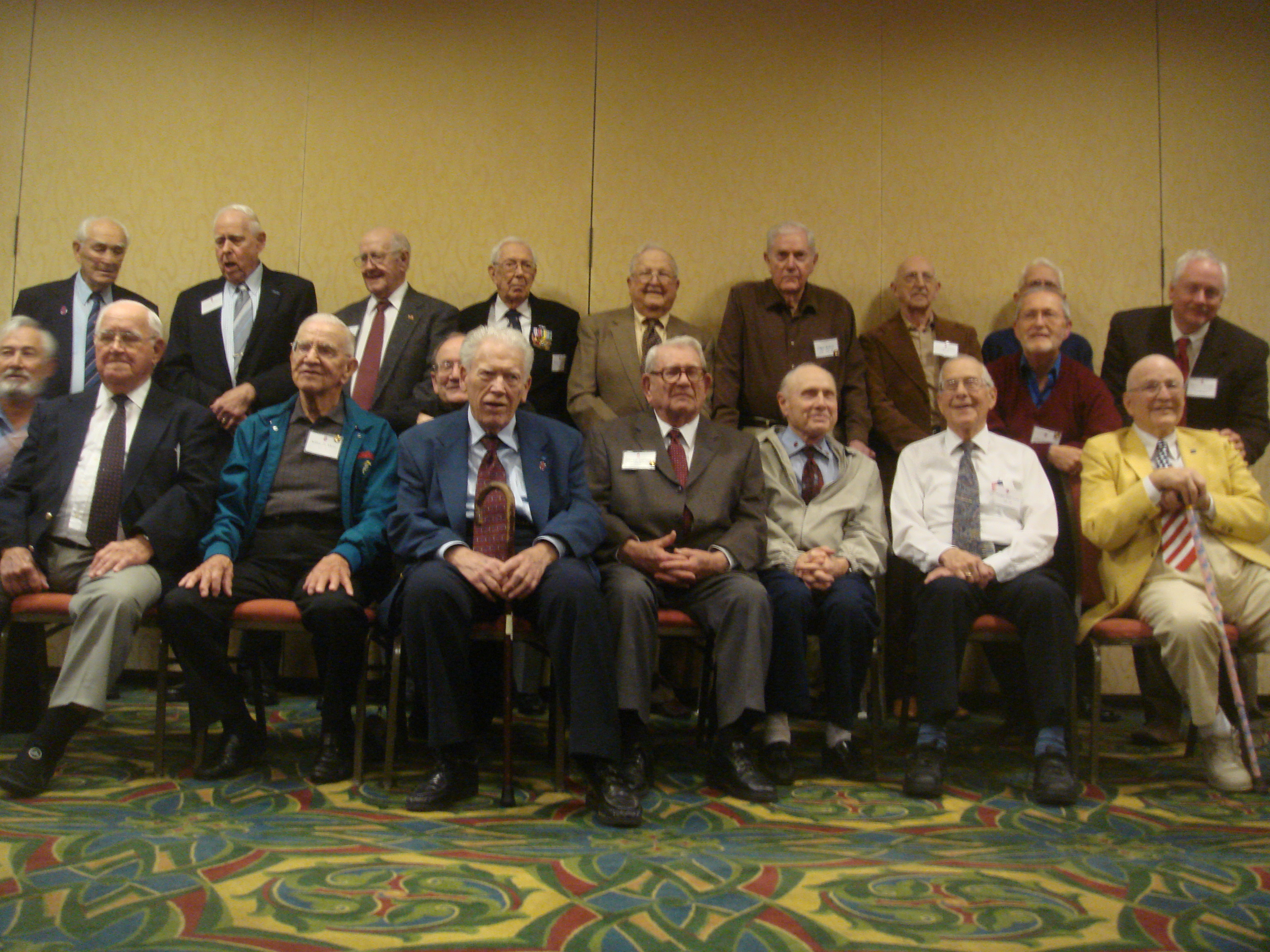
— Nearly 65 years ago a group of American soldiers advancing through Germany came upon a train loaded with 2,500 starving Jewish prisoners. For Frank Towers, who was serving as the liaison officer in the 30th Infantry Division, the day he organized a convoy to take those people to freedom was just another day in the war. But several years ago, some of the Holocaust survivors, who were only children at the time, began contacting their liberators through the Internet. That was the beginning of a new focus at the 30th Infantry Division’s annual reunion, with survivors joining the veterans and telling their stories. At this year’s reunion in Nashville, Towers is reuniting with four of the people he rescued from that train. “We had read in Stars and Stripes about Jewish slave labor camps, but this was the first group we encountered,” the 92-year-old said in an interview at the reunion on Friday. “It was really beyond our imagination that any sector of the human race could do to these people what had happened.” Micha Tomkiewicz is now 70 and a professor of Physics and Environmental Studies at Brooklyn College in New York City. He was only five on April 13, 1945, when he was liberated. His memories of the Bergen-Belsen concentration camp, where he had been held until the Nazis tried to evacuate him and the others to prevent their liberation, are few. One memory is of the rats, he said, and the time he woke up the whole barracks screaming that they were eating him. Although he knew he had been liberated by the American Army, he said, “throughout my life, they were always an abstract concept. Now suddenly they’ve got shape, voice, life.” “I just wanted to find the opportunity to really, really thank these guys,” he said. George Somjen, now 80 and a retired professor of Neurophysiology at Duke University, was 15 at the liberation, and remembers it better. “We were, of course, terribly happy,” he said, “but in that extremely emaciated state (I had lost 30 to 40 percent of my body weight), one has a very limited emotional scale. One doesn’t feel much except, ‘I am hungry.’ ‘I am thirsty.’ ‘I hurt.”‘ “For many years I never thought about this,” he said. Then, a few years ago he read a newspaper article that featured a fellow survivor and came to hear of the reunions. On Friday, while giving a presentation on his experiences, he recalled a 1997 trip to Germany where he revisited the town of Hillersleben, where the Americans first housed the survivors after they were taken from the train. His voice cracked as he told the group that his father, who had been with him on the train, died there, several days after the liberation. Tomkiewicz, Somjen and the other survivors would likely never have met their liberators if it hadn’t been for a high school history project. Several years ago, Hudson Falls (N.Y.) High School history teacher Matthew Rozell asked his students to collect the oral histories of local WWII veterans. Since those stories and pictures first went on the Internet, about 100 survivors who were on the train near Magdeburg and now live all over the world have contacted him and Towers. “It’s immensely satisfying to know that 65 years ago I had some part to play in the liberation … of these people and in setting them up on the road to a new life,” Towers said.

Wonderful Victory.

A note from liberator Frank Towers:

Hi Matt:  Attaching the latest revised list of our Holocaust Survivors.  It is almost unbelievable to learn that there are so many of them still surviving – most of course we do not know where.

By my calculation, there were about 425 children on that train. Statistically about half of them are deceased thru malnutrition, disease effects from their incarceration and normal attrition, bringing the total survivors to about 200+.  Would you believe that we now have “over 100 names” on this list now, and it continues to grow!!!

I have been in contact with Varda in Israel, and she has been working 24/7 looking for these people, and she has come up with a bunch of them, and most have been verified from my Farsleben Train List.

And a wonderful communication from Israel:

Hello, Matthew,
My name is Lily Cohen and I was a little girl who was on that train coming from Bergen-Belsen.  My name was Lili Kazimierski-Shein and I was an orphan, probably about 5 or 6 years old.  at that time.  I don’t know my birth day, or year.
I am so moved to find this research, as most of my early life appeared to be “erased” somehow by the Holocaust, and only now am I able to take small steps into what was my past to piece together fragments of memories.  I remember the train.  I remember the hill, I remember a German soldier running away, and I remember a woman who was trying to take care of me dying at my side.
I come to the US and would be very touched to come to a reunion.  My life has turned into a really wonderful victory over Hitler’s attempt to obliterate the Jewish race.  Tonight I made dinner for 10 people in my home in Tel Aviv – 6 of whom came from me!!!
I send gratitude to you,

Lily

How did I hear of you?  Varda  called me last evening, having found my name in a book by Hilda Hoopert called “Hand In Hand With Tommy.”  Since it only mentioned my first name and the kibbutz where I was raised, she called the kibbutz!  Amazing how things can come together when there are people dedicated to finding out “the rest of the story.” Thank you for your dedication.
Please feel free to quote me on your weblog.  It would be an honor, and might even lead me to more pieces of the mosaic of my early life.  It would be good to be contacted directly, so you can include my e-mail and even my phone number here in Israel if you like.
I would very much like to talk to the other girl whose story is so similar to mine.  You are so kind to consider the sensitive nature of our feelings.
I do so look forward to meeting you some day soon.
Shalom,
Lily

POSTSCRIPT:

Hi Matt,

Thank you again. Since last Tuesday when I got Varda’s call I am on a different time zone. on one hand I carry on with my life, on the other I can not wait to get on the computer to see if there is anything from you or Frank. For so many years I didn’t talk about my childhood even with my children, deep deep down I had the feeling that something was probably very wrong with me, something you should be ashamed of, if all this happened to me. I have open my mouth only ten years ago to tell my granddaughters.  You see, among all the amazing stories that you hear, my story is unbelievable. I don’t think that – at least- in Bergen Belzen it was a child from a very young age of two years old until the age of five or six that was completely alone without anybody from his family, all the other children were with parents, Mum, aunt. I, must thank all the anonymous women who took care of me all that horrible years. I don’t remember their faces but I know they were exist and saved my life.
You are really doing a holy work and I do hope to meet you some day.

Holiday Inn Opryland/Airport is the Place

March 4 – 7 is the Time

The Prez Sez:

As your  President and Editor, I hope that you have had a Very Merry Christmas or a Happy Hanukkah, with your families, and I hope that you all will have a Wonderful, Happy, Healthy and Fulfilling Year in the year 2010 to come. At this stage in the game, we all must count our blessings and be thankful for what we have.

I am delighted to note that as of this writing, we have 52 persons registered for our next Reunion in March. This is very exciting to know that so many of our members are planning ahead and making plans to be together with us for this memorable event. Among our participants, we already have a commitment from 4 of our Holocaust Survivors, who plan to be with us to tell their stories and to become acquainted with their Liberators, and meeting others of their peers for the first time. I am sure that there will be others joining us as time goes on. If we can have 100 or more at this reunion, it will tell us that we surviving “Old Hickorymen” still have a lot of spirit within us, and determination to join with the crowd as often as the opportunity presents itself.

If you have not been to one of our Reunions, you just do not know what you are missing in the way of Friendship and Camaraderie, that we all knew way back 65 years ago. It has grown even better ! Don’t miss out on this one !!

Frank W. Towers, President

DRAFT COPY

(Subject to Change)

Program 2010

Holiday Inn Select, Opryland/Airport

4 March – 7 March 2010

Wednesday                              3 March

Early Registration                                         1:00 P.M.  –  5:00 P.M.

Hospitality                                                      1:00 P.M.  –  5:00 P.M.

Dinner on Own                                              5:00 P.M.  –  7:00 P.M.

Manager’s Reception (Free)             5:30 P.M.  –  6:30 P.M.

Hospitality                                                      7:00 P.M.  –         ??

Thursday                               4 March

Registration                                                   9:00 A.M. –  12:00 Noon

Lunch on Own                                            12:00 Noon –   1:00 P.M.

Registration                                                   1:00 P.M.  –    5:00 P.M.

Reception in Atrium                                     6:00 P.M.  –   7:30 P.M.

Hospitality                                                      7:30 P.M.  –  10;00 P.M.

Friday                                     5 March

Breakfast       (Whenever you wish)            6:30 A.M.  –    8:30 A. M.

Memorial Service                                          9:30 A.M.       10:30 A.M.

Open Time for Visiting / Interviews            10:30 A.M.     12:00 Noon

Lunch at Hotel                                               12:00 P.M   –     1:30 P.M.

Holocaust Survivors Presentation                  2:00 P.M.  –                 5:00 P.M.

Hospitality                                                         5:00P.M.  –    6:00 P.M.

Dinner                                                               6:00 P.M.  –    7:30 P.M.

Hospitality                                                         7:30 P.M.  –   10:00 P.M.

Saturday                                6 March

Breakfast       (Whenever you wish)               6:30 A.M.  –    8:30 A.M

General Meeting                                                9:00 A.M.     12:00 Noon

Lunch at Hotel                                                  12:30 P.M.       1:30 P.M.

Hospitality                                                          1:30 P.M.         6:00 P.M

Holocaust Survivors Presentation Cont’d       1:30 P.M.        5:00 P.M..

Banquet                                                                7:00 P.M.        9:00 P.M.

Hospitality                                                             9:00 P.M.      11.00 P.M.

Sunday                                   7 March

Breakfast  (Whenever you wish)                        6:30 A.M. – 8:30 A.M.

Departures :    Airport shuttle as scheduled . Be sure to schedule your departure with the Hotel Concierge on Friday or Saturday!!

{As part of the conclusion to my USHMM Teacher Fellowship project, I  am posting the unfolding nature of the discovery of the camps as Allied troops closed in from the East and the West, sixty-five years to the day that the discovery/event occurred.}

February 15, 1945

After the liberation of the Flossenbürg concentration camp, two U.S. army infantrymen examine a pile of shoes belonging to victims of the camp. Flossenbürg, Germany, May 1945.After the liberation of the Flossenbürg concentration camp, two U.S. army infantrymen examine a pile of shoes belonging to victims of the camp. Flossenbürg, Germany, May 1945. USHMM

After the liberation of the Flossenbürg concentration camp, two U.S. army infantrymen examine a pile of shoes belonging to victims of the camp. Flossenbürg, Germany, May 1945.USHMM.

The Red Army overruns and liberates a slave labor camp at Neusalz, Poland. On January 26th, one thousand Jewish women interned there are set on a month and a half forced march to the concentration camp at Flossenbürg, 200 miles away in south east Germany near the Czech border.  Most of these women do not make it to Flossenbürg; most are beaten to death or shot.

Source(s): Weber, Louis. The Holocaust Chronicle. Publications International Ltd., 2007. http://www.holocaustchronicle.org/staticPages/594.html

The United States Holocaust Memorial Museum   http://www.ushmm.org/wlc/article.php?lang=en&ModuleId=10005537

{As part of the conclusion to my USHMM Teacher Fellowship project, I  am posting the unfolding nature of the discovery of the camps as Allied troops closed in from the East and the West, sixty-five years to the day that the discovery/event occurred.}

from the United States Holocaust Memorial Museum-

 February 8, 1945

 As Soviet forces approach the camp, the SS orders the evacuation of Gross-Rosen. The SS forces more than 40,000 prisoners on death marches to camps in the interior of Germany. Members of the SS kill any prisoner too weak or ill to continue the march. Thousands die during the evacuations, many from the lack of food or water.

It is estimated that of the 120,000 prisoners who passed through the Gross-Rosen camp system, 40,000 died either in Gross-Rosen or during the evacuation of the camp.


GROSS-ROSEN CAMP ESTABLISHED
August 2, 1940

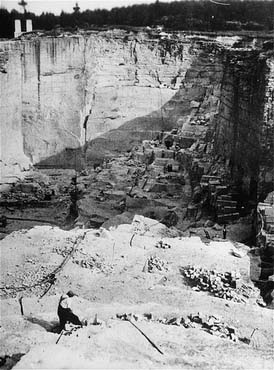
SS authorities establish the Gross-Rosen concentration camp, initially as a subcamp for men, as part of the Sachsenhausen camp system. The camp is built near the city of Striega, just south of the town Gross-Rosen (Pol., Rogoznica) in Lower Silesia. The SS transfers about 100 prisoners, mostly Germans and Poles, to the site to begin the construction of the camp. An SS-owned company, German Earth and Stone Works, takes over the quarry at Gross-Rosen and forces concentration camp prisoners to mine granite.

RECLASSIFICATION OF GROSS-ROSEN
May 1, 1941

The SS Economic-Administrative Main Office reorganizes the Gross-Rosen camp as an independent concentration camp, removing it from the Sachsenhausen camp system.

EXECUTION OF SOVIET POWS
October 1, 1941

The SS transfers the first group of Soviet prisoners of war (POWs) to Gross-Rosen for execution. About 20 Soviet POWs from the prisoner-of-war camp in Neuhammer are shot in front of the crematoria at Gross-Rosen. During this month, the SS transfers about 3,000 Soviet POWs to Gross-Rosen for execution. In the Commissar Order, Hitler ordered the summary execution of Soviet political commissars and other officials. The German army turned tens of thousands of Soviet prisoners of war over to the SS for execution.

PRISONERS SELECTED FOR “EUTHANASIA”
December 12, 1941

The SS Inspectorate of Concentration Camps sends evaluation forms to Gross-Rosen for the screening of prisoners. SS doctors in Gross-Rosen use the forms to recommend the killing of almost 300 ill or weak prisoners in Gross-Rosen. About half of the prisoners are later transferred to the Euthanasia killing center at Bernburg and gassed. The others either die in the camp or recover before the SS can arrange the transfer to Bernburg. The systematic killing of ill or weak prisoners is part of an operation codenamed 14f13, carried out by personnel from the Euthanasia Program in conjunction with the SS Inspectorate of Concentration Camps. During the Gross-Rosen camp’s existence, SS doctors also use injections to the heart to kill weak or ill prisoners in the camp hospital.

TYPHUS EPIDEMIC
January 17, 1942

SS camp authorities order the quarantine of the Gross-Rosen camp due to a typhus epidemic, halting all work in the camp. They allow no prisoners to leave or enter the camp. The SS will lift the quarantine after about a month. More than 1,000 prisoners die during this outbreak of typhus in the camp.

SCHINDLER FACTORY BECOMES SUBCAMP
October 21, 1944

German industrialist Oskar Schindler moves his Jewish work force from the Plaszow concentration camp in Poland to a factory in Bruennlitz (in the Sudeten region of Czechoslovakia). The new camp attached to the factory in Bruennlitz becomes a subcamp of Gross-Rosen. Schindler saves over 1,000 Jews employed in his factory by claiming that they are essential to wartime production. They will remain under Schindler’s care until liberation in May 1945.

REPORT ON PRISONER STATISTICS
January 15, 1945

SS camp officials report that there are more than 75,000 prisoners in the Gross-Rosen concentration camp, including more than 25,000 women. As forced labor from concentration camp prisoners grew more important in the production of armaments for the German war economy, Gross-Rosen became the center of a vast network of more than 100 subcamps spread across Lower Silesia.

SOURCE: The United States Holocaust Memorial Museum

http://www.ushmm.org/wlc/media_cm.php?lang=en&ModuleId=10005454&MediaId=133

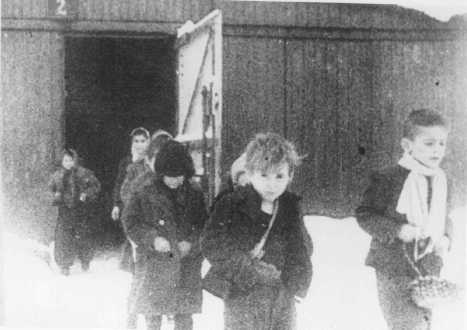
Soon after liberation, surviving children of the Auschwitz camp walk out of the children’s barracks. Poland, after January 27, 1945. — United States Holocaust Memorial Museum

I study this photograph

And so it begins, 2010-

‘~The Year of the Liberator~’.

The-Train-to-Life-an article by a leading Orthodox magazine on how our project is affecting lives.

The White House

Office of the Press Secretary

For Immediate Release
January 27, 2011

Statement by the President on International Holocaust Remembrance Day

“I join people here at home, in Israel, and around the world in commemorating International Holocaust Remembrance Day, as we mark one of the darkest, most destructive periods in human history.

To remember is a choice, and today we remember the innocent victims of the Nazis’ murderous hate – six million Jews and millions of other people. We are reminded to remain ever-vigilant against the possibility of genocide, and to ensure that ‘Never Again’ is not just a phrase but a principled cause. And we resolve to stand up against prejudice, stereotyping, and violence – including the scourge of anti-Semitism – around the globe.

At the same time, we remember the ordinary people who courageously and heroically expressed the very best of the human capacity for compassion and justice by risking their lives to save their fellow human beings during the Holocaust. They demonstrated that in the midst of evil, human beings can perform remarkable acts of decency and dignity.

Finally, on Holocaust Remembrance Day, we remember the survivors and the profound faith and courage they have embodied to build lives of purpose and meaning. In doing so, they are defying those who tried to kill them, and teaching us that love and life can vanquish hate and death. Let us honor them, and those we lost, by building a more peaceful, just and tolerant world.”

Yes. Honor the memory of those who passed, those who survived, and those who rescued. But do also remember that to liberate was also a choice.


“Don’t be a bystander.”  -quote from conference, Mr. Rozell. World News video, with Mr. Rozell’s message to students, taken from the last day of the conference.