Feeds:
Posts
Comments

Danny Boy.

Danny.

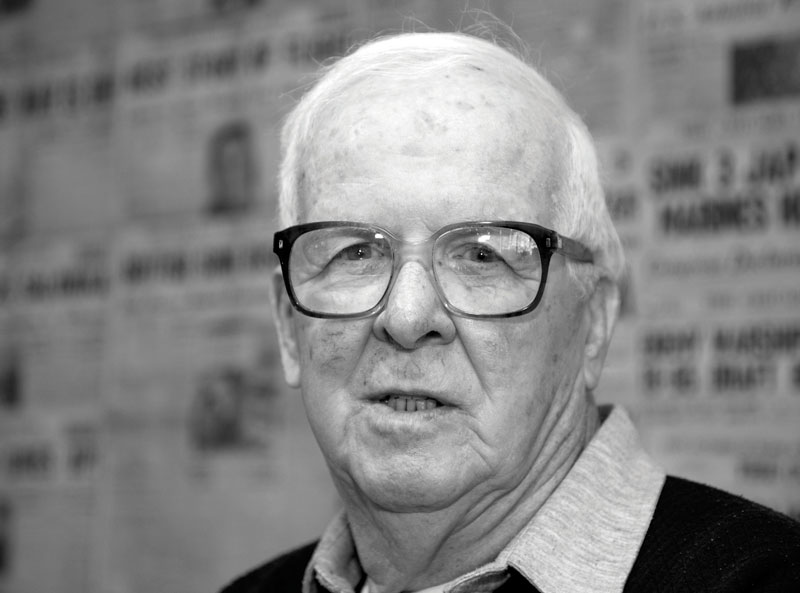
Dan Lawler in my classroom, 2011. Portrait by Robert H. Miller.

Daniel Lawler in my classroom, 2011. Portrait by Robert H. Miller.

I’m staring down a stack of papers I have to grade, and the pile keeps growing higher. I’m too busy teaching and planning lessons at school, so like most teachers I know, I bring them home. I’ve gone through a ‘first look’ once, and that’s  a start. But I can’t get into the rhythm until I write about my friend Dan Lawler, who passed away almost a week ago at the age of 90.

I’m ashamed to say I missed his wake today, and tomorrow I will miss his funeral. But I think he knows that I will be doing my best in school and elsewhere to keep the memory alive.

Dan Lawler was a Marine’s Marine, World War II edition. He was wounded at Peleliu, and then miraculously made it all the way through the Battle for Okinawa. Later he served in China to protect against communist insurgents; he had many stories to tell and I detailed many of them in my book. But what struck me the most about Danny was his devotion to his friend, Jimmy Butterfield, and Jim’s wife Mary.

They would come to my classroom and entertain and enthrall the kids, but it was always tempered with the realities of what they truly experienced. You see, Jimmy was blinded for life at Okinawa. But Danny always got him to come in to school, and together they told the stories that only brothers can share. They would rib each other, fun stuff to reel the kids in. And then the stories would flow. It was never an act. It was brothers being brothers and letting us in on the most intimate stories that would bubble forth, sharing with the teenagers in my room, who fell in love with them, and for the moment, becoming the teenagers who they once were themselves.

People I don’t really even know, who have read my book where both are profiled, have reached out to me to express their condolences at my loss. Of course, that is one of the downsides of getting close to the folks who fought and sacrificed in World War II. Eventually their time is up, and they have to leave us.

And of course, my sorrow is nothing compared to that of his family, but remember this- Danny, and all the survivors of World War II who managed to make it back, had stories to share. I thank God that I knew Daniel Lawler, and Jim Butterfield, who passed 2 years before him. But it’s not just a loss for those who had the honor of getting to know him- it’s the loss for humanity. I just hope, Danny,  I did my part in keeping your memory alive.

Rest easy, Marine.

A Review of Timothy Snyder’s Black Earth, released last week. I think the review made some great points, which I highlight in italics. I just ordered it. Here is one place to get the book. Like the reviewer,  I’m not sure I can agree with the final thesis, but I will read it…

The Frying Pan and the Fire

Why did 99% of the Jews in Nazi-occupied Denmark survive while 99% of the Jews in Nazi-occupied Estonia were murdered?

By EDWARD ROTHSTEIN
Sept. 4, 2015 5:42 p.m. ET

BLACK EARTH

By Timothy Snyder
Tim Duggan, 462 pages, $30
Once, the Holocaust had an almost sacral quality: It was approached with fear and trembling as a cataclysm beyond comparison. Now the tendency is to think of it not as something distinctive but as something representative. What, after all, made these killings any more horrific than the tens of millions of others during World War II—on battlefields and in prison camps, in forests and over ditches, in bombed cities and wasted fields? How is the Holocaust different from other genocides? Was Hitler’s murder of six million Jews so different in kind from Stalin’s deliberate terror-famine in the Ukraine in 1932-33 that left three million dead?

Such questions lie in the background of the Yale historian Timothy Snyder’s remarkable “Black Earth: The Holocaust as History and Warning,” a book that extends his gripping, somber “Bloodlands: Europe Between Hitler and Stalin” (2010). In that volume’s account of purges, massacres, shootings, starvations, executions and incinerations in Germany, the Soviet Union and the contested lands in between, the Holocaust is but a subset of 14 million gratuitous yet calculated murders. In “Black Earth,” the Holocaust is the focus of attention, but we are never allowed to forget the surrounding charnel house. Mr. Snyder said that in “Bloodlands” he wanted to write a “transnational” history, taking a broad look at events from without rather than from within the world of a particular nation. “Black Earth” takes a similarly broad approach: He does not see the Holocaust as a “war against the Jews”—as the historian Lucy Dawidowicz called it—for which Hitler was prepared to sacrifice ordinary military strategy, but as an extreme example of Hitler’s wide-ranging racial obsessions.


One consequence of this approach is that the evil of the Holocaust comes to seem more organically connected to the excruciating barbarity of the bloodlands. It also alters—without eliminating—the nature of its singularity. These issues made some readers of “Bloodlands” uneasy because of a long tradition of Holocaust interpretation that, in its most vulgar form, denies either its extremity or its Jewish particularity. In the postwar Soviet Union, for example, no group, particularly not the Jews, merited special Soviet commemoration—not even at Babi Yar, the ravine outside Kiev where some 34,000 Jews had been lined up and shot by SS troops in 1941. The Soviets treated the Warsaw Ghetto uprising of 1943 as a rebellion by Communists rather than by imprisoned Jews, and they associated the Nazi death camps with the epic martyrdom of Soviets and Poles. And there were plenty of examples: a million residents of Leningrad starved to death during the Nazi siege, 3.1 million Soviet prisoners of war were shot or deliberately starved to death by the invading Germans.

A similar resistance to particularity took root in the West as the Holocaust made its way into school curricula, museum exhibitions and popular consciousness. The subject is now usually treated as a prelude to a general discussion of genocide. Broadly prescriptive lessons and homilies are proposed that will, supposedly, make another Holocaust unlikely, urging tolerance or more empathetic attitudes toward minorities. The more Holocaust education there has been, it seems, the more often the Holocaust is casually invoked in trite or meretricious comparisons.

Mr. Snyder avoids such pitfalls, and “Black Earth” is mesmerizing. It is not a conventional history. As he surveys what took place, Mr. Snyder highlights lesser known events in order to discover anomalies, phenomena that need exploration or explanation. He begins with a disturbingly vivid foray into Hitler’s mental world. He looks at the prewar attitudes toward Jews, including the eccentric approach of Poland, which was thinking, in the 1920s, of sending Jews to Madagascar and, in the 1930s, actively trained and supported Revisionist Zionist groups in the hope that they would lure Jews to a national home in Palestine. Then the Nazis took over, murdering some three million Polish Jews. In describing the era of these killings, Mr. Snyder is sometimes mordant, often shocked, always probing.

Why has Auschwitz become the archetypal symbol for the Holocaust when it was not even, like Treblinka, a dedicated death camp and when its technique of mass killing was the third one developed by the Nazis and the third in significance? (The most important, which killed the most Jews and showed the feasibility of the Final Solution, was shootings over pits.) Why did 99% of the Jews in Nazi-occupied Denmark survive while 99% of the Jews in Nazi-occupied Estonia were murdered? And why were the death camps, shootings and gassings located in Eastern Europe?

Mr. Snyder’s account ends up shifting the Holocaust’s center of gravity to Eastern Europe and the countries that then lay between Germany and the Soviet Union: Poland, the Baltic republics, Belarus and the Ukraine. This region is his specialty; he has a knowledge of at least 10 languages and consulted sources in German, Polish, Russian, Ukrainian, Belarusian, Yiddish, Czech, Slovak, French and English. This is something no other chronicler of the Holocaust has done. In fact, Mr. Snyder writes, the founding scholars of Holocaust studies did not even use Eastern European languages in their work: Raul Hilberg’s parents spoke Polish; he didn’t. Saul Friedländer comes from Prague, yet doesn’t employ Czech sources. “No major historian of the Holocaust,” Mr. Snyder notes, “learned an east European language after 1989.” Yet this is where the Holocaust began, with the systematic killing of Jewish men, women and children in Ponary Forest, avidly assisted by local Lithuanians. This is where, in Mr. Snyder’s telling, the Holocaust itself took place.

What was it about Poland or Belarus that made them so hospitable to participatory mass murder? The usual explanation is anti-Semitism—“a historically predictable outburst of the barbarity of east Europeans,” Mr. Snyder writes. But “the level of antisemitism, insofar as this can be ascertained, does not seem to correlate with Jewish death rates.” Lithuania, where the Final Solution was eagerly pursued by locals, had a right-wing dictatorship before the war, but it was not an anti-Semitic one; in fact, its leader declared his opposition to Hitler’s “zoological nationalism and racism.” Lithuania even had a reputation as a refuge; in 1938-39, some 23,000 Jews fled from the Soviet Union and Germany into Lithuania, which welcomed them as no Western nation would. None of this mitigated the virulence of what followed.

Hitler had, from the very start, imagined the German empire expanding across Eastern Europe into the Soviet Union. But in 1939, buying time and territory, he made a pact with Stalin, the two dividing the intervening lands between them. Germany took chunks of Poland; the Soviets swept through the rest, along with Lithuania, Latvia, Belarus and other territories.

Just before the war, during Stalin’s Great Terror, supposedly nefarious Polish agents were hunted throughout the Soviet Union, leading to the shooting of more than 100,000 Soviet citizens with a Polish background—the largest “peacetime ethnic shooting campaign in history,” Mr. Snyder notes. So the Soviet Union was hardly going to be hesitant when it took over Polish territory. Within months of the invasion, almost half a million Polish citizens were deported to the Gulag and 21,892 were summarily shot in the Katyn Forest and at other sites. Lithuania and Latvia were demolished as nations, dissolved into the Soviet Union.

The Germans were even more ruthless when they set up shop. Hitler called for a “massive extermination of the Polish intelligentsia,” suggesting that a “resolution of the Polish problem” would be reached with murder. Polish children were deliberately taught a pidgin German so they “would be distinguishable as racial inferiors but capable of taking orders.” By 1941, most Polish Jews in Western Poland were behind ghetto walls. Within another year, most were dead.

In June 1941 came Hitler’s surprise attack on the Soviet Union. No sooner had the Communist purges taken place throughout Soviet-run Eastern Europe than the Nazi ones began. The Soviets had destroyed the state apparatus in each territory. Now it was upended again. But often the same local leaders were involved in managing both upheavals. Anybody with authority in the Soviet regime had to quickly dissociate himself from the past and demonstrate a new allegiance. The killing of Jews was a solution. The massacres were, Mr. Snyder suggests, a kind of “political scenography” in which the local population proved itself to its new masters, shedding its Soviet past. This expiation was often made explicit: Nazi ideology identified Judaism with Bolshevism, so the murder of Jews was a form of revenge against the onetime occupiers.

That these were “consecutively occupied lands,” Mr. Snyder argues, is the crucial fact. Whether locals would eagerly participate in the murders and how thoroughly the Final Solution would be pursued were matters determined not by the extent of local anti-Semitism but by the condition of each nation-state. The entire Holocaust took place on lands touched by Soviet power and then again by German power. It was the strategy of the Nazis to begin with “state destruction” wherever they conquered. But Germans only killed Jews, in Mr. Snyder’s interpretation, if the local state had been destroyed even before they arrived. Even Jews in relatively tolerant urban settings like Minsk, Lodz or Riga would then be readily massacred, in expiation and demonstration. Bureaucracy, Mr. Snyder argues, didn’t allow the Holocaust; the lack of bureaucracy did.

This is a startling interpretation, and it will take some time for Mr. Snyder’s account to be scrutinized by scholars. But I am not entirely convinced by his conclusion that state power is the crux. It clearly matters what kind of state is coming into power and what kind of state is losing it. Germany, after all, demonstrated that state power can be harnessed for organizing mass murder. Today, ISIS has proved that a well-run organization with a system of law can institutionalize atrocity. There is also a hint of circularity in Mr. Snyder’s formula: If state power is the creator of social order, then of course the lack of state power would mean the end of social order. The destruction of authority results in a lack of authority.

But the wartime massacres didn’t take place solely because there was no state structure; they happened because the lack of authority accompanied fervent anti-Semitic convictions. Anti-Semitism should not just be thought of as a form of racism or prejudice. It is a deeply held belief, religious in its power, through which the world’s events are interpreted. Expressions of furious hatred are not merely choreographed passions staged for new masters.

Mr. Snyder makes the character of Hitler’s anti-Semitism clear in his opening chapter. For Hitler, all of history was an amoral battle of disparate races struggling for space, land and power. But, in Hitler’s cosmology, the Jews were not another competing race. They were “a spiritual pestilence” that corrupted the entire species, disrupting the forces of nature. The Jew was the embodiment of original sin, the “destroyer of Eden.” Hitler believed that the Jew might convince all the races that they were equal and, more dangerously, that they should value “universalism” over the particular. How could anyone have believed this vulgar Nietzscheanism—as Hitler surely did—and not have pursued a Final Solution? Similar ideas provided the fertile ground in Eastern Europe when the Nazis arrived. In leaving this issue relatively unexplored, Mr. Snyder takes transnationalism too far.

This is important. The Holocaust, like no other act or example of human evil, has inspired legions of lessons and “warnings,” as if they were required to justify the attention. The enshrinement of “tolerance” is only the most egregious example, but the Holocaust didn’t take place because of intolerance, and it would not have been prevented by tolerance. Why the compulsion to make comparisons with other atrocities? It would be like concluding a history of World War II by emphasizing that there were other deadly wars too, and we should all learn to be peaceful creatures. Somehow, in the case of the Holocaust, this approach has become conventional. Why the persistent straining at homily? Is there an element of shame involved? And why is the Holocaust so relentlessly invoked in irrelevant situations? Is that, too, some form of self-exoneration or alibi?

I wondered about some of this when encountering Mr. Snyder’s last chapter, “Our World.” He writes: “The planet is changing in ways that might make Hitlerian descriptions of life, space and time more plausible.” He suggests that now, as then, there is a sense of imminent apocalypse. Just as the Jew disrupted the global ecology for Hitler, something has now “diverted nature from its proper course.” And it may well cause a similar series of events. What is the contemporary threat? Climate change. And the irony, Mr. Snyder suggests, is that it could again place Jews in a precarious position. Mr. Snyder points out that the Holocaust proved the need for a strong nation-states, and Israel’s existence is essential for Jewish survival. But, he argues, “the continuing desertification of the Middle East might generate both regional conflict and the demand for scapegoats” (the Jews of Israel, of course). And the irony is that “some of Israel’s American political allies”—the Christian Right, if I understand correctly—“tend to deny the reality of climate change,” which, along with many other peculiarities, makes apocalypse more likely.

After reading this chapter and seeing its ritualistic homilies and sweeping comparisons, I became concerned that somehow I had been wrong about the intelligence, vision and insight that had characterized the rest of the book. But no, I am not wrong. Just skip the warning.

—Mr. Rothstein is the Journal’s critic
at large.

Source: http://www.wsj.com/articles/the-frying-pan-and-the-fire-1441402937

Dorothy Schechter probably saw Mr. Cole in his practice runs. The only female on the base in the Carolinas, she describes, in my new book, the experience of watching and wondering what the future Doolittle Raiders were up to.


cover

At 100, a Doolittle Raider recalls WWII suicide mission

Nathan Hunsinger/Staff Photographer, The Dallas Morning News

James Megellas (left), the 82nd Airborne’s most decorated officer, and Richard Cole, co-pilot to Jimmy Doolittle on his famous 1942 Tokyo raid, celebrated Cole’s birthday Monday by toasting during a reception for Doolittle raid survivors at the Frontiers of Flight Museum.

They took off knowing they wouldn’t be able to land.

When a Japanese fishing boat spotted the American aircraft carrier April 18, 1942, the Doolittle Raiders had to start their flight early. They had to strike back against Japanese assaults in the Pacific, even though they wouldn’t have enough fuel to reach landing strips in China.

On his 100th birthday Monday, sitting under a Frontiers of Flight Museum replica of the B-25 bomber he flew that day, Lt. Col. Dick Cole remembered everything.

“I was scared the entire time,” Cole said, noting that he knew he might die but “you’d hope you wouldn’t.”

Despite his apprehension, he was in awe serving as a co-pilot next to Jimmy Doolittle, “the greatest pilot in the world.”

As a kid, Cole would ride his bicycle to a levee above Ohio’s McCook Airfield, where he sometimes caught a glimpse of the famous pilot.

The eastern coast of Japan was peaceful the morning of the raid that changed the course of World War II, Cole recalled.

Japanese citizens waved, mistaking the plane for one of their own. Over Tokyo, Cole and Doolittle dropped incendiaries to light fires so the 15 planes behind them could see what to bomb.

Back over the water, sea spray and fog made it impossible to navigate. Doolittle guessed a direction toward China, and they flew until they ran out of fuel and bailed out.

2 still living

Most of the 80 airmen survived the raid, but Cole is one of only two who are still alive.

Cole, saying simply that it was his job, volunteered for the raid after seeing a listing saying “Wanted for dangerous mission.”

His centennial birthday celebration Monday at the museum included a screening of the new documentary Doolittle’s Raiders: A Final Toast.

About 600 people turned out to sing “Happy Birthday” to Cole.

“This is history that we’ve all known about in our lives, and we get to see it firsthand,” Navy veteran John Hansen said.

Jim Roberts, president of the American Veterans Center, said the story of the Doolittle Raiders resonates with young people more than many others from World War II.

“I think it’s because of the sheer audacity of the raid,” he said. “It was seen by many at the time as a suicide mission because it was a one-way trip.”

It was the first U.S. success in the Pacific after Pearl Harbor, heartening Americans and shaking Japan. It led the Japanese to attack Midway Island, where they suffered a defeat that marked the war’s turning point.

On the ground

After bailing out over China, Cole hiked for a day before he found Chinese soldiers who reunited him with Doolittle and smuggled them out of danger. The Japanese killed an estimated 100,000 Chinese in retaliation for the raid.

For more than a year, Cole stayed in Asia, setting up a link between India and China, and flying over the Himalayas.

Cole and his wife moved to Alamo in the Rio Grande Valley to grow oranges and grapefruit. They raised five children.

The Raiders had reunions every year until 2013, a tradition Cole said began after Doolittle kept his promise to throw “the biggest party you ever had” in Miami when the war ended. Doolittle died in 1993 at 96.

“Why did I get to be one of the last people? I didn’t do anything special,” said Cole, who now lives in Comfort.

Source: http://www.dallasnews.com/news/community-news/park-cities/headlines/20150907-at-100-a-doolittle-raider-recalls-wwii-suicide-mission.ece?hootPostID=efcab07f925d65315d623f5988358d4e


My friend Barney Ross passed away a few days ago.

I hadn’t seen him in a while, and I know he was not well these past few years, but he was one of the first vets to come to my class and spend some time with us. He is also the first veteran to speak in my new book. I remember one poignant moment when he briefly lost composure recounting his friends who had died and whom he missed. It’s always something to be prepared for when you interview any veteran, but Barney hardly missed a beat-he brought smiles through the tears as he reminded us that, “I may get emotional, but I’m still a tough guy.”

So today, on the anniversary of the signing of the surrender aboard the USS Missouri, where his boat was also anchored for the ceremony, I’ll let him recount for you what it was like at Pearl Harbor when the Japanese attacked. Yes, he was there, too.

Rest easy, Barney.

***

Gerald

early interview in my class- housed now at the New York State Military Museum collection.


I hope you’ll never have to tell a story like this, when you get to be 87.  I hope you’ll never have to do it.

 ― Marine veteran of the 1945 Battle of Iwo Jima, to his teenage interviewer

Ralph Leinoff, a Marine who fought at the Battle of Iwo Jima during World War II, stands in front of the drawing he modeled after Joseph Rosenthal's iconic photograph of five Marines and one Navy corpsman raising the American flag atop Mount Suribachi. (Portrait by Erica Miller, courtesy the Saratogian)

Ralph Leinoff, a Marine who fought at the Battle of Iwo Jima during World War II, stands in front of the drawing he modeled after Joseph Rosenthal’s iconic photograph of five Marines and one Navy corpsman raising the American flag atop Mount Suribachi. (Portrait by Erica Miller, courtesy the Saratogian)

Last night I did my first public reading from the book, The Things Our Fathers Saw. The turnout was great for a lovely summer evening, and I was especially gratified to meet the extended family of one of the book’s main narrators, Iwo Jima veteran Ralph Leinoff.

Ralph loved people, and he spent much time sharing his story with our young people especially. He did not like to get into the grit and the gore, but he told enough to  show why this history should not be forgotten. In fact, his quote above is the lede for the book on the back cover, and interior.

In my book I tell the story of how he came to draw the iconic photograph that he witnessed, right there in the thick of the battle for Iwo Jima, where 7000 US Marines would fall, including many of his friends.

***


*************************************************************

Matthew Rozell’s career as a history teacher is now spanning four decades. Over the course of the past 20 years, he and his students conducted hundreds of interviews with the World War II generation. One such interview led to the reuniting of a train transport of Holocaust survivors with their American liberators, over 60 years later. He is currently working on a trilogy of narrative histories based on these interviews.

His first book, a narrative of World War II in the Pacific as told through the previously unpublished recollections of over 30 veterans, was released in August. It is available here.  His second book, in progress, is on the power of  teaching, remembering the Holocaust, and the real story behind the  iconic photo of the “Train Near Magdeburg’. He can be reached at his Facebook page at Author Matthew Rozell or by commenting below.


Excerpt from the new book “The Things Our Fathers Saw” and Joe Minder’s prisoner of war dairy, dated 70 years ago this weekend, on the day he tasted freedom.

[In mid-August] On the radio the Japanese Emperor Hirohito spoke to his people and said, ‘The time has come when we must bear the unbearable.’ It was the first time they had heard his voice. Shaken prison camp commandants awaited word of whether or not to carry out the “kill-all” order within their camps.

Joe Minder recorded his observations as the prisoners dared to hope that their redemption was near.


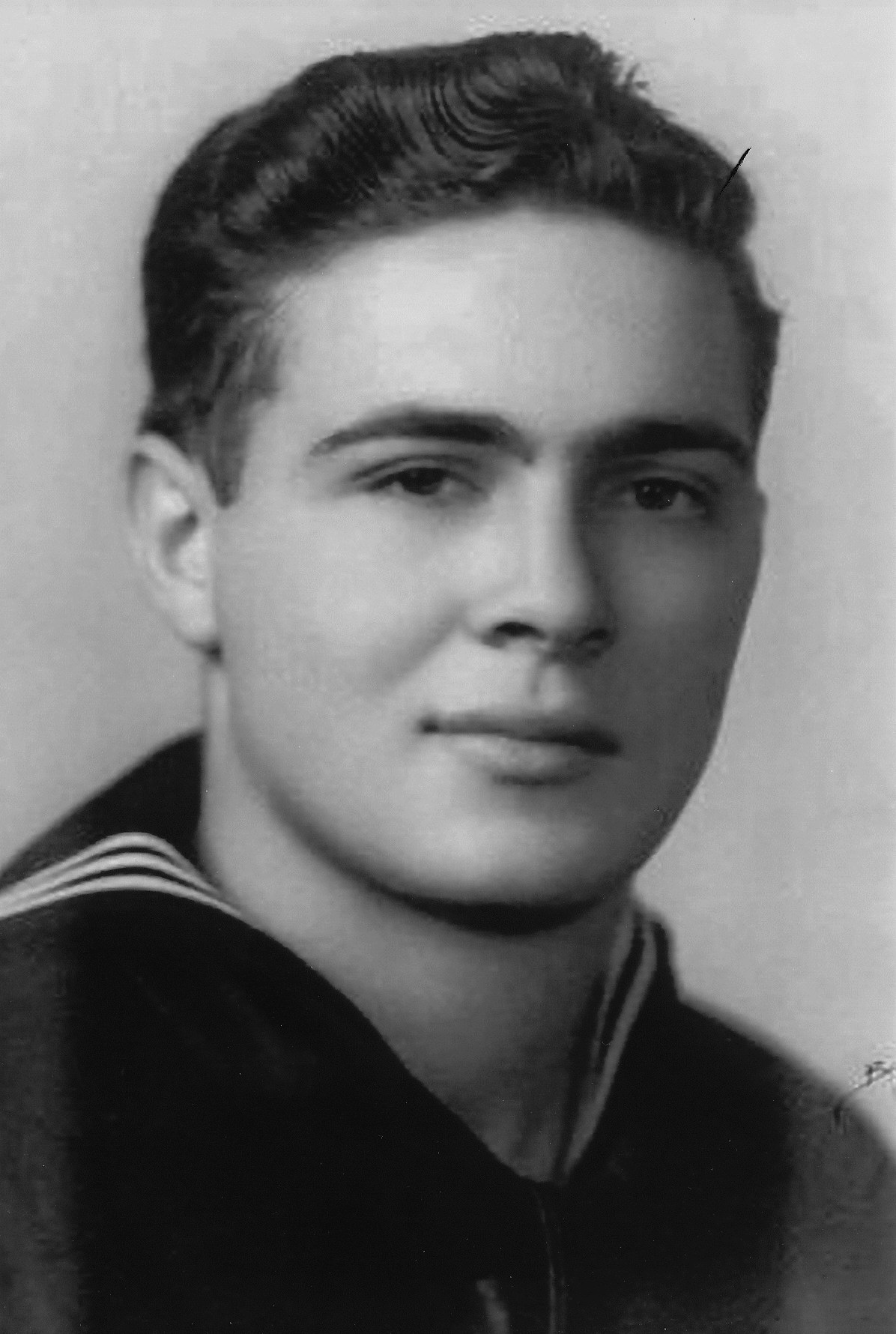
Joseph Minder 1941.

Joseph Minder 1941.


Upcoming events page: http://matthewrozell.com/author-appearances/

Order the signed book directly: http://matthewrozell.com/order-the-things-our-fathers-saw/

Order paperback or ebook from Amazon:

******


I’m not sure what this is. It leaves some things out, I think. Read the book and decide for yourself.


Statement by Prime Minister Shinzo Abe

Cabinet Decision

On the 70th anniversary of the end of the war, we must calmly reflect upon the road to war, the path we have taken since it ended, and the era of the 20th century. We must learn from the lessons of history the wisdom for our future.

More than one hundred years ago, vast colonies possessed mainly by the Western powers stretched out across the world. With their overwhelming supremacy in technology, waves of colonial rule surged toward Asia in the 19th century. There is no doubt that the resultant sense of crisis drove Japan forward to achieve modernization. Japan built a constitutional government earlier than any other nation in Asia. The country preserved its independence throughout. The Japan-Russia War gave encouragement to many people under colonial rule from Asia to Africa.

After World War I, which embroiled the world, the movement for self-determination gained momentum and put brakes on colonization that had been underway. It was a horrible war that claimed as many as ten million lives. With a strong desire for peacestirred in them, people founded the League of Nations and brought forth the General Treaty for Renunciation of War. There emerged in the international community a new tide of outlawing war itself.

At the beginning, Japan, too, kept steps with other nations. However, with the Great Depression setting in and the Western countries launching economic blocs by involving colonial economies, Japan’s economy suffered a major blow. In such circumstances, Japan’s sense of isolation deepened and it attempted to overcome its diplomatic and economic deadlock through the use of force. Its domestic political system could not serve as a brake to stop such attempts. In this way, Japan lost sight of the overall trends in the world.

With the Manchurian Incident, followed by the withdrawal from the League of Nations, Japan gradually transformed itself into a challenger to the new international order that the international community sought to establish after tremendous sacrifices. Japan took the wrong course and advanced along the road to war.

And, seventy years ago, Japan was defeated.

On the 70th anniversary of the end of the war, I bow my head deeply before the souls of all those who perished both at home and abroad. I express my feelings of profound grief and my eternal, sincere condolences.

More than three million of our compatriots lost their lives during the war: on the battlefields worrying about the future of their homeland and wishing for the happiness of their families; in remote foreign countries after the war, in extreme cold or heat, suffering from starvation and disease. The atomic bombings of Hiroshima and Nagasaki, the air raids on Tokyo and other cities, and the ground battles in Okinawa, among others, took a heavy toll among ordinary citizens without mercy.

Also in countries that fought against Japan, countless lives were lost among young people with promising futures. In China, Southeast Asia, the Pacific islands and elsewhere that became the battlefields, numerous innocent citizens suffered and fell victim to battles as well as hardships such as severe deprivation of food. We must never forget that there were women behind the battlefields whose honour and dignity were severely injured.

Upon the innocent people did our country inflict immeasurable damage and suffering. History is harsh. What is done cannot be undone. Each and every one of them had his or her life, dream, and beloved family. When I squarely contemplate this obvious fact, even now, I find myself speechless and my heart is rent with the utmost grief.

The peace we enjoy today exists only upon such precious sacrifices. And therein lies the origin of postwar Japan.

We must never again repeat the devastation of war.

Incident, aggression, war — we shall never again resort to any form of the threat or use of force as a means of settling international disputes. We shall abandon colonial rule forever and respect the right of self-determination of all peoples throughout the world.

With deep repentance for the war, Japan made that pledge. Upon it, we have created a free and democratic country, abided by the rule of law, and consistently upheld that pledge never to wage a war again. While taking silent pride in the path we have walked as a peace-loving nation for as long as seventy years, we remain determined never to deviate from this steadfast course.

Japan has repeatedly expressed the feelings of deep remorse and heartfelt apology for its actions during the war. In order to manifest such feelings through concrete actions, we have engraved in our hearts the histories of suffering of the people in Asia as our neighbours: those in Southeast Asian countries such as Indonesia and the Philippines, and Taiwan, the Republic of Korea and China, among others; and we have consistently devoted ourselves to the peace and prosperity of the region since the end of the war.

Such position articulated by the previous cabinets will remain unshakable into the future.

However, no matter what kind of efforts we may make, the sorrows of those who lost their family members and the painful memories of those who underwent immense sufferings by the destruction of war will never be healed.

Thus, we must take to heart the following.

The fact that more than six million Japanese repatriates managed to come home safely after the war from various parts of the Asia-Pacific and became the driving force behind Japan’s postwar reconstruction; the fact that nearly three thousand Japanese children left behind in China were able to grow up there and set foot on the soil of their homeland again; and the fact that former POWs of the United States, the United Kingdom, the Netherlands, Australia and other nations have visited Japan for many years to continue praying for the souls of the war dead on both sides.

How much emotional struggle must have existed and what great efforts must have been necessary for the Chinese people who underwent all the sufferings of the war and for the former POWs who experienced unbearable sufferings caused by the Japanese military in order for them to be so tolerant nevertheless?

That is what we must turn our thoughts to reflect upon.

Thanks to such manifestation of tolerance, Japan was able to return to the international community in the postwar era. Taking this opportunity of the 70th anniversary of the end of the war, Japan would like to express its heartfelt gratitude to all the nations and all the people who made every effort for reconciliation.

In Japan, the postwar generations now exceed eighty per cent of its population. We must not let our children, grandchildren, and even further generations to come, who have nothing to do with that war, be predestined to apologize. Still, even so, we Japanese, across generations, must squarely face the history of the past. We have the responsibility to inherit the past, in all humbleness, and pass it on to the future.

Our parents’ and grandparents’ generations were able to survive in a devastated land in sheer poverty after the war. The future they brought about is the one our current generation inherited and the one we will hand down to the next generation. Together with the tireless efforts of our predecessors, this has only been possible through the goodwill and assistance extended to us that transcended hatred by a truly large number of countries, such as the United States, Australia, and European nations, which Japan had fiercely fought against as enemies.

We must pass this down from generation to generation into the future. We have the great responsibility to take the lessons of history deeply into our hearts, to carve out a better future, and to make all possible efforts for the peace and prosperity of Asia and the world.

We will engrave in our hearts the past, when Japan attempted to break its deadlock with force. Upon this reflection, Japan will continue to firmly uphold the principle that any disputes must be settled peacefully and diplomatically based on the respect for the rule of law and not through the use of force, and to reach out to other countries in the world to do the same. As the only country to have ever suffered the devastation of atomic bombings during war, Japan will fulfill its responsibility in the international community, aiming at the non-proliferation and ultimate abolition of nuclear weapons.

We will engrave in our hearts the past, when the dignity and honour of many women were severely injured during wars in the 20th century. Upon this reflection, Japan wishes to be a country always at the side of such women’s injured hearts. Japan will lead the world in making the 21st century an era in which women’s human rights are not infringed upon.

We will engrave in our hearts the past, when forming economic blocs made the seeds of conflict thrive. Upon this reflection, Japan will continue to develop a free, fair and open international economic system that will not be influenced by the arbitrary intentions of any nation. We will strengthen assistance for developing countries, and lead the world toward further prosperity. Prosperity is the very foundation for peace. Japan will make even greater efforts to fight against poverty, which also serves as a hotbed of violence, and to provide opportunities for medical services, education, and self-reliance to all the people in the world.

We will engrave in our hearts the past, when Japan ended up becoming a challenger to the international order. Upon this reflection, Japan will firmly uphold basic values such as freedom, democracy, and human rights as unyielding values and, by working hand in hand with countries that share such values, hoist the flag of “Proactive Contribution to Peace,” and contribute to the peace and prosperity of the world more than ever before.

Heading toward the 80th, the 90th and the centennial anniversary of the end of the war, we are determined to create such a Japan together with the Japanese people.

August 14, 2015
Shinzo Abe, Prime Minister of Japan

001

Mr. Peachman and author, at debut book signing, Aug. 8, 2015. Mary Rozell photo.

As the book  ‘The Things Our Fathers Saw ‘ went to press, I was contacted by the Japan’s largest news wire service, “with over 50 million subscribers worldwide, publishing articles in Japanese, English, Chinese and in Korean…” They wanted a veteran’s “reflections as we approach the 70th anniversary of the double bombings of Hiroshima and Nagasaki” (which he offers in the book, Chapter 13, ‘The Kamikazes’). So, seventy years after the war, Mr. Peachman got to address the Japanese people. The story is below. I called him to ask him how it went.

Mr. Peachman: “It was very nice, the reporter was happy to speak to me. I told her, ‘I hope you have an hour or two.’ We had many things in common- I had traveled to Japan several times after the war, and we knew of the same places. I told her, you can’t say that you feel the same as you did, 70 years later. During World War II, the Japanese would fight to the death. I honestly felt that the bomb was necessary to end the war, though I feel that President Roosevelt made a mistake by demanding unconditional surrender. And I have questions about how and when the bomb was used. But make no mistake, the coming land invasion of Japan would have been a bloodbath.”

Mr. Peachman and author, at debut book signing, Aug. 8, 2015. Article in Japanese in foreground. Mary Rozell photo.

Mr. Peachman and author, at debut book signing, Aug. 8, 2015. Article in Japanese in foreground. Mary Rozell photo.

NEXT LOCAL AUTHOR APPEARANCE/EVENT:
• BOOK SIGNING AND TALK-Sunday, August 23, 7:00 pm:
The Glen at Hiland Meadows, 39 Longview Drive, Queensbury, NY 12804

From the Kyodo Japanese News Service :
Thank you so very much for all of your help and for putting us in touch with Mr. Peachman. As I explained to you both it was part of a series of short interviews conducted with people from around the world on the subject of views on the atomic bomb.
In addition to Mr. Peachman, whose comments we wrote about, we also spoke with a third generation Japanese American in LA, a former factory worker in Beijing, a female university student in Seoul, a high school teacher in Hong Kong who was involved in the protest movements, a former office worker in Germany, a Professor Emeritus from Israel, a young Iranian whose parent was a writer and a former preacher from Scotland.
We are so appreciative of our conversation with Mr. Peachman and because of the importance of what he said, he was mentioned at the top. Please see the Japanese article with the mark indicating the part where he spoke.
In Summary: we simply explained that many in the U.S. believe that the atomic bomb was necessary to help save lives and that Mr. Peachman was aboard a ship off Okinawa when it was attacked by Kamikaze planes. He lost some of his crew mates and upon hearing the news that the bomb was dropped was relieved because he did not think that he would have survived another encounter with the Japanese. Although he is saddened by the deaths that occurred in Hiroshima he did believe that it did save lives.
I hope this is helpful to you and please pass along our appreciation to Mr. Peachman and we also thank you so much for putting us in touch with him.
Please see the attached file.
Best regards,
S. M.

*************************************************************

Matthew Rozell’s career as a history teacher is now spanning four decades. Over the course of the past 20 years, he and his students conducted hundreds of interviews with the World War II generation. One such interview led to the reuniting of a train transport of Holocaust survivors with their American liberators, over 60 years later. He is currently working on a trilogy of narrative histories based on these interviews.

His first book, a narrative of World War II in the Pacific as told through the previously unpublished recollections of over 30 veterans, was released in August. It is available here.  His second book, in progress, is on the power of  teaching, remembering the Holocaust, and the real story behind the  iconic photo of the “Train Near Magdeburg’. He can be reached at his Facebook page at Author Matthew Rozell or by commenting below.

How my 93 yr. old history teacher, who survived a deadly kamikaze attack in the spring of 1945, got to address the Japanese people on the eve of the 70th anniversary of the end of WW II.

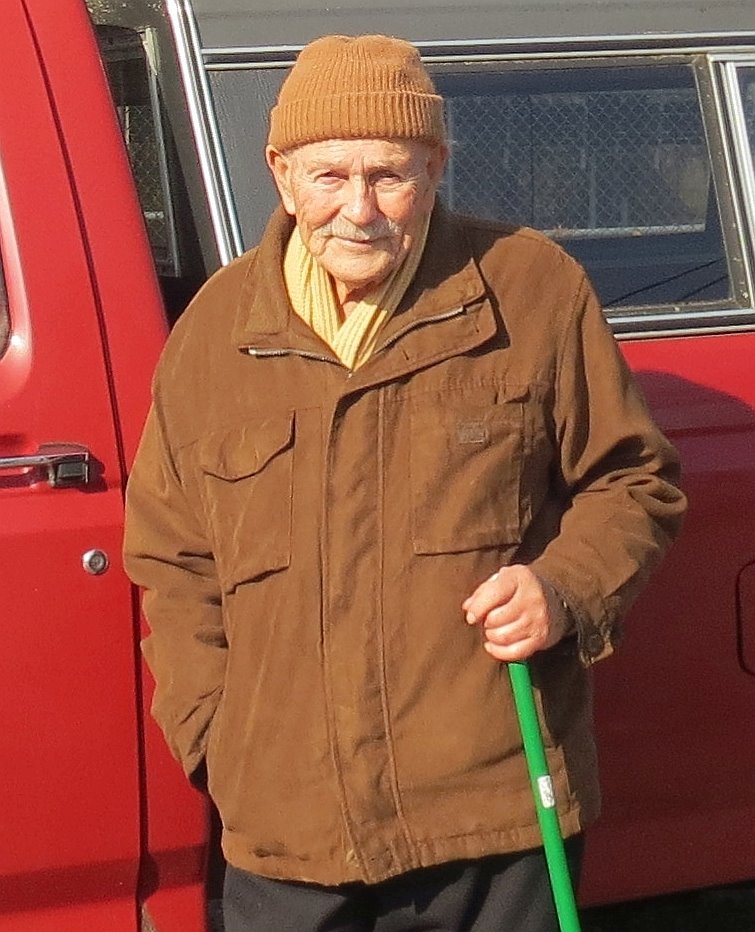
Mr. Alvin Peachman, Nov. 2014, out for his daily walk. Photo by Mike Nicholson, HFHS Class of 1979.

Mr. Alvin Peachman, Nov. 2014, out for his daily walk. Photo by Mike Nicholson, HFHS Class of 1979.

Be sure to come out and see us at the first author event- yes, Mr. Peachman will be there, too. He has TWO chapters in the book.

August 8th, 1-4 pm
The Village Booksmith.
223 Main St, Hudson Falls, NY 12839
(518) 747-3261

As the book  ‘The Things Our Fathers Saw ‘ went to press, I was contacted by the Japan’s largest news wire service, “with over 50 million subscribers worldwide, publishing articles in Japanese, English, Chinese and in Korean…” They wanted a veteran’s “reflections as we approach the 70th anniversary of the double bombings of Hiroshima and Nagasaki” (which he offers in the book, Chapter 13, ‘The Kamikazes’). So, seventy years after the war, Mr. Peachman got to address the Japanese people. The story is not out yet, but I just called him to ask him how it went.

Mr. Peachman: “It was very nice, the reporter was happy to speak to me. I told her, ‘I hope you have an hour or two.’ We had many things in common- I had traveled to Japan several times after the war, and we knew of the same places. I told her, you can’t say that you feel the same as you did, 70 years later. During World War II, the Japanese would fight to the death. I honestly felt that the bomb was necessary to end the war, though I feel that President Roosevelt made a mistake by demanding unconditional surrender. And I have questions about how and when the bomb was used. But make no mistake, the coming land invasion of Japan would have been a bloodbath.”

From the book:

 ‘I Lost Many Friends’


Matthew Rozell: So what did you think about the atomic bomb?

Best thing that ever happened to us. If it wouldn’t have been for the atomic bomb, I think we would have had a catastrophic amount of men killed, and probably the elimination of the Japanese nation as a whole. It would have been a terrible thing to conquer. I think it did a great deal in helping to save a million or two men, as well as the Japanese. I believe Harry Truman was a wonderful president in that regard; he really did a great favor to us. But I do not understand why we had to wait so long to figure things out! We shouldn’t have gone into Okinawa if we knew we had the atomic bomb because in Okinawa, we had 50,000 casualties! Our whole division was hit, except for the Wilmarth, as I told you. Two hundred and fifty ships were hit at Okinawa by kamikazes. The day we got hit, 26 ships got hit, and six were sunk to the bottom! I believe the Japanese had over 500 aircraft against us that day, suicide aircraft. Have you ever been startled by a partridge suddenly trying to fly into you? It is really a scary thing! Although you weren’t thinking of it at the time, it was a scary thing that these people would give up their lives like that. It was the most Navy lives lost in one battle. I lost many friends.

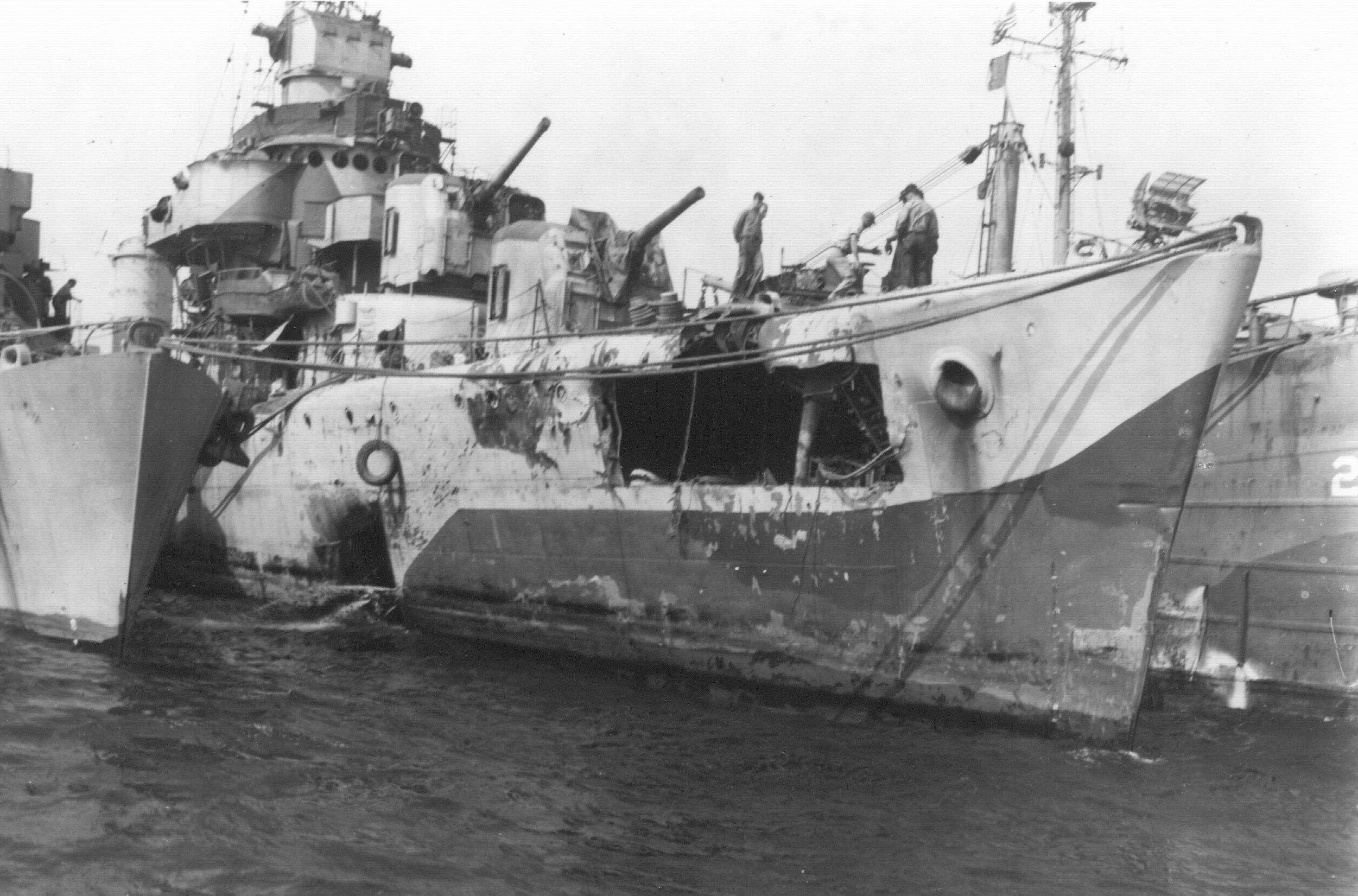
Destroyer Escort USS WITTER undergoing repairs following kamikaze attack. Alvin Peachman collection.

Destroyer Escort USS WITTER undergoing repairs
following kamikaze attack. Alvin Peachman collection.

As the land battle for Okinawa raged toward its crescendo with the fury of a storm, the kamikaze attacks would claim over 15,000 American casualties for the Navy alone.

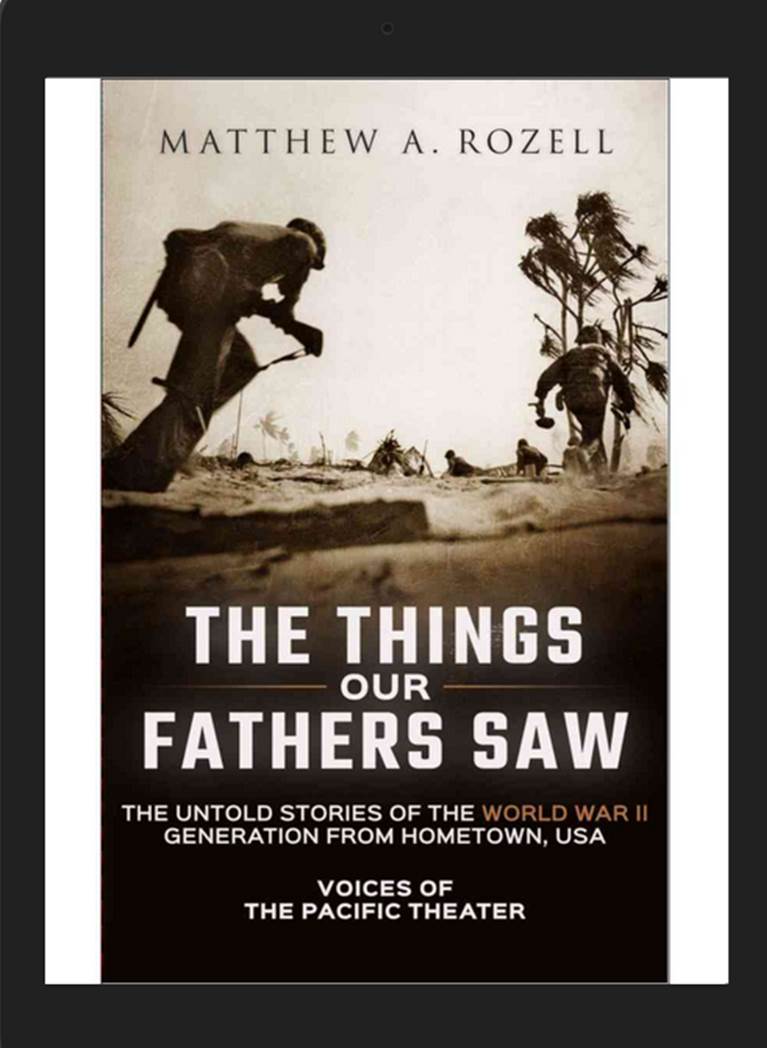
cover-shrunkThe paperback book is ready. It’s reasonably priced and it can be ordered at Amazon. The e-book is also there; below are some still shots/previews.

Thank you for all your support in keeping the memory alive.


 ORDER THE PAPERBACK BOOK  / E-BOOK HERE.

288 pages. 35 photographs, including never-before published portraits, and over a dozen maps/closeups by Susan Winchell-Sweeney.

Receive regular updates by ‘liking’ the Facebook page at the bottom of our HOME page or visiting it at  AuthorMatthewRozell

The first author appearance is scheduled in Hudson Falls, NY, one of the book’s settings,  for August 8th , 1-4pm, at the Village Booksmith.

Address: 223 Main St, Hudson Falls, NY 12839
Phone:(518) 747-3261

RANDOM PREVIEW IN E-BOOK I-PAD VIEW.