Feeds:
Posts
Comments

Archive for August, 2025

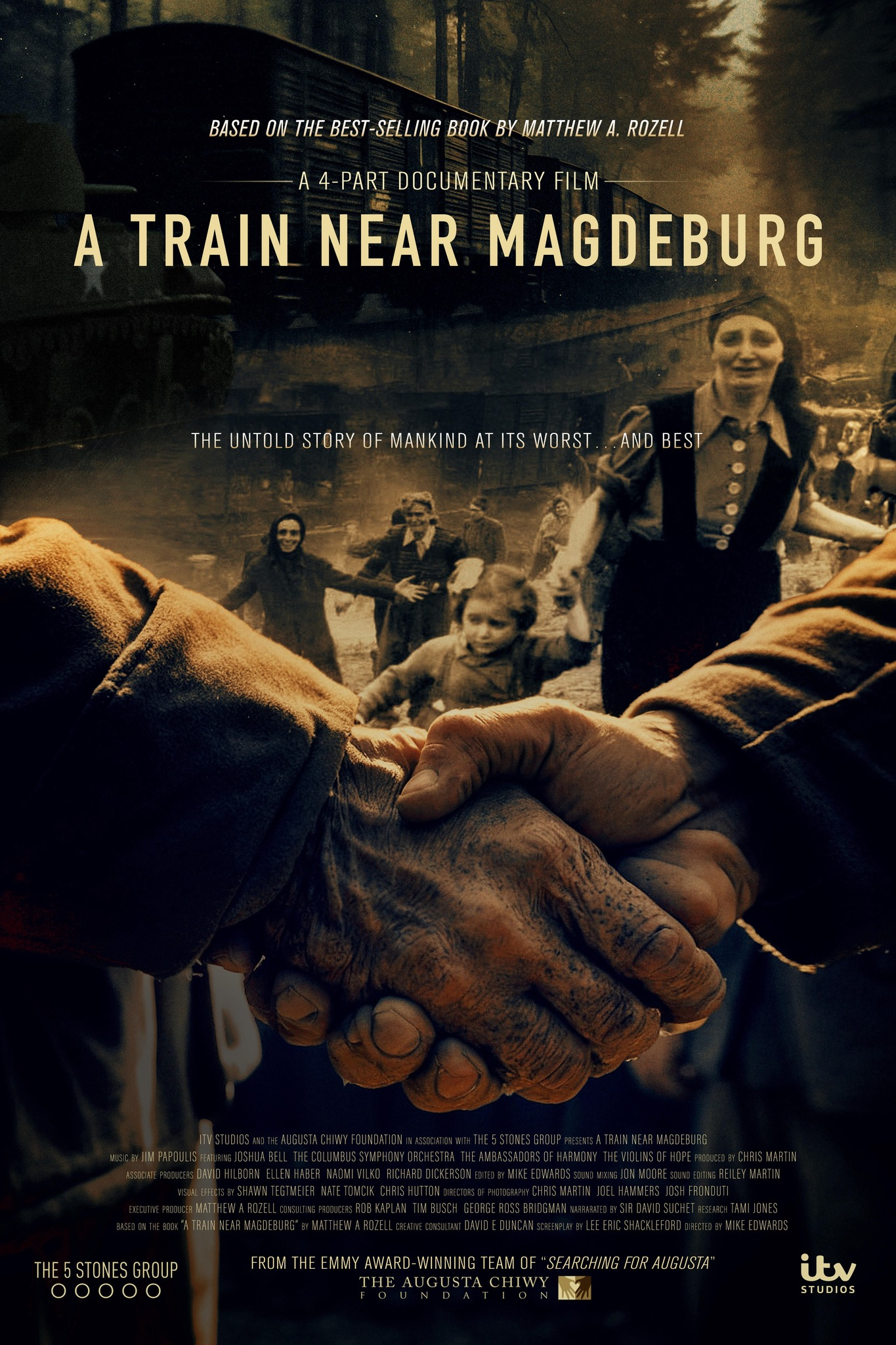
This is a notice for those of you who may be interested, especially Soldier/Survivor/2nd/3rd Gen families who may not have seen the social media posts and advance press releases. It takes place in Columbus, Ohio, where Mike Edwards the director, and the Augusta Chiwy Foundation, the organizational apparatus for steering the film to the light of day, are based. Some of you may also be previous donors to the foundation in the name of the film–this is also especially for you, with gratitude. The dates are below but the main kick off event is Thursday, September 11, 2025 in association with the New Albany, Ohio community and school system.

A Train Near Magdeburg Film Series- Events Kick Off Week, In Celebration of 80th Anniversary of Liberation and the Film Series Panel Discussion (Public, but seating limited, reserve below asap!) and also special Sneak Preview (Invitation Only, write to Matthew at matthew@matthewrozellbooksdot com for inquiries, especially if you are Soldier/Survivor/2nd/3rd Gen!]


September 11-14, 2025
Columbus, Ohio

Thursday September 11: 7pm-9:30pm-PUBLIC/SEATING LIMITED!/REGISTRATION REQUIRED! FREE! BUT ACT FAST!!!
Opening Program- Keynote Speech, Panel Discussion and The Violins of Hope, Abadi Holocaust Artwork
The McCoy Center: 100 E. Dublin Granville Road, New Albany, Ohio 43054
Registration and Tickets Link: https://newalbanyohio.org/programs-and-events/atrainnearmagdeburg/

Mark your calendars for an unforgettable evening in New Albany, Ohio on Thursday, September 11th at 7pm as we bring to life the extraordinary story of A Train Near Magdeburg that will leave you inspired and in awe. This is your chance to be part of history—and trust us, you won’t want to miss it! Tickets are FREE, but they’re disappearing fast, and seating is limited—secure yours NOW before it’s too late!

We’re thrilled to share that at least two survivors of the train will be in attendance, with one joining a powerful panel discussion to share their deeply moving story firsthand. This is a rare opportunity to hear directly from those who lived through a pivotal moment in history.

But that’s not all! The evening will feature a special appearance by Matthew Rozell, renowned educator and historian, alongside the daughter of one of the key liberators, sharing insights that will bring this incredible story to life. The evening will also include an appearance by former German high school student, Johanna Mücke, who experienced the power of this story firsthand in her own hometown, at the site of the liberation, and has dedicated her life to keeping the story alive for future generations.

And lastly, be prepare to be captivated by a breathtaking performance on the world-famous Violins of Hope, played by virtuoso musicians from the Columbus Symphony Orchestra, filling the air with music that resonates with hope and resilience.

This is more than an event—it’s a once-in-a-lifetime experience to connect with history, honor courage, and celebrate the human spirit. Grab your tickets now and join us for an evening that will stay with you forever!


Friday September 12: 11:30am-1:30pm-PUBLIC
Liberator Family Appreciation Luncheon and Keynote Address
National Veterans Memorial and Museum: 300 West Broad Street, Columbus, Ohio 43215
Keynote Speaker: Brigadier General Charles W. Morrison, Representing The 30th Infantry Division

REGISTER HERE FOR TIX: https://my.nationalvmm.org/25educationprograms/trainmagdeburg


Saturday September 13: 7pm-10pm
Social Gathering FOR Donors/Soldier/Survivor/2nd/3rd Gen families / Ohio State vs. Ohio Football Watch Party
Renaissance Hotel Columbus, 50 North Third Street, Columbus, Ohio 43215


Sunday September 14: 1pm-4pm
A Train Near Magdeburg Screening (Invitation Only, write to Matthew at matthew@matthewrozellbooksdot com for inquiries, especially if you are Donor/Soldier/Survivor/2nd/3rd Gen!]): Episodes 1-3 (of 4)
Location: To Be Determined


UPDATES ON THE FILM: https://magdeburgtrain.com/
Hotel Reservation Link: https://book.passkey.com/go/MagdeburgPremier

Read Full Post »

TEN YEARS AGO, my first book was published.

Eight years before that, my high schoolers and I sat down with Jim and Mary Butterfield for what would turn out to be the last time.

They are featured in that first book, The Things Our Fathers Saw, Vol. 1-Voices of the Pacific. And their story is one of my favorites.

Mary and Jim Butterfield Jan. 2007

Jimmy used to come to my classroom with his bride of 65+ years, Mary. She would joke with him, and us, and call him by his high school nickname, “But”. Maybe it was “Butt”, I don’t know, but they had fun playing around with each other in front of 17 and 18 year olds.

The two of them, and Danny Lawler, another First Marine Division veteran of really hard fighting at Peleliu and Okinawa, came to my room for an afternoon. Later, I came home to an email from one of my senior girls, telling me how meaningful meeting Jimmy and Mary and Danny was to her and her classmates.

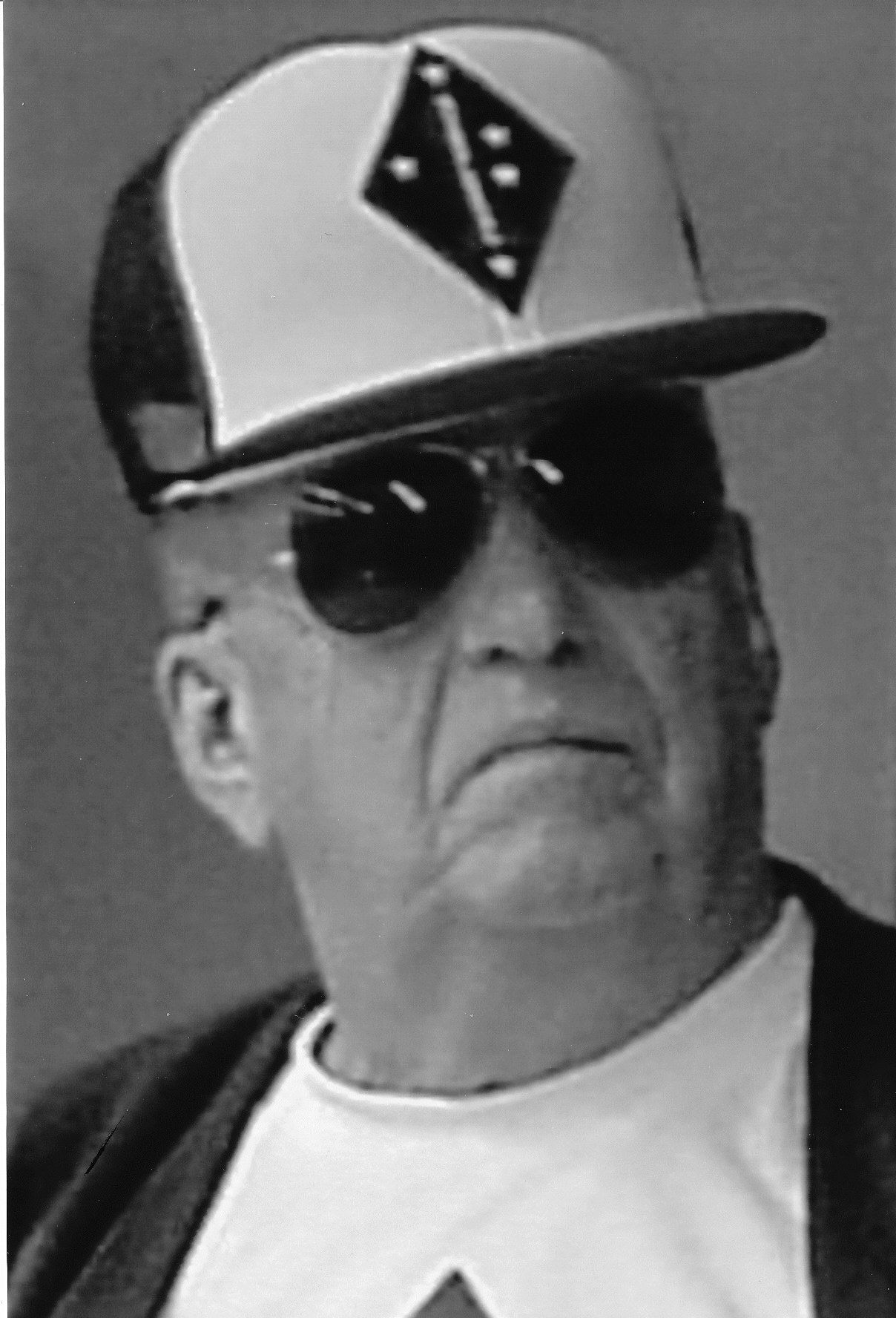
Jimmy, of course was blind and hard of hearing. Mary had to yell at him, he would crack a grin under the dark glasses and flirt with her. The high school girls loved it.

You see, Jimmy Butterfield got struck not once but twice in the head by enemy fire at Okinawa on May 19, 1945. He was evacuated first to Guam, then to Hawaii and later stateside for over 18 months and as many for reconstructive surgery. It was clear early on, though, that he would never see again.

To everyone but Jimmy.

When he eventually was ‘informed’, he told us that he instructed his high school sweetheart to leave him be. Not to get attached to him, a blind man.

Well, she told us what she thought of that. They ran a small mom and pop store back in Glens Falls together until they retired.

Mary passed in the fall of 2013. Jimmy died at home the following spring. What obstacles they overcame together. Below, from Vol. 1, they recount how Jimmy learned, weeks after the battle, that he would never see again.

Jimmy: I didn’t know, until they told me there [in the hospital in Hawaii].

So here’s the climax. Every morning there was inspection with the doctors. So the doctor came around that morning. He said, ‘How are you, Jim?’

I said, ‘Fine.’ He said, ‘You need anything?’ I said, ‘Nope, I’m doing fine.’ He says, ‘Well, are you used to the idea?’ I said, ‘Used to what idea?’

He said, ‘That you’re not going to see again.’


Well, you could hear a pin drop. I said, ‘I don’t think I heard you, Doc.’ He said, ‘You’re not going to see again.’ I said, ‘What?’ He said, ‘Didn’t they tell you in Guam?’


I said, ‘No! But it’s a good thing that [first] doctor isn’t here, because I’d kill him!’ I got so mad! I couldn’t really grab the idea. I’m not going to see again? … What the hell did I know about blindness? Nothing!


I said, ‘How about operations?’

He said, ‘You’ve got nothing to work with, Jimmy.’


So a pat on the shoulder, and he just walks away. The nurse comes over and says, ‘The doctor wants you to take this pill.’ I said, ‘You know what the doctor can do with that pill?’


Mary: Don’t say it.


Jim: I’m not going to, Mary.


So I had a hard… two months, I guess. I kept mostly to myself. I wouldn’t talk to people. I tried to figure out what the hell I was going to do when I got home. How was I going to tell my mother this? You know what I mean?


So they come around and said, ‘You’ve got a phone call.’ So I went in to where the phone was. They were calling me from home. They got the message, see…

This one here was on the phone [points to Mary].

I said, ‘Looks like things have changed, kiddo.’

She said, ‘No, we’ll discuss this when you get home.’ She was already bossing me around. [Laughter]
But that’s how I found out, and that’s how it happened. And after a while, I just started to live with it.


There are not days—even today—I go to bed and I wish I could see. So much I miss. I miss watching a nice girl walking down the street. I miss seeing my daughter, my wife. I even miss looking at Danny. [Laughter]


Mary: But you see, I’m only seventeen to you now. That’s a good thing.


Jim: Since we got in the conversation, when I dream, and I do dream, everything is real. Everything I knew before, I see it as it was then, not today. My wife and daughter would never get old in my eyes. When I dream of Mary, she’s still seventeen years old.


Mary: But you never saw your daughter.


Jim: I dream about my daughter. Mary’s caught me doing this. We lost our daughter a year and a half ago. But I sit right up in bed and I’m trying to push away that little cloud of fog in front of her, but I can’t quite make her out.


Mary says, ‘What are you doing?’ I say, ‘Just dreaming.’

Jim Butterfield was nineteen years old at the Battle of Okinawa.
In the final push at the Shuri Line that cost him his eyesight, the Marines lost over 3,000 men and the U. S. Army even more. When the island was declared secure near the end of June, in Lawler’s K/3/5, only 26 Peleliu veterans who had landed with the company had survived Okinawa. It had been the bloodiest campaign of the Pacific, with over 12,500 Americans killed or missing and nearly three times that number wounded. For the Japanese, no accurate counts are possible, but perhaps 110,000 were killed.

Read Full Post »