Welcome to 2025, a momentous year for World War II remembrance and history. So glad that you can join us for these updates, the ‘octogintennial’ anniversary of the end of the war, and of the greatest crime in the history of the world, the Holocaust. 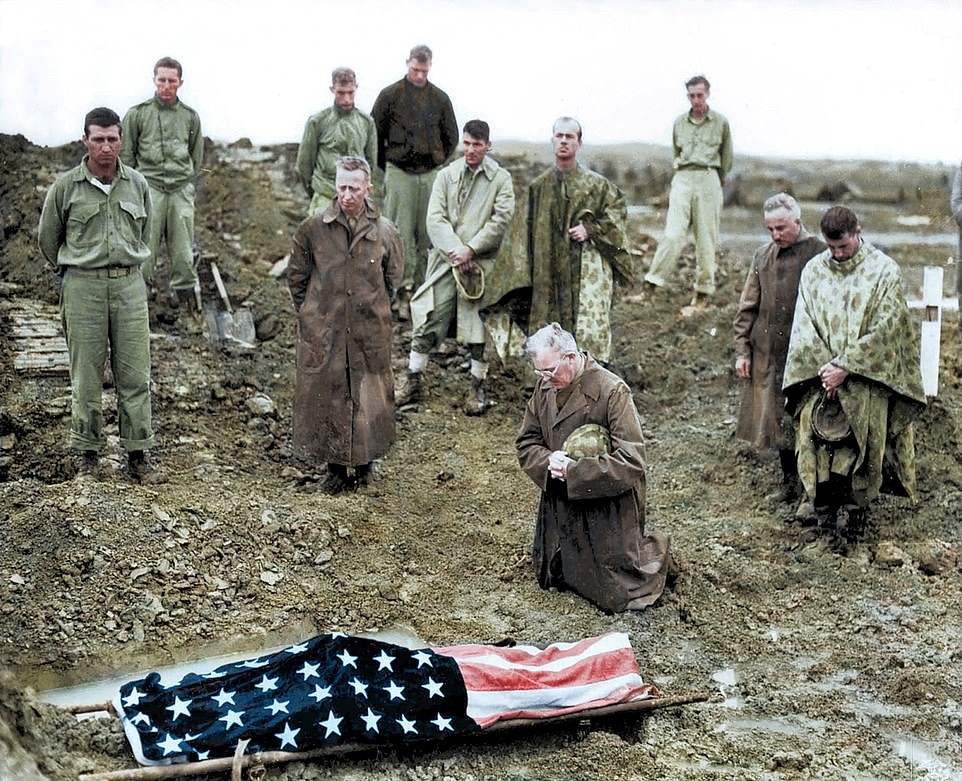 |
| As we reflect on the events of April 1945, the final months of World War II, we cannot help but be struck by the deep significance of two momentous moments that unfolded on opposite sides of the globe: the Battle for Okinawa and the liberation of the first concentration camps in Germany. Both are pivotal moments in history, shaping the course of the war and leaving lasting impressions on the men and women who lived through them.The Battle for Okinawa, which began on Easter Sunday, April 1, 1945 and would last until June 22, was one of the bloodiest and most brutal campaigns in the Pacific theater. For the American forces, it was a grueling and relentless fight to secure the island from the Japanese army, a battle that cost thousands of lives and saw immense casualties on both sides. It was not only a strategic victory for the Allies but a foreshadowing of the price that would be paid in the Pacific as the Allies moved toward the final assault on Japan. In the photo taken above, Colonel (later Brigadier General) Francis I. Fenton learned his younger son Private First Class Michael J. Fenton had been killed by a sniper. He went to the site and knelt before Michael’s body to pray. When he rose, he said of the other Marine dead, ‘Those poor souls. They didn’t have their fathers here.’ 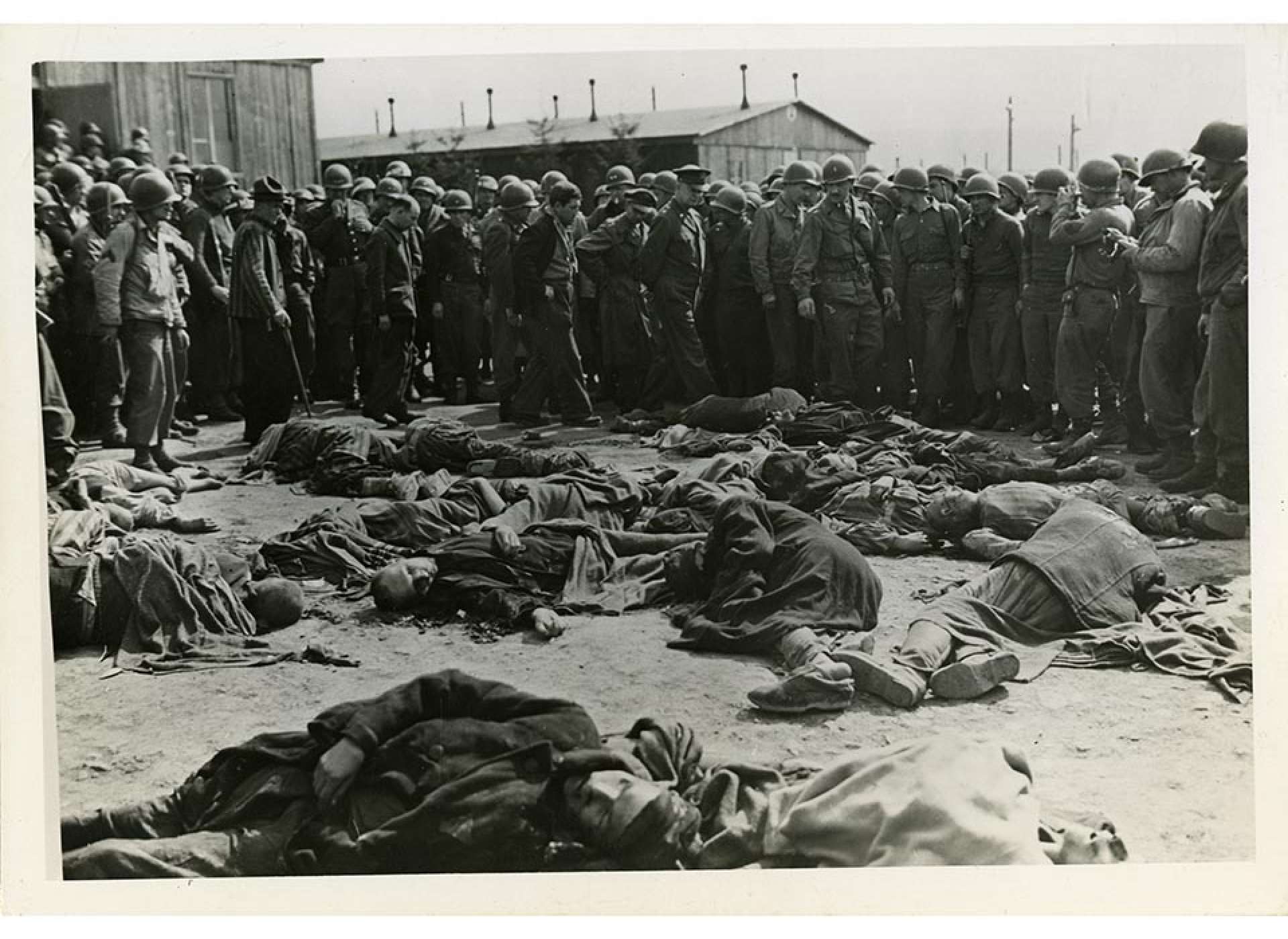 Eisenhower and top brass inspect a subcamp of Buchenwald, Germany, April, 1945. At the same time, across the Atlantic in Europe, April 1945 marked the liberation of the first Nazi concentration camps, including Buchenwald and Dachau. The horrors uncovered by Allied soldiers began to reveal the shocking tip of the iceberg of the industrial scale mass murder genocide that had taken place. General Dwight D. Eisenhower, witnessing the aftermath of these atrocities, requested Congressional and press visitations: “The things I saw beggar description… the visual evidence and the verbal testimony of starvation, cruelty, and bestiality were so overwhelming that I became sick and utterly unable to make any sense out of the facts.” He was prescient in recognizing that someday, there would be those who would minimize the magnitude of the Holocaust, or outright deny that it ever took place. Along these lines, he encouraged American and other Allied soldiers in Germany to visit the camps: “We are told the American soldier does not know what he is fighting for. Now, at least, we know what he is fighting against.” While the battles of Okinawa and the liberation of the camps might seem like disparate events, they are linked by the shared theme of human sacrifice and the undeniable cost of war. The soldiers who fought at Okinawa faced fierce resistance and unimaginable challenges, much like the liberators of the concentration camps, who encountered the full scale of humanity’s cruelty. In both cases, they were tasked with missions of unimaginable significance—many just barely out of high school—but perhaps sensing that the world would never be the same after their efforts. The heroes of these stories, those who fought in the Pacific and those who liberated Europe, lived through experiences that forever changed them—and most would reject the mantle of ‘hero’.As we reflect on their stories, it’s important to remember their sacrifices, their courage, and their commitment to justice; otherwise, I believe, we run the real risk of losing our identity as Americans. I hope we are worthy of what they did about what they saw. And as we continue to explore these critical moments in history through the Things Our Fathers Saw series, we are reminded of the power of storytelling. The voices of these veterans and survivors are an invaluable testament to their experiences—stories that need to be told and heard for generations to come. |


 Teaching History Matters